A buzzard was found with shotgun injuries in a field off Birch Grove Road near Chelwood Gate in East Sussex on 23rd July 2023, according to an article on the SussexWorld website.
It was collected by the East Sussex Wildlife Rescue and Ambulance Service (WRAS) and an x-ray revealed two shotgun pellets, one causing a wing fracture and the other one lodged in the buzzard’s leg.
Buzzard x-ray. Image via East Sussex Wildlife Rescue & Ambulance Service
Vets were able to remove both pellets and after a month of expert care and rehabilitation, the buzzard has been released back into the wild.
It’s not clear to me whether the shooting of this buzzard was reported to the police. There’s an odd quote in the article from the founder and operations director of East Sussex WRAS, Trevor Weeks, who apparently said this:
“Shooting and injuring any wild animal or bird is generally an offence unless they are dispatched swiftly after injury. We regularly see wildlife coming into our centre after being shot and not killed out right – swans, badgers, foxes, gulls and many more”.
Whilst Trevor’s work, and that of his colleagues at East Sussex WRAS, is fantastic and greatly appreciated, his knowledge about wildlife crime appears to be sorely lacking. That he seems to be unaware that it’s an offence to shoot a buzzard (and any other protected species), whether it dies swiftly or not after being hit, is just staggering. I’m hoping he’s just been misquoted.
If he hasn’t, then hopefully the RSPB’s investigations team will be able to offer some training (similar to this) to help this valuable rescue team to recognise the signs of a wildlife crime and submit appropriate reports to the police.
I’ve been passed some very worrying correspondence, sent to Moorland Association members in early August by Moorland Association Director Amanda Anderson, which signals that there may be more trouble brewing for hen harriers beyond the trouble already caused to them by brood meddling.
Male hen harrier. Photo: Pete Morris (RSPB Images)
It appears that the Moorland Association, the grouse moor owners’ lobby group, isn’t content with just brood meddling (removing entire broods of hen harrier chicks from grouse moors, keeping them in captivity hundreds of miles away and then releasing them again several weeks later back in the uplands, supposedly to reduce the number of red grouse that the parent hen harriers might take to feed their young because the grouse moor owners want to be able to shoot the grouse for fun/profit instead).
The Moorland Association is now turning its attention to the alleged ‘disturbance’ caused to driven grouse shoots by hen harriers (and other raptors) flying around during a grouse shoot ‘drive’ which causes the grouse to scatter instead of being forced (‘driven’) by the beating line towards the waiting guns in the grouse butts.
Here’s what Amanda Anderson sent to Moorland Association members just before the opening of the grouse-shooting season this year:
Listening to feedback from the moors last year, early packing up as well as difficulties controlling the grouse were noted. We are therefore encouraging reporting of disturbance in the line from Hen Harriers (and other birds of prey) to inform the Hen Harrier Recovery Plan. A simple to use form will be circulated next week and GWCT will do the analysis. It is our intention to capture the extent of this disturbance and subsequent economic loss. Please look out for this form and do fill it in for each drive on every day that you are affected. The Hen Harrier brood management scheme is to help find a mechanism for co-existence with hen harriers. If the conflict has shifted from predation of grouse chicks to harvesting grouse, we need to measure it and present the evidence.
It’s not clear from this what sort of ‘remedy’ the Moorland Association might be looking for when they’ve ‘presented the evidence’ to DEFRA and/or Natural England (‘evidence’ collected by the grouse shooters and analysed by the GWCT – hmm, that’ll be convincing then!). Amanda’s message mentions “subsequent economic loss” so it may be that they’re gearing up to ask for financial compensation for the perceived economic loss from their over-stocked grouse moors.
Or maybe they’re conspiring to ask for licences to remove those troublesome hen harriers (and other raptors). It wouldn’t surprise me – that is after all what’s going on with the hen harrier brood meddling trial, and there was previously discussion from the Moorland Association about lethal control in relation to Marsh harriers on grouse moors, although Amanda denied the discussion ever took place (see here) but meeting notes later revealed that some others in the room did recall the discussion taking place (see here).
Whatever it is they’re planning, they can expect a strong response from those of us who think, apart from anything else, that if a business can’t operate without damaging protected species then it’s not a viable/sustainable business, and in the case of driven grouse shooting the business certainly shouldn’t be receiving tax payers’ money as compensation whilst the illegal killing continues – that’d be like robbing the public with both hands instead of just one.
The irony of this latest revelation is of course linked to the hen harrier brood meddling sham. Brood meddling results in a (temporary) increase of hen harriers, which surprise, surprise, the grouse moor owners don’t want because they disrupt their grouse shooting drives (now admitted by Amanda).
This is presumably why, since brood meddling began in 2018, at least 101 hen harriers have been killed/gone missing, mostly on driven grouse moors (see here).
A sparrowhawk has been found shot and killed in a public woodland in Darlington, prompting a police appeal for information.
Members of the Friends of Geneva Wood first spotted dead pigeons a few weeks ago and further incidents have seen several more pigeons shot and now a sparrowhawk.
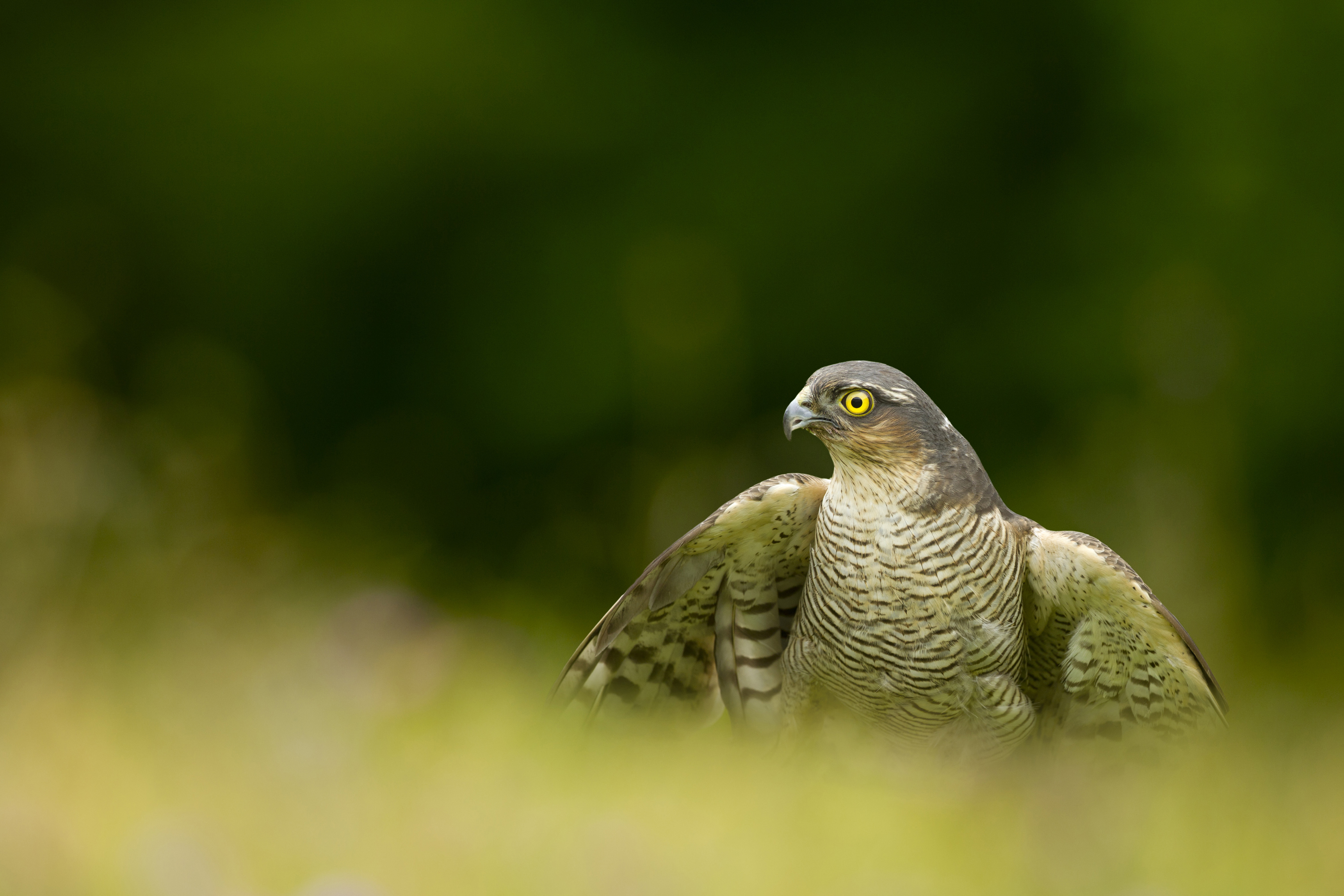
Sparrowhawk. Photo: Ben Hall, RSPB Images.
Durham Police and civic enforcement officers from Darlington Borough Council’s community safety team have issued a joint appeal urging anyone who uses the wood to be alert and to get in touch if they have any information that can identify those responsible.
Sergeant James Woodcock, of Darlington Neighbourhood Policing team, said: “There is legislation in place that protects various wild bird species. We will be working with the council and other relevant agencies, including the Royal Society for the Protection of Birds (RSPB), the Animal and Plant Health Agency (APHA) and local wildlife conservation organisations to ensure legal action is taken where necessary.
We would ask anyone in the Geneva Wood area to be alert and to report any incidents to us or the council’s civic enforcement officers.”
Councillor Amanda Riley added: “Our civic enforcement officers are working closely with local police and will be carrying out extra patrols in the area, but we will also need the support of local residents if we’re to identify those responsible.
Shooting and killing wild birds in a public woodland such as this is not only illegal, but also poses a danger to others who may be in the area and anti-social behaviour of this kind will not be tolerated.”
Anyone with information is asked to contact Durham Police on 101 or the community safety team on 01325 406999.
THREE MORE SATELLITE-TAGGED HEN HARRIERS VANISH ON DRIVEN GROUSE MOORS, ALL WITHIN DAYS OF THE ‘GLORIOUS 12TH’
Three satellite tagged Hen Harriers have disappeared on private driven grouse moors in Northern England between August 9th and August 15th.
All three birds were fitted with a satellite tag, which regularly transmit data, allowing their movements to be monitored.
Two birds had fledged recently on the United Utilities Bowland Estate, and the third was a one-year-old female from the National Trust for Scotland Estate at Mar Lodge.
Three satellite-tracked Hen Harriers have suddenly disappeared over land managed for driven grouse shooting. All three disappearances have happened within days of the Glorious Twelfth, the official start of the shooting season for Red Grouse, and a time where grouse numbers are managed to be at their peak level to ensure a successful shooting season.
Hen Harriers are a rare, protected species, known for their acrobatic ‘skydancing’ courtship display over the uplands. The Hen Harrier is categorised as a red listed species in the UK, due to its low population levels.
Hen harrier. Photo: Ian Poxton
Martha was a one-year-old female Hen Harrier. She was tagged as a chick at Mar Lodge, a National Trust for Scotland estate in Aberdeenshire in the spring of 2022. The satellite tracking data shows that Martha moved into Northumberland in early August 2023 and gave her last transmission from Westburnhope Moor near Hexham, in the North Pennines on 9 August 2023.
Selena was a juvenile female tagged on United Utilities land in Bowland in the spring of this year. Her satellite tag showed that she had just moved to the Yorkshire Dales before her last transmission from Mossdale Moor near Hawes, in the Yorkshire Dales on 11August 2023.
Hepit was another young female Hen Harrier. She had also been tagged as a chick on United Utilities land in Bowland this year, before moving to the Yorkshire Dales last month. Hepit’s last transmission came from moorland at Birkdale Common near Kirkby Stephen, on 15 August 2023 – an area where 9 other satellite-tagged Hen Harriers have vanished or been found dead with injuries consistent with persecution since September 2020.
Despite being legally protected, multiple studies and reports confirm that illegal killing is the main factor limiting the recovery of Hen Harrier in the UK, causing a reduction in nesting success, annual productivity and survival of breeding females. A recent RSPB Centre for Conservation Science study which investigated the illegal killing of satelite-tagged Hen Harriers in association with gamebird management (Ewing, et al 2023) has shown that the survival rates of Hen Harriers in the UK is “unusually low” with birds surviving for just 121 days after fledging. Human persecution accounted for 27-41% of deaths on Hen Harriers aged under one year and 75% of deaths in birds aged between one and two years. It also highlighted a strong overlap between Hen Harrier mortality and the extent of grouse moors.
Sadly, although this pattern of satellite tagged birds disappearing around the start of the Red Grouse shooting season has been seen before, the RSPB have never had a case of three satellite-tagged Hen Harriers going missing within six days.
Beccy Speight, RSPB Chief Executive said – “This is the first time so many hen harriers have gone missing in such a short space of time, all on driven grouse moors. This is on top of the 21 birds that we reported on in April, as having gone missing in the last twelve months. If these magnificent birds are ever going to have a sustainable population in England this has to stop, productivity from nests simply means nothing if the birds don’t survive.
We call on the UK Government to introduce a licencing system for grouse shooting in England similar to measures now being taken forward in Scotland, to act as a meaningful deterrent to raptor crime whilst also protecting the legitimate interests of those landowners who operate legally.”
All three incidents have been reported to the police and the NWCU (National Wildlife Crime Unit). Sadly, there are several other Hen Harrier persecution incidents that we cannot report on at this time.
If you have information about anyone killing birds of prey which you wish to report anonymously, call the RSPB’s confidential Raptor Crime Hotline on 0300 999 0101.
ENDS
These latest three victims mean that at least 101 hen harriers have gone ‘missing’ / been killed illegally in the UK since 2018, most of them on or close to driven grouse moors. I’ll update the list shortly.
It’s clear from the statement in the RSPB press release, ‘Sadly, there are several other Hen Harrier persecution incidents that we cannot report on at this time‘, that there are multiple other cases of missing/killed hen harriers still to be publicised, no doubt delayed by certain police forces not doing their jobs.
It’s interesting to see the RSPB take the decision not to wait before publicising these latest three incidents. All three have been reported to the police, quite rightly, but given the appalling track record of both North Yorkshire Police and Northumbria Police in dealing with investigations into suspected raptor persecution crimes, there seems little point in waiting anymore. In fact I’d go as far to say that there should be independent inquiries into the mishandling of investigations into raptor persecution crimes by these two police forces. Some of their latest failures are yet to be reported but some are already in the public domain (e.g. here, here, here).
UPDATE 11.40hrs: 101 hen harriers confirmed ‘missing’ or illegally killed in UK since 2018, most of them on or close to grouse moors (here).
Episode two of the Guardian’s mini podcast series investigating the illegal killing of birds of prey on grouse moors has been released this morning.
For those who missed episode one, please click here.
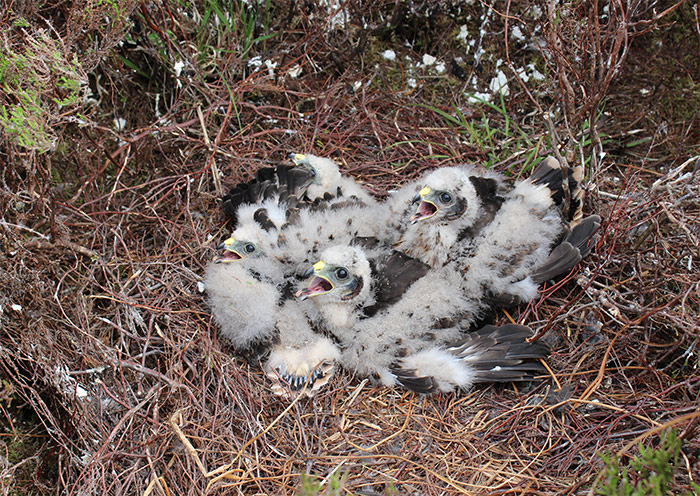
Hen harrier chicks. Photo: Ian Newton
In episode two, journalist Phoebe travels to the Yorkshire Dales National Park in an effort to try and see the location of the nest where an entire brood of hen harrier chicks had been stamped to death the previous year.
She talks a lot about the great big wall of silence about the case, especially from Natural England – many of you will recognise the frustrating lack of accountability and transparency.
She interviews a couple of RSPB investigators and then finally gets an interview with Stephen Murphy from Natural England, who apparently had to be accompanied by a minder from DEFRA. Stephen apparently believes that there’s been “a reduction in the intensity of persecution and the hen harriers are prospering from that…”. Really, Stephen? Jesus Christ. 98 missing/dead hen harriers since 2018 suggests otherwise (here).
There’s also a report of a discussion Phoebe had with John Holmes, NE’s Director of Strategy, who apparently doesn’t see any conflict of interest in Natural England receiving an £85K ‘donation‘ from BASC, with an attached clause that prevents NE from saying anything untoward about BASC and hen harriers.
The episode ends with Phoebe chatting to a cafe owner named Alan, who happens to be a grouse shooter and seems unable to be able to contain his hatred of Chris Packham.
Press release from Cheshire Constabulary (24 July 2023)
MAN BANNED FROM KEEPING BIRDS FOR FIVE YEARS
A man has been disqualified from keeping birds for five years after police seized wild owls from his address which were being kept in unsuitable conditions.
Alan Mee, 61, of Larch Avenue, Newton-le-Willows, appeared at Crewe Magistrates’ Court on Monday 17 July where he pleaded guilty to three counts of failing to take reasonable steps to ensure the needs of an animal, and two counts of possessing a wild bird.
The three tawny owls at Mee’s premises. (Photo: Cheshire Constabulary)
On 20 June, 2022, Cheshire Police’s Rural Crime Team, Merseyside Police, RSPCA, and Natural England executed a warrant as a result of information relating to wild birds in the Cheshire area.
Cheshire Police led on the warrant at Mee’s address in Newton-le-Willows and three tawny owls were located, two of which were suspected to have been taken from the wild.
All three owls were seized due to the conditions they were being kept in, which included having dirty water, no feeding area, and the aviary being too small.
Mee was interviewed under police caution in relation to the offence before being charged.
He was disqualified from keeping birds for a period of five years and also incurred a fine and court costs to the value of £823.
PC Ashley Tether, of the Rural Crime Unit, said:
“This case demonstrates the importance of working with our partner agencies to tackle wildlife crime and combat those responsible for the suffering of animals.
The three tawny owls seized from Mee’s address were kept in poor conditions with no access to fresh water, an adequate enclosure size, or a clean food ledge.
Mee is now disqualified from owning, keeping, participating in the keeping, or influencing the way birds are kept, for a period of five years.
I hope this acts as a reminder that we are committed to doing all we can to help protect our wildlife“.
ENDS
Many thanks to the blog reader who alerted me to to this press release.
The owner of a Yorkshire Dales grouse moor has been appointed to a ‘key role’ at DEFRA by the Secretary of State for Environment, Food and Rural Affairs, Therese Coffey.
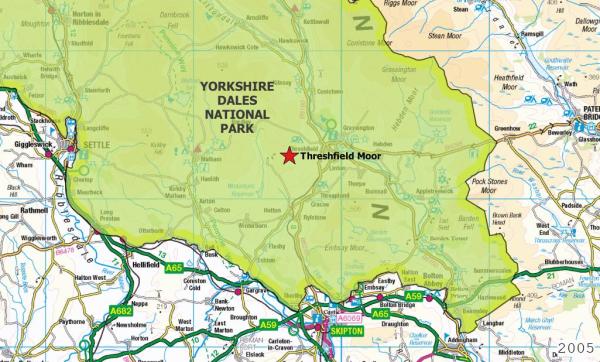
Heather Hancock, who according to her Wikipedia entry owns Threshfield Moor with her husband Mark Hancock, has been given the role of Lead Non-Executive Board Member, ‘appointed to provide challenge to Government departments’, according to this DEFRA press release (here).
Mark Avery has blogged about this appointment this morning (here) and he points out that Hancock’s co-ownership of a grouse moor has been conveniently excluded from the DEFRA press release.
It’s an interesting omission, as this particular grouse moor has been at the centre of two separate police investigations into suspected wildlife crime in recent years.
In October 2017, a young satellite-tagged hen harrier named ‘John’ ‘disappeared’ on Threshfield Moor in the Yorkshire Dales National Park and North Yorkshire Police issued an appeal for information (here).
Like so many other hen harriers that vanish in this hell-hole of a National Park, he’s never been seen again and of course, nobody was ever prosecuted.
In January 2020 Threshfield Moor was once again under investigation after two witnesses reported seeing the shooting of a hen harrier (here). That investigation did lead to an arrest of a gamekeeper but, as ever, there was insufficient evidence to bring charges against him and the investigation was dropped.
Threshfield Moor featured on this blog again just last month after a reader sent in photographs of two gas guns (bird scaring devices) that had been positioned on the grouse moor (see here) during the height of the breeding season.
I can’t imagine that Heather Hancock is going to ‘challenge’ the Government about anything in which she has a vested interest, can you?
Excerpt from Heather Hancock’s Wikipedia entry (27 July 2023)
Press release from Roy Dennis Wildlife Foundation (18th July 2023):
FIRST WHITE-TAILED EAGLE IN 240 YEARS FLEDGES IN ENGLAND
In a landmark moment for conservationists, the first white-tailed eagle for over 240 years has fledged from a nest in the wild in England. The chick is the first successful breeding attempt of the white-tailed eagles released by Forestry England and the Roy Dennis Wildlife Foundation’s project to return this lost species to England.
First WTE chick in England just prior to fledging. Photo: Roy Dennis Wildlife Foundation
White-tailed eagles are Britain’s largest birds of prey with a wingspan of up to 2.5 meters and were once widespread across England. Human persecution caused their extinction with the last pair breeding in southern England in 1780. In 2019, Forestry England and the Roy Dennis Wildlife Foundation began a reintroduction programme to restore these iconic birds to the English landscape.
Two of the birds released by the project in 2020 – female G405, originally translocated from the Outer Hebrides and male G471, from north-west Sutherland – reared the male chick earlier this summer. The location of the nest, on private land with no public access, is not being disclosed for the welfare of the birds and to prevent any disturbance to them or the landowner either this year or if the birds return to breed at the same location.
The chick was ringed and fitted with a satellite tag by licensed ornithologists from the Roy Dennis Wildlife Foundation enabling the project team to track this historic bird’s daily progress through its life.
The WTE chick being satellite-tagged. Photo by Forestry England
Roy Dennis MBE, Founder of the Roy Dennis Wildlife Foundation, said:
“This is a very special moment for everyone who has worked on, supported and followed this ground-breaking project. Restoring a breeding population in southern England, where the species was once widespread, has been our ultimate goal. Many thought it was impossible but we knew food for eagles – fresh and salt water fish, cuttlefish, rabbits, hares and wild birds – was plentiful. I visited the Isle of Wight as a young birdwatcher in the 1950s, saw the last breeding location at Culver Cliff and knew they should be restored. It is early days, but this is a very significant milestone and we are heartened by the enthusiastic support shown by so many people and that the sight of these huge eagles in the sky inspires hope for restoring nature. We still have a long way to go, but the feeling of seeing the first pair reach this stage is truly incredible.”
The birds are one of three territorial pairs that have now become established in southern England and the first to breed.
Steve Egerton-Read, White-Tailed Eagle Project Officer for Forestry England, said:
“We are thrilled that this moment has happened and at such an early stage in the project. At only three years old, it is remarkable that the pair have successfully bred, with most white-tailed eagles not attempting to do so until they are at least four or five. This pairs’ ability to breed and fledge their chick at this early age is extremely encouraging.”
“It is really hard to put into words just what an incredible moment this is for the return of these iconic birds to England. It is evidence of just how well the eagles are starting to fit back into this landscape and how, with a little help, nature can begin to return and thrive. Although it has not been possible to set up a public viewing site at this location, we are hopeful that one of the other pairs that has become established in southern England will choose to nest in a location that we can share with the public in future years.”
To date, 25 white-tailed eagles have been released by the reintroduction project with 16 still surviving. A further release of young white-tailed eagles is planned for later this summer from the project team’s base on the Isle of Wight.
The reintroduction of white-tailed eagles is conducted under licence from Natural England, the Government’s wildlife licensing authority. All of the young birds involved in the project are collected under a NatureScot licence from the wild in Scotland and brought to the Isle of Wight.
ENDS
Huge congratulations to everyone involved in this project – what fantastic news! Although it’s telling that the nest location is being kept secret, and quite rightly so in my view, for fear of disturbance.
It’s not been plain sailing for this project, with a number of the translocated eagles inevitably becoming the victims of illegal persecution, most notably the poisoned eagle found dead on a shooting estate in Dorset last year that resulted in one of the biggest police wildlife crime fiascos witnessed in recent years (e.g. see here and here).
The poisoned WTE found dead on a shooting estate in Dorset in January 2022. Photo: Dorset Police
And then there’s the poisoned white-tailed eagle found dead on a shooting estate in West Sussex in October 2021. Toxicology results confirmed it had been killed by ingesting the banned pesticide Bendiocarb (see here). Strangely, Sussex Police have remained coy about publicising this case and nobody seems willing to provide an update on the status of the investigation ever since May last year when the Chief Constable assured conservationists that the investigation was “very much ongoing” (see here).
I’d hope, as we approach the two-year anniversary of this illegal poisoning, that Sussex Police will manage to provide an update. A lot of people care passionately about these eagles and their reintroduction to southern England and rightly expect to see the police do everything in their power to bring the eagle-poisoner(s) to justice. Two years of stubborn silence isn’t a good look and if this young, historic fledgling suffers the same fate there’ll be uproar.
For those who don’t want to poison white-tailed eagles and would much rather enjoy the thrilling experience of seeing one in the wild, one of the best opportunities to see them in southern England is still from one of the regular ‘bird boats’ run by the charity ‘Birds of Poole Harbour‘ throughout the summer (the same charity that has worked with the Roy Dennis Wildlife Foundation to reintroduce ospreys to Poole Harbour). A number of eagles seem to spend a lot of time foraging and just hanging out in the harbour. You’ll need to book quickly though as these boat tours are incredibly popular (for obvious reasons!). Boat tour details here.
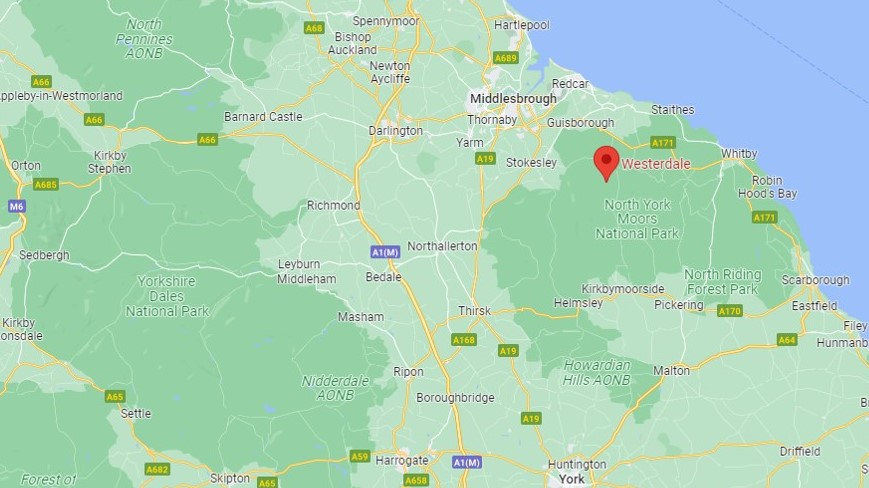
Following the recent confirmed shooting of at least two red kites (with a third one suspected) near Westerdale in the North York Moors National Park (see here), the North York Moors Park Authority has issued the following statement:
Following the most recent report from North Yorkshire Police regarding a Red Kite found with gunshot wounds, the North York Moors National Park is issuing the statement below.
Tom Hind, Chief Executive Officer of the North York Moors National Authority, said:
“We are appalled to hear of recent shootings of Red Kite in the North York Moors. Wildlife crime and raptor persecution are illegal, immoral and have no place in this National Park.
“Those behind these callous acts should recognise the disservice they have done to the entire North York Moors community. Ultimately those responsible may find they have shot not only a wonderful bird of prey, but also themselves in the foot.
“It is vital that anyone with information about these incidents, or any other wildlife crime in our region, call North Yorkshire Police on 101. We cannot let this crime go unpunished.”
A couple of weeks ago, North Yorkshire Police appealed for information after a red kite was found with shotgun injuries near Westerdale in the North York Moors National Park on 13th June 2023. It didn’t survive (see here).
Red kite. Photo by Ben Hall (RSPB Images)
Today, North Yorkshire Police has issued another appeal for information after the discovery on 26th June 2023 of a second shot kite in the same area (which also didn’t survive its injuries) and suspicions that a third kite has also been shot, based on photographs taken on 23rd June 2023 provided to the police by walkers.
The appeal for information by North Yorkshire Police’s Rural Task Force is a bit bizarre, to say the least. Here it is:
NORTH YORK MOORS: APPEAL FOR INFORMATION ABOUT THE SHOOTING OF A RED KITE
North Yorkshire Police’s Rural Task Force is appealing for witnesses and information about the shooting of a Red Kite on the North York Moors near Westerdale.
The Red Kite, suffering with gunshot wounds, was found by a local farmer at 9.30pm on Monday 26 June in Westerdale. Sadly, despite being taken to a vet it did not survive its injuries.
This incident follows another recent shooting of a Red Kite in the area on Tuesday 13 June. North Yorkshire Police have also received information that there may be a third injured Red Kite, photographed by walkers on Friday 23 June, on the opposite side of the valley.
We believe that these incidents are linked. This disturbing criminal behaviour and persecution of innocent birds of prey will not be tolerated and must cease immediately.
Police are renewing their appeal for any information in relation to raptor persecution. Anyone with information that could assist our investigation should email Jack.donaldson@northyorkshire.police.uk
If you spot a dead or injured bird, poisoned bait or a pole trap, please note the location, take a photo and call North Yorkshire Police on 101 to report it.
If you wish to remain anonymous, you can pass information to Crimestoppers on 0800 555 111.
Please quote police reference 12230107850 when passing on information.
Red kites were saved from national extinction by one of the world’s longest-running protection programmes and have been successfully reintroduced to England and Scotland. Red kites are listed under Schedule 1 of The Wildlife and Countryside Act.
North Yorkshire Police in collaboration with the British Association of Shooting and Conservation (BASC), Countryside Alliance, Moorland Association and the National Gamekeepers Association take a zero-tolerance approach to raptor persecution. All agencies agree that ‘there is no excuse for illegally killing of any bird of prey and unreservedly condemn all such acts. Any individual convicted of a crime against a bird of prey will be expelled from the organisation’.
Police are aware that local gamekeepers will come under suspicion, however we will investigate with an open mind, gathering information from a variety of sources, and not be led by assumptions.
In response to the ongoing persecution against birds of prey in the North Yorkshire Moors, North Yorkshire Police Rural Taskforce Officers have increased marked and unmarked patrols in target areas to protect wildlife and deter offenders.
ENDS
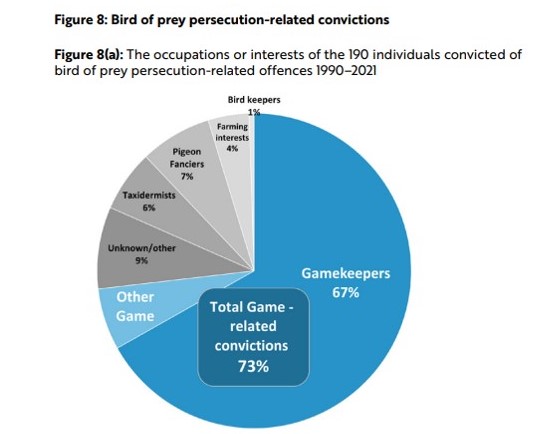
This looks very much like North Yorkshire Police has been ‘got at’ by the shooting lobby. How else do you explain the police including what is blatant propaganda in their own press release, from an industry responsible for the vast majority of raptor persecution crimes?!
Data from the RSPB’s latest Birdcrime Report
How many members of the public are wandering around this grouse-moor dominated landscape with shotguns, taking pot shots at birds of prey?
How many members of North Yorkshire Police’s Rural Taskforce have links to the game-shooting industry?
Meanwhile, supposedly protected birds of prey continue to be targeted and killed in what is supposed to be a National Park.
UPDATE 7th July 2023: Red kite shootings: statement from North York Moors National Park (here)
UPDATE 9th October 2023: Buzzard shot & critically injured in North York Moors National Park (here)