Convicted Scottish gamekeeper & former sex offender Russell Mason due to be sentenced

A Scottish gamekeeper who last month pleaded guilty to bludgeoning to death a trapped Goshawk on a shooting estate in Perthshire, is due to be sentenced tomorrow at Perth Sheriff Court.

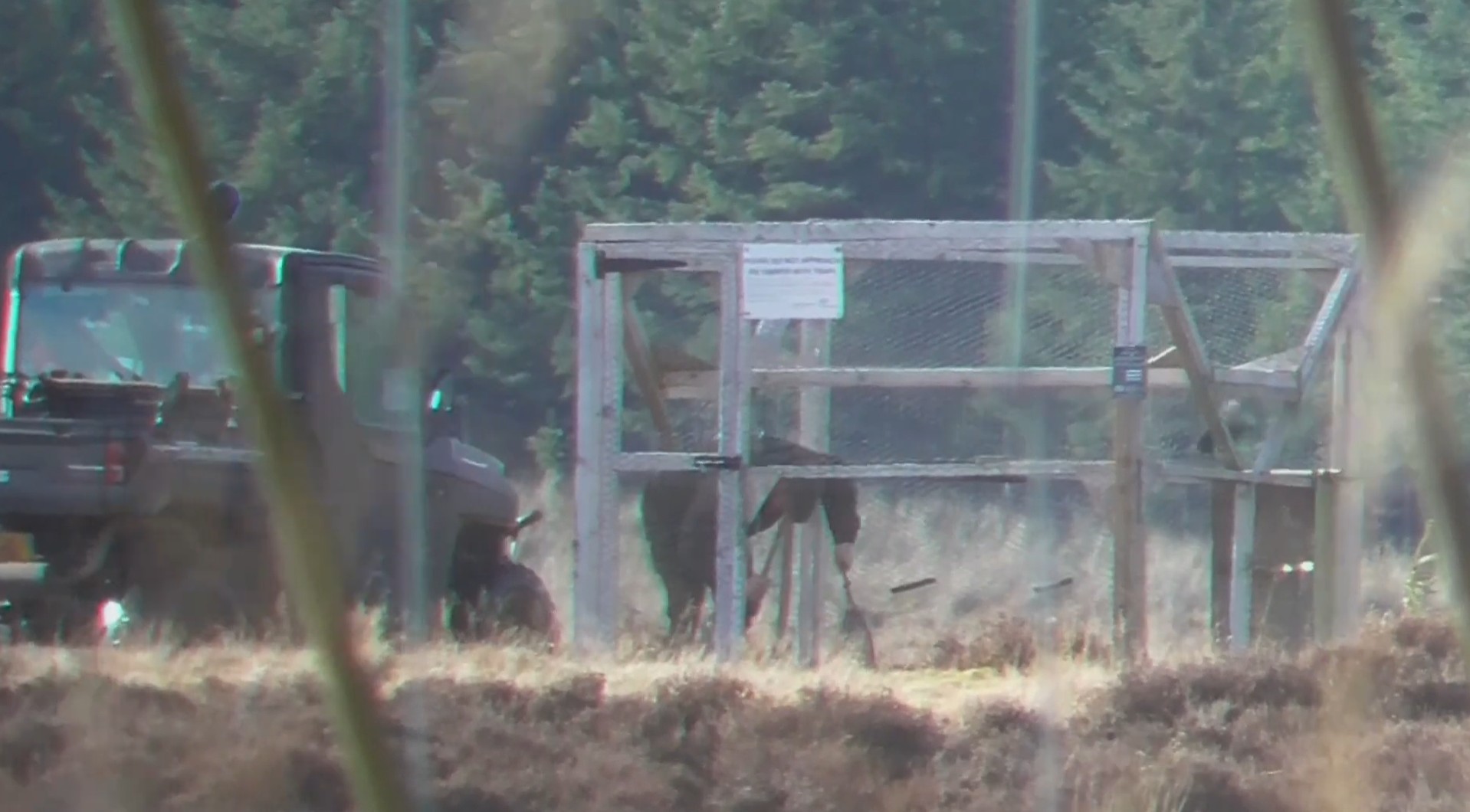
Russell Douglas Mason, 49, was filmed covertly by the RSPB, beating a Goshawk to death with a stick after it became trapped inside a Crow cage trap on Cochrage Muir (Moor), believed to be part of the Milton of Drimmie and Strone estate near Blairgowrie, on 12 February 2024.

On the opening day of his trial on 17 March 2026, Mason changed his plea to guilty and also admitted to various firearms offences. Sentencing was deferred for background reports and it emerged Mason had previously been added to the sex offenders register.

So far, the gamebird shooting industry, which unconvincingly claims to have a zero tolerance policy for raptor persecution and immediate expulsion policies for anyone convicted of those crimes, has remained silent about Mason’s guilty plea (see here).

UPDATE 24 April 2026: Scottish gamekeeper Russell Mason receives derisory sentence for brutal killing of Goshawk (here)

Update on prosecution of 87-year-old William Brian Chorlton, accused of 11 offences relating to alleged raptor persecution in Lincolnshire

In April 2025, retired farmer William Brian Chorlton, aged 87, of Morkery Lane, Castle Bytham in Lincolnshire was summoned to court following reports that birds of prey were being poisoned in the Castle Bytham area.

He faced eleven charges relating to the unapproved or unlawful storage of the chemical Aldicarb, possession of a poisoners kit, and possession and use of four pole traps on his Pheasant shoot (see here).

Mr Chorlton appeared at Lincolnshire Magistrates’ Court in May 2025 and pleaded not guilty to all charges and the case was set to proceed to trial in October 2025.

Lincolnshire Magistrates’ Court (Creative Commons DSCF1330)

However, at a pre-trial hearing in September 2025, Mr Chorlton’s lawyer submitted three separate legal arguments calling for the case to be dismissed. The District Judge rejected all three legal arguments and the application to dismiss the case was not upheld.

In a further pre-trial hearing a week later, and in a highly unusual move, Mr Chorlton’s lawyer announced that he intended to apply for a judicial review of the District Judge’s decision (see here), which meant that the original trial date of October 2025 was postponed until the judicial review application was heard.

A further case management hearing scheduled for January 2026 was also postponed as the application for judicial review was still underway (see here).

Since then, earlier this month Mr Chorlton’s application for judicial review was rejected by the High Court.

The rejection of the application for judicial review led to another case management hearing for the criminal case, and that took place this morning at Lincoln Magistrates Court in front of the same District Judge as before.

Mr Chorlton’s lawyer told the judge that, “You were right and we were wrong“, in relation to the judge’s earlier ruling that there were no grounds for the case to be dismissed. This means that Mr Chorlton’s defence team is not intending to challenge the High Court decision to reject the application for judicial review so the criminal prosecution is now back on track.

The defence stated that it would now instruct an expert witness and a new trial date has been set for October 2026. A further case management hearing will take place in July 2026, to look at areas of agreement / disagreement between the expert witness reports.

The papers from the judicial review application (Mr Chorlton’s statement of facts of grounds and the Crown Prosecution Service’s grounds of resistance) make for a fascinating read but I won’t publish those until criminal proceedings have concluded at Lincoln Magistrates’ Court so as not to jeopardise the prosecution.

NB: As proceedings are still live, comments have been turned off.

Buzzard dies after being tied to a tree root in Powys – RSPCA appeals for information

The RSPCA is appealing for information after the discovery of a dead Buzzard that had been tied, when alive, to the root of a tree.

A member of the public found the dead Buzzard on the afternoon of Tuesday 14 April 2026 in privately-owned woodland at Llanbrynmair, Powys, in mid-Wales.

Photos by RSPCA:

A blue rope had been tied around the Buzzard’s wing and tethered to the root of a tree.

RSPCA Animal Rescue Officer Julia Dalgleish, who attended the scene, said:

This buzzard had clearly been in distress. The rope was very twisted which suggests the bird had been struggling and twisting around this rope for some time and there was a reasonable amount of bird excrement around the root that also suggests a relatively lengthy time frame.

One of its wings was distinctly damaged both in terms of the feathers as well as having a wound on it.

The bird’s body condition also seemed to be quite low as there was very little muscle tissue around the breastplate area.

There is no indication of why somebody had done this. We’re appealing for anyone with first hand information to get in touch to help us with our enquiries.

Our Inspectorate Appeal Line can be reached on 0300 123 8018 and incident number 01776998 can be quoted.

We would encourage everyone to show kindness to wildlife. We share our space with a variety of wild animals. Every kind of animal deserves our care and respect. All wild birds are protected under the Wildlife and Countryside Act 1981 and it’s illegal – except under licence – to kill wild birds. However, if tied up whilst alive there may also be offences under the Animal Welfare Act“.

This location is not far from where 15 sacks of dead Pheasants, presumably shot, were found dumped in a river in 2023; nine of the bags were believed to have been thrown from a bridge near Glantwymyn, just along the A470 (see here).

Hunting with hounds: Government consultation on strengthening hunting laws and a rally in London

Many of you will be aware of the Westminster Government’s recently published Animal Welfare Strategy in which it committed, amongst other things, to opening a public consultation on how to ban trail hunting (a smokescreen for Fox hunting).

That public consultation has now opened and will close on 18 June 2026. I very much support a ban on trail hunting and would encourage anyone who agrees to fill in the consultation. It’s important to note that the consultation isn’t so much about whether to ban trail hunting, but rather how best to implement a ban that will be the most effective.

For those who want some guidance on how to respond to the consultation questions, I’d recommend you read this advice from the League Against Cruel Sports or this advice from the Hunt Saboteurs Association. Both organisations have been at the forefront of documenting illegal hunts and campaigning against them for decades, both before and after the Hunting Act was enacted in 2004 that was supposed to ban the hunting of most wild mammals with dogs.

The Hunt Saboteurs have also produced this helpful document that clarifies many of the issues:

The parallels with the illegal killing of birds of prey in the UK countryside are not difficult to see – widespread lawlessness, depraved animal cruelty, constant denials that it’s happening despite volumes of unequivocal evidence, and the relentless abuse and harassment of those campaigning for it to end. Both are crimes and both are now listed as National Wildlife Crime Priorities.

The main difference, I think, is that raptor persecution tends to happen in areas and at times where it is difficult to detect (e.g. on private gamebird shooting estates and often under the cover of darkness) whereas Fox and Stag hunting takes place in plain sight, which often leads to violent confrontation.

In addition to participating in the public consultation, there will be a peaceful, family-oriented rally in London on Saturday 9th May 2026, organised by the League Against Cruel Sports, where campaigners and supporters will gather to draw attention to the issue.

This will be at Old Palace Yard (outside the Houses of Parliament) from 3.15pm to 4.30pm. I hope that some of you can make it.

Trial underway for man accused of dumping 50 dead hares & two raptors outside Broughton village shop in Hampshire

A trial is underway at Southampton Magistrates’ Court this week for a man who is accused of several offences relating to the dumping of 50 hares and two raptors (a Barn Owl and a Kestrel) outside a community shop in Broughton, Hampshire, in March 2024.

James Kempster, 39, of Totton, Southampton, is charged with two counts of possessing a dead bird under the Wildlife and Countryside Act and a charge of criminal damage to the shop front.

Photo by Broughton Community Shop

The court heard that the alleged incident was caught on CCTV in the early hours of 15th March 2024.

Prosecutor Adam Cooper said: “This is a horror movie scene outside a Broughton village shop – it’s a small Hampshire village.

In the middle of the night, at 3.23am, three men arrived outside the shop by car, the driver remains in the car, having manoeuvred it to a position so the boot is adjacent to the forecourt.

Two men get out. They are both dressed in tracksuits, hoods up, balaclavas covering their faces so neither can be identified.

They get out to discard the bodies of 50 dead hares over the forecourt, strewn about deliberately to maximise their coverage. The Crown says one of those two men is James Kempster.

Mr Cooper said one of the men then “tears or rips the body of one of the hares in half, blood is dripping on the floor, wipes the shop front, smearing the blood”.

He then takes two birds, a Barn owl and a Kestrel, from the car before wiping them in the blood and “stuffing” them under the door handles, the prosecutor said.

Mr Cooper added that the man “then beckons the car to show the driver their handiwork, gets into the car and leaves“.

The prosecutor told the court that DNA found on the dead birds was matched to Kemspter. He was also linked to the incident through his mobile phone location, his clothing and connections to the car, which was found burnt out in a country lane.

Kempster denies the charges and the trial continues.

This trial had been originally scheduled to take place in May 2025. For previous blogs on the case see here, here, here, here, here and here.

NB: Comments are turned off as legal proceedings are still live.

UPDATE 25 April 2026: Man found not guilty of criminal damage relating to dumping of 50 dead Hares at Broughton Community Shop, but guilty of possession of dead Kestrel and Barn Owl (here)

“The direction of travel is not just slow – it’s backwards” – commentary on Scottish Government’s land reform policy by REVIVE coalition’s campaign manager

The following opinion piece was published in The Herald yesterday, written by Max Wiszniewski, Campaign Manager for REVIVE, the coalition for grouse moor reform.

In the public reception hall of the Scottish Parliament, there is a totem to Scotland’s land reform journey.

It sits quietly among displays on mental health, on youth, on the issues a parliament is supposed to care about. Its presence there is a statement that Scotland’s national land journey is important to our people.

Twenty-seven years on from devolution, with several Land Reform Acts now enshrined in law, that totem deserves better than what the parliament has managed to deliver.

In 2012, half of Scotland’s private rural land was owned by 440 people; today it’s 408 landowners.

The direction of travel on this issue is not just slow; it’s backwards. Scotland has one of the most concentrated patterns of land ownership anywhere in the world, and that matters because with land ownership comes power and control.

Land prices have climbed so steeply that community buyouts – once the celebrated centrepiece of Scottish land reform – are becoming unaffordable.

Real land reform is about changing how Scotland’s land is owned and used for the benefit of Scotland’s people, wildlife and environment.

This is not just a fringe concern. Scotland’s Big Land Question, the largest ever independent study of Scottish public attitudes to land reform, found overwhelming support for change.

Around seven in ten Scots back a land tax on large landowners, while eight in ten want obligations placed on those landowners to meet climate and nature targets – something that private estates, which occupy 53% of Scotland’s landmass, conspicuously fail to do.

Around 78% of them are used for country sports, which contributes a fraction of a per cent to our economy. The public has been clear about what it wants, and the public is not alone.

In February, the Scottish Land Commission, the independent body charged with advising government on exactly these issues, published a policy roadmap concluding that Scotland’s land pressures are now sharper and more urgent than at any point in the devolution era.

Drawing on the views of more than 1,200 people across Scotland, it found that 96% believe Scotland needs further change in how land is owned and used.

It set out clear priorities, including opening up ownership, rebalancing the power large landowners hold over communities, and putting local people at the heart of land use decisions.

This is the Scottish Government’s own advisory body, in unambiguous terms, calling for the next parliament to be bolder.

At the SNP’s Campaign Conference in March, the party’s own branches did not mince their words either.

A motion jointly submitted by five branches from across Scotland called on the party leadership to bring forward a bold and transformational strategy for land reform and to deliver it.

The motion called for a ten-year strategic plan for Scottish land reform, a functioning land valuation roll, a meaningful public interest test for large-scale landowners, and legislation to finally equalise rights of succession in land ownership.

An amendment from West Fife and Coastal Villages Branch went further still, calling for a simple land tax on acreage to help fund local authorities, and establishing a Housing Land Corporation to use those funds to acquire land for social housing and community wealth building.

This was a well-considered motion, evidencing deep understanding of the issues. Has the SNP been listening to the public, to the government’s own advisory body and to their own membership?

The answer, it appears, is no.

The SNP manifesto offers a Rural Renewal Bill that promises to “consider a range of strategic proposals” on land reform, a phrase that manages to say almost nothing while sounding almost like something.

There is no land tax, no land reform minister, no ten-year strategic plan, and no commitment to the public interest obligations that the party’s own members demanded in March. What SNP branches called a transformative agenda has been quietly filed under “explore”.

The gap between what SNP members demanded in March and what their party have now put before voters in their new manifesto is the distance between a transformative agenda and a managed one.

Between a party willing to take on entrenched interests and one that has learned to fear their lawyers more than their own conscience. Land reform has been folded into a broader rural bill, hedged with the language of consideration, and left to find its own way to the bottom of an agenda.

Why has this happened?

Experience might suggest Scotland’s party of government is timid in the face of the landowner lobby, a lobby that is skilled at making meaningful reform feel legally perilous and economically reckless. Judicial review threats arrive reliably whenever real change approaches, and warnings of investment flight follow close behind.

The grouse moor licensing Bill is a good example. When it threatened real change, the landowner lobby successfully delayed its full implementation, creating a loophole that, while recently closed, illustrates why successive governments have been so reluctant to take on these industries.

Which brings us to the strangest feature of this election’s land reform debate. It is the Greens, not the SNP, whose manifesto most closely reflects what SNP members voted for in March.

Their language is unambiguous: land must be a shared asset for the common good, not a commodity for a privileged few. SNP members said much the same thing, in much the same terms, just weeks ago, but the party’s manifesto does not.

It is a peculiar situation for Scotland’s democracy, where a party that has dominated Holyrood for the best part of two decades, and whose membership is clearly ahead of its leadership on this issue, finds itself outflanked on one of Scotland’s most historically resonant questions by its main rivals on the left.

The REVIVE Coalition does not take a position on which party should govern Scotland. What we do take a position on is the need for real land reform that reverses the trend of increasing concentration and unlocks our land’s potential. It’s what the public wants, what the evidence supports, and the SNP conference has called for.

The next Scottish Government, whatever its composition, will face a choice. It can continue to prioritise the desires of those who already own most of Scotland, or it can finally honour the expectations of everyone else.

It’s time to use the powers of the Scottish Parliament to declare independence over Scotland’s land, our people, our wildlife and the environment.

 Max Wiszniewski is Campaign Manager for the REVIVE Coalition, which comprises the League Against Cruel Sports, Common Weal, OneKind, Friends of the Earth Scotland and Raptor Persecution UK.

ENDS

The REVIVE coalition has produced a Land Reform manifesto that sets out ambitious and forward-looking policies that have broad public support ahead of the 2026 Scottish General Election.

To read the manifesto and to send your comments on it to cross-party political leaders, please click HERE.

No prosecution after man crushed Peregrine eggs at St Albans Cathedral

No charges are to be brought against the individual seen trampling a clutch of Peregrine eggs on the roof of St Albans Cathedral in Hertfordshire last year, according to Hertfordshire Police and the Crown Prosecution Service.

The incident happened on 7th April 2025 and was caught on a livestream camera that had been set up to allow the public to watch the Peregrines’ breeding attempt (see here).

The three Peregrine eggs were destroyed but fortunately the breeding pair laid a second clutch and three young Peregrines subsequently fledged (see here).

The individual in the footage was identified (although not publicly named) and was reported to be helping the police with their enquiries.

A year later, a spokesperson from the Crown Prosecution Service has said:

Our prosecutors worked with police to establish the circumstances and, after carefully reviewing the evidence, we determined that it did not meet our legal test and no further action will be taken“.

A spokesperson for Hertfordshire Police told the Hertfordshire Advertiser this week:

Following a full investigation into the destruction of peregrine falcon eggs on the roof of St Albans Cathedral last year, the Crown Prosecution Service (CPS) has confirmed that no further action will be taken.

The incident in which the eggs were destroyed occurred in April 2025. The matter was immediately referred to the police and a thorough investigation was conducted by officers from the Rural Operational Support team.

We recognise the strength of feeling surrounding this incident, particularly given the protected status of peregrine falcons, and understand the disappointment this decision may cause. However, charging decisions are made independently by the CPS and are based on strict legal tests“.

A statement on the St Albans Cathedral website says, ‘Measures introduced following the incident remain in place to support the safety and wellbeing of the peregrines’.

The Peregrines are breeding again this year and have laid four eggs. You can follow the livestream here.

£1 Million government funding to explore re-establishment of Golden Eagles in England

The UK Government has announced funding of £1 Million to explore the feasibility of re-establishing Golden Eagles in England.

Golden Eagle (photo by Pete Walkden)

Here is the Government’s press release (issued today), followed by my commentary.

ICONIC GOLDEN EAGLES TO MAKE COMEBACK IN ENGLAND

Environment Secretary approves additional £1m of government funding to explore the reintroduction of golden eagles, restoring hopes they will return to England

One of Britain’s most iconic birds, the golden eagle, is poised to make a return to England after more than 150 years after the Government paved the way for a recovery programme that could include reintroduction.  

Once widespread across England and mentioned more than 40 times by Shakespeare, golden eagles were virtually wiped out by persecution during the Victorian era. Only a handful of pairs have been seen in England since and the last eagle died in the Lake District in 2016. 

But a study published by Forestry England today confirms that England has the capacity to sustain golden eagle populations once more, with eight potential ‘recovery zones’, mostly in the north of England, identified as being the most suitable areas.

The Environment Secretary Emma Reynolds has welcomed the study’s findings and approved £1m of additional funding to explore a reintroduction programme with the potential for juveniles, six to eight weeks old, to be released as early as next year. 

Environment Secretary Emma Reynolds said:

This government is committed to protecting and restoring our most threatened native wildlife – and that includes bringing back iconic species like the golden eagle.

Backed by £1m of government funding – we will work alongside partners and communities to make the golden eagle a feature of English landscapes once again“.

In Southern Scotland, golden eagle populations have recovered to record numbers thanks to the restoration efforts of the groundbreaking South of Scotland Golden Eagle Project. Satellite tracking indicates that some of these translocated birds have already begun to fly across the border and explore northern England. The funding announced today will help accelerate this re-establishment and, where appropriate, further reinforce it with targeted reintroductions. Replicating their successful collaborative approach in the south of Scotland, charity Restoring Upland Nature (RUN) will lead the pioneering project in partnership with a group of core partners, including Forestry England.  

Aside from being Britain’s second largest bird of prey with an impressive 2-metre wingspan, the golden eagle is a keystone species that can play a vital role in nature recovery more widely. As an apex predator at the top of the food chain, golden eagles help to keep the whole ecosystem in balance.  

Mike Seddon, Forestry England Chief Executive said:

It is our ambition that the nation’s forests will become the most valuable places for wildlife to thrive and expand in England. And we know from our successful reintroduction projects that returning lost species is vital for nature recovery across landscapes.

The detailed findings of our feasibility study will guide us with our partners, Restoring Upland Nature, to take the next steps to explore the recovery of golden eagles in northern England. This Defra funding means we can build on the good work we have begun, taking the time to build support and engage with local communities, landowners and land managers and conservation organisations“.

Dr Cat Barlow, Restoring Upland Nature Chief Executive said:

This presents a truly exciting, and potentially game-changing moment for the return of golden eagles to Northern England. Our success to date is testament to the strength of collaborative working between conservationists, raptor study groups, gamekeepers and land managers, and to the incredible support of thousands of people across communities in southern Scotland.

With the backing of Defra and Forestry England, we now have the opportunity to replicate and build on this approach in Northern England. Our priority will be to listen, to work in partnership, and to ensure that golden eagle recovery supports both nature and the people who manage these landscapes, so that everyone can enjoy the thrill of seeing golden eagles flying high once again across the uplands of the UK“.

Forestry England’s research suggests that Scottish birds could be seen across northern England within 10 years, but it will take longer for breeding golden eagles to become established in England.  

With support from Forestry England, Restoring Upland Nature will now develop a programme of engagement with farming, game management, recreation, nature conservation, tourism and education interests in the region.   

The move to explore reintroducing golden eagles is the latest milestone as the government’s works to achieve the statutory targets set out in the Environmental Improvement Plan to halt the decline in species abundance by 2030 and to reduce species extinction risk by 2042 against 2022 levels.  

It follows the government’s landmark decision last year to allow the legal reintroduction of another keystone species, beavers, into the wild in England for the first time in hundreds of years, and a record £60m of funding announced last week to protect threatened native species.

ENDS

My commentary:

I’m pleased to see that the ecological research behind the proposal to restore Golden Eagles to England has been written by two of the leading scientific authorities on this species – Drs Phil Whitfield and Alan Fielding.

Their report showcases the depth and breadth of Golden Eagle research in the UK in recent decades, most of it led by them in collaboration with other species experts, and provides a detailed, evidence-based review of what is required for a successful reintroduction/reinforcement project.

The reports shows how eight Potential Recovery Zones (PRZs) were identified, with all but one of them located in northern England: Cheviots, North Pennines, Lakes, Yorkshire Dales, Bowland, South Pennines, North York Moors, South West.

The North York Moors and the South West PRZs were considered to be geographically isolated (in terms of eagle dispersal) whereas the other six PRZs were considered as a single spatial block and therefore more preferable.

These core areas were identified as having the potential to support an upper limit of 92 Golden Eagle home ranges, but was revised 45 when ‘subjectively considering potential risk factors’.

Those potential risk factors include constraints such as renewable energy infrastructure, weather (especially spring rainfall), unintentional disturbance, e.g. through recreation, and of course the big one, illegal persecution. The revised figure of 45 home ranges assumes ‘no intentional interference which prevents a home range from being established‘.

Looking at the map of the Potential Recovery Zones, regular blog readers will know immediately that illegal raptor persecution is systemic in those northern PRZs where driven grouse shooting remains a dominant land-use.

Given the population-level effects of illegal persecution in these areas on species such as the Hen Harrier and the Peregrine (e.g. see here and here), it’s not difficult to comprehend the challenge of keeping Golden Eagles alive for long enough to establish a home range on those driven grouse moors.

Whitfield and Fielding readily acknowledge this (of course they do – they’ve been instrumental in providing the evidence to show the extent of the illegal persecution of Golden Eagles on Scottish grouse moors – see here) and specifically identify illegal persecution as a constraint in the PRZs dominated by grouse moor management, writing, “Much of the PRZ is grouse moor so success here depends on having a good working relationship with the land owners“.

The Government’s press release, and to some extent the research report, points to the success of the South Scotland Golden Eagle Project, suggesting that the same collaborative approach between conservationists and land managers could also work in northern England.

I’d argue that there are a few caveats to that claim, including the wider extent of intensive grouse moor management in northern England in contrast to that in the Scottish Borders (an issue acknowledged by Whitfield and Fielding), and also the fact that there is now a grouse shoot licensing scheme in Scotland, where the threat of losing a licence for wildlife crime offences may be acting as a deterrent (although it’s still too early to measure that, and it certainly hasn’t stopped the persecution on some estates since licensing was introduced in autumn 2024).

There’s also the recent surge in eagle persecution in the Scottish Borders (six reported incidents), four of which happened since Whitfield and Fielding wrote their report in November 2024:

Golden Eagle ‘Fred’ disappeared in an area managed for gamebird shooting in the Pentland Hills in January 2018 (his satellite tag transmitted from the North Sea a few days later – here).

Golden Eagle ‘Merrick’ was shot and killed whilst she was sleeping in a tree next to a grouse moor in the Moorfoot Hills in October 2023 (see here).

Golden Eagles ‘Tarras’ and ‘Wren’ disappeared in an area managed for gamebird shooting near Langholm in August 2025 (see here).

A White-tailed Eagle ‘disappeared’ in the Moorfoot Hills area in November 2025 (here).

Golden Eagle ‘Hamlet’ was found with shotgun injuries next to a grouse moor in the Tweed Valley in February 2026 (here).

Golden Eagles from the South Scotland project are already exploring parts of northern England, as revealed by their satellite tracking data:

Some will argue that we should leave them to it and spend the money on species that need more help. Others will argue that until the persecution issue is addressed and resolved, a reinforcement/reintroduction project is an ethical misjudgment and may even contravene IUCN guidelines that require the cause of the species’ decline/extirpation to be addressed before reintroduction can take place. Others will argue that we should just get on with it and force the issue for the sake of urgently restoring biodiversity. Others will argue that the reintroduction of an apex predator will threaten livestock and thus livelihoods.

Many of these issues are considered in the report, in both the ecological and social science sections, and it is widely acknowledged that stakeholder participation in the process will be crucial.

From my personal perspective, I’d have been happier if the Government had also put up funding to establish a national, multi-agency response unit to investigate all offences that fall under the National Wildlife Crime Priorities, which includes raptor persecution.

Continuing to ignore the extent and impact of the issue, as successive Westminster governments have done, will inevitably lead to many of those England-based Golden Eagles being shot, poisoned, trapped, or bludgeoned to death, and nobody being held to account, and it needn’t be like that.

Still waiting, 19 months on, for Natural England’s review of Hen Harrier Brood Meddling trial

Natural England’s long overdue review of the Hen Harrier Brood Meddling trial will apparently be “concluded by spring 2026“, according to a recent Freedom of Information request.

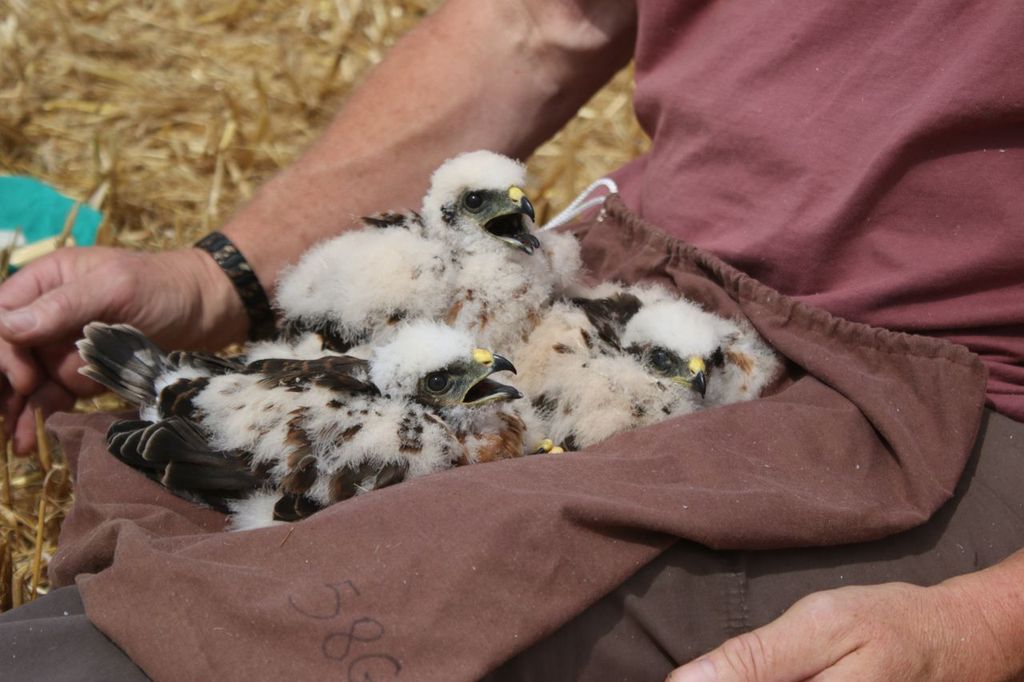
For new blog readers, the Hen Harrier Brood Meddling trial was a conservation sham sanctioned by DEFRA as part of its ludicrous ‘Hen Harrier Action Plan‘ and carried out by Natural England between 2018 – 2024, in cahoots with the very industry responsible for the species’ catastrophic decline in England. In general terms, the plan involved the removal of Hen Harrier chicks from grouse moors, they were reared in captivity, then released back into the uplands just in time for the start of the grouse-shooting season where many were illegally killed. It was plainly bonkers. For more background see here and here.

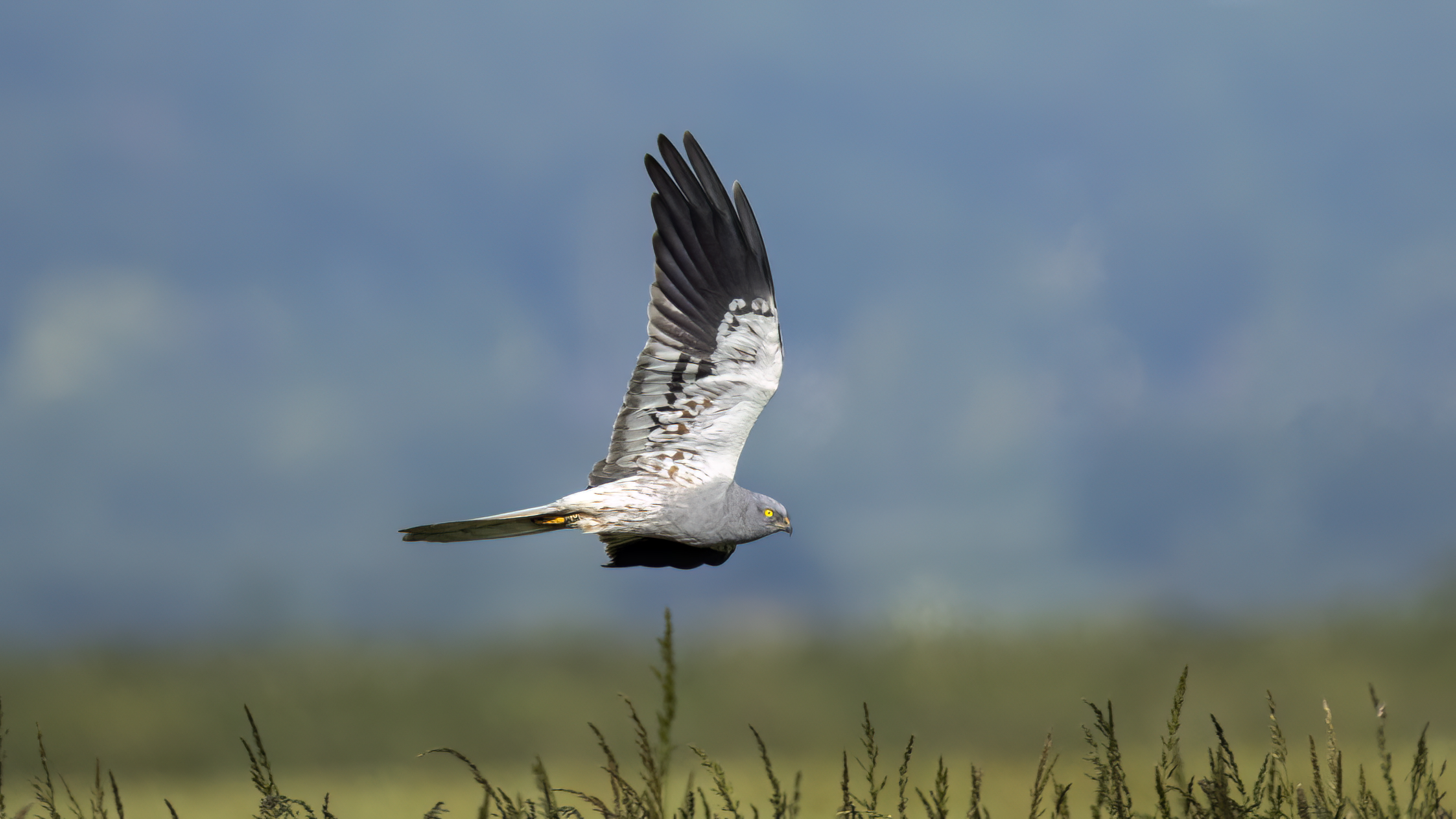
Skydancing Hen Harriers (photo by Pete Walkden)

The end of the Brood Meddling trial was formally announced by Natural England on 14 March 2025, although it had claimed to be “currently reviewing and analysing the data gathered under the trial” in September 2024; a process it said would be “concluded later this year” (i.e. by the end of 2024).

On 2nd January 2025 I submitted an FoI request to Natural England to ask whether that review had been completed. Natural England responded on 28 January 2025 and said it was in the “final draft stage” and was “being prepared for publication“.

On 14 March 2025, when Natural England announced the formal end of the brood meddling trial, it said that it had commissioned four research reports, covering population modelling, social science and evaluation. One of the reports, a population modelling review, was published, and Natural England said the other three reports “are in the process of publication“.

These reports are believed to have influenced Natural England’s decision to close the Brood Meddling trial but had not been made available to the public. I wanted to see them to draw my own conclusions about the success / failure of the trial, and I was especially interested in the social science report, given how hilariously bad an earlier social science report had been.

I submitted another FoI to Natural England on 14 April 2025 asking for a copy of this second social science report.

Natural England responded, 20 working days later on 15 May 2025, to me to tell me that a further 20 working days were needed “because of the complexity / voluminous nature of the request“. There was nothing complex, or voluminous, about my request. It was a simple ask, for a copy of a simple report that Natural England had used in its decision-making about the future of the Brood Meddling trial. Is it any wonder nobody trusts Natural England when it comes out with rubbish like this?

After trying to fob me off with an unjustified delay, Natural England eventually responded again, in June 2025, when once again it refused to release the social science report, this time because:

This report is in final draft stage. Natural England are finalising this report and are progressing with the process of internal review required for publication. We cannot give an exact publication date due to uncertainties inherent in this internal review and publication process. This report is therefore being withheld under Reg 12(4)(d) – course of completion“.

So I waited a further six and a half months, until 5 January 2026, before asking Natural England for a status update on its now long overdue internal review.

Natural England responded on 30 January 2026, still refusing to release the documents because although the internal review had apparently been completed, the reports were now subject to something Natural England was calling a “final quality assurance“. Natural England told me, “We anticipate that the QA process will be completed by Spring 2026” and that once finalised, the reports will be published.

I think it’s Spring 2026 now, isn’t it?

These documents are going to be sensational, eh, having being subjected to ‘draft analysis and review‘, then a ‘final draft stage‘, then an ‘internal review‘, and then a ‘final quality assurance‘ process, all of which has so far taken Natural England at least 19 months to complete, and it’s now been 2.7 years since the last Hen Harrier chick was brood meddled (in 2023).

A complete joke, from the very start to the very end. And through it all, Hen Harriers have remained the victims of routine and systemic illegal persecution on many driven grouse moors throughout the country – information that Natural England has also sought to suppress, apparently on police orders (e.g. see here, here, here, here, here, here, here).

General & hazardous waste, including bags of suspected shot gamebirds, found dumped in a pit on an estate in Scotland

Last month I blogged about the discovery of a large pit containing dead Pheasants, Red-legged Partridges, Wood Pigeons, deer parts, and a lot of rubbish, including a burnt mattress, on the Glenbanchor and Pitmain Estate in the Cairngorms National Park (see here).

A pit containing dead Pheasants & Red-legged Partridges on the Glenbanchor & Pitmain Estate in the Cairngorms National Park (photo by RPUK blog reader)

I wrote about the legislation on the disposal of animal by-products and whether this dumping pit was legal or not (surely it isn’t, but the legislation is very complicated and thus confusing).

I’m pleased to report that a blog reader has drawn the incident to the attention of their local MSP (well done!) and questions are being asked in all the right places. I hope there’s some clarification soon, and if this dumping pit is illegal, that enforcement measures will follow.

On a similar theme, a blog reader has sent me images of another dumping pit, this time found outside of the Cairngorms National Park boundary, on an estate in Strathdearn, the long river valley running from Coignafearn to Moy.

This time, the dumping pit contained mostly general and hazardous waste, although the walker’s attention was first drawn to the pit by what was described as the foul stench of rotting flesh.

The photographs show items such as a large fridge, a chemical spray pump and barrel, a tyre, textiles, plastics, wood, cardboard, electrical equipment, metals, and a large number of white/green/yellow plastic sacks that had been zip-tied.

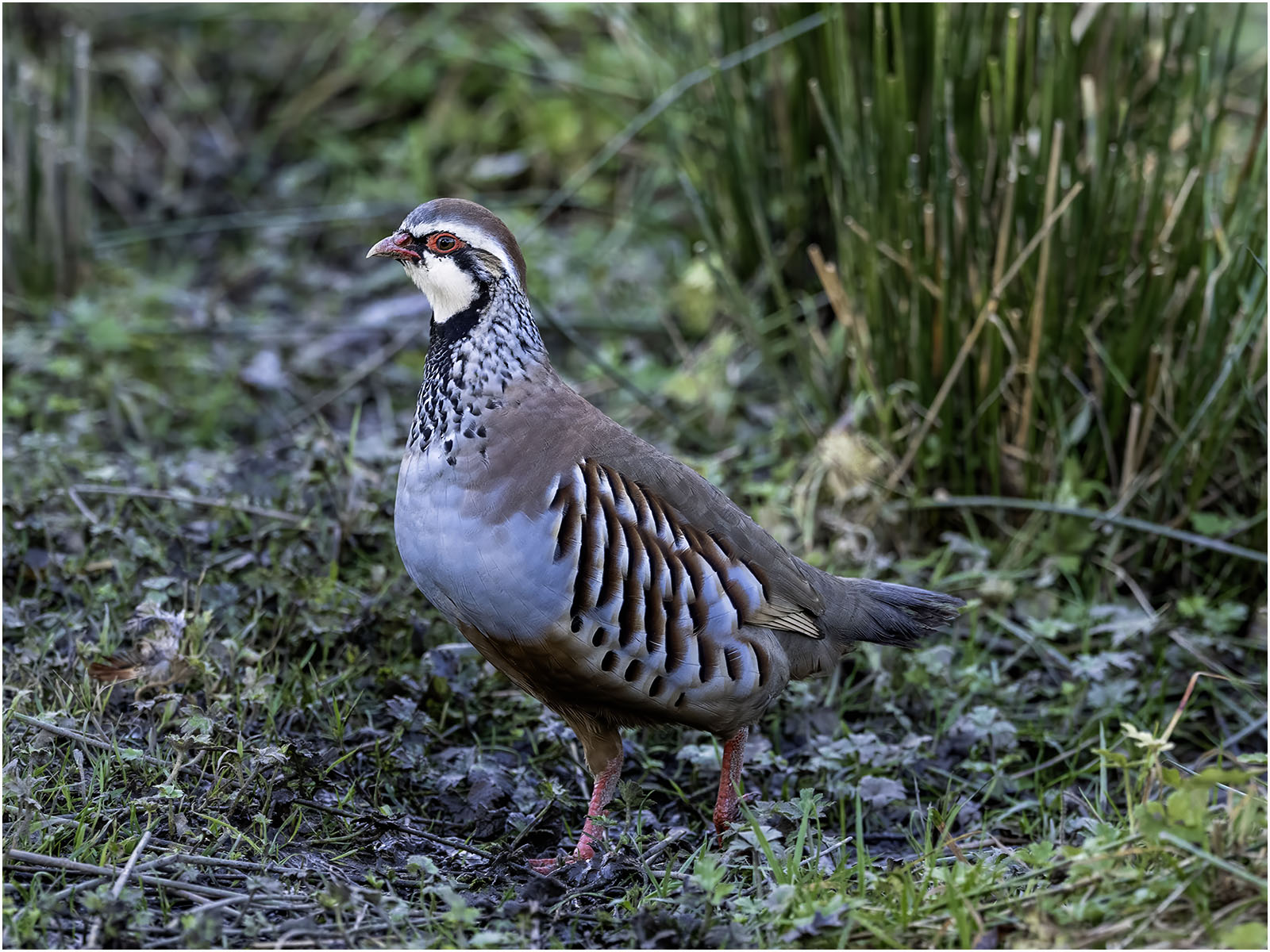
It is suspected that these sacks, which originally contained Spratts Game Food Release Pellets, now contained shot gamebirds, probably Red-legged Partridges, which are known to be released in large numbers in the area. The blog reader didn’t try to open the sacks because entering the pit would have been hazardous.

As with the dumping pit found on the Glenbanchor and Pitmain Estate, the walker thought the items had been dumped for burial because of the presence of the rubble mound at the side of the hole.

Obviously, the burial of hazardous waste (known as ‘special waste’ in Scotland) is unlawful. Items such as fridges can be taken to household waste and recycling centres where they can be disposed of for free.

If there are also dead gamebirds, there are different rules for the disposal of animal by-products (see above commentary on the pit at Glenbanchor & Pitmain Estate). There are some exemptions that permit burial, and it’s not clear to me whether any apply to this site, but the exemption available for areas classified as ‘remote areas’ in Scotland do not apply here, because the parish of Moy & Dalarossie is outside the classified area.

Unlike the pit found at Glenchor & Pitmain, the walker did not see anybody at this pit, and didn’t witness anybody adding any items in to the pit, so it is not clear who is responsible.

The pit’s location is at NH75022346, which according to Andy Wightman’s Who Owns Scotland website, is Garbole Forest, very close to the estate boundaries of Glen Kyllachy & Farr Estate, and Glenmazeran Estate.

Andy Wightman’s research indicates that the owner of Garbole Forest is a company called Newbie Ltd, listed as ‘hunting, trapping & related services activities’ and worth an estimated £13 million. Wightman’s website shows Newbie Ltd is also listed as the co-owner of Glen Kyllachy & Farr Estate, along with a company called Newbie Salmon Fisheries (Property) Ltd. Companies House records show that two of the three Directors of Newbie Ltd are also the sole Directors of Newbie Salmon Fisheries (Property) Ltd.

The walker who discovered this dumping pit told me they’d reported it as a potential fly-tipping incident to Highland Council but they didn’t receive any response.

Perhaps the blog reader who alerted the local MSP to the dumping pit on Glenbanchor & Pitmain Estate might also want to do the same with this one. It’s certainly worthy of further high level investigation.