FoI reveals some inconsistencies in Invermark Estate’s claims about shot Peregrine

Last month, NatureScot imposed a three-year General Licence restriction on part of Invermark Estate in the Angus Glens, in relation to the discovery of a shot Peregrine that was found on 3 September 2024. The Peregrine’s gunshot injuries were severe and it later had to be euthanised. Nobody has been charged or prosecuted in relation to this crime.

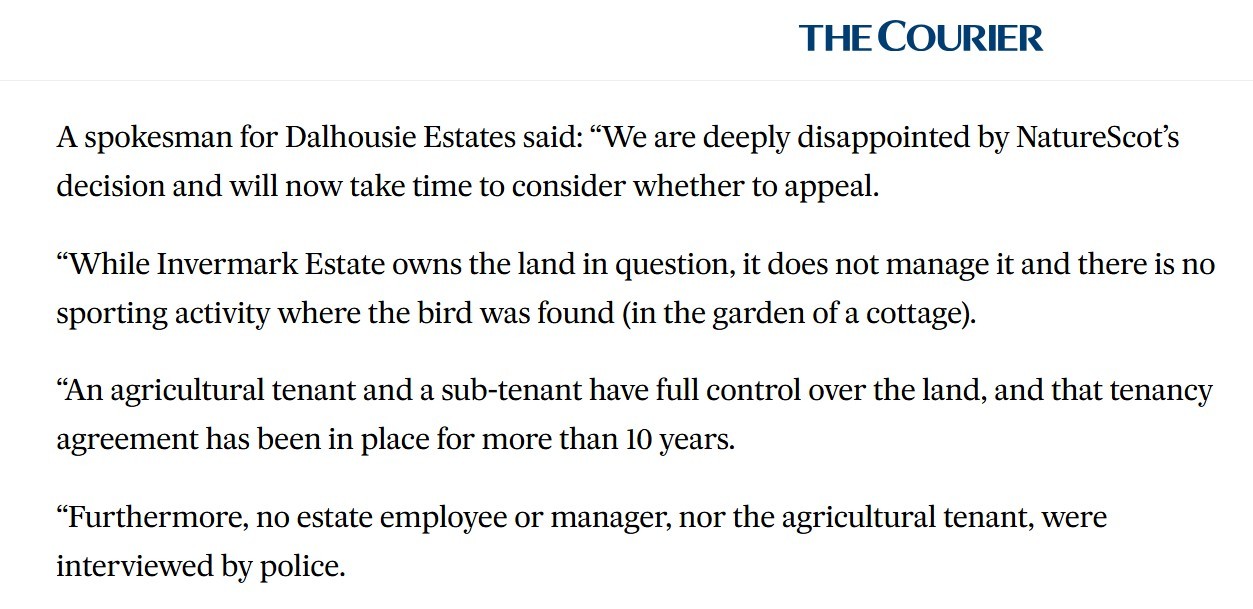
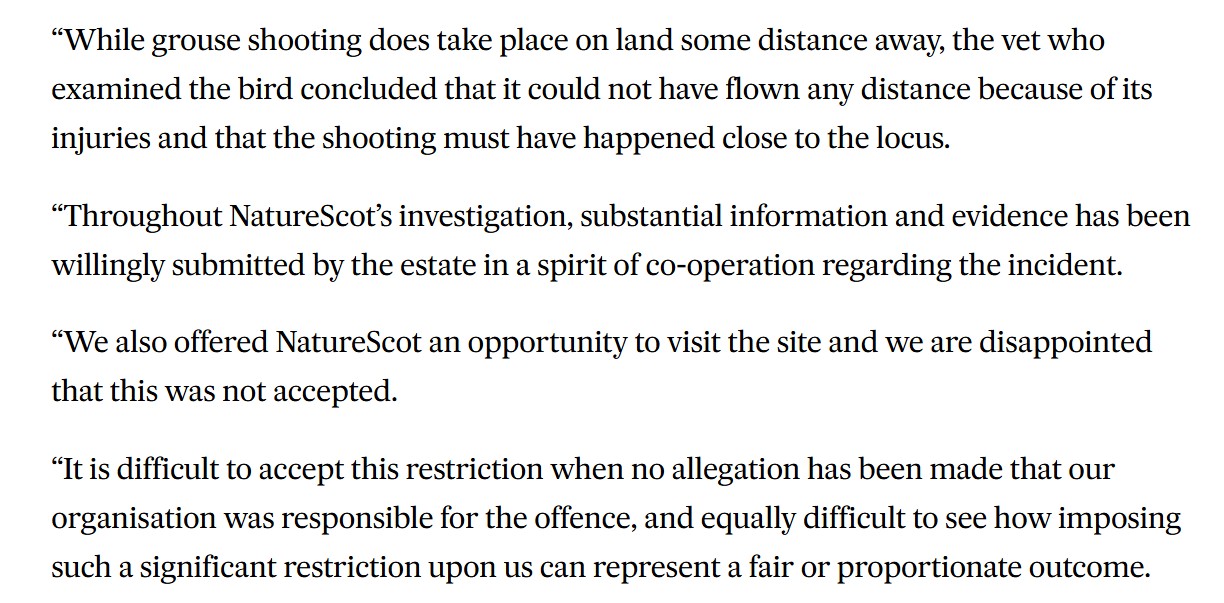
A statement attributed to Invermark Estate was published as part of an article in The Courier on 7 August 2026, the day the three-year General Licence restriction was announced. The statement read as follows:

The General Licence restriction was suspended two weeks after it was imposed as Invermark Estate had decided to make a formal appeal to NatureScot against the restriction. That appeal is currently ongoing.

When I wrote about that appeal, and published Invermark’s statement, I said it contained some interesting claims and that I intended to return to it in a future blog.

The first point of interest in Invermark Estate’s statement was the revelation that the shot Peregrine had been found “in the garden of a cottage“. This information was not previously available in the public domain.

The reason this information is of interest is because it allows us to pinpoint the location. It was already known that the General Licence restriction was imposed on tenanted land associated with Dalbrack Farm, as made clear in NatureScot’s restriction notice:

‘In the case of Invermark Estate, the restriction will apply to the Dalbrack Farm area of the estate. NatureScot received robust evidence from Police Scotland in relation to the shooting of a peregrine which was discovered in this area’. 

An examination of several maps shows that there’s only one cottage in this immediate area – Dalbrack Cottage, which neighbours Dalbrack Farm. It’s my understanding that Dalbrack Farm is tenanted, and Dalbrack Cottage is sub-tenanted.

Photo by Andrew Curtis, May 2021, used under Creative Commons Licence and annotated by RPUK

You’ll notice that Invermark Estate’s statement included the following carefully chosen words:

“While Invermark Estate owns the land in question, it does not manage it and there is no sporting activity where the bird was found (in the garden of a cottage)“.

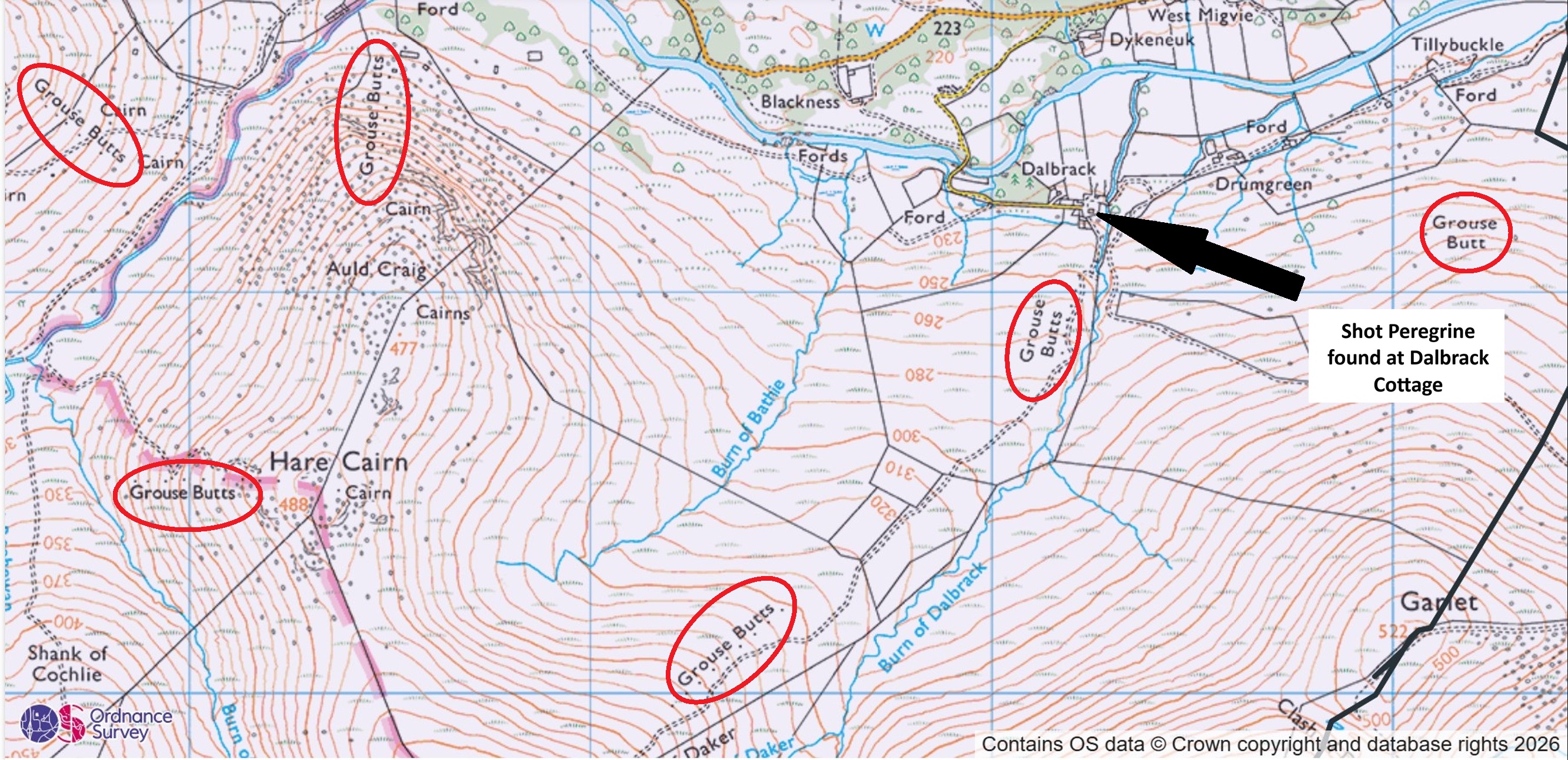
Whilst this statement may be accurate, I would argue that it’s tightly worded and fails to inform the reader that the cottage in question is situated right on the edge of a grouse moor (remember, the Courier readers didn’t have the benefit of seeing a map). It looks to me like a deliberate attempt by Invermark Estate to infer some considerable distance between the estate’s grouse shooting activities and the garden of the cottage, because it fails to mention the proximity of the grouse moor and some of the estate’s grouse butts, which according to maps, are just metres away:

And these are not the only grouse butts in the area, as you can see from this map showing the part of Invermark Estate close to Dalbrack:

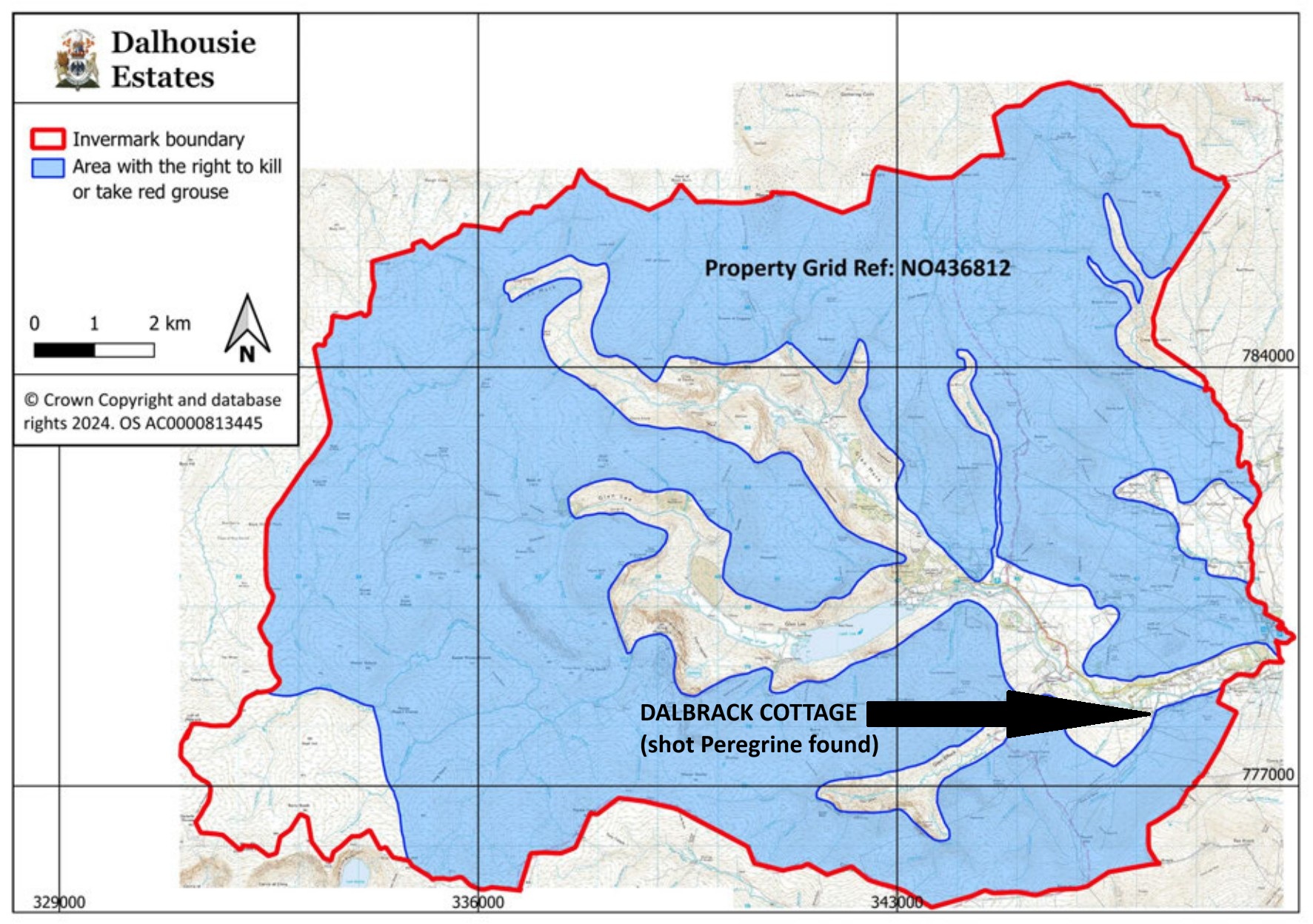
Map sourced from Andy Wightman’s Who Owns Scotland website, annotated by RPUK

What this map doesn’t tell us, of course, is whether these grouse butts are still in use; they could have long been decommissioned and are now just historical cartographic relics. This brings me to the second point of interest in Invermark Estate’s statement:

“While grouse shooting does take place on land some distance away, the vet who examined the bird concluded that it could not have flown any distance because of its injuries and that the shooting must have happened close to the locus“.

Unlike Invermark Estate, the general public has not been afforded sight of the post mortem report so we’re having to reply upon Invermark Estate’s claim about what it says. Would it be feasible for the bird to have been shot further up the hill and then it glided down to the cottage garden where it crash landed at the bottom of the hill, without having had to flap its wings? Instead of having to rely upon Invermark Estate’s claim, I’d rather see the PM report for myself so I’ve requested a copy via FoI from NatureScot. If/when it’s released, I’ll post a copy here.

But what I can test is Invermark Estate’s claim that “grouse shooting does take place on land some distance away…“.

The phrase “some distance away” is quite subjective, isn’t it? What does it mean? A few metres, a few kilometres, a few glens away? The inference is that grouse shooting does not take place nearby [to where the Peregrine was found with shotgun injuries].

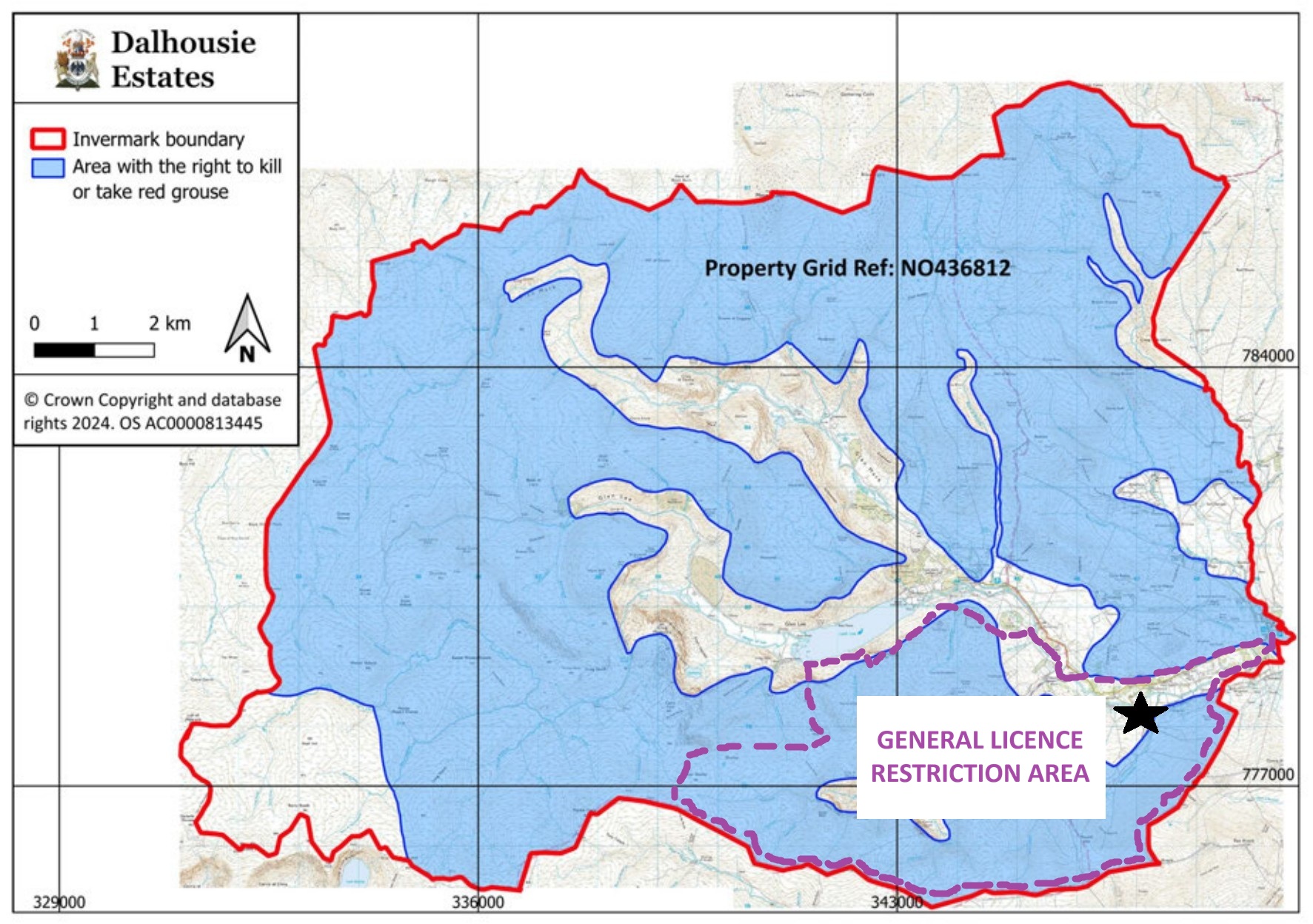
How interesting, then, to see the map that Dalhousie Estates (owner of Invermark Estate) submitted to NatureScot as part of its application for a grouse shooting licence. I sourced this map via an FoI and have annotated it to show the location where the injured Peregrine was found. It looks pretty clear to me that Invermark Estate’s estimation of “some distance away” is quite different to mine and probably that of most other people!

The third and final point of interest (for now) in Invermark Estate’s statement is this:

“It is difficult to accept this restriction when no allegation has been made that our organisation was responsible for the offence, and equally difficult to see how imposing such a significant restriction upon us can represent a fair or proportionate outcome“.

Invermark Estate has claimed that ‘it doesn’t manage the land in question’ and that “An agricultural tenant and sub-tenant have full control over the land, and that tenancy agreement has been in place for more than ten years“.

It isn’t clear to me whether Invermark Estate is claiming it doesn’t manage the land where the injured Peregrine was found or whether it’s claiming it doesn’t manage ‘the land in question’, which I take to mean the land covered by the General Licence restriction.

If it’s the latter, then why would Invermark Estate be so concerned about what it describes as “such a significant restriction upon us“? How could it be a restriction, significant or otherwise, if Invermark Estate has no involvement with the management of the land under restriction?

If it’s the former, then why didn’t Invermark Estate make it clear in its statement that it manages the land for grouse shooting in immediate proximity to where the injured Peregrine was found?

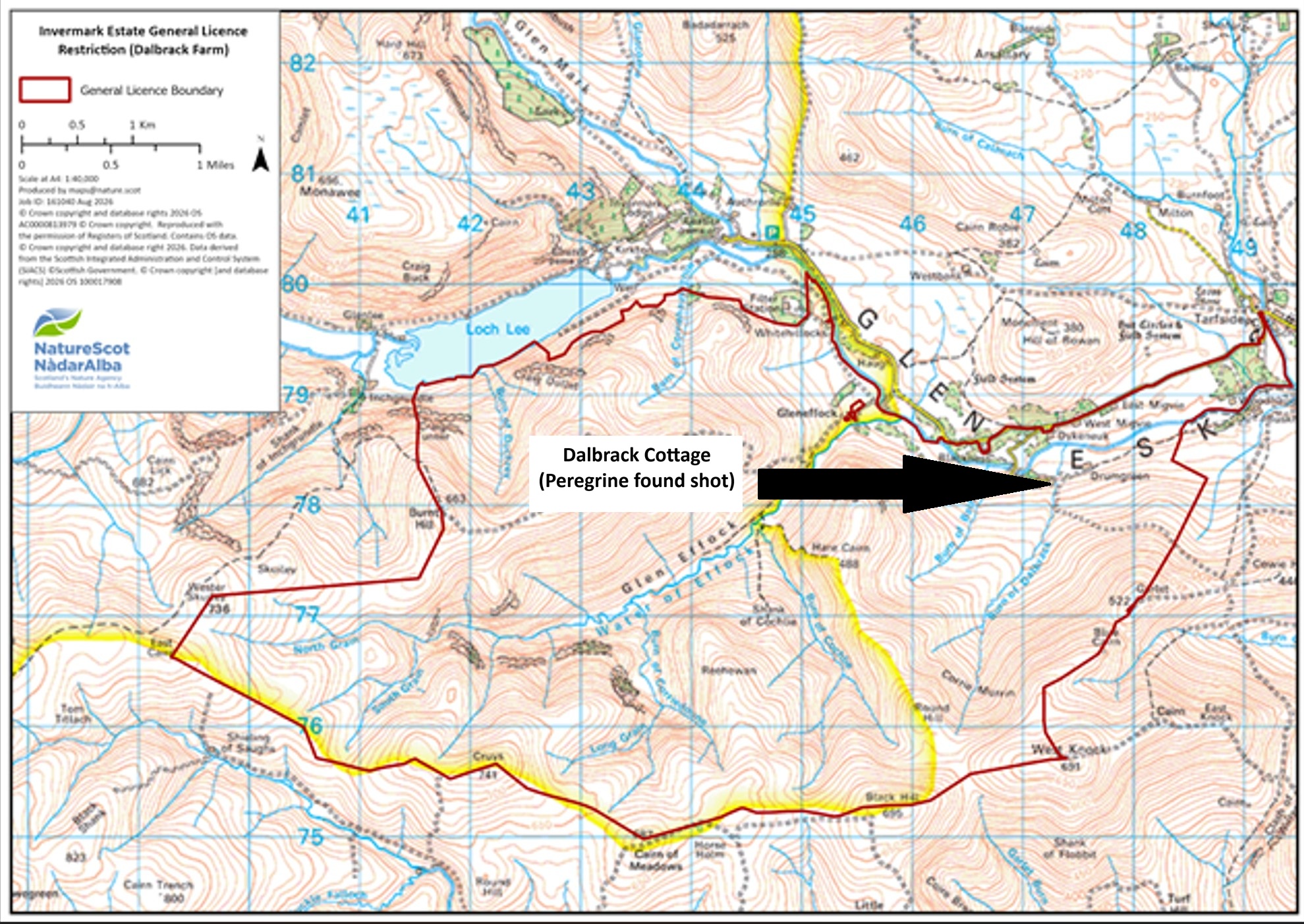
It’s worth looking again at the area of restriction imposed by NatureScot, and comparing it with Invermark Estate’s grouse shoot licence boundary map.

Here is NatureScot’s map showing the area of General Licence restriction (map annotated by me to show the location of the injured Peregrine):

And here is the General Licence restriction area (purple dotted line – note, this is not precise) overlaid on to Invermark Estate’s grouse shoot licence boundary map, with a black star denoting the location where the injured Peregrine was found:

It’s clear then that the General Licence restriction area overlaps with a considerable chunk of moorland where Invermark Estate has the right to kill or take Red Grouse.

Are we to believe that Invermark Estate “does not manage” the land it owns and where the estate has a licence to shoot Red Grouse?

That would be extraordinary.

I await the outcome of Invermark Estate’s appeal against its General Licence restriction with interest.

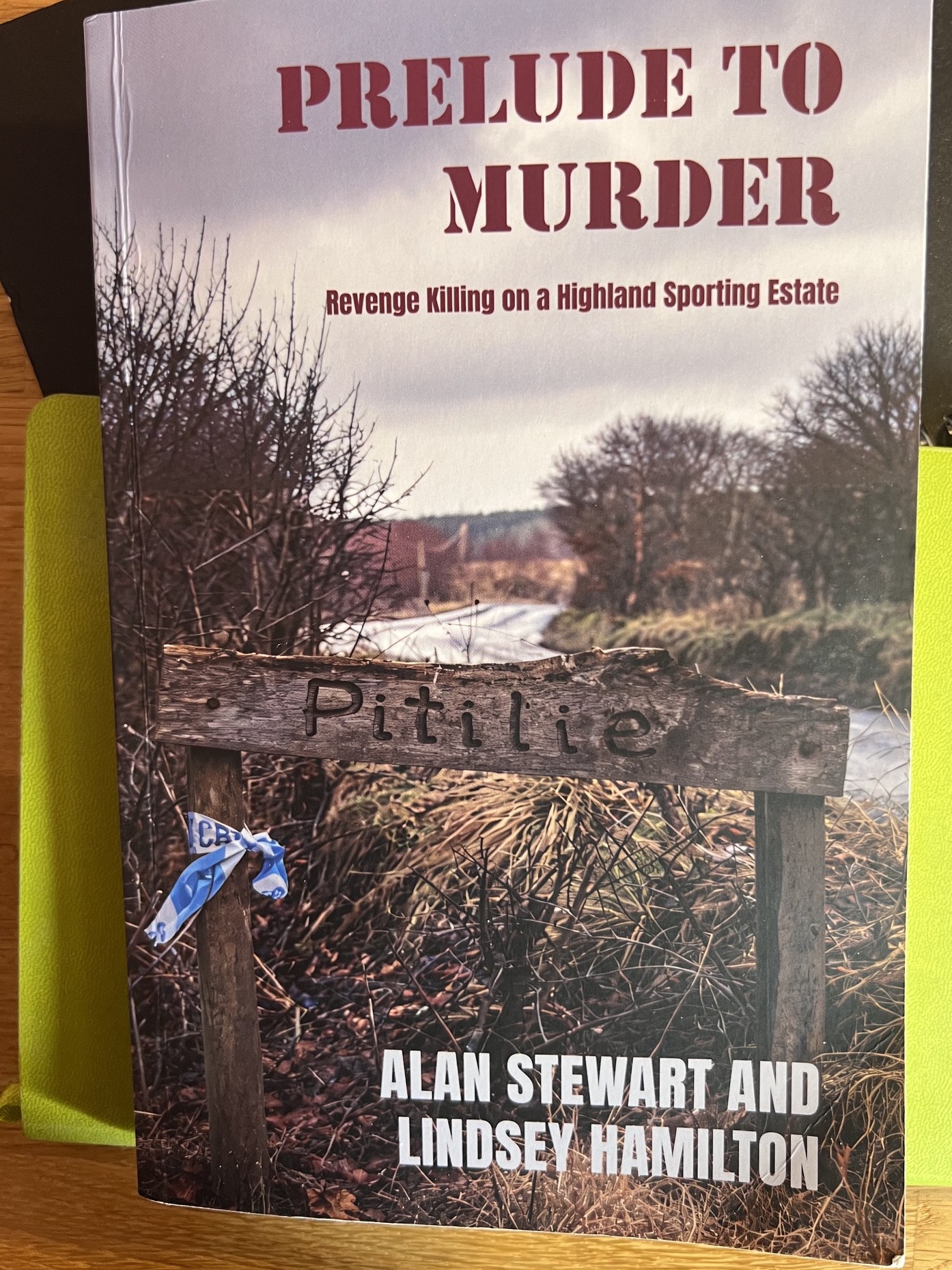
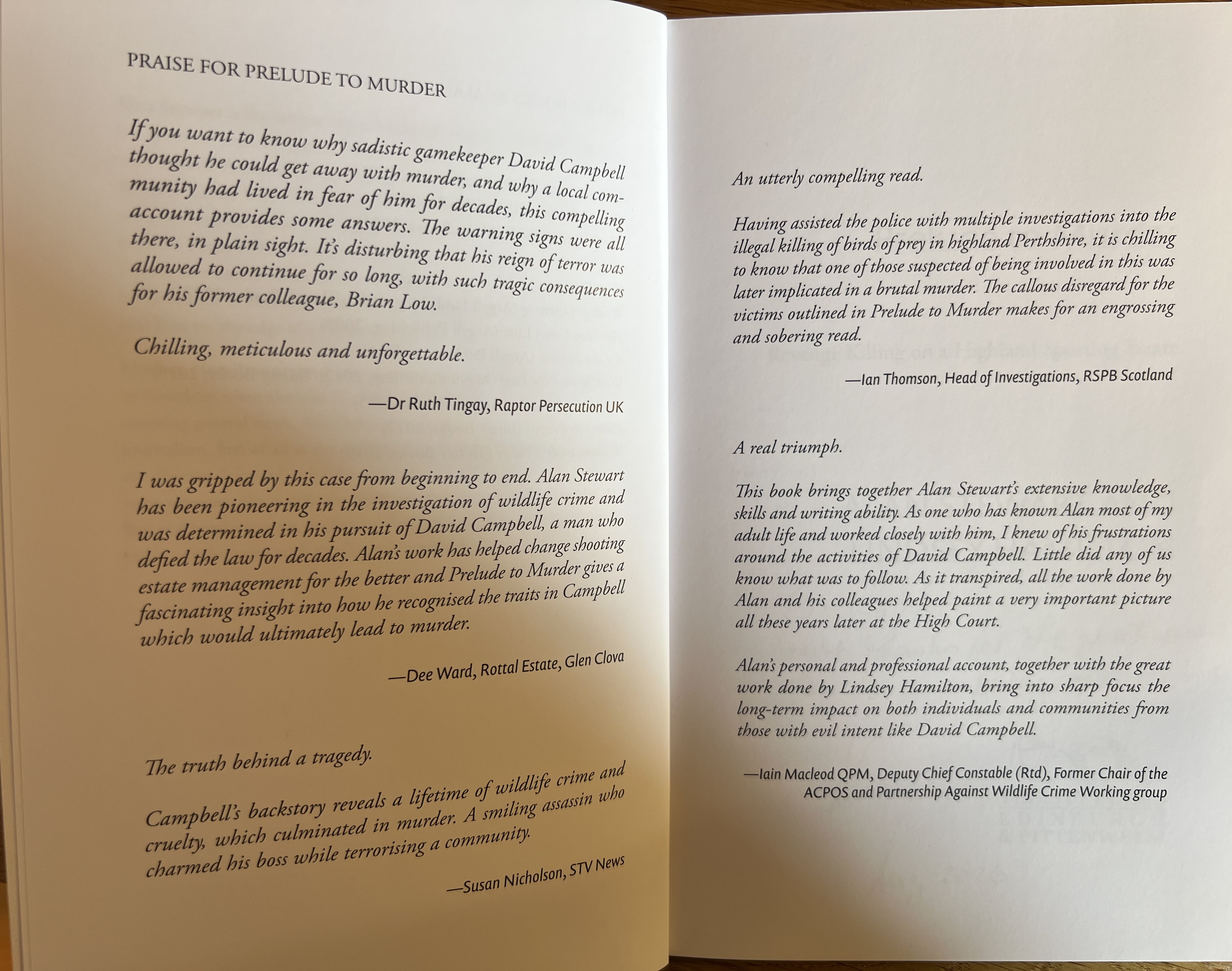
Book launch: Prelude to Murder – Revenge Killing on a Highland Estate

Former Tayside Police Wildlife Crime Officer Alan Stewart’s book, co-authored by Lindsey Hamilton, has now been published.

Prelude to Murder: Revenge Killing on a Highland Estate focuses on the trial and subsequent conviction for murder of ex-Edradynate Estate Head Gamekeeper David Campbell, who was recently sentenced to a minimum 19 years in prison for the ambush and execution of former Edradynate Estate groundsman Brian Low, whom Campbell blasted with a shotgun whilst Brian was out walking his dog.

The book also provides commentary on the many wildlife crime investigations at Edradynate Estate during Campbell’s employment, mostly centred on the illegal poisoning and shooting of protected birds of prey, for which nobody was ever convicted.

There’ll be an official book launch at 7pm on Friday 11 September 2026 at Camserney Hall, Aberfeldy, PH15 2JL where the two co-authors will be in conversation with Jim Mackintosh. Entry is free – more details here.

There’ll be another event at 7pm on Thursday 24 September 2026 at Pittenweem New Town Hall, Session Street, KY10 2QL – more details here.

Prelude to Murder is available to buy from the publisher (Thirsty Books) or a signed copy direct from Alan Stewart.

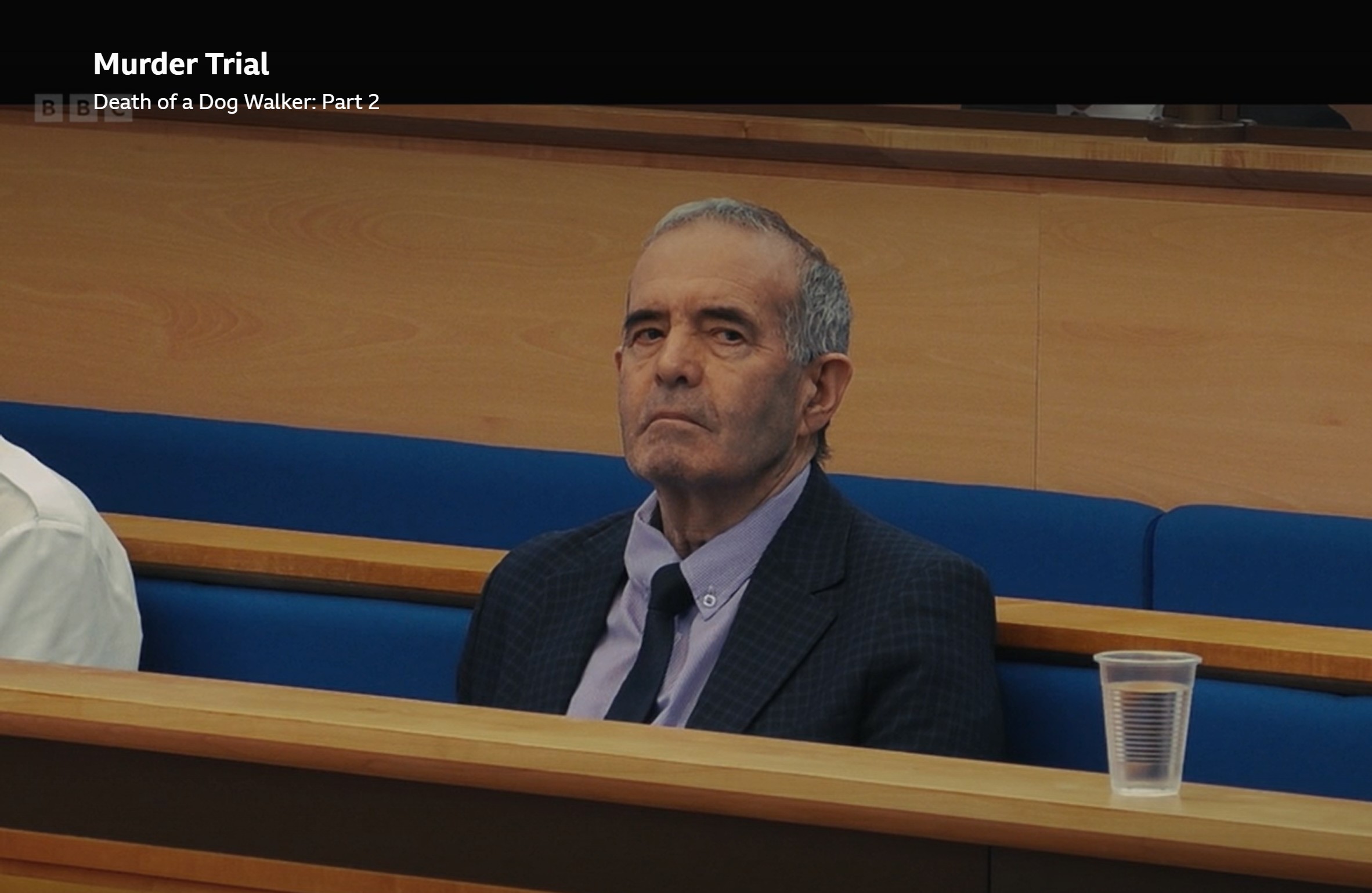
A fascinating two-part documentary about Campbell’s trial and conviction is available on BBC iPlayer for the next 11 months. Murder Trial, Death of a Dog Walker can be watched here.

Defra’s Call for Evidence on all aspects of gamebird rearing, releasing and shooting is now open – this is your opportunity to be heard

Further to yesterday’s blog, Defra’s Call for Evidence on all aspects of gamebird rearing, releasing and shooting is now open, and will close at 23.59hrs on 1st November 2026.

The Call for Evidence covers Red Grouse, Pheasant, Red-legged Partridge and Mallard.

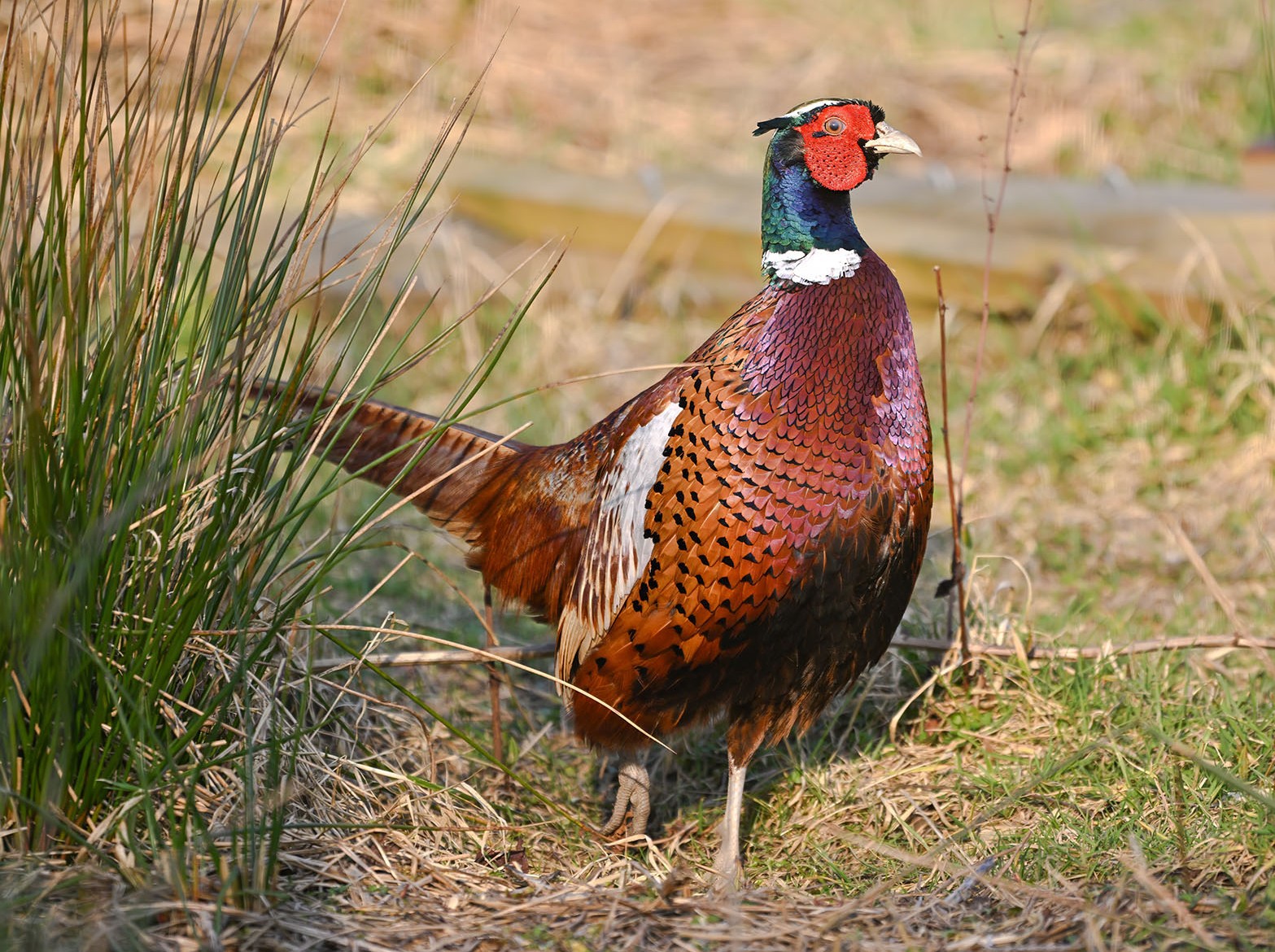
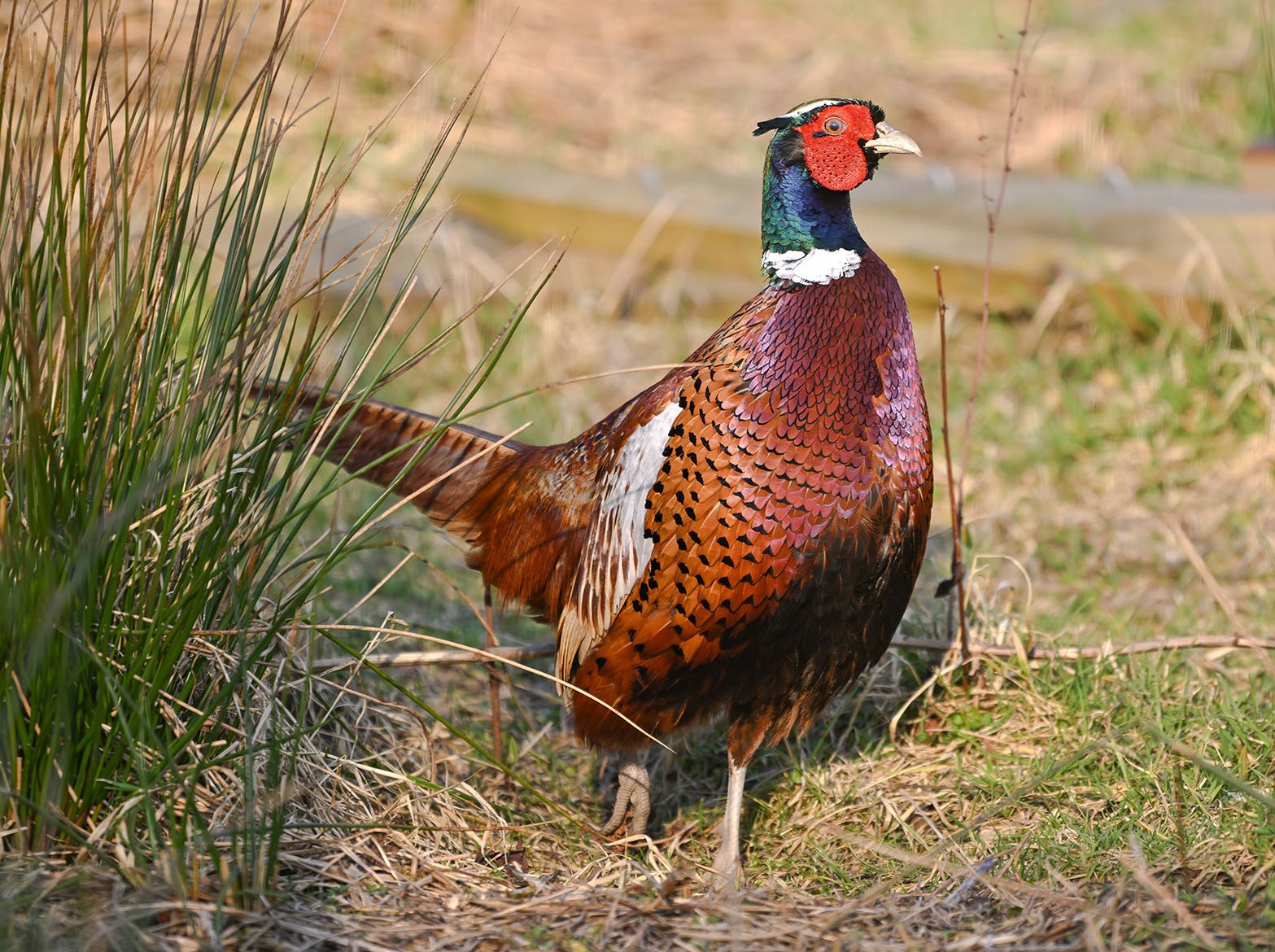
Pheasant (photo by Ronnie Gilbert)

The Call for Evidence is open to anybody, and Defra has stated that it would particularly welcome responses from Gamebird producers, shoot operators, land managers, Veterinary and animal health experts, Environmental, conservation and animal welfare organisations, Local communities and land users, Academics and researchers, and Public bodies and delivery partners.

The Call for Evidence relates to England (because gamebird policy is devolved in Wales, Scotland and Northern Ireland), but Defra has stated that evidence gathered from outside of England will still be welcome if it is considered relevant.

Defra is separately commissioning an independent assessment of the economic costs/benefits of the gamebird sector so evidence of this nature will not be considered in this particular exercise.

The evidence collected will be used to inform any future decisions related to Government policy on gamebirds, which, if significant, will undoubtedly then be subject to a public consultation.

Everyone should buckle in because this will be a long and drawn-out process (remember it took the Scottish Government almost five years to introduce licensing for grouse shooting, from the time the decision was made to the time the legislation was implemented, and there are still aspects of the legislation that have not yet been put in place).

Nevertheless, it’s a very important first step and those who have spent years, if not decades, campaigning for scrutiny, have finally battered down a door that has been firmly locked and bolted for far too long.

You can read the Call for Evidence document below, and it’s well worth having a look at the extent of the questions. Some of them are specifically aimed at those directly involved with gamebird rearing, release and shooting, but there are plenty of opportunities for others to have their say.

For example, take a look at Question 29: ‘Are there any additional positive or negative impacts [of gamebird release and shooting], not covered above, for example recreational benefits?‘

This question offers a fantastic opportunity for those who are not involved in gamebird releasing and shooting but who still have to suffer the consequences.

For example, restricted access for walkers, disturbance to the quiet enjoyment of people’s gardens, pets being caught, injured or killed in traps associated with the local shoot, personal harassment and intimidation from gamekeepers and shoot owners, including criminal damage to vehicles and property and dead animals dumped in gardens, pets poisoned and killed etc etc.

Quite a few communities have spoken out about these and other issues (e.g. see here, here, here, here and here), and raptor persecution associated with land managed for gamebird shooting has been raised repeatedly as a major concern for residents and visitors to several National Parks (e.g. see here, here, here).

There is plenty of time before the Call for Evidence closes, so there’s no need to rush in to a response straight away. I’m sure there will be guidance for responding offered by several organisations in due course, but for now, please spend some thinking about what evidence you could provide. It’s really important that this opportunity is not missed.

Defra confirms its call for evidence will encompass all aspects of gamebird rearing, release and shooting

Good news!

Further to Wednesday’s blog about an imminent call for evidence by Defra about the welfare aspects of gamebird breeding, and confusion about whether this would also include gamebird releases and licences to shoot, there is now clarification that the evidence review will consider ALL aspects of gamebird rearing, release and shooting.

Defra Minister Sue Hayman (Baroness Hayman of Ullock, Parliamentary Under-Secretary) issued a written statement about it yesterday, as follows:

GAMEBIRD CALL FOR EVIDENCE

As set out in the Land Use Framework and the Animal Welfare Strategy for England, the Government committed to strengthening the evidence base on gamebird rearing, release and shooting in England.

I am today announcing that a Call for Evidence will launch on 4 September 2026 as the next step in delivering that commitment.

Gamebird rearing, release and shooting are established activities within rural land use and management. They can contribute to rural economies and land management, but their environmental, animal health, animal welfare and wider impacts are not yet fully understood. The Call for Evidence will gather information and evidence to improve understanding of both the positive and negative impacts associated with these activities.

The Call for Evidence will consider the rearing of gamebirds, the release of reared birds from captivity, associated shooting and land management activities, and impacts at local, regional and national level. It will seek evidence on biodiversity, protected sites and habitats, biosecurity and disease, bird of prey crime, animal welfare, use of natural resources, and other relevant environmental or social impacts.

Evidence gathered through this exercise will be carefully reviewed, including by independent external reviewers for information on release and shooting. This will support Defra’s understanding of these activities and their impacts and inform any future policy development. No decisions have been taken at this stage on whether to introduce any changes, and any future proposals would be subject to public consultation.

The Call for Evidence will be published on GOV.UK and will be open for responses until 1 November 2026.

ENDS

At the time of writing, the Call for Evidence has not yet been published but is expected later today, so the terms of reference are not yet clear. Defra is hosting a stakeholder webinar this morning to provide further details for those of us likely to participate, and also information about the response process.

I’ll blog more about this when things are clearer.

Update 5 September 2026: Defra’s Call for Evidence on all aspects of gamebird rearing, releasing and shooting is now open – this is your opportunity to be heard (here)

Defra poised to open consultation on welfare implications of mass breeding of gamebirds

The UK Government is poised to open a public consultation on the welfare implications of the mass breeding of gamebirds, according to an article published by The Guardian this afternoon (see here).

This consultation has been anticipated, after the Labour Government included it in its Animal Welfare Strategy which was published in December 2025 (see here).

What isn’t clear, to me anyway, is whether this consultation also includes evidence-gathering for the option of licensing gamebird shooting and releases, which was promised separately in the Government’s Land Use Framework for England, published in March this year (see here).

Today’s article in The Guardian jumps seamlessly between the two issues and gives the impression of a single consultation covering both issues, rather than two separate consultations.

I couldn’t find any notice of a consultation on Defra’s website, so I guess the announcement is imminent and we’ll find out the extent of it when it’s actually published.

I was invited to provide a comment for The Guardian‘s piece today. I told the journalist that yes, there is plenty of evidence documenting the failure of animal welfare considerations for the mass breeding and rearing of gamebirds and it is definitely worthy of attention for the benefit of those individual birds. However, I also pointed out that addressing those welfare concerns was a bit like treating the symptoms but not the cause.

Putting an end to the rearing and annual release in to the countryside of an estimated 60 million non-native game birds for shooting should be the government’s focus. If they stopped that, then the associated welfare issues, as well as the many environmental issues and wildlife crimes associated with the gamebird shooting industry would also be sorted.

The Guardian article can be read here.

UPDATE 4 September 2026: Defra confirms its Call for Evidence will encompass all aspects of gamebird rearing, release and shooting (here)

Update 5 September 2026: Defra’s Call for Evidence on all aspects of gamebird rearing, releasing and shooting is now open – this is your opportunity to be heard (here)

Game dealers say more Red-legged Partridges have been released this year than they can cope with

Today is the official opening day of the Red-legged Partridge (RLP) shooting season in England, Scotland and Wales.

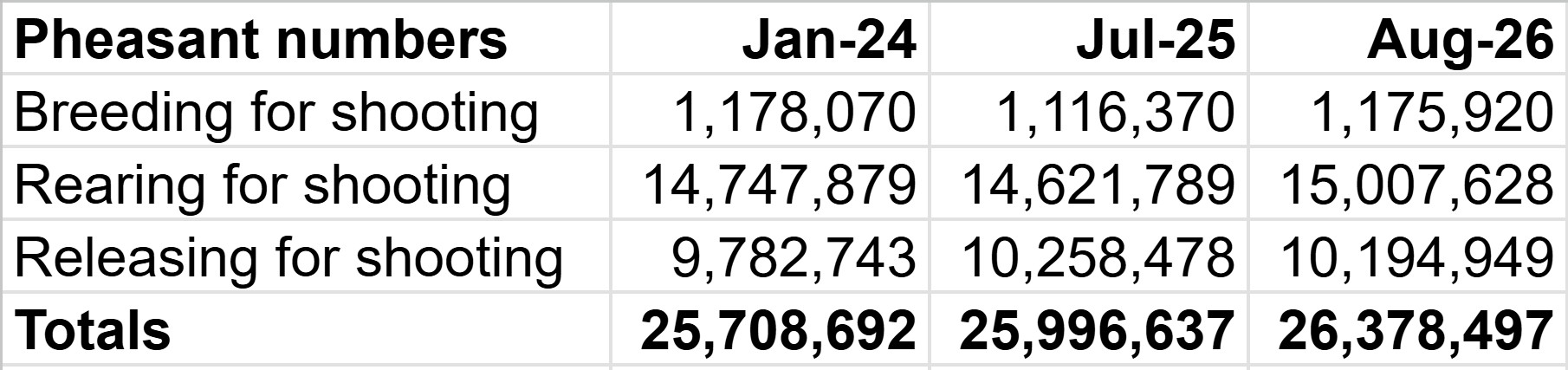
An estimated 10 million RLPs are released into the countryside every year, for shooting. They join an estimated 50 million released Pheasants – although the shooting season for Pheasants doesn’t start until 1 October.

The non-native Red-legged Partridge (photo by Ronnie Gilbert)

The precise number of these non-native Pheasants and RLPs released each year isn’t known – research published recently by Guy Shrubsole demonstrated that shooting estates in England are failing to declare millions of released birds, and research published earlier this year by Wild Justice demonstrated that some shoots are releasing birds unlawfully, under the radar of the authorities.

Someone asked me this morning whether there was any evidence that shoots were releasing fewer birds this year, as a consequence of last year’s Bird Flu outbreak.

Well, according to the shooting press, apparently the opposite is true, at least with regard to RLPs.

Three shooting publications are reporting that game dealers have sent a warning to shoot managers this year, saying that there is a ‘a glut’ of RLPs being released this year; so many in fact that the game dealing trade (the people who process and sell on the shot birds) are concerned that the number of RLPs “go beyond what the trade can handle“.

The estimated number of predicted RLP releases seems to originate from a ‘market briefing note’ recently issued by Guns on Pegs, an online market place for selling shoot days. I haven’t been able to find a copy of that note so can only rely on what the shooting press is saying about the content.

But Shooting Times, Sporting Gun and the Fieldsports Journal are all reporting on the story, with quotes from two prominent individuals from the game dealing industry:

Leon Challis-Davies of the game meat organisation Eat Wild said: “To put it bluntly, shoots have stocked more partridge than usual and there just isn’t the capacity to cater for the volumes we’re expecting unless we all get our act together soon“.

Tristan Kirk of Lincolnshire Game said: “I encourage every estate that supplies partridges to the food industry to speak to their preferred processors as soon as possible, with accurate information about the numbers expected and dates. This allows us to have a forecast for sales or storage requirements until a sale can be found. This is crucial and should be normal practice“.

There’s also commentary about the poor condition of some gamebirds received by dealers, attributed to ‘bad handling’ on the shoot, which means that those gamebirds cannot then be processed for human consumption.

It’s all quite interesting, given the game shooting industry’s mantra (Code of Good Shooting Practice) that:

“Shoot managers must ensure compliance with relevant game meat and food hygiene regulations“

and

“Shoot managers must ensure they have appropriate arrangements in place for the sale or consumption of the anticipated bag in advance of all shoot days“. [Emphasis is mine].

Stand by for piles of shot and dumped or fly-tipped RLPs across the UK this season….

Now, where’s that evidence-gathering exercise on gamebird release and shooting, promised by Defra?

Red Kite found poisoned in Cairngorms National Park: Police Scotland appeals for information

Press release from Police Scotland (31 August 2026)

APPEAL AFTER BIRD OF PREY POISONED IN ABERDEENSHIRE

Officers are appealing for information after a bird of prey was poisoned in Aberdeenshire.

On 30 June, 2026, a member of the public was walking at Morven Hill, near Dinnet when they found a dead red kite.

Following enquiries, it was established that the red kite had been poisoned.

Red Kite by Pete Walkden

Wild Crime Liaison Officer Constable Ann Ashman said: “Red kites are protected under the Wildlife and Countryside Act and it is illegal to kill this protected species.

“Poisoning a bird or animal is not only cruel and callous, but it can harm other wildlife as well as members of the public. The use of poison in a public area is extremely dangerous and poses a significant risk to anyone who comes into contact with it.

“Our enquiries are ongoing to establish the full circumstances. We would urge the public not to handle any dead animals they may find.

“I would appeal to anyone with any information about the poisoning of these birds to contact us.”

Anyone with any information is asked to contact 101 quoting reference 2910 of 30 June 2026. Alternatively, you can contact Crimestoppers on 0800 555 111 where information can be given anonymously.

ENDS

General Licence consultation (Scotland) – Wild Justice’s step-by-step guide

NatureScot is currently running one of its periodic public consultations reviewing the use of General Licences for wildlife management.

As discussed earlier this week, RSPB Scotland considers the current system of General Licensing as being “unfit for purpose” (see here).

Campaign group Wild Justice agrees with that position and has produced a step-by-step guide for anyone who wants to participate in the public consultation.

It’s important that participants use their own words rather than a cut and paste job, so the Wild Justice guidance is exactly that – just guidance.

The consultation closes on 31 August 2026 (this coming Monday) although the terms of reference for the consultation don’t provide a specific closure time on Monday, so if you’re able to complete the process before Monday that would be ideal.

Thank you

Invermark Estate appeals 3-year General Licence restriction imposed after evidence of raptor persecution

Earlier this month, NatureScot announced it was imposing a three-year General Licence restriction on Invermark Estate in the Angus Glens, relating to the discovery of a Peregrine with shotgun injuries found on 3 September 2024.

Invermark Estate boundary (in red), sourced from Andy Wightman’s Who Owns Scotland website

The three-year General Licence restriction on Invermark Estate doesn’t apply to the whole estate, just to land managed by Dalbrack Farm (outlined in red on the map below), which is owned by Invermark Estate, and prohibits the use of General Licences 01, 02 and 03 on that land from 7th August 2026 up to and including 7th August 2029.

In accordance with NatureScot’s Framework for implementing General Licence restrictions, Invermark Estate was entitled to appeal the restriction decision within 14 days of its implementation.

When an estate makes a formal appeal in writing, it effectively suspends the General Licence restriction notice until such time that NatureScot makes a decision on the appeal, which it tries to complete within four weeks.

I noticed yesterday that the decision notice to impose the three-year General Licence restriction on Invermark Estate had vanished from NatureScot’s website, which I interpret as meaning Invermark has appealed the restriction decision, and so NatureScot has temporarily suspended the restriction whilst the appeal is considered.

I’m not aware of any previous appeals made by other estates against General Licence restrictions ever being successful. Failed appeals include Raeshaw Estate and Corsehope Farm in 2016 (here, and a further failed judicial review in 2017, here), Burnfoot Estate and Wester Cringate Estate’s failed appeal in 2016 (here), Leadhills Estate’s failed appeal in 2020 (here, and for hilarious details of that failed appeal see here), Leadhills Estate’s (again) failed appeal in 2021 (here), Lochan Estate’s failed appeal in 2022 (here), Invercauld Estate’s failed appeal in 2022 (here), Moy Estate’s failed appeal in 2022 (here), and Raeshaw Estate’s (again) failed appeal in 2026 (here); Raeshaw has now lodged a judicial review against this latest decision (here).

Millden Estate said it would appeal its General Licence restriction in 2023 although I’m not sure whether it ever did. If it did appeal and I missed it, the appeal must have failed because the restriction was still in place in March 2026 when it was due to formally end. Lochindorb Estate is currently serving a General Licence restriction but I’m not sure it ever appealed, and if it did, the appeal must have failed because the restriction is still active today. The Milton of Drimmie Estate is currently serving a General Licence restriction and hasn’t made an appeal because the restriction is still in place and the appeal deadline has now passed.

General Licence restrictions are imposed on estates when there is sufficient evidence from Police Scotland that raptor persecution has taken place but when there is insufficient evidence to prosecute a named individual.

When NatureScot imposed the three-year General Licence restriction on Invermark Estate in August this year, a statement attributed to the estate was published in The Courier on the same day. It went like this:

There’s lots of very interesting stuff in this statement, and I intend to examine some of the claims in another blog.

But for now, I’m fascinated by Invermark Estate’s appeal against the General Licence restriction, which it claims is a “significant restriction upon us“, but has argued that it does not manage the land covered by the restriction.

Er, something doesn’t add up.

I’ll return to this soon!

UPDATE 7 September 2026: FoI reveals some inconsistencies in Invermark Estate’s claims about shot Peregrine (here)

‘Not fit for purpose: Scotland’s bird control licensing system is failing wildlife’ says RSPB

NatureScot is currently running one of its periodic public consultations on the use of General Licences for wildlife management.

In response, RSPB Scotland has today issued the following statement:

NOT FIT FOR PURPOSE: SCOTLAND’S BIRD CONTROL LICENSING SYSTEM IS FAILING WILDLIFE

The licencing system allowing people to lethally control wild birds in Scotland is not fit for purpose, according to RSPB Scotland.  

Screen grab from RSPB covert footage showing a Scottish gamekeeper beating a Goshawk to death inside a Crow cage trap that was being used under a General Licence on the Milton of Drimmie Estate, Perthshire

General Licences allow people to carry out activities that would otherwise be illegal, such as controlling certain bird species to prevent serious damage to livestock and crops or to protect other wildlife. 

However, under the current system landowners do not need to apply for a licence to lethally control birds such as Crows, Jackdaws, and Rooks.   

While NatureScot state that the licence must be used appropriately and abide by animal welfare requirements, there is no process by which usage of these licences is routinely monitored or reported. 

“We recognise that the licenced control of some species may be appropriate in certain evidence-based circumstances,” said Ian Thomson, Investigations Manager for RSPB Scotland.   

“Yet the killing of otherwise protected species needs to be backed up by a system of compliance monitoring, submission of licence returns, and publication by NatureScot of summarised results on an annual basis – as the RSPB does for its own landholdings.

“We currently have no idea how many wild birds are killed under General Licence in Scotland every year“.

NatureScot is currently holding a consultation on General Licences, which could see changes to how the current system functions.  

At present, NatureScot does not record who uses these licences, to what extent they are used or why, nor does it record where in Scotland they are utilised.  

The unaccountability within this system has repeatedly been abused such as in the recent case of a Perthshire gamekeeper who beat a Goshawk to death after pulling it from a crow trap, which was being used under the General Licence. 

“This consultation gives us a chance to ask whether a system that permits the unrestricted, unmonitored, and unregulated killing of protected species should continue,” added Thomson.  

“The proposals in this consultation currently perpetuate a system that is out-dated, unaccountable and not fit for purpose.

“Multiple police investigations and successful prosecutions show how this system is widely misused and abused to the detriment of protected species, including birds of prey.  

“In order to fully protect Scotland’s incredible wildlife, we need a licencing system which is up to standard”. 

The RSPB has called on those with concerns to respond to the consultation here.  

The closing date for NatureScot’s consultation on General Licences is 31 August. 

ENDS