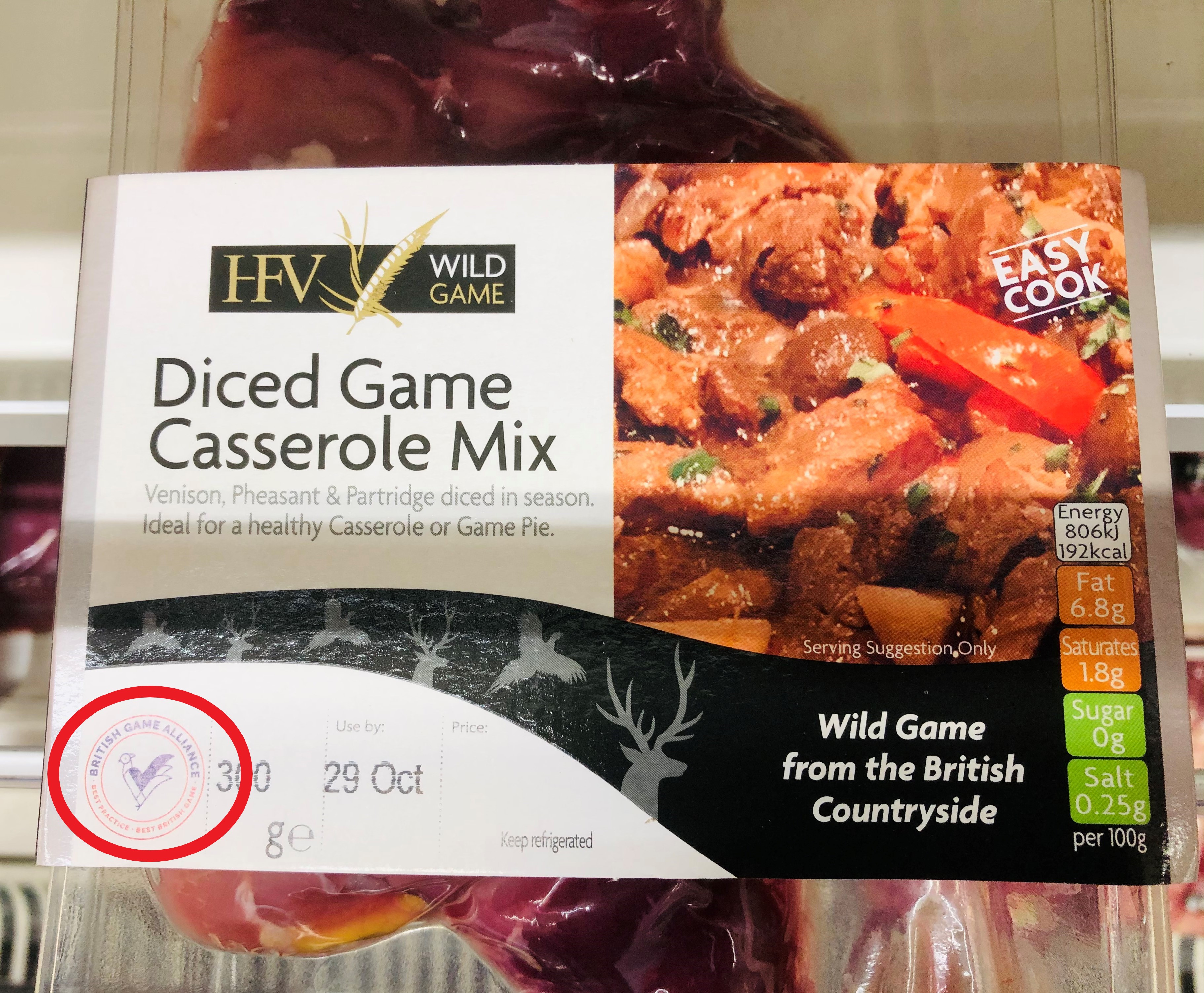
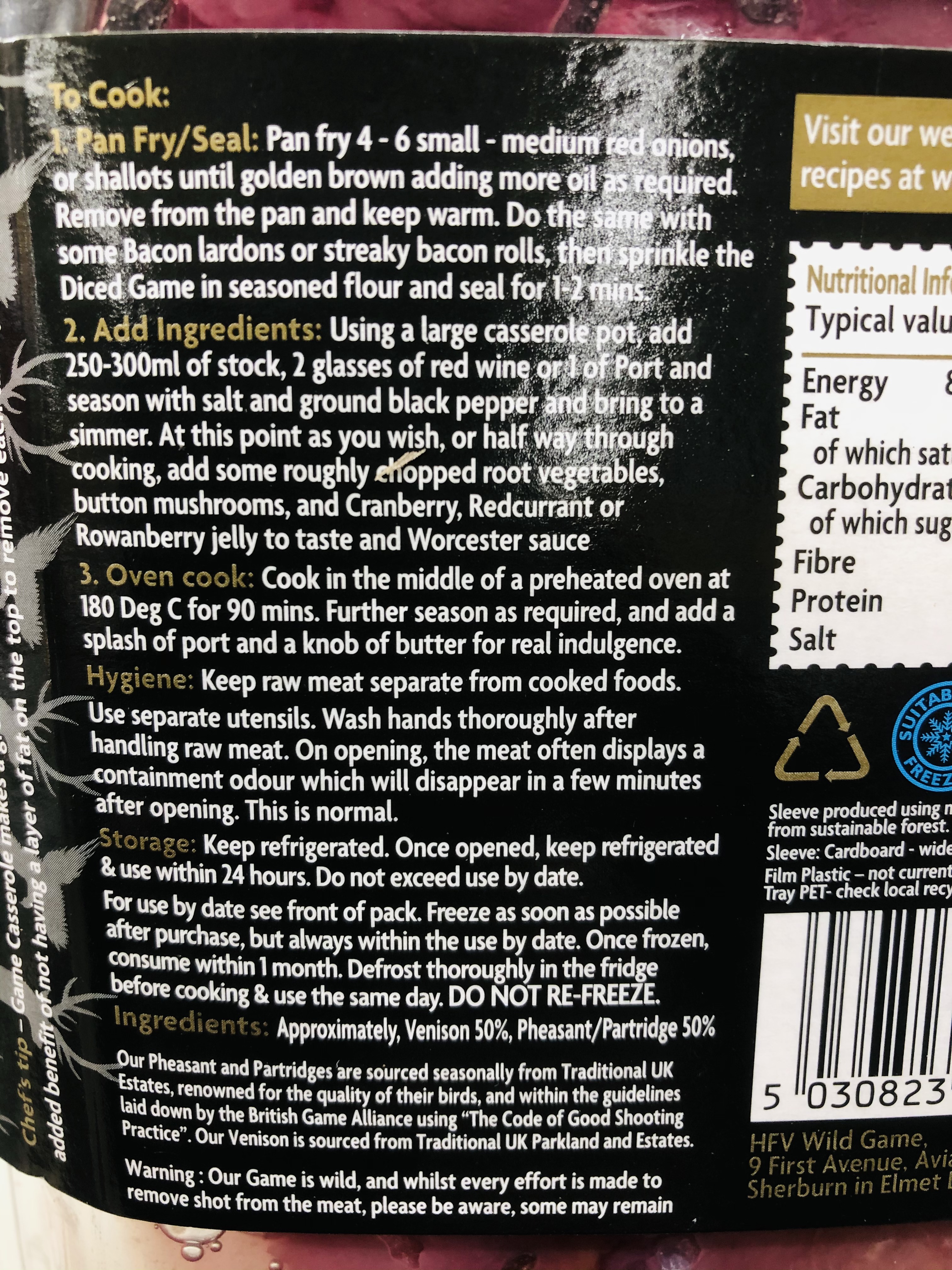
Last week we learned that Sainsbury’s was selling a new product – a mixed game casserole, made of 50% venison and 50% pheasant and red legged partridge.
It’s being produced by a company in North Yorkshire called Holme Farm Venison and acccording to the packaging, this product is ‘endorsed’ (ahem) by the British Game Alliance (BGA), whose ‘kitemark’ is stamped on the front (see here for earlier blog).
[Photo by Ruth Tingay]
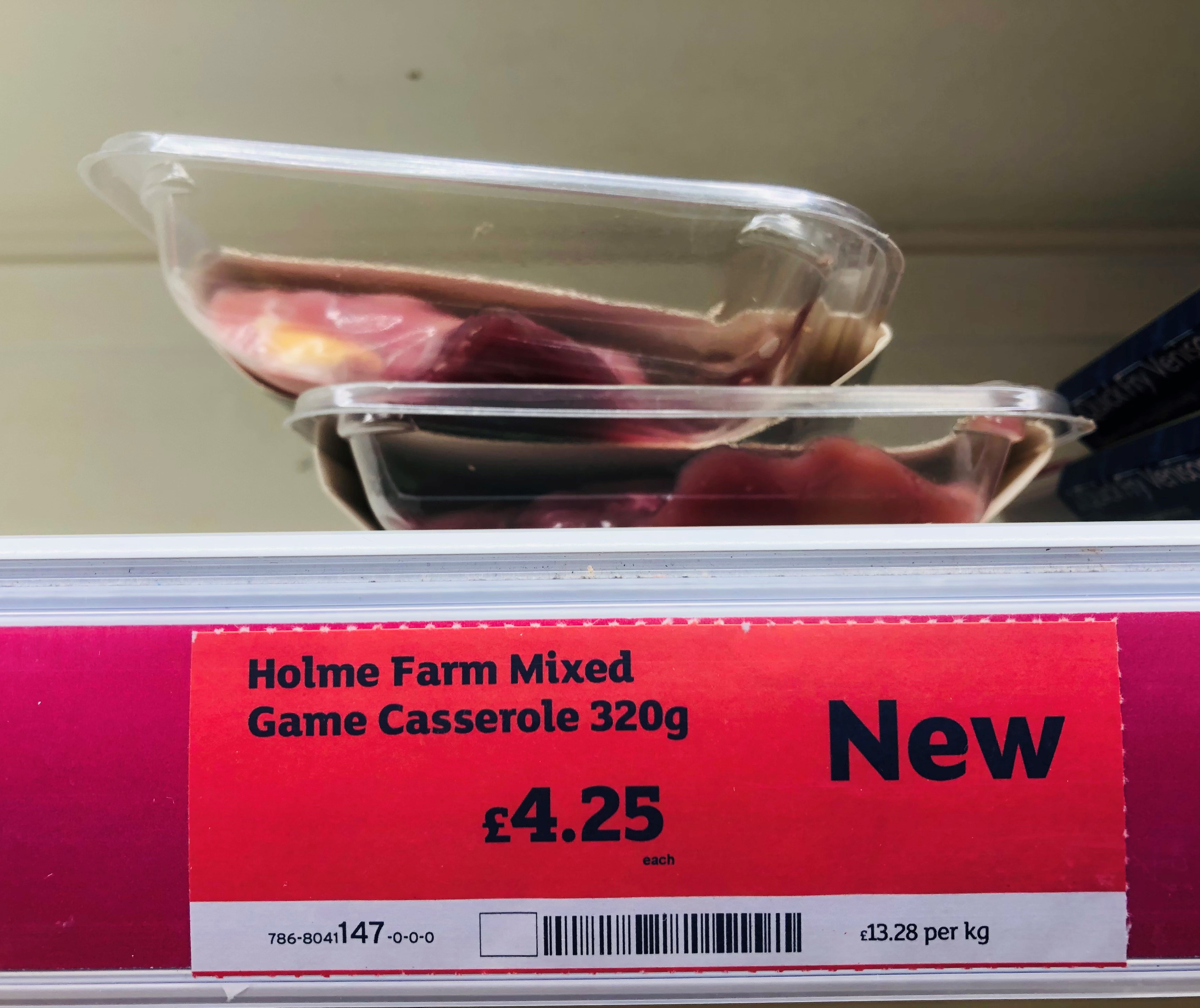
Amazingly, the packaging did not include any warning that the product may contain toxic lead ammunition and nor did any of the ‘on shelf’ information provided by Sainsbury’s.
Given the very serious public health risk of consuming any amount of toxic lead shot (the Food Standards Agency says there is no safe level and lead is a particular risk to children and pregnant women), this lack of information was of concern. Other supermarkets, such as Waitrose (here) have committed, by 2021, to not even be selling gamebirds that contain toxic lead shot, let alone not providing any health warnings (although see here), so Sainsbury’s seemed to be way behind the curve.
Blog readers were encouraged to contact Sainsbury’s, and the supplier, Holme Farm Venison, and ask for information about the toxic lead content of this product.
Many thanks to all of those who did. Sainsbury’s has now responded, and thanks to several blog readers who have sent us the standard reply, which goes like this:
Thank you for your recent e-mail received by Simon Roberts. He has has me to personally respond to you on his behalf.
The product you have enquired about is a branded product (not Sainsburys own brand) and we would encourage any further questions to be directed to Holme Farmed Venison, through their customer helpline.
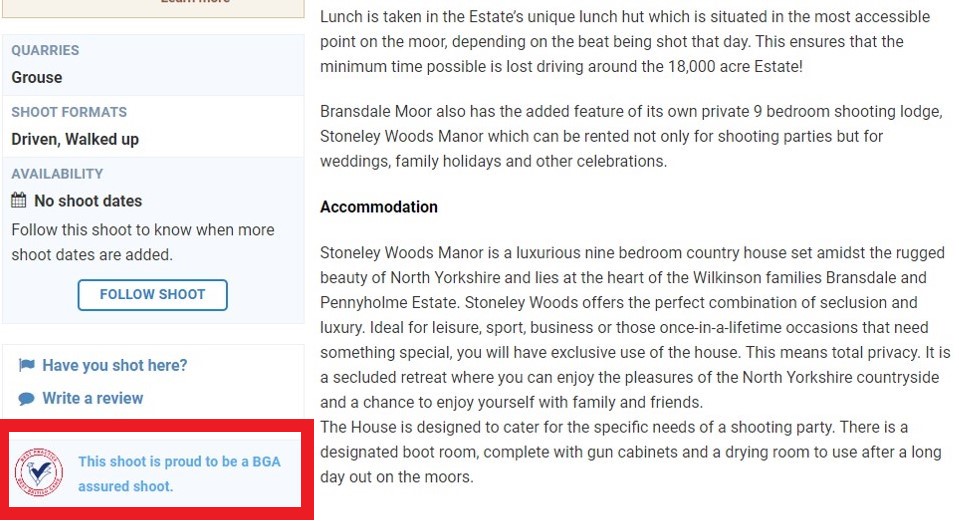
The Branded Holme Farm Venison (HFV) game products are assured by the British Game Alliance (BGA). The British Game Alliance independently audits all shoots participating in the accreditation, ensuring that they are all compliant with the requirements.
Lead shot is being phased out, but is still in use, however HFV products only select from meat that has no shot in it. Initially, visually inspected and then metal detected at the game processor and again visually inspected in the final pack. There are additional warnings on pack that refers to shot to ensure customers are aware.
Kind Regards,
Wow. It’s hard to know where to start with that.
There seem to be two issues. First of all, Sainsbury’s is using the so-called ‘assurance’ of a British Game Alliance kitemark as an indication of the product being sourced from estates that ‘meet rigorous and ethical standards’. But as has been pointed out several times on this blog, the British Game Alliance (BGA) is secretive about its members, and some of those we do know about either have been, or still are, under active police investigation for alleged wildlife crime offences relating to the illegal persecution of birds of prey (e.g. see here, here and here). How is the Sainsbury’s customer supposed to know which BGA-assured members are supplying these half a million pheasants and red-legged partridge for the casseroles and whether those estates are indeed meeting ‘rigorous and ethical standards’ if the estates aren’t named?
The second issue is much more serious, and that is the lack of a public health warning on this product. Sainsbury’s must be the only supermarket in the world, ever, to be claiming that its supplier, Holme Farm Venison, ‘only select from meat that has no shot in it‘.
Really? Really, Sainsbury’s? Do you really believe that?
And if that is the case, then why is the supplier adding a warning on the package that says, ‘Whilst every effort is made to remove shot from the meat, please be aware, some may remain‘ ? It’s a clear warning, even though it fails to mention the toxicity of the shot:
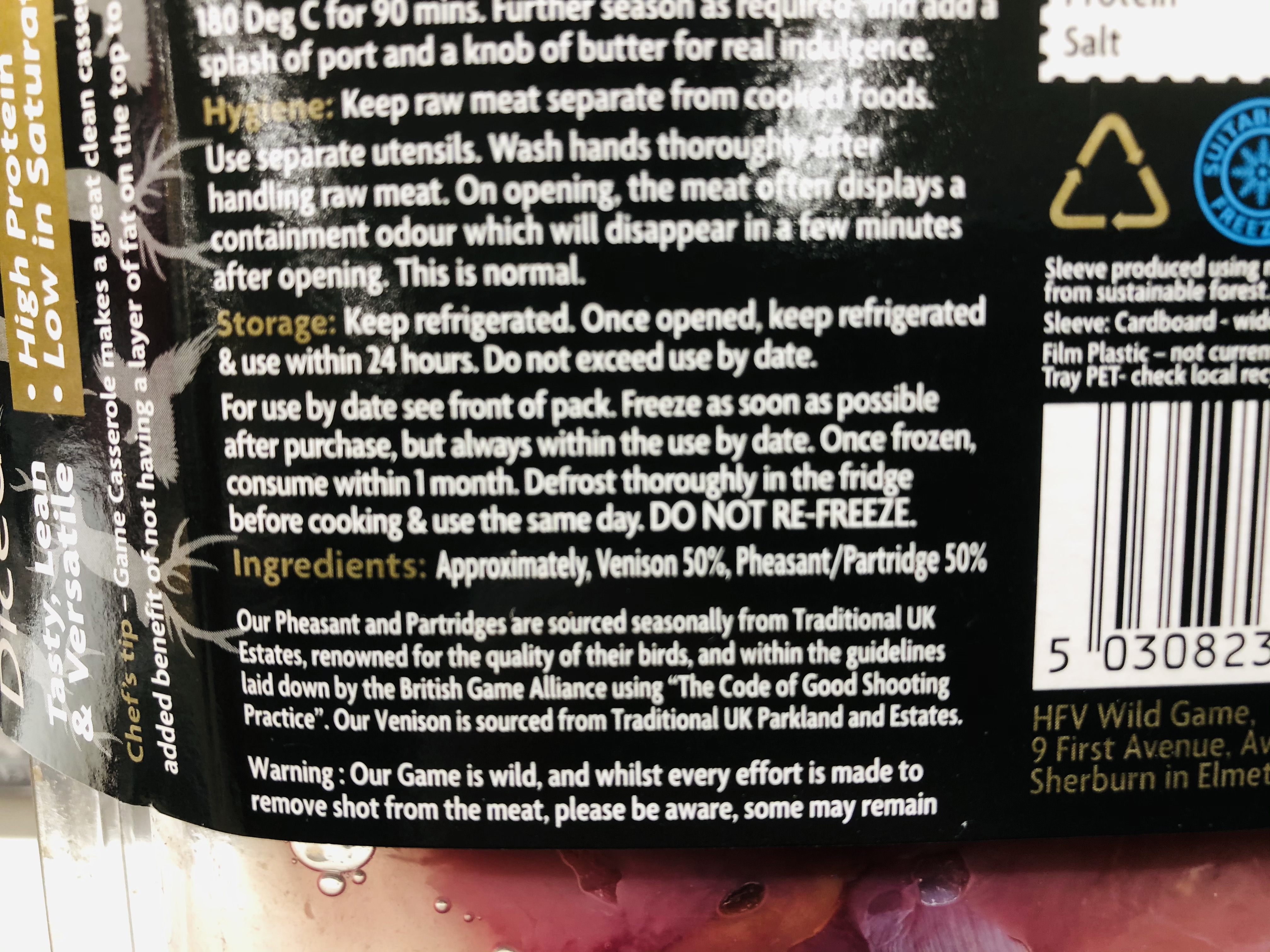
If some shot may remain, as the supplier warns, then potentially this product may contain toxic lead shot (i.e. poison). In fact despite all the undoubtedly well-intentioned efforts the supplier may go to to remove lead shot pellets (poison), it’s well known that even when pellets are removed, high lead levels (poison) can remain from the tiny, tiny fragments that shear off when the ammunition tears through the flesh of the victim.
It’d be very embarrassing for Sainsbury’s if somebody decided to test a load of these game casseroles for lead ammunition (poison) and found them to contain, er, poison. This has been done before, a couple of years ago, when Mark Avery bought 40 frozen red grouse from Iceland supermarkets and had them tested for toxic lead ammunition (poison). Here’s what he found:
‘More than three quarters of the lead levels measured in Iceland Foods’ grouse meat would have been illegal if found in beef, pork, chicken etc where there is a level set (Maximum Reside Level) above which meat is illegal. Over a third of the grouse meat samples contained ten times the MRL for lead. Two samples contained very very high lead levels: one of 168 times the MRL and the other of 3699 times the MRL. Overall, the lead levels in these 40 samples of grouse meat were 100 times the MRL‘ (see here).
There may also be an issue here for Trading Standards and for the Food Standards Agency. Surely, surely Sainsbury’s has a duty of care to its customers and must warn them that they could be buying a product that could be a serious risk to their health (i.e. that contains poison)?
If there are any Trading Standards Officers reading this, or any experts from the FSA, please get in touch.
If you are a customer of Sainsbury’s and you’d like to know more about how this mixed game casserole meets the company’s responsible and sustainable sourcing codes for meat products, and ask why it has an apparently complacent attitude towards its customers’ health, please contact Sainsbury’s CEO Simon Roberts at simon.roberts@sainsburys.co.uk