Further to last week’s news that Scottish gamekeeper and convicted sex offender Russell Mason had pleaded guilty to battering a trapped Goshawk to death on a shooting estate in Perthshire, in addition to firearms offences (see here), I’ve been looking to see how the game-shooting industry has responded to this latest conviction of a member of its community.
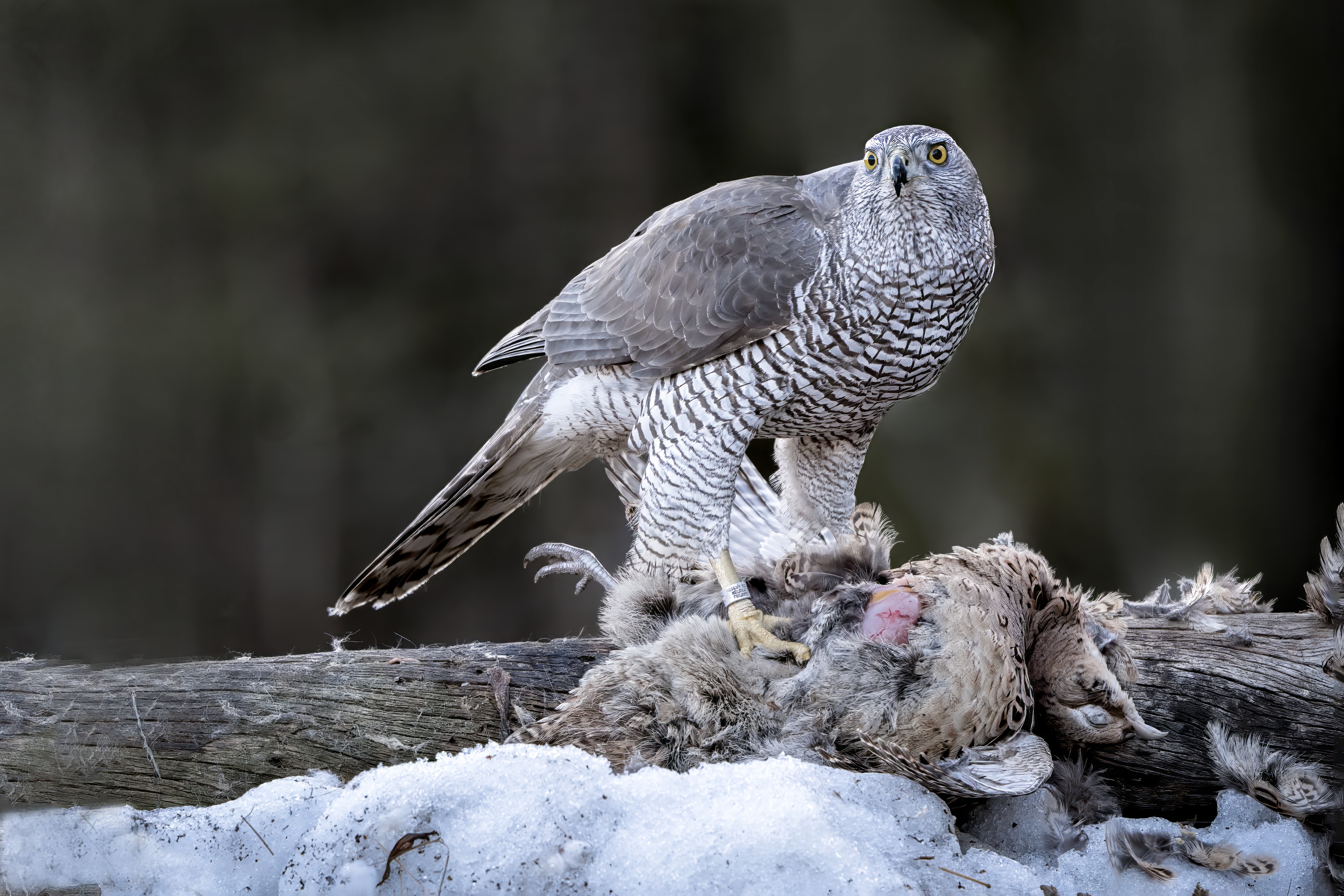
Goshawk with Pheasant. Photo by Ronnie Gilbert
You’ll recall that this is the game-shooting industry whose organisations routinely state they have a ‘zero tolerance’ policy towards raptor persecution, and many of them are members of the Partnership for Action Against Wildlife Crime (PAW) Raptor Group, in which case you’d think they’d be quick to condemn this latest crime, and reassure the public that if Mason and/or the estate was a member of any of these organisations they’ve now been expelled, right?
Six days on from Mason’s conviction, here’s how those shooting organisations have responded to the news:
Scottish Gamekeepers Association – silence
Scottish Land & Estates – silence
Scottish Association for Country Sports – silence
British Association for Shooting & Conservation – silence
Countryside Alliance – silence
Game & Wildlife Conservation Trust – silence
Perhaps they’re all waiting for Mason to be sentenced next month before they denounce his criminal activities? Although I can’t think of any reasonable argument for a delay.
Or perhaps they’ll wait for the inevitable public revulsion when the RSPB publishes the video nasty showing Mason bludgeoning the Goshawk to death, before they bother to comment?
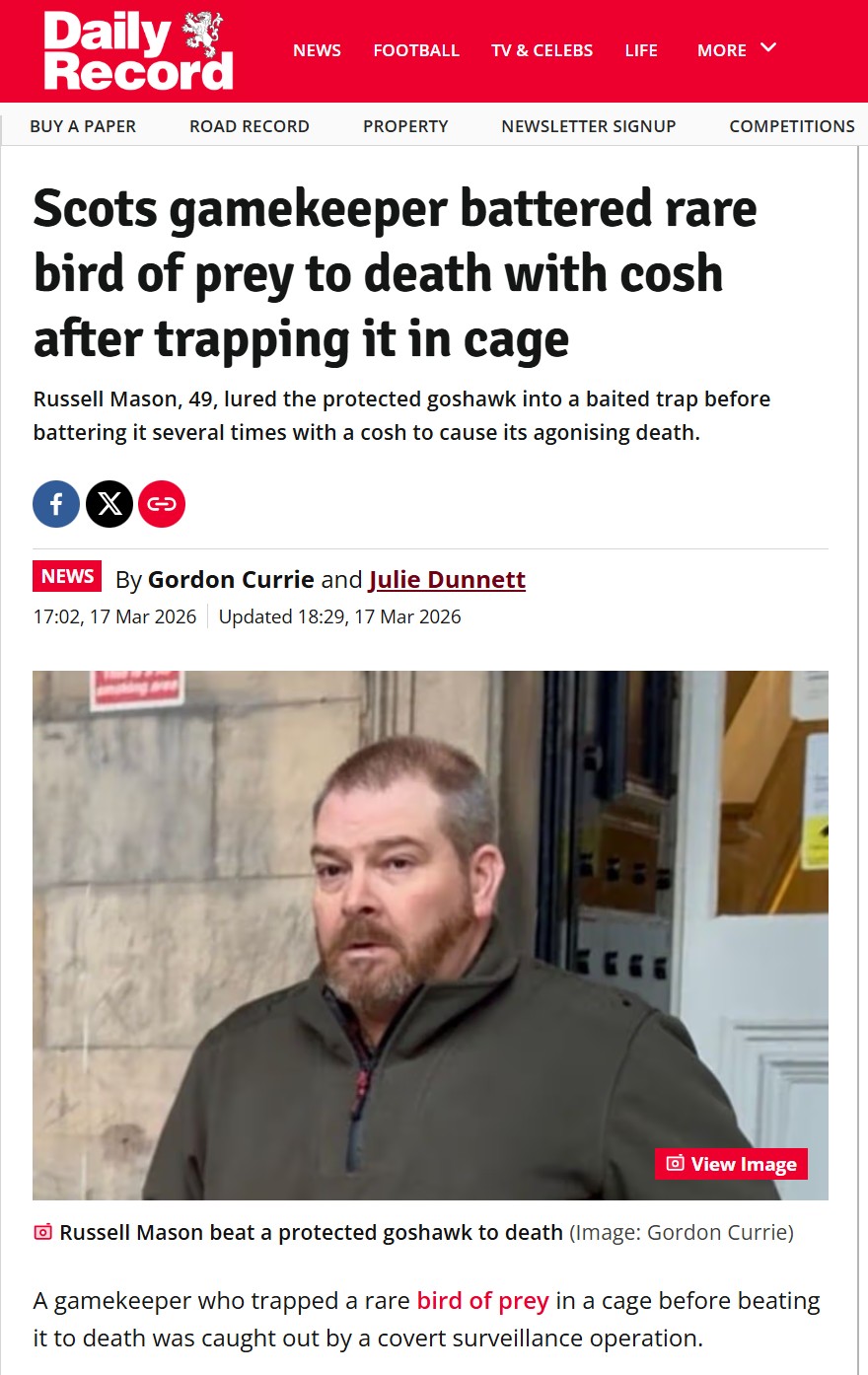
Further to yesterday’s news that Scottish gamekeeper Russell Mason, 49, had pleaded guilty to battering a trapped Goshawk to death on a shooting estate in Perthshire (see here), the Daily Record has published more detail about this case, which is quite disturbing.
The article is reproduced below in case this URL is broken/removed at a later date.
Russell Mason, 49, lured the protected goshawk into a baited trap before battering it several times with a cosh to cause its agonising death.
He was also found to have left nearly 200 rounds of live ammunition lying around in his bedroom and unsecured within his Polaris Ranger vehicle.
Fiscal depute Karon Rollo told Perth Sheriff Court: “Goshawks are rare birds of prey. They hunt birds and small animals. They have a wingspan of up to four feet and weigh between two and three pounds.
“They were persecuted to extinction in Scotland in the last century, but have been reintroduced, with now around 100 breeding pairs in existence.
“A crow cage trap was visited by RSPB staff on 9 January 2024. At the time this trap was set, it had a meat bait, and the door was chained and padlocked shut.
“It had a sign on the trap stating that the Scottish Government pays the estate to catch carrion crows from 1 March to 30 June to increase the chick survival rates for conservation-listed bird species.
“To continue observations and continue with this research, it was decided to install a continuous recording static camera covering this crow cage trap“.
She said RSPB staff visited the camera several times to review the captured footage and became aware of a male visiting the trap on 12 February 2024.
“At this time there was a goshawk and a crow in the trap,” Ms Rollo said. “The male opened and entered the trap. After entering he used a hand-held net to capture the goshawk and put it to the ground.
“He then struck the bird six times with a cosh. He placed the bird into a carrier bag, rolled it up and put the package under his arm.
“He left the trap, placed the net in the back of the vehicle and the bag in the cab. He locked the trap and drove off“.
The prosecutor said: “The male was identified from the footage by police officers, who knew him as being gamekeeper Russell Mason. The crow cage trap number related to the accused.
“Footage on other dates, including him putting a decoy bird in the trap, confirmed his identity. An avian vet specialising in raptors was shown the footage.
“He opined that the goshawk looked healthy and was exhibiting the normal behaviour of a captured raptor. Goshawks, in his experience, as ‘particularly flighty and stressy birds’ and this one was no exception.
“He describes it as showing a man beating a goshawk to death with a cudgel with the bird having been first netted within a crow cage trap.
“He states there were six blows to the body, which may have caused broken wings or rib fractures during the trauma, and that it was quite obviously not killed outright with one blow.
“He is of the view that it is extremely unlikely that it would have been lying passively in the net and therefore there is a high possibility that it would have sustained painful fractures and injuries before dying“.
A search of Mason’s cottage found unsecured ammunition, along with clothes matching those seen on the CCTV footage. A bag and cosh were found in his vehicle.
The bag was analysed and found to have goshawk DNA on it. The search team recovered 195 illegally stored rounds of ammunition.
Mason admitted intentionally or recklessly killing a goshawk on 12 February 2024 by seizing it with a net before repeatedly striking it with a cosh on Cochrage Moor, Bridge of Cally, Perthshire.
He also admitted breaching the terms of his firearms certificate by failing to store ammunition securely.
Sentence on Mason was deferred for the preparation of social work reports until next month by Sheriff Alison McKay and he was granted bail.
Mason was previously placed on the sex offenders register after being spotted carrying out a solo sex act in his car by a resident of a sheltered housing complex.
He was spotted by an elderly woman with his trousers down as he sat in the car beside a path used by children to walk to and from school.
When officers told Mason they were at the scene to investigate reports of someone masturbating in a car, he said: “That was me.”
Mason admitted carrying out an act of public indecency outside the sheltered housing complex in Harriet Court, Blairgowrie, and was placed on the register for a year.
ENDS
A reminder – sentencing for Mason’s latest convictions (wildlife crime & firearms offences) has been deferred until 24 April 2026 for background reports.
UPDATE 23 March 2026: Game-shooting industry’s response to the recent conviction of Perthshire gamekeeper Russell Mason (here)
A Scottish gamekeeper has pleaded guilty to killing a Goshawk after he battered it to death after it was caught inside a Crow cage trap on a shooting estate in Perthshire.
At Perth Sheriff Court this morning, on what should have been the opening day of a criminal trial, gamekeeper Russell Mason, 49, changed his plea to guilty in relation to the charge that he had killed a Goshawk on Cochrage Moor (Muir), believed to be part of the Milton of Drimmie and Strone estate near Blairgowrie, on 12 February 2024 (see here for background to this case).
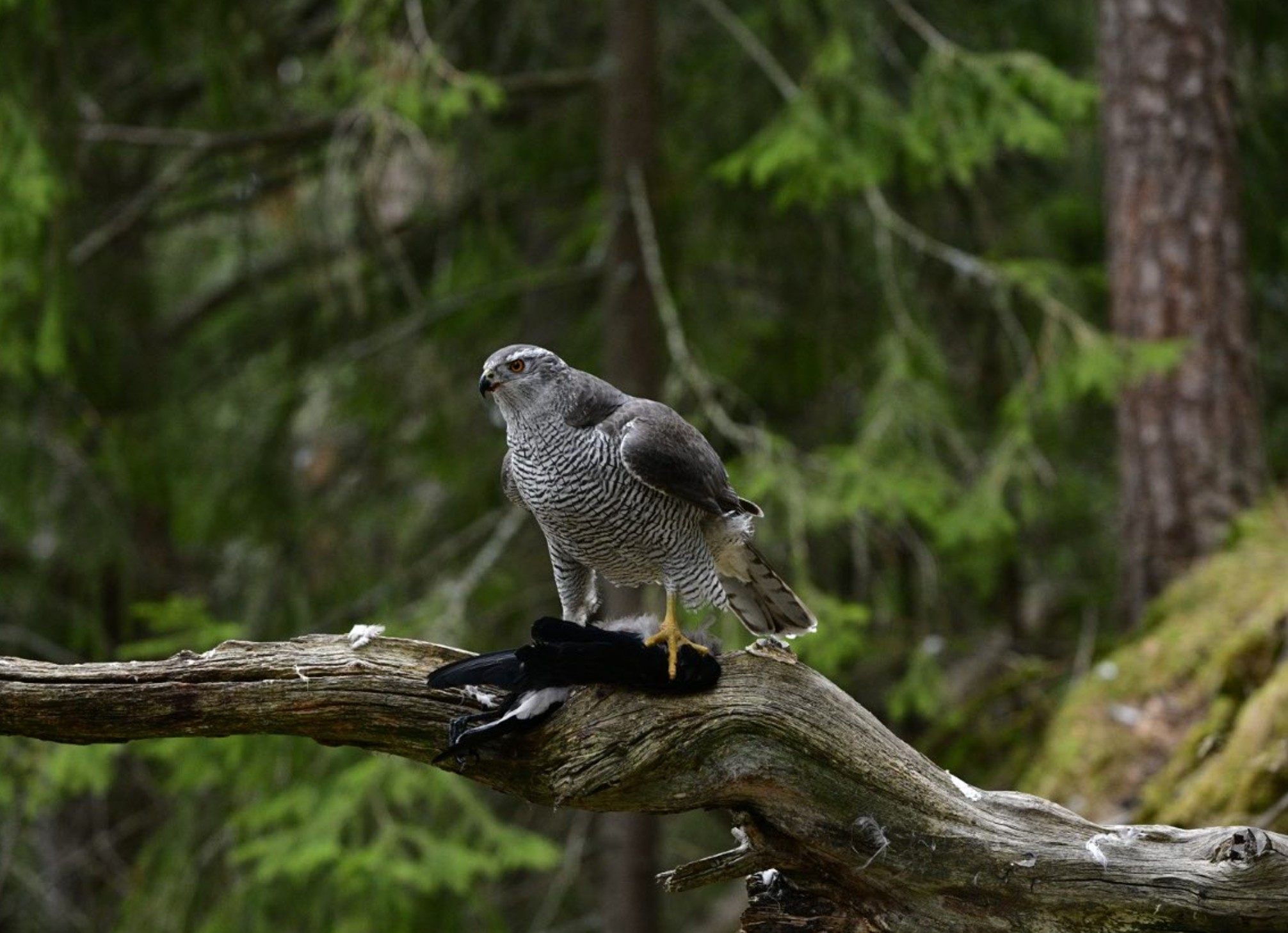
Goshawk with a Crow. Photo by Ronnie Gilbert
The court was shown a six-minute video of Mason killing the Goshawk – the footage had been filmed covertly by the RSPB’s Investigations Team and was crucial to providing the Crown Office with sufficient evidence to prosecute.
Mason also pleaded guilty to various firearms offences but it is believed that charges relating to alleged snaring offences were dropped, probably as part of a plea bargain.
The court heard that Mason has a previous conviction (the details were not discussed) and sentencing was deferred until 24 April 2026 for background reports. The Sheriff mentioned that a ‘restriction of liberty order’ may be considered. This is a direct alternative to a custodial sentence and usually involves electronic monitoring/tagging.
I expect the RSPB will publish its gruesome footage once sentencing is complete.
Congratulations to Police Scotland, RSPB, Scottish SPCA and the Crown Office & Fiscal Service for an exemplary investigation and prosecution. This is what effective partnership-working looks like.
Incidentally, this is the third successful conviction for raptor persecution in as many months where covert video evidence provided by the RSPB has been pivotal to the case.
The other two cases so far this year were:
12 January 2026, Scarborough Magistrates’ Court: gamekeeper Thomas Munday pleaded guilty to battering to death a Buzzard that had been caught inside a Crow cage trap on a Pheasant shoot at Hovingham, North Yorkshire (here)
and
29 January 2026, York Magistrates’ Court: gamekeeper Racster Dingwall pleaded guilty to conspiring to kill a Hen Harrier as it came in to roost on a grouse moor on the Conistone & Grassington Estate in the Yorkshire Dales National Park (here).
Many of you will be aware of the game-shooting industry’s recently ramped-up efforts to try to discredit and smear the reputations of RSPB Investigations Team members; these three convictions shouldn’t leave you in any doubt of the industry’s motivation.
Without the skill and expertise of the RSPB’s ability to capture such covert footage, these criminals would have escaped justice and the game-shooting industry’s claims of respectability and adherence to the law would go unchallenged. It’s as simple as that.
We can expect more news on the repercussions of today’s conviction in due course – i.e. was Mason a member of the Scottish Gamekeepers’ Association? Was he a member of the Tayside & Central Regional Moorland Group? (certainly someone with the same name and affiliation has previously signed an official letter to the Scottish Parliament about snaring regulations). Will NatureScot impose a three-year General Licence restriction on this estate? Is the estate a member of the landowners’ lobby group, Scottish Land & Estates? And will there be a prosecution for alleged vicarious liability?
NB: As legal proceedings have now concluded, comments are open on this case, with the usual caveat that offensive/libellous posts will not be published.
UPDATE 18 March 2026: Convicted Scottish gamekeeper Russell Mason – more disturbing details about this case (here)
UPDATE 23 March 2026: Game-shooting industry’s response to the recent conviction of Perthshire gamekeeper Russell Mason (here)
A trial is due to begin tomorrow (Tuesday 17 March 2026) at Perth Sheriff Court for a Scottish gamekeeper accused of killing a Goshawk on a Perthshire shooting estate.
The alleged incident took place on 12 February 2024 on a shooting estate near Blairgowrie.
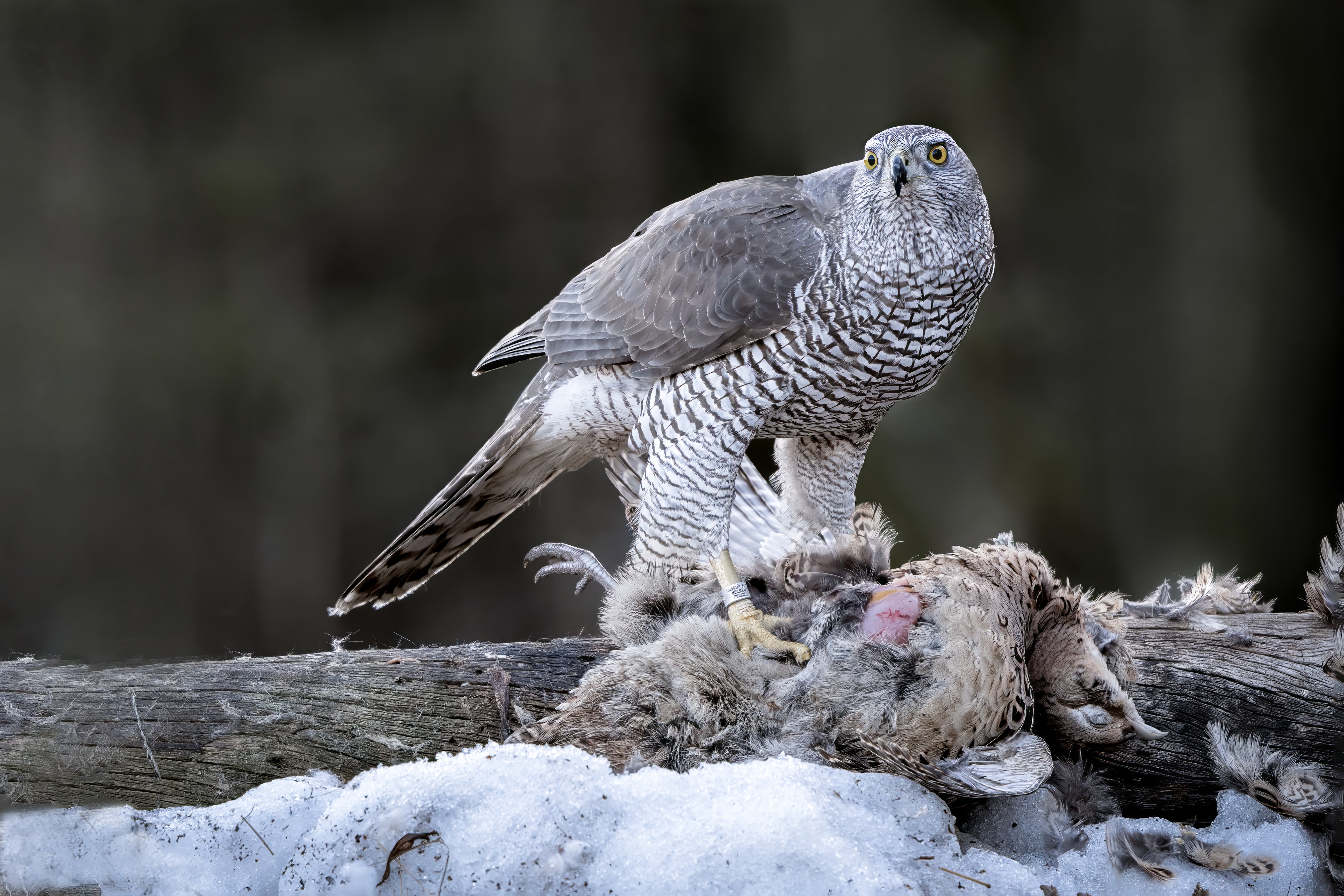
Goshawk with a Pheasant. Photo by Ronnie Gilbert.
Police Scotland, with the assistance of partners from the RSPB and Scottish SPCA, executed a search warrant on the estate on 29 February 2024, leading to the arrest of a 47-year-old gamekeeper and subsequent charge (see here).
He has pleaded not guilty.
The trial was due to start on 11 November 2025 but it didn’t call due to another trial over-running (see here).
NB: As this case is live, comments are turned off until legal proceedings have ended.
UPDATE 17 March 2026: Scottish gamekeeper Russell Mason pleads guilty to battering a Goshawk to death on shooting estate in Perthshire (here)
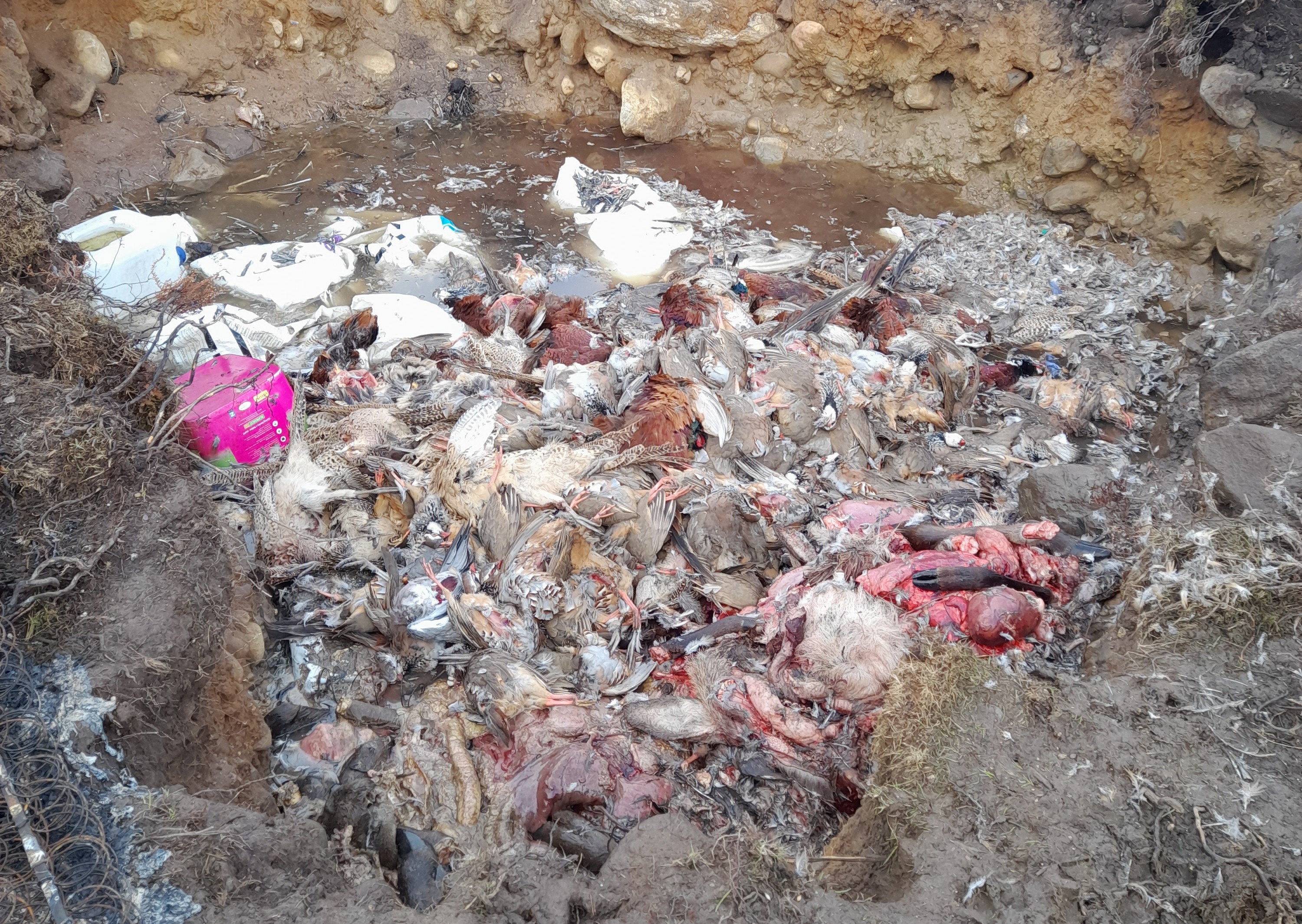
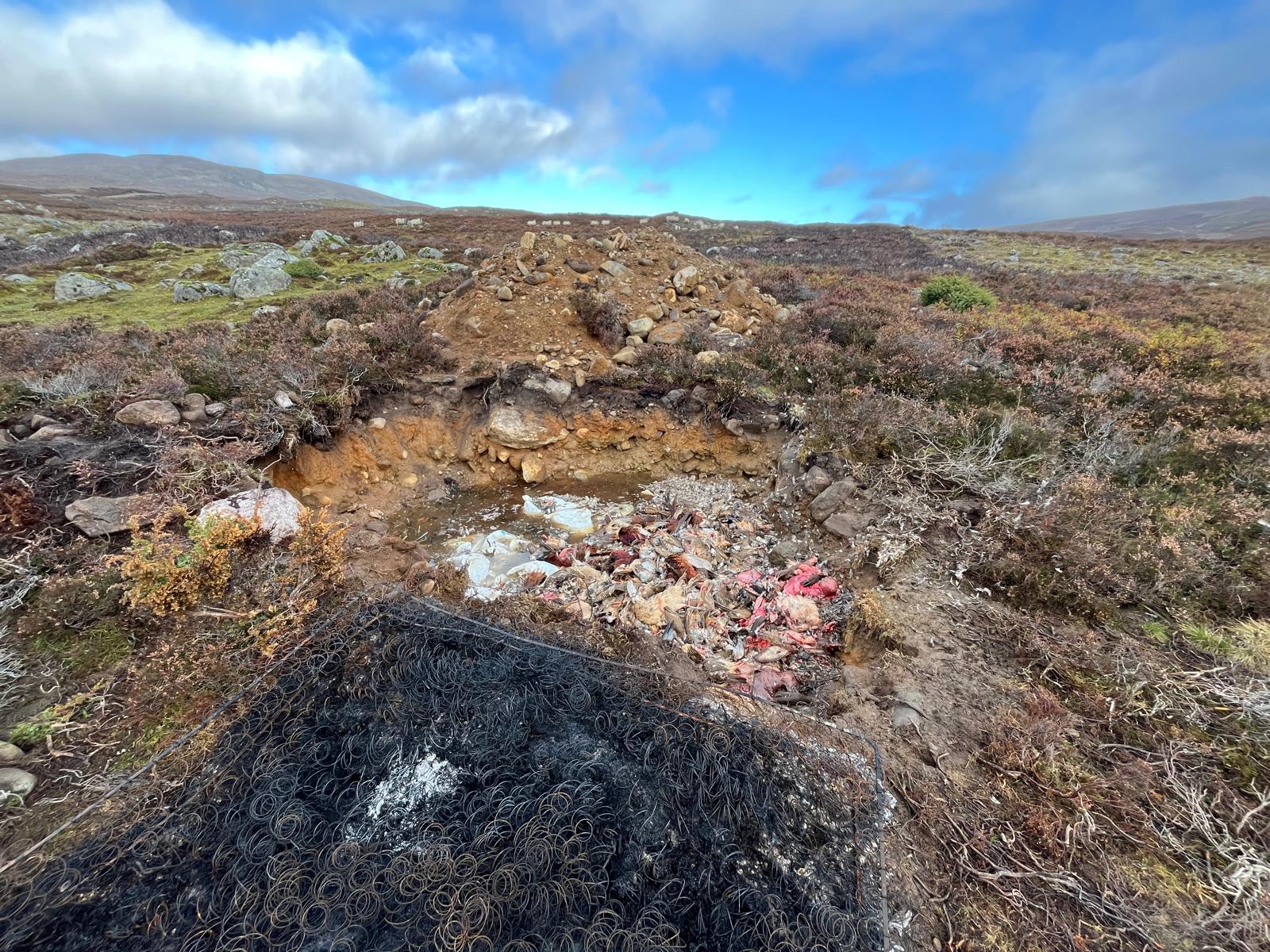
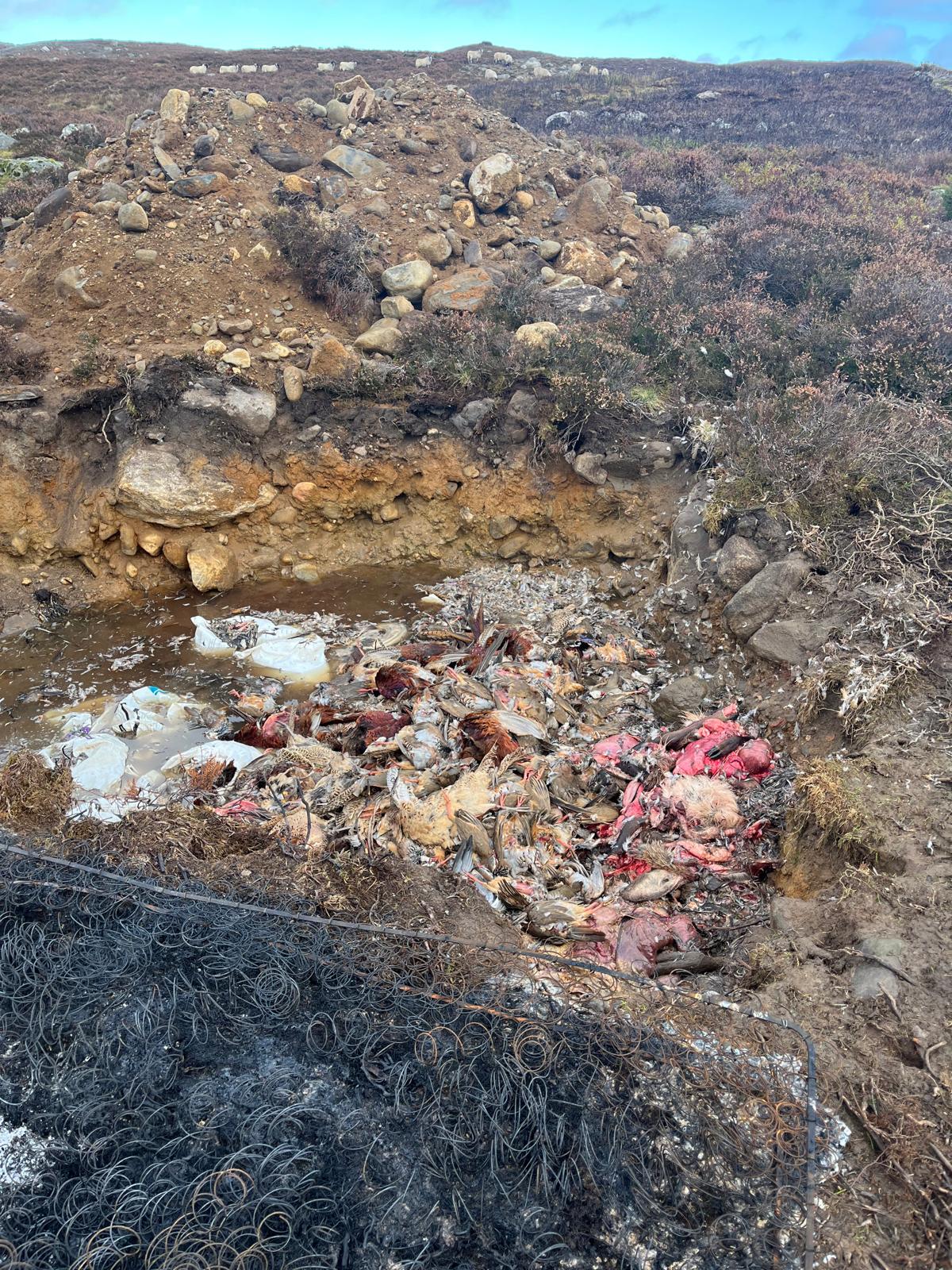
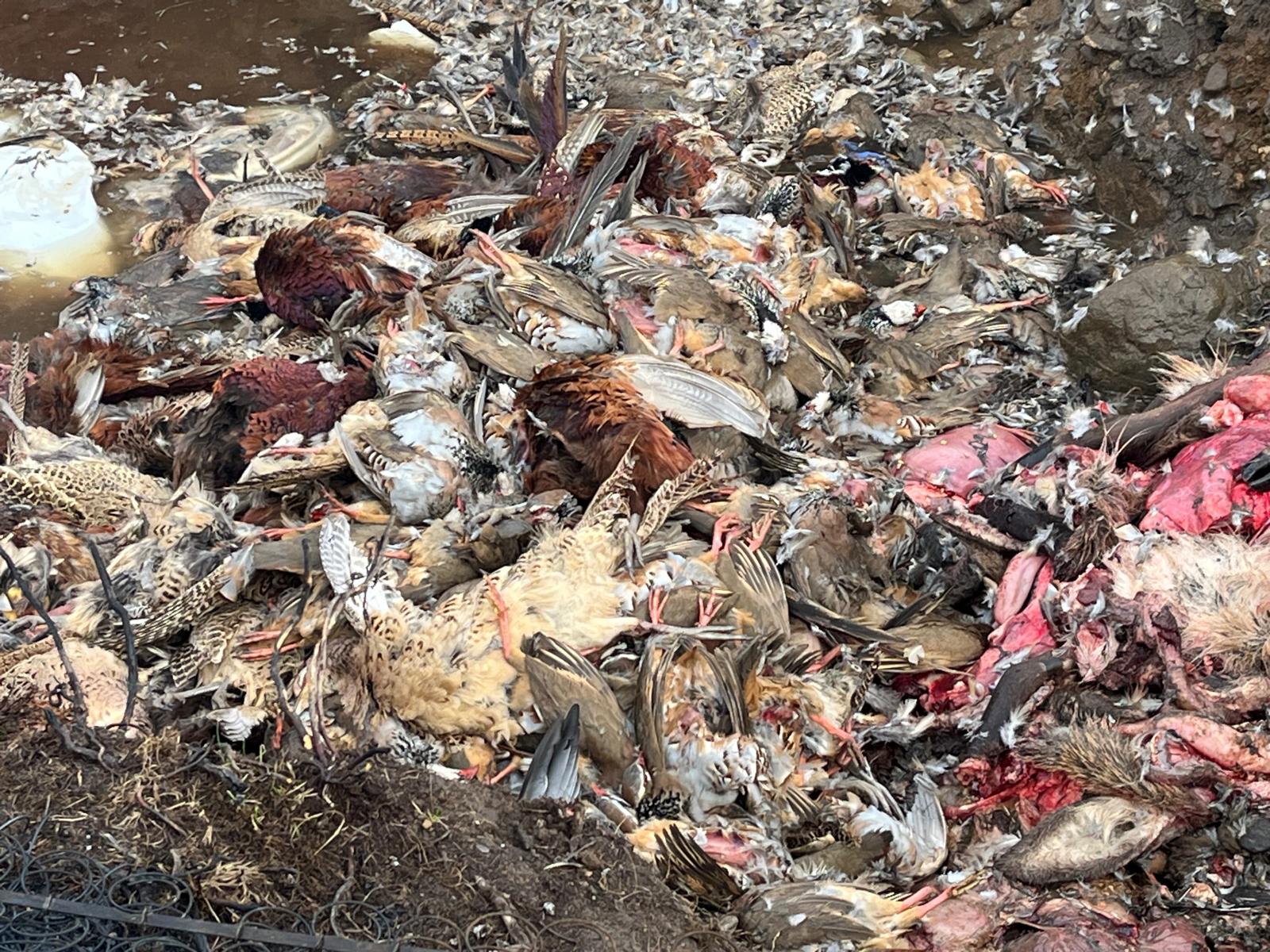
A large pit containing dead Pheasants, Red-legged Partridges, Wood Pigeons, deer parts, and a lot of rubbish, including a burnt mattress, has been found on a shooting estate in the Cairngorms National Park.
Last October, a blog reader was walking on the Glenbanchor and Pitmain Estate, to the north of Kingussie when they saw what they described as “an estate vehicle” tipping dead birds in to an area at the side of a track that was concealed behind a spoil heap.
The walker returned to the site once the vehicle had left and took these photographs:
It appears that at least some of the gamebirds have been ‘breasted out’ – their breast meat removed, presumably for sale/consumption, and the carcasses then dumped in the pit.
Regular blog readers will know that the dumping of shot gamebirds is a common and widespread illegal practice that has been going on for years, despite the repeated denials by the shooting industry. Often they’re fly-tipped by the side of the road (e.g. see here).
In this case, the pile of rubble on site suggests that this is a burial pit, and perhaps the burnt mattress is used to cover the pit temporarily, in between dumping visits.
The blog reader reported this incident to SEPA (Scottish Environment Protection Agency) to see whether an offence had been committed but SEPA apparently thought ‘they’re subject to a waste disposal exemption’ and therefore this doesn’t constitute a crime.
It’s hard to believe that dumping gamebirds for burial is legal, especially when the country is in the grip of Highly Pathogenic Avian Influenza, but the regulations are very confusing.
I’ve done a bit of research on this but I’m still not sure which regulations apply and which don’t.
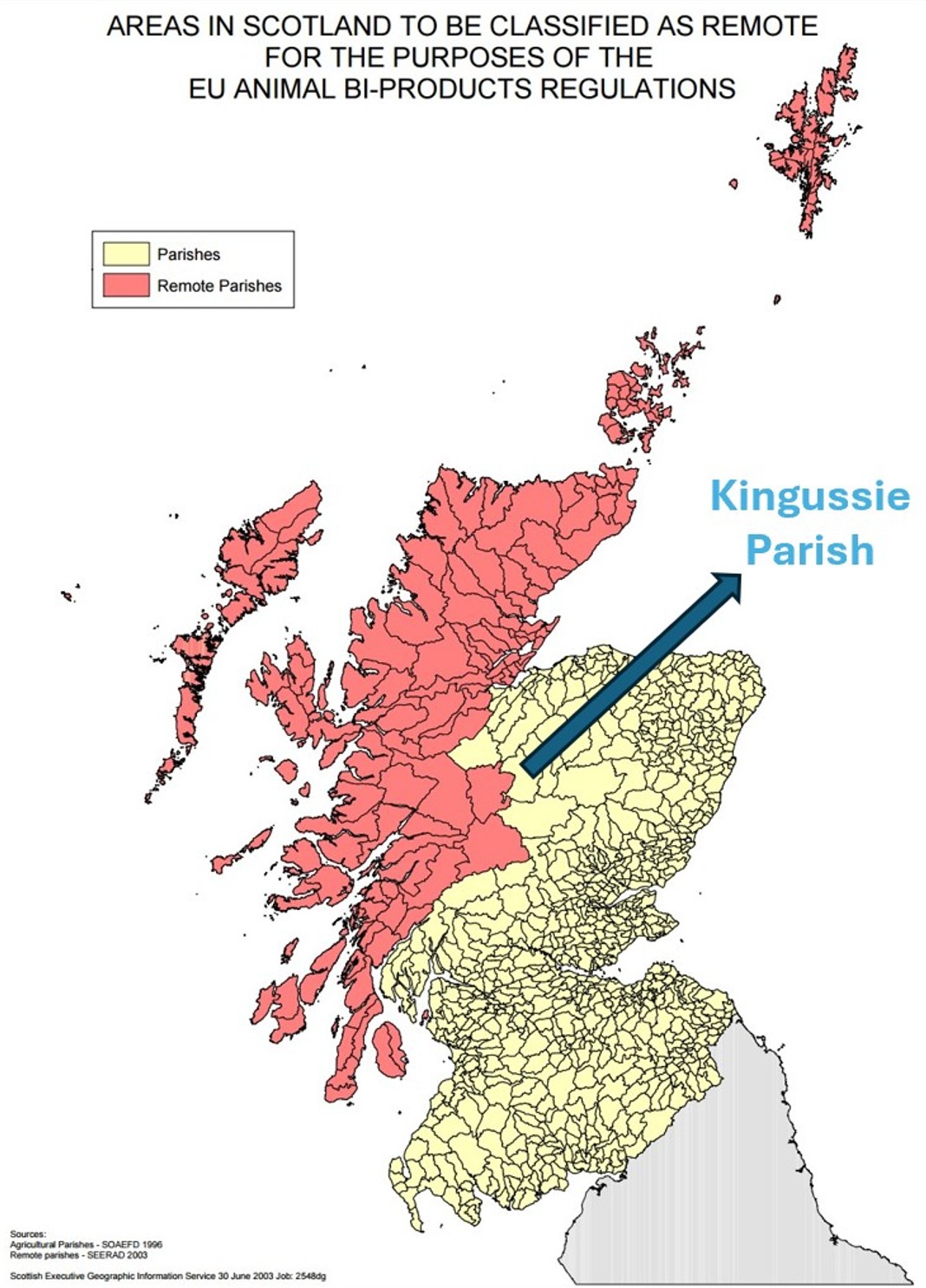
If the gamebird carcasses are classed as animal by-products (and there are questions around that – it’s complicated!) then disposing of them by burial is unlawful due to the risk of spreading disease through residues in the soil, groundwater or air pollution (Animal By-Products (Enforcement) (Scotland) Regulations 2013).
There are exemptions, in areas of Scotland classed as ‘remote areas’. However, the location of this particular pit lies outside the ‘remote area’ and so an exemption wouldn’t apply:
I need to do some more work on this, and talk to the local authority (Highland Council) who I believe would be responsible for enforcement of any breaches of the Animal By-Products legislation.
But whether this is legal or illegal, it’s ethically appalling.
And I dare say the Cairngorms National Park Authority will be taking note, given its stated intention to:
‘Ensure that all pheasant and partridge shoots adhere to best practice and that all gamebird releases are sustainable and do not negatively impact on native biodiversity‘
and
‘Depending on the evidence gathered, investigate the use of Park Authority powers to regulate gamebird releases and develop a regulatory approach if required‘ (see here).
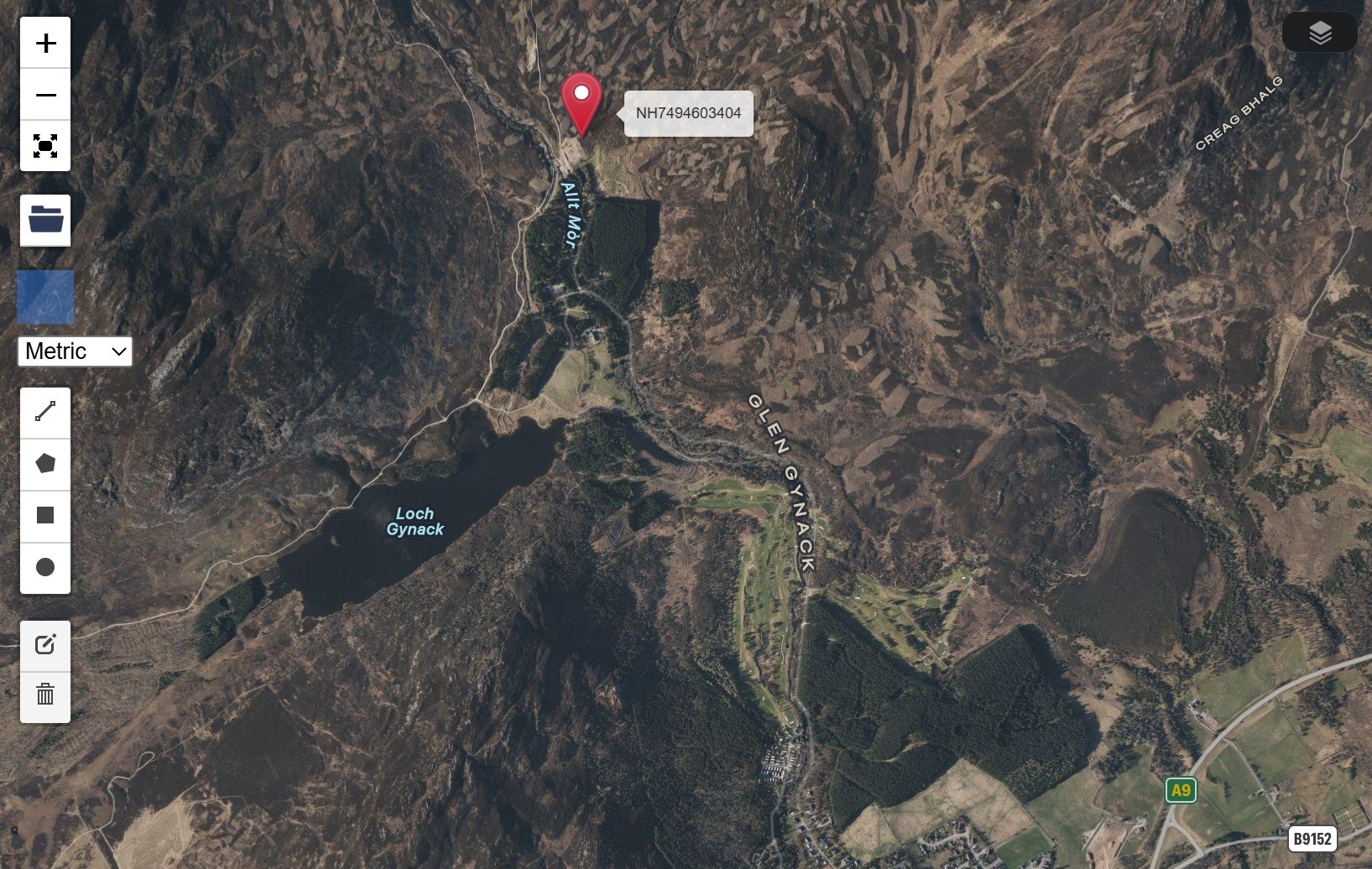
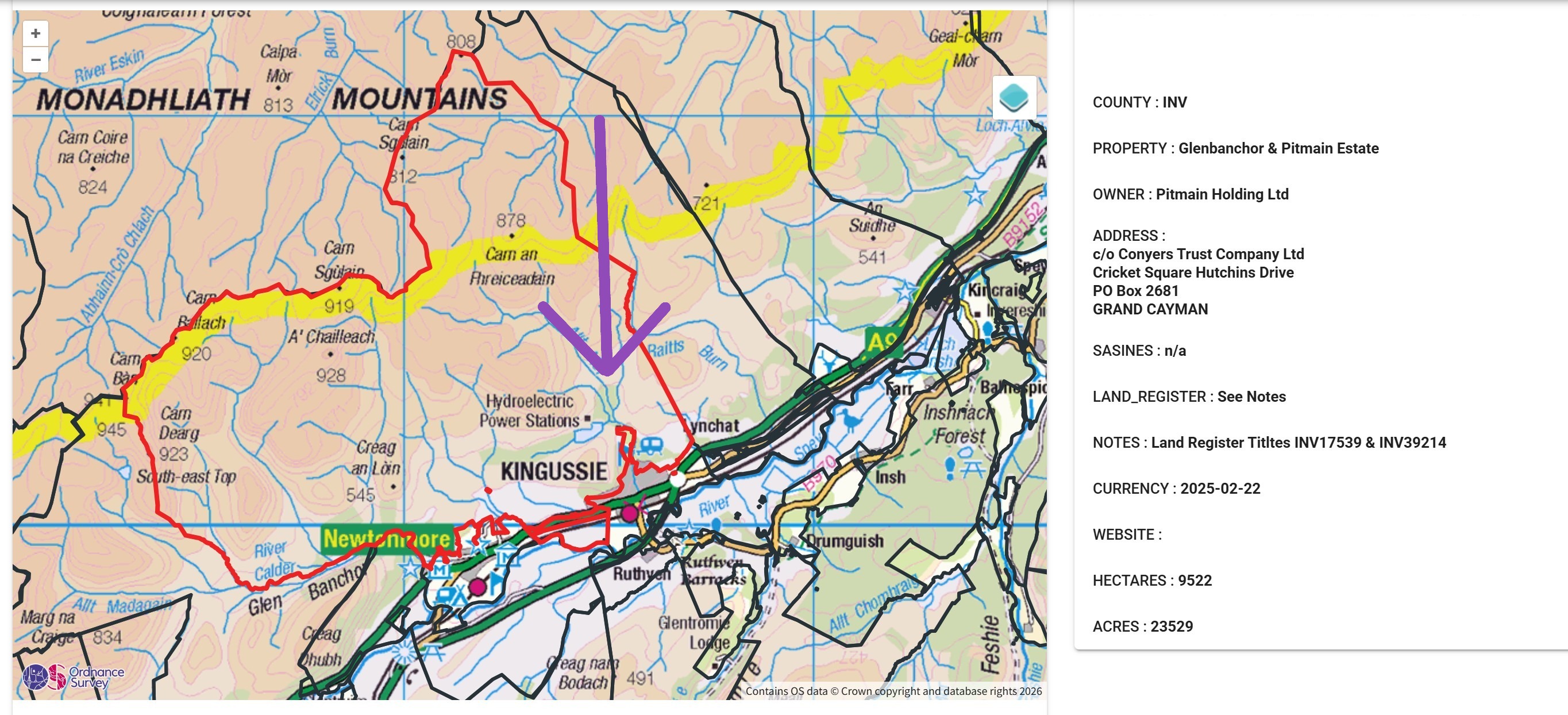
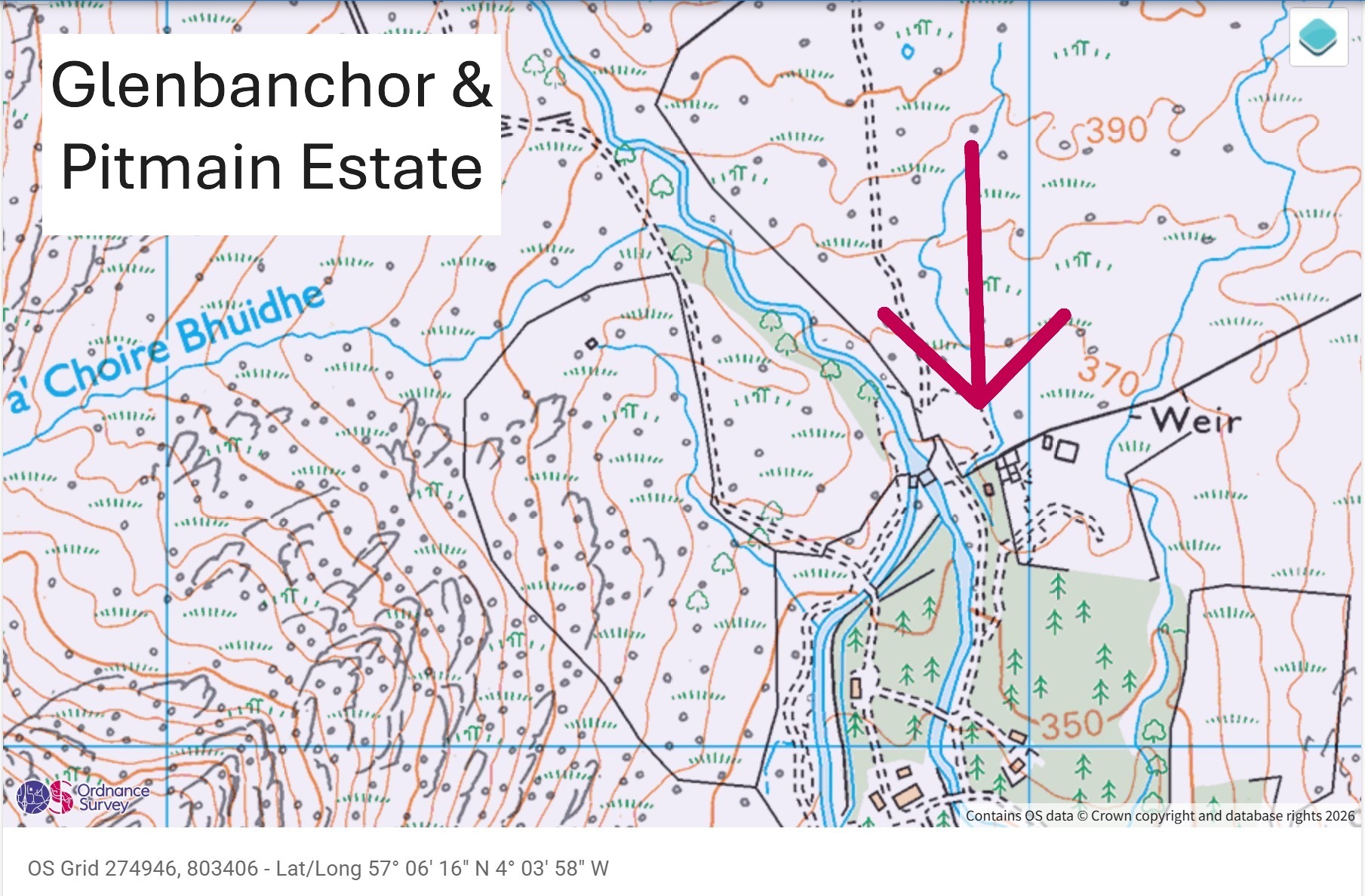
For the benefit of the Cairngorms National Park Authority, and anyone else who wants to take a look, here are the location details of the pit (estate boundary sourced from Andy Wightman’s Who Owns Scotlandwebsite):
It’s my understanding that NatureScot is currently considering whether police evidence about an unrelated alleged wildlife crime on this estate is sufficient to impose a three-year General Licence restriction (see here).
You may also not be surprised to hear that this isn’t the only gamebird-dumping pit that’s been found on a sporting estate in Scotland….details to follow.
In December 2025, I blogged about a Hen Harrier that had been found poisoned on a grouse moor somewhere in North Yorkshire, 11 months earlier in January 2025.
There hadn’t been any media coverage of this illegal killing at all – no press releases or appeals for information from North Yorkshire Police, no comment from the National Wildlife Crime Unit’s Hen Harrier Taskforce, nothing from anyone.
I found out about the poisoning by scrutinising a Health & Safety Executive database, which had the following spreadsheet entry:
HSE Ref number 107/913. Confirmed poisoning, North Yorkshire, January 2025. Chemicals Bendiocarb, Carbofuran, Isophenphos, Alphachloralose. Notes: ‘A dead Hen Harrier was found on a grouse moor. Residues of Bendiocarb, Carbofuran, Isophenphos and Alphachloralose were found in the samples analysed, which is an abuse of these compounds. Case closed as passed to the Police‘.
Given the toxic combination of poisons, often referred to as the ‘Nidderdale Cocktail’ due to its frequency of use in the area, I mused that this Hen Harrier was likely to have been poisoned in Nidderdale, although it wasn’t conclusive evidence as in more recent years the Nidderdale Cocktail has also been detected in other parts of the country, perhaps indicating a gamekeeper moving from this region to work in another.
News then emerged in an RSPB press release in January 2026 that this Hen Harrier was a young female named Ataksak (named after an Inuit Goddess, the ‘ruler of the sky’) and she was carrying a satellite tag, fitted by the RSPB in Bowland in 2024.
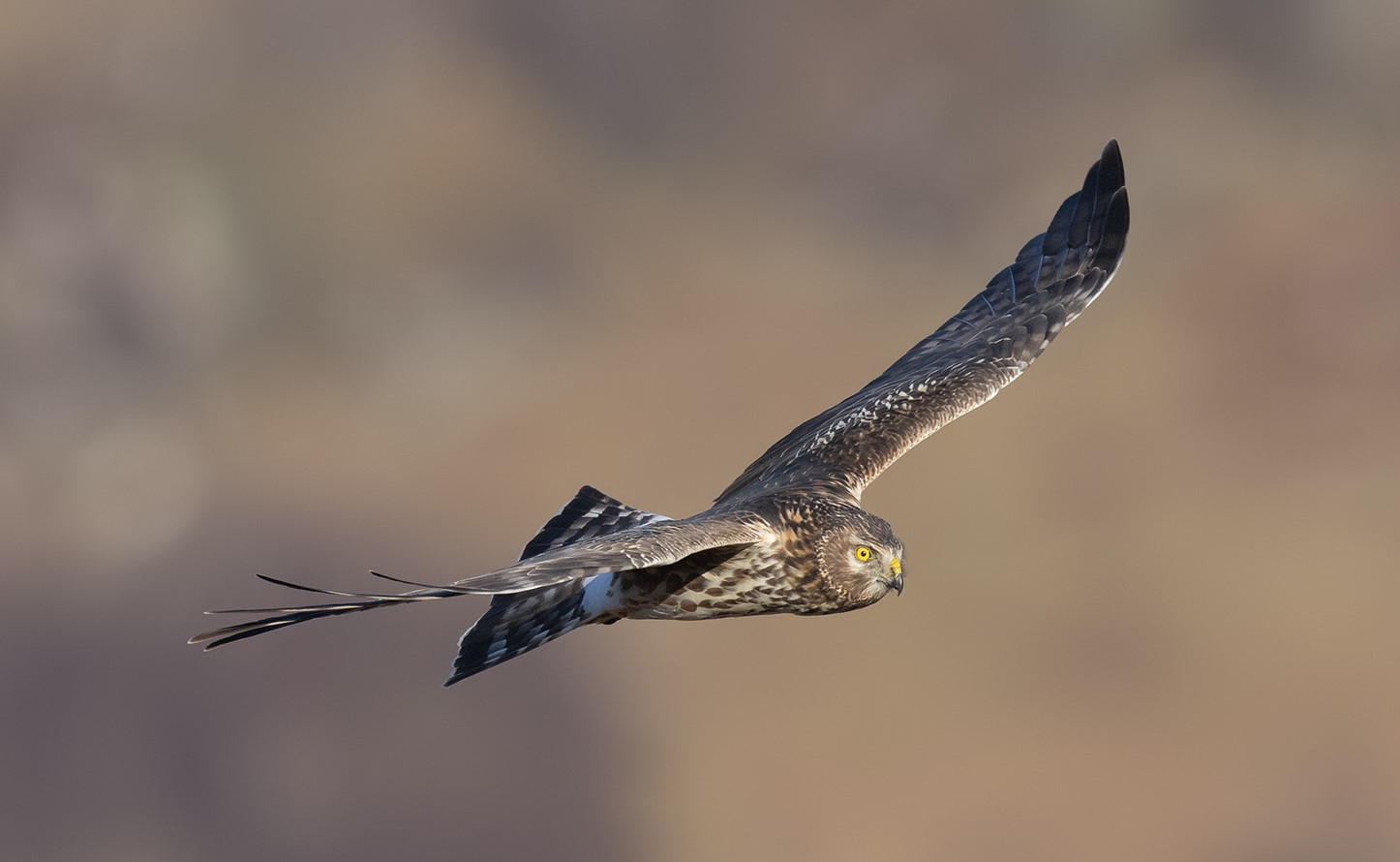
It turned out that Ataksak was the Hen Harrier that gamekeeper Racster Dingwall and his accomplices had discussed shooting and killing as it came in to a roost site on Grassington Moor in the Yorkshire Dales National Park one evening in October 2024, but they then chose instead to “fleg it” (scare it off with warning shots) because they deduced it was wearing “a box” (a satellite tag) and killing it would draw unwanted attention from the authorities to their grouse moor.
The RSPB’s press release included details of the area where Ataksak had been found poisoned but still didn’t name a location:
‘The area where Ataksak’s body was found is recognised as a bird of prey persecution hotspot. In the last ten years 25 confirmed bird of prey persecution incidents have been recorded in this area, including Ataksak. These included four Hen Harriers, 13 Red Kites and five Buzzards. A satellite tagged Hen Harrier also disappeared in this area in 2024‘.
When I first wrote about this poisoned Hen Harrier in December 2025, I said I’d submitted a number of Freedom of Information requests about the Police investigation, some 11 months after she’d been found poisoned.
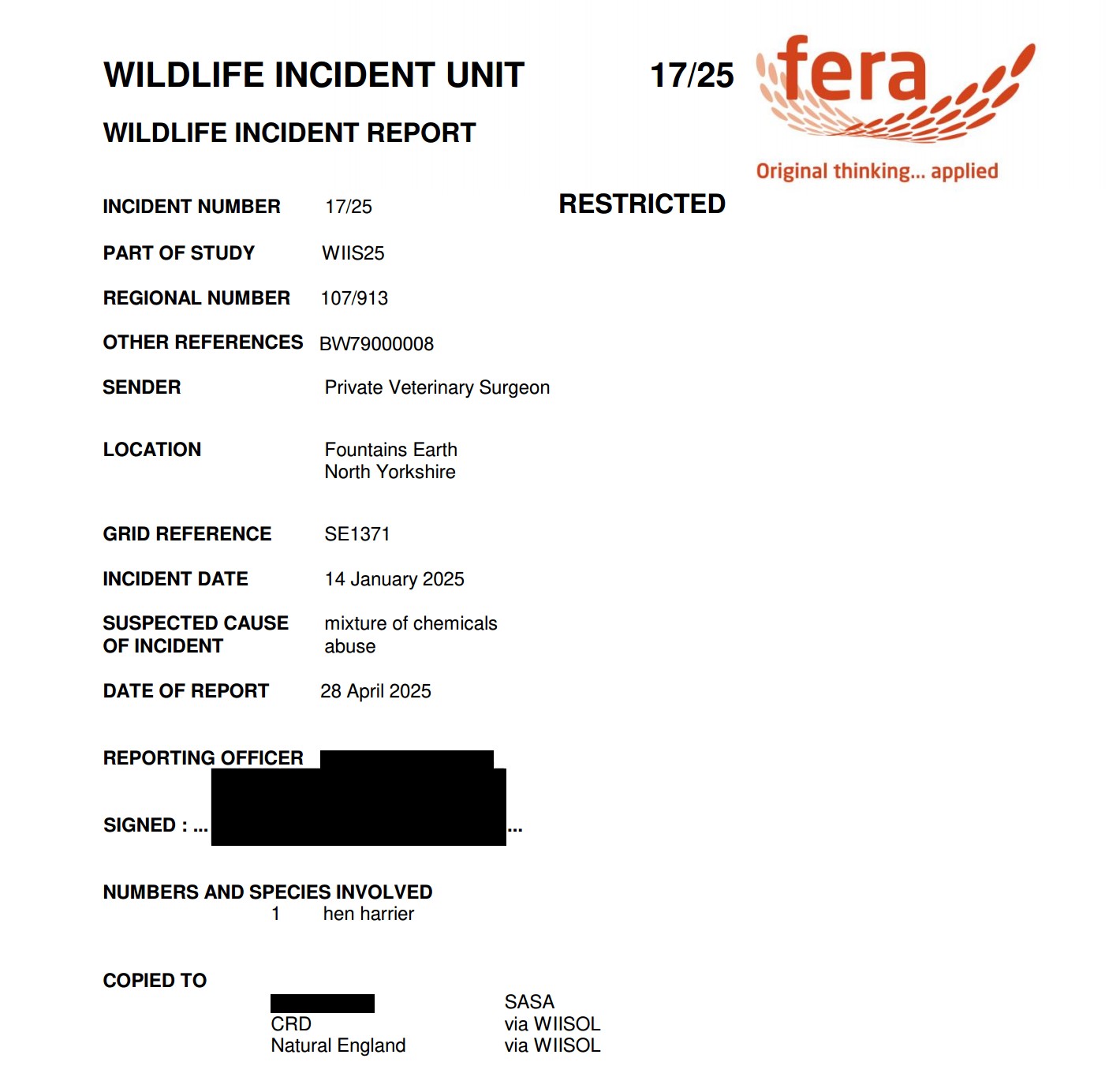
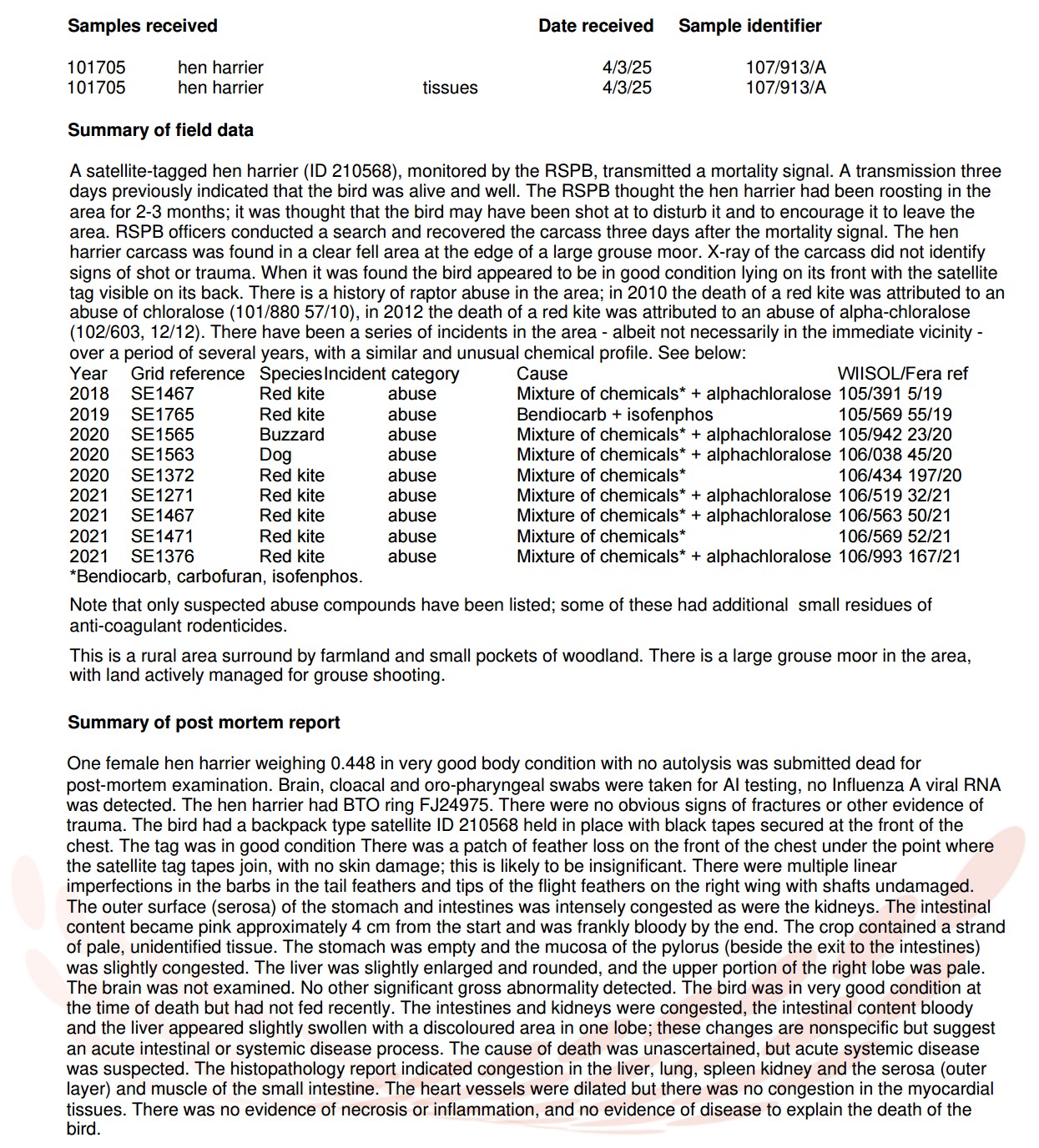
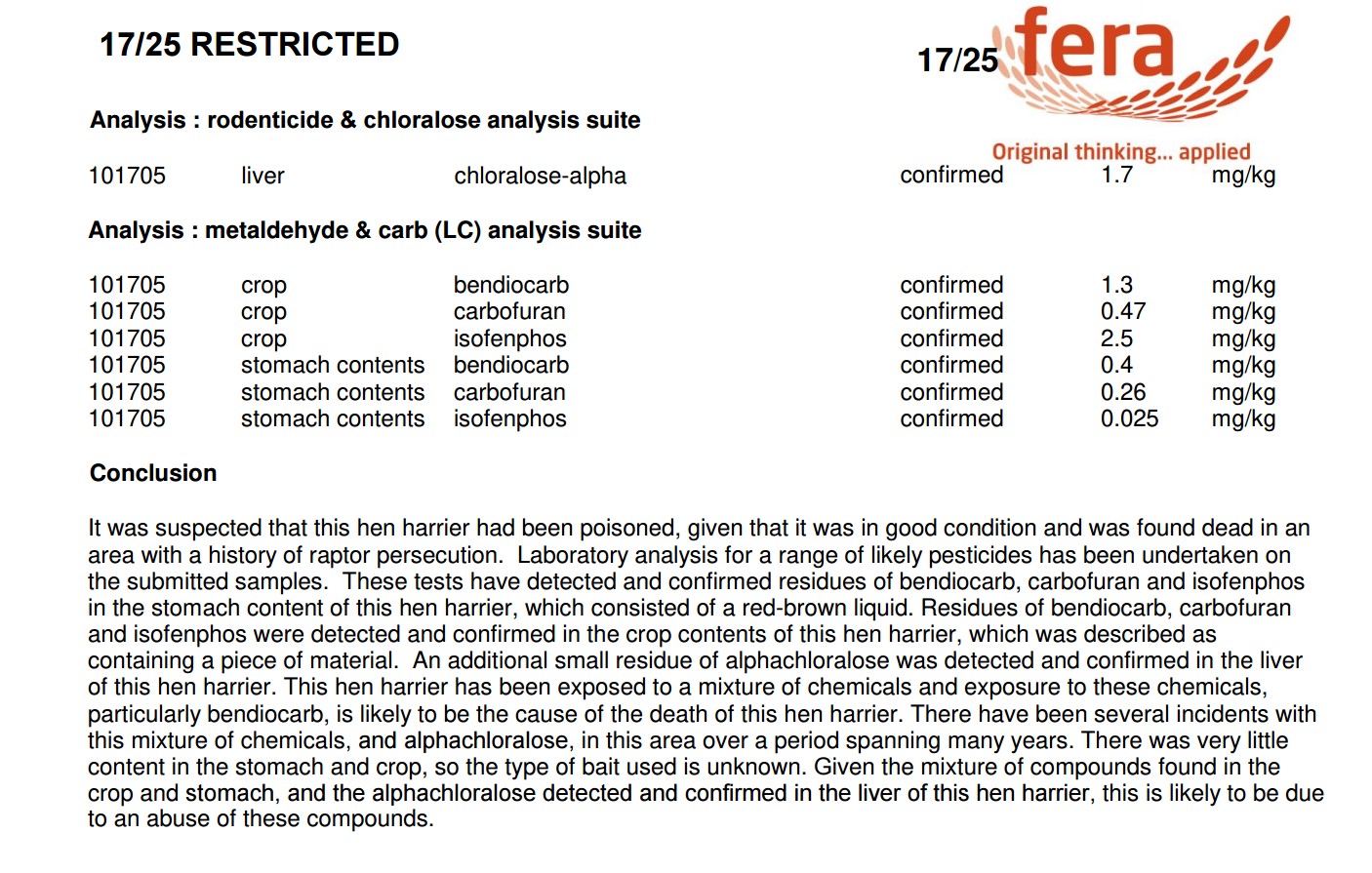
First, here’s a redacted post mortem report on Ataksak from FERA (Food and Environment Research Agency). It’s pretty conclusive:
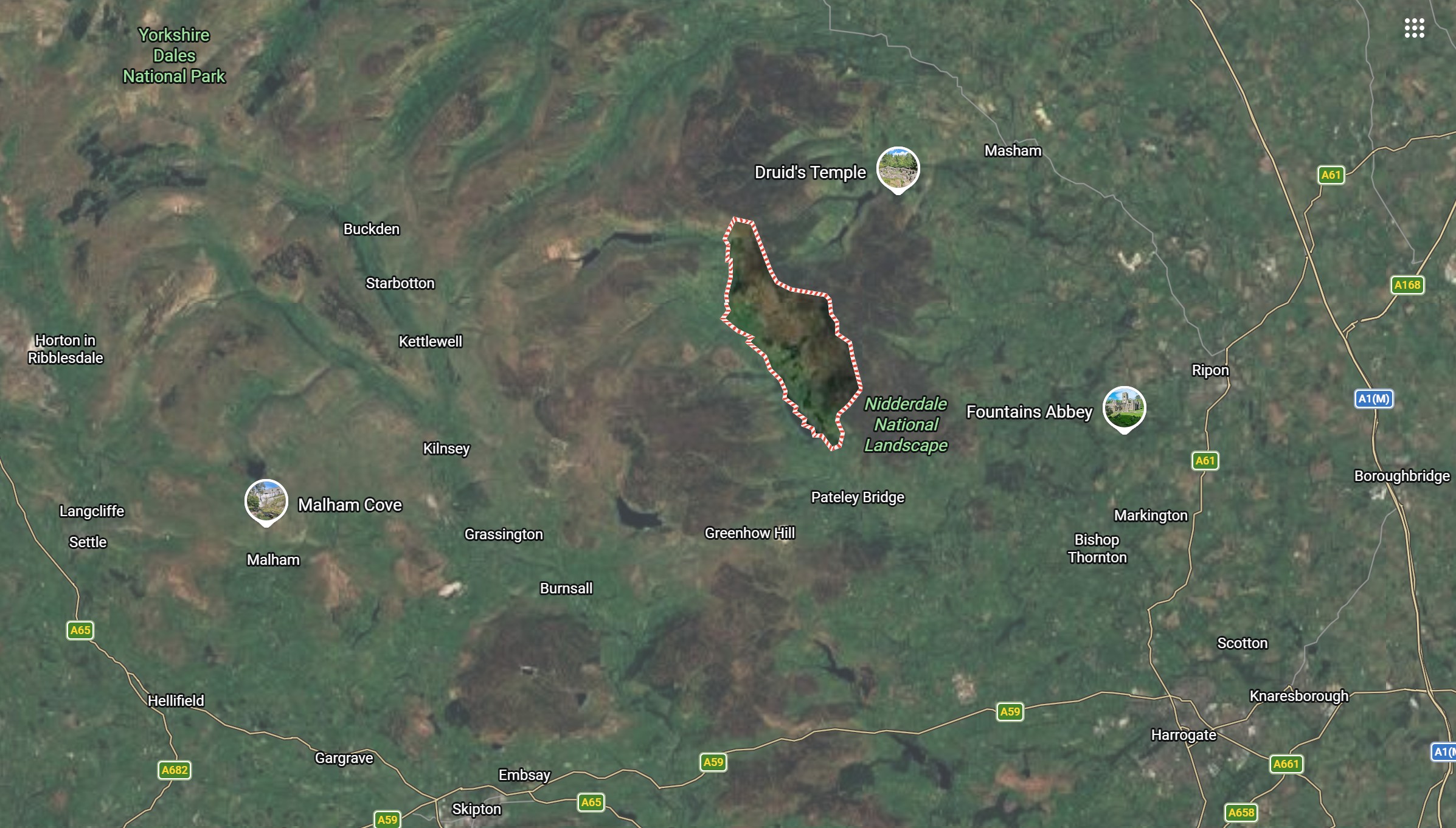
The PM report gives the location as ‘Fountains Earth’ in North Yorkshire, and a four-figure grid reference SE1371. This places Ataksak’s death in Nidderdale, a well known raptor-poisoning hot spot:
The parish of Fountains Earth, Nidderdale (google maps)
Given the high toxicity of the chemicals used to poison her, I’d think it quite likely that Ataksak was poisoned very close to the spot her corpse was found.
The PM report is dated 28 April 2025, some three months after Ataksak was poisoned.
So what progress had North Yorkshire Police made with its investigation in to this crime?
Well, apparently very little.
According to my sources, as of January 2026, a full year after Ataksak’s body had been found, and nine months after the conclusive post mortem report, North Yorkshire Police hadn’t even bothered to conduct a search, despite being encouraged to do so by the National Wildlife Crime Unit and Natural England.
And therein lies the problem. The responsibility for investigatory decision-making lies entirely with the local police force. Experienced officers from the National Wildlife Crime Unit (including specialists involved with the Hen Harrier Taskforce) and specialist poisoning experts from Natural England can only offer their assistance; if the local police force chooses not to accept those offers of help, for whatever reason, there’s nothing they can do about it.
How bonkers is that? Hen Harrier persecution is a national wildlife crime priority, there’s a national Taskforce that’s being funded (with tax payers’ money) to deal with it, but it doesn’t have the authority to investigate these crimes unless the local police force agrees to it.
This isn’t a problem in some areas, where local police forces are only too happy to accept specialist help and support, but it is definitely a problem in North Yorkshire (e.g. see here), and in several other counties in northern England where raptor persecution is known to take place, particularly on driven grouse moors.
I submitted Freedom of Information requests to the NWCU and to Natural England about the status of the investigation into the poisoning of Ataksak but surprise, surprise, both refused to release any information, stating the information has been withheld by exception, citing regulation 12(5)(b)(g) — Course of justice, inquiries & fair trial.
There is no ‘course of justice’ in this case, because North Yorkshire Police has been sitting on its hands for over a year. Rather than holding them to account, these agencies are simply providing them with cover.
Further to this morning’s blog (here), Natural England has now formally confirmed its tighter restrictions on the release of non-native Pheasants and Partridges on, or within 500m, of Special Protection Areas (SPAs) in England, due to the continuing very high risk of spreading Highly Pathogenic Avian Influenza (Bird Flu).
As expected, General Licence 45 (the licence under which restricted numbers of gamebirds can be released on or within 500m of Special Protection Areas, which was introduced after a legal challenge by Wild Justice about damage to protected sites by gamebirds) will remain withdrawn this year, which means that if gamebird shoot operators want to release non-native Pheasants or Partridges on or next to SPAs, they will first need to apply for an individual licence from Natural England.
The only SPA where individual licence applications are likely to be successful with standard mitigation is the marine SPA in Cornwall, Falmouth Bay to St Austell Bay.
Natural England has indicated the SPAs where an individual licence may be granted (with restrictions on the number of birds that can be released) but probably with a delayed gamebird release date (of either 1 Sept or 1 Oct 2026) as follows:
SPAs where applications are likely to be successful with delayed release
Ashdown Forest (1 September)
East Devon Heaths (1 September)
Great Yarmouth North Denes (1 October)
Greater Wash (1 October)
North York Moors (1 September)
Northumberland Marine (1 October)
Outer Thames Estuary (1 October)
Peak District Moors (South Pennine Moors Phase 1) (1 September)
Porton Down (1 October)
Solent and Dorset Coast (1 October)
South Pennine Moors Phase 2 (1 September)
Thorne and Hatfield Moors (1 September)
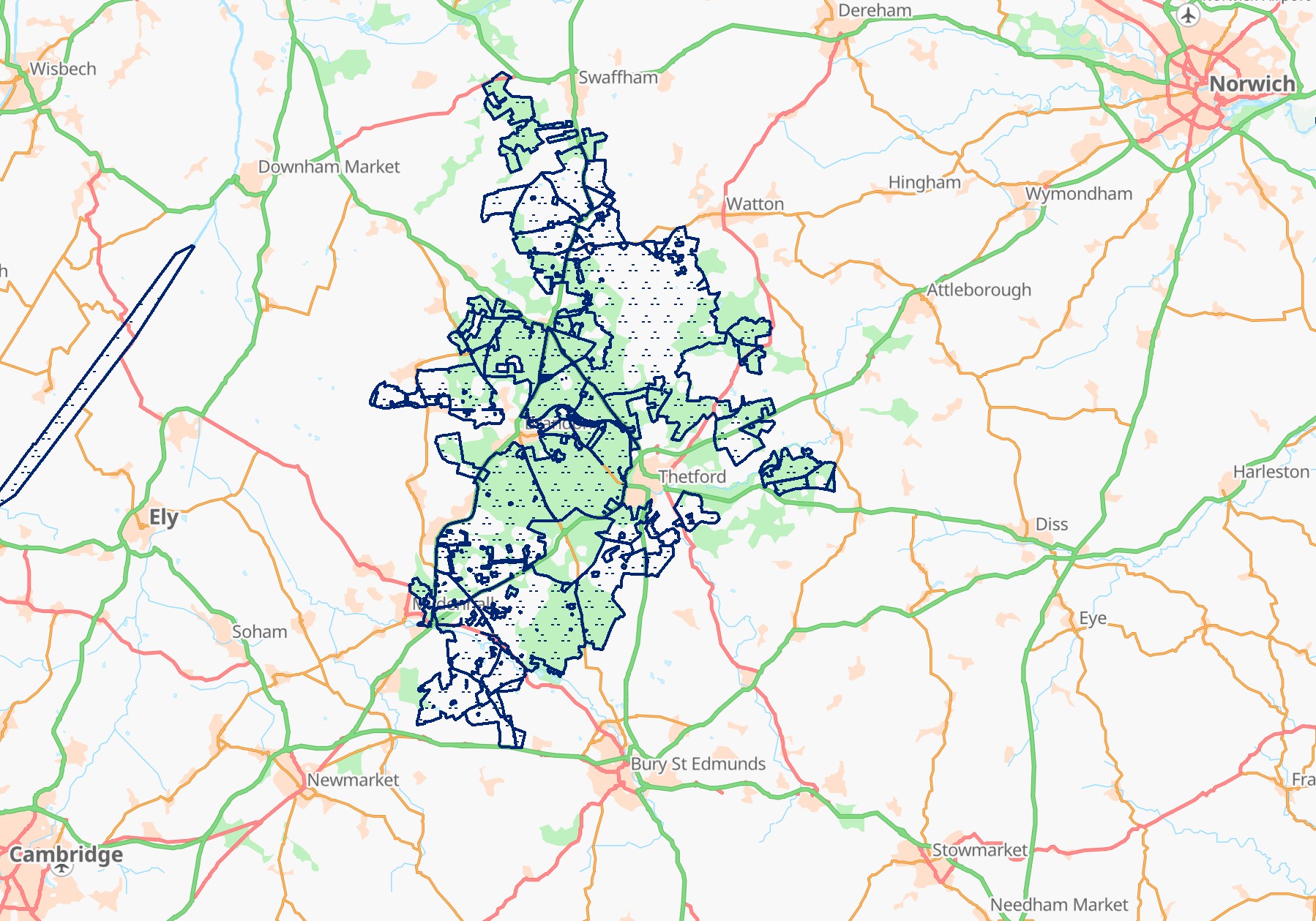
For any other SPA not listed above, Natural England states it is likely to refuse an individual licence. For the first time, this includes the large Breckland SPA in Norfolk/Suffolk, which will affect a number of large estates that are (in)famous for their Pheasant and Partridge shoots.
Stand-by for representatives of the gamebird shooting industry proclaiming world-ending rural Armageddon in this area as a result of the new restrictions.
Natural England’s bulletin also states that a significant number of licensees failed to provide returns within the required time limit last year, and that this is an offence under the Wildlife & Countryside Act. What a surprise. Whether there’ll be any follow-up enforcement action remains to be seen.
Here is a copy of Natural England’s gamebird licensing bulletin, published today:
An investigation has been launched into alleged breaches of mandatory bird flu biosecurity regulations at Guy Ritchie’s Pheasant and Partridge shoot at Ashcombe Estate in Wiltshire, according to an article in The Times today.
Article on page 3 of The Times, 9 March 2026 (photo by Ruth Tingay)
Undercover investigators from Dale Vince’s Green Britain Foundation reportedly installed covert cameras on the estate in November 2025 and claim to have recorded multiple breaches of the mandatory biosecurity measures introduced last year to prevent the spread of Highly Pathogenic Avian Influenza.
The investigators say they have footage of grain feeders being emptied on to the ground and of food being emptied directly on to open ground, instead of being covered to reduce access to wild birds.
Covert footage appears to show a grain feeder being emptied on to the ground in front of a Red-legged Partridge release pen (screen grab from Green Britain Foundation recording)
Covert footage appears to show a man spreading food on open ground (screen grab from Green Britain Foundation recording)
Investigators also claim the footage showed no visible daily inspection or cleaning of feeding areas, which are all mandatory requirements.
County Council Trading Standards Departments are responsible for enforcement of the mandatory Avian Influenza biosecurity regulations and Wiltshire County Council has opened an investigation in to the alleged offences at Ashcombe Estate.
If the Council’s Trading Standards Department is satisfied that the breaches did occur, and the estate’s management accepts that it committed the offences, then it’s likely the estate would only be given a verbal warning.
Similar breaches of the mandatory biosecurity regulations were confirmed at a gamebird shoot at Ramsholt, Suffolk last year (next to the Deben Estuary SPA, so arguably a much more sensitive site than the Ashcombe Estate) but even so, only a formal verbal warning was issued and this, we were told, is standard practice for first time offenders, even though breaching the regulations is a criminal offence.
More restrictions are expected to be announced for the release of gamebirds on/near Special Protection Areas (SPAs) in England in 2026.
Regular blog readers will recall that in March last year, Defra announced that it would not be issuing General Licence 45 (GL45 – the licence under which restricted numbers of gamebirds can be released on or within 500m of Special Protection Areas, which was introduced after a legal challenge by Wild Justice about damage to protected sites by gamebirds) in 2025 because:
“It is currently not possible to rule out the risk of highly pathogenic avian influenza (HPAI) (which is currently very high) spreading to the bird features present on SPAs”.
Natural England (responsible for individual licences) went further, and on 14 April 2025 it advised the gamebird shooting industry that although they could still apply for individual licences for 2025 gamebird releases on or close to SPAs, some licences would only be permitted with a delayed release date for the poults, whereas licences for many other SPAs would be unlikely to be issued at all.
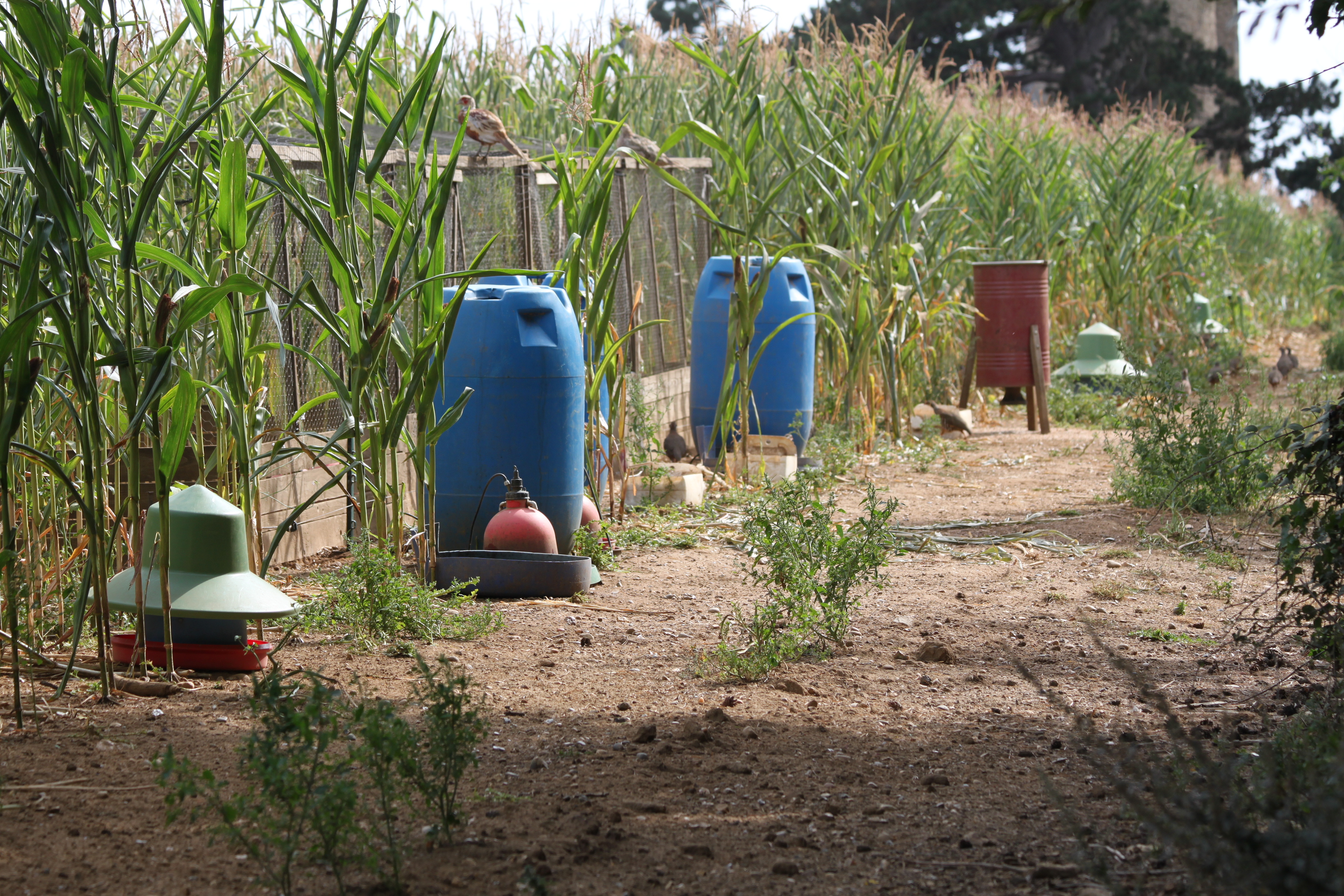
An unlawful Red-legged Partridge release pen at the Deben Estuary SPA, Suffolk in 2025, where an individual licence had been refused (photo by Ruth Tingay)
Given the still very high risk of Highly Pathogenic Avian Influenza (HPAI), I’ve been expecting General Licence 45 to remain withdrawn this year.
I’ve now seen a draft notification written by Natural England which is expected to be published this week (thanks to the blog reader who sent me a copy) that details the further restrictions that are anticipated for the 2026 gamebird shooting season.
The draft notification states that General Licence 45 will remain withdrawn this year (good) and that there will be even more restrictions than there were last year (good).
Individual licences will again be available for some SPAs, with a delayed gamebird release date (either 1 Sept or 1 Oct depending on the site) to protect any wild birds that otherwise would be present on the SPA over the summer and could be at risk from the spread of HPAI from released gamebirds.
However, this year for the first time, Natural England has been assessing the risk of Avian Influenza to overwintering Woodlark populations, as well as breeding populations which are already a ‘feature’ of several SPAs.
As a result of these concerns, Natural England has concluded that ‘adverse effects on site integrity’ cannot be ruled out for the following sites: Breckland SPA, Sandlings SPA, Thames Basin Heaths SPA, Thursley, Hankley and Frensham Commons (Wealden Heaths Phase 1) SPA, Wealden Heaths Phase 2 SPA. For this reason, it is unlikely that licences will be granted for these SPAs in 2026.
This is a significant change to the 2025 restrictions, especially on the large Breckland SPA in Norfolk and Suffolk which is known to be an area of intense gamebird releases.
Breckland SPA in Norfolk/Suffolk (from Defra’s Magic Map)
A total ban on the annual release of millions of non-native gamebirds (Pheasants & Red-legged Partridges) would be better but increased restrictions can still be considered progress.
I’ll await the publication of Natural England’s formal notification with interest.
UPDATE 17.00hrs: Natural England confirms tighter restrictions on gamebird releases on/near to Special Protection Areas in England (here)
Following the announcement from Defra in July 2025 that the Government aimed to introduce legislation by the summer of 2026 to ban the sale and use of toxic lead ammunition for ‘live quarry shooting’ over a three-year transition period (see here), the start date for the ban has now been confirmed as 1st April 2029.
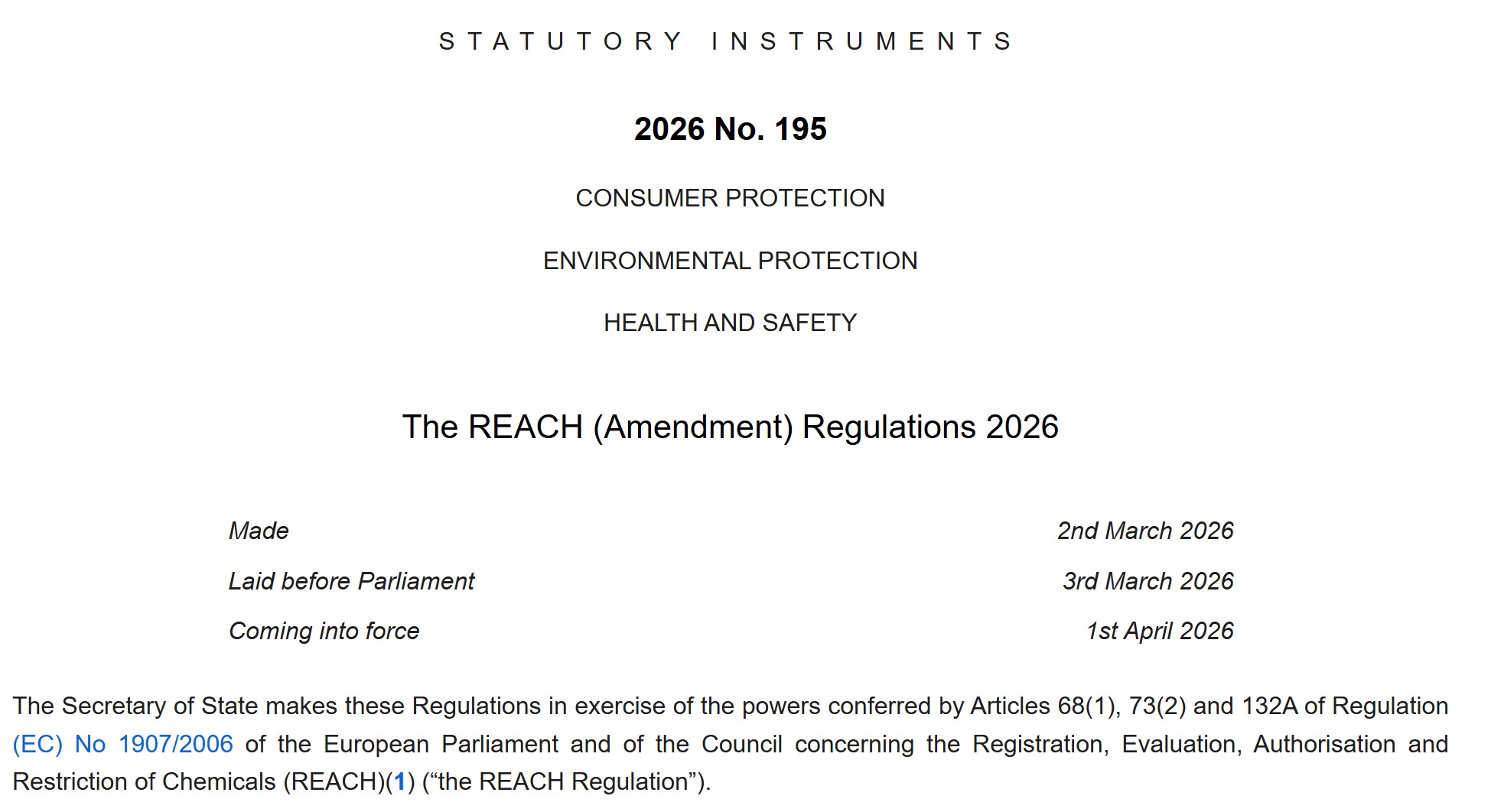
A new Statutory Instrument was laid before Parliament on 3rd March 2026 and will come in to force on 1st April 2026. This is The REACH (Amendment) Regulations 2026, which determine the start date for the ban which will apply in England, Wales and Scotland.
The REACH Regulation (Registration, Evaluation, Authorisation and Restriction of Chemicals) aims to ensure a high level of protection for human health and the environment against the harmful effects of chemical substances.
The SI details those who will be exempt from the ban (e.g. elite athletes, military, police, Border Force). The ban covers shotgun cartridges (all calibres) and rifle ammunition for live quarry shooting in calibres of 6.17 mm (.243 and above).
Importantly, the ban includes not just the sale of toxic lead ammunition, but also the use of it. That means that once the ban is in force, it will be a criminal offence to use toxic lead ammunition, regardless of whether it was bought prior to the ban.
Let’s hope that all those gamebird shooters who are currently bragging on social media about how they’ve already begun to stockpile their toxic lead ammunition (with a clear intention to use it once the ban commences) get the message.




 Raptor Persecution UK