Red kite shot dead near Toddington, Bedfordshire

Bedfordshire Police and the RSPB are appealing for information following the discovery of shot red kite in Bedfordshire.

A member of the public found the kite’s corpse at Daintry Wood near Toddington (unfortunately no date has been provided. UPDATE: corpse found 27 Feb 2017) and it was sent to ZSL for a post mortem where an x-ray revealed 10 pieces of lead shot lodged in its body, indicating it had probably been shot at close range.

Anyone with information is asked to call Bedfordshire Police on 101.

RSPB press release here

More evidence to be heard on gamebird licensing petition

You may recall last summer the Scottish Raptor Study Group (SRSG) submitted a petition to the Scottish Parliament’s Public Petitions Committee, calling for a state-regulated licensing system for all gamebird hunting in Scotland.

The Petitions Committee took evidence in October 2016 from the SRSG and RSPB Scotland (see here) and then evidence from the Scottish Moorland Group and BASC in December 2016 (see here) before deciding to pass the petition to the Environment, Climate Change & Land Reform (ECCLR) Committee for further consideration.

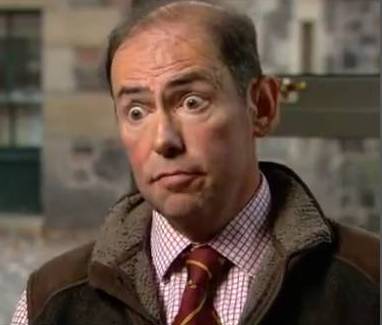
It’s interesting to note that since that first evidence session, petitioners Logan Steele, Andrea Hudspeth and Duncan Orr-Ewing (pictured above) from the SRSG have been singled out for some pretty nasty personal abuse on social media. No prizes for guessing who was behind this, or why. We really are dealing with a disgusting sector of society.

On 31 January 2017, the ECCLR Committee considered how to progress the petition and they wrote a letter to Environment Cabinet Secretary Roseanna Cunningham asking her (a) when the Government’s review of gamebird licensing in other European countries would be published and (b) what is her opinion of the effectiveness of other measures such as vicarious liability and general licence restrictions and whether the Government had any plans to review the current licensing regime.

Since that meeting, the Government’s gamebird licensing review has been published (see here) and the Cabinet Secretary has written to the ECCLR Committee outlining her thoughts on vicarious liability, general licence restrictions, firearms licensing, and her initial thoughts on the usefulness of introducing a state-regulated licensing system for gamebird hunting (see here).

The final paragraph of the Cabinet Secretary’s letter is worth highlighting here:

In conclusion, I would emphasise that our experience in this area is that there is no short cut to securing hard evidence of criminal behaviour. Changes to the law can only go so far, and always will need to be accompanied by effective, professional law enforcement. A licensing scheme may be a useful addition to the toolbox, but it will still depend on someone gathering evidence of wrong-doing in order to justify removal of a licence to operate a business‘.

She’s right to reiterate the importance of, and need for, effective law enforcement – it’s an issue we’ve been banging on about for years – without it, any new legislation would be worthless. But if she’s concerned about the lack of resources to collect evidence of criminality, then surely she need look no further than the current consultation to give increased investigatory powers to the SSPCA (see here).

In light of the publication of the Government’s gamebird licensing review, and the receipt of the Cab Sec’s letter, the ECCLR Committee had a brief discussion about the gamebird licensing petition during their meeting on 28 March 2017 (see page 21 of this transcript: ECCLR official report 28 March 2017 ).

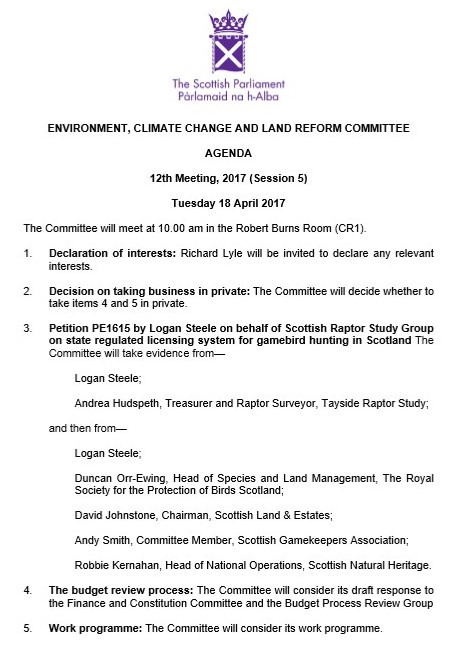
The Committee has agreed to take evidence from the petitioner (the Scottish Raptor Study Group) and then evidence from a panel of stakeholders including RSPB Scotland, Scottish Gamekeepers’ Association, Scottish Land & Estates and SNH. We believe this evidence session will take place on Tuesday 18 April and we’ll add a link to the live proceedings nearer the time.

Police confirm RSPB staff did not have covered faces on estate search for missing eagle #338

For the benefit of those not on social media and who therefore may have missed this……

Further to yesterday’s blog (here) about the police search of North Glenbuchat Estate for missing golden eagle #338, Police Scotland has today stated that RSPB staff who assisted them on the search did NOT have covered faces (see twitter account of Ian Thomson, Head of RSPB Scotland Investigations, @Ian_M_Thomson).

So, the hysteria about ‘masked RSPB thugs’, ‘masked intruders’, and accusations that the RSPB is behaving like a ‘balaclava-clad paramilitary outfit’, whipped up by the likes of Bert Burnett (Scottish Gamekeepers’ Association) and other senior representatives of the game-shooting industry, was simply another failed attempt to distort the facts and create a diversion so that the focus of frequently ‘disappearing’ satellite-tagged eagles on grouse moors didn’t get the attention it merits.

We can expect more of this, in the run up to the publication of the forthcoming raptor satellite-tag review. The net is closing in on those within the game-shooting industry who continue to kill raptors, and they know it.

Photo of golden eagle #338 copyright Scottish Raptor Study Group


More on ‘missing’ golden eagle #338, North Glenbuchat Estate

On Saturday 1 April 2017, we blogged about a satellite-tagged golden eagle (#338) that the RSPB reported had ‘disappeared’ after its last sat tag signal pinged in from the North Glenbuchat Estate in the Cairngorms National Park in early March (see here).

The estate, via PR company Media House, issued a robust statement in response and posted a video clip of a young eagle, purportedly filmed on the estate on 30 March, that the estate’s head gamekeeper “firmly believed” to be golden eagle #338.

We commented at the time that the video footage was very poor quality and it was difficult to see whether the eagle in the video was even carrying a satellite tag. We also pointed out that other sat-tagged golden eagles are currently flying around Scotland so even if this eagle in the video was carrying a tag, it would have been virtually impossible for the head gamekeeper to know whether it was eagle #338 or one of the others.

Since then, various expert field ornithologists both in the UK and the USA, all of whom specialise in golden eagles, have contacted us about the video. All of them said that although the video quality was poor, the plumage characteristics of the eagle in the video were not consistent with that of a nine-month old male golden eagle, but appeared to be consistent with what they’d expect of a second year female golden eagle.

On Sunday 2 April 2017, Media House issued another press statement on behalf of North Glenbuchat Estate and published a second video, purportedly of eagle #338, filmed on the estate on Saturday 1 April 2017. The quality of this second video is even worse than the first video (you could be looking at a flying cabbage) so it’s not much use as the supplementary evidence it was clearly intended to be.

The text of this second press release via Media House is well worth a read: North Glenbuchat Estate press release_2

In it, Media House states that the RSPB staff who were involved in the police search of the estate last week (at the invitation of Police Scotland – good, partnership working) “were hooded and kept their faces covered“.

This sentence has been widely abused by the nasty brigade on social media and has been turned into phrases such as ‘Masked intruders‘, ‘Masked RSPB thugs‘ and ‘RSPB representatives conducting themselves like hunt saboteurs wearing intimidating hoods and masks‘. Doubtless spurred on by the following inflammatory commentary from Bert Burnett (Scottish Gamekeepers’ Association) on his facebook page:

So yet again, the focus of attention is dragged away from the issue at hand (the disappearance of yet another satellite-tagged raptor on a grouse moor) and moved on to the usual anti-RSPB rhetoric in an attempt to discredit anybody or anything that might point to on-going concerns about the frequency with which satellite-tagged raptors seem to ‘disappear’ in areas where intensive grouse moor management takes place.

This abuse of the RSPB is nothing new, of course, but it’s interesting that the false claims about the efficiency of satellite tags, the false claims that the RSPB does not follow PAW raptor protocols, and the attempted denigration of raptor workers and those who fit these satellite tags, has been extremely prevalent since August last year when the Cabinet Secretary announced her decision to undertake an independent review of raptor satellite tag data. The abuse will no doubt have not gone unnoticed by the Scottish Government.

But back to the missing golden eagle #338. As we’ve been writing this blog, a very interesting map has appeared on Twitter (see @Ian_M_Thomson). It’s a map showing the recent movements of three other satellite-tagged golden eagles around Glenbuchat in March – April 2017:

Clear evidence that the eagle filmed by the head gamekeeper could have been any one of these other eagles so his “firm belief” that he was filming eagle #338 may have been his genuine belief but in fact is nothing more than hopeful optimism.

Nice try, but no cigar.

Meanwhile, the satellite tag signal from golden eagle #338 remains silent.

UPDATE 5 April 2017 14.38hrs: Ian Thomson (Head of RSPB Investigations Scotland) has just tweeted the following:

@Ian_M_Thomson: ‘Regarding missing eagle #338, Police Scotland has provided clarification to @PAWScotland partners that have contacted them that @RSPBScotland staff assisting them on a search in Glenbuchat last week did NOT have covered faces. We look forward to @PAWScotland partners disseminating this information to their memberships’

UPDATE 31 May 2017: North Glenbuchat Estate identified in Government-commissioned report as one of several hotspots where satellite-tagged golden eagles have regularly ‘disappeared’ in suspicious circumstances (here).

Armed man with tethered eagle owl on a Lammermuirs grouse moor

A couple of weeks ago one of our blog readers was walking on a grouse moor in the Lammermuirs when he came across a live eagle owl tethered to a post and an armed man loitering close by at the edge of a shelter belt of trees where a pair of buzzards is known to hang out.

When the armed man saw the walker, he jumped on a quad bike and drove towards him. When he realised he was being filmed, he swiftly retreated, collected the eagle owl and the post to which it was tethered, and took off at speed across the grouse moor.

Now, what you might think was going on here was reminiscent of what was filmed on a grouse moor in the Peak District National Park last spring, where an armed man was seen crouching in heather next to a plastic hen harrier decoy. What you might think was happening here in the Lammermuirs was that the live eagle owl was being used as a decoy to draw in other birds to within shooting range of the armed man. But you’d be mistaken, because using a live, tethered decoy is illegal. Here’s the relevant part of the Wildlife & Countryside Act, Section 5(1)(d):

If any person uses as a decoy, for the purpose of killing or taking any wild bird or other animal whatever which is tethered, or which is secured by means of braces or other similar appliances, or which is blind, maimed or injured, he shall be guilty of an offence and be liable to a special penalty‘.

Of course we all know that nothing illegal takes place on grouse moors, ever. No, definitely no criminal offences being undertaken here. This is obviously an armed midwife from Edinburgh, taking a pet eagle owl out for a change of scenery. He only rushed off at the end so he wouldn’t be late for his next shift.

Satellite-tagged golden eagle ‘disappears’ on North Glenbuchat Estate in Cairngorms National Park

RSPB Scotland has released the following press statement:

APPEAL FOR INFORMATION AFTER ANOTHER SATELLITE-TAGGED GOLDEN EAGLE “DISAPPEARS”

RSPB Scotland has today issued an appeal for information following the disappearance of a satellite tagged golden eagle near Strathdon in Aberdeenshire.

The young male eagle was fitted with a transmitter by a licensed raptor study group member, before it fledged from a nest in Deeside in the summer of 2016. Data received from the tag allowed conservationists to study the movements of the bird, known as “338”, as it explored north-east Scotland’s countryside.

As with most young eagles, the bird spent the first few weeks after fledging in the area around its nest, before moving further away as it matured and was more able to fend for itself, spending much of its time on the eastern side of the Cairngorms National Park.

Overnight on Sunday 5th/Monday 6th March, the tag fitted to 338 inexplicably stopped working, having being functioning perfectly up to that point. The bird’s last recorded position was in Glenbuchat just before nightfall on 5th March. No further data has been received.

Ian Thomson, RSPB Scotland’s Head of Investigations said: “As soon as we became aware of this bird’s disappearance, we notified Police Scotland, in line with PAW Scotland protocols, who concurred that the circumstances were suspicious. These tags are very reliable, and the sudden cessation of transmissions strongly suggests the bird has died. Had the bird succumbed to natural causes, we would expect to continue to receive data and to be able to locate and recover the body of the eagle with ease”.

Follow up enquiries on the North Glenbuchat Estate by police officers, assisted by RSPB staff, yielded no sign of the bird.

In 2011, a satellite-tagged golden eagle was found illegally poisoned on the same estate, with a shot short-eared owl and poisoned buzzard also discovered. Another satellite-tagged golden eagle disappeared here in September 2011, with further such tagged birds also vanishing in the same area, in February 2012 and May 2013. In April 2014, the first young white-tailed eagle to fledge from a nest in the east of Scotland in one hundred years also disappeared here.

Ian Thomson continued “The circumstances surrounding the disappearance of eagle 338 are similar to a number of previous cases currently being considered by an independent review of satellite-tagged birds of prey commissioned by the Scottish Government. If this review reveals a geographical pattern to disappearing golden eagles, we will be pressing the Scottish Government for firm action, including the introduction of a licensing system for driven grouse shooting, with sanctions for licence removal from land where there is evidence of illegal practices. In the meantime, we appeal for any information about the disappearance of this bird to contact the police”.

Ends

Eagle 338 successfully fledged from a nest in Deeside in 2016. Photo copyright Scottish Raptor Study Group.

As the RSPB Scotland statement says, eagle 338 is not the first to ‘disappear’ on the North Glenbuchat Estate.

In March 2011 a satellite-tagged eagle (#57319) was found poisoned on North Glenbuchat Estate (toxicology tests confirmed the banned poison Carbofuran had been used). A follow up police search, under warrant, recovered the remains of a short-eared owl under a rock – a post mortem confirmed it had been shot; a poisoned bait (rabbit) laced with Carbofuran; and a poisoned buzzard (Carbofuran). Nobody was prosecuted.

In September 2011 a satellite-tagged eagle (#95065, named Strathy) ‘disappeared‘ on North Glenbuchat Estate. Its tag had been functioning perfectly well before it suddenly and inexplicably stopped.

In February 2012 a satellite-tagged eagle (#57111) ‘disappeared’ on North Glenbuchat Estate. Its tag had been functioning perfectly well before it suddenly and inexplicably stopped.

In May 2013 a satellite-tagged eagle (#84133, named Angus 33) ‘disappeared‘ on North Glenbuchat Estate. Its tag had been functioning perfectly well before it suddenly and inexplicably stopped.

In April 2014 a satellite-tagged white-tailed eagle (White 1) ‘disappeared‘ on North Glenbuchat Estate. Its tag had been functioning perfectly well before it suddenly and inexplicably stopped.

That’s a lot of catastrophic tag failures all in one small area, over a six year period, isn’t it? And it’s patterns like this that the forthcoming raptor satellite tag data review will be exploring. What’s the betting that similar patterns will be seen in other areas in Scotland where the land is managed intensively for driven grouse shooting (e.g. Monadhliaths, Angus Glens)?

Interestingly, two press releases have so far been issued in response to this RSPB Scotland press release. One is from the landowners’ lobby group Scottish Land & Estates and the other one is from the North Glenbuchat Estate. It’s interesting to note that both press releases came via ‘public relations and crisis management’ experts, Media House.

The statement from Scottish Land & Estates appears to be supportive of the RSPB’s appeal for information. Read it here: Scottish Land & Estates press release North Glenbuchat eagle

The statement from North Glenbuchat Estate is very different. Read it here: North Glenbuchat Estate press release North Glenbuchat eagle

The estate’s statement includes the following claim: “The estate head gamekeeper filmed what he firmly believes to be the eagle in question yesterday afternoon” (March 30 2017) and there is an accompanying video of this eagle (here). It’s well worth a look. It’s definitely a juvenile golden eagle and it’s definitely been filmed on Glenbuchat Estate. However, it’s not known when the footage was taken and it’s extremely difficult to see whether this eagle is even carrying a satellite tag. But even if it is carrying a tag, how on earth can the keeper “firmly believe” that this is eagle 338? Surely he / the estate knows that there are plenty of satellite-tagged eagles flying around Scotland at the moment and it could be any one of those!

It all looks a little bit lame and a teensy bit desperate, but maybe that’s just us. Maybe eagle 338 is still flying around the Cairngorms National Park, along with all the other ‘missing’ satellite tagged eagles. Perhaps, having learned to use jamming technology to block the signal from their satellite tags, they’re now hanging around the Co-op car park in Grantown on Spey, using their skills to block remote-locking car keys with criminal intent so they can steal the vehicles and go joy riding around the National Park.

There are bound to be further responses to today’s news over the coming days and we’ll be reviewing those as and when they appear, but the one response we’re really keen to hear is the one from the Environment Cabinet Secretary, Roseanna Cunningham. We don’t plan to bombard her with outraged emails this time. She knows the score, she knows exactly what’s going on, and she knows that there is high expectation for her / the Scottish Government to finally address this issue with the full force it demands.

She will be considering the findings of the raptor satellite tag review over the next couple of weeks so while we wait to hear what action she intends to take, you can amuse yourselves by reading this article about the ownership of North Glenbuchat Estate, written by Andy Wightman in 2014.

(Photos by RPUK)

UPDATE 4 April 2016: More on missing golden eagle #338, North Glenbuchat Estate (here)

Peregrine found shot in Devon

News of yet another shot peregrine, this time in Devon.

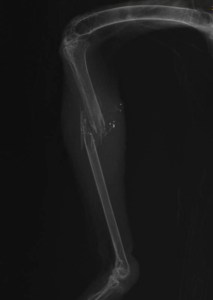
The female bird was found on 6 March 2017 next to Milton Abbot primary school in Tavistock. She was taken to a vet where an x-ray revealed a piece of shot lodged in her right shoulder (x-ray & photo courtesy Westmoor Veterinary Hospital, Tavistock).

The peregrine is currently being cared for by a local falconer.

Further details of this incident, and several other shot peregrines that have been found this year, on the RSPB’s Investigations Team blog here

Peregrine found shot in Hampshire

The RSPB’s investigations team is reporting the discovery of a shot peregrine in Hampshire.

The bird, which hatched on Salisbury Cathedral in 2014, was found in King Somborne, Hants, on 11 March 2017, unable to fly.

It was taken to the Hawk Conservancy Trust in Andover where an x-ray revealed it had a fractured wing with gunshot fragments lodged next to the fracture site.

The peregrine is currently undergoing rehabilitation at the Hawk Conservancy Trust.

For further details see the RSPB Investigations Team blog here, which also lists some of the other peregrines that have been found so far this year, either shot or found dead in suspicious circumstances.

Meanwhile, the Police Service of Northern Ireland (PSNI) has joined forces with the Northern Ireland Raptor Study Group to proactively protect peregrine breeding sites throughout the region. Real partnership working – good for them. More information can be found on the NIRSG website here.

UPDATE 25 May 2017: Shot peregrine successfully rehabilitated and returned to the wild by Hawk Conservancy Trust (see here).

UPDATE 22 July 2018: Salisbury peregrine ‘Peter’ – shot last year, Dad this year (here)

South Scotland Golden Eagle Project receives £1.3M lottery funding

The South Scotland Golden Eagle Project, which proposes to translocate eagles from the Highlands to boost the tiny eagle population in Dumfries & Galloway and the Borders, has been awarded over £1.3 million from the Heritage Lottery Fund (see here).

This means the project can now move forward by submitting a licence application to SNH and, if the licence is approved, the plan is to start collecting eaglets from Highland nests during the 2018 breeding season, with the intention of releasing between five and ten young eagles in southern Scotland each year until 2022.

We’ve blogged about this project before, back in 2015 when the planned translocation was first announced. We had mixed feelings about it then (see here) and we still do now.

On the one hand, the south Scotland golden eagle population is on its knees and has been for some time (see here). If nobody intervenes, the last few pairs remain extremely isolated and vulnerable and there’s every chance this sub-population will disappear. For this reason, intervention by way of releasing more birds seems like a good idea.

However, unless the cause of this sub-population’s decline has been identified and removed or sufficiently reduced, it is absolutely pointless bringing in new birds that are likely to suffer the same fate.

One of the biggest constraints on golden eagle population recovery in southern Scotland is persecution. Raptor persecution in southern Scotland has definitely not been removed, nor sufficiently reduced. It has been argued (by Scottish Land & Estates) that raptor persecution in southern Scotland ‘may have been an historical factor’ in the demise of the south Scotland eagle population, but apparently it isn’t an issue any more. Unfortunately, the evidence doesn’t support that claim. Here’s a map from the 2008 Golden Eagle Conservation Framework showing the conservation status of golden eagles in Scotland (red = unfavourable conservation status), overlaid with ten years of raptor persecution data (all species, 2005-2015) gleaned from ‘official’ persecution maps. Does it look to you like raptor persecution isn’t an issue in southern Scotland?

The 2014 SNH-commissioned report on the status of golden eagles in southern Scotland also identified several areas where persecution is an ongoing concern, including the Lowther Hills, the Lammermuirs and the Moorfoots (all driven grouse moor areas – what a surprise), and stated that persecution needed to be brought under control in those regions if golden eagles were to thrive in southern Scotland once again.

On the basis of this evidence, we would argue that translocating golden eagles to southern Scotland in the immediate future is not a wise decision. But, there is a counter argument. Young golden eagles travelling around the Highlands during their early years are just as likely to be illegally killed in the north as they are in south Scotland (e.g. see here). So, if the risk is just as great in the north, why not bring those eagles to the south, where, under the intense public attention that this project will generate, the young birds may actually have a better chance of survival because the would-be raptor killers will know they’re under close scrutiny (each eagle will be satellite-tagged). Although that’s assuming the young birds remain in southern Scotland during their formative years – we know that a young eagle that fledged from the Dumfries & Galloway nest in 2015 ‘disappeared’ on a grouse moor in the Monadhliaths just after her first birthday in 2016 (see here).

Others have commented that prey availability will pose a problem for an increasing eagle population in the south, but a recent report (here) has shown that ‘the region possesses a sufficient prey base to sustain a breeding population of golden eagles of 12-16 pairs’. Here is a photo of a young golden eagle at the one remaining productive breeding site in the Borders. Judging by the nest contents, prey availability doesn’t appear to be a problem.

Whatever the concerns may be, it looks like this project is going ahead (pending the licence application) and let’s be honest, at least the primary motivation for this scheme is NOT to appease the grouse-shooting lobby, unlike the ludicrous Hen Harrier brood meddling scheme in England, but to help improve the sustainability of this important sub-population. Our misgivings haven’t yet been allayed, but we still have fingers crossed for its success because inaction (i.e. waiting for illegal raptor persecution to stop) is no longer an option if this sub-pop is to survive.

Court case continues for Angus Glens gamekeeper accused of alleged pole trapping offences

Criminal proceedings continued yesterday (28 March 2017) against Scottish gamekeeper Craig Graham.

Mr Graham, 51, is accused of allegedly setting and re-setting a pole trap, baited with a pheasant carcass, on the Brewlands Estate in the Angus Glens between 9-17 July 2015. He has denied the charges.

This case was first called on 31 March 2016, then on 22 April 2016, then on 12 May 2016 when Mr Graham pleaded not guilty. A provisional trial date was set for 9th September 2016.

This trial date was later dumped (at a hearing on 16 August 2016) and another provisional trial date was set for 5th December 2016. This was also later dumped and a third provisional date (at a hearing on 5 December 2016) was set for 15 May 2017.

At yesterday’s hearing, the case was adjourned, again, for a further intermediate diet scheduled for 25 April 2017. We don’t know whether the third provisional trial date of 15 May 2017 still stands – it depends what happens at the hearing on 25 April 2017.

Previous blogs on this case herehere and here

UPDATE 25 April 2017: The Crown Office has discontinued this case – see here.