Grouse shooting industry silent on marsh harrier persecution

Last Thursday (10th August 2017) North Yorkshire Police issued an appeal for information about several armed men, dressed as gamekeepers, who had been filmed trying to shoot a nesting Marsh harrier on a Yorkshire grouse moor in May. Some more armed men, still dressed as gamekeepers, were also filmed removing eggs from the Marsh harrier’s nest.

The Police appeal for information about the crimes, and an RSPB blog about the crimes, can be found here. The RSPB’s video footage of the crimes can be viewed here:

Four days on, we were interested to find out what the leading representatives of the grouse shooting industry have had to say about these crimes so we checked the following website news sections:

Moorland Association – nothing

National Gamekeepers Organisation – nothing

Countryside Alliance – nothing

British Association for Shooting & Conservation – nothing

Game & Wildlife Conservation Trust – nothing

No condemnation of these crimes. No appeals for information about these crimes from within their industry. Just a complete wall of silence. We even asked the Moorland Association whether this grouse moor was a member, and we asked the National Gamekeepers Organisation whether they had any members employed on this grouse moor. The responses? Nothing. Zero. Zilch. Nada.

It’s the same deafening silence that followed the discovery of a poisons cache buried on another North Yorkshire grouse moor (see here).

Isn’t it great to see these ‘partners’ in the Partnership for Action against Wildlife Crime (PAW) speaking out and doing their utmost to fight against illegal raptor persecution? It’s yet more evidence that the whole ethos of ‘partnership working’ against raptor persecution is nothing more than a sham.

Actually, how does this collective silence meet with the requirements of being a PAW member?

Let’s look at the PAW mission statement first:

Working in partnership to reduce wildlife crime through prevention and awareness-raising, better regulation, and effective and targeted enforcement‘.

Now let’s look at the PAW objectives:

  • PAW will raise awareness of wildlife legislation and the impacts of wildlife crime
  • PAW will help and advise on wildlife crime and regulatory issues
  • PAW will ensure all wildlife crime is tackled effectively.
  • All PAW members of PAW UK should take action in support of these overarching objectives

How does refusing to comment about raptor persecution crimes meet with any of the PAW objectives?

Some of these PAW members (all of them except the GWCT) are also members of the England & Wales PAW subgroup, the Raptor Persecution Priority Delivery Group (RPPDG). This is the group that DEFRA has identified as being integral to their highly controversial Hen Harrier Recovery Plan. Part of the RPPDG’s role is to provide publicity about raptor persecution, in order ‘to build trust and transparency’. Strange then, that we haven’t found any statement from the RPPDG about the persecution of Marsh harriers on this North Yorkshire grouse moor.

We were interested to read about a few hundred Hunt Saboteurs ‘sabbing’ (disrupting) a couple of grouse shoots this last weekend. As the shooting industry members of the PAW Partnership continue to deliver nothing at all, don’t be surprised to see more of this direct action approach in the months and years ahead.

Ian Thomson (RSPB Scotland) resolute against illegal raptor persecution

For those who couldn’t make it to Hen Harrier Day in the Highlands, here’s a short video of the presentation given by Ian Thomson, Head of Investigations RSPB Scotland. Well worth 11 minutes of your time.

Scottish Raptor Study Group publishes Moorland Mythbuster guide

Last month the Scottish Mail on Sunday published some right old tosh about how game shoot licensing would threaten the livelihood of gamekeepers and their families (see here).

In one of the articles, a comment piece by gamekeeper’s wife Carrieanne Conaghan (who, we’ve since been told, works as a sales rep in a publishing house in Grantown-on-Spey – if that’s true it was a bit disingenuous to claim that her family’s livelihood is reliant on game shooting), various unsubstantiated claims were made about the motivation of the estate licence petitioners (Logan Steele & the Scottish Raptor Study Group) as well as the usual denials about the unbridled criminality associated with the grouse shooting industry.

Logan Steele asked the Scottish Mail on Sunday if he could write a comment piece in reply. His request was denied (see here).

No problem. The Scottish Raptor Study Group has published its own response. Here, in their own words and without editorial censorship, are six moorland mythbusters, in response to the most commonly cited myths from the game shooting industry:

1. ‘Game bird licensing is unnecessary’
The failure of the intensive end of the game shooting industry to operate within the law over 60 years has led the Scottish Government to propose that game bird shooting licensing should be considered, along with other measures in an effort to eradicate the illegal, endemic and widespread killing of raptors. Licensing would set out clear standards required for this land use in the public interest, as applies also in other areas of natural resource management such as for water, wild fisheries and deer management in Scotland. No industry should rely on law-breaking to exist. Self-regulation has been given more than a chance to succeed and has not delivered and in the circumstances it is right that the Scottish Government should act in the public interest. . The concept is simple, if shooting estates abide by the law then no one has anything to fear, break the law and you stand to lose your licence to shoot. The only threat to livelihoods is from those individuals who are willing to take a chance and break the law. Any suggestion that a dead raptor or illegal trap could be ‘planted’ by a third party to make an estate lose a licence is simply scaremongering – there would have to be a clear evidential link to estate employees being responsible for any offences before a licence withdrawal could be considered.

2. ‘Incidents of illegal killing are declining’
The number of confirmed cases of persecution fluctuates markedly from year to year so comparing results between years is statistically invalid, particularly when the number of cases found will represent only a small but variable proportion of the actual number of crimes being carried out – the ‘tip of the iceberg’. A more robust means of identifying trends in persecution is to look at regional or national population studies of birds of prey, where a significant weight of peer-reviewed science reveals a more accurate picture. For example, recently published scientific reports on red kite, peregrine, hen harrier and golden eagle all provide clear evidence of populations constrained well below natural levels in areas where red grouse shooting is the predominant land use. The recently-published study on satellite-tagged golden eagles, commissioned by the Scottish Government, showed a similar pattern to recent raptor persecution cases, with a third of young tagged golden eagles disappearing on, or close to, land managed for intensive grouse shooting. Few of these birds were found, so they will not appear in any published statistics.

3. ‘Grouse moor management is good for a wide range of bird species’
In much of eastern and southern Scotland, heather moorland is intensively managed to maintain a patchwork of a variety of ages of heather to help create the ideal habitat for red grouse. However, most driven grouse moors are managed with the sole purpose of producing an unnaturally high abundance of grouse to be shot, and on many of them any species which is perceived to pose a threat to this is removed. Potential predators are killed, either legally (e.g. stoats, weasels, foxes, crows and magpies), or illegally, protected birds of prey. While legal predator control can
undoubtedly protect a variety of ground-nesting bird species, such as curlew and golden plover, the overall bird and mammal fauna present is often impoverished. However, with some estates now employing methods, such as the use of gas guns, to deter ground nesting birds of prey, it is likely that wader species will equally be deterred from nesting.

4. ‘Raptor populations are increasing’
In the last 30 years or so, several raptor species have enjoyed a recovery in their fortunes following decades of persecution. These include buzzards, now common in the lowlands, and ospreys that have seen significant investments in nest protection schemes. Other species have been aided by reintroduction programmes, such as red kite and white-tailed eagle. On driven grouse moor areas, however, hen harrier, peregrine and golden eagle remain well below optimum numbers, and in some areas are now regionally extinct, with persecution being the main cause. The Scottish hen harrier population declined by 22% between 2004 & 2010, and by a further 9% between 2010 & 2016.

5. ‘Conservationists want to bring an end to bird shooting’
So long as game bird shooting remains a legitimate activity i.e. it is conducted within the law and sustainable environmental management practices are employed, there is no conservation reason to stop it. What clearly needs to end is the illegal activity and environmental destruction apparently deemed necessary to maintain the intensive driven grouse shooting industry, and this is at the heart of the so-called ‘grouse/raptor’ controversy. Environmental damage includes the bulldozing of hill tracks; the burning of heather on active blanket bog and deep peat deposits which releases carbon into the atmosphere; the drainage of blanket bog habitats to promote heather growth which dries out peat and increases run-off after periods of heavy rain, risking flooding elsewhere in the river catchment area; and the unregulated slaughter of the mountain hare. An aspect rarely mentioned is the ‘accidental’ by-catch in traps of song birds and mammals such as wildcat and pine marten. Similarly, the widespread use of lead, long since banned in petrol, and paint, but still widely utilised in shotgun ammunition, creates environmental pollution and detrimental sub-lethal effects in scavenging birds and mammals.

6. ‘Jobs are at threat’
There is no reason why legally undertaken jobs should be threatened by licensing grouse moors and if shooting estates really believe that livelihoods are at risk because of adherence to the law then the question arises: ‘is the business sustainable’ either legally, financially or morally? In a speech to the Scottish Raptor Study Group’s conference in February 2017 the Cabinet Secretary for the Environment, Climate Change and Land Reform made the point that predation of grouse is a business risk that must be accepted and managed within the law. The strongest foundation for a secure and thriving rural economy in the future is a broad-based approach to land use, which optimises all of its natural assets, including birds of prey. The illegal killing of birds of prey and other unsustainable management practices prevents other rural development opportunities from being explored and realised, including wildlife based tourism, and selfishly denies local communities and visitors alike the right to enjoy seeing birds of prey in the Scottish countryside. Licensing grouse moors is an important step towards eradicating illegal persecution of birds of prey and creating a more balanced and healthy natural environment, with all the recreational and economic opportunities for Scotland that could arise from this.

ENDS

More illegal raptor persecution hotspots revealed in new map

Ian Thomson, Head of RSPB Investigations Scotland has written an interesting blog examining the ‘disappearance’ and/or illegal killing of satellite tagged red kites and hen harriers – see here.

It’s well worth a read. And take a close look at this map, illustrating the locations of suspicious disappearances as well as where the corpses have been found:

Here’s a direct quote from Ian:

It is clear from this map that, like golden eagles, the distribution of illegally killed or suspiciously disappeared satellite-tagged red kites and hen harriers is far from random, and shows clear clusters in some upland areas. As with the “hotspots” for eagles, these clusters are almost entirely coincident with land dominated by driven grouse shooting management, again including areas like the northern Monadhliaths and the Angus Glens. But, harriers and kites have clearly being targeted in other regions – notably, but not exclusively, upper Strathspey, Strathnairn and the Lowther Hills of S Lanarkshire‘.

Following the recent news that the RSPB, in partnership with LUSH, has satellite-tagged a record number of hen harriers this year, we can expect many more dots to appear on this map, most of them will be added before Xmas.

We’ll be undertaking some finer analyses of this map, probably next week, and we’ll be asking blog readers to get involved. More on that soon.

There’s one other point in Ian’s blog that is worth highlighting here, in response to the unsubstantiated yet repeated claims by some that raptors do better on driven grouse moors than they do on RSPB reserves:

More pairs of hen harriers bred successfully on one RSPB reserve on Islay in 2017, than on the grouse moors of Aberdeenshire, Kincardineshire, Angus and the Scottish Borders put together. In fact, RSPB nature reserves hold 10% of Scotland’s breeding population of hen harriers, with 46 pairs in 2016‘.

How many hen harriers do you think bred successfully on Scottish grouse moors in 2016 (where driven shooting took place – not on moors which are currently not being shot)?

Photo of hen harrier Annie, who was found shot on a grouse moor in South Lanarkshire in 2015. (Image: RSPB Scotland).

Video of marsh harrier persecution on North Yorkshire grouse moor

If anybody has been foolish enough to believe any of the grouse shooting industry’s recent propaganda onslaught in the run up to the Inglorious 12th, here’s a shocking reminder of what really goes on.

Press release published today by North Yorkshire Police:

POLICE INVESTIGATE PERSECUTION OF BREEDING MARSH HARRIERS

North Yorkshire Police are investigating an incident in which men disturbed a pair of marsh harriers nesting on moorland north of Denton, near Ilkley, in Wharfedale.

In May 2017 a pair of marsh harriers was discovered nesting on moorland forming part of Middleton and Denton moors near the village of Denton in North Yorkshire.

The site was monitored by RSPB investigators who photographed the nest containing five eggs. The adult birds were observed at the nest.

A camera was set up to record activity at the nest site. Video images recorded by the camera show that on 17 May at least two individuals, who appeared to be men, wearing dull, brownish green coloured jackets, traditional country caps, and carrying what looked like shotguns and a brown game bag approached the nest site on six occasions between 12.40pm and 9.30pm. The sound of several shots fired in the vicinity of the nest  were recorded, as was the noise of an engine, believed to be a quad bike. One of the men stood over the nest, bent down, and appeared to pick up something from the nest before walking away.

The following day, 18 May, a further visit by a man, similarly attired, along with a green rucksack, was recorded at around 9.40am. This individual stood over the nest, bent down, and appeared to remove something from the nest.

An RSPB investigator checked the site on 19 May and discovered the nest had no eggs in it, with no sign of any debris from damaged eggs.

The people shown on the video at the nest site have not been identified. A number of men have been spoken to by police as part of the investigation.

The Wildlife and Countryside Act 1981 (WCA) makes it an offence to take, damage, or destroy the nest of any wild bird. Marsh harriers are a scarce species, listed on schedule 1 of the WCA, and have additional protection. It is an offence to intentionally or recklessly disturb birds listed on schedule 1 while they are at, or near, a nest with eggs or young. Marsh harriers are birds of prey and they normally breed in marshes and reed beds. It is unusual to find them breeding in heather on a moor.

PC Bill Hickson, who is investigating the incident, said: “The video evidence provided by the RSPB shows illegal activity around a marsh harrier nest, and the activity shown speaks for itself. The pictures on the video are, unfortunately, too small to produce an image from which any of the individuals shown could be identified.”

Anyone who has any information about the incident or can help identify who was responsible is asked to contact North Yorkshire Police. Telephone 101, choose option 2 and ask for PC 820 Bill Hickson or email bill.hickson@northyorkshire.pnn.police.uk.

ENDS

The RSPB has released a copy of the video footage: (make sure the volume is turned up)

The RSPB’s investigations unit has also published a blog about this case, here.

Gosh, who do you think those armed gunmen were? It’s a tricky one.

Here’s a map we’ve created to show the approximate location in Nidderdale Area of Outstanding Natural Beauty (which also just happens to be a notorious raptor persecution hotspot):

Well done to the RSPB Investigations Team for securing this footage (note: NOT inadmissible evidence) and very well done to North Yorkshire Police for a timely public appeal for information.

If, like us, you’re sick to the back teeth of the illegal persecution of raptors on grouse moors, and you want 10 million people to hear about it, please consider using your social media accounts (twitter & facebook) to sign up to Findlay Wilde’s thunderclap, due to go out at 9.30am on the morning of the Inglorious 12th. At the moment, the social reach of this thunderclap is over 9.5 million people. Let’s get it to ten million. Please sign here.

W Yorks Police Firearms Licensing Dept: in breach of policing code of ethics?

A couple of days ago, the following extraordinary tweet appeared on the West Yorkshire Police Firearms Licensing Department’s official twitter account:

This is a shocking abuse of position. According to the national Policing Code of Ethics, police officers and staff are supposed to be impartial and non-political. For an official police account to use the hashtag #NoMoorMyths, which is the basis of a BASC propaganda campaign against those who oppose driven grouse shooting, is neither impartial or non-political.

Our objection isn’t based on whether or not we support grouse shooting, because we’d be equally appalled if we saw an official police account promoting the hashtag #BanDrivenGrouseShooting. This is about having confidence in the police’s ability to be professional and objective.

The police are also not supposed to abuse or harass members of the public (in this case, re-tweeting an offensive comment about Chris Packham).

The West Yorkshire Police Firearms Licensing Department’s twitter account is relatively new (the account opened on 18 July 2017) but a quick scan through some of its other tweets (e.g. promoting the Glorious 12th) is an alarming demonstration that whoever is operating the account needs to receive some advice on professional standards, and pronto!

Perhaps West Yorkshire Police Chief Constable Dee Collins might want to have a word. Emails of encouragement to: dee.collins@westyorkshire.pnn.police.uk

Record number of hen harriers fitted with satellite tags


RSPB press release:

The RSPB has fitted a record number of hen harrier chicks with satellite tags in the UK this year, more than doubling the number from any other year.

More than 24 birds have been fitted with transmitters so far, the majority of them in Scotland, as part of the conservation organisation’s EU-funded Hen Harrier LIFE Project. Harriers were also tagged in Wales and the Isle of Man.

By tracking the movements of these threatened birds of prey, the RSPB will be able to build up an even clearer picture of where hen harriers go and where they are most at risk, for example from illegal persecution.

This is the third consecutive year that hen harriers have been tagged as part of the project [6 tagged in 2015; 12 tagged in 2016]. The increase in the number of tags deployed in 2017 was made possible by cosmetic company LUSH, which raised funds through the sales of a specially created “Skydancer” bath bomb.

Conservationists hope the ‘Hen Harrier Class of 2017’ will fare better than last year’s cohort. Out of the 12 young harriers fitted with tags by the RSPB in 2016, only five are still alive. [See here for fates of RSPB and Natural England tagged 2016 hen harriers].

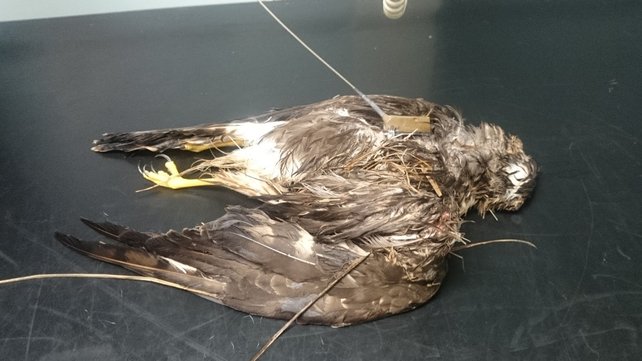
One of the birds, Carroll, was found dead having suffered from an infectious disease. Disturbingly, a post mortem later revealed lead pellets, indicating she had survived being shot at some earlier point in her life. Two of the other birds disappeared in suspicious circumstances when their tags suddenly stopped transmitting, while a further three were lost to unknown causes. All are presumed to have died, as it is very rare for tags to fail for technical reasons.

It is not only RSPB-tagged hen harriers that have met with untimely demises over the past 12 months. In May this year a police investigation was launched after a hen harrier was allegedly shot on Leadhills Estate in South Lanarkshire, while in October Rowan, a bird tagged by Natural England, was discovered shot dead in Cumbria.

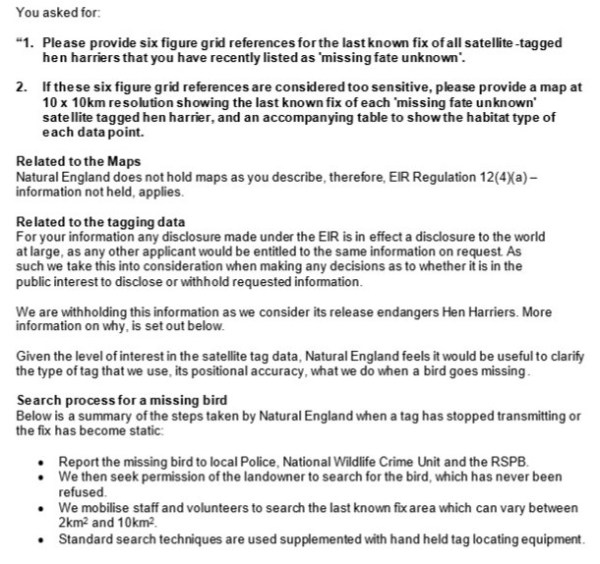
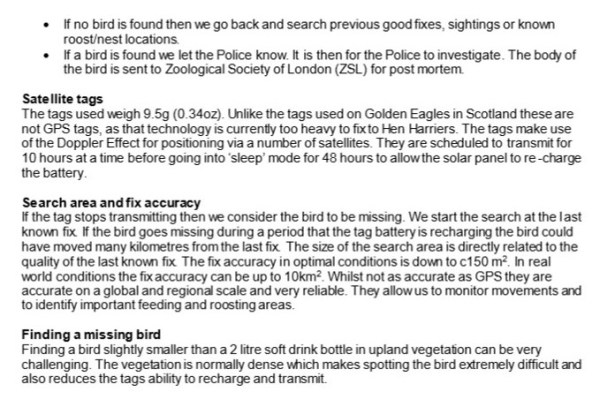
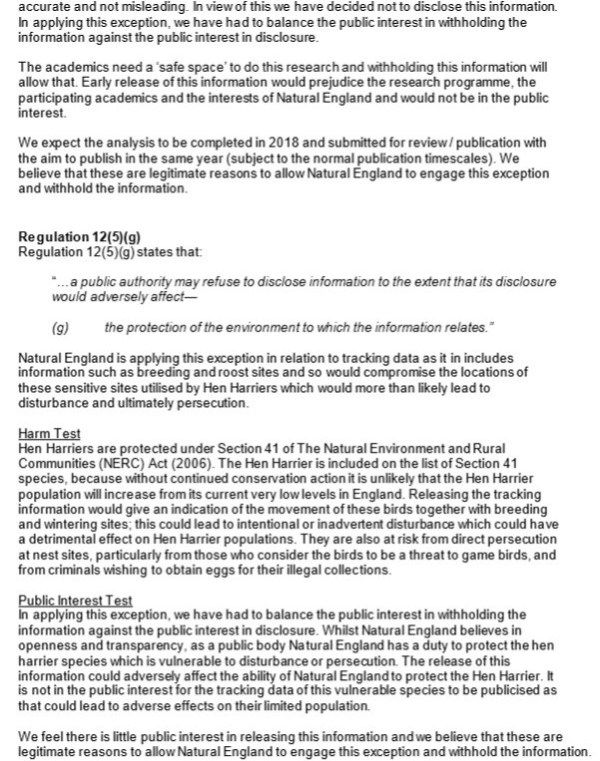
The RSPB sincerely hopes that Natural England will publish the publicly funded satellite tracking data which the statutory agency has collected over the past decade, as this will add significantly to the weight of evidence being gathered through the RSPB’s work. [We have an FoI back from NE about this and will blog shortly].

The need for this sort of data has never been greater. Hen harriers are in serious trouble across the UK. The results of the recently published National Hen Harrier Survey revealed that in the last 12 years, the number of breeding pairs has declined by more than a quarter (27%) in Scotland and by over a third (39%) in the UK as a whole.

While the final numbers are still being collated, anecdotal reports suggest the situation in Scotland does not appear to have improved this breeding season with hen harriers notably absent or in very low numbers in areas of suitable habitat, particularly in the south and east. In England, the final figures for 2017 show only three successful nests across habitat suitable for over 300.

The main reason hen harriers are continuing to decline is illegal killing and disturbance associated with the increasingly intensive management of driven grouse moors. The Scottish Government recently set up an independent enquiry into gamebird shoot licensing after an independent scientific review of golden eagle satellite tracking data revealed that approximately a third of them are being illegally killed.

Blánaid Denman, Project Manager for the RSPB’s Hen Harrier LIFE+ Project, said: By satellite tracking more hen harriers than ever before, we’ll gain a clearer picture of where these birds are spending their time and what exactly is happening to them. We’ve already discovered previously unknown nesting and winter roosting sites, as well as been able to pinpoint where natural deaths and illegal killings have occurred.

“It’s both infuriating and utterly heartbreaking to see these beautiful birds, year after year, disappear off the radar. Something needs to change. A system of grouse moor licensing would not only protect hen harriers but also tackle wider damaging grouse moor management practices, such as heather burning on deep peat and inappropriate drainage. For now though, I’ll be watching our newly fledged hen harriers, praying for their safety, and waiting to see what incredible journeys are about to unfold.”

Paul Morton from LUSH said: “We’re thrilled to hear that the money raised by our customers has allowed the RSPB to sat tag more hen harrier chicks than ever before. Monitoring as many youngsters as possible as they take their first flights across the length and breadth of the country is vital for their long-term protection. The message is loud and clear; a nation is watching and will have the welfare of each of these birds close to our hearts. The illegal persecution of hen harriers or any bird of prey will not be tolerated“.

From September, it will be possible to follow the travels of a selection of this year’s tagged hen harriers, together with last year’s surviving birds at: www.rspb.org.uk/henharrierlife.

ENDS

A fantastic partnership effort (real, actual partnership-working rather than the charade of pretence we’re so used to seeing from the PAW Raptor Group). Well done to all involved at RSPB and LUSH, and well done to everyone who purchased a Skydancer bathbomb because you helped this project happen.

Grouse shooting industry in desperate attempt to greenwash its rampant criminality

While hundreds of extremist armchair conservationists (an oxymoron, surely?) turned out in force to support Hen Harrier Day events up and down the country last weekend, the grouse shooting industry was preparing to unleash a barrel of propagandist articles and ‘new research’ in a desperate attempt to greenwash the rampant criminality that threatens to take the shine off the opening of the grouse shooting season this coming weekend.

Much of the spin has focused on the ‘preliminary results of a new study’ that, according to the grouse shooting industry, shows that ‘rare birds thrive on game shoots’ and that grouse moors in North East Scotland and North Yorkshire are ‘the country’s best bird sanctuaries’ (e.g. see here and here).

Hmm. An interesting conclusion. Would these be the same grouse moor regions that consistently appear at the top of the national league table for illegal raptor killing, year after year after year? Surely not.

Unfortunately no actual details of the new study have been made available so it’s difficult to assess the validity of the ‘preliminary’ findings, and given the grouse shooting industry’s track record on falsely interpreting grouse moor bird survey data (see here) and falsely attributing grouse moor bird research to credible research organisations (funnily enough, published around this time last year, see here), we’d prefer to wait to see the actual peer-reviewed scientific paper before commenting further.

Jeff Knott (RSPB) has provided an excellent interim response to an article about this study. In The Times yesterday, he said:

This grouse-moor-funded report tells us what we’ve known for some time. Grouse moors are good for grouse. Some other ground-nesting species benefit indirectly while others do not. Most notably, hen harriers, which are completely absent. The fact that the killing of predators reduces predation is hardly ground-breaking“.

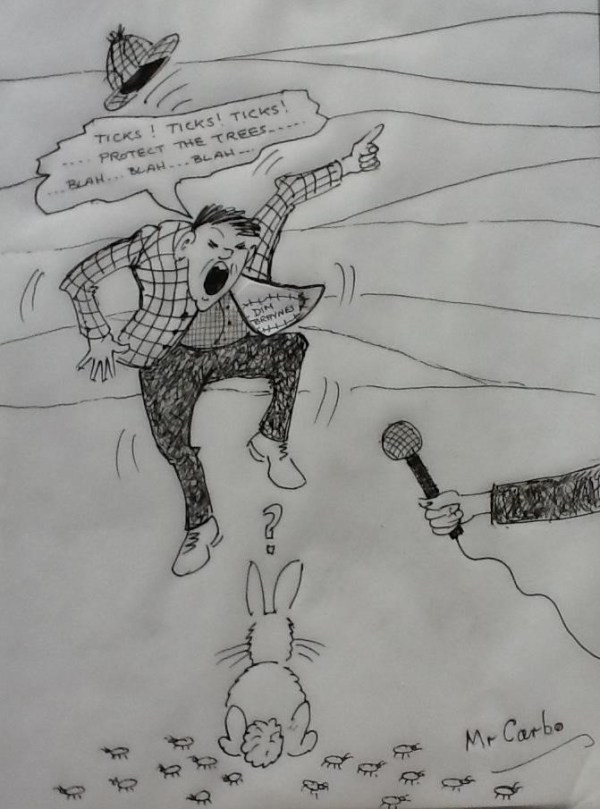
Well known academic Ian Botham, Professor Emeritus of the University of Rural Mythology, has taken a break from his glittering scientific career to offer a few quotes in several papers in support of the ‘new research findings’ and, predictably, then moves on to slag off the RSPB and Chris Packham. Some might argue that he’s desperately trying to deflect attention from his car crash radio interview last week (still very funny, still worth a listen if you haven’t yet done so).

Meanwhile, another new research study has found that the best way to preserve wildlife is to shoot it in the face (see here).

Thanks to blog reader Mr Carbo for sending in this cartoon.

Cabinet Secretary at Moy Game Fair: what message for the raptor killers?

The Moy (Highland) Game Fair kicks off today, where the great & good of the game shooting world gather to celebrate their activities.

Fergus Ewing MSP, Cabinet Secretary for the Rural Economy and Connectivity, will be there again this year, especially as this is bang slap in the middle of his constituency and he’s a big supporter of the game shooting industry.

We’ve often puzzled over the choice of venue for this event. The area has quite a history. In fact this region of the Monadhliaths, to the north west of the Cairngorms National Park, is one of the well known raptor persecution hotspots in Scotland.

Last year, Fergus Ewing rocked up to the Fair as usual, but his first time as a Cabinet Secretary. Have a watch of this video and listen to the strong message he gave to any raptor killing criminals that might have been listening. Not quite the message we might have hoped for from a senior representative of a Government that’s supposed to be big on stamping out raptor persecution, and in sharp contrast to the message given by another Cabinet Secretary earlier this year:

Botham in tantrum over car crash radio interview

Hopefully by now you’ve all had a chance to listen to Ian Botham’s masterclass in how not to do a radio interview – the best car crash radio for some time (see here).

Now Botham’s having a tantrum, claiming he was “ambushed by an anti-shooting agenda” and has threatened to boycott the BBC “unless something significant comes of this complaint“. Here’s the article in today’s Times:

Here’s the text:

Sir Ian Botham has threatened never to speak to the BBC again over claims that it ambushed him on air with an “anti-shooting agenda” when he was trying to promote a charity.

The former England cricketer, 61, said he agreed to appear on Radio 5 Live’s breakfast show to talk about his plans to donate 10,000 pheasants and partridges that are shot on his estate to food banks.

The interview turned prickly when Rachel Burden, the presenter, asked him what would have happened to the birds if they were not donated to the Country Food Trust charity.

“The BBC lured me on to their show under false pretences and ambushed me with their anti-shooting agenda”, he told The Times yesterday.

Sir Ian, who was given the nickname Beefy during his playing career and works as a presenter for Sky Sports’ cricket coverage, said that he had been subjected to online abuse since the interview. He has been supported by the Countryside Alliance, which claimed that the BBC had an inherent bias “against the countryside and rural pursuits”.

“Incidents like this appalling treatment of Sir Ian Botham show why people feel this way. The BBC is singularly failing its rural audience”, said Tim Bonner, chief executive of the alliance, which backs bird shooting and has campaigned against the ban on fox hunting with hounds.

During the BBC interview on Monday Sir Ian said that the birds shot from his Sawley Hall estate in North Yorkshire, would have been exported to Europe where game meat is more popular than in England.

Animal rights groups have filmed gamekeepers burying large numbers of dead pheasants because of a lack of demand to eat them locally.

Ms Burden suggested that “a lot of people” had a problem with shooting birds for sport. “Millions of birds, up to 50 million birds, are bred each year to be shot”, she said.

“And how many chickens are shot every year?” Sir Ian retorted. “How many chickens are bred with a six-week life?”

Sir Ian appeared to swear at Ms Burden when she broadened the conversation to include grouse shooting, which has been vehemently opposed by the BBC wildlife presenter Chris Packham. The grouse shooting season starts on August 12. “You are f***ing wrong. You are wrong”, he said. “There’s nothing to do with grouse. This is about pheasant and partridge. Pheasant casserole and partridge curry, which we are giving. Now if you have a better solution I am willing to hear it”.

Nicky Campbell, Ms Burden’s co-host, attempted to soothe the conversation by praising Sir Ian’s food bank initiative and then discussed the ethics of hunting lions, which Sir Ian condemned.

Sir Ian told The Times the BBC had tried “to stir up every animal rights controversy they could think of and link it to my name”. He added: “It is now clear to me that the BBC’s approach was part of an anti-shooting agenda and there was never any intention of talking about creative ways to fight poverty.

“I will never be speaking to the BBC again in any capacity unless something significant comes out of this complaint. BBC 5 Live asked me to talk about a charity that is trying to do some good. I agreed in good faith, thinking everyone would want to support our efforts to help people in need”.

The BBC rejected Sir Ian’s complaints last night. “The interview was fair”, said a spokeswoman for the corporation, which is holding a four-day Countryfile Live event at Blenheim Palace today. “We asked a broad range of relevant questions and gave him the fullest opportunity to respond on air”.

The League Against Cruel Sports, an animal rights charity, said that bird shooting was “steeped in cruelty” and accused Sir Ian of trying to “whitewash the reality of shooting”. “The fact that Sir Ian Botham sees nothing wrong with blasting hundreds of game birds out of the sky for fun is a concept rejected by most people in the 21st century”, Philippa King, its chief operating officer, said.

ENDS