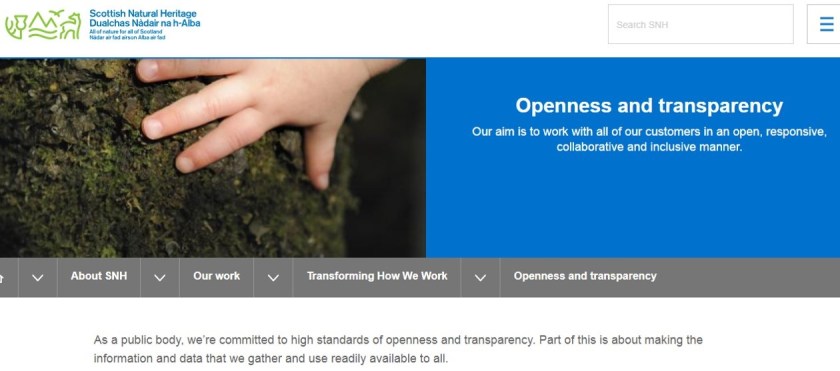
Preston man receives police warning for raven cull death threat

The BBC News website is reporting that a 47 year old man from Preston has been arrested and given a formal ‘harassment warning’ following an alleged death threat sent to SNH Chair Mike Cantlay over the controversial Strathbraan raven cull licence.

Good. This sort of behaviour is wholly unacceptable and it’s a shame this individual only received a warning, given the Sentencing Council’s guidelines for those who make threats to kill.

Interestingly, the BBC article places great emphasis on the fact that Chris Packham sent an email to Mike Cantlay in which he criticised SNH’s decision to issue the raven cull licence. We’re not sure why that’s relevant given that Chris’s email did not incite anyone to attack or threaten Mr Cantlay, and given that SNH received complaints from 1247 people but only one appears to have been stupid enough to include an alleged death threat. Perhaps the BBC is playing the same game as The Times, who, tipped off by SNH, published an article about the alleged death threat and ludicrously tried to link it to Chris’s email.

Then there are the usual clowns on social media who tried to use the alleged death threat to characterise those of us opposing the raven cull licence as “sickos”, “criminals” and “animal rights vijilantees” [sic].

Sadly for them, 795 of us have chosen not to send death threats nor indeed commit any other offence in reaction to the raven cull licence, but instead have decided to exercise our democratic right and support a lawful legal challenge against SNH’s decision to issue the licence. Over £19.5k has now been raised by an on-going crowdfunding appeal that aims to raise £25k by 4th July to cover legal costs.

If you’d like to donate to help support this legal action PLEASE CLICK HERE

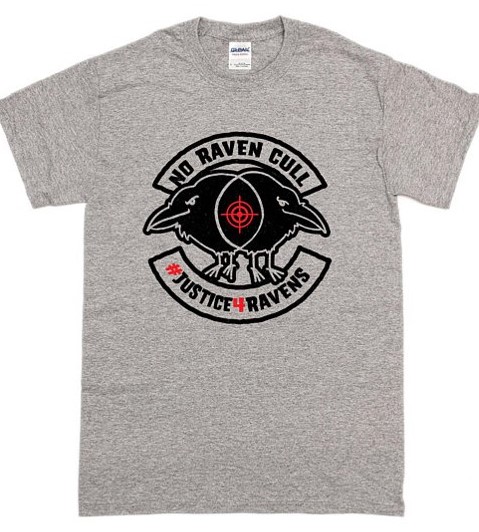
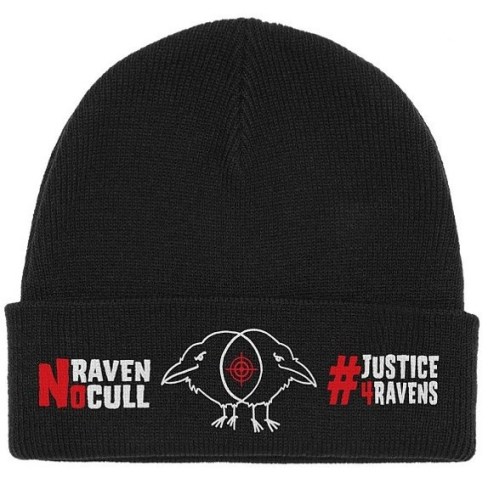
And don’t forget you can now order #Justice4Ravens fundraising merchandise (t-shirts & beanie hat) with 100% of profits going to the crowdfunder but hurry up, these are limited editions and are selling fast! (See here for order details).

Thank you

Red kites found illegally poisoned at nest site

Press release from RSPB, 20 June 2018:

PAIR OF NESTING RED KITES FOUND POISONED IN COUNTY DOWN

RSPB (Northern Ireland) and the Police Service of Northern Ireland (PSNI) are appealing for information after a pair of protected red kites died through illegal poisoning in County Down.

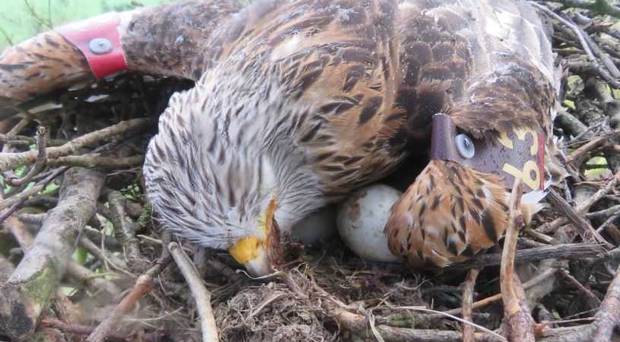
A male bird was found in distress close to a known nest site in the Katesbridge area on April 24. A member of the public alerted RSPB NI but the bird died shortly afterwards. When the RSPB NI red kite project officer attended the scene, she found the female parent bird immobile on the nest – she too was dead. A rescue mission was launched in an attempt to save three orphaned eggs found in the nest beneath the deceased mother.

[Photo by RSPB]

The bodies of the parent birds were collected and taken for toxicology testing by the PSNI. This has now revealed that both birds – known as Blue 21 and Red 63 because of their identifying tags – died from Carbofuran poisoning.

Red kites, along with all birds of prey, are protected in Northern Ireland under the Wildlife (Northern Ireland) Order 1985, as amended by the Wildlife and Natural Environment (NI) Act 2011. Carbofuran is a highly toxic pesticide which has been banned across the EU since 2001 due to its high toxicity towards wildlife and humans.

Red kites mostly hunt within 2.5km of their nest site. The male bird brings food for the incubating female bird, so it is possible that the male bird found a poisoned bait – such as a rabbit – and likely brought this back to the nest to feed the female bird. The dead male’s first partner (Blue 13) also died by poisoning in 2014 in the same area.

Under licence from the Northern Ireland Environment Agency (NIEA), the rescue operation ensured that the three eggs were fostered into two wild red kite nests, alongside other eggs, in the hope of saving them.

In one of the nests two transferred eggs failed as they were found intact (unhatched) during a follow-up inspection. In the other nest – which hosted one adoptive egg alongside two other eggs – one chick was found on the nest. As there were no egg shell remains it’s unknown if the sole chick on this nest was from the donor egg.

A nestcam was installed by RSPB NI to monitor this chick – which was named ‘Solo’ by RSPB NI red kite volunteers. This is the first time staff have been able to monitor behaviour and development as well as share the red kite’s early life with the public and schools participating in the RKites project, a funded red kite education and engagement project. A live stream on the nest is available to view at www.rspb.org.uk/niredkites

PSNI Wildlife Liaison Officer, Emma Meredith, said, “Incidents such as this give rise to concerns, as poisons are generally very dangerous. We would have serious concerns over any poison but particularly over Carbofuran. We are disappointed that we are still dealing with cases involving Carbofuran, an incredibly dangerous substance and one which can kill birds of prey but also a child, family pet or any adult coming into contact with it. We would remind the public that if they discover a bird of prey that they suspect has been poisoned or killed in any other suspicious circumstances to leave the bird/s and/or bait in situ and call the PSNI as soon as possible. If anyone has information about the use of Carbofuran and/or the death of these protected birds then we would be really keen to hear from them. The person responsible needs to be identified to ensure that no further risk is posed to other wildlife, domestic pets, or even humans.”

Claire Barnett, RSPB NI Conservation Team Leader, added: “We are shocked and saddened by what is the loss of a generation of red kites. With only around 20 breeding pairs in Northern Ireland, our red kite population is particularly vulnerable to persecution.

“Carbofuran is an illegal and deadly poison and should not be used in our countryside. It is such an incredibly dangerous substance.

“We would like to once again make it clear that red kites are mostly scavengers and feed on roadkill and other dead animals they find on their foraging flights. During the breeding season, adults will often hunt young crows, magpies, rats and rabbits. They are no threat to livestock or game.”

Red kites were persecuted to extinction across the island of Ireland 200 years ago. A decade ago this summer, in 2008, the RSPB – along with project partners the Golden Eagle Trust and Welsh Kite Trust – began a reintroduction project that has been successful in encouraging the birds to breed here.

Like all birds of prey in Northern Ireland, red kites are specially protected as a Schedule 1 species under The Wildlife (Northern Ireland) Order 1985 (as amended). As a Schedule 1 bird, red kites are protected by special penalty and their nests are also provided with protection all year under Schedule A1. Those found guilty of persecution could be given a custodial sentence and/or fines of up to £5,000 per offence.

Mark Thomas, Senior Investigations Officer at the RSPB, said: “Carbofuran has a history of being used to kill birds of prey. Like all birds of prey, red kites are protected by law.

“There have been 10 confirmed red kite persecution incidents recorded in this area in the last decade. This is not acceptable. We urge anyone with information about this incident to contact the police immediately on 101.”

Claire Barnett added, “We would like to thank communities, landowners and schools across Northern Ireland – particularly in County Down and County Armagh – for their ongoing support for the red kites project. There is always an outpouring of outrage when red kite persecutions are reported. It is so disappointing that a minority of people continue to endanger red kites by using illegal poisons including Carbofuran. But the majority of people here are behind the RSPB in our work to give these remarkable birds of prey a home in Northern Ireland.”

Anyone with information can contact police on the non-emergency number 101 or anonymously via Crimestoppers on 0800 555 111 quoting reference number 802 of 24/4/18.

ENDS

#Justice4Ravens fundraising merchandise now available

As mentioned yesterday, our friends at the Probable Bird Society (@YoloBirder & @Stewpottery) have created some #Justice4Ravens fundraising merchandise (t-shirt & beanie hat).

100% of profits are being donated to the SRSG crowdfunder, which is aiming to raise £25k to help cover the costs of a legal challenge against SNH’s decision to issue the raven cull licence.

These items are limited edition, only available to order for the next 7 days, and are already selling fast!

The t-shirt (available in ladies & mens design) is £13.99 and can be ordered here

The beanie hat is £10.99 and can be ordered here

If you’re interested in buying both the t-shirt and the hat, there’s a special bundle price of £21.99 and you can make your order here

Thanks a million @YoloBirder & @stewpottery and thanks to everyone who is helping to support the crowdfunding appeal.

Raven cull: a few updates

It’s been a couple of weeks since we’ve blogged and a number of people have expressed concern; thanks, but nothing to worry about, just a few personal issues being dealt with.

So, back to business. There have been a few developments on the Strathbraan raven cull licence since we last blogged.

Last Friday (15th June), SNH finally released its delayed response to the FoIs submitted in April, providing some background detail to the decision behind the raven cull licence. The documents can be accessed here.

It makes for a very interesting read, detailing at least some of the internal SNH correspondence about the licence application dating back to June 2017, and reveals staff concerns about the scientific evidence in support of the licence, the robustness of the scientific monitoring proposed for the duration of the cull, the issue of trust given the history of illegal raptor persecution in the cull area, and the issue of some agricultural practices (potentially illegal) in the area that could be impacting on wader populations. There were also concerns that information about the licence application may be leaked by this blog – gosh, heaven forbid that the activities of a public body might be subject to public scrutiny, despite SNH’s claims of a ‘commitment to high standards of openess and transparency’!

We don’t intend to comment further on these documents at this stage so as not to prejudice the Scottish Raptor Study Group’s intention to launch a legal challenge in the form of a judicial review.

And on the subject of the legal challenge, work has continued apace behind the scenes with the collation of evidence and a QC has now been instructed. The SRSG awaits his formal advice about various technicalities (that have little to do with the actual challenge but more to do with legal procedure) before deciding how best to proceed with an application for judicial review.

The crowdfunder set up to help pay for this legal advice and costs is doing very well, currently standing at over £17k. The initital target of £10k (required for lawyers to be instructed) was smashed on the first day and there are now two weeks remaining to reach the stretch target of £25k. Thanks to the 746 people who have donated so generously to this appeal; the response has been fantastic.

If you’d like to make a contribution to the crowdfunder please CLICK HERE

In other fundraising news the ever-creative @YoloBirder has designed some fantastic t-shirts and other merchandise and all sales profits will be put towards the crowdfunder. What a star! We’ll blog with details of how to order these as soon as the information is available (imminently).

Meanwhile, in England there is news that Natural England has, or will be (it’s not quite clear which) issued licences to cull ravens in several counties. The details of the scale of these culls are scant but there are two useful blogs to read on this subject: Dr Rob Sheldon’s blog (here) and RSPB Martin Harper’s blog (here). We understand enquries are being made of Natural England to clarify some details.

Raven cull: legal challenge crowdfunder smashes £10k target on Day One!

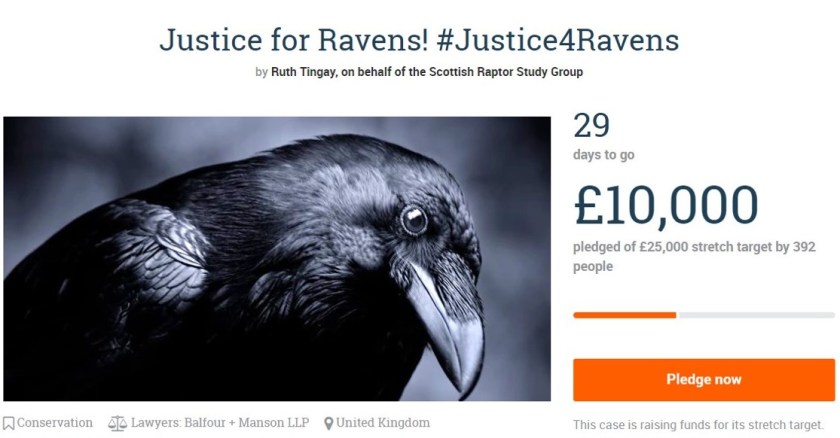
Yesterday the Scottish Raptor Study Group (SRSG) launched a crowdfunder to raise funds to cover the costs of a legal challenge against SNH’s decision to issue a raven cull licence to grouse moor owners and gamekeepers in Strathbraan, Perthshire.

The legal challenge will take the form of the SRSG applying to the courts to seek a judicial review of the decision-making process used by SNH when they agreed to issue the licence.

The initial crowdfunder target was set at £10k and the SRSG had just 30 days to raise these funds. The SRSG couldn’t instruct its lawyers until this funding was secured.

From the minute the crowdfunder page went live at 7am yesterday, donations streamed in, some large, some small, all of them important. By 9pm, the initial target of £10k had been smashed. What an overwhelming response! As @RareBirdAlertUK wrote on Twitter, ‘If SNH was under any illusion about the strength of feeling against the raven cull, they won’t be after today’.

It’s doubtful SNH was under any illusion though. A recent FoI response received by one of our blog readers revealed that SNH received 1247 emails about the raven cull licence. Of those, just 73 were supportive. The rest (1,174) were “either unsupportive or seeking clarification of [the licensing] approach“. That’s a lot of angry and/or bemused people.

Over 500 people have donated to the crowdfunder so far –  and it’s only Day 2 – all of them in support of the SRSG’s decision to launch this legal challenge, and it’s not hard to see why they’d be supportive. SNH has been given every opportunity to explain and answer straightforward questions about the raven cull licence over the last six weeks but has simply ducked and dodged and refused to engage on any meaningful level. So much for its claimed ‘commitment to high standards of openness and transparency’. The public has clearly had enough.

The success of the crowdfunder was picked up by The National and there’s an article in today’s edition (here). It doesn’t provide any new information except for SNH saying it was ‘wrong to suggest the raven cull could lead to a cull on other birds’ and an SNH spokeswoman was quoted: “This is a community-based application which seeks to bring a balance between species, bringing back waders from the brink whilst still maintaining a healthy national population of ravens“.

Wrong to suggest the raven cull could lead to a cull on other birds? Really? Perhaps the spokeswoman hadn’t listened to this interview given by Nick Halfhide (Director of Sustainable Development at SNH) in early May who said, “Let’s have more trials [culls] whether it’s about ravens or other things so we can really test to see what we can learn from this kind of approach“.

The solicitor handling the raven cull legal challenge (Sindi Mules of Balfour & Manson LLP) has now been instructed and the QC will be instructed imminently, so as preparations begin for the legal proceedings there will be no further commentary on the details of this case until the lawyers advise differently.

Meanwhile, the SRSG’s crowdfunder is open for the next 28 days and now has a stretch target of £25k. At the moment it’s already halfway there at £12.5k.

If you’d like to donate please click here and please do keep sharing it on social media and amongst friends, family and colleagues.

#Justice4Ravens

THANK YOU!

Legal challenge against raven cull licence: your help needed!

Regular blog readers will be well aware that in April 2018, Scottish Natural Heritage (SNH) issued a licence permitting the killing of ravens in Strathbraan, a large area of Highland Perthshire ( and a recognised raptor persecution hotspot) on the basis of ‘seeing what happens’ to wader populations as part of a five-year ‘experiment’.

Many of us believe this raven cull has absolutely nothing to do with ‘protecting waders’ and nor is it based on sound scientific evidence. When you look at how much grouse moor lies within the cull area (here) and look at who is behind the licence application (here), it becomes quite apparent that this raven cull is more likely to be about protecting stocks of red grouse than it is about waders.

Unsurprisingly, this controversial licensing decision resulted in public uproar and hundreds of complaints were lodged with SNH, questions have been asked in Parliament and over 168,000 people have signed a petition calling for the immediate withdrawal of the licence.

However, since the news broke six weeks ago SNH has consistently failed to answer some pretty simple questions about this licence. Instead, the details have remained shrouded in secrecy and responses to numerous FoI requests have been delayed.

If we were cynics we might think that SNH was deliberately stalling for time to frustrate any chance of an application for judicial review (SNH will know very well that an application for a judicial review needs to be lodged at court within a limited timeframe). Why else would SNH behave as it has, when according to its own website SNH is supposedly ‘committed to high standards of openness and transparency’. They’re having a laugh, aren’t they?

Open, responsive, collaborative and inclusive? It appears the Scottish Raptor Study Group (SRSG) doesn’t think so and today it’s launching a crowdfunder to help fund an application for judicial review.

A judicial review is a legal challenge to the decision-making process used by SNH (as opposed to the actual decision to issue the licence) and there are two main stages to this:

Stage one is an application to the court seeking permission for a judicial review. If the judge considers there are sufficient grounds to proceed, the application moves to stage two, which is the substantive hearing where legal arguments are made by both sides.

Applying for a judicial review is a bold move and the SRSG will not have entered this process without plenty of consideration to the risks involved, but in this case SNH has left them with little option, especially as it has indicated that similar licences may be authorised to kill protected birds of prey, again on the basis of ‘just seeing what happens’.

SNH’s refusal to discuss its justification for this licence, and with many MSPs refusing to support a Parliamentary motion calling for the withdrawal of the licence, leads to two choices: either sit and complain from the sidelines or get stuck in and seek a legal remedy through the courts.

We applaud the SRSG’s stance but it’s not applause they need – it’s funding support. Judicial reviews don’t come cheap and neither do top barristers (although in this case a formidable QC has generously offered his services at a reduced rate).

This is where your help is needed. The SRSG needs to raise £10k ASAP to get the ball rolling and get the judicial review application to stage one. They are working against the clock because that application needs to be lodged very soon if they’re to meet the deadline. If the application is successful, more funds will need to be raised to proceed to stage two (the hearing).

If you’re as angry as the rest of us about this raven cull licence and the way SNH has behaved, please consider making a donation to the SRSG’s crowdfunder which will go live at 7am today:

HERE IS THE LINK TO THE CROWDFUNDER PAGE.

Please also help spread the word, especially on social media using the hashtag #Justice4Ravens

Thank you

Why we satellite tag raptors and why the grouse shooting industry wants to stop us

A year ago today saw the publication of the Government-commissioned Golden Eagle Satellite Tag Review, which showed how almost one-third of all satellite-tagged golden eagles in Scotland (41 of 131 eagles) had ‘disappeared’ in suspicious circumstances between 2004-2016, many of them vanishing in particular clusters on or close to driven grouse moors:

It seems timely then to undertake a review of how many more satellite-tagged raptors (not just golden eagles) have ‘disappeared’ since that damning analysis was undertaken (data cut off point 15 January 2017), a period of just 15 months between then and now.

An astonishing 14 sat-tagged raptors have vanished during this short period: 3 x golden eagles, 2 x white-tailed eagles, 8 x hen harriers, 1 x Montagu’s harrier. Eight of these ‘disappeared’ in Scotland, five in England and one in Wales. In addition to the missing 14, a further two satellite-tagged raptors (hen harriers) were found dead and post mortem results indicated illegal persecution.

Here’s the list:

January 2017: Hen harrier Carroll, Northumberland

March 2017: Golden eagle #338, Cairngorms National Park

August 2017: Hen harrier Calluna, Cairngorms National Park

August 2017: Montagu’s harrier Sally, Norfolk

October 2017: Hen harrier John, Yorkshire Dales National Park

October 2017: Hen harrier Manu, North Pennines

October 2017: Hen harrier Kathy, Argyll & Bute

December 2017: Golden eagle, Monadhliath Mountains

January 2018: Golden eagle Fred, Pentland Hills

February 2018: Hen harrier Aalin, Wales

February 2018: Hen harrier Marc, North Pennines

February 2018: Hen harrier Saorsa, Angus Glens

March 2018: White-tailed eagle Blue X, Strathbraan, Perthshire

March 2018: Hen harrier Finn, nr Moffat

March 2018: Hen harrier Blue, Cumbria

May 2018: White-tailed eagle Blue T, Cairngorms National Park

Of course, not one of these 14 recently ‘disappeared’ sat-tagged raptors will make it in to the ‘official’ wildlife crime stats (just as none of the 41 missing golden eagles and 60+ missing hen harriers have made it there) because, without a body, the police’s hands are tied. This suits the grouse-shooting industry because they can point to the ‘official’ crime stats and claim, disingenuously, that raptor persecution is in decline and argue that this is evidence that the industry has cleaned up its act.

Unfortunately for the shooting industry, the suspicious disappearance of satellite-tagged raptors still makes headline news because, quite obviously, in the vast majority of these cases there is no other plausible explanation other than illegal persecution. The authoritative golden eagle satellite tag review demonstrated 98% tag reliability (supported by robust statistical analyses) and showed that sat-tagged golden eagles were 25 times more likely to ‘disappear’ in Scotland than anywhere else in the world where golden eagle tagging studies, using identical tags, have taken place.

As Dr Hugh Webster said: “They can hide the tags. They can hide the bodies. But they can’t hide the pattern“.

[Satellite-tagged golden eagle Fred, who disappeared in suspicious circumstances in January. Photo: Ruth Tingay]

As a result of this ongoing publicity, the game-shooting industry has spent considerable time and effort trying to undermine the satellite-tagging of raptors, either by launching disgusting personal & abusive attacks against those involved in the projects or by arguing that raptor satellite-tagging should be banned because it’s ‘cruel’ and the tag data serve no purpose other than to try and entrap gamekeepers. The industry knows how incriminating these sat tag data are and so is trying to do everything in its power to corrode public and political confidence in (a) the tag data and (b) the justification for fitting sat tags to raptors.

As ever though, the game shooting industry hasn’t done its homework.

One of the latest claims being made by some in the industry is that there’s no need to fit sat tags to species like golden eagles because ‘we know all we need to know’ and ‘fitting tags doesn’t stop illegal persecution so why bother fitting them’? There are also repeated claims that tag data are ‘not shared’.

Let’s just nip this in the bud, shall we? The main reason for fitting sat tags to golden eagles is not to entrap gamekeepers; it’s to provide information for conservation and scientific research. Sure, if a tagged eagle then ‘disappears’ in suspicious circumstances of course that’s going to be publicised – why shouldn’t it be? But that is NOT the main objective of satellite-tagging eagles. And tag data ARE shared, just not with armed criminals intent on killing eagles, and who have a long track record of doing exactly that.

For those still struggling to understand the simple rationale behind golden eagle sat-tagging, below is a summary list of research & conservation studies in Scotland that are benefitting from golden eagle satellite tag data. As you can see, it’s all collaborative, there’s plenty of open data-sharing amongst research groups, and far from ‘knowing all we need to know about golden eagles’, the sat tag data are showing us exactly how little we actually did know prior to the availability of this new technology:

Peer-reviewed scientific paper: Weston, E.D., Whitfield, D.P., Travis, J.M.J. & Lambin, X. 2013. When do young birds disperse? Tests from studies of golden eagles in Scotland. BMC Ecology 13, 42. http://www.biomedcentral.com/1472-6785/13/42 [Co-authors: University of Aberdeen and Natural Research; tagging data from several institutions.]

Peer-reviewed scientific paper: Weston, E.D., Whitfield, D.P., Travis, J.M.J. & Lambin, X. 2018. The contribution of flight capability to the post-fledging dependence period of golden eagles. Journal of Avian Biology 49. [Co-authors: University of Aberdeen and Natural Research; funding contribution from SSE; tagging data from several institutions.]

Regional Eagle Conservation Management Plan (RECMP). A joint initiative to encourage the conservation of golden eagles in the Central Highlands Natural Heritage Zone (NHZ 10), involving SSE, The Highland Council, Natural Research, Haworth Conservation, RSPB, SNH, Roy Dennis Wildlife Foundation, and other contributors. Research funded by SSE. The RECMP research has produced data from 15 eagle nestlings tagged in or near to NHZ 10 which are pooled with other tagging research initiatives. Data from satellite tagged birds have also been contributed and are available as a resource for ongoing and future initiatives on education and community outreach also associated with RECMP.
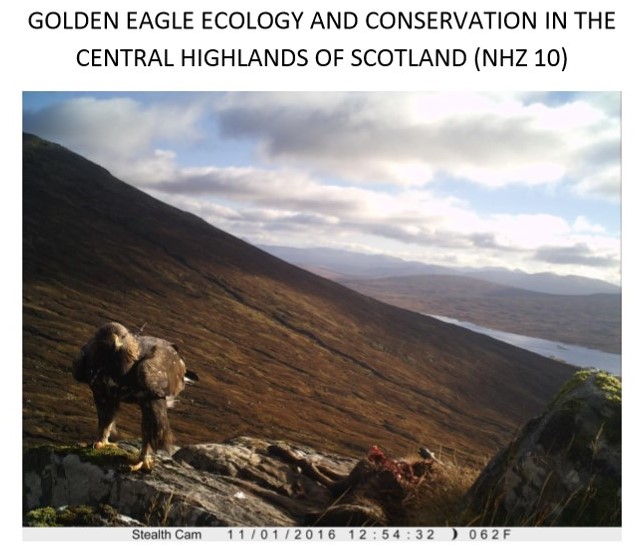
Ongoing research projects under RECMP (projects involve several collaborators from different institutions; analyses involve tagging data shared by several institutions):

  • A simple topographic model to predict golden eagle space use [Golden Eagle Ridge Model: GERM]. Manuscript to be submitted shortly to ornithological journal.
  • Displacement of young golden eagles from wind farms in Scotland.
  • Age of first breeding and natal dispersal distance in Scottish golden eagles.
  • Use of settlement areas by dispersing golden eagles in Scotland.
  • Variation in dispersal behaviour of young golden eagles in Scotland.

Raptors and Forestry Joint Working Group. Current membership involves SNH, FCS, FES, RSPB, Haworth Conservation, CONFOR, Borders Forest Trust, Natural Research and Scottish Raptor Study Group. Evidence base for use of forestry by golden eagles is being supported by research derived from satellite tagged birds, to lead to guidance for practitioners. Preliminary research work, involving eagle satellite tagging data (including GERM: model development also supported by SNH and FCS), presented at a Sharing Good Practice event organised by FCS and SNH, 14 May 2018.

Scottish Natural Heritage, with assistance from Natural Research. Programme of tagging young eagles in National Nature Reserves (NNRs) to increase knowledge of connectivity with wider environment.

Scottish Raptor Study Group. Data used by several regional SRSG workers to identify ‘new’ territories if dispersing birds occupy a territory; and used to identify any gaps between known territories. Data improve efficiency of survey and monitoring.

Novel proposals for development and forestry. Data from satellite tagged eagles supplied and available to SNH, private/independent forestry consultants and Forestry Commission Scotland (forestry proposals); and SNH and ornithological consultants for EIA (e.g. wind farm or power line planning proposals). Data improve assessments of new proposals.

SNH Commissioned Report 982, funded by Scottish Government and SNH, included analyses which apart from the priority of analysing the ‘suddenly disappeared tags and birds with these tags’ also led to results on survival of dispersing young and lack of any evidence of tagging causing ‘harm’, for example.

As you can see, there’s a hell of a lot of scientific research going on to help inform conservation strategies for golden eagles in Scotland (some of which will also be applicable elsewhere in the world), and most of this research would be virtually impossible to achieve without satellite tag data. The gamekeepers, ridiculously, think it’s all about them; it clearly isn’t, although the criminal activities of some of them is certainly impacting on the conservation of golden eagles in some parts of Scotland, as has been well documented. For that reason, we, and others, will continue to highlight and publicise the illegal persecution of golden eagles (and other raptors) for as long as it takes to force the authorities to take meaningful action against the criminals responsible.

Raven cull: latest update

Somebody posted a comment yesterday to ask what was happening with the raven cull, so here are a few updates:

As far as we are aware, the controversial raven cull continues in Strathbraan.

The raven cull has become an international embarrassment for SNH and the Scottish Government – see this excellent blog by Dr Rob Sheldon.

There was an interesting segment on BBC Springwatch last night showing footage of sheep predating lapwing and curlew eggs (available on BBC iPlayer here for 29 days, starts at 48.26 mins). There was also mention of a research paper that showed sheep had killed and eaten at least 680 Arctic Tern chicks on Foula over a seven-year period. Here is a link to that paper: Furness 1988 Predation of tern chicks by sheep

It would be interesting to find out if any studies of sheep predation on waders has taken place in Strathbraan, prior to SNH’s decision to licence the killing of ravens ‘to see what happens’.

Despite concerted efforts by many people lobbying their MSPs to support Alison Johnstone’s Parliamentary motion calling for the raven cull licence to be withdrawn, so far only 14 MSPs have signed up (as of noon today):

Patrick Harvie (Greens), John Finnie (Greens), Andy Wightman (Greens), Ross Greer (Greens), Mark Ruskell (Greens), Claudia Beamish (Labour), Iain Gray (Labour), Daniel Johnson (Labour), Colin Smyth (Labour), Johann Lamont (Labour), Liam McArthur (Liberal Democrats), Tavish Scott (Liberal Democrats), Christine Grahame (SNP) and Mairi Gougeon (SNP).

[UPDATE 2pm: Anas Sarwar (Labour) has now also signed]

Disappointingly, several SNP MSPs have been sending out a generic response, claiming that this is an ‘operational matter for SNH rather than the Scottish Government’, although Graeme Dey (SNP) reportedly sent out his own personal response which included the statement:

“I note your comment regarding consulting with the RSPB. And I understand where you are coming from. But in my experience you cannot engage with that organisation on matters such as this and arrive at a satisfactory conclusion. The RSPB is opposed to any measures such as these even when they might be designed to protect other bird species“.

That’s quite a statement from the convenor of the Scottish Parliament’s Environment Committee (and it’s also inaccurate – the RSPB has and does undertake predator control and hasn’t tried to hide it – e.g. see here). If Graeme Dey MSP thinks the RSPB ‘cannot be engaged with’ on issues of bird conservation, on what issues does he think the RSPB can be engaged to arrive at ‘a satisfactory conclusion’ (whatever that means)?

Alison’s motion requires 30 signatures by 11 June to progress to a Parliamentary debate but this, unfortunately, looks unlikely. It also seems unlikely that the Scottish Government has any plans to step in and intervene.

So where does that leave us?

Watch this space…..

Law seminar to discuss admissibility of video evidence

After several controversial decisions by the Crown Office last year, where prosecutions for alleged raptor persecution were dropped due to the perceived inadmissibility of video evidence (e.g. hen harrier shooting on Cabrach Estate here; setting of illegal pole trap on Brewlands Estate here), there followed a series of blogs written by law academics at Aberdeen University (see here and here) that provided a welcome explanation about the legal complexities behind these decisions.
Aberdeen University’s School of Law is now hosting a free public seminar on this issue, with contributions from Dr Phil Glover (a lecturer at the School of Law and an expert in the law of evidence, investigatory powers and related human rights matters), Malcolm Combe (senior lecturer and an expert in property law), Ian Thomson (Head of Investigations at RSPB Scotland) and Tim Baynes (Director of Scottish Land & Estate’s Moorland Group and the Gift of Grouse). After the presentations audience members will be invited to participate in an open discussion.

DATE: 15 June 2018

TIME: 3.15pm – 5pm

VENUE: The Sir Duncan Rice Library, Aberdeen

This is a free event but spaces are limited so booking is essential. Further information & a link to the online booking system is available HERE.


Laughable statement from SGA on missing satellite-tagged hen harriers

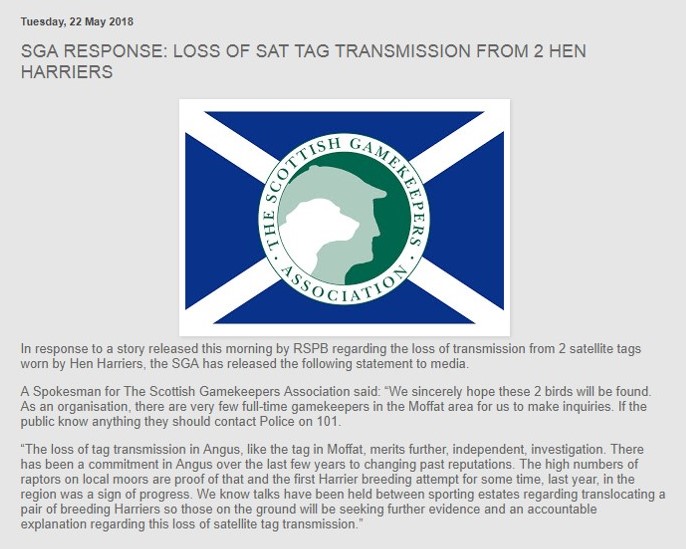
Following Tuesday’s news that three more satellite-tagged hen harriers have ‘disappeared’ in suspicious circumstances (here), the Scottish Gamekeepers Association has issued a statement about the two that vanished in Scotland (one in the Angus Glens and one near Moffat).

So according to the SGA, these suspicious disappearances ‘merit further, independent, investigation‘. Note the use of the word ‘independent’. Does the SGA not accept these harriers have disappeared in suspicious circumstances? Does the SGA not consider Police Scotland’s investigation ‘independent’? Police Scotland will have had full access to the satellite tag data to make an independent assessment of whether the harrier’s disappearance was suspicious or not, and presumably the Police agreed with the RSPB that the disappearance was indeed suspicious, not least because the circumstances mirrored the circumstances of 41 sat-tagged golden eagles, revealed by a Government-commissioned independent report to have disappeared in suspicious circumstances, several of them in, er, the Angus Glens:

The SGA statement looks like the usual well-rehearsed dig at the RSPB – indeed ex-SGA Director Bert Burnett wrote on social media in reference to the hen harrier that vanished in the Angus Glens: “I think I’m justified in claiming that the area was searched by people involved in the tagging and the bird was found and as it died naturally and was of no publicity value it was secreted away”.

Is he seriously suggesting the RSPB have perverted the course of justice? That’s a very serious allegation. Is this view shared by the SGA?

The official SGA statement also states: ‘There has been a commitment in Angus over the last few years to changing past reputations‘ (and therefore by inference this hen harrier couldn’t possible have been illegally killed).

We’re very interested in this phrase, ‘commitment to changing past reputations’. What does that mean, exactly? Does it mean the SGA is finally acknowledging that gamekeepers in the Angus Glens have been involved in illegal raptor persecution? If that is what the SGA means, perhaps it could elaborate on which raptor persecution incidents it now accepts had gamekeeper involvement? We’d be fascinated to know, because for as long as we’ve been writing this blog the SGA has consistently denied the extent of raptor persecution on grouse moors in the Angus Glens, despite all the evidence to the contrary (see here for an extensive list of raptor persecution incidents uncovered in the Angus Glens).

A classic example of SGA denial was the case of the sat-tagged golden eagle that was caught in a spring trap on an Angus Glens grouse moor in 2012, suffering two broken legs. The eagle was then driven through the night to be dumped in a Deeside layby where it lay in agony for a further four days before it died. Despite being given access to the eagle’s sat tag data and the findings of the official post-mortem report, the SGA concocted the most far-fetched explanation possible for this eagle’s injuries – see here.

Here is that dead golden eagle [photo by RSPB Scotland]

The other interesting part of the SGA’s official statement was this: ‘We know talks have been held between sporting estates regarding translocating a pair of breeding harriers…..‘. Talk, as they say, is cheap. There should be no need to translocate hen harriers to the Angus Glens. We know, thanks to satellite tag data, that young hen harriers regularly visit the Angus Glens – and why wouldn’t they? The habitat is good, there’s a plentiful food supply, and there aren’t any resident territorial adults to chase them away. And this last bit is the telling part. Not one successful hen harrier breeding attempt in the Angus Glens since 2006. Why is that? It’s pretty obvious.

The estates also presumably know that there isn’t a cat in hell’s chance that anyone would authorise the translocation of hen harriers to the Angus Glens. The golden rule, as laid out by the IUCN, is that translocations can only take place if the cause of the species’ decline has been identified and rectified. We know what the cause is, and we also know that it hasn’t been addressed.

The estates can talk about their supposed desire to undertake translocations all they want (and they will because they think it makes them look like conservationists) but as long as these satellite-tagged raptors keep ‘disappearing’ in the area, and for as long as the breeding territories remain suspiciously vacant, their words are hollow.