Police investigate as ~100 dead birds found in Loch Freuchie in Strathbraan raven cull area

There’s an article in today’s Courier (see here) which is reproduced below:

MORE THAN 100 DEAD BIRDS FOUND IN PERTHSHIRE LOCH IN SUSPECTED ILLEGAL CULL

The grim discovery was made less than five miles from Strathbraan where licences to shoot 300 ravens were suspended last year due to public anger over culling.

The disturbing scene was discovered by a dog walker who spotted dozens of carcasses, believed to be young ravens or crows, floating on Loch Freuchie.

[Photo from The Courier]

[RPUK map highlighting Loch Freuchie within the Strathbraan raven cull area]

Brenda Henderson, from Crieff, said she was “shocked” to see the dead birds dumped in the popular fishing spot.

Ms Henderson said: “We went for a walk up past Amulree with the dogs and came across them (the birds) in the water. They all looked like young crows, there must have been close to 100. It was quite alarming. We looked over the wee bridge you walk over and saw them all. There were more that went right out and round the corner (of the loch). It had to be a definite cull off some sort. I was very shocked to see this.”

[Photo from The Courier]

Scottish Natural Heritage, which licenses the culling of crows and ravens in the area, has reported the incident to Police Scotland.

A SNH spokesperson said: “These are disturbing photographs and while it is difficult to ascertain the circumstances from these pictures alone, we have reported this incident to Police Scotland for further investigation.

“We strongly encourage anyone who believes they have witnessed wildlife crime to contact the police as soon as possible.

“In cases such as these we advise that carcasses should not be handled and pets be kept away.  We will assist the police with any inquiries they make.”

SNH sparked outrage last year when it issued a licence to shoot 300 ravens in the Strathbraan area of Perthshire.

The Strathbraan Community Collaboration for Waders (SCCW) wanted to control raven numbers in an effort to safeguard the dwindling population of nesting waders.

The move prompted a 170,000-signature petition and crowd-funded legal campaign, leading to the waders’ group voluntarily suspending the cull.

The find at Loch Freuchie is the latest in a string of incidents in Highland Perthshire in which birds have died or gone missing in suspected foul play.

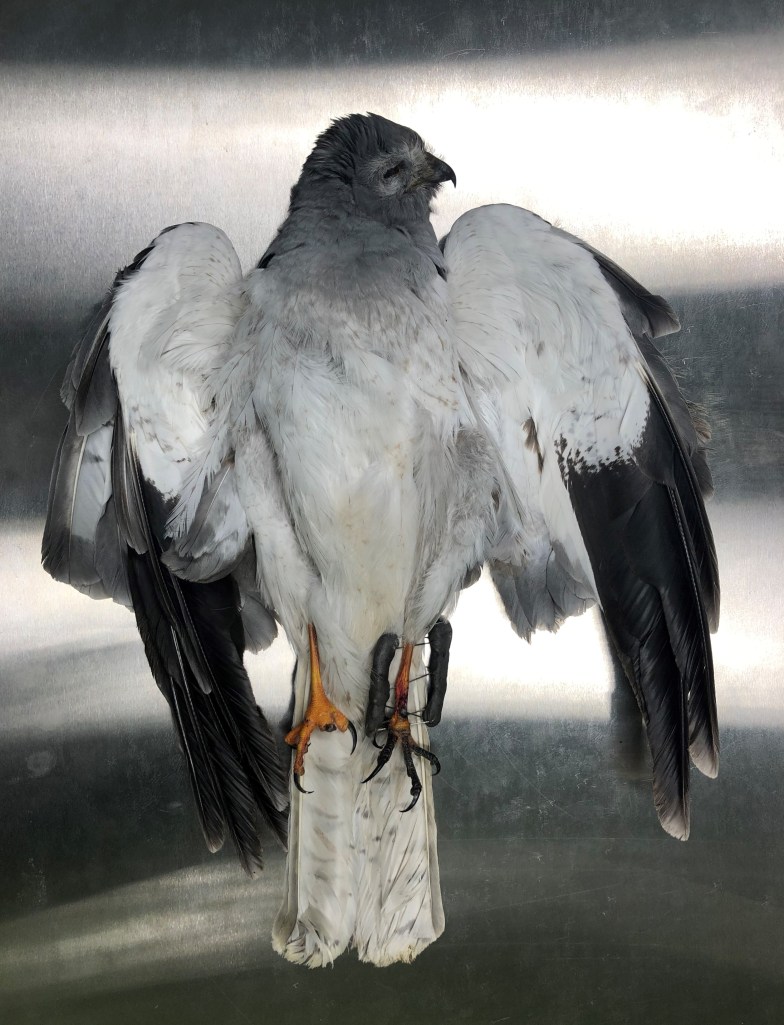
Last month the remains of a hen harrier, named Rannoch, were found in an illegal trap on a Perthshire grouse moor between Crieff and Aberfeldy. [RPUK: Rannoch’s corpse was discovered on a grouse moor within the Strathbraan raven cull area, just a few miles from Loch Freuchie].

In April two young golden eagles disappeared near a Highland Perthshire moor in what were described as “suspicious circumstances”. [RPUK: actually they disappeared on the same grouse moor, on the same morning, just a few miles from Loch Freuchie and within the Strathbraan raven cull area and yes, in highly suspicious circumstances].

ENDS

It’s a bit of a muddled article, mainly because it’s not yet known which species were found dead.

If these are all species that gamekeepers are permitted to kill under the General Licence (e.g. Carrion crow, Hooded crow, rooks, jackdaws) then this isn’t an ‘illegal cull’ as such, although the dumping of carcasses in the loch, if that is what has happened, is likely to be a breach of environmental legislation.

If any of these are ravens that have been killed (either trapped and bludgeoned to death, or shot) then depending on the number killed yes, this could be an illegal cull. We are aware that SNH has issued several individual licences to kill ravens in the Strathbraan area, not as part of its ridiculous and flawed experiment last year, but supposedly to protect ‘livestock’ in the area. So we know that some ravens may be killed in the area but again, dumping those carcasses in the loch is likely to be a breach of environmental legislation.

Let’s hope the police manage to secure the evidence and can get the birds identified and establish the cause of death.

UPDATE 12 July 2019: More on the ~100 dumped birds in Loch Freuchie (here)

‘The evidence is crystal clear: mountain hare declines most severe on grouse moors’

Last month we blogged about how Scottish gamekeepers had been accused of making ‘misleading’ and ‘greatly exaggerated’ claims about mountain hares, according to SNH staff emails, uncovered by a Freedom of Information request from Scottish animal welfare charity OneKind (see here).

This has now been followed up by a superb blog written by James Silvey, RSPB Scotland’s Species and Habitats Officer. It’s called Myth-busting mountain hare management claims’ and the original blog can be read on the RSPB website here.

We’ve reproduced it here:

Myth-busting mountain hare management claims by James Silvey, RSPB Scotland

Certain species are synonymous with the uplands in Scotland: golden eagle, red grouse, ptarmigan and of course the mountain hare. But if you were to take a walk in some areas of the highlands you might struggle to see many mountain hare or in some areas, any at all. The reason? Years and years of large-scale culls on intensively managed grouse moors have reduced the numbers of this emblem of our mountains to catastrophically low numbers.

Recent media activities of some landowning and gamekeeping representative bodies have attempted to paint a much rosier picture of the status of mountain hare in Scotland. They suggest that decisions need to be made on the basis of recent evidence, and not ideology. The evidence they currently refer to is a recent piece of GWCT research that analysed data on hares gathered by estates from 2001-17 and found that mountain hare fair better on managed grouse moors despite large-scale culls. It is telling, though, that these interests wilfully exclude and ignore additional recent science, thereby contradicting their call for decisions to be evidence-based.

Last year two independently peer-reviewed reports provided compelling evidence that hare numbers had declined precipitously and that the range of mountain hares living in Scotland had decreased (Massimino et al. 2018 & Watson & Wilson 2018).  Indeed, the evidence is crystal clear: mountain hares have declined across Scotland and in areas where red grouse management is the primary land use, these declines have been the most severe.

In 2015 and 2017 RSPB Scotland and a coalition of 10 other environmental organisations called on the Scottish Government to enact a moratorium on mountain hare culls and highlighted that the current guidance of voluntary restraint was not working and would continue to fail. Since then mountain hare culls have been documented across the Scottish uplands and on the 1st of August 2019 the mountain hare open season will begin again.

So what will change? Well, sometime in August we expect the Grouse Moor Management Group to deliver its findings on the environmental impacts of grouse moor management including the management of mountain hares. The person heading this review has given assurances that it will be strictly evidence based. As such, we trust that it will highlight the current unsustainable practise of mountain hare management and recommend better protections for mountain hares to ensure their long-term future as part of Scotland’s upland fauna.

RSPB Scotland agrees with those lobbying on behalf of the shooting industry and landowning sector that decisions should be based on evidence. We, however, believe that decisions should not be based on selective evidence, but should include all recent published science on the issue.

ENDS

Attempted theft of sparrowhawk chicks in Edinburgh

Two men tried to steal five protected sparrowhawk chicks from a nest at the River Almond near Newbridge.

Police in Edinburgh and the Scottish SPCA are investigating the attempted theft , which was thwarted by members of the public walking in the area.

Officers say that the men were seen in woodland close to the Almond Aqueduct, close to Cliftonhall Road, at around 2pm on Saturday. They then told a member of the public that there was a nest nearby that contained five chicks, and intimated that they planned to steal them with a view to selling them on. They indicated that they had tried to remove a number of chicks from the nest.

Police were then contacted and officers attended the scene before also contacting the Scottish SPCA.

[Sparrowhawks, photo by Dave Culley]

One of the suspects is described as being white, in his 50s, around 5ft 6ins to 5ft 9ins tall and he was wearing a black baseball cap, black down jacket, black jeans and black shoes. The other man was white, in his 30s, of slim build, slightly taller and wearing a Aberdeen FC shirt and shorts, with white trainers. They both spoke with local accents.

Inquiries to identify these men are said to be ongoing, and police want anyone who spotted them in the area to come forward.

PC Charles Davidson , wildlife crime officer said: “We are working with our partners to fully investigate this report and would remind the public that the taking, or harming, of these raptors is an offence under the Wildlife and Countryside Act 1981.

I’d appeal to any dog walkers or member of the public who may have been near the Union Canal on Saturday afternoon, and who saw these two men, to get in touch with officers should they have information to assist our inquiries.”

Scottish SPCA special investigations unit undercover inspector said: “We are pleased the attempt to steal the sparrowhawk chicks was halted by the vigilant members of the public.

We want to make it clear to the public that all birds, including birds of prey, are protected by law and it is a criminal offence to remove eggs, chicks or birds from the wild.

Under no circumstances should they be removed from the wild.

Any incident of this nature will be fully investigated by the Scottish SPCA together with Police Scotland .”

Anyone with information should contact Police Scotland on 101, quoting incident number 3414 of 6 July. Alternatively you can phone Crimestoppers anonymously on 0800 555 111.

ENDS (from Edinburgh Live website)

New trial date for Scottish gamekeeper accused of multiple wildlife crimes

Criminal proceedings continued on Monday (8th July) against Scottish gamekeeper Alan Patterson Wilson who is accused of allegedly committing 12 wildlife crimes.

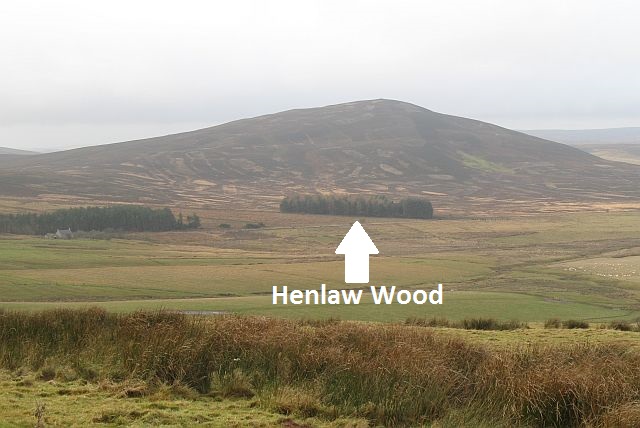
Mr Wilson, 60, is accused of shooting two goshawks, four buzzards, a peregrine falcon, three badgers and an otter at Henlaw Wood, Longformacus, south Scotland between March 2016 and May 2017.

He also faces charges of using a snare likely to cause partial suspension of an animal or drowning, failing to produce snaring records within 21 days when requested to do so by police and having no certificate for an air weapon.

We also believe he is accused of the alleged possession of the banned pesticide, Carbofuran.

Mr Wilson has pleaded not guilty to all charges.

A previous trial date had been set for 13th June 2019 but for unknown reasons the case was adjourned until Monday 8th July. At Monday’s hearing a new trial date was set for 20th August 2019.

Previous blogs about this case: see herehere here  here herehere, here and here.

Please note: we will not be accepting comments on this news item until legal proceedings have concluded. Thanks.

Extraordinary effort to raise awareness of illegal hen harrier persecution on grouse moors

For four days last week, ultra marathon runner Henry Morris ran a total of 200 km across the grouse moors of Bowland AONB, Yorkshire Dales National Park and Nidderdale AONB.

Henry was accompanied by a relay team of runners including his brother Ed and friends John and Tim, as well as various other runners who joined in on different days to offer support.

[L-R: John, Ed, Henry & Tim at the start of their extraordinary run, photo by Mark Avery]

The purpose of this extraordinary effort was two-fold: to raise awareness about the illegal killing of hen harriers on grouse moors, and to raise money for Wild Justice to use on hen harrier-related projects.

These guys don’t work in the conservation field – their day jobs are a personal trainer, a nurse, an analyst and a music promoter – but they were inspired to take action after reading about the plight of hen harriers (a recent paper showed that 72% of satellite-tagged hen harriers have been taken out, illegally, on grouse moors) and the absolute scandal that those killing hen harriers are never brought to justice.

Henry put together a website (here), a crowdfunder (here) and planned his route to visit the locations of satellite-tagged hen harriers that had ‘disappeared‘ (most likely been killed). Here’s a map of the route, different colours denote the route for each day and the ‘CP’ marker was the Check Point marker of each missing hen harrier:

On Saturday afternoon, the team reached the finish line in Nidderdale where they were met by friends and family for a well-deserved pint or two at the Stone House Inn at Thruscross.

[Photos by PJ]

What an extraordinary achievement, motivated solely by a desire to do ‘something’ to help hen harriers.

Of course, this has come at a cost. Not just the physical cost of running so far, in such terrain, in so few days, but these guys have also been subjected to personal abuse on social media by the usual trolls from the game-shooting industry. These trolls are predictable in that they’ll attack anyone seen to be helping, or associated with, Wild Justice. We’re sorry, Henry, Ed, John and Tim, that you’ve had to suffer such abuse.

Incredibly, Henry’s crowdfunder has raised a whopping £10,365 so far. If you’d like to show your support to these extraordinary runners, please consider making a small donation HERE

THANK YOU

Is Scottish Government’s silence an indication of indifference to illegal raptor persecution?

In the last week there have been two big news stories about the illegal persecution of birds of prey in Scotland.

The first was the news that a satellite-tagged hen harrier called Rannoch was found dead on a grouse moor in the Strathbraan raven cull area of Perthshire, with an illegally-set spring trap attached to her leg (see here).

The second was the news of the suspicious disappearance (presumed dead) of satellite-tagged golden eagles Adam and Charlie, who vanished without explanation on the same morning from another grouse moor in the Strathbraan raven cull area (see here).

Both of these news items received massive media interest and coverage, particularly the two missing golden eagles. It was all over social media, mainstream newspapers and websites, radio shows and even a slot on ITN’s News at Ten.

The general public responded to these stories as any decent human being would – with disgust, horror and in some cases, shock that this sort of criminality, both suspected and confirmed, continues within our supposedly progressive society.

Young kids (and some adults) were sufficiently motivated to draw pictures of eagles, write poetry and even create clay models of dead eagles to send to First Minister Nicola Sturgeon:

We know that many others have been sufficiently angered by the news that they’ve been motivated to follow MSP Andy Wightman’s lead and write to the First Minister, urging her to take action (firstminister@gov.scot).

How come then, with this outpouring of public anger, senior politicians in the Scottish Government, who all routinely use Twitter to engage about their work, have failed to say a single word about either case?

The First Minister, Nicola Sturgeon, has been silent.

The Environment Cabinet Secretary, Roseanna Cunningham, has been silent.

The Minister for Rural Affairs and the Natural Environment, Mairi Gougeon, has been silent.

What’s going on there, then? Should we interpret their collective silence as indifference? That seems pretty unlikely, given that all three politicians have spoken out strongly, passionately and convincingly in the recent past about illegal raptor persecution and their determination to bring it to an end.

So why haven’t they this time? Even the official Twitter channel of the Scottish Government covering the environment and rural economy (@GreenerScotland) has been silent. There was one quote about the two missing eagles, widely used in the media from an unnamed Government spokesman, which simply said:

The disappearance of any bird of prey in suspicious circumstances is of concern and we would urge anyone with information to contact Police Scotland. ‘We are determined to protect birds of prey and have established an independent group to look at how we can ensure grouse moor management is sustainable and complies with the law“.

This was clearly a bog standard response to enquiries from journalists as we could find no formal statement on the Scottish Government’s website. We didn’t find any statement about the illegally-trapped dead hen harrier either.

It seems remarkable that a wide section of society, young and old, has expressed outrage on many different media platforms over the last week, and yet the three politicians who are key to making progress on this issue, have seemingly suppressed what we’d expect to be the normal human reaction to this news (i.e. expressions of anger, horror, determination for change etc) and instead appear to be toe-ing a party political line by saying absolutely nothing. At all.

The Government’s silence is deeply concerning.

Is it, we wonder, part of a strategy to manage expectations on the forthcoming Werritty Review? Will the Werritty Review fall short of expectations? Remember, Werritty was commissioned on the back of a Government-commissioned scientific review that showed satellite-tagged golden eagles were undoubtedly being killed on some Scottish grouse moors. We all expect Werritty’s review to address this issue head on and propose some tangible, meaningful actions to finally get these crimes under control. Are we going to be disappointed? (Expect an almighty firestorm if that is the case).

Why else might the Scottish Government remain silent, on such a high-profile and topical issue? This silence is the sort of response we’ve come to expect from Environment ministers in Westminster, who have shown nothing but wilful blindness to the extent of raptor persecution crimes in England for decades. This silence is not something we expect from the Scottish Government.

It’s worth remembering that the Scottish Parliament has just celebrated its 20th anniversary. Twenty years ago, when the Parliament was established, the then Secretary of State Donald Dewar described illegal raptor persecution in Scotland as “a national disgrace”. He also said:

Although we are all aware of individual incidents of wildlife crime in Scotland, such as theft of eggs and shooting and poisoning of birds of prey, it is less well known that illegal persecution of some species, rather than the lack of suitable habitat, is the reason why in some areas the birds are scarce or non-existent. The government, and no doubt the Scottish Parliament will take all possible steps to eliminate persecution. The government is committed to strengthening protection for wildlife, and in due course the Scottish Parliament will consider proposals from the Partnership Against Wildlife Crime for stronger enforcement measures”.

If you’d like to write to the current First Minister and remind her of the importance of ensuring protection for golden eagles and other birds of prey on the grouse moors of Scotland, please consider sending a polite email to: firstminister@gov.scot

Thank you

[Hen harrier ‘Rannoch’ found dead on a grouse moor with an illegal trap clamped to her leg. Photo RSPB Scotland]

Young peregrine found with shotgun injuries in Cheshire

RSPB press release (4 July 2019):

Young peregrine falcon illegally shot

A young peregrine had to be euthanised after it was found with a broken wing and a shotgun pellet in its chest.

The bird was found in the road at Aldford, part of the Grosvenor Estate in Cheshire, on 17 April 2019 and taken to Lower Moss Wood Wildlife Hospital. An X-ray by Northwich Vets confirmed it had a broken wing and piece of shot in its chest.

Knowing it would not recover from its injuries, the vets took the sad decision to put the bird to sleep.

[Photo of the injured peregrine by Ian Daniels]

Peregrine falcons are the world’s fastest birds, able to reach speeds of 200mph when diving for prey. They nest on moorland, on cliffs and increasingly in towns and cities, usually producing two-four chicks each spring. There are thought to be around 1,500 pairs in the UK.

Like all birds of prey, peregrines are protected by the Wildlife and Countryside Act 1981. To kill or injure one is a criminal offence and could result in an unlimited fine or up to six months in jail.

Cheshire police are now appealing to the public for information.

Only a month before, in March 2019, a raven was found shot dead near Delamere Forest, Cheshire. Police investigated the incident but no leads were identified.

Jenny Shelton from the RSPB’s Investigations Unit said: “Most major cities will have their own ‘peregrine pair’, probably nesting on a cathedral spire or another tall building. Our lives and theirs are becoming increasingly entwined, which is a wonderful and very special thing. However there are still some who want to kill these magnificent birds. This young bird, which would have hatched last year so was just shy of its first birthday, was found in considerable distress with a piece of shot in its chest. Naturally, we want to find out who did this.

There is an unseen culture of raptor persecution in the UK, whereby birds like peregrines, ravens and owls are being illegally killed due to a perceived threat to some people’s interests. If you have any information please contact the police on 101, or speak to us in confidence on our raptor crime hotline: 0300 999 0101.”

PC Ged Gigg, Wildlife officer for Cheshire Police said: “Wildlife crime is a priority for us – my colleagues and I are dedicated to investigating crimes that affect our rural communities. I have been making extensive enquiries in the area and would urge anyone who has any information that may help with this investigation to contact police so that we can find those responsible.”

If you have any information relating to this incident, call Cheshire Police on 101 or go to www.cheshire.police.uk/contact/general-enquiries making sure you quote IML 376696.

If you find a wild bird of prey which you suspect has been illegally killed, contact RSPB investigations on 01767 680551 or fill in the online form.

ENDS

No strong evidence to support claim Norfolk Marsh harrier was ‘shot’

Two days ago the Hawk and Owl Trust announced the discovery of what was claimed to be a “shot” Marsh harrier close to the boundary of the Sculthorpe Moor nature reserve near Fakenham, Norfolk.

This story has since been reported in the local press and national media including the BBC website.

However, to be completely honest, the evidence to support this claim is not strong.

The bird was seen and photographed by a member of the public, but they were unable to reach the bird to rescue it. The photograph shows a clear injury to the harrier’s wing.

[Photo of the injured Marsh harrier, from Hawk and Owl Trust]

The member of the public then reported the discovery to reserve staff who went to try and locate the bird but it had gone. The report on the Hawk & Owl Trust website says ‘the vegetation was all broken down with only a few feathers left’.

The incident was then reported to the police.

Sorry, but unless there’s part of this story that is being kept under wraps for investigative purposes, it’s not possible to tell from the photograph whether this Marsh harrier had been shot or whether it was injured from, say, a collision with a fence. An x-ray would have confirmed it, of course, but under the circumstances an x-ray wasn’t an option.

Of course, it’s perfectly feasible that this Marsh harrier had been shot – we know this species is routinely targeted whether it be in the lowlands (e.g. see here and here) or on upland grouse moors (e.g. here), hated so much that the Moorland Association has been asking questions about whether licences to kill Marsh harriers might be available (see here). But on this particular occasion, with this particular harrier, more evidence would be required before this should be recorded as a confirmed shooting.

It’s ironic really. Remember, this is the same Hawk & Owl Trust that refused to acknowledge that its satellite-tagged hen harrier Rowan had been shot, despite a conclusive x-ray showing the bird’s shattered leg and, er, fragments of shot:

Scottish Gamekeepers Association’s smear campaign re: golden eagle Fred is defamatory shambles

On Monday (1 July), the Scottish Gamekeepers Association (SGA) published a statement on its website in response to the news that golden eagles Adam and Charlie had ‘disappeared’ in suspicious circumstances on a grouse moor in the Strathbraan raven cull area in Perthshire.

It was an astonishingly ill-judged response. It didn’t mention the loss of these two eagles – let alone condemn what looked to be yet another suspicious incident, identical to the loss of so many other sat-tagged eagles on grouse moors. Instead, it focused on the supposed ‘need’ for ‘independent scrutiny’ of satellite tag data (conveniently ignoring the fact that the police now routinely analyse the data of all sat-tagged raptors that have been reported as missing in suspicious circumstances).

To support its argument, the SGA highlight the disappearance of Fred, one of our sat-tagged golden eagles who vanished from the Pentland Hills just outside Edinburgh in January 2018 and whose tag then sent data from the North Sea, several days later, before finally stopping.

According to the SGA, and some of their clueless members/supporters on social media, we apparently withheld some tag data from Police Scotland. Their ‘evidence’ (ahem) to support this claim seems to be centred on two things:

  1. The fact that two videos were filmed by our team on the same day but published several weeks apart; and
  2. An FoI response from Police Scotland in response to some poorly structured questions.

Here’s part of the SGA’s post on the ‘need’ for independent sat tag monitoring:

And here is a copy of the Freedom of Information response from Police Scotland, also posted on the SGA’s website:

It appears the SGA have even persuaded their ‘legal advisors’ to show this ‘evidence’ to the police.

Good grief. Unsurprisingly, the police haven’t come knocking and here’s why (probably) –

Yes, we did film two videos on the same day, and published them weeks apart. So what? We’ve never tried to deny that, but much has been made of it over the past 18 months, much to our amusement and bemusement. Our time is valuable, our schedules are tight, we had our film crew in place, why not make the most of that situation and film as much as we could in one day, instead of having to organise another filming day sometime later?

What the SGA don’t know is that yes, at that time we had the additional meta data (that showed Fred’s tag pinging against various telephone masts on its route from the Pentlands to the North Sea) but we were still working out what those data actually meant (it’s not the type of data we were familiar with) and we filmed several versions of what we thought the data were showing us at that time. We were still taking advice from a number of independent experts for some weeks afterwards, including the police, and when we were happy that we understood the data and the limitations of the data parameters, that was the version that was published several weeks later, with the full support of the police.

The SGA thinks that Police Scotland received Fred’s tag data from us on 26 January (because that is what is implied in the Police’s FoI response). However, that is absolutely not the case, and is simply a reflection of the poorly constructed FoI question. Fred’s suspicious disappearance was reported to Police Scotland on 26 January, yes, but they did not ask to see Fred’s tag data at that time. Presumably because they had every confidence in us as legitimate, well-regarded researchers not to question our report that Fred’s disappearance was highly suspicious, along with the backing of experienced tag data analysts at RSPB Scotland. Let’s face it – if you look at the map showing Fred’s movements in the Pentlands and then several days later he’s suddenly 10 miles offshore in the North Sea, you don’t need to be a golden eagle expert or to look at raw data to know that something isn’t quite right. The police launched an immediate search in the Pentlands (and, for the record, worked admirably for the duration of this investigation).

The tag data and meta data were eventually requested by Police Scotland during a phone call on 19th February. It wasn’t clear why it was only then that the data were being requested but we suspected pressure was being placed on the police by, let’s call them ‘external forces’. The data request was fine by us. It was agreed that it would be good for us to meet and go through the data together, including the meta data files. The earliest date that was mutually convenient for us all was one week later on Monday 26 February. We met, discussed the data and agreed that it would be better for the police to have a copy of the original raw data files directly from the tag manufacturer, rather than our files, just to avoid any accusations that we may have tampered with the files (unfounded accusations which were, of course, doing the rounds on social media by those seeking to discredit us and to distract attention from the circumstances of Fred’s disappearance – those ‘external forces’ again).

Incidentally, it was at this time that SGA Director Bert Burnett claimed on social media that we’d fabricated the whole incident with Fred (and thus perverted the course of justice), and made another claim that Chris Packham had refused to turn over the tag data to the police. Quite astonishing (and defamatory) accusations based on no evidence whatsoever. Nothing new there, then.

Immediately after our meeting with the police to discuss the tag data we contacted the tag manufacturer, gave permission for our data to be shared with the police, put the two parties in touch with one another and the original raw data files were sent to the police on 1 March (as accurately stated in the police’s FoI response).

Where the SGA’s logic completely falls down is this. Why on earth would we want to withhold evidence (the meta data) from the police, especially when we believed that evidence supported our earlier suspicions that Fred had been killed in the Pentlands and then his tag (and perhaps Fred too) was transported by road to North Berwick and dumped in the North Sea?

Sorry, SGA, your desperate attempts to smear and discredit us can be seen for exactly what they, and you, are. Pathetic.

Next.

Chris Packham responds to Scottish Gamekeepers Association with the contempt they deserve

There has been a massive amount of media coverage on the the suspicious disappearance of two satellite-tagged golden eagles, Adam and Charlie, who vanished from a grouse moor in the Strathbraan raven cull area on the same April morning.

Here’s some of that coverage:

The Guardian

The Times

BBC News

Scotsman

Daily Record

ITV News at Ten

Our favourite one, though, so far, is this one from The Herald:

Journalist Jody Harrison first discusses the disappearances of golden eagles Adam and Charlie, but then moves on to some defensive guff put out yesterday by the Scottish Gamekeepers Association (SGA), who seem to think that satellite-tag data aren’t independently scrutinised by the police in each case of a suspicious disappearance (er, asking for the tag data is the first thing the police do when a sat-tagged raptor is reported as missing under suspicious circumstances).

Here’s Chris Packham’s exquisite response to the SGA:

The article also includes a good response from RSPB Scotland’s Ian Thomson, who not only accuses the SGA of trying to “muddy the waters” but also welcomes the idea of independent scrutiny, especially if it’s extended to the amount of wildlife-killing that goes on as part of routine grouse moor management.

We’re not sure who is advising the SGA on its media strategy these days but whoever it is, thanks a lot, you’re handing them to us on a plate.