In early May we blogged about a claim made by the Scottish Gamekeepers Association (SGA) that it was ‘negotiating with Government for a new offence to be created for damage to legal predator control tools‘, i.e. traps and snares (see here).
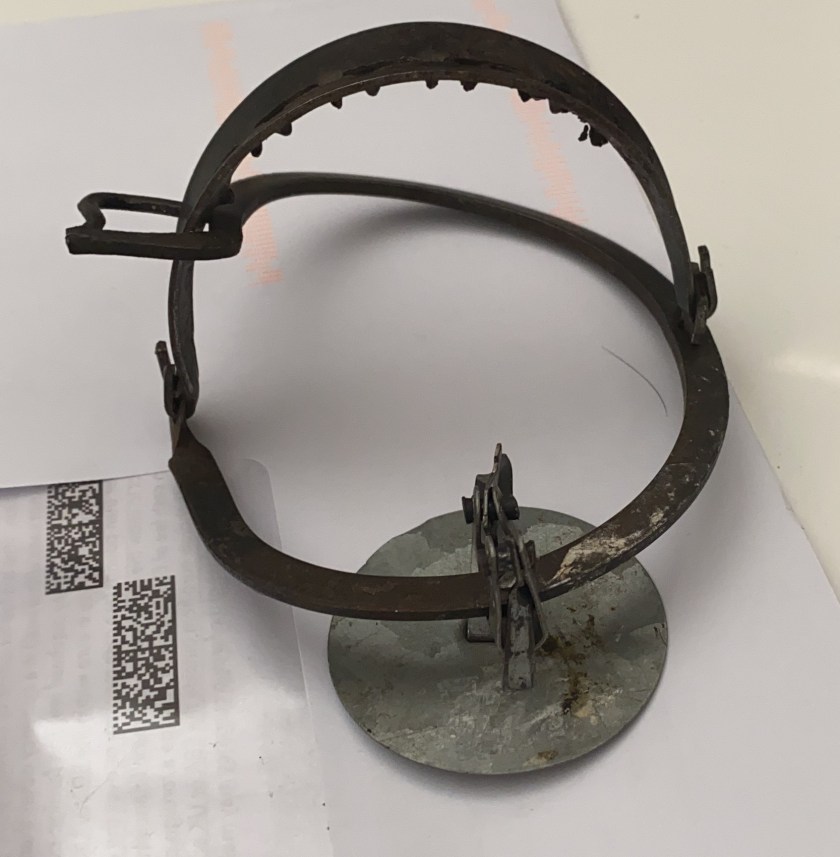
[A spring (Fenn) trap set on a log, designed to catch and kill any animal that stands on the trigger plate. Gamekeepers argue that traps like these, and others, are routinely damaged by members of the public. Photo from the Untold Suffering report published by the Revive Coalition last year. NB: It is no longer legal to use Fenn traps for killing stoats in the UK as they have been ruled inhumane – new trap designs have recently been approved (see here)]

This claim led to Scottish Greens MSP Mark Ruskell posing two Parliamentary questions earlier this week, asking the Government for details of these alleged ‘negotiations’ (see here).
Environment Cabinet Secretary Roseanna Cunningham has now responded and her answers are hilarious:
Mark Ruskell MSP – To ask the Scottish Government what discussions it has had with the Scottish Gamekeepers Association regarding creating offences and sanctions in relation to animal trap damage, broken down by (a) date and (b) location of discussion. (S5W-28828).
Roseanna Cunningham – The Scottish Government has not had any recent discussions with the Scottish Gamekeepers Association about creating offences and sanctions in relation to animal trap damage.
Mark Ruskell MSP – To ask the Scottish Government how it plans to change the law in relation to the wilful damage of animal traps. (S5W-28829).
Roseanna Cunningham – Under existing legislation and common law a person interfering with a legally set snare or trap may be committing one of a number of possible offences.
The Independent Review of Grouse Moor Management report which was published in December recommended changes to legislation on the use of animal traps. The Scottish Government is currently considering all of the recommendations in the report and will publish a response in due course.
So, in essence then, no, the Scottish Government is not involved in ‘negotiations’ with the SGA as the SGA has claimed, and no, the Scottish Government does not appear to be considering new legislation for the provision of a new offence for alleged trap damage.
Roseanna Cunningham mentions the Government’s ongoing consideration of the recommendations made in the Werritty Review but that review did not include a recommendation for the provision of a new offence for alleged trap damage. What it did recommend, however, was new legislation for trap operators to have to undertake mandatory training before being allowed to set traps!
This begs the question then, why did the SGA claim to be ‘negotiating with Government’ when apparently it is doing no such thing?!
If the SGA could put aside its delusional posturing for a second it’d do well to be spending some time reminding its members of the current legislation on trap use. According to the RSPB this week, ‘the police are following up several raptor persecution cases and multiple reports of illegal trap use on grouse moors‘ (see here). Let’s hope that none of those traps alleged to be being used illegally, belong to an SGA member.