29 ‘missing’ Hen Harriers & nearly 40 birds of prey poisoned, trapped or shot in Yorkshire Dales National Park since 2015

Media attention has been drawn to the Yorkshire Dales National Park this week, following the RSPB’s press release on the suspicious disappearance of a satellite-tagged Hen Harrier named ‘Sita’.

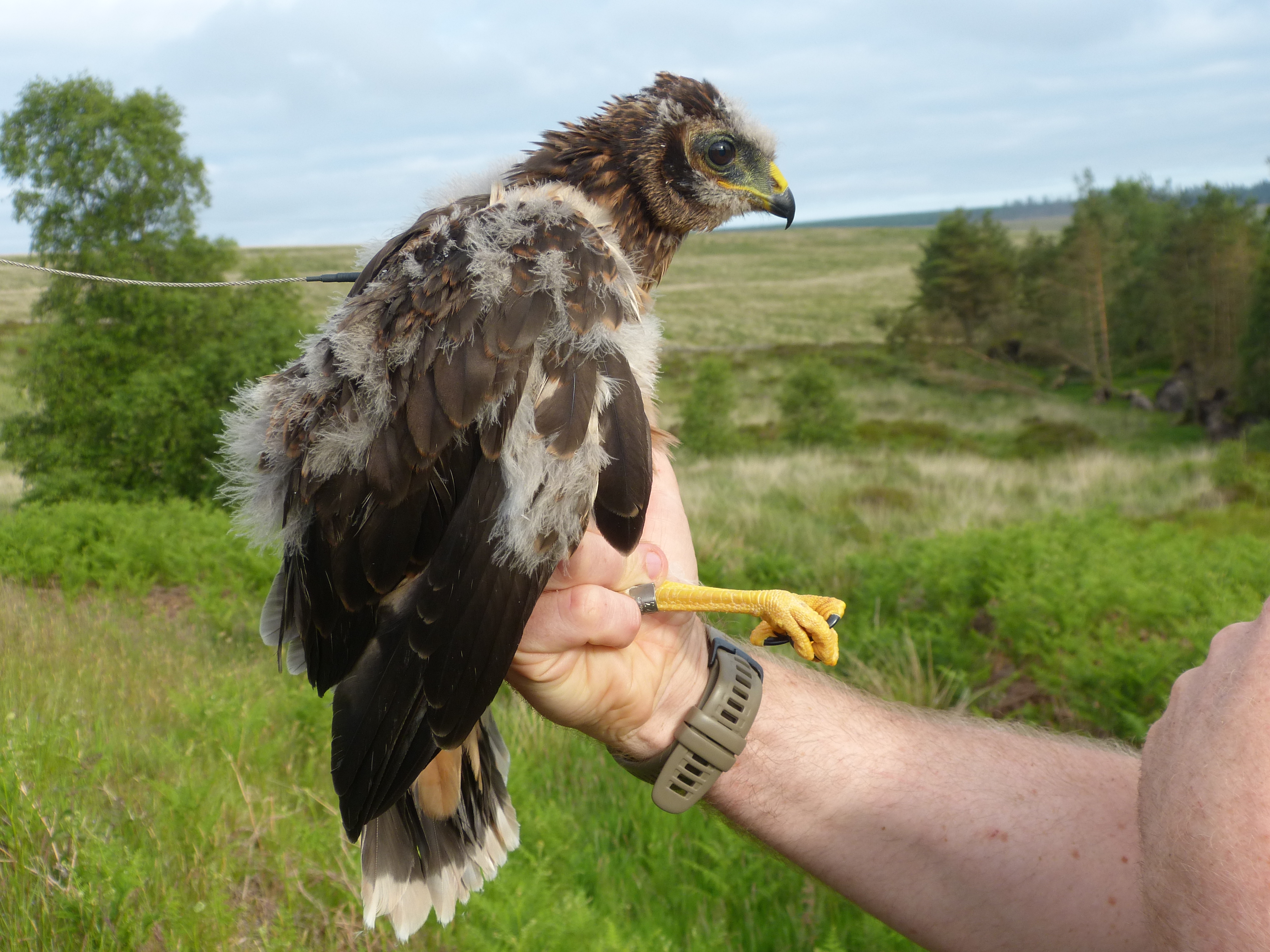
When it comes to the illegal killing of birds of prey, the Yorkshire Dales National Park is rarely out of the news, and that’s hardly surprising when 29 satellite-tagged Hen Harriers have gone ‘missing’ there and 39 other raptors have been found poisoned, trapped or shot there since 2015, including Peregrines, Hen Harriers, Red Kites and Buzzards.

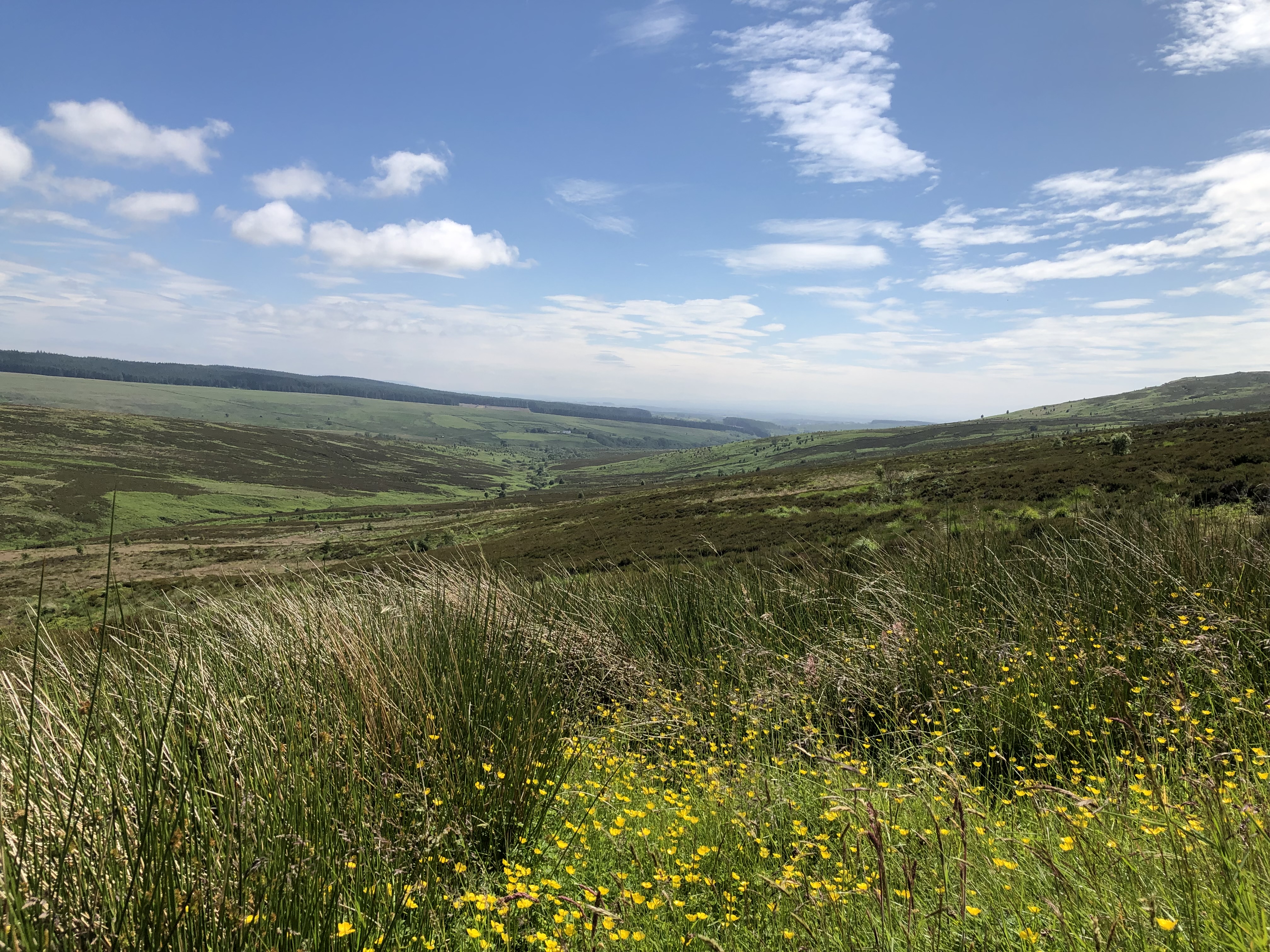
Yorkshire Dales National Park. Photo by Ruth Tingay

Given these appalling figures, the RSPB has described the Yorkshire Dales National Park as a ‘no-fly zone for birds of prey’.

High profile cases within the National Park have included the conviction of a gamekeeper who was filmed shooting two Short-eared Owls on a grouse moor and then stamping the corpse of one of them into the peat and shoving the other one inside a drystone wall (here); a gamekeeper filmed on a grouse moor using a tethered Eagle Owl to attract Buzzards that he then shot and killed from close range (here); the stamping to death of four Hen Harrier chicks in a nest on a grouse moor (after obscuring the camera pointing at the nest, here); the grisly death of a Hen Harrier caused by his head and leg being pulled off whilst he was still alive (here); and three individuals caught on camera on a grouse moor discussing the shooting and killing of a Buzzard and a Raven before apparently shooting and killing a Hen Harrier (here) – one gamekeeper has been charged with conspiracy to kill a Hen Harrier, he has pleaded not guilty and his case will proceed to trial in January 2026 after his barrister failed in his attempt to have the case thrown out on a legal technicality.

The Yorkshire Dales National Park Authority has also long recognised the extent of this criminal activity and has responded to public concern (e.g. see here and here). Earlier this year the Park Authority terminated its five-year ‘partnership’ with the grouse shooting industry to tackle these crimes, after recognising the futility of this endeavour. Two conservation organisations (the RSPB and the Northern England Raptor Forum) had already walked away from the sham in 2023 and 2024 respectively.

In an article published a couple of days ago by the Craven Herald & Pioneer, Mark Corner, a member of the Yorkshire Dales National Park Authority is quoted saying the continued illegal killing of raptors in the Park was “a crying shame“.

He added: “As the member champion for the natural environment, I’m personally embarrassed that we are the worst spot in the country in terms of the illegal killing of birds.”

In the same article, there’s an hilarious quote from the Yorkshire Dales Moorland Group, which is one of a number of regional groups set up in 2015 to represent local grouse moor owners and their gamekeepers in an attempt to counter the bad publicity about ongoing illegal raptor persecution. I think that members of most of these regional moorland groups have been, or still are, the subject of police investigations into illegal raptor persecution.

A spokesperson for the Yorkshire Dales Moorland Group reportedly told the reporter that ‘hen harrier numbers were at a 200-year high across the uplands’.

That’s simply not true – Hen Harrier breeding attempts on grouse moors across the north of England have been in sharp decline over the last two years – the only areas where they remain stable is on land managed for conservation rather than for Red Grouse shooting.

According to its FaceBook page, the Yorkshire Dales Moorland Group claims to have “around 100,000 acres of managed uplands here in the Dales where the estates are members of this group (virtually all of the moors)“.

Why is it then, there were only two Hen Harrier breeding attempts in 2025 across the whole of the Yorkshire Dales and neighbouring Nidderdale? I’d like the Moorland Group to provide a plausible explanation for these absences.

The Yorkshire Dales Moorland Group also told the Craven Herald reporter:

Our keepers have and will always assist the police in searches for missing persons, lost dogs or missing birds. Tag failure is rare but not unheard of.

The default accusation that persecution is responsible is regrettable. The conservation work undertaken by moor keepers is commendable as can be seen by the abundance of raptors and other rare species in the Dales“.

What “abundance of raptors” are those then? All the dead ones? Or just the ones that are allowed to breed because they don’t pose any threat to Red Grouse stocks?

And if these grouse shooting estates are so keen to help the police, how many of them signed the letter last year agreeing to allow the police to enter the land and use equipment for the purposes of crime prevention and detection? Did any of them sign it?

And if these gamekeepers are so keen to help police investigations, how many of them have given ‘no comment’ responses when interviewed about suspected raptor persecution crimes on these moors? Maybe it’d be quicker to count how many gamekeeper didn’t give a ‘no comment’ interview.

The article also quotes Alex Farrell, Head of Uplands at BASC:

As a committed conservation organisation, we are taking progressive steps with our partners to oversee the continued recovery of hen harriers.

Figures released by Natural England today show that collaborative effort resulted in 106 fledged hen harrier chicks in England this year – up from 80 last year“.

What “progressive steps” is BASC taking?

Oh, and those figures released by Natural England show that the small increase in Hen Harrier fledging rates are in spite of, not because of, any so-called ‘collaborative effort’ from the grouse shooting industry.

The data couldn’t be any clearer (see here).

Raven found shot dead next to grouse moor in notorious Peak District raptor persecution hotspot

South Yorkshire Police have issued the following press release (dated 9 December 2024):

WITNESS APPEAL AFTER BIRD SHOT IN PEAK DISTRICT

We are appealing for information after a protected bird was reportedly shot in Bradfield, near Sheffield.

On 25 August, a dead raven was found in a field near Agden Side Road, Bradfield, in the Peak District.

The incident was reported to the RSPB who collected the bird. An x-ray of the bird showed that it had been shot.

It is believed the bird was shot between 24 August and 25 August.

Since the incident, officers have been following several lines of enquiry and we are now appealing for anybody who may have any information about the incident to contact us.

You can report information to us online via live chat or by calling 101, quoting incident number 662 of 9 September 2024.

You can access our online portal here: www.southyorkshire.police.uk/ro/report/ocr/af/how-to-report-a-crime/. Alternatively, you can provide information anonymously via independent charity Crimestoppers by calling 0800 555 111 or online at www.crimestoppers-uk.org.

ENDS

The Agden Side Road lies just beyond the boundary of two grouse moors (Strines and Broomhead) in the Peak District National Park.

This part of the Peak District National Park, dominated by land managed for driven grouse shooting, has a long and sordid history of raptor persecution incidents (e.g. see here, here, here, here, here etc).

Prosecutions are rare, largely due to the difficulty of identifying a named individual to link to a crime that has taken place in a relatively remote landscape with few witnesses.

This is certainly not helped by South Yorkshire Police, who rarely cover themselves in glory with timely investigations, although to be fair unless the shooting of this raven was witnessed and recorded, the police have little to go on.

Yes, the usual suspects will be in the frame but for a prosecution the police need evidence – they can’t just prosecute on the basis of recurrent past criminal behaviour in the area. Although waiting three and a half months to issue an appeal for witnesses, as they’ve done in this case, won’t help.

This scenario happens over and over again in areas managed for driven grouse shooting, even inside our National Parks, and has been happening for decades. Raptors are routinely shot, trapped and poisoned and the criminals get away with their crimes time after time after time.

This is one (of several) reasons why Wild Justice is currently running a petition calling for a ban on driven grouse shooting. The petition currently stands at 30,000 signatures but it needs 100,000 to trigger a parliamentary debate. If you’d like to sign it, please click HERE.

UPDATE 9 June 2025: Another Raven found shot dead next to grouse moor in notorious persecution hotspot in Peak District National Park (here)

Hunt saboteurs disrupt Inglorious 12th grouse shoot on Wemmergill Estate, Co Durham

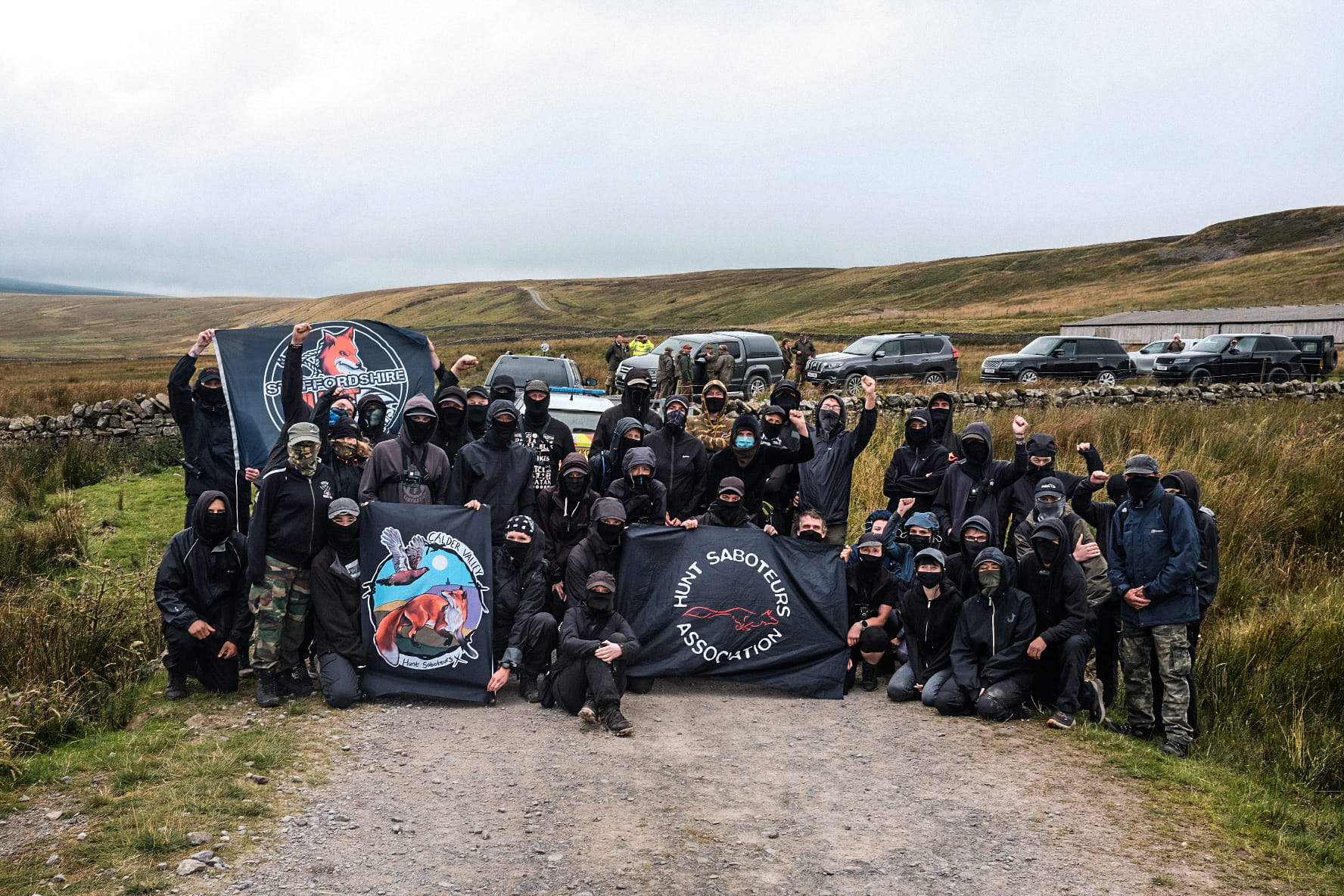
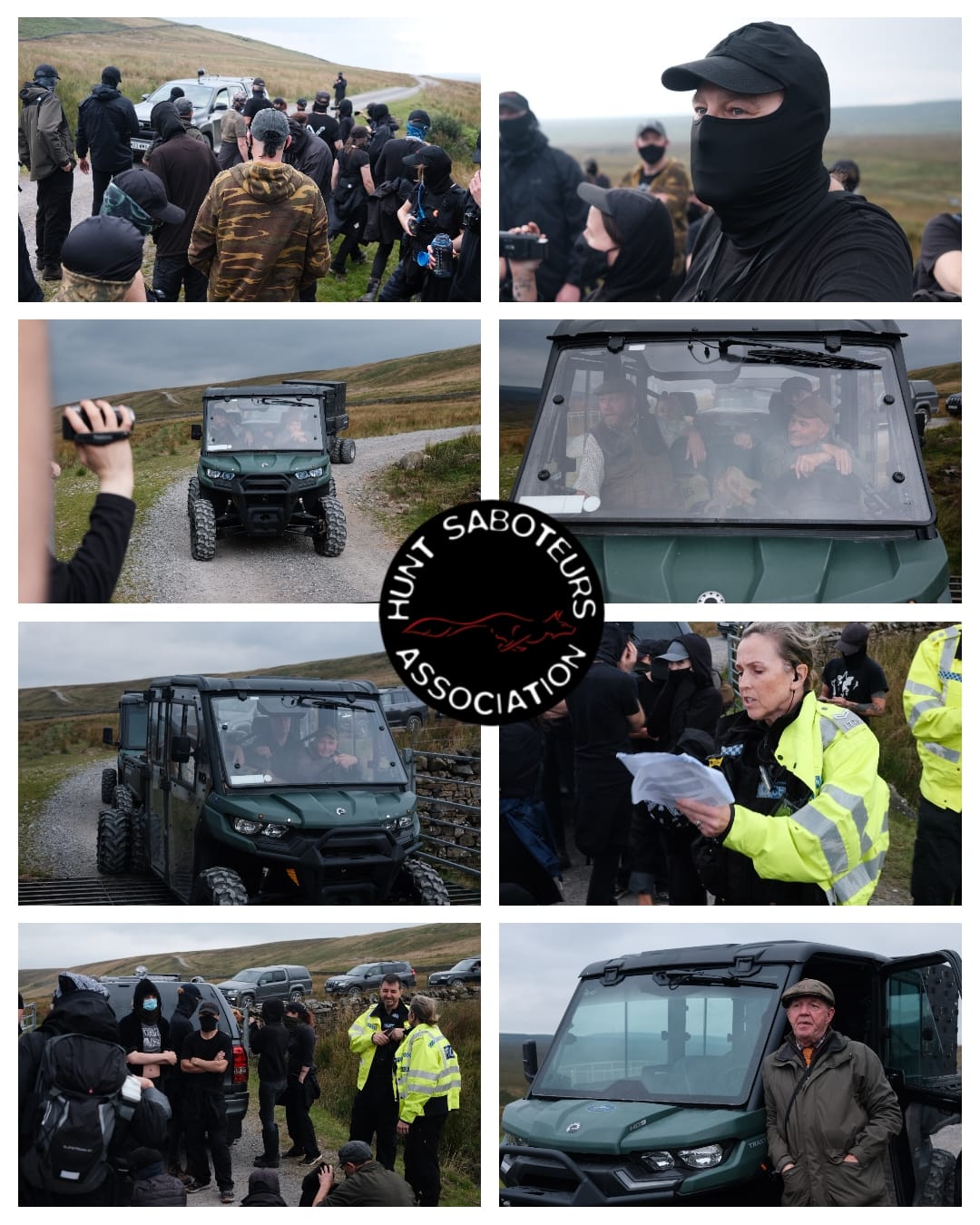
As they’ve done in previous years (e.g. see here), members of the Hunt Saboteurs Association were out in force today in northern England to disrupt grouse shooting on the Inglorious 12th.

Today they were on the Wemmergill Estate in County Durham. If Wemmergill sounds familiar it’s because it’s previously featured on this blog (here, here and here) and on Mark Avery’s blog (here).

Here’s what the Hunt Sabs got up to today:

Further details on the Hunt Sabs’ website here.

I wonder if they’ll be out again this week and if so, where…?

UPDATE 17 August 2024: Hunt Saboteurs disrupt grouse shoot on Stean Moor in Nidderdale, North Yorkshire (here)

Crowdfunder to buy satellite tags for short-eared owls

British charity Raptor Aid has launched a crowdfunder to help purchase satellite tags for Short-eared owls in the UK to help understand the movements of this enigmatic species, in partnership with the Northern England Raptor Forum (NERF).

Short-eared owl photo by Pete Walkden

Scientist John Calladine from the BTO has been studying this species for many years and his most recent paper, published with a number of international collaborators in the ornithological journal Ibis just last week, has revealed some remarkable and unexpected movements of satellite-tagged Short-eared owls.

The paper, ‘Remote tracking unveils intercontinental movements of nomadic Short-eared Owls (Asio flammeus) with implications for resource tracking by irruptive specialist predators‘ sits behind a paywall so if you want to read it you’ll have to subscribe to the journal, or pay to view, or you can contact one of the authors and ask for a copy.

However, there’s an excellent, non-technical article about this research on the Inside Ecology website (here) – well worth a read.

In addition to fundraising for satellite tags, Raptor Aid is also looking to continue its small grants award to raptor researchers in the UK and overseas.

For more details and to contribute to the crowdfunder, please click here.

Short-eared owl shot & killed on Broomhead Estate, a grouse moor in the Peak District National Park

The RSPB has this evening released video footage of an eyewitness’s account of a short-eared owl being shot on the well-known Broomhead Estate in the Peak District National Park last summer.

Screen grab from the RSPB video showing the shot corpse of the short-eared owl.

The eyewitness, who understandably doesn’t want to be identified (probably due to the harassment and intimidation suffered by other eyewitnesses in this region – e.g. see here), watched the owl being shot by an armed man who had arrived on the grouse moor on an all-terrain vehicle, carrying a shotgun and a bag. He shot the owl and shoved its lifeless corpse inside a rabbit hole in an effort to conceal the crime.

Fortunately, this eyewitness was savvy enough to have filmed the event and was able to return to the grouse moor the next day and pinpoint the spot for investigators from the RSPB and South Yorkshire Police.

They retrieved the owl’s corpse and a post-mortem confirmed it had been shot.

A local gamekeeper became the immediate suspect but, as happens so often, there was insufficient evidence to link him conclusively to the crime and so no prosecution could take place. You can read the RSPB’s blog about this case here, including a link to the video.

RPUK map showing location of Broomhead Estate in Peak District National Park

Grouse moors in this part of the Peak District National Park have been at the centre of other police investigations into alleged raptor persecution in recent years, including the suspicious disappearance of a satellite-tagged hen harrier (‘Octavia’) in 2018 (here).

Last year, another satellite-tagged hen harrier (‘Anu’) roosted overnight on a local grouse moor before ‘disappearing’. His tag was found several km away, no longer attached to the harrier and a forensic examination revealed the tag’s harness had been deliberately cut from the bird (here).

Two other hen harriers ‘disappeared’ from their breeding attempts on National Trust-owned grouse moors in the Peak District National Park last year (see here).

I’ve blogged previously about the Broomhead Estate in relation to the apparent mis-use of medicated grit (see here) and the use of gas gun bird scarers (here, here, here and here).

Grouse-shooting butt on Broomhead Estate. Photo: Ruth Tingay

Leadhills Estate ‘information day’ – an update

Many thanks to several blog readers who attended Leadhills Estate’s ‘Information Day‘ yesterday and sent reports.

[Grouse moor on Leadhills Estate. Photo by Ruth Tingay]

A number of people have told me that the rumours about the sale of the estate and/or the estate’s shooting rights were ‘categorically denied’ by Lord Andrew Hopetoun himself.

Hmm. Personally, I have zero confidence in anything this former Director of Scottish Land & Estates says after his previous statements about the relationship between the Hopetoun Estate in Edinburgh and the Hopetoun (Leadhills) Estate in South Lanarkshire (see here, here and here for previous blogs on this).

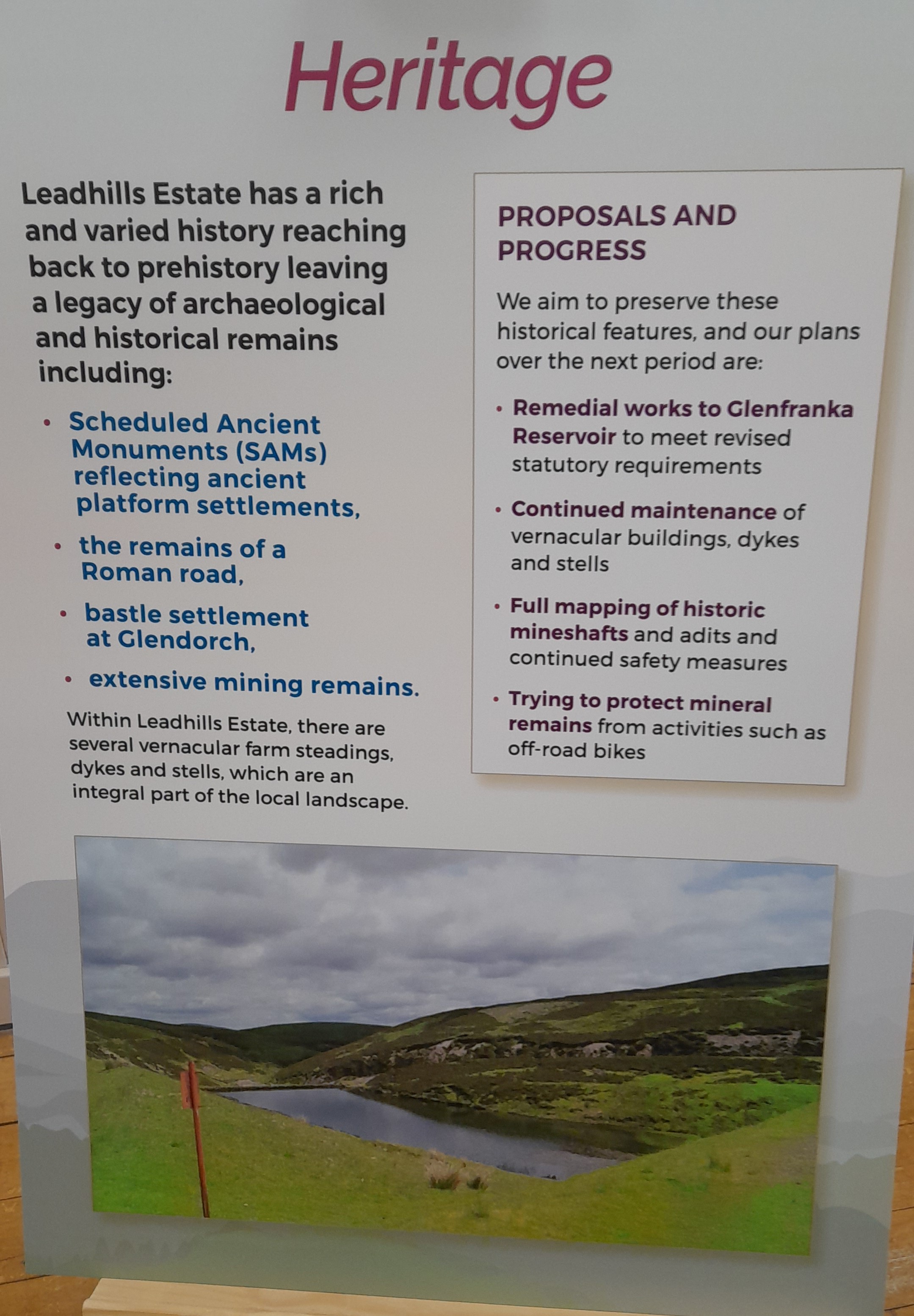
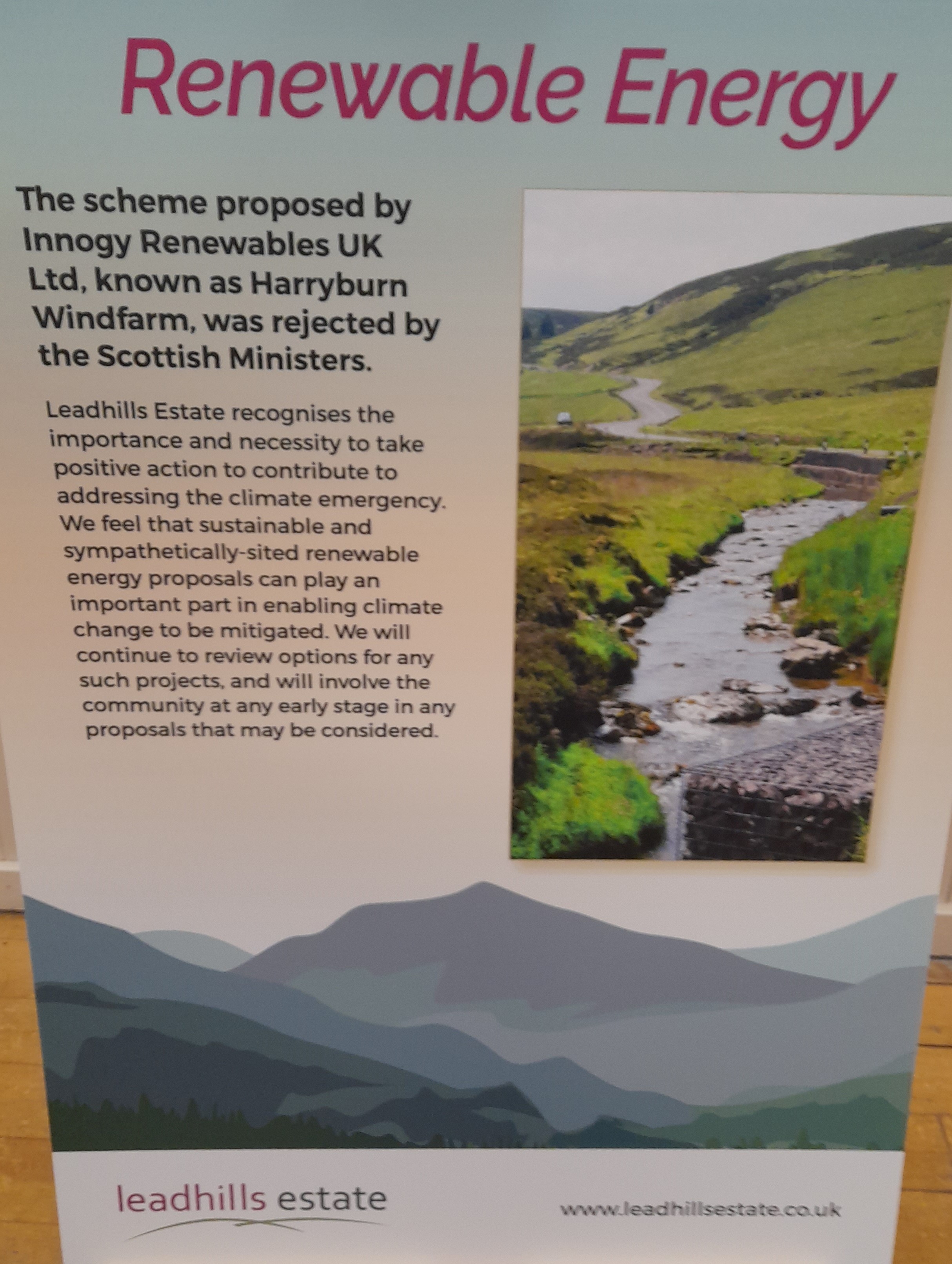
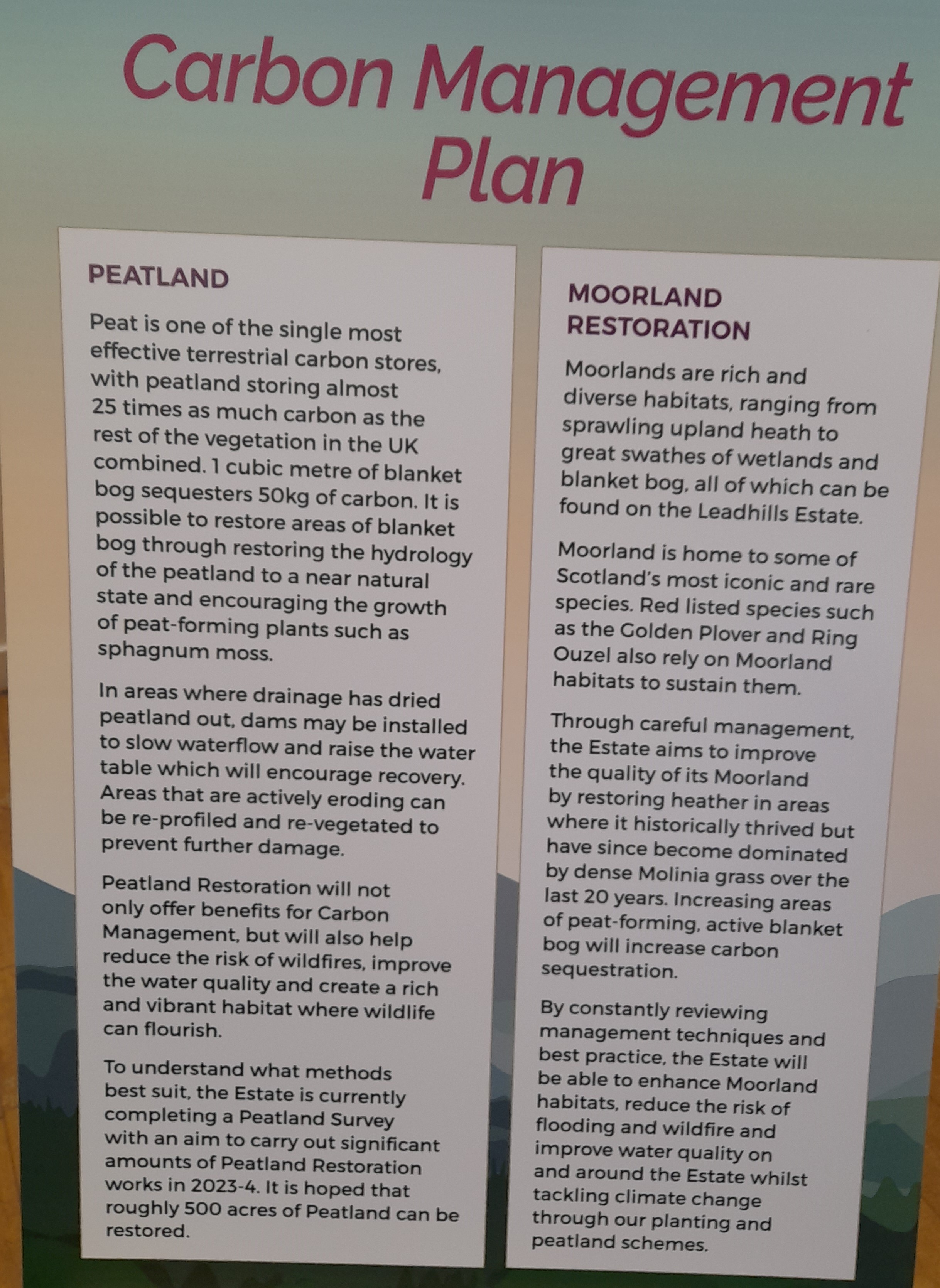
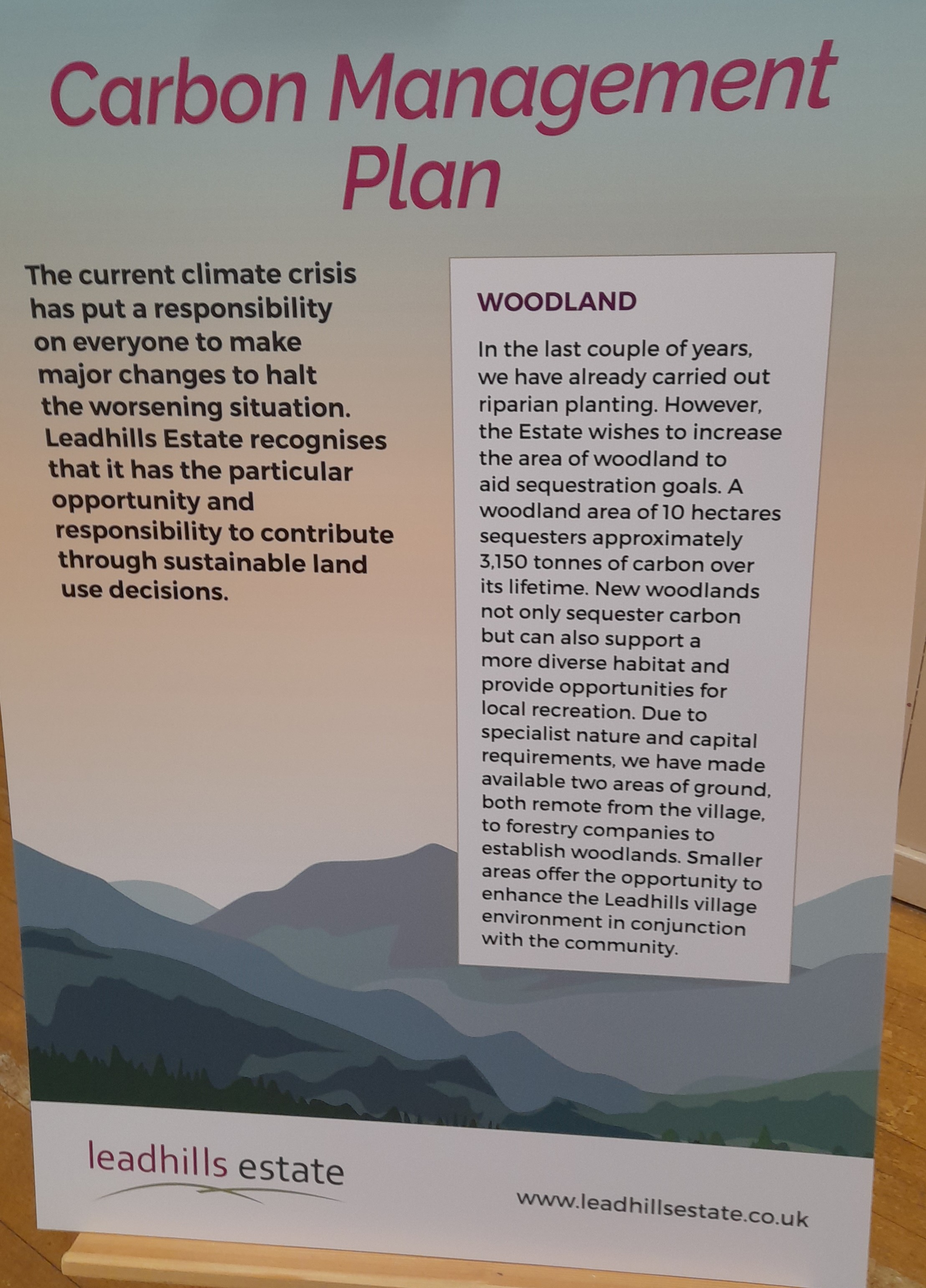
And given some of the statements published on information boards at yesterday’s meeting (see below), it’d hard to keep a straight face when you know that Leadhills Estate is currently serving not one, but TWO General Licence restrictions after the police found ‘clear evidence’ of wildlife crime (see here & here), just the latest in an astonishingly long list (at least 70 reports of alleged raptor persecution there since the early 2000’s).

Obviously, people can draw their own conclusions about what might be going on. Equally, I can draw my own and I can state with absolute certainty that Leadhills Estate will remain high on my watch list.

Here are the display boards from yesterday’s meeting:

Here is the map showing the areas of the estate that have been made available to forestry companies:

Scottish Land & Estates still refusing to acknowledge extent of raptor persecution on grouse moors

In the last blog post where I wrote about the nine shot birds of prey found wrapped in bags on Millden Estate and just over the estate boundary, I included a quote from Tim Baynes of Scottish Land & Estates, who had written the following in a comment piece for The Field, published in August 2022:

Raptor persecution has been the stick with which grouse moors were beaten for two decades, but the past five years have seen a sea change. In Scotland, recorded crimes have effectively ceased on grouse moors, and raptors of all species have been increasing“.

I said I’d publish his outrageous comment piece in full, so here it is:

I really shouldn’t be surprised that The Field published this nonsense – that particular shooting industry rag has a track record of publishing patently inaccurate comment pieces (e.g. see here).

And I’m definitely not surprised that the author of this latest gibberish is Tim Baynes – his lengthy track record speaks for itself (for a small selection of the masses of examples see here, here, here, here, here, here, here, here).

Needless to say, his latest claim that raptor persecution on Scottish grouse moors has “effectively ceased” is demonstrably untrue. You’ve only got to read my last blog post to understand this. If that doesn’t convince you, have a look at the General Licence restrictions currently imposed on grouse moor estates after Police Scotland found ‘clear evidence of raptor persecution’ – Leadhills Estate (here), Lochan Estate (here), Leadhills Estate [again] (here), Invercauld Estate (here), and Moy Estate (here).

And if you still need convincing, have a read of the Scottish Government’s Environment Minister’s statement in 2020 when she announced that there could be no further delay to the introduction of a grouse moor licensing scheme because:

“…despite our many attempts to address this issue, every year birds of prey continue to be killed or disappear in suspicious circumstances on or around grouse moors“.

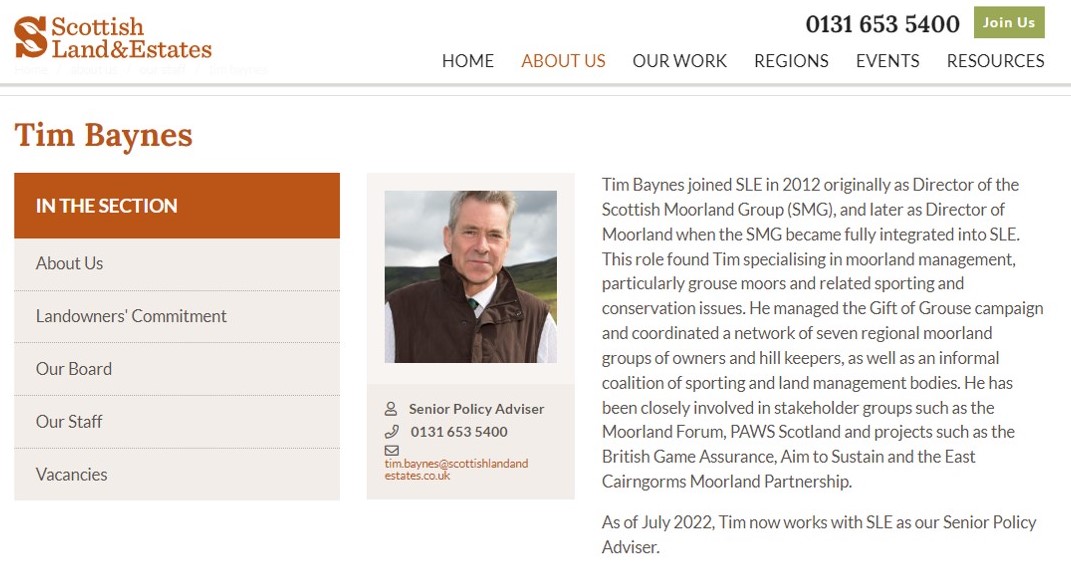
Perhaps Tim Baynes’ perpetual denial of the bleedin’ obvious explains why he is no longer employed as ‘Director of Moorland’ at Scottish Land & Estates:

Langholm community buy-out successfully doubles size of Tarras Valley Nature Reserve

Joint press release from the Langholm Initiative and Buccleuch (5th August 2022)

Community makes history as South Scotland’s biggest land buy-out gets over the line to double size of nature reserve

The South of Scotland’s largest community buyout is set to double in size having defied the odds and “achieved the impossible” for a second time in two years, following one of the most ambitious community fundraising campaigns ever seen. 

[Tarras Valley Nature Reserve being transformed from a knackered, privately-owned grouse moor. Photo by Ruth Tingay]

A historic agreement for 5,300 acres of land and three properties between The Langholm Initiative charity and Buccleuch will now go ahead, after the Dumfriesshire town of Langholm successfully reached its goal of £2.2m by the 31 July deadline. 

This will double the size of the Tarras Valley Nature Reserve, created last year after the buyout’s first stage raised £3.8m to purchase an initial 5,200 acres and six residential properties from Buccleuch. The reserve aims to help tackle the nature and climate crises, while boosting community regeneration.

Success for the buyout’s second stage was only confirmed as the deadline was reached. In the closing days, thousands of pounds continued to pour into the public crowdfunder. There were significant donations of £300,000 from Alex Gerko, Founder of algorithmic trading firm XTX Markets, £100,000 from Anne Reece of the Reece Foundation, and £50,000 from John Muir Trust. 

Jenny Barlow, Tarras Valley Nature Reserve’s Estate Manager, said: “We are so grateful to every single person who has backed this beacon of hope for people and planet – together we have achieved the impossible. It’s been a rollercoaster, but the generosity and unwavering support of so many wonderful donors and volunteers have got us over the line in the nick of time.

This is about a grassroots fightback against the climate emergency and biodiversity crisis, and helping to create a better future. We are doing something so special here, and our expanding reserve is an amazing opportunity for people to visit this part of the world and be inspired by the wonders of nature.

Benny Higgins, Executive Chairman of Buccleuch, said: “We are absolutely delighted for The Langholm Initiative and have been pleased to work with them and support their project every step of the way. This successful outcome is testament to what can be achieved by people working together constructively. 

When Buccleuch launched its community consultation on the proposed sale of 25,000 acres of land on Langholm Moor, we couldn’t know what the community’s aspirations would be. To see The Langholm Initiative grow the Tarras Valley Nature Reserve from the initial 5,200 acres to almost double that is fantastic, and we look forward to seeing the evolution of the project over the coming years.

On the reserve, globally important peatlands and ancient woods are to be restored, native woodlands expanded, and a haven ensured for wildlife including rare hen harriers. Community regeneration through a nature-based approach is a central aim, with six new jobs already created. Langholm was once a thriving textile centre, but the industry has declined in recent years.

[Thirteen hen harrier chicks fledged successfully on the moor this year. Two have been fitted with satellite tags by the RSPB thanks to a crowdfunding effort by the charity Hen Harrier Action]

In June, the Scottish Land Fund awarded The Langholm Initiative £1 million towards the buyout, while an anonymous private donor made a donation of £500,000 at the appeal’s launch last October.

Nearly 3,000 people have donated to the crowdfunder since it launched nine months ago, taking it past its £200,000 stretch target to reach over £242,000. Tens of thousands of pounds poured in during the final weeks alone.

Margaret Pool, Trustee of The Langholm Initiative, said: “The generosity of so many people locally, nationally and worldwide has been amazing. Our heartfelt thanks go to every donor, supporter and volunteer who helped us overcome what so often felt like impossible odds. We are also very grateful to Buccleuch for their ongoing positive engagement, which was absolutely crucial.

Every single pound donated to the crowdfunder counted. Each donation kept this impossible dream alive, while major donors could see from the outpouring of support that this was an inspiring, serious project of hope.

This is a historic result for our community now and for future generations. We also hope our story will inspire other community-led nature recovery projects across Scotland and beyond. We know that communities can be powerful forces for positive change.

Buccleuch has supported the community bid, agreeing with The Langholm Initiative a fixed purchase price in 2019 and extending purchase deadlines to give more time for fundraising. The purchase will be legally finalised between the community and Buccleuch over the coming months.

Leading charities that have backed the buyout include Borders Forest Trust, John Muir Trust, Rewilding Britain, RSPB Scotland, Scottish Wildlife Trust, Trees for Life, and the Woodland Trust.

The Langholm Initiative was formed in 1994 as one of south Scotland’s first development trusts. It facilitates projects making a lasting difference to the local area and people. See langholminitiative.org.uk.

ENDS

This is brilliant news! Huge congratulations to the community buy-out team for an impressive fundraising-drive to support their vision for this land.

I have to say it’s more than galling to see Buccleuch trying to take some credit in all of this given the feudal history of this land (e.g. see here and here).

Nevertheless, I’m delighted that so many people have shared and supported this effort by the local community and that the buy-out has been completed (all bar the final paperwork).

Good riddance to Langholm Moor, a privately-owned grouse moor managed for the benefit of the privileged few and hello to the Tarras Valley Nature Reserve, publicly-owned and managed for the benefit of all people and wildlife.

£1 million award ‘major game-changer’ for South Scotland’s biggest community buy-out at Langholm

Press release from the Langholm Initiative (9th June 2022):

£1 million award ‘major-game-changer’ for South Scotland’s biggest community buy-out

The Scottish Land Fund has awarded the Langholm Initiative charity £1 million in a “major game-changer” for South Scotland’s biggest ever community buyout.

The town of Langholm in Dumfries and Galloway aims to raise £2.2m by July to purchase 5,300 acres of Langholm Moor from Buccleuch, and so double the size of the new community-owned Tarras Valley Nature Reserve.

[Tarras Valley Nature Reserve. Photo by Ruth Tingay]

Success would allow the community to put into action ambitious plans for tackling the nature and climate emergencies while boosting community regeneration.

With the clock seriously ticking if we are to achieve this once-in-a-lifetime community purchase, this award from the Scottish Land Fund is a major game-changer. It has really turned the tide in our favour, and we are hugely grateful,” said Jenny Barlow, Tarras Valley Nature Reserve’s Estate Manager.

Thanks to other generous donations, including from thousands of people from all over the world to our public crowdfunder, we are now just £450,000 shy of reaching our overall target. We’re going to work tirelessly to make this happen.” 

A new stretch target of £200,000 for the buyout’s public crowdfunder has now been set, after donations recently surged past its initial target of raising £150,000 towards the purchase. The crowdfunder can be supported at bit.ly/LangholmMoorAppeal.

The ambitious scale of the buyout has meant that it has at times seemed at risk. Last month an agreement was reached between the community and Buccleuch to extend the purchase deadline by two months until 31 July, to allow more time to raise funds from major donors.

The Tarras Valley Nature Reserve was established last year, following the successful first stage of the community buyout. This saw the community defy the odds to raise £3.8 million to buy 5,200 acres and six residential properties from Buccleuchin March 2021.

On the reserve, globally important peatlands and ancient woods are being restored, native woodlands established, and a haven ensured for wildlife including hen harrier, short-eared owl and merlin.

[Short-eared owl photographed at Tarras Valley Nature Reserve by John Wright]

Community regeneration and creating new jobs through a nature-based approach is a central aim of the project. Langholm was once a thriving textile centre, but the industry has declined in recent years.

Leading charities backing the buyout include Borders Forest Trust, John Muir Trust, Rewilding Britain, RSPB Scotland, Scottish Wildlife Trust, Trees for Life, and the Woodland Trust.

ENDS

NatureScot refuses to publish details of Leadhills Estate’s general licence restriction appeal

This is a long and sorry saga, and it’s not yet over.

As many blog readers will know, the notorious Leadhills Estate, a grouse-shooting estate in South Lanarkshire that has been at the centre of police wildlife crime investigations at least 70 times since the early 2000s, is currently serving an unprecedented TWO General Licence restrictions imposed by NatureScot after ‘clear evidence’ of wildlife crime was provided to the statutory regulator by Police Scotland (see here and here), including the illegal killing of short-eared owls, buzzards, hen harriers and the discovery of two stashes of banned poisons.

Incredibly, Leadhills Estate with its double General Licence restriction is STILL a member of the lobby group Scottish Land & Estates, which claims to have a ‘zero tolerance’ approach to raptor persecution. Convincing, eh?

[Grouse moor on the Leadhills Estate. Photo by Ruth Tingay]

The first three-year General Licence restriction was imposed on Leadhills Estate in November 2019 (here). The estate appealed this decision, with an hilarious letter of objection (here), but its appeal failed.

The second General Licence restriction was imposed on Leadhills Estate in September 2021 (here) after Police Scotland reported even more wildlife crime while the estate was still serving its first restriction.

Once again, Leadhills Estate appealed the decision with a written objection letter.

It is this letter of objection that I have been trying to get from NatureScot since September 2021. Five months on, it is still being withheld, for what I have argued are spurious reasons.

Here’s a short summary of what’s happened so far:

On 30th September 2021 I submitted an FoI to NatureScot to request copies of Leadhills Estate’s appeal.

On 3 November 2021 NatureScot responded as follows:

We have withheld a letter from an agent acting on behalf of Leadhills Estate, pending an appeal against NatureScot’s decision to restrict General Licence. This information is of a sensitive nature and disclosure into the public domain could prejudice the applicant’s right to a fair hearing’.

I didn’t see how public disclosure could possibly prejudice a hearing given that it’s all done in-house at NatureScot but fine, I could wait.

In December 2021 it was announced that Leadhills Estate had lost its appeal against the second General Licence restriction (here) so I wrote back to NatureScot on 3rd December as follows:

You told me in the letter dated 3 November 2021 that you were withholding a letter from an agent who was acting on behalf of Leadhills Estate, and the reason you gave for withholding it was that releasing it may prejudice the applicant’s right to a fair appeal. As the appeal process has now concluded and therefore the applicant’s right to a fair hearing cannot be affected, please can you send me the agent’s letter that was previously withheld‘.

On 5th January 2022 NatureScot responded as follows:

We have completed our information searches, and we have identified eight documents comprising 126 pages relevant to your request. We shared a redacted version of these documents with the solicitors acting on behalf of Leadhills Estate, who have provided additional legal arguments as to why certain information should be withheld. We will need additional time to assess these arguments and, potentially, take further legal advice.

Regulation 7 of the EIRs allows public authorities to extend the time for compliance with requests for up to an additional 20 working days. This means we must respond to your information request by 3 February 2022 at the latest‘.

Hmm. Why might Leadhills Estate not want the details of its appeal to be made public? And what legal arguments might it use to block the transparency of the decision-making process of a statutory agency?

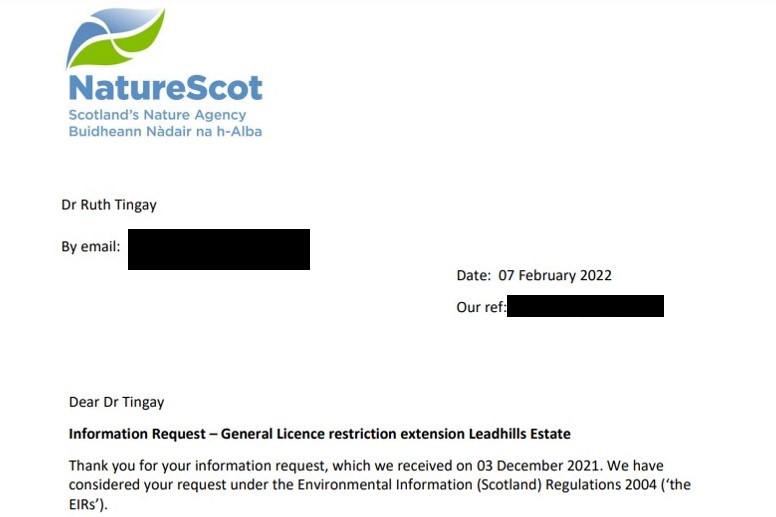
On 7th February 2022, NatureScot sent this explanation:

That’s all very interesting. Obviously, I’ve appealed this decision and asked for a review. I don’t believe there are further proceedings to ‘prejudice’ as Leadhills Estate has now exhausted the appeals process for the General Licence restriction. I also don’t believe that correspondence between an agent and a public authority qualifies as ‘legal privilege’ and especially when it’s in the public interest to understand how the statutory agency has reached its decision with transparency and fairness.

Let’s see. Another 20 working days to wait, which will take us to six months since I made the original request.