In December 2025, I blogged about a Hen Harrier that had been found poisoned on a grouse moor somewhere in North Yorkshire, 11 months earlier in January 2025.
There hadn’t been any media coverage of this illegal killing at all – no press releases or appeals for information from North Yorkshire Police, no comment from the National Wildlife Crime Unit’s Hen Harrier Taskforce, nothing from anyone.
I found out about the poisoning by scrutinising a Health & Safety Executive database, which had the following spreadsheet entry:
HSE Ref number 107/913. Confirmed poisoning, North Yorkshire, January 2025. Chemicals Bendiocarb, Carbofuran, Isophenphos, Alphachloralose. Notes: ‘A dead Hen Harrier was found on a grouse moor. Residues of Bendiocarb, Carbofuran, Isophenphos and Alphachloralose were found in the samples analysed, which is an abuse of these compounds. Case closed as passed to the Police‘.
Given the toxic combination of poisons, often referred to as the ‘Nidderdale Cocktail’ due to its frequency of use in the area, I mused that this Hen Harrier was likely to have been poisoned in Nidderdale, although it wasn’t conclusive evidence as in more recent years the Nidderdale Cocktail has also been detected in other parts of the country, perhaps indicating a gamekeeper moving from this region to work in another.
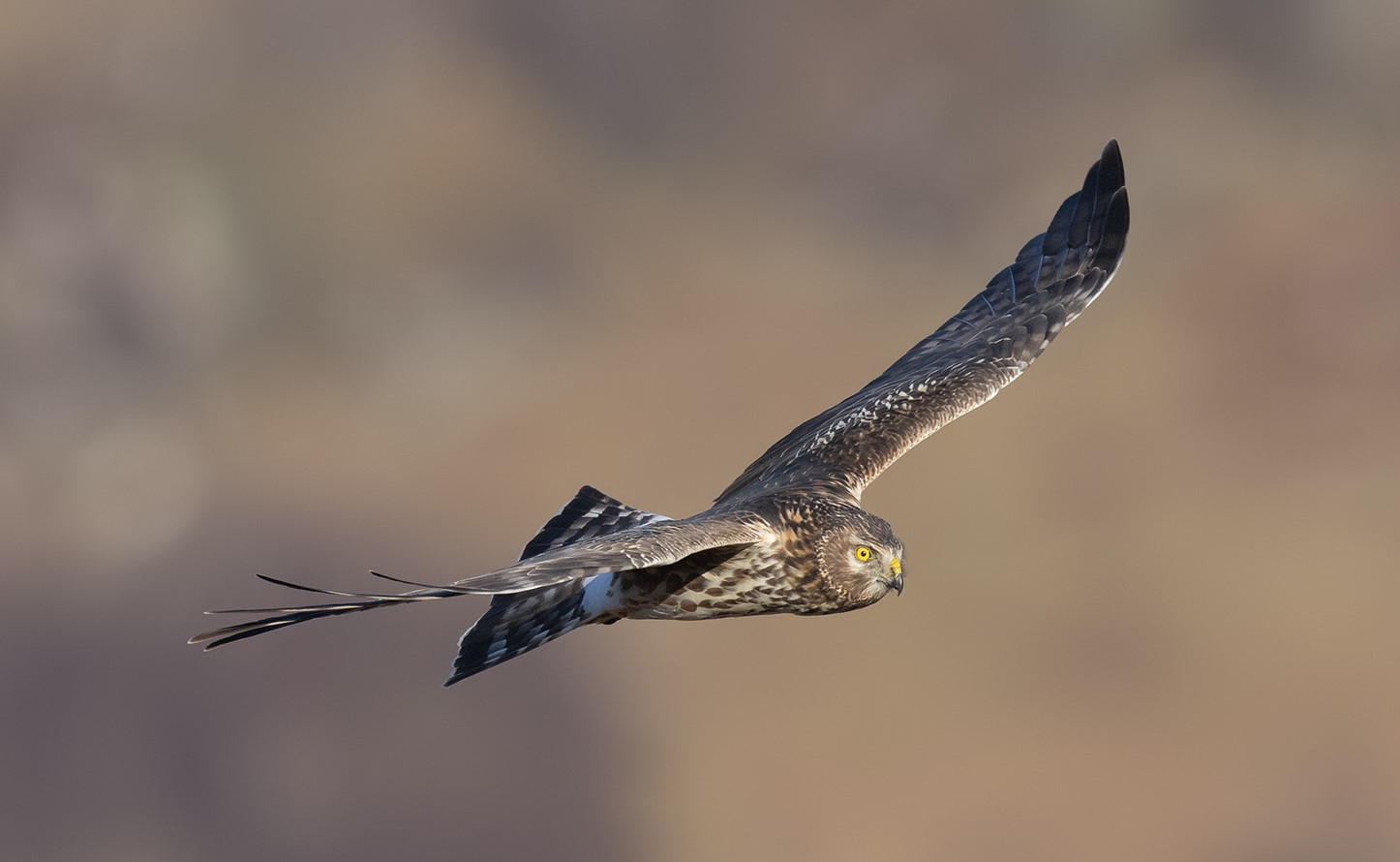
News then emerged in an RSPB press release in January 2026 that this Hen Harrier was a young female named Ataksak (named after an Inuit Goddess, the ‘ruler of the sky’) and she was carrying a satellite tag, fitted by the RSPB in Bowland in 2024.
It turned out that Ataksak was the Hen Harrier that gamekeeper Racster Dingwall and his accomplices had discussed shooting and killing as it came in to a roost site on Grassington Moor in the Yorkshire Dales National Park one evening in October 2024, but they then chose instead to “fleg it” (scare it off with warning shots) because they deduced it was wearing “a box” (a satellite tag) and killing it would draw unwanted attention from the authorities to their grouse moor.
The RSPB’s press release included details of the area where Ataksak had been found poisoned but still didn’t name a location:
‘The area where Ataksak’s body was found is recognised as a bird of prey persecution hotspot. In the last ten years 25 confirmed bird of prey persecution incidents have been recorded in this area, including Ataksak. These included four Hen Harriers, 13 Red Kites and five Buzzards. A satellite tagged Hen Harrier also disappeared in this area in 2024‘.
When I first wrote about this poisoned Hen Harrier in December 2025, I said I’d submitted a number of Freedom of Information requests about the Police investigation, some 11 months after she’d been found poisoned.
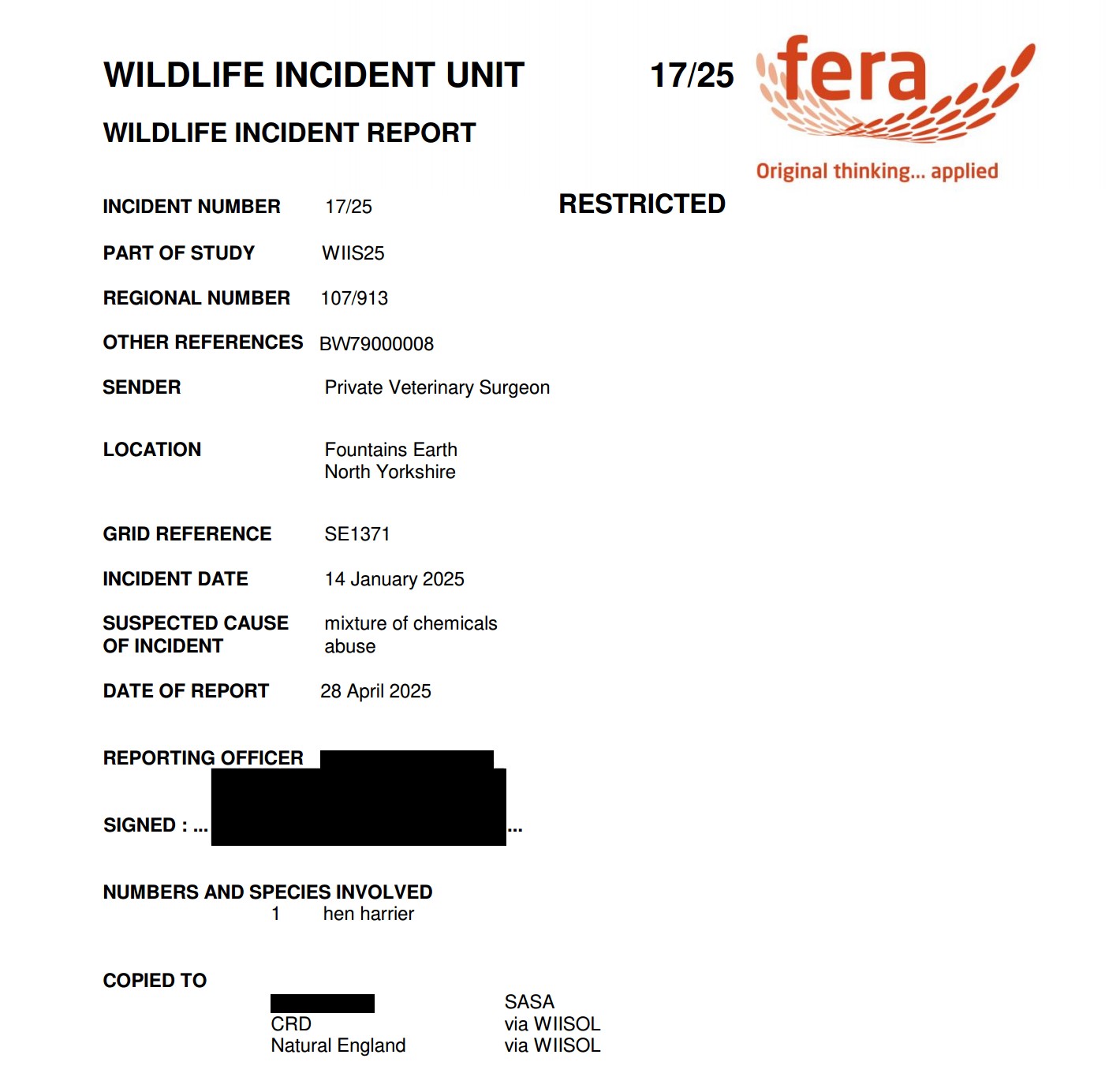
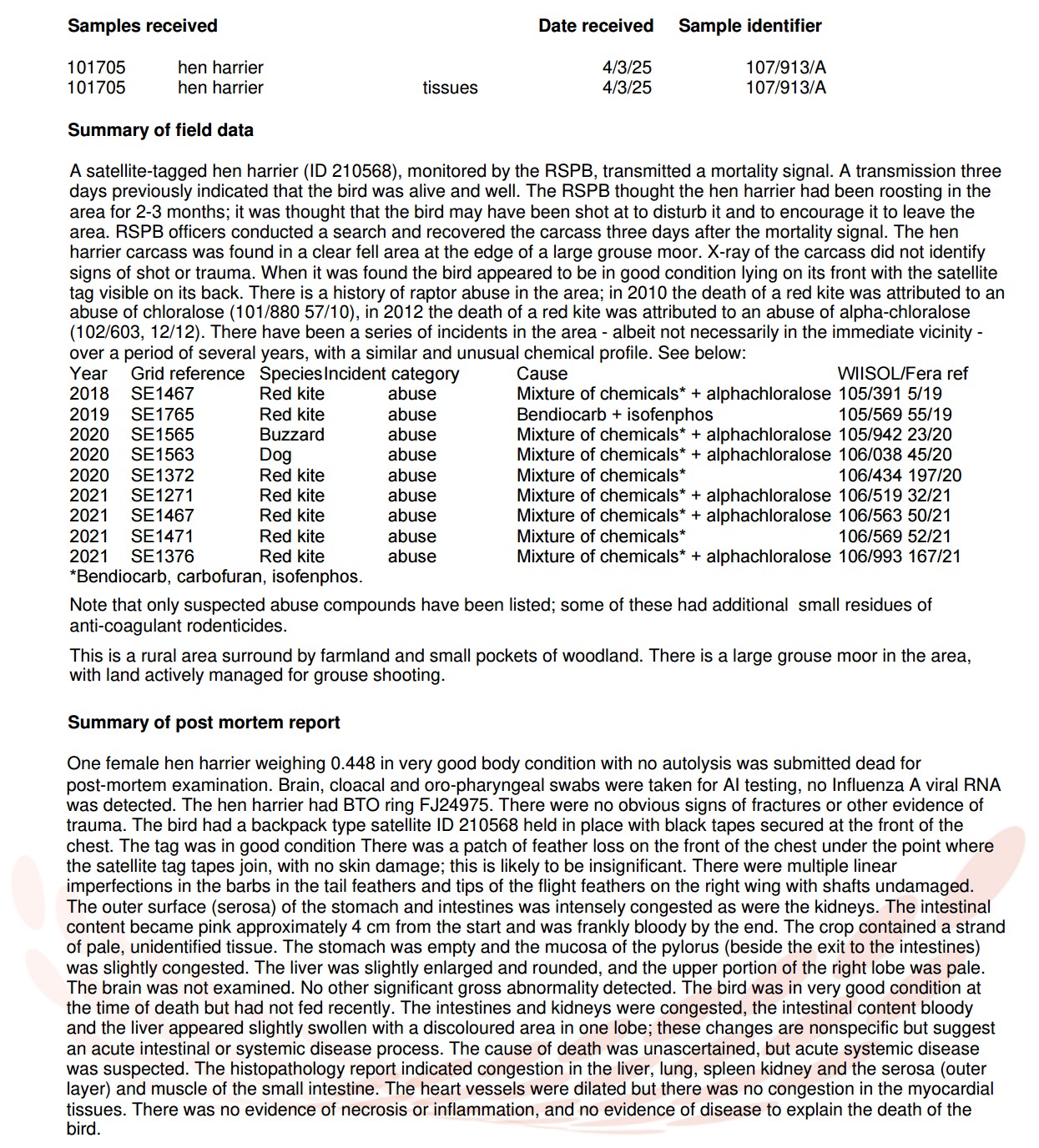
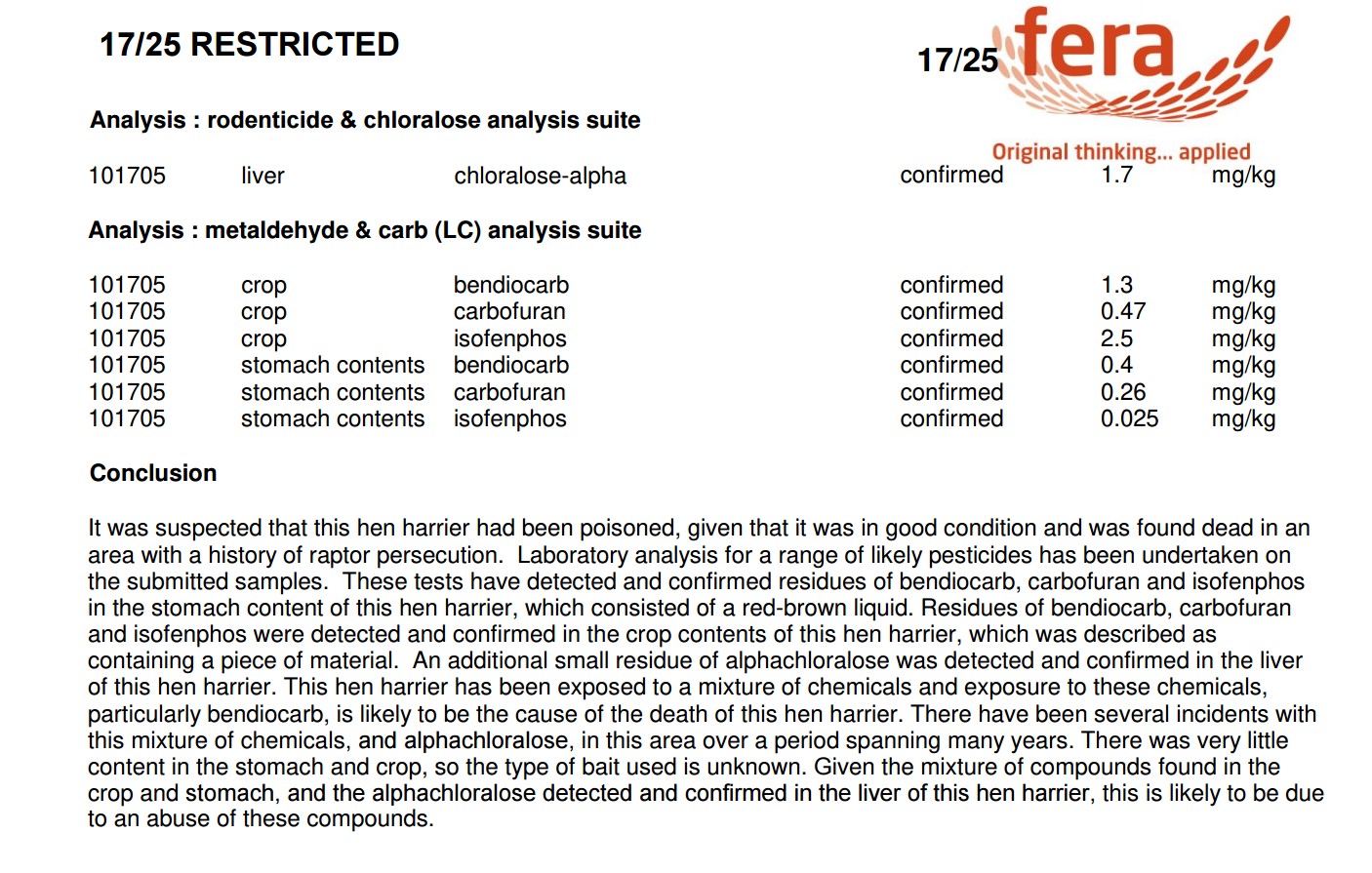
First, here’s a redacted post mortem report on Ataksak from FERA (Food and Environment Research Agency). It’s pretty conclusive:
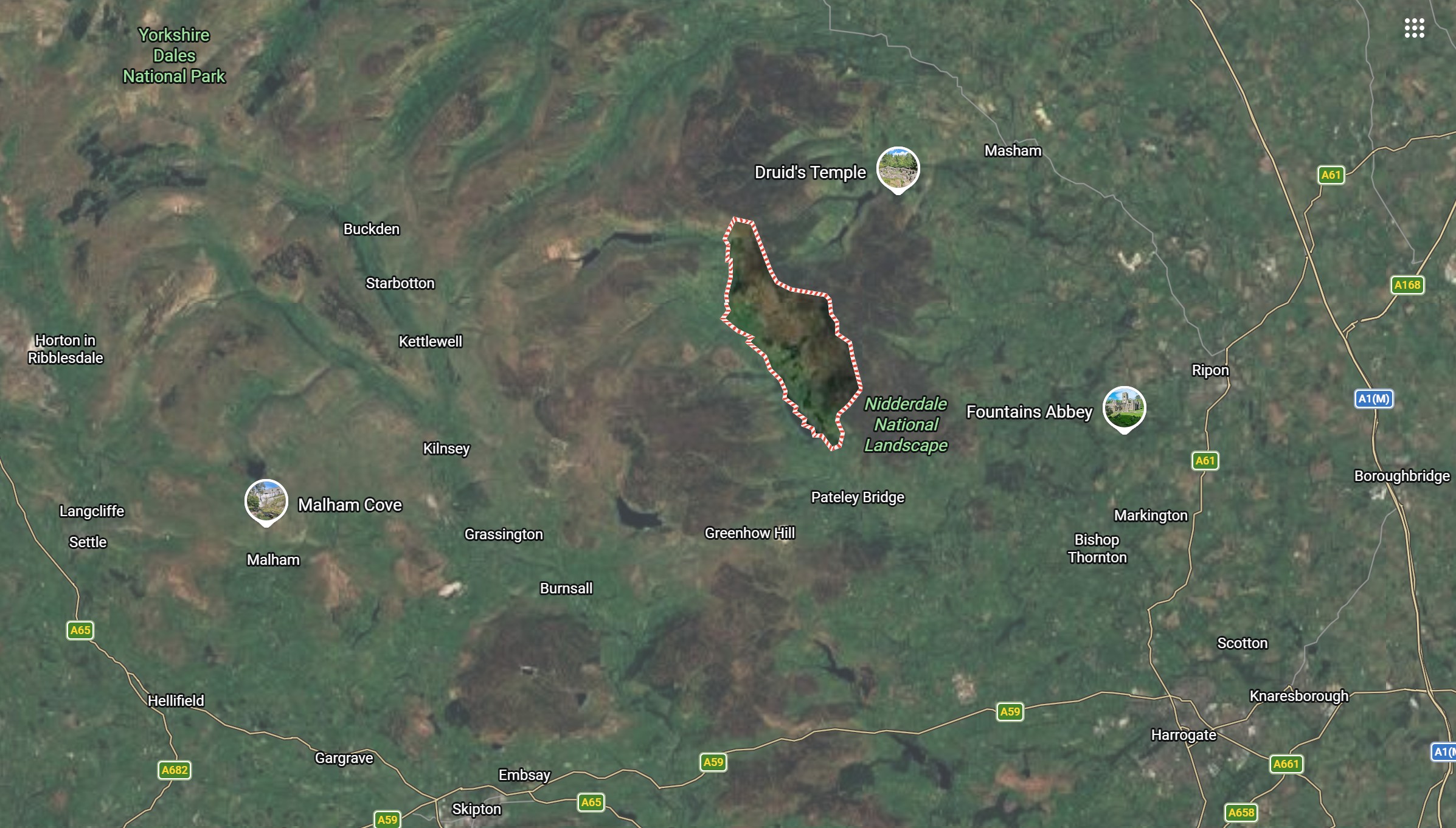
The PM report gives the location as ‘Fountains Earth’ in North Yorkshire, and a four-figure grid reference SE1371. This places Ataksak’s death in Nidderdale, a well known raptor-poisoning hot spot:
The parish of Fountains Earth, Nidderdale (google maps)
Given the high toxicity of the chemicals used to poison her, I’d think it quite likely that Ataksak was poisoned very close to the spot her corpse was found.
The PM report is dated 28 April 2025, some three months after Ataksak was poisoned.
So what progress had North Yorkshire Police made with its investigation in to this crime?
Well, apparently very little.
According to my sources, as of January 2026, a full year after Ataksak’s body had been found, and nine months after the conclusive post mortem report, North Yorkshire Police hadn’t even bothered to conduct a search, despite being encouraged to do so by the National Wildlife Crime Unit and Natural England.
And therein lies the problem. The responsibility for investigatory decision-making lies entirely with the local police force. Experienced officers from the National Wildlife Crime Unit (including specialists involved with the Hen Harrier Taskforce) and specialist poisoning experts from Natural England can only offer their assistance; if the local police force chooses not to accept those offers of help, for whatever reason, there’s nothing they can do about it.
How bonkers is that? Hen Harrier persecution is a national wildlife crime priority, there’s a national Taskforce that’s being funded (with tax payers’ money) to deal with it, but it doesn’t have the authority to investigate these crimes unless the local police force agrees to it.
This isn’t a problem in some areas, where local police forces are only too happy to accept specialist help and support, but it is definitely a problem in North Yorkshire (e.g. see here), and in several other counties in northern England where raptor persecution is known to take place, particularly on driven grouse moors.
I submitted Freedom of Information requests to the NWCU and to Natural England about the status of the investigation into the poisoning of Ataksak but surprise, surprise, both refused to release any information, stating the information has been withheld by exception, citing regulation 12(5)(b)(g) — Course of justice, inquiries & fair trial.
There is no ‘course of justice’ in this case, because North Yorkshire Police has been sitting on its hands for over a year. Rather than holding them to account, these agencies are simply providing them with cover.
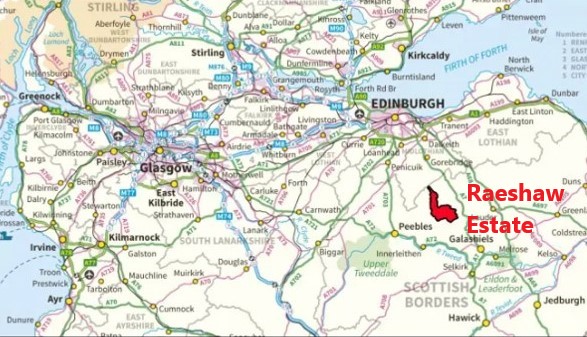
On 10 February 2026, NatureScot imposed a three-year General Licence restriction on Raeshaw Estate in the Scottish Borders (and on neighbouring Watherston Wood, which is understood to be under separate management to Raeshaw), in relation to the shooting/killing of Golden Eagle ‘Merrick’ in October 2023.
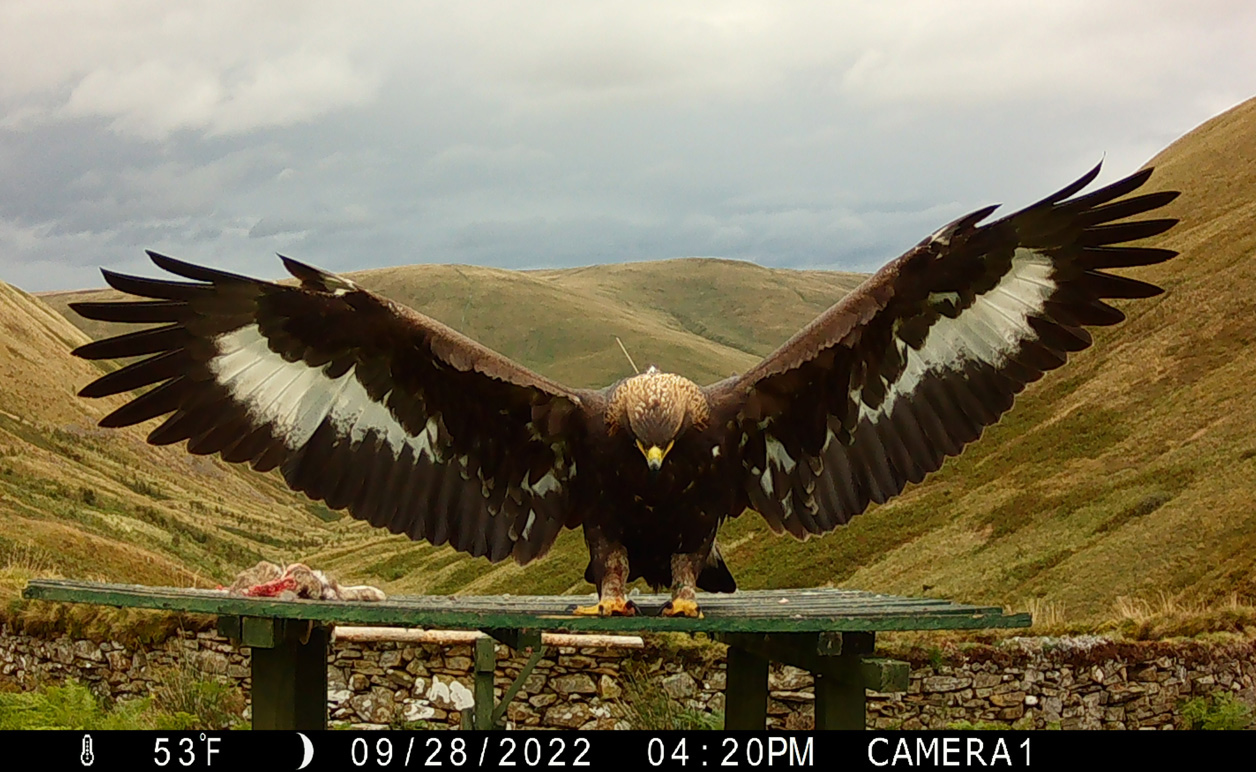
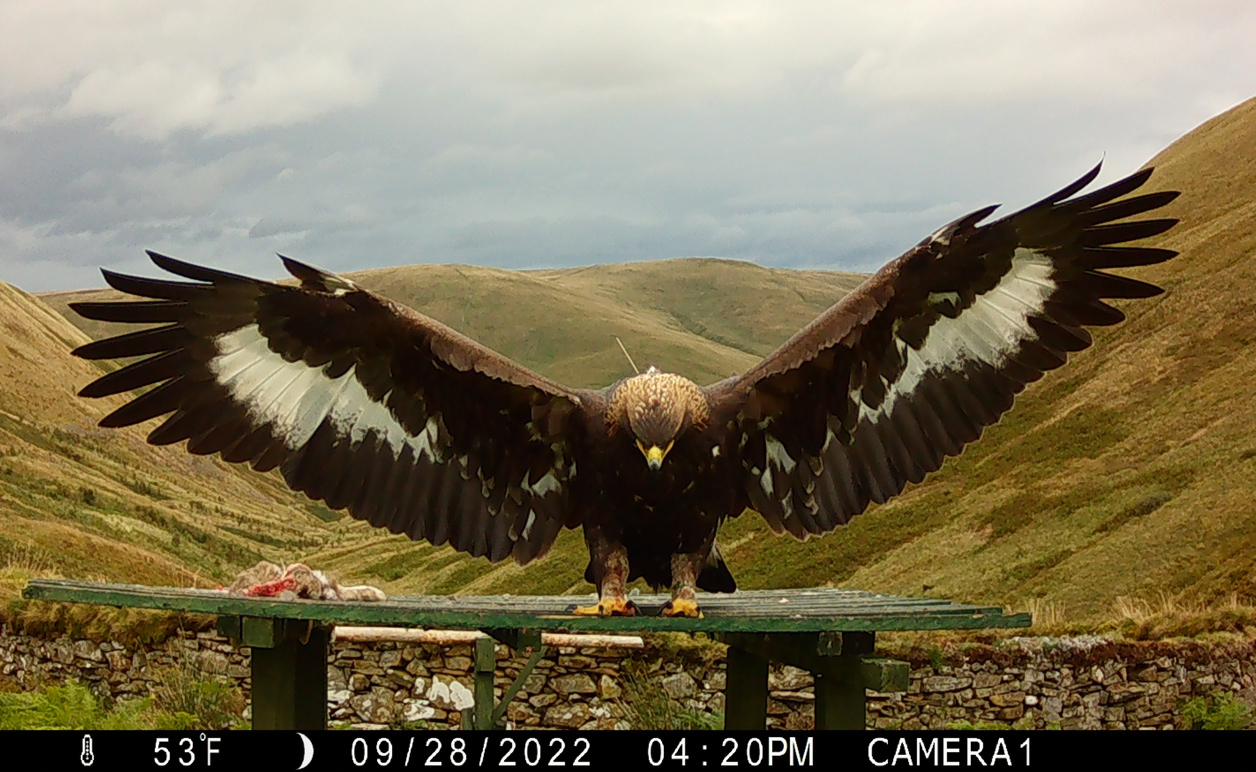
Camera trap photo of golden eagle Merrick, from South Scotland Golden Eagle Project
Following the announcement, a representative of Raeshaw Estate, believed to be under the management of a company owned by ‘grouse moor guru’ Mark Osborne, claimed the restriction was “wholly unjustified” and said the estate intended to appeal the decision (see here).
According to NatureScot’s Framework for implementing General Licence restrictions,
‘Where a decision is made to impose a restriction, the Affected Parties will be entitled to appeal the decision within 14 days of the date of the decision. An appeal must be made in writing to the Head of Licensing and must set out the grounds upon which it is proposed that the appeal be allowed.
‘An appeal shall have the effect of suspending the restriction from the date the appeal is received by the Head of Licensing until the date of the Decision on Appeal’.
As the restriction notification has now been removed from NatureScot’s website, I assume that Raeshaw Estate has lodged a written appeal and did so within the 14 day time limit.
This means that Raeshaw Estate can, until further notice, go back to using General Licences 1, 2 & 3 to lawfully kill hundreds if not thousands of certain bird species (e.g. crows) on the estate without having to report its activities to anybody.
NatureScot’s Framework states that the Head of Licensing will seek to make a decision on the appeal within four weeks. Let’s hope it doesn’t drag on any longer than that.
It is also apparent that the representatives of Watherston Wood have also lodged an appeal, although as far as I’m aware, the killing of so-called ‘pest’ bird species doesn’t take place in the wood anyway so perhaps the appeal has been made as a matter of principle rather than an attempt to reinstate the use of General Licences 1, 2 and 3.
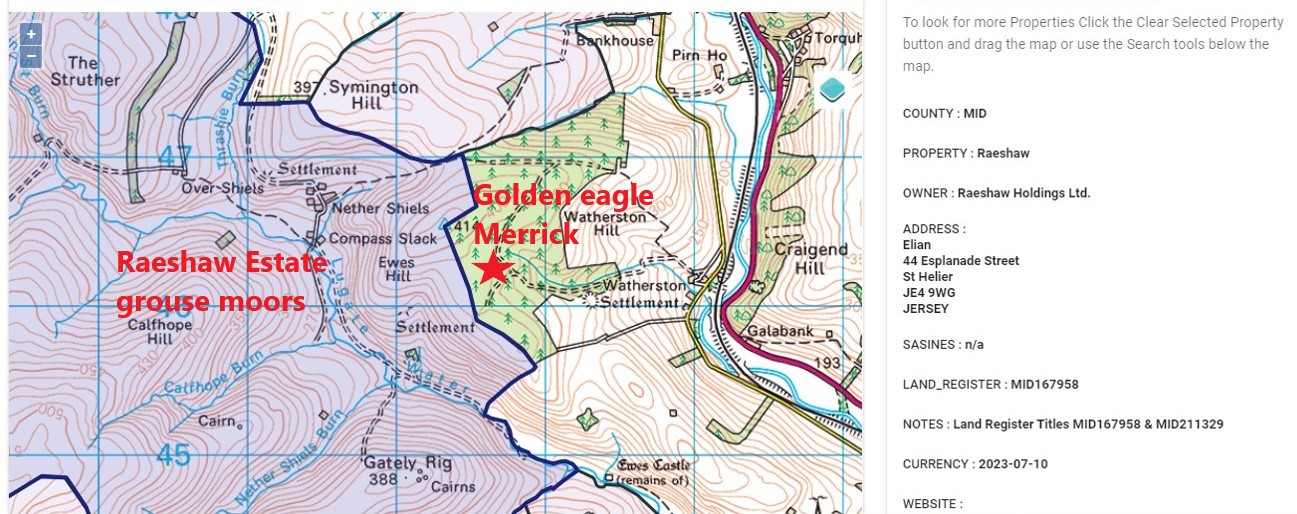
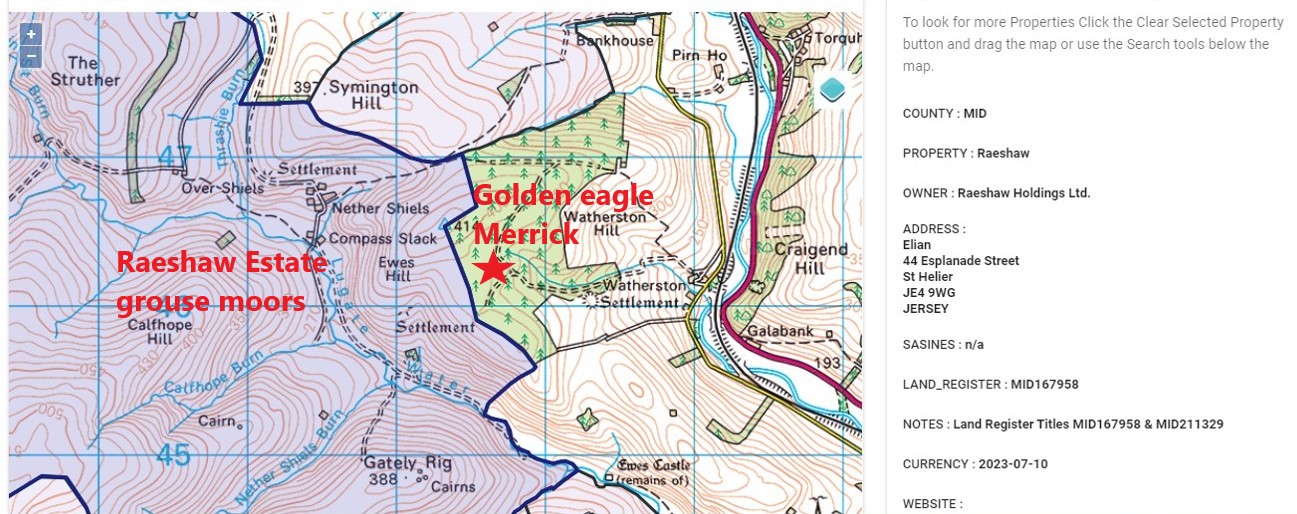
Screen grab from Who Owns Scotland website, annotated by RPUK, showing the proximity of Merrick’s last known location and the Raeshaw Estate (shaded in blue)
General Licence restrictions, which are based on a civil burden of proof if there is insufficient evidence for a criminal prosecution, were introduced by then Environment Minister Paul Wheelhouse in 2014 as a way of tackling the continuing persecution of birds of prey on gamebird shooting estates across Scotland.
These restrictions don’t stop the sanctioned estates from shooting gamebirds, nor do they limit their gamebird management activities other than requiring the estate to complete a bit of paperwork, but they were specifically designed to act as a ‘reputational driver’. I think it’s fair to say that Wheelhouse’s intentions were good but ultimately have proved ineffective.
This is an unprecedented second General Licence restriction imposed on Raeshaw Estate.
Raeshaw Estate was one of the first estates to receive a General Licence restriction in 2015, based on ‘clear police evidence’ that wildlife crimes had been committed there although there was insufficient evidence to prosecute any individual (see here). Representatives of Raeshaw Estate applied for a judicial review of NatureScot’s decision but the Court of Session upheld NatureScot’s procedures and ruled them lawful (here).
Whilst under that first General Licence restriction, Raeshaw Estate applied for, and was granted, a number of ‘individual licences’ so the gamekeepers could continue to kill certain species as part of the estate’s grouse moor management plan (quite a lot of birds were lawfully killed – see here).
However, in 2017 the individual licence was revoked by NatureScot due to non-compliance issues and more suspected wildlife crime offences (see here).
I await NatureScot’s decision on Raeshaw Estate’s latest appeal with interest.
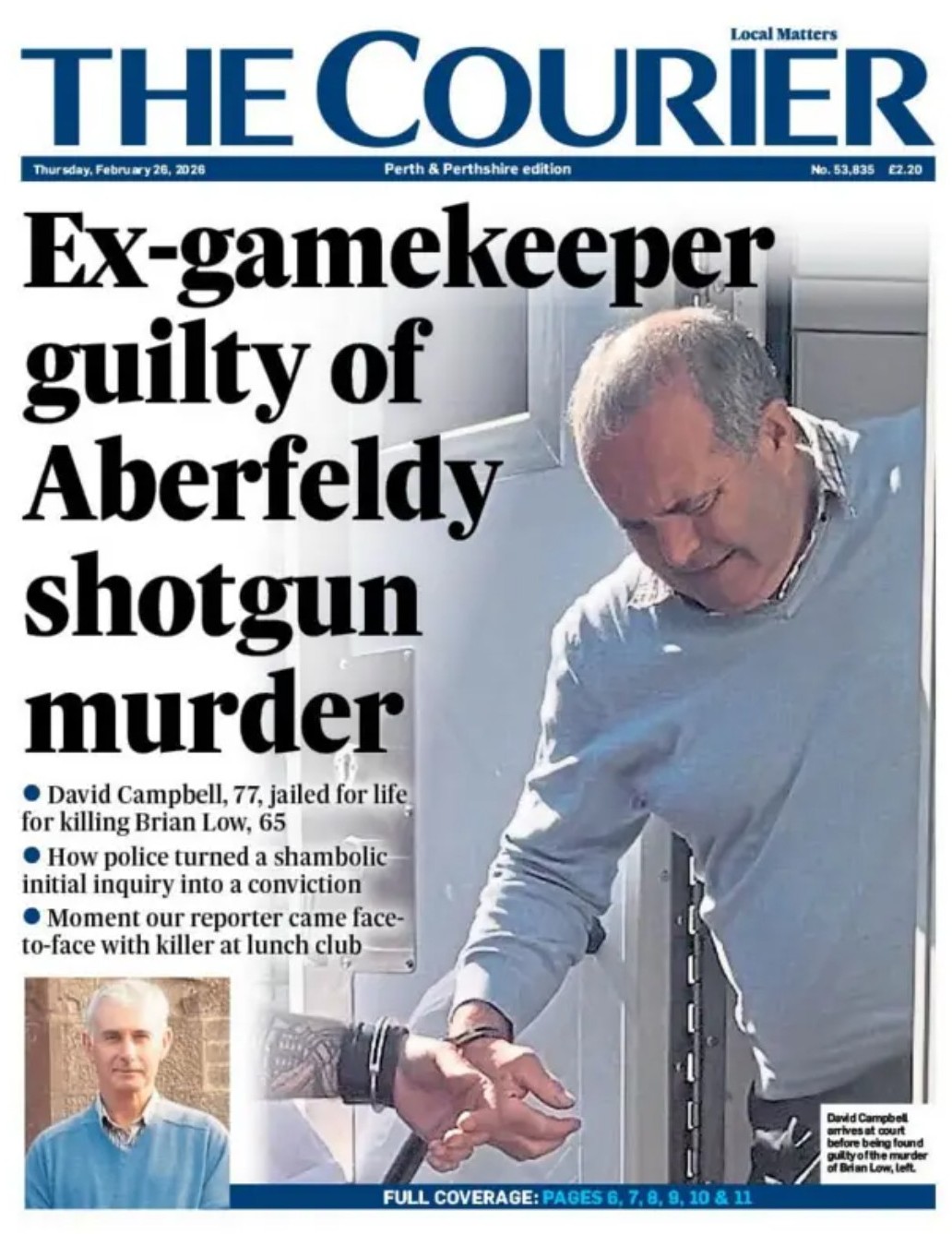
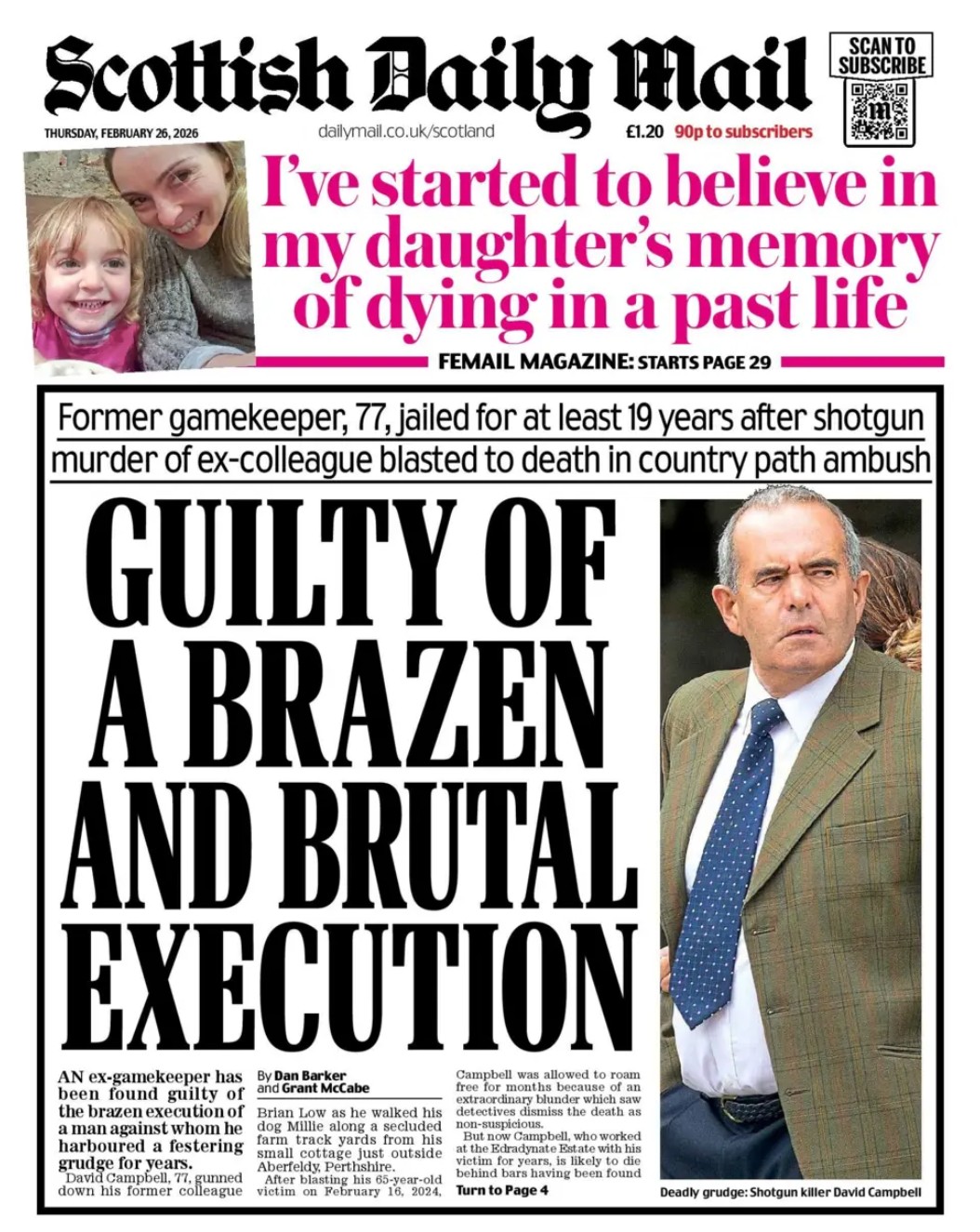
Two days ago, a jury at the High Court in Glasgow returned a guilty verdict in the trial of former Head Gamekeeper David Campbell, 77, who had been accused of murdering his ex-colleague from Edradynate Estate, Brian Low, after ambushing him and shooting him in the chest and neck with a shotgun on a remote woodland track near Aberfeldy on 16 February 2024.
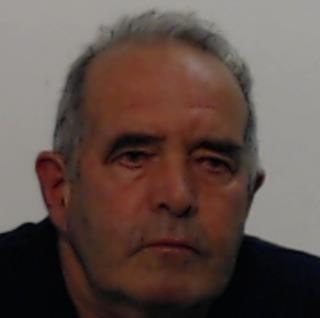
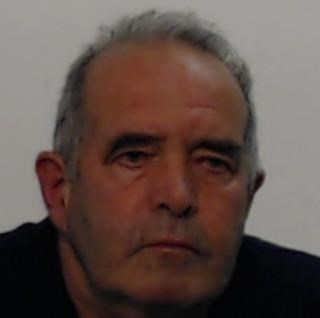
Former Head Gamekeeper and now convicted murderer David Campbell. (Photo by Police Scotland)
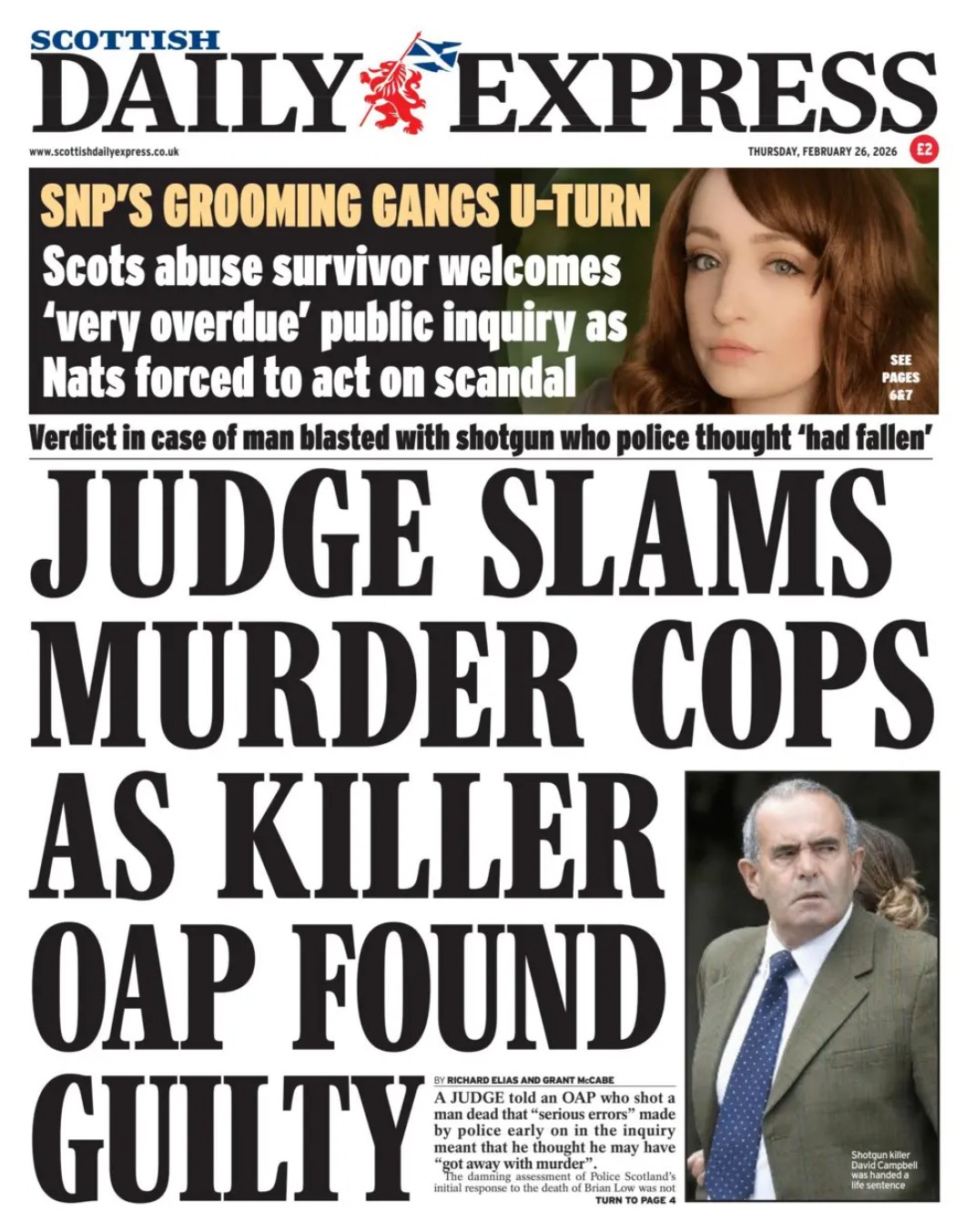
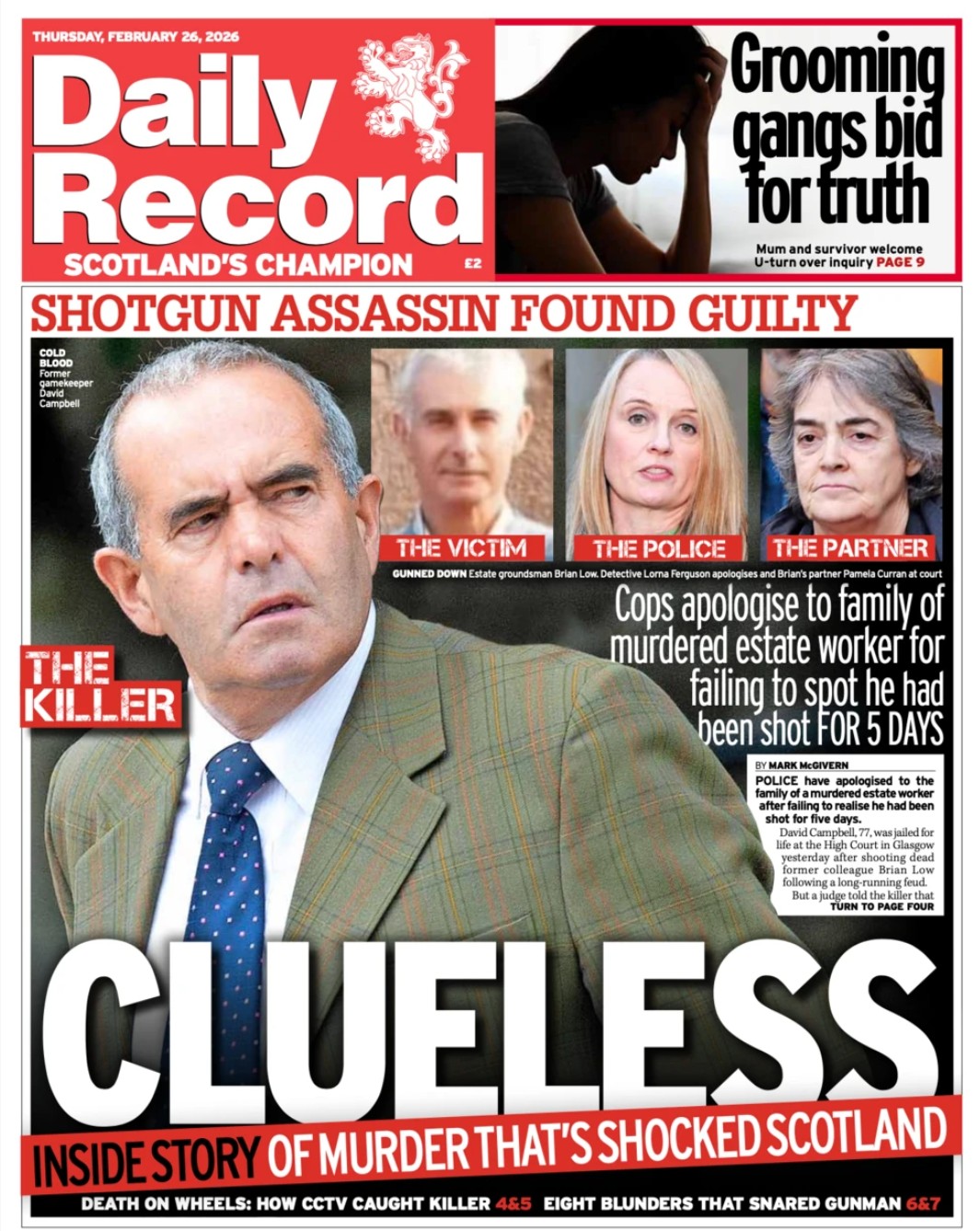
The circumstances of this horrific murder were shocking and understandably Campbell’s conviction made the headlines in widespread news coverage yesterday. For example:
But for many living in the rural area around Edradynate Estate, near Aberfeldy, Perthshire, and those who have been investigating wildlife crime on Edradynate Estate for decades, Campbell’s conviction came as no surprise whatsoever.
During his 33-years of employment as Head Gamekeeper on Edradynate Estate (1984-2017), Campbell was at the centre of at least 22 police investigations into the alleged poisoning, shooting and trapping of birds of prey, as well as firearms offences. I say alleged – what I mean is that there is no question whatsoever that raptors were illegally killed on that estate, over a period of three decades, but nobody was ever convicted for any of it and David Campbell had always denied any involvement.
Here’s a blog I wrote in 2017, after the Crown Office had dropped another prosecution against an Edradynate Estate gamekeeper relating to the alleged poisoning of Buzzards in 2015, despite a plea from Police Scotland to pursue a prosecution:
Edradynate Estate has been at the centre of investigations for alleged wildlife crime for a very, very long time. In 2002, the estate’s Head gamekeeper and underkeeper were arrested and charged with nine offences relating to the use of poisoned baits and also bird cruelty, including the use of spring traps. However, on 22 July 2004, two years after the original arrests and 13 court hearings later, the Crown Office dropped the case (sound familiar?). A COPFS spokeswoman later admitted that the time taken to prepare the case had been a major factor in the decision to scrap it (see here).
In July 2010, a poisoned red kite was discovered. An un-named gamekeeper from the estate (who said he was a member of the Scottish Gamekeepers’ Association) claimed the bird had been ‘planted’. It also emerged that in addition to the poisoned red kite, over the previous 15 years, 9 buzzards, 2 sparrowhawks, 2 crows, 1 gull, 1 tawny owl, 1 pole cat, and 1 domestic cat, had all been found poisoned in the area. Twelve poisoned baits (Carbofuran, Mevinphos and Alphachloralose) had also been discovered (see here). Nobody was prosecuted for any of this.
In March 2011, two poisoned buzzards, two poisoned crows, and two Carbofuran-laced pheasant baits were discovered. A gamekeeper was taken for questioning but he was later released without charge (here).
In February 2012 an Edradynate Estate gamekeeper was charged with a number of alleged firearms and explosives offences (see here). However, in September 2012 the Crown deserted the case without providing an explanation (see here). Gosh, this is becoming quite a habit, isn’t it?
Writing about the Crown Office’s decision in 2017 to drop the case against Campbell for the alleged poisoning of Buzzards on Edradynate in 2015, former Police Wildlife Crime Officer Alan Stewart wrote on his blog,
‘This has been the fourth case in relation to the poisoning of raptors submitted to the fiscal against the same accused. I submitted the first Edradynate case in 1994 but it was always going to be short of evidence of identification. The fiscal sat on it in case anything further was discovered that would help the case but had to drop it at the end of the time bar, which at that time was 6 months‘
and
‘I was involved in a further search, which I think was in the month of March. Two or three dead (poisoned) buzzards were found and there were a couple of pheasant baits recovered as well. No pesticides were found but we took samples from the accused’s vehicle and from various items of his clothing. Traces of pesticide were found in the vehicle and on several items of clothing, including from an item he was wearing when he was detained. It was a reasonable circumstantial case, which I thought would be clinched with the pesticide traces on the clothing worn by the accused. I suspect that identification, which is always crucial, was again considered to be the stumbling block. This case was eventually dropped as well‘
and
‘Between 1993 and 2011 I am aware of 14 poisoned baits involving the banned pesticides carbofuran, mevinphos and alpha-chloralose being found on Edradynate estate. There have also been 31 poisoned victims including 17 buzzards, 4 carrion crows, 2 sparrowhawks, 2 tawny owls, a domestic cat, a common gull, a red kite and a polecat found either on the estate or very close to its boundary. I doubt if anyone would disagree that this number of baits and victims were the very tip of the iceberg. I doubt also if anyone would think that someone was ‘coming in off the street’ and dumping all these dead creatures on the estate to cause trouble‘.
In 2018, Police Scotland issued an appeal for information after three dogs and two Buzzards were ‘deliberately poisoned’ between October 2017 and April 2018 around the Edradynate and Pitnacree Estates area (see here). Campbell was no longer working on the estate by this time (see discussion below) and there was local speculation that someone was trying to set up the new Head Gamekeeper but as far as I’m aware, nobody was prosecuted. I’m not aware of any further raptor persecution incidents at Edradynate since the new gamekeeping team was employed.
Alongside the reports of rampant raptor persecution at Edradynate over many, many years, there were stories relating to Campbell’s alleged threatening behaviour towards locals. The court heard some of that testimony during Campbell’s murder trial, although those charges were dropped on the last day of his trial. Further evidence of Campbell’s alleged behaviour was reported by Alan Stewart in one of his books – see here, and this is really worth a read.
It is apparent that many locals were terrified of Campbell, too scared to speak out for fear of retaliation of what he might do to them, or their beloved pets. One individual I’ve spoken to, who wishes to remain anonymous, tells a story of dogs being poisoned and shot and a claim about how Campbell was allegedly seen drowning a dog in a peat hag after it didn’t do as it was told.
Some speak of Campbell’s alleged ‘reign of terror’ in this small rural community and if their testimonies are true, it paints a picture of violence being normalised and being beyond the reach of the law.
The only time Edradynate Estate was held to account was when SNH (now NatureScot) imposed a three-year General Licence restriction in 2017 (see here), assumed to be in relation to the alleged poisoning of Buzzards in 2015 – the case that the Crown Office refused to prosecute.
One of the poisoned Buzzards found in 2015 (photo RPUK)
Despite the widely publicised and appalling catalogue of wildlife crime on Edradynate Estate, reported over several decades, the game shooting industry apparently turned a blind eye.
The Scottish Gamekeepers Association accepted at least two donations from the estate owner, Michael Campbell (no relation to gamekeeper David Campbell and recently deceased); one in 2014 and one in 2015. Surely the SGA was aware of the long history of allegations made about this estate? Perhaps they didn’t care. As there hadn’t been a single conviction they could conveniently ignore the allegations and continue to accept the donations and continue to sit around the table at so-called ‘partnership’ meetings claiming to be doing all they could to eradicate raptor persecution.
Edradynate Estate was featured in the Fieldsports magazine in 2014, where one of the named guns was Robbie Douglas-Miller – surely not this one?
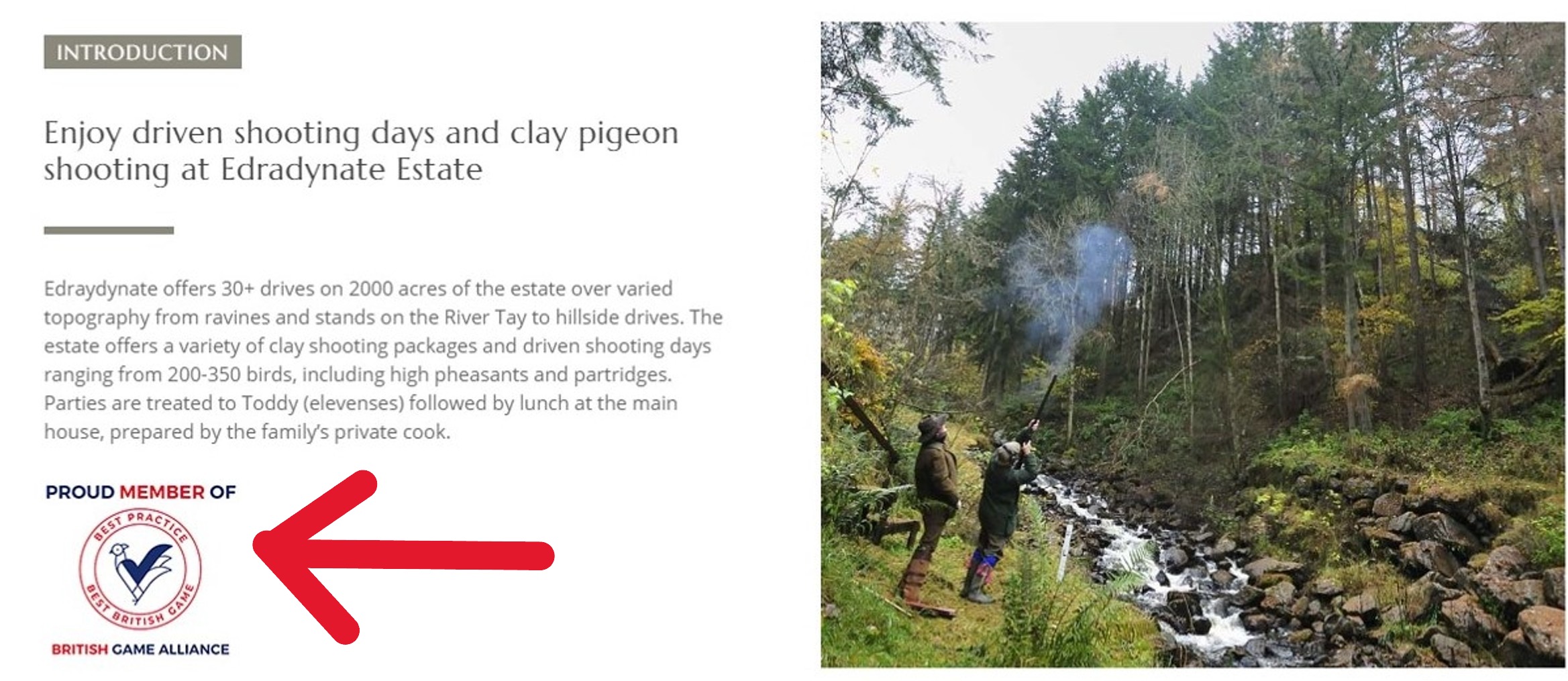
In 2020 Edradynate Estate was endorsed by the British Game Alliance, the game shooting industry’s own ‘assurance’ scheme (at the time), membership of which is supposed to indicate ‘rigorous and ethical standards’.
Screen grab from Edradynate Estate website 2020
And in 2023, the Game & Wildlife Conservation Trust (GWCT) accepted an auction donation from Edradynate Estate owner Michael Campbell with an estimated value of £2,500.
By February 2017, David Campbell’s employment as Head Gamekeeper at Edradynate Estate had ended, reportedly after his relationship with owner Michael Campbell had deteriorated and he was ‘removed from his job‘. Later that year David Campbell was charged with maliciously poisoning game cover crops on the estate as an ‘act of revenge’, a charge he denied, and of which he was ultimately cleared after the court ruled the case against him had not been proven beyond reasonable doubt (here).
In the sentencing remarks after gamekeeper Campbell’s recent conviction for murder, Judge Lord Scott said this:
“You have no previous convictions. This appalling and senseless act of extreme wickedness casts a shadow over what seems to have been a long life spent by you in gainful employment and some benefit to the community“.
I do wonder on what background information Lord Scott based this statement. Whilst it’s true that Campbell had no previous convictions, it is indisputable that he was a suspect in multiple crime investigations spanning several decades, and that many in the local community lived in fear of him. And at some point his firearms and shotgun licences had been revoked, presumably on evidence that his suitability was questioned and/or he was considered a risk to public safety.
I understand that following Campbell’s murder conviction, Alan Stewart is preparing a new book. I also understand that a TV production company was granted permission to film during the trial inside Glasgow’s High Court for a documentary about this case.
According to an exclusive article in The Courier yesterday, David Campbell is expected to mount an appeal against his murder conviction and it is anticipated that he will lodge formal paperwork with the Court of Appeal in the coming days.
Stepping away from the tragic murder of Brian Low, there are wider, more general implications to consider.
It is extensively evidenced that there’s a strong link between violence towards animals and violence towards humans. I think ‘violence towards animals’ in this context often refers to issues of illegal animal cruelty (e.g. Badger baiting, putting pets inside microwaves etc) but personally I would also define the routine duties of a gamekeeper as qualifying as ‘violence towards animals’, even though much of this activity is still considered legal in the UK.
I fully accept that some people will disagree with this opinion, and may argue that those who have been granted firearms/shotgun licences, as most (all?) gamekeepers have, are subject to rigorous police checks of their character and suitability. However, you’ve only got to look at the number of wildlife crimes that include the use of a firearm/shotgun, let alone the murder of innocent people by firearm certificate holders, to know that the system isn’t fit for purpose.
I recently read an analysis produced by the National Wildlife Crime Unit (NWCU) about polycriminality in wildlife crime offenders in the UK, which suggested that a significant proportion (59% of offenders) are also linked to violent offending against humans, ranging from low level common assaults to attempted murder, murder and kidnap. (Unfortunately I don’t think this report is available in the public domain).
Wildlife & Countryside LINK is using this analysis to push for a series of recommendations for the government to improve policing resources for tackling wildlife crime, which in turn should increase public safety as well as the safety of wildlife and the environment.
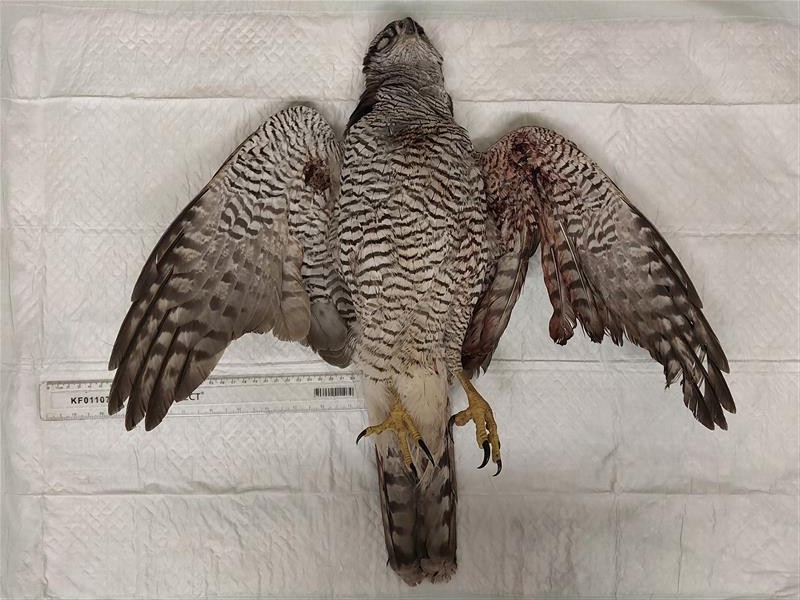
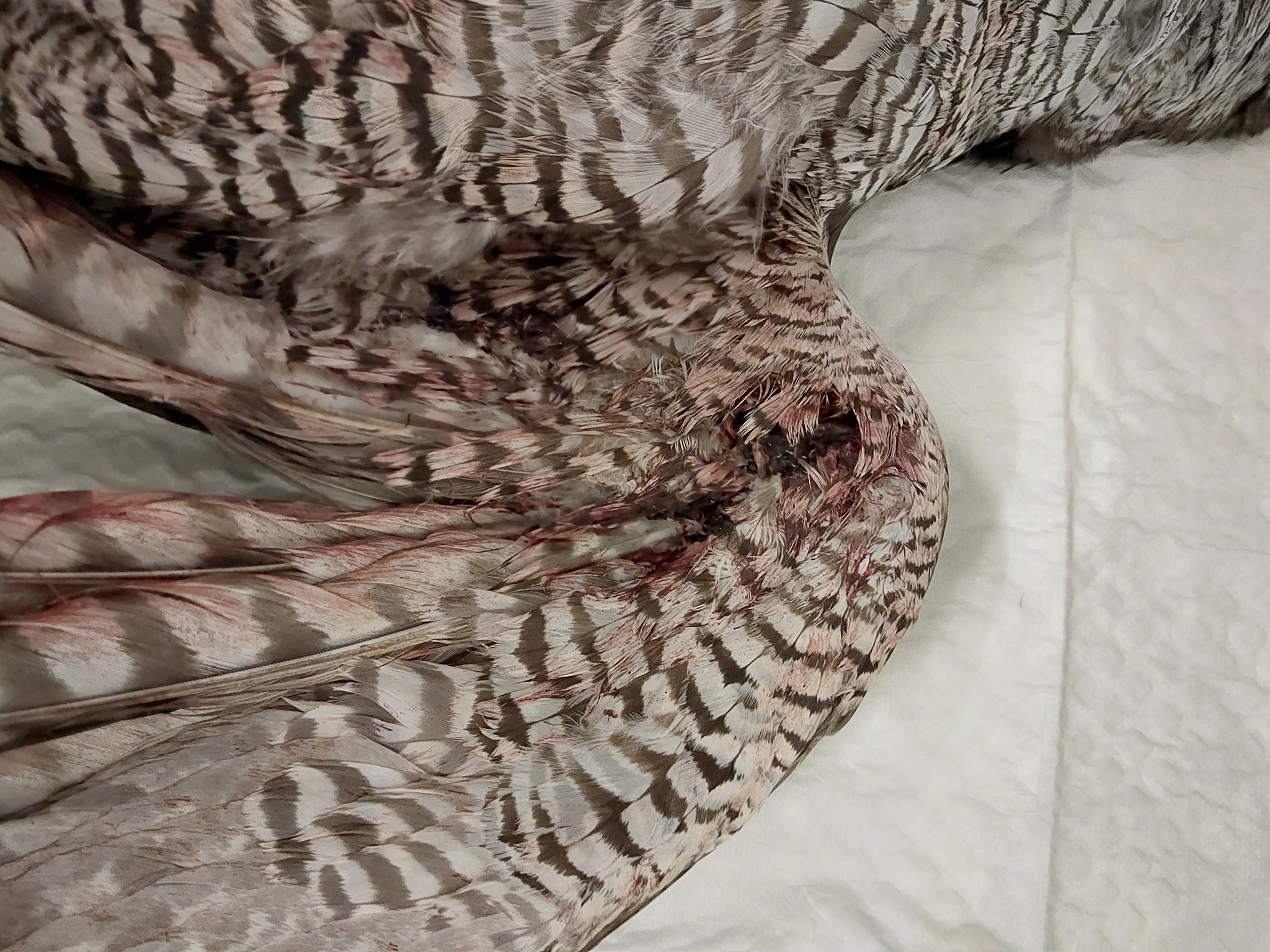
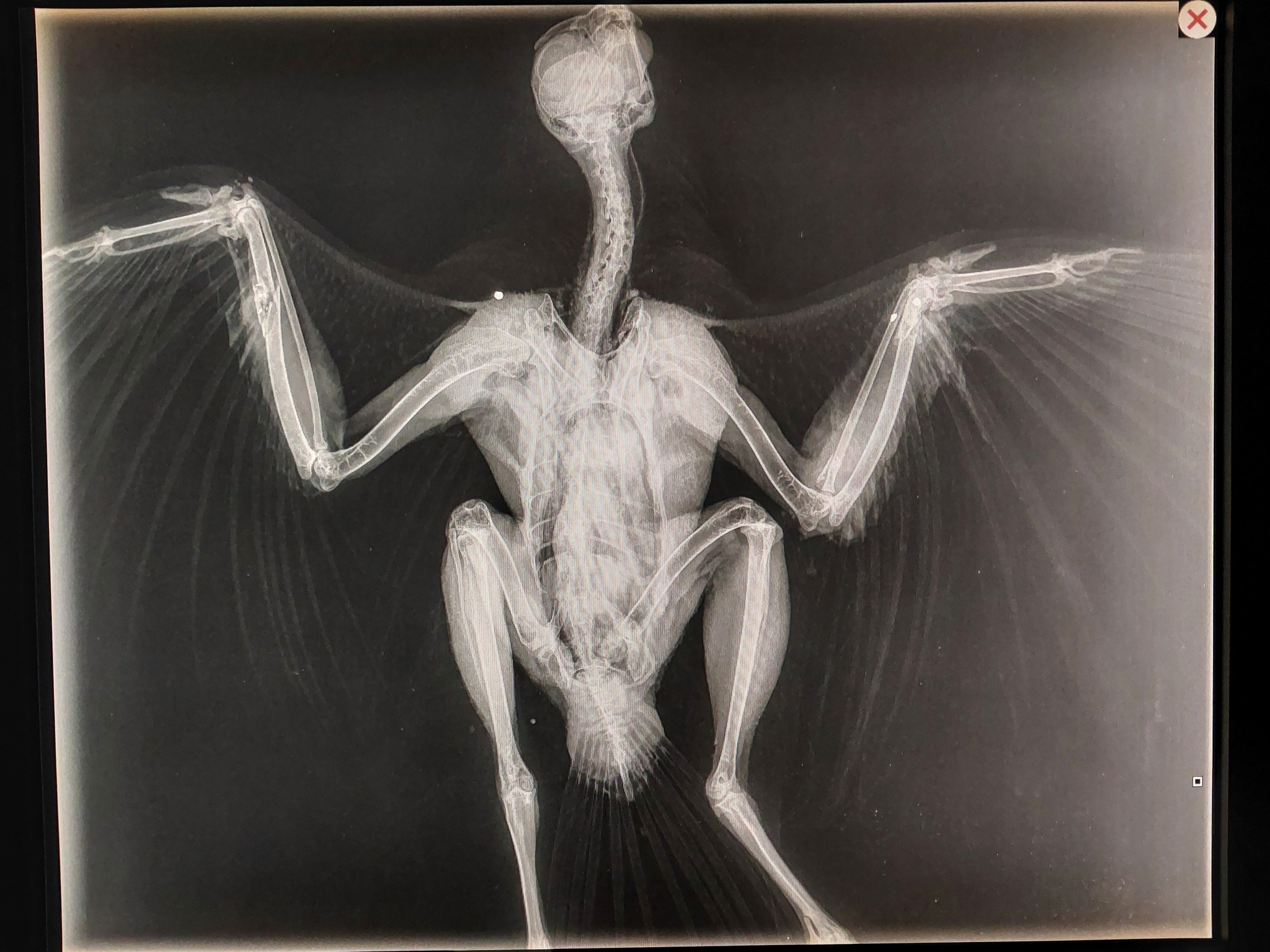
Derbyshire Police’s Rural Crime Team has issued an appeal for information after the discovery of a critically-injured Goshawk, which had to be euthanised due to the extent of its injuries.
The injured Goshawk was found by a member of the public near Stanton Hall, Stanton by Dale, in south east Derbyshire on Saturday 31 January 2026. A veterinary examination and x-ray revealed the bird had been shot with a shotgun and sustained a right wing fracture, a left wing fracture and a suspected left ulna fracture near the elbow.
Given these injuries, it is likely the Goshawk wasn’t capable of long distance flight from the location where it was shot.
Photographs via Derbyshire Police Rural Crime Team:
The Police are asking the public whether they saw anyone with a gun in the area, whether gunshots were heard, and whether anyone saw any suspicious behaviour.
Anyone with information is asked to call the police on 101 and quote incident number 26*68719.
Further to yesterday’s news that David Campbell, 77, the former Head Gamekeeper of Edradynate Estate in Perthshire was convicted of the shotgun murder of his former estate colleague, Brian Low, two years ago, the judge’s sentencing remarks have been published and Police Scotland has issued a statement.
Retired Head Gamekeeper and now convicted murderer David Campbell (photo by Police Scotland)
Lord Scott’s sentencing remarks:
“You have been found guilty of the murder of James Brian Low, known as Brian Low, on a quiet country lane near Aberfeldy on 16 February 2024, just over 2 years ago. You did not encounter Brian Low by chance that day, and you did not just happen to have a shotgun with you. On the evidence, the jury decided that it was proved beyond reasonable doubt that, in a carefully premeditated act, you murdered an unarmed and defenceless man by discharging a shotgun at him, causing such severe injuries that he died where he fell. You did this having earlier disabled CCTV cameras in your home in an attempt to conceal your whereabouts that day.
There was no provocation for what you did. You murdered a man who offered no threat to you. You did this having told people over several years how much you hated him or loathed him or blamed him for the change in your fortunes which followed police attention to the estate where you were head gamekeeper for over 30 years. After some time, and things you blamed him for, you left the estate although you felt that you were sacked. The bitterness and grudge you bore towards Brian Low, reflected in some of the things you said about him, did not diminish over time. Indeed, it seems to have become more intense, leading you to plan and carry out the sort of killing that was referred to in a relevant decision of the Appeal Court as “a targeted assassination” or “a pre-planned execution with a victim who was unarmed and unaware of the fate which was about to befall him.
The murder weapon was never found, undoubtedly disposed of by you along with other incriminating items in calm and calculated efforts to conceal your crime and remove any evidence in its immediate aftermath.
It may be that, given serious errors in the early stages of police inquiries, you thought initially that you had got away with murder. If so, you were wrong. From the point of the first effort at autopsy, it became clear that Brian Low’s death was not due to natural causes. From that point on, despite successful efforts to dispose of key evidence and cover some of your tracks, it seems inevitable that suspicion would start to focus on you given, among other things, the views you held about Brian Low which you made no secret of until you came to give evidence.
You lied to the police, attempting to avoid the obvious conclusion from some of what you had done by alleging a police conspiracy to lose what you claimed would have been exculpatory evidence. By the time of the trial, it had occurred even to you that some of those lies were ludicrous and would never be believed, so you adapted your evidence in court to try to counter some of the incriminating facts, veering sharply away from some of your earlier lies and even some of your apparent trial strategy.
When you murdered him, Brian Low was 65 years old. There are 2 moving Victim Impact Statements, prepared by Brian Low’s partner, Pamela Curran and his older brother, Douglas Low.
Pamela Curran describes the significant impact on her life of the loss of her partner. She feels sad every day and misses Brian. It is hard for her to think she will never see him again. You robbed her of the chance to say goodbye. She will not now go out after dark. She is stressed, tearful and cannot concentrate or relax properly. In March last year, she was contemplating trying to see a counsellor for the impact on her mental health. Her closest friend told her, “the spark has gone out of your eyes, you just appear sad. It’s heartbreaking”. Without Brian’s financial contribution, she thought that she would have to find somewhere else to stay and leave the home she loved and in which she formed many happy memories with Brian.
Douglas Low describes the profound and lasting impact on him and his family of their traumatic loss through murder. He says he is changed forever. Brian Low’s family are understandably devastated. Douglas Low says his heart is broken, with an overwhelming sense of loss and grief “that words cannot express”. Brian was a best friend, a confidante, and almost like a son to him due to their 10 year age gap. He says that, “His kindness, old-fashioned honesty and sense of humour were refreshing and always welcomed”. He still misses their weekly Sunday catch-ups. Brian Low’s family are left with many questions, not least why anyone would want to murder him so callously. What you did robbed Brian Low, Pamela Curran and Brian Low’s family of the life he had planned for retirement.
Douglas Low says, “He touched many lives with his warmth and presence, and those who loved him now live in sorrow, trying to come to terms with the cruel reality of his absence”.
Brian Low was clearly a much loved partner, brother, uncle, friend and colleague. It is obvious that no sentence I can impose will be enough to help Brian Low’s loved ones with their traumatic loss.
David Campbell, you are 77 years old and, at the time of the murder, were 75. You have no previous convictions. This appalling and senseless act of extreme wickedness casts a shadow over what seems to have been a long life spent by you in gainful employment and some benefit to the community.
Understandably, Mr Lenehan was simply unable to find anything to say on your behalf today in view of the jury’s verdict.
The sentence for murder is prescribed by law and is a life sentence. I require, however, to specify a punishment part which is the period you must serve before you can be considered for parole. Having regard to the premeditated nature of this murder, I have decided that the appropriate punishment part is 19 years. That takes into account all relevant factors, including your age. Had it not been for your age, the punishment part would have been greater.
You should understand that this is not a sentence of 19 years imprisonment. It is a life sentence. 19 years represents the minimum time you will have to serve before you can even be considered for parole. Given the date when the sentence will commence, that period of 19 years will keep you in prison to the age of 94 at least. Whether you are released then or ever will be a matter for the Parole Board to determine after that 19 year period has elapsed, based on the risk you are assessed to pose at that time.
The sentence will date from 27 May 2024“.
ENDS
I’ll come back to this part of Lord Scott’s statement in a separate blog:
“You have no previous convictions. This appalling and senseless act of extreme wickedness casts a shadow over what seems to have been a long life spent by you in gainful employment and some benefit to the community”.
Statement by Police Scotland:
David Campbell has been found guilty of murdering Brian Low in Aberfeldy, Perthshire.
Mr Low, 65, was fatally shot while out walking his dog in the Pitilie area in the afternoon of Friday, 16 February, 2024.
Today, Wednesday, 25 February, 2026, 77-year-old Campbell was told he will spend at least 19 years behind bars before being eligible for parole.
Detective Chief Superintendent Lorna Ferguson, Police Scotland’s Head of Local Crime, and the senior investigating officer for the case, said:
“This was a complex and challenging investigation involving a number of specialist officers and staff from Police Scotland and the Scottish Police Authority who worked tirelessly to piece together the events leading up to Mr Low’s murder.
“A team of 31 officers from Police Scotland’s Major Investigation Team, the local policing division and specialist search colleagues were involved in the three-month investigation.
“Detectives examined 2400 hours of CCTV footage, captured around 1000 statements and visited almost 500 properties as part of extensive enquiries to establish what happened and who was responsible for Mr Low’s death.
“Expert witnesses in ballistics, biology, chemistry and cybercrime, also played a crucial role in building evidence in the case against Campbell.
“I want to take this opportunity to acknowledge that our initial response to this tragic incident fell short of what Police Scotland and the public rightly expects. We have reflected and we have learned from what happened.
“This learning included a complete review of all policies and procedures around attendance at unexplained deaths as we take steps to try and prevent something like this happening again.
“Our thoughts today are very much with Mr Low’s family and I would welcome the opportunity to apologise to them personally for our initial response to his death.
“They have described Brian as a much-loved partner and grandfather, who will be very much missed by all who knew him. They acknowledge the conviction at court today and have asked their privacy to be respected as they continue to process and grieve.
“Violent crimes are extremely rare in the Aberfeldy area, and I know this incident caused shock and fear within the local community. I want to thank all those living locally for their patience and support throughout our investigation, which saw extensive police activity for a long period of time in what is a quiet tourist town. Your information was vital in helping to trace the person responsible“.
ENDS
UPDATE 27 Feb 2026: Some commentary on the murder conviction of ex-Head Gamekeeper David Campbell (here)
Following yesterday’s news that NatureScot has imposed a(nother) three-year General Licence restriction on Raeshaw Estate in south Scotland (here), based on evidence provided by Police Scotland about the disappearance of satellite-tagged Golden Eagle ‘Merrick’, who police believe was ‘shot and killed’ (here), Raeshaw Estate has announced its intention to appeal NatureScot’s decision.
Camera trap photo of golden eagle Merrick, from South Scotland Golden Eagle Project
The following statement, attributed to a spokesperson for Raeshaw Estate, was reported in several newspapers yesterday:
‘The decision by NatureScot to restrict the estate’s general licence is wholly unjustified. We will challenge it vigorously through an appeal.
We share the frustration felt by many about Merrick’s disappearance but there is no evidence the estate or any of its employees were in any way responsible.
The estate has zero tolerance for raptor persecution and remains fully committed to respecting wildlife, nature and the environment.
Merrick’s last established position was not on land owned or managed by our estate. The location was in a nearby wood where other parties have access and are permitted to shoot.
No employee of the estate was charged as a result of a lengthy police investigation which concluded nearly 20 months ago.
NatureScot has conceded there was an unacceptable delay in dealing with this case. We also provided expert veterinary testimony to NatureScot stating there was insufficient evidence to ascertain the bird had been killed by criminal means and that DNA analysis was inconclusive.
In reaching its decision NatureScot confirmed the estate was not suspected of any other contraventions of land management regulations.
This decision is even more disappointing given that NatureScot has acknowledged the estate is a supporter of the South of Scotland Golden Eagle Project.
So much so, the estate recorded the presence of eagles on many occasions foraging and enjoying the safety and serenity of Raeshaw – something we dearly welcome.
We also provided NatureScot with video evidence of these frequent visits‘.
ENDS
My commentary:
A lot of this reads like PR-bluster -damage-limitation-mumbo-jumbo to me.
It’s difficult to comment in detail about the specifics of the evidence collected by Police Scotland and provided to NatureScot, as much of it isn’t in the public domain, although presumably has been provided to the representatives of Raeshaw Estate, which probably includes the estate’s management agency, which I believe is JM Osborne (and the estate is also listed on the William Powell Sporting website), both companies are owned by ‘grouse guru’ Mark Osborne.
However, there are several aspects of the statement that can be discussed.
For example:
‘Merrick’s last established position was not on land owned or managed by our estate. The location was in a nearby wood where other parties have access and are permitted to shoot’.
It’s true that Merrick’s last established position (sleeping in a tree) was ‘not on land owned or managed’ by Raeshaw Estate, but it was close by. And it is known that some gamekeepers will trespass onto neighbouring land to commit an offence (e.g. see here). Now that doesn’t mean that somebody from Raeshaw did do that, that’s not what I’m saying, but given the proximity to the estate boundary, it’s not inconceivable that this scenario could have happened.
Screen grab from Who Owns Scotland website, annotated by RPUK, showing the proximity of Merrick’s last known location and the Raeshaw Estate (shaded in blue)
‘No employee of the estate was charged as a result of a lengthy police investigation which concluded nearly 20 months ago‘.
So what? A General Licence restriction isn’t reliant on somebody being charged. Indeed, GL restrictions were introduced by the Scottish Government in 2014 for the many situations where police evidence confirmed that raptor persecution had taken place but where there was insufficient evidence to bring a prosecution against a named individual. There’s no requirement for NatureScot to link an alleged offence to a specific individual; indeed, NatureScot always issues GL restrictions with an accompanying statement that says, ‘Please note that this restriction does not imply responsibility for the commission of crimes on any individuals’.
‘NatureScot has conceded there was an unacceptable delay in dealing with this case’.
So what? Yes, NatureScot did take far too long to reach this decision, but there isn’t a time limit for NatureScot to make a decision on GL restrictions so this statement is irrelevant.
‘We also provided expert veterinary testimony to NatureScot stating there was insufficient evidence to ascertain the bird had been killed by criminal means and that DNA analysis was inconclusive’.
Er, I’m not sure how an ‘expert veterinary testimony’ could conclude anything about whether the eagle was ‘killed by criminal means’, or not, given that there wasn’t a body to examine! And from what I’ve heard, DNA analysis of the blood found at the scene came back as a match with Merrick’s DNA profile, so quite how that makes the analysis ‘inconclusive’ I don’t know! There was likely a 1 in several million chance/probability that the blood wasn’t Merrick’s.
‘In reaching its decision NatureScot confirmed the estate was not suspected of any other contraventions of land management regulations’.
Again, so what? It doesn’t need multiple ‘contraventions’ for a GL restriction to be imposed. This statement is irrelevant.
‘…the estate recorded the presence of eagles on many occasions foraging and enjoying the safety and serenity of Raeshaw – something we dearly welcome.We also provided NatureScot with video evidence of these frequent visits‘.
Providing videos of eagles flying over an estate doesn’t prove anything other than that eagles are sometimes present. But we already knew that because Merrick’s satellite tag data showed she’d been there. It doesn’t mean that she couldn’t have been killed that night when roosting in a tree a few metres from the estate boundary. In the same way that the Conistone & Grassington Estate could have shown videos of Hen Harriers ‘enjoying the safety and serenity‘ of the estate, or the Hovingham Estate could have shown videos of Buzzards ‘enjoying the safety and serenity‘ of the estate, or the Moy Estate could have shown videos of Sparrowhawks ‘enjoying the safety and serenity‘ of the estate, or Fengate Farm could have shown videos of Buzzards and Goshawks ‘enjoying the safety and serenity‘ of the estate….I could go on but I’m sure you get the idea.
‘The estate has zero tolerance for raptor persecution and remains fully committed to respecting wildlife, nature and the environment’.
Marvellous.
Nevertheless, although it is true that nobody has ever been prosecuted for raptor persecution incidents on Raeshaw Estate, and I have no doubt that JM Osborne, as an experienced sporting agency, has a written policy, maybe even a contractual obligation, for the need for its employees to comply with the law, it is still a fact that there have been a substantial number of confirmed/suspected raptor persecution incidents recorded in the area (see list created in 2017, here), dating back over a 25-year period.
As part of NatureScot’s decision-making process for General Licence Restrictions (the Framework), one of the criteria assessed is, ‘Any history of previous, similar instances’. Given that Raeshaw Estate has already served one previous General Licence restriction (2015-2018, see here), then it seems reasonable to me that NatureScot is entitled to consider those earlier incidents when deciding whether to impose another GL restriction on this estate, regardless of whatever claims an estate makes about loving wildlife. It doesn’t mean that NatureScot is stating that someone/an individual connected to Raeshaw Estate is responsible for shooting/killing Merrick – it simply means that NatureScot has lost confidence in the use of light-touch regulation (the General Licences) on the estate.
Of course, Raeshaw Estate is fully entitled to appeal NatureScot’s latest decision. That, too, is enshrined in NatureScot’s GL Restriction Framework. Other estates with General Licence Restrictions imposed have appealed those decisions over the years but as far as I’m aware, none of the appeals have been upheld. For example:
Leadhills Estate loses appeal (this is hilarious – here)
Leadhills Estate loses another appeal (this time against an extension to its GL restriction) (here)
If Raeshaw Estate is going to appeal, it will have to do so in writing to Naturescot within 14 days. According to the GL Restriction Framework, ‘An appeal shall have the effect of suspending the restriction from the date the appeal is received by the Head of Licensing until the date of the Decision on Appeal…‘. NatureScot advises that it will seek to make a decision on an appeal within four weeks of receipt.
Camera trap photo of golden eagle Merrick, from South Scotland Golden Eagle Project
Here is Naturescot’s statement:
10 February 2026
NatureScot has restricted the use of general licences at Raeshaw Estate and Watherston Wood in the Scottish Borders.
The decision was made based on evidence provided by Police Scotland of wildlife crime against birds.
This evidence included the sudden disappearance of a satellite-tagged golden eagle named Merrick in October 2023 as well as golden eagle blood, feathers and shotgun cartridge wadding recovered from the same location.
Chris Dailly, NatureScot’s Head of Licensing, said: “We have decided, in discussion with Police Scotland, to suspend the use of general licences on this land for three years until January 2029. The police have recorded Merrick’s disappearance as a crime and have provided robust evidence to NatureScot to support this.
“We are committed to using all the tools we have available to tackle wildlife crime. This measure will help to protect wild birds in the area, while still allowing necessary land management activities to take place.
“We believe this is a proportionate response to protect wild birds and prevent further wildlife crime. We will continue to work closely with Police Scotland and consider information they provide on cases which may warrant restricting general licences.”
Individual licences may still be applied for, but these will be subject to strict record-keeping and reporting requirements and will be closely monitored to ensure licence conditions are met.
General licences allow landowners or land managers to carry out control of common species of wild birds, such as crows and magpies, to protect crops or livestock, without the need to apply for an individual licence.
In addition to this restriction, there are currently two other restrictions in place in Scotland: on Millden Estate in Angus and Lochindorb Estate in Highland.
ENDS
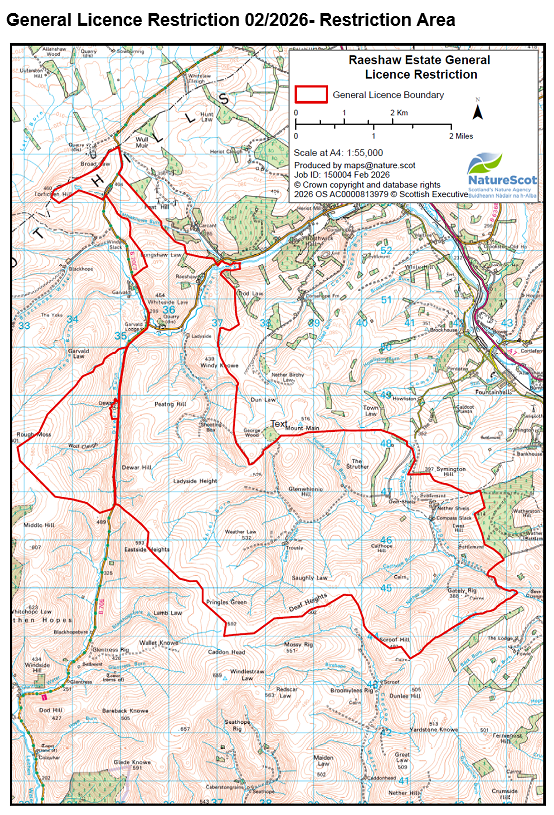
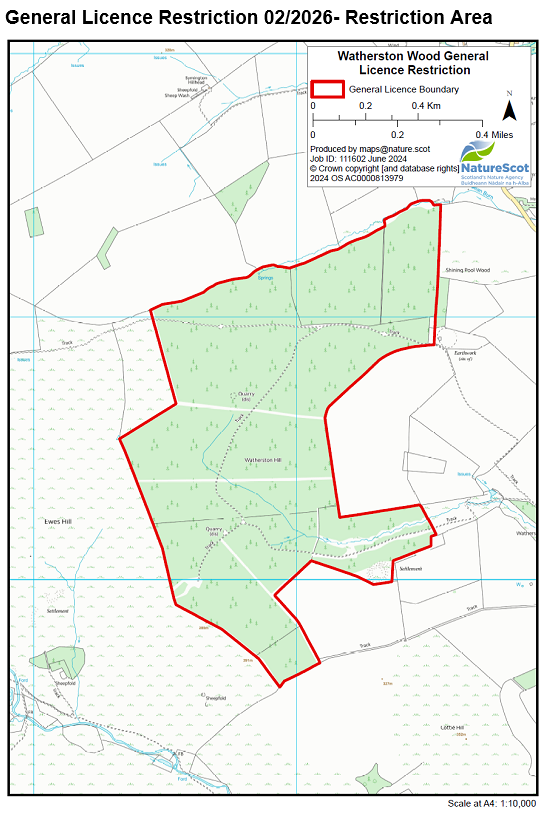
Here are the maps provided by NatureScot showing the restriction areas on Raeshaw Estate and Watherston Wood, and an accompanying statement of clarification:
In line with NatureScot’s published General Licence restrictions: Framework for Implementing Restrictions we hereby give notice that a restriction has been applied to the land outlined in red overleaf. This restriction prohibits the use of General Licences 01, 02 and 03 on that land from 10th February 2026 up to and including 9th February 2029.
Please note that this restriction does not imply responsibility for the commission of crimes on any individuals.
My commentary:
There’s a lot to say about this latest General Licence restriction. Some of it will have to wait for another blog because I’m short on time at the moment, but some of it I’ll say now.
General Licence restrictions, which have been available to NatureScot since 2014, are based on the civil burden of proof and are issued when NatureScot receives information from Police Scotland about wildlife crimes but where there is insufficient evidence to identify an individual offender for prosecution. (GL restrictions can also be imposed on estates where gamekeepers have been convicted of wildlife crimes).
General Licence restrictions do not prevent an estate from game-shooting, nor do they prevent an estate from carrying out [lawful] predator control – this can still be undertaken if the estate applies for an ‘individual licence’ which may restrict the amount of predator control, the estate may be subject to compliance spot checks, and the licence holder must provide NatureScot with licence returns (i.e. indicate how many birds were killed, where, and when etc).
General Licence restrictions are not perfect as an effective sanction – they are nowhere near, as I’ve written about many times before (e.g. see here and links within). They do, however, work as a ‘reputational driver’, although in some cases reputation is apparently not an issue of concern.
Whilst today’s decision is very welcome news, it’s taken NatureScot far too long to reach it. Regular blog readers will know that NatureScot has been considering this decision since April 2024 (see here) when it first received information from Police Scotland about the shooting/killing of Merrick. That’s almost two years of procrastination (e.g. see here, here). It’s nowhere near good enough.
This is the second General Licence restriction imposed on Raeshaw Estate.
Raeshaw Estate boundary derived from Andy Wightman’s Who Owns Scotlandwebsite
Raeshaw Estate was one of the first estates to receive a General Licence restriction in 2015, based on clear police evidence that wildlife crimes had been committed although there was insufficient evidence to prosecute any individual (see here). Representatives of Raeshaw Estate applied for a judicial review of NatureScot’s decision but the Court of Session upheld NatureScot’s procedures and ruled them lawful (here).
Whilst under that first General Licence restriction, Raeshaw Estate applied for, and was granted, a number of ‘individual licences’ so the gamekeepers could continue to kill certain species as part of the estate’s grouse moor management plan (quite a lot of birds were lawfully killed – see here).
However, in 2017 the individual licence was revoked by NatureScot due to non-compliance issues and more suspected wildlife crime offences (see here). Not that the revocation made any difference whatsoever, as the estate could simply apply for another individual licence!
Inexplicably to many of us, NatureScot did not extend the length of the original General Licence restriction, which it has the authority to do, in light of the non-compliance issues on the estate’s individual licence (see here).
And now here we are again, with a second General Licence restriction imposed, this time in relation to the illegal shooting and killing of Golden Eagle ‘Merrick’ in October 2023.
As a colleague pointed out to me today, General Licence restrictions have been useful in as much as they have provided a framework for imposing a licence restriction based on the civil burden of proof, and this has clearly influenced the new system of grouse moor licensing in Scotland, introduced as a new sanction under the Wildlife Management & Muirburn Act 2024, whereby licences to shoot Red Grouse can be revoked, based on the civil burden of proof, if evidence of wildlife crime is provided to NatureScot by Police Scotland.
In this latest case relating to Raeshaw Estate, I doubt very much whether a grouse shooting licence will be revoked because Merrick was shot in October 2023, before the introduction of grouse shoot licences, and a licence revocation can’t be applied retrospectively. I’m not even sure whether Raeshaw Estate has a grouse shooting licence; there isn’t a public register to consult. If it doesn’t currently have a grouse shooting licence, but applies for one during this three-year General Licence restriction, it’d be interesting to see what happens.
More commentary to come soon…
UPDATE 11 February 2026: Raeshaw Estate claims General Licence restriction “wholly unjustified” and intends to appeal (here)
Racster Dingwall, the now former Head Gamekeeper on Conistone and Grassington Estate in the Yorkshire Dales National Park, pleaded guilty at York Magistrates’ Court last month to conspiring to kill a Hen Harrier.
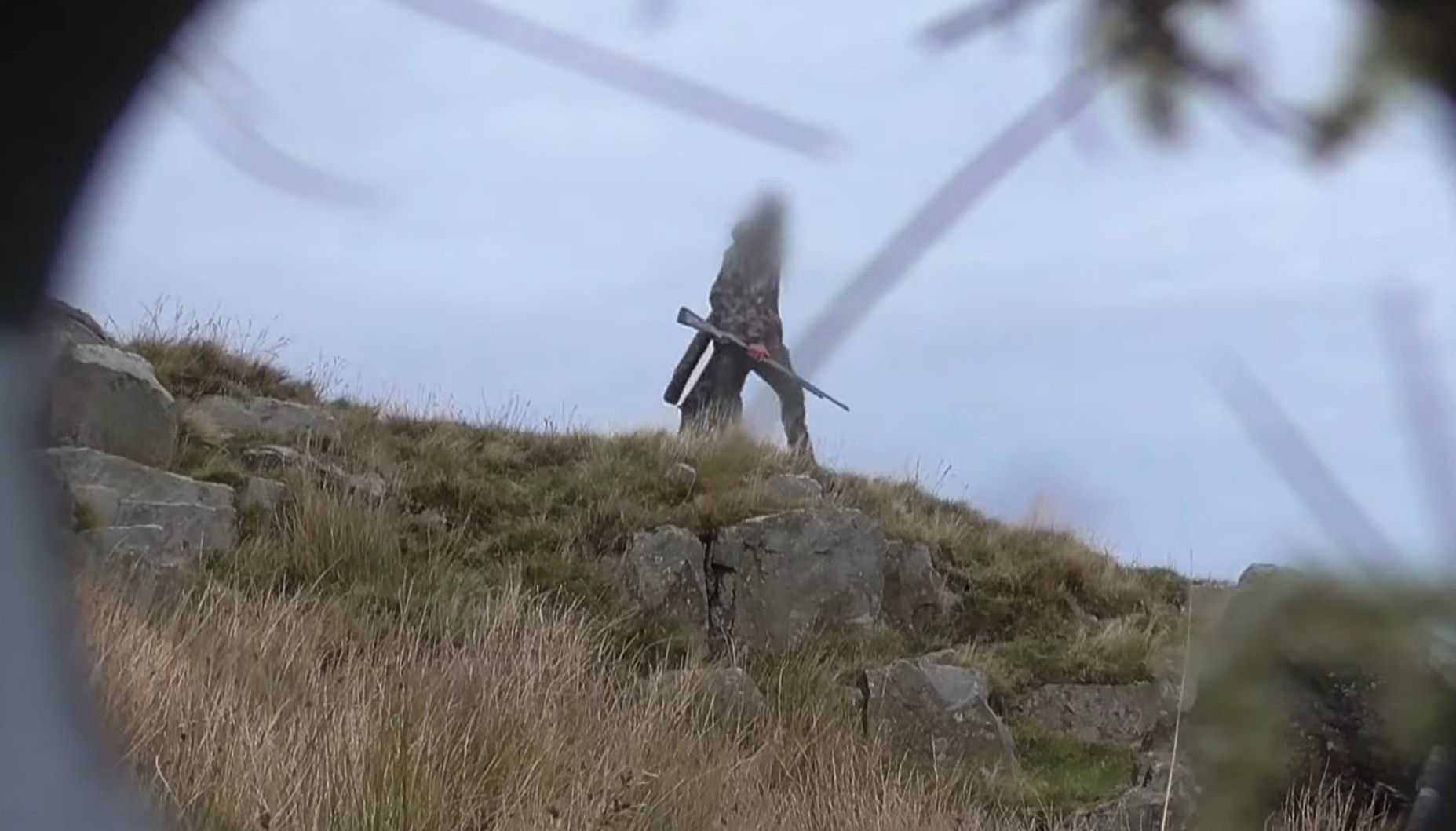
His crimes were captured on camera after the RSPB installed covert equipment on the grouse moor, capturing video and audio recordings of Dingwall and his two armed accomplices, as shown on Channel 4 News, here.
Screen grab from the RSPB covert footage via Channel 4 News
Dingwall’s sentence was a fine of just £1,520. I’ve written previously about the judge’s remarks and how this derisory penalty was determined (see here).
Now the Northern England Raptor Forum (NERF, representing raptor fieldworkers) has added to the commentary in a new blog (here), which is well worth a read.
Here are some of the highlights:
Dingwall had a previous conviction for violence, but this was discounted because it was dissimilar to the offence before the court. However, there is ample evidence in the literature showing that violence towards people and animal cruelty are frequently linked.
It was accepted by the court that Dingwall’s actions in this case were “completely out of character”. Was it really? The RSPB Investigations Team didn’t just turn up on the estate and install covert recording equipment. The team was there as a result of intelligence they had received and had spent several months confirming that the information was correct. They also identified the precise location where Dingwall and his colleagues usually sat. There was nothing random in the enquiry. Dingwall and his two underkeepers, recorded during the filming, were dressed in camouflage clothing, using radios, and armed with shotguns. They were clearly on a mission when sat in their allocated positions, waiting for dusk and for Hen Harriers to come in to roost.
Mr Ryan, Dingwall’s solicitor, told the court that his client “regrets enormously” his actions. If that were true, why were he and his colleagues there in the first place, dressed and armed with shotguns? Why didn’t he chastise his staff when they discussed having killed a Buzzard and a Raven? Why didn’t he call the whole thing off when they talked about not shooting a Hen Harrier—now known to be Ataksak—because it was wearing a box and would cause problems for the estate? Why, when the next Hen Harrier arrived without a “box”, did Dingwall leave his post to go and shoot the bird, which he subsequently told his staff he had done? He had every opportunity to prevent his underkeepers from killing the Buzzard and Raven. He also had a duty to ensure that Ataksak and the untagged Hen Harrier were not threatened with death. He failed on all accounts. Clearly, the only thing Dingwall regretted was being caught.
There is no requirement for a defendant to identify who his two underkeepers were, and Dingwall chose that route and stood in the dock alone. That was his choice, and the identity of his underkeepers remains unknown—at least in the public domain. Obviously, their employer knows who they are; but will they be sanctioned? Will they lose their jobs?
What we do know is that the owner will not be sanctioned, and it is business as usual. This loophole in the law is ludicrous and needs to be closed. Owners and land agents responsible for managing shooting estates need to be held accountable for the criminal activities of their employees. Until they are, they have no incentive to ensure that their estates are managed in compliance with wildlife legislation.
To read the full blog on the NERF website, click here.
I’ll be writing a further blog about this case shortly…
On Tuesday, 20 January, 2026, police were made aware a gamekeeper from an estate in Stanhope had discovered an injured golden eagle on Thursday, 15 January, 2026.
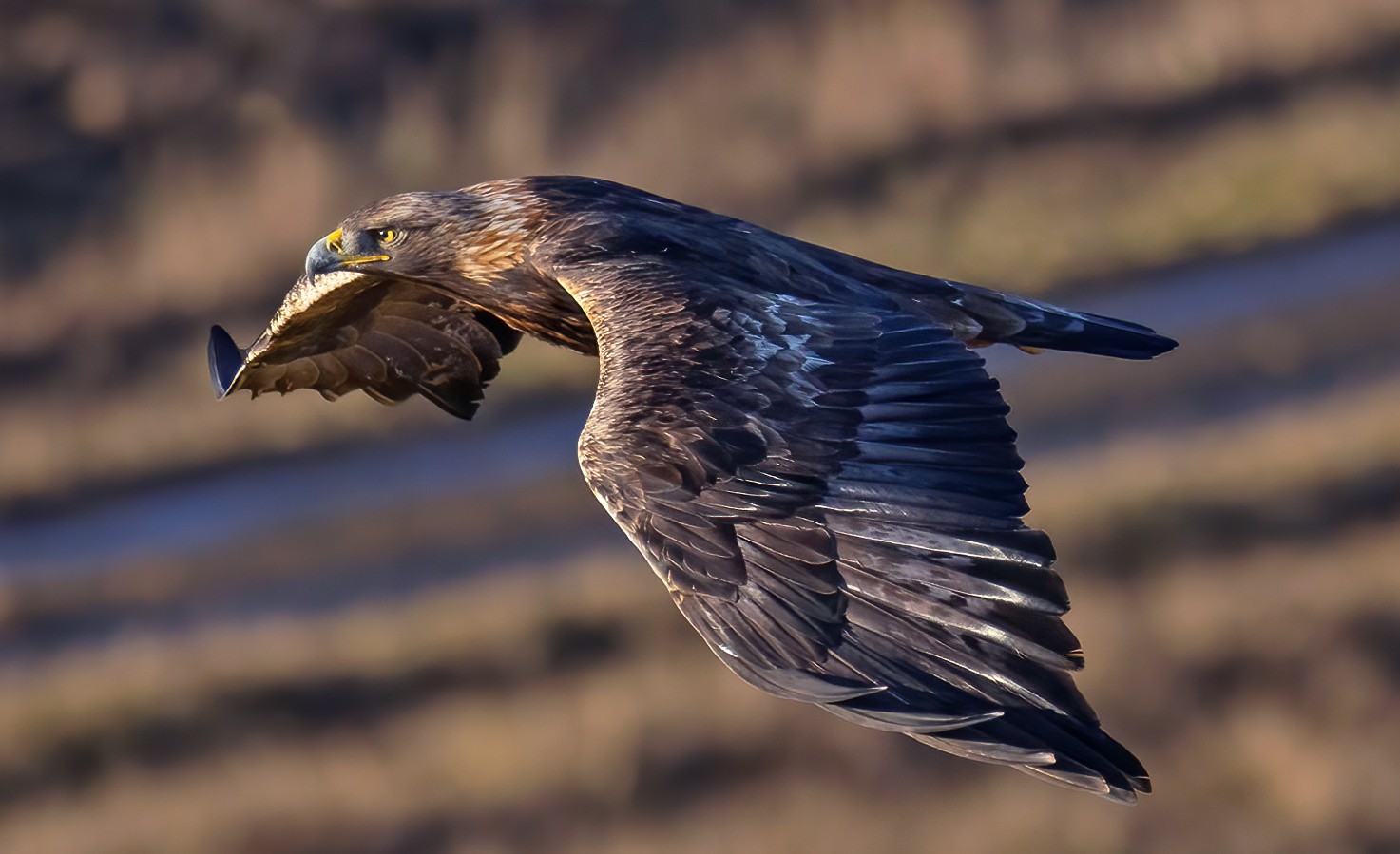
The bird was wearing a satellite tracking device and was identified as Hamlet, a four-year-old golden eagle that had been relocated from the Outer Hebrides to the Scottish Borders in 2023.
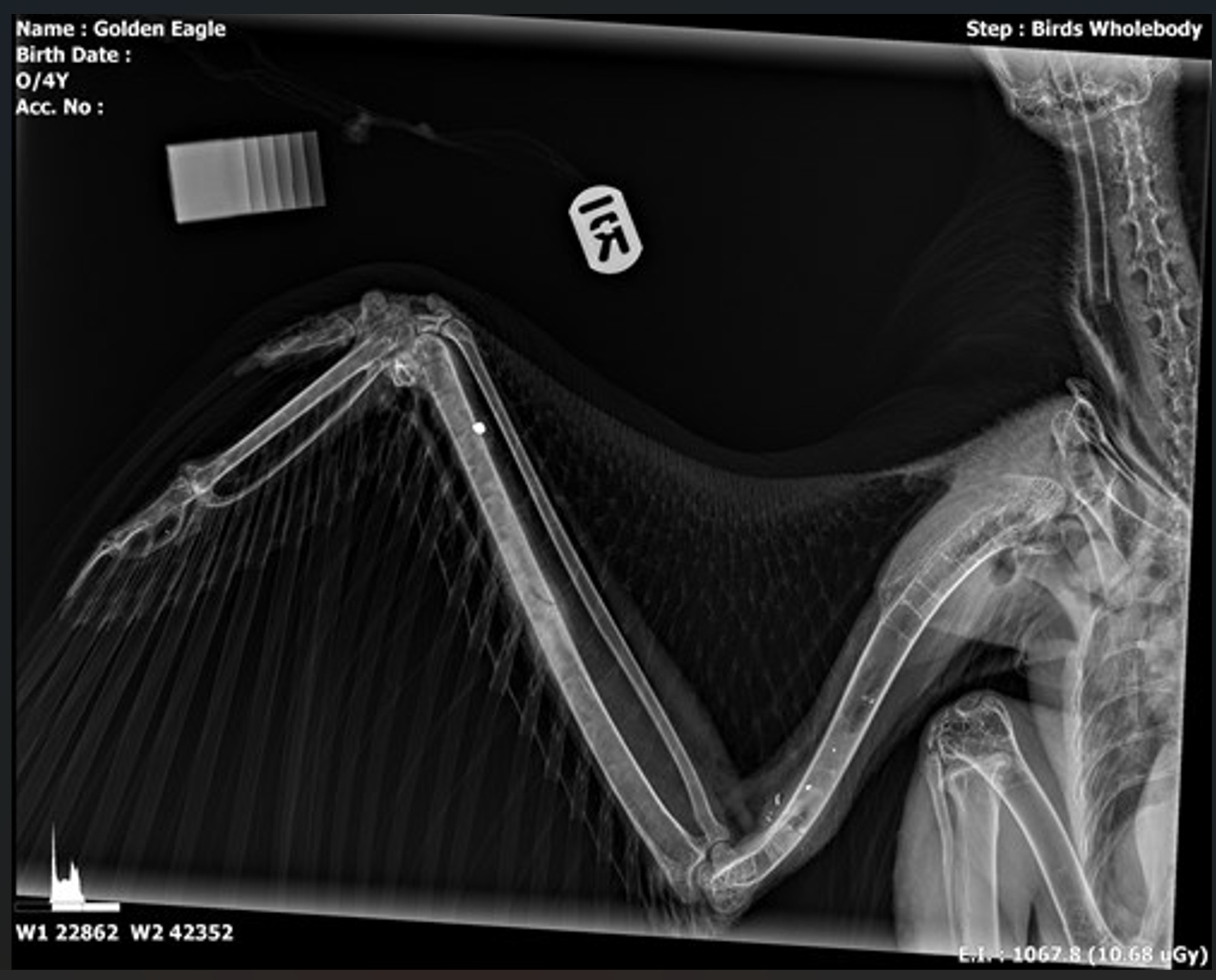
Hamlet was examined by a vet, who confirmed shotgun pellet injuries to his wing. He received treatment and made a full recovery. Hamlet has since been returned to the wild.
X-ray showing shotgun damage to the eagle’s right wing. Photo by SSPCA via Police Scotland
Officers investigating the crime have reviewed Hamlet’s tracking data and following consultation with raptor and veterinary experts, it’s believed Hamlet was shot during the first week of January 2026 in an area between Stanhope and Glenbreck, off the A701 Broughton to Moffat Road.
Detective Sergeant David Lynn, National Wildlife Crime Coordinator, said: “It is extremely disappointing that we are investigating another golden eagle persecution crime. Very few people would have the means, opportunity and motive to commit this crime and I would urge anyone with any information to contact us so we can identify whoever is responsible for shooting Hamlet.”
Police Scotland, with the support of the UK National Wildlife Crime Unit, is conducting a thorough enquiry in the local area to identify the culprit. Anyone with information is asked to call Police Scotland via 101, quoting incident number 1221 of 3 February, 2026. Alternatively, you can pass on your information anonymously to Crimestoppers using 800 555 111.
ENDS
‘Hamlet’ is the sixth victim of eagle persecution in the Scottish Borders in recent years:
Golden Eagle ‘Fred’ disappeared in an area managed for gamebird shooting in the Pentland Hills in January 2018 (his satellite tag transmitted from the North Sea a few days later – here).
Golden Eagle ‘Merrick’ was shot whilst she was sleeping in a tree next to a grouse moor in the Moorfoot Hills in October 2023 (we’re STILL waiting for NatureScot to make a decision about whether a General Licence restriction will be imposed as a consequence – see here).
Golden Eagles ‘Tarras’ and ‘Wren’ disappeared in an area managed for gamebird shooting near Langholm in August 2025 (see here).
A White-tailed Eagle ‘disappeared’ in the Moorfoot Hills area in November 2025 (here).
All six of these eagles were satellite-tagged. Nobody has been prosecuted in relation to any of these incidents.
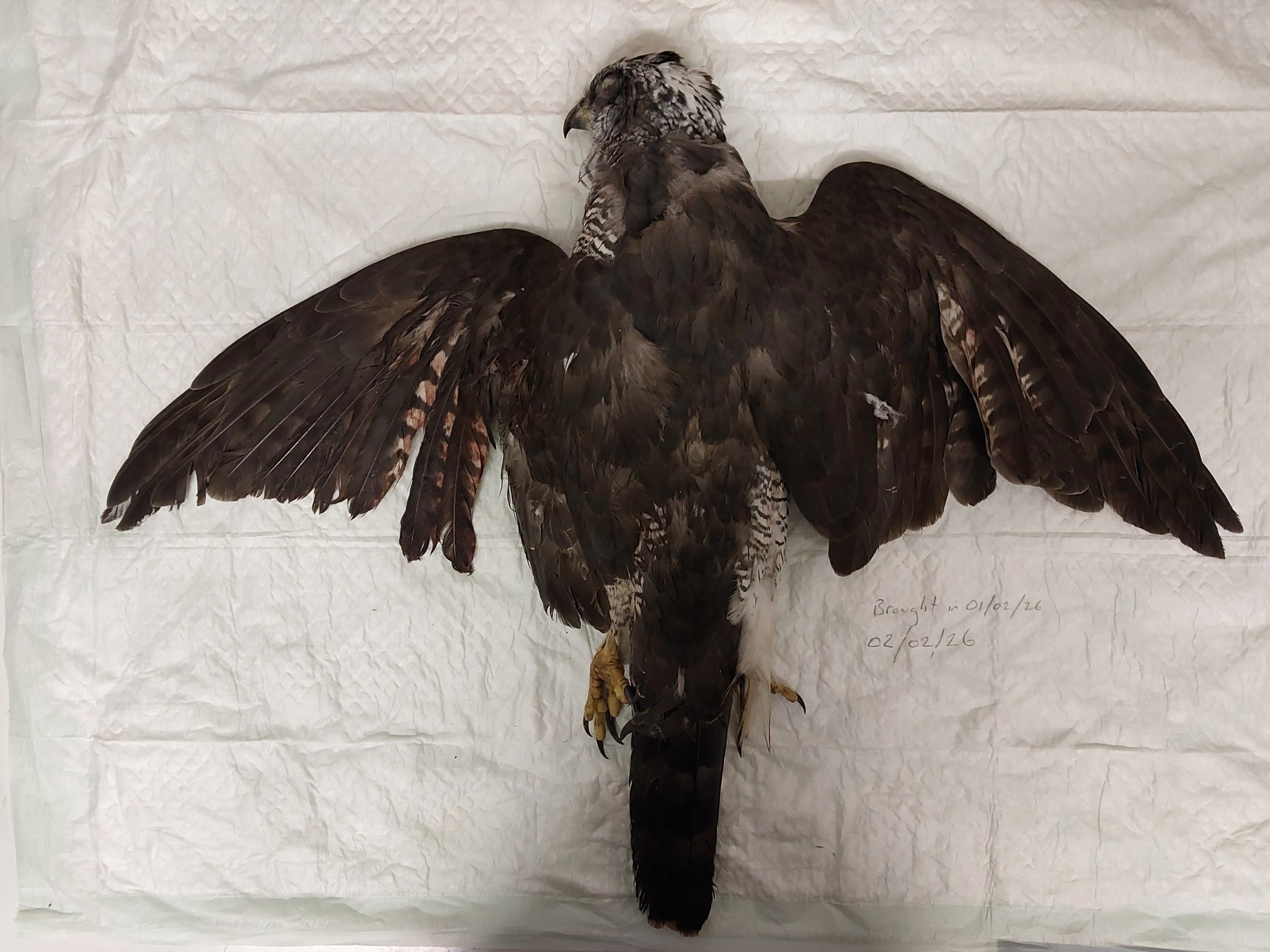
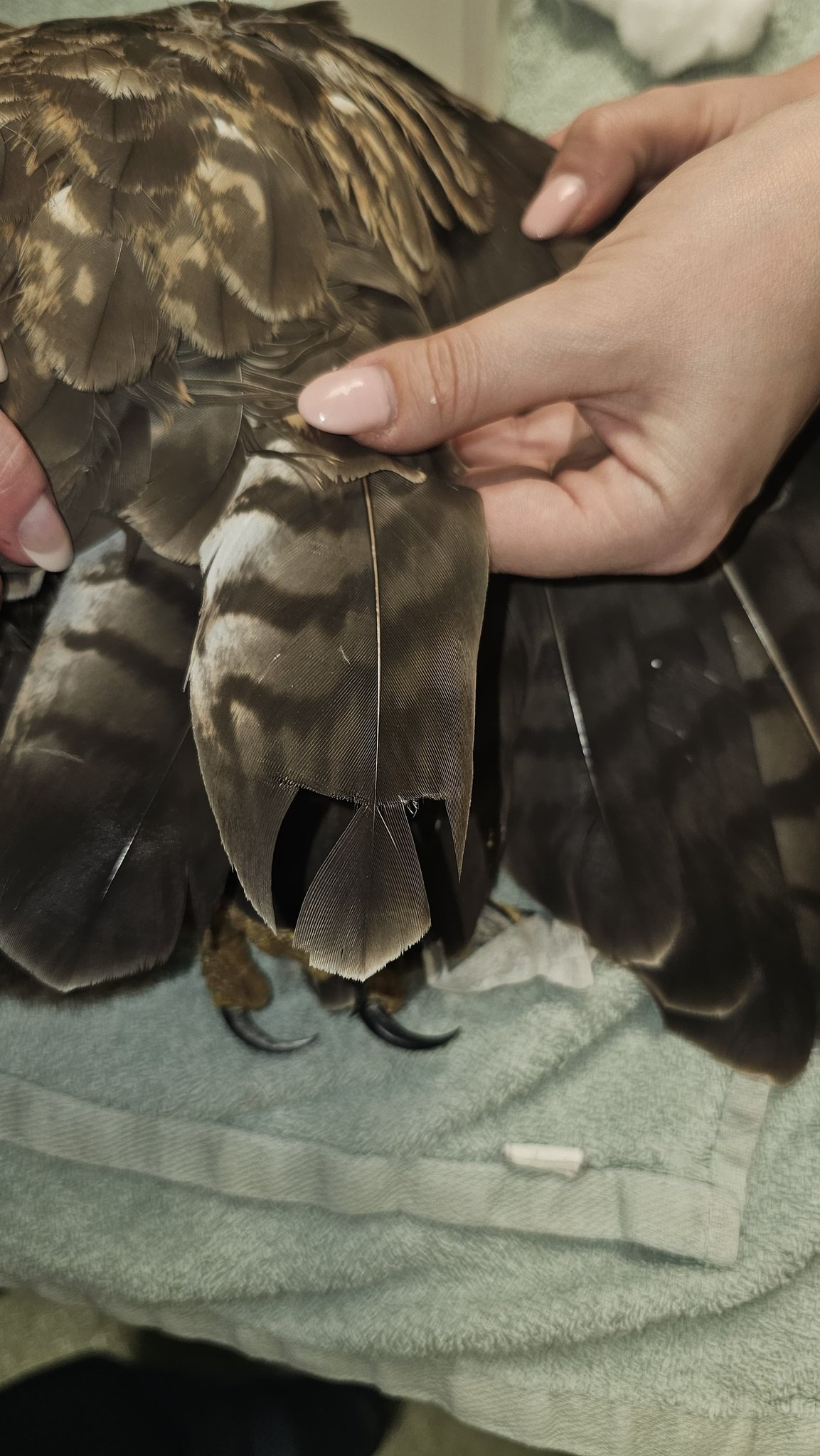
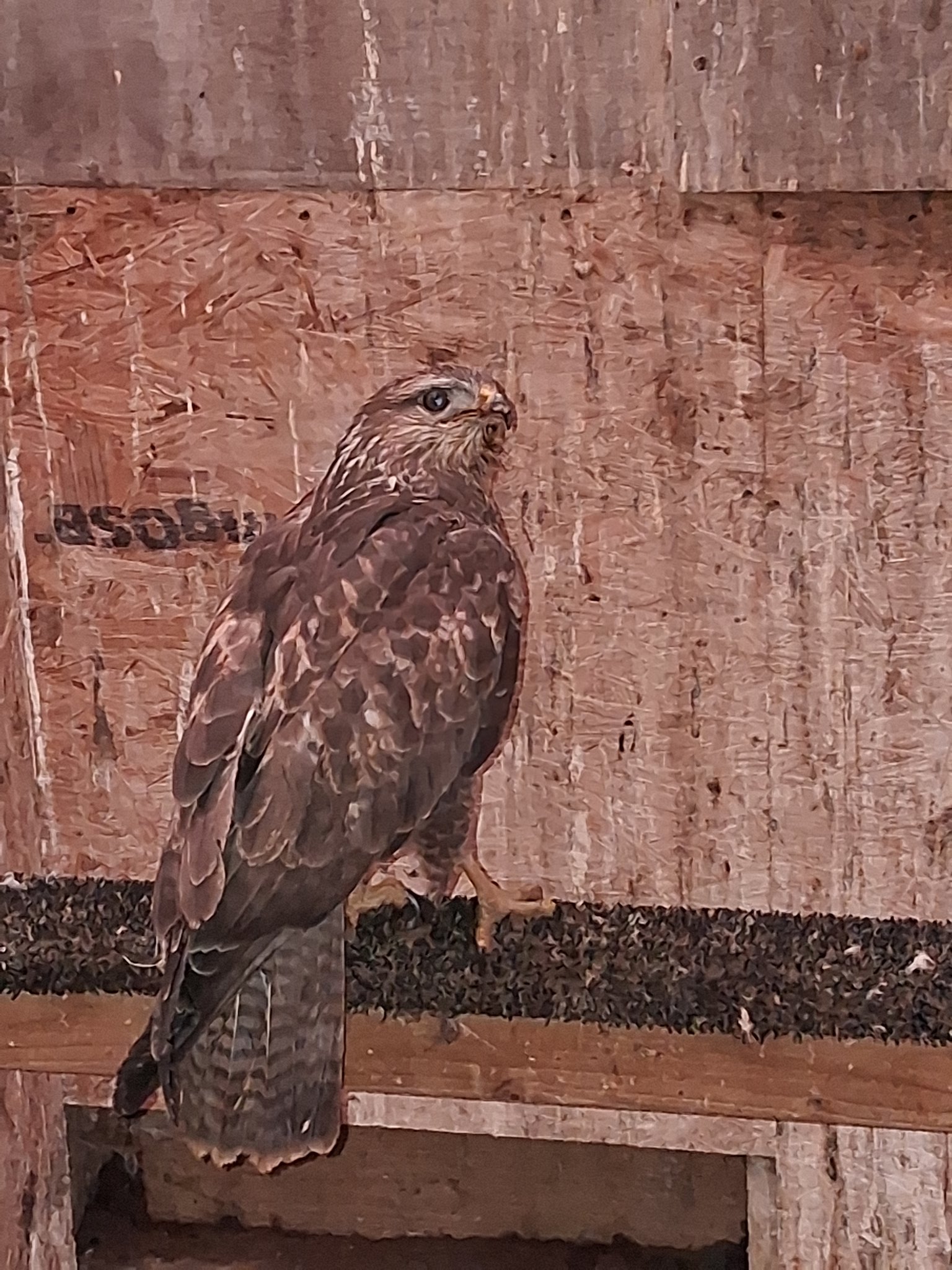
Raptor rehabilitation expert Jean Thorpe posted on social media yesterday about an injured Buzzard that was found grounded near Wigginton, York.
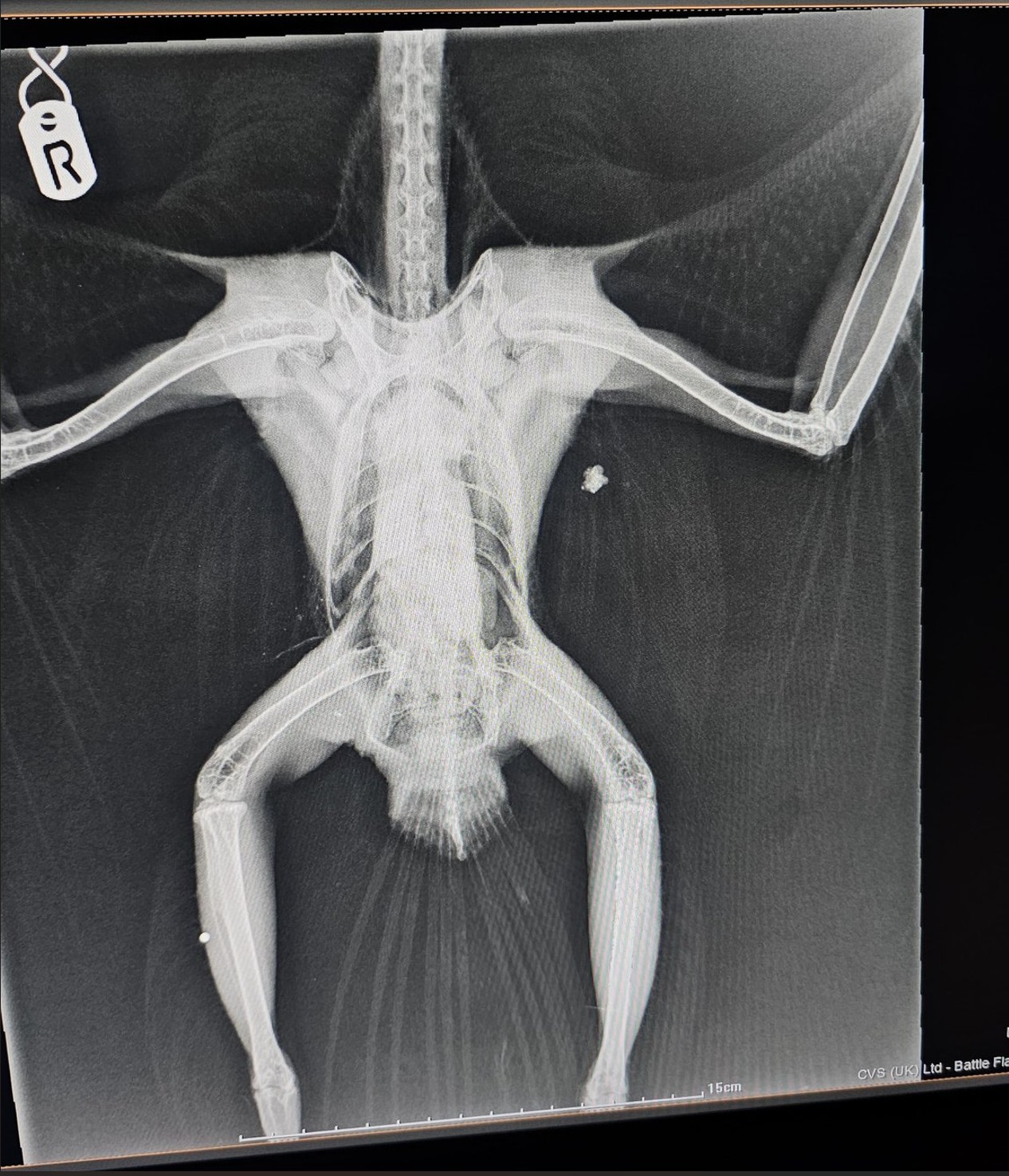
The Buzzard was taken to Battle Flatts Veterinary Clinic where an x-ray revealed a shotgun pellet lodged in her leg and associated feather damage.
The Buzzard is currently undergoing rehabilitation with Jean.
The Buzzard was found on 26 January 2026. If you have any information about this, or any other raptor persecution incidents in North Yorkshire, please contact the police and the RSPB Investigations Team.


 Raptor Persecution UK