Further to the blog on 30 September 2024 (here) and 17 October 2024 (here), a trial date has been set for a Lincolnshire man in relation to the discovery of a poisoned red kite and two buzzards between 2017 and 2022.
Buzzard photo by Ruth Tingay
John Bryant, 40, of West Ashby, Horncastle, appeared at Boston Magistrates Court on 20 November 2024 where he pleaded not guilty to two charges of using a trap to kill or take a wild bird, six charges of possessing an article capable of being used to commit a summary offence, and two charges of contravening health & safety regulations.
Mr Bryant was released on unconditional bail and a trial date was set for 6 March 2025.
NB: As this case is live comments are turned off until criminal proceedings have concluded.
UPDATE 12 March 2025: Lincolnshire gamekeeper guilty of multiple offences in relation to deaths of red kite and buzzards (here)
Another Silent Spring? A UK Government scheme to prevent the widespread poisoning of wildlife by rodenticides is failing.
Increasingly high levels of rodenticides (Rat poisons) have been found in Buzzards and Red Kites, and the Government is ignoring the evidence.
A report by Wild Justice highlights that the exposure of birds of prey to rodenticides in England has increased since a government scheme was introduced in 2015 to try and combat the problem.
Data from Red Kites and Buzzards, from both before and after the Rodenticide Stewardship Scheme (RSS) was introduced, show that anticoagulant rodenticides are now found in the livers of most dead birds that are tested, often at high levels.
Between 2020 and 2022, almost three quarters of tested Buzzards had been poisoned by rodenticides that are supposed to be restricted for use in and around buildings, including highly toxic Brodifacoum. This shows rodenticides aren’t being used correctly and that the use of these products requires stricter regulation, monitoring and enforcement.
Rodenticides are now being found in the livers of most dead Buzzards and Red Kites tested, according to a new report by conservation campaign group Wild Justice.
Using data obtained through Freedom of Information Requests, Wild Justice’s ‘Collateral Damage’ report presents the results of Government laboratory tests for 366 Buzzards and 173 Red Kites that had been submitted to the Wildlife Incident Investigation Scheme (WIIS) in England during the period 2005 to 2022. The report shows that in recent years nearly all these raptors had tested positive for Rat poison, often in high amounts.
A poisoned red kite. Photo by Dr Marc Ruddock
Rat poisons are toxins (Second Generation Anticoagulant Rodenticides, or SGARs) and are used extensively in game-keepering, farming and for pest control. It has been known for many years that these poisons don’t just kill targeted Rats. Poisoned Rats store the toxin in their liver and typically die several days after exposure. However, any animal eating the dying or dead Rat will also receive a dose of the toxin, resulting in the death of many species up the food chain, especially scavenging species such as Buzzards and Red Kites.
In 2012 the UK Health and Safety Executive carried out an environmental risk assessment on the use of SGARs and concluded that, due to the risk of secondary poisoning to wildlife, the poisons should not be used outdoors. However, the UK Government rejected this risk assessment and permitted the continued outdoor use of SGARs outdoors, even relaxing the regime to allow the external use of more toxic poisons such as Brodifacoum. Previously Brodifacoum was only allowed for use indoors.
The continued outdoor use of SGARs was on the condition that professional users complied with guidance known as the Rodenticide Stewardship Scheme (RSS) which was established in 2015. The aim of the RSS was to reduce SGAR exposure in wildlife resulting from improved Rat control working practices. The effectiveness of the RSS would be assessed by monitoring poison levels in wildlife, with a commitment to reduce SGAR exposure by 30% by 2020.
On the contrary, Wild Justice’s results demonstrate that rodenticide poisoning has actually increased during this period, not decreased.
Wild Justice compared data from birds tested before the introduction of the RSS in 2015, to those afterwards. Between 2005 and 2010 over 50% of dead Buzzards tested did not have any rodenticides in their livers. But in those tested between 2020 and 2022, over 90% of dead Buzzards had some level of rodenticide in their livers.
The data also show that in addition to the increasing number of Buzzards testing positive for rodenticide, there’s also been an increase in the number of birds containing very high levels of the poison. In Buzzards tested between 2005 and 2010, less than 2% contained over 0.3mg/kg (milligrams per kilogram) of SGAR poison in their livers, an amount considered to be very high. Yet in those tested between 2020 and 2022, nearly a quarter had over that amount.
An even starker picture was painted when looking at data for Red Kites. 15% of Red Kites tested between 2005 and 2010 contained these very high levels, whereas in those tested between 2020 and 2022, two thirds (66%) of birds had over 0.3mg/kg of SGAR rodenticide in their livers. In 2020-2022, none of the Red Kites tested were rodenticide free, and almost 90% had very high levels of poison.
Rodenticides are readily available, both for use by industry and for domestic purposes. There are different types of poisons available on the market, and many birds had been exposed to more than one type, with twelve of the Buzzards tested exposed to four different poisons. In Buzzards testing positive for rodenticide between 2020 and 2022, almost three quarters involved poisons that are supposed to be restricted for use in and around buildings, including highly toxic Brodifacoum.
Wild Justice believe this is partly the result of poisons being used illegally away from buildings. At the start of the survey period (2005 to 2012) these toxins were restricted to use within buildings only, and were generally marketed to professional pest controllers, rather than to gamekeepers and farmers. Now they appear to be in regular use by these groups, including illegally in open field situations away from buildings. This is the only explanation for such widespread levels of rodenticide found in Buzzards and Red Kites and shows that the use of these products requires stricter regulation, monitoring and enforcement.
Brodifacoum bait station illegally set on the edge of a grouse moor in the Yorkshire Dales National Park. Photo by Ruth Tingay
Brodifacoum. Photo by Ruth Tingay
Buzzards and Red Kites serve as indicators of a wider problem that will affect other predators and scavengers, including scarce and declining species. There are lots of species that eat rodents (not just Rats), meaning other birds like Kestrels and Barn Owls are also at risk. Wild Justice is calling for urgent regulatory changes to limit the availability and use of these products for the benefit of wildlife.
A spokesperson for Wild Justice said:
‘The Rodenticide Stewardship Scheme is a failed scheme, which the government should recognise. It is ridiculous that such dangerous, hazardous substances are escaping stricter regulation, especially when the evidence shows they are poisoning wildlife on a widespread scale, and even being used deliberately and illegally to do so. Our report reveals just the tip of the iceberg – such high levels of these poisons being found in birds of prey should be ringing alarm bells’.
ENDS
Wild Justice’s new report can be read/downloaded here:
The bird had consumed a banned pesticide which has a history of being used to kill birds of prey.
Red Kites are fully protected by law, and to kill or harm one could result in jail.
The illegal poisoning of birds of prey is a national issue and poses a potentially deadly danger to people, pets and wildlife.
A protected Red Kite endured an ‘agonising death’ after being killed by a banned pesticide, one quarter of a teaspoon of which is enough to kill a human.
RSPB Scotland received a call in April 2024 from a dog walker who had found a red kite dead on the ground near to a popular woodland walking trail, adjacent to hill farm land at Spinningdale, near Dornoch in East Sutherland.
RSPB Investigators notified Police Scotland, collected the bird and sent it for a post-mortem examination and toxicology analysis. The results were consistent with Carbofuran poisoning being the cause of the bird’s death, a pesticide banned for over 20 years.
Police Scotland and partner agencies conducted a search of the area but found no evidence that enabled them to identify a suspect.
It is a crime to kill or attempt to kill a bird of prey, and anyone caught doing so faces a fine or even jail.
The latest Birdcrime report, released last month found there were 159 poisoning incidents involving birds of prey between 2009-2024 in Scotland. In recent years, Carbofuran has become the pesticide most frequently associated with bird of prey persecution.
And of all UK counties, the Highland area had the second highest number of confirmed incidents of raptor persecution during the same 15-year period.
Ian Thomson, RSPB Investigations Manager, said:
“We are very grateful to the person that found this dead kite for reporting it to us. It is appalling that individuals are still using this poison, decades after it was banned, and this bird will have suffered an agonising and horrific death.
Carbofuran is a highly toxic substance and is one of several banned pesticides still used by criminals targeting birds of prey or other protected wildlife. Its possession or use is illegal and placing it out in the open poses a potentially deadly and indiscriminate risk not only to wildlife but to people and pets.
We ask anyone using the area to be vigilant if they find anything suspicious, don’t touch, but do take photos and report to Police Scotland immediately on 101.”
If you notice a dead or injured bird of prey in suspicious circumstances, call Police Scotland on 101 and fill in the RSPB’s online reporting form here.
If you have information about anyone killing birds of prey which you wish to report anonymously, call the RSPB’s confidential Raptor Crime Hotline on 0300 999 0101.
Further to the blog on 30 September 2024 (here), a man attended court yesterday after being summoned in relation to the illegal poisoning of a red kite and two buzzards between 2017 and 2022.
John Bryant, 40, of West Ashby, Horncastle, Lincs appeared at Boston Magistrates Court on 16 October 2024 where he confirmed his name, age and address. He didn’t enter a plea.
The case was continued and Bryant will appear again on 20th November 2024.
NB: As this case is live comments are turned off until criminal proceedings have concluded.
UPDATE 24 November 2024: Lincolnshire man faces trial in relation to poisoned red kite and buzzards (here)
UPDATE 12 March 2025: Lincolnshire gamekeeper guilty of multiple offences in relation to deaths of red kite and buzzards (here)
Statement from Lincolnshire Police, 30 September 2024:
A 40-year-old man has been summoned to court for offences relating to killing or taking birds of prey.
John Bryant, of West Ashby, Horncastle, has been summoned to court following an investigation into reports of three birds of prey, a red kite and two buzzards, being poisoned and killed over a five year period between 2017 and 2022.
He will appear at Boston Magistrates’ Court on 16 October 2024.
ENDS
No further details are available yet.
NB: As this case is live comments are turned off until criminal proceedings have concluded.
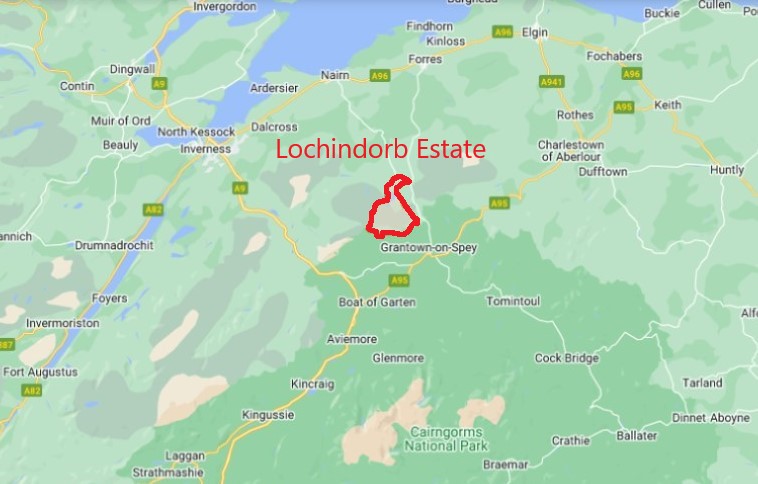
NatureScot has restricted the use of general licences on Lochindorb Estate, near Grantown-on-Spey, for three years.
An RPUK map showing the general boundary of Lochindorb Estate – details provided by Andy Wightman’s Who Owns Scotland website
The decision was made on the basis of evidence provided by Police Scotland of wildlife crime against birds.
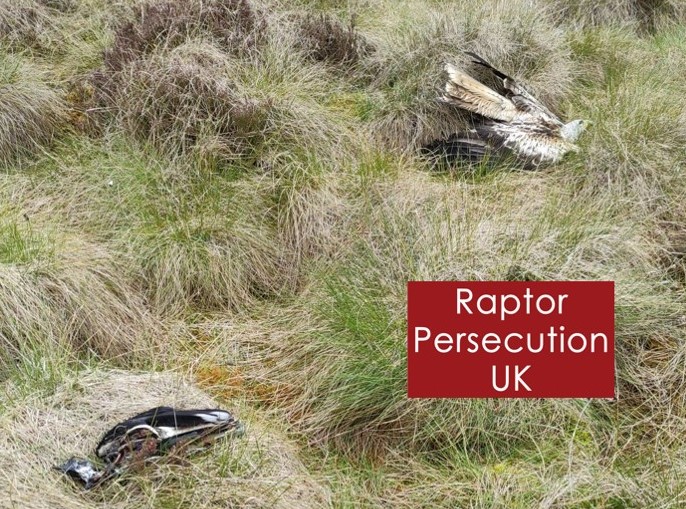
This evidence included a red kite found poisoned with an insecticide in 2021 near to a lapwing bait on land managed at the time by the estate [Ed: here], and a red kite shot on Lochindorb estate in 2023 [Ed: here].
The poisoned red kite and the lapwing used as poisoned bait. Photo by RPUK blog reader
Donald Fraser, NatureScot’s Head of Wildlife Management, said: “We have decided, in discussion with Police Scotland, to suspend the use of general licences on this property for three years until March 2027, given the persecution of red kites which has taken place on Lochindorb Estate and on neighbouring land managed by them at the time of the incident.
“NatureScot is committed to using all the tools we have available to tackle wildlife crime. This measure will help to protect wild birds in the area, while still allowing necessary land management activities to take place.
“We believe this is a proportionate response to protect wild birds in the area and prevent further wildlife crime. We will continue to work closely with Police Scotland and consider information they provide on cases which may warrant restricting general licences.
“The estate may still apply for individual licences; however, these will be subject to enhanced record-keeping and reporting requirements and will be closely monitored to ensure adherence with licence conditions.”
General licences allow landowners or land managers to carry out control of common species of wild birds, such as crows and magpies, to protect crops or livestock, without the need to apply for an individual licence.
In addition to this restriction, there are currently four other restrictions in place in Scotland: on Moy Estate in Highland, Invercauld Estate in the Cairngorms National Park, Lochan Estate in Perthshire and Millden Estate in Angus.
ENDS
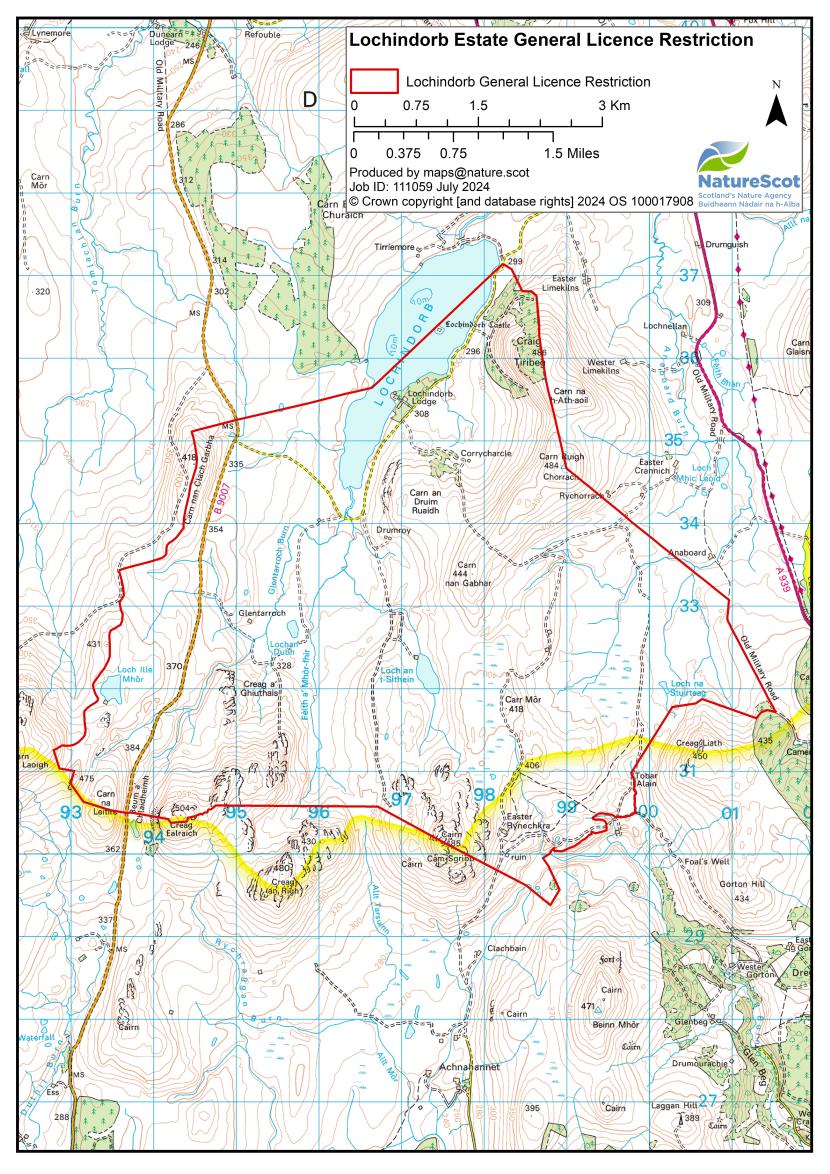
Here is a map from NatureScot showing the area of Lochindorb Estate where the General Licence restriction applies. This restriction prohibits the use of General Licences 01, 02 and 03 on that land from 16th July 2024 up to and including 15th July 2027.
I presume then, that the 56 year old gamekeeper arrested last year as part of the investigation into the shooting of the red kite on Lochindorb Estate has not been charged. If he had, this General Licence restriction would have been delayed until court proceedings had finished.
It’ll also be interesting to see whether this General Licence restriction affects Lochindorb Estate’s ability to apply for a section 16AA grouse shooting licence under the new Wildlife Management & Muirburn Act 2024.
For new readers, this Act was introduced as the Scottish Government’s response to the continued widespread illegal killing of birds of prey on grouse moors. It will work on the basis that all red grouse shooting must now be licensed in Scotland under a section 16AA licence and if, on the civil burden of proof (i.e. the balance of probability) sufficient evidence is found that the licence has been breached (including evidence of illegal raptor persecution), the licence can be withdrawn as a sanction, preventing the shooting of red grouse on a particular estate for a given period.
My guess is that Lochindorb will still be able to apply for a section 16AA grouse shooting licence, even though the estate is now under a 3-year General Licence restriction, because these offences were committed before the new legislation was enacted, so it will be deemed ‘unfair’ to apply the legislation retrospectively.
That will also mean that the other four grouse-shooting estates currently serving a general Licence restriction after evidence of raptor persecution was uncovered on their land (Moy Estate in the Monadhliaths, Invercauld Estate in the Cairngorms National Park, Lochan Estate in Strathbraan and Millden Estate in the Angus Glens) will also be able to apply for a section 16AA licence to shoot red grouse this year.
The Scotsman has published my opinion piece today about the potential impact of the new licensing scheme for grouse shooting in Scotland.
You can read it on The Scotsman website (here) and it’s reproduced below:
I call them ‘The Untouchables’. Those within the grouse-shooting industry who have been getting away with illegally killing golden eagles, and other raptor species such as hen harriers, buzzards and red kites, for decades.
They don’t fear prosecution because there are few people around those remote, privately owned glens to witness the ruthless and systematic poisoning, trapping and shooting of these iconic birds. If the police do come looking, more often than not they’re met with an Omertá-esque wall of silence from those who, with an archaic Victorian mindset, still perceive birds of prey to be a threat to their lucrative red grouse shooting interests.
For a successful prosecution, Police Scotland and the Crown Office must be able to demonstrate “beyond reasonable doubt” that a named individual committed the crime. As an example of how difficult this is, in 2010 a jar full of golden eagle leg rings was found on a mantelpiece during a police raid of a gamekeeper’s house in the Highlands. Each of those unique leg ring numbers could be traced back to an individual eagle.
The gamekeeper couldn’t account for how he came to be in possession of those rings, but the police couldn’t prove that he had killed those eagles and cut off their legs to remove the rings as trophies.
Despite the remains of two red kites, six illegal traps, an illegally trapped hen harrier and poisoned bait also being found on the estate, the gamekeeper was fined a mere £1,500 for being in possession of one dead red kite, that was found mutilated in the back of his estate vehicle.
In another case in 2010, three golden eagles were found poisoned on a grouse-shooting estate in the Highlands over just a few weeks. Even though the police found an enormous cache of the lethal poison – carbofuran – locked in a shed to which the head gamekeeper held a key, they couldn’t demonstrate that he was the person who had laid the poisoned baits that had killed the eagles. This meant he was fined £3,300 for the possession of the banned poison, but wasn’t prosecuted for killing the eagles.
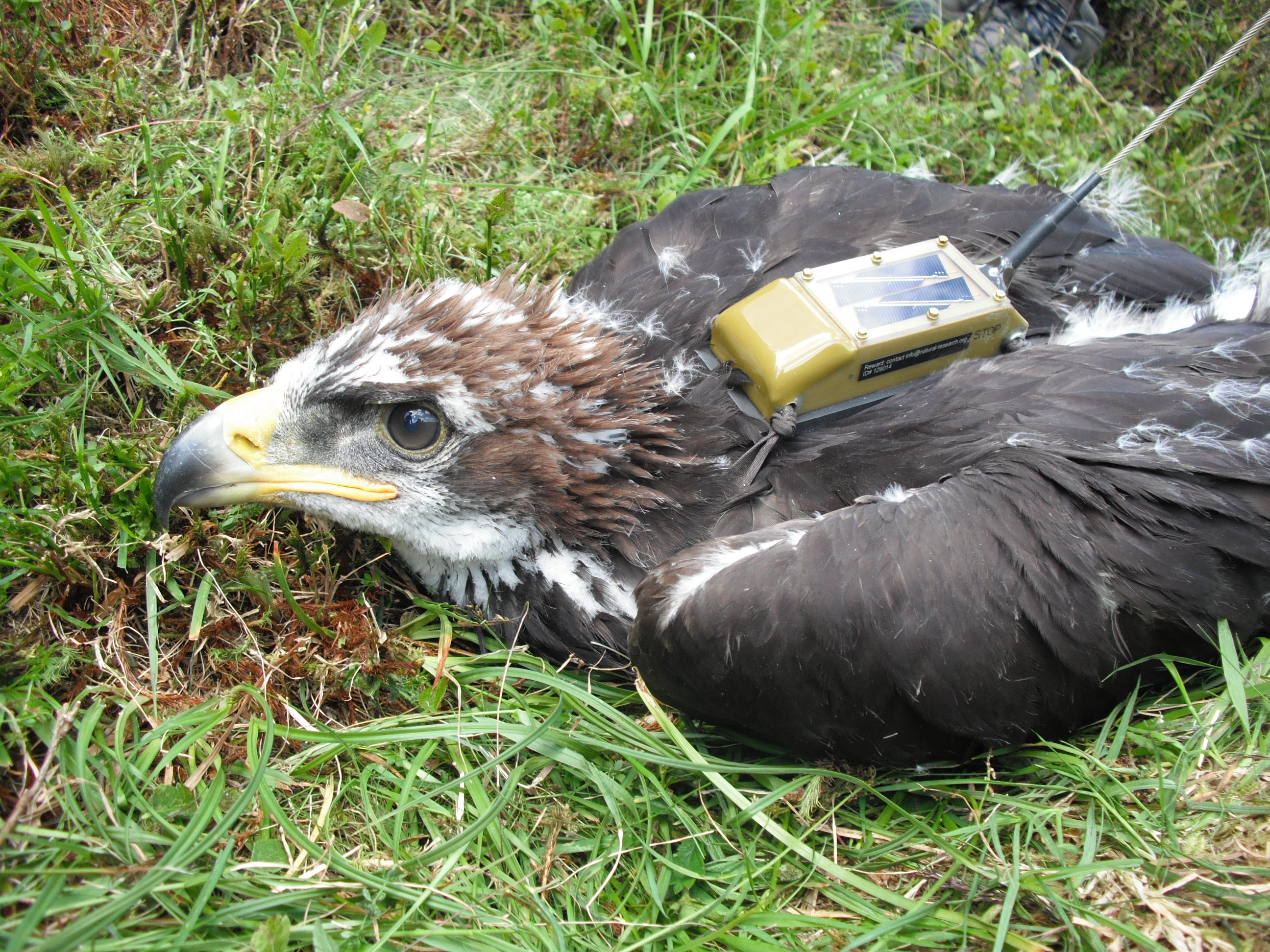
In recent years, researchers have been fitting small satellite tags to young golden eagles which allows us to track their movements across Scotland, minute by minute. Analysis has shown that between 2004 and 2016, almost one third of tagged eagles (41 of 131 birds) ‘disappeared’ in suspicious circumstances, mostly on or next to grouse moors.
Satellite-tagged golden eagle prior to fledging. This eagle was tagged in 2014, ‘disappeared’ on a Strathbraan grouse moor in 2016 and it’s satellite tag was found wrapped in heavy lead sheeting in the River Braan in 2020. Photo by Duncan Orr-Ewing
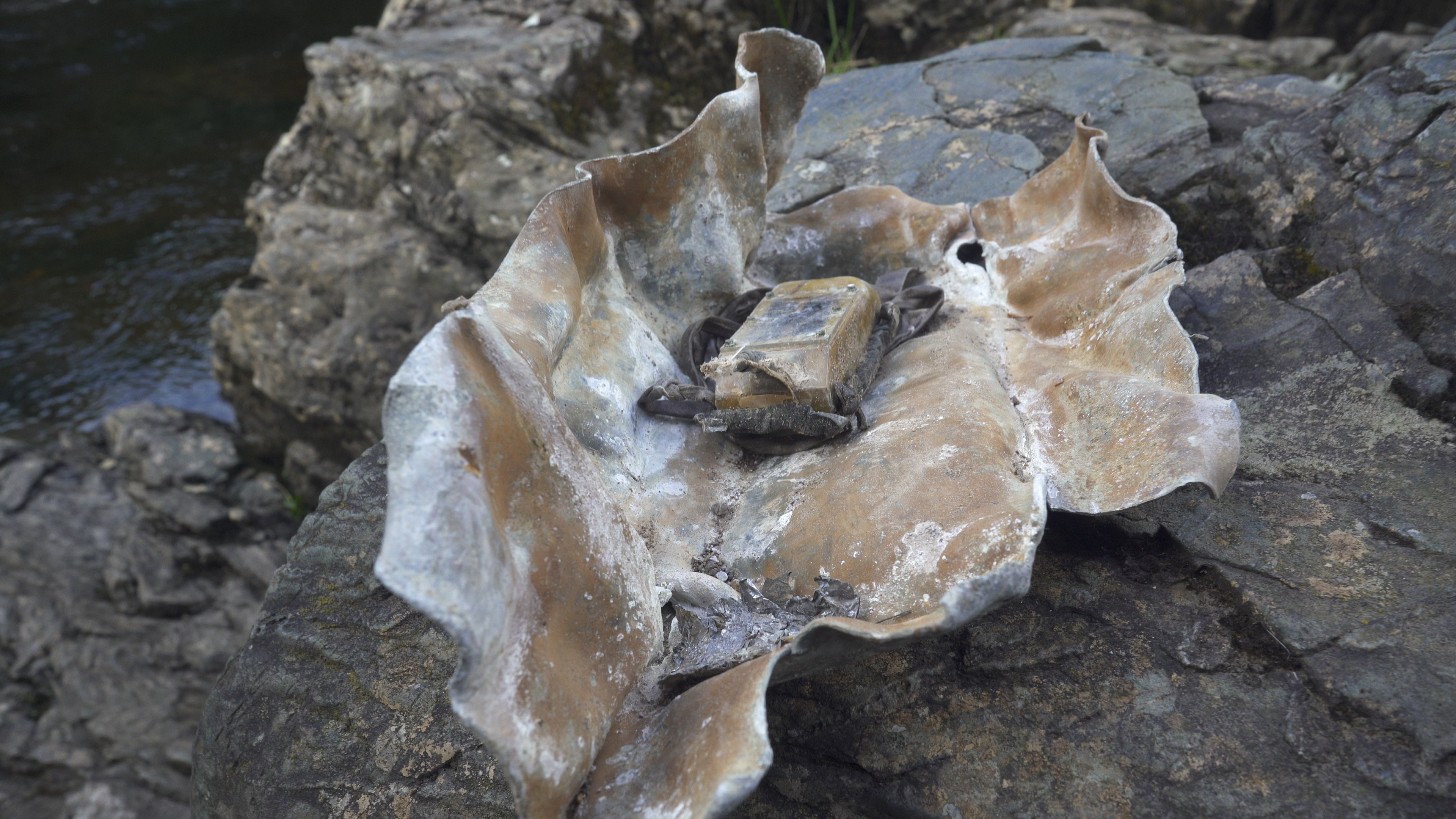
The lengths the criminals will go to avoid detection were exposed in 2020 when a walker found a satellite tag that had been cut off an eagle, wrapped in heavy lead sheeting – presumably to block the signal – and dumped in the River Braan. The tag’s unique identification number told us it belonged to a young eagle tagged in the Trossachs in 2014. This eagle had disappeared without trace from a Perthshire grouse moor in 2016, in an area where eight other tagged eagles had vanished in similar suspicious circumstances. Nobody has been prosecuted.
The remains of the satellite tag that had been cut off the eagle, wrapped in lead sheeting and dumped in a river. Photo by Ian Thomson, RSPB Scotland
The most recent disappearance of a tagged eagle happened just before Christmas 2023, close to the boundary of a grouse moor in the Moorfoot Hills. ‘Merrick’ was translocated to the area in 2022 as part of the South of Scotland Golden Eagle Project. Her tag data told us she was asleep in a tree immediately before she disappeared. Police found her blood and a few feathers at the scene and concluded she’d been shot. Who shoots a sleeping eagle? Again, no one has been prosecuted.
This situation has persisted for decades because although golden eagles have been afforded legal protection for the last 70 years, to date there hasn’t been a single successful prosecution for killing one. The chances of getting caught and prosecuted have been so low that the risk of committing the crime has been worth taking, over and over again. Until now.
Earlier this year, the Scottish Parliament passed new legislation, the Wildlife Management and Muirburn (Scotland) Act 2024, which introduces a licensing scheme for grouse shooting. For the first time in 170 years, red grouse shooting can now only take place on estates that have been granted a licence to shoot.
How will this stop the slaughtering of golden eagles and other birds of prey on Scotland’s grouse moors? Well, the licence can be revoked for up to five years if there is evidence of wildlife crime on the estate. Significantly, this will be based on the civil burden of proof which has a lower evidential threshold than the criminal burden of proof.
This means that instead of the police having to prove ‘beyond reasonable doubt’ that a named individual was responsible, they now have to prove that it’s based only on the ‘balance of probability’. This is a real game-changer because instead of being perpetually ‘untouchable’, now there are real, tangible consequences for the grouse shooting industry if these crimes continue. Estates will no longer be able to rely on the implausible protestation that ‘a big boy did it and ran away’.
As with any legislation, it will only be effective if it is strongly enforced. The jury’s out on that and we’ll be keeping a close eye on performance, but as the licensing scheme is based on a policy of mistrust, the Scottish Government has sent an unequivocal message to the grouse shooting industry. We all know what’s been going on and the public will no longer tolerate it.
The Police Service of Northern Ireland (PSNI) has issued an appeal for information about the illegal shooting of a red kite in Newry in April 2024.
The kite, nicknamed Vivienne, was well known in the Mournes. She was found with gunshot injuries on Cullion Road in Newry on 20 April 2024 but was later euthanised due to the extent of her injuries.
“Following an x-ray on April 22, and later confirmation from Agri-Food and Biosciences (AFBI), it became evident in the x-ray that the bird had been shot, as pellets were embedded in its wing and neck, including a fracture to its humerus.
The Red Kite is a large, protected bird of prey, re-introduced to Northern Ireland in 2008 and is a truly beautiful raptor with distinctive markings, recognised by its fork tail.
This Red Kite, nicknamed ‘Vivienne’ due to its identifying wing-tags brown-pink 6V, was well-known in the area and throughout the Mournes since it was born here back in 2018.
At this time, we are asking for information from the public due to offences falling under the Wildlife (NI) Order 1985 as amended by the Wildlife and Natural Environment Act (NI) 2011.
Police take all wildlife crime very seriously and are appealing to anyone who has information about what may have happened to this protected bird to call us on 101, quoting reference number 1229 22/04/24.
If you are aware of anyone in the area intent on harming birds of prey, please contact police.”
The election for the first York and North Yorkshire Mayor will take place on Thursday 2nd May 2024.
Whoever is elected will also take on the role of Police, Fire & Crime Commissioner in North Yorkshire. This is an important role, responsible for holding the Chief Constable to account for an efficient and effective local police service. The Commissioner also sets policing and crime priorities via their plan, and oversees the police budget.
Given the persistent volume of raptor persecution incidents in North Yorkshire, going back many, many years, whoever gets this role can have a significant influence on how these crimes are policed (or not, as in this recent case of a poisoned red kite found dead on Swinton Estate – here).
The list of candidates standing for the position can be viewed here:
One is Keith Tordoff, who I wrote about in 2021 when he was preparing to stand for the role of Police & Crime Commissioner – see here. Keith is an ardent raptor champion and has supported previous campaigns in Nidderdale to catch the notorious raptor (and dog) poisoners on the region’s grouse moors – and has suffered the consequences when his shop was targeted and he also received death threats.
Keith has pledged that if he is elected on 2nd May he intends to establish a steering group within the first 100 days to tackle these wildlife crimes and make sure that North Yorkshire Police are properly resourced to thoroughly investigate crime reports.
The other name that stands out on the list of candidates is Felicity Cunliffe-Lister, a co-Director of Swinton Estate, which has featured many times on this blog, and whose husband, the Earl of Swinton Mark Cunliffe-Lister is the current Chair of the Moorland Association (grouse moor owners’ lobby group) who had the brass neck to appear on Radio 4 last summer and say:
“Clearly, any illegal [hen harrier] persecution is not happening” (unbelievable, but he did say it – see here).
Which of these two candidates do you think is going to address North Yorkshire’s awful reputation for being one of the worst raptor persecution hotspots in the country?
The election takes place on 2nd May 2024. Please ensure you’re eligible to vote – if you’re not already registered, the deadline to register online is midnight on Tues 16th April 2024 (tomorrow night). Register here.
Further details about this election and requirements for voters can be found here.