The head gamekeeper at Holkham Estate, Norfolk, has been charged with a series of wildlife crime and firearms offences following a police investigation, according to The Fakenham Times.
41 year-old Nicholas Parker of Main Road, Holkham, has been charged with the following: killing a Schedule One wild bird, taking game out of season, possessing ammunition for a firearm without a certificate, possessing a shotgun or rifle for committing an either way wildlife offence, possessing a shotgun without a certificate, and contravening the Wildlife and Countryside Act.
He has apparently been suspended from his job since the allegations came to light last year. The report says he has been released on police bail and will appear before King’s Lynn magistrates on Wednesday 9 February 2011.
News story here: http://www.fakenhamtimes.co.uk/news/country_estate_head_gamekeeper_charged_1_782567
Nicholas Parker joined the Holkham Estate staff in April 2008, after working for six years for the Van Cutsem shoot on Mossdale Estate in North Yorkshire. Here’s his self-introduction in the Holkham Estate newsletter (page 13): Holkham Estate newsletter 2008
It’s not the first time that Holkham Estate has been at the centre of a wildlife crime investigation. In March 2000, a Holkham Estate gamekeeper was fined £850 for the killing of three kestrels on the estate. He admitted to shooting two birds and poisoning a third with a Carbofuran – baited pheasant carcass because he blamed them for attacking young partridges. Following the keeper’s conviction, a 37 year-old land agent and a 62 year-old head keeper were both convicted of three charges of allowing the gamekeeper on the 25,000-acre estate to illegally store poison. Although they denied the charges, they were fined £1,200 and £750 respectively. They both appealed and their cases were heard at Norwich Crown Court on 9 October 2000. Judge Lawrence stated that, although the standard of supervision of the use of poisons on the estate “left something to be desired”, he had reached the conclusion that the gamekeeper was acting independently. Both appeals were upheld.
Twelve charges were also brought against Viscount Coke, heir to the family’s estate in north Norfolk, for allowing the gamekeeper to illegally use poison on the estate. However, Fakenham magistrates said the Viscount had no case to answer. It is claimed that Viscount Coke threatened to sue the police and the crown prosecution service after he was cleared of all involvement. News story here: http://www.independent.co.uk/environment/peers-gamekeeper-fined-for-killing-three-kestrels-721792.html and here: http://nwhsa.redblackandgreen.net/convicted_gamekeepers.htm
It’s very interesting to note that the name of the convicted gamekeeper appears in the latest edition of the Holkham Estate newsletter (Winter 2010) – still employed there then, even with a criminal conviction? So much for estates wanting to rid the industry of those who persecute raptors!
The now 45 year-old Viscount Coke appears to be quite a character. Educated at Eton, he was apparently a former page of honour to the Queen. He took over the estate when his father retired in 2007 and lives with his family in Holkham Hall on the estate. It has been reported that he is a principal trustee and spokesperson for the charity Songbird Survival – notorious for its views against raptors: http://www.againstcorvidtraps.co.uk/songbird_survival/bloodsports
According to the current Holkham Estate website, nine gamekeepers are employed and “a predator control programme is exercised within the law”: http://www.holkham.co.uk/html/farming.html
A former head keeper at Holkham is Simon Lester, now head keeper at the Langholm Moor Demonstration Project in Scotland. Simon & the Viscount’s father, the Earl of Leceister, express their views about raptors in a revealing article here: Holkham Estate partridges & raptors 2006

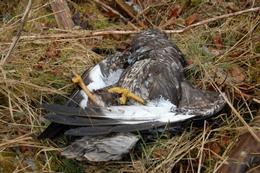 Earlier this month, PAW Scotland released the ‘2010 poisoning hotspots’ maps as part of their annual reporting. Along with the maps, they released a report called ‘Bird of Prey Poisoning Incidents 2006 to 2010 – Incident Details’. Here is a PDF of that report: 0114784
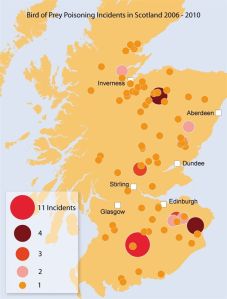 Here we go again…..the Partnership for Action against Wildlife Crime (PAW Scotland) has published the latest raptor persecution ‘hot-spot’ map based on the official poisoning figures from 2010. Surprise surprise, the number of confirmed poisonings in 2010 was higher than in 2009 and, once again, incidents were recorded throughout the length of mainland Scotland.
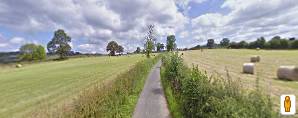 On 22 February 2010, two dead buzzards were found in Jebbs Lane, Idridgehay, nr Ashbourne in Derbyshire. The birds were believed to have been poisoned. On 7 April 2010, a further four buzzards were found dead nr Kirk Ireton, just a few miles away from the dead buzzards that had been found in February. These four buzzards were also believed to have been poisoned, and were found next to a dead pheasant, believed to have been used as a poisoned bait.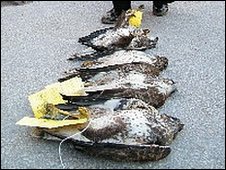
 On the face of it, Scotland’s red kite population appears to be doing well. Red kites used to be a common and widespread feature of our countryside, but became extinct in almost the entire United Kingdom in the early 1900s, after gamekeepers persecuted them to oblivion. A national reintroduction project began in 1989, bringing kites from mainland Europe and releasing them at strategic locations throughout the country.
