Peregrine Falcon Shot and Injured

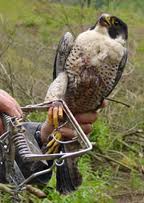
A male peregrine falcon has been shot and badly injured on the banks of the River Eden near Armathwaite in Cumbria.

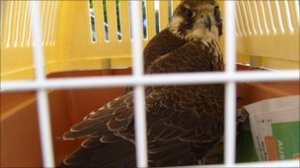
A cyclist found the bird flapping in a field, bundled him up in a towel and put him in his rucksack before cycling to Carlisle to seek veterinary assistance.

Vet Edda Pohlandt, of Falcon Vets, London Road, Carlisle said: “The man who brought him in was cycling from Penrith to Carlisle for a physio appointment when he came across the bird. “He brought him straight in and I took a look at him. I did an x-ray and saw the pellet and the shattered bones. I put him under anaesthetic and then operated on him”

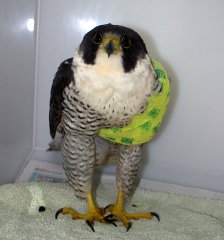
The injured wing must be kept in a sling for four weeks before Edda can carry out another x-ray. She said: “Birds tend to heal faster than humans. I’ll make a decision in a few weeks whether or not to take the pins out and see how he goes.

We have no further information at this stage as to any possible police enquiry

More on this story – http://www.cumberlandnews.co.uk/news/cumbria-vet-saves-life-of-shot-peregrine-falcon-1.761740?referrerPath=2.1825/2.1825

And here – http://raptorpolitics.org.uk/?p=1988#more-1988

RSPB Birdcrime 2009 Report Shows Continuing Raptor Persecution

The RSPB’s annual Birdcrime 2009 report was published today and shows that 2009 was the second worst year for raptor persecution in the last decade.

This depressing report shows that there were 384 reported persecution incidents against birds of prey in the UK  during 2009, 123 in Scotland, 224 in England, 17 in Wales and 11 in Northern Ireland, 9 incidents could not be allocated to a single country and were recorded at a UK level. Incidents include trapping, shooting, poisoning and nest destruction.

Again the trend showed that most incidents involved game shooting interests with a bias towards the upland grouse moors in Scotland and Northern England where the main victims of persecution are: golden eagle, white-tailed eagle, hen harrier, goshawk, peregrine and red kite.

In the report, the RSPB has made 11 recommendations for government action, so that these appalling crimes can be eradicated. These include the introduction of a “vicarious liability” offence which would make land managers and owners responsible for the actions of their employees.

Despite several successful prosecutions the conviction rate and subsequent sentencing appears pitifully poor and ineffective.

Full RSPB Report – http://www.rspb.org.uk/Images/birdcrime_tcm9-260567.pdf


Jail for man convicted of persecuting raptors – not in Scotland, obviously

Take note, Scottish sheriffs. Here is an example of how to deal with a wildlife criminal who persecutes birds of prey.

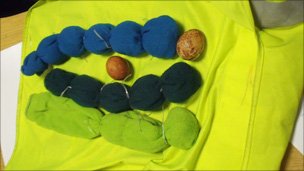
Today, convicted wildlife criminal Jeffrey Lendrum was sentenced to 2.5 years in prison by Judge Christopher Hodson at Warwick Crown Court, England. He had been arrested in May at Birmingham International Airport when he was found to have 14 peregrine eggs wrapped in socks and strapped to his body. The eggs had been stolen from four separate nests in South Wales. Investigators believe they were stolen to order for an Arab falconer in Dubai.

During sentencing, Judge Hodson said: “These were eggs you had removed from the wild in Wales and you would have reduced the number of these high-level endangered species in the wild, birds which enhance the attraction of the countryside to all. I quote the words of a Lord Justice of Appeal (Lord Justice Sedley) when he says, ‘environmental crime, if established, strikes not only at a locality and its population but in some measure to the planet and its future’. Nobody should be allowed to doubt its seriousness or to forget that one side of the environmental story is always untold‘. I adopt these words to express the gravity of what you did.”

The court was also told that Lendrum had previous convictions for similar offences in Zimbabwe and Canada. Of the 14 eggs stolen in this case, 12 chicks hatched and 11 survived. 7 of these were fostered into nests in southern Scotland and 4 were reared and released in England.

BBC news story: http://www.bbc.co.uk/news/uk-england-birmingham-11024315

Police investigate missing peregrine eggs in Dumfries & Galloway

Police have launched an investigation after a clutch of peregrine eggs have been reported stolen from a monitored nest site near Thornhill, Dumfries & Galloway.

PC Plod will have his work cut out catching the culprits, as there are so many to choose from – in the past, peregrines have been targeted by egg collectors, falconers, pigeon fanciers and gamekeepers.

Full story: http://news.bbc.co.uk/1/hi/scotland/south_of_scotland/8691393.stm

spate of recent poisonings kills eagles, kites, buzzards & peregrine

One of the dead white-tailed sea eagles undergoing post mortem

A disgraceful spate of recent poisonings in Ireland has resulted in the death of 2 white-tailed sea eagles, 1 golden eagle, 3 red kites, 3 buzzards and a peregrine.

The sea eagles were poisoned by the illegal pesticide carbofuran. The golden eagle, kites, buzzards and peregrine were killed by alphachloralose, a pesticide still manufactured and legally available in Ireland.

Police investigations are underway.

For the full sorry story: http://www.goldeneagle.ie/news_viewnews.php?x=6&z=132&news_id=11&article=267

shooting times magazine names the countryside’s “most wanted pests”

Game shooting’s top magazine, The Shooting Times, has published an article on the countryside’s “most wanted pests”, which speaks volumes on the true attitude of the game shooting industry to our protected wildlife.

The Shooting Times, 6th February 2006 reports,  The golden eagle, red kite, osprey, heron, peregrine falcon and buzzard stand accused with the hedgehog, otter, badger and the domestic cat of being “voracious predators” that affect the game shooting and fishing industries.

The 114-year-old title describes the animals on its list as “pricey pests” that devour pheasant, partridge, grouse, salmon, trout, hare, pigeon, woodcock, snipe, duck, goose and deer or snatch wild birds’ eggs. The losses hit the profits of estate owners and shooting and fishing syndicates.

Jim Knight, the Rural Affairs Minister, joined animal welfare groups and the Countryside Alliance in criticising the magazine for vilifying wildlife. He was shocked by the article’s emotive language. “The list includes a number of precious species that are protected by law. Readers of this article may agree that some species can be a nuisance — but this does not excuse their destruction.”

Camilla Clark, editor of Shooting Times, said: “The purpose was to assess the economic impact of predators and pests on game birds in the UK. Shooting Times would never advocate the illegal killing of a protected species.”

two peregrines poisoned on nature reserve, Aberdeenshire

dead peregrine

Two recently-fledged peregrines were found poisoned on the Scottish Wildlife Trust’s Longhaven Reserve, Aberdeenshire, in July 2004. They were found by two climbers and tests proved they had been poisoned by eating from a pesticide-laced bait.

Police wildlife crime officer, George Sangster, said peregrines had been the victims of illegal persecution for many years, and he and his colleagues had seen “a worrying trend in the last few years in the north east of Scotland, with an increase in the persecution of peregrines”. Full story: http://news.bbc.co.uk/1/hi/scotland/3896793.stm

Six years later, not much has changed. According to a 2009 RSPB report, recent estimates suggest that 27% of nests in southeast Scotland, 24% of nests in northeast Scotland and over 10% of examined sites in Cumbria were subject to interference or killing. More info: http://www.birdguides.com/webzine/article.asp?a=1674

Two Peregrine Chicks Poisoned in the Nest

 03 August 2007.  Grampian Police are appealing for information following the discovery of two poisoned four week old peregrine falcon chicks in their nest in the Inverurie area.

Peregrine chicks
The birds were discovered at the end of May when members of the North East Raptor Study Group visited the nest to ring and weigh the birds.

The two chicks had full crops and, following a post mortem examination and toxicology report, it was discovered that their food source was contaminated with an illegal pesticide, resulting in their death.

Peregrines are a “Schedule One” bird under the Wildlife and Countryside Act 1981 and are specially protected. New penalties for killing peregrines include up to a £10,000 fine or 12 months in prison.

Dave MacKinnon, Force Wildlife Crime Officer for Grampian Police said: “We are unable to give the exact location of the nest as these birds are specially protected. What I can say is that it appears the chicks had been fed poisoned bait by their parents, laced with a banned pesticide.

Haystoun Estate gamekeeper fined for offence

According to an article written by an RSPB investigator and published in  Scottish Bird News by the Scottish Ornithological Society (see link below), in June 2003, RSPB investigators received a tip-off that a peregrine nest site with a history of suspected deliberate interference was likely to be attacked imminently. Shortly afterwards, a 41 year old gamekeeper from the Haystoun Estate, Peebles, was allegedly filmed clambering across to the nest, removing the single peregrine chick, putting it inside a sack and walking off. The police arrived within minutes but the peregrine chick was never found.

The keeper was charged but when the case came to court on 24 March 2004, after two hours of legal argument Sheriff Farrell ruled that the video footage was inadmissable evidence because the RSPB did not have permission to be on the land for the purpose of detecting an offence.

It seems more than a little bit strange that a member of the public can be barred from telling a court about a crime, just because the landowner had not given permission for that person to be there! Surely, it is in any landowner’s interest to have criminals apprehended and dealt with by the courts? All very strange.

The gamekeeper was ultimately fined £300 and had his firearms certificates revoked after police officers found a weapon and ammunition in his unattended Landrover at the time of the incident. http://www.the-soc.org.uk/docs/SBN80.pdf

The keeper later attempted to get his firearms certificates back: http://news.scotsman.com/scotland/Gamekeeper-fined-300-seeks-gun.2567258.jp

gamekeeper not guilty of poisoning on Clova Estate, Aberdeenshire

At Aberdeen Sheriff Court in 2007, a 34 year old gamekeeper of Lumsden, Huntley, was accused of killing a peregrine at Clova Estate, Huntley, Aberdeenshire in October/November 2006. He was also accused of having a bottle of poison at his home address and at Tomatin Estate (Invernesshire), and further accused of having an illegal pesticide (Carbofuran) in his possession at his home address and elsewhere.

After long court delays, in early 2009 he was found not guilty of a charge under Section 15(A) of the Wildlife & Countryside Act 1981.