
A news item posted today on the RSPB website reveals that a buzzard and two ravens were found dead in Monmouthshire in July. Tests reveal they had been poisoned by the banned pesticide Carbofuran. Two dead pigeons were also found which had been laced with an un-named pesticide and the news report suggests these were put out as illegal poisoned bait. Last year, two dead peregrines, poisoned with Carbofuran, were found at the same site (see here).
The article reports that Gwent Police, the Welsh Government and the RSPB are appealing for information. The RSPB is reported to be offering a £1,000 reward for information leading to a conviction.
Three months after the incident? What’s the point? Why is it that media reports about wildlife crime, and particularly illegal raptor persecution incidents, are now consistently delayed for several months? What other areas of crime are reported this way? If my house was burgled in July and I waited for three months before I reported it to the police, what do you think the chances would be of catching the burglar? About the same as catching the raptor poisoners, I reckon.
Talking of delayed reports…why is it that the 2011 SASA poisoning report, which is supposed to be updated every quarter, has not been updated since March 2011? Are we to believe that raptors are no longer systematically poisoned in Scotland because none have been handed in for analysis for the last seven months? If anyone feels like doing a Freedom of Information Request, this would seem to be a good place to start (FoI on SASA website here).
News story about the poisoned buzzard & ravens on RSPB website here
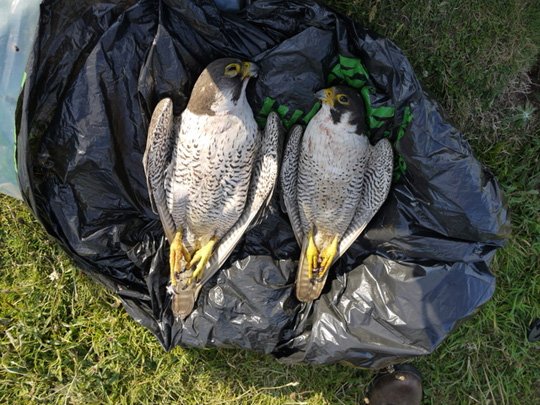 Devon & Cornwall Police, along with the RSPB, have just announced that two peregrines that were found dead on 21 July this year had been poisoned by the banned pesticide Carbofuran. The RSPB is offering a reward of £1000 for information leading to a conviction.
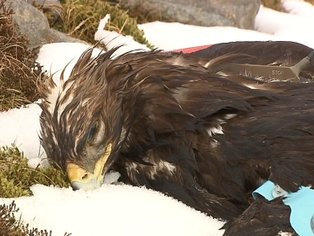 Today the Scottish government has published its latest report on animal poisoning in Scotland. The figures relate to recorded incidents in 2010 and demonstrate a sharp rise in the number of wildlife poisonings, including the widespread illegal poisoning of raptors. The report shows that 69% of all ‘abuse’ cases involved the poisoning of birds of prey, covering a wide area including Borders, Dumfries & Galloway, Highland, Lothian, Strathclyde and Tayside. The illegal pesticide Carbofuran was detected in half of these incidents. The raptors that tested positive for poisons included 40 buzzards, 4 golden eagles, 1 sea eagle, 1 kestrel, 5 barn owls, 2 tawny owls, 2 peregrines, 21 red kites and 11 sparrowhawks.
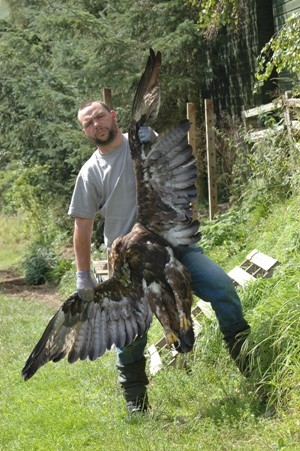 Today is the inglorious 12th, the start of the four-month grouse shooting season in the uplands of northern England and Scotland. Today, and for many days to come, ridiculously rich people will dress up in clownish outfits and head for the moors in the hope of shooting dead some birds. Many will pay an estimated average of £15,000 for the experience. I wonder how many of them will enjoy the sight of a hunting hen harrier or a golden eagle quartering across the moor? Very few, infact probably none of them because scientific evidence shows that hen harriers and golden eagles have been exterminated on most grouse moors in the UK, with just a few notable exceptions. Has anyone been convicted? One person was once convicted for killing a hen harrier, and that’s it. Nobody has ever been convicted for killing a golden eagle (someone was once taken to court a few years back but the case was dropped). Even though several dead eagles and the UK’s biggest stash of the poison they died from were all found on a sporting estate last year, still nobody has ever been convicted.
 The latest figures detailing illegal animal poisoning incidents in the first quarter of 2011 have just been released by Science and Advice for Scottish Agriculture (SASA) on behalf of the Scottish Government.
 Grampian Police are appealing for information after a shot peregrine had to be destroyed. The badly injured falcon was discovered in woodlands at the Pass of Ballater in the Cairngorms National Park on 27 April by a dog walker. Tests showed the bird had been wounded by a shotgun, with the pellets causing a serious fracture to its right leg.
 A police special constable and wildlife officer in Calderdale, West Yorkshire, is putting Scottish police forces to shame. Special Constable Phil Sanderson, also a retired police officer, has appealed to the public for help in what he believes is a potential poisoning threat to peregrines in his area. Compare Phil’s actions below with those of Tayside Police last week after their raid on an [un-named] Perthshire sporting estate.
