Moorland Association’s response to peregrine persecution on Bleasdale grouse moor

The Moorland Association’s response to the RSPB video published on Wednesday is an interesting read.

For new blog readers, the Moorland Association is a lobby group representing the interests of grouse moor owners in England.

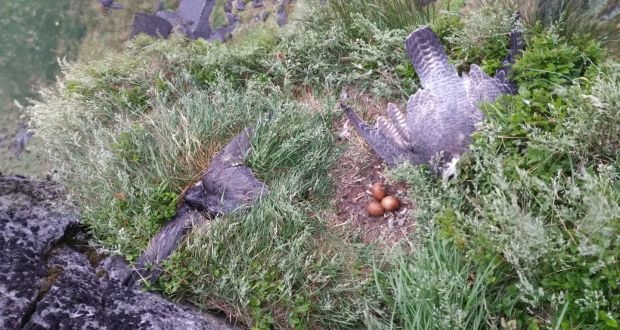
Here’s the video again, for those who might have missed it, showing an unidentified individual attending a peregrine nest site where an adult male peregrine had been caught in a spring trap on the nest ledge, and where it thrashed around for over ten hours in a desperate attempt to escape before finally being removed by the unidentified individual. We believe this nest site to have been located on a grouse moor on the Bleasdale Estate in Bowland in April 2016 and that the video footage published by the RSPB related to the prosecution of a Bleasdale Estate gamekeeper – a case that collapsed in April this year due to a series of legal technicalities.

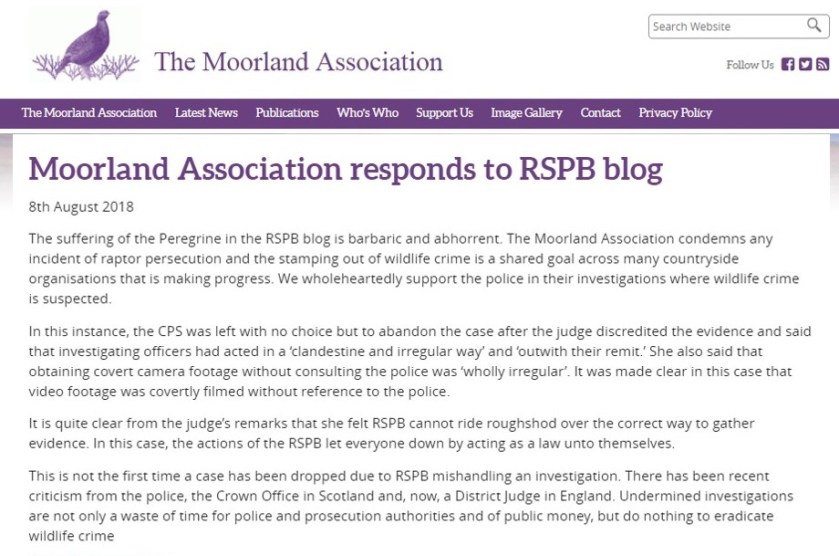
Here’s the Moorland Association’s statement in response to the publication of this video nasty:

The opening line is astonishing: “The suffering of the Peregrine in the RSPB blog is barbaric and abhorrent“.

The peregrine didn’t suffer “in the RSPB blog”, it suffered at its nest site on a driven grouse moor.

A more sincere and accurate Moorland Association statement might have looked like this: “The suffering of the Peregrine in the illegally-set trap that was positioned at the Peregrine’s nest site on a grouse moor on the Bleasdale Estate, a Moorland Association member, is barbaric and abhorrent“.

The rest of the Moorland Association’s statement deflects attention away from the peregrine’s suffering as a result of this crime and instead focuses on trying to undermine the integrity and credibility of the RSPB, as we’ve come to expect.

Not only did the Moorland Association ignore the fact this peregrine suffered on a driven grouse moor (the words ‘grouse moor’ don’t appear anywhere in the MA’s statement!), but it also carefully sidestepped the fact that the grouse moor in question was, at least at the time this footage (and the peregrine) was captured, a Moorland Association member.

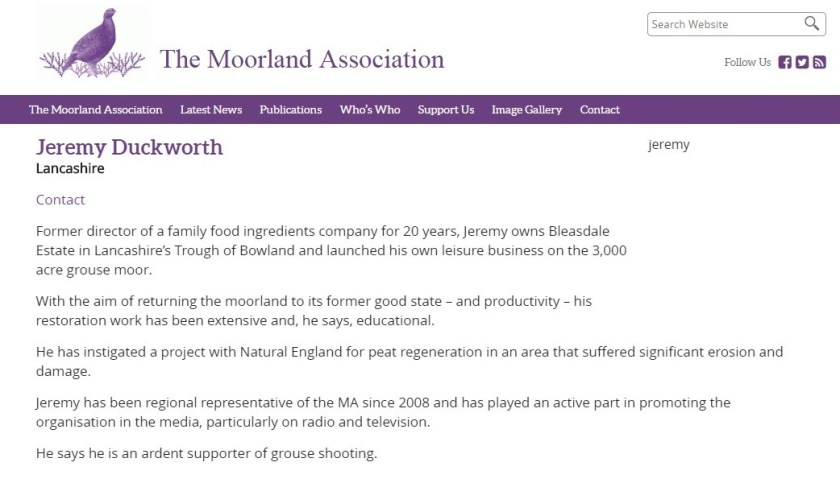
How do we know that? Well, as we blogged back in April 2018 when the court case collapsed (see here), in April 2016 when the alleged offences took place, the owner of the Bleasdale Estate was one Jeremy Duckworth, who also happened to be a Director and Regional Representative of the Moorland Association. Here’s a screengrab from the Moorland Association website in 2016:

Strangely, according to documents lodged at Companies House, Mr Duckworth resigned his Directorship of the Moorland Association in September 2016. There are many different reasons why people resign from Directorships but it’s interesting to note that the timing of Jeremy Duckworth’s resignation coincided with the early stages of the police investigation in to the alleged offences on his grouse moor – obviously nothing to do with damage limitation and purely and simply coincidental, of course:

We wonder whether the Bleasdale Estate is a still a member of the Moorland Association?

We wonder whether the Moorland Association is concerned that an unidentified camouflaged individual was able to repeatedly visit this peregrine nest site on the grouse moor of a Moorland Association member and inflict what looks like unimaginable cruelty to this peregrine?

We wonder whether the Moorland Association is concerned that an unidentified armed individual was able to visit this peregrine nest site and fire four shots as another adult peregrine flew from the nest?

We wonder whether the Moorland Association is concerned about the widespread, systematic persecution of peregrines on driven grouse moors in England, as evidenced by an increasing number of scientific papers (here, here, here)? Incidentally, this last paper, ‘Raptor Persecution in the Peak District National Park’ by Melling et al was published by British Birds in May 2018 but the full paper was only available to BB subscribers. British Birds has now kindly published this paper in full so everyone can read it – see here).

We wonder whether the Moorland Association still expects to be considered a genuine partner in the fight against the illegal persecution of raptors on driven grouse moors when it seems to take every opportunity to attack the RSPB’s Investigations Team instead of those responsible for enabling and carrying out these barbaric crimes?

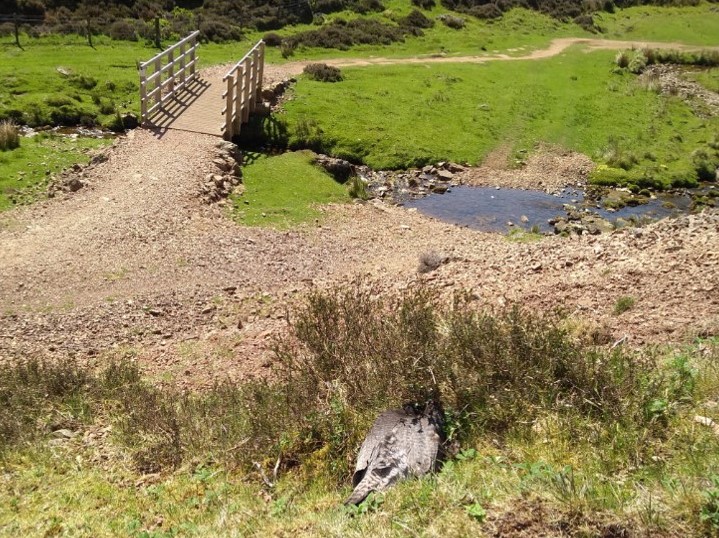
[Photo of an illegally-killed peregrine found next to a driven grouse moor, photo by RSPB]

Peregrine persecution on a grouse moor: Bleasdale video footage finally released

In April this year, a high profile prosecution case for alleged raptor persecution collapsed after covertly-filmed video evidence was deemed inadmissible.

The prosecution was being brought against a gamekeeper from the Bleasdale Estate in Bowland, who had been charged with a string of wildlife offences including the alleged killing of two peregrines in April 2016.

We had followed this case since September 2017, attended each court hearing, and blogged in detail after the case collapsed on a series of technicalities earlier this year (e.g. see here, here, here, here).

The details, as described in court, of what had happened to those two peregrines, were horrific. It was alleged that the adult female peregrine had been shot whilst leaving her nest and the adult male had been caught by the leg in a spring trap that had been set on the nest ledge, where he struggled to escape, in vain, for over ten hours, before being shoved in a bag by an unidentified man and removed from the site.

We’ve been waiting for the RSPB to publish this video footage ever since the case collapsed and the accused walked free. We understand there have been some legal issues about publishing the video and although we don’t know the details, it’s probably a safe bet to guess that some influential people from the grouse shooting industry have probably been working hard to ensure this footage never sees the light of day.

Today the RSPB has released video footage of peregrine persecution in Bowland and although the Bleasdale Estate is carefully not mentioned, it’s quite obvious from the dates cited and the video images that what is being shown in this footage fits the description of what allegedly happened to those two Bleasdale peregrines as desribed to the court earlier this spring.

The RSPB has published a blog describing the circumstances of this footage (here).

Watch the video here but beware, it contains graphic content:

Ater you’ve watched it, think about why nobody has been successfully prosecuted for these crimes.

And then think about why nobody will ever be prosecuted for these crimes.

And then think about why these crimes continue to be committed on grouse moors in 21st Century Britain.

And then think about what you can do to help bring it to an end.

Change must come, but it will only come if people stand up and demand it.

See you at a Hen Harrier Day event this weekend.

UPDATE 10 August 2018: Moorland Association’s response to peregrine persecution on Bleasdale grouse moor (here)

Poisoning suspected after discovery of dead peregrine & tethered pigeon ‘bait’

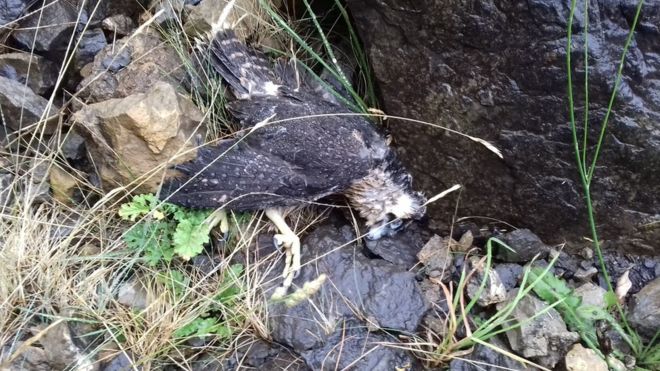
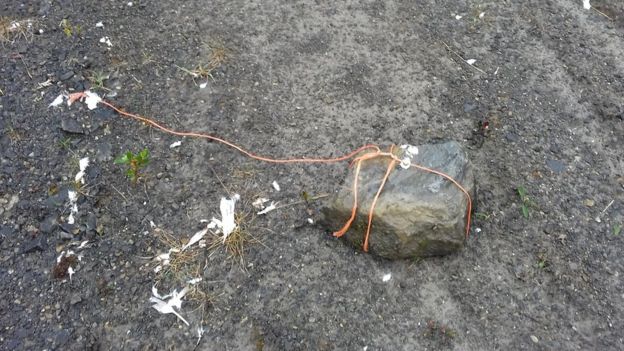
The Police Service of Northern Ireland (PSNI) is investigating a suspected poisoning incident after raptor workers found the body of a dead young peregrine and the remains of what had probably been a live tethered pigeon close to the peregrine’s nest site. An adult peregrine is reported as ‘missing’ from the site.

The gruesome discovery was made by members of the Northern Ireland Raptor Study Group (NIRSG) in the Scraghey area of Castleberg, Co Tyrone, on 10 July 2018. Toxicology results are awaited.

[Photo of the dead young peregrine, by NIRSG]

[Photo of the rock, baler twine & remains of a pigeon leg found at the site, by NIRSG]

Smearing a live pigeon with poison and then tethering it close to a peregrine breeding site to act as a flapping ‘bait’ is a barbaric yet all too common crime. We only blogged about a similar case a few weeks ago (see here).

Jim Wells from the NIRSG said: “The vigilance of several members of the Raptor Study Group and the very quick response by the PSNI have revealed what is likely to be one of the most serious incidents of peregrine persecution in Northern Ireland for several years.

This is nasty, very cruel and callous. We don’t know what the suspected poison is, but if someone had come along and tried to help the pigeon it could have hurt them too.

This has happened on several occasions in areas of Co Tyrone. There are around 15 sites in Tyrone, it’s an important breeding ground. But in some areas there is still a culture of poisoning birds, which is very damaging to the overall population.

All of the peregrine sites in Co Tyrone are monitored on a regular basis every year. This research has revealed that illegal persecution remains a problem in some parts of the county“.

Dr Eimear Rooney of the NIRSG and a representative on the Partnership for Action against Wildlife Crime NI said there are between 80 and 90 breeding pairs of peregrines across the whole of Northern Ireland, of which around 55 pairs are successful in producing young. She said:

The population of peregrines in Northern Ireland is limited by available nest sites and thus has remained fairly stable for several yearsHowever, illegal killing could result in serious implication for the viability of the species here. Peregrine falcons are primary predators and removal of such predators from our ecosystems can have serious consequences on a wide range of species.

It’s deeply frustrating to think that someone went out of their way to target these birds in such a heinous manner“.

Anyone with information about this suspected crime is encouraged to contact the PSNI (Tel: 101) quoting incident number 1550.10/7/18.

Salisbury peregrine ‘Peter’ – shot last year, Dad this year

A good news story!

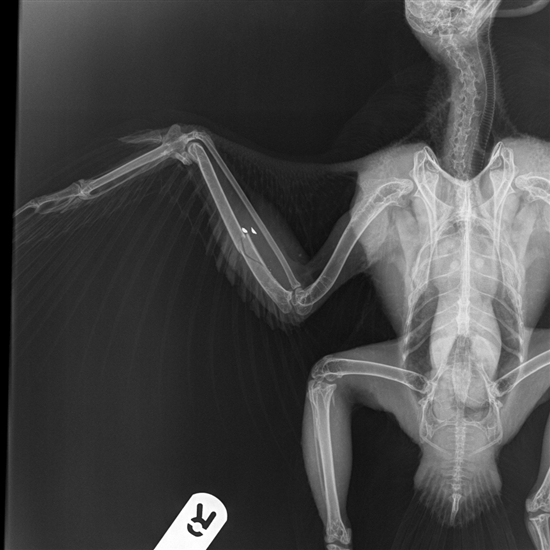
Last year we blogged about a peregrine that had been found shot in Hampshire. His colour ring (Blue GX) identified him as ‘Peter’, one of the chicks that successfully fledged from Salisbury Cathedral in 2014. He’d suffered a fractured wing from the gunshot fragments.

Peter spent a few months in the care of the Hawk Conservancy Trust in Andover where he received specialist veterinary attention and rehabilitation that allowed him to be released back to the wild several months later (see here).

[Photo of Peter’s release by James Fisher]

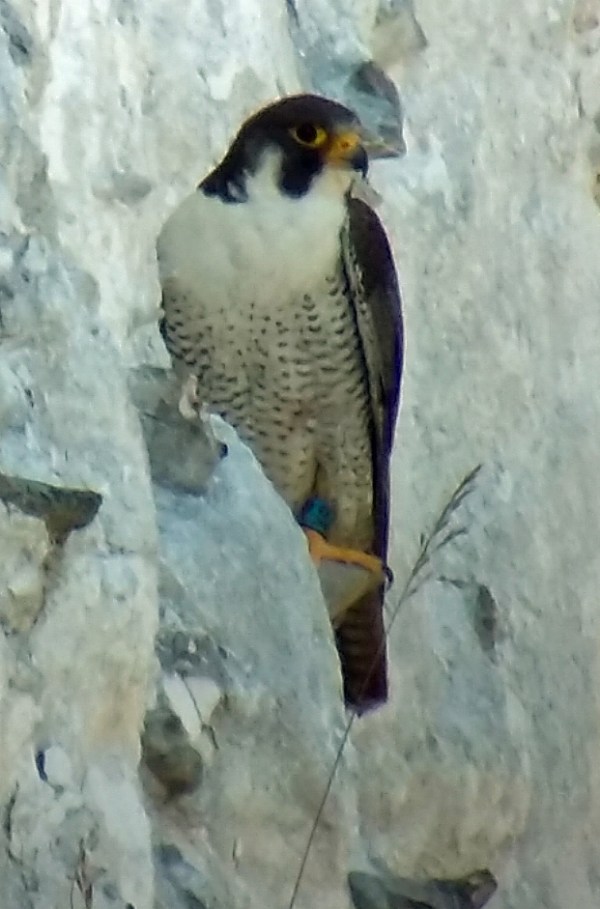
This year, thanks to his colour ring, Peter has been recorded nesting at a quarry in Hampshire. This breeding attempt has resulted in two successfully fledged chicks. Full details here on the Salisbury Cathedral website.

What a fantastic outcome for all those involved with his rescue and rehabilitation. Well done and thank you!

[Digiscoped photo of Peter at the quarry, by Keith Betton]

Peregrine & two buzzards found poisoned: police appeal for info

Press release from South Wales Police (Bridgend & Vale of Glamorgan), 29th June 2018:

We are appealing for witnesses after three birds of prey were poisoned.

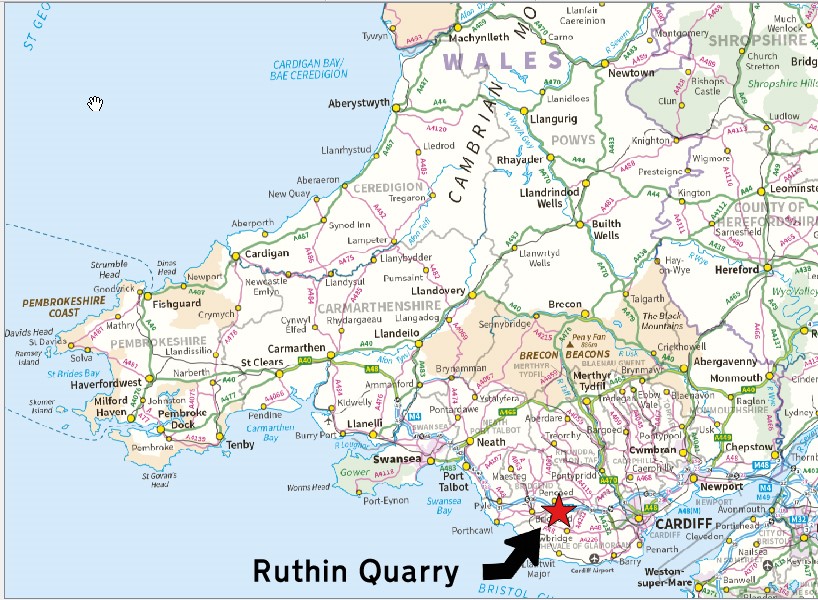
We are investigating the deaths of a peregrine falcon and two buzzards at Ruthin Quarry in the Vale of Glamorgan. The birds were found dead in the quarry on March 26.

[RPUK map]

A toxicology report confirmed that the birds were killed using a poisoned bait bird which was laced with a banned pesticide.

PC Mark Goulding, wildlife and environmental crime officer, said: “The killing of birds of prey is a serious wildlife offence. Raptor persecution is a National Wildlife Crime priority.

The poisoned birds ingested bait laced with the banned pesticide which was deliberately set out. I would urge anyone who may have witnessed this crime or who has information about this incident to come forward.

Anyone with information on illegal use of pesticides against wildlife can call us on 101 quoting 1800106122 or Crimestoppers anonymously on 0800 555 111“.

ENDS

The police press release didn’t include any photographs but from what has been described (“using a poisoned bait bird”) and given the location, it wouldn’t be a surprise to learn that this crime involved a live pigeon smothered in poison and tethered to a rock so that its helpless flapping attracted predators. This is a well-known barbaric persecution method that has been used for years, especially in Wales and Ireland, by some involved in pigeon racing who want to take out peregrines on the pigeon racing routes (e.g. see here).

Photo of a poison-smeared tethered pigeon at a quarry in Wales in 2012 (photographer unknown)

Missing sea eagle Blue T: statement from Cairngorms National Park Authority

Following last week’s news that a young satellite-tagged sea eagle (Blue T) had ‘disappeared’ on Invercauld Estate, the Cairngorms National Park Authority’s CEO, Grant Moir, has published a statement:

The frustration is evident and it’s clear that a great deal of thought has gone in to this statement, which is a huge improvement on previous CNPA statements about ‘disappearing’ satellite-tagged raptors in the National Park (e.g. see here), but we wanted to pick up on a few things.

The news that SNH will shortly be launching the next phase of its raptor tracker project is great – any technological developments that might provide more detail about the fate of ‘missing’ satellite-tagged raptors will be warmly welcomed by most (but probably not by the criminals within the grouse-shooting industry).

However, Grant seems to think that knowing exactly where and when a tagged bird was killed will “take the ambiguity away from the situation“. It won’t.

As we’ve blogged before, if the tag/raptor is destroyed on an estate that employs multiple gamekeepers, the issue of identifying the individual culprit(s) will remain, especially if all the staff give the standard ‘no comment’ police interview. There will also be the sometimes plausible argument that the raptor had been shot/poisoned on a neighbouring estate and died just over the boundary of the estate under scrutiny. And as we’ve seen in recent years, even with clear video evidence of an individually identifiable gamekeeper killing a raptor, a successful prosecution is highly unlikely because the Crown Office will declare the evidence inadmissible or will claim it’s not in the public interest to proceed.

Sorry, Grant, but the so-called ‘ambiguity’ will remain – although there’s nothing ambiguous about the robust & statistically significant findings of the golden eagle satellite tag review, which demonstrated a clear relationship between suspicious raptor disappearances and land managed for intensive driven grouse shooting in and around the Cairngorms National Park:

One other thing in Grant’s statement that we wanted to pick up on –

Invercauld Estate is part of the East Cairngorms Moorland Partnership and I genuinely do believe that progress has started to be made across a wide range of subjects with the Estates involved……”

Really? What progress is that, then? Any progress on stopping the illegal persecution of raptors?

The East Cairngorms Moorland Partnership was established in December 2015 and comprises six estates working in ‘partnership’ with the CNPA.

The Partnership’s statement of purpose can be read here.

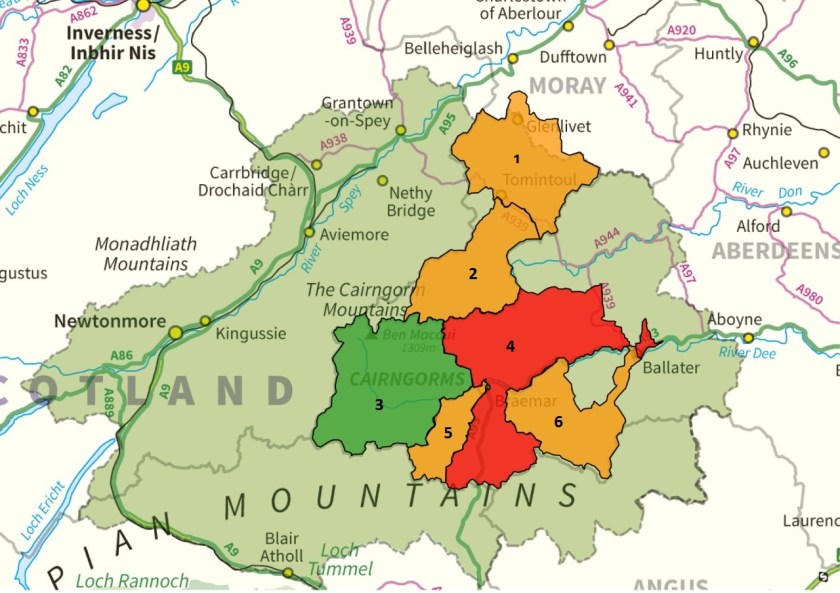
Here are the estates (boundaries sourced from Andy Wightman’s Who Owns Scotland website):

  1. Glenlivet Estate. 2. Glenavon Estate. 3. Mar Lodge Estate (National Trust for Scotland). 4. Invercauld Estate. 5. Mar Estate. 6. Balmoral & Birkhall Estate.

Last October, almost two years after this Partnership was established, we wanted to find out what progress had been achieved. We submitted an FoI to the CNPA asking for copies of all correspondence relating to the East Cairngorms Moorland Partnership since 1 January 2016.

Here’s the reply we received in November 2017:

We have searched our Corporate Drives for the period as above and we hold no information‘.

Impressive amount of progress, eh?

We do know that in February this year the CNPA was advertising for a part-time East Cairngorms Moorland Partnership Officer, on a decent salary of £28,770 – £34,633 pro rata.

Assuming someone has now been employed in this new position, they’ve certainly got their work cut out in delivering the objectives set out in the Cairngorms National Park Management Plan 2017-2022, which includes improving raptor populations in the National Park. Recent peer-reviewed science has revealed that the local hen harrier population has crashed (here) as has the local peregrine population (here).

Oh, and satellite-tagged hen harriers keep going ‘missing’ in highly suspicious circumstances inside the National Park, just like hen harrier Calluna, as do satellite-tagged eagles such as sea eagle Blue T and golden eagle #338.

National Park or National Disgrace?

Moorland Association giving false hope for an end to raptor persecution in Peak District National Park

The Moorland Association’s long-term ability to deny and undermine the proven link between illegal raptor persecution and driven grouse moor management is legendary (see here for just one of many examples).

Never far from the headlines, they’ve been churning out the propaganda again, this time during an interview on BBC Radio 4’s Today programme, broadcast 2 May 2018, in response to the recently published scientific paper linking illegal raptor persecution in the Dark Peak area of Derbyshire’s Peak District National Park with driven grouse moor management.

The interview is available on iPlayer for the next 21 days here (starts at 53:15 mins).

Here’s the transcript:

John Humpries: There’s new research seems to show a clear link between grouse shooting and the decline in the number of birds of prey, specifically the goshawk and the magnificent peregrine falcon, the fastest bird in the world. Mark Thomas of the RSPB has done the work, Amanda Anderson is the Director of the Moorland Association. They are both on the line.

Mr Thomas, haven’t we heard this before?

Mark Thomas: We have, John, lots of times. The difference here is you’ve got a National Park, a place where the public can go, 10m visitors a year.

John Humphries: The National Park being ?

Mark Thomas: The Peak District National Park. It is highly protected yet half of the park, the northern bit with the grouse moors, are a no go zone for the very birds that you’ve just discussed.

John Humphries: Because?

Mark Thomas: Because we’ve done some research and what we’ve done is we’ve looked at all the crimes against birds of prey. So this is shot peregrines, poisoned buzzards, shot buzzards, pole trapped ospreys, it goes on and on, and all those crimes, we’ve matched them statistically with the area used for driven grouse shooting in the Dark Peak, the northern area.

John Humphries: But I’m not quite sure how you link the crimes, as you put it, to legitimate grouse shooting.

Mark Thomas: Because what we’ve basically done is we’ve matched the places where the crimes occur and then we’ve put a layer on showing where the grouse moors are and statistically that is significant. It overlays each other and we’ve proven a correlation between the two. If you are a bird of prey, you do not want to be in the Dark Peak.

[RSPB map from the new scientific paper showing the number of confirmed raptor persecution incidents in the Peak District National Park 2000-2016 overlaid with areas managed for grouse shooting]:

John Humphries: Amanda Anderson, do you accept that?

Amanda Anderson: Good morning John, good morning Mark. I have to refute that Mark thinks the northern area is a no go zone for birds of prey. The National Park is a massive area, the size of London, and in the north of the park this year we have 8 pairs of peregrines and 7 or 8 pairs of goshawk. Now it’s early in the season, it’s a very cold late spring, I’m sure you’ll agree, so we can’t guarantee that these pairs will turn into nests and eggs turn into chicks.

John Humphries: But it’s this correlation between the crime and the areas where grouse shooting happen.

Amanda Anderson: One incident of a bird of prey being persecuted is too many but we must look at the instances of this, the amount of crimes reported. I don’t know the definition of a confirmed crime but it is over a 16-year period so there are 3-4 incidents per year and there have been 2 prosecutions in the area that Mark refers to and bird of prey numbers are now increasing.

John Humphries: That presents a slightly different picture, Mark.

Mark Thomas: That’s not exactly right. When you look nationally, 69% of all people convicted for killing birds of prey, gamekeepers, let’s get to it, they are the people killing birds of prey in this park. And, as I’ve said, we have a whole catalogue of incidents. The confirmed ones is when we’ve got a body, we’ve physically got a body where nobody can refute that that bird has not been poisoned, hasn’t been trapped. In terms of the birds that are there at the moment, we’ve had this situation year on year. At the beginning of the season it looks good. Ask Amanda. Last year not one single peregrine falcon was successful in the northern Dark Peak where the grouse moors are.

Amanda Anderson: That’s absolutely true. Last year peregrine were very disappointing. As I say, this year it’s looking very exciting with about 8 pairs on the go at the moment.

John Humphries: So there we are, that’s it, it does fluctuate, doesn’t it Mark?

Mark Thomas: It does but what our data is looking at is over a long period of time. Amanda’s reflecting on one year. We must acknowledge Amanda has tried very hard with her moorland managers to self regulate but that is not working.

John Humphries: So what would you do? Would you ban grouse shooting?

Mark Thomas: No, the RSPB is not saying that and we are not going as far as that. We are saying we want licencing. If a shoot has committed a crime then the licence to shoot on that moor is removed for a period of time. That would focus and we think that would solve this problem.

John Humphries: And would you accept that, Amanda?

Amanda Anderson: If a shoot has committed a crime then somebody should be in court and prosecuted and that is a fair system and is working. The conclusion the RSPB draw to legislate to help birds of prey is flawed when the population is increasing.

ENDS

Wow. Amanda’s final comment deserves a whole blog to itself but that’s for another time.

For now, we want to concentrate on Amanda’s claim that this year is “looking very exciting with about 8 pairs [of peregrines] on the go at the moment” and “7 or 8 pairs of goshawk“.

That sounds promising, doesn’t it? But just how accurate are these figures?

Not very, according to local raptor group fieldworker Mike Price from the Peak District Raptor Monitoring Group.

We asked Mike to comment and here’s his response:

“Thank you for your email. Whilst we are not able to publicly share the figures of breeding, highly threatened raptor species at this point in the season, we can tell you that the activity of Peregrine Falcons has followed the pattern of previous years, with several sites occupied earlier in the season. Approximately 50% of these sites are no longer occupied. 

We know that there has been an incident near to one site that led to an injured bird being photographed by a member of the public. It was described as immobile, on the ground and covered in blood. Unfortunately, despite extensive searching the bird has not been recovered and we do not know what caused the bird’s injuries.

[Photos of the injured peregrine, found 14 April 2018, published on Twitter by @RSPBBirders]

Occupied Goshawk sites appear to be lower than in 2017, although known breeding pairs remain in line with 2016 and 2017. Several sightings of pairs exhibiting breeding behaviour at historic breeding sites appear to have fizzled out and at a number of sites this appears to be happening annually and without any reasonable explanation.

With all of that in mind the figures quoted by Amanda Anderson for the north of the Peak District National Park, are in our opinion, inaccurate. We would welcome a recovery for both Peregrine and Goshawk in the area mentioned but after seven years of failed collaborative working we are understandably cautious”.

Hmm, this report paints quite a different picture to the one Amanda was suggesting, doesn’t it?

To be fair though, Amanda did say it was still early in the season and it’d been a cold, late spring so there was a chance that not all the peregrine and goshawk breeding attempts would be successful. That’s true, and the weather may well have played a role in some of these early failures (we’ll find out when the 2018 report is published). But take a look again at that bloodied, injured peregrine laying in the heather. Was that a victim of the cold, late spring?

It’s a critical time for breeding birds, and especially for breeding raptors in the Peak District National Park. According to a statement made by the Peak District National Park Authority in January this year, it is “looking for an increase in birds in the breeding season before committing to working with the other organisations in the Peak District Bird of Prey Initiative beyond 2018″.

It’s no wonder the Moorland Association is keen to pretend things are on the up.

Jason North convicted for disturbance & egg theft from raptor nests

RSPB press release (3 May 2018):

EGG COLLECTOR RECEIVES SUSPENDED SENTENCE AND FINE FOR OFFENCES AGAINST RARE BIRDS

An egg collector, who was previously unknown to police, has pleaded guilty to taking osprey eggs and disturbing rare breeding birds in Devon and Scotland.

Today (3 May 2018), Jason North, 49, from Plymouth appeared at Plymouth Magistrates Court and pleaded guilty to nine charges relating to the taking of osprey eggs from Highland Scotland, and the disturbance of golden eagle, osprey, peregrine falcon and little-ringed plover during 2016.

He received a 6-week jail sentence on each charge suspended for one year and a fine of £665 for taking the osprey eggs. He was also put in a 10-week curfew to ensure he remains at home between 9pm-6am. Maps, books and equipment were also confiscated.

The four species involved are all rare breeding birds listed on Schedule 1 of the Wildlife and Countryside Act 1981. Offences against these birds can result in up to six months in prison and/or an unlimited fine per offence.

[Jason North leaving court yesterday, photo by Penny Cross]

In December 2016, Devon and Cornwall Police, assisted by RSPB and NWCU officers, searched the home of Mr North at Haddington Road, Plymouth. They seized a number of items including hand-written notes, diaries and a computer. Following forensic examination of the computer, hundreds of digital images and video clips were recovered showing eggs and nests. The evidence indicated that North had been routinely making unlicensed visits, over a number of years, to the nests of rare breeding birds in Devon and Scotland. There were also images of eggs which had been removed from nests and put into display cases. The location of these eggs remains unknown.

A detailed investigation by Wildlife Crime Officer (WCO) PC Joshua Marshall, supported by RSPB and others, located several of the nest sites shown in the images. Evidence from people monitoring those sites, supported by expert evidence, confirmed that eggs had undoubtedly been taken in some cases. All the evidence clearly indicated that North, in addition to making unlicensed visits to take photographs, was also involved in taking eggs and it is believed these were then added to a collection.

PC Joshua Marshall of Devon and Cornwall Police said:

North was unknown prior to this investigation and only brought to account for his illegal activities via a number of diligent members of the public reporting to police confidentially. The public have such an important role to play in bringing wildlife criminals like this to justice. Please be vigilant while out in the countryside and report any suspicious behaviour, especially around nest sites, to the police on 101.

It also serves as a warning to potential or active offenders that you stand a high risk of being brought to account for any illegal activity you commit in respect to wild birds.

I would like to thank all those involved with the investigation including CPS, the expert witnesses and RSPB Investigations Officer Guy Shorrock.”

Jenny Shelton from the RSPB’s Investigations unit added: “These days, thankfully, egg collecting is by and large a thing of the past. However, there are still some active collectors targeting our rarest birds, and it is particularly worrying when new egg collectors come to light showing that the everyone needs to remain vigilant. We are grateful for the fantastic work by Devon and Cornwall Police plus the support from the CPS, NWCU and numerous people involved in monitoring and protecting these nest sites.

It’s hard to understand why someone would prefer to take the eggs of these incredible birds rather than see the birds flourishing in the wild.”

If you notice any suspicious behaviour around birds’ nests or breeding sites, including people looking in bushes or wading out to islands, often at unsociable hours, please call police on 101 and RSPB Investigations on 01767 680551.

ENDS

UPDATE 9 May 2018: A good blog about this case from the RSPB’s Investigations Team (here)

New paper links raptor persecution to driven grouse moors in Peak District National Park

A new scientific, peer-reviewed paper, published in the journal British Birds, links the illegal killing of birds of prey with driven grouse moor management in the Dark Peak area of the Peak District National Park.

Full citation: Melling, T., Thomas, M., Price, M. and Roos, S. (2018). Raptor persecution in the Peak District National Park. British Birds 111 (May): 275-290.

Unfortunately we’re not permitted to publish the full paper [UPDATE: paper now available at the foot of this blog] but here is the abstract and a number of the figures:

The RSPB has published a blog about this research which is well worth a read – here.

At the end of the RSPB blog, RSPB Investigator Mark Thomas writes: “It’s going to be interesting to see the response to our paper“.

The response will be the same one we’ve seen to every other scientific paper linking illegal raptor persecution to driven grouse moor management (and there have been many):

  1. Conservationists will be appalled (but not surprised);
  2. The grouse shooting industry will either (a) ignore it or (b) try to undermine the credibility of the authors and the science;
  3. The statutory authorities will either (a) ignore it or (b) they’ll acknowledge it and say raptor persecution ‘won’t be tolerated’ and then do nothing.

We still need to work on increasing public awareness about the illegal persecution of raptors on driven grouse moors and encourage more voters to apply pressure to their political representatives. Good progress has been made in the last few years but there is much, much more to do.

Scientific papers such as this latest one all help build the evidence, although if they sit behind a journal paywall they have limited value. Please help spread the word about this paper, especially on social media, and if you’re a resident of the Peak District National Park or if you live nearby and your MP’s constituency extends in to the Park, please send a copy of the paper’s abstract to them and ask that they contact Wildlife Minister Therese Coffey at DEFRA to demand she takes action.

In fact, even if you’re not a Peak District resident, this is a National Park that is there for all of us to enjoy, so please send a copy of this paper’s abstract to your local MP, wherever you live, and ask him/her to demand action from Minister Therese Coffey on your behalf.

The illegal killing of raptors on grouse moors in this National Park (and many others) has been going on for decades. It’s all documented. It will continue to go on unless we demand change. Please act.

UPDATE: Here is the paper in full:

Grouse-shooting industry’s reaction to the failed Bleasdale Estate prosecution

The prosecution of a gamekeeper, employed by the Bleasdale Estate in Bowland to manage a grouse moor, collapsed recently on a series of legal technicalities (see here, here and here).

We’ve been wondering how the grouse-shooting industry would react to this failed case. Would they condemn the alleged illegal killing of two breeding peregrines at a nest site on a driven grouse moor? And, seeing as all charges against the defendant were dropped, would the industry put out a public appeal for information to help find the alleged perpetrator?

So far we haven’t seen any public commentary from the owner of the Bleasdale Estate, Mr Jeremy Duckworth. This is a bit surprising. At the time of the alleged offences (April 2016), Mr Duckworth was a Director and a regional representative of the Moorland Association (a group representing the interests of grouse moor owners in England):

According to documents lodged at Companies House, Mr Duckworth resigned his Directorship of the Moorland Association in September 2016. The timing of his resignation coincided with the early stages of the police investigation in to the alleged offences on his grouse moor – obviously nothing to do with damage limitation and purely and simply coincidental, of course:

As well as silence from Mr Duckworth, nor have we seen any commentary from the Moorland Association (MA) itself. As a member of PAW (Partnership for Action against Wildlife Crime), it’s not unreasonable for us to expect the Moorland Association to have provided comment. Surely the MA must be concerned that an unidentified individual appears to have repeatedly visited the grouse moor nest site of a specially protected species and allegedly killed two peregrines, no?

What we have seen though, is a press release issued by You Forgot The Birds (YFTB), an astroturfing lobby group funded by the grouse shooting industry.

Perhaps this press release from YFTB was issued on behalf of the Moorland Association, or with the MA’s blessing, or funded by members of the MA? No, that can’t be right, because the YFTB press release wasn’t concerned at all about the alleged killing of two peregrines on a grouse moor, but instead, just like all its other press releases (funded by the grouse-shooting industry) this press release was focused entirely on attacking the RSPB and attempting to undermine its credentials.

The press release was sent out to media journalists last Friday, embargoed until one minute past midnight on Saturday morning, obviously designed to hit the weekend papers. We’re grateful to the journalist who sent us a copy. It read as follows:

Judge accuses RSPB of ‘deliberate circumvention’ of law

A judge in Lancashire has accused the RSPB of “deliberate circumvention” of the law regarding covert surveillance. In a case concerning alleged wildlife crime the judge said the RSPB had “effectively taken on the role of a police officer” and that wildlife crime police officers were “turning a blind eye” to how the RSPB was seeking to avoid complying with the law.

Sitting in Preston last month District Judge Jane Goodwin examined the use of covert videoing by the RSPB of a peregrine falcon nest in the Forest of Bowland. James Hartley, a gamekeeper, had been accused of persecuting the birds.

The judge ruled that the RSPB investigators – who were both former police officers – should have informed the police about their proposed videoing but did not because that would have triggered the safeguards of the Regulation of Investigatory Powers Act.

In her decision Judge Goodwin said that “the deliberate circumvention of the RIPA legislation… leaves an air of disquiet.” The RSPB had also “trespassed… without justification [and] breached the PACE Codes of Practice…The RSPB have acted improperly and out with their remit”.

The judge noted two previous occasions when RSPB evidence had been deemed inadmissible by prosecutors because of irregularities.

Last month an FOI response revealed that national police officers had been highly critical of the RSPB’s attempts to dominate the investigation of bird crime. The Defra official in charge of wildlife crimes had written that the charity’s approach could “prejudice the integrity of investigations.”

Commenting on the latest case Ian Gregory of the pro-grouse moor group You Forgot The Birds said: “The RSPB is facing a crisis of trust. It should reflect on why so many find it difficult to work with it. Only through good relations with the justice system and gamekeepers can it help to reduce bird crime.”

ENDS

Interestingly, two contacts were provided for editors who wanted more information. One was Ian Gregory (the usual YFTB contact) but the second contact was none other than the Bleasdale defendant’s solicitor, Tim Ryan! Imagine that!

Blog readers who have been following this case and have read the farcical court proceedings (see here, here & here) will see how YFTB has cherry-picked all of District Judge Goodwin’s criticisms of the RSPB and then tried to present them as a coherent representation of what happened in court, completely ignoring the ridiculous legal technicalities which caused the collapse of this case. YFTB’s intentions are clear: ignore the details of the horrific alleged peregrine persecution and instead besmirch the integrity and reputation of the RSPB’s Investigations Team.

Unfortunately for YFTB, this attempted smear against the RSPB didn’t really go to plan. We saw two articles in the weekend press that were clearly informed by YFTB’s press release (one in The Times on Saturday [behind a paywall] & one in the Mail on Sunday [not behind a paywall]) but neither of those articles presented the case as YFTB had intended. Instead, those two papers took a rather more balanced view and as well as mentioning the judge’s criticism of the RSPB, they also both focused on the alleged crimes, particularly the Crown’s case that one of the peregrines had been caught in a trap for over ten hours, and that peregrine DNA had been found on a knife and a hammer recovered from the defendant’s home/outbuildings. They both also included a response from the RSPB which said similar evidence [to the Bleasdale Estate case] had been accepted in other court cases.

Blimey, is this an indication that mainstream journalists have finally got the measure of YFTB and understand that YFTB press releases require detailed scrutiny to get beyond the spin?

It certainly looks that way.