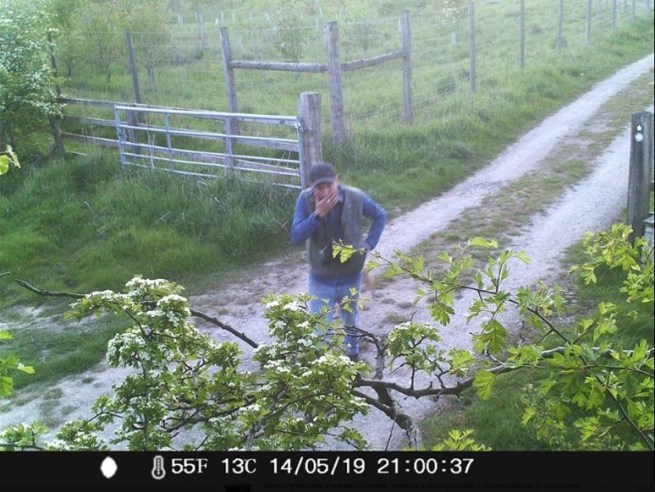
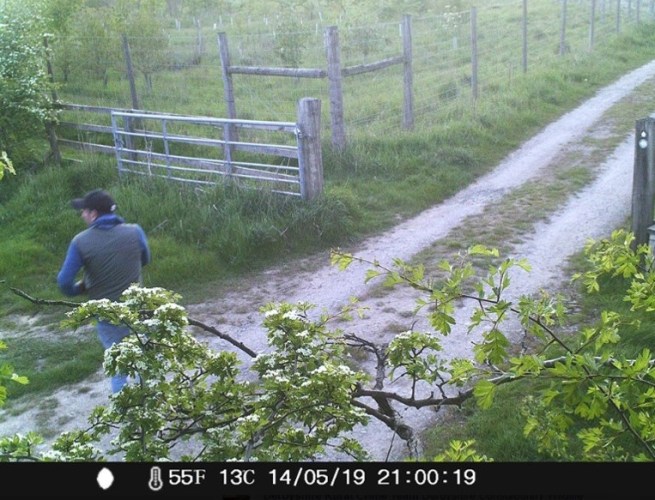
Can you identify this man? Derbyshire Police would like a word about an abandoned peregrine nest site

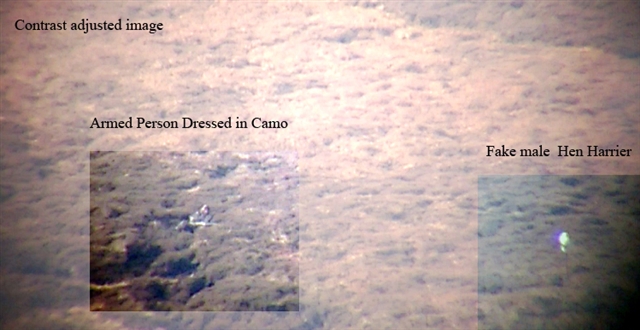
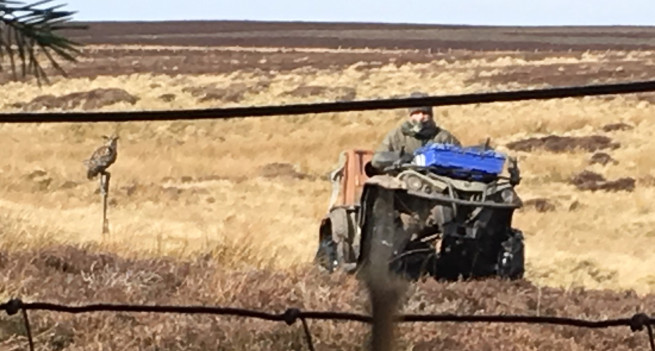
Derbyshire Constabulary’s Rural Crime Team would like to hear from anyone who recognises this individual, photographed near a peregrine breeding site in the Peak District this week (Tuesday 14 May 2019). The peregrines abandoned their breeding attempt the following day.

From the Derbyshire Rural Crime Team’s Facebook page today:

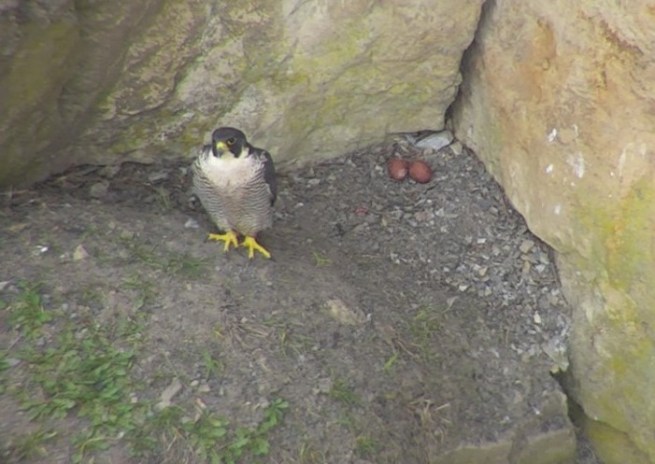
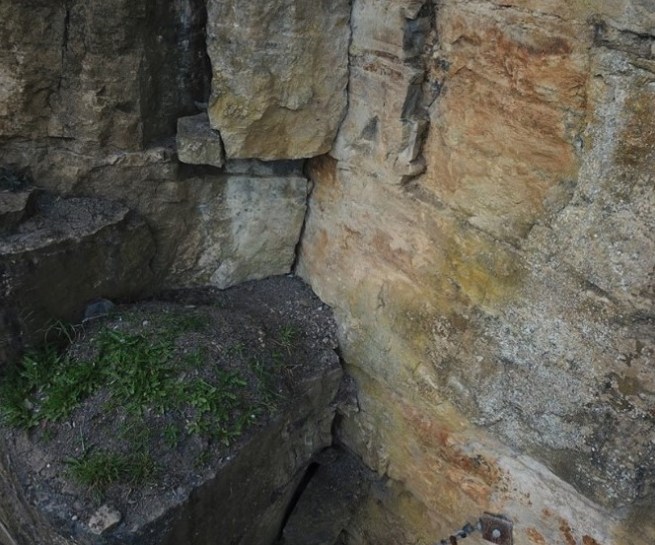
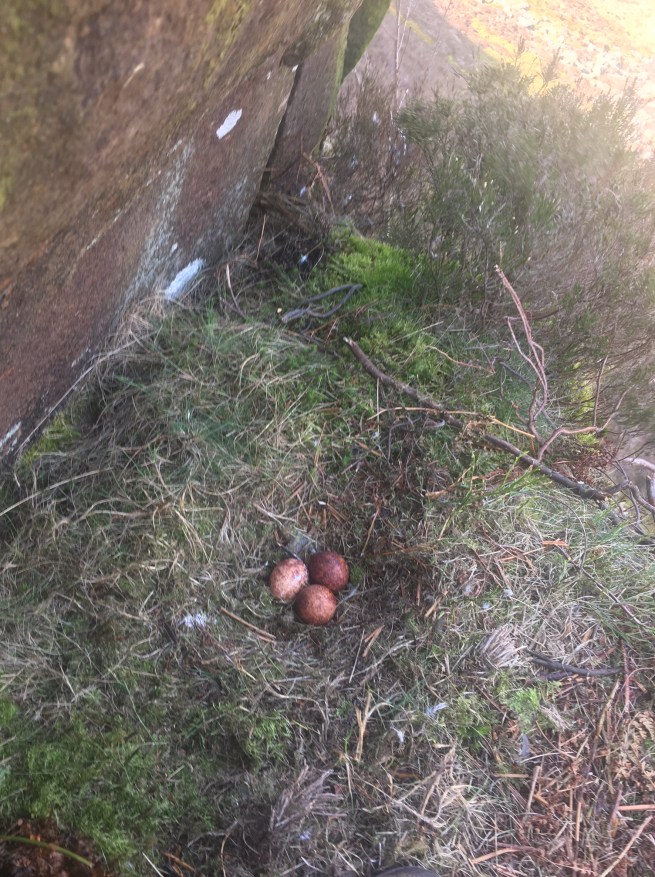
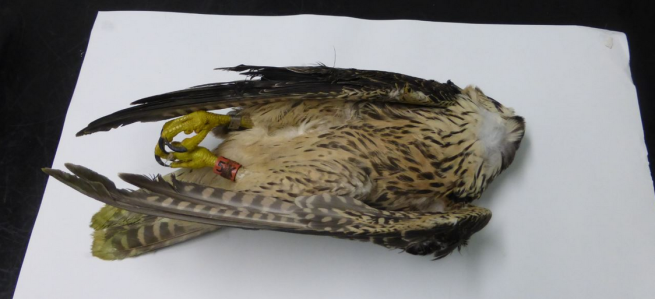
“We have been monitoring a number of Peregrine Falcon nest sites in Derbyshire Peak District over the past few months. Numerous nests have failed in recent years, some in suspicious circumstances other as a result of nature taking its course. This year having access to a drone with an impressive zoom camera, that allowed us to view the birds without disturbing them, we were able to confirm that one particular pair had 2 eggs, as can be seen in the below picture. The female was seen to act as she should and had been incubating the eggs for the last month or so. Unfortunately on the morning of the 15th of May the female was off the nest and acting oddly, by the afternoon she had left the nest site completely, she did not return. We returned with our drone yesterday afternoon and confirmed the eggs were no longer there as can be seen in the second picture. There are numerous theories and possibilities as to what happened to the eggs, at this moment in time we simply don’t know if human interference played a role.

We would like to speak to the male pictured [above] as he may be able to help us with our enquiries and would urge him or anyone who may know who he is to come forward. If anyone recognises the male please get in touch via this page, 101 or by e-mailing drct@derbyshire.pnn.police.uk. Thanks“.

ENDS

UPDATE 16 June 2020: Peregrine eggs taken from three nest sites in Peak District (here)

UPDATE 17 November 2020: Derbyshire man due in court in February for alleged theft of Peregrine eggs in Peak District (here)

Peregrine found injured at a West Midlands quarry had been shot

The West Midlands Ringing Group is reporting a shot male peregrine found injured at a quarry:

From Twitter today:

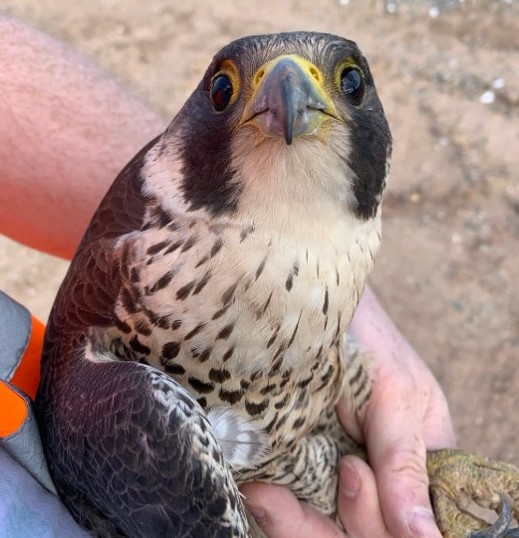
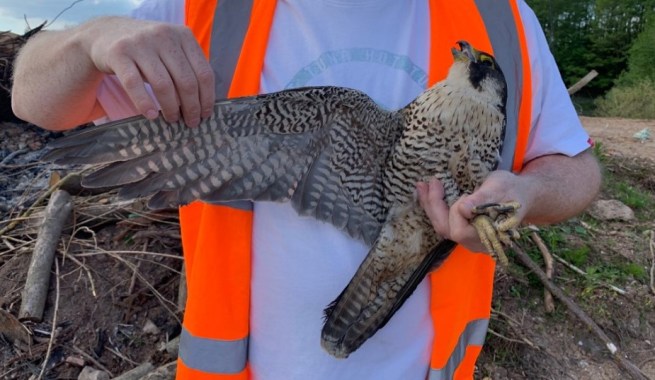
@RingersWm – Yesterday we had a call from a quarry to say that there was an injured peregrine on site. We arrived on site and along with @RSPCA_official we assessed the situation and were able to catch the young male within a few minutes. The bird is now at hospital having its wing assessed.

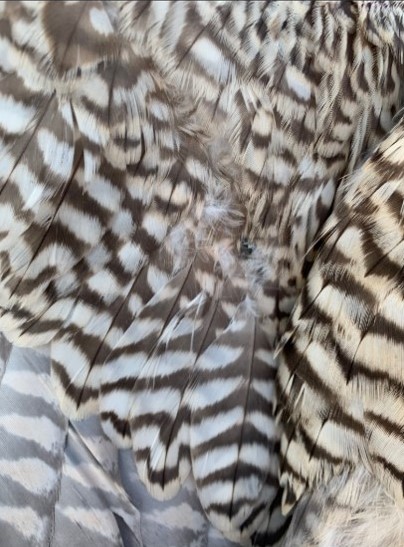
[Photos from West Midlands Ringing Group]

From @RingersWm – Peregrine update. Unfortunately the young male we helped rescue yesterday has been found to have been shot and has two pellets stuck in its wing, which has healed over but is infected. Awaiting a decision from the vet tomorrow on the likely outcome. Sad times. Will keep u updated.

ENDS

Peregrine found suspected shot at Elton Reservoir in Bury

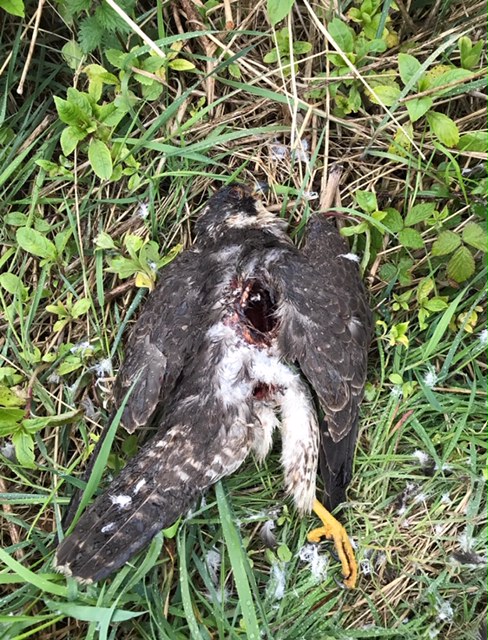
The RSPCA is appealing for information after the discovery of a dead peregrine at Elton Reservoir in Bury, Greater Manchester.

The bird was found by a member of the public on 7 May 2019, already quite extensively scavenged. Local media coverage claims that an x-ray demonstrates the bird was shot with an air rifle (e.g. here). To be honest, the x-ray isn’t very clear – it’s been taken from a side view rather than with the wings splayed, and this has distorted the radiograph. There may be shotgun pellets in the right wing but a further x-ray and/or post mortem would prove conclusive.

If anyone has any information about this incident please contact the RSPCA appeals line on 0300 123 8018.

Scottish gamekeeper Alan Wilson accused of 12 wildlife crimes

Further to previous blogs on the prosecution of Scottish gamekeeper Alan Wilson for alleged wildlife crimes in the Scottish Borders (see here, here here and here) further details have emerged about the charges he faces.

From the Peebleshire News (12/4/19) (and with thanks to the blog reader who sent us a copy):

WILDLIFE CHARGES

A gamekeeper has been accused of 12 wildlife offences at Jedburgh Sheriff Court. Alan Wilson, 60, is charged with shooting two goshawks, four buzzards, a peregrine falcon, three badgers and an otter at Henlaw Wood, Longformacus, between March 2016 and May 2017.

He also faces charges of using a snare likely to cause partial suspension of animal or drowning, failing to produce snaring records within 21 days when requested to do so by police and no certificate for an air weapon.

Wilson, of xxxxx xxxxx xxxxx pleaded not guilty to all 12 charges and a trial date was set for June 13 with an intermediate hearing on May 27.

ENDS

Please note: we will not be accepting comments on this news item until legal proceedings have concluded. Thanks.

Peregrine nest on Peak District grouse moor fails in suspicious circumstances

The Peak District Raptor Monitoring Group (PDRMG) has already reported the failure of a peregrine nest in the Peak District National Park, and the breeding season’s only just got underway!

You can read the group’s report here.

[Three abandoned peregrine eggs on the nest ledge, photo by Peak District Raptor Monitoring Group]

Of course, an abandoned nest is not a clear indicator that a wildlife crime has occurred and if viewed as an isolated incident, it could easily be argued that reporting this incident to the police is an over-reaction. Indeed, that’s exactly what we’d expect grouse shooting organisations to say. It’s what they do: play it down, make out that everything’s fine, that the persecution issue is “tiny“ and that there’s really nothing to worry about. And that’s a convincing argument, when viewing an incident like this in isolation.

However, incidents like this that happen on grouse moors in known wildlife crime hotspots (like the Peak District National Park) should never be viewed in isolation. Instead, they should be viewed as being part of a well-established pattern of failed peregrine breeding attempts in this region, and in every other region in northern England where grouse moors dominate the landscape.

We see it happen over and over and over again. In the Peak District, a so-called ‘partnership’ has consistently failed to address peregrine persecution (e.g. see here) and there have been several scientific papers making a direct link between grouse moor management and peregrine persecution here and across the UK, e.g. here, here, here, here.

It was only last month that we watched covert footage of a load of armed gamekeepers hiding close to a plastic peregrine decoy, on a grouse moor, er, in the Peak District (here).

[This peregrine was found shot next to a grouse moor in the Peak District National Park in 2016. It didn’t survive. Photo by RSPB]

And yet still it continues.

The police are investigating the latest suspicious loss of two breeding adults but to be honest there’s not much they can do unless they happen to stumble across a couple of shot peregrine corpses stashed under someone’s driving seat or chucked in the back of a Landrover, but even then it would be virtually impossible to prove who’d killed them and the charge would be for the lesser crime of ‘possession’.

In the meantime, this case will be hotly disputed at so-called ‘partnership’ meetings, the grouse shooting reps will come up with 101 reasons why the breeding attempt might have failed and not one of those reasons will be the probability that someone linked to the grouse moor has killed the breeding adults.

When you hear the inevitable denials and protestations, its worth remembering what happened to the poor Bleasdale peregrines and the grouse shooting industry’s response (here & here) when the RSPB’s video evidence was ruled inadmissible and the trial collapsed.

Hats off to the peregrine fieldworkers in the uplands who volunteer to monitor these breeding attempts, year after year, knowing full well what is likely to happen. Fortunately for us they’re willing to document these failures so everybody can see the pattern for themselves.

BASC still in denial about extent of illegal raptor persecution

There was a feature on illegal raptor persecution in the Peak District National Park on the BBC’s Sunday Politics (East Midlands) programme a couple of days ago.

You can watch it on BBC iPlayer here (starts at 21:02; ends at 25:05; available for 27 days).

The film began with an interview with Tim Birch from Derbyshire Wildlife Trust, who explained that illegal raptor persecution in the Dark Peak area of the National Park is particularly bad, affecting hen harriers, goshawks and peregrines. The Derbyshire Wildlife Trust is calling for stronger enforcement action on the criminals responsible and for the introduction of vicarious liability, to hold the landowners to account.

The presenter then spoke about the recent scientific paper on hen harrier satellite data, published a couple of weeks ago. She said:

“When it comes to hen harriers a recent study by Natural England found they were ten times more likely to die if they were near or on land used for shooting. Now this study concluded that illegal persecution is having a major impact on the conservation of these birds. But not everyone agrees with the data. Duncan Thomas represents the shooting community and believes questions need to be raised“.

The camera then cut to Duncan Thomas, ex-police wildlife crime cop in the Forest of Bowland and currently the British Association for Shooting & Conservation’s (BASC) northern director. Here’s how the interview went:

Duncan Thomas: “You know, what we have to be really careful of is the data that’s coming from these tagging programmes and who controls that data. I’d like to see much more transparency in the whole tagging process for the benefit of everybody“.

Interviewer: “These wildlife charities say that there is a direct connection when it comes to the decline in birds of prey populations here in the Peak District and illegal persecution“.

Duncan Thomas: “There is a tiny amount of persecution occurring and what we have to do is to work closely with our conservation partners to eradicate that. BASC and the other shooting organisations have a zero tolerance for wildlife crime. Any body committing any crime will be expelled from the organisations, the police will remove their firearms and shotgun certificates and they won’t be able to work, you know. There is a zero tolerance for it. You know, let’s work together and take this issue forward“.

[Duncan Thomas, struggling to understand the definition of “tiny”]
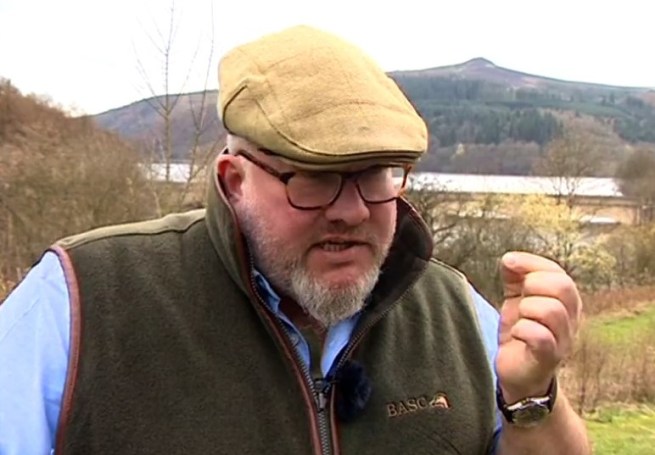
Given the extensive catalogue of evidence that demonstrates the appalling level of wildlife crime in the Peak District National Park, Duncan Thomas’ refusal to acknowledge it just makes him, and BASC, look ridiculous.

That evidence dates back at least 20 years and resulted in two damning summary reports published by the RSPB: Peak Malpractice (here) and then Peak Malpractice update (here).

Then came the Peak District National Park Bird of Prey Initiative in 2011, a so-called ‘partnership’ aimed at restoring raptor populations in the Dark Peak part of the Park. This Initiative has failed to deliver on every single target since then (see here and here) and is barely hanging by a thread (here).

Then last year a scientific paper published in the journal British Birds comprehensively linked the illegal killing of raptors with areas of land managed for driven grouse shooting in the National Park (see here). Here is a map from that paper showing the number of raptor persecution incidents against the backdrop of grouse moors (burned heather).
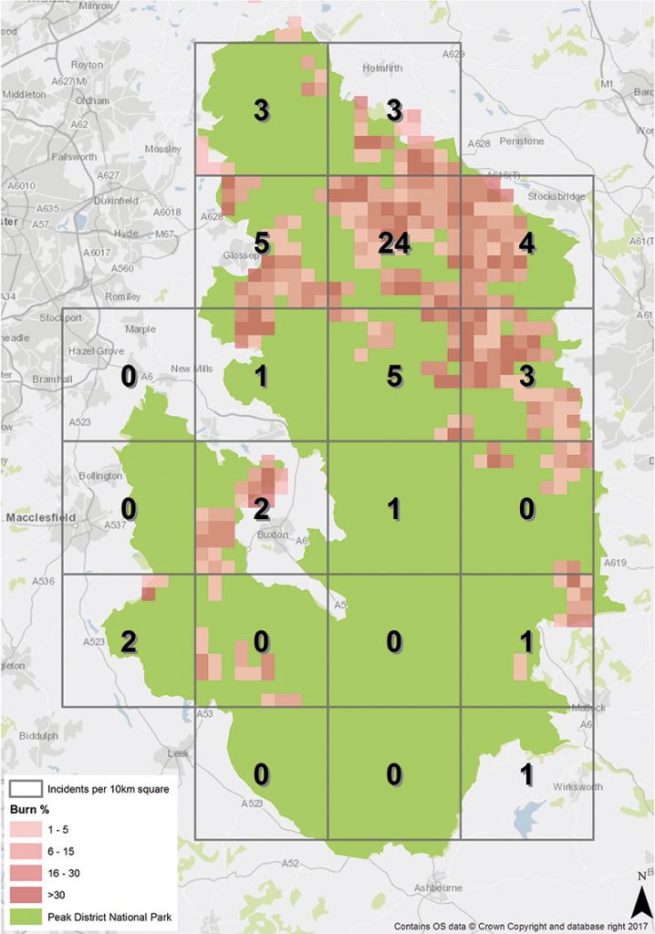
To suggest that the scale of raptor persecution in the Peak District is a “tiny amount“, even though it’s been shown repeatedly, for many years, to be having population-level effects on hen harriers, goshawks and peregrines, is either fatuously ignorant or wilfully blind.

Instead of acknowledging these widespread crimes, Duncan Thomas instead focused on trying to undermine the hen harrier satellite tag data which were collected by a Government agency, analysed by international scientists and published in an exceptionally high quality journal!

And it’s simply not true that the shooting organisations operate a zero tolerance policy for wildlife crime. If only they did, this issue would be resolved very quickly! For example, not one of them published a statement to condemn the shooting of Marsh harriers at a nest on Denton Moor nor issue an appeal for information to identify the armed men dressed as gamekeepers (here).

Instead, what we see repeatedly are shooting organisation representatives sneering and ridiculing the RSPB when covert video evidence has been ruled inadmissible in prosecutions for alleged raptor crime (Duncan Thomas has a track record of this – e.g. here), we see high-end barristers (often of QC status) brought in to defend the accused (who pays the legal fees, because they’ll be beyond the gamekeeper’s pocket?), and instead of expulsions from shooting organisations following a successful conviction we see statements of support (e.g. here).

On top of all that, we understand that BASC is accepting funds from several people who are also involved in the management of a number of estates notorious for both confirmed and alleged wildlife crimes. We’ll be exploring that relationship, also shared with GWCT, in another blog.

Does any of that look like zero tolerance to you?

Oh, and Duncan, about your idea of “working together“. That won’t happen when BASC and its fellow raptor persecution apologists boycott a meeting designed to, er, work together to tackle illegal raptor persecution.

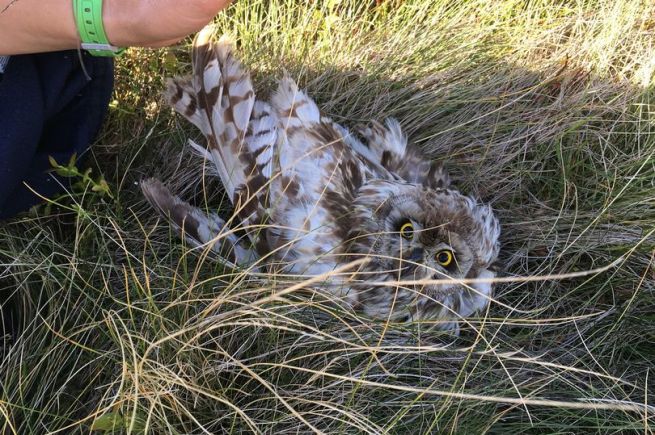
[Photo of a short-eared owl that was found shot in the Peak District National Park last year. A shot tawny owl was found stuffed in a drystone wall not far away. Photo via RSPB]

 

Lying in wait: gamekeepers trying to lure raptors to within shotgun range in Peak District National Park?

Some of you may remember the footage of an armed man, believed to be a gamekeeper, lying in wait close to a decoy hen harrier on a grouse moor in the Peak District National Park, back in 2016 (see here).

The footage was so disturbing, and the public reaction so strong, it prompted the National Trust (the landowner) to pull the shooting lease early and replace the shooting tenant with someone else (see here). Incidentally, that new tenant hosted a successful hen harrier breeding attempt last year (see here), even though some of the offspring didn’t survive for very long after leaving the safety of this moor (e.g. Arthur, see here and Octavia, see here).

We’ve also blogged before about what was believed to be the use of a tethered live eagle owl as a decoy on a grouse moor in the Lammermuirs (see here), although the suspected gamekeeper took off pretty sharpish once he realised he’d been spotted.

Well, it seems this method of using to decoys to lure in birds of prey to within close range of a shotgun is more prevalent than we’d thought.

Today the RSPB Investigations Team has published a video of several armed men (identified as gamekeepers by the RSPB) over a period of months spending hours and hours and hours of their time sitting in specially-dug holes in close proximity to a plastic peregrine and a plastic hawk, believed to have been used as decoys to attract other birds of prey. The location? A grouse moor in the Peak District National Park.

Hmm, it’s really no surprise that the Peak District National Park was identified in the recent scientific analysis of hen harrier sat tag data as one of the grouse moor areas where hen harriers were most likely ‘disappear’ in suspicious circumstances (see here).

The RSPB has also written a blog about this footage, and similar evidence of decoy use that has been recorded on other grouse moors in the north of England. Read the eye-opening blog here.

Fantastic investigative work from the RSPB to get such close and clear footage and there’s a strong chance that these gamekeepers won’t be using those particular decoy sites again in the near future!

Serial international raptor egg smuggler faces lengthy custodial sentence

The name Jeffrey Lendrum will be familiar to many blog readers. He’s the criminal who was sentenced to 2.5 years in prison in 2010 when he was caught trying to smuggle peregrine eggs (stuffed inside socks taped to his stomach) out of Birmingham airport enroute to the Middle East (see here). Lendrum had stolen the eggs from nest sites in Wales and investigators believe he had collected them to order for an Arab falconer in Dubai.

Prior to that 2010 conviction, Lendrum had been found guilty of similar offences involving stolen falcon eggs from nests in Zimbabwe (1984) and Canada (2002).

In 2016, Lendrum was sentenced to 4.5 years in jail in Brazil after being caught in possession of rare falcon eggs at Sao Paulo airport, enroute from Chile to Dubai (see here). However, in 2017 it was reported (here) that he was appealing his sentence and the Brazilian authorities released him on bail pending that appeal. Lendrum subsequently disappeared.

In June 2018 Lendrum was caught at Heathrow airport wearing a body belt that contained 19 eggs of various raptor species from South Africa (here). He initially pleaded not guilty which led to his trial at Snaresbrook Crown Court yesterday.

Lendrum eventually pleaded guilty on the first day of his trial to four charges of Evasion of a Restriction contrary to the Customs and Excise Management Act. He was remanded in custody and sentencing is expected today (Wednesday).

Coverage of this story can be found in the Daily Telegraph (here) and Daily Mail (here).

We’re interested in the legislation under which Lendrum was charged and convicted. Clearly not any wildlife-specific legislation and also clearly quite serious as his trial took place in the Crown Court rather than a lower Magistrates Court. This looks like a creative approach to tackling someone who commits serial wildlife crimes – good work by the UK Border Force and the National Crime Agency.

The judge reportedly warned Lendrum yesterday that he faced a lengthy jail term. Although according to this fascinating article written by Joshua Hammer, who has been researching Lendrum for a proposed biography, Lendrum is suffering from cancer so his apparent ill health may well be used in mitigation to influence (lessen) the severity of his sentence. We’ll see.

UPDATE 10 January 2018: Raptor smuggler Jeffrey Lendrum receives 3 year custodial sentence (here)

Parliamentary questions on poisoned peregrine in Pentland Hills

Earlier this month we blogged about the discovery of a dead peregrine in the Pentland Hills Regional Park just south of Edinburgh (see here). The dead adult male, part of a breeding pair, had been found in May and toxicology results confirmed he had been killed with a highly toxic banned poison, capable of killing a human.

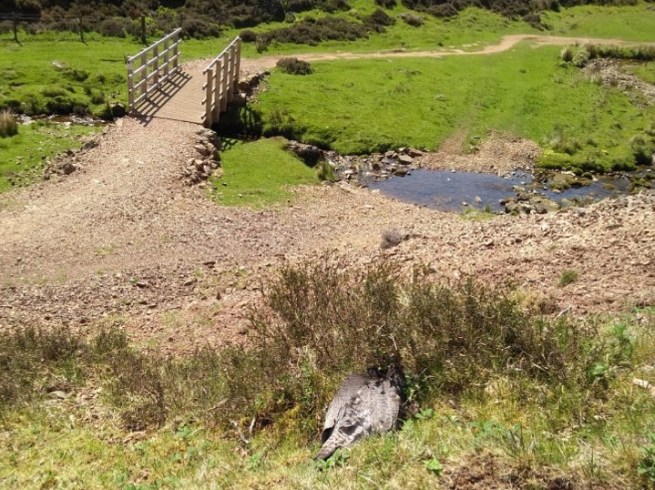
[Photo of poisoned peregrine found dead next to footpath]

There was widespread concern that Police Scotland hadn’t bothered to mention this illegal poisoning incident for many months (not until prompted to do so by us). Given the toxicity of the posion and the frequency with which the public use the footpath where the poisoned bird was found, this silence was unacceptable.

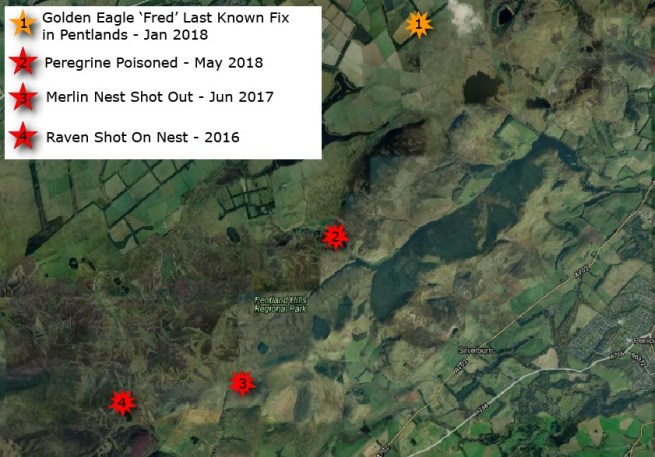
The illegal killing of the peregrine is just the latest in a growing list of wildlife crime incidents uncovered close to grouse moors in the Pentland Hills. In addition to the poisoned peregrine and the subsequent disappearance of its mate and chicks in the nest, other incidents include a raven that was found shot dead on its nest, a merlin’s nest that had been shot out, and a satellite-tagged golden eagle (Fred) who had ‘disappeared‘ in highly suspicious circumstances.

It could be argued that there is political gain to be had from keeping quiet, especially at a time when the Scottish Government-supported South Scotland Golden Eagle Project is underway and project partners SNH are keen to pretend that raptor persecution “is no longer an issue” in the area, despite overwhelming evidence to the contrary.

In addition to the incidents in the Pentland Hills, elsewhere in south Scotland there’s Raeshaw Estate, currently operating under a General Licence restriction and an Individual Licence restriction, due to evidence of alleged ongoing raptor persecution (here); there’s a forthcoming prosecution of a gamekeeper in the Borders for a long list of alleged wildlife crime (here); there’s the land managed for driven grouse shooting in South Lanarkshire (close to the golden eagle translocation area) where over 50 confirmed reported incidents of dead raptors and poisoned baits have been recorded since 2003, including a shot golden eagle in 2012 (it didn’t survive, here), the reported shooting of a short-eared owl in 2017 (here), the reported shooting of a hen harrier in 2017 (here), and the reported shooting of a buzzard in 2018 (here); and then there’s been at least four raptor poisonings in south Scotland this year alone (here), five if you include the Pentlands peregrine.

Fortunately not all MSPs are content to remain silent on this issue. Alison Johnstone MSP (Scottish Greens) spoke out earlier this month when news broke of the poisoned peregrine, stating that she would be asking questions of the Scottish Government’s failure to protect birds of prey (see here). She’s as good as her word. Alison has since lodged several Parliamentary questions as follows:

S5W-19574: To ask the Scottish Government, in light of the reported recent cases of illegal raptor persecution, what action it is taking to address wildlife crime in the Pentland Hills Regional Park.

S5W-19575: To ask the Scottish Government what assessment it has made of the risk to (a) the public and (b) wildlife of the use of banned poisons in the countryside, and what action it is taking to address this issue.

S5W-19576: To ask the Scottish Government, in light of it attracting an estimated 600,000 visitors annually, what its response is to reports that the public was not advised about the presence of a highly toxic banned poison in the Pentland Hills Regional Park

Expected answer date for all three questions is 7 November 2018.

Well done, Alison, and thank you.

Songwriter Holly Lamar pleads guilty to possessing wild peregrine in Derbyshire

US grammy nominee Holly Lamar (real name Mary Holladay Lamar), 51, pleaded guilty at Chesterfield Magistrates Court on Friday to two offences relating to the illegal possession of a wild peregrine falcon.

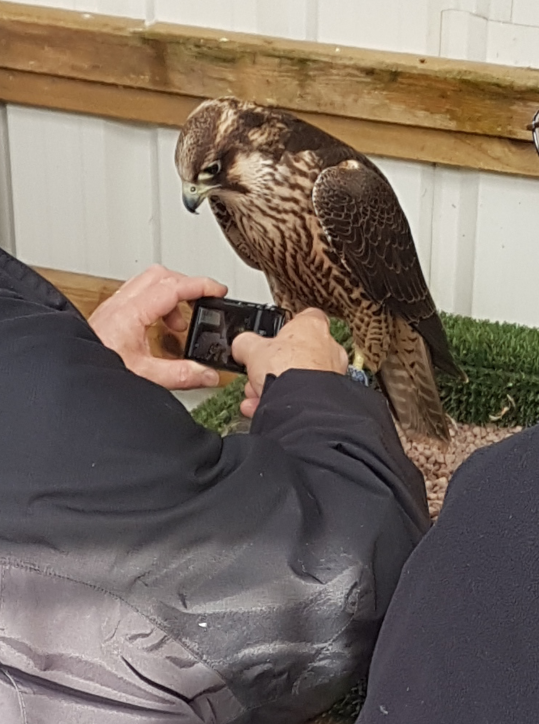
Derbyshire Police and the National Wildlife Crime Unit raided her home in Ashover Road, Old Tupton, Chesterfield last December where they found a juvenile peregrine wearing an identification leg ring that, according to official records, should have been worn by a captive adult peregrine.

[Officers photographing the leg ring on the juvenile peregrine, photo by Derbyshire Police]

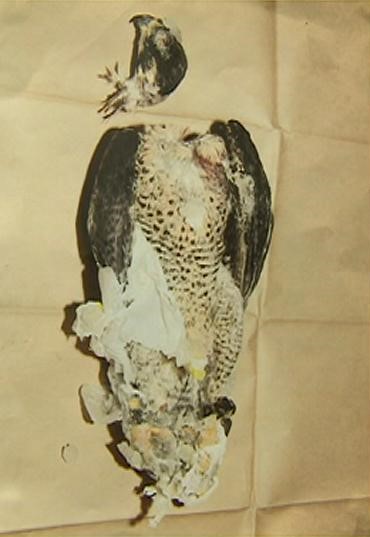
Officers found the body of an adult peregrine in the freezer whose leg had been cleanly cut off. It’s head was also detatched and apparently this bird had died in a fight with a female peregrine:

Lamar was interviewed and told officers the juvenile peregrine (believed to be a wild bird) had come from someone else and she was just looking after it.

In court, District Judge Leo Pyle said: “You are a long-standing and accomplished keeper of birds of prey. You know a juvenile Peregrine Falcon from an adult bird. How you acquired that bird I don’t know.

Anyone who flouts the regulations should expect the suitable punishment. Had you not pleaded guilty today I would have no doubt sentenced you immediately to imprisonment“.

Lamar was given an 18 weeks’ sentence for each offence, suspended for 12 months, and ordered to carry out 120 hours’ unpaid community work. The peregrine was confiscated, she was banned from keeping any Schedule 4 birds for five years and ordered to pay £1,020 costs plus a £115 surcharge.

The court heard that Lamar had lived in Derbyshire for two and a half years but intends to move back to the US imminently. Her defence lawyer said she’d recently been the victim of a £600k fraud and lost everything, currently living on benefits. She denied she had ever been involved selling birds to the Middle East.

Lamar’s company, ‘Raptor Rapture Ltd’ was established in Lincolnshire in 2015 but according to records at Companies House it was dissolved via compulsory strike-off in 2016.

The BBC News Website ran a story on Friday’s court hearing (here).