Scottish gamekeeper pleads guilty to nine charges of wildlife crime

BREAKING NEWS…..

We understand from a journalist that Scottish gamekeeper Alan Wilson, 60, has this morning pleaded guilty to 9 of the 12 wildlife crime charges against him. Not guilty pleas were accepted on the other three.

Sentencing has apparently been deferred until 19th August for background reports.

Wilson had been accused of shooting two goshawks, four buzzards, a peregrine falcon, three badgers and an otter at Henlaw Wood, Longformacus, between March 2016 and May 2017.

He also faced charges of using a snare likely to cause partial suspension of animal or drowning, failing to produce snaring records within 21 days when requested to do so by police and no certificate for an air weapon.

We also understand he faced a charge of alleged possession of the banned poison Carbofuran.

Up until this morning Mr Wilson had pleaded not guilty.

More details to follow……

Previous blogs about this case: herehere here  here herehere, here, here and here.

UPDATE 23 July 2019: Convicted Scottish gamekeeper Alan Wilson and his litany of wildlife crimes (here)

UPDATE 24 July 2019: How has the game-shooting industry reacted to conviction of Scottish gamekeeper Alan Wilson? (here).

Young peregrine found with shotgun injuries in Cheshire

RSPB press release (4 July 2019):

Young peregrine falcon illegally shot

A young peregrine had to be euthanised after it was found with a broken wing and a shotgun pellet in its chest.

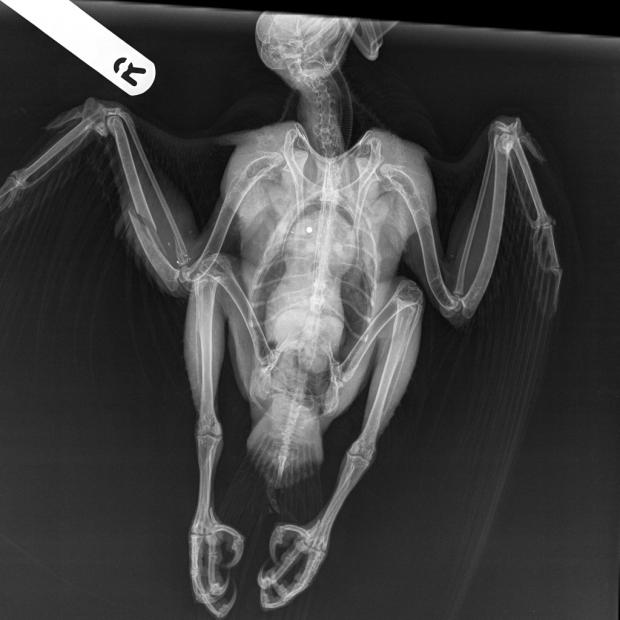
The bird was found in the road at Aldford, part of the Grosvenor Estate in Cheshire, on 17 April 2019 and taken to Lower Moss Wood Wildlife Hospital. An X-ray by Northwich Vets confirmed it had a broken wing and piece of shot in its chest.

Knowing it would not recover from its injuries, the vets took the sad decision to put the bird to sleep.

[Photo of the injured peregrine by Ian Daniels]

Peregrine falcons are the world’s fastest birds, able to reach speeds of 200mph when diving for prey. They nest on moorland, on cliffs and increasingly in towns and cities, usually producing two-four chicks each spring. There are thought to be around 1,500 pairs in the UK.

Like all birds of prey, peregrines are protected by the Wildlife and Countryside Act 1981. To kill or injure one is a criminal offence and could result in an unlimited fine or up to six months in jail.

Cheshire police are now appealing to the public for information.

Only a month before, in March 2019, a raven was found shot dead near Delamere Forest, Cheshire. Police investigated the incident but no leads were identified.

Jenny Shelton from the RSPB’s Investigations Unit said: “Most major cities will have their own ‘peregrine pair’, probably nesting on a cathedral spire or another tall building. Our lives and theirs are becoming increasingly entwined, which is a wonderful and very special thing. However there are still some who want to kill these magnificent birds. This young bird, which would have hatched last year so was just shy of its first birthday, was found in considerable distress with a piece of shot in its chest. Naturally, we want to find out who did this.

There is an unseen culture of raptor persecution in the UK, whereby birds like peregrines, ravens and owls are being illegally killed due to a perceived threat to some people’s interests. If you have any information please contact the police on 101, or speak to us in confidence on our raptor crime hotline: 0300 999 0101.”

PC Ged Gigg, Wildlife officer for Cheshire Police said: “Wildlife crime is a priority for us – my colleagues and I are dedicated to investigating crimes that affect our rural communities. I have been making extensive enquiries in the area and would urge anyone who has any information that may help with this investigation to contact police so that we can find those responsible.”

If you have any information relating to this incident, call Cheshire Police on 101 or go to www.cheshire.police.uk/contact/general-enquiries making sure you quote IML 376696.

If you find a wild bird of prey which you suspect has been illegally killed, contact RSPB investigations on 01767 680551 or fill in the online form.

ENDS

Case against Scottish gamekeeper accused of 12 alleged wildlife crimes: trial adjourned

Two years on, and the trial against Scottish gamekeeper Alan Wilson, who is accused of committing 12 alleged wildlife crimes, has been adjourned before it even started.

Mr Wilson, 60, is accused of shooting two goshawks, four buzzards, a peregrine falcon, three badgers and an otter at Henlaw Wood, Longformacus, between March 2016 and May 2017.

He also faces charges of using a snare likely to cause partial suspension of an animal or drowning, failing to produce snaring records within 21 days when requested to do so by police and no certificate for an air weapon.

We also believe he is accused of the alleged possession of the banned pesticide, Carbofuran.

Mr Wilson pleaded not guilty to all charges at an earlier hearing in May and his trial was due to begin yesterday (13th June 2019) at Jedburgh Sheriff Court.

For reasons unknown to us, the trial has been adjourned. We don’t yet know if it will be rescheduled and if so, when that might be.

Previous blogs about this case: see herehere here  here herehere and here

Please note: we will not be accepting comments on this news item until legal proceedings have concluded. Thanks.

Case against Scottish gamekeeper accused of 12 wildlife crimes proceeds to trial

The case against a south Scotland gamekeeper has continued this week with an intermediate diet (a type of court hearing) and he has pleaded not guilty to a number of alleged offences.

Alan Wilson, 60, is accused of shooting two goshawks, four buzzards, a peregrine falcon, three badgers and an otter at Henlaw Wood, Longformacus, between March 2016 and May 2017.

He also faces charges of using a snare likely to cause partial suspension of an animal or drowning, failing to produce snaring records within 21 days when requested to do so by police and no certificate for an air weapon.

We also believe he is accused of the alleged possession of the banned pesticide, Carbofuran.

Due to Mr Wilson’s not guilty plea, this case will now proceed to trial at Jedburgh Sheriff Court on 13 June 2019.

Previous blogs about this case: see herehere here  here here and here.

Please note: we will not be accepting comments on this news item until legal proceedings have concluded. Thanks.

Can you identify this man? Derbyshire Police would like a word about an abandoned peregrine nest site

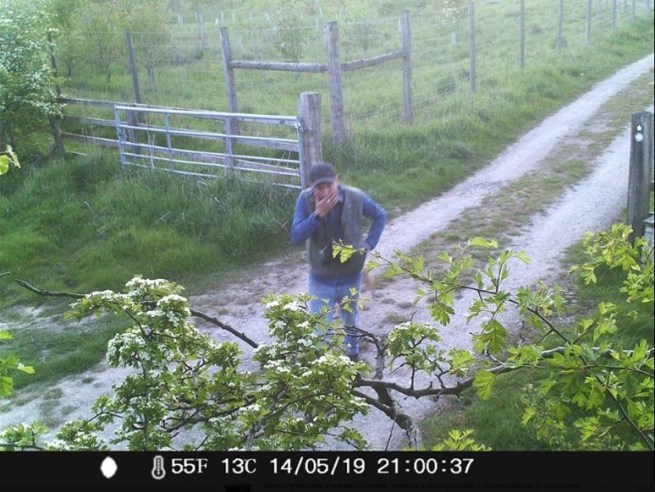
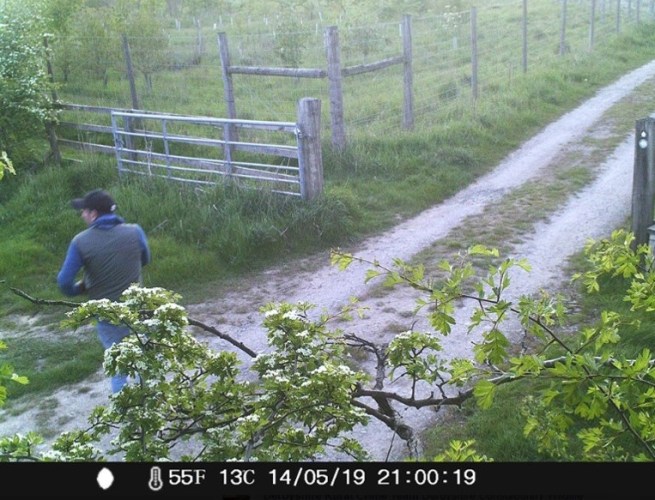
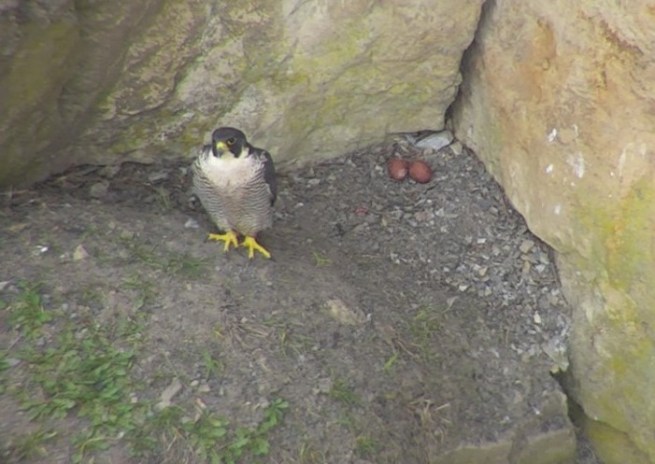
Derbyshire Constabulary’s Rural Crime Team would like to hear from anyone who recognises this individual, photographed near a peregrine breeding site in the Peak District this week (Tuesday 14 May 2019). The peregrines abandoned their breeding attempt the following day.

From the Derbyshire Rural Crime Team’s Facebook page today:

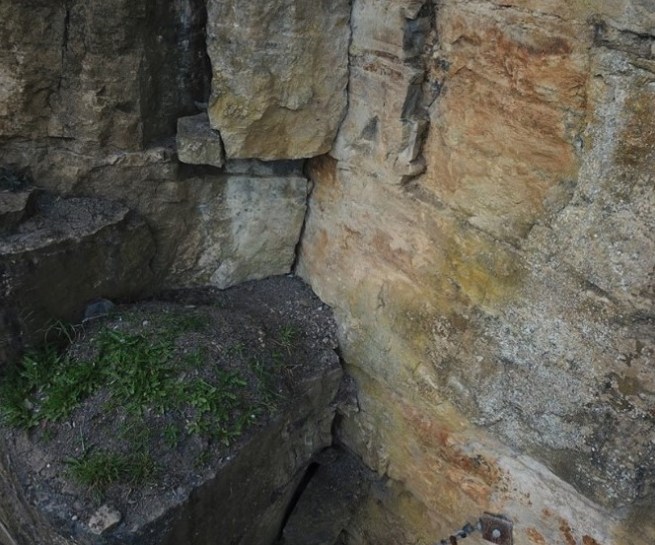
We have been monitoring a number of Peregrine Falcon nest sites in Derbyshire Peak District over the past few months. Numerous nests have failed in recent years, some in suspicious circumstances other as a result of nature taking its course. This year having access to a drone with an impressive zoom camera, that allowed us to view the birds without disturbing them, we were able to confirm that one particular pair had 2 eggs, as can be seen in the below picture. The female was seen to act as she should and had been incubating the eggs for the last month or so. Unfortunately on the morning of the 15th of May the female was off the nest and acting oddly, by the afternoon she had left the nest site completely, she did not return. We returned with our drone yesterday afternoon and confirmed the eggs were no longer there as can be seen in the second picture. There are numerous theories and possibilities as to what happened to the eggs, at this moment in time we simply don’t know if human interference played a role.

We would like to speak to the male pictured [above] as he may be able to help us with our enquiries and would urge him or anyone who may know who he is to come forward. If anyone recognises the male please get in touch via this page, 101 or by e-mailing drct@derbyshire.pnn.police.uk. Thanks“.

ENDS

UPDATE 16 June 2020: Peregrine eggs taken from three nest sites in Peak District (here)

UPDATE 17 November 2020: Derbyshire man due in court in February for alleged theft of Peregrine eggs in Peak District (here)

Peregrine found injured at a West Midlands quarry had been shot

The West Midlands Ringing Group is reporting a shot male peregrine found injured at a quarry:

From Twitter today:

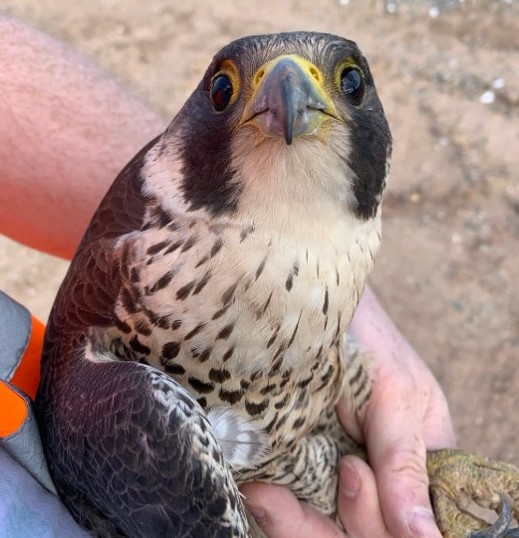
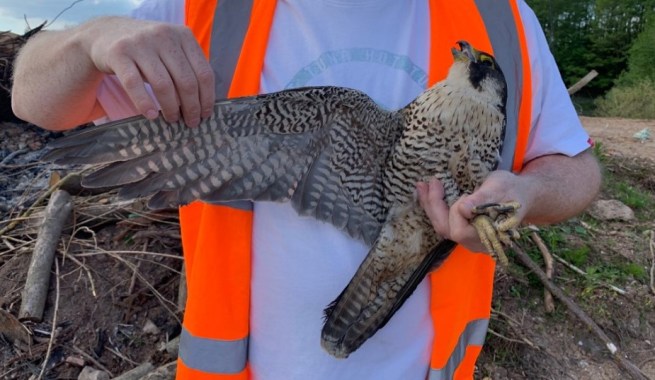
@RingersWmYesterday we had a call from a quarry to say that there was an injured peregrine on site. We arrived on site and along with @RSPCA_official we assessed the situation and were able to catch the young male within a few minutes. The bird is now at hospital having its wing assessed.

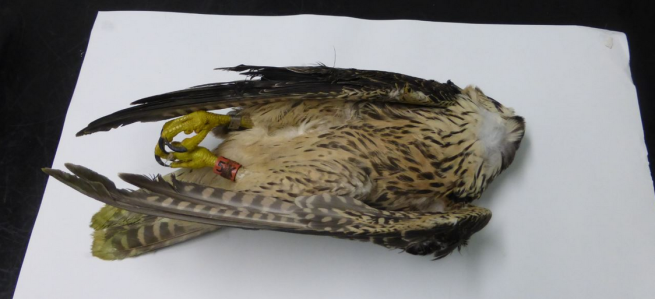
[Photos from West Midlands Ringing Group]

From @RingersWmPeregrine update. Unfortunately the young male we helped rescue yesterday has been found to have been shot and has two pellets stuck in its wing, which has healed over but is infected. Awaiting a decision from the vet tomorrow on the likely outcome. Sad times. Will keep u updated.

ENDS

Peregrine found suspected shot at Elton Reservoir in Bury

The RSPCA is appealing for information after the discovery of a dead peregrine at Elton Reservoir in Bury, Greater Manchester.

The bird was found by a member of the public on 7 May 2019, already quite extensively scavenged. Local media coverage claims that an x-ray demonstrates the bird was shot with an air rifle (e.g. here). To be honest, the x-ray isn’t very clear – it’s been taken from a side view rather than with the wings splayed, and this has distorted the radiograph. There may be shotgun pellets in the right wing but a further x-ray and/or post mortem would prove conclusive.

If anyone has any information about this incident please contact the RSPCA appeals line on 0300 123 8018.

Scottish gamekeeper Alan Wilson accused of 12 wildlife crimes

Further to previous blogs on the prosecution of Scottish gamekeeper Alan Wilson for alleged wildlife crimes in the Scottish Borders (see here, here here and here) further details have emerged about the charges he faces.

From the Peebleshire News (12/4/19) (and with thanks to the blog reader who sent us a copy):

WILDLIFE CHARGES

A gamekeeper has been accused of 12 wildlife offences at Jedburgh Sheriff Court. Alan Wilson, 60, is charged with shooting two goshawks, four buzzards, a peregrine falcon, three badgers and an otter at Henlaw Wood, Longformacus, between March 2016 and May 2017.

He also faces charges of using a snare likely to cause partial suspension of animal or drowning, failing to produce snaring records within 21 days when requested to do so by police and no certificate for an air weapon.

Wilson, of xxxxx xxxxx xxxxx pleaded not guilty to all 12 charges and a trial date was set for June 13 with an intermediate hearing on May 27.

ENDS

Please note: we will not be accepting comments on this news item until legal proceedings have concluded. Thanks.

Peregrine nest on Peak District grouse moor fails in suspicious circumstances

The Peak District Raptor Monitoring Group (PDRMG) has already reported the failure of a peregrine nest in the Peak District National Park, and the breeding season’s only just got underway!

You can read the group’s report here.

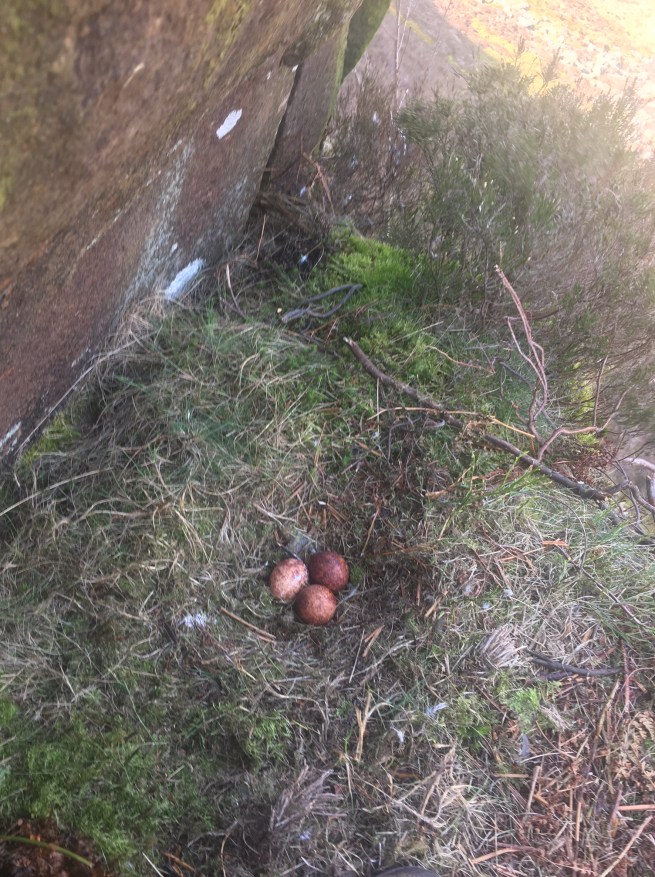
[Three abandoned peregrine eggs on the nest ledge, photo by Peak District Raptor Monitoring Group]

Of course, an abandoned nest is not a clear indicator that a wildlife crime has occurred and if viewed as an isolated incident, it could easily be argued that reporting this incident to the police is an over-reaction. Indeed, that’s exactly what we’d expect grouse shooting organisations to say. It’s what they do: play it down, make out that everything’s fine, that the persecution issue is “tiny and that there’s really nothing to worry about. And that’s a convincing argument, when viewing an incident like this in isolation.

However, incidents like this that happen on grouse moors in known wildlife crime hotspots (like the Peak District National Park) should never be viewed in isolation. Instead, they should be viewed as being part of a well-established pattern of failed peregrine breeding attempts in this region, and in every other region in northern England where grouse moors dominate the landscape.

We see it happen over and over and over again. In the Peak District, a so-called ‘partnership’ has consistently failed to address peregrine persecution (e.g. see here) and there have been several scientific papers making a direct link between grouse moor management and peregrine persecution here and across the UK, e.g. here, here, here, here.

It was only last month that we watched covert footage of a load of armed gamekeepers hiding close to a plastic peregrine decoy, on a grouse moor, er, in the Peak District (here).

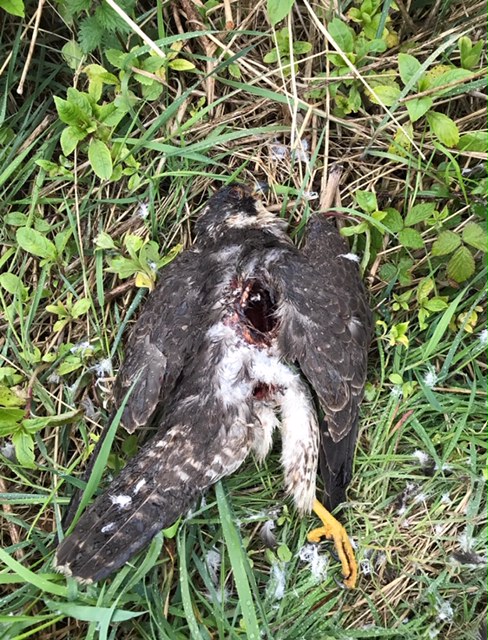
[This peregrine was found shot next to a grouse moor in the Peak District National Park in 2016. It didn’t survive. Photo by RSPB]

And yet still it continues.

The police are investigating the latest suspicious loss of two breeding adults but to be honest there’s not much they can do unless they happen to stumble across a couple of shot peregrine corpses stashed under someone’s driving seat or chucked in the back of a Landrover, but even then it would be virtually impossible to prove who’d killed them and the charge would be for the lesser crime of ‘possession’.

In the meantime, this case will be hotly disputed at so-called ‘partnership’ meetings, the grouse shooting reps will come up with 101 reasons why the breeding attempt might have failed and not one of those reasons will be the probability that someone linked to the grouse moor has killed the breeding adults.

When you hear the inevitable denials and protestations, its worth remembering what happened to the poor Bleasdale peregrines and the grouse shooting industry’s response (here & here) when the RSPB’s video evidence was ruled inadmissible and the trial collapsed.

Hats off to the peregrine fieldworkers in the uplands who volunteer to monitor these breeding attempts, year after year, knowing full well what is likely to happen. Fortunately for us they’re willing to document these failures so everybody can see the pattern for themselves.

BASC still in denial about extent of illegal raptor persecution

There was a feature on illegal raptor persecution in the Peak District National Park on the BBC’s Sunday Politics (East Midlands) programme a couple of days ago.

You can watch it on BBC iPlayer here (starts at 21:02; ends at 25:05; available for 27 days).

The film began with an interview with Tim Birch from Derbyshire Wildlife Trust, who explained that illegal raptor persecution in the Dark Peak area of the National Park is particularly bad, affecting hen harriers, goshawks and peregrines. The Derbyshire Wildlife Trust is calling for stronger enforcement action on the criminals responsible and for the introduction of vicarious liability, to hold the landowners to account.

The presenter then spoke about the recent scientific paper on hen harrier satellite data, published a couple of weeks ago. She said:

When it comes to hen harriers a recent study by Natural England found they were ten times more likely to die if they were near or on land used for shooting. Now this study concluded that illegal persecution is having a major impact on the conservation of these birds. But not everyone agrees with the data. Duncan Thomas represents the shooting community and believes questions need to be raised“.

The camera then cut to Duncan Thomas, ex-police wildlife crime cop in the Forest of Bowland and currently the British Association for Shooting & Conservation’s (BASC) northern director. Here’s how the interview went:

Duncan Thomas:You know, what we have to be really careful of is the data that’s coming from these tagging programmes and who controls that data. I’d like to see much more transparency in the whole tagging process for the benefit of everybody“.

Interviewer:These wildlife charities say that there is a direct connection when it comes to the decline in birds of prey populations here in the Peak District and illegal persecution“.

Duncan Thomas:There is a tiny amount of persecution occurring and what we have to do is to work closely with our conservation partners to eradicate that. BASC and the other shooting organisations have a zero tolerance for wildlife crime. Any body committing any crime will be expelled from the organisations, the police will remove their firearms and shotgun certificates and they won’t be able to work, you know. There is a zero tolerance for it. You know, let’s work together and take this issue forward“.

[Duncan Thomas, struggling to understand the definition of “tiny”]
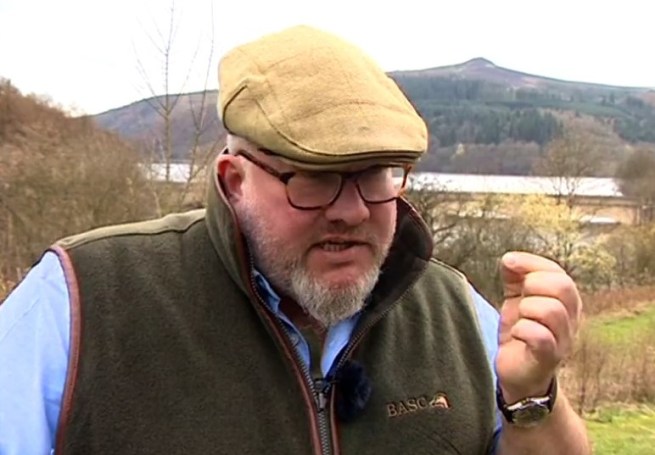
Given the extensive catalogue of evidence that demonstrates the appalling level of wildlife crime in the Peak District National Park, Duncan Thomas’ refusal to acknowledge it just makes him, and BASC, look ridiculous.

That evidence dates back at least 20 years and resulted in two damning summary reports published by the RSPB: Peak Malpractice (here) and then Peak Malpractice update (here).

Then came the Peak District National Park Bird of Prey Initiative in 2011, a so-called ‘partnership’ aimed at restoring raptor populations in the Dark Peak part of the Park. This Initiative has failed to deliver on every single target since then (see here and here) and is barely hanging by a thread (here).

Then last year a scientific paper published in the journal British Birds comprehensively linked the illegal killing of raptors with areas of land managed for driven grouse shooting in the National Park (see here). Here is a map from that paper showing the number of raptor persecution incidents against the backdrop of grouse moors (burned heather).
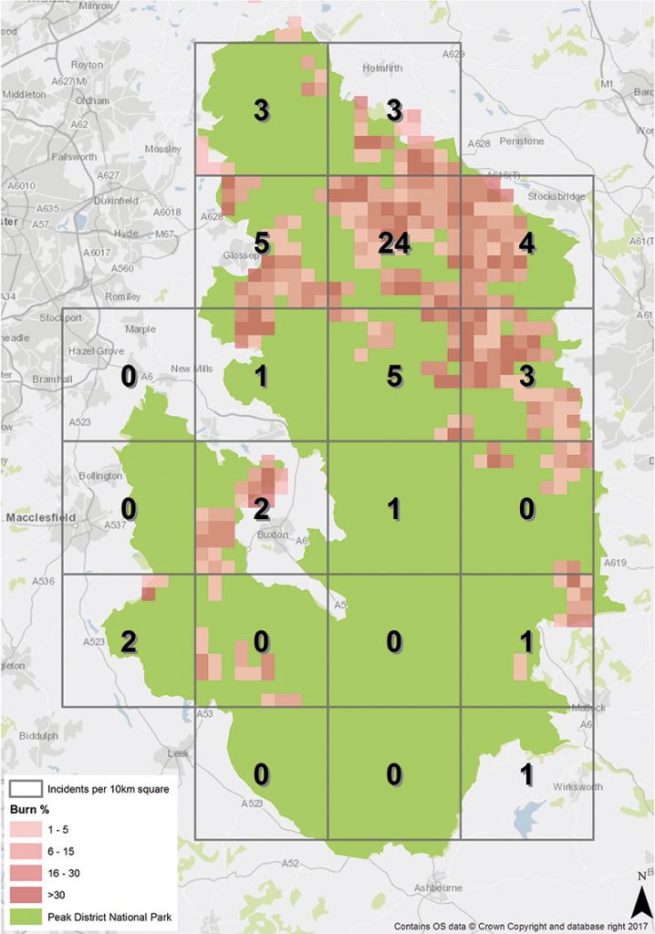
To suggest that the scale of raptor persecution in the Peak District is a “tiny amount“, even though it’s been shown repeatedly, for many years, to be having population-level effects on hen harriers, goshawks and peregrines, is either fatuously ignorant or wilfully blind.

Instead of acknowledging these widespread crimes, Duncan Thomas instead focused on trying to undermine the hen harrier satellite tag data which were collected by a Government agency, analysed by international scientists and published in an exceptionally high quality journal!

And it’s simply not true that the shooting organisations operate a zero tolerance policy for wildlife crime. If only they did, this issue would be resolved very quickly! For example, not one of them published a statement to condemn the shooting of Marsh harriers at a nest on Denton Moor nor issue an appeal for information to identify the armed men dressed as gamekeepers (here).

Instead, what we see repeatedly are shooting organisation representatives sneering and ridiculing the RSPB when covert video evidence has been ruled inadmissible in prosecutions for alleged raptor crime (Duncan Thomas has a track record of this – e.g. here), we see high-end barristers (often of QC status) brought in to defend the accused (who pays the legal fees, because they’ll be beyond the gamekeeper’s pocket?), and instead of expulsions from shooting organisations following a successful conviction we see statements of support (e.g. here).

On top of all that, we understand that BASC is accepting funds from several people who are also involved in the management of a number of estates notorious for both confirmed and alleged wildlife crimes. We’ll be exploring that relationship, also shared with GWCT, in another blog.

Does any of that look like zero tolerance to you?

Oh, and Duncan, about your idea of “working together“. That won’t happen when BASC and its fellow raptor persecution apologists boycott a meeting designed to, er, work together to tackle illegal raptor persecution.

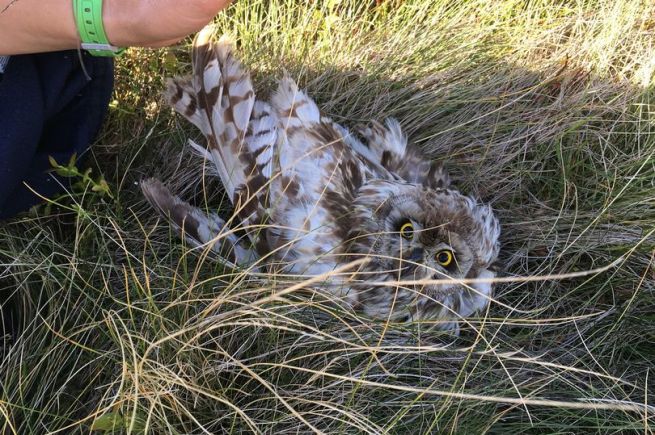
[Photo of a short-eared owl that was found shot in the Peak District National Park last year. A shot tawny owl was found stuffed in a drystone wall not far away. Photo via RSPB]