The Leadhills (Hopetoun) Estate in south Lanarkshire has featured regularly on this blog (see here).
Since 2003, 46 confirmed incidents of wildlife crime have been discovered either on or near to the estate, but only resulting in two successful convictions (2004 – gamekeeper convicted of shooting a short-eared owl; 2009 – gamekeeper convicted of laying out a poisoned rabbit bait). Here’s the list:
2003 April: hen harrier shot [prosecution failed – inadmissible evidence]
2003 April: hen harrier eggs destroyed [prosecution failed – inadmissible evidence]
2004 May: buzzard shot [no prosecution]
2004 May: short-eared owl shot [gamekeeper convicted]
2004 June: buzzard poisoned (Carbofuran) [no prosecution]
2004 June: 4 x poisoned rabbit baits (Carbofuran) [no prosecution]
2004 June: crow poisoned (Carbofuran) [no prosecution]
2004 July: poisoned rabbit bait (Carbofuran) [no prosecution]
2004 July: poisoned rabbit bait (Carbofuran) [no prosecution]
2005 February: poisoned rabbit bait (Carbofuran) [no prosecution]
2005 April: poisoned buzzard (Carbofuran) [no prosecution]
2005 June: poisoned rabbit bait (Carbofuran) [no prosecution]
2005 June: poisoned rabbit bait (Carbofuran) [no prosecution]
2006 February: poisoned buzzard (Carbofuran) [no prosecution]
2006 March: poisoned buzzard (Carbofuran) [no prosecution]
2006 March: poisoned pigeon bait (Carbofuran) [no prosecution]
2006 April: dead buzzard (persecution method unknown) [no prosecution]
2006 May: poisoned rabbit bait (Carbofuran) [no prosecution]
2006 May: poisoned rabbit bait (Carbofuran) [no prosecution]
2006 May: poisoned egg baits (Carbofuran) [no prosecution]
2006 June: poisoned buzzard (Carbofuran) [no prosecution]
2006 June: poisoned raven (Carbofuran) [no prosecution]
2006 June: 6 x poisoned rabbit baits (Carbofuran) [no prosecution]
2006 June: poisoned egg bait (Carbofuran) [no prosecution]
2006 September: 5 x poisoned buzzards (Carbofuran) [no prosecution]
2006 September: poisoned rabbit bait (Carbofuran) [no prosecution]
2006 September: poisoned rabbit bait (Carbofuran) [no prosecution]
2007 March: poisoned buzzard (Carbofuran) [no prosecution]
2007 April: poisoned red kite (Carbofuran) [no prosecution]
2007 May: poisoned buzzard (Carbofuran) [no prosecution]
2008 October: poisoned buzzard (Carbofuran) [listed as ‘Nr Leadhills’] [no prosecution]
2008 October: poisoned rabbit bait (Carbofuran) [listed as ‘Nr Leadhills’] [no prosecution]
2008 November: 3 x poisoned ravens (Carbofuran) [listed as ‘Nr Leadhills’] [no prosecution]
2009 March: poisoned rabbit bait (Carbofuran) [no prosecution]
2009 March: poisoned raven (Carbofuran) [no prosecution]
2009 April: poisoned rabbit bait (Carbofuran) [gamekeeper convicted]
2009 April: poisoned magpie (Carbofuran) [no prosecution]
2009 April: poisoned raven (Carbofuran) [no prosecution]
2010 October: short-eared owl shot [no prosecution]
2011 March: illegally-set clam trap [no prosecution]
2011 December: buzzard shot [no prosecution]
2012 October: golden eagle shot (just over boundary with Buccleuch Estate) [no prosecution]
2013 May: shot otter found on estate [no prosecution]
2013 June: significant cache of pre-prepared poisoned baits found on estate [no prosecution]
2013 August: red kite found shot and critically-injured in Leadhills village [no prosecution]
2014 February: poisoned peregrine (Carbofuran) [‘Nr Leadhills’] [no prosecution]
For a long time, we’ve been trying to find out whether this estate is a member of the landowners’ organisation Scottish Land and Estates – an organisation that regularly claims to be fighting hard against raptor persecution. All our attempts to find out have been met with a wall of silence. We knew that Lord Hopetoun served on the SLE Board, so it was quite likely that his estate would be a member of SLE, but we weren’t able to find definitive evidence.
Well, we have now. Leadhills Estate has launched its own website (see here). It’s a spectacular example of how to conduct a public relations charm offensive – lots of info about how the estate is supporting the local community: providing a new home for the volunteer fire crew, lending a hand on Gala Day, engaging in a village clean-up for Christmas, and providing support for the Leadhills Miners Library. It brings a tear to the eye. There’s also plenty of encouragement for walkers to keep to the tracks so as not to disturb the wildlife – because Leadhills Estate really cares about wildlife.
Of most interest to us is a statement on the web site’s home page:
‘Leadhills Estate is a member of Scottish Land and Estates – an organisation which promotes the work of landowners and rural businesses undertake [sic] for the benefit of rural Scotland’.
Amazing. We’d love to hear how SLE justifies the membership of Leadhills Estate in their wildlife-crime-fighting organisation.
The Leadhills Estate website also includes a gallery showing images that visitors can expect to see when they visit this most welcoming of estates. Here’s another one for them – taken at one of many stink pits hidden away on Leadhills Estate (far from the tracks that visitors are encouraged to stick to). For those who don’t know, stink pits are used (legally) by gamekeepers in which to dump the rotting carcasses and entrails of dead wildlife. They set snares around the edge of the stink pit to catch (and then kill) any animals that may be attracted to the stench of death (typically foxes). This particular stink pit includes a few fox carcasses oh, and a cat. Nice, eh? Welcome to Leadhills Estate.


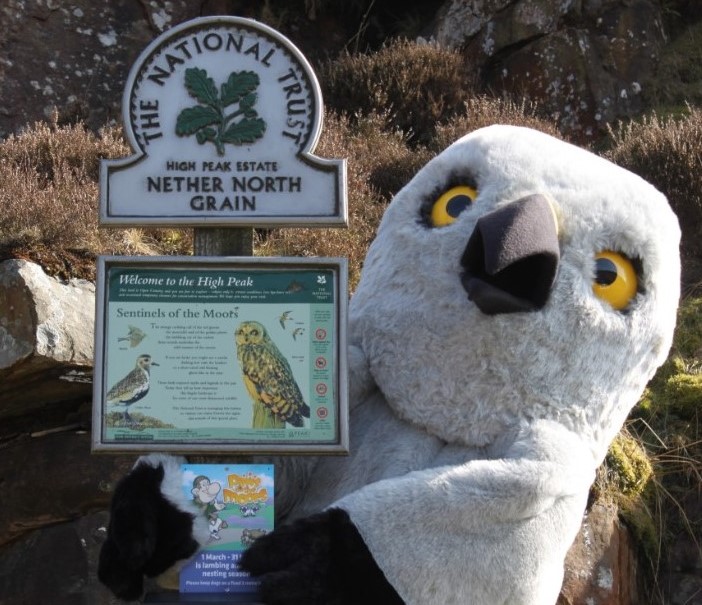
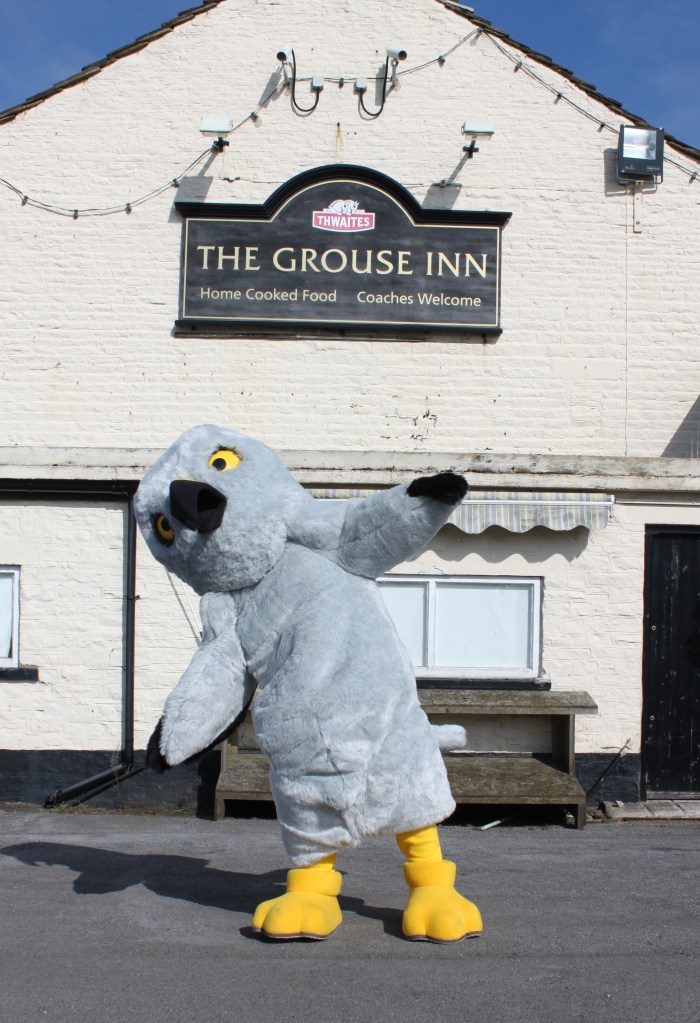
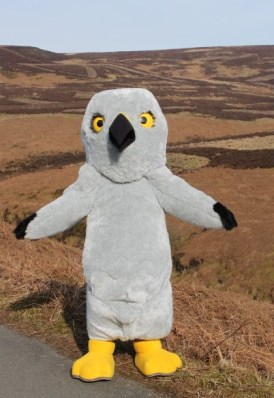 Meet Henry. Henry is a 6ft-tall Hen Harrier who’s very, very lonely. He’s struggling to find a mate because most of his potential girlfriends have been bumped off on grouse moors. Henry is flying around the British Isles in search of a significant other and you can follow his progress as he posts daily photographs from his travels. He’s being accompanied by several burly minders to protect him from those who’d like to shoot, trap or poison him.
 Last June we blogged about an illegally-killed hen harrier that had been found dead on moorland near Muirkirk in south west Scotland. The adult female’s corpse was discovered close to a nest containing two live chicks (see
  Chris Packham has announced on Twitter that he has resigned his presidency of the Hawk & Owl Trust:
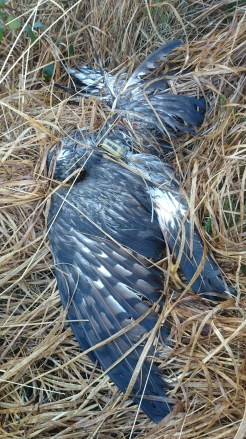 With depressing familiarity, news has emerged of the illegal killing of yet another hen harrier.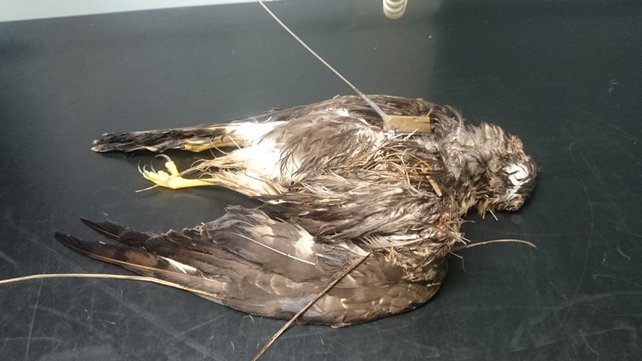
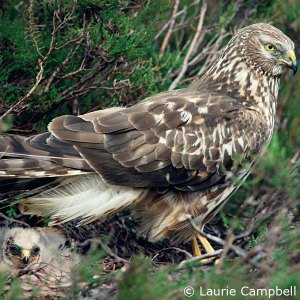 Over the last year or so (and especially over the last few months) there has been an increasing amount of media coverage regarding the political and ecological status of hen harriers in the Republic of Ireland. Much of the media coverage has come from one particular Irish newspaper, heavily influenced by political spin doctors (the equivalent of the Telegraph/Daily Mail in the UK). When these newspaper articles are shared with a UK audience on social media, without an accompanying critique or even a vague understanding of the politics behind each story, a one-sided view of the situation can be accepted as being ‘factual’.
 But if that isn’t enough the private forest lobby has been busy winning over the farming organisations with offers of lucrative tax-free grants for private forestry, leading to calls by the Irish Farmers Association for an end to a moratorium on new forestry in the SPAs (see here
 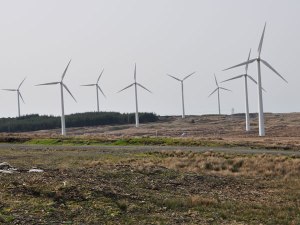 Windfarms, harrier persecution and those ghost SPAs
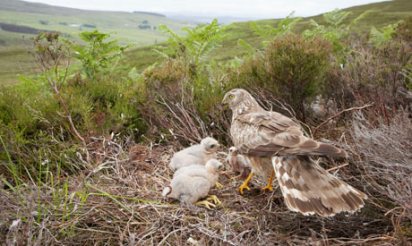 Up until yesterday, we had a lot of respect and admiration for the Hawk & Owl Trust. They’ve got some fantastic staff and volunteers, their conservation work has been exemplary, as has their educational work, and they’ve stood shoulder to shoulder with the rest of us to make a stand against the illegal persecution of raptors. Such was their unity, in 2013 they even walked away from the ridiculous Hen Harrier Dialogue shortly after the RSPB and the Northern England Raptor Forum had walked. They were one of us, with shared ideals and whose patience with the grouse moor owners had been sucked dry. Read their exit statement
