Mr Osborne loves hen harriers!

No, not THAT Mr Osborne (he may or may not love hen harriers – who knows?). This is another Mr Osborne, one J. Mark Osborne of Oxford.

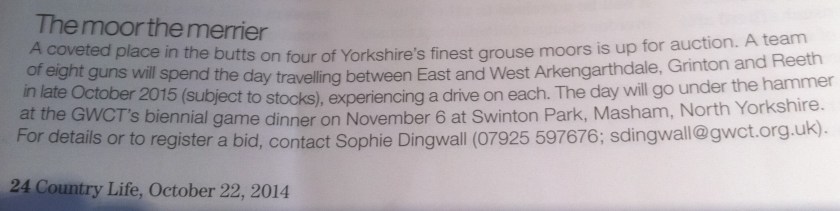
Mr Mark Osborne is a grouse moor manager extraordinare. He is feted by the grouse-shooting industry for his ability to turn a ‘poorly performing’ grouse moor in to “something beyond the moor owner’s wildest dreams” (e.g. see here).

Well, it turns out that Mr Osborne loves hen harriers, according to an article that appeared on his website today – see here.

We were surprised to read it. Well, so might you be if you’ve read this and this.

Who knew?!

Rumour has it that Mr Osborne, as well as Mr Baikie (see last link above to find out who he is) have recently taken over the management of a number of neighbouring driven grouse-shooting estates in the Highlands. We’ll probably be blogging about this area in the not-too-distant future….just to report on the number of successfully breeding hen harriers and other raptors, natch!

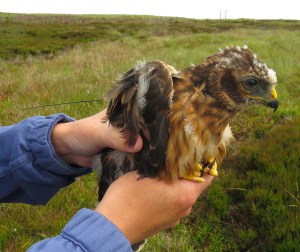
Hen Harrier photo by Gordon Langsbury

Hen harrier ‘quota’ system nothing more than legalised persecution

HH Laurie CampbellSo here we are again, the Inglorious Twelfth, heralding the start of the grouse-shooting season and the papers are full of the usual guff about how great this ‘sport’ is for the economy, conservation, world peace etc etc, although very little information about the industry’s undeniable link with the illegal persecution of raptors.

One particular story that’s getting a lot of media coverage is the publication of a scientific paper that suggests a hen harrier ‘quota’ system could solve the long-running conflict between grouse-moor management and raptor conservation e.g. see here.

It’s not a new story – this quota system idea, which basically means that once the hen harrier population has reached a certain size, birds will be ‘removed’ from grouse moors so as not to interfere with the profits of driven grouse shooting, has been around since 1998 and has been wheeled out in various guises ever since, notably by Professor Steve Redpath of Aberdeen University who has directed much of the research. Indeed, the quota system was central to the six-year ‘Hen Harrier Dialogue’ talks between the grouse-shooting industry and conservationists, which eventually collapsed because the ‘dialogue’ was seen by the conservationists as a delaying tactic – while everyone was busy ‘talking’ the hen harrier was virtually eradicated as a breeding species in England (see here for why the RSPB walked out, here for why the Northern England Raptor Forum walked out, and here for why the Hawk & Owl Trust walked out).

In the latest paper (see link at foot of this blog entry) a new data model is put forward which demonstrates that ‘across the grouse moors of England there is room for 70 pairs of hen harriers at relatively low cost for grouse shooting’.

At a superficial level, 70 pairs of hen harriers sounds quite good, especially when you consider that this year there are only three reported breeding pairs in the whole of England. However, 70 pairs represents only 20% of the estimated 340 pairs that could inhabit the English uplands. Should we cut our losses and accept that having 20% of the population is better than having the less than 1% of the population that we currently have? We don’t think so.

Why should we accept anything less than 100% of the estimated 340 breeding pairs that could exist? Why should a species of high conservation concern pay the price just so a minority of people can maintain artificially-high populations of red grouse in order to spend a few days each year blasting them from the sky?

There are many other issues, too. Let’s just suppose the quota system was agreed by all the stakeholders and it went ahead. For the first few years, hen harrier chicks would be removed from the grouse moors, reared in captivity and then released ‘elsewhere’. What would happen once the hen harriers have recolonised their former range and filled all the spaces? Where would the hen harrier chicks then be released? The removal of those birds could only ever be a short-term solution until all the vacant territories have been filled. In the long-term, it would undoubtedly lead to calls for a cull.

Then there’s the issue of trust. And it’s a big issue, perhaps the biggest of all. Would we trust the grouse moor owners not to persecute the hen harriers that are ‘allowed’ to breed on grouse moors? Not a chance in hell! This industry has denied involvement in raptor persecution for decades, despite all the evidence against them. They have proved themselves to be untrustworthy and incapable of self-regulation. Why would we trust them to do the right thing now? Come on.

Another concern is the precedent that would be set by this quota system. First hen harriers, but then what? Peregrines? Golden eagles? Short-eared owls? Goshawks? Red kites? Sparrowhawks? Buzzards? Ravens? All of these species are already illegally killed on grouse moors. You can bet your house that if the hen harrier quota system goes ahead, these species will be next on the list. It’s simply a way for the grouse-shooting industry to legalise a crime that they’re already committing.

So what’s the alternative? That’s easy – a ban on driven grouse shooting. An industry that cannot function without relying on illegal persecution has had its day. Sign the petition here.

Download the latest scientific paper on a hen harrier quota system here: Elston et al 2014 HH quota model_JAE

Hen Harrier Day: “We will win”

What an absolute privilege it was to be part of the 570-strong crowd at Derwent Water today for the inaugural Hen Harrier Day. 570 people, from Inverness to the Isle of Wight, who wouldn’t even let ex-Hurricane Bertha stop them from coming out to stand together and say they’d had enough of illegal hen harrier persecution. Strong, resolute and defiant; even if the dam’s wall had burst they’d still have stood firm. The cheers and applause that greeted Chris Packham’s closing statement, “We will win“, could probably be heard throughout the Dark Peak. Long may it resonate.

IMG_3833a

IMG_3830a

IMG_3835a

IMG_3837a

IMG_3841a

That guy in the blue coat holding up his phone (below) – that’s Barry Gardiner MP, the Shadow Environment Minister.

IMG_3839a

The woman in the blue coat (below) – that’s Amanda Anderson, Director of the Moorland Association, who appeared to be recording the speeches – perhaps the MA are getting a bit jittery?

IMG_3842a

IMG_3843a

“We will win”

IMG_3844a

IMG_3848a

IMG_3849a

IMG_3852a

IMG_3855a

Of course, illegal hen harrier persecution isn’t restricted to driven grouse moors in England. Here’s a quick overview of the issue in Scotland (info from the 2011 Hen Harrier Conservation Framework & the 2010 national survey):

  • The potential national hen harrier population in Scotland is estimated (conservatively) to be within the range 1467-1790 pairs.
  • The current national hen harrier population in Scotland as recorded during the most recent (2010) national survey is 505 pairs, more than a 20% decline from the numbers recorded during the 2004 national survey.
  • In Scotland, the hen harrier has a favourable conservation status in only five of 20 regions.
  • Two main constraints were identified: illegal persecution, and in one region, prey shortages.
  • The species is particularly unsuccessful in the Central Highlands, Cairngorm Massif, Northeast Glens, Western Southern Uplands and the Border Hills. There is strong evidence in these grouse moor regions that illegal persecution is causing the failure of a majority of breeding attempts.

IMG_3858a

This is what solidarity looks like (thanks Chris & Mark for being good sports!). Special mention to Findlay Wilde and his Dad for bringing along this spectacular centre piece.

IMG_3861a

Why not join 13,000 other voices and sign this e-petition to ban driven grouse shooting.

Media coverage of Hen Harrier Day in the Peak District:

Read Mark Avery’s take on the day here

Read what Guy Shorrock (RSPB Investigations) had to say here

A blog about the event from Alan Davies (The Biggest Twitch) here

Findlay Wilde’s blog about the day here

Article on Birdwatch website here

A blog about the event by Stewart Abbott here

A blog about the event by Ginny Battson here

Hen Harrier Day in pictures on RSPB Skydancer blog here

Watch Mark Avery & Chris Packham deliver their speeches (filmed by Stephen Cummings aka @TheBaldIbis) here

A video from the day, filmed and produced by Chris Packham’s ‘team’ here

LUSH Cosmetics supports hen harrier day

We saw this on Twitter yesterday (thanks to @vickysummers86) and thought it deserved sharing. It’s a window display from a LUSH Cosmetics shop:

LUSH shop VSummers

Well done LUSH! Check out their website here and buy their products!

Also seen on Twitter yesterday…..Reservoir Cats make a welcome return after four long years with this masterpiece. Wonder if we’ll see them hanging out at Derwent this weekend…

GWCT, the Moorland Association, and their absurd hen harrier pantomime

There’s a very good blog published today on the British Ornithological Union’s website (here). It’s written by Dr Arjun Amar, a leading raptor ecologist who has published widely on the hen harrier following his PhD and post-doc studies on this species.

Arjun’s blog summarises what he calls the ‘terminal decline’ of the hen harrier and discusses the various approaches that are currently being discussed to prevent the inevitable. The three main approaches are:

1. A ban on driven grouse shooting.

2. A grouse moor licensing scheme whereby sporting rights can be removed if illegal persecution continues.

3. A brood management scheme – which basically means removing young harriers from grouse moors, rearing them in captivity and releasing them elsewhere.

In Arjun’s considered opinion, “any one of these three approaches could work well to provide a conservation success (i.e. more harriers) at least in the short term“.

He’s right, of course, in a strictly scientific sense, although he doesn’t address either the ethical, practical or enforcement issues that accompany each approach. But then why should he? He’s a scientist and he’s arguing from a scientific perspective, which is appropriate in the context of the BOU website.

Meanwhile, Andrew Gilruth of the GWCT has jumped on Arjun’s blog and has written an article proclaiming, ‘Leading raptor scientist believes hen harrier brood management could provide success‘ (see here).

Yes, strictly speaking, that’s what Arjun did say. But he also said that the other two approaches could also work well. But then we’d hardly expect GWCT to headline an article with, ‘Leading raptor scientist believes a ban on driven grouse shooting could provide success‘!

Why did GWCT choose to highlight the brood management option and not the banning of driven grouse shooting or a grouse moor licensing scheme? Well, according to Andrew Gilruth, “it would appear to make sense to implement the only approach that is ready right now – brood management“. The thing is, the brood management approach is not ‘ready right now’. In fact it’s far from being ready – read this for a good explanation.

It’s all about the careful cherry-picking of words, of which the GWCT (and others in the game-shooting industry) do so well. If you’ve read the GWCT’s recent articles on hen harriers and taken them at face value (i.e. not bothered to read around the subject), you’d be forgiven for believing that the GWCT loves hen harriers and wants to help them recover. But you have to read the small print to understand that this ‘recovery’ is conditional on the hen harriers being restricted to areas away from driven grouse moors.

It wasn’t so long ago that the GWCT (or Game Conservancy Trust as they were then called) were calling for a cull of hen harriers on grouse moors (e.g. see here), as was the Moorland Association (see here) who are also currently trying to convince us that they love hen harriers. This is the same Moorland Association who claimed there was ‘no evidence’ of gamekeepers persecuting hen harriers and that moorland owners are ‘within their rights and the law to deter hen harriers from settling on their moor to breed’ (see here). This is also the same Moorland Association (along with the National Gamekeepers Organisation) who failed to encourage their members to sign a pledge to accept the laws protecting hen harriers (see here).

Some people may be taken in by the GWCT and Moorland Association’s current absurd hen harrier pantomime, but many of us are not.

E-petition to ban driven grouse shooting: SIGN HERE.

To find out how you can get involved with Hen Harrier Day activities, click here.

Hen Harrier photo by Gordon Langsbury.

Standing in solidarity for Hen Harrier Day: 10th August 2014

Hen-Harrier-Day-2014cHen Harrier Day is only a week away.

At 10am on Sunday 10th August 2014, hundreds of people will gather at three locations in northern England to protest about the illegal killing of hen harriers on driven grouse moors.

At the same time, over one million social media users will be seeing a ‘thunderclap’ message on their timelines about illegal hen harrier persecution.

Unfortunately, there isn’t a Hen Harrier Day ‘event’ planned in Scotland this year (although there will be next year – we’ll make sure of that). However, this provides us with an opportunity to stand in solidarity with our colleagues south of the border and show our unified support – after all, hen harrier persecution is not restricted to the English uplands – they are just as likely to be killed on a Scottish grouse moor as they are on an English grouse moor.

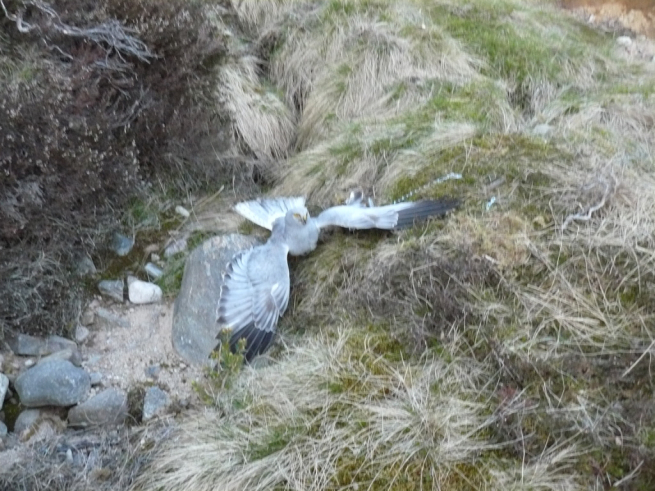
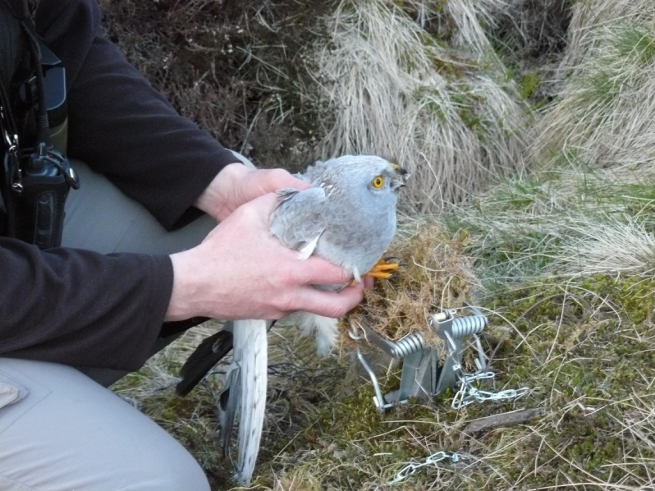
Here’s one example – this male was caught in an illegally-set leg-hold trap on a driven grouse moor in the Highlands a couple of years ago. Had he not been found and rescued by raptor fieldworkers, it’s quite likely his head would have been smashed in with a stick or a rock and his lifeless, bloodied body carted off to be hidden or burnt. Various red kite body parts were found on the same estate at the same time, their dismembered legs stuffed down rabbit holes. Nobody was prosecuted for these offences.

HH 2ndtrap6a

We know that a large number of our friends and colleagues from Scotland are travelling to the Northumberland rally next weekend, and we (RPS) will be at the demo in the Peak District.

Hen Harrier Day is an unprecedented opportunity to stand up and show you care. We urge as many of you as possible to get involved and show your support. There are a number of ways of doing this, including turning up at one of the demos, getting yourself a Hen Harrier Day t-shirt, joining the social media Hen Harrier Day ‘thunderclap’, downloading the Hen Harrier Day poster and taking a ‘selfie’ and using the #HenHarrierDay hashtag on Twitter. Details about all of these things, and more, can be found here.

You can also join over 10,000 others who have signed a petition to get driven grouse shooting banned – sign here.

Massive, massive kudos and thanks to Birders Against Wildlife Crime, Mark Avery and Chris Packham for their extraordinary (voluntary!) efforts to bring desperately-needed media attention to expose one of the biggest on-going scandals in UK conservation history. We’re very proud to be part of it.

“Very little proof” of raptor persecution, says Scottish Land & Estates

There was a radio debate on the BBC’s Good Morning Scotland programme today, with RSPB Scotland Director, Stuart Housden and Scottish Land & Estates’ Moorland Group Director, Tim Baynes.

If anyone still needs evidence that the grouse-shooting industry is in hopeless denial about the link between driven grouse moors and the illegal killing of raptors, this was it.

The debate centred on whether there was a ‘need’ for the introduction of a licensed regulatory system for driven grouse moors, as recently called for by the RSPB, both in England (here) and in Scotland (here).

According to Tim (Kim) Baynes, the RSPB’s data on raptor persecution are “out of date” and there is “very little proof” of raptor persecution. In Tim’s world, driven grouse moors are great because waders do a lot better on them than they do on moorland managed by the RSPB. Unsurprisingly, he failed to acknowledge that if you kill every predator that dares to even look at a driven grouse moor then of course waders (and grouse) are going to thrive but at a significant cost to the wider biodiversity, such as that that you’ll find on an RSPB-managed moor. He also tried to use the woeful rate of criminal convictions as evidence  that persecution wasn’t happening, and ignored the massive pile of scientific papers that tell a different story. Oh dear.

It’s astonishing that such a PR-savvy organisation such as SLE has not yet grasped the idea that the recent up-swell of public interest and anger against driven grouse moor management is largely thanks to the shooting industry’s failure to accept that there is an issue.  Ah well, never mind, you keep denying it, Kim – you’re doing wonders for our cause!

Well done Stuart Housden for not guffawing out loud on national radio.

The radio debate can be heard here (01:52:08) for the next seven days.

An impressive hen harrier!

HH_FindlayWilde

How cool is this? To find out the story behind it, check out this blog by a remarkable young man.

Four easy ways to help hen harriers

Hen harriers are in trouble, and have been for some time (to read all our earlier blog posts about them, click here).

They’re not just in a bit of trouble; they are in seriously dire straits, and most of it has been caused by them being illegally killed (shot, trapped, poisoned, stamped on) whenever they venture on to a moorland that is being managed for driven grouse shooting.

A lot of people we talk to about raptor persecution in general all say the same thing – they feel frustrated and let down by the inability of the ‘authorities’ (e.g. government, police, judicial process) to put a stop to it.

Well things are changing. Recently, there has been a groundswell of imaginative initiatives that are designed to allow ordinary people like us to have our say and get our voices heard. Individually, we may not have much impact, but collectively, we can be very powerful.

Here are four things we, as individuals, can all do very easily, to help hen harriers. Some of them you can do right now without even having to leave your chair!

1. Participate in Hen Harrier Day on August 10th 2014.

There will be a number of peaceful protest demonstrations across the north of England (an area where driven grouse shooting is a dominant ‘sport’) taking place on Sunday 10th August 2014. The idea is to congregate with like-minded people to celebrate the hen harrier and to get some much-needed national and international media attention at a time when most media outlets will be focusing on the opening of the grouse-shooting season (12th August).

One of these protests will be held in the Derbyshire Peak District, with Chris Packham in attendance (see details about this event on Mark Avery’s blog here).

Other protests are planned for Yorkshire, Cumbria, Northumberland and Lancashire although we are still awaiitng full details – to be announced soon on the Birders Against Wildlife Crime (BAWC) website here.

If you can’t make it in person to one of these events, BAWC will be providing information about how you can join in ‘remotely’ by posting pictures on-line.

2. Vote for the RSPB’s SKYDANCER Project in the National Lottery Awards.

The Skydancer Project is a four-year educational initiative aimed at raising awareness and promoting the conservation of hen harriers in the north of England. They have been doing some fantastic work, delivering talks, hosting workshops, running fieldtrips etc. They have recently been nominated for a National Lottery Award (one of seven projects in the running for Best Education Project, selected from over 750 applicants). Winning will mean national media attention on prime time tv. It takes a couple of seconds to vote for them on-line – deadline 23rd July. Click here to vote.

3. Sign the e-petition to ban driven grouse shooting in England.

Mark Avery launched this e-petition almost one month ago (and here is his summary of why it is necessary). Already it has attracted 5,789 votes. Driven grouse-shooting is the number one reason why hen harriers are being killed. It really is a no brainer – please sign here!

Turn Your Back on Grouse4. Support the Ethical Consumer’s ‘Turn Your Back on Grouse’ campaign.

The Ethical Consumer has recently published a well-researched report about the damaging consequences of intensively driven grouse shooting (see here). They have started a campaign calling for a boycott on all businesses connected to the grouse-shooting industry. It’s called ‘Turn Your Back on Grouse’. You can find more info here.

We’re particularly interested in this campaign. We touched on it, briefly, last year when we blogged about Marks & Spencer selling grouse that had originated from Yorkshire and the Scottish Borders – when we asked M&S to name the estates of origin, they were surprisingly coy – see here, here, here and here.

We called in Trading Standards to investigate whether M&S’s claims that “we are working with only the most sustainable and well-managed estates, and do not work with any suppliers that interfere with hen harriers” was actually true, but we haven’t heard anything further. Unfortunately our time is limited and we haven’t pursued it, so it’s very welcome news to see the Ethical Consumer pick up on this issue.

It’s particularly timely, as the Countryside Alliance put out the following statement in April this year:

“Following a meeting with Marks and Spencer and Yorkshire Game, discussions are to take place between the Game to Eat team and the M&S PR Department to devise a suitable media plan to promote grouse in August 2014. The Game-to-Eat campaign sent out over 80,000 game recipe leaflets over the course of the season. The team is now working with development Chef Lee Maycock to create and photograph new recipes for 2014. Lee Maycock has continued to deliver game preparation courses at catering colleges around the country and has had an excellent reception from catering lecturers keen to increase game’s profile. The team attended an end-of-season game dinner at Notting Hill’s The Shed restaurant in early February. The team hosted Shooting Times, Country Life, Sporting Shooter, Fieldsports and Shooting Gazette journalists at this event. Game-to-Eat and the Countryside Alliance Awards are working together to promote the work of butchers selling game”.

Hopefully many of you will get involved with supporting the ‘Turn Your Back on Grouse’ campaign and help give this issue further media and political attention.

Hen harrier photo by Gordon Langsbury.

Wheelhouse responds to latest raptor killings….by doing nothing

Paul-Wheelhouse-MSP Earlier today we blogged about the latest poisoning victim to have been uncovered in Scotland….a dead buzzard that was found in Fife in April (see here).

This evening, Environment Minister Paul Wheelhouse has issued the following statement:

I have been hugely angered to learn about another case of a poisoned buzzard following on from a separate incident involving the illegal death of a hen harrier in Ayrshire. I have made it very clear that I will not tolerate these criminal and selfish acts and this form of criminality has also been roundly condemned by parliament in a recent debate.

These crimes are not the actions of people who value Scotland’s wildlife and natural environment and I encourage anyone with any information on these despicable crimes to contact Police Scotland on 101.

My officials are working on a pesticide disposal scheme to rid illegal substances from our countryside and I hope to see this up and running very soon while the implementation of changes to the General Licences is in the process of implementation.

Our ongoing review of wildlife crime penalties is due by December and these latest incidents only add to the evidence supporting a toughening of sanctions and penalties on perpetrators.

We don’t doubt that he’s “hugely angered” – we all are – but we most certainly do question his commitment to taking meaningful action against the raptor killers.

A year ago, give or take a few days, the Minister introduced a series of what he described as ‘further measures’ to combat raptor persecution (see here). Since then, not one of these measures has yet been fully implemented. Also since then, we’ve seen examples, over and over again, of how these crimes are still taking place right across Scotland. Here are some of them:

June 2013: Shot buzzard in the Borders (see here), later revealed to also have been poisoned (see here)

July 2013:  Buzzard shot in the throat in North Ayrshire (see here)

August 2013: Red kite found shot at Leadhills (see here)

September 2013: Poisoned buzzard found in Stirlingshire (see here)

October 2013: Langholm hen harrier ‘Blue’ disappears (see here)

October 2013: Half-made raptor trap discovered in Angus (see here)

December 2013: Buzzard died of ‘unnatural causes’ near Tomatin (see here) [we now know it had been shot]

December 2013: Golden eagle ‘Fearnan’ found poisoned on Angus grouse moor (see here)

January 2014: Man reported for hen harrier death in Aberdeenshire (see here)

January 2014: Dead bird (species unknown) & suspected poisoned bait found in South Lanarkshire (see here)

February 2014: Poisoned peregrine found near Leadhills (see here)

March 2014: 22 poisoned raptors (16 red kites + 6 buzzards) found in Ross-shire (see here)

April 2014: Man arrested for alleged attempted raptor trapping in Aberdeenshire (see here)

April 2014: ‘Illegally-killed’ peregrine found near Stirling (see here) [we now know it had been shot]

April 2014: East Scotland sea eagle chick ‘disappears’ on Aberdeenshire grouse moor (see here)

April 2014: Gamekeeper charged for allegedly shooting, bludgeoning & stamping on buzzard in Dumfries (see here)

April 2014: Poisoned buzzard found in Fife (see here)

June 2014: Allegations emerge of ‘coordinated hunt & shooting’ of a hen harrier in Aberdeenshire last year (see here)

June 2014: Hen harrier died “as result of criminal act” near Muirkirk (see here)

These are just the ones that have been made public – we expect there to be a number of others that have not yet been revealed to the public.

Each time, we’ve asked Wheelhouse to act. Each time, he’s told us we need to ‘wait’ for the new measures to take effect but he has adamantly refused to give a time-frame of how long that wait should be. It’s crystal clear, even to a child, that The Untouchables are out of control and waiting for them to stop of their own accord is ridiculous.

The Minister’s response this evening is simply not good enough. A ‘poisoning amnesty’? It sounds good, but the truth is it’s been done before and with no effect. Carbofuran has been banned since 2001 – that’s 13 years ago! Does he really think that these disgusting poisoners are going to hand over their private stashes of poison when they know full well they can continue to use them without fear of consequence? The whole industry denies that poisoning is even happening!

We think the amnesty is being implemented so the Government can be seen to be doing ‘something’ but actually it’s just a bit of cynical window dressing in an attempt to delay taking the proper action that is needed. It’s just another excuse to do nothing.

And actually, this amnesty hasn’t been announced as a reaction to the recently-reported killing of the buzzard and the hen harrier. He announced his intention to launch an amnesty in his speech at the Police Wildlife Crime Conference several months ago. So what has he actually announced in response to the poisoned buzzard and the illegally-killed (probably shot) hen harrier? Absolutely nothing.

The Minister says he “won’t tolerate these criminal and selfish acts“. Sorry, Minister, but that is exactly what you’re doing.

If you feel strongly about this and agree that this government is still failing to address the widespread persecution of protected raptor species, we’d encourage you to email Mr Wheelhouse, cite the list of crimes (above) and demand he takes meaningful action or resign his position as Environment Minister. Email: ministerforenvironment@scotland.gsi.gov.uk