
Two weeks ago we blogged about the Crown Office dropping all proceedings against a gamekeeper who was alleged to have shot a hen harrier on the Cabrach Estate in June 2013. At the time, the Crown Office did not offer any explanation for their decision to discontinue the case (see here).
Today, RSPB Scotland has published video footage of what happened at that hen harrier nest in June 2013:
RSPB Scotland has also released a press statement:
ALLEGED ILLEGAL KILLING OF A HEN HARRIER
Court proceedings against a former gamekeeper, accused of shooting a protected hen harrier, have been dropped by the Crown Office, who have indicated that after considering all of the relevant material they could not use RSPB Scotland video evidence to support the prosecution in court.
Since the incident occurred at Cabrach, Morayshire in June 2013, the case has been subject to a prolonged police investigation and nine separate court hearings, at a considerable cost to the public purse. Only now has the Crown Office Procurator Fiscal Service (COPFS) abandoned the prosecution just a few weeks prior to the scheduled trial.
The evidence was obtained as a result of RSPB Scotland staff monitoring the active nest of a breeding pair of hen harriers on the Cabrach Estate, in Morayshire, which contained 4 eggs. On 20th May 2013, a camera was deployed in a moorland area away from human habitation to film the nest to record the outcome of the nesting attempt – a routine part of RSPB Scotland’s work to observe the success of breeding attempts for this protected and threatened species. Over the next three weeks the footage recorded at the nest showed normal hen harrier breeding behaviour.
However, the film revealed that on 10th June 2013, the female hen harrier was flushed from the nest, and immediately afterwards two gun shots were heard. The bird was apparently hit as a shower of feathers can be seen. A few seconds later, a man, carrying a shotgun entered the picture and moved in the direction of where the hen harrier had flown. He then returned into the picture holding the carcass of the dead hen harrier, and was seen to pick up a number of feathers that had been dislodged from the bird.
On reviewing the footage, RSPB Scotland Investigations staff immediately reported the incident to Police Scotland, as we believed the footage showed clear evidence of a wildlife crime having been committed. This case was then reported for trial by the Crown Office following the identification by the police of a suspect.
Duncan Orr-Ewing, Head of Species and Land Management at RSPB Scotland said:
“In our opinion, the video footage clearly shows an individual involved in the illegal killing and then disposal of a hen harrier, one of Scotland’s most threatened bird species. Whilst we know that hen harriers are often illegally targeted by gamekeepers seeking to protect red grouse stocks, such crimes usually take place in remote areas, and it is therefore very difficult to obtain evidence to bring the perpetrators to justice. This incident would never have been uncovered had the nest not been monitored by our camera”.
He continued: “RSPB video evidence has been used in the successful prosecution of previous wildlife crime cases in Scotland, including two very similar incidents of hen harrier persecution, and more recently our film footage assisted in the conviction of an Aberdeenshire gamekeeper for a number of raptor persecution offences. Digital imagery has also been used to assist successful prosecutions on a number of occasions in England. We are appalled and extremely frustrated that the court has not been given the opportunity to give a judgement based on this clear footage, and we are perplexed by the inconsistency in approach to these cases that seems to be taken by the Crown Office (COPFS). The hen harrier is an agreed Partnership for Action Against Wildlife Crime (PAWS) priority and yet despite this, and the quality of the evidence our staff gathered, we were notified, by email on a Friday afternoon, of the decision to take it no further. In our view, justice has not been seen to be done in this case, and the public interest seems to have been very badly served by COPFS. We have written to the Lord Advocate and will be seeking urgent meetings with the Crown Office to consider the implications. There is little point in passing laws to protect our most threatened species if the public authorities ignore the strong public concern about the scale of wildlife crime in Scotland.”
ENDS
We will be commenting on this press release, the video, and the wider consequences of the COPFS’ decision to (a) exclude the video as evidence, and (b) discontinue criminal proceedings, later this morning. We’ll also be advising what you can do in response. More later…….
UPDATE 13.30hrs: Hen harrier shooting: Fury at decision to drop prosecution (see here).
UPDATE 8 May 2017: Some more thoughts on the shot hen harrier video (here)
UPDATE 11 May 2017: Cabrach hen harrier shooting reaches First Minister’s Question Time (here)
 The
The 

 Two weeks ago, we blogged about how the Crown Office & Procurator Fiscal Service (COPFS – the public prosecutors in Scotland) had dropped a long-running vicarious liability prosecution against landowner Andrew Duncan, who was alleged to have been vicariously liable for the crimes of his gamekeeper, who had killed a buzzard on the Newlands Estate in 2014. When pressed for a reason behind the decision to drop the vicarious liability case, the Crown Office said it was “not in the public interest to continue” but did not provide any further detail of how, or why, that decision had been reached (see
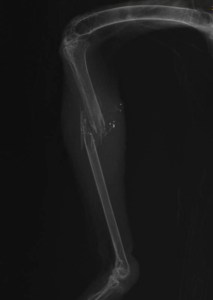
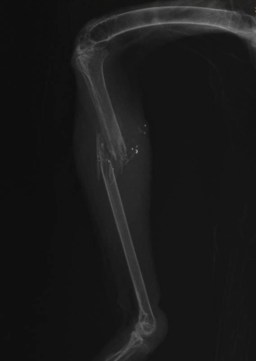
 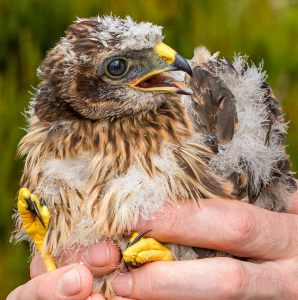 The farcical reporting about the shooting of young hen harrier Rowan continues.
 Then on 3 February 2017, the RSPB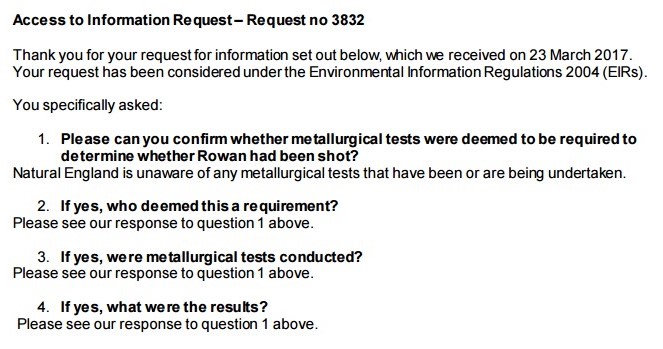
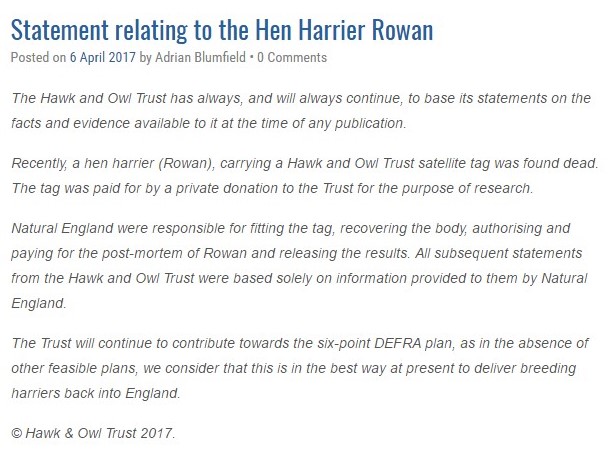
 Indeed, when challenged about the lack of transparency, the Hawk & Owl Trust conjured up this statement:
