New paper from Langholm study shows effectiveness of hen harrier diversionary feeding

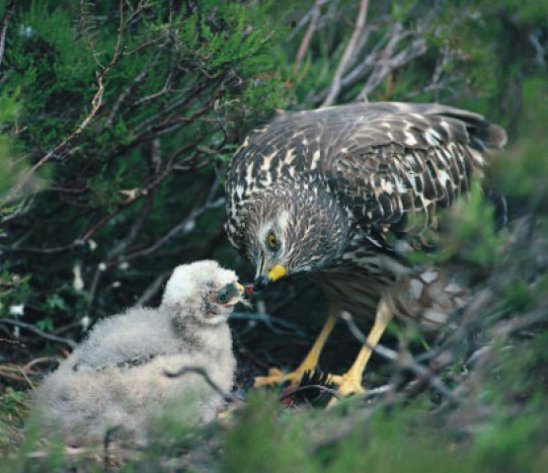
Diversionary feeding of hen harriers (where alternative food is provided for breeding birds to reduce the number of red grouse chicks they might otherwise have taken) has long been an option for grouse moor managers who complain that hen harriers eat ‘too many’ grouse.

This practice has been studied in depth during the Langholm Moor Demonstration Project (phase 1 and phase 2).

[Photo of diversionary feeding in action at Langholm, by Laurie Campbell]

It’s been known for a while just how successful this technique can be. For example, during the Langholm 1 study the proportion of red grouse found in the diet of hen harriers where diversionary feeding was NOT in place was 12%. During the Langholm 2 study, the proportion of red grouse found in the diet of hen harriers where diversionary feeding WAS in place had dropped to between 0 – 4% (see here and here).

These findings have now been formally written up and published in the scientific journal Bird Study. Unfortunately due to publishing restrictions we’re not permitted to publish the entire paper but here’s the abstract:

It’s good to see this paper finally out and especially good to see that the lead author, as well as several co-authors, is employed by GWCT.

Wouldn’t it be ironic if, at the forthcoming High Court challenge against hen harrier brood meddling (a management option of which the GWCT is one of the biggest supporters), lawyers acting on behalf of challengers Mark Avery and the RSPB presented this paper as evidence that Natural England’s decision to licence brood meddling was unlawful because all other management options (i.e. diversionary feeding) hadn’t been exhausted?

Responses to missing hen harrier Mabel

We learned about the suspicious disappearance of satellite-tagged hen harrier Mabel on Thursday (here), the same day we learned about the suspicious disappearance of satellite-tagged hen harrier Thor (here).

As usual, we’ve been tracking the official responses of the so-called partners in the Raptor Persecution Priority Delivery Group (RPPDG), which was established in 2011 and one of its main objectives is to raise awareness of illegal raptor persecution.

Yesterday we blogged about the official statements made by ‘partners’ in response to Thor’s disappearance near a grouse moor in the Bowland AONB (here). These statements were made by the Northern England Raptor Forum (NERF), Police Supt Nick Lyall (new Chair of the RPPDG) and Amanda Anderson of the Moorland Association (although Amanda still hasn’t got around to publishing her brass necked statement on the MA website).

[Hen harrier Thor, by Steve Downing]

At the time of writing this, there are no official response statements about Thor on the websites of the other RPPDG ‘partners’ including the National Gamekeepers Organisation, Countryside Alliance and BASC. No surprises there, silence has become the norm in these situations (e.g. see here, here, here, here), even though these groups have signed up to raise awareness of this PRIORITY crime.

So how about official responses to the disappearance of hen harrier Mabel who vanished close to a grouse moor on the boundary of the Yorkshire Dales National Park and the Pennines AONB?

At the time of writing we’ve only seen one response, from NERF. It’s well worth a read (here).

As for the rest of the ‘partners’, well their continued silence speaks volumes.

Responses to missing hen harrier Thor

Yesterday we were hit with the news of two missing hen harriers – ‘Thor’, a young bird tagged by the RSPB who disappeared in a wildlife crime hotspot in the Bowland AONB (here) and then later in the day, ‘Mabel’, a young bird tagged by Natural England who disappeared in a wildlife crime hotspot on the boundary of the Yorkshire Dales National Park and the North Pennines AONB (here).
So far there have been a couple of responses to Thor’s disappearance but nothing (yet) about Mabel.

[Hen harrier Thor, by Steve Downing]

NERF (Northern England Raptor Forum) has published a typically robust response on its website (here), pointing out the depressing predictablity of it all and highlighting the miserable performance of the Bowland AONB as an area designated as a Special Protection Area (SPA) for hen harriers.

Also quick to respond was Supt Nick Lyall, the new Chair of the Raptor Persecution Priority Delivery Group (RPPDG) which was established in 2011 as a ‘partnership’ to tackle raptor crime but so far has achieved absolutely nothing of any use.

Nick has only been in post for what seems like a couple of minutes but we’ve been impressed with his openness and his willingness to share his thoughts via his newly established blog. Yesterday evening he posted his response to the news of Thor’s disappearance – read it here.

He talks about his plans to run the first national raptor persecution workshop in November and he also discusses his previously-stated intention to break the silence of many RPPDG ‘partners’ on each raptor persecution case as it emerges, starting with Thor’s disappearance. We’ll come back to that. First we wanted to look at what he had to say about Thor.

It’s a cautiously written piece:

While it hasn’t been confirmed that this is a result of persecution, the circumstances will naturally lead people to believe this to be the case. I say this because the disappearance has occurred in a location where other hen harriers, namely Hope and Sky also disappeared without trace a few years ago under almost identical circumstances“.

He’s right not to look at Thor’s disappearance as an isolated case and to put it in to context with the disappearance of two other hen harriers (Sky & Hope) who both vanished in the same small area in 2014. However, that’s not the only reason we believe Thor’s ‘disappearance’ is as a result of persecution. Our perspective is wider and we place Thor’s disappearance in the context of all the other young hen harriers that have disappeared in suspicious circumstances on or close to driven grouse moors, time and time and time and time and time and time and time and time and time and time and time and time and time and time and time and time and time and time and time and time and time and time and time and time and time and time and time and time and time again.

There is abolutely no doubt whatsoever about what’s going on here – it is serious and organised crime on a massive scale across the uplands of England, Wales and Scotland. The map below shows just a fraction of the scale in one small region of the UK. No sooner do these young birds fledge and leave their natal area, they are killed. It’s no wonder the English breeding population struggles to reach double figures when the next generation of potential breeders are so relentlessly destroyed. It’s also clear evidence why DEFRA’s ridiculous brood meddling scheme won’t work.

[RPUK map showing the last known locations of ‘missing’ Natural England satellite-tagged hen harriers in the Yorkshire Dales National Park, Nidderdale AONB and Bowland AONB. Red star = HH found dead & confirmed illegally killed; orange star = last known location of missing hen harriers; Black star: missing hen harrier but grid reference withheld by Natural England; orange stars 1, 2 & 3 = last known locations of RSPB-tagged hen harriers Hope, Sky and Thor; Purple star last known location of hen harrier Mabel].

Nick did manage to get statements from two of the RPPDG ‘partners’ – NERF and the Moorland Association. He says he will update his blog as other responses come in.

The statement from the Moorland Association’s Director, Amanda Anderson, deserves special attention:

We join this appeal without hesitation and it is vital the police receive any possible information. This year we have been hugely encouraged by the best hen harrier breeding season in a decade and the fact that 60% of this year’s successfully fledged chicks had help from gamekeepers. At this stage it is not known if anything has happened to Thor beyond that the tag has stopped transmitting. It is widely recognised that that there is a high natural mortality rate for young hen harriers with only two out of every ten expected to survive their first year. We all know that collaboration is the key to successful conservation. As such, enhanced transparency and greater sharing of satellite tag data from the outset of birds’ lives would be a huge step in the right direction“.

It’s a masterclass in deflection and brass neck. She paints a picture that Thor is probably ok and it’s just that his tag has stopped working and besides natural mortality is expected, but that if anything had happened to him it wouldn’t be anything to do with gamekeepers because they’ve played such a big role this year in the successful fledging of some hen harriers.

She ignores the possibility that Thor’s disappearance might be linked to illegal persecution. She ignores the long history of hen harriers vanishing in suspicious circumstances on or near driven grouse moors. She ignores the decades of scientific studies that show illegal persecution is the main factor threatening this species with breeding extinction in England and shrinking the Scottish population’s distribution. She ignores the fact that the majority of those convicted of killing raptors are gamekeepers. She ignores the fact that we’ve all seen the video evidence of what gamekeepers do to raptors when they think nobody is watching.

She then suggests that sharing satellite tag data would be a great idea. A bit like suggesting G4S should publish its timetables and routes for bank cash deliveries.

We note that Amanda’s statement hasn’t yet made it on to the Moorland Association’s website. The current news headline on that site reads: ‘Real progress being made in the fight against wildlife crime‘.

We’ll keep an eye on Nick’s blog during the day and see if any of the other RPPDG ‘partners’ can be bothered to comment.

Hen harrier Mabel ‘disappears’ near grouse moor on Yorkshire Dales National Park boundary

Hot on the heels of this morning’s news that satellite-tagged Hen Harrier Thor ‘disappeared’ in Bowland on 3 October (here), there’s now news of another one.

Hen harrier ‘Mabel’ hatched from the only nest in the Yorkshire Dales National Park earlier this year (you’ll remember, the nest that was declared by the Yorkshire Dales Moorland Group and the National Gamekeepers Organisation as being located on a grouse moor, when actually it wasn’t – see here). She was satellite-tagged by Natural England.

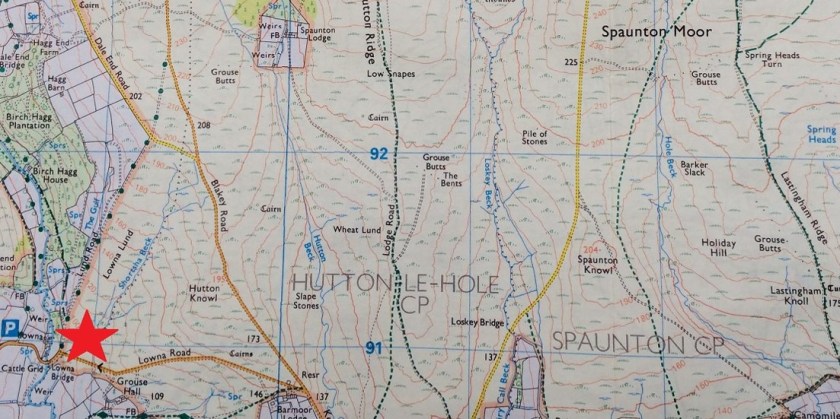
Mabel did a bit of travelling in to Teesdale but her last satellite tag fix came from the Little Smale Gill area, north of Ravenseat Moor, on 2 October 2018. You won’t be surprised to learn that the area is close to some driven grouse moors.

North Yorkshire Police have issued the following appeal for information:

Concerns raised following hen harrier’s disappearance

Concerns have been raised about the welfare of a hen harrier which may have gone missing along the North Yorkshire – Cumbria border.

[RPUK map showing last known location of hen harrier Mabel]

Female hen harrier Mabel was one of four chicks that fledged in July 2018 from a nest site in the Cumbrian area of the Yorkshire Dales National Park. Along with her sibling Tom, she was fitted with a satellite tag on 10 July by Natural England.

Since fledging, Mabel has been into Teesdale and wandered as far north as Allenheads, and also spent time around the Tan Hill area.

The transmitter functioned up until 2 October 2018, with the last signal being received from the Little Smale Gill area in Cumbria, north of Ravenseat Moor – but the bird could have been further afield when something happened to Mabel or the transmitter.

[RPUK map showing the grouse moor habitat close to hen harrier Mabel’s last known location]

Hen harriers are one of the UK’s rarest birds of prey, with just three successful nests recorded in England in 2017. Like all wild birds, they are protected by law under the Wildlife and Countryside Act 1981. However, despite full legal protection, their numbers remain consistently very low.

A search was conducted by Natural England staff but no tag or body was found. Cumbria Constabulary and North Yorkshire Police were informed, and are making enquiries.

Sergeant Stuart Grainger, of North Yorkshire Police’s Rural Taskforce, said: “I was lucky enough to spend some time monitoring Mabel’s nest site, and, despite following birds all my life, this was the very first time I’d ever seen a male or female hen harrier because they are so rare.

It is therefore particularly upsetting that one of the fledglings from the nest has inexplicably gone missing. I would urge anyone with information to come forward.”

PC Helen Branthwaite, Wildlife, Rural and Environmental Crime Co-ordinator at Cumbria Constabulary, said: “It is extremely worrying to hear of Mabel’s disappearance and that we are facing another enquiry into a missing hen harrier. With so few successful nest sites every bird that is lost has a severe impact on the conservation status of this rare bird.”

A spokesperson for Natural England said: “The sudden disappearance of the hen harrier, Mabel, is a matter of grave concern. We urge anyone with information to get in touch with North Yorkshire Police.”

Landowner farmer Andrew Brown said: “It was a pleasant surprise when Natural England staff knocked on my door and let me know these rare birds were likely to breed on my land.

The experience of watching them throughout the spring and early summer from building their nest to fledging four chicks was a real privilege.

NE gave me the chance to see them close up when they were satellite-tagged, and it was an honour to name the tagged birds Mabel and Tom after my grandparents. It is such a shame that something may have happened to Mabel. NE were keeping me regularly updated about Mabel and Tom’s whereabouts, and I was looking forward to hopefully welcoming them back next year.”

David Butterworth, Chief Executive of the Yorkshire Dales National Park Authority, said: “There was delight from all right minded people when four hen harrier chicks fledged earlier this year in the National Park. That has been matched by the despair felt that one of the birds, Mabel, has now gone missing.

The North of England has an unenviable reputation for criminal activity in terms of raptor persecution, so it’s hard not to think the worst in this case. However, for the moment we would strongly support the efforts of North Yorkshire and Cumbria Police to find Mabel, and would urge anyone with information to contact the police as soon as possible.

Anyone with any information about the hen harrier’s disappearance should contact North Yorkshire Police on 101. Alternatively, speak to the RSPB in confidence, by calling the Raptor Crime Hotline on 0300 999 0101.

ENDS

This amounts to blatant and relentless criminality. It’s happening at such a scale that it should now be defined as serious and organised crime.

[RPUK map showing the last known locations of ‘missing’ Natural England satellite-tagged hen harriers in the Yorkshire Dales National Park, Nidderdale AONB and Bowland AONB. Red star = HH found dead & confirmed illegally killed; orange star = last known location of missing hen harriers; Black star: missing hen harrier but grid reference withheld by Natural England; orange stars 1, 2 & 3 = last known locations of RSPB-tagged hen harriers Hope, Sky and Thor; Purple star last known location of hen harrier Mabel].

Here’s the definition of serious and organised crime from the National Crime Agency:

Serious crime planned, coordinated and conducted by people working together on a continuing basis. Their motivation is often, but not always, financial gain‘.

At last week’s wildlife crime conference in London political leaders, including our own, made a commitment to tackle the illegal wildlife trade as ‘a serious crime carried out by organised criminals’ (see here).

How bloody hypocritical when those same political leaders remain wilfully blind to the serious and organised wildlife crime happening on their own doorstep.

It’s abundantly clear to anyone with just a passing interest that the Westminster Government’s vested interests are preventing determined action against these criminals, aka The Untouchables.

UPDATE 20 October 2018: Responses to missing hen harrier Mabel (here)
Hen harrier ‘Thor’ disappears next to grouse moor in Bowland AONB

Just a little over a month ago the RSPB told us that three of this year’s satellite-tagged hen harrier chicks had all ‘disappeared’ in suspicious circumstances on driven grouse moors (here).

This morning they’ve announced the suspicious disappearance of another one. Here’s the RSPB’s report:

Thor is no more: First hatched hen harrier in Bowland for three years disappears in suspicious circumstances.

This summer we were overjoyed to have hen harriers nesting in Bowland for the first time since 2015. Our project team worked round the clock to monitor the three nests there, and the parent birds fledged an amazing 13 chicks between them.

Young hen harriers were fitted with tags as part of the RSPB’s EU-funded Hen Harrier LIFE project and we watched with anticipation as the chicks grew and started to fly away from their nests and make their way into the world. Unfortunately, it was unlucky 13 for one of our brood.

Young male hen harrier Thor fledged from a nest of four chicks in the Forest of Bowland and his satellite tag was fitted in mid-June. After leaving the nest he remained in the vicinity for several months.

[Photo of hen harrier Thor by Steve Downing]

His tag was transmitting regularly when it suddenly and inexplicably stopped. His last known fix on 3 October 2018 showed he was over Goodber Common near Salter in Lancashire, adjacent to a managed driven grouse moor. This disappearance was reported to the police, and a search revealed no sign of the bird or his tag.

[RPUK map showing Goodber Common in the Forest of Bowland Area of Outstanding Natural Beauty]

Thor is the fourth bird to disappear in the past two months, following the disappearances of Hilma, Octavia and Heulwen in August this year. Alarmingly, the last known fix for Thor is directly between the sites where tagged hen harriers Hope and Sky were last heard from before they disappeared back in 2014.

[RPUK map showing last known location of satellite-tagged hen harriers Sky and Hope and the approximate last known location (no grid ref provided) of hen harrier Thor]

James Bray, RSPB’s Bowland Project Officer, was involved in monitoring the nests in Bowland over the summer, and watched as Thor hatched, grew and fledged from his nest. He says: “Whilst we know that hen harrier mortality rates are high for young birds – with a survival rate of around 22% within the first two years – if Thor had died naturally we would have expected to find some sign of him or his tag. His tag was functioning well before he disappeared, which sadly suggests there has been some kind of interference with it.”

If anyone has any information as to what may have become of Thor, you can contact Lancashire Police on 101.

ENDS

According to Guy Shrubsole’s excellent Who Owns England website, the grouse moors to the south of Goodber Common, shown in our map above, belong to the Duke of Westminster’s Abbeystead Estate.

Nobody will be the least bit surprised that yet another young hen harrier has vanished close to a grouse moor in northern England, and especially in the Forest of Bowland AONB. We know from Natural England’s HH sat tag data (2007-2017) that Bowland is one of several areas (along with the Yorkshire Dales National Park and the Nidderdale AONB) where the land is dominated by driven grouse moors and where young hen harriers tend to disappear. We prepared a map of those areas in August 2018 after Natural England had finally released the HH sat tag data (which didn’t include details of any missing RSPB-tagged birds). Here’s an updated map to include hen harrier Thor’s last known location, as well as RSPB-tagged birds Sky & Hope who ‘disappeared’ in 2014:

[Red star = HH found dead & confirmed illegally killed; orange star = last known location of missing hen harriers; Black star: missing hen harrier but grid reference withheld by Natural England; orange stars 1, 2 & 3 = last known locations of RSPB-tagged hen harriers Hope, Sky and Thor].

So what happens now? Absolutely nothing of any significance.

The grouse-shooting industry will either stay mute and hope the news blows over quickly, or we’ll hear from Andrew Gilruth of the GWCT telling us how well the Government’s Hen Harrier (In)Action Plan is working (it isn’t, it’s a sham), or we’ll heard from Amanda Anderson of the Moorland Association that there’s no need for concern as she saw Thor flying past her kitchen window just yesterday.

DEFRA Minister Dr Therese Coffey will be too busy shuffling around in her handbag to even notice her Government’s complete and utter failure to protect this species.

UPDATE 19 Oct 2018: Responses to missing hen harrier Thor (here)

RSPB’s 2017 Birdcrime report documents ongoing illegal raptor persecution

The RSPB published its 2017 Birdcrime Report yesterday. It didn’t contain any surprises – we all know that crimes against birds of prey continued in 2017, and that these were largely associated with game-shooting estates.

The online report can be read here

The very useful appendices (actual data) can be accessed here

The RSPB’s interactive map hub (showing the spatial pattern of raptor crime) can be accessed here

We were particularly interested in the Scotland data, which amounted to just five confirmed, detected raptor persecution crimes. Quite obviously, this is just the tip of a large iceberg and is an indication of just how good the raptor killers have become at hiding the evidence of their crimes rather than an accurate reflection of the extent of ongoing raptor persecution – a fact recently acknowledged by Police Scotland (see here).

We know from the recent national survey results for three iconic species (golden eagle, hen harrier, peregrine) that illegal persecution continues to suppress the populations of all three species in areas where the land is dominated for driven grouse shooting. We also know from the ongoing studies of satellite-tagged golden eagles, white-tailed eagles and hen harriers that these birds continue to ‘vanish’ in the same grouse moor areas. Unfortunately these cases don’t make it in to the official wildlife crime stats although both the police and the Scottish Government have acknowledged that they are indicative of criminality, hence the current Government-commissioned Werritty review in to grouse moor management.

Of the five confirmed cases of illegal raptor persecution in Scotland last year, two were linked to the Leadhills (Hopetoun) Estate in South Lanarkshire – the witnessed shooting of a hen harrier in May 2017 (here) and then a few weeks later the witnessed shooting of a short-eared owl (here). The crumpled body of the shot short-eared owl was retrieved from a ditch the following day and the RSPB sent it off for post mortem, which confirmed it had been shot, causing multiple fractures to its wing, leg, foot, ribs and skull.

[The short-eared owl shot on Leadhills Estate, photo by RSPB]

The police investigated both cases but no prosecutions followed. Earlier this year, a dead buzzard was found at Leadhills and it too had been shot but yet again, nobody was prosecuted (here).

For those familiar with the Leadhills (Hopetoun) Estate this will come as no surprise – there have been over 50 reported cases of raptor persecution crimes on or close to this estate since 2003 and of those, only two have resulted in a conviction (gamekeeper convicted in 2004 for shooting a short-eared owl; gamekeeper convicted in 2009 for laying out a poisoned bait).

This appalling failure to enforce the law was addressed by the then Environment Minister Paul Wheelhouse MSP, who instructed SNH to withdraw the use of the General Licence on estates where there was sufficient evidence to demonstrate raptor persecution crimes had occurred but insufficient evidence to progress a prosecution against a named individual. We’ve waited and waited and waited for SNH to impose a General Licence restriction on the Leadhills (Hopetoun) Estate for these recent shootings but so far, nothing. When we’ve asked SNH for an explanation, it has refused to comment, saying it’s not in the public interest for SNH to explain its decisions.

Meanwhile, Lord Hopetoun continues to serve as the Chair of the Scottish Moorland Group (a sub-group of Scottish Land & Estates) and whose Director, Tim (Kim) Baynes continues to serve on the PAW Scotland Raptor Group – you know the one – the pretend ‘partnership’, chaired by the Scottish Government, set up to tackle the illegal persecution of raptors on driven grouse moors.

Grouse shooting industry’s reaction to news of 3 x missing hen harriers

Following the RSPB’s announcement on Thursday that three of this year’s satellite-tagged hen harriers have already ‘disappeared’ in suspicious circumstances on three grouse moors (here), we predicted that the grouse shooting industry’s ‘leaders’ would respond with a wall of silence, just as they have previously (e.g. see here).

We weren’t wrong.

[One of the missing three: ‘Hilma’, photo by Steve Downing]

Two days on, after searching websites and twitter feeds, here’s how the ‘partners’ of the Raptor Persecution Priority Delivery Group (RPPDG, also known as the PAW Raptor Group) have responded:

Countryside Alliance – no public statement

BASC – no public statement

National Gamekeepers Organisation – no public statement

Moorland Association – no public statement

Country Land & Business Association – no public statement

Natural England – no public statement

DEFRA – no public statement

Northern England Raptor Forum – full public statement here

NERF’s statement is excellent, and as usual, it doesn’t pull any punches. It talks about the never-ending cycle of persecution on driven grouse moors and how the grouse shooting ‘partners’ of the RPPDG are not part of the solution, they are part of the problem.

Why is this charade of ‘partnership-working’ still allowed to continue? It’s been running for seven years and absolutely nothing has changed. Nothing. Not one thing.

And nor will it, when the grouse shooting industry’s so-called leaders refuse to even publicise the raptor persecution hotline to encourage their members to report suspected raptor crime!

The RPPDG has a new Chair – Police Supt. Nick Lyall of Bedfordshire Police. We’ve been impressed with his willingness to listen – he contacted us directly and asked to talk – that’s never happened before. It’s clear that he wants to make a difference and understands that the status quo is unacceptable, but we don’t yet know what changes he intends to bring.

Although, he tweeted this afternoon that he intends to bring more conservation groups to the RPPDG and cited the Hawk & Owl Trust as one of them!

That’ll be the Hawk & Owl Trust that’s in bed with the grouse shooting industry in pursuit of the ludicrous hen harrier brood meddling scheme (here) and which is now facing two legal challenges from conservationists in the High Court in December (here); that lost its former President, Chris Packham, over the decision to partner with the grouse shooting industry on brood meddling (here); is prepared to turn a blind eye to the criminal activities of the driven grouse shooting industry when it suits (see here); is unwilling to be transparent about the illegal shooting of one of its own satellite-tagged hen harrriers (see here); and has been accused by its own members of being apologists for raptor persecution on driven grouse moors (here).

We look forward to a lively discussion with Nick later in the week!

3 more satellite-tagged hen harriers ‘disappear’ – all on grouse moors

You could set your clock by the regularity of these reports. In news that will shock absolutely no-one, the RSPB has announced the sudden and inexplicable ‘disappearance’ of three young satellite-tagged hen harriers.

All three had hatched this year, all three had vanished before the end of August, and in all three cases the tag’s last known fix came from a driven grouse moor.

Photo of Hen Harrier Octavia, by Steve Downing:

Read the RSPB blog here

The three ‘missing’ harriers are Hilma (1), Octavia (2) and Heulwen (3).

[RPUK map]

According to the RSPB blog, Hilma’s last known tag fix was on 8 August 2018 ‘near Wooler, Northumberland over land managed for driven grouse shooting’.

From the map on the RSPB blog, we believe this to be on the Lilburn Estate. We’ve blogged about the Lilburn Estate recently (see here).

Here’s a close up map of the habitat at Hilma’s last known location. The rectangular strips of burnt heather give the game away a bit, eh?

According to the RSPB blog, Octavia’s last known tag fix was on 26 August 2018 on ‘privately owned grouse moors near Sheffield’.

From the map on the RSPB blog, we believe this to be the Broomhead Estate in the Peak District National Park. We’ve blogged about the Broomhead Estate quite recently (here, here and here).

Here’s a close up map of the habitat at Octavia’s last known location. The rectangular strips of burnt heather give the game away a bit, eh?

According to the RSPB blog, Heulwen’s last known tag fix was on 29 August 2018 ‘in the vicinity of Ruabon Mountain’.

From the map on the RSPB blog, we believe this to be the Ruabon grouse moor. We’ve blogged about this grouse moor recently (see here, here).

Here’s a close up map of the habitat at Heulwen’s last known location:

And cue obfuscation, denial and deflections from the grouse shooting industry’s social media trolls, deathly silence from the grouse shooting industry’s representative bodies, and wilful blindness (and continued silence) from DEFRA, Michael Gove MP, Therese Coffey MP, Natural England and anyone else who thinks we’re stupid enough to believe that the HH Action Plan is helping hen harrier population recovery.

Cartoon by Gerard Hobley


North Wales Police investigating “possible disappearance” of another satellite-tagged hen harrier

The North Wales Police Rural Crime Team has posted the following statement on Twitter this morning:

There isn’t much detail to go on but presumably this harrier’s tag has suddenly and inexplicably stopped in highly suspicious circumstances, just like the 79% of other tags fitted to hen harriers between 2007-2017 (and remember this is 79% of tags fitted by Natural England – it does not include any tags fitted by the RSPB – we’re expecting that analysis sometime next year).

What’s interesting though, is the location from where this hen harrier’s satellite tag last tranmsitted: the “Llandegla area”. This is very close to the location where another satellite-tagged hen harrier (Aalin) ‘disappeared’ in suspicious circumstances in February this year near the Ruabon grouse moor (see earlier blog on Aalin’s disappearance here).

Hopefully more details about this latest hen harrier’s “possible disappearance” will be published soon.

UPDATE 13 September 2018: 3 more satellite-tagged hen harriers disappear – all on grouse moors (here)

New satellite tag data reveal suspicious clustering of ‘missing’ hen harriers on English grouse moors

[UPDATE 27th August 2018: The three maps below have now been updated to account for the inaccurate grid reference of one ‘missing, fate unknown’ hen harrier – now accurately shown to have ‘disappeared’ in North York Moors National Park, and not in Bowland AONB]

Well, well, well.

The Westminster Government’s statutory nature conservation agency, Natural England (NE), has chosen to publish its long-awaited hen harrier satellite tag data late on a Saturday evening of a Bank Holiday weekend. No announcement, no fanfare, just quietly uploaded to the DEFRA website, probably hoping that nobody would notice.

After having a preliminary look at these data, it’s no wonder NE doesn’t want to shout about them because they validate our long-held view that NE has been shielding the hen harrier-killing criminals within the driven grouse shooting industry for years, instead of dragging them before the courts and closing down their filthy ‘sport’.

Photo of a satellite-tagged hen harrier. A post-mortem revealed it had been shot.

NE has been satellite-tagging hen harriers since 2007 and a lot of them have ‘disappeared’ in suspicious circumstances (e.g. here). As many regular blog readers will know, we, and others (notably Mark Avery) have been asking NE to publish these hen harrier satellite tag data for a long time. We came quite close to getting the information from this publicly-funded research about a year ago, when NE published part of its ten-year data set but crucially, it excluded all meaningful grid references and any information about the land use in the areas where these hen harriers had ‘disappeared’.

We accused NE of a cover up (see here and here) and pursued the data via many FoI requests but all to no avail. NE told us that as the 11-year NE-funded PhD study had finally been ditched (here), external experts would instead be analysing the data and we could expect the results to be submitted for peer-review publication in 2018.

The findings of that study by external experts were presented at an international ornithological conference in Vancouver yesterday morning, and NE, realising it could no longer justify withholding the data without facing another legal challenge, published the updated satellite tag data late last night.

The new hen harrier satellite tag data have been published on the DEFRA website here

The update is the same spreadsheet that NE published last September but now, importantly, also includes six figure grid references for the ‘last known fix’ from the satellite tags of most of the 59 hen harriers tagged by NE between 2007-2017.

We haven’t had time to look at these data very closely but for now we’ve produced some quick and dirty maps to show the distribution of ‘missing’ hen harriers and those that have been found dead, confirmed to have been killed illegally. Remember, these are the hen harriers that have been satellite-tagged by NE – the map does not include the data from RSPB’s Hen Harrier LIFE Project, so these maps will show an even bleaker picture once the RSPB has analysed the data from its tagged birds.

Here’s the overview map:

[Red star: HH found dead & confirmed illegally killed; Orange star: HH missing, fate unknown; Yellow star: Hen Harrier ‘John’, missing, fate unknown; Black star: hen harrier missing fate unknown but grid reference withheld]

The reason hen harrier John (yellow star) has been highlighted separately is because on NE’s updated spreadsheet, the data are only presented up to September 2017, and so John is shown as still being alive. However, we know that John ‘disappeared’ on Threshfield Moor in the Yorkshire Dales National Park in early October 2017 and so now joins the many others classified as ‘missing, fate unknown’.

The three black stars represent hen harriers that are listed in NE’s data set as ‘missing fate unknown’ but the grid references for these three harriers have been withheld, and the birds’ last known fix locations are given as ‘Bowland’, ‘Bowland’, and ‘Sheffield’. Presumably there is good reason to withhold these grid refs (perhaps they identify commonly-used roost sites?) so we’re not going to quibble about that. Consequently, the black stars are not placed accurately, just in the general area of ‘Bowland’ and ‘Sheffield’ (and presumably ‘Sheffield’ refers to a location close by, perhaps in the Peak District National Park).

You can see from this first overview map that there appears to be quite a bit of ‘clustering’ of last known fix locations in Yorkshire and Bowland, so let’s have a closer look at a regional scale:

Gosh, there does seem to be a lot of ‘missing’ hen harriers clusted in the Yorkshire Dales National Park, Nidderdale Area of Outstanding Natural Beauty, and Bowland Area of Outstanding Natural Beauty – all highly designated protected landscapes.

Shall we look a bit closer?

And there you have it. A suspicious spatial clustering of ‘missing’ or confirmed persecuted hen harriers in the Yorkshire Dales National Park, Nidderdale AONB and Bowland AONB – all areas where the landscape is dominated by intensively managed driven grouse moors.

Haven’t we seen this suspicious spatial clustering somewhere else? Ah yes, the map that shows the ‘missing’ satellite-tagged golden eagles in Scotland, where the spatial clustering appears in some areas that are intensively managed for driven grouse shooting.

Imagine that.

What’s that quote? “You can hide the bodies, you can hide the tags, but you can’t hide the pattern” (Dr Hugh Webster).

Looking at NE’s data spreadsheet, 47 of the 59 hen harriers satellite-tagged by NE between 2007-2017 are ‘missing, fate unknown’. That’s a whopping 79.6%!

Now obviously, these last known fix location data are of great interest to us and we await the publication of the full scientific analyses of all the tag data with great interest. But perhaps what is more interesting is what these data reveal about NE’s complicity in shielding the criminals within the grouse shooting industry.

Knowing full well what its own satellite tag research was showing, why has NE suppressed these results for so many years whilst working in so-called ‘partnership’ with the grouse shooting industry and sat back in silence whilst those same grouse shooting industry representatives have consistently denied, even in Parliament, the extent of their industry’s role in the systematic killing of hen harriers?

More blogs on this to come.