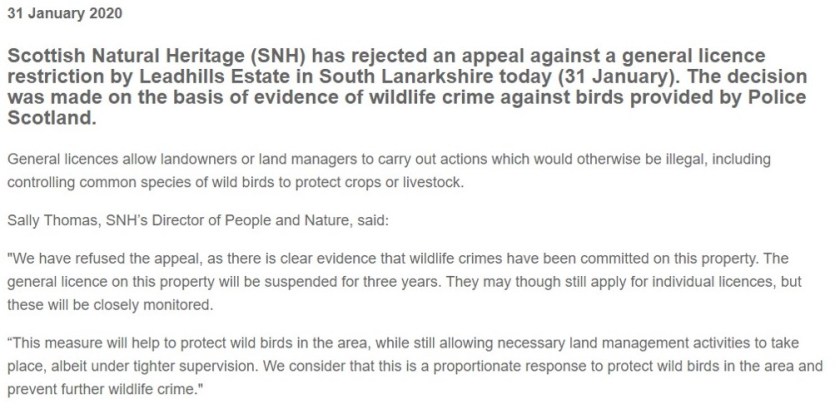
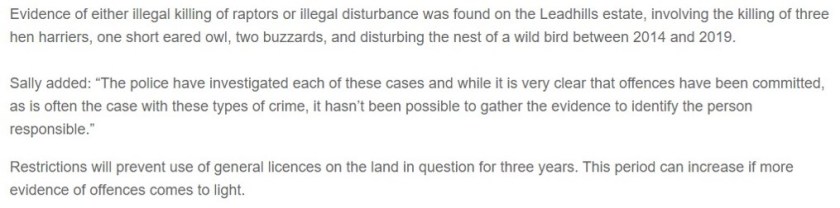
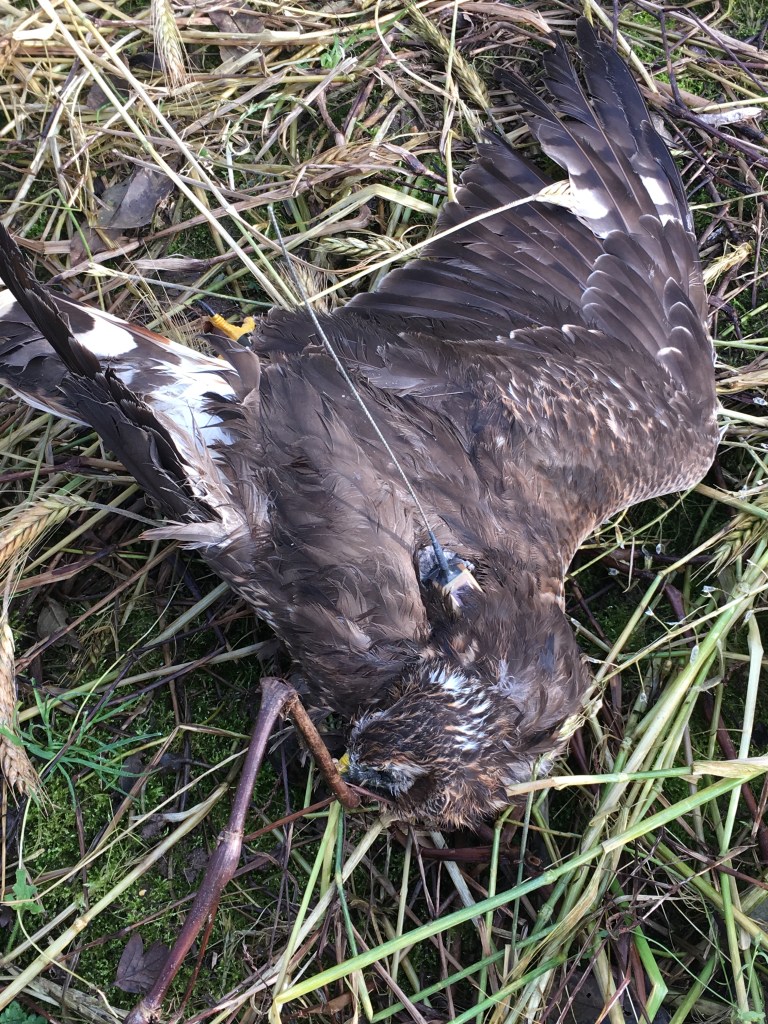
Yesterday the RSPB published more data on its Raptor Persecution Map Hub, which now includes 12 years worth of searchable incidents. You can read about it here on the RSPB Investigations Team’s blog.
Coinciding with this release was a piece on the BBC’s Six O’Clock News followed up with a feature on BBC North West’s Inside Out programme.
The Inside Out programme is available to watch on iPlayer here for the next 29 days.
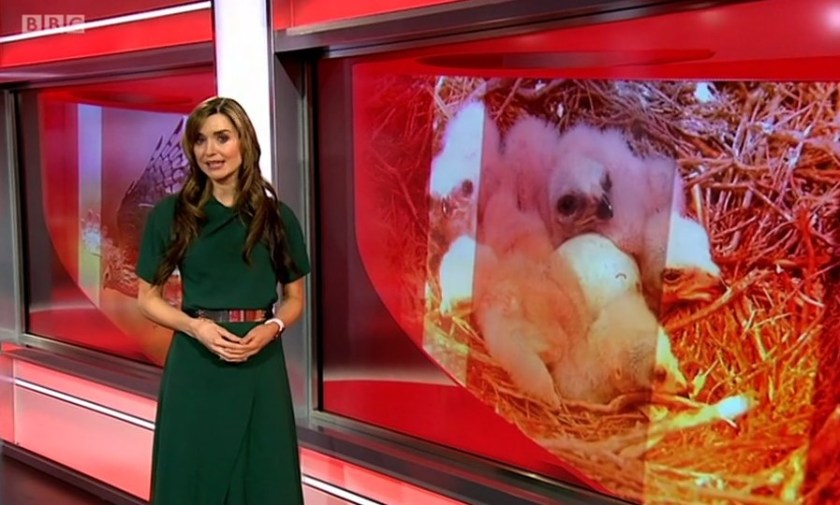
The feature runs for about ten minutes and includes interviews with the RSPB’s Investigations Team, North Yorkshire Police’s award-winning Wildlife Crime Officer Sgt Stu Grainger, and the Moorland Association’s top contortionist Amanda Anderson.
To be honest there’s nothing new here at all – it’s a well-rehearsed pantomime with claims made by the RSPB (based on evidential data) and counter-claims from the grouse shooting industry (pretending everything’s fine) but nevertheless, still well worth the airplay on national news that undoubtedly will have reached some people who’d previously been unaware of the level of criminality on many of the grouse moors of northern England.
The journalist, Gareth Barlow, did a reasonable job although just lacked the killer questions that would have exposed the Moorland Association’s nonsense with ease. For example, he picked up that 2018 was the worst year for recorded raptor persecution crimes in over a decade but he let Amanda Anderson get away with some snakeish slithering around the facts, as follows:
Gareth Barlow: “A study from last year of data trackers showed that hen harriers are ten times more likely to die or disappear over land associated with grouse moors. How do you react to that data?”
Amanda Anderson: “The study of tagged birds up to 2017 raises considerable issues. But actually since then 2018 saw 34 fledged hen harrier chicks in England and last year a record-breaking 47 chicks fledged, mostly from grouse moors“.
Let’s just analyse Amanda’s response. A casual and uninformed listener might think that, based on what she said, the grouse shooting industry has cleaned up its act since 2017, with ‘record-breaking’ [ahem] numbers of chicks fledging and everything’s fine now, nothing to see here, move along, gamekeepers love hen harriers too and the killing has stopped. But what happens to those ‘record-breaking’ number of fledged hen harriers once they leave the nest?
What Amanda ‘forgot’ to mention was the long list of satellite-tagged hen harriers that have either vanished in suspicious circumstances or been found illegally shot or trapped or poisoned, mostly on or close to land managed for game bird shooting, since 2018 (and since DEFRA’s so-called Hen Harrier Action Plan was enacted):
February 2018: Hen harrier Saorsa ‘disappeared’ in the Angus Glens in Scotland (here). The Scottish Gamekeepers Association later published false information claiming the bird had been re-sighted. The RSPB dismissed this as “completely false” (here).
5 February 2018: Hen harrier Marc ‘disappeared’ on a grouse moor in Durham (here)
9 February 2018: Hen harrier Aalin ‘disappeared’ on a grouse moor in Wales (here)
March 2018: Hen harrier Blue ‘disappeared’ in the Lake District National Park (here)
March 2018: Hen harrier Finn ‘disappeared’ near Moffat in Scotland (here)
18 April 2018: Hen harrier Lia ‘disappeared’ in Wales and her corpse was retrieved in a field in May 2018. Cause of death was unconfirmed but police treating death as suspicious (here)
8 August 2018: Hen harrier Hilma ‘disappeared’ on a grouse moor in Northumberland (here).
16 August 2018: Hen harrier Athena ‘disappeared’ on a grouse moor in Scotland (here)
26 August 2018: Hen Harrier Octavia ‘disappeared’ on a grouse moor in the Peak District National Park (here)
29 August 2018: Hen harrier Margot ‘disappeared’ on a grouse moor in Scotland (here)
29 August 2018: Hen Harrier Heulwen ‘disappeared’ on a grouse moor in Wales (here)
3 September 2018: Hen harrier Stelmaria ‘disappeared’ on a grouse moor in Scotland (here)
24 September 2018: Hen harrier Heather ‘disappeared’ on a grouse moor in Scotland (here)
2 October 2018: Hen harrier Mabel ‘disappeared’ on a grouse moor on the edge of the Yorkshire Dales National Park (here)
3 October 2018: Hen Harrier Thor ‘disappeared’ next to a grouse moor in Bowland, Lanacashire (here)
26 October 2018: Hen harrier Arthur ‘disappeared’ on a grouse moor in the North York Moors National Park (here)
10 November 2018: Hen harrier Rannoch ‘disappeared’ on a grouse moor in Scotland (here). Her corpse was found nearby in May 2019 – she’d been killed in an illegally-set spring trap (here).
14 November 2018: Hen harrier River ‘disappeared’ on a grouse moor in the Nidderdale AONB (here). Her corpse was found nearby in April 2019 – she’d been illegally shot (here).
16 January 2019: Hen harrier Vulcan ‘disappeared’ in Wiltshire close to Natural England’s proposed reintroduction site (here)
7 February 2019: Hen harrier Skylar ‘disappeared’ next to a grouse moor in South Lanarkshire (here)
22 April 2019: Hen harrier Marci ‘disappeared’ on a grouse moor in the Cairngorms National Park (here)
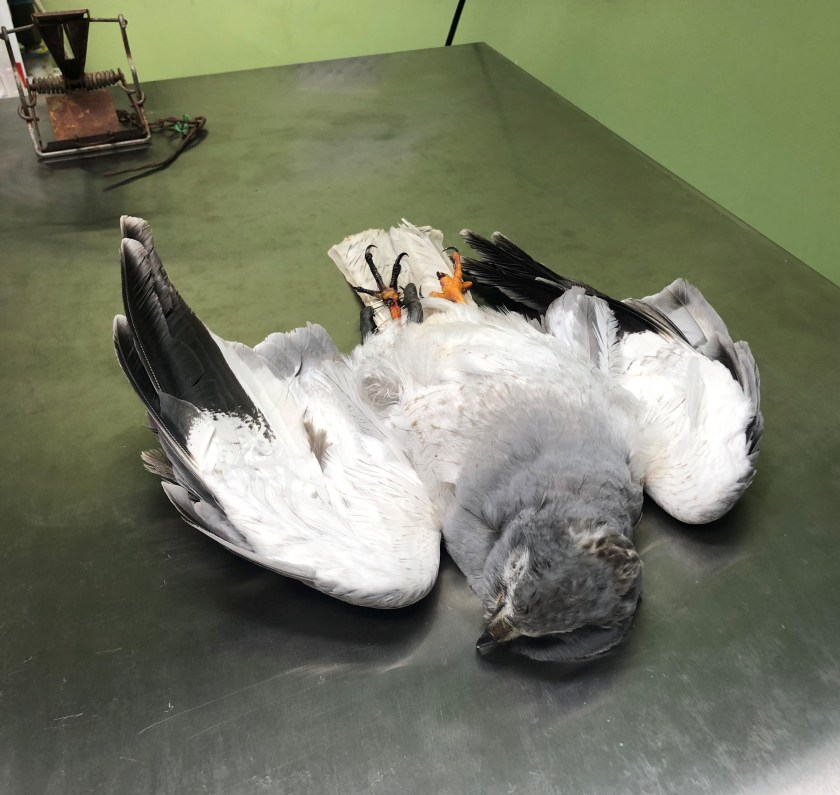
11 May 2019: A male hen harrier was caught in an illegally-set trap next to his nest on a grouse moor in South Lanarkshire. He didn’t survive (here)
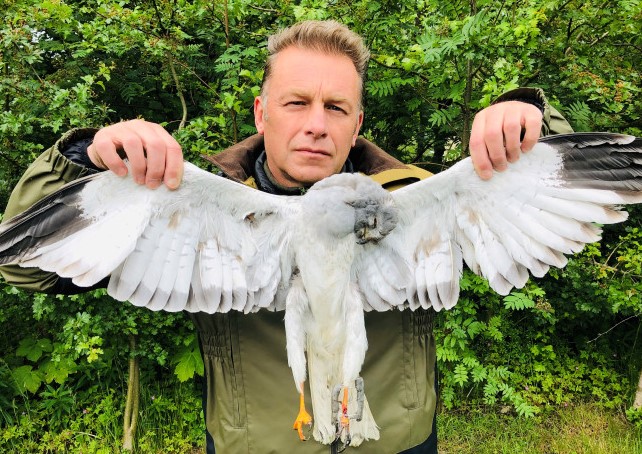
7 June 2019: A hen harrier was found dead on a grouse moor in Scotland. A post mortem stated the bird had died as a result of ‘penetrating trauma’ injuries and that this bird had previously been shot (here)
11 September 2019: Hen harrier Romario ‘disappeared’ on a grouse moor in the Cairngorms National Park (here)
10 October 2019: Hen harrier Ada ‘disappeared’ on a grouse moor in the North Pennines AONB (here)
12 October 2019: Hen harrier Thistle ‘disappeared’ on a grouse moor in Sutherland (here)
November 2019: Hen harrier Mary found illegally poisoned on a pheasant shoot in Ireland (here)
There are two more satellite-tagged hen harriers (Tony & Rain) that are reported either confirmed or suspected to have been illegally killed in the RSPB’s Hen Harrier LIFE Project Report but no further details are available.
And then there were last year’s brood meddled hen harrier chicks that have been reported ‘missing’ but as they’re carrying a new type of tag known to be unreliable it’s not known if they’ve been bumped off or if they’re still ok. For the purposes of this mini-analysis we will discount these birds.
So that makes a total of at least 29 hen harriers that are known to have either ‘disappeared’ in suspicious circumstances or have been found illegally killed in the last two years, during the period that Amanda Anderson was suggesting the killing had stopped.
That’s a lot of incidents for Amanda to ‘forget’ to mention, isn’t it?
And we’re supposed to trust the Moorland Association when it claims to have ‘zero tolerance’ for raptor persecution!