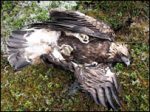
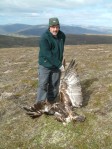
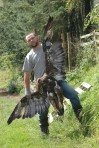
landowners’ condemnation of raptor persecution revisited

Last week, I reported that 23 of the shooting estates that had signed the letter to condemn raptor poisoning had had wildlife crime incidents recorded on their properties, and in some cases, employees had criminal convictions associated with wildlife crime. I decided to give them all the benefit of the doubt, as they may all have since changed ownership and/or staff since those incidents and subsequently changed their attitude towards raptor killing.  After some heavy duty googling, it appears that 6 of the 22 have changed ownership, 11 have not, and inconclusive material was found for 6.

Estates that do not appear to have changed ownership and/or staff since incidents of wildlife crime have been recorded on their land, yet are asking us to believe they now ‘condemn’ raptor poisoning are as follows:

Careston Castle, Dochfour Estate, Invercauld Estate, Haystoun Estate, Dougarie Estate, Haddo Estate, Dunecht Estate, Roxburghe Estate, Seafield & Strathsprey Estates, Innes Estate.

Estates that do appear to have changed ownership and/or staff since incidents of wildlife crime were recorded on their land are as follows:

Coignafearn Estate, Dunachton Estate, Glenfeshie Estate, Lothian Estate, Islay Estate, Wemyss & March Estates.

Inconclusive evidence of a change of ownership and/or staff since incidents of wildlife crime were recorded on their land include the following:

Rosehaugh Estate, Dinnet & Kinord Estate, Balmanno Estate, Straloch Farm, Aberarder Estate.

One estate that deserves special mention is Coignafearn Estate in the Monadhliaths. Previously known by raptor workers as a notorious eagle black-spot in the 1980s when it was owned by an age-ing Belgian, Baron Douharty, Coignafearn was bought by Dr Sigrid Rausing in 1998. The daughter of Tetra Pak billionaire Hans Rausing, she has since made tremendous efforts to run this estate positively for raptors, including building artifical nest sites to try and encourage breeding golden eagles back to her land.

If only all landowners were as enlightened as Dr Rausing.

landowners’ condemnation of raptor persecution exposed as a sham?

On 21 May 2010, this blog reported on the news that over 200 landowners (members of the Scottish Rural Property & Business Association – SRPBA)  had written a letter to Environment Minister Roseanna Cunningham MSP, condemning the continued practice of illegal raptor persecution on Scottish sporting estates.

This letter has now become available for public viewing: SRPBA LETTER MAY 2010

On close scrutiny of the signatories to this letter, it is now apparent that on 23 of the estates listed, wildlife crime incidents have been recorded, and on seven of them, estate employees have criminal convictions. Here they all are in their full glory:

Careston Estate, Brechin: Buzzard found poisoned by Chloralose 1992.

Dochfour Estate, Inverness: Buzzard found poisoned by Chloralose 1992.

Invercauld Estates, Braemar: Buzzard found poisoned by Chloralose 1992; Three Buzzards and a raven found poisoned by Carbofuran 2005; Gamekeeper convicted for illegal use of spring trap 1997.

Balmanno Estate, Bridge of Earn: Buzzard found poisoned by Carbofuran, illegal gin traps and egg collection – Gamekeeper convicted 2003.

Haystoun Estate, Peebles: Gamekeeper filmed allegedly removing Peregrine chick from nest – evidence ruled inadmissable in court (a legal technicality) – but keeper convicted of firearms offences 2003.

Haddo Estate, Aberdeenshire: Gamekeeper convicted for  laying poisoned baits and illegal traps and fined £2,600 in 1989.

Dunachton Estate, Kincraig: Buzzard found shot 1990; Buzzard found shot 1992.

Dougarie Estate, Isle of Arran: Eagle found poisoned by Chloralose 1991.

Rosehaugh Estate, Black Isle: Buzzards found poisoned by Mevinphos 1991.

Dinnet & Kinord Estates, Aboyne: Gamekeeper convicted for firearms offences and trespassing on neighbouring estate while carrying a firearm 2006; Golden eagle found poisoned 2006.

Straloch Farm, Blairgowrie: Buzzard found poisoned by Chloralose 1992.

Lothian Estates, Jedburgh: Osprey found shot 1993.

Glenfeshie Estate, Kincraig: Golden eagle found poisoned by Carbofuran 2006.

Islay Estates, Islay: Raven found poisoned by Mevinphos 1989; Buzzard found poisoned by Mevinphos 1989.

Dunecht Estates, Aberdeenshire: Buzzard found shot 2007.

Coignafearn Estate, Tomatin: Poisoned bait found 1983; Golden eagle found poisoned 1988.

Roxburghe Estate, Kelso: Buzzard found poisoned by Mevinphos 1989.

Seafield Estate, Strathsprey: Buzzard found poisoned by Chloralose 1991.

Innes Estate, Elgin: Dead Buzzards and crows found dying after poisoned by Carbofuran – Michael Royan (head gamekeeper) convicted of firearms offences and possession of illegal poisons 2007.

Carbeth Estate, Stirlingshire: Buzzard found poisoned by Chloralose 1989.

Wemyss & March Estates, Longniddry: Managers of the Barns Estate in Peebleshire, where gamekeeper was convicted of poisoning 20 raptors, described at the time as “Britain’s worst wildlife crime” 2004.

Alvie Estate, Kincraig: Golden eagle found poisoned 1980.

Aberarder Estate, Strathnairn: Eagle found poisoned 1993.

One has to ask, why are these estates still allowed a membership of SRPBA? Doesn’t their continued membership ruin any credibility of the SRPBA’s public pronouncements against illegal raptor persecution? Indeed, it seems to go against the SRPBA’s very own Code of Practice: http://srpba.com/view_item.aspx?item_id=136&open2=false

Although of course, we should point out that some of these Estates may have changed ownership/staff since some of these incidents occured – we should probably give them all the benefit of the doubt because after all, the SRPBA has ‘repeatedly condemned the illegal poisoning of wildlife’ and of course we should all accept that their members are all above board and not engaged in criminal activities.

The SRPBA is also a fully-fledged partner in the Partnership Against Wildlife Crime (PAW Scotland) – as a commited partner, I’m sure that the SRPBA has expelled any members that are associated with wildlife crime. Otherwise, what is the point of SRPBA being a partner in PAW Scotland? No point, other than paying lip-service to raptor conservation in a feeble attempt to protect their public image. But we are giving them the benefit of the doubt, aren’t we.

At the latest PAW Scotland meeting  that was held on 25 May 2010, Environment Minister Roseanna Cunningham MSP apparently congratulated the SRPBA on their letter. Let’s give her the benefit of the doubt too and assume she hadn’t read it yet.

3 golden eagles & other raptors found dead on Skibo Estate, Sutherland

THREE golden eagles, a buzzard and a sparrowhawk have been found dead on Skibo Estate, Sutherland, in the last week. The bodies have been sent for toxicology analysis at the government laboratory in Edinburgh, on suspicion that they had been poisoned. Now, unless those THREE golden eagles all died of old age at the same time on the same estate, and the buzzard and sparrowhawk died of a heart attack at seeing the dead eagles, I think it’s fair to assume that the toxicology results will prove to be positive and that some of these birds have been illegally killed by someone with access to poison. Even PC Plod should be able to work out the connection here.

The police investigation is continuing and no arrests have been made. A statement from Skibo Castle said: “The owners and management of Skibo Castle are committed conservationists and do everything they can to support the welfare of wildlife and birds. We will cooperate fully with the authorities in their investigation”.

BBC news story: http://news.bbc.co.uk/1/hi/scotland/highlands_and_islands/8676871.stm

Skibo is a prestigious highland estate and was the location for Madonna’s marriage to Guy Ritchie in 2000. The estate includes a 3,000 hectare grouse moor and a members-only hotel. Skibo was bought for £23 million in 2003 by Ellis Short, an American multi-millionaire investment banker who also owns Sunderland football club. In 2007, his wife, Eve Short, is alleged to have threatened two pensioners who were walking their dogs on the estate, telling them she would have her gamekeeper shoot the dogs if they were seen again. According to the report, the estate later apologised to the pensioners after realising that the pensioners had every right to walk their dogs there, under the rules of the Scottish Access Code. http://dogblog.dogster.com/2007/01/07/obnoxious-owner-of-skibo-castle-threatens-to-shoot-pensioners-and-their-small-dogs-for-walking-on-property/

spate of recent poisonings kills eagles, kites, buzzards & peregrine

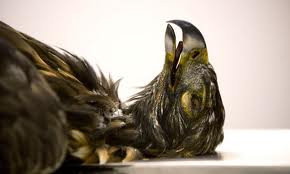
One of the dead white-tailed sea eagles undergoing post mortem

A disgraceful spate of recent poisonings in Ireland has resulted in the death of 2 white-tailed sea eagles, 1 golden eagle, 3 red kites, 3 buzzards and a peregrine.

The sea eagles were poisoned by the illegal pesticide carbofuran. The golden eagle, kites, buzzards and peregrine were killed by alphachloralose, a pesticide still manufactured and legally available in Ireland.

Police investigations are underway.

For the full sorry story: http://www.goldeneagle.ie/news_viewnews.php?x=6&z=132&news_id=11&article=267

Call to control poison in Ireland after more red kite deaths

Another poisoned red kite

Pressure to control the poison Alphachloralose, available over the counter in Ireland, is intensifying following the poisoning of two more red kites in County Wicklow. The young birds were part of an Irish reintroduction project and had only been released in July 2009.

Alphachloralose has been used to kill red kites, golden eagles and white-tailed eagles across Ireland in recent years. The Golden Eagle Trust, a local NGO attempting to re-introduce all three species back to ireland, have lodged a formal complaint with the European Commission over the State’s failure to protect the birds.

Full story: http://www.irishtimes.com/newspaper/ireland/2010/0329/1224267276974.html

Golden Eagle Trust website: http://www.goldeneagle.ie/

shooting times magazine names the countryside’s “most wanted pests”

Game shooting’s top magazine, The Shooting Times, has published an article on the countryside’s “most wanted pests”, which speaks volumes on the true attitude of the game shooting industry to our protected wildlife.

The Shooting Times, 6th February 2006 reports,  The golden eagle, red kite, osprey, heron, peregrine falcon and buzzard stand accused with the hedgehog, otter, badger and the domestic cat of being “voracious predators” that affect the game shooting and fishing industries.

The 114-year-old title describes the animals on its list as “pricey pests” that devour pheasant, partridge, grouse, salmon, trout, hare, pigeon, woodcock, snipe, duck, goose and deer or snatch wild birds’ eggs. The losses hit the profits of estate owners and shooting and fishing syndicates.

Jim Knight, the Rural Affairs Minister, joined animal welfare groups and the Countryside Alliance in criticising the magazine for vilifying wildlife. He was shocked by the article’s emotive language. “The list includes a number of precious species that are protected by law. Readers of this article may agree that some species can be a nuisance — but this does not excuse their destruction.”

Camilla Clark, editor of Shooting Times, said: “The purpose was to assess the economic impact of predators and pests on game birds in the UK. Shooting Times would never advocate the illegal killing of a protected species.”

Environment Minister appreciates the efforts of the Scottish Gamekeepers Association

Scottish Environment Minister, Roseanna Cunningham, really showed those pesky gamekeepers that she means business when it comes to stamping out wildlife crime. In her speech at the Scottish Gamekeepers Association’s (SGA) annual general meeting on 5 March 2010, hard-hitting Roseanna gave them what for. Well actually, she didn’t.

Here is an excerpt from her speech:

Unfortunately, the illegal killing of birds of prey in Scotland remains at an unacceptably high level, as shown by the recent high profile cases such as the poisoning of the golden eagle, Alma, which was being radio-tracked by SNH. Raptor persecution is one of the UK Wildlife Crime Priorities and we are committed to tackling this.

In Scotland even one incident of deliberate, illegal poisoning would be one too many. It is shameful that some of our most iconic species continue to face illegal persecution.

We all know that the illegal killing of birds of prey is having a serious impact on the populations of iconic species such as golden eagles and hen harriers. Birds of prey are our national assets, with huge public, cultural and tourism appeal. 

However, I realise that those responsible for these illegal activities are in the minority.

I am most grateful for the efforts of the SGA who are trying to conserve birds of prey and the support that the SGA gives to the Partnership for Action Against Wildlife Crime Scotland (PAWS), in helping to defeat this type of crime.

The partnership approach taken in tackling this issue is apparent in the mix of people you see here today. We all have the same goal of defeating wildlife crime. Working together to share knowledge, resources and skills to deal with these issues is the only way to tackle this problem”.

Roseanna, it might be time to change your political advisors because they are clearly not giving you the full picture. What ‘efforts’, exactly, has the SGA made to try and conserve birds of prey? Perhaps you are referring to their long-running campaign (since 2000) to get licences to cull raptors? SGA chairman Alex Hogg even goes as far as saying if they had licences to kill raptors legally then the wildlife crime would stop ‘overnight’. http://www.independent.co.uk/environment/nature/birds-of-prey-persecution-a-special-ios-online-report-396066.html Is that an admission that if licences to kill raptors are not forthcoming then gamekeepers will continue the criminal activity of killing protected species? Wonderful! What a great effort they are making to conserve birds of prey!

Community action after golden eagle ‘Alma’ found poisoned on Millden Estate, Perthshire

Local residents are outraged at the poisoning of golden eagle ‘Alma’, who was found dead on the Millden Estate in Glen Esk in July 2009.

Members of Inveresk Community Council are now writing to the three Estates in Glenesk (Millden Estate, Gannochy Estate and Invermark Estate), as well as the Scottish Environment Minister, Roseanna Cunningham and the Chair of Scottish Natural Heritage, Andrew Thin, to express their concern about the alleged use of lethal illegal poisonous baits in the area.

Brechin Community Council vice-convenor, David Adam, who was at the meeting and raised the issue, said: “I think we are all quite shocked about this. I think it is fairly conclusive that the bird was poisoned and that the bird was poisoned in Glen Esk. These birds are an extremely important part of our heritage”.

Inveresk Community Council chairperson, Charlie Simpson, commented: “To poison such creatures goes totally against the nature of Scotland”.

http://www.brechinadvertiser.co.uk/top/Community-action-follows-death-of.5558572.jp

At the time of the discovery of the dead eagle, police conducted searches, under warrant, of gamekeepers’ cottages and vehicles on the Millden Estate. No arrests have been made. Tayside Police claim this is an on-going investigation, which probably means this crime will remain unsolved and the criminal(s) unpunished, like so many other reported poisoning incidents in this region and elsewhere in Scotland.

This is Alma as a chick, at her nest on the Glenfeshie Estate in 2007, being tagged by Roy Dennis
   
Two years later, Alma is dead after visiting grouse moors in Glen Esk

“Eagles have no place on my grouse moor”, allegedly said former Laird of Fordie Estate, Perthshire

It is often said that gamekeepers only persecute raptors because they are acting upon the orders of their employer, and fear losing their job and often a tied cottage if they refuse. Here is an example of an estate manager who refused.

Ian Thomas (42) had worked on the Fordie Estate near Comrie, Perthshire for 15 years, when the estate was bought by former banker Lord Anthony Tryon (former husband of Lady ‘Kanga’ Tryon). During an inspection of his newly-acquired grouse moor, Lord Tryon allegedly became irritated at finding piles of grouse feathers indicating kills by birds of prey. According to Ian Thomas, Lord Tryon allegedly said, “Eagles have no place on my grouse moor” and “I have bought an estate and I will do what I like”.

Thomas claims that he was instructed by Lord Tryon to shoot a golden eagle and use illegal poisons to rid the estate of other raptors. Thomas refused and reported him to the authorities, saying he felt “morally obliged” to blow the whistle. Thomas claimed he was constructively dismissed after being branded a trouble-maker by Tryon and took his claim to an employment tribunal.

To avoid giving evidence in court, Tryon made an undisclosed settlement to his former estate manager in 2004.

Full story: http://news.scotsman.com/birdsofprey/Shooting-row-laird-agrees-to.2526404.jp

The Fordie Estate was bought from Lord Tryon in 2009 and is now owned by designer luggage tycoon, Luis Vuitton. The Fordie Estate is one of eight estates in Perthshire who have joined the Countrywatch Partnership, working to protect three key raptor species in the area (golden eagle, hen harrier and peregrine).

Thomas has gone on to establish his own forestry consultancy business. Here is a man with whom it’s worth doing business.

Poisoner on Isle of Lewis given pathetic £50 fine

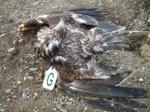
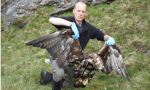
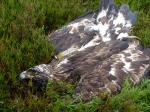
The poisoned golden eagle found on Lewis in July 2005, killed by Carbofuran

An Isle of Lewis crofter was convicted of possessing Carbofuran at his home on 25 November 2005. At Stornoway Sheriff Court on 26 July 2006, John Mackenzie pleaded guilty to possession of a proscribed pesticide under Section 15(A) of the Wildlife & Countryside Act 1981. He was fined just £50.

A staggeringly pathetic fine, hot on the heels of the discovery of a dead golden eagle found on Lewis in July 2005 that had been poisoned with Carbofuran.