
Press release from the Crown Office:
A self-employed game farmer has pled guilty to wildlife offences, leading to the second conviction in Scotland by vicarious liability for wildlife crime against wild birds.
At Stirling Sheriff Court, Graham Christie was fined a total of £3,200 after admitting his liability for the crimes committed by James O’Reilly, a gamekeeper employed by him.
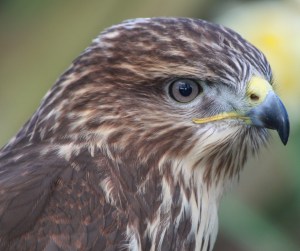
O’Reilly was previously sentenced to a community payback order after pleading guilty to intentionally trapping and injuring a buzzard, using an illegal gin trap, contrary to the Wildlife and Countryside Act 1981. Despite veterinary treatment for the severe injury caused to its leg, the buzzard required to be euthanised as it would never be suitable for release back to the wild. The buzzard had been in good condition otherwise.
Graham Christie leased part of the Cardross Estate in Stirlingshire to use for his business, Dunmhor Shooting. He had employed O’Reilly as head game-keeper with responsibility for pest control on this part of the estate.
The offences were committed more than a year after the introduction of the vicarious liability legislation.
The law placed responsibility on Christie unless he could show that he took all reasonable steps and exercised all due diligence to prevent O’Reilly from committing the offences.
When asked by police how he was able to see what was going on ensure everything was done properly and professionally, Christie stated;
“Well I can only tell that by the amount of pheasants that were shown on a shoot day and that he was very good to be fair”.
Helen Nisbet, Head of the Wildlife and Environmental Crime Unit said:
“These offences were committed well after the vicarious liability offence was introduced and the accused had ample time in which to take advice and put appropriate measures in place.
“He failed in his responsibilities and as a result stands convicted of the killing of a wild bird using an illegal gin trap.
“Anyone who seeks to injure or kill wild birds and anyone who employs or engages the services of such persons without taking appropriate precautions to prevent these offences being committed can fully expect to be brought to account before the courts.”
Notes To Editors
1. Section 18A of the Wildlife and Countryside Act 1981, the vicarious liability provisions, came into force on the 1st January 2012. They were created in an attempt to tackle raptor persecution by encouraging landowners, employers, and those with responsibility in connection with shooting to be diligent and proactive in countering wildlife crime.
2. James O’Reilly previously pled guilty to:
Intentionally injuring and taking a wild bird (a buzzard) by setting a gin trap (otherwise known as a leg hold trap) on open ground baited by a deer carcase contrary to section 1(1)(a); and,
Setting in position a trap, namely a gin trap (otherwise known as a leg hold trap) being of such a nature and so placed as to be likely to cause bodily injury to any wild birds contrary to section 5(1)(a) of the Wildlife and Countryside Act 1981.
3. Section 18A(2) makes the accused guilty of the original offence and is liable to be punished accordingly.
4. Wildlife and environmental crime is a priority for COPFS. The development of specialist prosecutors and the creation of the COPFS Wildlife and Environment Crime Unit (WECU) have been significant steps forward in tackling wildlife crime. Our close working relationship with police wildlife crime officers and other specialist reporting agencies has permitted a collaborative building of expertise which has already shown impressive results. In serious cases, prosecutors work with wildlife investigators at an early stage to ensure that cases are prepared and presented to the highest standard.
WECU began operating from 15 August 2011.
END
 This is good news, after the disappointment of the recent failure to prosecute another vicarious liability case on the Kildrummy Estate (see here). The penalty in this latest case (£3,200) is a considerable improvement on the pathetic £675 penalty given in the first successful vicarious liability case (see here), although it still falls far below what it could be and the fine itself is unlikely to act as any sort of deterrent to other would-be raptor killers. When you also consider the penalty handed to Christie’s gamekeeper for the original horrific offence (240 hours unpaid work – see here) it’s hard to get away from the sense that, although technically justice has prevailed in this case, the penalties do not reflect the seriousness of the crime. Whether the reputation of Christie’s sporting agency, Dunmhor Sporting, will suffer as a consequence of his criminal conviction remains to be seen although that would be hard to measure. Let’s hope Environment Minister Dr Aileen McLeod gets on with accepting the recommendations of the recent Willdife Crime Penalties Review group (see here), which include raising the penalty for this type of offence to fines of up to £40,000 and a 12 month custodial sentence. It’ll also be interesting to see whether SNH decides to slap a General Licence Restriction Order on the Cardross Estate.
In the meantime, huge congratulations to Fiscal Kate Fleming for a successful prosecution and to all those involved with the initial investigation, especially the SSPCA.
Photo of Graham Christie from Press & Journal.
Media coverage
BBC news here
STV news here
Press & Journal here
RSPB Scotland here

 Last month we blogged about the failure of the Crown Office to initiate a vicarious liability prosecution in the Kildrummy case (see
  Regular blog readers will know that in October 2014, gamekeeper Allen Lambert was convicted of a series of wildlife crime offences on the Stody Estate, Norfolk, including the mass poisoning of birds of prey (10 buzzards and one sparrowhawk) which had been found dead on the estate in April 2013. He was also convicted of storing banned pesticides and other items capable of preparing poisoned baits (a ‘poisoner’s kit’) and a firearms offence (see
 The High Court has this morning ruled that Natural England acted unlawfully
 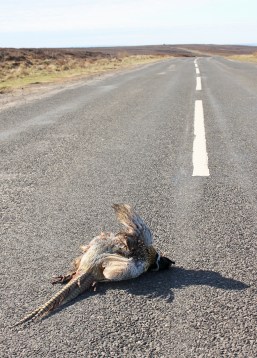 As absurd as it is, the bottom line is that DEFRA (and thus Natural England, acting on DEFRA’s behalf), permits gamekeepers (even those with criminal convictions) to apply for licences to kill protected native species like the buzzard, to allow the wholesale slaughter of millions of non-native gamebirds like pheasants, just for fun. There’s something fundamentally askew with that logic, even if you’re a die-hard supporter of game-bird shooting. A recent analysis of the GWCT’s National Gamebag Census revealed that by 2011, approx 42 million pheasants and almost 9 million red-legged partridges were released annually into the British countryside, for ‘sport’ shooting. The impact on biodiversity of releasing 50 million non-native gamebirds hasn’t been formally assessed. The game-shooting industry should accept that if they’re releasing birds in such magnitude, they should expect losses. How many are killed on the roads? An educated guess would suggest it’s a far higher number than the known 1-2% lost to raptors. If the game-shooting industry can’t operate without accepting such losses (as they claim they can’t), then it’s pretty clear evidence that this industry is unsustainable and as such, has no future.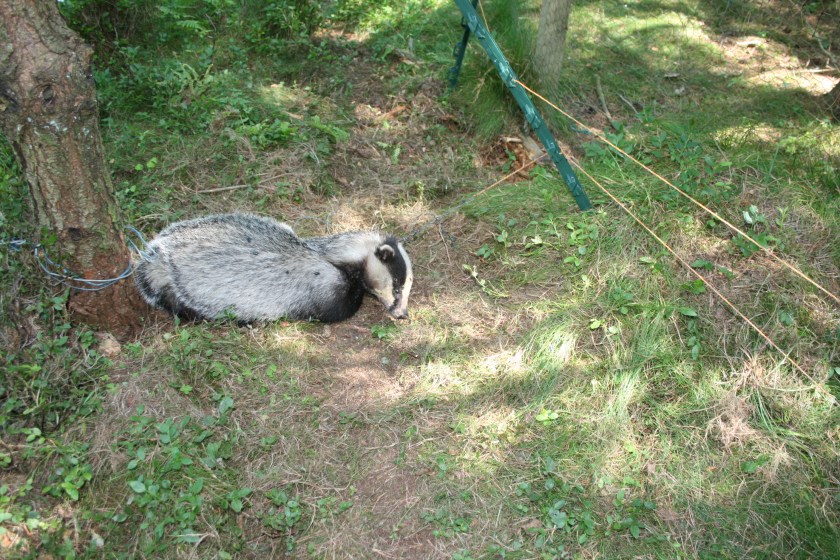
 So, just to be clear, a vicarious liability prosecution is not underway, and as this case has now become time-barred (because the offences were committed in Aug/Sept 2012), as we understand it there won’t be a vicarious liability prosecution for this case in the future. Massive fail.
 A year ago, gamekeeper Allen Lambert was convicted of a series of wildlife crime offences on the Stody Estate in Norfolk, including the mass poisoning of birds of prey (10 buzzards and one sparrowhawk) which had been found dead on the estate in April 2013 (see
  Raptor Persecution UK