Case against Bleasdale Estate gamekeeper James Hartley: part 4

Legal proceedings continued today in the case against James Hartley, a gamekeeper from the Bleasdale Estate in Bowland who is accused of a number of offences in relation to the alleged killing of two peregrines in April 2016 (see first court report for details here). Mr Hartley has pleaded not guilty to the alleged offences.

A case management hearing earlier this month focused on legal argument relating to the admissibilty of evidence.

Today at Preston Magistrates Court, District Judge Goodwin delivered judgement on the admissibility of evidence specific to this case.

Due to reporting restrictions imposed at a previous hearing, until the case concludes we are unable to publish the specifics of the legal argument, or even comment on today’s admissibility ruling.

A further hearing has been scheduled for 10 April 2018.

PLEASE NOTE: given the legal sensitivity surrounding this case we won’t be accepting comments on this particular blog post. Thanks.

Case against grouse moor gamekeeper Timothy Cowin: part 2

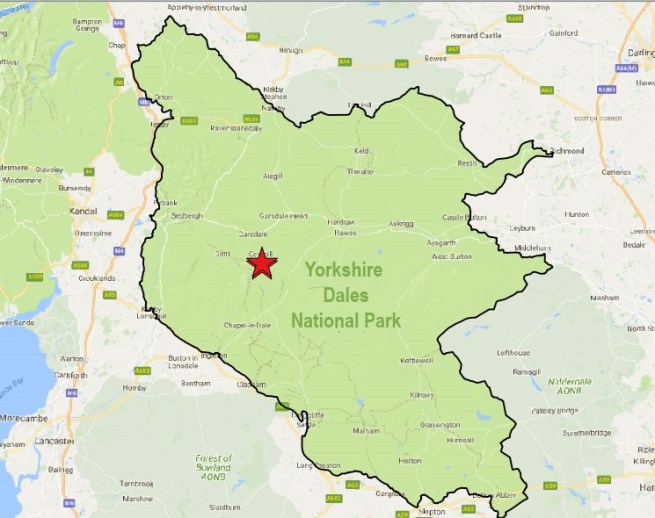
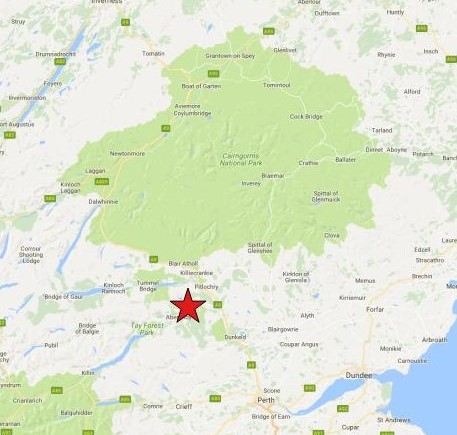
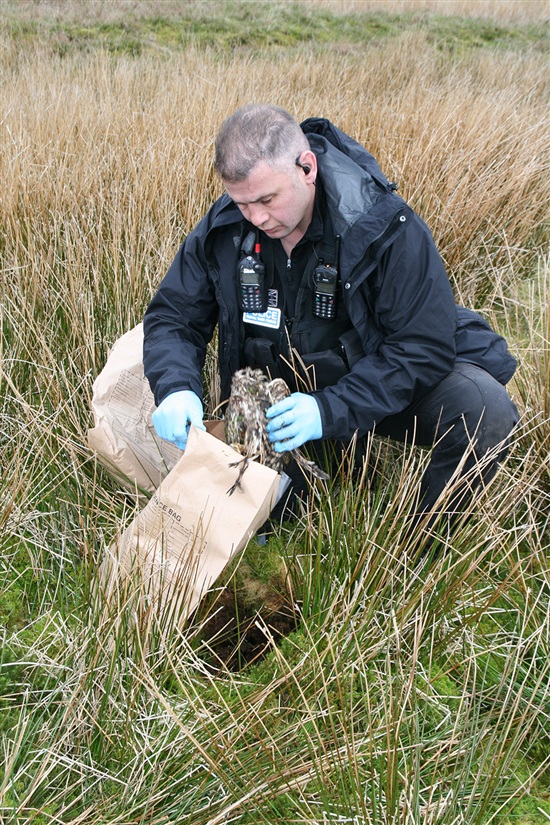
Legal proceedings continued at Preston Magistrates Court yesterday in the case against gamekeeper Timothy David Cowin, 44, who is alleged to have shot two protected short-eared owls in April 2017 at Whernside, Cumbria in the Yorkshire Dales National Park. It is further alleged he was in possession of items (a shotgun and an electronic calling device) capable of being used to kill wild birds (see here for first blog about this case).

At a case management hearing yesterday Mr Cowin was invited to enter a plea but was stopped by his defence lawyer, Michael Kenyon. There followed an extraordinarily fractious series of submissions by the defence and the CPS prosecutor, Ms Parker.

The defence argued that not all the paperwork had been received from the CPS, despite many requests, and that some of the paperwork that had been received was “defective in its wording” and some witness statements were incorrectly dated. The defence submitted that the case should be dismissed on these technicalities.

The prosecution argued that some papers hadn’t been served because of the uncertainty of the address that had been provided (Mr Kenyon’s home address as opposed to a legal company’s business address) and that some communication from the defence had not been answered promptly due to the prosecutor being on annual leave. The issue of missing paperwork and incorrectly dated statements had been raised with the police and the CPS was awaiting a response.

District Judge Goodwin, looking quite exasperated by this farcical and ill-tempered display, suggested the lawyers improve their communications with each other. She directed the CPS to review the evidence by 29 March 2018. Once reviewed and revised as appropriate, the defence was directed to submit skeleton arguments and provide documents in support. The CPS was directed to serve a skeleton argument in response and provide documents in support, to be lodged with the court by 26 April 2018.

Mr Cowin was released on unconditional bail and was told he must attend the next court hearing, scheduled for 11 May 2018.

UPDATE: 14 May 2018: Case against grouse moor gamekeeper Timothy Cowin part 3 (here)

Case against Bleasdale Estate gamekeeper James Hartley: part 3

Legal proceedings continued yesterday in the case against James Hartley, a gamekeeper from the Bleasdale Estate in Bowland who is accused of a number of offences in relation to the alleged killing of two peregrines in April 2016 (see first court report for details here). Mr Hartley has pleaded not guilty to the alleged offences.

Yesterday’s case management hearing focused on legal argument relating to the admissibilty of evidence. Due to reporting restrictions imposed by District Judge Goodwin at a previous hearing, we are unable to publish the specifics of the legal argument until the case concludes.

District Judge Goodwin reserved judgement at yesterday’s hearing and is expected to deliver judgement to the court on 26 March 2018.

PLEASE NOTE: given the sensitivity of this case we won’t be accepting comments on this particular blog post. Thanks.

Stody Estate exonerated after gamekeeper’s conviction for mass raptor poisoning

Regular blog readers will remember the mass poisoning of birds of prey on the Stody Estate, Norfolk in 2013.

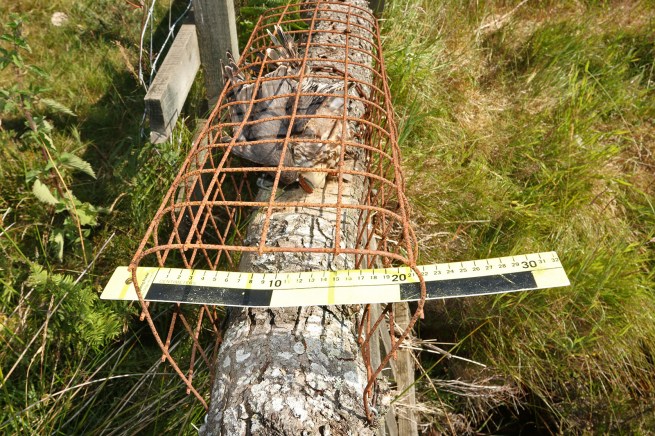
In October 2014, Stody Estate gamekeeper Allen Lambert was convicted of a series of wildlife crime offences on the estate, including the mass poisoning of birds of prey (10 buzzards and one sparrowhawk) which had been found dead on the estate in April 2013. He was also convicted of storing banned pesticides and other items capable of preparing poisoned baits (a ‘poisoner’s kit’) and a firearms offence (see here and here).

Photo of nine of the buzzards poisoned by gamekeeper Lambert [photo: RSPB]

In our opinion, gamekeeper Lambert got off pretty lightly when he was sentenced in November 2014. Even though the judge acknowledged that Lambert’s crimes had passed the custody threshold, Lambert received a 10-week suspended sentence for poisoning 11 raptors (suspended for one year), a six-week suspended sentence for possession of firearms and dead buzzards (suspended for one year) and was ordered to pay £930 prosecution costs and an £80 victim surcharge. In our opinion (see here), this was absurdly lenient for one of England’s biggest known mass raptor poisoning incidents, and on top of that, Lambert wasn’t even sacked – it was reported that he’d been allowed to take early retirement from the Stody Estate.

However, even though Lambert appeared to have got off lightly, his employers at Stody Estate were hit with a massive financial penalty (through cross-compliance regulations), believed to be the biggest ever civil penalty imposed for raptor persecution crimes.

Today though, the High Court has ruled that Lambert’s actions were “not directly attributable” to Stody Estate or its senior management and the subsidy penalty has been quashed!

In other words, the employer (Stody Estate) cannot be held accountable for the criminal actions of its employee (Allan Lambert). That’s quite astonishing, although it’s difficult to comment in detail without knowing the finer details of Lambert’s employment contract with Stody Estate. [UPDATE 7th March – full written judgement now available at foot of this blog post]

It does seem like yet another example of the need to introduce vicarious liability legislation for specific offences against birds of prey in England, as has been done in Scotland.

Stody Estate photo by RPUK

The following article has been published in the EDP:

A farm company was wrongly penalised after a gamekeeper poisoned wild birds of prey to preserve game birds for shooting, the High Court has ruled.

Allen Lambert poisoned 10 buzzards and a sparrowhawk which he saw as a threat to 2,500 pheasants and partridges laid down for a 10-day “family shoot”.

The gamekeeper on the 4,200-acre Stody Estate in north Norfolk was convicted of an offence under the Wildlife Conservation Act 1981 in October 2014.

And, in January last year, then Environment Secretary, Andrea Leadsom, stripped Stody Estate Ltd of 55pc of its farm subsidy for that year.

Overturning the penalty today, a senior judge noted that there had been “no finding of fault” against the company, based in Melton Constable, or its senior management.

The mere fact of Mr Lambert’s conviction did not prove that poisoning the birds was “directly attributable” to his employer, said Mrs Justice May.

“Some further enquiry directed at the level of fault, if any, on the part of Stody Estate in connection with Mr Lambert’s actions was required,” she added.

“In the absence of any finding of fault there was no proper basis for the imposition of a penalty.”

The Stody Estate, which has 15 employees, has been farmed by the MacNicol family for 75 years and Charles MacNicol is its managing director.

Estate manager, Ross Haddow, has day to day management of the farm and Mr Lambert had been a gamekeeper since 1990, living in a tied cottage.

The Rural Payments Agency, which administers the single farm payment subsidy scheme, at first said the company should lose 75pc of its subsidy.

That was reduced to 20pc by the Independent Agricultural Appeals Panel, but the penalty was upped again, to 55pc, by Ms Leadsom last year.

Stody Estate Ltd and its management were “exonerated” from any involvement in poisoning birds, the court heard.

But Ms Leadsom concluded that “the intentional acts of Mr Lambert, acting within the scope of his employment, were to be treated as those of the farmer, being Stody Estate.”

The issue was of such importance to the farming industry that the National Farmers Union intervened in the case, arguing that the penalty could only lawfully have been imposed if Charles MacNicol, or possibly Mr Haddow, had poisoned the birds.

Mrs Justice May said that that was going too far, but nevertheless ruled that Mr Lambert’s actions could not be “directly attributed” to Stody Estate or its management. The penalty was quashed.

ENDS

UPDATE 7 March 2018: The written judgement can be read HERE (with thanks to @borobarrister)

Gamekeeper accused of killing owls on grouse moor in Yorkshire Dales National Park

A grouse moor gamekeeper appeared at Lancaster Magistrates Court this morning to face a series of charges linked to alleged wildlife crime.

Timothy David Cowin, 44, is alleged to have shot two protected short-eared owls in April 2017 at Whernside, Cumbria in the Yorkshire Dales National Park. It is further alleged he was in possession of items (a shotgun and an electronic calling device) capable of being used to kill wild birds.

Mr Cowin’s solicitor, Michael Kenyon, requested an adjournment and no plea was entered.

Mr Cowin will be invited to submit a plea at a case management hearing scheduled for 15th March 2018.

PLEASE NOTE: For legal reasons, we will not be accepting comments on this post at this stage. Thanks.

Photo of Lancaster Magistrates Court by Ruth Tingay

UPDATE 16 March 2018: Case against grouse moor gamekeeper Timothy Cowin part 2 (see here)

UPDATE 14 May 2018: Case against grouse moor gamekeeper Timothy Cowin part 3 (see here)

Scottish gamekeeper pleads guilty to animal cruelty offence

A Scottish gamekeeper has been banned from keeping birds of prey for 10 years after keeping an eagle owl in a cramped pigsty.

The large owl was discovered by SSPCA investigators last summer.

This week gamekeeper Alan Wilson admitted failing to protect the bird from suffering when he appeared at Jedburgh Sheriff Court.

The court heard how the 59-year-old kept the owl in a filthy boarded-up pigsty at his home at Henlaw Cottages, near Longformacus.

Photos by SSPCA

Jedburgh Sheriff Court was told that investigators received a tip-off and found the owl in “utterly unacceptable living conditions” on June 5 2017.

Gamekeeper Wilson pleaded guilty to the offence under the Animal Health and Welfare Act 2006.

Wilson was ordered to sign over custody of the owl to the Scottish SPCA and in addition to the 10 year disqualification, he was fined £400.

An undercover Scottish SPCA spokesman said: “This case involved an eagle owl who had its welfare compromised by being kept in utterly unacceptable living conditions.

The Scottish SPCA worked in partnership with Police Scotland to seize and rescue the bird as well as providing expertise.

Both wild and captive raptors can suffer if their welfare falls below that of adequate standards.

Eagle owls are large, strong predators and like all captive predators require specialist care and expertise.

The eagle owl is currently being cared for by the Scottish SPCA and is doing well.”

Excellent partnership-working between Police Scotland and the SSPCA. Well done to all involved.

We believe this case is connected to the multi-agency raid on a game shooting estate last June (see here). It is not known if any further charges are being brought in relation to that raid.

It’s not the first time a gamekeeper with an Eagle Owl has come to the attention of the authorities in this region. In April last year we blogged about an unidentified gamekeeper who had been photographed with a tethered Eagle Owl on a grouse moor in the nearby Lammermuirs (see here).

The Gift of Rogues

Last Thursday, at the invitation of Andy Wightman MSP (Scottish Greens), several conservationists attended the Scottish Parliament for a meeting to discuss illegal raptor persecution with Andy and some of his parliamentary colleagues. It was our privilege to be invited and we are grateful to Andy for the opportunity to contribute to what turned out to be a very productive session.

Prior to the start of our meeting, Andy invited some of us to attend a parliamentary reception for the Gift of Grouse (Gift of Rogues for you anagram fans) hosted by Kate Forbes MSP (SNP) and designed to celebrate red grouse as a ‘healthy and sustainable’ food. We’d actually blogged about this forthcoming event the day before where we’d argued that rather then being ‘healthy and sustainable’, red grouse shot on driven grouse moors were more likely to be toxic, diseased and unsustainably harvested (see here), so we were delighted to be able to attend as invited guests and listen to the speeches.

You can probably imagine the warm and welcoming reception we received from the pack of tweed-clad gamekeepers who’d come along to boost the numbers (the official press statement said the event was attended by “over 60 guests” – it wasn’t, there was about half that number, mostly from the grouse-shooting and game dealer industry and a handful of Conservative MSPs, and us) but all credit to Colin Sheddon (BASC) and Tim (Kim) Baynes (Scottish Land & Estates / Scottish Moorland Group / Gift of Grouse) who came over and introduced themselves. Kate Forbes also made a point of coming over and we had a brief chat about unsustainable driven grouse shooting and its association with the criminal killing of birds of prey.

So, the turn out was lacklustre and to be honest, so were the speeches. We heard from Andrew Hopetoun (of the infamous Leadhills Estate and Chairman of the Scottish Moorland Group) who muttered something about there being “environmental benefits” of driven grouse shooting but failed to elaborate on what those benefits are, and carefully avoided any mention of the long history of recorded raptor persecution at Leadhills, including the alleged shooting last year of a hen harrier and a short-eared owl. (Incidentally, we’re still waiting to see whether SNH imposes a General Licence restriction on this estate).

We heard from Jeremy Dixon of Ochil Foods in Perthshire (the company that supplies red grouse to Michelin-starred chef Andrew Fairlie at Gleneagles – you’ll remember him, he’s the one who falsely claimed red grouse are ‘organic’). Jeremy claimed that his company had seen a “five-fold increase in the demand for red grouse last year” – but then he was hardly going to say that his business is struggling to sell an unpopular product.

Then we heard from Chef Brian Grigor (The Balmoral Hotel, Edinburgh) who made the extraordinary claim that the red grouse that reaches your plate is ‘truly wild’ and has been ‘untouched by human hand’. Really, Brian? Is this the same ‘truly wild’ and ‘untouched by human hand’ bird that has been raised on a moor where all the native predators have been ruthlessly destroyed and the grouse itself has been netted in the middle of the night to have a powerful drug used in chemotherapy forced down its throat and a pesticide band attached to its leg that will transfer the pesticide directly to the grouse to kill off ticks (also used as a topical treatment in humans to treat scabies and pubic lice)?

Brian had produced some grouse canapes for the reception and needless to say we weren’t tempted. We did consider collecting a few to have them tested for excessive quantities of toxic poisonous lead and a dose of the anti-parasitic wormer drug Flubendazole but that seemed a bit rude. We might instead just visit his restaurant later in the year and buy some grouse for testing.

We did check out the goodie bags but they weren’t up to much, either. Although we did find a pamphlet that repeats a false claim that 81 bird species thrive on grouse moors – a claim we debunked over a year ago.

We left the reception wondering what its objectives had been – a group of grouse-shooting industry insiders talking to some other grouse-shooting industry insiders and a few tame Conservative MSPs all seemed a bit pointless. But then we read this, and of course it all became clear: just another PR propaganda exercise designed to portray political support for the industry, although this time they probably hadn’t banked on Andy Wightman MSP having the final word:

There’s no assurance standards around grouse, we don’t know where the source of it is and we know there’s criminality mainly around the illegal culling of protected raptors.

Produce from a system that involves criminal activity should not get to the plates of high end restaurants.

I would also question whether grouse is healthy.”

Amusingly, our presence at this event prompted this outburst from Scottish Gamekeepers’ Association Director, Bert Burnett (thanks to the blog reader who sent us these images). A free Gift of Rogues goodie bag for anyone who can spot the irony!

Case against Bleasdale Estate gamekeeper James Hartley: part 2

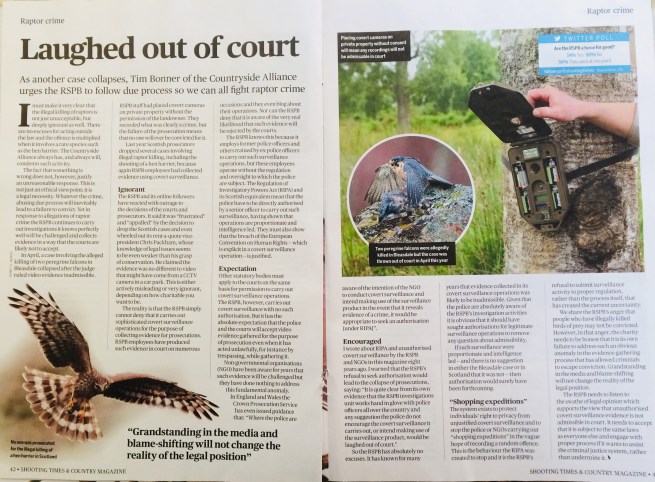
Today we attended Preston Magistrates Court in anticipation of listening to a case hearing in relation to the prosecution of James Hartley, a gamekeeper from the Bleasdale Estate in Bowland who is accused of a number of offences in relation to the alleged killing of two peregrines in April 2016 (see first court report for details here).

Photo by RPUK

Mr Hartley has pleaded not guilty to the alleged offences and today’s hearing had been initiated for the court to hear legal arguments from both the prosecution and defence before the onset of a potential trial.

At some point between the first hearing in September 2017 and today’s hearing, this case has been elevated to be heard by a District Judge rather than by magistrates. We don’t know the reason for this.

Legal arguments were not heard in court today, and a further date for those arguments to be heard has been set for 14th March 2018.

In addition, defence barrister Justin Rouse QC requested that District Judge Goodwin direct, under the Contempt of Court Act 1981, Section 4(2), “no publication of preliminary interests“, due to what he described as “inappropriate reporting of the previous hearing“. No details of the alleged inappropriate reporting were given in court.

District Judge Goodwin agreed with Mr Rouse’s concerns and, in the interest of avoiding the substantial risk of prejudicing the case, she directed that “nothing pertaining to the legal arguments may be published prior to the conclusion of this case“.

At the end of today’s hearing we asked District Judge Goodwin for clarification on this point and she told us that as of today we may not publish anything about the specific legal arguments that are due to be heard on 14th March (although we can report on these legal arguments at the conclusion of this case), but we were free to report that today’s hearing took place and we are free to report on the trial (if it proceeds) as long as that reporting is fair and accurate – the usual caveats for reporting on legal proceedings.

Given this direction from District Judge Goodwin, we will not be publishing any blog readers’ comments on this particular case until it has concluded.

Depending on the outcome of the legal arguments to be heard on 14th March 2018, and District Judge Goodwin’s judgement (which she said would be ‘reserved’ – which means she won’t make a judgement on the day of the hearing but will take time to consider the legal position and announce her judgement at a later date), a preliminary trial date has been set for 23 April 2018 and is expected to conclude on 30 April 2018.

Compare & contrast: two cases of the illegal storage of poisons

Well this is fascinating.

In December 2017, a pest control company and one of its directors was sentenced for the illegal storage of poisons, following an HSE investigation in to the alleged secondary poisoning of a tawny owl (by rodenticide).

During the investigation, a number of poisons not authorised for use were found improperly stored at the premises. In addition, part used canisters of Phostoxin (a compound that reacts with moisture in the atmosphere or the soil to produce phosphine, a poisonous gas, used to control rabbits within their burrows) were found stored inside a filing cabinet within the workplace.

Rodent Service (East Anglia) Limited of Cooke Road, Lowestoft, Suffolk pleaded guilty to breaching Sections 2 (1) and 3 (1) of the Health and Safety at Work etc. Act 1974. The company has been fined £100,000 and ordered to pay costs of £10,000. The company was also ordered to pay a victim surcharge of £170.

Donald Eric Martin, Director of Rodent Service (East Anglia) Limited also pleaded guilty of an offence of neglect by virtue of S37 of the Health and Safety at Work etc. Act 1974. He was sentenced to a six months in prison, suspended for 12 months, and ordered to pay costs of £1000 and a victim surcharge of £115.00.

Details of this case can be found on the HSE website here (thanks to one of our blog readers, Mick, for drawing this to our attention).

Now, compare the outcome of this case with that of the recent case involving the discovery of an illegal poisons cache found buried in a hole in woodland on Hurst Moor, a grouse moor on the East Arkengarth Estate in North Yorkshire.

In the East Arkengarth Estate case, the RSPB had discovered a number of poisons, including Cymag (another fumigant with similar properties to Phostoxin), Bendiocarb and Alphachloralose and had identified a gamekeeper who was filmed visiting the cache. However, the Crown Prosecution Service refused to prosecute due to ‘procedural concerns’ but North Yorkshire Police, quite reasonably, considered the gamekeeper unfit to be in charge of firearms and removed his firearms certificates.

The gamekeeper appealed this decision (with the help of the BASC Chairman as his defence lawyer!) and the court held that although it was accepted he had stored dangerous poisons at an unauthorised location, removing his firearms certificates was deemed ‘disproportionate’ and they were duly reinstated.

Although there are differences between these two cases, there is one very clear parallel. Both cases involved professional pesticide users who should have completed COSHH risk assessments and training and thus known there are very strict rules and regulations about the storage and use of these inherently dangerous chemicals.

In one case, not connected with the grouse shooting industry, the company (and its Director) was absolutely thrashed by the court for such serious offences.

In the other case, directly linked to the grouse shooting industry, there was no prosecution, the gamekeeper was considered fit to be entrusted with a firearm, and there was no subsidy withdrawal for the estate as the poisons cache was found in a small plantation, not on agricultural land (see here).

In other words, there were no penalties or consequences whatsoever for the East Arkengarthdale Estate and its employee.

Amazing, eh?

SNH refuses to disclose details of individual General Licence restriction

In September 2017 we learned that SNH had imposed a General Licence restriction on an individual for alleged criminal activity in relation to raptor persecution (see here).

This was a highly unusual restriction because it applied to an individual rather than to an estate.

At the time the restriction was announced, SNH provided virtually no information other than to say a General Licence restriction had been imposed and that it would apply for three years.

However, RSPB Scotland released a press statement in relation to this restriction order which included the following quote from RSPB Scotland’s Head of Investigations, Ian Thomson:

The restriction was imposed after RSPB investigations staff passed video footage to police of a gamekeeper allegedly setting illegal traps, baited with a dead woodpigeon, very close to a goshawk nest in NE Scotland”.

Here’s a clip from that video evidence:

From this, we were able to deduce that this alleged wildlife crime took place in March 2014 ‘nr Tarland, Aberdeenshire’, although the specific location was not given.

This alleged offence was reported by Police Scotland to the Crown Office in April 2014 (see here). It is clear, now, that the Crown Office did not prosecute the gamekeeper, probably on the grounds that the video evidence was deemed ‘inadmissible’. That’s the sixth alleged wildlife crime case, that we know about, that the Crown Office has dropped in recent months.

So at this stage we know that an alleged wildlife crime had taken place, we know that a criminal prosecution is not going to happen (because the case is now time-barred), and we know that SNH has imposed an individual General Licence restriction on a gamekeeper as a supposed sanction. The identity of the alleged offender remains a secret, as does the name of the estate where the alleged offence was committed. This lack of transparency is, frankly, appalling, especially when former Environment Minister Paul Wheelhouse had stated when he first introduced General Licence restrictions in 2014 that he expected them to function as “a reputational driver”. Not much chance of that happening when the details of a case are kept secret.

In early October 2017 we submitted an FoI to SNH to try and find out more details about this case. We asked for:

  1. The name of the person who had been given a General Licence restriction (we didn’t expect to be told but thought we’d ask anyway – you never know)
  2. The occupation of that person (we already knew from the RSPB press statement that he was a gamekeeper but we wanted SNH to confirm this)
  3. The name of the county in which this individual resides (we already knew from the RSPB press statement that the alleged offence had taken place in Aberdeenshire but we wanted SNH to confirm this)
  4. The name of the estate from where the Police evidence of alleged raptor persecution had been collected
  5. An explanation about why an individual and not an estate was the recipient of the General Licence restriction
  6. An explanation about how SNH intends to monitor the activities of the individual for potential breaches of his General Licence restriction.

SNH has now responded and it’s astonishing:

It looks like SNH has been taking lessons from Natural England in the withholding of information that should be in the public domain. It’s understandable that SNH can’t disclose the alleged offender’s identity, but withholding details of his occupation and the county in which he resides because “this would allow them to be identified” is obviously nonsense, and we already know this information from the RSPB press release!

We would argue that it is in the public interest to know the name of the estate on which this alleged offence took place (and we do know from various local sources it was on a game-shooting estate and that this gamekeeper was employed by that estate). Why should that information be kept secret? Who is SNH shielding, and why?

And does anyone actually believe that Police Scotland, no matter how well-intentioned, has the resources to track this gamekeeper’s activities for the next three years to ensure he’s not breaching the terms of his General Licence restriction?!

Whilst this response doesn’t get us any further forward in knowing the specifics of this case, what it does demonstrate, quite clearly, is that the General Licence restriction, introduced as a way of publicly embarassing estates where there is evidence of wildlife crime but, due to perceieved evidential difficulties, the cases don’t ever reach the courts, is simply not working.

Tomorrow’s blog, on another General Licence restriction case, will emphasise this point again but on a whole bigger scale.