Chair of Nidderdale AONB condemns illegal raptor persecution

Don’t ever underestimate the power of public pressure.

You know that big solid wall of silence we’re all so used to looking at every time a raptor crime is discovered and reported? It looks like it’s finally beginning to crumble.

The latest to speak out, spontaneously (i.e. without prompting), about the continued illegal killing of birds of prey is the Chair of the Nidderdale Area of Outstanding Natural Beauty’s Joint Advisory Committee, Councillor Nigel Simms:

He’s obviously taken a lead from the spontaneous statement made by the neighbouring Yorkshire Dales National Park Authority yesterday.

The publication of this statement from the Nidderdale AONB is really, really welcome. The Nidderdale AONB in North Yorkshire is notorious as a raptor persecution hotspot and has been for many years. We’ve lost count of the number of red kites that never make it out of this particular hell hole, although the RSPB has been keeping track – 22 poisoned or shot in the last ten years, and that’s only the ones that were found.

Nidderdale red kite persecution incidents 2007-2017, map by RSPB:

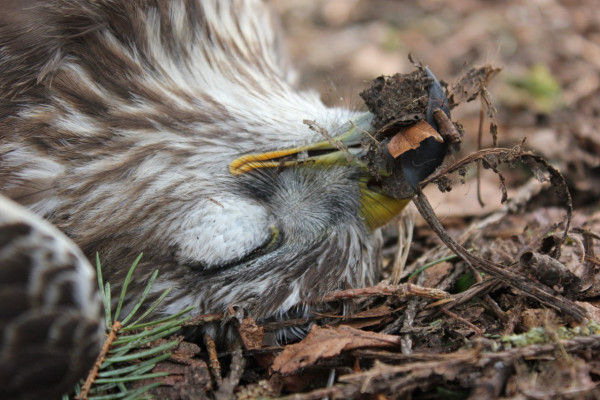
Illegally-killed red kite (photo Marc Ruddock):

We also know that hen harriers rarely get out of Nidderdale alive – unfortunately we can’t show you a detailed map because Natural England wants to keep the details a secret. Natural England is supposed to protect hen harriers but it’s clearly more interested in protecting the reputations of criminal landowners and gamekeepers. Anyway, here’s a photo of an illegally-killed satellite-tagged hen harrier – something you might see if you visit Nidderdale AONB, assuming you get to it before the gamekeeper who shot it:

It’s interesting to see that these crimes are “starting to have a damaging effect on tourism businesses“, according to Cllr Simms. Good, not for the businesses affected, obviously, but good that it will drive increased local pressure to bring these crimes to an end.

Cllr Simms’ comment that illegal raptor persecution “undermines the work of law-abiding landowners and gamekeepers who are actively working alongside us to improve prospects for all forms of wildlife in the AONB” is slightly odd. Which law-abiding landowners and gamekeepers are those? Presumably not anyone involved with any of the aforementioned red kite killings or hen harrier disappearances, nor, presumably, anybody involved with the attempted shooting of a nesting marsh harrier and the removal of its eggs, as filmed on a Nidderdale AONB grouse moor by the RSPB earlier this year?

There’s much work to do in this AONB but this very public condemnation of illegal raptor persecution from the Chair of the AONB Advisory Committee is encouraging. Well done, Cllr Nigel Simms.

Now, who’s next to speak out and bring that wall of silence crashing down?

BASC Chairman Peter Glenser calls for “honesty” in raptor debate

Have we moved in to a parallel universe? It feels like it today.

First we have BASC’s acting chief executive, Christopher Grafficus, admitting there are “criminals among us” and urging his members to stop killing raptors (see here) before also admitting that the number of convicted gamekeepers “must be the tip of the iceberg” (see here).

And now BASC’s chairman, Peter Glenser, has written a short piece on BASC’s website calling for “honesty in the raptor debate”:

Hmmm. To be honest (as Peter Glenser wants), we’re not as convinced by Peter’s statement of intent as we were this morning with Christopher Graffius’ sincerity. There are a number of reasons for this.

Where was BASC’s ‘honesty’ in the evidence they submitted to last year’s Westminster debate on driven grouse shooting, about the extent of criminal behaviour on driven grouse moors? They claimed it was only undertaken by “a small minority of individuals”.

Where was BASC’s ‘honesty’ in December last year when a senior staff member was telling a Scottish Parliamentary Committee there was no need for game shoot licensing because

“Shotgun certificate holders are among the most law-abiding sector of society and any hint of illegal activity can lead to the right to hold a certificate, and the ability to shoot, being withdrawn”

when on the very same day, Peter Glenser (in his capacity as a barrister) was defending the right of a gamekeeper to have his firearms returned even though it was accepted by the court that this particular gamekeeper had been involved with storing poisons in a secret underground stash on a grouse moor?

Where was the ‘honesty’ last year when BASC’s Director of Northern England, Duncan Thomas, reportedly told a conference that it was ‘an absolute fact’ that disturbance from birdwatchers was the major factor in the losses of hen harriers from grouse moors and it wasn’t much to do with illegal persecution?

There are probably plenty of other examples we could cite if we could be bothered to look for them, and then there’s also BASC’s cynical attempts (e.g. hereherehere) to silence Chris Packham, on the pretence of being concerned about BBC impartiality but in reality probably being more concerned about Packham’s ‘celebrity’ status allowing him to reach a wide audience with his concerns about raptor persecution on driven grouse moors.

We’re also a bit suspicious of Peter Glenser’s use of the phrase “the raptor debate”. There is no ‘raptor debate’. This is about the criminal offence of killing of birds of prey, that’s it. What we suspect Peter might be getting at by the use of this phrase is perhaps he thinks there should be a debate and the focus of that debate would be how many licences gamekeepers can get for legally killing raptors.

That debate, if it ever comes, is a long way away. The immediate issue, as Christopher Graffius recognised, is getting gamekeepers and land owners to stop killing raptors. And while we very much welcome BASC’s apparent commitment to this objective, the immediate and dismal response of the two gamekeeping organisations (NGO and SGA) shows just how difficult that will be.

We don’t know what has sparked these sudden declarations from BASC, although we’d love to know, but it might just be too little, too late. Scotland is already well down the path towards the introduction of a licensing scheme, mainly because the gamebird – shooting industry has comprehensively failed to self-regulate, since 1954! They’ve shown time after time, for decades, they simply can’t be trusted.

Whether BASC can organise the other members of the shooting community (i.e. the non-gamebird shooters) to rally against the criminals within the grouse and pheasant shooters, which is what BASC appears to be trying to do, then maybe, just maybe, they can salvage something from the train wreck that’s thundering their way.

Convictions for raptor persecution “must be the tip of the iceberg”, admits BASC chief

Further to this morning’s blog about BASC’s acting chief exec Christopher Graffius urging his members to stop killing raptors (here), here’s some more detail.

The Times article had suggested that Christopher had written a letter to BASC members, in response to the publication yesterday of the RSPB’s 2016 Birdcrime report. It turns out that ‘letter’ was an opinion article in the Nov/Dec 2017 edition of BASC’s magazine, Shooting & Conservation:

For those struggling to read the small text, here’s a PDF of the article:

Christopher Graffius BASC Raptor Persecution threatens us all_Nov2017

How refreshing to see a senior member of the shooting industry acknowledge that convictions for illegal raptor killing “must be the tip of the iceberg“.

He writes: “I know it’s not all keepers, but the figures of those caught and convicted must be the tip of the iceberg and in 2017 the cases continue: a buzzard and a red kite in Yorkshire, a peregrine in Cambridgeshire, a buzzard in Hertfordshire, a peregrine in Lancashire, a red kite in Northern Ireland, a peregrine in Suffolk and a short-eared owl in Scotland. Those are some of the confirmed cases of shooting in the space of three months from July“.

This comes after years and years and years of denials from ‘leaders’ within the game-shooting industry who have argued that raptor persecution is an ‘historical’ problem and everything’s just fine now (e.g. see here and here).

Well done, Christopher Graffius. Until now, the shooting industry’s collective denial has been one of the main reasons (along with poor enforcement of the law) for the failure to make progress on this issue – there’s no point having dialogue with those who won’t admit there’s even a problem.

Is this the beginning of a new start? Time will tell….although the industry doesn’t have that much time left before change is enforced….

“There are criminals among us” – BASC chief condemns raptor killers

Christopher Graffius, acting chief executive of the British Association of Shooting & Conservation (BASC) has spoken out against the raptor killers within the shooting industry, according to an article in today’s edition of The Times.

For those who can’t read the small text, here’s a transcript:

SHOOTING CHIEF GUNS FOR RAPTOR KILLERS

By Jerome Starkey, Countryside Corrrespondent

For years shooting enthusiasts had refused to accept that some of the sport’s devotees were targeting endangered birds of prey.

Now the country’s biggest shooting group has broken ranks and admitted that its members have been killing harriers and falcons.

Christopher Graffius, acting chief executive of the British Association of Shooting and Conservation (BASC), said that killing the birds to protect pheasants and grouse was a “fool’s bargain” that his members had to stop or risk their sport being banned.

In a letter to his organisation’s 150,000 members he said that there were “criminals among us” who risked “wrecking shooting for the majority“.

All of us need to realise that the killing of raptors is doing us no favours. It risks terminal damage to the sport we love“, he said.

He made the comments after the RSPB’s annual Birdcrime report found that 81 raptors, including buzzards and kites, were killed last year. The charity blamed gamekeepers for trapping, poisoning and shooting the birds and called for driven grouse shoots to be licensed so that they operated “legally and sustainably”.

Mr Graffius said that expelling members who were convicted of raptor persecution was not enough. Shooting needed a cultural shift to make such people pariahs. “Peer pressure is a powerful force in shooting. We must make clear that wildlife crime has no place in our community“, he said.

Mr Graffius, 59, was appointed acting chief executive last year after his predecessor as head of BASC, Richard Ali, was suspended and then sacked over allegations of bullying.

Mr Graffius said that the Conservatives, Labour and the Liberal Democrats had all raised concerns about raptor persecution at their party conferences this year. “This should matter to everyone who shoots, and particularly the keepers, shooting tenants and landowners who rely on their living from the sport. If the killing doesn’t stop, their jobs and the income they earn from shooting is at risk“, he added.

Hen harriers are among Britain’s most endangered birds after their population fell by 18 per cent in six years. There are fewer than 550 breeding pairs left, according to the RSPB, with only four pairs in England, down from 12 in 2010.

A spokesman for the National Gamekeepers Organisation, representing those in England and Wales, said that “very few stupid keepers and landowners” broke the law. “These dinosaurs sully the good name of modern shooting, putting at risk its long-term future“, he said. “The only effective solution lies in changing the collective mindset of those involved“.

The Scottish Gamekeepers Association said that it had expelled six members in five years over alleged wildlife crime but that the majority of its 5,300 members were law-abiding. “In Scotland, the greatest issue we wrestle with is the lack of access to legal measures to solve species conflicts. We feel this would have more impact than any other measure to prevent wildlife crime“, a spokesman said.

Patrick Galbraith, the editor of Shooting Times, said that some young gamekeepers felt pressured by their employers to kill raptors. “If the shooting community refuse to admit it, the future for our sport could be bleak“, he said.

Tim Bonner, head of the Countryside Alliance, which campaigns in favour of shooting, said that historically gamekeeping techniques had devastated hen harrier populations but that there was a “generational shift” taking place towards better conservation. “It’s our role to encourage that change of attitudes“, he said.

Jeff Knott, head of nature policy at the RSPB, said that it was “good to see BASC stand out from others in the shooting community. Decisive action is certainly harder to deliver than fine words, but this willingness to lead change is to be welcomed“, he said.

ENDS

Blimey. Christopher Graffius deserves real credit here – this is the first time we can remember that one of the shooting industry’s big organisations has admitted culpability for illegal raptor persecution and condemned it with any sincerity. It’ll be interesting to see how his BASC members respond and for how long he’ll remain in post.  We welcome his comments, with some caution because they’re just words after all, but nevertheless we think that his intentions are good and this could be the beginning of a significant positional shift.

However, the responses from the gamekeeping organisations (National Gamekeepers Organisation and Scottish Gamekeepers Association) do not give cause for such optimism. It’s just more of the same old, same old – a collective denial that widespread raptor persecution continues and that when it does occur, it’s just the work of a handful of gamekeepers. Unfortunately for them, the overwhelming evidence does not support this claim.

This pie chart was published yesterday in the RSPB’s Birdcrime 2016 report:

Have a close read of the SGA’s response – they say they’ve expelled six members in five years for ‘alleged wildlife crimes’, suggesting that these wildlife crimes might not actually have happened, even though those gamekeepers were expelled precisely because they had been convicted in a court of law. They had criminal convictions for actual raptor persecution crimes, not alleged crimes.

The SGA then argues that the only effective measure to prevent wildlife crime would be to give gamekeepers licences to kill raptors, bcause then killing raptors wouldn’t be a criminal offence any more. We’ve heard this many times before – the SGA has been lobbying for years to get licences that would enable them to kill species such as buzzards, sparrowhawks, and even red kites and white-tailed eagles (e.g. see here). So far they’ve been unsuccessful, although licences have been issued to a gamekeeper in England permitting him to kill buzzards ‘to protect pheasants’, even though the licence applicant, supported by the National Gamekeepers Organisation, had a prior conviction for having a stash of illegal poison.

Let’s hope that other industry chiefs follow Christopher Graffius’ example and start to apply pressure across the whole shooting community. He’s seen the writing on the wall and knows that the continued illegal killing of raptors will bring the game-shooting industry to its knees. Time’s running out……

UPDATE 11.45: Here’s a copy of the ‘letter’ from Christopher Graffius to BASC members to which The Times journalist refers. It’s actually an article from BASC’s Nov/Dec newsletter, Shooting & Conservation:

Christopher Graffius BASC Raptor Persecution threatens us all_Nov2017

SNH says ‘no General Licence restrictions currently under consideration’ but what about these 9 cases?

The ability for Scottish Natural Heritage (SNH) to impose a General Licence (GL) restriction order on land where there is evidence of raptor persecution taking place came in to force on 1 January 2014. This measure, based on a civil burden of proof, was introduced by then Environment Minister Paul Wheelhouse in response to the continuing difficulties of meeting a criminal burden of proof to facilitate a criminal prosecution.

Whilst these GL restrictions are not without their limitations (because estates can simply apply for an individual licence instead –  see here, but also see here where SNH recently revoked an individual licence for alleged non compliance), Wheelhouse argued that as the restriction notices will be made public, they should act as a ‘reputational driver‘.

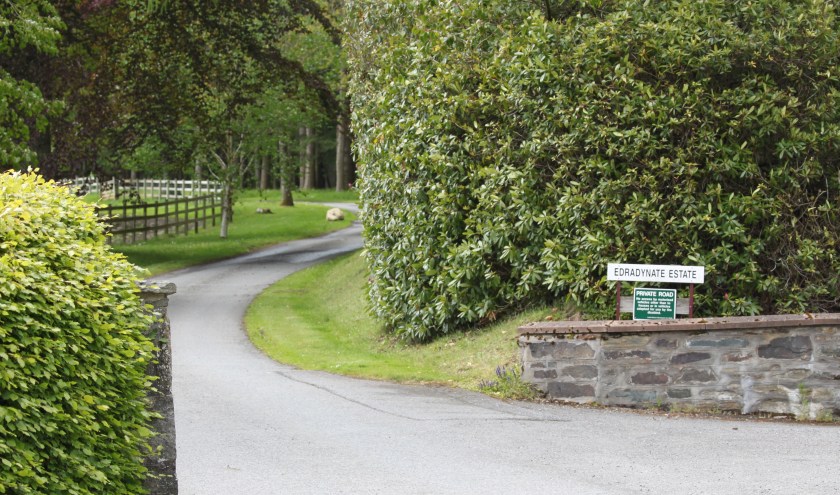
Since 1 January 2014, SNH has only imposed four GL restrictions. The first two were imposed in November 2015 (one for Raeshaw & Corsehope Estates in the Borders and one for Burnfoot & Wester Cringate Estates in Stirlingshire). Then there was a temporary halt for almost two years as Raeshaw & Corsehope Estates made a legal challenge which ended up with a judicial review in January 2017. The court’s decision was announced in March 2017 and SNH was found to have acted properly and lawfully. Since that decision was announced in March 2017, SNH has imposed two more GL restrictions: one for Edradynate Estate in Perthshire in September 2017 and one for an unnamed mystery gamekeeper in Aberdeenshire in September 2017.

Whilst we were pleased to see SNH impose these latest GL restrictions last month, we were also aware of a number of other raptor persecution incidents that have been recorded since 1 Jan 2014 that would potentially meet the criteria required for a GL restriction so we wanted to find out whether SNH was getting on with these.

Photo: an illegal pole trap filmed by RSPB Scotland on the Brewlands Estate in the Angus Glens, July 2015. These traps have been outlawed for over 100 years.

In early October we submitted an FoI to ask SNH how many cases were currently under consideration for a GL restriction. We are pretty shocked by the response received last week:

At the time of your request, no General Licence restrictions were under consideration“.

Really? Why the hell not? We know of at least nine cases that should be being considered, and these are just off the top of our heads – there will be others, as we know Police Scotland is still withholding information about a number of other raptor persecution incidents.

Here are the nine incidents we know about that have all occured since 1 January 2014 when SNH was given the power to impose a GL restriction:

Newlands Estate, Dumfriesshire. Gamekeeper William (Billy) Dick was convicted in 2015 for killing a buzzard on the estate in April 2014. He threw rocks at it and then stamped on it. The estate owner was prosecuted for alleged vicarious liability but then the Crown Office dropped the prosecution in April 2017, saying it wasn’t in the public interest to proceed (see here).

Brewlands Estate, Angus Glens. A gamekeeper was prosecuted for the alleged repeated setting of a pole trap on this estate between 9-17 July 2015. The Crown Office dropped the prosecution case in April 2017 because the video evidence was deemed inadmissible (see here). Another gamekeeper on this estate thought this result was hilarious.

Unnamed pheasant-shooting estate, Lanarkshire. In September 2015 a set pole trap was discovered on a bench directly outside a pheasant-rearing pen on an unnamed estate. Police Scotland apparently dropped the case, for unknown reasons.

Gamekeeper in Ayrshire. In May 2016 a named gamekeeper was charged after allegedly being caught using gin traps on a neighbouring farm of the estate on which he was employed. The Crown Office dropped the prosecution in March 2017 after reportedly ‘getting the dates wrong on its paperwork’ (see here).

Invercauld Estate, Aberdeenshire. In June 2016, walkers discovered a number of illegally-set spring traps staked out on a grouse moor. Two of the traps had caught a Common Gull by the legs. The bird had to be euthanised. There was no prosecution. ‘Some action’ was taken by the estate but whatever this action was it has remained a closely-guarded secret between the estate, the Cairngorms National Park Authority and the Scottish Government (see here).

Glendye Estate, Aberdeenshire. In January 2017 a number of illegally-set spring traps were discovered on a grouse moors on this estate. The Estate Factor and gamekeeper reportedly removed the traps and denied all knowledge of who had set them (see here). There was no prosecution.

Leadhills Estate, South Lanarkshire. On 4th May 2017, witnesses observed the shooting and killing of a hen harrier on this estate. Police Scotland appealed for information (see here & here). As far as we’re aware, there are no impending prosecutions.

Leadhills Estate, South Lanarkshire. On 31 May 2017, witnesses observed the shooting and killing of a short-eared owl on this estate. The corpse was retrieved and sent for a post-mortem. Police Scotland appealed for information. As far as we’re aware, there are no impending prosecutions.

Unnamed grouse shooting estate, Monadhliaths. On 7 June 2017, a member of the public found a buzzard caught in an illegally-set spring trap that had been staked out on an unnamed grouse moor in the Monadliaths. The buzzard was released. Police Scotland appealed for information. Inspector Mike Middlehurst of Police Scotland commented, “Unfortunately, there are some who continue to deliberately target birds of prey; there is nothing accidental in the setup of these traps“. As far as we’re aware, there are no impending prosecutions.

So why haven’t any of these cases been considered for a GL restriction? Is it because SNH is still waiting for Police Scotland to provide ‘formal information packages’ on these cases? (Remember, SNH can only consider potential GL restrictions based on evidence provided to them by Police Scotland). We know that Police Scotland has been slow in delivering this info to SNH in the past (e.g. see here) – are they still dragging their feet?

Or, is it the case that Police Scotland has already provided information to SNH about each of these nine cases and SNH has, for whatever reason, decided not to impose a GL restriction?

Isn’t it in the public interest to know, and importantly to understand, what is happening with these cases? We think so. And that’s why we’ve submitted an FoI to find out.

Raptor persecution in the Peak District National Park: last night’s programme

The BBC’s Inside Out programme last night featured an excellent piece on driven grouse shooting and its association with illegal raptor persecution in the Peak District National Park.

If you missed it, it’s available to watch on BBC iPlayer here for the next 29 days.

There were some great quotes, that we’ll record here for posterity:

Tim Birch (Derbyshire Wildlife Trust): “People love this place. And it is a national disgrace that we do not have the kind of birds of prey that should belong back in this landscape“.

Mistress of the understatement, Blanaid Denman (RSPB Skydancer Project): “Six years ago in 2011 there were four successful [hen harrier] nests in England. This year there were three. So I think it’s safe to say things are not going very well“.

Mark Avery (talking about driven grouse shooting): “More and more people are becoming aware of the problems and agitated about what’s happening in our National Parks“.

Andy Beer (Midlands Director, National Trust) talking about the NT’s advertisement for a new tenant on the Hope Woodlands & Park Hall Estate following the imminent removal of their current tenant:We won’t settle for a partner who we can’t have 100% confidence in. We haven’t been prescriptive in our tender about whether it should be driven grouse shooting or not, but certainly very intensive forms of land use are difficult to square with our outcomes, including increasing numbers of birds of prey“.

The current shooting tenant at Hope Woodlands & Park Hall Estate (believed to be Mark Osborne) apparently declined to comment about the removal of the shooting lease.

Steve Bloomfield (Director of Operations, BASC), talking about raptor persecution: “We’ve seen people that have broken the law. There’s always a minority in any profession that brings it in to disrepute, and we want to get rid of them from our profession“. Fine words, but what action, exactly, has BASC ever taken to oust the criminals from the grouse shooting industry? Perhaps if BASC spent more time focusing on that instead of campaigning with the Countryside Alliance to get Chris Packham silenced (e.g. here, here, here), or if the BASC Chairman (in his capacity as a lawyer) hadn’t defended the right of a gamekeeper to keep his firearms certificates even though the keeper was known to have placed poisons in an underground stash on a grouse moor (here), Steve Bloomfield’s statement might be more credible.

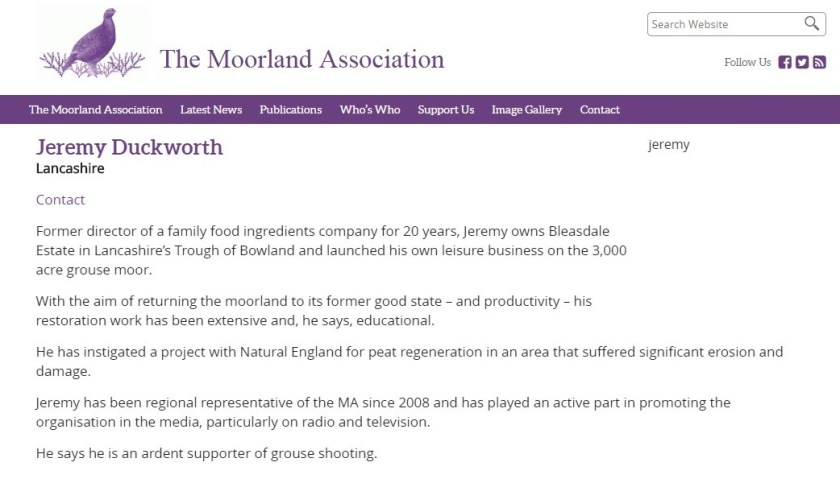
Surprisingly, the Moorland Association, which represents grouse moor owners, did not make an appearance in this film, but apparently told the BBC it “fully supports efforts to encourage numbers of hen harriers“. Really? Is this the same Moorland Association whose Director said last year,

If we let the hen harrier in, we will soon have nothing else. That is why we need this brood management plan“.

One other interviewee worthy of mention here was a chap called Ian Gregory, listed as ‘grouse shooting spokesman’. We don’t know if this is the same Ian Gregory as the Ian Gregory from You Forgot the Birds but judging by the poor quality of his comments in last night’s film, it may well be.

Commenting on footage of a Moscar Estate gamekeeper trying to release a badger from a snare by shooting at the snare, Ian Gregory said:

In these pictures we’re seeing a badger being released from a trap which was intended for foxes. Foxes are a nightmare for ground-nesting birds and that’s the reason that gamekeepers try to reduce the number of foxes that we have“.

Apart from revealing his woeful ignorance of ecological food webs, Ian Gregory forgot to mention that snares must never be set on runs where there is evidence of regular recent use by non-target species such as badgers, as they may be caught or injured by the snare. And, according to BASC’s Code of Best Practice, ‘Knowledge of the tracks, trails and signs of both target and non-target species [i.e. badgers] is essential. If you are not competent in identifying the tracks, trails and signs of non-target species, you must not set snares‘.

As an aside, it’s worth reading former Police Wildlife Crime Officer Alan Stewart’s blog about the CPS’s decision not to prosecute the Moscar Estate gamekeepers, here.

Ian Gregory had more unsubstantiated tosh to impart to the viewer. Talking about hen harriers, he said:

There is a problem about their populations in the UK. Some of that may be down to illegal activity but it’s also down to the pressure of human beings wanting more places for recreation, more countryside for recreation, more for their homes, so it’s not just a question of persecution, this is a much more complicated issue“.

Ah, so the demand for new housing on driven grouse moors is responsible for the catastophic decline of breeding hen harriers in England? And the scientific evidence for that claim is…..where, exactly? We had a look in the Conservation Framework for Hen Harriers which set out very clearly that illegal persecution was the biggest single factor affecting the hen harrier population’s chance of survival. Funnily enough, new housing estates being built on grouse moors didn’t feature.

All in all, this was an excellent film by the BBC’s Inside Out film and even more members of the public will now be aware of the disgraceful activities of the grouse shooting industry.

If you haven’t already done so, please consider signing this new e-petition calling for a ban on driven grouse shooting. PLEASE SIGN HERE.

Bleasdale Estate gamekeeper denies killing two peregrines in Bowland

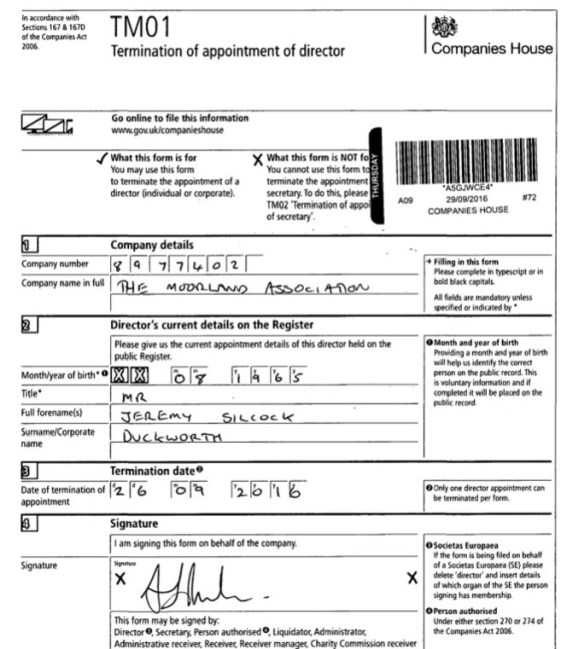
A 34-year old gamekeeper, James Hartley, appeared at Preston Magistrates Court today to face a series of charges relating to the alleged killing of two peregrines on the Bleasdale Estate, Bowland, in April 2016.

The charges read out in court were as follows:

  1. Killing a Schedule 1 wild bird. On 13 April 2016 at Bleasdale in the county of Lancashire, intentionally killed a wild bird included in Schedule 1 to the Wildlife & Countryside Act 1981, namely a peregrine falcon, contrary to sections 1(1)(a), 1(4) and 21(1) of the Wildlife & Countryside Act 1981.
  2. Disturb the nesting site of a Schedule 1 wild bird. On 13 April 2016 at Bleasdale in the county of Lancashire, intentionally or recklessly disturbed a wild bird included in Schedule 1 to the Wildlife & Countryside Act 1981, namely a peregrine falcon, while it was in, on or near a nest containing eggs or young, contrary to sections 1(5)(a) and 21(1) of the Wildlife & Countryside Act 1981.
  3. Killing a Schedule 1 wild bird. On 13 April 2016 at Bleasdale in the county of Lancashire, intentionally killed a wild bird included in Schedule 1 to the Wildlife & Countryside Act 1981, namely a peregrine falcon, contrary to sections 1(1)(a), 1(4) and 21(1) of the Wildlife & Countryside Act 1981.
  4. Set trap / gin / snare etc to cause injury to wild bird. On 13 April 2016 at Bleasdale in the county of Lancashire, set in position a trap which was of such a nature and so placed as to be calculated to cause bodily injury to any wild bird coming in to contact with it, contrary to sections 5(1)(a) and 21(1) of the Wildlife & Countryside Act.
  5. Take a Schedule 1 wild bird. On 13 April 2016 at Bleasdale in the county of Lancashire, intentionally took a wild bird included in Schedule 1 to the Wildlife & Countryside Act 1981, namely a peregrine falcon, contrary to sections 1(1)(a), 1(4) and 21(1) of the Wildlife & Countryside Act 1981.
  6. Possess live / dead Schedule 1 wild bird or its parts. On 13 April 2016 at Bleasdale in the county of Lancashire, had in your possession or control a dead wild bird included in Schedule 1 to the Wildlife & Countryside Act 1981, namely a peregrine falcon, contrary to sections 1(2)(a), 1(4) and 21(1) of the Wildlife & Countryside Act.
  7. Possess an article capable of being used to commit a summary offence under section 1 to 13 or 15-17. On 13 April 2016 at Bleasdale in the county of Lancashire, for the purpose of committing an offence, namely killing a Schedule 1 wild bird, namely a peregrine falcon, under section 1(1)(a), 1(4) and 21(1) of the Wildlife & Countryside Act 1981, had in your possession a firearm which was capable of being used for committing the offence, contrary to section 18(2) of the Wildlife & Countryside Act 1981.
  8. Possess an article capable of being used to commit a summary offence under section 1 to 13 or 15-17. On 12 April 2016 and 27 April 2016 at Bleasdale in the county of Lancashire, for the purpose of committing an offence, namely killing a Schedule 1 wild bird, namely a peregrine falcon, under section 1(1)(a), 1(4) and 21(1) of the Wildlife & Countryside Act 1981, had in your possession hammer, trap and knife which were capable of being used for committing the offence, contrary to section 18(2) of the Wildlife & Countryside Act 1981.
  9. Cause unnecessary suffering to a protected animal – Animal Welfare Act 2006. On 12 April 2016 and 15 April 2016 at Bleasdale in the county of Lancashire, caused unnecessary suffering to a protected animal, namely a peregrine falcon, by an act, namely trapping and leaving for a number of hours, and you knew or ought reasonably to have known that the act would have that effect or be likely to do so.

Mr Hartley denied all charges.

The following commentary has been compiled from notes we took during the hearing:

The lawyer from the Crown Prosecution Service then summarised the prosecution case. She said the Crown’s case is that the defendant is responsible for the destruction of two birds at their nest site. She said the matter came to light when the RSPB sited a camera within the boundary of Bleasdale Estate to monitor nesting peregrines. The Crown alleges that camera footage captures an individual in a camouflage suit attending the nest site. The individual remained there for a number of minutes setting what is believed to be a trap. The female peregrine is seen to leave the nest and four shotgun discharges are heard and the female does not return. The male peregrine remained at the site all day, believed to be trapped in the device set earlier. Later in the evening a person is seen to attend the nest site and remove something.

She went on to explain that the defendant is the gamekeeper for this particular ‘beat’ on the Bleasdale Estate and during a police search of his property a bag was seized containing a number of tools. A forensic analysis showed that a wooden-handled hammer and an orange-handled knife both contained peregrine DNA. The defendant gave a ‘no comment’ interview.

The defence lawyer, Tim Ryan, told the court that his client did not carry out the offences and is not the person shown in the video footage. He said part of his defence case would be to question the admissibility of video evidence under section 78 of the Police & Criminal Evidence Act.

The next hearing will take place on 11 January 2018 which is expected to deal with legal arguments about the admissibility of video evidence. Depending on the outcome of that hearing, a preliminary trial date was set to begin on 12 February 2018 and is expected to last for five days.

PLEASE NOTE: Comments are welcome but contributors are reminded that the offences are only alleged at this stage and it is up to the court to determine innocence or guilt. Please consider your words carefully as libellous commentary could interfere with the progression of this case! Thanks.

UPDATE 10 January 2018: Case against Bleasdale Estate gamekeeper James Hartley: part 2 (here)

More on the mystery gamekeeper with the General Licence restriction

Further to this morning’s blog about the mystery gamekeeper from north east Scotland who was filmed allegedly setting an illegal trap near a goshawk nest and who has subsequently been slapped with a General Licence restriction order by SNH, but whose name and employment details have been withheld.

Who could he possibly be and where, exactly, did this take place? There are some clues….

Have another look again at the short video clip of this gamekeeper in action, released by RSPB Scotland:

The video is date stamped: 21 March 2014.

Now have a look at RSPB Scotland’s 2014 persecution report, and note the confirmed incident of raptor persecution recorded in March 2014 relating to the setting of spring traps (with pigeon bait) on a plucking post close to a goshawk nest:

The location is given as ‘nr Tarland, Aberdeenshire’.

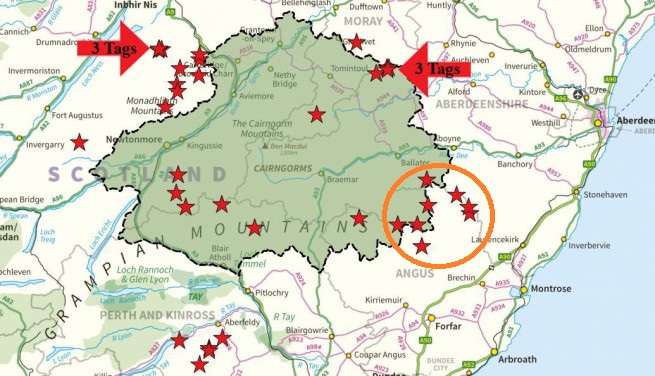
Where’s Tarland? Here it is, just to the east of the Cairngorms National Park boundary:

If we accept that the gamekeeper caught on video was allegedly trying to target a goshawk with an illegal trap, the motive for doing so would most likely be to protect game birds from predation. This is illegal, of course – goshawks have been legally protected since 1954, but as we know only too well, this doesn’t stop some gamekeepers from trying to kill them.

So we thought we’d look at how many game shooting estates are located ‘nr Tarland’. It’s a pretty vague location but consulting Andy Wightman’s brilliant Who Owns Scotland website, it turns out there are three big game-shooting estates in the area that could, reasonably, be defined as being ‘nr Tarland’: the MacRobert Trust Estate, the Tillypronie, Deskrie and Towie Estate, and the Dinnet Estate. There is also an area of ‘dead ground’ whose ownership is not included on Andy’s website, although we do know that GWCT’s new demonstration farm, Auchnerran, sits in this ‘dead ground’.

This map is useful, but it doesn’t really help draw many conclusions. What we can say is that all three estate owners would be both horrified, and embarrassingly compromised, if it turns out that this gamekeeper was employed by, or associated with, any of the estates.

The MacRobert Trust Estate is, as the name suggests, administered by a well-respected charity and the estate website suggests ‘an exemplary approach to estate management‘. There is a pheasant shoot here, which was advertised as a three-year ‘prestigious sporting lease’ in 2010.

The Tillypronie Estate was owned, at the time of the video recording, by Philip Astor. The estate, described as ‘One of Scotland’s most famous sporting estates’, went on the market last year valued at a cool £10.5 million and is now believed to have been sold to a ‘mystery buyer’. Gosh, there’s a lot of mystery in this part of the world, isn’t there? There is pheasant and grouse shooting here. Phil is a Vice Chairman of the GWCT.

The Dinnet Estate has long been owned by the Humphrey family and there is a designated National Nature Reserve on the estate, managed by SNH. A Dinnet Estate gamekeeper was convicted in 2006 of trespassing on a neighbouring estate with a firearm back in 2002 but that was a long time ago. A Dinnet Estate grouse moor was mentioned on this blog last month as being a potential location of satellite-tagged hen harrier Calluna’s last tag transmission but there’s been no further news on that. Dinnet Estate is a direct neighbour of the GWCT’s demonstration farm, Auchnerran, and the Dinnet Estate grouse moor is summer-grazed by some of GWCT’s sheep.

Given the GWCT’s indirect links and direct interests in the area ‘nr Tarland’, they must be concerned about the General Licence restriction being applied to a local, unnamed gamekeeper. If we ran an upland farm in the area, and were setting out to demonstrate good conservation benefits for both agriculture and wildlife, we too would be concerned. What if we employed him without knowing any of his history?

Shall we ask the GWCT for a comment? Perhaps, given their local contacts, they know something we don’t? Emails to: info@gwct.org.uk

May be all will become clear when we submit an FoI to SNH asking for further details about this particular General Licence restriction, although we’re not holding our breath!

Another avenue for information-seeking might be Police Scotland. We know from the RSPB’s press release that the police were investigating this alleged crime, so presumably the police know the name of the gamekeeper and where, exactly, this allegedly illegal trap had been filmed. Given that the case is now time-barred, meaning that the Crown Office couldn’t prosecute even if they wanted to (highly doubtful), there is no reason why Police Scotland can’t release relevant details as there’s no chance of it interfering with a live case. Let’s ask them. Emails to National Wildlife Crime Coordinator for Police Scotland, Andy Mavin: andrew.mavin@scotland.pnn.police.uk

SNH imposes General Licence restriction on ‘mystery’ gamekeeper

So, SNH has today announced it has imposed two General Licence restriction orders, based on evidence provided by Police Scotland of alleged raptor persecution crimes.

We know that one of those restriction orders has been placed on Edradynate Estate, Perthshire, because SNH has been quite upfront about it and has named the estate (see here).

But what about the other General Licence restriction? Well, according to the SNH press release, this has been imposed on “an individual” rather than on an estate.

This in itself is interesting. We know from the SNH framework for imposing these restrictions that this action can be taken against an individual, as well as on certain areas of land, but the framework document suggests that imposing it on land would be preferable to imposing it on an individual:

While the wording provides for the exclusion of individuals, it is the intention that where SNH has robust evidence that wild birds have been killed or taken or where there is intention to do so other than in accordance with a licence, SNH will exclude the area of land on which such evidence is found from General Licences 1, 2 and/or 3“.

Hmm. So who is this individual and why did SNH impose the restriction on him/her, rather than on an estate?

The SNH press release points the reader to the SNH webpage on General Licences for “full licence restriction details“. However, when you look at the SNH webpage, all you find is this:

Is SNH having a laugh? The “full licence restriction details” of this particular GL restriction order amounts to one sentence:

In addition [to the restriction imposed on Edradynate Estate] SNH has imposed a restriction prohibiting the use of General Licences by an individual for 3 years from 15th September 2017“.

That’s it? No name? No information on the area, let alone the name of the land where the evidence of raptor persecution took place? Not even the region?

What’s with the secrecy? Who is SNH shielding, and why?

This could be absolutely anyone! Is it Nicola Sturgeon? Is it Alex Salmond? Is it JK Rowling? Highly unlikely, it has to be said, but you get the point we’re trying to make.

And what happened to the transparency that was promised when former Environment Minister Paul Wheelhouse first announced this new measure to tackle ongoing raptor persecution? He said he expected details of General Licence restrictions to be published on the SNH website to act as “a reputational driver“. That’s not going to happen if SNH withholds the details, is it?

This is a very dangerous precedent to set. SNH has previously withheld details of estates that were being considered for a GL restriction but in that case, the justificiation for being all secret squirrel was reasonable: the GL restrictions hadn’t yet been imposed, but rather the estates had been notified of an intent to impose, and SNH argued that the estates needed time to respond/appeal (see here). That was fair enough.

But in this case, SNH has already imposed the GL restriction, and we’re struggling to understand the justification SNH might have for keeping the details secret.

What is it with statutory agencies and their reluctance to release information that’s clearly in the public interest?

We’ll be submitting an FoI to SNH to ask for further details, and, based on the response, we’ll consider appealing the decision to the Scottish information Commissioner.

In the meantime, have a look at today’s press statement from RSPB Scotland about these latest GL restrictions. This gives us more of a clue about the recipient of the restriction order. The statement includes the following quote from Head of Investigations, Ian Thomson:

The other restriction was imposed after RSPB investigations staff passed video footage to police of a gamekeeper allegedly setting illegal traps, baited with a dead woodpigeon, very close to a goshawk nest in NE Scotland.”

Ok, now we’re getting somewhere. The recipient of the GL restriction is a gamekeeper, working in NE Scotland, who was filmed allegedly setting illegal traps close to a goshawk nest. And the RSPB has even provided a video clip of the alleged offence, with the individual’s face pixellated (presumably done on legal advice).

Well, quelle surprise! Another gamekeeper trying, allegedly, to persecute a goshawk in north east Scotland. This is becoming quite a habit in this part of the country. First we had gamekeeper George Mutch, caught on video trapping and battering to death a goshawk on the Kildrummy Estate in 2012, crimes for which he went to prison (see here), then we had a gang of masked armed men caught on video shooting at a goshawk nest on Forestry Commission land at Glen Nochty in 2014 (see here), and now this latest case.

But who is this latest gamekeeper and on whose land was he working when he allegedly set this trap?

More on this in the next blog…..

UPDATES:

More on the mystery gamekeeper with the general licence restriction (here).

Secret trial for Edradynate Estate gamekeeper

Back in June we blogged about the prosecution of former Edradynate Estate gamekeeper David Campbell for alleged offences including the malicious damage of crops (it is claimed he poisoned them by spraying with an unknown substance, causing them to rot and perish) and the alleged theft of a thermal imaging spotting scope (see here).

What fascinated us about this case was that the Crown Office deemed the charges sufficiently serious to begin proceedings ‘by petition’ – only serious cases are begun by petition and may be heard in the Sheriff Court or a higher court.

Contrast the Crown Office’s approach in this case with that of its approach in another case involving an unnamed Edradynate Estate gamekeeper, in relation to the alleged poisoning of several buzzards. Despite a plea from Police Scotland to proceed with a prosecution, the Crown Office decided to drop the case earlier this year with just a vague (and unsatisfactory) explanation (see here). We’re now waiting to see whether SNH will impose a General Licence restriction on the estate in relation to these and other alleged wildlife crimes.

But back to the alleged poisoning of crops and theft of estate equipment. We wanted to track this case so we called the Sheriff’s clerk to ask when the next hearing was due. The clerk was polite but firm; he couldn’t tell us because it was a secret. He didn’t actually use the word ‘secret’ but by telling us that he wasn’t allowed to provide any information, effectively he was saying it was a secret.

Eh? All we wanted to know was the date of the next hearing. We weren’t asking for any details about the case, the charges or whether the accused had entered a plea. Just the date of the next court hearing.

The clerk told us that all information relating to proceedings by petition were not for public release. We mentioned that this seemed a bit strange given that the details of the first court hearing back in June had been published in the local newspaper. He seemed a bit perplexed by this and went off to check with his manager. He came back and said he couldn’t tell us anything.

Excellent.

If there are any lawyers reading this blog who could explain why this case is shrouded in secrecy, given that it doesn’t appear to relate to a minor or to national security, we’d be very interested to hear those thoughts.