South Yorkshire Police Chief urged to improve responses to wildlife crime

Stephen Watson, the Chief Constable of South Yorkshire Police is coming under increasing pressure to improve responses to reports of wildlife crime in the region.

In July this year, Liz Ballard, Chief Executive of Sheffield & Rotherham Wildlife Trust held a meeting with Stephen Watson along with local MP Angela Smith (Hen Harrier Species Champion), Mark Thomas (RSPB Investigations) and Supt Nick Lyall (Chair, Raptor Persecution Priority Delivery Group) to discuss concerns about South Yorkshire Police’s apparent failure to follow up on a number of wildlife crime investigations, especially on grouse moors in the Dark Peak area of the Peak District National Park, a national raptor persecution hotspot.

One such apparent failure involved the poisoning of a raven that had been found on a grouse moor in the Dark Peak. It was reported that Natural England refused to have the corpse tested for toxicology, so the RSPB paid for it to be done privately, and when the results were given to the police they did nothing for a year (see here).

Earlier this year there was also concern about the behaviour of a police officer reportedly working with gamekeepers from the Moscar Estate and who later had to apologise to a member of Sheffield & Rotherham Wildlife Trust for his actions (see here).

The July meeting with Chief Constable Stephen Watson was an opportunity for a frank exchange of views and this included letting him know that the perception is that South Yorkshire Police ‘are not interested or active in tackling wildlife crime as there is a conflict of interest between the officers leading on wildlife crime and their personal involvement in the shooting industry‘. CC Watson responded by saying it was ‘helpful for the police to have good community links with the shooting industry to be better able to tackle wildlife crime‘.

As a follow-up to the meeting, where a number of action points were identified, Liz Ballard and Mark Thomas have written an open letter to Stephen Watson as follows:

It’ll be interesting to see how Stephen Watson responds.

Kudos to Liz Ballard and her team at Sheffield & Rotherham Wildlife Trust for their determination to tackle wildlife crime in the region. Liz is one of several new faces to express an interest in joining the Raptor Persecution Priority Delivery Group (RPPDG) earlier this year and she told us recently that having now attended several meetings she is keen to have the Trust’s membership of that group formally ratified without any further delay.

As further evidence of the Trust’s commitment to this issue, Supt Nick Lyall has been invited to speak at the Trust’s AGM in September. This event is open to the public and further details/tickets can be found here.

UPDATE 9 September 2019: South Yorkshire Police commit to improved responses to wildlife crime (here)

Scottish Gamekeepers Association fails to influence the criminals within its membership

Gamekeeper Alan Wilson, 61, sentenced yesterday for his appalling crimes against protected raptors and mammals on the Longformacus Estate in the Borders (here) was a member of the Scottish Gamekeepers Association (SGA).

As an SGA member, Wilson cannot possibly claim that he wasn’t aware of the laws protecting birds of prey and mammals such as badgers and otters, nor that the deadly poison he had in his possession, Carbofuran, has been banned for approx 14 years, because although the SGA can be viewed as a bunch of raptor-hating Victorian throwbacks who lobby to have birds of prey added to the lists of ‘vermin’ that can be killed with impunity (e.g. see here), it has always made it clear that the illegal killing of these species is unacceptable. It wants to kill raptors, yes, to stop them interfering with game bird stocks, but acknowledges that so far, this is still unlawful unless the Scottish Government decides to issue licences to kill birds of prey.

Wilson carried what looks to be his SGA member’s log book in the same bag as he kept one of his bottles of Carbofuran.

Here’s his bag, with the bottle of Carbofuran in the front pouch [SSPCA photo]

Here’s the small bottle of Carbofuran (remember only a few granules are enough to kill a human) [SSPCA photo]

Here’s his SGA member’s log book, contained in the side pouch [photo SSPCA]

The irony of this is not lost on us.

The SGA issued a statement yesterday, after months of refusing to say anything, confirming that Wilson was indeed a member and his membership has now been terminated. Expelling criminals from within its ranks is a relatively recent endeavour by the SGA (in the last five or so years) and undoubtedly is a result of public and political pressure. The organisation has to at least make an effort to appear civilised and expelling criminal members is one way of doing this.

It begs the question, though, how many more criminals are hiding in plain sight within the SGA’s membership? It’s worth bearing in mind that, despite the industry’s claims, gamekeeping is not a profession in the sense that potential candidates don’t have to pass a formal qualification process to enter the ‘profession’ (although increasingly they do need to be certified in certain areas of their work) and absolutely anybody can become a member of the SGA unless, it seems, you have a recent conviction for wildlife crime. There’s no independent register of gamekeepers and nor is there a professional body to whom members of the public can complain about a gamekeeper’s behaviour or conduct, which when you think about it is pretty odd, given the job mostly involves killing things. Those responsible for caring for animals have to be highly qualified and are answerable to their professional bodies (e.g. vets) and yet those who kill animals for a living can do so without any professional oversight.

It’s pretty clear from the criminal activities of SGA member Alan Wilson that the SGA had absolutely no influence or control over his behaviour whatsoever. Did the SGA know about Wilson’s crimes? It seems unlikely, given the risk he posed to the SGA’s reputation.

So how many more Alan Wilsons are out there, fully-signed-up members of the SGA but with a huge appetite for killing protected wildlife with impunity?

How can the SGA possibly claim that gamekeepers are law-abiding members of society (e.g. see here) when the SGA hasn’t actually got a clue what its members are up to?

We won’t know, of course, until the next time. And there will be a next time, and another one, and another one, and another one….

Meanwhile, the SGA will be kept busy on a damage limitation exercise for the next few months trying to counter the media coverage of Wilson’s atrocities:


Monumentally inadequate sentence for convicted Scottish gamekeeper Alan Wilson

In July this year, Scottish gamekeeper Alan Wilson, then 60, pleaded guilty to nine of 12 charges of wildlife crime at Henlaw Wood on Longformacus Estate in the Borders (see here).

Wilson’s crimes included the shooting and killing of two goshawks at Henlaw Wood between March 2016 and May 2017, three buzzards, three badgers and an otter. He also pleaded guilty to charges of setting 23 illegal snares and possession of two bottles of the highly toxic (and banned pesticide) Carbofuran (see here).

[SSPCA photos]

Following Wilson’s guilty plea, the Sheriff adjourned sentencing for a few weeks to allow reports to be submitted.

Soon after his conviction, Scottish Land & Estates issued a statement of condemnation and claimed the Longformacus Estate was being managed for low ground pheasant shooting but in its desperation to avoid any bad publicity of grouse moor management, completely failed to mention that part of the estate was also managed as a grouse moor. Here’s a photograph of Henlaw Wood (now felled) and its proximity to the grouse moor:

[Original photo by Richard Webb; additional text by RPUK]

Alan Wilson, now 61, was sentenced at Jedburgh Sheriff Court this afternoon. Astonishingly (or not!), despite his litany of violent crimes against protected raptors and mammals which easily passed the threshold for a custodial sentence, Wilson has dodged jail, has dodged a fine, and instead has been issued with a 10-month curfew and an instruction to carry out 225 hours of unpaid work as part of a Community Payback Scheme. His firearms and other equipment was confiscated (it’s not clear for how long).

This monumentally inadequate sentence is in no way a reflection of the severity or extent of Wilson’s crimes, nor does it offer a suitable deterrent for other would-be offenders. According to this article in the Guardian by Sev Carrell, Sheriff Peter Paterson acknowledged that Wilson’s offending warranted a custodial sentence but said that as the Wildlife & Countryside Act only allowed sentences of up to six months, and Scottish Ministers had recently introduced a presumption against jailing offenders for less than 12 months, he felt he had no choice but to impose a different sentence.

This doesn’t make sense to us. Sure, the W&CA does, currently, impose a limit of six months but that’s six months per offence, so in Wilson’s case, where he had pleaded guilty to multiple offences, this would have amounted to much more than one six-month sentence and so in our opinion, he should have received a custodial sentence. We don’t know if this sentence will be appealed by the Crown Office – it must first be satisfied that the sentence was unduly lenient (e.g. see here). We’ll have to wait and see.

What is absolutely crystal clear is that the Scottish Government needs to get on and implement the penalty increases for wildlife crimes that it agreed to do way back in 2016.

This is Wilson’s second conviction in relation to offences at Longformacus Estate: in February 2018 he was sentenced to a £400 fine and disqualified from keeping birds of prey for ten years after he was convicted of animal welfare offences in relation to an Eagle Owl he had kept in appalling conditions (see here).

We don’t know whether Wilson’s employer (which may be a landowner or a sporting agent) will face a charge of alleged vicarious liability. We know that two individuals were originally charged with alleged offences at Longformacus Estate (e.g. see here) but we don’t yet have any more details. We will be following up on this and will report here if there is news. [Please note: if you are commenting on this aspect of the crimes at Longformacus Estate, remember there is a potential defence to any allegation of vicarious liability – Wilson’s employer is not automatically guilty just because he was Wilson’s employer].

Interestingly, the Scottish Gamekeepers Association has, after months of refusing to comment, now finally admitted that Wilson was indeed an SGA member when he committed these wildlife crimes. Here is the SGA statement posted today:

We’ll be discussing Wilson’s SGA membership in a later post.

It is not clear to us whether the Longformacus Estate is a member of Scottish Land & Estates. So far SLE hasn’t issued a statement about today’s sentencing. Instead, it’s website is leading with an article with the unfortunate headline, ‘Making it Happen’.

More on this soon.

It only remains to acknowledge the huge efforts of all those involved in detecting, investigating and prosecuting this case. This successful conviction was the result of genuine partnership working between the League Against Cruel Sports, Scottish SPCA, RSPB Scotland, Police Scotland and the Crown Office, along with experts from the Scottish Raptor Study Group, SASA, and veterinary pathologists from Scottish Agricultural College. Well done and thanks to all those involved in exposing this filthy criminal activity on yet another grouse moor.

Wildlife crime is endemic on many grouse moors. We see it over and over again and we also see the offenders escape justice time and time again. If you’d like to help bring it to an end, please consider signing this new petition calling for a ban on driven grouse shooting – PLEASE SIGN HERE

UPDATE 30 August 2019: No vicarious liability prosecution for Longformacus Estate (here).

How has the game-shooting industry reacted to conviction of Scottish gamekeeper Alan Wilson?

We’ve been watching with interest how the game-shooting industry has reacted to the news that Scottish gamekeeper Alan Wilson has pleaded guilty to nine wildlife crimes on the Longformacus Estate in south Scotland.

We are especially interested to find out whether (a) Wilson is/was a member of the Scottish Gamekeepers Association when he committed his crimes against protected wildlife and if so, whether he’s been booted out, and (b) whether the Longformacus Estate is/was a member of Scottish Land & Estates when these wildlife crimes took place, and if so, whether the estate has since been booted out.

It turns out that both the SGA and SLE are being a bit coy about this information.

First up, here’s the full statement from the SGA in response to Wilson’s guilty plea for multiple criminal offences:

It’s not very impressive, even though it took the SGA 24 hours to come up with it!

No mention, then, of the exceptionally high number of wildlife crimes.

No mention, then, of the number of protected species that had been shot illegally, including birds of prey, badgers and an otter.

No mention, then, of the 23 illegally set snares.

No mention, then, of the two containers of a highly toxic and banned poison (Carbofuan) that had been found.

And no mention, then, that it was a Scottish gamekeeper who was responsible for this disgraceful litany of wildlife crimes.

Moving on, here’s what Scottish Land & Estates posted:

It’s a bit of an odd choice of photograph to illustrate the piece – that’s Lord David Johnstone, Chairman of SLE; it’s not criminal gamekeeper Alan Wilson. You might have thought SLE would choose an image of one of the protected species that had been illegally shot, or a poison skull & crossbones, or perhaps even an image of the location, a bit like this one:

[Photo by Richard Webb]

Ah, but hang on a minute, using a photo like this one to illustrate SLE’s statement wouldn’t have worked because look, what’s that behind the wood? Is it the tell-tale strip muirburn indicative of a grouse moor?

Ah, that’s a bit awkward seeing as SLE’s statement doesn’t mention grouse moor management, only low ground pheasant shooting – perhaps a deliberate omission? Surely not.

To be fair, the hill in the background is part of a neighbouring estate (Kettleshiel Farm), although if you look at a satellite image of the area it’s pretty clear that there’s also strip muirburn on Longformacus Estate, right up to the edge of Henlaw Wood where all those shot protected species were uncovered: [UPDATE 9pm: According to a comment from Professor Ian Poxton, all the land shown in the above and below photos, including the grouse moor hill, belonged to Longformacus Estate at least up to a couple of years ago – see comments section for more details]:

So it looks very much like there is a combination of both low ground pheasant shooting and grouse moor management on Longformacus Estate – how odd that SLE would appear to want to only mention the pheasant shooting and not the grouse moor management.

Actually, it’s not odd at all – they tried the same trick when golden eagle Fred ‘disappeared’ in suspicious circumstances next to a grouse moor in the Pentland Hills just outside Edinburgh, playing down the prevalence of grouse moor management in the area.

Hmm, can’t begin to imagine why SLE might want grouse moor management out of the spotlight.

Anyway, back to SLE’s statement – at least it includes the fact that a gamekeeper has been convicted of wildlife crime – that’s a definite improvement on the SGA’s pathetic statement, but rather tellingly, SLE’s statement doesn’t mention whether Longformacus Estate is a member of SLE but does seem to want to demonstrate support for the estate. How interesting.

As we’ve said previously, as we understand it there is an ongoing police investigation in to whether gamekeeper Alan Wilson’s employer may face a potential charge of alleged vicarious liability, but we don’t know any more detail. We don’t even know if that would be the landowner or whether there’s a ‘middle-man’ involved such as a sporting agent.

We’ll have to wait and see, although it’s interesting to note that back in August 2018, Police Scotland issued a statement that said two men had been charged in relation to this case (see here).

Convicted Scottish gamekeeper Alan Wilson & his litany of wildlife crimes

Further to the news yesterday that Scottish gamekeeper Alan Wilson, 60, had pleaded guilty to nine of the 12 charges of wildlife crime against him (see here), here is some further detail.

From The Times (by Robert Fairburn):

Gamekeeper killed protected birds, badger and otter

A gamekeeper shot dead badgers and buzzards and set dozens of illegal snares in Scottish woodland in what one wildlife expert described as the greatest cull of protected species he had ever seen.

Alan Wilson, 60, has pleaded guilty to priming 23 illegal snares in a small wood on the Berwickshire estate where he worked. A court was told that the League Against Cruel Sports had been tipped off by a member of the public out hiking that snares were being operated at Henlaw Wood on the Longformacus Estate.

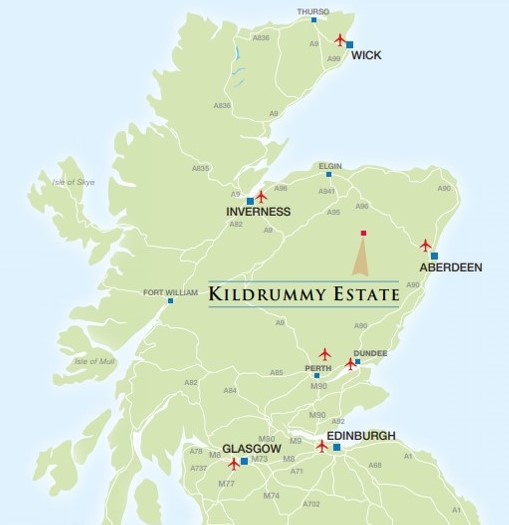
[RPUK map of the location of Longformacus Estate]

In March 2016 a research officer found snares and a “stink pit” containing a pile of dead animals designed to attract other animals. A year later he returned and found the carcass of a badger and dead birds.

The site was visited by police officers and Scottish SPCA officers when the full catalogue of shot protected species emerged.

David Anderson, conservation manager for the Forestry Commission Scotland, attended Henlaw Wood, which is 550 metres in length, and wrote in his report: “In 40 years working in wildlife management I have never seen so many protected species dead in such a small area.”

Jedburgh sheriff court was told that Wilson was the sole gamekeeper for the Longformacus estate. He had worked as a gamekeeper in France for ten years before returning to Scotland and lived on the estate with his partner.

Wilson pleaded guilty to shooting and killing two goshawks at Henlaw Wood between March 2006 and May 2017, three buzzards, three badgers and an otter. He also pleaded guilty to charges of using illegal snares and possession of two bottles of carbofuran.

Wilson was fined £400 last year and banned from keeping birds of prey for ten years after admitting failing to protect an eagle owl in his care from suffering. He had pleaded guilty to keeping the pet bird in filthy conditions in a pigsty at his home in Longformacus [see here for RPUK blog on that case].

Wilson admitted nine offences and will be sentenced next month [19th August we believe] after background reports are prepared. Sheriff Peter Paterson told him: “These charges are serious and numerous and before I decide on an appropriate sentence I will need a report to see what sentencing options are open to me. Society, whatever you may think, takes a dim view on this.”

There has been growing debate about Scotland’s grouse moors. Chris Packham, the naturalist and broadcaster, has urged ministers to introduce a strict licensing system on moors, with powers to ban shooting estates where protected species are vanishing. A Scottish government review of grouse moor practices is expected to be published within weeks.

ENDS

It’ll be all eyes on Jedburgh Sheriff Court on 19th August when this criminal gamekeeper is sentenced. We believe the custody threshold has been easily met and given the range of offences against these protected species, in addition to being found in possession of the highly toxic (and thus banned) pesticide Carbofuran, only a custodial sentence will suffice.

There have been questions asked about Wilson’s employer and whether a charge of alleged vicarious liability is being pursued. We believe there is currently a live investigation on this and as such we won’t be blogging about it, or accepting comments specifically about it, until proceedings have concluded.

The conviction of gamekeeper Alan Wilson can now be discussed, however. We look forward to finding out whether he is/was a member of the Scottish Gamekeepers Association and if so, how they explain his appetite for illegally killing protected raptors and mammals, why he was setting illegal snares and why he had two bottles of Carbofuran in his possession.

Presumably the SGA knew nothing of Wilson’s crimes, which begs the question, how can the SGA make so many claims about the number of supposedly law-abiding gamekeepers when they haven’t got a clue what those gamekeepers are up to, nor do they have sufficient influence to prevent them committing wildlife crimes?

Over to you, SGA Chairman Alex Hogg…..

Previous blogs about this case: herehere here  here herehere, here, here, here here.

UPDATE: 24 July 2019: How has the game-shooting industry reacted to conviction of Scottish gamekeeper Alan Wilson? (see here).


Scottish gamekeeper pleads guilty to nine charges of wildlife crime

BREAKING NEWS…..

We understand from a journalist that Scottish gamekeeper Alan Wilson, 60, has this morning pleaded guilty to 9 of the 12 wildlife crime charges against him. Not guilty pleas were accepted on the other three.

Sentencing has apparently been deferred until 19th August for background reports.

Wilson had been accused of shooting two goshawks, four buzzards, a peregrine falcon, three badgers and an otter at Henlaw Wood, Longformacus, between March 2016 and May 2017.

He also faced charges of using a snare likely to cause partial suspension of animal or drowning, failing to produce snaring records within 21 days when requested to do so by police and no certificate for an air weapon.

We also understand he faced a charge of alleged possession of the banned poison Carbofuran.

Up until this morning Mr Wilson had pleaded not guilty.

More details to follow……

Previous blogs about this case: herehere here  here herehere, here, here and here.

UPDATE 23 July 2019: Convicted Scottish gamekeeper Alan Wilson and his litany of wildlife crimes (here)

UPDATE 24 July 2019: How has the game-shooting industry reacted to conviction of Scottish gamekeeper Alan Wilson? (here).

New trial date for Scottish gamekeeper accused of multiple wildlife crimes

Criminal proceedings continued on Monday (8th July) against Scottish gamekeeper Alan Patterson Wilson who is accused of allegedly committing 12 wildlife crimes.

Mr Wilson, 60, is accused of shooting two goshawks, four buzzards, a peregrine falcon, three badgers and an otter at Henlaw Wood, Longformacus, south Scotland between March 2016 and May 2017.

He also faces charges of using a snare likely to cause partial suspension of an animal or drowning, failing to produce snaring records within 21 days when requested to do so by police and having no certificate for an air weapon.

We also believe he is accused of the alleged possession of the banned pesticide, Carbofuran.

Mr Wilson has pleaded not guilty to all charges.

A previous trial date had been set for 13th June 2019 but for unknown reasons the case was adjourned until Monday 8th July. At Monday’s hearing a new trial date was set for 20th August 2019.

Previous blogs about this case: see herehere here  here herehere, here and here.

Please note: we will not be accepting comments on this news item until legal proceedings have concluded. Thanks.

Scottish Government commissions research on gamekeepers’ “rights & aspirations”

While we’re all waiting for Scottish Ministers to turn twenty years’ worth of hollow promises in to tangible and effective action against the rampant criminality still all-too evident on many grouse and pheasant-shooting estates, the Scottish Government has decided to invite tenders for some new research in to the ‘rights and aspirations’ of gamekeepers.

Yes, it’s easy to see why this would be a priority for the Government. Those poor, misunderstood raptor haters, who do so much in their role as custodians of the countryside….

[Pie chart from RSPB Birdcrime report: The occupations/interests of the 176 individuals convicted of bird of prey persecution-related offences 1990-2015]

Does this look like the actions of a Government ready to crack down on criminals in an industry known to be heavily involved in the illegal killing of birds of prey?

Although to be fair, the new research isn’t just about gamekeepers. The full title of the research contract up for grabs is this:

To fill gaps in existing knowledge on the socioeconomic and biodiversity impacts of driven grouse moors and to better understand the rights, benefits, attitudes, working conditions and future aspirations of gamekeepers.

This has come about following the publication earlier this year of the Government-commissioned Socio-economic and Biodiversity Impacts of Driven Grouse Moors in Scotland. That research identified a load of gaps and this latest research opportunity aims to fill some of those gaps as well as to look at the game-keeping profession, as Roseanna Cunningham had indicated way back in 2017 when she first announced the Werritty Review in to grouse moor management.

The invitation for tender can be found here with a closing date for applications at midday on 7th July 2019.

The research contract is worth £80,000 and begins on 24th July and ends on 20th December.

The tender document can be downloaded here: Research to assess the socioeconomic and biodiversity impacts of driven grouse moors

Most of the detail is dull and tedious and only relevant to those submitting a tender, but this short summary of what is expected from the work is useful:

Sarcasm and irony aside, some of this research is actually long-overdue and should make a significant contribution to the discussions about the so-called benefits of grouse moor management, assuming there are sufficient and reliable data sources available. However, the usual caveat applies – it all depends on which organisation wins the tender and whether they are sufficiently independent and robust for the research to withstand scrutiny. If it’s anything as bad as the GWCT’s research proposal to kill ravens in Strathbraan (described as “completely inadequate” and “seriously flawed” by SNH’s own Scientific Advisory Committee) then we’ll be no further forward.

The timing is interesting though. This research will clearly feed in to the long-awaited Werritty Review, which was supposed to have been submitted by now but we understand has been delayed due to ill-health. For how long remains to be seen.

Running scared?

The weekend before last we were out filming in Scotland with Chris Packham, at a number of locations and with a number of experts. We’re not going to say too much about that at the moment because….well, you’ll see in due course.

At one particular location we were followed and filmed by an individual. Those photographs were subsequently doing the rounds on social media last week – some of you may have seen them – and they led to a wide range of absurd accusations and claims, including one particular favourite – that Chris was ‘caught filming on a grouse moor and as soon as he was spotted by the gamekeeper he literally ran back to the car and hid his face’.

Now, what was it that Scottish gamekeepers have been accused of doing recently? Was it something about making “greatly exaggerated” claims? Have a look at this video that WE filmed of us leaving that grouse moor, having been followed and filmed by this gamekeeper for at least half an hour – can you see anyone “literally running back to the car to hide their face”?

Note the gamekeeper filming us, sitting in the black 4×4 parked in the lay by behind our two vehicles.

There have also been claims that we were filming “illegally” on the grouse moor. No, we weren’t. Our accusers would do well to read the Land Reform Act and learn about public rights of access in Scotland.

There have also been claims that Chris broke BBC guidelines by filming with a BBC film crew without landowner permission. No, he didn’t. This wasn’t a BBC film crew and landowner permission was not required (see above).

There have also been claims that Chris broke BBC guidelines by ‘campaigning on social media’ during his Springwatch contract. No, he didn’t. Chris wasn’t the one who posted the photos and associated commentary on social media (i.e. ‘campaigning’) – that was done by those in the game-shooting industry, who shot themselves in the foot by bringing it to the attention of Springwatch viewers while the series was still on air! How can Chris be held responsible for someone else’s decision to post photographs of him on social media, accompanied by a string of false accusations?!

There have also been claims that one of the people involved was (a) a security guard or (b) an ‘animal rights extremist/thug’ – no, he wasn’t either of those. It’ll become apparent later in the year exactly who he was and what he was doing there!

There have also been claims that this particular member of our team was violently intimidating towards the gamekeeper, and that he “wouldn’t back down against him”. Have another look at our video – can you see any evidence of violent intimidation or can you see a man walking back to his vehicle and immediately getting in to avoid any confrontation with the gamekeeper who was filming him?

On something of a tangent, it has also been claimed that Environment Cabinet Secretary Roseanna Cunningham and Ruth Tingay of RPUK are “shagging”, which is apparently why the Cabinet Secretary agreed to appear in our Fred video last year. Erm…..

It’s pretty clear that there are some within the game shooting industry who are so terrified about our work and the impact we are having they’ll try anything to discredit us, no matter how pathetic or defamatory the accusations.

It looks like they’re the ones running scared….and so they should be. Some of the footage we filmed in Scotland will be devastating to the grouse shooting industry. Forget Werritty and the long-awaited review – what we have transcends anything that Professor Werritty can report.


Gamekeepers accused of making ‘misleading’ & ‘greatly exaggerated’ claims re: mountain hares

Here’s a shocker. Scottish gamekeepers have been accused of making ‘misleading’ and ‘greatly exaggerated’ claims about mountain hares, according to SNH staff emails, uncovered by a Freedom of Information request from Scottish animal welfare charity OneKind.

Gamekeepers accused of making stuff up? Shurely shome mishtake.

This news was revealed in an article in yesterday’s Sunday Times, and the SNH staff comments are alleged to refer to a propaganda video on grouse moor management, produced by the Grampian Moorland Group.

Here’s the article (illustrated by what looks like a brown hare, not a mountain hare).

Gamekeepers have made “misleading” and “highly questionable” claims over mountain hares, according to Scottish Natural Heritage (SNH) staff emails passed to The Sunday Times.

In recent years sporting estates have defended mass culls of mountain hares in Scotland, an iconic species that animal welfare groups claim is under threat due to large-scale killing.

This newspaper revealed last year that up to 38,000 mountain hares a year had been killed on Scottish estates, some of which have charged people thousands of pounds a day to shoot the animal. More than 1.3m hares have been killed in Scotland over the past 50 years.

Mountain hare killing is unregulated during the open season, but although there has been a sharp decline in hares in northeast Scotland, there is an ongoing dispute as to whether the species is in decline overall.

SNH is the official body with the responsibility for protecting wildlife in Scotland, and it has been liaising with various bodies on how to protect mountain hares, while taking into account the views of gamekeepers and estates who dispute claims the animal is under threat.

Emails released following a freedom of information request reveal that SNH staff raised concerns over a promotional video for grouse moor and hare management produced by the Grampian Moorland Group.

During internal discussions last year, SNH staff said the video made “misleading claims” while another email said the browsing impacts of mountain hares were being “greatly exaggerated”. The emails were obtained by animal welfare charity, OneKind.

Bob Elliot, OneKind director, said: “We are always being informed by the gamekeeping community that large-scale mountain hare culls are needed. Now Scottish Natural Heritage are also raising serious concerns about some of the facts portrayed in online videos and communications by the shooting community. It’s time for the government to ban the large-scale culling of mountain hares for good.”

The Scottish Gamekeepers Association (SGA) said: “The SGA and SNH have long disagreed over issues such as browsing impacts of hare and deer on habitats and would have these same differences tomorrow, regardless of FOIs (freedom of information requests) or internal emails.”

Grampian Moorland Group said: “Group members worked with SNH and the James Hutton Institute on the research to establish the best methods of counting mountain hares. If SNH has a problem, they should contact us directly.”

SNH said: “We know of very few sites where mountain hares are considered to have an impact on site condition. The few we are aware of involve a combination of sheep and/or deer also.

We have not recommended control to improve the condition of any of these.”

ENDS