Commentary on the conviction of gamekeeper Thomas Munday (bludgeoned Buzzard to death on Hovingham Estate, North Yorkshire)

On Monday this week, former gamekeeper Thomas Munday appeared at Scarborough Magistrates’ Court where he was convicted of killing a Buzzard in March 2024 on land owned by the Hovingham Estate in North Yorkshire and was fined £1,215 (see RSPB press release here).

The case drew wide media attention, not least because it centered on disturbing footage captured on an RSPB covert camera showing Munday brutally beating to death the Buzzard that had been captured inside a Crow cage trap. The violence was appalling, and according to a piece on ITV news, even Munday’s solicitor told the court that his client had done “an incredibly cruel thing, it was a disgusting aberration“.

Thomas Munday (on the left) leaving court with his solicitor (screengrab from ITV News footage)

I said I’d return to this case to provide some commentary. I’m interested in three different aspects of the case: the charge against Munday, the sentence he received, and the location of the crime.

THE CHARGE

Munday was charged with intentionally killing a protected wild bird, a Buzzard. That’s an obvious offence and was clearly evidenced by the RSPB’s video footage. Munday pleaded guilty at the first available opportunity.

But to my mind there were other charges that could have been brought against Munday. For example, using a cage trap to kill or take a protected wild bird, possession of an article (the stick) capable of being used to commit an offence, and perhaps even going equipped (the ATV) to commit an offence.

However, the main additional charge I would have expected to see, based on the video footage, was that of causing unnecessary suffering to the Buzzard (Section 4 of the Animal Welfare Act 2006).

It’s beyond doubt, to me, (and apparently to Munday’s solicitor – see above) that that Buzzard suffered unnecessarily due to the two bouts of inhumane and cruel beating caused by Munday.

The courts are expected to treat animal cruelty seriously, as evidenced by the guidelines provided by the Sentencing Council – see here.

If you follow the step-by-step process outlined by the Sentencing Council, Munday’s actions could be determined as being of either High Culpability or Medium Culpability, and the harm caused (death) falls under Category 1 (the most serious level of harm caused).

Sentencing guidelines for offences determined to be High Culpability Category 1 start at two years’ custody. For Medium Culpability Category 1 offences, the starting point is 26 weeks’ custody.

I wonder why the CPS chose not to bring any charges other than that of intentionally killing a protected wild bird (the Buzzard)? Or maybe the CPS did bring other charges and there was a plea bargain? Along the lines of, ‘My client will plead guilty if the other charges are dropped’? That’s a common and legitimate feature of many criminal prosecutions but if that did happen in this case, why did the CPS accept? Was it a case of getting a quick and easy conviction in the bag and let’s move on to the next case?

This is all conjecture, of course, and until there’s better (any!) transparency about charging decisions then we’ll never know.

THE SENTENCE

Munday was fined a total of £1,215 for killing the Buzzard. This amount was broken down as follows:

£807 – fine

£323 – surcharge

£85 – costs

Some people, and I’m one of them, will consider that this level of fine does not reflect the seriousness of the offence and is at the lower end scale available to the courts. As the RSPB stated in its press release after Munday’s conviction, ‘This penalty provides little deterrent to others who may consider committing similar crimes and fails to reflect the casual and callous acts of cruelty involved‘.

I’ve seen some argue that the other consequences Munday faced (i.e. losing his firearms and shotgun certificates, losing his job, losing his home), in addition to the fine, is sufficient penalty for him. I disagree. Losing a job and home is no different to someone being made redundant, through no fault of their own, and having to relocate to find work.

According to media reports, Munday has re-trained (now a tree surgeon, apparently, so need for firearms/shotgun certs), is employed and has moved away from the house he was renting. Paying off a £1,215 fine shouldn’t be too much of a burden to him.

In addition, this case utilised forensic expertise (including examination of the bloodied stick to identify Buzzard DNA, and swabs taken from the vehicle in to which the bludgeoned Buzzard had been thrown). This work was conducted by the Wildlife DNA Forensic Unit at SASA in Scotland, paid for by the Forensic Analysis Fund (to which organisations like Wild Justice, Northern England Raptor Forum, Tayside & Fife Raptor Study Group, Devon Birds, Rare Bird Alert and many individual donors, including this blog’s readers, have contributed – see here).

One of the conditions of using the Forensic Fund for raptor persecution cases is that if the case progresses to court and costs are recoverable, an application must be made to the court to recover those costs, and any amounts recovered must be reimbursed back into the Forensic Fund to be used for other cases.

In this case, an application was made to the court to recover the costs of the forensics work but the magistrates said that a reimbursement wasn’t possible because the forensics work ‘wasn’t necessary’ to the case.

To explain – Munday committed his offence in March 2024. The RSPB passed on the video evidence to North Yorkshire Police who executed a search warrant (date unknown) at an address and retrieved several items for forensic examination. However, Munday wasn’t interviewed at that time (for reasons best known to North Yorkshire Police).

Munday was only interviewed by North Yorkshire Police in December 2025, some 21 months after the crime was committed. Had he been interviewed in 2024, Munday’s solicitor told the court that his client would have held up his hands and pleaded guilty. Hence, in the magistrates’ opinion, the forensics work wouldn’t have been needed.

THE LOCATION OF THE CRIME

If you’ve read a lot of the media reports about this case, including the RSPB’s press release and North Yorkshire Police’s press release, you might have noticed that the name of the estate where this crime took place has not been reported. It’s invariably been described as ‘near Hovingham’ and ‘near Malton’ – even the CPS charge apparently described the location as being ‘near Ripon’, which is unusual as typically the exact location is included in the charge. The exception was an article on the BBC’s website, which stated, ‘Thomas Munday was filmed killing the buzzard on land which is part of the Hovingham Estate, in North Yorkshire, in March 2024‘.

The court was told that Munday was employed by a ‘management company’ (un-named) who leased the land on an estate for a Pheasant shooting syndicate. According to an observer in court, Munday’s solicitor ‘spent a long time’ telling the court that the estate had nothing to do with the Pheasant shoot, and that as soon as the estate found out about the Buzzard being killed, it terminated the lease. Apparently he went as far as to say he hoped the press would report this sensitively. That’s bizarre – it’s almost as though the solicitor was acting for the estate.

I was intrigued by this apparent reluctance to name the estate and did some digging.

Hovingham Estate (also known as Hovingham Hall) has been in the ownership of the Worsley family for over 450 years. Sir William Worsley (6th Baronet) apparently resides there with his family. He’s big into forestry and conservation, according to Wikipedia, being the former Chairman of the National Forest Company, the former Government’s National Tree Champion, and is the current Chair of the Forestry Commission.

The estate has won awards for its woodland management, including winning a silver award in the 2023 Bede Howell Award for Excellence in Silviculture (the year before the Buzzard was beaten to death in the woods). The judges commented:

We were impressed by the co-ordination achieved between the several estate departments. For example, the woodlands present an attractive landscape of high amenity and biodiversity character. They also host an important pheasant shoot by paying especially close attention to the character of woodland edges. The result is a profitable woodland enterprise containing excellent stands of timber. this integrates effectively with sporting and other estate priorities“.

I can see why a man of this standing would want to distance the estate from the disgusting and barbaric crime committed by gamekeeper Thomas Munday, and the estate deserves full credit for immediately terminating the shooting lease. I wish more landowners would follow this example and act so quickly and decisively when dealing with sporting agents.

But that Bede Howell awards committee statement about Hovingham Estate made me pause for thought. “They also host an important pheasant shoot….” (emphasis is mine).

If you look on the Hovingham Hall website, it includes a statement about what goes on at the estate:

It says the estate includes ‘a shoot’, which suggests to me that the estate may be more involved in Pheasant shooting than simply renting the land to a tenant sporting agent.

However, when I looked around the rest of the website, I couldn’t see any further mention of ‘a shoot’, until I looked at the estate’s privacy policy (dated 2024).

This privacy policy lays out how the estate handles its responsibilities under the Data Protection Act and how personal information is used. There’s an interesting entry under the header ‘Shoot’, which suggests the estate is involved in the administration of the ‘shoot syndicate and Let Days’.

Hmm.

I decided to phone the estate and ask them about their involvement in Pheasant shooting and whether they still had a Pheasant shoot after terminating the shoot lease in 2024.

I spoke to a nice lady in the main office who gave me a prepared statement, as follows:

Hovingham Estate is aware of an incident involving one of our tenant’s employees. We take a zero tolerance approach to issues of this kind and therefore we took immediate action to terminate the tenant’s lease. We must emphasise that none of our employees are involved in any way“.

That’s pretty clear, but didn’t answer my questions. I asked the questions again and the nice lady told me:

I’m sorry, I’m not at liberty to comment“.

To be absolutely clear, there is no evidence to suggest that Hovingham Estate knew about the criminal activity of gamekeeper Thomas Munday, and when it did become aware, it acted responsibly and terminated the lease.

If this estate is still hosting Pheasant (or Partridge) shooting, whether leased to another tenant or managed by the estate, I hope that lessons have been learned and close attention is paid to what might be going on in those award-winning woodlands.

Kudos again to the RSPB’s Investigations Team for securing the evidence that led to this conviction.

Gamekeeper Thomas Munday convicted after brutally clubbing trapped Buzzard to death on a Pheasant shoot at Hovingham, North Yorkshire

Further to last week’s blog about a gamekeeper being due to appear in court charged with killing a Buzzard on a Pheasant shoot at Hovingham, North Yorkshire (here), the case was heard today at Scarborough Magistrates’ Court and Thomas Munday pleaded guilty.

Here is a press release from the RSPB:

GAMEKEEPER FILMED BRUTALLY KILLING PROTECTED BUZZARD

  • In March 2024, secret RSPB filming caught gamekeeper Thomas Munday brutally killing a protected Buzzard whilst it was caught in a cage trap on a pheasant shoot near Hovingham, North Yorkshire.
  • Today, at Scarborough Magistrates Court, Munday pleaded guilty to killing a Buzzard and was fined £1,215.
  • Although cage traps can be legally operated under government licences, they have a history of being repeatedly used in unlawful ways to catch and kill birds of prey on land managed for gamebird shooting. These incidents are generally related to attempts by the operator to remove any potential threat to gamebird stocks, reared for commercial shooting.
  • The RSPB is urging the UK Government to introduce a licensing scheme for all gamebird shooting to deter bird of prey persecution and to promote better practices.

On 30 March 2024, a covertly deployed RSPB camera caught a gamekeeper brutally beating a protected Buzzard to death inside a cage trap set in woodland near Hovingham, North Yorkshire.

Screengrab from the RSPB’s covert footage showing gamekeeper Thomas Munday clubbing the Buzzard to death, having already bludgeoned it inside the crow cage trap. The casual level of brutality and the suffering he caused is very disturbing.

The footage shows a Buzzard entering the crow cage trap. Four hours later, a masked and hooded individual arrives at the trap in an all-terrain vehicle. He enters the trap and is seen repeatedly striking the Buzzard with a stick. The injured and incapacitated Buzzard is then removed from the trap – clearly still alive – and beaten several more times with the same stick. The individual then picks up the bird by its wing and throws it into the vehicle before driving away from the site.

The RSPB shared the footage with North Yorkshire Police, who later identified the individual in the footage as Thomas Munday – employed as a gamekeeper.

Of all individuals convicted of bird of prey persecution-related offences between 2009 to 2023, 75% were connected to the gamebird shooting industry and 68% were gamekeepers.

A police-led search of the land, assisted by the National Wildlife Crime Unit (NWCU), resulted in a number of items being seized including the stick used to kill the Buzzard. Forensic testing by the Scottish Agricultural Science Agency (SASA) funded by the Partnership against Wildlife Crime (PAW) Forensic Analysis Fund found traces of Buzzard DNA on the stick. Munday was subsequently charged with the illegal killing of the Buzzard, an offence under the Wildlife and Countryside Act 1981. 

On 12 January 2026, at Scarborough Magistrates Court, Thomas Munday pleaded guilty to killing a Buzzard and was fined £1,215.

Crow cage traps can be legally used under Government General Licence, issued by Natural England, to control corvid species such as Carrion Crows or Magpies, on condition that licence conditions are adhered to. Under these conditions, if a bird of prey or any other non-target species is caught in the trap, on discovery the bird must be released at point of capture without undue delay.

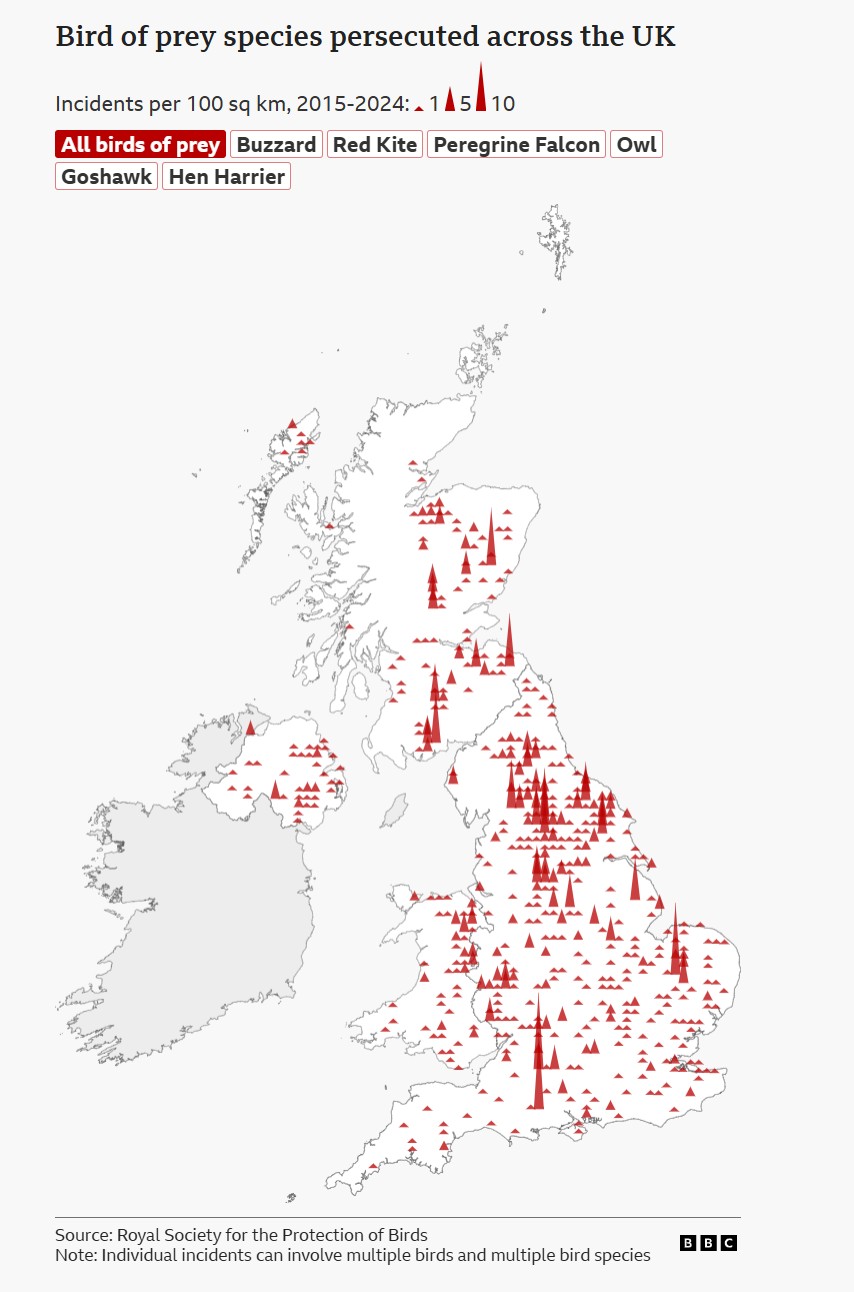
Sadly, this method of targeted killing of birds of prey is a persistent problem in the UK particularly on land managed for gamebird shooting. In a period of ten-years (2015-2024), 30 confirmed incidents of birds of prey being caught and/or dying in unlawful crow cage traps were recorded in the UK. 97% of these incidents were associated with land managed for gamebird shooting. 34 birds of prey were involved in these crimes with Buzzards, Goshawks and Sparrowhawks the most common victims associated with these crimes.

Howard Jones, RSPB Senior Investigations Officer:The casual and brutal killing of the Buzzard is extremely upsetting to watch and it’s clear that Munday has a complete disregard for the law, and the legislation that protects these birds. Frustratingly, this incident isn’t a one off but is just the latest example of the cruel and disturbing lengths some individuals will go to in order to illegally kill birds of prey.

“These crimes and the wider issue of bird of prey persecution is significantly linked to the gamebird shooting industry. Without long overdue regulation of gamebird shooting we expect to see these crimes continue.”

James Robinson, RSPB Chief Operating Officer said: “Although we welcome Defra’s recent announcement of a review of corvid traps, this latest incident underlines a far wider and deeply entrenched issue for our protected birds of prey.

“For decades, these species have been illegally killed on land managed for pheasant, partridge and grouse shooting. More than half of all 1,529 confirmed persecution incidents recorded from 2009-2023 were linked to gamebird shooting. These crimes will continue without meaningful legislative change.

“Through the introduction of a robust licensing system for all gamebird shooting across the UK, the illegal killing of birds of prey could be effectively deterred. Scotland took this welcome step in 2024 when it introduced licensing for grouse shooting. We need the Government to take action, now.

Though we welcome the guilty verdict in today’s case, we are disappointed that the sentence imposed is at the lower end of the provisions available to the court. This penalty provides little deterrent to others who may consider committing similar crimes and fails to reflect the casual and callous acts of cruelty involved.

The RSPB thanks the North Yorkshire Police, the NWCU and the Crown Prosecution Service for their vital role in investigating and prosecuting this case.

Members of the public are urged to report any suspected incidents of bird of prey persecution by contacting the police on 101 and by submitting a report to the RSPB.

This can be done via the RSPB’s online reporting form at www.rspb.org.uk/report-crimes or by calling the RSPB’s confidential Raptor Crime Hotline on 0300 999 0101. Reports via the RSPB’s reporting form and Raptor Crime Hotline can be made anonymously.

ENDS

The RSPB covert footage can be viewed here, but BE WARNED, it includes animal cruelty, suffering and death.

My commentary:

I’ll keep this brief because I’m short of time today but I’ll be returning to this particular case later in the week as there are several important points that were not covered in the RSPB’s press release.

For now, the RSPB deserves huge credit for capturing this horrific crime on camera and ultimately securing a conviction. It’s interesting that the defence did not challenge the admissibility of the RSPB’s video footage and the court accepted it without question.

More soon…

UPDATE 16 January 2026: Commentary on the conviction of gamekeeper Thomas Munday (bludgeoned Buzzard to death on Hovingham Estate, North Yorkshire) here

DEFRA publishes Animal Welfare Strategy – includes a ban on snares, trail hunting & a review on traps & gamebird rearing

Three days before Xmas, DEFRA published its Animal Welfare Strategy for England, laying out the Westminster Government’s priorities and a framework for the changes it seeks to achieve by 2030.

The policy paper is wide-ranging and covers farmed livestock, companion animals and wildlife.

Two Labour manifesto pledges are included – “We will ban trail hunting and snares“, and it’s encouraging to read, “We will also conduct a review of the use of other wildlife traps“.

The strategy document can be downloaded / read here:

The key ‘actions’, of interest to me, are as follows:

  1. We will put an end to trail hunting and consult in early 2026 on how to deliver a ban on trail hunting.
  2. We will deliver on the manifesto commitment to ban the use of snare traps in England.
  3. We will conduct a review of other traps used to catch wildlife in England for which welfare concerns have been raised and carefully consider any recommendations for further action. (E.g. Older spring traps, mole traps and live capture traps used to catch corvids).
  4. We will consider how to bring forward and introduce a close season for hares.
  5. We will review and look to strengthen penalties for cruelty against wildlife so that they are consistent with higher levels of sentencing available for animal welfare offences against pets and livestock.
  6. We will improve our understanding of the welfare issues on how gamebirds are reared in the gamebird sector through issuing a call for evidence.

Whilst a timeframe for the consultation on how to implement a ban on trail hunting has been given as ‘early 2026’ (good!), no timeline has been given on when the ban on snares will be implemented.

Given the indiscriminate level of cruelty and suffering caused by snares, this ban really needs to enacted without delay. Snares have already been banned in Wales (since October 2023) and Scotland (since November 2024).

YouGov polling commissioned by the League Against Cruel Sports last year showed 71% support for a snare ban in England (the figure rose to 80% among people living in rural areas) – see here.

Last month, in response to DEFRA’s animal welfare strategy, the independent and authoritative Wild Animal Welfare Committee (WAWC) published an excellent position paper on snares – well worth a read:

I’m especially pleased to see in the animal welfare strategy for England that a review on other wildlife traps will take place (although again, no timescale is given for this), and particularly pleased to see that it includes crow cage traps.

The use and mis-use of these traps have featured heavily on the pages of this blog over the years, especially on gamebird shooting estates. Apart from the appallingly low welfare standards they afford to both decoy and trapped birds, they are also frequently used to facilitate the illegal killing of birds of prey.

This Buzzard was caught in a crow cage trap on a grouse-shooting estate in Scotland. Instead of being released, in the dead of night ‘somebody’ arrived on a quad bike, entered the padlocked trap, appeared to strike at something on the ground, removed something from the trap, and then drove off. As the cameras continued to roll, at dawn it became apparent that the Buzzard was no longer in the trap. [Screengrab from video footage on an RSPB covert camera)

Sometimes the use of these traps for illegal persecution is targeted (i.e. by using decoys specifically to attract raptors, e.g. pigeons and doves) but it can also be non-targeted. When a raptor is caught, accidentally, inside one of these traps, by law the trap operator should release the bird, unharmed, at the earliest possible time. However, repeated evidence, usually provided by RSPB covert cameras, has shown gamekeepers taking the opportunity to kill the trapped raptor, typically by bludgeoning it to death with a big stick there and then, or in recent years, the trapped raptor has been bagged up and carried away from the location, presumably to be killed without the risk of it being filmed.

Any proposal to improve animal welfare standards is to be welcomed and I applaud the Westminster Government for acknowledging that measures are needed across the board.

There’s clearly a lot of work to do and we are fortunate to have some excellent animal welfare charities and organisations in the UK whose input will be crucial to ensure this strategy is implemented as comprehensively, robustly and quickly as possible.

Fourth White-tailed Eagle ‘disappears’ & RSPB offers £10,000 reward for information leading to a conviction

Following the appalling news over the last couple of days about the highly suspicious, and almost certainly criminal, disappearance of three satellite-tagged White-tailed Eagles here, here and here, there has, as usual, been complete silence from the land management sector, with the exception of Scottish Land & Estates, who commented that, “land managers in Moorfoots have been helping police with the search and will continue to provide whatever help they can as the investigation progresses“.

As for the other shooting organisations, who so often claim to have a zero tolerance stance against raptor persecution, there’s been no comment and no condemnation. Nix. Nada.

As a reminder, all of those organisations (except the Moorland Association, whose CEO was booted off for spreading misinformation) are members of the police-led Raptor Persecution Priority Delivery Group (RPPDG) – a so-called ‘partnership’ whose function includes ‘awareness raising‘ and ‘raising the profile [of illegal raptor persecution] via media exposure‘. Not a single word.

In contrast, the often very reserved RSPB has not only expressed its disgust, but it has put its money where its mouth is and is offering a reward of £10,000 for information leading to a conviction of those involved. This is welcome news for all of us who have not only enjoyed seeing these birds occupying their rightful place in UK skies, but also for those of us who are sick to the back teeth of the relentless killing of protected birds of prey across our countryside.

Juvenile White-tailed Eagle, photo by Pete Walkden

However, it turns out that it hasn’t just been the three White-tailed Eagles from the England re-introduction project that have disappeared in recent months. The bottom of the RSPB article, linked above, reveals some new information:

Further to the suspicious disappearance of these three White-tailed Eagles, a fourth bird, fledged from a nest in Perthshire in 2024, disappeared on a grouse moor in Nairnshire in May this year. A police search took place but neither bird nor tag were found.

This was the latest of nine tagged birds of prey, including two other White-tailed Eagles, whose tags were functioning as expected, to suddenly disappear in the northern Monadhlaith area of Inverness-shire and Nairnshire since 2018. These disappearances have occurred in an area where multiple confirmed incidents of poisoning, shooting and illegal trap use have been recorded’.

FFS.

I can’t see why it’s taken seven months for this news to emerge, but it doesn’t make it any less appalling.

As the RSPB article suggests, this area of Inverness-shire and Nairnshire is horrific for bird of prey killings and for the suspicious disappearances of tagged raptors.

This latest White-tailed Eagle to vanish is the third in the area since 2019 (e.g. see here), adding to a long history of tagged Golden Eagle disappearances here dating back 15 years (and leading to the Scottish Government commissioning its review of the fates of satellite-tagged Golden Eagles back in 2016).

Numerous other incidents have been uncovered in this same area in recent years, close to the NW boundary of the Cairngorms National Park. These have included the shooting of a Sparrowhawk on Moy Estate (for which a gamekeeper was later convicted, here), the discovery of a poisoned Red Kite in the Moy area, here, and the discovery of a shot Red Kite on Lochindorb Estate, here.

Needless to say, the vast majority of those incidents, including the disappearance of the White-tailed Eagle in May, were on grouse moors.

Perhaps the local wildlife criminals were emboldened by NatureScot’s watering-down of the new grouse shoot licence last autumn?

At least that issue appears to have been sorted by a Government amendment to close the loophole, which recently passed Stage 2 of the Natural Environment (Scotland) Bill…but I’ll write about that in another blog.

For now, we have four missing White-tailed Eagles (all vanishing from areas managed for gamebird shooting, whether that be lowland Pheasant & Partridge shooting or upland Grouse shooting), two missing Golden Eagles (also vanishing from areas managed for gamebird shooting), and I’ve lost count of the number of missing Hen Harriers, also vanishing from areas managed for gamebird shooting.

I’ll be updating the Hen Harrier Missing/Dead List over the Xmas period when I’ll have some time…there are still some more to add to the 143 Hen Harriers we already know about.

Alleged killing of Red Kites in Cairngorms National Park – trial of two gamekeepers adjourned as Sheriff recuses himself due to RSPB membership

Following on from this morning’s blog about the start of a two-day trial at Aberdeen Sheriff Court today for two gamekeepers accused of alleged offences relating to the illegal killing of Red Kites in the Cairngorms National Park earlier this year (here), it barely got going before being adjourned until next year.

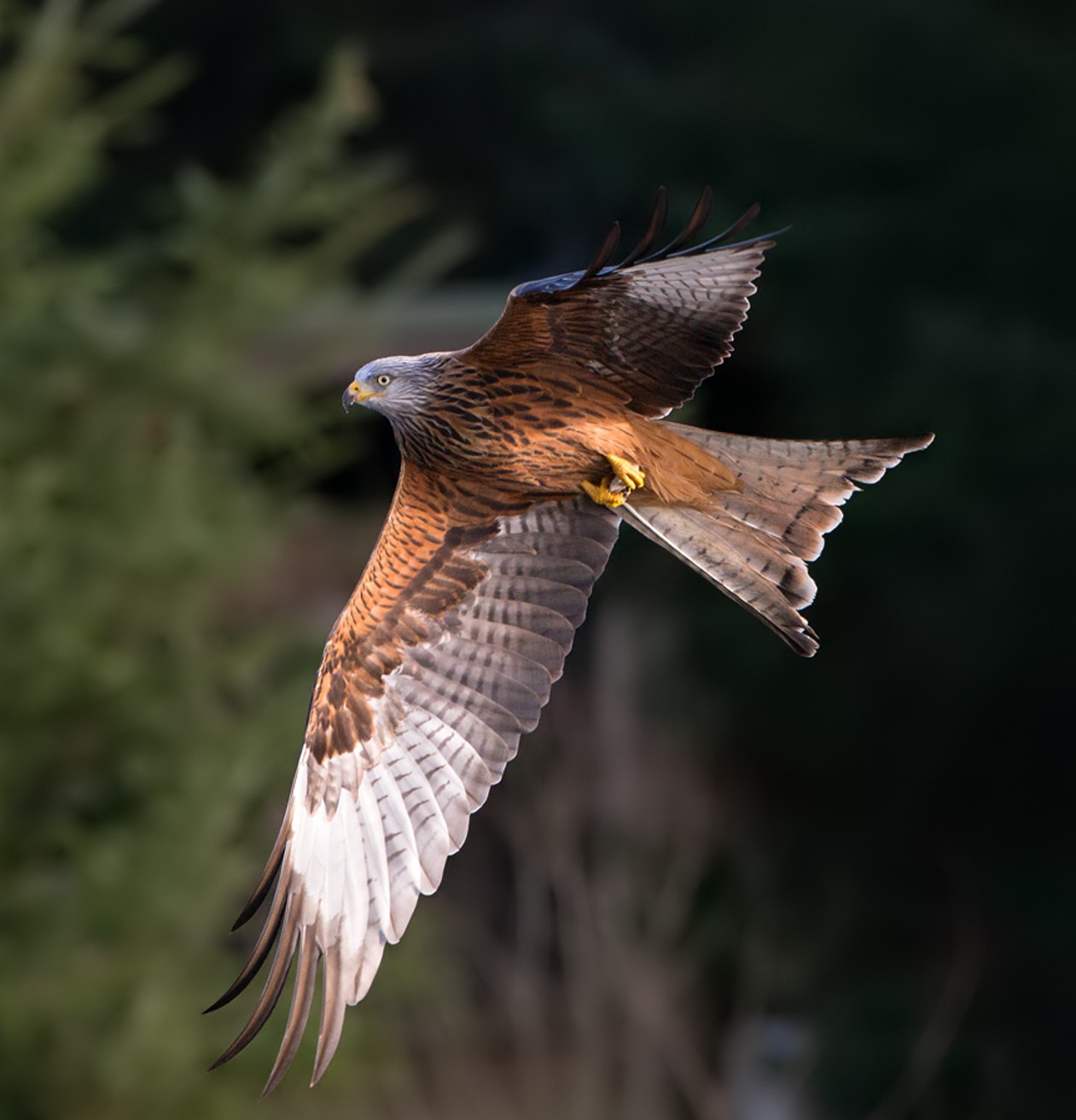
Red Kite. Photo by Pete Walkden

The Sheriff made a declaration of being a monthly subscriber to the RSPB, which resulted in the two defence KCs (King’s Counsel) lodging a motion that the Sheriff should consider recusing himself because the ‘public might perceive some bias’.

After giving the motion some consideration, the Sheriff agreed to stand down because this case involves RSPB staff members as witnesses for the prosecution.

Unfortunately, no other Sheriff was available immediately to hear the case, so it has been adjourned.

We’ve seen this before, in the trial against another Aberdeenshire gamekeeper back in 2012, where the presiding Sheriff was a member of the RSPB and the defence counsel suggested she should stand down, which she did (see here).

It’s frustrating, and a colossally inefficient use of public money, (and presumably adds extra cost for the defence – KCs don’t come cheap) but inefficiency seems to be a hallmark of the judiciary and it is what it is.

The important issue is that the case is decided on the strength of the evidence, not the perceived bias of a presiding Sheriff.

The case will return to the court in April 2026, this time listed as a four-day trial.

NB: Comments are turned off as legal proceedings are still live.

Two Scottish gamekeepers on trial today in relation to alleged killing of Red Kites in Cairngorms National Park

A trial is underway today at Aberdeen Sheriff Court where two gamekeepers are accused of alleged offences in relation to the illegal killing of Red Kites in the Cairngorms National Park earlier this year.

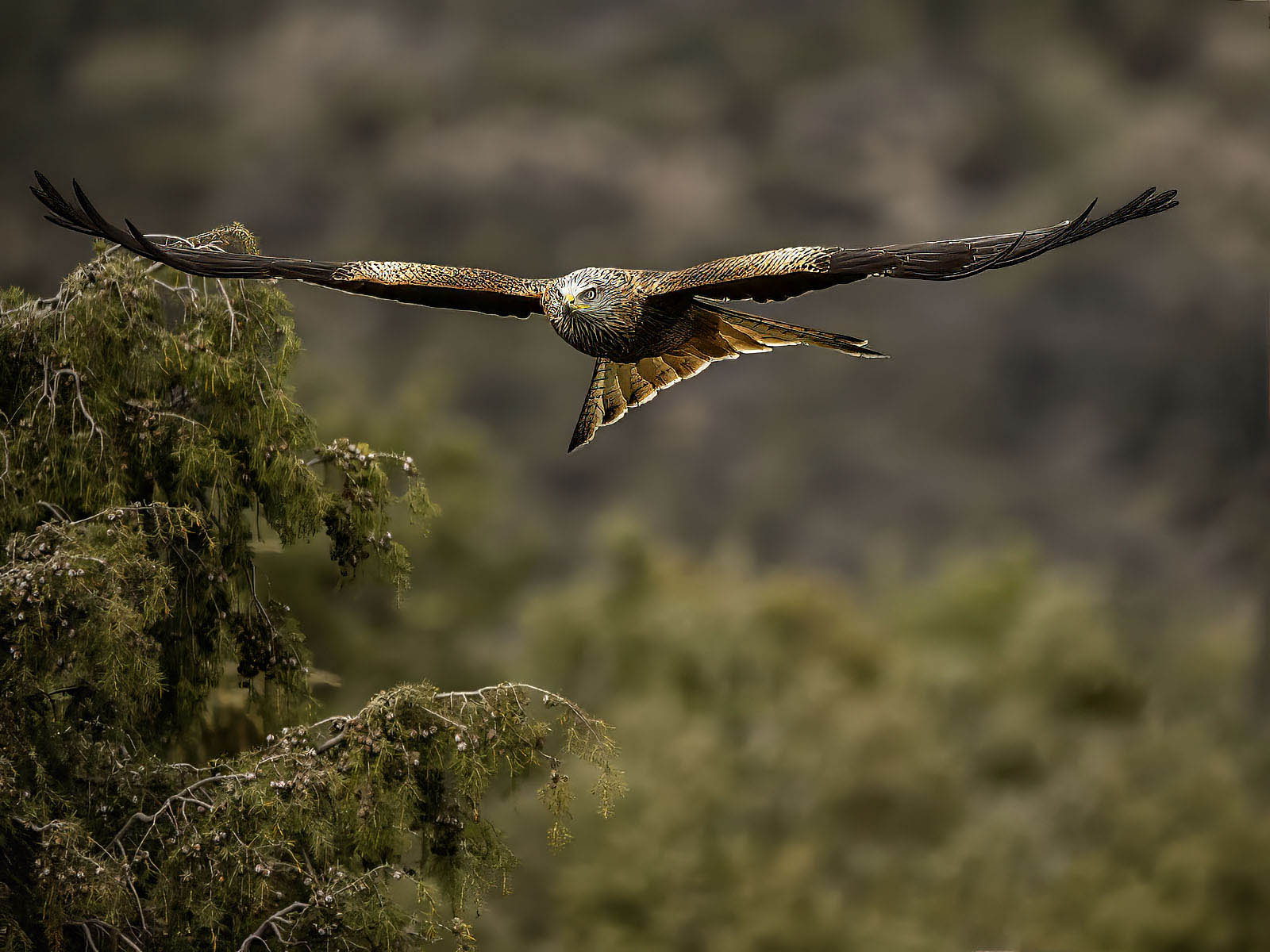
Red Kite. Photo by Ronnie Gilbert

A Head gamekeeper and an assistant gamekeeper were charged in May 2025 ‘in connection with wildlife offences following enquiries into the death of red kites in the Strathdon area of Aberdeenshire in February, 2025′ (see here).

This is believed to be related to the discovery of a shot Red Kite in the Glenbuchat area of Strathdon between 3rd and 4th February 2025 (see here).

The trial has been scheduled for two days.

NB: Comments turned off as legal proceedings are live.

UPDATE 18.20hrs: Alleged killing of Red Kites in Cairngorms National Park – trial of two gamekeepers adjourned as Sheriff recuses himself due to RSPB membership (here)

Pre-trial hearing for ex-gamekeeper accused of shotgun murder of former colleague

There was a virtual pre-trial hearing at Glasgow High Court yesterday in the case against David Campbell, the former Head Gamekeeper of Edradynate Estate in Perthshire, who is accused of murdering a former colleague, Brian Low, whilst Mr Low was walking his dog on Leafy Lane, near the Pitilie Track close to Aberfeldy in February 2024 (see here for background).

The pre-trial hearing, before Lord Cubie, heard that one of the prosecution witnesses, Michael Campbell (no relation, and believed to be the owner of Edradynate Estate) has since died, but the case continues.

Both the accused and victim were formerly employed on Edradynate Estate, Perthshire. Photo by Ruth Tingay

David Campbell, now 76, is alleged to have discharged a shotgun at 65-year-old retired groundsman Brian Low, leaving him so severely hurt he died at the scene. It is alleged that Campbell did this after disabling CCTV cameras at Tigh Na Caorann, Crieff Road, Aberfeldy, in an “attempt to conceal” his whereabouts.

Campbell faces a separate charge of attempting to defeat the ends of justice following Mr Low’s alleged murder. It is alleged between 16 February and 24 May 2024 he disposed of an Walther RM8 Rotex airgun – for which he allegedly did not have a certificate – at an unknown location.

He is further said to have got rid of the shotgun and a gun bag, also at a spot unknown to prosecutors.

Campbell is also accused of going to Crighton’s Cycles, Blairgowrie, and having two replacement tyres fitted on an electric bicycle, which prosecutors believe was used by him in the commission of the murder.

It is also alleged that Campbell disposed of a box, cartridge bag and bicycle tyres at Aberfeldy Recycling Centre.

Campbell further faces five breach of the peace allegations dating back to the mid-90s.

It is alleged some time in July 1995, he threatened a man called Alan Stewart and placed him in a state of fear and alarm.

Prosecutors further allege that on a date between 1 March and 31 May 1997, Campbell conducted himself in a disorderly manner at the Edradynate Estate, Aberfeldy and threatened to shoot worker Gregor Forrest.

Campbell has also been accused of threatening to shoot another man, Richard Wright, also at Edradynate Estate between 1 June and 31 August 1999.

It is further alleged that between 1 June and 30 September 2011, Campbell threatened to shoot a fourth man, Maksymillan Konchanski, at The Square, Aberfeldy.

And he is also accused of threatening to shoot a woman’s dog at Ardlach House, Aberfeldy, sometime between 1 June and 30 September 2012.

Campbell has previously pleaded not guilty to all charges and his defence advocate, Tony Lenehan KC, has lodged a special defence of alibi in connection with the murder charge.

Campbell remains on remand and his trial date has been set to begin on 2 February 2026 at Glasgow High Court before judge Lord Scott and is expected to last for three weeks.

PLEASE NOTE: As this case is live, comments are turned off until proceedings conclude.

[Information sourced from various news reports]

Hen Harrier ‘Susie’, whose chicks were stamped to death in 2022, has been found dead on a North Pennines grouse moor with gunshot injuries

If ever there was an example demonstrating the high level of persecution faced by Hen Harriers on UK grouse moors, the lack of consequences for the offenders, and the lack of justice for the victims, the short life of a Hen Harrier called ‘Susie’ illustrates it all.

Hen Harrier (photo by Pete Walkden)

Susie hatched in Cumbria in 2020 and was satellite-tagged by Natural England on 21 July 2020. She first bred in Bowland in 2021, and the following year she moved up to a grouse moor near Whernside in the Yorkshire Dales National Park where she produced four chicks.

The Whernside nest was being monitored (nest camera) by Natural England as part of the ludicrous Hen Harrier Brood Meddling Trial. On 20 June 2022, NE researchers noticed that Susie’s satellite tag was unexpectedly and abruptly shown tracking approximately 35km away from her nest. An adult female should be attentive and close to her nest during this period. Her sudden exit from the nest area was worrying.

The following day, Natural England field staff visited the nest and made the grim discovery of three dead Hen Harrier chicks.

Reviewing the nest camera footage, they saw that after dark, at 9.54pm on 15 June 2022, the camera showed the nest site appeared normal with Susie settled in the nest with her chicks. However, at 9.59pm a sudden irregular ‘whiteout’ of the camera occurred, blinding the camera.

The camera used was movement-activated, and it was not triggered again until the following morning when footage captured apparently dead chicks in the nest and Susie attempting to feed them.

She could be seen removing her dead chicks from the nest. Three of these were found just outside the nest, and it is not known where she deposited the fourth.

Post-mortem examinations of the three chicks were subsequently conducted and showed that each suffered with multiple fractured bones including the humerus in one chick, both femurs in the second chick, and in the third chick, the humerus and a crushed skull. The fractures were complete and showed a considerable trauma had taken place for each chick.

It’s quite clear that ‘someone’ had visited the nest, disabled the camera, and stamped the chicks to death.

Six months later (!), in December 2022, North Yorkshire Police laid out the evidence and issued an appeal for information (see here).

Representatives from the grouse shooting industry responded by trying to manipulate the narrative of this brutal and sadistic crime (see here) and of course, nobody came forward with any information that could identify the person / people responsible.

The following year, in 2023, the story featured in a three-episode podcast by The Guardian, called ‘Killing the Skydancer’ (here, here and here). Meanwhile, Susie bred successfully (unknown location) and fledged five chicks. It was to be her last breeding season.

In April 2024, Natural England published its latest update on the fate of its satellite-tagged Hen Harriers. It did so quietly, without any publicity whatsoever. Susie’s entry on that spreadsheet read,

Last known transmission 12 February 2024, Northumberland. Found dead. Site confidential. Recovered, awaiting post mortem’.

Nothing more was heard about Susie’s fate until a year later, in another spreadsheet update in April 2025. Susie’s entry now read:

Ongoing police investigation, final transmission location temporarily withheld at police request‘. 

Again, there was no publicity about Susie, or about any of the other Natural England-tagged Hen Harriers that had either ‘vanished’ or had been found dead in suspicious circumstances.

Over one and a half year’s after Susie was found dead, the details have finally emerged, and once again Natural England has slipped them out quietly, without fanfare or commentary, in its October 2025 spreadsheet update. Susie’s entry now reads:

Found dead 12 February 2024, Northumberland, Grid reference NY759585. Confirmed dead, had been victim of shooting. When found dead remains would not allow determination of whether the bird died as a result of being shot. Bird died between 25 November 2023 and 12 February 2024‘.

Susie’s corpse was found on a grouse moor in the North Pennines National Landscape (a so-called protected landscape, formerly known as the North Pennines Area of Outstanding Natural Beauty, AONB), and the grid reference places her on what I believe to be the Whitfield Estate:

Susie had been shot at some point, but where, and when, is not known.

There is no suggestion that she was shot and killed on the Whitfield Estate – she could have been shot many months earlier and survived for a while before succumbing to her injuries. Without seeing the post mortem and x-ray results (which have not been published), it’s impossible to know whether her gunshot injuries caused any broken bones that could have impeded her ability to fly any distance.

That Susie was the victim of at least two separate persecution incidents (that we know about) during her three-and-a-half-year life, illustrates the severity of threat this species still faces in the UK. This should come as no surprise to anybody who has been following this blog for any length of time, nor to those who may have read the RSPB’s damning 2025 report, Hen Harriers in the Firing Line.

These appalling crimes continue because hardly anyone is ever brought to justice. There is rarely any consequence for the offenders, which gives them the green light to carry on.

There has been a change in tactics by the raptor killers in recent years, as we saw in the RSPB’s covert footage in Oct 2024 where three individuals were caught plotting, and then apparently shooting, a Hen Harrier on a grouse moor in Grassington in the Yorkshire Dales National Park. They specifically targeted the Hen Harrier that was not carrying a ‘box’ (a satellite tag) because they thought that by doing so their crime would be undetected. A gamekeeper is standing trial in January 2026 for his alleged involvement – he denies it – it will be up to the court to decide whether he was involved or not.

That case is a very uncommon prosecution, reliant on evidence provided by the RSPB’s excellent Investigations Team.

There won’t be a prosecution for the shooting of Hen Harrier Susie because there’s no evidence (that I’m aware of) that links an identified individual to that crime. Just as there was no prosecution of the person(s) responsible for stamping her chicks to death in their nest in 2022.

We all get it – finding sufficient evidence to prosecute those responsible for committing crimes in remote landscapes is incredibly difficult, but the investigating authorities could, and should, be doing much more to publicise these offences to raise awareness and help the general public spot suspicious activity.

The police’s appeal for information about the chick-stamping crime in the Yorkshire Dales National Park came six months after the event – that’s pathetic.

I haven’t seen ANY police appeal or press release about the shooting of Susie or the discovery of her corpse in Northumberland in February 2024. Not a single word.

Where is the publicity from the National Wildlife Crime Unit-led Hen Harrier Taskforce? The specialist group set up explicitly to tackle the ongoing illegal killing of Hen Harriers. Not a single word.

Where is the publicity from the police-led Raptor Persecution Priority Delivery Group (RPPDG), one of whose functions is apparently ‘awareness raising‘ and ‘raising the profile [of illegal raptor persecution] via media exposure‘? Not a single word.

Natural England has remained tight-lipped, as it always does, claiming that it requires the go-ahead from the police to issue any media. Why? Sure, in the early stages of a police investigation keeping quiet is often necessary to avoid alerting the perpetrator who may take the opportunity to remove/hide evidence before the police turn up. But 18+ months of silence, about a crime that relates to a publicly-funded project, and then to quietly slip out the information buried deep inside a spreadsheet?

Honestly, this needn’t be so bloody difficult.

Trial of Scottish gamekeeper accused of killing Goshawk now delayed until March 2026

The trial that was due to start at Perth Sheriff Court yesterday, relating to a Scottish gamekeeper accused of killing a Goshawk, has been delayed.

The case didn’t call yesterday due to another trial over-running. The next available court date is not until March 2026.

Perth Sheriff Court (photo by Ruth Tingay)

This case relates to the alleged killing of a Goshawk on a shooting estate near Blairgowrie on 12 February 2024.

For background details, see here.

NB: As this case is live, comments are turned off until legal proceedings have ended.

UPDATE 17 March 2026: Scottish gamekeeper Russell Mason pleads guilty to battering a Goshawk to death on shooting estate in Perthshire (here)

Trial begins today for Scottish gamekeeper accused of killing a Goshawk on a Perthshire shooting estate

A trial begins today at Perth Sheriff Court for a Scottish gamekeeper accused of killing a Goshawk on a Perthshire shooting estate.

The alleged incident took place on 12 February 2024 on a shooting estate near Blairgowrie.

Goshawk with a Pheasant. Photo by Ronnie Gilbert.

Police Scotland, with the assistance of partners from the RSPB and Scottish SPCA, executed a search warrant on the estate on 29 February 2024, leading to the arrest of a 47-year-old gamekeeper and subsequent charge (see here).

He has pleaded not guilty.

NB: As this case is live, comments are turned off until legal proceedings have ended.

UPDATE 12 November 2025: Trial of Scottish gamekeeper accused of killing Goshawk now delayed until March 2026 (here)