Conviction of gamekeeper Matthew Stroud: statement from Norfolk Constabulary

Following yesterday’s news that 46-year-old gamekeeper Matthew Stroud had been convicted, amongst other things, of shooting and poisoning at least five buzzards and a goshawk on a pheasant shoot in Norfolk (see here), Norfolk Constabulary has issued a press statement which provides a bit more detail about the case.

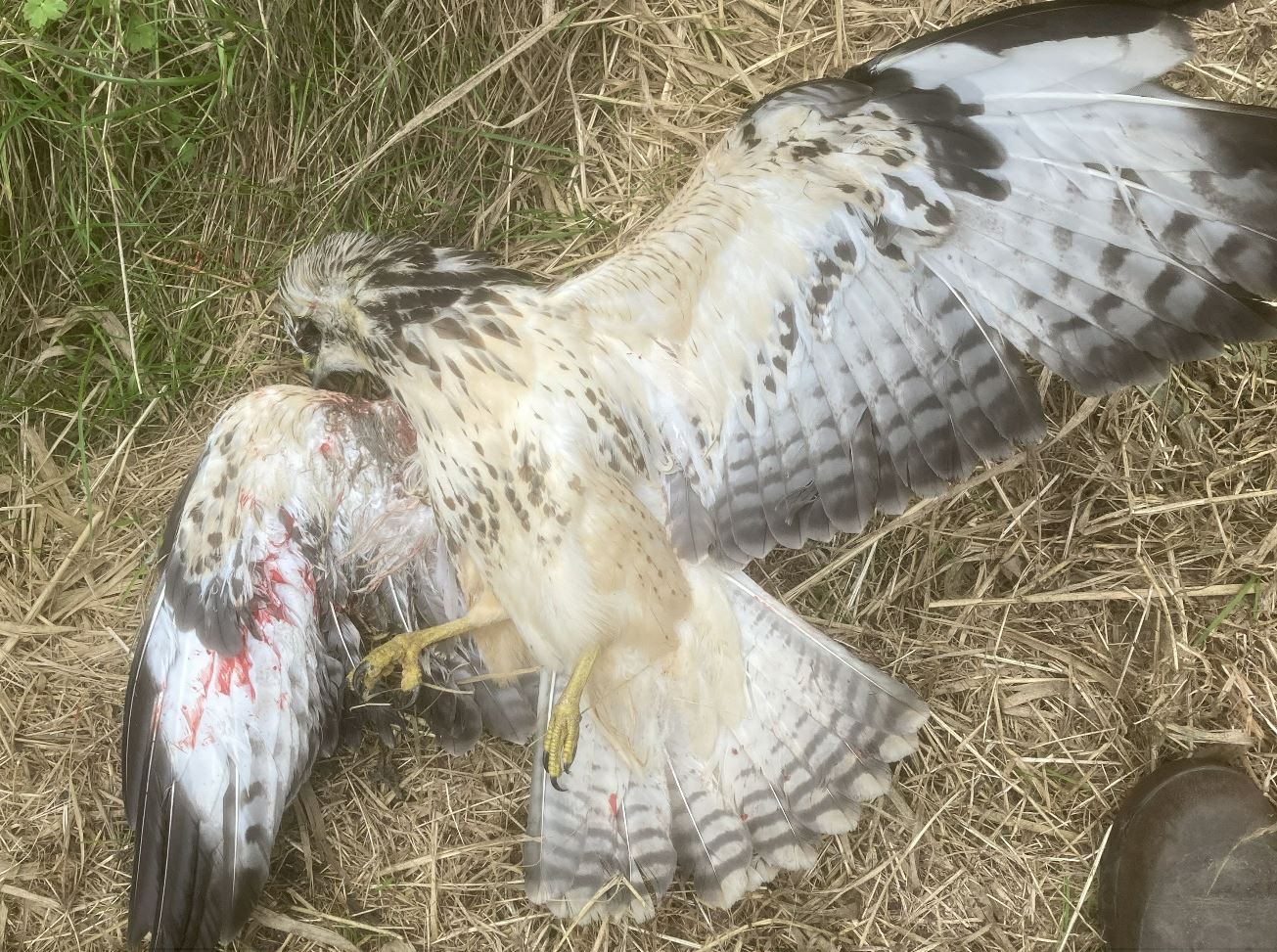
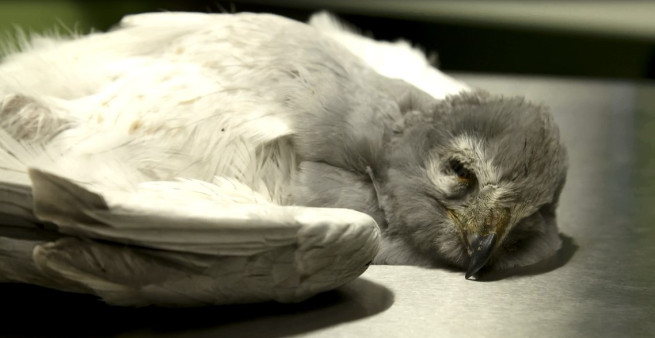
[One the buzzards that gamekeeper Matthew Stroud shot dead]

Press release from Norfolk Constabulary:

Gamekeeper admits killing birds of prey

A Weeting gamekeeper appeared in court today (Wednesday 5 October 2022) and admitted shooting and poisoning several birds of prey.

  • Three counts of using poisoned bait on or before 19 August 2021 and 14 September 2021.
  • Six counts of killing a Common Buzzard (a non-Schedule 1 wild bird) at Weeting between 10 August and 14 September 2021.
  • One count of intentionally killing a Northern Goshawk (a Schedule 1 wild bird) at Weeting on or about 10 August 2021.
  • One count of possessing a regulated substance – Strychnine Hydrochloride – without a licence on 14 September 2021.
  • One count of possessing 4 shotguns to kill a Schedule 1 wild bird on 14 September 2021.
  • One count of releasing 3,400 Common Pheasants into the wild between 1 June and 14 September 2021 contrary to the Wildlife and Countryside Act 1981.
  • One count of incorrectly storing a biocidal product – Rentokil Phostoxin – on 14 September 2021 contrary to the Health and Safety at Work Act 1974.

He received a 12-month Community Order and was ordered to do 200 hours of unpaid work, fined £692 and ordered to pay costs of £145, compensation of £288.72 and a victim surcharge of £95. The court also ordered the forfeiture and destruction of all Stroud’s firearms, mobile phones and any chemicals.

The court heard how the investigation started when RSPB officers found a young pheasant dead in Belvedere Wood, Weeting, on 19 August 2021. Tests later confirmed the pheasant had been poisoned with Strychnine Hydrochloride.

Further intelligence led Norfolk Police to execute a warrant at Stroud’s home, Belvedere Wood and Oisier Carr Wood on 14 September 2021 where the following discoveries were made:

  • Three dead buzzards were found at two release pens in Oisier Carr Wood. Tests later confirmed they had been shot.
  • Two pheasant carcasses with extremely high levels of Strychnine Hydrochloride and a poisoned Common Buzzard were found in Belvedere Wood – a Site of Special Scientific Interest because of its internationally important population of Stone Curlews
  • Two bottles of Strychnine Chloride were found in the glovebox of Stroud’s all-terrain vehicle, and a bottle of Phostoxin discovered by officers in a lean-too style shed attached to his house.

In addition, Stroud’s mobile phone contained photos of a dead Goshawk and five dead Common Buzzards. He later confessed to officers that all the photos were of birds he had killed.

PC Chris Shelley, Norfolk Constabulary’s Rural Crime Officer, said: “This investigation is one of the biggest cases of its kind that we have dealt with in Norfolk.

Stroud actions were dangerous and inhumane – he shot and poisoned birds of prey as he saw fit, and at will, because it suited him to do so. He also used a highly dangerous poison – one that has been banned in the UK for the last 15 years – indiscriminately, which could have had a disastrous effect on other local wildlife and showed a scant disregard for the safety of others.

We’re committed to working with all partners to tackle rural crime and have worked closely with colleagues from the RSPB, the National Wildlife Crime Unit and Natural England throughout this investigation. It is because of this close collaboration with them that we have been able to bring this case to court.

Tom Grose, RSPB Investigations Officer, said: “Laying poison baits out in the open is not only illegal but extremely dangerous and irresponsible. Baits like those being used present a deadly risk to any animal or person that might come across it.

It is particularly troubling that this was happening on an SPA, a designated area where wildlife and nature should have the highest legal protection.

We would like to thank Norfolk Police for leading such a thorough investigation, and to Natural England, the National Wildlife Crime Unit and Crown Prosecution Service for their support.”

Ashley Petchey of the Crown Prosecution Service said: “This was a case where Mr Stroud has, whilst in his position as a gamekeeper, killed wild birds by shooting and poisoning. He has also released non-native species into a SSSI.  

The scale of the offences in this case demonstrates the lengths people will go to in order to persecute raptors.   

The Crown take all cases of raptor persecution seriously and where the full code test is met, bring offenders to justice.”

ENDS

UPDATE 4th November 2022: RSPB Investigations Officer reflects on conviction of Norfolk raptor-killing gamekeeper Matthew Stroud (here)

Norfolk gamekeeper convicted after shooting & poisoning multiple birds of prey

Press release from the RSPB today (5th October 2022):

Gamekeeper escapes jail after killing birds of prey

*Six buzzards and a goshawk were found illegally killed on a gamebird shoot near Thetford, along with lethal poison baits.

*Gamekeeper Matthew Stroud pleads guilty to multiple offences

*The RSPB is increasingly concerned about raptor persecution linked to pheasant and partridge shoots, and the impact of large-scale gamebirds releases.

Today (5 October 2022) at Norwich Magistrates’ court, gamekeeper Matthew Stroud received a 200 hour community order and was fined £692 for offences connected with raptor persecution. Stroud was ordered to pay £145 costs, £288.72 compensation and a £95 victim surcharge.

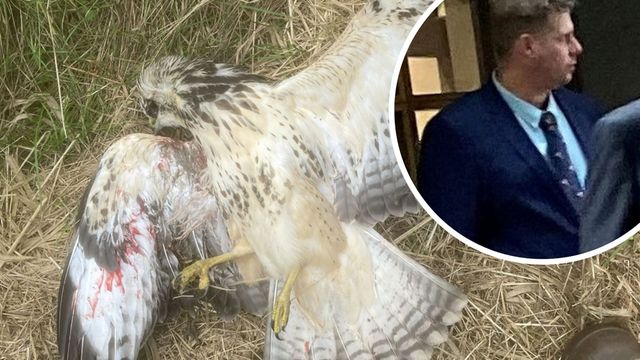
[Convicted criminal gamekeeper Matthew Stroud and one of his victims, a shot buzzard. Photos via RSPB and Eastern Daily Press]

Offences included shooting five buzzards and one goshawk, the poisoning of another buzzard, the laying of poison baits and illegal possession of poisons including strychnine.

Stroud also became the first person convicted for the unauthorised release of gamebirds on a Special Protection Area (SPA) – an internationally important site for conservation under the Habitats Regulations.

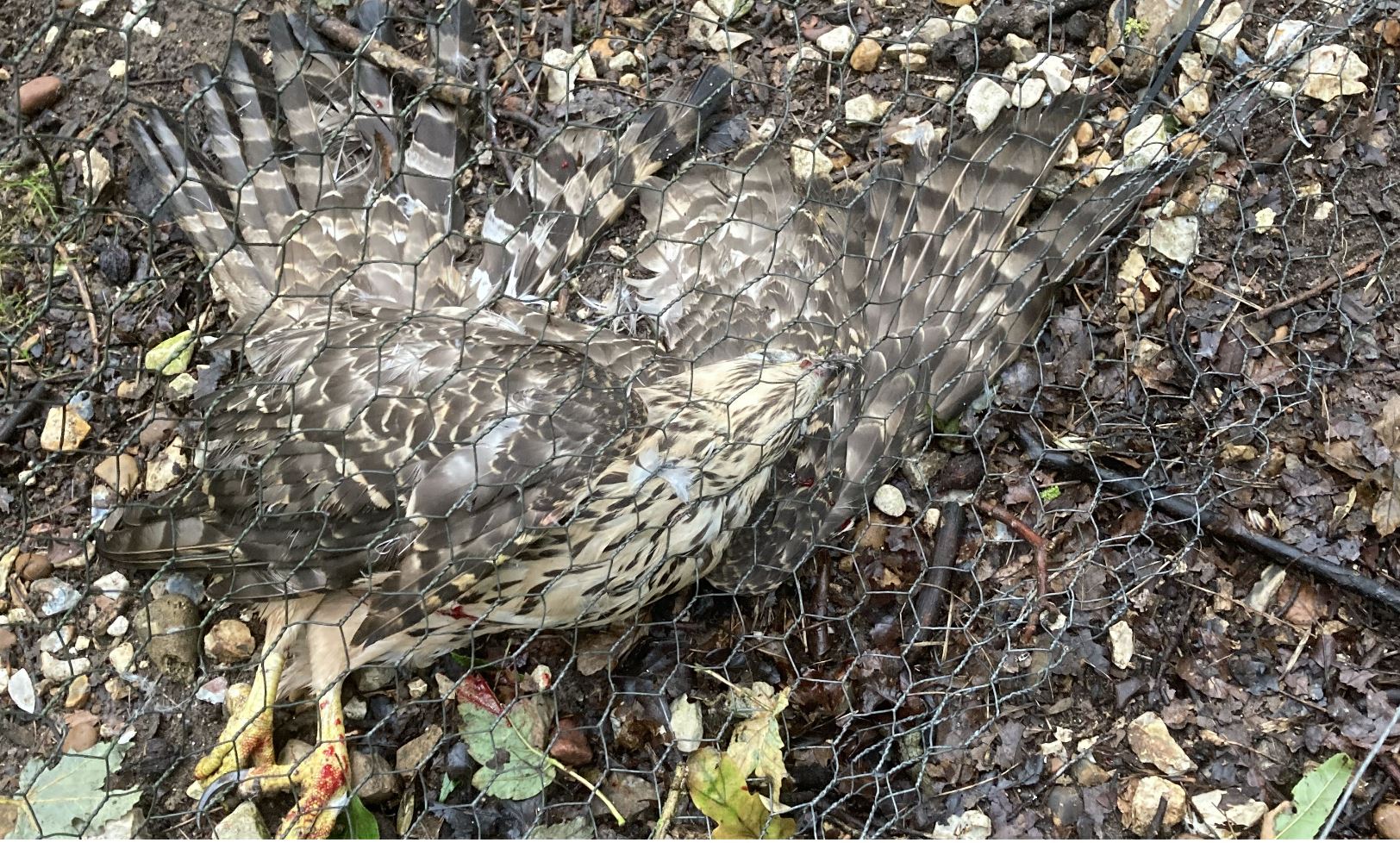
[Another of Stroud’s victims – he shot this goshawk. Photo via RSPB]

[Two containers of the banned poison strychnine found in the glovebox of Stroud’s all-terrain vehicle]

Sentencing Stroud, Magistrates said that he was lucky to escape jail today.

The court heard from the defence that Stroud was under pressure to produce game birds for the shoot after two poor years, that he had taken no pleasure in killing the buzzards and that he should have been informed that the law had changed around pheasant releases.

This is one of many incidents of raptor persecution identified on lowland pheasant and partridge shoots, which the RSPB says is an area of increasing concern. There is also evidence that large-scale releases of pheasant and partridge for shooting is having a detrimental impact on native wildlife.

The RSPB Investigations team conducted lengthy enquiries on an area of land managed by Stroud for pheasant shooting at Fengate Farm in Weeting, within the Breckland SPA. Following a number of visits, on 19 August 2021 they discovered a pheasant carcass – later found to contain the banned toxic chemical strychnine. The use of a poison bait such as a pheasant, laced with pesticides, is one of the most common methods of illegally killing birds of prey.

A subsequent search with Norfolk Police and partners uncovered further poison baits plus shot and poisoned raptors. Stroud’s phone also contained the photo of a goshawk and several buzzards which he admitted to shooting. They also found the deadly banned poison strychnine and phostoxin, a dangerous fumigant which was stored improperly.

In 2021 it became illegal to release gamebirds on or adjacent to an SPA without a licence, which Stroud had not sought, making him the first person to be prosecuted and convicted for this offence.

In 2020, Wild Justice issued proceedings in the High Court challenging the annual release of millions of non-native pheasants and red-legged partridges into the countryside and their potential impact on sites designated for nature conservation. DEFRA conceded the case and introduced General Licence 43 in an attempt to ensure that the impacts of those birds on those sites would be regulated.

Mark Thomas Head of RSPB Investigations UK, said:

It is difficult not to be disappointed with the outcome today considering the significance of the offences and combined efforts of the agencies involved. Laying poison baits out in the open is not only illegal but extremely dangerous and irresponsible. Baits like those being used at Fengate Farm present a deadly risk to any animal or person that might come across it. It is particularly troubling that this was happening on an SPA, a designated area where wildlife and nature should have the highest legal protection.

The RSPB’s most recent Birdcrime report in 2020 made clear that raptor persecution is not just an issue confined to grouse shooting estates: it is increasingly correlated with pheasant and partridge shoots.”

Mark added: “We would like to thank Norfolk Police for leading such a thorough investigation, and to Natural England, the National Wildlife Crime Unit and Crown Prosecution Service for their support”.

Guilty pleas were entered to the following charges:

· Six charges in relation to killing of six different buzzards (five by shooting and one poisoned) during August and September 2021

· One charge in relation to killing a goshawk listed under schedule 1 of the Wildlife and Countryside act 1981 in August 2021

· Three charges in relation to laying poison baits in August and September 2021

· One charges in relation to the possession of the banned pesticide, strychnine in September 2021

· A charge in relation to a firearm being an item capable of committing an offence in September 2021

· A charge in relation to the usage of the chemical phostoxin in September 2021

· One charge in relation to releasing pheasants illegally during 2022

ENDS

UPDATE 6th October 2022: Conviction of gamekeeper Matthew Stroud – statement from Norfolk Constabulary (here)

UPDATE 4th November 2022: RSPB Investigations Officer reflects on conviction of Norfolk raptor-killing gamekeeper, Matthew Stroud (here)

Scottish Land & Estates still refusing to acknowledge extent of raptor persecution on grouse moors

In the last blog post where I wrote about the nine shot birds of prey found wrapped in bags on Millden Estate and just over the estate boundary, I included a quote from Tim Baynes of Scottish Land & Estates, who had written the following in a comment piece for The Field, published in August 2022:

Raptor persecution has been the stick with which grouse moors were beaten for two decades, but the past five years have seen a sea change. In Scotland, recorded crimes have effectively ceased on grouse moors, and raptors of all species have been increasing“.

I said I’d publish his outrageous comment piece in full, so here it is:

I really shouldn’t be surprised that The Field published this nonsense – that particular shooting industry rag has a track record of publishing patently inaccurate comment pieces (e.g. see here).

And I’m definitely not surprised that the author of this latest gibberish is Tim Baynes – his lengthy track record speaks for itself (for a small selection of the masses of examples see here, here, here, here, here, here, here, here).

Needless to say, his latest claim that raptor persecution on Scottish grouse moors has “effectively ceased” is demonstrably untrue. You’ve only got to read my last blog post to understand this. If that doesn’t convince you, have a look at the General Licence restrictions currently imposed on grouse moor estates after Police Scotland found ‘clear evidence of raptor persecution’ – Leadhills Estate (here), Lochan Estate (here), Leadhills Estate [again] (here), Invercauld Estate (here), and Moy Estate (here).

And if you still need convincing, have a read of the Scottish Government’s Environment Minister’s statement in 2020 when she announced that there could be no further delay to the introduction of a grouse moor licensing scheme because:

“…despite our many attempts to address this issue, every year birds of prey continue to be killed or disappear in suspicious circumstances on or around grouse moors“.

Perhaps Tim Baynes’ perpetual denial of the bleedin’ obvious explains why he is no longer employed as ‘Director of Moorland’ at Scottish Land & Estates:

Natural England utterly compromised on tackling hen harrier persecution

Hen harrier Asta, a young, satellite-tagged bird being monitored by Natural England, met a brutal and sickening end on a grouse moor in County Durham in March 2021 (see here).

Her wings were ripped off so that her satellite tag and harness could be fitted to a crow, presumably done in an attempt to deceive the authorities that Asta was alive and well, as the satellite tag continued to transmit data as the crow flew around the countryside.

It’s not known if Asta was alive or already dead when her wings were torn off.

The crow was found dead a couple of weeks later in a lowland area of North Yorkshire and a police investigation was launched when it became apparent the tag and harness it was carrying had originally been fitted to Asta, and could only have been removed from her, intact, if her wings had been pulled off.

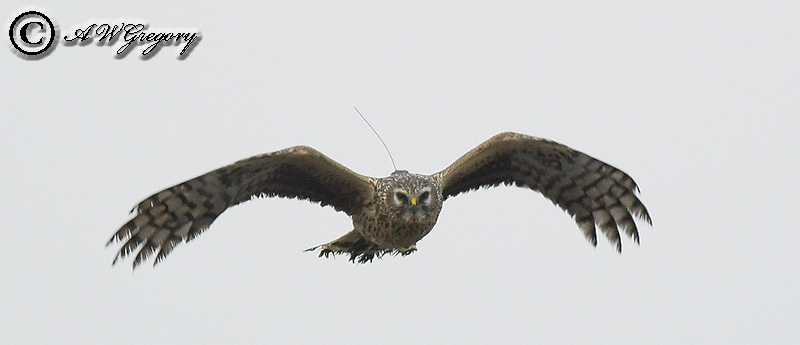
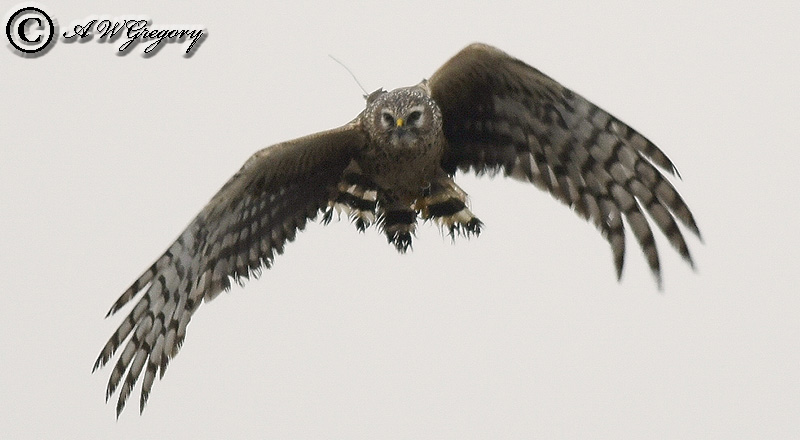
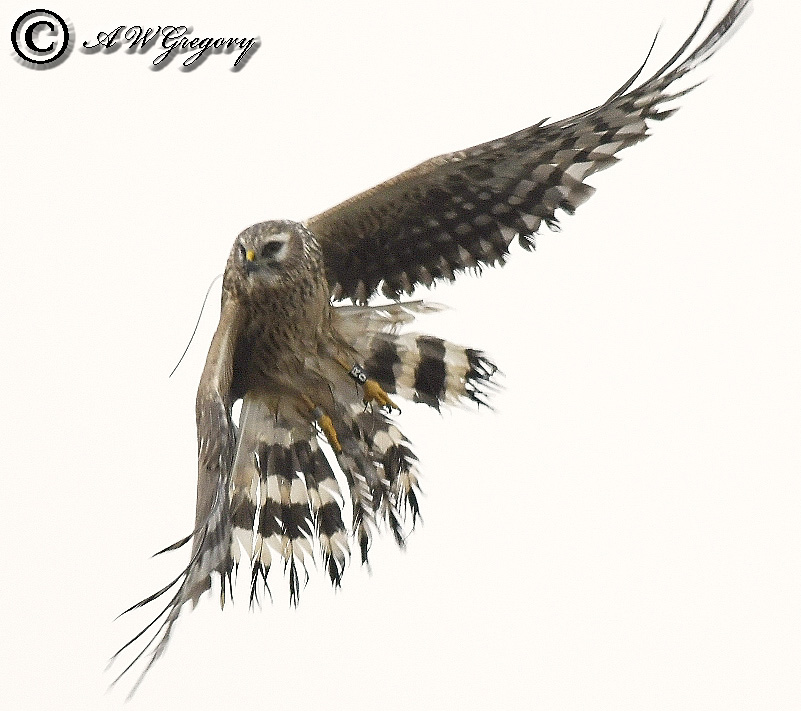
Thanks to blog reader Alan Gregory (@Barneygregorawg) who has shared these photos of Asta, as he puts it, ‘enjoying her brief life patrolling the Durham moors‘:

The level of depraved brutality involved in this crime is quite shocking, even to those of us who have become hardened to the relentless illegal killing of birds of prey in the UK. It’s virtually impossible not to look at these images of Asta and imagine the horror she faced at the hands of her killer.

The calculated deviousness of whoever committed this crime deserves the full attention of the statutory regulator, Natural England, and widespread publicity about the lengths these criminals will go to hide their ongoing, appalling violence towards this species and other birds of prey.

What we have instead is, 18 months on, Natural England still refusing to draw attention to this crime even though the police investigation has closed. Natural England has been contacted by a number of journalists this week but is refusing to comment about Asta, let alone issue a statement of condemnation, but has quite happily permitted a staff member to appear in a propaganda video put out by the Moorland Association singing the praises of the grouse-shooting industry for its fake tolerance and acceptance of the hen harrier.

And it’s not just this crime that Natural England is shying away from talking about. Since 2018, at least 72 hen harriers have either been illegally killed or have ‘disappeared’ in suspicious circumstances, most of them on or close to driven grouse moors (see here for the list). Many of these birds were tagged and monitored by Natural England. And yet I haven’t seen any statement from Natural England about this appalling figure. Instead, I’ve seen great media prominence given to the number of breeding harriers, the number of chicks fledged, the number of nests brood meddled, and statements from Natural England of ‘great progress‘ being made but no detail provided about how many privately-owned grouse moors have been involved.

Natural England is supposed to be the statutory conservation agency but it is utterly compromised by accepting financial bungs from the shooting industry with a contract clause preventing criticism from Natural England (see here).

It can’t expect to be taken seriously when it continues to avoid talking about the ongoing and illegal killing of this species on driven grouse moors.

72 hen harriers confirmed ‘missing’ or illegally killed since 2018, most of them on or close to UK grouse moors

For anyone who still wants to pretend that the grouse shooting industry isn’t responsible for the systematic extermination of hen harriers on grouse moors across the UK, here’s the latest catalogue of crime that suggests otherwise.

[This male hen harrier died in 2019 after his leg was almost severed in an illegally set trap that had been placed next to his nest on a Scottish grouse moor (see here). Photo by Ruth Tingay]

This is the blog I now publish after every reported killing or suspicious disappearance.

They disappear in the same way political dissidents in authoritarian dictatorships have disappeared” (Stephen Barlow, 22 January 2021).

Today the list has been updated to include the two most recently reported victims, two young satellite-tagged hen harriers that ‘disappeared’ earlier this year, one in Cumbria on 12th April 2022 and one in the North Pennines in May 2022 and are both the subject of a police investigation (see here).

I’ve been compiling this list only since 2018 because that is the year that the grouse shooting industry ‘leaders’ would have us believe that the criminal persecution of hen harriers had stopped and that these birds were being welcomed back on to the UK’s grouse moors (see here).

This assertion was made shortly before the publication of a devastating new scientific paper that demonstrated that 72% of satellite-tagged hen harriers were confirmed or considered likely to have been illegally killed, and this was ten times more likely to occur over areas of land managed for grouse shooting relative to other land uses (see here).

2018 was also the year that Natural England issued a licence to begin a hen harrier brood meddling trial on grouse moors in northern England. For new blog readers, hen harrier brood meddling is a conservation sham sanctioned by DEFRA as part of its ludicrous ‘Hen Harrier Action Plan‘ and carried out by Natural England (NE), in cahoots with the very industry responsible for the species’ catastrophic decline in England. For more background see here.

Brood meddling has been described as a sort of ‘gentleman’s agreement’ by commentator Stephen Welch:

I don’t get it, I thought the idea of that scheme was some kind of trade off – a gentleman’s agreement that the birds would be left in peace if they were moved from grouse moors at a certain density. It seems that one party is not keeping their side of the bargain“.

With at least 72 hen harriers gone since 2018, I think it’s fair to say that the grouse shooting industry is simply taking the piss. Meanwhile, Natural England pretends that ‘partnership working’ is the way to go and DEFRA Ministers remain silent.

‘Partnership working’ according to Natural England appears to include authorising the removal of hen harrier chicks from a grouse moor already under investigation by the police for suspected raptor persecution (here) and accepting a £75k bung from representatives of the grouse shooting industry that prevents Natural England from criticising them or the sham brood meddling trial (see here). This is in addition to a £10k bung that Natural England accepted, under the same terms, in 2021 (here).

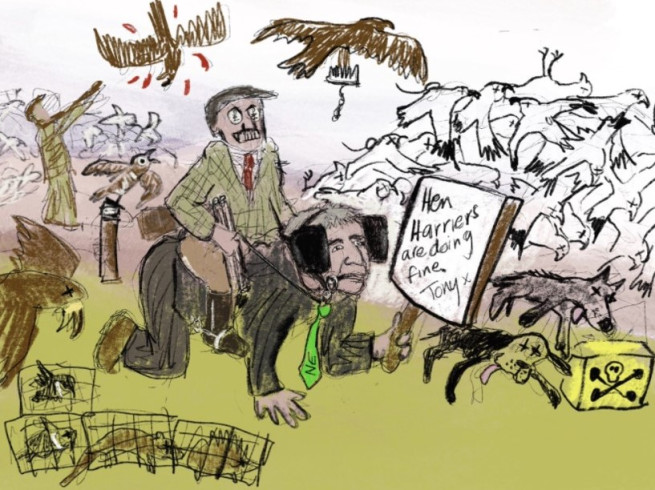
[Cartoon by Gill Lewis]

So here’s the latest gruesome list. Note that the majority of these birds (but not all) were fitted with satellite tags. How many more [untagged] harriers have been killed?

February 2018: Hen harrier Saorsa ‘disappeared’ in the Angus Glens in Scotland (here). The Scottish Gamekeepers Association later published wholly inaccurate information claiming the bird had been re-sighted. The RSPB dismissed this as “completely false” (here).

5 February 2018: Hen harrier Marc ‘disappeared’ on a grouse moor in Durham (here)

9 February 2018: Hen harrier Aalin ‘disappeared’ on a grouse moor in Wales (here)

March 2018: Hen harrier Blue ‘disappeared’ in the Lake District National Park (here)

March 2018: Hen harrier Finn ‘disappeared’ near Moffat in Scotland (here)

18 April 2018: Hen harrier Lia ‘disappeared’ in Wales and her corpse was retrieved in a field in May 2018. Cause of death was unconfirmed but police treating death as suspicious (here)

8 August 2018: Hen harrier Hilma ‘disappeared’ on a grouse moor in Northumberland (here).

16 August 2018: Hen harrier Athena ‘disappeared’ on a grouse moor in Scotland (here)

26 August 2018: Hen Harrier Octavia ‘disappeared’ on a grouse moor in the Peak District National Park (here)

29 August 2018: Hen harrier Margot ‘disappeared’ on a grouse moor in Scotland (here)

29 August 2018: Hen Harrier Heulwen ‘disappeared’ on a grouse moor in Wales (here)

3 September 2018: Hen harrier Stelmaria ‘disappeared’ on a grouse moor in Scotland (here)

24 September 2018: Hen harrier Heather ‘disappeared’ on a grouse moor in Scotland (here)

2 October 2018: Hen harrier Mabel ‘disappeared’ on a grouse moor on the edge of the Yorkshire Dales National Park (here)

3 October 2018: Hen Harrier Thor ‘disappeared’ next to a grouse moor in Bowland, Lanacashire (here)

23 October 2018: Hen harrier Tom ‘disappeared’ in South Wales (here)

26 October 2018: Hen harrier Arthur ‘disappeared’ on a grouse moor in the North York Moors National Park (here)

1 November 2018: Hen harrier Barney ‘disappeared’ on Bodmin Moor (here)

10 November 2018: Hen harrier Rannoch ‘disappeared’ on a grouse moor in Scotland (here). Her corpse was found nearby in May 2019 – she’d been killed in an illegally-set spring trap (here).

14 November 2018: Hen harrier River ‘disappeared’ on a grouse moor in the Nidderdale AONB (here). Her corpse was found nearby in April 2019 – she’d been illegally shot (here).

16 January 2019: Hen harrier Vulcan ‘disappeared’ in Wiltshire close to Natural England’s proposed reintroduction site (here)

7 February 2019: Hen harrier Skylar ‘disappeared’ next to a grouse moor in South Lanarkshire (here)

22 April 2019: Hen harrier Marci ‘disappeared’ on a grouse moor in the Cairngorms National Park (here)

26 April 2019: Hen harrier Rain ‘disappeared’ on a grouse moor in Nairnshire (here)

11 May 2019: An untagged male hen harrier was caught in an illegally-set trap next to his nest on a grouse moor in South Lanarkshire. He didn’t survive (here)

7 June 2019: An untagged hen harrier was found dead on a grouse moor in Scotland. A post mortem stated the bird had died as a result of ‘penetrating trauma’ injuries and that this bird had previously been shot (here)

5 September 2019: Wildland Hen Harrier 1 ‘disappeared’ on a grouse moor nr Dalnaspidal on the edge of the Cairngorms National Park (here)

11 September 2019: Hen harrier Romario ‘disappeared’ on a grouse moor in the Cairngorms National Park (here)

14 September 2019: Hen harrier (Brood meddled in 2019, #183704) ‘disappeared’ in the North Pennines (here)

23 September 2019: Hen harrier (Brood meddled in 2019, #55149) ‘disappeared’ in North Pennines (here)

24 September 2019: Wildland Hen Harrier 2 ‘disappeared’ on a grouse moor at Invercauld in the Cairngorms National Park (here)

24 September 2019: Hen harrier Bronwyn ‘disappeared’ near a grouse moor in North Wales (here)

10 October 2019: Hen harrier Ada ‘disappeared’ on a grouse moor in the North Pennines AONB (here)

12 October 2019: Hen harrier Thistle ‘disappeared’ on a grouse moor in Sutherland (here)

18 October 2019: Member of the public reports the witnessed shooting of an untagged male hen harrier on White Syke Hill in North Yorkshire (here)

November 2019: Hen harrier Mary found illegally poisoned on a pheasant shoot in Ireland (here)

14 December 2019: Hen harrier Oscar ‘disappeared’ in Eskdalemuir, south Scotland (here)

January 2020: Members of the public report the witnessed shooting of a male hen harrier on Threshfield Moor in the Yorkshire Dales National Park (here)

23 March 2020: Hen harrier Rosie ‘disappeared’ at an undisclosed roost site in Northumberland (here)

1 April 2020: Hen harrier (Brood meddled in 2019, #183703) ‘disappeared’ in unnamed location, tag intermittent (here)

5 April 2020: Hen harrier Hoolie ‘disappeared’ on a grouse moor in the Cairngorms National Park (here)

8 April 2020: Hen harrier Marlin ‘disappeared’ on a grouse moor in the Cairngorms National Park (here)

19 May 2020: Hen harrier Fingal ‘disappeared’ on a grouse moor in the Lowther Hills, Scotland (here)

21 May 2020: Hen harrier (Brood meddled in 2019, #183701) ‘disappeared’ on a grouse moor in Cumbria shortly after returning from wintering in France (here)

27 May 2020: Hen harrier Silver ‘disappeared’ on a grouse moor on Leadhills Estate, Scotland (here)

2020: day/month unknown: Unnamed male hen harrier breeding on RSPB Geltsdale Reserve, Cumbria ‘disappeared’ while away hunting (here)

9 July 2020: Unnamed female hen harrier (#201118) ‘disappeared’ from an undisclosed site in Northumberland (here).

25 July 2020: Hen harrier Harriet ‘disappeared’ on a grouse moor in the Yorkshire Dales National Park (here)

14 August 2020: Hen harrier Solo ‘disappeared’ in confidential nest area in Lancashire (here)

7 September 2020: Hen harrier Dryad ‘disappeared’ on a grouse moor in the Yorkshire Dales National Park (here)

16 September 2020: Hen harrier Fortune ‘disappeared’ from an undisclosed roost site in Northumberland (here)

19 September 2020: Hen harrier Harold ‘disappeared’ on a grouse moor in the Yorkshire Dales National Park (here)

20 September 2020: Hen harrier (Brood meddled in 2020, #55152) ‘disappeared’ next to a grouse moor in North Yorkshire (here)

24 February 2021: Hen harrier Tarras ‘disappeared’ next to a grouse moor in Northumberland (here)

12th April 2021: Hen harrier Yarrow ‘disappeared’ near Stockton, County Durham (here)

18 May 2021: Adult male hen harrier ‘disappeared’ from its breeding attempt on RSPB Geltsdale Reserve, Cumbria whilst away hunting (here)

18 May 2021: Another adult male hen harrier ‘disappeared’ from its breeding attempt on RSPB Geltsdale Reserve, Cumbria whilst away hunting (here)

24 July 2021: Hen harrier Asta ‘disappeared’ at a ‘confidential site’ in the North Pennines (here). We learned 18 months later that her wings had been ripped off so her tag could be fitted to a crow in an attempt to cover up her death (here).

14th August 2021: Hen harrier Josephine ‘disappeared’ at a ‘confidential site’ in Northumberland (here)

17 September 2021: Hen harrier Reiver ‘disappeared’ in a grouse moor dominated region of Northumberland (here)

24 September 2021: Hen harrier (Brood meddled in 2021, R2-F-1-21) ‘disappeared’ in Northumberland (here)

15 November 2021: Hen harrier (brood meddled in 2020, #R2-F1-20) ‘disappeared’ at the edge of a grouse moor on Arkengarthdale Estate in the Yorkshire Dales National Park (here)

19 November 2021: Hen harrier Val ‘disappeared’ in the Lake District National Park in Cumbria (here)

19 November 2021: Hen harrier Percy ‘disappeared’ in Lothian, Scotland (here)

12 December 2021: Hen harrier Jasmine ‘disappeared’ on a grouse moor (High Rigg Moor on the Middlesmoor Estate) in the Nidderdale AONB in North Yorkshire (here)

9 January 2022: Hen harrier Ethel ‘disappeared’ in Northumberland (here)

26 January 2022: Hen harrier Amelia ‘disappeared’ in Bowland (here)

10 February 2022: An unnamed satellite-tagged hen harrier ‘disappeared’ in a grouse moor dominated area of the Peak District National Park (here)

12 April 2022: Hen harrier ‘Free’ (Tag ID 201121) ‘disappeared’ at a ‘confidential site’ in Cumbria (here).

May 2022: A male breeding hen harrier ‘disappeared’ from a National Trust-owned grouse moor in the Peak District National Park (here).

May 2022: Another breeding male hen harrier ‘disappeared’ from a National Trust-owned grouse moor in the Peak District National Park (here)

14 May 2022: Hen harrier ‘Harvey’ (Tag ID 213844) ‘disappeared’ from a ‘confidential site’ in the North Pennines (here).

To be continued……..

Not one of these 72 incidents has resulted in an arrest, let alone a prosecution. I had thought that when we reached 30 dead/missing hen harriers then the authorities might pretend to be interested and at least say a few words about this national scandal. We’ve now reached SEVENTY TWO hen harriers, and still Govt ministers remain silent. They appear not to give a monkey’s. And yes, there are other things going on in the world, as always. That is not reason enough to ignore this blatant, brazen and systematic destruction of a supposedly protected species, being undertaken to satisfy the greed and bloodlust of a minority of society.

Please consider sending a copy of this list of dead/missing hen harriers to your elected representative. Ask them for their opinion, tell them your opinion, and demand action (politely please). We know where these crimes are happening and we know why they’re happening. The Government’s own data, published three years ago, have provided very clear evidence (see here). MPs need to know how many of us care about this issue and how we will not be fobbed off by disingenuous platitudes from DEFRA Ministers (e.g. see hereherehere and here for repeated recent examples of this).

Not sure who is your MP? Click here to find out.

Don’t be put off by thinking, ‘Well my MP is a grouse shooter, he/she won’t bother responding so why should I bother?’. Do not give these politicians an easy option out. As your elected representative they have a duty to listen to, and respond to, constituents’ concerns, whether they agree with them or not.

If you use social media, please share this post.

If you fancy scribbling a few sentences to your local newspaper or even a national one, please do.

Please talk to friends, family and colleagues about these 72 birds. They will be horrified about what’s being allowed to go on.

We MUST increase public awareness. It’s up to all of us.

Natural England accepts £75k bung for hen harriers from game-shooting organisation BASC

Earlier this year, Natural England, the so-called statutory regulator for conservation, and BASC, the British Association for Shooting (& Conservation) were boasting about a £75k donation made by BASC to Natural England to help finance ongoing hen harrier work.

I was interested in this arrangement, given that BASC is an organisation at the forefront of the game-shooting industry; an industry that has been responsible for the systematic persecution of the hen harrier for many, many years.

So I submitted an FoI to Natural England find out more.

Remember, last year BASC gave Natural England a £10k bung for hen harriers, on condition that Natural England didn’t say anything bad about BASC (see here).

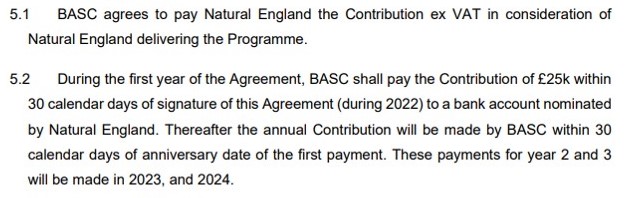
Well, it seems this cosy arrangement is continuing, only this time with a bigger bung and the same condition that requires Natural England to refrain from saying anything bad about BASC:

You can read the full Memorandum of Agreement (MOA) here, as released to me via my FoI request:

It’s apparent from this document that the latest MOA was eventually signed in January 2022. However, other material released in response to my FoI request reveals that Natural England and BASC were discussing this MOA as far back as 27th May 2021 – just a few weeks after the disappearance of hen harrier Asta from a grouse moor in County Durham, whose wings had been ‘removed’ so that her satellite tag could be affixed to a carrion crow in an attempt to deceive Natural England that the tag was still functioning and thus hen harrier Asta was alive and well (see here).

Who, in their right mind, would sign up to a ‘partnership’ with a game-shooting organisation knowing what unspeakable atrocity had just been inflicted on hen harrier Asta? The latest in a long, long line of atrocities inflicted on our beleaguered hen harriers by members of this industry.

My view is that the £75k bung goes some way to explain Natural England’s reluctance to publicise this latest crime.

[Cartoon by Gill Lewis]

Hen harrier’s ‘wings removed’ & its satellite tag fitted to a crow in sick ploy to disguise the crime

In December 2021 I blogged about a disturbing incident I’d heard about concerning a young satellite-tagged hen harrier whose wings had been ripped off – whether that was done when she was still alive or after she’d been killed was not known (see here).

I understood the incident had happened approximately nine months earlier, in Spring 2021, and I asked Natural England to clarify. Natural England refused to comment in December 2021 (see here) and in March 2022 it issued a statement saying it was remaining silent on police orders as the investigation was ongoing (see here).

I had intended to blog further about this case before now, but it’s been complicated for a number of reasons that I can’t divulge and besides, I didn’t want to compromise the ongoing police investigation by revealing too much detail that might provide a defendant with an opportunity to escape justice.

I’ve now been advised that the police investigation has been closed and nobody is being prosecuted due to there being insufficient evidence to charge anyone, so here is the full, sickening story.

Hen harrier ‘Asta’ hatched at a nest site in Northumberland in 2020. By the end of her first winter, she had settled in County Durham for several months and had a defined home range on moorland just south of the A66. Incidentally, an area dominated by moorland managed for driven grouse shooting where a young brood meddled hen harrier ‘vanished’ without trace in 2019 (here) and where a Marsh harrier was found with gunshot injuries in 2011 (here).

In late March 2021 Asta’s satellite tag signal temporarily went offline before reappearing in early April. However, when it came back online the signal was coming from 29km to the south east in the lowlands, near to Arrathorne in Richmondshire. Prior to this move, Asta’s tag had rarely dropped below 400m but was now showing an altitude of approx 103m.

This odd behaviour and the erratic tag data raised the suspicions of the Natural England employee who was monitoring the tag data and a search was launched to find out what was going on.

Eventually the tag was found later in April 2021 but it was no longer attached to hen harrier Asta – it had been fitted to a carrion crow (which was dead when the fieldworkers found it).

I use the word ‘fitted’ deliberately. The police were brought in and they asked two expert, highly experienced satellite-tag practitioners (including one from Natural England) to examine the tag and its harness while it was still attached to the crow. They both concluded that the harness had been deliberately ‘fitted‘ to the crow; in other words, it wasn’t a case of the crow having become entangled in a discarded tag harness, it was “only human intervention that could have fitted it in the manner it was securely attached” [to the crow], according to the police officer I’ve been talking to.

But here’s the bit that makes my blood run cold. The two experts also concluded that the harness “could not have been removed from the harrier unless the wings had been removed, and the condition of the harness did not suggest that it had become damaged and been able to just fall off the hen harrier. The hen harrier could not remove the harness/tag itself“.

Obviously, without sufficient evidence to prosecute anyone we’ll never know the full grisly details of what happened to Asta, but we can make an educated guess.

She vanished from a known raptor persecution hotspot, in an area managed for driven grouse shooting – an industry with an acknowledged filthy history of persecuting birds of prey, and particularly hen harriers, as demonstrated by decades of prosecutions, convictions and endless scientific evidence (e.g. here).

We also know the lengths the raptor killers will go to disguise their barbaric crimes, from removing a satellite tag, wrapping it in lead sheeting (to block the signal) and dumping it in a river (here), to dumping a tag 15 miles offshore in the North Sea (here).

It is not implausible to surmise then that Asta was illegally killed and her tag fitted to a crow in the hope that the person monitoring the tag data would assume that nothing was amiss as the tag continued to transmit as the crow flew about the countryside.

This wouldn’t be the first time this has happened. I’m told a similar case apparently took place in Scotland several years ago when hen harriers were first being satellite-tagged by Roy Dennis.

Asta has not been found and let’s face it, she’s unlikely to be. Her mutilated, wingless corpse has probably been stamped into a peat bog or thrown into an incinerator, perhaps after ‘trophy‘ photographs had been taken.

I’ve been asked by the police not to divulge certain aspects of the investigation (so as not to compromise future investigations) and I’ll respect that request. I think it’s fair to say the investigation was rigorous, based on the information provided.

However, what I won’t respect is the police’s complete silence about this case. It’s been almost 18 months since it happened and there hasn’t been a peep. No statement, no public appeal for information, nothing. I don’t accept that issuing a statement or appeal, no matter how generalised, would have compromised the investigation.

I also won’t respect Natural England’s decision to remain silent. Natural England is supposed to be the regulator and is using public funds to pay for these satellite tags and staff time to monitor the data. It could easily have made a statement about this case, which is very much in the public interest, without compromising the police investigation.

In my view, saying nothing by hiding behind the excuse of a live police investigation is simply a convenient cover for Natural England not to have to admit that its hen harrier brood meddling trial is a conservation sham because hen harriers are still being brutalised by the industry with which NE has jumped in to bed (at least 70 hen harriers killed or ‘missing’ in suspicious circumstances just since 2018, most of them on driven grouse moors). Meanwhile, Natural England is happy to put its name to ludicrous propaganda being pumped out by the very industry responsible for bringing the hen harrier population to its knees.

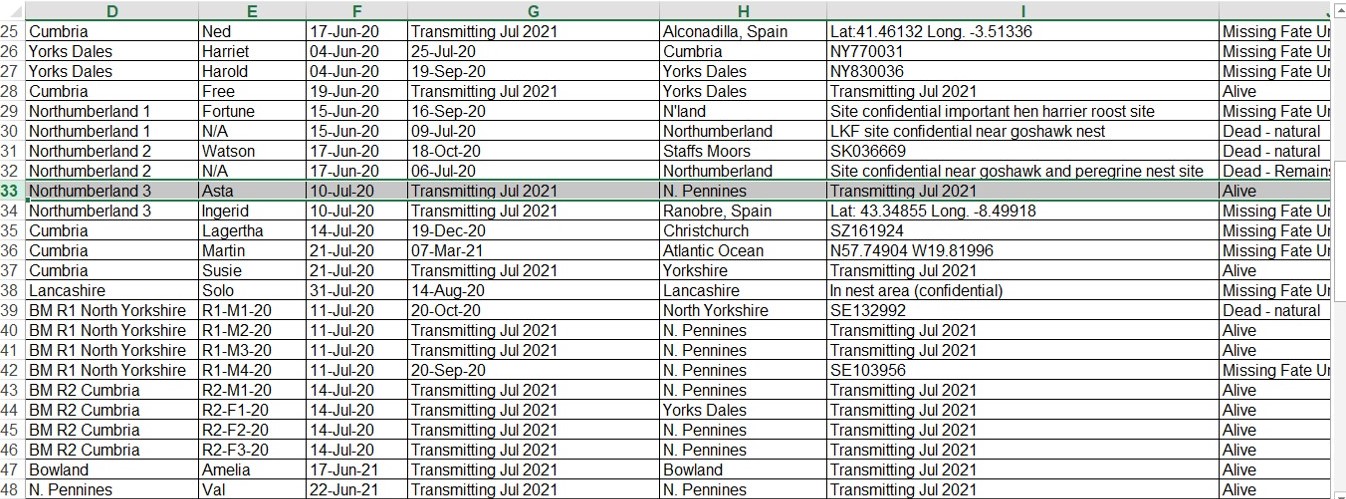
I also noticed that in its summer 2021 update on its satellite-tagged hen harriers, Natural England stated that Asta’s tag was still transmitting in July 2021 and her status was listed as ‘alive’, when actually she was dead three months earlier:

What else is Natural England lying about?

What else is Natural England covering up?

And why on earth does it take a blogger to bring this horrific crime, a so-called national wildlife crime priority, to the public’s attention?

UPDATE 25th August 2022: Natural England accepts £75k bung for hen harriers from game-shooting organisation BASC (here)

UPDATE 4th September 2022: Natural England utterly compromised on tackling hen harrier persecution (here)

BBC programme ‘Caught Red Handed’ features conviction of buzzard-killing gamekeeper John Orrey

A BBC programme called ‘Caught Red Handed‘ has featured the conviction of buzzard-killing gamekeeper John Orrey and the role of the RSPB Investigations team in bringing him to justice.

Caught Red Handed‘ is a daytime TV programme, hosted by Dom Littlewood, that ‘looks at clever ways that the police and the public are catching crooks red handed‘. Currently being broadcast at 10am every weekday, this is bound to have brought the spectre of illegal raptor persecution to a much wider audience.

Orrey, you may recall, was convicted in January this year after covert footage provided by the RSPB caught him battering buzzards to death after he’d caught them in an illegally-set trap on a pheasant shoot at Hall Farm, Kneeton, Nottinghamshire (see here).

In the programme, previously-unseen footage of the police raid is shown:

There is an extensive interview with RSPB Investigator Tom Grose, who provides a behind-the-scenes explanation of the investigation. His poise and professionalism is exemplary.

This episode of Caught Red Handed is available on iPlayer for 29 days (here) and the feature lasts for about ten minutes, starting at 7.21 mins.

Perspective required as National Trust celebrates two successful hen harrier nests in Peak District National Park

The National Trust is celebrating two successful hen harrier breeding attempts in the Peak District National Park this year, in what it describes as ‘the most successful year for hen harrier breeding in the Peak District for over a decade‘.

Here is a press release issued by the National Trust this morning:

National Trust records most successful year for hen harrier breeding in the Peak District for over a decade

Seven hen harriers have successfully fledged from multiple nests on National Trust land in the High Peak, making 2022 the most successful year for hen harrier breeding on land cared for by the conservation charity in the Peak District for over a decade, despite two nest failures earlier this year.

[Hen harrier chicks, photo by Tim Melling]

The National Trust, RSPB and Peak District Raptor Group have been working closely together to encourage more birds of prey to live and thrive in the Peak District, by protecting birds currently living there, whilst also creating rich feeding and nesting grounds.

Work undertaken by the Trust includes cutting heather to allow a more diverse range of moorland plants such as sphagnum moss, bilberry and cottongrass to grow, which helps attract the different insects and small mammals which the birds rely upon for food. The charity is also working closely with tenants to ensure their land management practices support the vision for more birds of prey in the area.

Craig Best, General Manager of the National Trust in the Peak District said:A great deal of work has gone into encouraging more breeding pairs of these majestic birds to the Peak District, so this is brilliant news.

The presence of the birds indicates a plentiful and healthy food source, which shows the work we have done so far to improve the landscape is starting to provide ideal conditions for different species to thrive. However, we want to see more of these important birds of prey in the High Peak, as they play an important role in creating the right ecological balance in the landscape. That is why it is crucial that we continue to work together to achieve our aim of growing the population of birds of prey in the area and doing everything we can to prevent persecution.”

Mark Thomas, Head of investigations at the RSPB said:

Despite the suspicious loss of two hen harrier nests in this area earlier in the season [Ed: see here] we are delighted that further pairs have bred successfully and raised youngsters. This is a validation of the National Trust’s Moorland Vision, and a testament to the partnership work being undertaken to ensure hen harriers and other species flourish in our uplands. Hen harriers are protected by law – yet a government study in 2019 identified criminal persecution by humans as the main factor suppressing the UK hen harrier population. The Dark Peak is sadly one of the worst areas in the UK for raptor persecution, for this reason we will be keeping a close eye on the continuing survival of the chicks that have been tagged this year.”

To help monitor the birds progress and to aid understanding of the species, the birds have also been fitted with tracking tags by the RSPB and Natural England. The National Trust also works with the local Raptor Monitoring Group.

Mike Price from the Peak District Raptor Monitoring Group said: A mild winter, good prey availability and the fine weather during the nesting period have no doubt all contributed to what appears to be a successful year for breeding Hen Harriers both locally and nationally. It is another step along the journey to get a self-sustaining breeding population of Hen Harriers established in the area. Now the birds have fledged, the birds will face further threats, so we need to continue to work together to remain vigilant and do all we can to protect them.

Visitors and local residents can help with conservation efforts by staying on footpaths and keeping dogs on leads during ground nesting bird season, which lasts from the beginning of March to the end of July.

ENDS

When two nests inside a National Park are deemed a cause for celebration, and they amount to ‘the most successful breeding year for over a decade‘, you get a good idea of just how dire the situation is for hen harriers inside a National Park that has sufficient habitat and prey to host many, many more pairs.

The last time two hen harrier nests were successful on National Trust land in the Peak District National Park was back in 2006, fledging ten chicks. But those two nests were only ‘successful’ because a team of 40+ volunteers provided 24-hour-round-the-clock protection and supplementary feeding after the two breeding males ‘disappeared’ in suspicious circumstances (see here). Shockingly, they were only the second and third pairs to nest there in 140 years!

The National Trust was praised in 2016 when it terminated the shooting lease on one of its moors after video evidence emerged of an armed gamekeeper laying in wait next to a decoy hen harrier, presumably with the intention of luring in a live harrier and shooting it at close range (see here and here).

But despite that bold move by the National Trust, the suspected persecution of hen harriers in this National Park continues.

In 2018, a young satellite-tagged hen harrier called Octavia ‘disappeared’ in suspicious circumstances on a privately-owned grouse moor in the Peak District National Park (here).

In 2021, a displaying pair of hen harriers ‘disappeared’ in suspicious circumstances on another privately-owned grouse moor in the Peak District National Park (see here).

In February this year, another satellite-tagged hen harrier ‘disappeared’ in suspicious circumstances on another privately-owned grouse moor, neighbouring the grouse moor where Octavia vanished 4 years earlier (see here).

In May this year, two active hen harrier nests were abandoned on a National Trust-leased moor after the suspicious disappearance of two more breeding males, leaving ten eggs to chill and die (see here).

So actually, the news that two hen harrier nests have been successful this year on National Trust land inside the Peak District National Park goes against all the odds and for that, the National Trust, the Peak District Raptor Monitoring Group and the RSPB deserve to celebrate. However, as is emphasised in the National Trust press release, the seven fledglings are still not safe and face ongoing threats both inside the National Park and beyond.

Let’s see how long it takes before they feature on this sobering list of 70 (so far) hen harriers illegally killed or vanished in suspicious circumstances in the UK since 2018.

UPDATE 24th August 2022: Excellent BBC regional news coverage of hen harrier persecution & conservation in Peak District National Park (here)

Fergus Ewing MSP & his shooting industry pals disregard sanctions imposed on Moy Estate for wildlife crime

Look at the state of this.

A tweet by Fergus Ewing MSP, former Cabinet Secretary for Rural Economy, posted yesterday at the Scottish Gamekeeper Association’s stand at the Moy Game Fair. I wonder who he’s referring to when he says ‘We’? Is he speaking on behalf of the Scottish Government?

The Moy Game Fair is hosted by the Moy Estate. That’ll be the disgraced Moy Estate that had a three-year General Licence restriction imposed on it in June this year (see here) after Police Scotland provided evidence to demonstrate wildlife crime had taken place on the estate, notably the discovery of a poisoned red kite and incidents related to alleged trapping offences, although the estate has long been recognised as a raptor persecution hotspot (e.g. see here, scroll down to below the press release).

An estate gamekeeper has recently been charged with the alleged shooting of a sparrowhawk and is due in court in September.

Here is a map we created way back in 2016 to highlight the extent of raptor persecution crimes in Fergus Ewing’s constituency and this shows the concentration of incidents on and close to Moy Estate. There have been further incidents since this map was created, hence the General Licence restriction imposed this year:

Also ignoring the sanction for wildlife crime on Moy Estate is Scottish Land & Estates (SLE), the lobby group for game-shooting estates across Scotland, as demonstrated by this tweet yesterday from SLE’s North of Scotland Regional Coordinator, Fiona Van Aardt:

So here’s a senior politician from the SNP Government, the Scottish Gamekeepers Association and Scottish Land & Estates, all effectively sticking up two fingers to the Government’s policy of sanctioning estates for raptor persecution.

When the policy of imposing General Licence restrictions as a tool for tackling rampant bird of prey persecution was first introduced in 2014, the then Environment Minister Paul Wheelhouse described the restrictions as being a ‘reputational driver‘. In other words, a sanctioned estate would not enjoy the benefits of being part of the shooting industry because the industry, with its claimed ‘zero tolerance’ approach to raptor persecution, would not wish to be associated with wildlife crime and this (hoped for) ostracization would stimulate a clamp-down on raptor-killing estates.

So much for that idea. It appears that the shooting industry, along with its political supporters, couldn’t give a monkeys. There’s been previous evidence of this on other so-called sanctioned estates (e.g. see here for examples).

Technically speaking, Mr Ewing and his shooting industry pals could argue that Moy Estate is not currently serving a General Licence restriction. How come? Well, because under the rules, if an estate appeals the GL restriction decision, the restriction is temporarily lifted whilst NatureScot considers the estate’s appeal. This is completely bonkers, of course, because a sanctioned estate has already had a chance to appeal the decision, when NatureScot first issues the notification for a restriction. But they’re then given another opportunity to appeal once the restriction has been imposed, and during that appeal process (typically four weeks) NatureScot removes the restriction so the estate can carry on as if the restriction never existed. I’m pretty sure that that’s what’s going on at Moy because the GL restriction decision notice for Moy Estate has been removed from the section of NatureScot’s website where currently-restricted estates are listed (here).

Although if Mr Ewing, the SGA and SLE were to rely upon this technicality, I don’t think that many people would view it as the shooting industry working in the spirit of wishing to stamp out raptor persecution, do you?