

Earlier this month we read a fascinating article published in Fife Today about the alleged illegal tampering of traps (see here).
Landowner Sir Robert Spencer-Nairn (Rankielour Estate) was talking about how he’d installed CCTV cameras ‘following a spate of incidents’ where ‘vicious’ crows had been released from traps to ‘wreak damage in the countryside’ (yep, you get the idea – he has links with GCT so what do you expect?). The article also suggested that Police Scotland ‘is reporting a rise in the number of traps being tampered with’.
Is that right? Well, how about we look at the evidence.
Regular blog readers may recall former Environment Minister Paul Wheelhouse telling the RACCE Committee in November 2013 that there wasn’t any evidence to support or refute claims from the game-shooting industry of widespread trap interference/damage, but that a study (funded by Scottish Government – i.e. tax payers) was about to begin to try and assess those claims (see here).
That year-long study began in April 2014 and finished at the end of March 2015. BASC (Scotland) issued a press release in February 2014 to announce the start of the study, and it’s really worth a read (see here) – especially the comments attributed to Mike Holliday (BASC Scotland), Tim (Kim) Baynes (Scottish Land & Estates Moorland Group) and Alex Hogg (SGA), who all claimed that trap interference was widespread (ooh, is that the old victim card being played once more?). As well as BASC, the study was reportedly widely supported by SLE, SGA, GWCT (Scotland), Scottish Countryside Alliance, Scottish Assoc for Country Sports and NFU Scotland. Pretty good coverage then.
So how did the study go? What were the findings? An FoI has revealed all. See here:
FoI April 2015_ Illegal interference with traps and snares BASC – Copy
It turns out that this alleged problem isn’t widespread after all.
Let’s just ignore the fact that none of the data were independently verified, and assume that the gamekeepers who submitted the data were honest (because gamekeepers never lie, right?). In which case, there were 19 alleged trap interference/damage incidents throughout the year-long ‘study’. BASC has actually submitted 25 alleged incidents, but 6 of these can be immediately discounted because they allegedly took place before the study had begun and one of them didn’t even involve alleged disturbance or vandalism: “Snares being used with tag number belonging to another person”.
Of the 19 which apparently took place during the official study period, only 11 were reported to the police. Interesting then, that the article in Fife Today states ‘Police Scotland is reporting a rise in the number of traps being tampered with‘. On what evidence is Police Scotland making this claim?
If you look closely at the details of the 19 alleged incidents, you’ll notice that over one third of them took place on a single estate in Crieff. If those alleged incidents did actually take place, it suggests that there is a localised problem in that particular area; the claim of the problem being ‘widespread’ simply isn’t supported by these figures.
And what about Fife, home to Sir Robert Spencer-Nairn, who claimed in Fife Today that there had been ‘a spate of incidents’? According to the BASC data, there were only two reported incidents in Fife during this year-long study. Do two incidents (one of which didn’t even involve the release of ‘vicious’ crows from a trap) constitute ‘a spate of incidents’ or is this indicative of wildly exaggerated claims?
According to the FoI, BASC Scotland will be analysing the data and submitting a report to the Scottish Government. We look forward to reading it, especially to find out how the data were independently verified, how they assessed whether a trap/snare had been deliberately interfered with as opposed to accidentally damaged (e.g. see here) and how they justify the claim that trap interference is ‘widespread’.
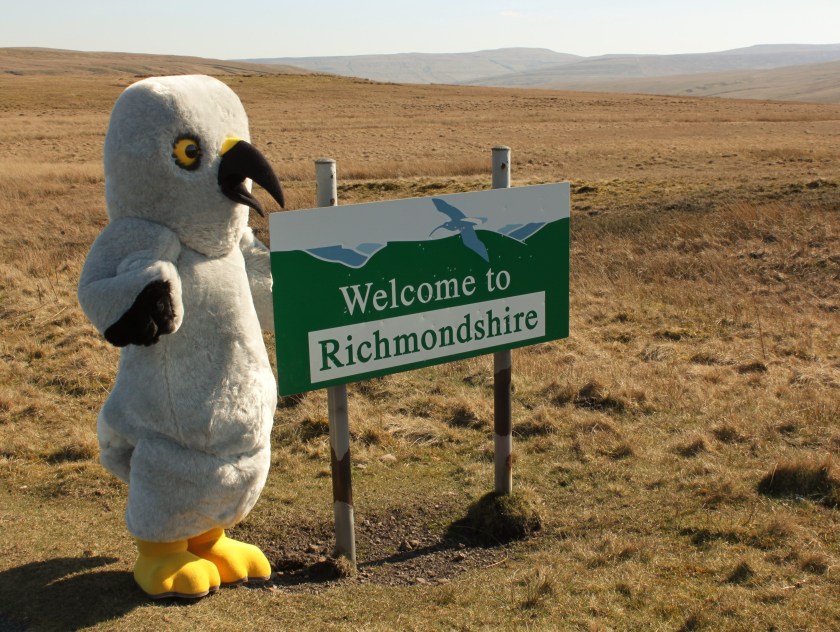
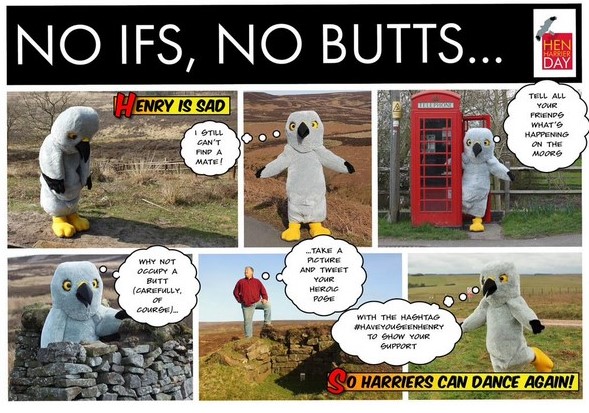
Henry’s gone north again, back to the badlands of North Yorkshire.
“Welcome to Richmondshire” (where, if you’ve got talons and a hooked beak, you can expect your body to be peppered with shotgun pellets, just like this sign).
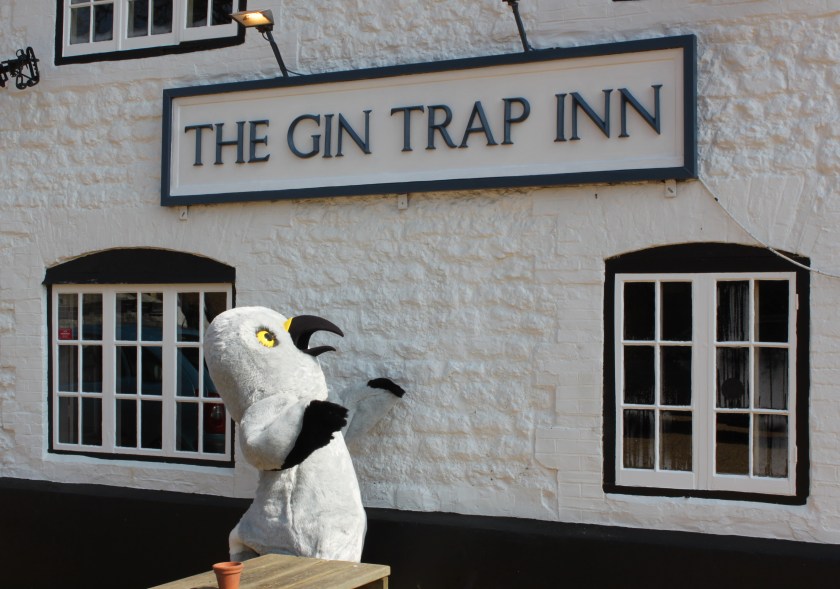
Henry spent last week in Bowland, Lancashire, dodging bullets.
He made it out alive, which is more than can be said for a lot of his friends (see here, here, here, here,here).
He spent the Bank Holiday weekend relaxing in Cley, Norfolk, gathering his thoughts and bracing himself for another trip north in search of one of those elusive females.
The very talented @YoloBirder has created a witty t-shirt design, available to order until 10pm on 31st May 2015. All profits will go the RSPB’s Skydancer Project.
Order one now! SEE HERE
There’s an amusing article in today’s Mail on Sunday from Ian Botham, frontman of the increasingly-ludicrous You Forgot the Birds ‘campaign’, funded by the grouse-shooting industry.
It follows on from last week’s attempt by YFTB to discredit the RSPB (see here). This time, Botham is playing the victim card and is threatening legal action because he thinks that the RSPB has accused him of killing birds of prey (see here).
Playing the victim card is nothing new from the game-shooting industry – we’ve seen it played over and again, especially when video evidence, collected by the RSPB’s Investigations teams, has been used to successfully convict criminal gamekeepers of wildlife crimes. It’s all just so unfair.
Botham also claims that the RSPB is ‘constantly slurring gamekeepers as criminals’. Poor, slurred gamekeepers. Why ever would anyone think their industry is a hot bed of criminal activity against protected wildlife? Perhaps this has something to do with it:
In January 2012, the RSPB reported that since 1990, over 100 gamekeepers had been convicted of raptor persecution crimes (here).
And here’s a list of 29 gamekeepers convicted of wildlife crimes in the last 5 years alone, many of whom were convicted thanks to the work of the RSPB:
Feb 2011: Gamekeeper Connor Patterson convicted of causing animal fights between dogs, foxes and badgers.
May 2011: Gamekeeper Ivan Mark Crane convicted of using an illegal trap.
May 2011: Gamekeeper Ivan Peter Crane convicted of using an illegal trap.
May 2011: Gamekeeper Dean Barr convicted of being in possession of a banned poison.
May 2011: Gamekeeper James Rolfe convicted of being in possession of a dead red kite.
June 2011: Gamekeeper Glenn Brown convicted of using an illegal trap.
October 2011: Gamekeeper Craig Barrie convicted of illegal possession & control of a wild bird
Dec 2011: Gamekeeper Christopher John Carter convicted of causing a fight between two dogs and a fox.
Dec 2011: Gamekeeper Luke James Byrne convicted of causing three animal fights and possession of three dead wild birds (heron, cormorant, buzzard).
Jan 2012: Gamekeeper David Whitefield convicted of poisoning 4 buzzards.
Jan 2012: Gamekeeper Cyril McLachlan convicted of possessing a banned poison.
April 2012: Gamekeeper Robert Christie convicted of illegal use of a trap.
June 2012: Gamekeeper Jonathan Smith Graham convicted of illegal use of a trap.
Sept 2012: Gamekeeper Tom McKellar convicted of possessing a banned poison.
Nov 2012: Gamekeeper Bill Scobie convicted of possessing and using a banned poison.
Jan 2013: Gamekeeper Robert Hebblewhite convicted of poisoning buzzards.
Feb 2013: Gamekeeper Shaun Allanson convicted of illegal use of a trap.
Feb 2013: Gamekeeper (un-named) cautioned for illegal use of a trap.
May 2013: Gamekeeper Brian Petrie convicted for trapping offences.
June 2013: Gamekeeper Peter Bell convicted for poisoning a buzzard.
July 2013: Gamekeeper Colin Burne convicted for trapping then battering to death 2 buzzards.
Sept 2013: Gamekeeper Andrew Knights convicted for storing banned poisons.
Dec 2013: Gamekeeper Wayne Priday convicted for setting an illegal trap.
Feb 2014 Gamekeeper Ryan Waite convicted for setting an illegal trap.
May 2014 Gamekeeper Derek Sanderson convicted for storing five banned poisons.
July 2014 Gamekeeper Mark Stevens convicted for setting illegal traps.
October 2014 Gamekeeper Allen Lambert convicted for poisoning 11 raptors, illegal storage and use of pesticides & possession of a poisoner’s kit.
December 2014 Gamekeeper George Mutch convicted for illegal use of traps, illegal killing of a goshawk, illegal taking of a goshawk, illegal taking of a buzzard.
May 2015 Gamekeeper James O’Reilly convicted for illegal use of leg-hold traps and illegal use of snares.
It’s not that they’re all at it; on the contrary, we personally know some fantastic gamekeepers who contribute a massive amount to wildlife conservation. The problem is, they are few and far between and many within the gamekeeping industry are most definitely at it. You don’t get population-level effects on a species’ distribution and abundance (think hen harriers, golden eagles, peregrines, red kites) if ‘only a few rogues’ are at it.
In a lot of ways, Botham’s attack on the RSPB is a soft target. They’re high profile and subject to strict conditions laid down by the Charity Commission – there’s only so much they can say and do (although some of us think that they could do more than they already are, even within those constraints). However, it’s not the RSPB that Botham & his grouse-shooting industry mates should be worried about. It’s not just the RSPB who are aware of what is going on. He (and the industry he is representing) should perhaps be more concerned about the growing rise in ordinary members of the public who are finding out the truth about the game-shooting industry. We know what’s going on and we’re not hampered by Royal Charters or other bureaucratic constraints. And we’re getting louder and stronger by the day. It’d be foolish to underestimate us.
A few updates on some of the questions we asked yesterday following the conviction of Scottish gamekeeper James O’Reilly (see here)….
1. We asked the Cardross Estate whether O’Reilly was still employed as a gamekeeper on their estate. They have issued the following statement:
CARDROSS ESTATE REFUTES WILDLIFE CRIME ALLEGATIONS
(Issued on behalf of Cardross Estate)
Cardross Estate today issued the following statement after the conviction and sentencing of a gamekeeper at Stirling Sheriff Court on offences under the Wildlife and Countryside Act, 1981.
Sir Archie Orr-Ewing, owner of Cardross Estate, said: “The reputation of the estate has been unjustly tarnished by the publicity around these court proceedings. The estate does not have any involvement whatsoever in the sporting management of the land in question. The area of land where these offences occurred is let on a long-term lease to a third party who has full rights and responsibilities for the management of sporting activity. The gamekeeper is employed by the third party and has never been employed by the estate.
“Having co-operated fully with the authorities during their investigation and having been asked to be a prosecution witness, I am bitterly disappointed that the Crown Office did not see fit to clarify the estate’s position in its public statement following the case.
“Cardross Estate is an estate that takes its land managcment responsibilities very seriously and is a business focused on the local community and the delivery of sustainable rural enterprise. In particular, we are committed to contributing to the tourism offering of the Loch Lomond and Trossachs National Park.”
END
According to some media outlets, O’Reilly no longer works on the Cardross Estate and some claim he no longer works in the gamekeeping industry.
2. We asked the Scottish Gamekeepers’ Association whether O’Reilly was a member of the SGA, and if so, has he now been booted out. They have issued the following statement, which seems to carefully avoid answering the question:
SGA RESPONSE
Responding to the sentencing of a former gamekeeper, who used an illegal gin trap to catch a buzzard, a spokesman for The Scottish Gamekeepers Association said: “This is the first we have heard about this case but, as an organisation, we are appalled. These actions have no place in modern gamekeeping and show ignorance of the legal requirements which are involved in being in the profession. They are an affront to all those who advocate high standards and take their responsibilities seriously and with care.”
END
Actually, O’Reilly’s criminal activities didn’t show ignorance of the legal requirements; according to the press statement issued by the Crown Office yesterday, O’Reilly had undertaken the snaring course (run by either GWCT or SGA) legally required for anyone wanting to set snares in Scotland. He’d passed the course so he wasn’t ignorant, he just chose to blatantly disregard the law.
We’re still interested in whether O’Reilly was an SGA member at the time he committed these offences. If you’re also interested, you too can email them again: info@scottishgamekeepers.co.uk
3. We asked Scottish Land & Estates whether the Cardross Estate was a member of their organisation and if so, had it now been booted out.
They haven’t yet made a public statement, although they did respond to a private email from one of our blog readers by saying that the Cardross Estate resigned from their organisation in 2012.
4. We asked Environment Minister Dr Aileen Mcleod when the Scottish Government will publish the recently completed Wildlife Crime Penalties Review, in light of the pathetic sentence given to O’Reilly for his barbaric crimes. One of her civil servants has issued an acknowledgement email, saying someone will respond soon.
On a related note, there’s an article here with further details about why the Sheriff didn’t give O’Reilly a more fitting punishment. It includes a suggestion from O’Reilly’s defence agent that the gamekeeper was ‘under pressure from above’. It’ll be interesting to see whether the Crown Office decides to go for a vicarious liability prosecution.
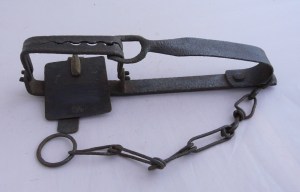
James Alfred O’Reilly, 50, a Scottish gamekeeper working on the Cardross Estate in Stirlingshire, has been convicted of four wildlife crime offences, including the use of a gin trap to catch a buzzard. His punishment? It’s the usual pathetic response: he’s been ordered to carry out 240 hours of unpaid work.
Here is the press release from the Crown Office:
At Stirling Sheriff Court today, gamekeeper James O’Reilly was given a Community Payback Order and ordered to carry out 240 hours of unpaid work after having pled guilty to four charges under the Wildlife and Countryside Act 1981.
O’Reilly was convicted at Stirling Sheriff Court on 24 April of a number of charged including the use of an illegal trap for the purposes of taking of wild birds on the Cardross Estate in March 2013. Common buzzards, red kites, goshawks and white tailed eagles can all be found nesting in or as regular visitors to the area.
A man walking his dog on the estate, at a location known as Gartur came to an open area next to a pheasant pen where a distressed buzzard was caught in a trap by its leg next to a decomposed deer carcase.
The man released the jaws of the trap from the buzzard’s leg. When it became apparent that the buzzard was unable to fly he took the bird home and called the SSPCA. The SSPCA reported the incident to the police who continued the investigation. They found an illegal trap, which by its nature and placement by the accused was calculated to cause injury to wild birds.
They also found that the accused had set a number of snares in the area. None of which had identification tags on them as required by law.
It was clear to police that there was an issue in relation to the pest control methods employed by the accused and as a result, a search warrant for his house was obtained and executed on 4 April 2013.
In the course of the search, a snare containing decomposed fox parts was found next to a pheasant pen near to accused’s home address. It was apparent that a fox had become snared and the Accused maintains that he shot the fox after it had become trapped, and left the carcase lying. Staff at the Scottish Agricultural College confirmed that the fox caught in the snare had been there for more than 24 hours and possibly from the back end of 2012.
The buzzard was examined by a veterinary surgeon who found it had a severe injury to the right leg just above the foot. He commented that the injuries would have been extremely painful for the bird and would have taken several days to occur. Treatment was provided to the bird but its condition deteriorated and the bird was euthanized on welfare ground as it would never be suitable for release back into the wild.
Notes to Editor
 * Between 22 March 2013 and 25 March 2013 at Gartur, Cardross Estate , Port of Menteith, you JAMES ALFRED O’REILLY did intentionally or recklessly injure and take a wild bird, namely a buzzard in that you did set a gin trap also known as a leg hold trap on open ground or other similar type of trap which was baited with a deer carcass which trapped said buzzard by the leg, injuring it whereby it had to be humanely euthanased due to its injury; CONTRARY to the Wildlife and Countryside Act 1981 Section 1(1)(a);
* between 1 February 2013 and 4 April 2013 at Tamavoid, Cardross Estate, Port of Menteith, you JAMES ALFRED O’REILLY, whilst carrying out an inspection of a snare, did find an animal, whether alive or dead, caught by said snare and did fail to release or remove said animal namely a fox; CONTRARY to Wildlife and Countryside Act 1981, Section 11(3)(A);
* between 1 April 2013 and 4 April 2013 at Gartur, Tamavoid and The Big Wood , Cardross Estate , Port of Menteith you JAMES ALFRED O’REILLY did set in position a snare without having been issued an identification number by the Chief Constable under Section 11A(4) of the aftermentioned Act and did set 2 snares at a stink pit , 4 snares at a pheasant release pen and 1 snare at a stink pit, all of which did not have identification tags attached; CONTRARY to the Wildlife and Countryside Act 1981, Sections 11A(1) and (5);
* Between 22 March 2013 and 25 March 2013 at Garfur, Cardross Estate, Port of Menteith you JAMES ALFRED O’REILLY did set in position a trap, namely a gin trap also known as a leg hold trap being of such a nature and so placed as to be likely to cause bodily injury to any wild birds coming into contact therewith in that said trap was set on open ground next to bait, namely a deer carcass; CONTRARY to the Wildlife and Countryside Act 1981, Section 5(1)(a).
The requirement to tag snares was introduced by the 2011 Wildlife and Natural Environment Act as part of a suite of measures aimed at improving the accountability of snaring. This requirement came into force on 1st April 2013. Under the new regime, those responsible for setting snares were required to attend a training course, prior to being given an identification number. The accused O’Reilly had been issued with such a number on 23rd March 2013 by the licensing office in Pitt Street, Glasgow.
END
So, here are some questions:
1. Is O’Reilly still employed as a gamekeeper on the Cardross Estate (where they offer driven pheasant and partridge shooting)? Emails to: enquiries@cardrossestate.com
2. Is O’Reilly a member of the Scottish Gamekeepers Association, and if so, has he now been booted out? Emails to: info@scottishgamekeepers.co.uk
3. Is the Cardross Estate a member of Scottish Land & Estates, and if so, has it now been booted out? Emails to: info@scottishlandandestates.co.uk
4. When will the review of wildlife crime penalties be published by the Scottish Government (we understand it’s been submitted) and, more importantly, when will the review’s recommendations for change be implemented? Emails to: ministerforenvironment@scotland.gsi.gov.uk
You can perhaps combine this last email with one asking the Minister when we can expect to see a General Licence restriction order enforced on land where a poisoned red kite, a poisoned peregrine, and an illegally trapped red kite have been found – see here.
UPDATE 21st May 2015: some responses to these questions here.
The BBC news website is reporting that a red kite that had been illegally trapped last week has had to be euthanised due to the severity of its injuries.
The kite was found ‘in distress and seriously injured’ on Wednesday 13th May 2015.
The article (see here) is fairly low on details, but what has been written is actually quite informative.
It quotes a Police Scotland spokesman: “This was clearly an intentional act with the sole purpose of trapping this kind of bird of prey“.
That tells us that the bird probably wasn’t caught inside a crow cage trap (by accident), but more than likely was caught in an uncovered, illegally-set spring trap, baited and deliberately placed to trap a bird of prey by its leg(s).
The article also states that the bird was found trapped ‘on moorland west of Stirling’. This is also pretty revealing. There isn’t much moorland to the west of Stirling and the moorland that is there is managed for grouse shooting (for those who don’t know the area, have a look on google maps and look for the tell-tale muirburn strips that identify the land as a grouse moor).
This latest raptor persecution crime is not the first one reported from this area in recent months. In July 2014, a poisoned red kite was found in the area. This crime wasn’t publicised by Police Scotland and didn’t reach the public domain until we blogged about it in January this year, when we found the details hidden away in a government report. At that time, we asked blog readers to contact SNH to ask whether they had issued a General Licence restriction order for the land where the poisoned kite had been found (see here).
In February 2015, Andrew Bachell, Director of Operations at SNH responded by saying the case was ‘under consideration’ (see here).
Meanwhile, later in February, a poisoned peregrine was found on the same estate (see here). It, too, had been killed by ingesting the banned poison Carbofuran.
According to the SNH website, a General Licence restriction order has still not been issued for this estate (or any other estate, come to that).
And now, three months later, an illegally trapped red kite is discovered in what appears to be the very same area.
Somebody (or some people?) is clearly conducting a campaign of raptor persecution crimes in this area. Where’s the enforcement? Why hasn’t a General Licence restriction order been issued for this area of moorland? Had one been issued for the poisoned red kite (July 2014) or the poisoned peregrine (Feb 2015), this latest crime may not have occurred and this poor red kite may not have had to suffer such appalling injuries that it had to be euthanised.
We think it’s time to ask Environment Minister Dr Aileen McLeod some questions about the apparent lack of enforcement action in this area. Only last month she wrote an article stating that “wildlife crime will not be tolerated in modern day Scotland” and she specifically mentioned the General Licence restriction orders: “Arrangements are also in place for SNH to restrict the use of general licences where there is evidence of wildlife crime” (see here).
So, if “arrangements are also in place”, why hasn’t a General Licence restriction notice already been enforced in this particular area and when might we see notification that one has been issued? It’s time for the Government Minister responsible for tackling wildlife crime to show her mettle. Emails to: ministerforenvironment@scotland.gsi.gov.uk
Red kite photo by David Tomlinson
Well, well, well. The ‘campaign’ group You Forgot the Birds, headed up by that well known ornithological expert (ahem) Sir Ian Botham, is back.
You might remember them from last year, when they tried, unsuccessfully, to discredit the RSPB, resulting in widespread derision and the rejection of their complaints to the Charity Commission.
This time they’ve surpassed all expectations. They’re accusing the RSPB of ‘deliberately looking the other way’ while hen harriers die because they’re more interested in using the species as an ongoing ‘fundraising tool’.
This accusation is centred on the recent events in Bowland, Lancashire, where three male hen harriers, all with active nests, (un)mysteriously ‘disappeared’ (see here).
We have a copy of the group’s press release (thanks to the journalist who sent this). It reads (slightly edited) as follows:
You Forgot the Birds campaign.
The mysterious disappearance of endangered birds of prey in Lancashire has become a whodunnit with the RSPB implying that gamekeepers are to blame and the gamekeeper’s champion, Sir Ian Botham, saying that the RSPB is deliberately looking the wrong way – and has ulterior motives.
Embargo 00.01 Tuesday 19 May 2015
England’s hen harriers are close to extinction and the RSPB is too ideologically blinkered to do anything to help. This is the view of Sir Ian Botham who is responding to the news that at the Bowland Estate in Lancashire, RSPB officials are watching abandoned eggs on hen harrier nests instead of transferring them into incubators. The fledglings could then be released back into the wild.
“The RSPB uses hen harriers as a fundraising tool and is forever blaming gamekeepers for their low numbers” says Sir Ian Botham, “but the real culprits are the ‘sit on their hands and do nothing’ RSPB officials who keep blocking government attempts to help the birds recover.”
Under a Natural England licence the RSPB could save the eggs at Bowland. Officials at Defra have proposed a similar scheme to increase hen harrier numbers on grouse moors but this has been obstructed by the RSPB.
“The RSPB are deckchair conservationists with binoculars who sit and watch failing nests. They campaign, they complain, they blame – but they are rubbish at conservation. Year after year the RSPB fails to live up to its name and protect birds. If you want to protect birds from predators you need gamekeepers not the RSPB” says Sir Ian. Uncontrolled fox populations are a major problem for hen harriers.
His criticism came after the RSPB, without producing any evidence, blamed the disappearance of the hen harriers on wildlife crime and offered a £10,000 reward for a conviction.
Sir Ian in response is offering a £10,000 reward to the first conservation group which moves the abandoned eggs into an aviary and then releases the fledglings back into the wild. A similar process has already successfully raised harrier numbers in France.
While there are more than 1,000 hen harriers in Scotland, in England the numbers remain pitifully low. Last year there were only four successful nests south of the border – three of which were on grouse moors.
“No bird lover can accept this impasse. The current situation is an embarrassment to both Defra and to Natural England and provides stark evidence that the RSPB puts ideology and fundraising far ahead of the birds it claims to protect,” says Sir Ian who is spokesman of the You Forgot The Birds campaign.
The RSPB receives more than £1m of grants from the EU and the Heritage Lottery Fund for its hen harrier programme and would risk not getting further grants if hen harrier numbers increased.
Defra officials want excess hen harrier chicks on grouse moors to be raised in aviaries so that bird numbers increase while allowing the moors to remain economic. The highly respected Hawk and Owl Trust has offered to help implement the scheme. However the RSPB continues to object to the plan and is putting pressure on the Trust to back down.
Contact
Ian Gregory xxxxx xxxxx
You Forgot The Birds www.youforgotthebirds.com
Notes:
END
It’s hard to know where to begin, and to be honest, we can’t really be arsed to go through it sentence by sentence, but there are two points that are worthy of some attention.
1. The two hen harrier nests (with their eggs) were abandoned by the females at some point between 30th April (when both males ‘disappeared’) and 6th May, when the RSPB announced the news. Botham’s press release was embargoed until today (19th May). Botham is offering £10K to any conservation organisation who will take the eggs, incubate them, and then release the subsequent fledglings. It’s not clear how he thinks that eggs containing embryos that have been dead for between 13-19 days can now be successfully incubated. It’s biologically impossible.
He may well argue that had the RSPB intervened when the nests were first abandoned, the eggs could have been saved. Well, that’s potentially a biological possibility, although this scenario doesn’t take in to account the difficulty of knowing precisely when the nests were abandoned, and thus when to intervene. The nests were being closely observed and the people watching the nests will have seen the females leave. But at that stage, they wouldn’t have known whether the females had left temporarily (to find food for themselves in the absence of their male partners) and were coming back, or whether they’d abandoned the nests for good. Intervening at that early stage and removing the eggs could have been disastrous, not to mention illegal. By the time the nest observers realised the females weren’t returning, the eggs would have chilled and the embryos would already be dead.
However, that’s not what he’s arguing. His press statement is clearly written in the present tense – he seriously thinks that the eggs will still be viable, two weeks after they were abandoned. He’s either a deeply religious man with faith in the concept of resurrection (£10 grand for a miracle rebirth – what a bargain), or his understanding of biological principles is as strong as his Twitter account password. Perhaps he should change his nickname from Beefy to Mincey, as in ‘thick as….’
2. The second point worthy of mention is the final sentence in the ‘notes’ section of the press release:
‘The You Forgot The Birds Campaign is funded by the British grouse industry‘.
How interesting. But what is meant by ‘the British grouse industry’? A few individuals with a vested interest in grouse shooting, or an organisational body that represents those who own grouse moors? Mark Avery has attempted to find out the answer to that (here).
Whoever or whatever the ‘British grouse industry’ is, we owe them a debt of gratitude for choosing Mincey Botham as their spokesperson.
Article about this story in today’s Telegraph here.
Response from RSPB Conservation Director Martin Harper here

