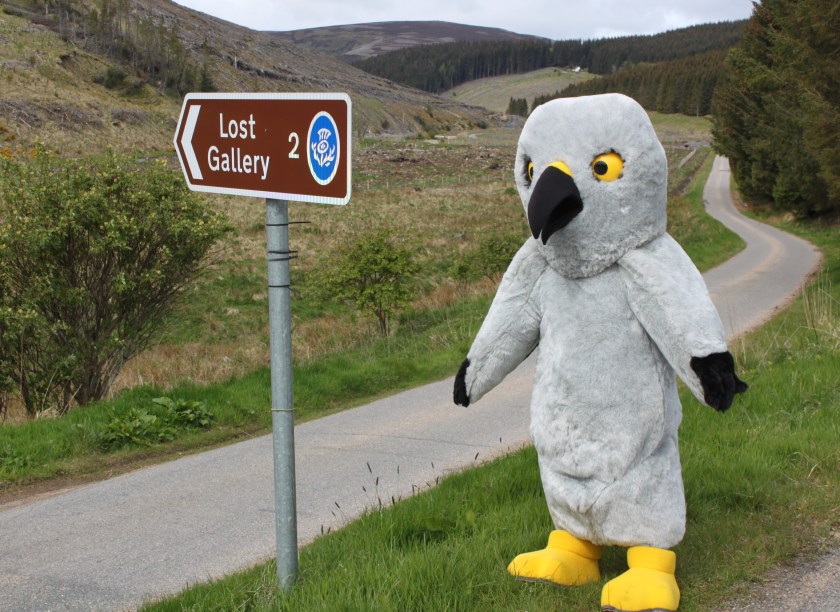
Henry is back on the eastern side of the Cairngorms National Park.
Here he is at Glen Nochty. Probably safer not to go down this road – bad things happen here where the forest borders a grouse moor (which can be seen in the distance).

Henry is back on the eastern side of the Cairngorms National Park.
Here he is at Glen Nochty. Probably safer not to go down this road – bad things happen here where the forest borders a grouse moor (which can be seen in the distance).

Henry is growing increasingly interested in the management techniques used on intensively-managed driven grouse moors.
He was bemused to see this sign on the Nawton Tower Estate in the North York Moors National Park. ‘No fires’ on this designated Site of Special Scientific Interest….but what’s all that black, charred moor in the background?!
Mark Avery has today published a timely blog about the environmental effects of moorland burning – see here.
The Nawton Tower Estate is also known as the Bransdale Moor Estate, according to this parliamentary discussion. And actually, this discussion is rather interesting for another reason as it reveals details of tax breaks for grouse moor owners in return for public access rights, but after taking the tax breaks some landowners decided they wanted to restrict public access – it’s fascinating! The context of the above parliamentary discussion can be found in this Hansard report.
The grouse management on Bransdale Moor has been linked to Mark Osborne – see here, and apparently this grouse moor is ‘often described as the premier North Yorkshire Moors grouse shooting estate’ – see here.
Henry didn’t see any hen harriers during his visit but did see a lot of pheasants(?!) and a lot of red grouse.
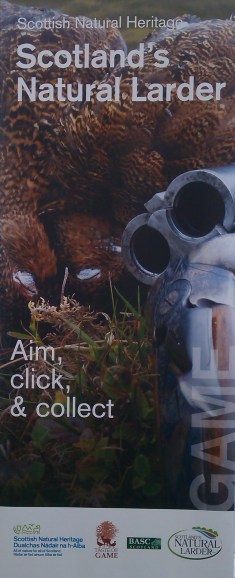 If you’d been at the Royal Highland Show last week you might have seen this SNH poster. You might also have seen Environment Minister Dr Aileen McLeod posing in front of it.
What is it?
It’s part of an SNH campaign called Scotland’s Natural Larder, being run jointly with BASC Scotland, and coincides with the Scottish Government’s Year of Food & Drink.
According to an article in SNH’s latest magazine (The Nature of Scotland, Spring/Summer 2015, page 10):
“The aim of Scotland’s Natural Larder project is to encourage people to eat natural produce that has been sustainably harvested or hunted” and “A key focus is helping people understand the close links between the health of the environment and sustainable management“.
According to SNH, ‘Game meat is healthy, natural and delicious’ (see here).
According to BASC, ‘Game meat is healthy, sustainable and delicious’ (see here).
So the key words being bandied about by the Government’s statutory nature conservation agency (as well as by BASC, which is less surprising) about shot red grouse (look at the poster) is that they are ‘healthy’, ‘natural’, ‘sustainable’ and ‘delicious’.
Forget about the word ‘delicious’ because whether grouse tastes delicious or not is entirely subjective and pretty irrelevant. But what about those other words? ‘Healthy’, ‘natural’ and ‘sustainable’? Really? Who are they trying to kid? How about ‘unhealthy’, ‘unnatural’ and ‘unsustainable’?
Unhealthy
Red grouse are shot with lead ammunition. Lead is a poison. Lead is highly toxic to humans. The health risk of lead poisoning has been well-documented and has resulted in the removal of lead from petrol, paint, fishing weights and water pipes. In 2012, the Food Standards Agency published guidance on eating game shot with lead ammunition:
“The Food Standards Agency is advising people that eating lead-shot game on a frequent basis can expose them to potentially harmful levels of lead. The FSA’s advice is that frequent consumers of lead-shot game should eat less of this type of meat” (see here, here and particularly here).
Red grouse on intensively managed driven grouse moors are also routinely exposed to chemicals in the form of medicated grit. The chemicals in this grit are used to kill the parasitic strongyle worm. This drug is highly persistent, according to SLE (see here). Moorland managers are advised to remove the medicated grit one month before the start of the grouse-shooting season. Who decided one month was a suitable period of time for withdrawal and who monitors whether the medicated grit is actually being withdrawn at that time? Is there any information about the effect on humans from eating red grouse that have residual levels of medicated grit still in their bodies?
There’s also a new disease spreading through red grouse populations – ‘respiratory cryptosporidiosis’, also known as ‘bulgy eye’. Apparently the protozoan responsible isn’t known to be infectious to humans (see here) and a prominent figure from the grouse-shooting industry claims ‘grouse are perfectly safe to eat if they are diseased [with bulgy eye]’ (see here). Hmm, sounds yummy. Wonder what his medical qualifications are?
Does any of this convince you that eating red grouse is a ‘healthy’ option?
Unnatural
Red grouse is frequently described as ‘natural’ by those with a vested interest in driven grouse shooting. It might be considered ‘natural’ if it has been killed by walked-up shooting but what about the grouse that have been killed by driven grouse shooting? Intensively managed driven grouse moors are anything but natural. Red grouse are found in artificially-high densities on these moors as a result of several unnatural management techniques, including the use of medicated grit (see above), the frequent burning of heather (see here for the environmental damage caused by this practice), the [legal] and unregulated annual mass slaughter of predators (foxes, stoats, weasels, corvids) and mountain hares, not to mention, of course, the widespread illegal killing of raptors.
What’s ‘natural’ about red grouse that have been shot on an intensively driven grouse moor?
Unsustainable
Concerns over the unsustainability of driven grouse shooting are growing – so much so that Marks & Spencer removed red grouse from sale last year (see here) because they weren’t able to guarantee their grouse had come from a responsible, sustainable source. There are plenty of other concerns, too (see here for a good overview).
So how does SNH justify its claim that red grouse have been ‘sustainably’ harvested?
What on earth is SNH playing at? Why is this statutory conservation agency actively promoting an industry with such shocking ecological credentials and claiming that eating this product (red grouse) is good for us and good for the environment? Let’s ask them. Emails to SNH Chief Executive Susan Davies: susan.davies@snh.gov.uk
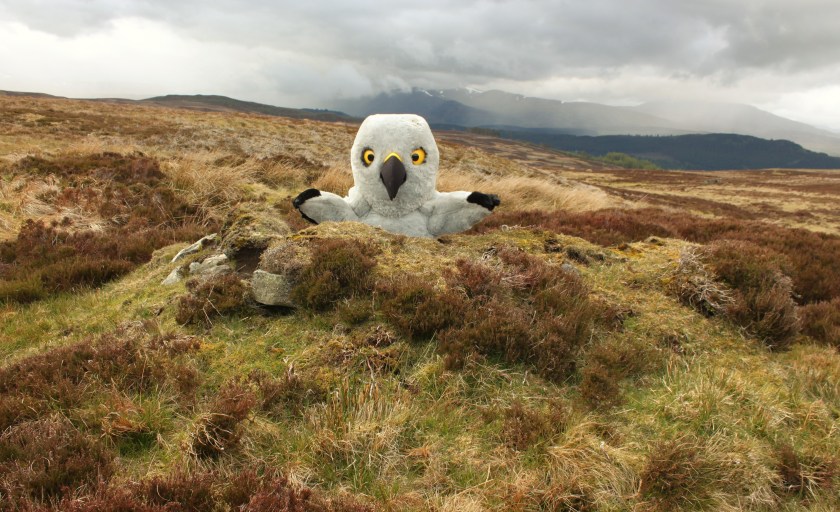
Occupy the butts!
Go to a grouse moor, find a grouse butt, take a photograph of yourself occupying the butt, send in the photograph to this website.
Finding one of these butts is easy – you don’t have to walk for miles across the moors – a lot of them are right there by the roadside. Grouse butts are normally marked on OS maps at 1:25000 scale. Try http://www.streetmap.co.uk and zoom in on your favourite moor.
It’s not illegal to stand in a grouse butt and take a photograph, as long as you are not damaging it nor interfering with ‘lawful activity’ (i.e. disrupting a driven grouse shoot). We’d encourage you to visit a grouse butt at any time between now and Hen Harrier Day (Sun 9th August) – just over 6 weeks away – before the shooting starts on 12th August.
A 28 year old Stirlingshire man has been charged with causing the death of six dogs which were found dead in a kennel. They are believed to have starved to death.
In addition to 11 alleged animal cruelty offences, the man, unnamed for legal reasons, has also been charged with two wildlife crime offences related to the alleged illegal use of snares.
Full story in Daily Record here.
You might wonder why we’re blogging about this case. That will become clear as the case progresses. One to watch.

Henry went to visit the Farr Estate just up the valley from Coignafearn. It’s often called the Glen Kyllachy & Farr Estate.
He doesn’t look very happy.
Raptor populations in this area and nearby have suffered a long history of persecution, as recognised by Scotland’s Moorland Forum (see here). It’s a real mystery who is responsible for this because there has only ever been one prosecution. A conviction was secured but was later quashed on appeal.
Here are some records on what has reportedly been found over the years (data from RSPB reports):
1987: Poisoned bait, Kyllachy.
1991: Poisoned eagle, Farr.
1991: Hen harrier nest destroyed, Farr Estate.
August 2008: Poisoned red kite (Carbofuran), Glen Kyllachy & Farr Estate
April 2009: Poisoned red kite (Carbofuran), Glen Kyllachy & Farr Estate
May 2010: Poisoned red kite (Aldicarb), Glen Kyllachy & Farr Estate
June 2010: Poisoned white-tailed eagle (Carbofuran), Glen Kyllachy & Farr Estate
June 2010: Poisoned golden eagle (Carbofuran), Glen Kyllachy & Farr Estate
May 2011: Poisoned red kite (Carbofuran & Bendiocarb), Glen Kyllachy & Farr Estate
June 2011: Attempted shooting of a kestrel (Farr).
The six poisoned raptors found in the three year period between 2008-2011 (4 red kites, 1 golden eagle, 1 white-tailed eagle) prompted a police raid in July 2011. You can read about the outcome here (page 26).
 Henry went to visit the Coignaferan Estate, nestled deep in the Monadliaths. This has got to be one of the most progressive sporting estates in Scotland.
Known as an eagle-killing blackspot in the 1980s, it was bought by Sigrid Rausing in 1998 and she has set about restoring an ecological balance with an enlightened vision.
In addition to a comprehensive deer culling policy to regulate the grazing pressure, the development of an extensive native woodland and scrub regeneration scheme, a blanket bog and peat restoration scheme, a scheme to recover important riparian habitat and a ban on the culling of mountain hares, Dr Rausing has been a prominent supporter of raptor conservation.
With the help of Roy Dennis (her ecological advisor), she has re-built previously destroyed eagle eyries and provides supplementary winter feeding for golden eagles to encourage their return. Coignafearn is an important ‘nursery’ area for young golden eagles, as demonstrated by the frequent visits made by satellite-tracked eagles from across Scotland. In 2011, she spoke out about landowners and gamekeepers killing golden eagles (see here) – a brave move and one that gained the respect of raptor workers and conservationists.
Part of the estate is managed for red grouse shooting although Dr Rausing’s approach is very different to that of many other grouse moor owners. The grouse on Coignaferan are not intensively managed (no heather burning & no medicated grit here) because she’s not interested in ‘big bag’ sizes – she’s all about ecological balance. The estate runs a viable shoot but it is also home to a wide range of raptors who have found sanctuary at Coignafearn in the otherwise hell-ish Monadliaths & surrounding areas, where not much has changed from what was going on several decades ago (see here for a pretty grim map).
If you get the chance, you really should try and visit Coignafearn (visitors are welcome here!).
With thanks to @_Firebirding, the following piece appears in today’s Daily Mash:
Scotland arms grouse
THE SNP is to provide all grouse with sidearms and training before the start of shooting season.
More than half a million grouse around the Highlands will be given specially adapted automatic handguns and a crash course in target shooting in the month-and-a-half before the Glorious Twelfth.
Selected grouse will also be given flags bearing the image of their venerated leader, the Famous Grouse, with which they can claim territory if they manage to beat their foe.
Gamekeeper Bill McKay said: “Grouse are very, very stupid, prone to panicking and flapping around wildly and should ordinarily never be given guns.
“On the other hand, they’re facing off against wealthy idiots intoxicated on single malt and the correct wearing of tweed.
“The blood of man and grouse will soak the heather together, but it’s anyone’s guess who will win.”
If the scheme is a success, the Scottish Assembly plans to provide salmon with auto-targeting harpoon guns.
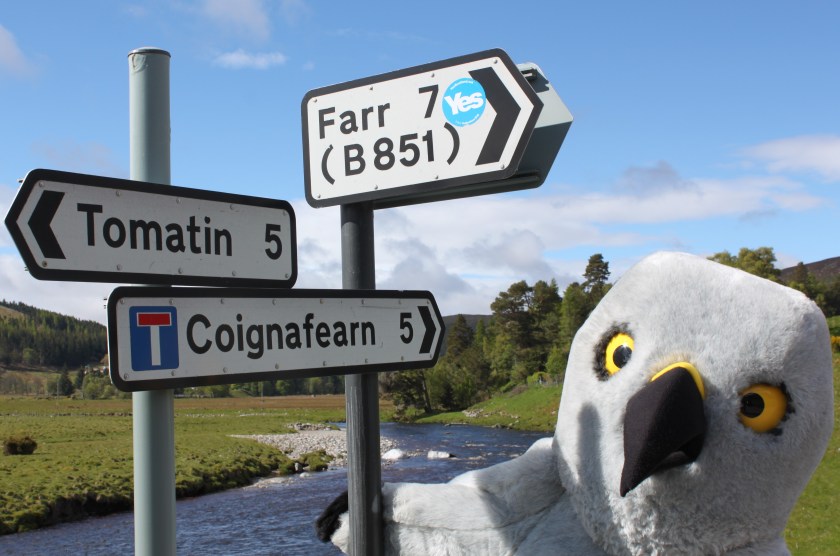
Decisions, decisions. To paradise, to hell, or to the best bacon roll, ever?


