Blog

Scottish Government to review use of stink pits on game shooting estates

Yesterday the Scottish Parliament debated the use of stink pits (middens) on game-shooting estates, following a motion from Christine Grahame MSP.

Stink pits are piles of rotting animal carcasses (often including the corpses of wild and domestic animals) that are dumped in a heap and surrounded by snares. The putrefying stench from the corpses attracts predators to the pit who are then caught in the snares, killed and thrown on to the pit. This is all quite legal as long as the animals have been lawfully killed.

The official transcript of the debate can be read here: Stink pit debate_ScotParl_15June2017

Take note of the comments made by Peter Chapman MSP (Conservative, NE Scotland, a former vice president of NFUS and now serving as Shadow Cabinet Minister for the Rural Economy & Connectivity). According to Peter,

On baiting, a proper midden is located in an area where target species can be naturally channelled and, as such, I am told that descriptions of piles of carcases are frankly incorrect. Indeed, such piles are not necessary: it does not take a tonne of wheat to attract a rat—a small pile will do—and it would be the same for a midden“.

This was challenged by Christine Grahame who asked whether Peter had seen the online photographs of piles of carcasses. He had to admit that he had (so therefore his assertion that Christine’s claim was ‘frankly incorrect’ was, er, totally incorrect). Peter claimed that “despite spending my whole working life living and working in the countryside“, he had not ever seen a stink pit nor even heard of one before yesterday’s debate. Perhaps he needs to get out a bit more. Here’s one, photographed in his own constituency (on Glenogil Estate) – a pile of bloodied, rotting mountain hares dumped underneath a tree and surrounded by snares (Photo by one of our blog readers who wishes to remain anonymous):

Aside from Peter’s uninformed comments, other MSPs spoke of their revulsion of stink pits and expressed shock that there is currently no regulation or legislation covering stink pit use in Scotland or elsewhere in the UK.

Environment Secretary Roseanna Cunningham spoke at the end of the debate and claimed that “stink pits are used as a way of maximising the effectiveness of snaring as a means of fox control. They are used to draw foxes into fewer, more easily checked sites; thus, they have the benefit of concentrating snaring effort and reducing the number of snares that are set in the wider countryside“. That’s an interesting claim. Is there any evidence to support it? Given that nobody knows how many stink pits are in use at any given time, or how many snares are set at any given time, it seems a bit of a jump to argue that stink pits reduce the number of snares used in the wider countryside, doesn’t it? You could equally argue that stink pits ADD to the number of snares being set on these estates. Without supporting data, both claims are as valid/invalid as each other.

Anyway, the good news is that Roseanna has confirmed that stink pit use will be under review by two separate groups. One is the Scottish Government’s Technical Assessment Group, who will review stink pits as part of their overall snaring review. The other is the yet-to-be established independent group that will review grouse moor management practices, as announced last month in response to continued illegal raptor persecution. We look forward to hearing more about that group, and its full remit, in the very near future.

Law professor comments on inadmissibility of video evidence in wildlife crime prosecutions

As regular blog readers will be aware, the Crown Office & Procurator Fiscal Service (COPFS), the public prosecutors in Scotland, have, in the space of two months, either dropped or refused to prosecute five cases of alleged wildlife crime. These include:

25 March 2017 – gamekeeper John Charles Goodenough (Dalreoch Estates), accused of the alleged use of illegal gin traps. Prosecution dropped due to paperwork blunder by Crown Office.

11 April 2017 – landowner Andrew Duncan (Newlands Estate), accused of being allegedly vicariously liable for the actions of his gamekeeper who had earlier been convicted for killing a buzzard by stamping on it and dropping rocks on to it. Prosecution dropped due to ‘not being in the public interest’.

21 April 2017 – gamekeeper Stanley Gordon (Cabrach Estate), accused of the alleged shooting of a hen harrier. Prosecution dropped as video evidence deemed inadmissible.

25 April 2017 – gamekeeper Craig Graham (Brewlands Estate), accused of allegedly setting and re-setting an illegal pole trap. Prosecution dropped as video evidence deemed inadmissible.

21 May 2017 – an unnamed 66 year old gamekeeper (Edradynate Estate), suspected of alleged involvement with the poisoning of three buzzards. Crown Office refused to prosecute, despite a plea to do so by Police Scotland.

Two of these cases (Cabrach Estate and Brewlands Estate) were dropped due to the COPFS deciding that the use of RSPB video evidence, on which the prosecutions relied, was inadmissible.

There has been widespread public condemnation and political concern about these decisions, especially in the case of the alleged shooting of a hen harrier on Cabrach Estate in Morayshire. The Crown Office has attempted to explain the decisions but many questions remain unanswered for those of us who don’t have the legal expertise, or all the case details, to challenge the COPFS decisions.

We read with interest, then, a blog that was published yesterday written by Peter Duff, Professor of Criminal Justice at Aberdeen University. His blog, entitled ‘The law of evidence, video footage, and wildlife conservation: did COPFS make the correct decisions?‘ deals specifically with the Cabrach & Brewlands cases and can be read here.

We thoroughly recommend reading it. It’s important to read the perspective of an independent, expert academic who has no axe to grind on either side of the debate. It’s hard for those of us who are either tainted by years of frustration about criminal raptor killers getting away with it, or those with a vested interest in raptor killers avoiding prosecution, to take an unbiased view of the law and its application, so Professor Duff’s opinion is a valuable contribution to the debate. Not only that, it’s great to see this issue receiving wider coverage than the usual commentators.

That’s not to say we agree with his interpretation though! In short, Professor Duff concludes that the COPFS decisions were “perfectly reasonable”, and he explains his reasoning for this, but, crucially, some of what he writes does not take in to account previous case law on this issue, perhaps because he was unaware of such cases?

For example, Professor Duff states: ” In my view also, for what it is worth, I agree that the courts would not excuse such an irregularity in obtaining the video evidence and prosecutions would be fruitless“.

First of all, the Scottish courts HAVE excused the irregularity of obtaining video evidence without the landowner’s permission and far from those prosecutions being ‘fruitless’, they actually resulted in the conviction of the accused (e.g. see the Marshall trial here and the Mutch trial here).

During the Marshall trial, there were several hours of legal argument about the admissibility of the video evidence. The Sheriff accepted the video evidence, commenting that the RSPB presence on the gamekeeper’s estate [from where the video was filmed] was “neither illegal nor irregular, and the intent to obtain evidence did not make it so“.  This is no different to the recent Cabrach case.

During the Mutch trial, again involving several hours of legal argument about the admissibility of evidence, the Sheriff accepted that the RSPB had not placed the video camera with the purpose of gathering evidence for prosecution, but they had placed it as part of a legitimate survey in to the use of traps. This is no different to the recent Cabrach case.

There is also an on-going trial at the moment (concerning alleged fox hunting) that relies heavily on video evidence filmed on privately-owned land without the landowner’s permission. The court has accepted the video evidence as admissible (although we can’t comment too much on this as the trial is still live).

So on that basis, we profoundly disagree with Professor Duff’s opinion that covertly filmed video evidence would not be accepted by the Scottish courts. It already has been, on several occasions, resulting in convictions. The question remains then, why did the COPFS decide it was inadmissible? Somebody within the Crown Office (presumably an experienced lawyer from with the Wildlife & Environmental Crime Unit) decided, when this case was first marked, that the video evidence was admissible. It took nine court hearings over a period of a year before the COPFS decided that the video evidence was inadmissible. We still don’t know the basis for that decision. And the other related question to this is why didn’t the COPFS let the court make the decision? It’s this inconsistency of approach that has caused so much confusion, and as Professor Duff writes, ‘bewilderment’.

Professor Duff also writes: “The actions by the RSPB [of placing a covert camera] are a breach of the right to privacy of both the estate owners and their employees (whilst not quite analogous, imagine if your neighbour installed a secret camera to record everything that went on in your garden)“. Sorry, but it’s quite absurd to compare these two scenarios given the size difference between these two types of landholdings. Nobody could argue that placing a covert camera to film somebody’s back garden wouldn’t be a breach of privacy, as you’d reasonably expect to see the human occupants on a daily basis. But on a multi-thousand acre estate, far from any private dwelling? Come on, “not quite analogous” is one hell of an understatement. And not only that, in the Cabrach case, the camera was aimed at the nest of Schedule 1 hen harrier, which by law cannot be approached/disturbed without an appropriate licence from SNH so you wouldn’t expect to film anybody anywhere near the nest.

All in all then, Professor Duff’s interpretation of the law, whilst useful, still doesn’t explain, or justify, the decisions made by the Crown Office in these two cases.

And questions still remain about the decisions to drop the other three cases (gamekeeper John Charles Goodenough of Dalreoch Estates; landowner Andrew Duncan of Newlands Estate; an unnamed gamekeeper of Edradynate Estate), none of which were reliant upon video evidence.

MSPs to debate use of stink pits on game shooting estates

Tomorrow (Thursday 15 June 2017) Christine Grahame MSP (SNP) will lead a debate in the Scottish Parliament on the use of stink pits on game shooting estates.

Stink pits (also known as middens) are piles of dead, rotting carcasses, surrounded by snares, that are used by gamekeepers to lure in predators that can then be killed and added to the death pile.

The use of stink pits is currently legal in Scotland, under a special derogation for gamekeepers. Charity OneKind has been campaigning to ask the Scottish Government to consider banning the use of stink pits on ethical, animal welfare and public health grounds and they’ve published a gruesome blog on this issue (here). Here are some of the images from that blog:

Leadhills Estate, South Lanarkshire, November 2016: Note the snare around the muzzle of the young fox in the bowl

Marchmont Estate, Berwickshire, October 2015: a dozen pink footed geese dumped in a stink pit

Glen Turret Estate, Perthshire, June 2016: as well as this dead cat, the stink pit also contained deer, pheasant, crows, salmon and a fox

Glenogil Estate, Angus Glens, May 2011: a decomposing fox that had been thrown over a tree stump next to a line of snares. Another dead fox was found nearby with a snare still around its neck

In May 2017, Christine Grahame MSP lodged a parliamentary motion (S5M-05662) as follows:

That the Parliament notes the continued use of stink pits, which are also known as middens, as part of the predator control regime on shooting estates in in the Scottish Borders and elsewhere; understands that these are pits or piles of animal carcasses that are left to decompose so that the smell will attract foxes and other predators into snares placed around them; believe that the dead animals found in these pits recently have included foxes, deer, whole salmon, pink-footed geese, pheasants, rabbits, mountain hares and domestic cats; considers that killing and dumping animals, including protected species and domestic pets, to rot and act as bait to trap other animals, is inhumane and fundamentally disrespectful to the creatures; believes that current use goes beyond good practice in many instances; notes the view that it is necessary to assess the justification for permitting their use when the disposal of farm livestock is strictly controlled, when the extent to which their use is associated with the killing of protected species and domestic animals is taken account of and when the association between the pits and intensive predator control regimes as practised on driven grouse moors is examined, and notes the calls for Scottish Government to consider the merits of banning the use of stink pits in Scotland altogether, on ethical, animal welfare and public health grounds.

This motion received cross-party political support as follows. Is your MSP on this list? What, no Conservatives?

Colin Smyth (Labour), Gillian Martin (SNP), John Finnie (Greens), Ruth Maguire (SNP), Stuart McMillan (SNP), Rona Mackay (SNP), Alex Rowley (Labour), Joan McAlpine (SNP), Alison Johnstone (Greens), Emma Harper (SNP), Bill Kidd (SNP), Ash Denham (SNP), Iain Gray (Labour), Kenneth Gibson (SNP), Clare Haughey (SNP), Mark Ruskell (Greens), Johann Lamont (Labour), Pauline McNeill (Labour), Ivan McKee (SNP), Sandra White (SNP), Patrick Harvie (Greens), Elaine Smith (Labour), John Mason (SNP), Richard Lochhead (SNP), James Dornan (SNP), Fulton MacGregor (SNP), Claudia Beamish (Labour), Andy Wightman (Greens), David Torrance (SNP), Tom Arthur (SNP), Ben Macpherson (SNP), Jackie Baillie (Labour), Gail Ross (SNP), Clare Adamson (SNP).

Because MSPs from several political parties (with the exception of the Tories) have supported the motion, it will now be debated in Chamber tomorrow afternoon after First Minister’s Questions (FMQ starts at 12 noon). You can watch the debate live here and we’ll post the official transcript when it becomes available.

Well done OneKind, well done Christine Grahame MSP, and well done all those MSPs who supported this motion. The more political scrutiny of obscene gamekeeping practices, the better.

Technology challenge launched to solve problem of finding hidden or destroyed satellite tags

The Cairngorms National Park Authority has joined forces with Scottish Natural Heritage to co-sponsor a new CivTech challenge aimed at finding a creative and innovative technology-based solution to the problem of finding ‘disappearing’ satellite tagged raptors.

As you’ll be aware, satellite-tagged raptors are ‘disappearing’ in Scotland and England with increasing frequency. There was a time, in the early years of satellite tagging raptors, that illegally-killed birds would be found as their tags were still emitting signals allowing researchers to pinpoint the location of the corpse and thus evidence of the crime (e.g. poisoned golden eagle Alma whose corpse was found on Millden Estate in the Angus Glens in 2009). However, the raptor-killing criminals got wise to this and in recent years have been making more effort to destroy and hide the tag at the same time as killing the bird.

This lack of hard evidence causes problems for the wildlife crime enforcement agencies because it becomes very hard to prove that the bird has actually been killed. In a small number of cases, the satellite tag could just have malfunctioned, and we have seen evidence of this (e.g. hen harrier Highlander here), although the expected frequency of this happening is very low (the recent golden eagle satellite tag review identified tag reliability, based on studies of the same tags deployed in the US and Europe, as around 98%). Nevertheless, even with the high number of ‘disappearing’ tagged raptors in Scotland but little hard evidence of criminality, researchers have still been able to identify unusual concentrations / spatial clusters of where these birds have ‘disappeared’ in suspicious circumstances.

For example, here is a map showing the significant spatial clustering of ‘disappeared’ tagged golden eagles that just happen to be concentrated in several areas of driven grouse moors in and around the Cairngorms National Park, as identified in the golden eagle satellite tag review:

This identification of ‘suspicious’ persecution hotspots is excellent, and has contributed significantly to the Scottish Government finally accepting that this is an on-going problem that needs addressing, but it doesn’t provide enough information to instigate criminal proceedings against those involved. More hard evidence is required for that.

CivTech is a Scottish Government-led initiative, first piloted in 2016, which challenges creative technologists to come up with a solution to public sector problems. Some of the first challenges included improving flood forecasting and ensuring it is better used, and improving air quality in urban areas.

The joint Cairngorms National Park Authority / Scottish Natural Heritage challenge invites technologists to look at the problem of ‘disappearing’ satellite-tagged raptors and to devise a solution to find those tags, or at least provide ‘indestructible’, real-time information about the tag’s last location before it was tampered with. This probably won’t overcome the long-term problem of identifying an actual individual criminal, especially on an estate that employs multiple gamekeepers, but it might just be enough to create a deterrent. At the very least, it should provide enough information for the Scottish Government to impose civil sanctions on that estate – sanctions that are currently being discussed after Roseanna Cunningham’s announcement last month.

Opening up this challenge to the CivTech community is a very clever idea as it will reach an audience that probably knows nothing of this issue, and who may well come up with a solution that is beyond the expertise of the typical conservationist. Who knows what the technology geeks will come up with? The two instigators of the challenge (Grant Moir from CNPA and Keith Duncan from SNH) are open-minded as to what the solution might look like, e.g. a software-based solution that can be applied remotely to tags that are already deployed, or a new hardware solution that involves fitting a new gadget on to new raptors. Any new solution may be trialled in the Cairngorms National Park, a massive raptor persecution hotspot, and if successful, could be rolled out across the UK.

The closing date for applications has already passed (1 June 2017) and a ‘pitch day’ has been set for 26 July 2017.

Well done Grant and Keith. We look forward to hearing more about this later in the year.

Heads Up for Harriers: Tim Baynes claims illegal persecution an “historical controversy”

Another week and another duplicitous article from Tim (Kim) Baynes, Director of SLE’s Scottish Moorland Group. This guy seems to live in a perpetual state of denial when it comes to the illegal persecution of raptors on driven grouse moors.

This time he’s penned an article for the latest edition of Shooting Times about the ridiculous Heads Up for Hen Harriers project (more on this below).

The front cover of the Shooting Times has a headline banner: “The hen harrier: how much do we really know?”, which laughably infers that the cause of long-term hen harrier decline in the UK is still a bit of a mystery that needs solving, and then inside there’s a two-page spread from Tim (Kim) who suggests that ‘weather’ and fox predation are the big culprits, as recorded by Heads Up for Hen Harrier cameras. Astonishingly, he also claims that the illegal persecution of hen harriers on grouse moors is an “historical controversy”.

You can read the full article here: Shooting Times 7 June 2017_HaveYouSeenAHenHarrier_TimBaynes

Perhaps he missed the Government-commissioned 2011 Hen Harrier Conservation Framework, which set out very clearly what the main issue is: Illegal persecution is the biggest single factor affecting hen harriers and it is having a dramatic impact on the population, not only in northern England but also in Scotland:

  • The potential national hen harrier population in Scotland is estimated (conservatively) to be within the range 1467-1790 pairs.
  • The current national hen harrier population in Scotland as recorded during the 2010 national survey is 505 pairs, more than a 20% decline from the numbers recorded during the 2004 national survey.
  • In Scotland, the hen harrier has a favourable conservation status in only five of 20 regions.
  • Two main constraints were identified: illegal persecution, and in one region, prey shortages.
  • The species is particularly unsuccessful in the Central Highlands, Cairngorm Massif, Northeast Glens, Western Southern Uplands and the Border Hills. There is strong evidence in these grouse moor regions that illegal persecution is causing the failure of a majority of breeding attempts.

Tim (Kim) also appears to have missed the video published by RSPB Scotland last month showing exactly what happens when a camera is installed at a hen harrier nest without the grouse moor owner and gamekeeper’s knowledge:

He must also have missed last month’s news that Police Scotland are investigating the illegal shooting of yet another hen harrier on a grouse moor near Leadhills (see here), which incidentally is alleged to have happened on the estate owned by the Hopetoun family – that’ll be the family of Lord Hopetoun, Chair of the Scottish Moorland Group, of which Tim (Kim) is, er, Director.

The only ‘historical’ aspect of hen harrier persecution is that it’s been going on for over a hundred years. Pretending that it’s now stopped, in the face of such overwhelming evidence to the contrary, is the response of an idiot.

We’ve blogged about the Heads Up for Hen Harriers project many times (e.g. see here, here, here). The idea is that estates give permission for cameras to be installed at active hen harrier nests ‘to help build a picture of why these birds aren’t doing as well as they should be’. The major flaw in this ‘study’ design is that gamekeepers will know on which nests the cameras are pointing, so obviously they’re not going to shoot the adults or stamp on the eggs/nestlings at those sites. Instead, the cameras will record natural failures (e.g. poor weather, predation) and then the grouse shooting industry can use this information to claim that illegal persecution isn’t an issue, but poor weather and predation is. This is exactly what Tim (Kim) Baynes has done in this latest article.

Now, some might argue that having grouse moor owners’ agreement to install cameras at hen harrier nests on their estates is a good thing – at least those nests will be left alone and the birds might be able to produce some young. There is that, of course. But leaving the birds alone long enough to produce fledglings isn’t enough. What happens to those young fledglings once they leave the safety of a monitored nest? You only have to look at what happened to young hen harrier Elwood to answer that question. He survived for approximately two weeks after dispersing from his monitored nest site before un-mysteriously vanishing on a grouse moor in the Monadhliaths – funnily enough in an area where many satellite tagged golden eagles have also un-mysteriously vanished.

Tim (Kim) talks about the number of estates that have agreed to participate this year (at least 15) and makes much of the fact that some of these are grouse moor estates. The same thing happened last year, although what was covered up last year was the fact that only three nests were successful and none of those was on a driven grouse moor. This wasn’t a surprise given that most of the driven grouse moor estates that agreed to ‘participate’ were located in the Angus Glens – an area that hasn’t seen a successful hen harrier breeding attempt since 2006.

What would be more interesting to know is not how many estates have agreed to ‘participate’, which is a largely meaningless figure unless they actually have an active nest, but how many estates have refused to participate? Again, this information is not made public, presumably because it’ll spoil the image of this so-called ‘widespread cooperation’ from grouse moor estates.

We’ve got another question for Tim (Kim). In this article he says:

A better idea of current numbers will emerge when the results of the 2016 UK harrier population survey are published, but the overall picture is expected to be broadly the same in Scotland“.

Really? On what basis is he making this claim? The results of the National HH Survey have not yet been released (held back, we believe, due to the General Election, but due out shortly), so what makes Tim (Kim) think that “the overall picture is expected to be broadly the same in Scotland”? Is this based on factual information or is Tim (Kim) just making up some nonsense to suit his agenda?

It’s not like he/Scottish Moorland Group/Gift of Grouse hasn’t done this before (e.g. see here, here, here).

Shot buzzard successfully rehabilitated and returned to the wild

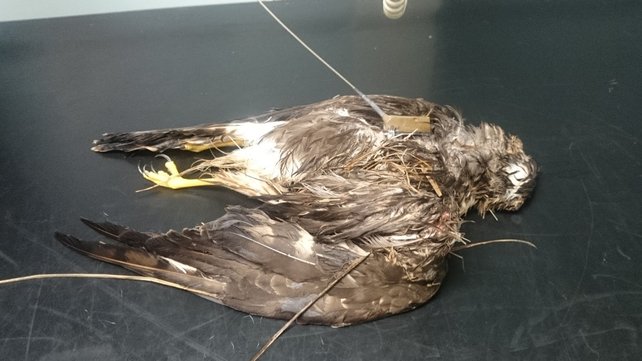
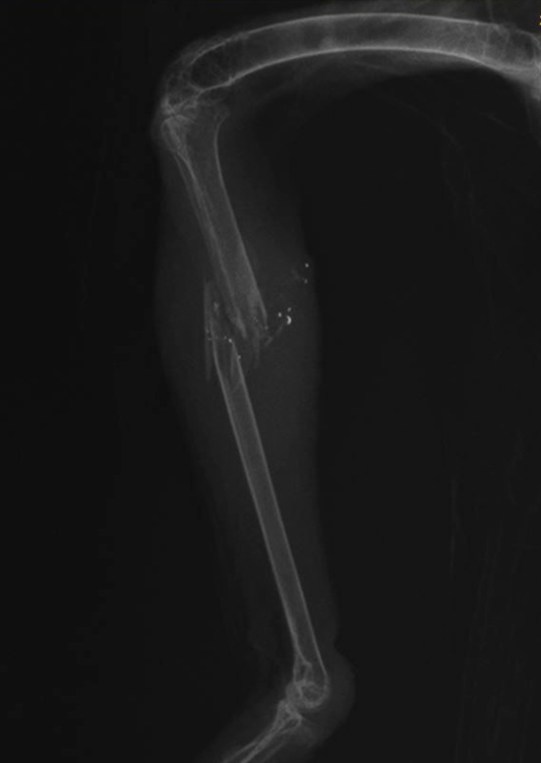
Last month we blogged about this adult female buzzard that had been found ‘down, shocked and injured’ in Norton, North Yorkshire. She has severe lacerations to her head and feet, believed to have been caused by trying to escape from a cage trap. An x-ray also revealed a shotgun pellet lodged on her right leg/foot. (Photos from Jean Thorpe)

The buzzard received medical and surgical treatment from vet Mark Naguib of Battle Flatts Veterinary Clinic and then wildlife rehabilitator extraordinaire Jean Thorpe put in hours and hours of expert care, including even twice daily physiotherapy to stretch the bird’s talons to enable her to stand on her damaged foot. Jean commented, “She looks tatty headed but she is defiant and strong“.

Last week all this hard work paid off and the buzzard was successfully released back to the wild.

More brilliant work from vet Mark Naguib and as for Jean Thorpe, we’re just in awe of her. This remarkable lady has a fundraising page so if you’re able to show your appreciation and support with a donation, please do – SEE HERE.

3 orphaned peregrine chicks now fostered; one to become a Springwatch star

Over the weekend we blogged about the suspected poisoning of two adult peregrines at a quarry nest site in Clee Hill, Shropshire, leaving three vulnerable chicks in need of rescue (see here).

Thanks to the efforts of a team of experts from various organisations, the three rescued chicks have now been fostered into two wild nests. The two larger females have been placed on a nest ledge in the Midlands, and the smaller male has been fostered in to the nest on Salisbury Cathedral. The RSPB has an updated blog about the latest developments here.

Photo of the three rescued peregrine chicks (RSPB)

As many of you will know, this year’s breeding attempt by the resident Salisbury Cathedral peregrines has featured on the BBC’s Springwatch and tonight’s programme will show what happened when the young chick was introduced to his new foster family (BBC 2, 8pm).

Well done to all involved with the successful rescue of these peregrine chicks and thanks to BBC Springwatch for covering the story and bringing it, and thus illegal raptor persecution, to the attention of its 4 million viewers.

Clee Hill in Shropshire is a notorious site for the illegal poisoning of peregrines (e.g. see here). One local observer (@davebarnesphoto) has suggested that 11 peregrines have been killed at this nest in eight years. He also notes the area is a ‘pigeon racing hotspot’. Whoever killed the breeding pair this year will hopefully feel more than a little nervous as eight million eyes turn to scrutinise recent events at this site.

New petition calling for study on economic impact of driven grouse shooting

A new public petition has been launched by Les Wallace asking the Scottish Parliament to ‘urge the Scottish Government to sponsor a comprehensive and independent study into the full economic impacts of driven grouse shooting’.

The petition can be read here.

It seems that Les was way ahead of the game because as his petition was being finalised, Environment Secretary Roseanna Cunningham surprised everyone with her announcement last week that, among other things, she intends to ‘commission research into the costs and benefits of large shooting estates to Scotland’s economy and biodiversity‘.

This would appear to supercede Les’s petition, although the wording is slightly different and we don’t yet know the finer details of Roseanna’s plans, including whether there’ll be a focused assessment of the economics of driven grouse shooting, as Les is calling for.

The grouse shooting industry often shouts about its economic benefit to the Scottish economy and uses this as justification for rejecting calls for regulation. However, the main study used to support this claim of economic benefit has been widely criticised (see a useful recent summary here, pages 22-23) and so there is every reason to support Les’s call for an updated and independent study.

Les’s petition can be signed online here (closing date 18 July 2017).

Police lead multi-agency wildlife crime search on game shooting estate in Borders

Statement issued this evening by Lothian & Borders Police:

As part of ongoing efforts to tackle wildlife crime, police in the Scottish Borders led an operation in the Longformacus area on Monday 5 June supported by our partners in the Scottish SPCA, RSPB Scotland and other experts.

Land and property were searched under warrant and a number of items were recovered for further examination.

Enquiries are ongoing and officers would urge anyone with information regarding wildlife crime to contact Police Scotland on 101, always dialling 999 if a crime is ongoing, or report information anonymously to Crimestoppers on 0800 555 111.

Tackling wildlife crime and the impact this has on rural communities remains a priority for Police Scotland. Police Scotland is a member of the Partnership for Action Against Wildlife Crime.

END

A large number of vehicles and personnel were seen yesterday close to an estate in Longformacus, which lies on the eastern side of the Lammermuir Hills, an area dominated by driven grouse moors. We don’t know the name of the estate that was searched, nor what ‘items’ were recovered for further examination. We assume, as a warrant had been authorised for the search, that this was more than a speculative visit. We look forward to further updates from the Police once their investigation has progressed.

It’s encouraging to see Police Scotland working in partnership with other expert agencies and to see a press statement issued so quickly. More of this please!

Here are some maps to show the location of Longformacus and satellite imagery showing the position of the Lammermuir grouse moors:

UPDATE 20 February 2018: Scottish gamekeeper pleads guilty to animal cruelty offence (here)

3 million blog views

Today we reached another milestone – three million blog views – and funnily enough this comes exactly a year to the day when we reached two million.

Many thanks to everyone who supports this blog, whether by reading, commenting, contributing or sharing.

Here’s a reminder of why we do it. This image is of a young golden eagle in the Cairngorms National Park, photographed (by the RSPB) in 2006. It had been illegally poisoned. It epitomises everything in its pitiful, poignant, senselessness and could have been photographed this morning.

We hope you’ll stay with us and help raise even more awareness and campaign even harder to bring this to an end.