Blog

Peregrine persecution on a grouse moor: Bleasdale video footage finally released

In April this year, a high profile prosecution case for alleged raptor persecution collapsed after covertly-filmed video evidence was deemed inadmissible.

The prosecution was being brought against a gamekeeper from the Bleasdale Estate in Bowland, who had been charged with a string of wildlife offences including the alleged killing of two peregrines in April 2016.

We had followed this case since September 2017, attended each court hearing, and blogged in detail after the case collapsed on a series of technicalities earlier this year (e.g. see here, here, here, here).

The details, as described in court, of what had happened to those two peregrines, were horrific. It was alleged that the adult female peregrine had been shot whilst leaving her nest and the adult male had been caught by the leg in a spring trap that had been set on the nest ledge, where he struggled to escape, in vain, for over ten hours, before being shoved in a bag by an unidentified man and removed from the site.

We’ve been waiting for the RSPB to publish this video footage ever since the case collapsed and the accused walked free. We understand there have been some legal issues about publishing the video and although we don’t know the details, it’s probably a safe bet to guess that some influential people from the grouse shooting industry have probably been working hard to ensure this footage never sees the light of day.

Today the RSPB has released video footage of peregrine persecution in Bowland and although the Bleasdale Estate is carefully not mentioned, it’s quite obvious from the dates cited and the video images that what is being shown in this footage fits the description of what allegedly happened to those two Bleasdale peregrines as desribed to the court earlier this spring.

The RSPB has published a blog describing the circumstances of this footage (here).

Watch the video here but beware, it contains graphic content:

Ater you’ve watched it, think about why nobody has been successfully prosecuted for these crimes.

And then think about why nobody will ever be prosecuted for these crimes.

And then think about why these crimes continue to be committed on grouse moors in 21st Century Britain.

And then think about what you can do to help bring it to an end.

Change must come, but it will only come if people stand up and demand it.

See you at a Hen Harrier Day event this weekend.

UPDATE 10 August 2018: Moorland Association’s response to peregrine persecution on Bleasdale grouse moor (here)

“Not what you’d call a bumper harvest” – accurate reporting on hen harrier breeding season by BBC

Well done to BBC Look North for an honest and accurate report on the hen harrier breeding season in Northumberland.

Not what you’d call a bumper harvest“, says the presenter in his introduction, and then from the reporter, “The hen harrier is illegally persecuted by gamekeepers on driven grouse moors who believe the birds cause too much damage to the shooting business“.

What, no lame-brained tra-la-la-ing from Amanda Anderson (Moorland Association) about the number of hen harriers that have popped in through her kitchen window for a coffee and a chat? And no Andrew Gilruth, the GWCT’s very own Stepford Wife, droning on about whatever it is he’s been told to repeat that day?

No, not a word from any of the great pretenders.

There are good contributions from Dr Cathleen Thomas (RSPB Skydancer Project) and Tom Dearnley (Forestry Commission), although Tom was probably a bit optimistic when he said “The birds that fledged this year will go in to the breeding population….”. We doubt that very much; they’ll be lucky to be still alive by Xmas.

Anyway, have a watch of this refreshingly uncontaminated report but you’ll need to be quick as the programme expires at 1.45hrs today (Weds 8th).

You’ll find it on BBC iPlayer (here), starts at 2.32min and runs until 4.22 min.

Drugged grouse

The following is a letter to The Courier, submitted by David Mitchell:

DRUGGED GROUSE

Sir,

It will soon be the “Glorious 12th” when thousands of grouse will fall to the guns of the rich and powerful to satisfy their unsporting bloodlust.

Prior to this medicated grit pans that are dotted all over driven grouse moors will be removed. This grit, essential for their digestion, is coated with a powerful drug, usually Flubendazole, which purges the grouse of debilitating worms.

And to make doubly sure of this, on some estates the birds are dosed with Levamisole Hydrochloride, a drug used in chemotherapy.

Add to this cocktail Respiratory Cryptosporidiosis, a didease normally associated with factory farmed poultry. It has now crossed over to estates with artificially high densities of grouse and affects their sinuses and causes painful, swollen eyes.

In Nature, grouse numbers crash every few years to keep a natural balance favouring healthy birds but perhaps these worming agents and an artifically safe environment some less robust grouse are preserved and are more susceptible to disease.

My concern turned to what food safety measures were in place before they were in shops and restaurants. Who checks the meat for the presence of these drugs?

Food Standards Scotland? No.

Animal and Plant Health Agency? No.

Local Authorities? No.

Veterinary Medicines Directorate? Yes!

Phew! That’s a relief! Until you realise that out of the hundreds of thousands of grouse that will be killed shortly, throughout Britain, the number of grouse designated to be tested for these substances is ten.

That’s right. Only ten birds will be examined for any indication of these powerful purging agents being present in the meat.

Well, I for one, will not be eating glow in the dark grouse, anytime soon.

David Mitchell, Kirriemuir.

Well done, David, a blog reader who regularly submits letters to The Courier on the subject of unsustainable grouse moor management. An excellent example of how anyone can help spread the word.

For those who want some background reading on the unregulated use of medicated grit on grouse moors and the rapid spread of disease resulting from it, see here, here and here.

We’ll be posting another blog shortly that appears to demonstrate an appalling abuse of so-called ‘best practice’ in relation to the use of presumed medicated grit on one particular grouse moor.

Meanwhile, here’s Mr Carbo’s interpretation of a drug-crazed grouse:

#Justice4Ravens: judicial review update

As many of you already know, last week the scientific justification for Scottish Natural Heritage’s (SNH) Strathbraan raven cull licence was ripped to shreds by SNH’s own Scientific Advisory Committee (SAC) – see here.

The SAC’s utterly damning report included statements such as “completely inadequate“, “seriously flawed” and “will fail to provide any meaningful scientific evidence“.

In response to the SAC’s report, the Strathbraan Community Collaboration for Waders (otherwise known as local grouse moor gamekeepers) has ‘voluntarily suspended’ the licence, presumably until it expires on 31 Dec 2018 although this detail remains uncertain, and SNH has committed to reviewing the scientific study design prior to any further licences being granted beyond 2018.

A report published by SNH in response to the SAC’s damning review outlines some of the measures SNH intends to put in place before any further licences are granted. Read it here:

SNH response to Scientific Advisory Committee review of Strathbraan raven cull

The suspension of the raven cull licence (albeit only voluntary and temporary) is a significant victory for all of us who supported the Scottish Raptor Study Group’s crowdfunder to take legal action against SNH in the form of a judicial review, although it comes too late for the 39 ravens already killed during this unscientific and unjustified cull. (We’re told that 39 have been killed but of course there’s no way of verifying this).

However, the voluntary and temporary suspension of the licence, whilst welcome news, does not necessarily indicate the end of the judicial review, as serious concerns still remain.

Tomorrow (Weds 8th August) the Scottish Raptor Study Group will meet with its legal team to discuss how to proceed. There are various options on the table and each one requires careful consideration and expert advice from the lawyers.

An update on this will come in due course.

In the meantime, let’s enjoy the fact that no more ravens will be (legally) killed in Strathbraan this year under a licence that should never have been issued in the first place, had SNH been competent.

To read all our previous blogs on the raven cull fiasco, please see here (and scroll to foot of page).

Hen harrier breeding results demonstrate this species still suppressed by illegal persecution

According to an article in The Times today, the English hen harrier population has been ‘saved’ following a ‘record number’ of successfully fledged birds.

Good grief!

Nine successful nests in a country that has the habitat to support over 300 pairs is NOT, in any way, shape or form, evidence of a species being ‘saved’. What it actually is is a clear indication that the English hen harrier breeding population is still being suppressed as a result of illegal persecution. We blogged a bit about this last week (here) when the 2018 HH breeding results were published and we pointed out that, yet again, there wasn’t one single successful nest on a privately-owned grouse moor.

Here’s the article from today’s Times in full:

We could spend some time dissecting this article but we don’t have time. It is worth highlighting the quote from Philip Merricks though, who says,

Wildlife will only thrive if conservationists work with those who manage the land“.

No, Philip, wildlife (in this case, hen harriers) will only thrive if gamekeepers on grouse moors stop bloody killing them, and if so-called conservationists (Hawk & Owl Trust) stop enabling them to keep getting away with it.

It’s worth looking at the 2018 hen harrier breeding season in context with previous years, just to put things in perspective. Successful hen harrier nests haven’t reached double figures for ten years, and yet we’re expected to believe this is a ‘success’?

We’ve been here many times before – a handful of successful hen harrier nests and along come the persecution apologists to claim it’s a ‘turning point’ and everything’s going to be alright. Here’s something we wrote in 2015 after the so-called ‘good news’ that six nests had been successful. The results from the next two years suggest it was anything but a ‘turning point’.

It’s just pitiful, both the continued poor breeding results and the ridiculous cries of ‘success’ from the grouse shooting industry.

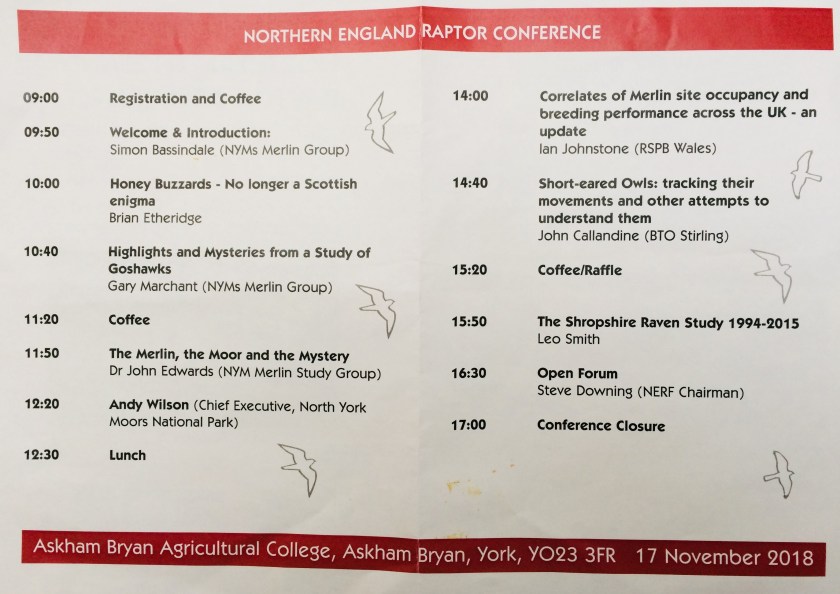
For an alternative view of this year’s hen harrier breeding results, have a read of this article from the Northern England Raptor Forum (NERF). It’s much more honest than anything you’ll see from the persecution deniers.

If you’re as sick to the back teeth as we are of the continued pretence that hen harriers are being ‘saved’ by grouse moor gamekeepers, then come along to a Hen Harrier Day event this weekend and ensure your voice is heard. You’ll find details here.

More birds on Angus Glens housing estate than on grouse moor!

We’ve been witnessing an increase in propaganda from the grouse shooting industry’s Gift of Grouse campaign in recent months, as they ramp up the pressure to try and ward off any kind of regulation that the Scottish Government’s grouse moor review panel might recommend.

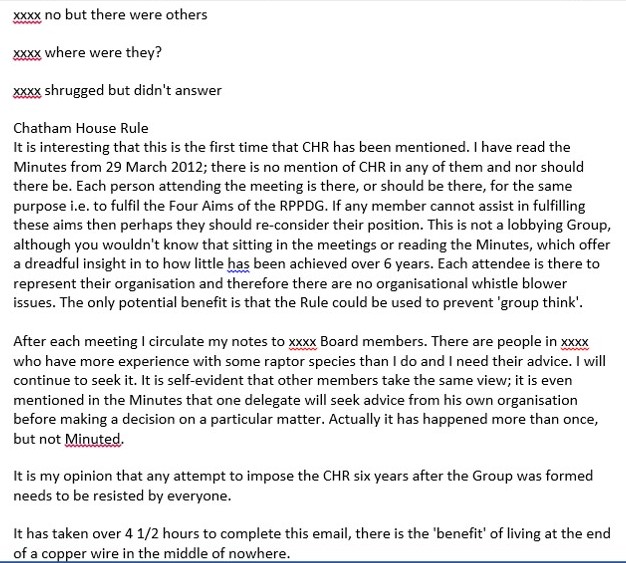
We know this fear of regulation is driving this campaign because the Gift of Grouse admits as such, on these cards that were distributed at the Scottish Game Fair in June/July.

The text on the card under the ‘Economic & Employment’ section has already been ripped to shreds by some amusing commentary on Twitter from the Forest Policy Group (@forest_policy), who pointed out that the 11k jobs refers to ALL game shooting, grouse shooting itself supports far less; that grouse moor occupies a broadly similar area to forest in Scotland and yet Forestry supports over 25k jobs from that area; and that wildlife watching contributes more economically than ‘country sports tourism’. The Forest Policy Group suggested that the question shouldn’t be ‘Does grouse shooting deliver economic benefit?’ but rather ‘How does that benefit compare with alternative land use?’. The answer is badly.

The text on the card under the heading ‘Environment and Conservation’ has recently been shredded by Mark Avery (here) and it’s also worth re-reading a blog we wrote a while ago (here) about the Gift of Grouse campaign’s misleading interpretation of the data recorded in the Taylor Wildlife Report, 2016.

Also in July we saw the Gift of Grouse making an absurd claim that ‘Grouse moors are nature reserves’ (see here for the press release).

This claim seemed to be based on a report by a German scientist (Dr Daniel Hoffman) who has been conducting ‘surveys’ on Glenogil Estate in the Angus Glens for three years (although the first year of survey was conducted over only four days in late April 2015 in appalling weather conditions – we blogged about it at the time – see here and scroll down to the bottom).

We are very interested in Dr Hoffmann’s work and found a report he’d written describing the ‘surveys’ undertaken in 2015. Download it here: Hoffmann-report

It’s very difficult to follow because English clearly isn’t Dr Hoffmann’s first language (that’s not a criticism, just an observation), which makes us very suspicious about the following commentary piece in The Times in June 2018 that was attributed to Dr Hoffmann, whose English skills seem to have suddenly improved.

Anyway, we digress. Let’s get back to Dr Hoffmann’s research.

A summary of some of his work has been posted on the Glenogil Estate website here. Take a look at this graph – it’s fascinating! It shows more bird species were recorded on a Glenogil ‘housing estate’ than on the grouse moor!

Obviously, there isn’t a ‘housing estate’ on Glenogil Estate and Dr Hoffmann’s terminology has just been lost in translation. If you read his 2015 report, his definition of ‘housing estate’ is revealed on page 38:

Most of the song birds were observed in shrubs next houses” [sic].

Ah, so it’s not the grouse moor at Glenogil that’s ‘a nature reserve’, it’s the bushes around the gamekeeper’s houses!

If you look at the six habitat types identified by Dr Hoffmann (and no, we don’t know how he differentiates between ‘field’ and ‘meadow’ and nor do we know what ‘realted’ means), the grouse moor habitat only scores 4th in terms of avian diversity, behind housing estate (1st), meadow (2nd), and waters (3rd).

Dr Hoffmann’s 2015 report contains some pretty surprising claims, such as

In fact of the political discussion about a ban on driven grouse shooting, our data should provide an indication if a ban will have positive or negative effect on the grouse population, birds in general and other species that have relevance to wildlife conservation“.

Really? And how will these ‘surveys’ (that don’t appear to have been done using recognised survey methods, although again this is difficult to understand from the report) provide such an indication? Has Dr Hoffmann set up a control area where grouse shooting is stopped, to compare with an area where grouse shooting continues? If he has, it’s not mentioned in this report. It sounds like the sort of “completely inadequate” study devised by GWCT for the Strathbraan raven cull! Dr Hoffmann appears to work for the Game Conservancy Deutschland – perhaps that organisation is twinned with the GWCT.

The report also contains some other interesting detail, such as the number of gamekeepers employed on Glenogil Estate to undertake predator control (twelve of them – that’s a lot of predators being killed); “an exceptionally high population of grouse” (presumably as a result of intensive predator control); and the revelation that “about 2000 traps” are deployed to kill predators. That’s a lot of traps. There’s a photo of one of the traps and it doesn’t look like the entrance/exit holes have been sufficiently restricted to minimise the chance of non-target species being caught and killed:

The report also reveals that there “is a total of more than 2000” medicated grit trays – that’s a lot of medicated grit, presumably needed to maintain “an exceptionally high population of grouse“. We wonder if the disease Cryptosporidiosis, known to be spread by the use of communal grit trays in high density grouse populations, is a problem at Glenogil, given the apparent intensive grouse moor management going on there?

The report continues:

Another measure to increase the health of grouse is trapping them with nets. Almost 90% of the adult birds were caught in late autumn to dispense each with a fluid vermicide. Before releasing the grouse were ringed“.

Wow! 90% of adult grouse caught to be direct dosed with an anti-worming drug? And we know from previous blogs on this issue that SNH permits direct dosing with veterinary drugs during the shooting season, which means that the drug (Levamisole hydrochloride – used in human chemotherapy treatment) has every chance of entering the human food chain when those shot red grouse are sold (and we know the Veterinary Medicines Directorate does not undertake adequate surveillance or monitoring).

Sounds like a strange way to manage a ‘nature reserve’, doesn’t it?

UPDATE 7pm: Thanks to one of our blog readers (Peter Rees) who says the literal translation of the Deutscher Jagdverband is ‘German Hunting Association’. That explains a great deal. See comments section for more info.

(Deliberate) misinformation about welfare of satellite-tagged raptors

The Honorary Professors of Idiocy at the Angus Glens Institute for Critical Thinking are at it again.

Not content with embarrassing themselves with the laughable critique of the Golden Eagle Satellite Tag Review earlier this year (see here), they’re now on a mission to further detract attention from the damning evidence of illegal persecution being revealed by these satellite-tagged raptors.

[Photo of a satellite-tagged golden eagle that was caught in a trap on an Angus Glens grouse moor, suffering two broken (almost severed) legs, and then transported in the middle of the night several km north and dumped in a layby and callously left to suffer what must have been an excruciating death over several days. Photo by RSPB]

The Honorary Professors’ claim this time is that satellite-tagging raptors is “cruelty at its worst” and that those involved are “medieval practitioners of torture” (a claim made without the faintest hint of irony).

The evidence they’re using to whip up this hysteria and contrived concern comes from a scientific study that demonstrated awful lesions on the bodies of four red kites, caused by badly-fitting tag harnesses. The Honorary Professors suggest that this is evidence “they do not want you to see“. ‘They’, presumably, being anyone drawing attention to the ongoing persecution of raptors as demonstrated by the tag data from satellite-tagged golden eagles and hen harriers.

Hmm. Researchers went to real extremes to cover up these findings – so much so that the study was written up and published in a scientific journal that is freely available on t’internet for anyone to read. Damn those researchers, concealing their findings like this!

Here’s a copy of the freely available paper that the Honorary Professors suggest has been covered up:

Peniche et al 2011 Vet Record red kite harness

It’s well worth a read. It’s indisputable that those harnesses on those four red kites caused serious damage and that they likely contributed to the death of at least some of those four kites.

The Honorary Professors are suggesting that despite this shocking evidence, raptor workers are continuing to fit satellite tags using harnesses and therefore the researchers “don’t care” about the birds’ welfare and that it’s these poorly-fitting harnesses that are killing the raptors, not criminal gamekeepers.

One of the more stupid Honorary Professors even claims “The stats for birds affected by sat tag lesions [four red kites] seems to correlate with numbers of vanishing eagles [41 and counting]”. Er, no, not quite. That’s as idiotic as saying ‘the number of sausage rolls on display in the window of Greggs seems to correlate with numbers of patients admitted to Dundee Royal Infirmary with gastroenteritis’.

You see, what the Honorary Professors have failed to notice (or have chosen to deliberately exclude from their argument) is that the paper by Peniche et al (2011) detailing the lesions found on the tagged red kites was considered in great detail in the Golden Eagle Satellite Tag Review, as part of the authors’ assessment on whether satellite tagging was causing harm to golden eagles (Chapter 7). Here’s what they found:

So, the type of harness used on the red kites in those early years of tagging has not been used on golden eagles in Scotland (and if you read the Peniche et al paper you’ll see that as a direct result of the findings, the licensing authorities have now issued a specific post mortem protocol for harnessed birds to enable the detection of any further problems – gosh, they’re such an uncaring lot, aren’t they?); the problem with the red kite harness was likely attributed to one person improperly fitting harnesses, rather than a more general problem with tagging; and that there has been no evidence of harm being caused by tagging after post mortems of 28 dead tagged birds in Scotland, nor in the wider context of similar harnesses fitted in Europe and the USA.

Sorry, Honorary Professors, your claims are wholly unfounded. Again.

We really must pay tribute to the criminals whose persistent killing of satellite-tagged golden eagles led the Environment Secretary to commission the sat tag review; the superbly comprehensive and forensic analyses undertaken by the review authors (Dr Alan Fielding & Dr Phil Whitfield), amusingly still being described as “crap science” by one of the Honorary Professors, and the consistent efforts of the Honorary Professors of Idiocy for providing us with ongoing opportunities to keep drawing attention to this review’s findings, over a year after it was first published.

We’ll finish with this, taken from the end of Chapter 7 of the Golden Eagle Satellite Tag Review, that points out that even if tagging is harmful to golden eagles (which it hasn’t been proven to be), it still doesn’t explain the geographic clustering of all those ‘missing’ sat tagged eagles that just happen to coincide with areas of land intensively managed for driven grouse shooting, including, er the grouse moors of the Angus Glens:

“They can hide the bodies, they can hide the tags, but they can’t hide the pattern” (Dr Hugh Webster)

Ring Ouzel is latest victim of ‘vermin’ trap on grouse moor

We’ve been blogging recently about wildlife that has been caught/killed in ‘vermin’ traps set by gamekeepers on grouse moors.

These traps are used to target legal quarry such as stoats and weasels but they often catch other species, as we’ve seen in recent weeks, such as red squirrels, song thrushes, mistle thrushes, red grouse, pied wagtails and kestrels (e.g. see here, here, here). These victims have been aptly described by Dr Rob Sheldon as “collateral damage”.

We have no idea how many innocent victims are killed in these traps, because there is no requirement on the trap user to report the number of animals killed. There must be thousands of them, every year, given the number of traps we know about (at least 2,000 of these traps are set on one grouse moor in the Angus Glens alone).

Here’s another victim. This time a Ring Ouzel, photographed dead in a trap on a grouse shooting estate in the Peak District National Park in May this year. If the GPS coordinates in photo #4 are correct, these photos appear to have been taken on the Moscar Estate.

These sorts of traps can be used lawfully as long as certain conditions are applied, e.g. they must be set inside a natural or artificial tunnel and efforts must have been made to restrict the entrance holes to minimise the chances of non-target species getting caught/killed. However, stupidly, the law does not specifiy the min/max dimensions of the entrance holes.

You can see in these photos that efforts to restrict the entrance holes has been made, but clearly not sufficiently to prevent this Ring Ouzel from gaining access and getting killed in the jaws of the trap.

[Photos by an RSPB fieldworker]

Red kite shot near Corby, Northants

The following article appeared in the Northamptonshire Telegraph on Tuesday 31 July 2018:

POLICE ARE APPEALING FOR WITNESSES AFTER A RED KITE WAS SHOT AND INJURED

The bird of prey is being seen to by a local vet after being shot and injured yesterday (Monday).

The shooting took place in the area of Deene park and Fineshade.

A neighbourhood alert posted by Northants Police about the incident said: “Please be aware it is an offence to injure or kill these birds.”

Anyone who witnessed the shooting, saw anyone that looked suspicious or saw any suspicious vehicles in the area at the time is asked to call Northamptonshire Police on 101.

ENDS

We’ve been unable to find any further detail about this case – there’s no official appeal for information on the Northamptonshire Police website.

UPDATE 13.50hrs: We’ve now been informed this kite was handed in to the Forestry Commission office at Fineshade Wood on THURSDAY 19th JULY (not Mon 30th July as previously thought). It was rescued by a member of the public.

Quote from the Raptor Foundation: “I have taken charge of a red kite that has been shot, with three shotgun pellets, in the leg, shoulder and ear. The leg and shoulder pellets are not really an issue governing the birds potential release as they are below joints. The pellet in the ear is lodged in the bony part of the skull and is causing the bird problems with balance. The vet and I both agree the bird could not be released back with the pellet still inside. We have been treating for infection and pain relief and the bird is making steady improvements. It was unable to stand on admission, but is now mobile along the floor to some degree. The vet is looking to operate later this week“.

[Photo of the shot red kite, by Raptor Foundation]

RSPB satellite tags a shedload of hen harriers

RSPB press release (3 August 2018):

RECORD NUMBER OF HEN HARRIER CHICKS TAGGED THIS YEAR

Over 30 chicks tagged by RSPB Project

An unprecedented number of hen harrier chicks have been fitted with satellite tags this year by the RSPB as part of its EU funded Hen Harrier LIFE project to secure the future of these threatened birds.

So far more than 30 of the young birds have been tagged, the majority of them in Scotland. This is the fourth year in a row that the project has fitted satellite tags on hen harrier chicks. A number of those tagged this year are the offspring of birds tagged in previous years by the project including DeeCee who hatched in Perthshire in 2016.

Hen harriers are one of the UK’s rarest birds and the satellite tags allow the project to follow their movements as they leave the nest, gaining invaluable information on where the birds spend their time. The odds are stacked against hen harrier chicks from the start with survival rates of around 22 per cent in their first two years of life. The tags can reveal information about the cause of death for many of these young birds.

Of the birds tagged in 2017 almost 40 per cent are known to have died from natural causes, in line with these low survival rates. As the tags continue to transmit after a bird has died the remains of many of them were able to be recovered allowing post mortems to be carried out. These showed some to have been predated, while others died of starvation. One bird, Eric who was tagged in Orkney in July 2017, apparently drowned in January.

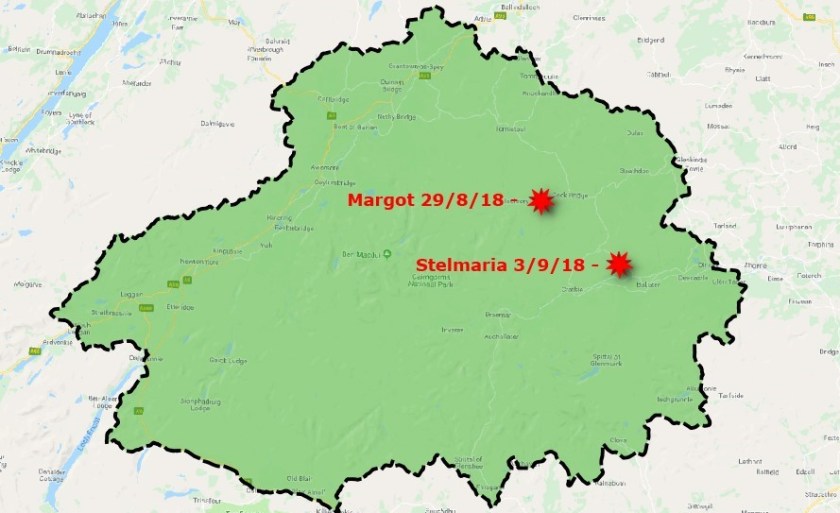
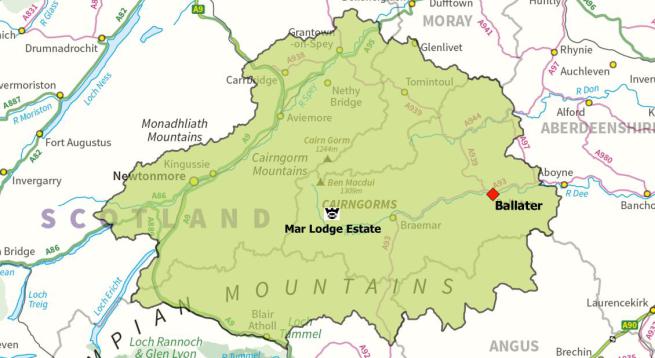
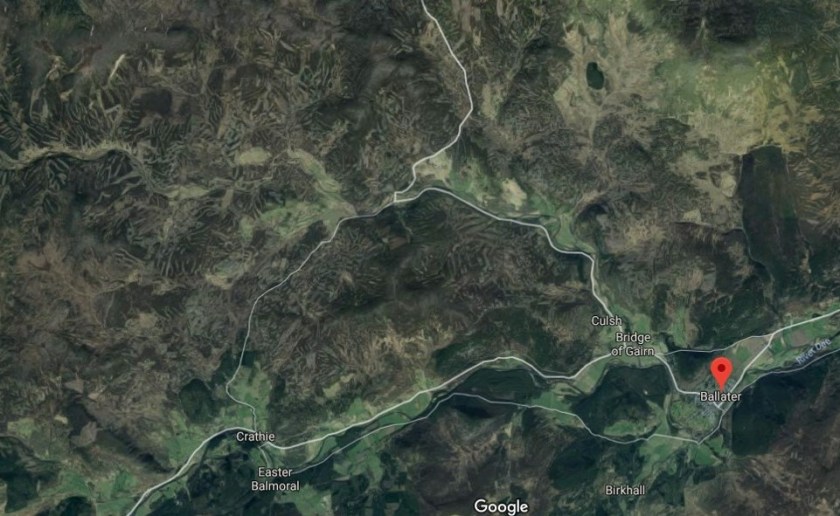
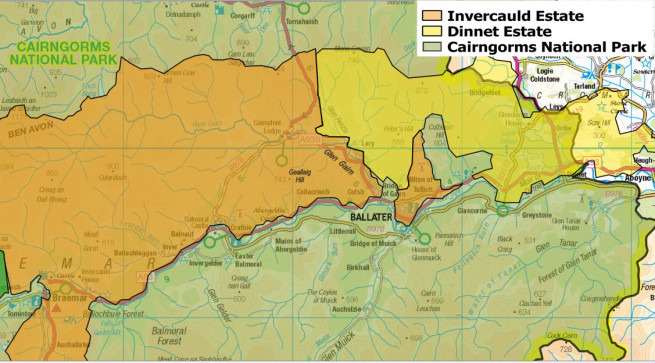
However, the tags also reveal that over a quarter of last year’s chicks have disappeared in suspicious circumstances. In these cases, transmissions from tags that have been functioning perfectly suddenly stop. The tag of one bird, Calluna, ended transmissions abruptly over a grouse moor a few miles north of Ballater on 12th August last year. Manu and Marc, from the same Borders nest, both disappeared over grouse moors in northern England.

The latest national survey of hen harriers, carried out in 2016, shows that the UK population has declined by 24 per cent since 2004. In Scotland there has been a 57 per cent decline on grouse moors since 2010. The continued illegal persecution of these birds is having a huge detrimental impact on their numbers.

RSPB Scotland is currently awaiting the recommendations of an independent enquiry panel commissioned by the Cabinet Secretary for the Environment Climate Change and Land Reform, Roseanna Cunningham MSP in May 2017, to look into how grouse moors can be managed within the law and explore options for its regulation. The panel was created following the review of satellite tagged golden eagles in Scotland and is expected to report back in Spring 2019.

Dr Cathleen Thomas, Project Manager for the RSPB’s Hen Harrier LIFE project said: “Satellite tagging technology has taught us so much about the movements of hen harriers. We can follow individual stories; from the birds that make huge journeys crossing over seas to those that stay closer to home and only move short distances from where they were hatched. We’ve discovered new nesting places and winter roosting sites, which help us protect the birds when they are at their most vulnerable.

The tags also allow us to investigate where and in what circumstances these hen harrier chicks are lost so we can better understand how to protect them and advocate for licensing of driven grouse shooting. This species is only just holding on in the UK; it’s both heart-breaking and infuriating that year after year many of these chicks disappear in suspicious circumstances. The loss of birds in this way is both needless and senseless and cannot go on. We hope that the recommendations of the enquiry panel here in Scotland will give hen harriers, and other birds of prey, a fair and fighting chance at survival and help stamp out these outdated illegal persecution practices.

The project is grateful for the fantastic support given from members of the Scottish Raptor Study Group and to the many landowners and their staff for their interest and help in assisting to tag so many birds.

From September a selection of this year’s tagged birds will be added to the project website where their travels can be followed along with some of the surviving birds from previous years: www.rspb.org.uk/henharrierlife

ENDS