Blog

Gamekeeper convicted for killing two short-eared owls on grouse moor in Yorkshire Dales National Park

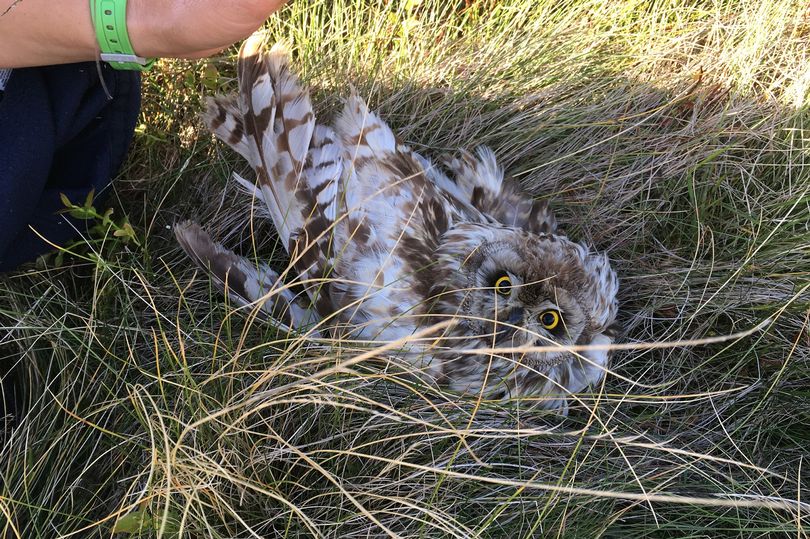
A gamekeeper was convicted at Lancaster Magistrates Court this morning for the killing of two short-eared owls on a grouse moor in the Yorkshire Dales National Park.

Timothy David Cowin, 44, pleaded guilty to shooting the owls on the Whernside Estate in Cumbria (inside the Yorkshire Dales National Park boundary) and to being in possession of a calling device that held the calls of several raptor species.

[Gamekeeper Cowin trying to leave the moor after shooting two short-eared owls. Photo by Guy Shorrock, RSPB]

His sentence? A pathetic £1,210, broken down as £400 for killing each short-eared owl, £200 for possessing the calling device, £170 costs and a £40 victim surcharge. The court heard that Cowin was suspended by the Whernside Estate pending the prosecution but then he later resigned and now apparently works as a joiner in Sedburgh.

Cowin committed these offences in April 2017 and was witnessed doing so by three members of the RSPB’s Investigations Team who just happened to be on the moor. The crimes were videoed (from a distance), and Cowin was observed shooting the owls, then stamping on them, and then disposing of the bodies – one hidden inside a stone wall and one stamped in to the peat. The quick-thinking RSPB team called the police, carried on filming, and one of them made his presence known to Cowin as Cowin tried to leave the moor, resulting in a chase across the hills before the police arrived to arrest him and retrieve the corpses.

For full details, have a read of this RSPB blog here.

And then watch this remarkable RSPB video:

We’ve blogged about this case previously (here), as it’s been dragged around five courts in north west England over a six-month period. At several stages it looked as though it was going to be abandoned on a legal technicality (paperwork issues this time, instead of contesting the admissibility of video evidence), as we’ve seen so often with other cases in recent years, and it is testament to the dedication of all those involved in the prosecution (RSPB, North Yorkshire Police Rural Taskforce, and the Crown Prosecution Service, who all put in extra hours) that it stayed on track and resulted in a conviction.

Of course it wouldn’t have got to court in the first place if it hadn’t been for the RSPB’s Investigations Team being on that grouse moor to install a covert camera for what had looked to them like previous suspicious activity. But just being there wouldn’t have been enough. The team was also skilled enough to recognise what Cowin was up to, quick-witted enough to film him, sharp enough to call the Police as the crime was in progress, and fit enough to chase Cowin across the moor when he was trying to escape. Added to their outstanding efforts was the swift response from North Yorkshire Police to get up to the grouse moor in time to arrest him. And then the dedicated, committed efforts of both the RSPB and the police to return early the next day to search for the second owl corpse before Cowin had an opportunity to get back on the moor and remove the evidence. In court, CPS prosecutor Rachel Parker was forensic in rebutting the attempts by the defence solicitor to have the case thrown out.

The actions of all involved in this successful prosecution were exemplary. Will the grouse shooting industry praise their efforts and encourage them to continue routing out the criminal gamekeepers known to be routinely committing these offences?

Unlikely.

We’ll no doubt hear the disingenuous bleating of the Moorland Association, GWCT, National Gamekeepers Organisation, Countryside Alliance etc, all condemning wildlife crime before swiftly returning to their usual criticism of the RSPB and its efforts to fight the continuing illegal persecution of raptors on driven grouse moors.

There are plenty more ‘Cowins’ out there, and despite the efforts of the grouse shooting industry to deny the extent of these crimes and pay for expensive lawyers to defend the criminals responsible, the public is becoming increasingly aware of how big a problem this is, through the efforts of the RSPB and its genuine conservation partners.

Today’s verdict doesn’t help those two short-eared owls; it’s too late for them, but Cowin’s conviction is yet another nail in the coffin of the driven grouse shooting industry. Kudos to all involved.

UPDATE 29 August 2018: Whernside Estate retains membership of Moorland Association (here)

UPDATE 31 August 2018: Whernside Estate: more reaction to gamekeeper’s conviction for shooting owls (here)

[PC Carr retrieving the pitiful corpse of the second short-eared owl that had been shot then stamped in to the ground. Photo by Guy Shorrock]

Two men charged in connection with wildlife crime investigation in Scottish Borders

A month ago we blogged about a Scottish gamekeeper who had been charged for a series of wildlife crime offences alleged to have taken place in the Scottish Borders (see here).

This morning Police Scotland has issued an official press statement in relation to this case, as follows:

Men charged in connection with wildlife crime investigation, Scottish Borders

Two men have been charged following an investigation into wildlife crime offences committed at a rural estate in the Scottish Borders.

The pair aged 59 and 57 are scheduled to appear in court at a later date.

END

It’s short on detail but it’s very good to see this case progressing.

Thanks to the person from the Police Scotland media team for alerting us to this news.

New satellite tag data reveal suspicious clustering of ‘missing’ hen harriers on English grouse moors

[UPDATE 27th August 2018: The three maps below have now been updated to account for the inaccurate grid reference of one ‘missing, fate unknown’ hen harrier – now accurately shown to have ‘disappeared’ in North York Moors National Park, and not in Bowland AONB]

Well, well, well.

The Westminster Government’s statutory nature conservation agency, Natural England (NE), has chosen to publish its long-awaited hen harrier satellite tag data late on a Saturday evening of a Bank Holiday weekend. No announcement, no fanfare, just quietly uploaded to the DEFRA website, probably hoping that nobody would notice.

After having a preliminary look at these data, it’s no wonder NE doesn’t want to shout about them because they validate our long-held view that NE has been shielding the hen harrier-killing criminals within the driven grouse shooting industry for years, instead of dragging them before the courts and closing down their filthy ‘sport’.

Photo of a satellite-tagged hen harrier. A post-mortem revealed it had been shot.

NE has been satellite-tagging hen harriers since 2007 and a lot of them have ‘disappeared’ in suspicious circumstances (e.g. here). As many regular blog readers will know, we, and others (notably Mark Avery) have been asking NE to publish these hen harrier satellite tag data for a long time. We came quite close to getting the information from this publicly-funded research about a year ago, when NE published part of its ten-year data set but crucially, it excluded all meaningful grid references and any information about the land use in the areas where these hen harriers had ‘disappeared’.

We accused NE of a cover up (see here and here) and pursued the data via many FoI requests but all to no avail. NE told us that as the 11-year NE-funded PhD study had finally been ditched (here), external experts would instead be analysing the data and we could expect the results to be submitted for peer-review publication in 2018.

The findings of that study by external experts were presented at an international ornithological conference in Vancouver yesterday morning, and NE, realising it could no longer justify withholding the data without facing another legal challenge, published the updated satellite tag data late last night.

The new hen harrier satellite tag data have been published on the DEFRA website here

The update is the same spreadsheet that NE published last September but now, importantly, also includes six figure grid references for the ‘last known fix’ from the satellite tags of most of the 59 hen harriers tagged by NE between 2007-2017.

We haven’t had time to look at these data very closely but for now we’ve produced some quick and dirty maps to show the distribution of ‘missing’ hen harriers and those that have been found dead, confirmed to have been killed illegally. Remember, these are the hen harriers that have been satellite-tagged by NE – the map does not include the data from RSPB’s Hen Harrier LIFE Project, so these maps will show an even bleaker picture once the RSPB has analysed the data from its tagged birds.

Here’s the overview map:

[Red star: HH found dead & confirmed illegally killed; Orange star: HH missing, fate unknown; Yellow star: Hen Harrier ‘John’, missing, fate unknown; Black star: hen harrier missing fate unknown but grid reference withheld]

The reason hen harrier John (yellow star) has been highlighted separately is because on NE’s updated spreadsheet, the data are only presented up to September 2017, and so John is shown as still being alive. However, we know that John ‘disappeared’ on Threshfield Moor in the Yorkshire Dales National Park in early October 2017 and so now joins the many others classified as ‘missing, fate unknown’.

The three black stars represent hen harriers that are listed in NE’s data set as ‘missing fate unknown’ but the grid references for these three harriers have been withheld, and the birds’ last known fix locations are given as ‘Bowland’, ‘Bowland’, and ‘Sheffield’. Presumably there is good reason to withhold these grid refs (perhaps they identify commonly-used roost sites?) so we’re not going to quibble about that. Consequently, the black stars are not placed accurately, just in the general area of ‘Bowland’ and ‘Sheffield’ (and presumably ‘Sheffield’ refers to a location close by, perhaps in the Peak District National Park).

You can see from this first overview map that there appears to be quite a bit of ‘clustering’ of last known fix locations in Yorkshire and Bowland, so let’s have a closer look at a regional scale:

Gosh, there does seem to be a lot of ‘missing’ hen harriers clusted in the Yorkshire Dales National Park, Nidderdale Area of Outstanding Natural Beauty, and Bowland Area of Outstanding Natural Beauty – all highly designated protected landscapes.

Shall we look a bit closer?

And there you have it. A suspicious spatial clustering of ‘missing’ or confirmed persecuted hen harriers in the Yorkshire Dales National Park, Nidderdale AONB and Bowland AONB – all areas where the landscape is dominated by intensively managed driven grouse moors.

Haven’t we seen this suspicious spatial clustering somewhere else? Ah yes, the map that shows the ‘missing’ satellite-tagged golden eagles in Scotland, where the spatial clustering appears in some areas that are intensively managed for driven grouse shooting.

Imagine that.

What’s that quote? “You can hide the bodies, you can hide the tags, but you can’t hide the pattern” (Dr Hugh Webster).

Looking at NE’s data spreadsheet, 47 of the 59 hen harriers satellite-tagged by NE between 2007-2017 are ‘missing, fate unknown’. That’s a whopping 79.6%!

Now obviously, these last known fix location data are of great interest to us and we await the publication of the full scientific analyses of all the tag data with great interest. But perhaps what is more interesting is what these data reveal about NE’s complicity in shielding the criminals within the grouse shooting industry.

Knowing full well what its own satellite tag research was showing, why has NE suppressed these results for so many years whilst working in so-called ‘partnership’ with the grouse shooting industry and sat back in silence whilst those same grouse shooting industry representatives have consistently denied, even in Parliament, the extent of their industry’s role in the systematic killing of hen harriers?

More blogs on this to come.

Heads up for Hen Harriers Project: is this the info they’ve been trying to hide?

The Heads up for Hen Harriers Project is a Scottish Government-funded initiative, led by Scottish Natural Heritage (SNH) in partnership with the landowners’ lobby group Scottish Land & Estates (SLE), RSPB Scotland and the National Wildlife Crime Unit.

Here is a photo of a hen harrier nest, captured by one of the project’s nest cameras:

The idea behind this project, which began in 2015, is that sporting estates agree to have cameras installed at hen harrier nests to identify the causes of nest failure. This is a flawed idea right from the off. We all know the main reason behind the declining hen harrier population – illegal persecution on intensively managed driven grouse moors – it has been documented time and time and time again, in scientific papers and government-funded reports. So, if you put an ‘official Project camera’ on a hen harrier nest situated on a driven grouse moor, the gamekeepers will know about it and won’t touch that nest (although they’re quite likely to try and bump off the young once they’ve left the nest but are hanging around the grouse drives, away from the nest camera). So if the nest then fails for natural reasons (e.g. poor weather, predation), the Project will only identify those issues as the cause of failure, and not the illegal persecution issue. The grouse-shooting industry will then use those (biased) results to shout about illegal persecution not being an issue. We’ve seen this many times already.

We’ve blogged about this project many times over the last few years and have been highly critical of its claims (e.g. see hereherehereherehere, here, here, here, here). Andy Wightman MSP also condemned the project in a Parliamentary debate last year as “a greenwashing exercise“. You can read the transcript here and watch the video here (and note the stony silence after Andy’s speech!).

One of the controversial claims made by this project emerged in the run up to that Parliamentary debate. Scottish Land & Estates issued a Parliamentary briefing note about the Heads Up for Harriers Project which was sent to MSPs.

You can read that briefing note here.

In this briefing note, SLE claimed:

Up to two thirds of the estates where cameras have been installed [seven of 11 nests over 3 yr period] have been driven grouse moors, indicating a strong take-up where the issue of hen harrier decline is most relevant“.

We wanted to scrutinise this claim and submitted several FoIs to SNH asking for the names of the estates to be released (for some reason, estates names had been kept top secret even though this is a publicly-funded project). Here’s SNH’s response:

FoI request to SNH: In each year, how many estates had successful nests and of those, how many estates were managed for driven grouse shooting?

SNH response: 2015 – 2 estates with successful nests, 2 of which were driven grouse moor. 1 additional successful nest 100m off the estate boundary of a driven grouse moor.

2016 – 3 estates with successful nests, 2 of which were driven grouse moor.

2017 – 6 estates with successful nests, 3 of which were driven grouse moor.

FoI request to SNH: Please provide the name of each estate, in each year, that signed up to participate.

SNH response: We have considered this part of your request very carefully, and we are unable to provide the estate names. Estates enter into the Heads Up For Harriers project voluntarily. The estate name information in this case was provided voluntarily, there are no other circumstances that entitle SNH to disclose it, and the estates have not consented to disclosure. Making the information publicly available would be likely to prejudice the interests of the estates, for example via negative publicity in the event of harriers not nesting on the estate or in the event of nest/s failing on the estate. We are therefore withholding the estate name details under EIRs Regulation 10(5)(f) (Interests of the individual providing the information).

The Heads Up for Harriers project members’ position is that estate wishes must be respected. Further, members agree the most important aspect of the project is to encourage cooperation and a positive working relationship ‘on the ground’ between estates, Project Officers and other project members to promote survival of hen harriers and enable monitoring if and when hen harriers return to breed. We have therefore concluded that, in this case, the public interest is best served by not releasing the estate names.

So SNH was also claiming that seven of the successful nests were located on driven grouse moors. Without being told the names of these grouse moor estates, it was impossible for this claim to be properly scrutinised, but we were suspicious enough to try anyway. We also considered carefully SNH’s explanation for not releasing the names (that it would ‘prejudice’ the interests of the estates involved via negative publicity) but we dismissed this as nonsense. The hen harrier-loving general public isn’t going to be upset at an estate that has made genuine efforts to host breeding hen harriers. Why would it?

It has taken us many months of painstaking research but we now think we know the names of those estates. To be absolutely clear, we aren’t 100% certain that our information is accurate and without being told ‘officially’ by the project partners, we won’t know, but we’re as sure as we can be given the thick veil of secrecy that surrounds this project.

In 2015 three estates had nest cameras placed at hen harrier nests. We believe these were on Ballandalloch Estate, Muckrach Estate, and Novar Estate:

Not one of these estates is on our radar as being involved with illegal raptor persecution and we applaud them for hosting breeding hen harriers. How many were driven grouse moors? Well according to SNH, two of them were. Which of these three estates was being run as a driven grouse moor in 2015? None of them, as far as we’ve been able to find out. There may have been some low-ground shooting (pheasants/partridge) and perhaps some walked-up grouse shooting, and Ballindalloch does have driven grouse shooting on one of its three landholdings but apparently not on the moor where the Heads up for Hen Harrier nest was located.

In 2016, three estates had nest cameras placed at hen harrier nests. We believe these were on Langholm Moor, Muckrach Estate and Novar Estate:

Again, not one of these estates is on our radar as being involved with illegal raptor persecution and we applaud them for hosting breeding hen harriers. How many were driven grouse moors? Well according to SNH, two of them were. Which of these three estates was being run as a driven grouse moor in 2016? None of them, as far as we’ve been able to find out. Muckrach and Novar were being run as they were in 2015, which leaves Langholm Moor, which was being run as a Demonstration Project so definitely not your average driven grouse moor (and they weren’t shooting grouse there either).

In 2017, six estates had nest cameras placed at hen harrier nests. We believe these were Langholm, Wildlands Ltd (1); Wildlands Ltd (2), Airlie Estate, Midfearn Estate and Balnagown Estate:

Again, not one of these estates is on our radar as being involved with illegal raptor persecution and we applaud them for hosting breeding hen harriers. How many were driven grouse moors? Well according to SNH, three of them were. Which of these six estates was being run as a driven grouse moor in 2017? The only one we have a question mark over is Airlie Estate (in the Angus Glens), which may or may not have been managed for driven grouse shooting in 2017. Our local informants suggest it wasn’t, but the nest (which failed – but not under suspicious circumstances) was close to the boundary of another estate that is managed for driven grouse shooting. The other estates are either rewilding projects, low ground, or have no gamebird shooting whatsoever.

So, if our analysis is correct (and it might not be – again, it’s important to reiterate that we’re not able to verify our findings because the estate names are being kept secret by SNH), only one of these eleven estates might have been managed for driven grouse shooting at the time the nest cameras were placed. Not seven, as SNH claims, and not two-thirds, as SLE claims, but one, possibly, maybe.

We are able to have some confidence in our findings after listening to a Hen Harrier Day presentation given by Brian Etheridge a couple of weeks ago in the Highlands. Brian, an acknowledged expert on hen harriers having studied them for well over 40 years, works as a Heads up for Hen Harriers Project Officer. He told the audience that in 2018, of seven successful nests, two were on driven grouse moors. He said of these hen harriers successfully fledging on the two driven grouse moors, “It’s the first time I’ve recorded that since way back in the 1990s“.

It sounds like there’s a bit of good news from this year’s project then, although we’re awaiting the results to be announced formally, not that we’ll believe them if they’re announced by either SLE or SNH.

However, this apparent good news this year does not, and should not, detract from the apparently misleading statements made by both SLE and SNH about the project’s previous so-called success on driven grouse moors. We’d expect nothing else from SLE but for SNH, a statutory Government agency, to be making what appear to be inaccurate statements, well that’s a very serious matter.

We’ll be writing to SNH to invite a response to our findings and to tell us we’ve got this completely wrong and to provide evidence to demonstrate why we’ve got it wrong.

Or is it the case, as Andy Wightman MSP put to the Scottish Parliament last December, that the project is being used as a greenwashing exercise to hide the criminal activities that are undertaken by some in the driven grouse shooting industry and to promote the misleading impression that it is voluntarily cooperating to clean up its act?

We’ll keep you posted.

SNH wilfully blind to threat of persecution of golden eagles in south Scotland

The project to translocate golden eagles from the Scottish Highlands to south Scotland has finally got underway this year, with news out today that three eagles have been successfully released this year.

There’s an article about it on BBC Scotland (here) including some video footage.

Unbelievably, Professor Des Thompson, Principal Advisor for Biodiversity and Science at SNH, is quoted in both in the video and in the article as follows:

This is the icon of wild Scotland. We are on the threshold of giving something very exciting back to the south of Scotland. Scotland has just over 500 pairs, just two to four breeding pairs in the south of Scotland where they are really struggling.

Young golden eagles are heavily persecuted. A third of them have been killed either through shooting or poisoning.

Down here in the south of Scotland we’ve been able to reassure ourselves persecution is not an issue. It’s just a small fragmented population that needs this helping hand from us. We have been overwhelmed by the support we are getting from landowners and we are reassured these birds are going to be welcome“.

Did he actually just say that? “We’ve been able to reassure ourselves persecution is not an issue“. What, you mean in the same way that SNH reassured itself that the scientific justification for the Strahbraan raven cull was sound?

You couldn’t make this up. Has he switched jobs and is now representing Scottish Land & Estates? He might as well be as this is exactly the line they were trying to spin several years ago (see here).

The south of Scotland is well known for the illegal persecution of raptors, including golden eagles. Only this year a young satellite-tagged golden eagle (Fred) ‘disappeared’ in the Pentland Hills in highly suspicious circumstances (here) in an area where previously a merlin nest had been shot out and breeding ravens had also ‘disappeared’.

[Golden eagle Fred, by Ruth Tingay]

Then there’s Raeshaw Estate, currently operating under a General Licence restriction and an Individual Licence restriction, due to evidence of alleged ongoing raptor persecution (here); there’s a forthcoming prosecution of a gamekeeper in the Borders for a long list of alleged wildlife crime (here); there’s the land managed for driven grouse shooting in South Lanarkshire (close to the golden eagle translocation area) where over 50 confirmed reported incidents of dead raptors and poisoned baits have been recorded since 2003, including a shot golden eagle in 2012 (it didn’t survive, here), the reported shooting of a short-eared owl in 2017 (here), the reported shooting of a hen harrier in 2017 (here), and the reported shooting of a buzzard in 2018 (here); and then there’s been at least four raptor poisonings in south Scotland this year alone (here).

But don’t worry, folks, despite all evidence to the contrary, Professor Thompson is “reassured” that raptor persecution won’t be an issue for these young golden eagles.

Here’s a map from the 2008 Golden Eagle Conservation Framework showing the conservation status of golden eagles in Scotland (red = unfavourable conservation status), overlaid with ten years of raptor persecution data (all species, 2005-2015) gleaned from ‘official’ persecution maps. It doesn’t include data from the last three years. Does it look to you like raptor persecution isn’t an issue in southern Scotland?

We’ve blogged about the South Scotland Golden Eagle Project several times over the years (e.g. here, here, here) and we still have mixed feelings about it. On the one hand the south Scotland golden eagle population is in dire straits, and has been for some time, and urgently needs a boost. Translocating eagles from other parts of the Scottish range seems a decent strategy.

However, fundamental to translocation and reintroduction projects is the need to identify and resolve the underlying cause(s) of the species’ decline in that area. The authorities have not come anywhere near to resolving this issue, either in south Scotland or beyond. The chances remain high that these young eagles will be killed. Having said that, they’re just as likely to be illegally killed further north in Scotland so in that sense, moving them a few hundred km south probably won’t make much difference to their chance of being illegally killed.

At least these three young eagles have been satellite-tagged so their movements can be followed. The question is, if/when each eagle goes off the radar in suspicious circumstances, who will decide whether this news is suppressed or publicised?

We’ll be taking a close interest.

Raven cull: application for judicial review withdrawn, for now

The Scottish Raptor Study Group (SRSG) has this morning withdrawn its application for judicial review of the Strathbraan raven cull licence, but only on a temporary basis.

In an email to its crowdfunder supporters, the SRSG has stated the following:

Dear supporter,

This morning we have instructed our legal team to withdraw our application for judicial review of the Strathbraan raven cull licence.

The reasons for this are as follows:

Our initial objectives for applying for judicial review were to (a) establish that the process and scientific justification for the SNH raven cull licence (i.e. ‘just to see what happens’) was flawed and should not be permitted to be used as the basis for this or for any future cull licences for ravens or other protected species; and (b) to have the 2018 raven cull licence stopped.

We have succeeded in achieving both objectives. 

At the end of July, SNH published a review conducted by its own Scientific Advisory Committee (SAC) which utterly condemned the scientific justificiation and design of the ‘study’, calling it “completely inadequate”, “seriously flawed” and “will fail to provide any meaningful scientific evidence”.

As a result of this damning review, SNH also announced that the licence holder (Strathbraan Community Collaboration for Waders, SCCW) had agreed to ‘voluntarily suspend’ the raven cull from the end of July until the licence expires on 31 December 2018, having killed 39 of its licensed quota of 69 ravens. On a superficial level this appeared, initially, to be a satisfactory response, but we had concerns that the ‘voluntary suspension’ was not legally binding and so the SCCW could continue to kill ravens at any time for the remaining duration of the licence.

However, we are now satisfied that the SCCW has made an undertaking to voluntarily suspend the cull, which in effect means the licence will not be used again before it expires on 31 Dec 2018. According to our lawyers, the use of the word ‘undertaking’ has more legal significance than the word ‘agreed’, so if the SCCW does decide to continue killing ravens under the terms of the current (flawed) licence, even though it has undertaken not to, this would open an opportunity for us to launch a further legal challenge. It is important to note that it is the SCCW that has made this undertaking to voluntarily suspend the cull, and not SNH. Therefore any potential legal action on this point would be taken against the licence holder, not SNH.

[NB: On legal advice, the above paragraph has been edited at 14.13hrs to clarify, for the avoidance of doubt, the respective positions, as we understand, of SNH and SCCW]

As we have successfully achieved both our objectives, our application for judicial review becomes just an academic exercise with no tangible benefits, as the SAC has already declared the scientific justification as being “completely inadequate” and SNH will not be issuing any further licences without substantial review, and an undertaking has been made by SCCW not to kill any more ravens for the duration of the licence. If we were to proceed with our application for judicial review on this academic basis alone, there is a risk the judge would consider our case unfavourably and dismiss it, leaving us exposed to a demand for legal costs from SNH.

We feel we have a responsibility to use our crowdfunded donations wisely and pursuing an academic exercise just to prove a point would not be a prudent use of these funds, nor a good use of court time. On balance, we would have more to lose than gain. Instead, we intend to hold the remaining funds as a war chest so that if/when SNH decides to issue a further licence permitting the killing of ravens in Strathbraan, we will be in a strong position to react quickly and launch another legal challenge if it is deemed necessary. Our funds are currently being professionally audited and we have a significant amount remaining, which will be held by our lawyers in a ring-fenced account.

Our fight to get #Justice4Ravens is not over. SNH indicated that the 2018 raven cull licence was part of a proposed five-year ‘study’ at Strathbraan and although SNH has admitted it has to review and amend its “seriously flawed” study design, we are well aware that future licences are quite likely, if not in time for 2019 then probably for 2020. We consider the withdrawal of our application for judicial review as a temporary measure and will not hesitate to apply for a further judicial review if SNH’s incompetence continues.

We’d like to record our sincere thanks to our legal team, Sindi Mules (Balfour & Manson) and Aidan O’Neill QC (Matrix Chambers) for their hard work and commitment to our case. They have been fantastic to work with and we look forward to seeking their advice again as SNH’s future raven cull plans become clearer.

We’d also like to thank you, our donors, whose generous support allowed us to launch this legal challenge. It’s a cliche but our success in this case would not have been possible without your trust and support (and of course, your donations!). Thank you all.

We will continue to keep you informed of any new developments.

Ruth Tingay & Logan Steele, on behalf of Scottish Raptor Study Group

ENDS

To read all previous blogs on the raven cull licence, please see HERE (and scroll to foot of page)

Hunt saboteurs disrupt two Yorkshire grouse shoots

Yesterday, members of the Hunt Saboteurs disrupted two grouse shoots in Yorkshire, one on the edge of the Yorkshire Dales National Park and one inside the North York Moors National Park.

[Images from the Hunt Saboteurs facebook page]

Here is the write-up from the Hunt Saboteurs’ Facebook page:

North Cambs Hunt Sabs joined around 70 activists from around the country today to put a stop to grouse shooting in two moorland national parks.

First port of call was a large shoot spotted at Kexwith Moor, near Richmond. Sabs poured out of vehicles and crossed the heather covered moorland to the despair of the huge line of flag-waving beaters employed for today’s shoot.

When the sheer number of hunt sabs approaching over the hillside became apparent, the shoot rapidly packed up and retreated to the safety of the pub. Sab spotters keeping an eye on them confirmed that shooters didn’t attempt to go back out again that day.

Next on the list was a shoot spotted by another sab group at Bransdale Moor, north of Helmsley.

Sabs arrived in the area where a shoot was setting up nearby. Our long range lenses then confirmed reports that the shooting party had got wind of us, and were packing everyone away for the day.

As the paying customers had been safely sent away, the shoots beating team tried to impede our vehicle. We were locked behind gates, blocked by off road vehicles, had logs laid across paths to block our route, had gates nailed shut in our path and had two tractor trailers parked in front of byway gates.

With a little teamwork, a sturdy sab vehicle, a strong tow rope and (in the end) the North Yorks Police, we were safely on our way.

A long day out for North Cambs sabs, who were joined in our 4×4 today by friends from Beds & Bucks Hunt Sabs and Northants Hunt Saboteurs.

ENDS

An article on yesterday’s events in the Yorkshire Dales has appeared online this morning on Richmondshire Today, and takes a different perspective on what is alleged to have happened:

Hunt saboteurs wearing balaclavas tried to disrupt a grouse shoot in the Dales on Saturday.

Approximately 60 to 70 saboteurs took part in the action in Swaledale.

Police were called after the protesters gathered in the centre of Reeth and followed the shooting party onto the moors.

Dalesport, which runs shoots, said the saboteurs tried to stone shoot vehicles and intimidate shoot staff.

A spokesman said: “It was a shocking encounter in this tranquil area of the national park.

“Half the sabs were dressed in black with balaclavas in an attempt to prevent their identity.

“The police arrived to disperse them but not before further threats were made to the shoot staff.”

The West Yorkshire Hunt Saboteurs, who joined activists from all over the country, said the sabotage was a great success.

A member of the group said: “Activists from the Hunt Saboteurs Association set out to disrupt the shoot and prevent animals from being killed and that’s exactly what we did.

“The shoot was forced to pack up and leave the moors early today and the lives of countless birds were saved.”

A villager from Reeth said: “It was quite scary as the protesters had balaclavas on and there were so many police cars and vans.

“It’s a shame as there was a family fun day for guide dogs on and that was spoilt.”

However, a spokesman for the fun day said the saboteurs had spent a lot of money with them and the event had been a big success.

A visitor from Richmond, who was walking her dogs in the area, said: “When the protesters and police arrived it was very unnerving especially for families as nobody knew what was going on at first.

“I didn’t see any trouble or raised voices but I can understand people feeling a bit worried because of the way they looked.”

The Hunt Saboteurs Association advised on its Facebook page that 70 saboteurs had ‘just packed up a grouse shoot on the Yorkshire Dales’ and shared photos and a post from the Nottingham Hunt Saboteurs.

On their post, Nottingham Hunt Saboteurs said: “Lots of very unhappy shooters and lots of grouse who live to see another day.”

ENDS

The People’s Walk for Wildlife: London, 22 Sept 2018

Sick of reading about the ongoing slaughter of birds of prey and feeling helpless to stop it?

This is the event for you!

Come along to the People’s Walk for Wildlife, hosted by Chris Packham, and join thousands of others who care passionately about what’s happening to British wildlife, whether it be raptors, mountain hares, badgers, bees, trees, foxes, fish, birds, butterflies, wildcats, water voles, dragonflies….the lot.

Why? Well watch this:

The walk will take place in London (and there’s a reason for that, which will become clearer nearer the time) and everyone is welcome to this family-friendly event.

DETAILS

Saturday 22 September 2018

10am: Gather at the Reformers’ Tree in Hyde Park

12pm: Infotainment

1pm: Walk

2pm: Finish at Richmond Terrace, Westminster

For further information, including logo t-shirts, hoodies, bags and downloadable posters, please visit Chris Packham’s website HERE

If you’re on Twitter follow news of this event with #PeoplesWalkforWildlife

Don’t make excuses, make plans to be there, five weeks today!

Gamekeeper cautioned after merlin killed in illegally-set trap on grouse moor

This merlin was found dead in a trap on an un-named driven grouse moor in Northumberland in July this year. A fell runner discovered the bird and reported it to the RSPB.

The RSPB went to the site the next day and realised that this trap had been illegally-set as no attempts had been made to restrict access to the tunnel entrance, meaning non-target species (such as this merlin) could easily access the tunnel, with the inevitable result.

The incident was reported to Northumbria Police and a wildlife crime officer visited the site with an RSPB investigator.

An ‘experienced’ gamekeeper was formally interviewed and admitted setting the trap. Unbelievably, the police decided to issue him with a police caution instead of seeking a prosecution via the Crown Prosecution Service.

Haven’t we been here before? Ah yes, here and here.

Once again, another gamekeeper gets let off for committing a wildlife crime on a driven grouse moor. And before anyone says, ‘A caution isn’t a let off’, it absolutely is if this gamekeeper is permitted to keep his firearms and shotgun certificates, and his job, despite now having a criminal record.

Sure, he probably didn’t intend to trap and kill this merlin but that’s not the point. If he’s employed as a professional gamekeeper he has a responsibility to operate his traps within the terms of the law. With this trap, he chose not to do that, knowing full well that a non-target species could be killed, which it was. That’s an offence and he should have been charged and prosecuted.

Further details about this merlin case can be read on the RSPB Investigations Team blog here

What’s going on on this Peak District grouse moor?

A few months ago, one of our blog readers sent us this photograph of some grit that had been spread directly on the grouse moor at Broomhead Estate in the Peak District National Park:

The photograph was taken in March 2018, so given the time of year you might expect that this was medicated grit (as opposed to unmedicated grit), which is typically used in winter/spring during the closed grouse shooting season. Although given that it had been thrown directly on the ground next to water, this would be in breach of the GWCT’s ‘best practice’ guidelines on the use of medicated grit which suggest proximty to standing or running water should be avoided, so given this photograph you’d have to assume it was actually unmedicated grit. There’s no way of telling which type of grit it is just by looking at it.

So let’s assume the grit in that photograph taken in March was unmedicated grit.

But look what our blog reader found when he revisited the location in July 2018:

The pile of grit had ‘disappeared’ and in its place was a fresh pile of peat. How odd! If this was unmedicated grit, why would it have been removed in July? There’s no legal requirement to remove unmedicated grit at that time of year, but there is a legal requirement to remove medicated grit, 28 days before the start of the grouse shooting season, to ensure the veterinary drug (Flubendazole) does not enter the human food chain when the red grouse are shot in August. Hmm.

Our blog reader checked a few more gritting stations on this grouse moor at Broomhead Estate and took some other very interesting photos.

Here’s a photo taken in March 2018 showing a freshly-cut square of turf with fresh grit piled on top of it and some grit pieces in the exposed peaty water. Again, there’s no way of knowing, just by looking at it, whether this was medicated or unmedicated grit:

Here’s the same site revisted in July 2018. Look at that! The square of turf had been flipped back in to its hole and the grit was nowhere to be seen. If this was unmedicated grit, why would anyone bother removing it at this time of year…unless it was medicated grit?:

What do you think happened to all grit that had been photographed at this site in March 2018? Do you think the gamekeeper carefully picked up every last piece and removed it from the moor (which is what is supposed to happen if it was medicated grit)? Shall we have a look? Here’s what our blog reader photographed when revisiting this location in August 2018. Removing the turf from the hole, he found a load of grit that had been sandwiched between the peat and the turf. If this was medicated grit, this method of ‘disposal’ was against ‘best practice’ guidelines:

Here are some more photographs from other locations on this grouse moor at Broomhead Estate, appearing to show a similar practice:

Here’s a photograph taken in August 2018, with the cut turf back in place in the hole:

And here’s the same location, also photographed in August 2018, with the turf lifted to see what was underneath. Look at all that grit!:

And here’s yet another one, photographed in August – here’s the turf back in place:

But here’s what was photographed once the turf had been lifted. That’s a lot of residual grit!:

Here’s another location photographed in March 2018, with the grit thrown directly on the upturned turf:

Here’s the same location photographed in July 2018, with the turf back in place but with plenty of redisual grit left on the surface, freely available to any red grouse that happened to walk by:

We’ve got plenty more photographs showing exactly the same thing across this moor but you’ve probably got the picture by now.

So what the hell is going on here? Is this harmless unmedicated grit? If so, why bury it? Or is this actually medicated grit that has not been properly disposed of, just lazily left to seep in to the water and peat? If so, what damage might this be causing to the environment?

We looked up the Broomhead Estate in the Peak District National Park. Here’s its location:

And here are details of the agri-environmental payments this estate is receiving (over £1million to date under the Environmental Stewardship Scheme) and the protected status of parts of this estate (which includes an SPA, SSSI and a SAC):

We looked to see whether the grit locations lay inside any of these protected areas and it turns out that yes, they all lie within the SPA, SSSI and the SAC: [black dotted line is Broomhead Estate (as detailed in the the agri-environmental scheme), the green area is the combined SPA, SSSI and SAC, and the red stars are the locations where these grit piles were photographed]

So is anybody checking whether this is medicated or unmedicated grit? We doubt it. We know from previous correspondence with DEFRA’s Veterinary Medicines Directorate (VMD) that it barely checks dead grouse for veterinary medicines residues and it certainly doesn’t check gritting locations to ensure compliance with the statutory withdrawal times, because it told us as much.

Is Natural England checking whether this is medicated or unmedicated grit? We know from recent research that the drug Flubendazole can cause contamination and damage to aquatic ecosystems – so is Natural England concerned about the potential ecotoxicity of medicated grit use on grouse moors in general, let alone those like Broomhead with protected status designations? We doubt it, given NE’s recent track record of turning a blind eye to everything that goes on up on the moors.

We could check for ourselves whether this is medicated or unmedicated grit, by collecting a few samples and having them tested. But if we did this, we’d be open to charges of ‘theft’ (of the grit from the moor) by the landowner if he/she felt so inclined.

What we’re left with then is yet another aspect of potentially damaging grouse moor management without any statutory monitoring whatsoever, and instead we’re supposed to rely on the industry’s own self-regulation to ensure environmental protection. And we all know how good this industry is at that.