Blog

Proposed reintroduction of white-tailed eagles to Isle of Wight: have your say

Earlier this month the Roy Dennis Wildlife Foundation and the Forestry Commission announced a proposal to reintroduce white-tailed eagles to the Isle of Wight (see here).

The National Farmers Union has been having its say about the proposal (see here).

Now’s your chance to have your say.

A very short online questionnaire is open for your comments (but note it will close tonight, presumably at midnight). The questionnaire results, along with a scientific and conservation rationale, will form part of a feasibility report to Natural England and Scottish Natural Heritage as part of the licensing application.

Take part in the questionnaire HERE

Frequently asked questions about the proposal can be read here

Serial egg thief Daniel Lingham receives custodial sentence

Daniel Lingham, 65, was sentenced today at Norwich Magistrates Court after earlier pleading guilty to five charges relating to the unlawful possession of over 5,000 eggs including 75 listed on Schedule 1 of the Wildlife & Countryside Act (species given the highest level of protection) including Marsh harrier.

[Daniel Lingham, photo by Norfolk Police]

Lingham was jailed for a total of 18 weeks, reduced from 26 weeks because of his guilty pleas, and had to fofeit all his equipment. He was also given a 10-year criminal behaviour order (which replace ASBOs) banning him from all Norfolk nature reserves for ten years. If he breaks this ban he could be jailed for five years.

Ah, if only he’d done his Marsh harrier egg-stealing on a grouse moor – he’d probably have been made very welcome and nobody would have reported him. But had one of those pesky RSPB Investigators caught him red-handed on one of their covert cameras, stealing the harrier eggs from the moorland nest, he could have relied upon the deafening silence of the grouse moor manager not to identify him.

This is the second time Lingham has been jailed for egg-collecting offences. In 2005 he was sentenced to ten weeks in custody following the discovery of 4,000 eggs at his home in Newton St Faith.

Well done to the RSPB Investigations Team, Norfolk Police and the Crown Prosecution Service for securing this latest conviction.

It remains to be seen whether this time Lingham’s sentence is serious enough to act as a deterrent.

Details of his guilty plea (here) and his sentence (here).

[RSPB Investigations Officer Mark Thomas with some of Lingham’s collection. Photo by RSPB]

Pheasants shot & dumped near Duns, Scottish Borders

Here we go again.

Just last week we saw the British Association of Shooting & Conservation (BASC) claim that “the values and standards of the UK shooting community…is driven by strong ethics and respect for quarry“.

The evidence continues to suggest otherwise.

These pictures, sent to us by a blog reader, show approx 30 shot pheasants that had been dumped over a bridge (the Mouth Bridge) on the outskirts of Duns in the Scottish Borders. The photographs were taken yesterday afternoon (Monday 26 Nov 2018).

Even though this is against the Code of Good Shooting Practice (“shoot managers must ensure they have appropriate arrangements in place for the sale or consumption of the anticipated bag in advance of all shoot days“) and at a cost to us taxpayers to have the council clean up, this dumping of gamebirds is becoming quite common, even in some of our National Parks e.g. see previous blogs herehereherehereherehere, here).

It’s worth bearing in mind that an estimated 50 million non-native gamebirds (pheasants & red-legged partridge) are released in to our countryside EVERY YEAR, to provide live targets for people with guns. This is barely regulated – they can release as many of these alien species as they like and kill as many of them as they like, as long as they’re killed within the shooting season.

Think of all the native wildlife that has been killed by the gamekeeper in order to protect the ‘livestock’ (pheasants), to ensure there are as many available to be shot as possible when the shooting season opens. And for what? Just so the guns can have a bit of fun and the dead pheasants can be dumped?

Does this look like standards of ‘strong ethics and respect for quarry’ to you? How many raptors have been illegally killed to facilitate this pointless, pitiful carnage?

Hen harrier Heather ‘disappeared’ on grouse moor in Strathbraan raven cull area

Earlier this month RSPB Scotland announced that four of this year’s satellite-tagged hen harriers had ‘disappeared’ in suspicious circumstances on Scottish grouse moors (see here).

We’ve blogged recently about the areas where hen harriers Margot and Stelmaria ‘disappeared’ in the Cairngorms National Park (see here and here).

Today we’re looking at the area where hen harrier Heather ‘disappeared’.

[Photo of hen harrier Heather by Brian Etheridge]

According to the RSPB press release, hen harrier Heather, who had hatched from a Perthshire nest in 2017, was “last recorded on a grouse moor to the north of Glenalmond on 24 September 2018“.

It’s a bit of a vague description as Glenalmond is a glen which stretches for several miles to the west of the city of Perth:

And there’s a fair bit of grouse moor “to the north of Glenalmond” which, according to Andy Wightman’s Who Owns Scotland website, could be part of the Glenalmond Estate and/or the Scone Estate. It’s hard to say as we don’t know how far to the north of Glenalmond this hen harrier ‘disappeared’:

What we can say with certainty though, is that the grouse moor area to the north of Glenalmond just happens to be inside the Strathbraan raven cull area:

Imagine that! A satellite-tagged hen harrier ‘disappearing’ in suspicious circumstances in the very area where earlier this year SNH decided it was a great idea to licence a bunch of grouse moor managers to kill a load of ravens ‘just to see what happens’.

One of the many (many, many) reasons we objected to that raven cull was that the Strathbraan raven cull area is a well known wildlife crime hotspot, even identified as such on the official Scottish Government raptor persecution maps.

It was no surprise to us to learn that hen harrier Heather had ‘disappeared’ here. A further four satellite-tagged golden eagles have also vanished in suspicious circumstances here (five if you include another one just on the western boundary), a radio-tagged white-tailed eagle ‘disappeared’ here in 2012, an illegal clam trap was found here in 2012, a spring-trapped buzzard was found here in 2012, a poisoned red kite was found here in 2015, a poisoned raven was found here in 2017, and another satellite-tagged white-tailed eagle ‘disappeared’ here in March this year.

Instead of issuing licences permitting the mass killing of protected ravens, SNH should be crawling all over this area, revoking permission to use the General Licences as a bare minimum. Six eagles, FFS! A poisoned red kite, FFS! A poisoned raven, FFS! Illegally-set traps, FFS! A hen harrier missing in suspicious circumstances, FFS!

What does it have to take to get some enforcement action???

From which grouse shooting estate did Hen Harrier Stelmaria ‘disappear’?

Earlier this month RSPB Scotland announced that four of this year’s satellite-tagged hen harriers had ‘disappeared’ in suspicious circumstances on Scottish grouse moors (see here).

We then highlighted how two of those four missing hen harriers (Margot & Stelmaria) had ‘disappeared’ inside the Cairngorms National Park (see here).

[RPUK map showing approximate last known locations of hen harriers Margot & Stelmaria]

Yesterday we looked at the last known location of hen harrier Margot, which was on a grouse shooting estate that’s either a member of the East Cairngorms Moorland Partnership, or on a grouse shooting estate owned by the Royal family, or on a grouse shooting estate that’s an accredited member of the Wildlife Estates Scotland initiative (see here).

Today we’re going to take a closer look at the last known location of hen harrier Stelmaria.

As with Margot, the initial problem is that her last known location as reported by the RSPB is a bit vague – no grid reference and no named estate. The only details revealed in the RSPB press statement were:

Stelmaria was last recorded on grouse moor a few miles north west of Ballater, Aberdeenshire on 3rd September“.

Here’s a map showing the location of Mar Lodge Estate (from where Stelmaria, and Margot, hatched earlier this summer) and the location of Ballater:

As you can see from this next map, there are a lot of grouse moors positioned “a few miles north west of Ballater“:

So once again we referred to Andy Wightman’s Who Owns Scotland website to work out which estates are situated “a few miles north west of Ballater” and we found two – Invercauld Estate and Dinnet Estate:

This map may look familiar to some of you. That’s because we used it last year when we were looking at the last known location of another satellite-tagged hen harrier, Calluna, who had also ‘disappeared’ in suspicious circumstances. Calluna vanished “on a grouse moor a few miles north of Ballater” on 12 August 2017, the opening day of the grouse shooting season.

In fact these grouse moors around Ballater are becoming very familiar indeed. We’ve blogged about a number of alleged and confirmed incidents as follows:

There was the discovery of an illegally shot peregrine at the Pass of Ballater in 2011, the reported coordinated hunt and subsequent shooting of an adult hen harrier at Glen Gairn on the border of Invercauld and Dinnet Estates in 2013, and then there were the illegally-set traps that were found nr Geallaig Hill on Invercauld Estate in 2016, which resulted in ‘secret action‘ being taken against a gamekeeper but no prosecution followed, and nor has SNH imposed a General Licence restriction for this incident (and SNH has refused to discuss its decision saying ‘it’s not in the public interest‘ to tell us).

Last year, as mentioned above, satellite-tagged hen harrier ‘Calluna’ disappeared in suspicious circumstances on a grouse moor in this area (here), although it’s not clear whether this was on Invercauld Estate or neighbouring Dinnet Estate and then earlier this year a satellite-tagged white-tailed eagle ‘Blue T’ also ‘disappeared’ without trace on the Invercauld Estate (see here).

And now hen harrier Stelmaria has also vanished.

There’s a pretty clear pattern emerging in this area, but it seems to be one that Scottish Natural Heritage, the Cairngorms National Park Authority and the Scottish Government are all refusing to see.

Did hen harrier Margot ‘disappear’ on a Royal grouse moor?

Earlier this month RSPB Scotland announced that four of this year’s satellite-tagged hen harriers had ‘disappeared’ in suspicious circumstances on Scottish grouse moors (see here).

Yesterday we highlighted how two of those four missing hen harriers (Margot & Stelmaria) had ‘disappeared’ inside the Cairngorms National Park (see here).

Today we’re going to take a closer look at the last known location of hen harrier Margot.

[RPUK map showing approximate last known locations of hen harriers Margot & Stelmaria]

The first problem we have is not knowing the grid reference of Margot’s last known location. All we have is a description from the RSPB Scotland press release as follows:

Margot disappeared on 29 August [2018], with her last known position on a grouse moor on the Aberdeenshire/Moray border, a few miles south west of the Lecht ski centre“.

Here is the Lecht ski school, on the Cock Bridge to Tomintoul road on the eastern side of the National Park:

The RSPB press statement said Margot’s last known tag signal had been “on a grouse moor…..a few miles south west of the Lechy ski centre“.

As you can see from this zoomed in map, the RSPB’s description doesn’t narrow it down very much as the area to the SW of the ski school is pretty much all driven grouse moor. It’s not like there is an isolated patch of grouse moor that stands out from the wider landscape that would be easy for us to pinpoint:

So then we had a look at Andy Wightman’s Who Owns Scotland website, a fantastic resource that helps readers to, er, find out who owns Scotland. According to Andy’s data, the area “a few miles to the SW of the Lecht ski school” is covered by three estates, Glenavon, Delnadamph and Allargue.

Our search area can be narrowed down further by referring back to the RSPB press statement, which says Margot’s last known signal came from “a grouse moor on the Aberdeenshire/Moray border…..”, which we’ve added as a black line to this map:

Glenavon Estate is apparently, according to this 2015 article in the Sunday Post, owned by a ‘Mr Saleh’, a reclusive Malaysian-based businessman who has never been identified, through a company called Glenavon Ltd. According to Andy Wightman’s website, Glenavon Ltd is registered in Grand Cayman.

The estate offers driven and walked-up grouse shooting (here) and has previously been granted a licence by SNH to kill 900 mountain hares out of season, apparently to protect forestry (here, p.15).

It is one of six estates involved in the East Cairngorms Moorland Partnership, whose objectives include ‘enhancing raptor and other priority species conservation‘.

Delnadamph Estate borders Balmoral and was bought by the Queen (or to be more accurate by her Trustees) in the late 1970s, apparently because Balmoral ‘didn’t have adequate grouse shooting‘. The estate was apparently gifted to Prince Charles on his engagement to Diana and is now used by Charles and Camilla and perhaps other members of the Royal family.

Earlier this year the Balmoral Estate advertised for a new Head Gamekeeper for Delnadamph Estate, someone with ‘extensive knowledge of grouse and moorland management’ (see here). We happen to know (via an FoI on an unrelated issue) that the new Head Keeper was interviewed by Prince Charles and Prince William, no less, and was appointed to this position in late spring 2018, leaving his position as a grouse moor gamekeeper in the Pentland Hills for this job. We understand there are at least two under-keepers at Delnadamph.

Allargue Estate is owned by Mrs Rosemary Walker, according to Andy Wightman’s website. According to the Allargue Estate Management Plan the Walker family have owned this estate since the 17th Century and approximately 65% of the estate is managed for grouse shooting.

Allargue Estate was one of the first fully accredited members of the Wildlife Estates Scotland initiative and the Head gamekeeper here won the Purdey Gold Award in 2014 for Game & Conservation. According to the Purdey Awards website this estate “works tirelessly to uphold the Wildlife Estates Scotland high standards of wildlife management”.

We’ve blogged a little bit about Allargue Estate, not in relation to raptor persecution, but because it is believed this is the estate on whose land a load of men with a truckload of dead mountain hares were photographed in 2016.

To be absolutely clear, not one of these three estates is on our radar as being a raptor persecution hotspot.

Also to be clear, unless the RSPB releases the actual grid reference of hen harrier Margot’s last known location we’re not going to be able to identify the estate from where she vanished. And even if the RSPB did release that information, it still wouldn’t be that informative as the local authority Aberdeenshire/Moray border runs along the boundaries of all three estates. So if, for example, Margot had been shot on that border, the gunman could have shot her from a position on any one of the three estates. Criminal activity on estate boundaries is a well-known tactic to frustrate any potential targeted police investigations.

So to return to the question of whether Margot disappeared from a Royal grouse moor – the answer is possibly, but there’s no way we can be sure. There’s a one in three chance that that’s where she was when her tag suddenly and inexplicably stopped sending signals at the end of August this year.

What happened to her? Well you can draw your own conclusions, in the context of all the other young satellite-tagged hen harriers that have ‘disappeared’ in suspicious circumstances on or close to grouse moors across the UK.

Tomorrow we’ll be looking at the last known location of Margot’s sibling, hen harrier Stelmaria.

[Hen harrier Margot. Photo by RSPB Scotland]

Two of the four missing satellite-tagged hen harriers ‘disappeared’ on grouse moors in Cairngorms National Park

Earlier this month RSPB Scotland announced that four of this year’s satellite-tagged hen harriers had ‘disappeared’ in suspicious circumstances on Scottish grouse moors (see here).

[RPUK map showing approximate last known locations of four satellite-tagged hen harriers]

We said at the time that we’d be coming back to this subject as we were interested in the locations from where the birds had vanished.

Two of those hen harriers (Margot and Stelmaria) both hatched on the National Trust for Scotland’s Mar Lodge Estate in the Cairngorms National Park earlier this summer, and both of them subsequently vanished, also inside the Cairngorms National Park.

[RPUK map showing approximate last known locations of hen harriers Margot & Stelmaria]

We’ll be coming back to have a closer look at these locations tomorrow.

It should be shocking that two hen harriers, a high priority red-listed species, have vanished in suspicious circumstances inside the world-renowned Cairngorms National Park (CNP). But it isn’t. Because this isn’t the first time.

In August 2016 satellite-tagged hen harrier Brian ‘disappeared’ inside the CNP (see here).

In August 2017 satellite-tagged hen harrier Calluna ‘disappeared’ inside the CNP (see here).

In August 2015 satellite-tagged hen harrier Lad didn’t ‘disappear’ but he was found dead, suspected shot, inside the CNP (see here).

But it’s not just satellite-tagged hen harriers. At least 15 satellite-tagged golden eagles have also ‘disappeared’ in suspicious circumstances in recent years inside the CNP (see here). In 2014 the first white-tailed eagle chick to fledge in East Scotland in approx 200 years also ‘disappeared’ in suspicious circumstances inside the CNP (see here) and earlier this year another white-tailed eagle also ‘disappeared’ in suspicious circumstances inside the CNP (see here).

We’ve searched the Cairngorms National Park Authority’s website for a comment/statement about the latest two hen harrier disappearances but we didn’t find anything.

We’ve also searched the Scottish Government’s website for a comment/statement about the latest two hen harrier disappearances inside the CNP but we didn’t find anything there either.

Probably because it’s all a bit embarrassing.

In 2017, following the damning findings of the Golden Eagle Satellite Tag Review, the Scottish Government announced it was to establish a 12-month pilot scheme, funding five police special constables to work in the CNP to focus on deterring and detecting wildlife crime. This scheme was launched in March this year (see here).

This pilot scheme was the Government’s alternative to extending the powers of the SSPCA to allow it to investigate a wider suite of wildlife crime (including raptor persecution) – a decision made after six years of Governmental deliberation under five different Environment Ministers.

It also emerged earlier this year that this pilot scheme was also an alternative to the Government’s 2016 manifesto pledge to establish a Wildlife Crime Investigation Unit as part of Police Scotland – a pledge on which it has now reneged (see here). The idea is that the police special constable scheme could be rolled out across Scotland “if judged to be successful” in the CNP.

We’re not sure what the criteria will be for judging ‘success’ but we can be quite sure that the continued suspicious ‘disappearance’ of satellite-tagged raptors within the CNP cannot possibly be indicative of success.

UPDATE 22 Nov 2018: Did hen harrier Margot ‘disappear’ on a Royal grouse moor? (Here)

UPDATE 23 Nov 2018: From which grouse shooting estate did hen harrier Stelmaria ‘disappear’? (here)

Local community raises concerns about grouse moor management in National Park

The picture often painted by the grouse shooting industry is one of community harmony – a rural idyll where local residents are deliriously enthralled by the activities of the local grouse moor managers and thankful for the boost that grouse shooting brings to the local economy, without which the local community would apparently collapse.

Sounds great, doesn’t it? Until, that is, you realise that the various quotes trotted out in support of the industry are word-for-word identical, even though they were supposedly uttered by local residents living hundreds of miles apart! Quite obviously this was part of a determined PR effort by the industry’s spin doctors to portray widespread support (e.g. see here).

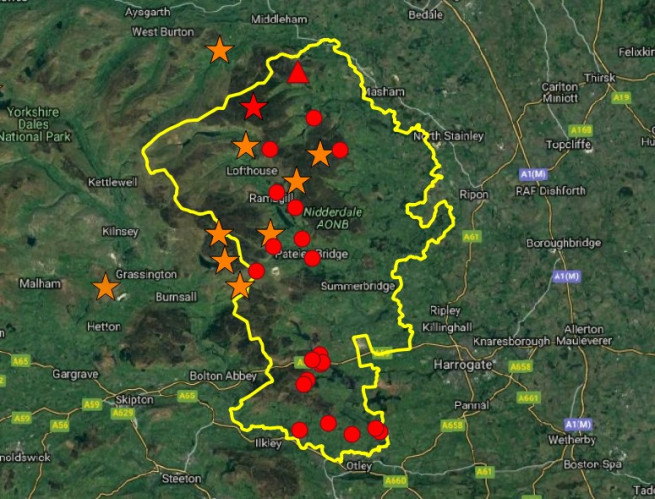
Increasingly, though, we’ve been hearing a different point of view, with local residents finding their voices and speaking out against the damage this industry brings to their door. First we heard from local communities in the Yorkshire Dales National Park (see here and here), then from a community in the Nidderdale Area of Outstanding Natural Beauty (see here), and now from a local community in the North York Moors National Park.

Last month, residents of the village of Goathland called a public meeting to discuss their concerns about the environmental consequences of driven grouse moor management in their area, and particularly their concerns about ‘disappearing’ wildlife.

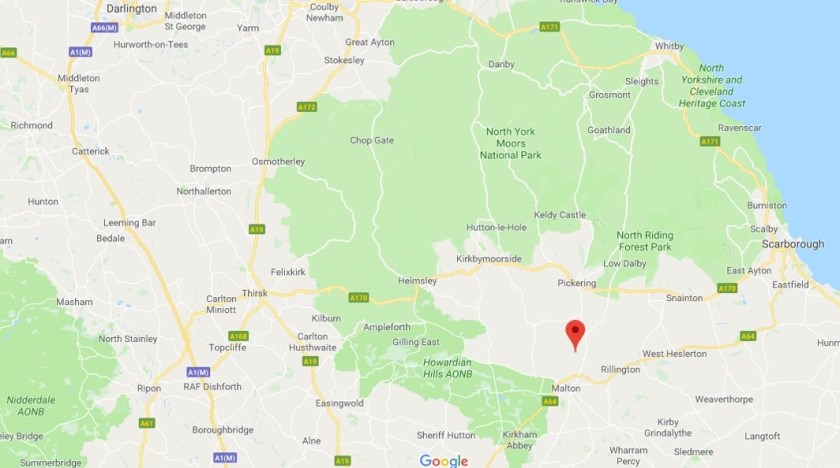
Here’s Goathland, in the heart of this National Park and practically surrounded by driven grouse moors:

This is a National Park – look at the state of it! And those grouse moors spread a lot further west than shown on this map.

Here’s the agenda for the meeting held on 24 October 2018. We note with some irony the third item listed was ‘Raptors disappearing’. Less than two days after this meeting, the satellite tag attached to hen harrier Arthur sent its last signal from a grouse moor in the North York National Park before both it and Arthur ‘disappeared’.

One of our blog readers attended this meeting and made some notes, as follows:

A few days later the official minutes were circulated as follows:

There’s a lot of interesting stuff to work through in both these documents. Many thanks to the blog reader who sent these through.

Very well done to the Goathland residents for raising these issues and for trying to hold someone to account. It’s brilliant to see them challenging the Moorland Association and exposing its propaganda.

If you’d like to support the Goathland residents and add your voice to theirs, you might like to comment on the current Landscapes Review consultation which is gathering evidence on how England’s National Parks and Areas of Outstanding Natural Beauty (AONBs) should be ‘fit for the future’. If you think intensive grouse moor management and its associated wildlife crime should be ousted from the North York Moors National Park, or that the National Park Authority should be given increased enforcement powers to deal with the associated wildlife crime and environmental damage, then this is your opportunity to comment.

UPDATE 11 January 2019: Local community holds 2nd meeting to raise concerns about grouse moor management in National Park (here)

Trial begins for (now ex) Head Gamekeeper of Edradynate Estate

The long-awaited trial of Edradynate Estate’s now former Head Gamekeeper began today at Perth Sheriff Court.

David Campbell, 69, denies that between 14 and 16 April 2017 at Edradynate Estate he maliciously damaged game crops by spraying them with an unknown substance which caused them to rot and perish.

At the time of the alleged offences, Campbell was no longer an employee of the estate, having worked there since 1983 but after falling out with the landowner, millionaire city financier Michael Campbell (no relation), his employment was terminated in February 2017. Michael Campbell told the court today that he believed his former employee had caused the damage ‘in revenge’.

There’s an interesting write-up of today’s proceedings here, revealing an exceptionally close working relationship between David and Michael Campbell over the years.

[RPUK map showing location of Edradynate Estate in Highland Perthshire]

[RPUK photo of the entrance to the estate]

It might seem odd that we’re reporting on this case, and although we can’t explain that decision while this trial is on-going, all will become clear in due course.

We understand the current trial against David Campbell is due to continue on 22 January 2019.

PLEASE NOTE: We’re not accepting comments on this case until the trial concludes. Thanks.

Raptor persecution highlighted at NERF annual conference

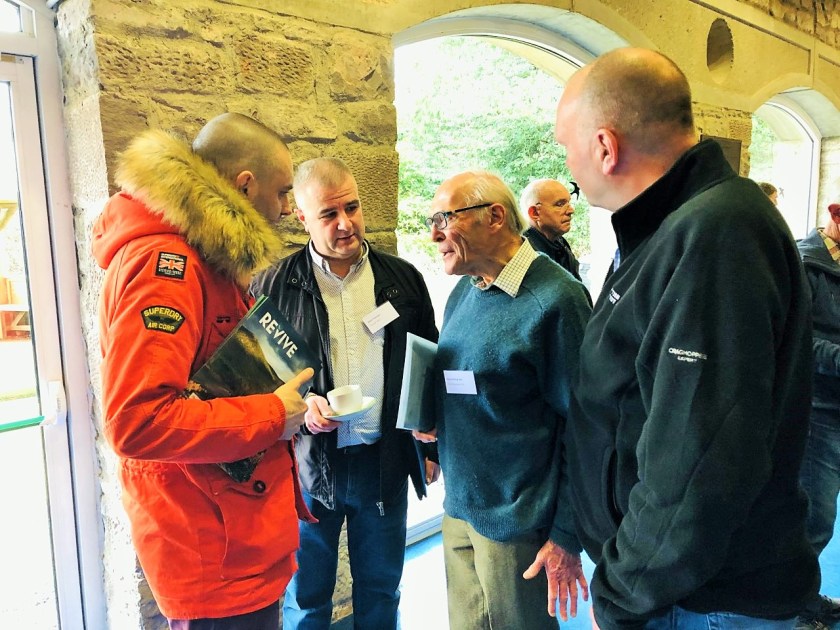
The Northern England Raptor Forum (NERF) annual conference took place on Saturday with a record number of 170 attendees.

NERF comprises ten regional study groups (Bowland Raptor Study Group, Calderdale RSG, Cheshire RSG, Durham Upland Bird Study Group, Manchester Raptor Group, Northumbria Ringing Group, North York Moors Upland Bird (Merlin) Study Group, Peak District Raptor Monitoring Group, South Peak RSG and Yorkshire Dales & Nidderdale RSG). In addition to these experts, it was also great to see Andy Wilson, Chief Executive of the North York Moors National Park, the RSPB’s Investigations Team and the RSPB Skydancer Project, and several police wildlife crime officers from the North Yorkshire Police Rural Task Force in the audience.

[Photos: Guy Shorrock]

The annual conference rotates between the regional groups and this year it fell to the North York Moors group to organise and host, and what a fantastic job they did.

The programme included some exceptional talks by some of the most experienced raptor fieldworkers in the country, offering illuminating insights from long-term studies, some of whose hard-won data are now contributing to understanding population declines in some of these species.

Illegal persecution was high on the agenda, as you’d expect from a conference focusing on the conservation of birds of prey in the UK.

Andy Wilson’s presentation was particularly telling, laying out the frustration of the North York Moors National Park Authority in having insufficient enforcement powers to tackle wildlife crime, in contrast to its robust powers for dealing with breaches of planning law. This National Park was in the news just last week as satellite-tagged hen harrier Arthur joined the long list of those who have ‘disappeared’ in suspicious circumstances on or near grouse moors in the region. Andy suggested that people might like to comment on the current Landscapes Review consultation which is gathering evidence on how England’s National Parks and Areas of Outstanding Natural Beauty (AONBs) should be ‘fit for the future’. If you think intensive grouse moor management and its associated wildlife crime should be ousted from our National Parks and AONBs, or that the National Park Authorities should be given increased enforcement powers, then this is your opportunity to comment.

The new NERF Chair Steve Downing used his slot in the Open Forum to deliver a strongly-worded opinion on the extent of illegal raptor persecution and the failure of the authorities to deal with it. Steve has been on the frontline of raptor protection for many many years and if anyone knows the scale of the problem, it’s him. He’s not a man to mince his words as anyone in the audience will attest.

However, there was a note of cautious optimism. Steve spoke positively about the enormous efforts of the recently-formed North Yorkshire Police Rural Task Force (who are in the middle of training up an additional 33 wildlife crime officers) and he also commented on the potential for some serious advances for the Raptor Persecution Priority Delivery Group (RPPDG) under the new leadership of Police Supt Nick Lyall. As Steve said, time will tell.