Blog

Monumentally inadequate sentence for convicted Scottish gamekeeper Alan Wilson

In July this year, Scottish gamekeeper Alan Wilson, then 60, pleaded guilty to nine of 12 charges of wildlife crime at Henlaw Wood on Longformacus Estate in the Borders (see here).

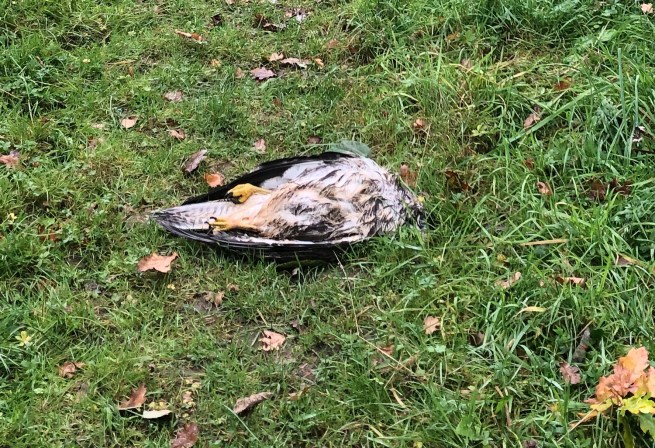
Wilson’s crimes included the shooting and killing of two goshawks at Henlaw Wood between March 2016 and May 2017, three buzzards, three badgers and an otter. He also pleaded guilty to charges of setting 23 illegal snares and possession of two bottles of the highly toxic (and banned pesticide) Carbofuran (see here).

[SSPCA photos]

Following Wilson’s guilty plea, the Sheriff adjourned sentencing for a few weeks to allow reports to be submitted.

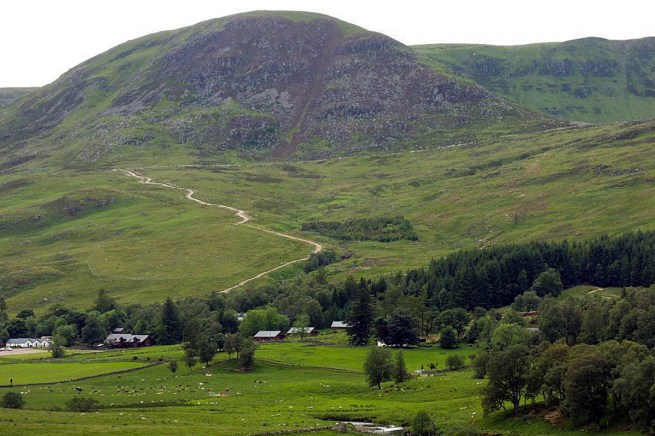
Soon after his conviction, Scottish Land & Estates issued a statement of condemnation and claimed the Longformacus Estate was being managed for low ground pheasant shooting but in its desperation to avoid any bad publicity of grouse moor management, completely failed to mention that part of the estate was also managed as a grouse moor. Here’s a photograph of Henlaw Wood (now felled) and its proximity to the grouse moor:

[Original photo by Richard Webb; additional text by RPUK]

Alan Wilson, now 61, was sentenced at Jedburgh Sheriff Court this afternoon. Astonishingly (or not!), despite his litany of violent crimes against protected raptors and mammals which easily passed the threshold for a custodial sentence, Wilson has dodged jail, has dodged a fine, and instead has been issued with a 10-month curfew and an instruction to carry out 225 hours of unpaid work as part of a Community Payback Scheme. His firearms and other equipment was confiscated (it’s not clear for how long).

This monumentally inadequate sentence is in no way a reflection of the severity or extent of Wilson’s crimes, nor does it offer a suitable deterrent for other would-be offenders. According to this article in the Guardian by Sev Carrell, Sheriff Peter Paterson acknowledged that Wilson’s offending warranted a custodial sentence but said that as the Wildlife & Countryside Act only allowed sentences of up to six months, and Scottish Ministers had recently introduced a presumption against jailing offenders for less than 12 months, he felt he had no choice but to impose a different sentence.

This doesn’t make sense to us. Sure, the W&CA does, currently, impose a limit of six months but that’s six months per offence, so in Wilson’s case, where he had pleaded guilty to multiple offences, this would have amounted to much more than one six-month sentence and so in our opinion, he should have received a custodial sentence. We don’t know if this sentence will be appealed by the Crown Office – it must first be satisfied that the sentence was unduly lenient (e.g. see here). We’ll have to wait and see.

What is absolutely crystal clear is that the Scottish Government needs to get on and implement the penalty increases for wildlife crimes that it agreed to do way back in 2016.

This is Wilson’s second conviction in relation to offences at Longformacus Estate: in February 2018 he was sentenced to a £400 fine and disqualified from keeping birds of prey for ten years after he was convicted of animal welfare offences in relation to an Eagle Owl he had kept in appalling conditions (see here).

We don’t know whether Wilson’s employer (which may be a landowner or a sporting agent) will face a charge of alleged vicarious liability. We know that two individuals were originally charged with alleged offences at Longformacus Estate (e.g. see here) but we don’t yet have any more details. We will be following up on this and will report here if there is news. [Please note: if you are commenting on this aspect of the crimes at Longformacus Estate, remember there is a potential defence to any allegation of vicarious liability – Wilson’s employer is not automatically guilty just because he was Wilson’s employer].

Interestingly, the Scottish Gamekeepers Association has, after months of refusing to comment, now finally admitted that Wilson was indeed an SGA member when he committed these wildlife crimes. Here is the SGA statement posted today:

We’ll be discussing Wilson’s SGA membership in a later post.

It is not clear to us whether the Longformacus Estate is a member of Scottish Land & Estates. So far SLE hasn’t issued a statement about today’s sentencing. Instead, it’s website is leading with an article with the unfortunate headline, ‘Making it Happen’.

More on this soon.

It only remains to acknowledge the huge efforts of all those involved in detecting, investigating and prosecuting this case. This successful conviction was the result of genuine partnership working between the League Against Cruel Sports, Scottish SPCA, RSPB Scotland, Police Scotland and the Crown Office, along with experts from the Scottish Raptor Study Group, SASA, and veterinary pathologists from Scottish Agricultural College. Well done and thanks to all those involved in exposing this filthy criminal activity on yet another grouse moor.

Wildlife crime is endemic on many grouse moors. We see it over and over again and we also see the offenders escape justice time and time again. If you’d like to help bring it to an end, please consider signing this new petition calling for a ban on driven grouse shooting – PLEASE SIGN HERE

UPDATE 30 August 2019: No vicarious liability prosecution for Longformacus Estate (here).

Charlie Jacoby (FieldsportsChannelTV) interviews Wild Justice at Bird Fair 2019

You may remember last month, Chris Packham and Mark Avery had accepted an invitation to be interviewed by Charlie Jacoby of FieldsportsChannelTV at the Game Fair, only for that invitation to be revoked after several shooting organisations (including BASC, GWCT and the Countryside Alliance) objected and the Game Fair organisers were also fearful of ‘violence from shooters’ (see here).

In response, Charlie Jacoby was invited to conduct his interview at the Bird Fair (many thanks to Bird Fair organiser Tim Appleton for facilitating this). Charlie accepted the invitation, he and his film crew came along on Saturday, there was no violence(!), just a warm welcome from a 1000-strong audience.

Here’s the video, filmed by Charlie’s team:

The so-called ‘fact checks’ (ahem) were added later and Wild Justice wasn’t offered an opportunity to read those nor to comment/contribute.

It’s good that Charlie has begun to introduce a fact checking process in to his productions – that’s definite progress, although judging by some of the ‘facts’ he’s used here he still needs to learn how to separate fact from opinion.

It’s pretty clear from Charlie’s questions and commentary, if you accept that he represents the majority view of the game-shooting industry, that the state of denial is as strong as it ever was, particularly around the issue of illegal raptor persecution. That’s nothing new, of course, and is actually the main driver of this blog (i.e. to demonstrate that yes, illegal raptor persecution is still going on despite claims to the contrary) and is one of several drivers behind the latest petition to ban driven grouse shooting, which currently has 66,369 signatures and is still less than a week old.

If you’d like to sign the petition, and encourage others to sign it, please CLICK HERE.

Grouse shooting industry ‘experts’ unable to identify a hen harrier!

This is amusing.

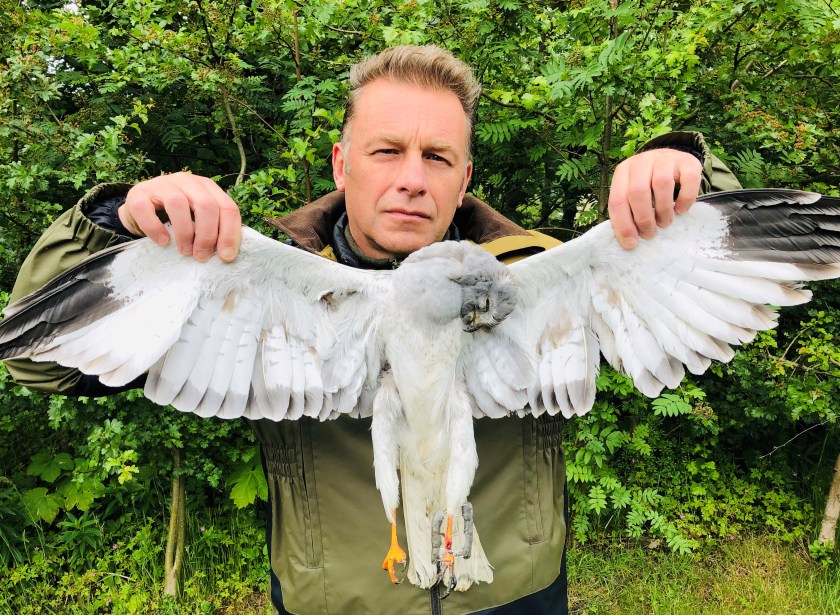
The Moorland Association (a wealthy lobby group for grouse moor owners) has published a slick video where they’re trying to claim credit for ‘Bringing back our English Hen Harriers’ (you know, the hen harriers that have been brought to the verge of breeding extinction by, er, criminals on grouse moors).

Except it’s not as slick as they would have liked. Thanks to Nick Williams (@TheFalconBirder) for noticing this:

This production must have cost a fair bit – the Moorland Association members must be thrilled with the result! And isn’t it interesting how the Moorland Association wants the credit for the success of a few hen harrier breeding attempts and yet refuses point blank to ever, ever, ever accept any responsibility when hen harriers (and other raptors) are either killed or ‘disappear’ on Moorland Association members’ grouse moors?

It’s not just the Moorland Association that can’t identify a hen harrier. Natural England also seems to be struggling:

An inability to identify an easily-recognisable species is a common theme amongst grouse moor ‘experts’. Here’s Scottish Land & Estates (the Scottish lobby group for landowners) using an image of a white-tailed eagle to illustrate a call for help to find two ‘missing’ golden eagles:

These organisations should take BASC’s lead and forget about trying to craft an image of concern for threatened raptors. Instead, just get your PR department to produce a statement that portrays conservationists as a security risk:

Incidentally, the ‘triumph’ BASC is referring to is the news that this year England holds just 5% of the number of breeding hen harriers it should have. It’s telling that BASC takes pride in such a failure.

So, BASC, who is it that decides whether we’re ‘extremists’, as you described Chris Packham & Mark Avery when they were banned from the Game Fair a few weeks ago? Are they on MI5’s watch list, or something? Or is this a word you’ve chosen in a pathetic attempt to smear their reputations and dissuade people from listening to them?

What’s ‘dangerous’ about using the democratic process to call for a ban on driven grouse shooting? Have you reported us to the police? The public need to be protected from such ‘dangerous’ activity!

And what, exactly, is our ‘animal rights agenda’? Could you explain this, please?

Less than 48 hours ago, Wild Justice launched a new petition calling for a ban on driven grouse shooting. So far more than 40,000 so-called ‘extremists with a dangerous animal rights agenda’ have signed it. You can too –HERE.

Wild Justice launches new petition to ban driven grouse shooting

Just in case anyone has missed this, yesterday Wild Justice (Mark Avery, Chris Packham & Ruth Tingay) launched a new petition calling for a ban on driven grouse shooting.

The petition was actually submitted six weeks ago but strange goings on at Westminster led to it being inexplicably delayed. By sheer coincidence, it went live yesterday afternoon at the same time as distressing news was emerging about a young golden eagle that had been photographed flying around Deeside in the Cairngorms National Park with an illegal trap clamped to its leg.

This is probably the fifth (I think) petition calling for a ban on driven grouse shooting – Mark Avery has previously raised three, then Gavin Gamble raised another one. This time though, it seems to have struck a chord with the British public. In just 24hrs of going live, the petition has received an incredible 27,000 signatures. People are clearly very very angry.

The speed with which people are signing this petition is sending a strong message all of its own:

We’ve had enough.

If you’d like to support it, please SIGN HERE and then share the petition with others.

Thank you

Young golden eagle flying around Cairngorms National Park with an illegal trap clamped to its leg

This is beyond what is tolerable.

Police Scotland have issued the following statement this evening:

Appeal to trace golden eagle in Aberdeenshire

Officers are appealing for information to help locate a Golden eagle which was seen flying in the Crathie area of Deeside with what appears to be a trap attached to its leg.

Concerns were raised about the first-year eagle on Thursday August 8, 2019, by a tourist and there are serious concerns for the bird’s welfare.  Enquiries are ongoing in conjunction with our partner agencies including the RSPB.

Sergeant Kim Wood said: “We would encourage anyone who has information which could help to locate this eagle to contact the Police on 101 or another relevant authority as soon as possible.”

ENDS

This is an area where illegally-set spring traps were found on a driven grouse moor in 2016 (here). There was no prosecution (see here).

The photograph of this eagle has re-ignited a fury that’s been gathering strength for several months.

It began with the suspicious disappearance of two of our satellite-tagged golden eagles, Adam and Charlie, who vanished on the same April morning, on the same grouse moor, within a few hours of one another.

A short time later we learned that an RSPB-satellite-tagged hen harrier had been found dead on a nearby grouse moor with its leg gripped by an illegal trap.

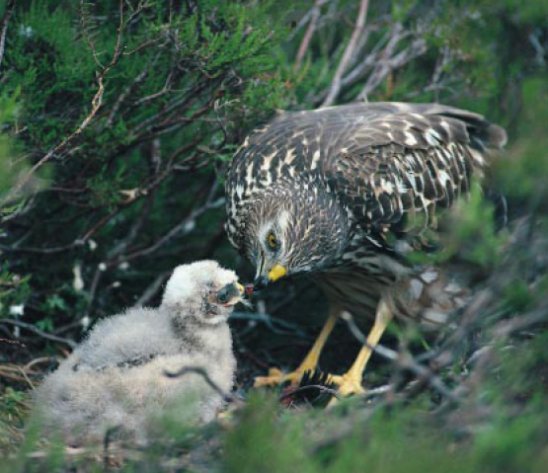
A few weeks later we learned of another hen harrier caught in an illegally-set spring trap. This time it was a breeding male and the trap had been set by his nest. He was still alive when raptor workers found him but in great distress. His trapped leg was almost severed. A specialist wildlife vet from the SSPCA did his very best to save this bird, but unfortunately the harrier’s injuries were just too severe and he didn’t make it. A second trap was found actually in the harrier’s nest, placed next to two eggs. There was no sign of the breeding female.

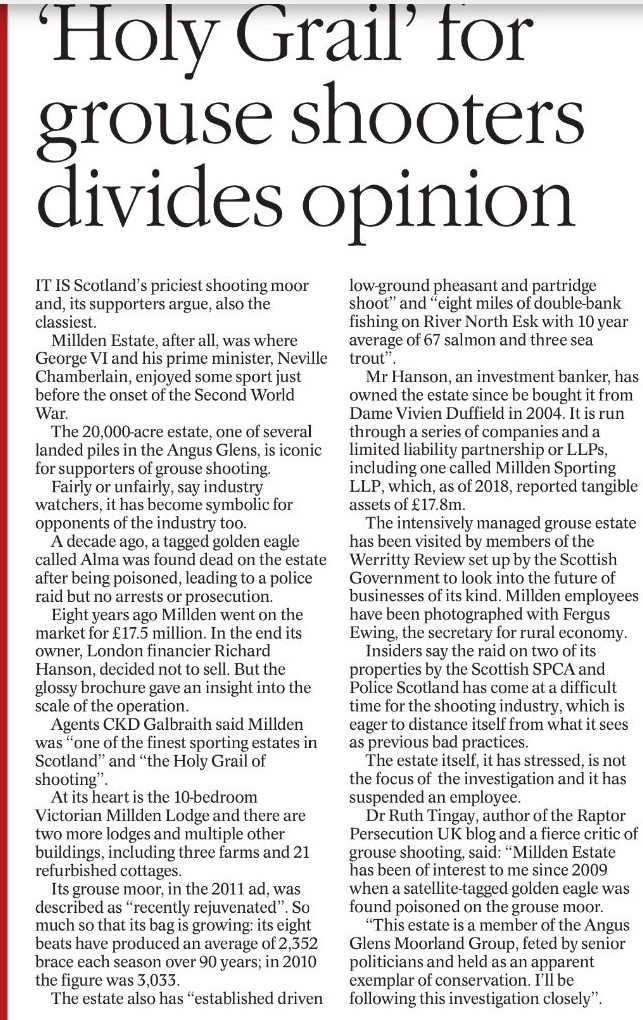
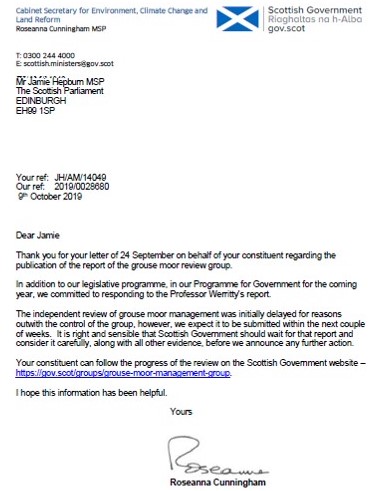
The Scottish Government’s response to these horrendous crimes? Absolute silence for weeks, and then acting under huge public pressure, a pathetic statement that said ‘We’ve got to wait for the Werritty Review‘ – that’s the report on grouse moor management that we’ve been waiting for since May 2017.

And now this. A young golden eagle flying around with an illegal trap clamped to its leg. It’s quite likely this eagle is already dead.

I’m sorry, Nicola Sturgeon, Roseanna Cunningham and Mairi Gougeon, as much as I admire you as strong, intelligent female politicians, I am no longer prepared to make excuses for you. It is your collective failure to act decisively that has led to these continuing atrocities.

If any blog readers share this sense of fury and exasperation, now is the time to act. Here are two things you can do:

  1. Send an email to First Minister Nicola Sturgeon and let her know, clearly but politely, that as the leader of the Scottish Government she needs to step up, show some leadership and take immediate action. Please send your emails to: FirstMinister@gov.scot
  2. Sign this new petition (launched tonight by Wild Justice) calling for a ban on driven grouse shooting – see here.

Thank you

See you at Hen Harrier Day tomorrow!

Wild Justice (Chris Packham, Mark Avery & Ruth Tingay) is hosting this year’s Hen Harrier Day event at Carsington Water Visitor Centre, Ashbourne, Derbyshire, 12 noon to 5pm Sunday 11th August 2019. Huge thanks to Severn Trent Water for their support, enthusiasm and help.

This is a family-friendly event with loads of kids activities and stalls and a fantastic line up of speakers who’ll be telling the ugly truth about what’s happening to hen harriers.

[This hen harrier was caught in an illegally set trap that had been placed next to his nest on a grouse moor. The trap practically severed his leg. Despite the best efforts of a specialist wildlife vet, he didn’t make it. Photo by Ruth Tingay]

The speakers will be on stage throughout the afternoon in three blocks:

Early speakers: Iolo Williams (Conservationist and broadcaster), Hardyal Dhindsa (Derbyshire Police and Crime Commissioner), Gill Lewis (author), Tim Birch (Derbyshire Wildlife Trust).

Mid-afternoon speakersRuth Tingay (Wild Justice and Raptor Persecution UK), Cathleen Thomas (RSPB Hen Harrier Life project), Dan Rouse (conservationist, Wales), Ian Thomson (RSPB Investigations, Scotland)

Late afternoon speakersNick Lyall (Police Superintendent, chair Raptor Persecution Priority Delivery Group), Tessa Gregory (lawyer, Leigh Day), Dom Dyer (conservationist), Natalie Bennett (Green Party), Chris Packham CBE (Wild Justice, broadcaster etc).

We know that many supporters are travelling across the country to be there. Safe travels and look forward to seeing everyone.

Nearly 60 million non-native gamebirds released in UK every year

The exact number of game birds that are released in the UK for shooting every year is not known (because, incredibly, the game bird shooting industry is virtually unregulated). Nobody even knows how many game bird shoots there are, because the people involved do not have to register anywhere, nor report on the number of birds released / shot each year. It’s been a great old wheeze for decades.

[Gamebird poults in poor feather condition just prior to release in to a woodland pen. Photo by Ruth Tingay]

All we’ve had to go on in recent years has been a conservative estimate of approx 50 million released birds every year, of which approx 43 million are pheasants and 9 million are red-legged partridge.

This ~50 million estimate came from the GWCT’s National Gamebag Census which until now hadn’t been updated since 2012, so a lot of us had guessed that the figure had probably increased substantially since then but we had no hard evidence to support this theory.

Until now.

Take a look at this recent paper from the GWCT, which analyses gamebag data up until 2016 (so it’s still not up to date but it’s more up to date than their 2012 estimate).

This table from the paper is fascinating:

So as of 2016 there are at least 47 million (yes, million) pheasants released in to the countryside for shooting every year, as well as at least 10 million (yes, million) red-legged partridge.

That’s nearly 60 million non-native birds, every year!

And look at that – at least 12,000 jays killed every year. Why?

140,000 woodcock, 85,000 common snipe and 870 golden plover killed every year. Why? Isn’t the shooting industry supposed to be ‘looking after’ waders? Why are they killing them in such huge numbers?

As many of you will know, Wild Justice is currently challenging DEFRA about its failure to assess the environmental impact of releasing so many millions of non-native game birds in to the countryside. The crowdfunder to support this legal action is just £2,059 short of its target, with 7 days to go. If you can help push it over the line, please visit here.

Thank you


More osprey chicks released at Poole Harbour, Dorset

Some welcome conservation news…..

The Poole Harbour Osprey Translocation Project has just released eleven healthy young birds as part of a five year plan to establish a breeding population on the south coast.

This year’s birds were collected from nests in Scotland (only from broods with multiple chicks) in mid-July and have spent the last few weeks being cared for around the clock by a team of dedicated staff and volunteers. The birds were released from the aviaries at the weekend and are reported to be doing exceptionally well (see here).

[Osprey project team members Paul, Brittany & Lucy showing Lou Hubble (Head, National Wildlife Crime Unit) around the site last month. Photo by Ruth Tingay]

[Osprey #21 in fantastic condition inside the release aviary, being photo bombed by another. Photo by Lou Hubble, NWCU]

The project is jointly led by local charity Birds of Poole Harbour, The Roy Dennis Wildlife Foundation and local Poole-based business Wildlife Windows. This is the third year of releases and already one of the 2017-released birds has returned to the harbour after a successful inaugural migration to West Africa and has been seen pair-bonding with an older female who originated from Rutland Water but has been hanging out in Poole since the project began.

The project team has built a number of artificial nest platforms around the harbour and hopes are high that next year will see the first breeding attempt.

As you might expect, these birds are attracting a huge amount of local public interest and support and Birds of Poole Harbour has hosted a number of special ‘Osprey Boat Cruises’ which have proved to be extremely popular. The boats go for a leisurely cruise around the harbour for a couple of hours with members of the project team on board to provide a commentary and help spot the ospreys (highly recommended – these trips are great fun). If you’d like to book you’d better be quick – book here.

Congratulations to everyone involved with this excellent project and fingers crossed that all the hard work will pay off next year with at least one breeding attempt.

Disaster hits South Scotland Golden Eagle Release Project

The South Scotland Golden Eagle Project has been hit by disaster in an unprecedented set of circumstances.

This is a project to translocate golden eagles from the Scottish Highlands and release them in south Scotland in an attempt to boost the remnant sub-population in the Borders and Dumfries & Galloway. The first three birds were released in 2018 and all have survived so far.

However, this year’s cohort of translocated eagles (three of them) were released in the last week and now one of them is dead, one of them is injured (but recaptured) and one of them is ‘missing’.

The project team believe that one of last year’s birds, a large female called ‘Beaky’, has been the source of the problem. She is known to have been 10 miles away from the release site when this year’s birds were released, and despite not having visited the project’s food dumps for months, she suddenly made a bee-line there and began to display dominant behaviour towards this year’s three (smaller) males. The males responded by cowering in nearby undergrowth and not visiting the food dumps.

One of the eagles has since been found dead and is currently undergoing a post mortem to find out the cause of death. It’s believed he had injuries but it’s not clear whether those injuries were the cause of death or whether he starved to death.

[This is the eagle that is believed to have died. Photo by South Scotland Golden Eagle Project]

A second eagle has been recaptured and is undergoing treatment. The project team has yet to decide the next course of action but if this eagle is to be released it’s probably safe to say it’ll be released at a different site.

The third eagle is apparently ‘missing’, although it is fitted with a satellite tag.

This situation is devastating for the project team (and for all those who helped source the eagles from the Highlands) and to be fair to them, it’s not something that could ever have been predicted. Adult eagles are well known for territorial disputes and these can sometimes result in death, but it’s exceptional for such a young bird (Beaky – one year old) to display such aggressive territorial behaviour that results in death. It’s virtually unheard of.

The future of the project will be under serious scrutiny as a result of this week’s events – it may be that a new release site has to be found – but that’s for another day. At the moment the priority is to rehabilitate the injured eagle and to locate the ‘missing’ eagle. Hopefully the project team is seeking expert help from those with experience of searching for ‘missing’ sat tagged raptors.

Police warning as red kite confirmed poisoned in Nidderdale AONB

Last October (2018) a dead red kite had been found near Wath, in the Nidderdale Area of Outstanding Natural Beauty (AONB), a notorious raptor persecution black spot.

An x-ray confirmed the kite had been shot and North Yorkshire Police launched an investigation. We blogged about the case here.

It seems that wasn’t the end of the story. Although the x-ray revealed two pieces of shot, these were not considered to have caused the kite’s death so it was sent off for post-mortem and toxicology examination.

The results are now back (10 months on!!) and nobody will be surprised to learn that, like so many other red kites in Nidderdale, this one had not only been shot on two separate occasions, but it had also been poisoned with a concoction of banned pesticides.

North Yorkshire Police has now issued a warning and an appeal for information as follows:

POLICE PESTICIDE WARNING AFTER DEATH OF RED KITE (8 August 2019)

Police have issued a warning about illegal pesticides, after a post-mortem concluded a red kite died as a result of pesticide abuse.

At the end of October 2018 a red kite was found dead in Nidderdale. The finder in this case was the landowner, who was concerned that criminal activity may have taken place on his land.

North Yorkshire Police arranged for the bird to be x-rayed, and this showed there were two pieces of shot in the bird. However, it was not possible to say whether these had caused fatal injuries. Police released details of the incident, and appealed for information from the public.

Officers have now completed their enquiries. The dead bird was subjected to a post mortem, which concluded that the injury caused by one piece of shot was old and had healed. The damage caused by the second piece was recent but was not a fatal injury.

The bird was then submitted to the Wildlife Incident Investigation Scheme, which is administered by Natural England. It was subjected to toxicological tests which found several poisons in the bird. The largest quantity of poison was a substance called bendiocarb, a pesticide which is licenced [sic] for use in the UK. Smaller amounts of two other pesticides, isofenphos and carbofuran, which are both illegal in the UK, were also present. The report concluded that the kite had died as a result of the abuse of several pesticides.

At this time, officers have not received any information to help them identify any suspects. Although the investigation has now concluded, anyone with any information about this incident is asked to contact North Yorkshire Police, quoting reference 12180199938.

A spokesperson for North Yorkshire Police said: “The test results suggest that someone not only has access to two illegal poisons, but is also placing them, along with a legal pesticide, into the environment so that a wild bird has been able to consume them. In addition to being poisoned, the bird had also been shot at least twice during its life.”

Red kites have been successfully re-introduced to Yorkshire, having been extinct as a breeding bird in England, and they are now a familiar sight to people in Nidderdale. All birds are protected by law and it is a crime to intentionally kill, injure, or take any wild bird. If anybody has information about persecution of birds of prey, whether by poisoning or shooting, please call North Yorkshire Police on 101.

Anyone misusing pesticides may also be committing a variety of offences. If you come across an object which you believe may be contaminated with a pesticide or other poisons, please do not handle it. Report the situation immediately to the police giving accurate details of location and why you suspect involvement of a poison.

ENDS

There’s an RSPB blog about this case here.

Interesting to note the suggestion that Bendiocarb is a pesticide that is licensed for use in the UK. Not in Scotland it isn’t – it’s one of eight pesticides that are considered so highly toxic that it’s an offence to even have them in your possession, let alone use them (the others are Aldicarb, Alphachloralose, Aluminium phosphide, Carbofuran, Mevinphos, Sodium cyanide and Strychnine).

When an opportunity arose to have these substances banned in England, the then Wildlife Minister Richard Benyon (owner of grouse moor & pheasant shoot) refused to support such a move (see here).

So, here’s yet another red kite victim to add to all the other red kite victims that have been found either poisoned or shot on or close to grouse moors in the Nidderdale AONB, along with all those missing satellite-tagged hen harriers and two shot hen harriers.

RPUK map showing the boundary of the Nidderdale AONB (yellow line), illegally killed red kites (red dots), missing satellite-tagged hen harriers (orange stars), shot hen harrier Bowland Betty (red star), shot hen harrier River (red triangle).