Blog

Grouse moor owners threaten legal action as DEFRA prepares to ban burning of peat bogs

Well, well, well.

Remember all the hysteria and abuse directed at Wild Justice last year for taking legal action against the Government to protect wildlife? Well would you believe it, according to this article in the Guardian the grouse moor owners lobby group, the Moorland Association, was threatening to do exactly the same (although not to protect wildlife, but to protect their ‘right’ to set the moorlands ablaze to increase red grouse stocks for shooting).

A bit of background……..In 2017 DEFRA agreed to allow grouse moor owners in England a two-year period of grace for them to voluntarily stop burning heather on blanket bog or face a compulsory ban following mounting pressure from environmental campaigners and from the European Commission (see here).

Apparently more than 150 grouse moor owners signed up to a commitment to stop this burning after a private meeting with Michael Gove but it didn’t take long for evidence of alleged breaches to emerge (see here).

DEFRA had given the grouse moor owners until mid-2019 to comply with the voluntary ban and had committed to introduce legislation for a compulsory ban if the voluntary agreements weren’t working.

According to new documents released under a Freedom of Information request by Guy Shrubsole (Friends of the Earth and author of the excellent Who Owns England), DEFRA began to prepare legislation to enforce a compulsory ban last summer and that’s when the Moorland Association threatened legal action, as discussed in the Guardian.

For an amusing commentary on this have a look at Mark Avery’s blog from this morning (here).

For even more amusement, have a read of some of the FoI documents below (thanks, Guy Shrubsole, for sharing these):

Moorland Assoc letter to DEFRA1

DEFRA response to Moorland Assoc

Moorland Assoc letter to DEFRA2

The sense of entitlement laid bare in this correspondence is staggering, even after the grouse shooting industry has apparently failed to comply with the voluntary ban. Credit to DEFRA for holding its ground here. (Incidentally, we’ll be coming back to the issue of ineffective voluntary bans in light of today’s news that the shooting industry is planning a ‘voluntary ban’ on lead ammunition).

According to the Guardian article, DEFRA says it intends to ban the burning of heather on blanket bogs and will publish its plans shortly.

Derbyshire police respond to criticism over poisoned buzzard investigation

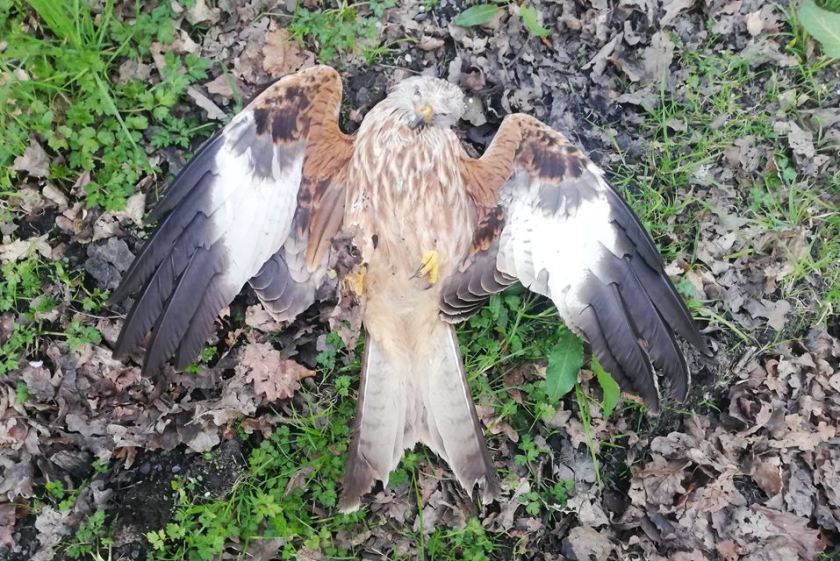
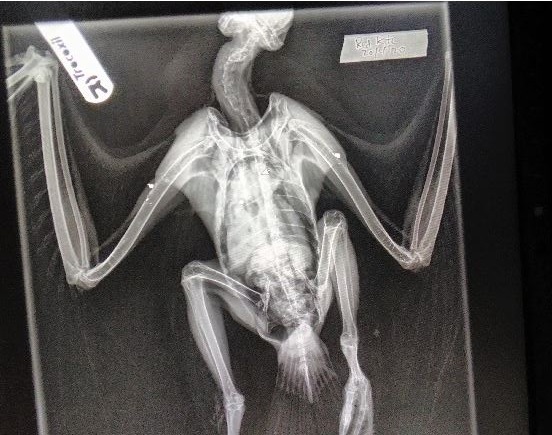
In early February we blogged about an illegally poisoned buzzard that had been found dead in the Peak District National Park, next to an illegal poisoned bait (see here). The focus of the blog was the long delay from discovery (April 2019) to publicity (Jan 2020) and even then the publicity had come from the RSPB, not from the police.

[The illegally poisoned buzzard. Photo by Peak District Raptor Monitoring Group]

We then wrote a follow-up blog last week (here) after Derbyshire Constabulary had claimed, with straight faces, that the discovery of the poisoned buzzard next to the poisoned bait was ‘inconclusive’, even though the official toxicology examination had concluded that,

The evidence therefore suggests that the Buzzard died as the result of the deliberate and illegal use of a high concentration of chloralose on a partridge bait, rather than through secondary poisoning from a different legally applied source…..”.

Derbyshire Constabulary came in for some well-earned criticism and have now responded with the following post on Facebook:

First the good points. This post is more conciliatory and far less antagonistic than recent posts on Derbyshire’s Rural Crime Team’s Facebook page. That’s a smart move. It’s also helpful to explain to the public the high workload demands, the large geographic area and the small size of the team. Like most police forces, they’re up against budget cuts and lack of resources. It’s good for the public to be reminded of these things to help manage expectations.

It’s also good to hear that the new civilian coordinator has been invited to join the Raptor Persecution Priority Delivery Group (RPPDG) and that he’s working with partner agencies, including the RSPB’s Investigations Team, to develop a standard operating procedure investigation guide. Although it’s hard to believe that such an SOP doesn’t already exist, especially in a county that has such a long running history of bird of prey persecution in association with driven grouse shooting.

However, this ‘update’ from the Rural Crime Team doesn’t address the initial issue at all – that is, what appears to be a fundamental cock-up in to the investigation of a dead poisoned buzzard that was found next to a poisoned bait. There’s no acknowledgement that there has been a cock-up, certainly no apology, and no indication that anything further will be done.

Police Supt Nick Lyall, who Chairs the national Raptor Persecution Priority Delivery Group has been made aware of this case and he’s looking in to it:


Job vacancy: Hen Harrier Nest Protection Officer x 4

The RSPB is recruiting for four hen harrier nest protection officers in England this spring.

These are temporary, seasonal jobs and you’ll need to be flexible about location because it all depends on where the hen harriers are allowed to settle and breed – most likely in Northumberland, Cumbria or Lancashire according to the RSPB’s job advert.

[Photo by Laurie Campbell]

Basically the job is round-the-clock nest protection, to give the breeding harriers the best chance of success.

Why do they need this level of protection in the 21st century? Here’s a big clue.

Full details of these vacancies and how to apply can be found here

NB: CLOSING DATE IS THURSDAY 27TH FEBRUARY 2020

Badger hung from Chris Packham’s gate

Chris Packham spent yesterday evening at a Wild Justice event in London.

He and his family arrived home shortly after midnight to be confronted by this savagery:

This is an escalation in the harassment campaign that has previously included dead crows being hung from his gate, a snared fox being dumped on his drive, and excrement and death threats being sent to him in the post.

It’s part of a wider hate campaign, manufactured and perpetuated by some particularly nasty individuals from the shooting industry, who are trying to intimidate Chris in to stopping his wildlife and conservation campaigning work.

Chris’s response to this latest atrocity is a measure of his integrity –  a calm reply requesting restraint:

Pigeon fancier fined £450 for shooting sparrowhawk

A pigeon fancier has been fined a measly £450 after pleading guilty to shooting and killing a sparrowhawk.

60 year old Duncan Cowan from Cowie in Stirlingshire was observed coming out of his shed with an air rifle and firing at a sparrowhawk in the field behind his garden on 18 April 2019. He fired three or four times as the sparrowhawk attacked a pigeon.

The police were called and the Scottish SPCA took the shot sparrowhawk for veterinary attention but it didn’t survive its injuries.

[Cowan outside his shed. Media handout]

Yesterday at Stirling Sheriff Court Cowan pleaded guilty to a charge under Section 1(1)(a) of the Wildlife and Countryside Act 1981 resulting in the fine.

Sara Shaw, Procurator Fiscal, Wildlife and Environment, said: “I welcome today’s conviction and the message it sends to those who choose to commit acts of violence against wild birds. Wild birds are given strict protection under our wildlife laws and COPFS will continue to prosecute such cases where appropriate to ensure that offenders are brought to justice.”

The sooner the proposed increased penalties for wildlife crime are enacted, the better. Having said that, the current maximum penalty available is £5,000 and/or a six month custodial sentence so a fine of £450 is still incredibly lenient for the deliberate injuring (and subsequent killing) of a protected species.

After gamekeepers, pigeon fanciers accounted for a significant proportion of all those convicted for raptor persecution crimes between 1990 – 2018, according to RSPB data (BirdCrime Report 2018)


2018 worst year in more than a decade for illegal raptor persecution in England

Yesterday the RSPB published more data on its Raptor Persecution Map Hub, which now includes 12 years worth of searchable incidents. You can read about it here on the RSPB Investigations Team’s blog.

Coinciding with this release was a piece on the BBC’s Six O’Clock News followed up with a feature on BBC North West’s Inside Out programme.

The Inside Out programme is available to watch on iPlayer here for the next 29 days.

The feature runs for about ten minutes and includes interviews with the RSPB’s Investigations Team, North Yorkshire Police’s award-winning Wildlife Crime Officer Sgt Stu Grainger, and the Moorland Association’s top contortionist Amanda Anderson.

To be honest there’s nothing new here at all – it’s a well-rehearsed pantomime with claims made by the RSPB (based on evidential data) and counter-claims from the grouse shooting industry (pretending everything’s fine) but nevertheless, still well worth the airplay on national news that undoubtedly will have reached some people who’d previously been unaware of the level of criminality on many of the grouse moors of northern England.

The journalist, Gareth Barlow, did a reasonable job although just lacked the killer questions that would have exposed the Moorland Association’s nonsense with ease. For example, he picked up that 2018 was the worst year for recorded raptor persecution crimes in over a decade but he let Amanda Anderson get away with some snakeish slithering around the facts, as follows:

Gareth Barlow:A study from last year of data trackers showed that hen harriers are ten times more likely to die or disappear over land associated with grouse moors. How do you react to that data?”

Amanda Anderson:The study of tagged birds up to 2017 raises considerable issues. But actually since then 2018 saw 34 fledged hen harrier chicks in England and last year a record-breaking 47 chicks fledged, mostly from grouse moors“.

Let’s just analyse Amanda’s response. A casual and uninformed listener might think that, based on what she said, the grouse shooting industry has cleaned up its act since 2017, with ‘record-breaking’ [ahem] numbers of chicks fledging and everything’s fine now, nothing to see here, move along, gamekeepers love hen harriers too and the killing has stopped. But what happens to those ‘record-breaking’ number of fledged hen harriers once they leave the nest?

What Amanda ‘forgot’ to mention was the long list of satellite-tagged hen harriers that have either vanished in suspicious circumstances or been found illegally shot or trapped or poisoned, mostly on or close to land managed for game bird shooting, since 2018 (and since DEFRA’s so-called Hen Harrier Action Plan was enacted):

February 2018: Hen harrier Saorsa ‘disappeared’ in the Angus Glens in Scotland (here). The Scottish Gamekeepers Association later published false information claiming the bird had been re-sighted. The RSPB dismissed this as “completely false” (here).

5 February 2018: Hen harrier Marc ‘disappeared’ on a grouse moor in Durham (here)

9 February 2018: Hen harrier Aalin ‘disappeared’ on a grouse moor in Wales (here)

March 2018: Hen harrier Blue ‘disappeared’ in the Lake District National Park (here)

March 2018: Hen harrier Finn ‘disappeared’ near Moffat in Scotland (here)

18 April 2018: Hen harrier Lia ‘disappeared’ in Wales and her corpse was retrieved in a field in May 2018. Cause of death was unconfirmed but police treating death as suspicious (here)

8 August 2018: Hen harrier Hilma ‘disappeared’ on a grouse moor in Northumberland (here).

16 August 2018: Hen harrier Athena ‘disappeared’ on a grouse moor in Scotland (here)

26 August 2018: Hen Harrier Octavia ‘disappeared’ on a grouse moor in the Peak District National Park (here)

29 August 2018: Hen harrier Margot ‘disappeared’ on a grouse moor in Scotland (here)

29 August 2018: Hen Harrier Heulwen ‘disappeared’ on a grouse moor in Wales (here)

3 September 2018: Hen harrier Stelmaria ‘disappeared’ on a grouse moor in Scotland (here)

24 September 2018: Hen harrier Heather ‘disappeared’ on a grouse moor in Scotland (here)

2 October 2018: Hen harrier Mabel ‘disappeared’ on a grouse moor on the edge of the Yorkshire Dales National Park (here)

3 October 2018: Hen Harrier Thor ‘disappeared’ next to a grouse moor in Bowland, Lanacashire (here)

26 October 2018: Hen harrier Arthur ‘disappeared’ on a grouse moor in the North York Moors National Park (here)

10 November 2018: Hen harrier Rannoch ‘disappeared’ on a grouse moor in Scotland (here). Her corpse was found nearby in May 2019 – she’d been killed in an illegally-set spring trap (here).

14 November 2018: Hen harrier River ‘disappeared’ on a grouse moor in the Nidderdale AONB (here). Her corpse was found nearby in April 2019 – she’d been illegally shot (here).

16 January 2019: Hen harrier Vulcan ‘disappeared’ in Wiltshire close to Natural England’s proposed reintroduction site (here)

7 February 2019: Hen harrier Skylar ‘disappeared’ next to a grouse moor in South Lanarkshire (here)

22 April 2019: Hen harrier Marci ‘disappeared’ on a grouse moor in the Cairngorms National Park (here)

11 May 2019: A male hen harrier was caught in an illegally-set trap next to his nest on a grouse moor in South Lanarkshire. He didn’t survive (here)

7 June 2019: A hen harrier was found dead on a grouse moor in Scotland. A post mortem stated the bird had died as a result of ‘penetrating trauma’ injuries and that this bird had previously been shot (here)

11 September 2019: Hen harrier Romario ‘disappeared’ on a grouse moor in the Cairngorms National Park (here)

10 October 2019: Hen harrier Ada ‘disappeared’ on a grouse moor in the North Pennines AONB (here)

12 October 2019: Hen harrier Thistle ‘disappeared’ on a grouse moor in Sutherland (here)

November 2019: Hen harrier Mary found illegally poisoned on a pheasant shoot in Ireland (here)

There are two more satellite-tagged hen harriers (Tony & Rain) that are reported either confirmed or suspected to have been illegally killed in the RSPB’s Hen Harrier LIFE Project Report but no further details are available.

And then there were last year’s brood meddled hen harrier chicks that have been reported ‘missing’ but as they’re carrying a new type of tag known to be unreliable it’s not known if they’ve been bumped off or if they’re still ok. For the purposes of this mini-analysis we will discount these birds.

So that makes a total of at least 29 hen harriers that are known to have either ‘disappeared’ in suspicious circumstances or have been found illegally killed in the last two years, during the period that Amanda Anderson was suggesting the killing had stopped.

That’s a lot of incidents for Amanda to ‘forget’ to mention, isn’t it?

And we’re supposed to trust the Moorland Association when it claims to have ‘zero tolerance’ for raptor persecution!

Poisoned buzzard, next to poisoned bait: circumstances ‘inconclusive’ says Derbyshire Constabulary!

I don’t know what’s going on at Derbyshire Constabulary’s Rural Crime Team but someone needs to check that Amanda Anderson isn’t moonlighting.

You may recall a couple of weeks ago we blogged about an illegally poisoned buzzard that had been found dead in the Peak District National Park, next to an illegal poisoned bait (see here). The focus of the blog was the long delay from discovery (April 2019) to publicity (Jan 2020) and even then the publicity had come from the RSPB, not from the police.

[The illegally poisoned buzzard. Photo by Peak District Raptor Monitoring Group]

The story doesn’t end there.

On Friday (14th Feb), the following post appeared on Derbyshire Constabulary’s Rural Crime Team’s Facebook page:

Er….right oh.

The Peak District Raptor Monitoring Group has called out this nonsense with another blog and an open letter of complaint to the Derbyshire Police & Crime Commissioner – read it here.

Of particular note, this official toxicology report on the buzzard and the poisoned bait, written by Dr Ed Blane (National Coordinator for the independent Wildlife Incident Investigation Scheme, HM Inspector Health & Safety Executive) who writes:

“…..The evidence therefore suggests that the Buzzard died as the result of the deliberate and illegal use of a high concentration of chloralose on a partridge bait, rather than through secondary poisoning from a different legally applied source…..

And yet Derbyshire Constabulary’s Rural Crime Team claims “There are too many unknown variables to conclusively say that the buzzard has been poisoned deliberately“.

And guess who’ll be using that ‘official police statement’ to play down the ongoing problem of illegal raptor persecution in the Peak District National Park?

Supt Nick Lyall – you need to be looking at this with some urgency.

UPDATE 23 February 2020: Derbyshire Police respond to criticism over poisoned buzzard investigation (here)

Scottish Environment Committee asks probing questions of Animals & Wildlife Bill

The Scottish Parliament’s Environment, Climate Change & Land Reform (ECCLR) Committee has published its Stage 1 report on the proposed Animals and Wildlife (Penalties, Protections & Powers) (Scotland) Bill.

This Bill was introduced by Environment Cabinet Secretary Roseanna Cunningham on 30th September 2019 (see here for associated docs) and will, amongst other things, increase the maximum available penalties for the most serious animal welfare and wildlife offences (see here for previous blog).

The ECCLR Committee has held a number of evidence sessions as this Bill passes through Parliamentary scrutiny at Stage 1, including this one where RPUK participated with a number of other organisations and whilst there was certainly some common ground, there was also a lame attempt by BASC to portray the General Licence restriction as an effective sanction against wildlife crime (see here).

The ECCLR Committee’s Stage 1 report reveals some careful and insightful thought on a number of issues and asks some probing questions of the Scottish Government to be answered before the Bill reaches Stage 2 and also makes several recommendations. Of particular interest to us are questions and recommendations on the consistency of categorising wildlife crimes, plans for further resources and/or collaboration on wildlife crime investigations, a full evaluation of the failed Police Special Constables scheme in the Cairngorms National Park, consideration (again) of increased powers for the Scottish SPCA, the need for pre-sentencing impact statements, the concept of vicarious liability being extended to other wildlife crimes, the need for more clarity and guidance from the Scottish Government and Crown Office on what is required for a vicarious liability prosecution, whether the principle of the Victims Right to Review could be extended to wildlife NGOs acting in the public interest to challenge decisions not to prosecute, more public information to be made available to help understand why video evidence is sometimes (too often) deemed inadmissible, whether General Licence restrictions are as effective as they could be and why the restriction is lifted during the appeal process, and the Government’s anticipated response to the Werritty Review.

There’s a lot of good stuff here and it’s well worth having a read of the Committee’s Stage 1 report, available to download here: ECCLRS0520R1

Wild Justice celebrates first birthday

Wild Justice is celebrating its first birthday today.

Here’s who we are and here’s what we’ve been doing.

It’s been quite a year, with several established cases ongoing and a number of others on the verge of launching. If you want to be among the first to know what’s happening, sign up to the free Wild Justice newsletter here. Newsletter #17 has just been distributed with, amongst other things, details about the changes to General Licences in England, Wales and Scotland which are the result of Wild Justice’s legal challenge.

Each case is crowdfunded (i.e. money is raised for that specific project and those funds are ring fenced so they can’t be used for anything else) and the two big ongoing cases (General Licences and the release of non-native gamebirds and their impact on wildlife) are already fully funded thanks to generous support from the public.

However, much time and effort is also spent researching potential new cases, some of which will develop in to a full-blown case and others won’t, for various reasons. This research costs money (even though the three Wild Justice Directors work unpaid) and Wild Justice is currently fundraising for a Fighting Fund to help support this work.

If you like what Wild Justice is doing and would like to donate to the Fighting Fund, please visit here.

Many thanks.

How much did the Werritty Review cost & why is it so difficult to find out?

You know, when you’ve spent a number of years submitting freedom of information requests left, right and centre, you eventually develop a sense of when something’s not quite right, of when the wool is being pulled, and of when obstruction is the name of the game.

The Scottish Government is no stranger to criticism over the way it handles FoI requests – have a look at this, for example, which includes a quote from a senior editor, “We frequently come across obstruction, poor practice and clear efforts to restrict access to information – experiences which undermine our confidence in the system“.

Now have a read of the following correspondence and see what you think.

It began with a straightforward FoI request, submitted to Scot Gov on 1 January 2020, asking for the full financial details of commissioning Professor Werritty to Chair the Grouse Moor Management Review Group.

Here’s Scot Gov’s response:

Here’s my response to Scot Gov:

And here’s Scot Gov’s response, telling me it’s not a valid request because I’ve only provided my first name (even though this is part of an ongoing correspondence chain and my surname is provided in my email!) and that they need my surname and title to proceed:

Here’s my response:

So far it’s been six weeks since the very simple question was first asked. Why is it so difficult for the Scottish Government to provide an answer?

UPDATE 19 May 2020: Full cost of Werritty Review finally revealed (here)