Blog

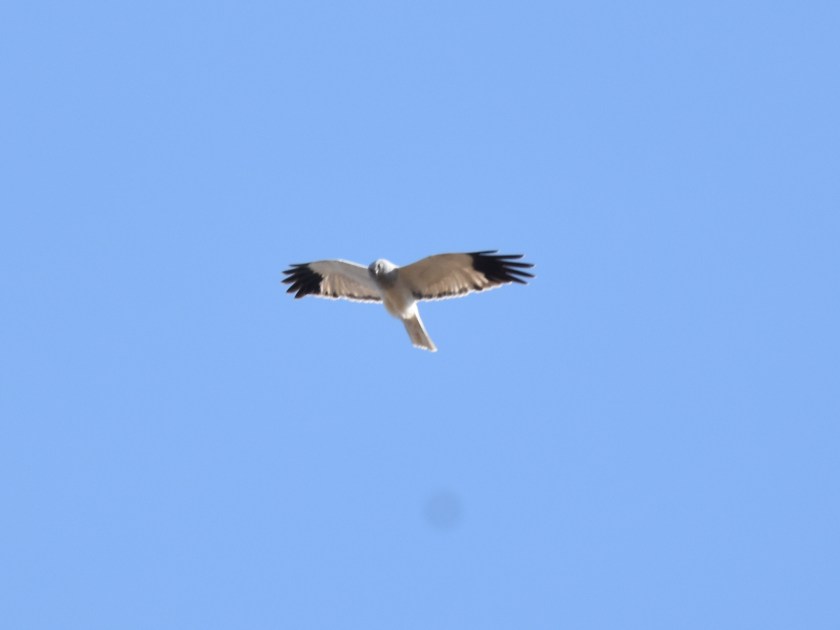
New website for Hen Harrier Day 2020 and beyond

Check out this brand new website: https://henharrierday.ukĀ 

A much needed site set up to help coordinate Hen Harrier Days throughout the UK – it’ll include information on events in England, Wales, Scotland & Northern Ireland.

It’s only just launched and there’s much more to come but you can already find information about some of this year’s planned events.

Bookmark the website, watch for new events near you and get involved with this year’s Hen Harrier Day!


Raptor Persecution UK blog is 10 years old

Earlier this week this blog passed its ten year anniversary.

I’m not sure how that happened but as the number of blog views approaches 6 million it’s rewarding to see that the blog stats reflect a growing awareness of the illegal killing of birds of prey in the UK.

Massive thanks to all those who contribute – many of whom can’t be named but you know who you are – and thanks also to all those who comment and who share the blog through their own networks. To those who help fund my time, I’m indebted.

To maintain a blog like this requires significant effort. It can take its toll on some other aspects of life, and indeed it has, but it’s also brought great benefits, not least the opportunity to work with and get to know some pretty special people whose own efforts in this field and on related topics continue to inspire.

Foremost of these has to be Chris Packham and Mark Avery – our paths crossed as a direct result of this blog and led to the formation of Wild Justice. Two others of significance are Ian Thomson (Head of Investigations, RSPB Scotland) and Andy Wightman MSP, both of whom have been staunch supporters and providers of excellent advice – pictured here at last week’s Scottish Raptor Study Group conference:

[Ian Thomson, Ruth Tingay, Andy Wightman, photo by Andrea Goddard]

Back in 2010 I was pretty naive and didn’t expect to still be writing about this stuff ten years on. Fortunately these days, especially with the help of social media, it’s much more of a movement and there’ll be no turning back and shoving it all under a rug anymore.

Thanks to Andy Wightman MSP for lodging this motion of support at the Scottish Parliament earlier this week – it’ll be interesting to see who signs it and who doesn’t!

Peregrine shot & killed in Belper, Derbyshire, again

For the second time in recent years, a peregrine falcon has been illegally shot in Belper, Derbyshire.

Yesterday (5 March 2020) Derbyshire Wildlife Trust issued the following statement:

Yesterday morning [4 March 2020], a male peregrine falcon was spotted injured at Belper’s East Mill in Derbyshire and taken by a local resident to a vets in Ashboune where a single shotgun pellet was removed.  A second pellet will be removed later today and the bird continues to be monitored. 

East Mill is a very well-known location for breeding  peregrines – the stunning views of the birds and easy accessibility make it one of the most popular places in the UK to watch them. 

Tim Birch, Director of Nature Recovery at Derbyshire Wildlife Trust said; ā€œThis is appalling news – the Belper peregrines are famous, it’s one of the best places to watch and enjoy these amazing birds as they fly at top speed, perform acrobatic aerial displays and  raise their young high on the ledges of the Mill building. They are a huge draw for people and it’s shocking that anyone wants to harm them. Thanks to the quick response by a local resident and the vets, we are hopeful that this bird will recover.ā€

ā€œDerbyshire sadly continues to see some of the UK’s highest levels of bird of prey persecution. We encourage anyone with any information about this or any wildlife or suspected wildlife crime to please contact Crime Stoppers on 0800 555 111.ā€  

The bird is about four years old and was ringed in Dorset. Without the support of the male at the start of the breeding season, any attempts to nest this year could sadly fail.

ENDS

This morning we were informed that the peregrine died at the vet’s last night, unable to survive surgery to remove the pellet lodged in his breast.

This isn’t the first time the breeding pair at Belper have been attacked. In March 2015 the body of the adult male was found dead on the doorstep of Derbyshire Wildlife Trust’s HQ in Belper. A post mortem revealed he had been shot (see here).

Hen harrier shot in North Yorkshire – police appeal for info 5 months later

Press statement from North Yorkshire Police (4 March 2020)

APPEAL FOR INFORMATION AFTER HEN HARRIER SHOT NEAR KEASDEN

Police looking for witnesses or anyone who may have seen something suspicious

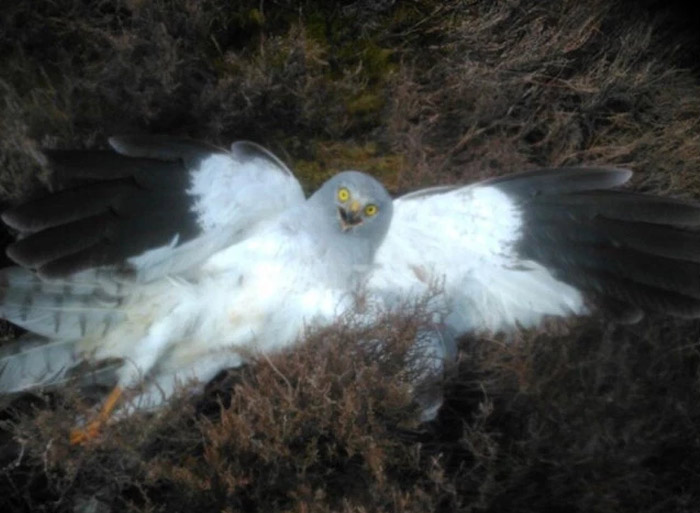
North Yorkshire Police is appealing for information after a hen harrier is believed to have been shot near White Syke Hill approximately 3km south east of  the North Yorkshire village of Keasden.

A member of the public has witnessed an incident which they believed was the shooting of a male hen harrier.

The incident occurred on moorland near White Syke Hill at approximately 5.30pm on Friday 18 October 2019.

Officers have been conducting active enquiries and a man has been interviewed in connection with this investigation.

North Yorkshire Police is appealing for anyone with information about this incident or who may have seen anything in the area shortly before 5.30pm to please call 101 quoting reference number: 12190193431.

If you wish to remain anonymous, you can pass information to Crimestoppers on 0800 555 111.

ENDS (but see blog update at bottom of screen)

White Syke Hill is situated in the Forest of Bowland Area of Outstanding Natural Beauty (AONB), just over the border from the Yorkshire Dales National Park. And surprise surprise, there’s a driven grouse moor nearby.

It’s our understanding that there was a very quick initial police response to this reported shooting, with the police working closely with partner agencies, culminating with an interview of a potential suspect. It’s not clear why it’s taken five months for a public appeal for information to be made.

As a reminder that DEFRA’s seriously flawed Hen Harrier Action Plan is failing miserably, let’s add the shooting of this hen harrier to the ever-expanding list of hen harriers (at least 30 now) believed to have been illegally killed since 2018, the year when grouse shooting industry reps would have us believe that hen harriers were welcomed back on the grouse moors:

February 2018: Hen harrier Saorsa ā€˜disappeared’ in the Angus Glens in Scotland (here). The Scottish Gamekeepers Association later published inaccurate information claiming the bird had been re-sighted. The RSPB dismissed this as ā€œcompletely falseā€ (here).

5 February 2018: Hen harrier Marc ā€˜disappeared’ on a grouse moor in Durham (here)

9 February 2018: Hen harrier Aalin ā€˜disappeared’ on a grouse moor in Wales (here)

March 2018: Hen harrier Blue ā€˜disappeared’ in the Lake District National Park (here)

March 2018: Hen harrier Finn ā€˜disappeared’ near Moffat in Scotland (here)

18 April 2018: Hen harrier Lia ā€˜disappeared’ in Wales and her corpse was retrieved in a field in May 2018. Cause of death was unconfirmed but police treating death as suspicious (here)

8 August 2018: Hen harrier Hilma ā€˜disappeared’ on a grouse moor in Northumberland (here).

16 August 2018: Hen harrier Athena ā€˜disappeared’ on a grouse moor in Scotland (here)

26 August 2018: Hen Harrier Octavia ā€˜disappeared’ on a grouse moor in the Peak District National Park (here)

29 August 2018: Hen harrier Margot ā€˜disappeared’ on a grouse moor in Scotland (here)

29 August 2018: Hen Harrier Heulwen ā€˜disappeared’ on a grouse moor in Wales (here)

3 September 2018: Hen harrier Stelmaria ā€˜disappeared’ on a grouse moor in Scotland (here)

24 September 2018: Hen harrier Heather ā€˜disappeared’ on a grouse moor in Scotland (here)

2 October 2018: Hen harrier Mabel ā€˜disappeared’ on a grouse moor on the edge of the Yorkshire Dales National Park (here)

3 October 2018: Hen Harrier Thor ā€˜disappeared’ next to a grouse moor in Bowland, Lanacashire (here)

26 October 2018: Hen harrier Arthur ā€˜disappeared’ on a grouse moor in the North York Moors National Park (here)

10 November 2018: Hen harrier Rannoch ā€˜disappeared’ on a grouse moor in Scotland (here). Her corpse was found nearby in May 2019 – she’d been killed in an illegally-set spring trap (here).

14 November 2018: Hen harrier River ā€˜disappeared’ on a grouse moor in the Nidderdale AONB (here). Her corpse was found nearby in April 2019 – she’d been illegally shot (here).

16 January 2019: Hen harrier Vulcan ā€˜disappeared’ in Wiltshire close to Natural England’s proposed reintroduction site (here)

7 February 2019: Hen harrier Skylar ā€˜disappeared’ next to a grouse moor in South Lanarkshire (here)

22 April 2019: Hen harrier Marci ā€˜disappeared’ on a grouse moor in the Cairngorms National Park (here)

11 May 2019: A male hen harrier was caught in an illegally-set trap next to his nest on a grouse moor in South Lanarkshire. He didn’t survive (here)

7 June 2019: A hen harrier was found dead on a grouse moor in Scotland. A post mortem stated the bird had died as a result of ā€˜penetrating trauma’ injuries and that this bird had previously been shot (here)

11 September 2019: Hen harrier Romario ā€˜disappeared’ on a grouse moor in the Cairngorms National Park (here)

10 October 2019: Hen harrier Ada ā€˜disappeared’ on a grouse moor in the North Pennines AONB (here)

12 October 2019: Hen harrier Thistle ā€˜disappeared’ on a grouse moor in Sutherland (here)

18 October 2019: Member of the public reports the witnessed shooting of a male hen harrier on White Syke Hill in North Yorkshire (this post)

November 2019: Hen harrier Mary found illegally poisoned on a pheasant shoot in Ireland (here)

There are two more satellite-tagged hen harriers (Tony & Rain) that are reported either confirmed or suspected to have been illegally killed in the RSPB’s Hen Harrier LIFE Project Report but no further details are available.

And then there were last year’s brood meddled hen harrier chicks that have been reported ā€˜missing’ but as they’re carrying a new type of tag known to be unreliable it’s not known if they’ve been illegally killed or if they’re still ok. For the purposes of this mini-analysis we will discount these birds.

So that makes a total of at least 30 hen harriers that are known to have either ā€˜disappeared’ in suspicious circumstances or have been found illegally killed in the last two years. The DEFRA Hen Harrier Action Plan is certainly providing cover for the criminals – yep, carry on with the killing lads (and maybe lasses), we’ve got your backs.

UPDATE 12 March 2020: Hen harrier shot on grouse moor – North Yorkshire Police make an arrest (here)

Scottish Raptor Study Group celebrates 40th anniversary

Huge congratulations to the Scottish Raptor Study Group (SRSG) which celebrated its 40th anniversary at the weekend.

[SRSG Secretary Patrick Stirling-Aird cuts the birthday cake during the annual conference on Saturday, accompanied by keynote speaker Dr Maria Del Mar Delgado and Tayside Raptor Study Group Chair, Claire Smith. Photo by Ruth Tingay]

The SRSG is a network of over 300 raptor experts who monitor and record the fortunes of birds of prey across Scotland. The members are organised within 12 regional branches covering all of mainland Scotland and most of the islands.

They check over 5,000 known raptor territories for occupancy each year and record the status, distribution and breeding success of each species. They’ve amassed a unique long-term dataset of raptor records and this information is vital for understanding changes in population trends. Their results are published annually as part of the award-winning Scottish Raptor Monitoring Scheme and have contributed to hundreds of scientific publications. These results are used regularly by conservation agencies and Government to inform local, regional and national conservation plans and policies.

SRSG members work on a voluntary basis and between them contribute thousands of days to fieldwork and data collection every year. SRSG members have varied backgrounds and are from many different professions, but are united by their commitment to the protection and conservation of Scotland’s raptors.

Golden Eagle Species Champion Andy Wightman MSP has recognised the importance and significance of the SRSG’s efforts and has lodged a motion at the Scottish Parliament asking his fellow MSPs for support:

The motion was only published yesterday so it’s early days but already has a number of cross-party supporters. If your MSP isn’t listed yet, it’d be worth you contacting them and asking them to support Motion S5M-21080 because it never hurts for them to receive mail from constituents who care about raptor conservation. If they choose not to support this motion it’d be very interesting to hear the reason(s) for that decision. [NB: If your MSP is also a Minister they’re not able to sign up to support motions].

Not sure who your MSP is? Find out here

Wild Justice’s legal challenge on gamebird releases hits the headlines

Wild Justice’s latest legal challenge, seeking a judicial review of the unregulated release of millions of non-native gamebirds in 2020, has been attracting some attention.

Announced this morning, the news has hit the headlines at the Guardian with a particularly good article (here) from Phoebe Weston, who’s clearly taken the time to read the details of this case:

Good to see that Phoebe’s article is currently ranked as the paper’s most popular environmental story:

Wild Justice lodges court papers for judicial review of 2020 gamebird releases

Wild Justice has lodged court papers seeking a judicial review of pheasant and red-legged partridge releases in 2020.

[Seven week old pheasant chicks, often known as poults, in a release pen on an English shooting estate]

The three co-founders of Wild Justice said:

Chris Packham CBE:DEFRA has been dragging its feet on this issue since we first raised it. It is time to sort this out and Wild Justice is fully prepared for a court battle on behalf of UK wildlife.Ā  Our challenge relates to Natura 2000 sites in England but the impacts will be felt right across the UK countryside“.

Dr Ruth Tingay:The lack of monitoring and regulation of gamebird releases is staggering. The Government doesn’t seem to know or care how many are released each year and even the figure of 60 million gamebirds may well be an underestimate.Ā  Incredibly, there is nothing to stop the shooting industry releasing twice as many gamebirds next year. This has to stop and proper regulation brought in“.

Dr Mark Avery:These non-native gamebirds go around gobbling up insects,Ā  other invertebrates and even snakes and lizards, they peck at vegetation, their droppings fertilise sensitive habitats which no farmer would be allowed to fertilise and they provide prey and carrion that swell the populations of predators that then go on to prey on other threatened species. And the biomass of Pheasants and Red-legged Partridges exceeds that of all native UK birds put together. This is a very serious ecological assault on the countryside which government is failing to assess and regulate“.

Wild Justice is represented by Tessa Gregory and Carol Day, solicitors at Leigh Day.

Carol Day:Wild Justice quite rightly held off issuing legal proceedings last year on the basis that the Government said it would review arrangements to consider the impact of the gamebirds’ release in future. It is now clear that the review has only just started and that no action will be taken that could affect the shooting season in 2020.

If Wild Justice waited until September to challenge the legality of the gamebird releases it would be too late. The Pheasants and Partridges would have left their breeding pens, and the damage could then be done. And so – responsibly and properly – the Claimant is acting now, at a time when it is still possible to head off the alleged illegality“.

To read the full press release please visit the Wild Justice blog here


Another pigeon fancier convicted for killing a sparrowhawk

Last week we blogged about pigeon fancier Duncan Cowan who was convicted for shooting a sparrowhawk in Stirlingshire and was fined a pathetic Ā£450 (see here). Incidentally, there’s more to that story, coming soon.

Today, another pigeon fancier at the other end of the country has also been convicted of killing a sparrowhawk, this time with a catapult in his neighbour’s garden. Yovanis Cruz pleaded guilty at Portsmouth Magistrates Court and was fined Ā£653 plus Ā£85 costs plus Ā£63 victim surcharge (Ā£801 in total).

[The sparrowhawk victim. Photo via RSPB]

We await further details on this case. [See blog update below]

Unlike Scotland, where increased penalties for wildlife crime are about to be enacted via the Animals and Wildlife (Penalties, Protections & Powers) (Scotland) Bill which is currently at Stage 1 of parliamentary scrutiny, there are no plans by the Westminster Government to consider an increase in penalties for wildlife crime.

After gamekeepers, pigeon fanciers accounted for a significant proportion of all those convicted for raptor persecution crimes between 1990 – 2018, according to RSPB data (BirdCrime Report 2018).

UPDATE 19.15hrs: The RSPB has now published a press statement about this case (here)


RSPB begins policy review on gamebird shooting

Last October the RSPB announced at its AGM that it was to undertake a policy review of gamebird shooting (see here).

This welcome review had been prompted by ongoing environmental concerns including ‘the ongoing and systematicĀ illegal persecution of birds of preyĀ such as hen harriers on some sporting estates; the ecological impact of high numbers ofĀ game birds releasedĀ into the countryside increasing the density of generalist predators; theĀ mass culling of mountain haresĀ in some parts of our uplands; the use ofĀ lead ammunition; the impact ofĀ burning peatlands and medicating wild animals for sport shooting’.

The review is now underway and the RSPB’s Global Conservation Director, Martin Harper, has laid out the planned process in a recent blog (here) as follows:

Review process

There are three stages to our review.

In this first phase we are seeking the views of members and those with an interest in gamebird shooting. This will help us develop nature conservation principles for gamebird shooting and associated land management to be approved by our Council this summer.

The second phase involves completing scientific reviews of the evidence of impacts from the two most intensive forms of shooting (driven grouse and gamebird releases) to help assess these shooting styles against the conservation principles.

The final phase involves reviewing the RSPB’s existing policy on driven grouse shooting and developing a new position on gamebird releases.

We plan to announce the results of this review of our policy at the AGM in October.

ENDS

Martin’s blog goes on to explain how RSPB members can contribute to the review. Questionnaires have also recently been sent out to those of us known to have an interest in gamebird shooting, with an April deadline for responses. This all looks promising for the RSPB to keep to its anticipated timetable of announcing the policy review results in October this year.

As an aside, some of the shooting organisations will be looking at the RSPB’s membership consultation process with envy today – from what’s been posted on social media there is deep resentment from many shooters about the lack of consultation with members prior to yesterday’s announcement on the proposed phasing out of lead ammunition; BASC especially appears to be haemorrhaging members as a direct result of this poor communication. They’ve even stuck Duncan Thomas in front of a camera calling for calm (check out BASC’s Facebook page to get an idea of the carnage). This doesn’t bode well for the success of the planned voluntary ban on lead ammunition.

Scottish gamekeepers reject call for voluntary ban on toxic lead ammunition

This morning a load of game shooting organisations announced that they wanted to promote a voluntary ban on the use of lead ammunition and to see an end to its use within five years.

This announcement is hardly a surprise. The poisonous properties of lead ammunition and its devastating impact on wildlife has been known for years and years and years, and most of the previously significant sources of lead in the environment (e.g. lead-based paint and leaded petrol) were eliminated decades ago.

Lead-based ammunition has since been the most significant unregulated source of lead deliberately emitted in to the environment in the EU but recent recommendations from the European Chemicals Agency to the European Commission propose an outright ban in terrestrial as well as wetland environments (where it is already banned although testing has proved UK compliance is poor).

The game shooting organisations have seen the writing on the wall and have decided to jump before being pushed. If you don’t believe that then have a look at this video featuring Ian Bell, BASC CEO – it’s hilarious – “It’s us who sets the pace, not the people who challenge us“. Yeah, right, Ian. The shooting industry hasn’t just had its arse handed to itself on a plate by environmentalists, then? Try reading about the Lead Ammunition Group and its history of resignations.

Of course, we’ve been here before with the game shooting industry and voluntary bans – they don’t work. Of course they don’t work – this is an industry that struggles to comply with the law, especially on raptor persecution, let alone a voluntary commitment!

According to a statement from the Wildfowl & Wetland Trust (WWT), a group that’s been at the forefront of campaigning against lead ammunition for a very long time,

While the transition to lead-free ammunition is a positive move forward, conservationists stress that previous voluntary bans have been unsuccessful and without policy change at government level, there will still be risks to human health, wildlife and the market for game birds. A full restriction will contribute to the further removal of poisonous lead from our environment‘.

Of course, for a voluntary ban to have any chance of success all the stakeholders need to be on board to start with. And according to Ian Bell,Ā “All the major shooting and rural organisations are calling for this change“. Are they? It doesn’t look like it – where’s the Scottish Gamekeepers Association’s logo on that press announcement? It seems to be missing.

Ah yes, here’s why…..without any sense of irony about the neurological damage of consuming lead shot for years, here’s the SGA’s response to the call for a voluntary ban on lead ammo:

[Screen grab from the SGA’s website, this statement was posted there yesterday evening]

For as long as these dinosaurs are left to their own devices don’t expect to see a voluntary reduction in the use of lead ammunition in Scotland any time soon.