More shameful fly-tipping of shot pheasants – Gloucestershire this time

More shot pheasants have been found dumped by the side of the road, this time thrown into a hedge next to a lay-by on Old London Road, near Wotton-Under-Edge, Gloucestershire.

This latest shameful fly-tipping incident was discovered on Monday 15th January 2024 and has been reported to Stroud Council.

Thanks to the blog reading dog walker who sent in these photos:

Regular blog readers will know that this is a common and widespread illegal practice.

Previous reports include dumped birds found in Cheshire (here), Scottish borders (here), Norfolk (here), Perthshire (here), Berkshire (here), North York Moors National Park (here) and some more in North York Moors National Park (here) and even more in North Yorkshire (here), Co. Derry (here), West Yorkshire (here), and again in West Yorkshire (here), N Wales (here), mid-Wales (here), Leicestershire (here), Lincolnshire (here), Somerset (here), Derbyshire’s Peak District National Park (here), Suffolk (here), Leicestershire again (here), Somerset again (here), Liverpool (here), even more in North Wales (here) even more in Wales, again (here), in Wiltshire (here) in Angus (here), in Somerset again (here), once again in North Yorkshire (here), yet again in West Yorkshire (here), yet again in mid-Wales (here), even more in mid-Wales (here), and more in Derbyshire (here).

Ironically, I see the Countryside Alliance has been expressing its concern and ‘alarm’ over fly-tipping crimes:

Fly-tipping and littering must not be seen as a victimless crime: it is a scourge on our natural environment and a blight on the farms these criminals still too often target‘.

and

We have long campaigned on this issue and will be calling on all parties in the run up to the election to take this crime seriously’.

I look forward to seeing the Countryside Alliance draw attention to the criminal fly-tipping activities of those in the game-shooting industry.

Wildlife Management & Muirburn Bill – will it properly protect peatlands?

A blog reader who works as an upland peatland specialist has written the following blog.

With the Wildlife Management and Muirburn Bill passing through the Scottish Parliament we are soon to see a tightening of the regulation around grouse shooting and burning in the Scottish uplands. This is long overdue, but welcome, nonetheless. So many have fought for so long to get to this point; but the Bill is not over the line yet, with changes possible over the coming weeks.

A recent post on this blog highlighted some of the sorts of changes that could be made by pointing to the amendments lodged by Edward Mountain MSP and one of those jumped out as important. It seems innocuous and inconsequential but the suggestion to change the definition of peat depth from 40cm to 60cm does have implications.

Why does that matter so much? It matters because the Bill is designed to offer protection to peatlands and amendments such as this would weaken that protection.

Under the terms of the Bill, an owner or occupier of land will have to apply for a licence to undertake muirburn, but they can only burn for specific reasons and these reasons are different on different types of land. Where the land is peatland, the owner or occupier may apply for a licence for the purpose of restoring the natural environment, preventing or reducing the risk of wildfires, or research. Where the land is not considered to be peatland, they can apply for a licence to burn for sporting, farming, conservation, wildfire management or research purposes. In effect, burning on peatlands is restricted; land managers will not be able to burn on peatlands for sporting or farming purposes.

Peatland burning on a driven grouse moor. Photo: Ruth Tingay

Consequently, since the Bill is structured to treat peatlands differently, the definition of what is, and what is not, a peatland, really matters. It determines where different sets of rules apply.  

At present the Bill defines ‘peatland’ as “land where the soil has a layer of peat with a thickness of more than 40 centimetres” (where “peat” means soil which has an organic content of more than 60%).

In one way this definition does represent an improvement on the status quo because the current Muirburn Code refers to 50cm and the lower the threshold the larger the area that is considered to be peatland where the restricted rules apply. But, more fundamentally, these depth thresholds can have perverse consequences because they create artificial thresholds that don’t really exist. The consequence of this definition is that extensive areas of shallow peat of a depth less than 40cm will effectively be treated as ‘not peatland’, despite the fact that they are functionally part of a peatland and actually the most vulnerable areas. The IUCN Peatland Programme calls these areas the ‘lost peatlands’:

Despite these areas containing substantial carbon stores and often being vital to the wider ecology and hydrological function of connected deeper peat deposits, we, for the bureaucratic purpose of setting rules around burning, say that they are not peatlands. The result is that, under the terms of the Bill, a land manager will legitimately be able to burn on shallow peat for grouse shooting or farming purposes.  

The crux of the issue is that the legislation is clearly designed to try and protect peatlands by treating them differently, but at the same time the definition of a peatland limits the benefit.

If we look again at the Edward Mountain suggestion to change the depth definition from 40cm to 60cm, the effect would be to reduce the area that is considered peatland and so reduce the area where the greater restrictions apply. Conversely it would increase the area where burning for sporting and farming purposes would be possible. This would seem to run counter to the intention of the legislation.

Arguably, the best option would be to just stop defining peatlands (for the purposes of burning) by depth and say that we shouldn’t be burning on peat/peaty soil for sporting and farming purposes (noting, of course, that burning for the purpose of nature restoration, wildfire prevention and research would still be allowed). At the time of writing there is still time for this reasonable approach to be taken forward through amendments at Stage 2 or possibly later at Stage 3, so it remains to be seen whether the rhetorical importance that our politicians give to peatlands translates into real decisions in law.

Crowdfunder to buy satellite tags for short-eared owls

British charity Raptor Aid has launched a crowdfunder to help purchase satellite tags for Short-eared owls in the UK to help understand the movements of this enigmatic species, in partnership with the Northern England Raptor Forum (NERF).

Short-eared owl photo by Pete Walkden

Scientist John Calladine from the BTO has been studying this species for many years and his most recent paper, published with a number of international collaborators in the ornithological journal Ibis just last week, has revealed some remarkable and unexpected movements of satellite-tagged Short-eared owls.

The paper, ‘Remote tracking unveils intercontinental movements of nomadic Short-eared Owls (Asio flammeus) with implications for resource tracking by irruptive specialist predators‘ sits behind a paywall so if you want to read it you’ll have to subscribe to the journal, or pay to view, or you can contact one of the authors and ask for a copy.

However, there’s an excellent, non-technical article about this research on the Inside Ecology website (here) – well worth a read.

In addition to fundraising for satellite tags, Raptor Aid is also looking to continue its small grants award to raptor researchers in the UK and overseas.

For more details and to contribute to the crowdfunder, please click here.

Derbyshire ‘drug addict’ jailed for stealing peregrine eggs

RSPB Press Release (16 January 2024)

Derbyshire man caught on camera raiding peregrine falcon nest given custodial prison sentence.

  • At Southern Derbyshire Magistrates Court on 15 January 2023, Christopher Wheeldon of Darley Dale, Matlock pleaded guilty to intentionally disturbing Peregrine Falcons and taking Peregrine Falcon eggs and was sentenced to 8 weeks in prison for these offences. His total sentence, including additional charges unrelated to this case is 18 weeks.
  • Covert footage taken by the RSPB’s Investigations Team helped secure this conviction.
  • The Peregrine eggs are believed to have been hatched and then laundered into the illegal falconry trade.
Christopher Wheeldon caught on RSPB camera stealing the peregrine eggs

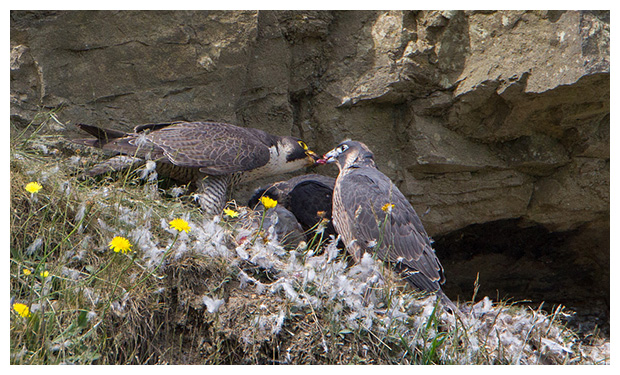
In April 2023, officers from RSPB Investigations installed a surveillance camera to monitor a Peregrine Falcon nest in a limestone quarry near Bolsover, Derbyshire. The falcons were incubating a clutch of eggs when on 23 April 2023 video footage showed a rope being dropped from above, causing the parent bird to abandon the nest. The Peregrines can be heard sounding distress calls as a man abseils down to the nest and steals three eggs from the cliff-ledge nest, before climbing back to the cliff top. Derbyshire Police were alerted, and enquiries soon identified Christopher Wheeldon as the individual involved. Search warrants were executed at two addresses, resulting in the discovery of items of clothing seen in the video at Wheeldon’s address.

Sadly, no eggs or Peregrines were recovered. It is considered likely that the eggs were destined to be laundered by being artificially incubated, and when hatched, the chicks passed off as ‘legal’ captive-reared birds. Unfortunately, once in the system, and following the removal of the Government registration scheme, it is now virtually impossible to trace these wild birds. It is likely these wild Peregrines were stolen to order and are now in the overseas falconry trade, where wild British Peregrine Falcons are regarded as being of genetically superior stock and command high prices.

On Monday 15 January Wheeldon, who pleaded guilty to disturbing these protected birds and taking their eggs, received an eight-week prison sentence for these crimes and a further 10 weeks for unrelated shop-lifting charges.

District Judge Stephen Flint said on sentencing: “Even the birds are not beyond you’re thieving grasp. You may conceive these as just eggs but they are protected. This was a deplorable thing to do.”

Although Peregrine Falcons are specially protected under the Wildlife and Countryside Act 1981, these magnificent birds of prey have sadly been subjected to a diverse range of persecution over the years. Over the years the RSPB Investigations team has documented many incidents of shot and poisoned Peregrines on land managed for driven grouse shooting in the UK, including Derbyshire.

In other parts of the county, Peregrines face a different sort of persecution, with nests in quarries being targeted for their highly prized chicks and eggs, to be intended for the illegal falconry industry. Previously, in May 2020, RSPB managed to film another Peregrine nest robbery in Derbyshire but unfortunately this did not lead to a conviction in court.

This latest case highlights the ongoing demand for wild Peregrine eggs from the UK to furnish the overseas market. With the laundering of wild Peregrine Falcons fetching tens of thousands of pounds, this crime will continue to be worth the risk to some.

Without the reinstatement of full registration controls for captive bred birds this illegal activity will continue to threaten wild Peregrine populations across the UK.  The RSPB Investigations Team will continue to monitor nests in Derbyshire and the wider area, and as this case shows, hope to secure more convictions in the future.

The RSPB would like to thank Derbyshire Police Rural Crime Team for their thorough investigation and diligent work which has resulted in this successful outcome, the South Peak Raptor Study Group for their continued efforts in monitoring these birds and Tarmac for their assistance throughout.

Thomas Grose, RSPB Investigations Officer:Peregrine Falcons represent the epitome of being wild and free and it is this very characteristic that makes them such a target for criminals involved in the illegal falconry trade, earning money from the laundering and trading of these birds overseas. The theft of Peregrine eggs and chicks has been a persistent threat to these birds in Derbyshire. This case is a great example of organisations working together to bring those responsible to justice. Without dedicated volunteers and the efforts of Derbyshire Police this would have been just another failed nest. I hope this sends the message that we are watching and will continue our efforts to protect these amazing birds of prey.”

Chris Wilkinson, Derbyshire Police Rural Crime Team: “The nesting sites of these beautiful birds of prey are protected in law for a reason. Peregrines are an endangered species and groups, including the RSPB, have been working hard to ensure they are free from persecution and able thrive in Derbyshire. The efforts made by the RSPB, Derbyshire Police, NWCU and the Animal and Plant Health Agency to secure the conviction and subsequent sentence handed down by the courts, goes to show that we will go above and beyond to identify those responsible and bring them to justice.”

If you notice a dead or injured bird of prey in suspicious circumstances, call the police on 101 and fill in the RSPB’s online reporting form: https://www.rspb.org.uk/birds-and-wildlife/advice/wild-bird-crime-report-form/

If you have information about anyone killing birds of prey which you wish to report anonymously, call the RSPB’s confidential Raptor Crime Hotline on 0300 999 0101.

ENDS

This is an interesting case in that the culprit received a custodial sentence for the persecution of birds of prey. As regular blog readers will know, custodial sentences are rare in this area of wildlife crime – there have been a handful, the most notorious in 2014 when a gamekeeper who was caught on camera by the RSPB trapping and killing goshawks on an Aberdeenshire shooting estate in 2012, received a four month custodial sentence (here).

There have been plenty of other convictions for raptor persecution since then, mostly gamekeepers, with many of the cases reaching/passing the custodial threshold but sentences have been consistently and disappointingly weak, typically consisting of paltry fines, community orders and/or suspended sentences.

So what made Wheeldon’s offences so different as to warrant an immediate custodial sentence?

Well, I’d argue that the fact Wheeldon didn’t have an expensive barrister to represent him, unlike many gamekeepers who appear before the courts charged with raptor persecution, was probably a crucial factor. The majority of those given a custodial sentence for raptor persecution offences have been individuals stealing eggs/chicks for the falconry trade or for private egg collections, and who haven’t had top barristers standing up for them in court.

I’d also guess that Wheeldon’s criminal history influenced the magistrate’s decision. Wheeldon, 34, previously of Lime Grove, Matlock but now of Wheatley Gardens, Two Dales, is described on the Derbyshire Live website as a ‘drug-addicted tree surgeon’, and he has a bit of a record.

He reportedly lost his driving licence for ‘driving with excess drugs’ in 2021 (here) and was charged with attempted robbery of a takeaway in Matlock in January 2023 (here – I don’t know the outcome of that case). In addition, during sentencing yesterday, it emerged that Wheeldon was also convicted of five counts of shop lifting, four of which took place during the first week of January this year.

He actually received a longer sentence for the shoplifting offences (10 weeks) than he did for disturbing the peregrine nest (8 weeks) and stealing the peregrine eggs (another 8 weeks, to run concurrently). So whilst a custodial sentence is to be welcomed, it still doesn’t act as a deterrent for others who may be considering committing an offence; and an offence that is supposedly a national police wildlife crime priority, especially when this offence can theoretically attract a custodial sentence of up to six months in England.

A report on wildlife crime in the UK, published in 2021 by the United Nations Office on Drugs & Crime (UNODC) recommended improved sentencing guidelines to provide consistency on tackling wildlife crime.

Following the report’s publication, Green peer Natalie Bennett asked the UK government what plans it had to produce sentencing guidelines for raptor persecution (and other wildlife offences). DEFRA Minister Lord Benyon said the report’s recommendations “will be considered by the relevant agencies“.

No plans, then.

Nevertheless, Wheeldon’s prosecution and conviction is a good result – and especially as it was led by Derbyshire Constabulary’s Rural Crime Team, who previously have been less than impressive on some raptor persecution investigations (e.g. here, here, here). So well done to Derbyshire Police, to the RSPB’s Investigations Team and also to the Crown Prosecution Service.

More detail revealed about international peregrine laundering case in Scotland

Further to this morning’s blog about sentencing being deferred for part-time gamekeeper Timothy Hall and his son, Lewis Hall, who have pleaded guilty to numerous offences relating to wild peregrines in Scotland being laundered as ‘captive bred’ peregrines to buyers in the Middle East (see here), the Daily Record has published more details about this case.

Headline from Daily Record, 15 January 2024

The article explains that the alarm was first raised by George Smith, a member of the Scottish Raptor Study Group who has monitored peregrine nest sites in the Scottish Borders for decades. He was concerned that breeding attempts were failing at sites that had previously been known to be routinely successful.

Officers from Police Scotland visited the sites with George and noticed marks that suggested someone had recently climbed to the nests.

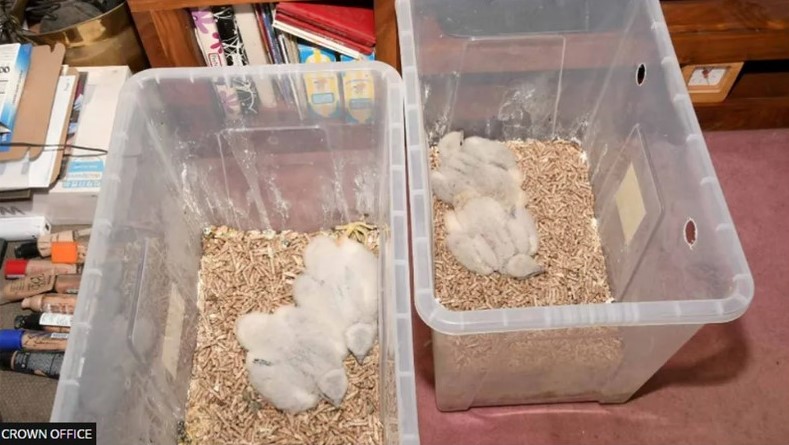
Intelligence reports led to Timothy Hall’s home at Lamberton Holdings in Berwickshire where a large number of peregrines and eggs were found. Timothy Hall and his son Lewis claimed the young birds were captive bred but DNA evidence showed that at least seven recently-hatched chicks were not related to the captive peregrines owned by the Halls. Two chicks were later matched to an adult bird at a wild nest site and one was linked to another wild site.

Mobile phones and a drone used by the Halls was shown to have been used on 20 separate occasions to fly to known nest sites.

An analysis of bank accounts showed large sums of money being transferred from peregrine sales by Lewis Hall to a joint bank account owned by his parents. Some legitimate buyers had been duped by false paperwork procured by Lewis Hall in an attempt to pass off the young peregrines as legitimately captive bred.

Both men admitted failing to declare their profits to HMRC, which is why sentencing was deferred this morning for another four weeks.

Sheriff Peter Paterson reportedly told the court this morning: “These are very serious matters. I want to know what’s happened to the money. They claim they have limited assets and income.

According to the background report for Lewis Hall, and I quote, ‘it’s clear these criminal actions have been carried out over a lengthy period of time and with great scale’. I will be informing HMRC and I’ll ask them to investigate any further charges.”

To read the full article in the Daily Record click here.

Sentencing of part-time gamekeeper & son deferred in international peregrine laundering case

Part-time gamekeeper Timothy Hall, 48, and his son Lewis Hall, 23, of Lamberton Holdings, Berwickshire appeared for sentencing this morning at Jedburgh Sheriff Court after the pair pleaded guilty in December 2023 to numerous offences relating to the illegal laundering of peregrines, which were stolen from the wild and sold on to clients in the Middle East.

Photo by Pete Walkden

The Sheriff deferred sentencing for a further four weeks after asking HM Revenue & Customs to examine the pairs’ accounts.

Sentencing is now expected to take place on 12th February 2024.

UPDATE 15.30hrs: More detail revealed about international peregrine laundering case in Scotland (here)

UPDATE 12 Feb 2024: Part-time gamekeeper Timothy Hall and his son Lewis Hall avoid custodial sentence for laundering wild peregrines in Scotland (here)

Sentencing in Scotland tomorrow for part-time gamekeeper & son guilty of international peregrine laundering

Part-time gamekeeper Timothy Hall, 48, and his son Lewis Hall, 23, of Lamberton Holdings, Berwickshire will appear for sentencing on Monday 15th January 2024 at Jedburgh Sheriff Court after the pair pleaded guilty in December 2023 to numerous offences relating to the illegal laundering of peregrines, which were stolen from the wild and sold on to clients in the Middle East.

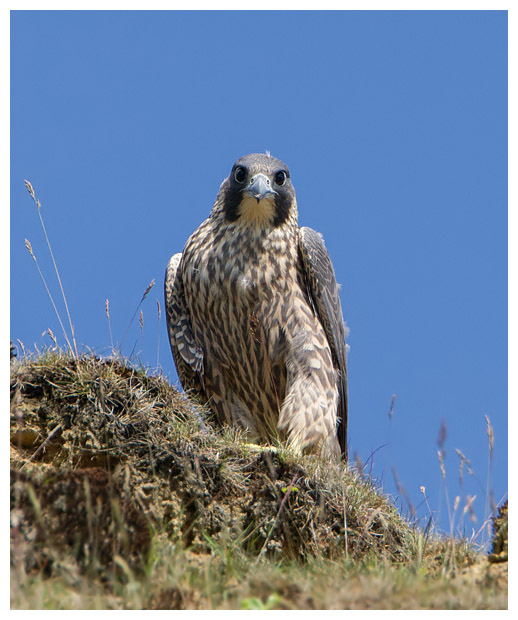
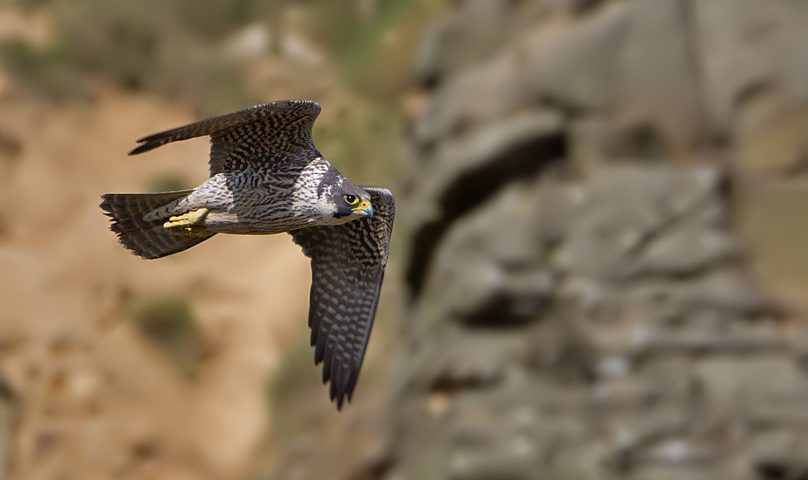
Peregrine photo by Ben Hall, RSPB Images

This is the culmination of a long-running and complex investigation by Police Scotland and the Scottish SPCA, code named Operation Tantallon, which began with a raid at the Halls’ home in May 2021.

Sentencing will take place following background reports on the pair. I’m expecting the full details of this case will be made available after sentencing.

Also appearing in court tomorrow (Chesterfield Magistrates Court in Derbyshire) is Christopher Wheeldon, 34, of Lime Grove, Darley Dale, Matlock who faces charges relating to the alleged disturbance of a peregrine nest and theft of peregrine eggs at a nest site in Bolsover in April 2023. See here for previous blog on this case.

UPDATE 15 January 2024: Sentencing of part-time gamekeeper & son deferred in international peregrine laundering case (here)

UPDATE 15 January 2024: More detail revealed about international peregrine laundering case in Scotland (here)

UPDATE 16 January 2024: Derbyshire ‘drug addict’ jailed for stealing peregrine eggs (here)

New ‘low intensity’ game shooting policy on National Trust moors in Peak District National Park

The National Trust’s (NT) grouse shooting policy in the Peak District National Park has featured a few times on this blog, most notably in 2016 when the National Trust terminated a grouse shooting lease four years before it was due to expire on the Hope Woodlands and Park Hall estates following allegations of illegal raptor persecution (here).

In a direct response to this event, in 2017 the NT modified its grouse shooting tenancy agreements (here) and brought in three new tenants under new, five-year leases.

In 2022, following the ‘disappearance’ of a breeding pair of hen harriers on a National Trust-leased moor in the Peak District (here), the NT came under more public pressure to stop leasing its moors to grouse-shooting tenants.

In 2023 it terminated another grouse shooting lease at Park Hall following more allegations of wildlife crime and announced that no further grouse shooting leases would be issued on this particular NT moor and that it would now be re-wilded (here).

Moorland on the NT’s Park Hall Estate in the Peak District. Photo: RPUK

In November 2023 I attended the Northern England Raptor Forum’s (NERF) annual conference in Barnsley.

One of the presenters was Craig Best, the National Trust’s recently-appointed Peak District General Manager. Prior to taking this post in the Peak District, Craig had spent many years developing and overseeing the delivery of large scale moorland restoration and natural flood management on National Trust moorland in West Yorkshire. If you have an opportunity to hear him speak about his work, I recommend you do so. He’s knowledgeable, thoughtful and passionate about nature restoration.

At the NERF conference, Craig spoke about the National Trust’s vision for its Peak District moorlands and he alluded to various new elements of the NT’s game shooting policy.

A slide from Craig Best’s NERF presentation. Photo: Ruth Tingay

I contacted the National Trust afterwards and asked if it had any written documents I could read about this new game shooting policy. Nick Collinson, the NT’s National Manager on Wildlife Management was kind enough to send me the following summary:

We facilitate a range of recreational activities on our land, and we recognise that for some people, shooting is an important part of rural heritage and the rural economy. It has a long history as a recreational activity in the countryside. We also appreciate that there are a range of views on game shooting, and we regularly engage with different groups and individuals who have an interest in the topic. In developing our approach we have spoken to both shooting and nature conservation organisations.

We will continue to consider the leasing of game shooting rights (red grouse, pheasant, red-legged partridge, and limited wildfowling, only), but only where the activity is compatible with our aims for the land, for restoring nature (e.g. we do not permit burning of moorland vegetation on peat soils), and for local access. We will therefore now only consider leases for low intensity shoots with low numbers of birds, which in many places should negate the need for predator control to sustain high numbers of game birds. All shoots must comply with the terms of their lease, the Code of Good Shooting Practice, and the law, and to support this, all shoots will be required to develop a Shoot Plan which will set out, and work through, shoot and National Trust objectives.

We have a set of strict criteria that game shooting leases must adhere to. This includes the location of release pens, which must not impact priority habitats including ancient woods, the use of lead ammunition and medicated grit, which we will no longer permit, and requirements to ensure shoots do not hinder people’s access to our places. Moreover, we do not permit any shooting of red-listed birds of conservation concern and will only permit limited wildfowling of green and amber-listed birds on a species-by-species basis where statutory agency evidence confirms this is not damaging to local populations. We remain totally opposed to the illegal persecution of birds of prey and all other wildlife crimes and take action to combat these criminal practices, working closely with our partners in the Police, statutory agencies, and the RSPB, to report and convict those who commit these offences.  

We will implement these changes when shoot leases come up for renewal, or sooner if break-clauses in agreements allow. Our approach will be kept under constant review, as will any position we might take on licencing of grouse shooting in the uplands‘.

I think this is a sensible and measured step forward by the National Trust. This new policy will effectively put an end to intensively-managed driven grouse shooting on National Trust moors, without actually banning it, and turns the focus back to nature-based, regenerative and sustainable management instead. No more burning on peat soils, no medicated grit, no lead ammunition, limited predator control and no more measuring ‘success’ by the number of birds shot in a day/season.

It doesn’t remove the threat to wildlife (especially raptors) from neighbouring, privately-owned grouse moors but it sets a new standard for grouse moor management and its effects will be interesting to monitor.

Personally I think this model is the only hope the grouse shooting industry has of staying alive and if these or similar practices aren’t quickly adopted more widely then the industry is doomed. I think the driven grouse shooting industry recognises this too, hence its hysteria over proposed regulations to reform grouse shooting in Scotland. The days of intensive and unsustainable driven grouse shooting are numbered, and they know it.

I’m also pleased to see that the National Trust’s new policy extends to all gamebird shooting, including pheasants, red-legged partridges and woodcock and isn’t just limited to driven grouse shooting. Bravo.

This policy shift will undoubtedly put the National Trust in the firing line of the game shooting industry – indeed, I’ve already read one ‘article’ attempting to undermine Craig Best’s professional reputation and expertise in a nasty, vindictive attack. It’s what they do.

I applaud Craig’s efforts on this issue, and those of the wider National Trust management team. Ten years ago to expect this level of progress would have been unthinkable.

Wildlife Management & Muirburn Bill approaches Stage 2: cue ridiculous amendments!

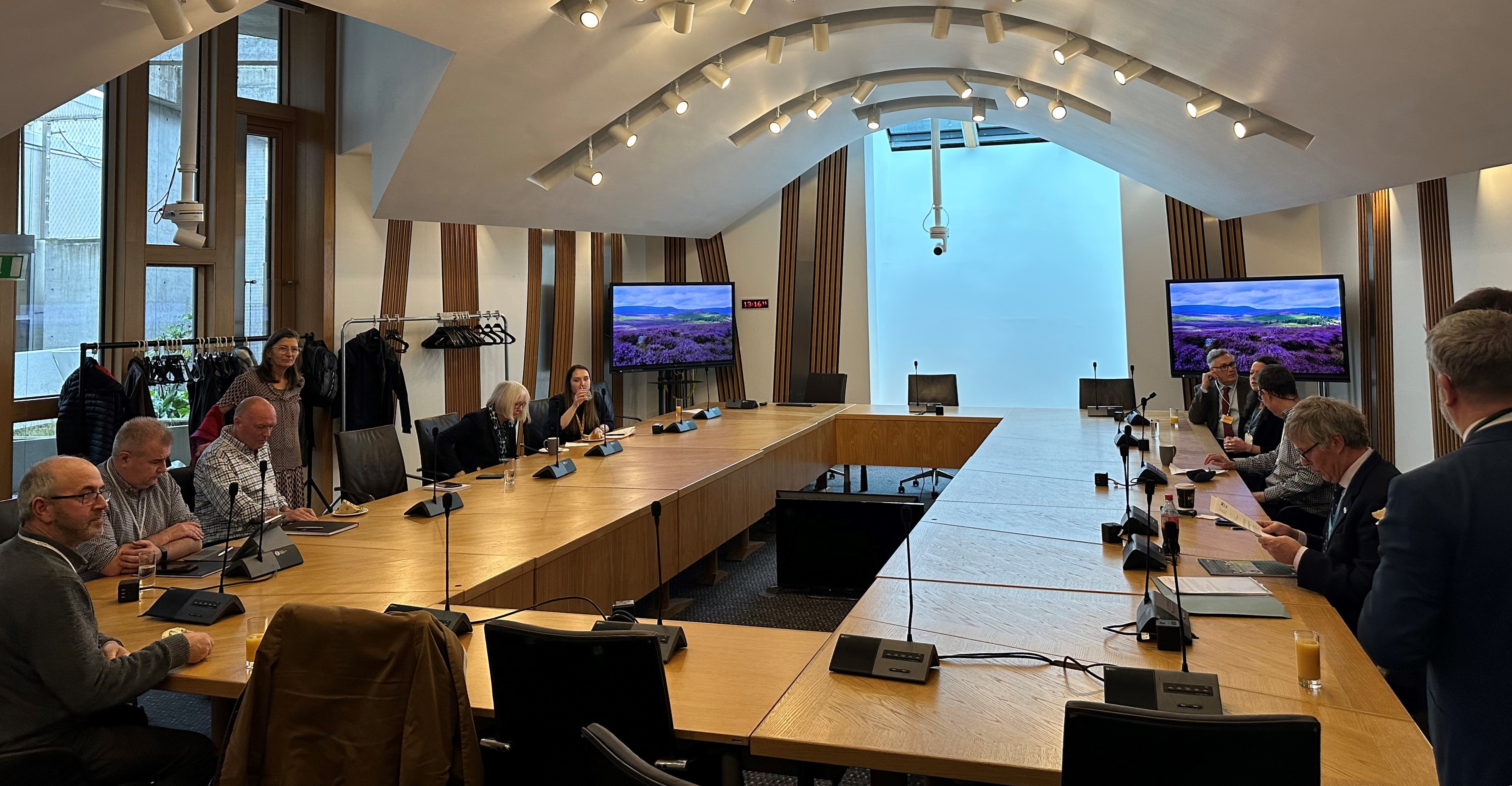
The Scottish Government’s Wildlife Management & Muirburn (Scotland) Bill is making its way through the parliamentary process. For new readers, this is proposed new legislation to regulate grouse shooting and its associated management practices by way of licensing schemes, introduced because of the continued illegal persecution of birds of prey on many Scottish grouse moors.

Red grouse photo by Pete Walkden

The Bill passed Stage 1 on 30 November 2023 (here) when the Parliament voted to approve the general principles of the Bill.

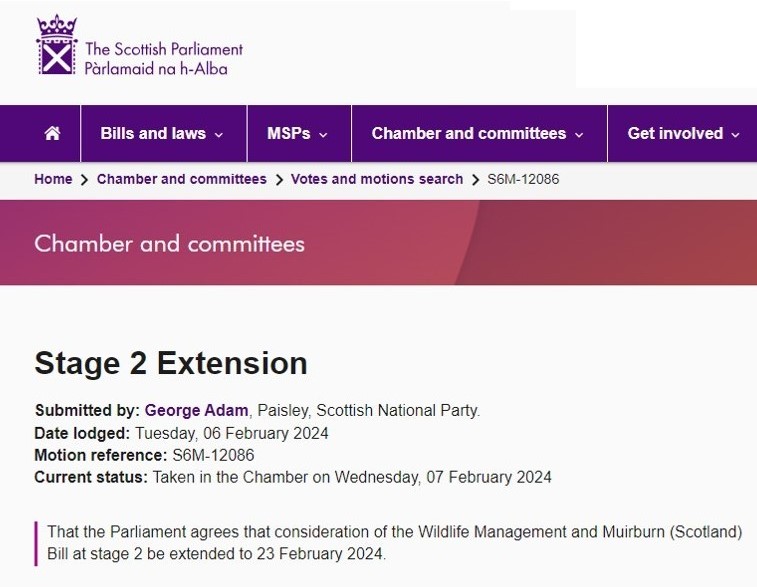
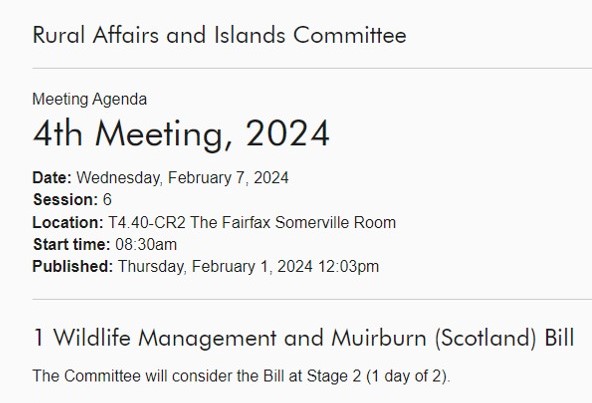
Stage 2 is now fast approaching. This is the stage where any MSP can lodge amendments to the Bill (there is no restriction on how many may be lodged and, given the contentious nature of the Bill, it is anticipated that there will be hundreds of them).The cross-party Rural Affairs & Islands Committee will begin to consider the amendments at a meeting on 24th January 2024.

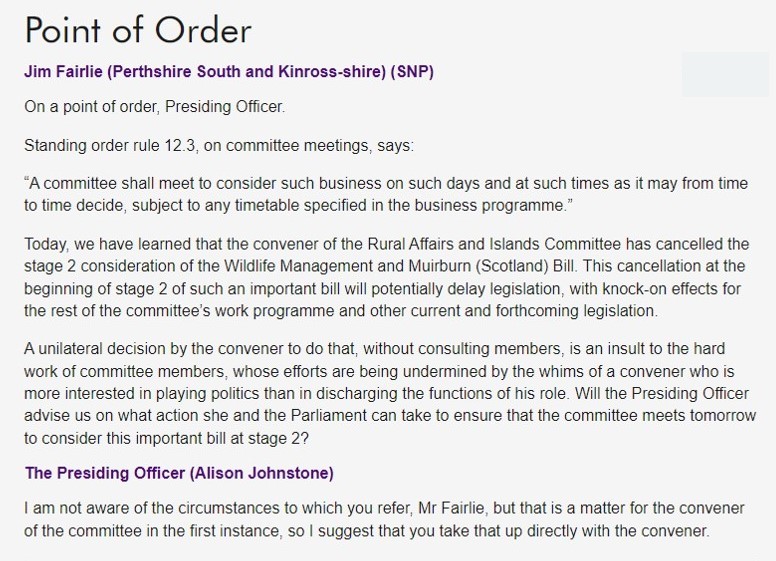
This may cause some alarm, given that some prominent members of the Rural Affairs Committee, including its Chair, voted against even the general principles of the Bill, but whatever amendments the Committee chooses to accept/reject at Stage 2, there will be an opportunity for amendments to be challenged/overturned at Stage 3, especially where they go against Government policy. [For a useful guide to what happens during the progression of a Bill in the Scottish Parliament, see here].

The deadline for submitting amendments for Stage 2 is 18 January 2024 so as you can imagine, there is a huge amount of background lobbying going on at the moment, both by conservationists and by the game shooting sector, in an attempt to (a) strengthen the Bill [the conservationists] and (b) weaken the Bill [the game shooting industry].

The tabled amendments are all being published on this page so it’s well worth keeping an eye on this over the coming week.

Two MSPs have tabled amendments so far – some are very sensible, others are simply bonkers (but entertaining, nevertheless). To help you interpret the amendments, you’ll need to refer to the details of the Bill (as introduced in March 2023) to understand the context of these amendments. Here’s the Bill (as introduced) to help you:

A sensible amendment has been tabled by John Mason MSP (SNP), who is suggesting that any fees charged to those applying for a grouse shooting licence ‘must be sufficient to cover any expenses and costs incurred by the relevant authority in carrying out its functions‘.

I’ve got no disagreement with that at all. Ten years ago journalist George Monbiot pointed out that the taxpayer already subsidises shotgun licencing in the UK as well as grouse moor owners – the Scottish Government needs to ensure that its grouse shooting licensing scheme is fully funded by the industry and not subsidised by taxpayers.

Edward Mountain MSP (Conservative) (who has featured on this blog previously here, here, here and here) has tabled 44 amendments, a few of which are sensible, but most of which are predictably designed to undermine the strength of the Bill.

Here are some amusing examples that I picked out from Ed’s amendments (this is not an exhaustive list by any means, just ones that jumped out).

Ed’s amendment #10 suggests that any trap user over the age of 40 years and who has used the trap in question for at least 10 years consecutively can skip having to complete an approved training course and should just get a trap licence automatically:

Eh? Why should anyone over the age of 40 years be exempt from completing a training course?! Nobody should be exempt if they are using traps to kill a sentient being, let alone anyone over the seemingly arbitrarily-chosen age of 40! Given the wide age-range of gamekeepers convicted for wildlife crime, including trap offences, there’s no evidence to support an exemption from training for the over 40s.

Moving on, Ed’s amendment #17 appears to be an attempt to prevent the ability of the Government to add pheasants and red-legged partridges to the licensing scheme if required:

As you may recall, the Government has not included pheasants or red-legged partridges in its proposed grouse moor licensing scheme, despite the recent upsurge of these gamebirds being released on grouse moors (see here), but the Bill does provide the capacity for these species to be added (i.e. a licence would be required to shoot them) if evidence emerges that wildlife crimes are being committed on grouse moors where these species have been released for shooting.

Ed is proposing that only gamebirds listed on the Red or Amber list could be added to the licensing scheme, which would obviously exclude the addition of pheasants and red-legged partridges as these are not endangered in any way – they are non-native, invasive species released in their millions each year for ‘sport’ shooting. The whole purpose of the licensing scheme is not to protect ‘rare’ (Red/Amber listed) birds – it is to enable the sanctioning of estates who commit wildlife crime when shooting these species. I hope this amendment is treated with the contempt it deserves.

Ed’s amendment #21 is to ‘leave out Section 8‘ of the Bill:

What is Section 8? Ah, that’s the Government’s proposal to extend the investigatory powers of the Scottish SCPA:

Given the Scottish Government’s (long awaited) commitment to extending the powers of the SSPCA (see here), this amendment is just a last-ditch attempt to prevent it from happening. Even if it gets past Stage 2, I fully expect it to be overturned at Stage 3 as it goes directly against Government policy and the Minister’s repeatedly stated intentions.

The remainder of Ed’s amendments focus on muirburn licencing where first of all he proposes excluding entire sections of the Bill relating to this (thus removing the requirement for a muirburn licence), but then goes on to suggest changes to the very sections he wants removed, presumably because he knows that the Government will never agree to removing the requirement for a muirburn licence!

Amongst the changes he proposes are the definition of peat depth to be changed from 40cm to 60cm, the ability to extend the muirburn season to 30 April at landowner discretion, and the management of gamebirds to be included as a legitimate reason to burn on peatland. He also suggests a public register of muirburn licences – that, at least, is a sensible amendment. As for the rest, they’re hard to take seriously in light of the climate crisis and I can’t see the SNP, Labour and Greens being supportive.

These amendments provide us with a flavour of what to expect from certain MSPs over the coming week – I dare say there will be even more outlandish attempts to overturn the provisions of the Bill given the ferocity of the grouse shooting industry’s objections to the Bill’s general principles. Let’s see.

UPDATE 15 January 2024: The National picked up on this blog post and published an article about it (here).

Buzzard suffers shotgun injuries in Essex – the 8th known raptor persecution victim in this county in recent years

Essex Police is appealing for information after the discovery of a shot buzzard found injured in a field near to Layer Wood /Layer Marney on 29th December 2023.

An x-ray shows the buzzard’s humerus bone had been shattered with a shotgun pellet, suggesting it was shot close to where it was found:

Photos from Essex Police

The buzzard is still alive and is being cared for by a local wildlife rescue centre.

Essex Police has launched an investigation – any witnesses or anyone with information please contact Essex Police on Tel 101 and quote incident number 42/2817/24.

This latest raptor persecution victim is the 8th in Essex in recent years, following the shooting of another buzzard in January 2023 (here), the shooting of a red kite in September 2022 (here), the shooting of another red kite in November 2021 (here), another red kite found dead in suspicious circumstances in November 2021 (here), the shooting of another three buzzards in 2020, one in Dec (here), one in September (here) and one in June (here), and the suspected shooting of a Hobby in August 2020 (here).