 Back to the cross-party Rural Affairs, Climate Change & Environment (RACCE) committee hearing in January….
One of the topics up for discussion between MSPs, Police Scotland and the Crown Office was the consultation on increasing the investigatory powers of the SSPCA to allow them to investigate a wider suite of wildlife crimes than they already do. As many of you will know, this issue has now dragged on for five years, ever since increased powers for the SSPCA was first suggested in February 2011 by former MSP Peter Peacock during the passage of the WANE bill through Parliament. For a potted history of this long drawn out fiasco, please see here.
So, the discussion started like this:
Alex Fergusson MSP (Galloway and West Dumfries) (Con): My question follows on quite well from the point about the steps that can be taken to further identify and prosecute wildlife crime. The issue goes back almost two years, to March 2014, when the Government produced a consultation document that looked at further powers for the SSPCA. As everyone will be well aware, various viewpoints were submitted. After its discussion of the 2013 report, the committee wrote to the Government to express sympathy with Police Scotland’s view that accountability issues could arise if the SSPCA were to be given greater powers. We concluded that letter by saying: “The Committee looks forward to the Scottish Government’s forthcoming decision”. We still look forward to that decision, because we have not had one yet. Are you aware of any further discussions that have taken place in the intervening time about the further involvement of the SSPCA? Are the discussions still live or has the proposal died in the water?
Assistant Chief Constable Graham: There have been on-going discussions, and I have spoken to the Government about the matter. We, too, still look forward to hearing about the decision. There is perhaps not a huge amount more substance to be added to the debate. I do not think that anything has changed in relation to our view or the context in which that view was placed when it was given.
Alex Fergusson: An interesting statistic in table 11 of the 2014 wildlife crime report is that the number of cases investigated solely by the SSPCA and reported to the Crown Office and Procurator Fiscal Service has reduced year on year. In 2009-10 the figure was 36; in 2013-14, it had halved. Is there a rationale for that reduction?
Tom Dysart (Crown Office): Before Mr Graham comments, I should mention that I have reviewed the figure in that period against the number of cases that COPFS received. According to the reports that we received, the number of cases was 10.
Alex Fergusson: What period were those 10 cases received in?
Tom Dysart: In the period 2013-14.
Alex Fergusson: You received 10 rather than 18 cases.
Tom Dysart: Yes.
Alex Fergusson: So the reduction is even greater.
Tom Dysart: It is.
Alex Fergusson: What is the reason for the reduction?
Tom Dysart: I simply observe that we received 10 reports, not 18. I found that out when I tried to reconcile our figures against those in the report more generally.
Alex Fergusson: Can anyone else comment on that?
Assistant Chief Constable Graham: The figures come from the SSPCA via the Government report, so I cannot add value, I am afraid.
Alex Fergusson: Has that difference, if you like, been made up for in other ways? In other words, does it leave a black hole in wildlife crime reporting or is the differential being taken up by people such as the police?
Assistant Chief Constable Graham: I suppose that the number is very small when we look at the difference, even if it is the difference between 18 and 10, across a year.
Alex Fergusson: It is between 36 and 10 cases over a five-year period.
Assistant Chief Constable Graham: Yes, but in relation to the cases that Police Scotland deals with, 26 cases will not put a significant resource burden on our approach, even in the context of 255 or 300 reports, as those are spread over a large number of officers. I am not aware that there has been any perception of an impact, or any reporting of one.
Alex Fergusson: To be fair, the question is probably more for the SSPCA than for you. It may have been a little unfair to have put that to you. The committee might want to follow up the issue in writing.
END
This sounds to us like a subtle but concerted effort to diminish the perceived extent of the SSPCA’s role in relation to wildlife crime investigations. We may be wrong, but that’s the impression we got, especially when you consider the above discussion in context with Police Scotland’s claim that they are pretty much on top of investigating raptor persecution crimes (see here) and thus implying that there’s no need for the SSPCA to get any increased powers.
Anyway, after the above discussion the RACCE committee did indeed write to the SSPCA to ask about the confusion over their submitted figures – here is the committee’s letter.
The SSPCA responded quickly with its own letter (here), which explains the confusion – the SSPCA figures were based on a calendar year whereas the figures to which Dysart was referring were based on a financial year. Simple.
The SSPCA’s letter also went on to explain that although the figures it submitted to the Crown Office were relatively low, they don’t reflect the full extent of the SSPCA’s wildlife crime caseload. Only a small percentage of the crimes investigated by the SSPCA (as with wildlife crimes investigated by the police) will actually reach the stage of being submitted to the Crown Office simply due to the well-known difficulties of finding sufficient evidence to be able to report a named individual for that crime. In other words, the extent of the SSPCA’s involvement cannot be judged just on the number of cases that are reported to the Crown Office – let’s hope the RACCE committee was not misled by this.
 The RACCE committee’s discussion about the SSPCA continued as follows:
Claudia Beamish MSP (South Scotland) (Lab): I appreciate that the Scottish Government has not announced its response to the consultation, but can any of you comment on the possibility of further powers? I am a deputy convener of the cross-party group on animal welfare. We have had discussions, and I am aware that it has been highlighted that there could be a conflict of interests in relation to the SSPCA. So many challenges in relation to detection and prosecutions have been highlighted today, in your report last year—I was on the committee then— and over the years that I would have thought that an organisation as experienced as the SSPCA would be a valid partner to work with you on the issues. Do you have any comments on that?
Assistant Chief Constable Graham: To be clear, we are absolutely not saying that it is not a valid partner.
Claudia Beamish: I am not implying that in any way.
Assistant Chief Constable Graham: We are saying that it is a valid partner, and we work with it every day. We have an extremely good relationship with it, and I would not wish it to be characterised that our view on the additional powers suggested otherwise.
Claudia Beamish: I am certainly not implying that in any way.
Assistant Chief Constable Graham: If there is any room for an additional contribution to the combined effort to increase the detection of wildlife crime, we would do everything that we could to support that. However, that does not mean that that end will always justify the means of achieving it. I went into that in some depth last year and in our written responses to the SSPCA. We have to be very careful that, in going down that route, we do not undermine the validity, ethics and credibility of the end results because of the foundation on which they are based. Those are essentially the concerns that we have raised about the additional powers. We work with the SSPCA in lots of ways, and we would be very happy to look at other ways in which we could work with it. We have a good relationship with it, but that does not necessarily extend to our supporting the full extension to the powers that it sought, as members are aware.
Claudia Beamish: For the record, can you clarify for us what the concerns are about the possible additional powers?
Assistant Chief Constable Graham: Our open response to the consultation is already on the record.
Claudia Beamish: Can you clarify your concerns for the committee?
Assistant Chief Constable Graham: We felt that the checks and balances in governance were potentially not in place for an organisation such as the SSPCA, and that its role and purpose did not necessarily lend to its being given the powers that would allow it to progress investigations in the way that it sought without some additional governance being in place in the same way that it would be in place over everything that the police would do. We had concerns that there could be conflicts of interest. That is not to say that the SSPCA is not a really important part of what we do collectively. However, the effort and potential increased capacity that it could add to dealing with wildlife crime were overstated in its original submission, so the benefit certainly did not outweigh our concerns.
Claudia Beamish: Thank you. Could the governance issue be resolved if it were looked at? You are talking about a different level of governance for the consideration of additional powers to be possible.
Assistant Chief Constable Graham: We did not look into that in any great depth, but a superficial assessment is, I think, that it would be very challenging for a body that is constituted as a charity, in the way that the SSPCA is.
END
So not much new there really. Police Scotland continues to assert that there are issues of ‘accountability’ that should, in its opinion, preclude the SSPCA receiving greater investigatory powers. It’s a strange view, and one which we’ve explored before (see here). Why is it that the SSPCA can investigate a whole range of crimes, including some wildlife crimes, and report those cases to the Crown Office for the Crown to consider the evidence and proceed with a prosecution (or not), and those cases are not challenged on the grounds of a ‘lack of accountability’, and yet any suggestion that the SSPCA might be allowed to investigate wildlife crimes associated with the game-shooting industry and all of a sudden they have ‘accountability’ issues?
After this hearing, in early February the RACCE committee wrote to Environment Minister Aileen McLeod with their thoughts on what they had heard during the meeting. Their letter can be read here. In it, the committee writes the following about the SSPCA consultation:
“In your response to the Committee’s letter on the Annual Report 2013, you indicated you would keep the Committee updated on developments with regard to a response to the Scottish Government’s consultation on the extension of powers in wildlife crime investigation to the Scottish Society for the Prevention of Cruelty to Animals (SSPCA). To date, the Committee has not received an update and the Scottish Government has not published its conclusions resulting from the consultation. The Committee requests details of when your analysis and conclusions from the consultation will be published, and expects this to be in good time for the Committee to include this in its legacy report to its successor committee(s)“.
That’s a pretty clear message to the Minister. Get off the fence and make a decision, preferably before 23 March when Parliament is dissolved. The consultation closed in September 2014, it’s now February 2016. How much thinking time does she need?
The RACCE committee’s letter also asks the Minister about her decision on the Wildlife Crime Penalties Review report. It says:
“Upon publication of the report of the Wildlife Crime Penalties Review Group, you wrote to the Committee indicating you would be considering the recommendations in detail. The Committee requests an indication of when your response to the report will be published and whether you are in a position to provide a view on the issue of penalties at this stage. This information will inform the Committee’s legacy report to its successor committee(s)“.
Again, another clear message to the Minister to get off the fence and make a decision.
The RACCE committee members are not the only ones asking the Minister to get on with making long overdue decisions. It recently emerged in a BBC article, ‘Pregnant beavers shot by landowners in Tayside‘ that the Minister has yet to make a decision on whether beavers should receive legal protection. The decision is now four years overdue and if the current Environment Minister continues to prevaricate, this year’s breeding season will result in more pregnant beavers being shot. Scottish Green MSP Alison Johnstone has called for Ministers to get off the fence.
Come on, Aileen, get a grip and do your job and earn that £86K salary!

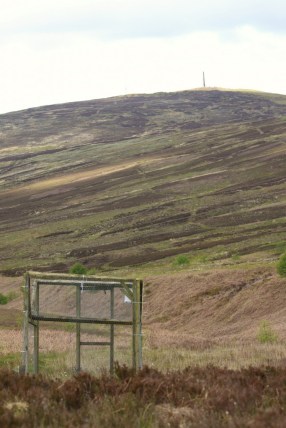 There had been rumours for a few days and now it’s confirmed: Simon Lester, the head gamekeeper at the Langholm Moor Demonstration Project has resigned.
 On Monday, a new report was launched by the Scottish Environment Minister called ‘Understanding Predation’. Available for download here:
 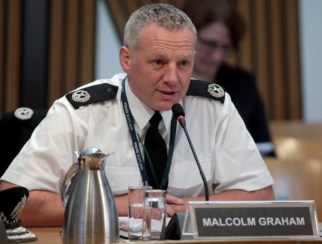 More from the Rural Affairs, Climate Change & Environment (RACCE) committee hearing last month, when a question about the extent of raptor persecution crimes in Scotland was posed to Assistant Chief Constable Malcolm Graham of Police Scotland.
 Last month the cross-party Rural Affairs, Climate Change and Environment Committee (RACCE) took evidence about the Scottish Government’s 2014 Annual Wildlife Crime Report. Three guests from Police Scotland and the Crown Office were invited to the panel to answer the committee’s questions. These were Tom Dysart (Crown Office) and Assistant Chief Constable Malcolm Graham and Detective Chief Superintendent Sean Scott from Police Scotland.
 The Scottish Moorland Group (SMG) has today issued a press statement which refutes the findings of
  Talking of propaganda-fuelling bollocks, has anyone read

 In November 2015 we blogged about the death of satellite-tagged hen harrier, ‘Holly’, one of several birds being monitored by the
