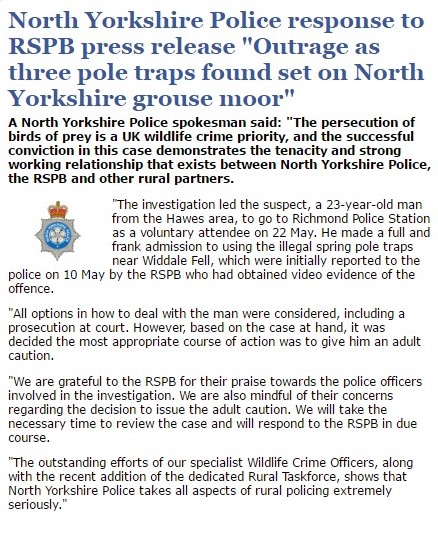
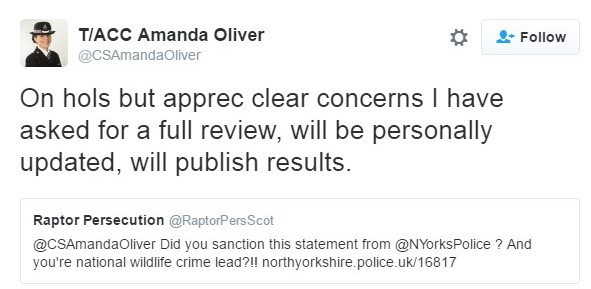
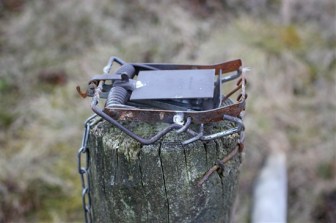
An unnamed man has received a police caution for setting three illegal pole traps in the middle of a grouse moor in the Yorkshire Dales National Park.
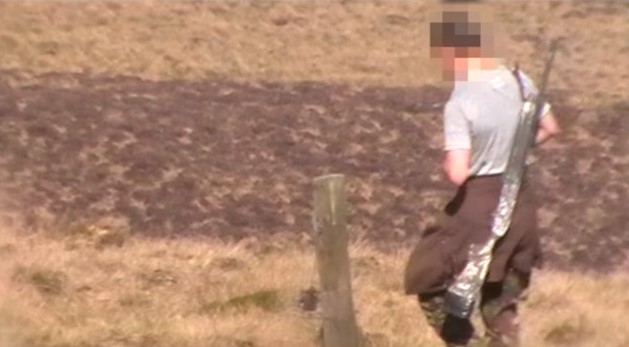
The three traps were discovered on Friday 6th May 2016 by a member of the public, who also saw a female hen harrier hunting in the vicinity. The RSPB Investigations Team moved swiftly and first made the traps safe and then installed covert cameras that night, to find out who was responsible for the traps. When they retrieved the cameras on Monday 9th May, their video footage revealed an armed man attending the traps and re-setting them (see photo below). North Yorkshire Police responded very quickly and attended the site the following day (Tuesday 10th May) to seize the traps.
The full details of these crimes can be read on the RSPB Investigations Team’s excellent blog here and there’s an accompanying video here.
The individual who was filmed setting the traps has received a police caution (which is presumably why he hasn’t been named). Quite why this case didn’t proceed to a prosecution is a matter of deep concern and the RSPB is writing to North Yorkshire Police to establish why the decision was made not to prosecute. We’ll come back to that in a later blog.
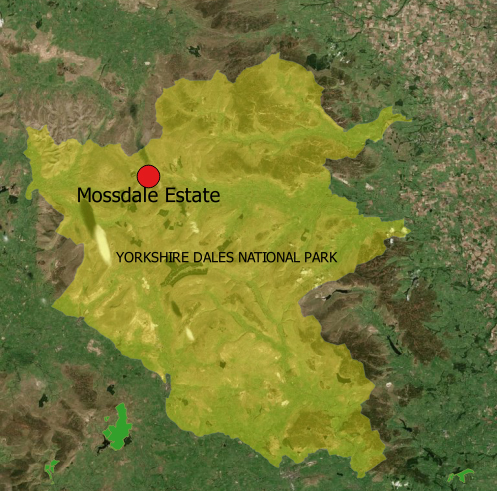
The location where these traps were set has been named by the RSPB as Widdale Fell on the Mossdale Estate.
What the RSPB didn’t say was that this grouse-shooting estate is owned by the van Cutsem family. That name might be familiar to some of you. Indeed, if you google ‘van Cutsem hen harrier’ you’ll see a long list of entries relating to the alleged shooting of two hen harriers at the Queen’s Sandringham Estate in 2007. William van Cutsem was interviewed, along with his friend Prince Harry, as they were both out shooting on the estate that evening. They both denied all knowledge of the shot harriers and nobody was ever prosecuted (see here).
The van Cutsem family name is well known in grouse-shooting circles and has many royal connections. The late Hugh van Cutsem was a personal friend of Prince Charles and all four sons have featured regularly in the shooting press, mostly being recognised for their shooting prowess. The youngest van Cutsem son, William, is Prince George’s godfather, and Prince William is godfather to Grace, the daughter of the eldest van Cutsem son, Edward.
The van Cutsem’s Mossdale Estate sits within the Yorkshire Dales National Park (YDNP). This region is no stranger to hen harrier persecution. Hen harriers have not bred successfully in the YDNP since 2007. According to 2007-2014 hen harrier satellite data, published by Natural England in 2014, at least nine young sat tagged hen harriers have ‘disappeared’ within the Park boundary:
Female, tagged N England 26/6/07: last known location YDNP 5/10/07. Status: missing.
Female, tagged N England 16/7/09: last known location YDNP 27/9/09. Status: missing.
Male, tagged Bowland 29/6/09: last known location YDNP 17/8/09. Status: missing.
Female, tagged N England 29/6/10: last known location YDNP 25/11/10. Status: missing.
Female (Bowland Betty), tagged Bowland 22/6/11: last known location YDNP 5/7/12. Status: shot dead.
Female (Kristina), tagged N England 25/6/12: last known location YDNP 9/10/12. Status: missing.
Male (Thomas), tagged N England 4/9/12: last known location YDNP 4/9/12. Status: missing.
Male (Sid), tagged Langholm 21/9/14: last known location YDNP 21/9/14. Status: missing.
Female (Imogen), tagged N England 26/6/14: last known location YDNP 1/9/14. Status: missing.
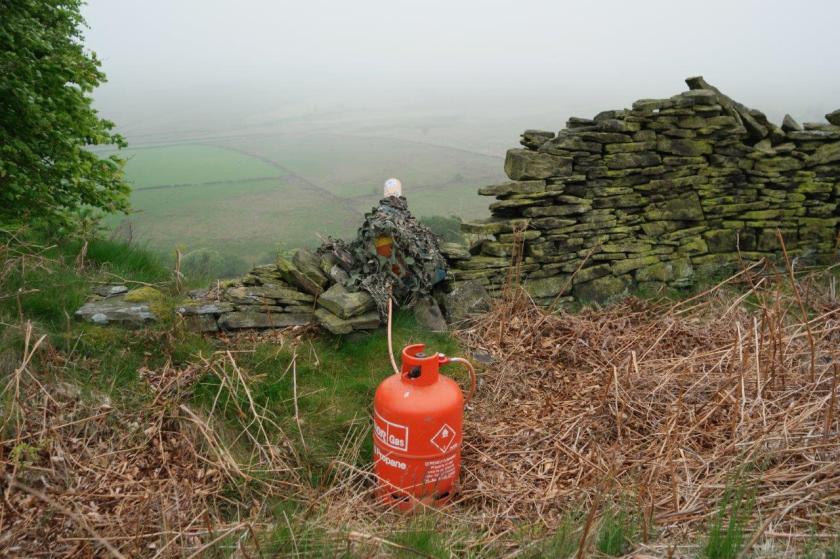
The YDNP, as with other areas where land-use is dominated by driven grouse moors, is a magnet for young hen harriers, but few of them seem to survive. Why is that? What with gas guns, decoy hen harriers and illegal pole traps, all being reported from driven grouse moors in recent weeks, it’s not hard to take an educated guess. It seems there’s an ‘alternative’ Hen Harrier Action Plan at work.
We’ll be coming back to this latest crime in future blogs but for now, you might want to contact David Butterworth, Chief Executive of the Yorkshire Dales National Park Authority, and ask him why illegal pole traps are being set on grouse moors within the National Park, why hen harriers have failed to nest within the National Park since 2007, why so many young satellite-tagged hen harriers seem to ‘disappear’ within the National Park, and what action the Yorkshire Dales National Park Authority intends to take? Emails to: david.butterworth@yorkshiredales.org.uk
Petition to ban driven grouse shooting here
MEDIA COVERAGE
RSPB press release here
RSPB investigations blog here
Mark Avery’s blog here and here
ITV news here
The Moorland Association’s response to this news has been to publish a fluffy article entitled ‘Testimony to dedication of moorland men‘. No mention of raptor persecution at all. Looks like Director Amanda Anderson still suffering from wilful blindness.
Unbelievable statement from North Yorkshire Police here
Interview with senior RSPB Investigations team member Guy Shorrock on BBC Radio York (starts at 1:45:20, available for 30 days here)
BBC news here
Independent here
Daily Express here
The News Hub here
UPDATE: https://raptorpersecutionscotland.wordpress.com/2016/06/01/north-yorks-police-try-to-justify-police-caution-for-criminal-activity-on-grouse-moor/

 Police Scotland has issued an appeal for information following the discovery of disturbed and abandoned buzzard and goshawk nests in the Moy Forest near Tomatin in the Scottish Highlands.
 Following this morning’s news (see
  Martin Harper, the RSPB’s Conservation Director, has this morning published his promised mid-season update on the status of breeding hen harriers in England this year.

 This won’t come as any surprise to anyone, but it has now been confirmed that
  What this press release doesn’t say is that this goshawk site is a historical one (i.e. goshawks have attempted to breed here in the past) although strangely the site has never been successful, with breeding attempts always failing by the incubation stage. Perhaps not so strange when you realise that the site is adjacent to a driven grouse moor.