Press release from Irish Raptor Study Group (15 December 2020)
Rare Marsh Harriers breed in Ireland for the first time in a century
The Irish Raptor Study Group, a voluntary organisation committed to the conservation of birds of prey, is delighted to confirm that two pairs of Marsh Harrier Cromán móna (Irish name) have successfully bred in Ireland in 2020. The Marsh Harrier was last known to have bred in the Republic of Ireland around 1917. The two pairs were confirmed from Co. Galway and Co. Westmeath with both pairs successfully fledging two young.
The Marsh Harrier is a large and dark coloured bird of prey with a long tail and light flight with wings held in a shallow ‘V’. Adult males have smoky grey tails and wings with chestnut belly and shoulders, while females are dark brown with a creamy head crown. Marsh Harrier can be found on open freshwater wetlands and extensive reedbeds, selecting to nest on piles of reeds surrounded by dense marshy vegetation. Marsh Harrier is a generalist wetland predator with a mostly aquatic diet including small birds, mammals, reptiles and amphibians.
Marsh Harrier were adversely affected by prolonged persecution and widespread wetland/fen destruction during the late eighteenth and nineteenth centuries. Approximately 80% of the original extent of fens in the Republic of Ireland has been lost to drainage for peat extraction and reclamation for agricultural land. The cumulative impact of wetland loss due to the Arterial Drainage Act 1945 and the preparatory drainage across bogs in Galway and Roscommon for energy production by Bord na Mona from 1946 limited any real prospect of Marsh Harriers returning in Ireland.
Marsh Harriers are scarce summer visitors to Ireland but more likely to be seen in winter along the south east coast. The last 20 years has seen the recovery of the breeding population of Marsh Harrier along the east and south eastern coastal band of England to more than c.430 breeding pairs. The steady population recovery elsewhere in Europe, especially in the Netherlands, has almost certainly assisted the current increase in England, with a spill over of individuals into Ireland. However, the scale of habitat loss in Ireland may make recolonisation of breeding Marsh Harrier a very slow process.
The Marsh Harrier, like the Eurasian Crane Corr*, Osprey Iascaire Coirneach* and the Bittern An Bonnán BuÃ* is one of our lost wetland treasures. Recent ambition within our Programme for Government to rehabilitate and re-wet peatlands provides an amazing opportunity for ecological restoration. Both the €108 million funding for Bord na Móna rehabilitation plan and the European Innovation Partnerships Initiative (EIP) on the rewetting of farmed peatlands are strategic actions contributing to the governments climate change mitigation, however they also provide the chance to maximise other ecosystem service co-benefits such as protection of biodiversity and benefit our rare wetland species. These initiatives could also foster opportunities for re-establishing and/or reintroducing the Crane and Bittern.
Andy Wightman MSP has resigned from the Scottish Greens as of today.
His letter of resignation, including his reasons for leaving, can be read here.
[Andy with golden eagle ‘Adam’, who later disappeared in suspicious circumstances on a grouse moor in Strathbraan (here). Photo by Ruth Tingay]
It’s reported in a number of papers (e.g. here) that he hasn’t ruled out standing as an independent, standing for another party, or indeed re-joining the Scottish Greens.
Andy has been a massive supporter of this blog right from the very early years and has been involved in addressing the issues highlighted on here in both a personal and professional capacity. I’m privileged to have worked with him on a number of platforms and look forward to finding new opportunities to continue.
UPDATE 28th February 2021: Andy Wightman to stand as Independent candidate for Highlands and Islands (here)
Further to yesterday’s news from Police Scotland that a poisoned red kite had been found dead on a Scottish grouse moor at Moy (see here), news has emerged that this bird was also being satellite-tracked, which has implications for the police investigation and any potential sanction imposed on the estate as a result.
An article in today’s Strathspey and Badenoch Herald (here) published a photograph of the young kite with two of its siblings when they were fitted with satellite tags in 2019. The article also notes that this kite was from the first brood to fledge in the Cairngorms National Park, and the first successful brood in the Badenoch & Strathspey area since 1880 (thanks to blog reader Dave Pierce for posting this as a blog comment yesterday).
[The three red kite siblings, fitted with satellite tags, in the Cairngorms National Park. Photo Scottish Raptor Study Group]
It’s not often, these days, that a poisoned satellite-tagged raptor is found (although there are some notable exceptions, including this satellite-tagged white tailed eagle, found poisoned on a grouse moor in the Cairngorms National Park earlier this year).
Since satellite-tagging became more routine, poisoning offences have dropped considerably, presumably because the presence of a satellite tag increases the probability of crime detection. Instead, the shooting and trapping of raptors have become much more prevalent killing methods because the perpetrator has more control over the crime scene (and can thus remove evidence quickly). What we usually get with satellite-tagged raptors these days is a sudden and inexplicable ‘stop’ in the tracking data, and both the tag and the bird ‘disappear’, never to be seen again (well, only if the criminal has hidden the evidence of the crime properly, unlike in this recent case where a golden eagle’s satellite tag was discovered cut off and wrapped in lead [to block the signal] and dumped in a river).
So the discovery of this poisoned satellite-tagged red kite at Moy is unusual, but also very helpful. Depending on the type of tag and it’s ‘duty cycle’ (i.e. the frequency with which the tag had been programmed to collect and transmit data), information should be available to Police Scotland to inform them of the kite’s recent movements. For example, had it been on this grouse moor for several days (in which case the likelihood of it being poisoned there would seem high) or had it travelled in from a distance elsewhere shortly before dying, which might indicate it was poisoned elsewhere?
Much will also depend on the type of poison used (which hasn’t been disclosed) and the dose and the toxicity. We know from the Police press release yesterday that it was a banned poison (one of eight listed on the Possession of Pesticides (Scotland) Order 2005, which are Aldicarb, Alphachloralose, Aluminium phosphide, Bendiocarb, Carbofuran, Mevinphos, Sodium cyanide and Strychnine) but some of these poisons are incredibly fast-acting and others are less so, which might also give clues to where the poison had been placed.
Information also hasn’t been released about whether a poisoned bait was found close to the poisoned red kite. Sometimes they are (especially if the poison used is fast-acting) but other times the bait is not present, which might suggest the bird was poisoned elsewhere and managed to fly some distance before succumbing to death.
In other cases bait has been found placed out on estate boundary fences – this has been a common ploy by some estates that aims to obfuscate a police investigation and point blame to an innocent, neighbouring estate where the poisoned bird may have been found dead.
For obvious reasons, the Police haven’t released much of the details because the criminal investigation is ongoing. However, it is these details that will inform the decision-making process at NatureScot (SNH rebranded) as to whether a General Licence restriction order should be imposed on Moy Estate after the discovery of this poisoned red kite.
As regular blog readers will know, General Licence restriction orders are pretty impotent because estates can simply circumnavigate them with applications for individual licences instead, but nevertheless, that’s not a reason for not imposing them where merited.
This’ll be an interesting case to follow.
UPDATE 22nd June 2022: General Licence restriction imposed on Moy, a grouse-shooting estate, after discovery of poisoned red kite (here)
Press release from Police Scotland (16th December 2020)
Appeal for information – poisoned bird of prey – Ruthven, Moy
Police Scotland has confirmed that a red kite found dead in the Ruthven area in October, had been poisoned with a banned pesticide.
[A poisoned red kite, photo by Marc Ruddock. NB: Not the poisoned red kite in this particular incident]
Further searches were carried out yesterday (15 December) with partner agency RSPB on hill ground near Meall a’ Bhreacraibh and Ruthven, Moy, in the northern Monadliath mountains.
No further poisoned raprtors or animals were identified.
Police Constable Daniel Sutherland, Highlands and Islands Wildlife crime Liaison officer, said:
“Traces of a banned pesticide have been detected in a Red kite found in the area. This incident is sadly another example of where a bird of prey has been killed through ingestion of an illegally held poison.
“I strongly urge anyone within the local and wider community to come forward with details on any information about this incident.”
Following consultation with the Scottish Government Rural Payments Directorate and the Science and Advice for Scottish Agriculture (SASA), Police Scotland requests members of the public and any dog walkers to be cautious when walking in the surrounding area and the immediate vicinity.
Anybody who has information about this incident, banned pesticide possession or misuse, or other information relating to raptor persecution please contact Police Scotland on 101 or pass on information anonymously via Crimestoppers on 0800 555 111.
ENDS
This is a very good response from Police Scotland – a press release out the day after the police search and a clear warning to the public to be cautious in this area, especially if walking with dogs. The name of the banned poison isn’t given, probably for investigative purposes, but by telling the public it’s a banned poison we know it’s one of eight highly toxic pesticides (or perhaps a combination) listed on the Possession of Pesticides (Scotland) Order 2005, which are Aldicarb, Alphachloralose, Aluminium phosphide, Bendiocarb, Carbofuran, Mevinphos, Sodium cyanide and Strychnine.
Now, about the location. According to Andy Wightman’s excellent Who Owns Scotland website, the area of land mentioned in the police press release is part of the Moy Estate in the northern Monadhliaths. Or at least it was when Andy compiled his data – it’s possible, of course, that there have since been boundary changes.
Regular blog readers will be familiar with the Moy area. Moy Estate was raided by police ten years ago after the discovery of poisoned bait and dead raptors and illegally set traps. A gamekeeper was later convicted of possession of a red kite after its bloodied corpse was found in the back of his vehicle. It had two broken legs and a head injury. A bloodied shinty stick was also found in the back of the vehicle.
The remains of two further red kites were discovered on the moor, including a severed red kite leg and some wing tags that had previously been fitted to a kite, all found buried in holes under some moss. A jar in one of the gamekeeper’s houses contained the leg rings of four young golden eagles – nobody could account for how they had ended up inside that jar. A live hen harrier was found caught by its leg in an illegally-set spring trap. It survived after being rescued by raptor workers.
No further charges were brought against anyone for any of the offences uncovered at Moy.
In 2016 Police Scotland issued an appeal for information following the discovery of disturbed and abandoned buzzard and goshawk nests in the Moy Forest. One goshawk and four buzzard nests were abandoned in suspicious circumstances, with some evidence of illegal disturbance. These nests were being monitored by staff from Forestry Enterprise Scotland. No charges were brought.
They now need to get on with it and get it implemented ASAP, because this latest victim is evidence that raptor persecution continues, despite all the denials routinely chuntered out by the so-called leaders in the game shooting industry.
UPDATE 17 December 2020: Poisoned red kite found dead on Scottish grouse moor – an interesting police investigation (here)
Caerphilly man found guilty of hunting and killing badger
A MAN is facing a prison sentence after he was convicted after a trial of hunting and killing a badger.
Dewi James Price, 39, of Commercial Street, New Tredegar, Caerphilly, was also found guilty of offences against red kites.
He had denied the charges during a trial at Newport Magistrates’ Court.
Price was found guilty of killing a badger in the Builth Wells area of Powys on February 18, 2018.
The defendant was also convicted of taking a red kite in Gelligaer, Caerphilly, on May 19, 2019.
He was also found guilty of intentionally or recklessly disturbing a red kite while it was in, on or near a nest containing eggs or young and of intentionally or recklessly disturbing the dependent young of a red kite.
Price’s case sentence was adjourned and is due to take place at Newport Crown Court on December 23.
He was granted conditional bail.
ENDS
UPDATE 7 January 2021: Sentencing delay for man convicted of offences against badger and red kites (here)
UPDATE 13 February 2022: Badger killer and red kite chick thief avoids prison (here)
In August 2020 a walker found an adult golden eagle dead in a river in Powys, Wales.
The discovery prompted a great deal of media interest (e.g. here) as this eagle was believed to be the lone bird that had survived for approx 12 years in the wild in Wales, having escaped from captivity when she was three months old.
Just a few days before her corpse was found she’d featured in a BBC documentary presented by Iolo Williams, The Last Wilderness of Wales (available here on BBC iPlayer and well worth a watch for footage of this eagle doing her thing).
At the time of the news reports the cause of death was still to be established.
The Welsh Government organised for a post mortem where it was determined she’d died of systemic Aspergillosis. The PM report included the following description:
‘Asperillosis is the most comon fungal mycosis in birds. Aspergillus fumigatus is a ubiquitous opportunistic organism and factors impairing the birds’ immunity can predispose to disease. No underlying immunocompromising factors were detected on testing. There were extensive, chronic lesions throughout the carcase likely resulting in reduced feed intake, ill-thrift and dehydration and ultimately death‘.
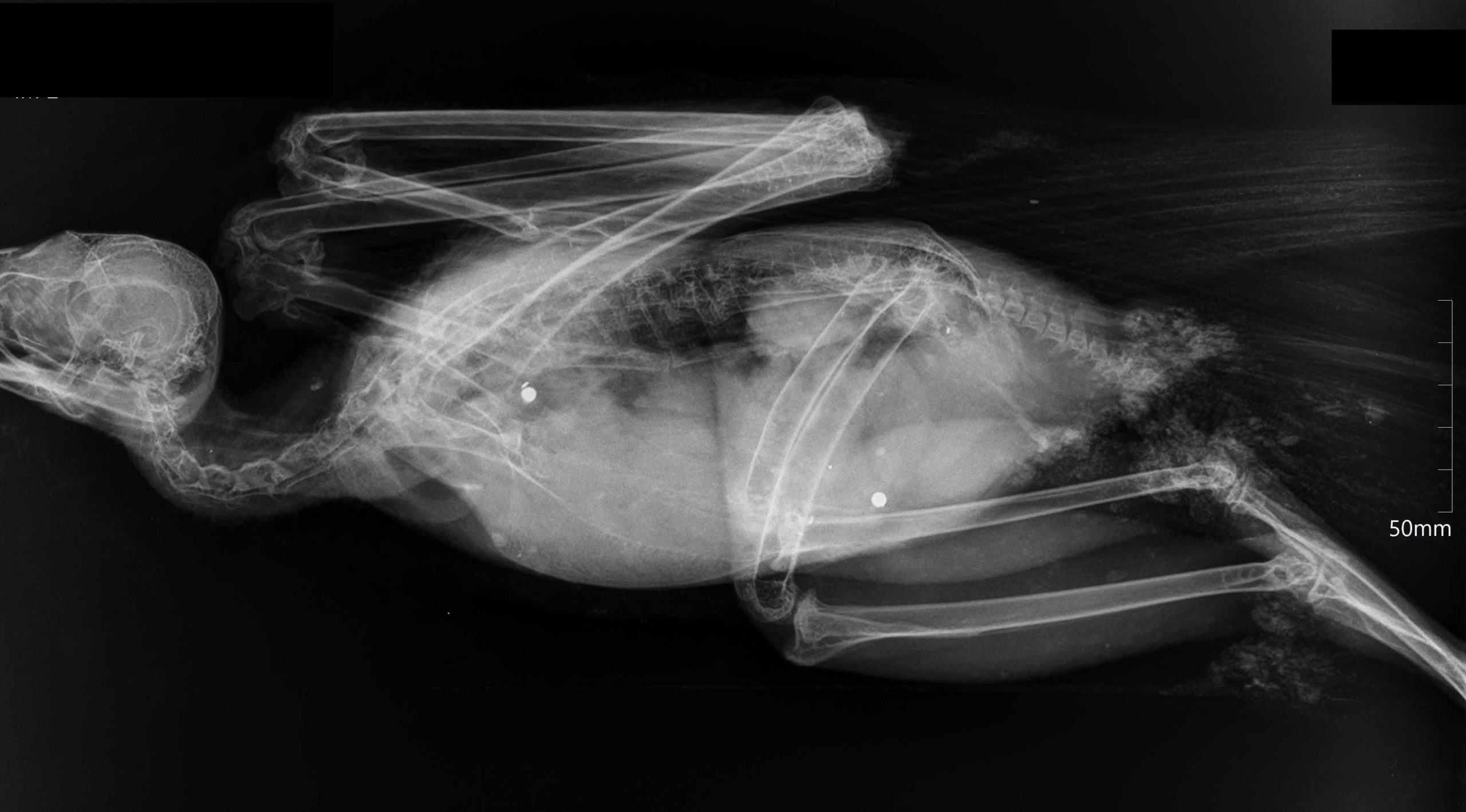
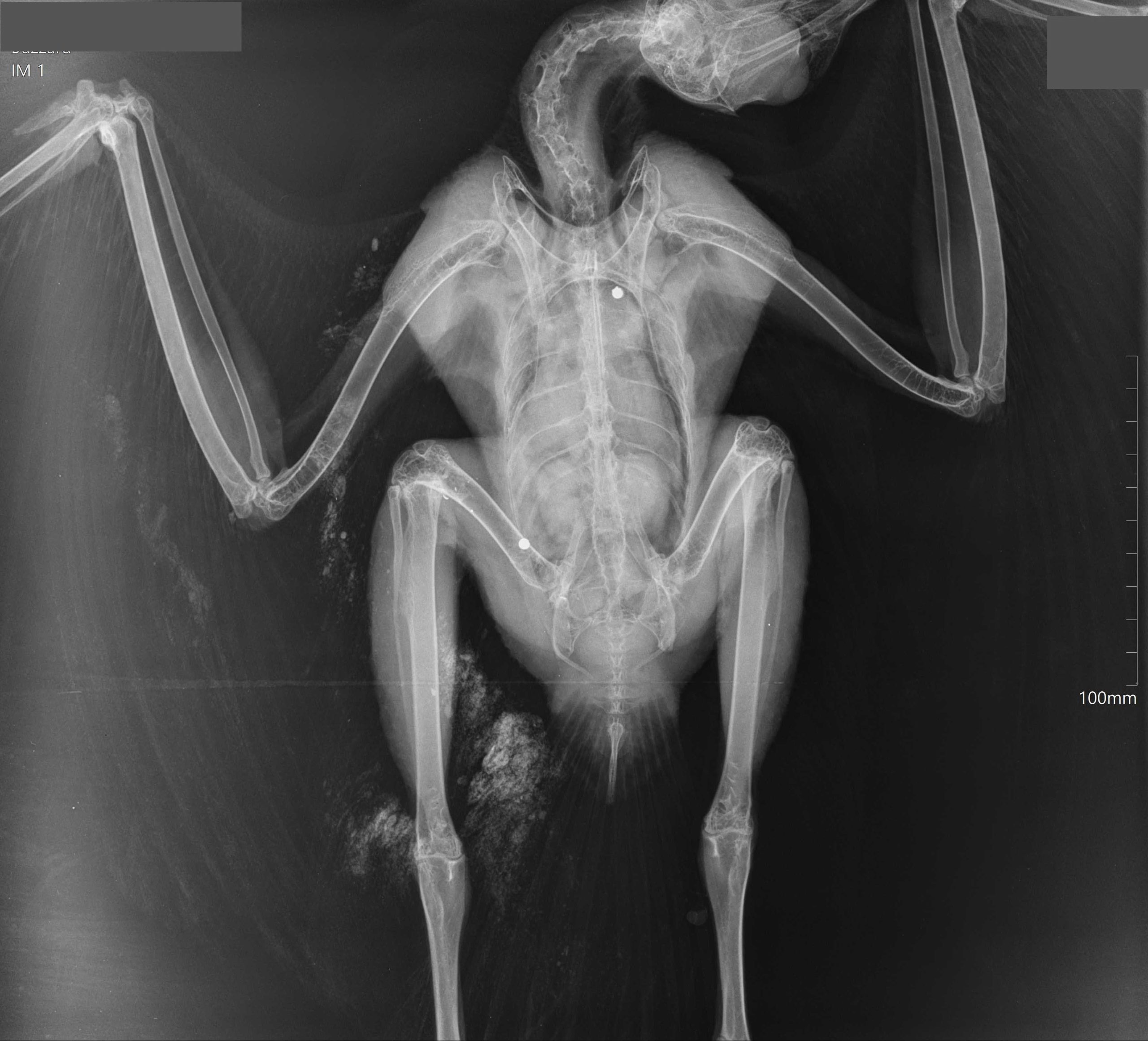
That all looked straight forward and no cause for concern. However, an x-ray of the corpse had also revealed something much more sinister, as documented in the PM report as follows:
So, this golden eagle had been shot previously, although it’s not clear when and the pathologist thought this was unlikely to have contributed to the bird’s death.
Interestingly, the Welsh Government chose to suppress this information. Here is some internal correspondence, released under FoI, where the suppression is detailed:
In later correspondence also released under FoI, Welsh Government officials said this wasn’t deliberate suppression but just standard procedure when informing the original reporter of the incident about the cause of death, excluding any additional information that the PM may have uncovered. Government officials also stated that the Environment Minister had been informed about the gunshot injury.*
That seems reasonable behaviour under normal circumstances. However, finding the only golden eagle in Wales dead in a river couldn’t be described as ‘normal’ under any circumstances. And discovering that the eagle had been shot would also be of significant public interest, not least when there’s currently an active debate about the proposed reintroduction of golden eagles to Wales which could happen as early as next year (see here).
I’d say that public understanding of illegal persecution, including the targeting of a golden eagle, was actually fundamental to the debate.
Although according to an FoI response from the Welsh Government’s statutory conservation agency Natural Resources Wales (NRW) last month, officials there claimed to have received no correspondence about the shooting of this golden eagle either. That seems a bit odd, doesn’t it? Surely officials in the environmental section of the Welsh Government talk to officials in NRW, especially on a subject as significant as the shooting of a golden eagle?
It’s not the first time information about golden eagles in Wales has been suppressed. Last month NRW withheld correspondence it had had with Wilder Britain, one of two competing organisations involved with the proposed reintroduction of golden eagles to Wales (see here).
In an FoI refusal letter, NRW argued that Wilder Britain had refused permission to release its correspondence with NRW. I’ve lodged a review of that decision because I don’t believe it should apply to correspondence written by NRW to Wilder Britain in relation to a proposed reintroduction project. I believe the public have a right to know what advice NRW has been giving to someone proposing to reintroduce golden eagles to Wales and especially now that it’s been confirmed that Wales’s only wild-living golden eagle had at some stage been illegally shot.
*Update 12.24hrs: The person who took the dead eagle from the walker and delivered it for post mortem has been in touch to say the Welsh Government did provide details of the pellet and did not try to dissuade her from sharing that information with the media. This information is supported by some of the FoI material I’ve received, which shows that the Welsh Government informed her about the pellet sometime after they’d first mentioned to her that Aspergillosis was the cause of death, and seemingly only after being prompted by an outside agency to do so.
There is further correspondence, released under FoI which hasn’t been published here, in which the Welsh Government explicitly states, ‘We aren’t planning any proactive comms‘ [about the eagle being shot].
UPDATE 17.00HRS: This blog post has been picked up by Wales Online (here)
UPDATE: This blog post has been picked up by the Mail Online, who couldn’t report it accurately (claiming the eagle was shot twice) nor manage to acknowledge the source of their story).
UPDATE 16 February 2021: Toxicology analysis has confirmed this eagle had ‘high concentrations of rat poison in its liver, which may have contributed to its death’, according to the BBC (here)
Readers of this blog might find these other blogs of interest.
RSPB Scotland: Reflecting on Scottish Government’s announcement of plans to licence grouse shooting (here)
ParksWatchScotland: How will the Scottish Government’s proposals for grouse moors affect the Cairngorms? (here)
Dr Hugh Webster: White hares & red herrings – a look at the Scottish Gamekeepers Association’s proposal to translocate mountain hares from grouse moors to, er, elsewhere (here)
Parkswatch Scotland: Muirburn and environmental destruction in the Cairngorms – Glen Callater and the Invercauld Estate (here)
Parkswatch Scotland: Prince Charles and conservation in the Cairngorms National Park (here)
Guy Shrubsole (guest blog for Inkcap newsletter): The Queen must rewild Balmoral (here)
Martin Harper: Good news and a challenge for a Friday about burning of vegetation on peatlands (here)
Alan Stewart: Timeline of wildlife legislation in Scotland (here)
Colin MacLennan (guest blog for Mark Avery): My Decathlon petition (here)
Trees for Life: Legal challenge to protect beavers in Scotland (here)
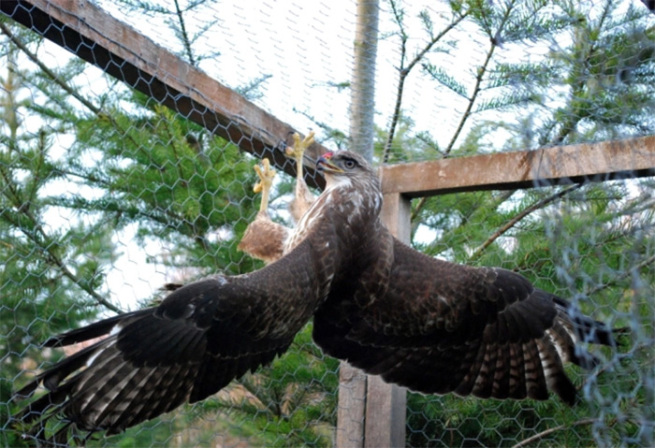
A red kite suffered a brutal and agonizing death when it was caught in a barbaric illegal trap at a pheasant-release pen on an unnamed Berkshire shooting estate in August 2020.
A member of the public found the dead kite, hanging upside down with its legs caught in a pole trap, a cruel device that has been outlawed since 1904.
[Red kite hanging dead in an illegal pole trap on a Berkshire shooting estate. Photos via RSPB].
The member of the public reported the incident to the estate (please note – if you find something like this report it to the police and the RSPB, straight away). A gamekeeper was reportedly abusive and threatening in response.
The incident was reported to the RSPB a couple of days later, who contacted Thames Valley Police. Fortunately in this instance, senior estate officials had already reported the crime to the police and had instructed the gamekeeper to retrieve the dead kite and the illegal trap.
The gamekeeper was interviewed and denied setting the trap on his pheasant pen and claimed it was ‘a set-up’.
There appears to be insufficient evidence to progress a prosecution.
For further details of this horrific crime, and the ongoing difficulty of securing sufficient evidence for a prosecution, please see the RSPB Investigations Team’s blog here.
STV’s Scotland Tonight programme on Wednesday featured a debate on grouse shooting as part of the programme’s Listen Up debate series.
The debate featured Robbie Marsland, the Director of League Against Cruel Sports (Scotland) and Mark Tennant, Chair of landowners’ lobby group Scottish Land & Estates.
This programme is only available to watch until 16 December (here, starts at 15.37 mins).
It’s hilarious, and well worth a watch.
Here’s the transcript, for posterity, but you really need to watch the video to experience the full Botham-esque effect!
Robbie Marsland: There is no place for a bloodsport like grouse shooting in modern Scotland. Every year hundreds of thousands of these iconic wild birds are shot for entertainment, yet polls show that seven in 10 people in Scotland are against grouse shooting. And it’s not only the grouse that suffer – around 200,000 foxes, stoats and mountain hares are killed each year just to ensure there are enough grouse to kill. The moors used to hunt grouse also create a circle of destruction that depletes biodiversity and harms the environment. These moors take up a huge part of Scotland’s land, yet the industry only contributes a pitiful £23 million to Scotland’s economy each year. It’s time for the Scottish government to end the war against wildlife going on in our Highlands, and stop grouse shooting once and for all.
Presenter: And Robbie joins us to debate his arguments with Mark Tennant, chairman of the organisation Scottish Land and Estates. Thanks for joining us. Robbie, is grouse shooting not an important part of our rural heritage?
Robbie Marsland: Well when I first came to look at this issue, I thought grouse shooting was sort of one of those central things in Scotland. I didn’t realise just how new it was. It’s only the last 150 years or so that the land was given up from using for sheep and was turned into this area set aside for intensively managing the land, so that there is an abundance of grouse, so that you can come along and shoot them. So if that’s a part of traditional Scotland then I don’t think it’s a part of traditional Scotland in the 21st Century.
Presenter: Mark, this is not something that should be happening in the 21st Century, shooting for entertainment.
Mark Tennant: Well, I mean Robbie comes up with these huge numbers of birds that are shot. I don’t know where he gets the numbers from.
Presenter: OK Mark, what about the principle of shooting for entertainment, as Robbie describes it?
Mark Tennant: You’re not shooting for entertainment. At the end of the day, every single one of these grouse, which by the way are not reared, let’s be absolutely clear, you cannot rear grouse. They actually end up in the food chain and are eaten. They are wild birds and I’m not convinced I know how you get them into the food chain unless you shoot them. But maybe Robbie’s got a better way. Maybe we can trap them, Robbie?
Presenter: Robbie, what’s your response to that? These are wild birds that end up in the food chain.
Robbie Marsland: I’d like to see the evidence of that. I’ve been working on this issue for some time now and there are no trading standards figures on the amount of grouse that do go into the food chain. So if Mark does have that information, I’d be really interested to see it.
Mark Tennant: All I’d ask you Robbie is to come down to the restaurants in London. You’ll get them down here. You’ll get them in Germany, in France.
Robbie Marsland: I know that some grouse certainly goes into high-end restaurants in London, absolutely.
Mark Tennant: No they all end up in the food chain, they all end up there.
Robbie Marsland: I’m not at all clear how many grouse are shot. The whole industry is sort of clouded in mystery.
Presenter: Mark, what’s the attraction of grouse shooting? Why do people do it? I’d like to hear about that.
Mark Tennant: People do it because man has been hunting wild animals since time immemorial. For food. And that’s what happens. It’s like fishing or anything else. You go out, you shoot birds, they go down and they get eaten and you eat some of them.
Presenter: Robbie, let’s talk about the importance of the industry to the economy. Jobs and livelihoods depend on this, brings in £23 million or thereabouts to the Scottish economy.
Robbie Marsland: Yeah, yeah, yeah. And £23 million sounds like a lot of money, but when you compare it to the size of the Scottish economy, I’m afraid it’s 0.02% of the scale of the economy. When it comes to jobs, I’m really really conscious that there is a fear that any changes will result in loss of jobs, and I think it’s our responsibility, the people who are starting to question why it is a good thing to kill all of these animals, that we do have solutions to that. That’s why the Revive Coalition, that the League Against Cruel Sports is a member of, has produced two reports, one called Back To Life, and the other A Better Way, and both of those reports detail that you can get more jobs. And more importantly, I spoke to the new owners of an estate called the Kildrummy Estate. They’re managing that estate for wildlife and for conservation and they stopped using it for killing grouse. They told me last week that they are bringing in several new jobs, they’re doing up the local hotel and producing new tourist accommodation, and all of that is of great benefit to the local community and jobs.
Presenter: Mark, how important are the jobs to the local economies?
Mark Tennant: The jobs are very important. It’s all very well to say that it’s 0.04% of the Scottish economy. Actually it’s a little bit less, it’s actually 28 million but let’s not quibble. The simple fact is that this is about 15% of the total take of the Edinburgh Festival every year. And all of it goes into the least populated and the poorest parts of our country. So the 0.04% really is a meaningless statistic. Like so many of the statistics that the League uses.
Presenter: Very briefly, I’m going to ask you both about the licensing. Scottish government says it is going to bring in a licensing scheme to regulate the industry. What would that mean, how would that protect the birds of prey? Very briefly, Robbie.
Robbie Marsland: Well, we don’t know yet. We are yet to see the terms of the licence. What we are asking for is that it’s a comprehensive licensing scheme that doesn’t just look at the number of raptors, and the increasing number of birds of prey which are being killed. But it looks at the way that heather is burned and the impact that has on Scotland’s ability to reach its climate change goals. And we are looking at the amount of medicated grit that is put out there.
Presenter: Mark, I presume that you’re not welcoming this idea of licensing?
Mark Tennant: I’m not sure what it achieves but the simple fact is it’s going to happen.
Presenter: So lovely to hear from both of you. Thanks very much indeed for joining us this evening. And that’s all from Scotland Tonight.
Or am I mistaken and you’re not trying to shield an industry riddled with criminals or hide anything that might reflect badly on your choice of ‘partners’?
UPDATE 12th January 2021: This news has eventually been dragged out of Natural England via an FoI request. See: Satellite-tagged hen harrier Harold ‘disappears’ on grouse moor in Yorkshire Dales National Park (here).
[Gunnerside, Yorkshire Dales National Park. Photo by Ruth Tingay]