Three-year General Licence restriction imposed on Raeshaw Estate (again), this time relating to shooting of Golden Eagle ‘Merrick’

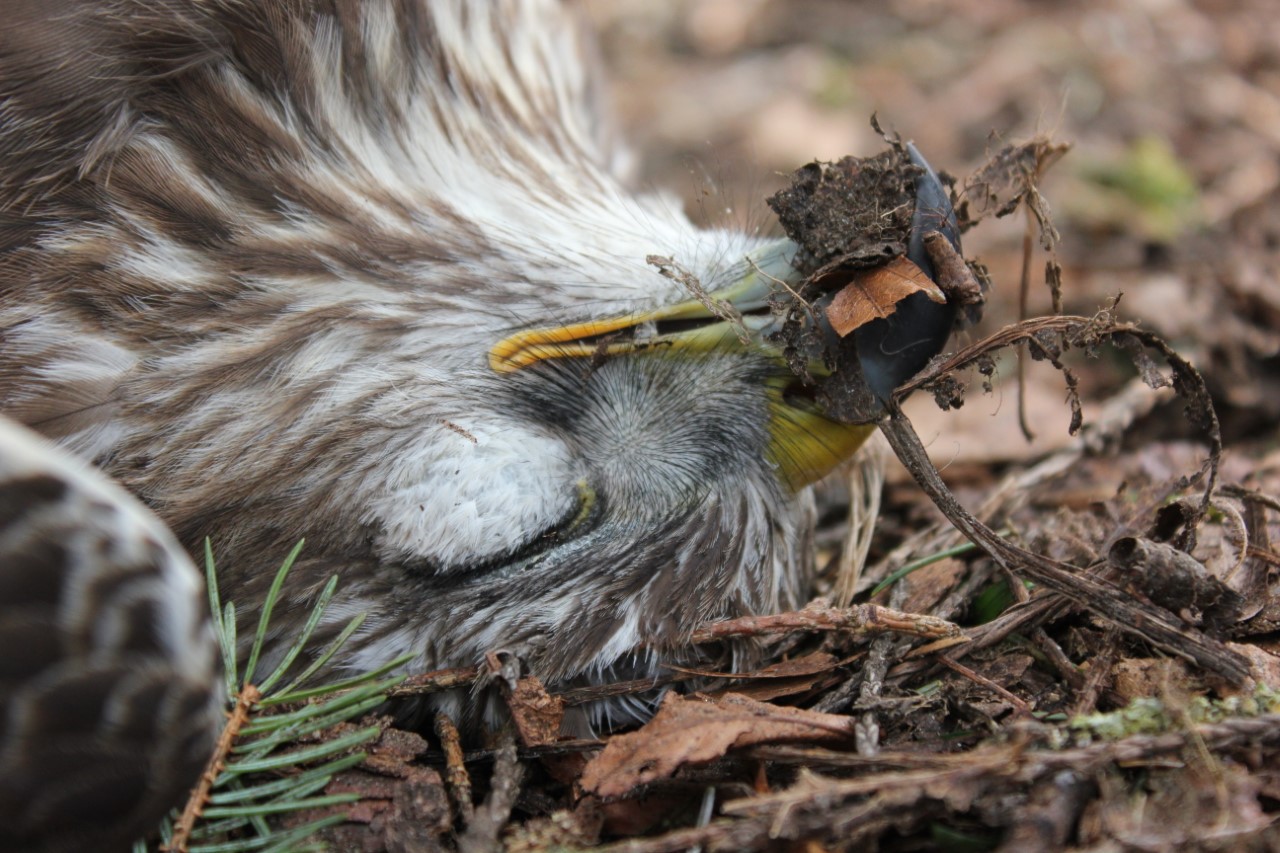
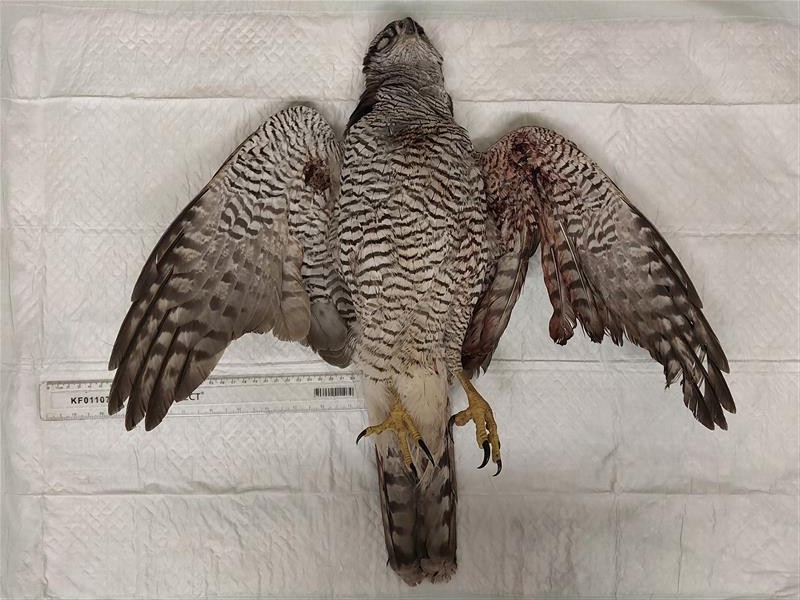
NatureScot has today announced a three-year General Licence restriction on Raeshaw Estate (and on neighbouring Watherston Wood, which is understood to be under separate management to Raeshaw), in relation to the shooting/killing of Golden Eagle ‘Merrick’ in October 2023.

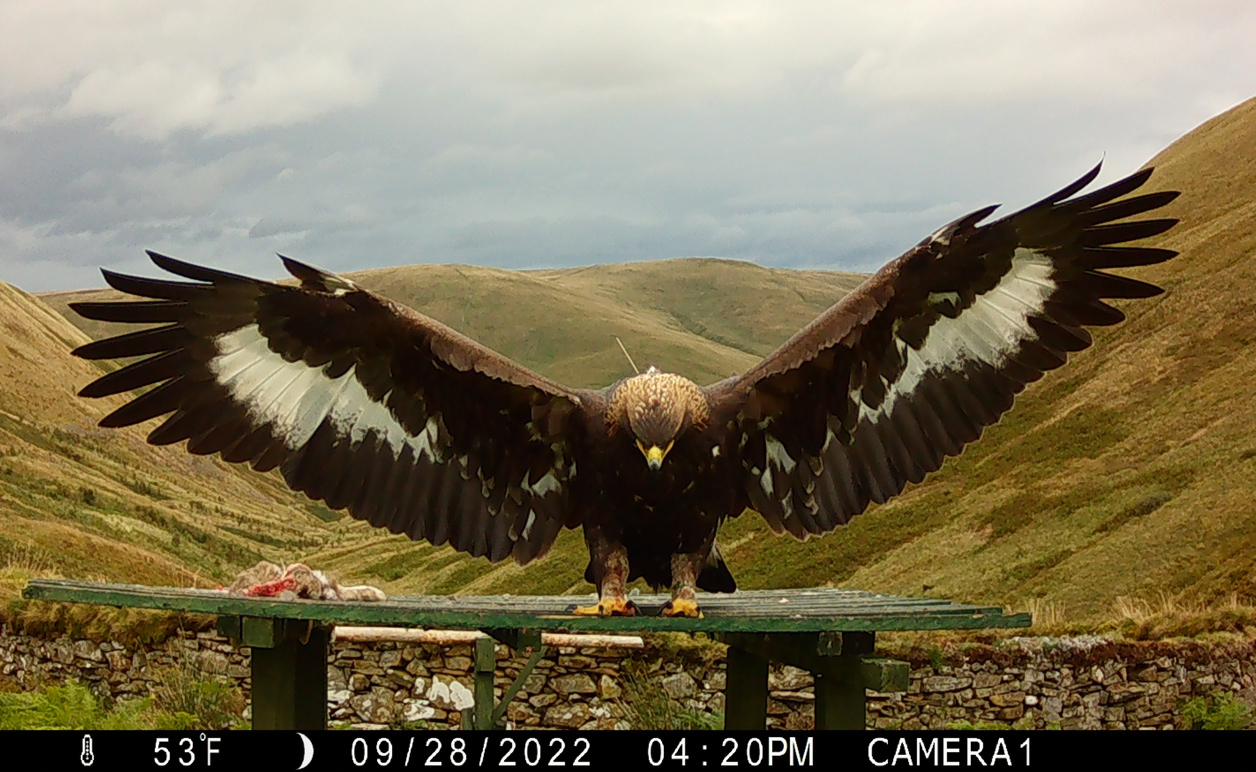
Camera trap photo of golden eagle Merrick, from South Scotland Golden Eagle Project

Here is Naturescot’s statement:

10 February 2026

NatureScot has restricted the use of general licences at Raeshaw Estate and Watherston Wood in the Scottish Borders.

The decision was made based on evidence provided by Police Scotland of wildlife crime against birds.

This evidence included the sudden disappearance of a satellite-tagged golden eagle named Merrick in October 2023 as well as golden eagle blood, feathers and shotgun cartridge wadding recovered from the same location.

Chris Dailly, NatureScot’s Head of Licensing, said: “We have decided, in discussion with Police Scotland, to suspend the use of general licences on this land for three years until January 2029. The police have recorded Merrick’s disappearance as a crime and have provided robust evidence to NatureScot to support this.

“We are committed to using all the tools we have available to tackle wildlife crime. This measure will help to protect wild birds in the area, while still allowing necessary land management activities to take place.

“We believe this is a proportionate response to protect wild birds and prevent further wildlife crime. We will continue to work closely with Police Scotland and consider information they provide on cases which may warrant restricting general licences.”

Individual licences may still be applied for, but these will be subject to strict record-keeping and reporting requirements and will be closely monitored to ensure licence conditions are met.

General licences allow landowners or land managers to carry out control of common species of wild birds, such as crows and magpies, to protect crops or livestock, without the need to apply for an individual licence.

In addition to this restriction, there are currently two other restrictions in place in Scotland: on Millden Estate in Angus and Lochindorb Estate in Highland.

ENDS

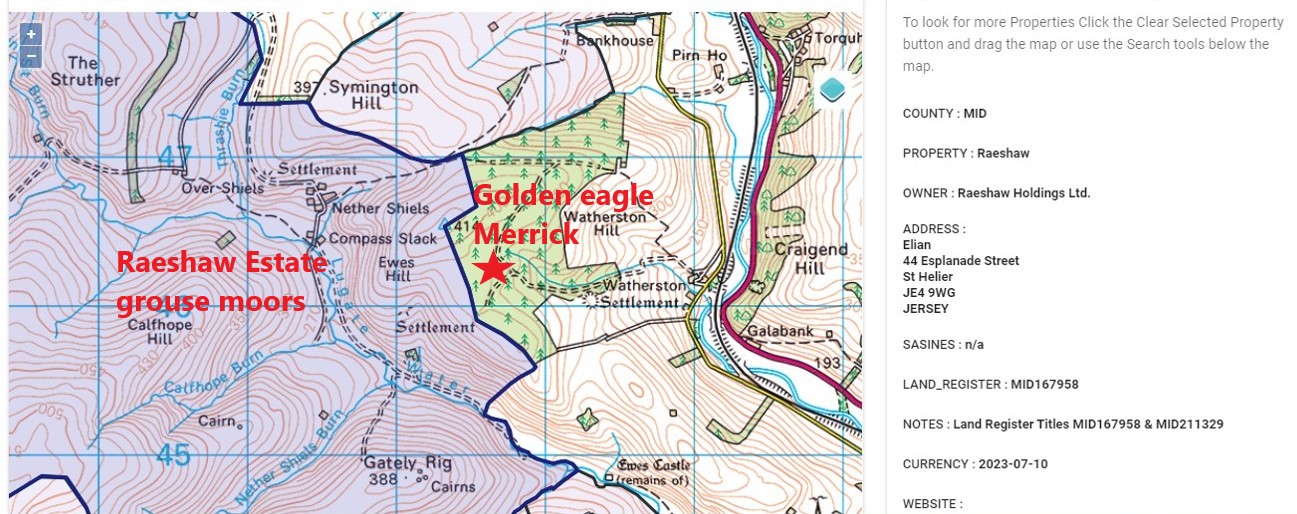
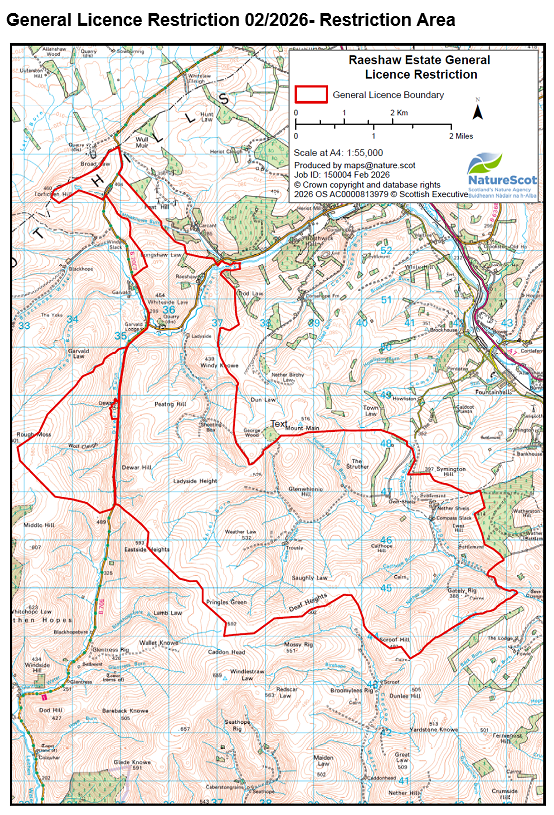
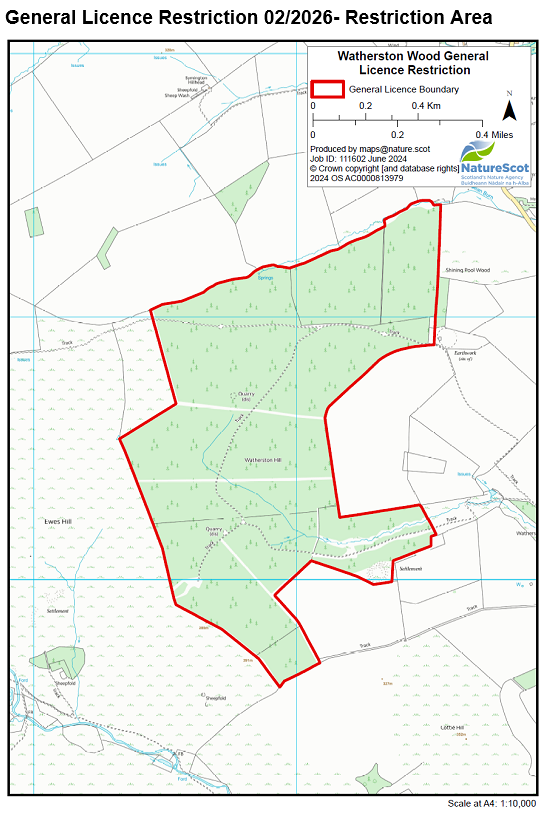
Here are the maps provided by NatureScot showing the restriction areas on Raeshaw Estate and Watherston Wood, and an accompanying statement of clarification:

In line with NatureScot’s published General Licence restrictions: Framework for Implementing Restrictions we hereby give notice that a restriction has been applied to the land outlined in red overleaf. This restriction prohibits the use of General Licences 01, 02 and 03 on that land from 10th February 2026 up to and including 9th February 2029.

Please note that this restriction does not imply responsibility for the commission of crimes on any individuals.

My commentary:

There’s a lot to say about this latest General Licence restriction. Some of it will have to wait for another blog because I’m short on time at the moment, but some of it I’ll say now.

General Licence restrictions, which have been available to NatureScot since 2014, are based on the civil burden of proof and are issued when NatureScot receives information from Police Scotland about wildlife crimes but where there is insufficient evidence to identify an individual offender for prosecution. (GL restrictions can also be imposed on estates where gamekeepers have been convicted of wildlife crimes).

General Licence restrictions do not prevent an estate from game-shooting, nor do they prevent an estate from carrying out [lawful] predator control – this can still be undertaken if the estate applies for an ‘individual licence’ which may restrict the amount of predator control, the estate may be subject to compliance spot checks, and the licence holder must provide NatureScot with licence returns (i.e. indicate how many birds were killed, where, and when etc).

General Licence restrictions are not perfect as an effective sanction – they are nowhere near, as I’ve written about many times before (e.g. see here and links within). They do, however, work as a ‘reputational driver’, although in some cases reputation is apparently not an issue of concern.

Whilst today’s decision is very welcome news, it’s taken NatureScot far too long to reach it. Regular blog readers will know that NatureScot has been considering this decision since April 2024 (see here) when it first received information from Police Scotland about the shooting/killing of Merrick. That’s almost two years of procrastination (e.g. see here, here). It’s nowhere near good enough.

This is the second General Licence restriction imposed on Raeshaw Estate.

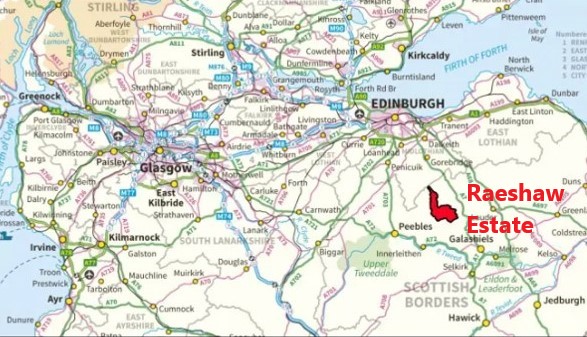
Raeshaw Estate boundary derived from Andy Wightman’s Who Owns Scotland website

Raeshaw Estate was one of the first estates to receive a General Licence restriction in 2015, based on clear police evidence that wildlife crimes had been committed although there was insufficient evidence to prosecute any individual (see here). Representatives of Raeshaw Estate applied for a judicial review of NatureScot’s decision but the Court of Session upheld NatureScot’s procedures and ruled them lawful (here).

Whilst under that first General Licence restriction, Raeshaw Estate applied for, and was granted, a number of ‘individual licences’ so the gamekeepers could continue to kill certain species as part of the estate’s grouse moor management plan (quite a lot of birds were lawfully killed – see here).

However, in 2017 the individual licence was revoked by NatureScot due to non-compliance issues and more suspected wildlife crime offences (see here). Not that the revocation made any difference whatsoever, as the estate could simply apply for another individual licence!

Inexplicably to many of us, NatureScot did not extend the length of the original General Licence restriction, which it has the authority to do, in light of the non-compliance issues on the estate’s individual licence (see here).

And now here we are again, with a second General Licence restriction imposed, this time in relation to the illegal shooting and killing of Golden Eagle ‘Merrick’ in October 2023.

As a colleague pointed out to me today, General Licence restrictions have been useful in as much as they have provided a framework for imposing a licence restriction based on the civil burden of proof, and this has clearly influenced the new system of grouse moor licensing in Scotland, introduced as a new sanction under the Wildlife Management & Muirburn Act 2024, whereby licences to shoot Red Grouse can be revoked, based on the civil burden of proof, if evidence of wildlife crime is provided to NatureScot by Police Scotland.

In this latest case relating to Raeshaw Estate, I doubt very much whether a grouse shooting licence will be revoked because Merrick was shot in October 2023, before the introduction of grouse shoot licences, and a licence revocation can’t be applied retrospectively. I’m not even sure whether Raeshaw Estate has a grouse shooting licence; there isn’t a public register to consult. If it doesn’t currently have a grouse shooting licence, but applies for one during this three-year General Licence restriction, it’d be interesting to see what happens.

More commentary to come soon…

More commentary on the sentencing of Yorkshire Dales gamekeeper Racster Dingwall

Racster Dingwall, the now former Head Gamekeeper on Conistone and Grassington Estate in the Yorkshire Dales National Park, pleaded guilty at York Magistrates’ Court last month to conspiring to kill a Hen Harrier.

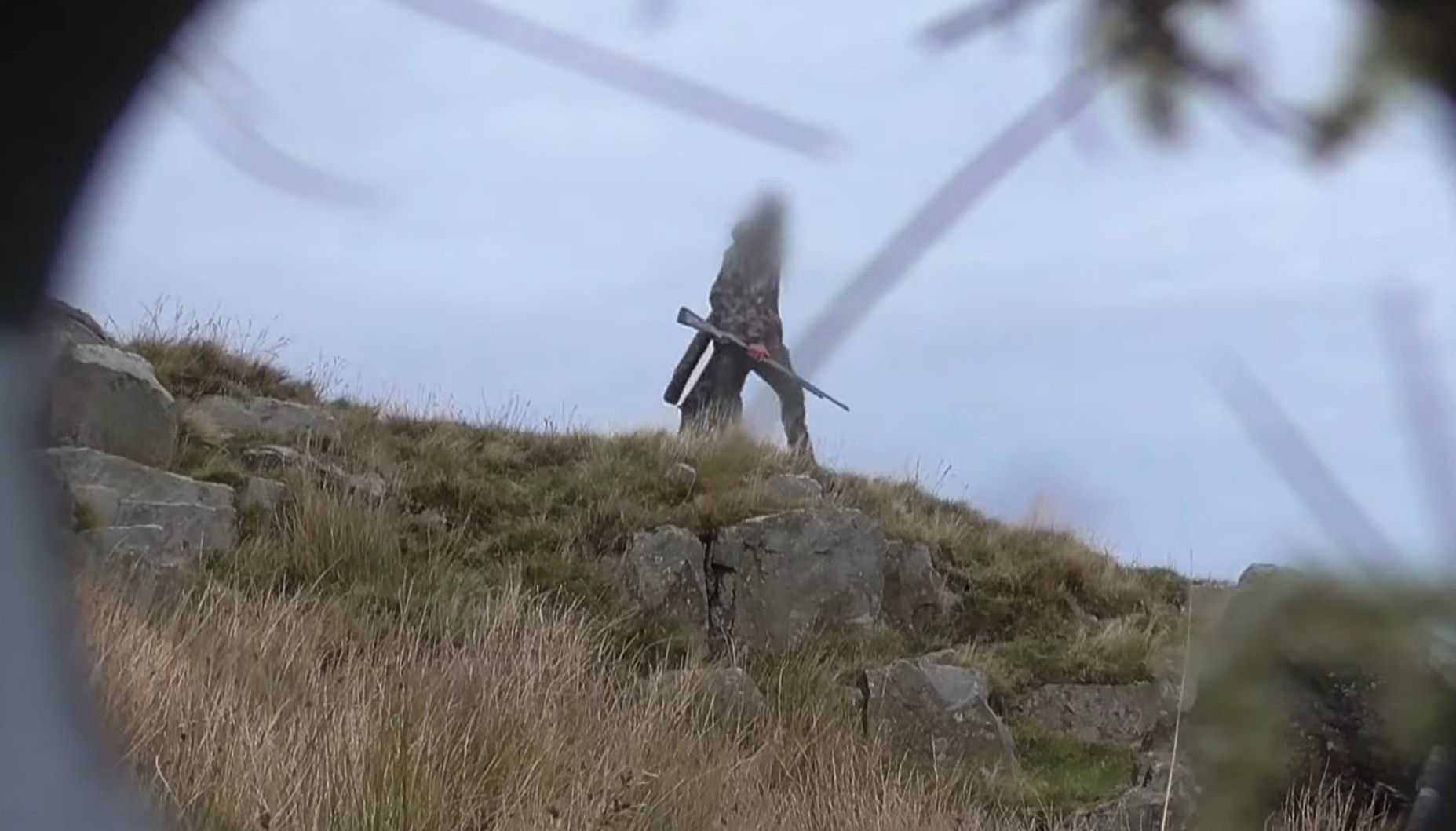
His crimes were captured on camera after the RSPB installed covert equipment on the grouse moor, capturing video and audio recordings of Dingwall and his two armed accomplices, as shown on Channel 4 News, here.

Screen grab from the RSPB covert footage via Channel 4 News

Dingwall’s sentence was a fine of just £1,520. I’ve written previously about the judge’s remarks and how this derisory penalty was determined (see here).

Now the Northern England Raptor Forum (NERF, representing raptor fieldworkers) has added to the commentary in a new blog (here), which is well worth a read.

Here are some of the highlights:

Dingwall had a previous conviction for violence, but this was discounted because it was dissimilar to the offence before the court. However, there is ample evidence in the literature showing that violence towards people and animal cruelty are frequently linked.

It was accepted by the court that Dingwall’s actions in this case were “completely out of character”. Was it really? The RSPB Investigations Team didn’t just turn up on the estate and install covert recording equipment. The team was there as a result of intelligence they had received and had spent several months confirming that the information was correct. They also identified the precise location where Dingwall and his colleagues usually sat. There was nothing random in the enquiry. Dingwall and his two underkeepers, recorded during the filming, were dressed in camouflage clothing, using radios, and armed with shotguns. They were clearly on a mission when sat in their allocated positions, waiting for dusk and for Hen Harriers to come in to roost.

Mr Ryan, Dingwall’s solicitor, told the court that his client “regrets enormously” his actions. If that were true, why were he and his colleagues there in the first place, dressed and armed with shotguns? Why didn’t he chastise his staff when they discussed having killed a Buzzard and a Raven? Why didn’t he call the whole thing off when they talked about not shooting a Hen Harrier—now known to be Ataksak—because it was wearing a box and would cause problems for the estate? Why, when the next Hen Harrier arrived without a “box”, did Dingwall leave his post to go and shoot the bird, which he subsequently told his staff he had done? He had every opportunity to prevent his underkeepers from killing the Buzzard and Raven. He also had a duty to ensure that Ataksak and the untagged Hen Harrier were not threatened with death. He failed on all accounts. Clearly, the only thing Dingwall regretted was being caught.

There is no requirement for a defendant to identify who his two underkeepers were, and Dingwall chose that route and stood in the dock alone. That was his choice, and the identity of his underkeepers remains unknown—at least in the public domain. Obviously, their employer knows who they are; but will they be sanctioned? Will they lose their jobs?

What we do know is that the owner will not be sanctioned, and it is business as usual. This loophole in the law is ludicrous and needs to be closed. Owners and land agents responsible for managing shooting estates need to be held accountable for the criminal activities of their employees. Until they are, they have no incentive to ensure that their estates are managed in compliance with wildlife legislation.

To read the full blog on the NERF website, click here.

I’ll be writing a further blog about this case shortly…

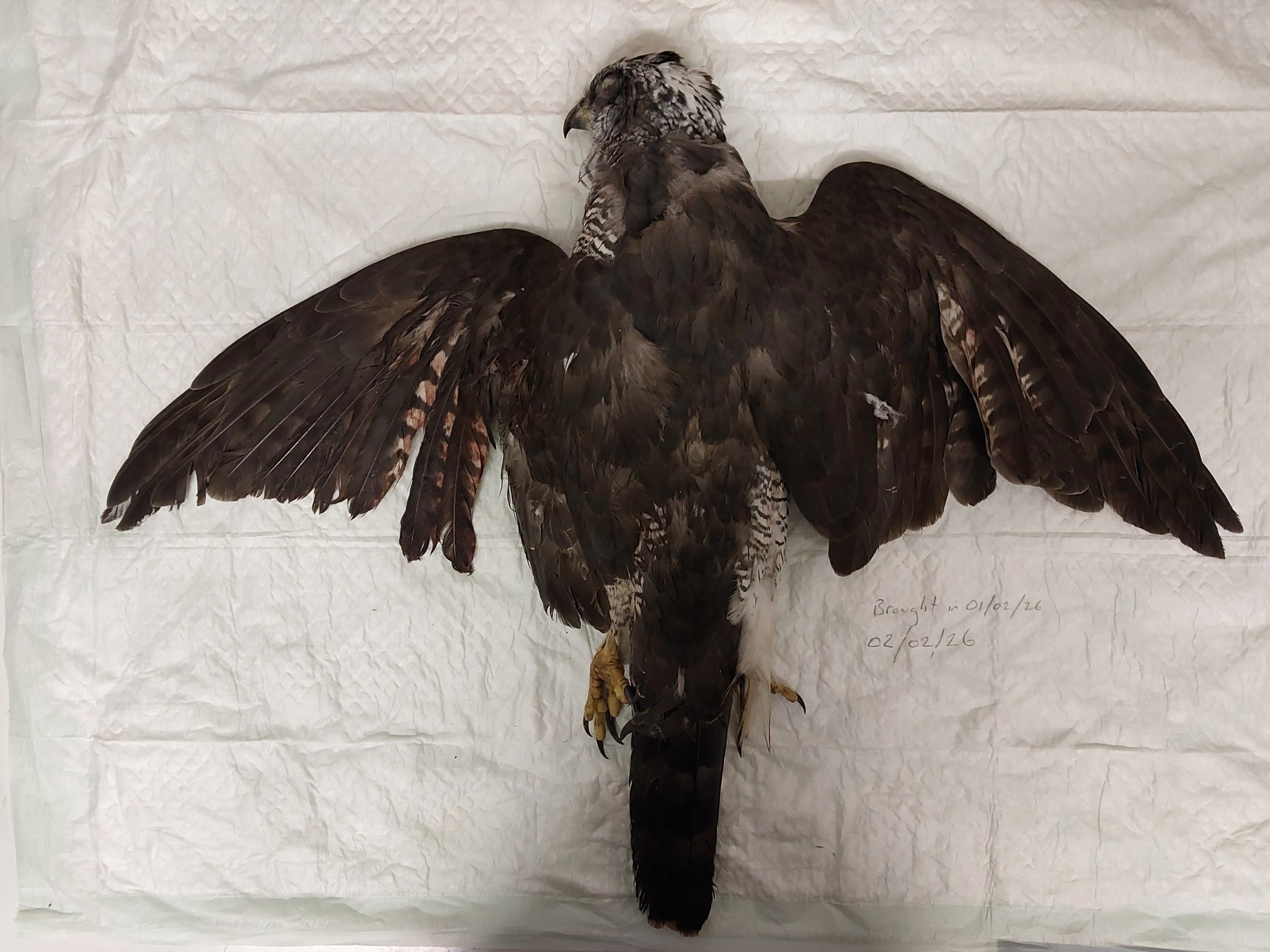
Golden Eagle found shot in Scottish Borders – Police Scotland appeals for information

Press release from Police Scotland (9 February 2026)

APPEAL AFTER GOLDEN EAGLE SHOT IN THE SCOTTISH BORDERS

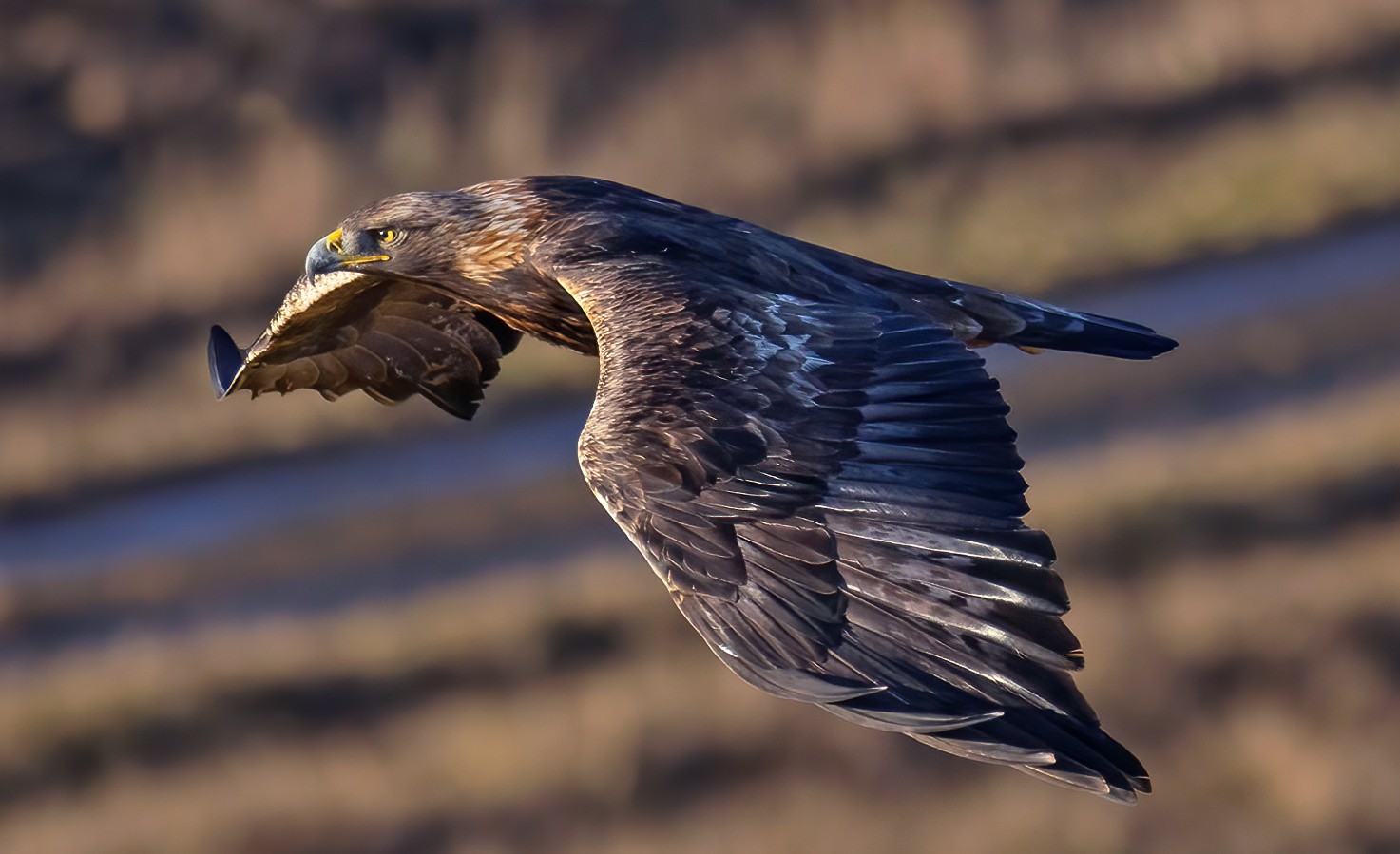
Wildlife officers are appealing to the public for information after a four-year-old golden eagle was shot in the Scottish Borders.

Golden Eagle photo by Pete Walkden

On Tuesday, 20 January, 2026, police were made aware a gamekeeper from an estate in Stanhope had discovered an injured golden eagle on Thursday, 15 January, 2026.

The bird was wearing a satellite tracking device and was identified as Hamlet, a four-year-old golden eagle that had been relocated from the Outer Hebrides to the Scottish Borders in 2023.

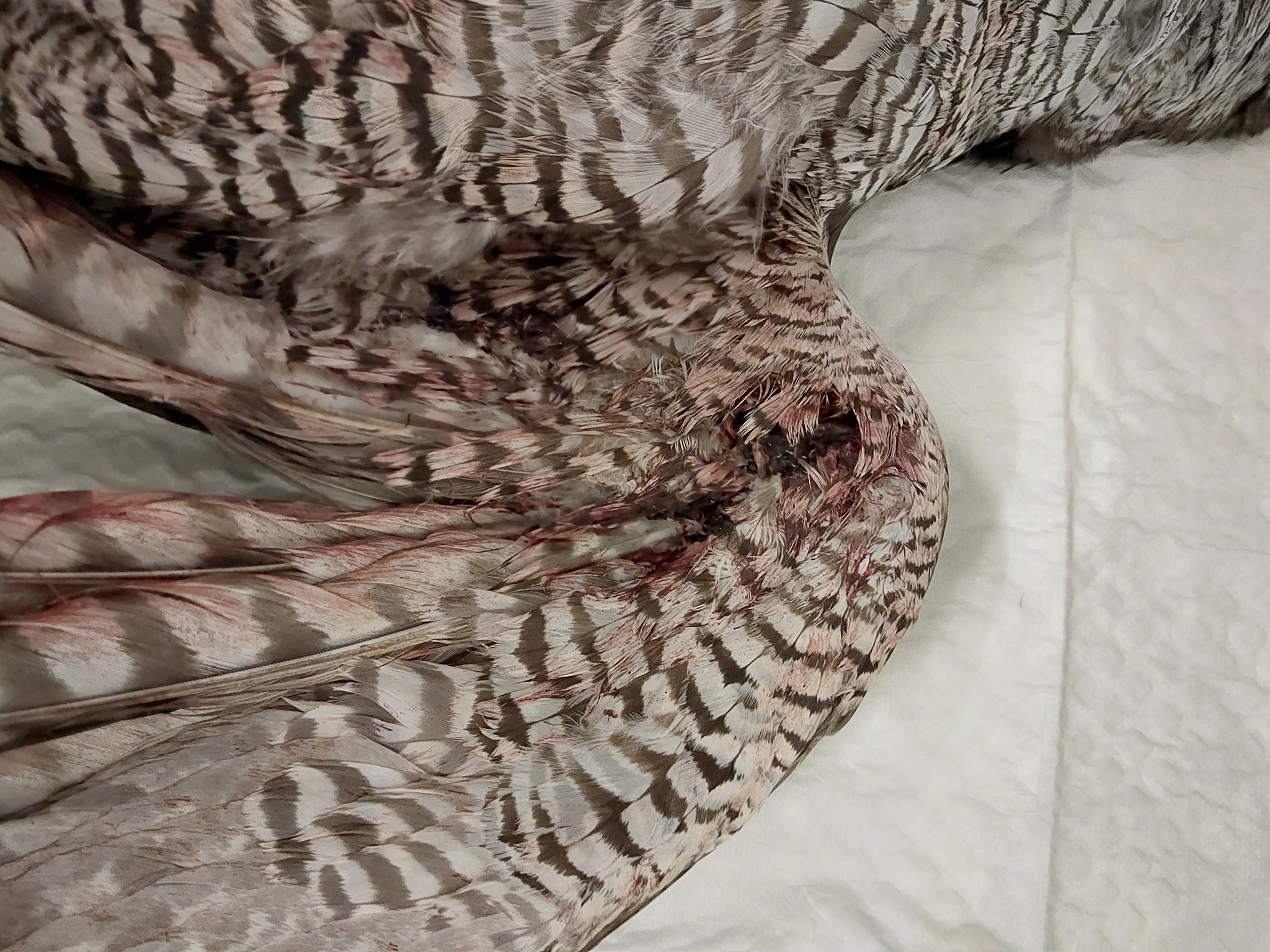
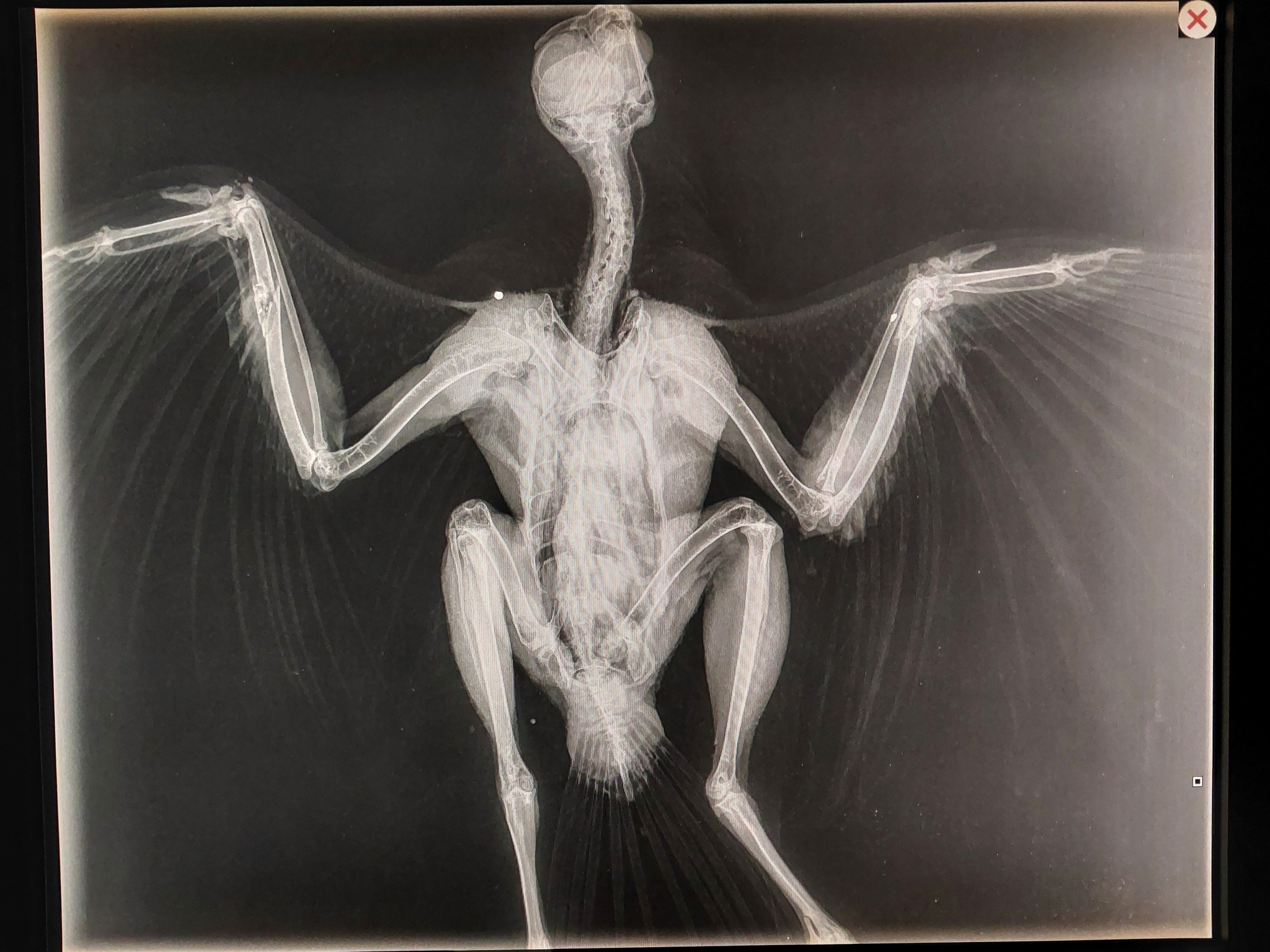
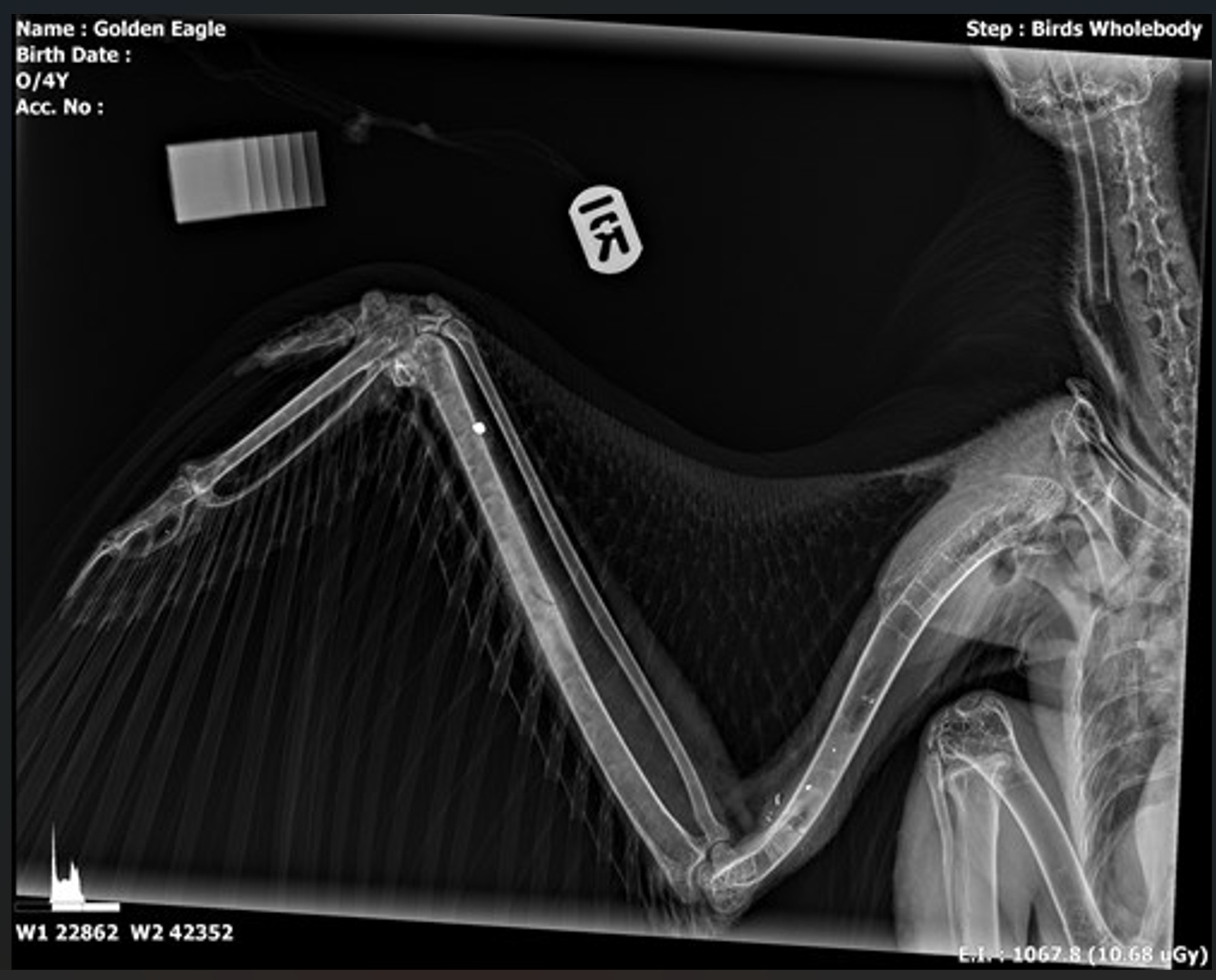
Hamlet was examined by a vet, who confirmed shotgun pellet injuries to his wing. He received treatment and made a full recovery. Hamlet has since been returned to the wild.

X-ray showing shotgun damage to the eagle’s right wing. Photo by SSPCA via Police Scotland

Officers investigating the crime have reviewed Hamlet’s tracking data and following consultation with raptor and veterinary experts, it’s believed Hamlet was shot during the first week of January 2026 in an area between Stanhope and Glenbreck, off the A701 Broughton to Moffat Road.

Detective Sergeant David Lynn, National Wildlife Crime Coordinator, said: “It is extremely disappointing that we are investigating another golden eagle persecution crime. Very few people would have the means, opportunity and motive to commit this crime and I would urge anyone with any information to contact us so we can identify whoever is responsible for shooting Hamlet.”

Police Scotland, with the support of the UK National Wildlife Crime Unit, is conducting a thorough enquiry in the local area to identify the culprit. Anyone with information is asked to call Police Scotland via 101, quoting incident number 1221 of 3 February, 2026. Alternatively, you can pass on your information anonymously to Crimestoppers using 800 555 111.

ENDS

‘Hamlet’ is the sixth victim of eagle persecution in the Scottish Borders in recent years:

Golden Eagle ‘Fred’ disappeared in an area managed for gamebird shooting in the Pentland Hills in January 2018 (his satellite tag transmitted from the North Sea a few days later – here).

Golden Eagle ‘Merrick’ was shot whilst she was sleeping in a tree next to a grouse moor in the Moorfoot Hills in October 2023 (we’re STILL waiting for NatureScot to make a decision about whether a General Licence restriction will be imposed as a consequence – see here).

Golden Eagles ‘Tarras’ and ‘Wren’ disappeared in an area managed for gamebird shooting near Langholm in August 2025 (see here).

A White-tailed Eagle ‘disappeared’ in the Moorfoot Hills area in November 2025 (here).

All six of these eagles were satellite-tagged. Nobody has been prosecuted in relation to any of these incidents.

Moorland Association lodges appeal against recent High Court decision to refuse judicial review of Defra’s peatland burning regulations

A couple of weeks ago, the High Court threw out the Moorland Association’s legal challenge against Defra’s new burning regulations, which further restrict the areas of peatland that can be burned (see earlier blog here).

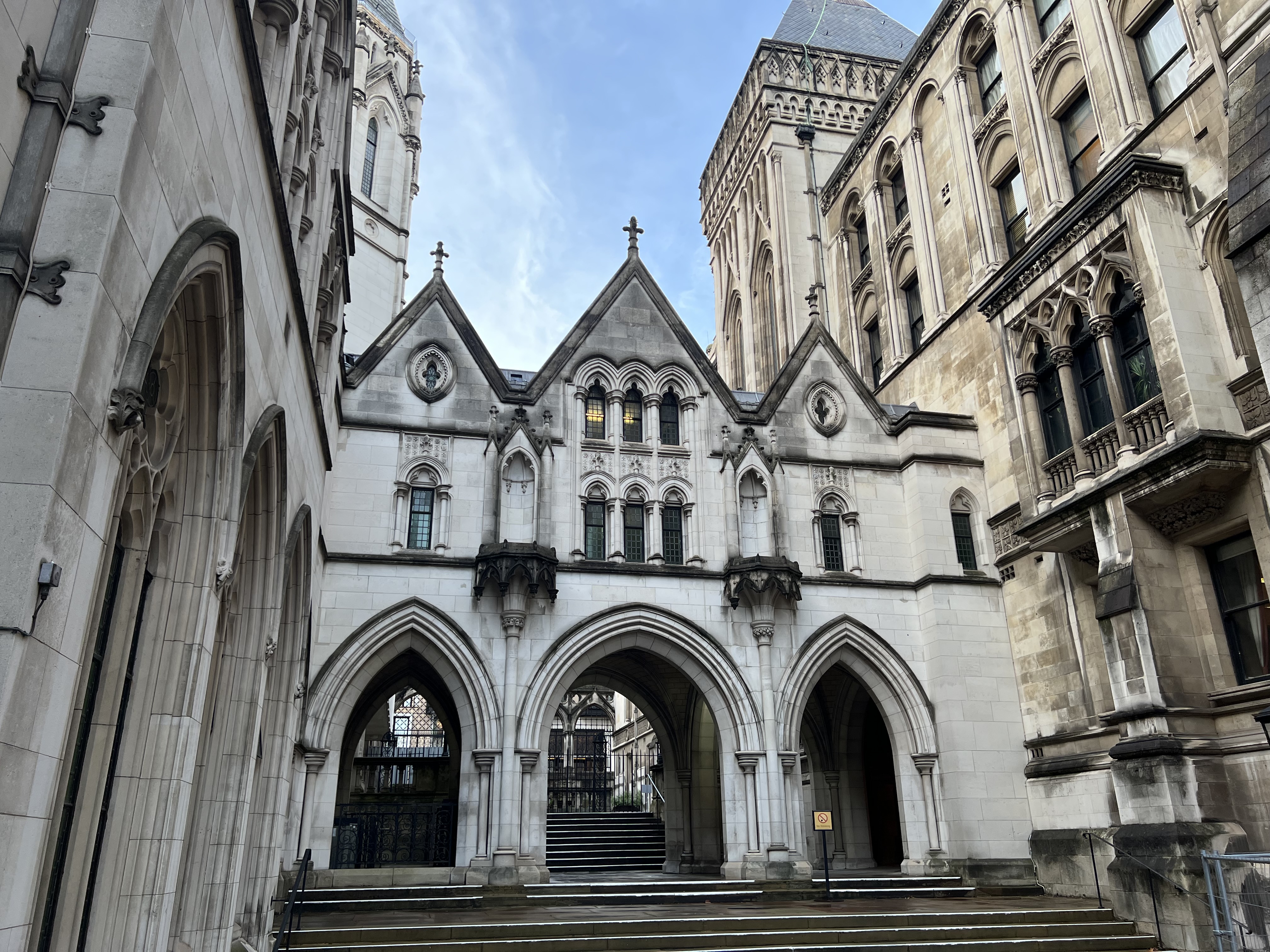
Inner courtyard at Royal Courts of Justice, London (photo by Ruth Tingay)

I said in that blog that I’d discuss the case further once documents had been obtained from the court. I’m still waiting for those documents, but in the meantime, for those interested in the specifics of the case, here is a very technical legal summary of the case, published on 28 January 2026 by Westlaw, which is an online research service used by legal professionals (many thanks to the blog reader who provided the link).

Case Digest

R. (on the application of The Moorland Association) v Secretary of State for Environment, Food and Rural Affairs [2026] 1 WLUK 481

Summary

(EXTEMPORE) Owners and managers of peatlands unsuccessfully challenged regulations extending the scope of a licencing regime for burning heather and grass on peatland. Firefighters’ concerns regarding the risk of wildfire had been adequately considered and the regulations pursued legitimate aims in terms of climate change and biodiversity.

Abstract

The claimant sought permission to apply for judicial review of the Heather and Grass etc. Burning (England) (Amendment) Regulations 2025.

The claimant organisation represented the owners and managers of peatlands. The Heather and Grass etc. Burning (England) Regulations 2021 had introduced a licensing regime for burning on peatlands, replacing a previous voluntary system.

In March 2025, the defendant secretary of state commenced a consultation on amending the 2021 Regulations to extend that regime to cover shallower peatlands and increase the area protected, and published a Natural England Evidence Review (NEER 155) on the effects of managed burning on upland peatland biodiversity, carbon balance and water quality, that set out a review of 102 studies. The consultation lasted six weeks.

Fire services and the National Fire Chiefs Council gave detailed responses raising concerns that the changes could lead to a risk of larger and more intense wildfires, resulting in increased risks to firefighters and the public. The defendant met with the fire chiefs and produced a consultation response which set out the defendant’s view that it was important to proceed with the proposals on the basis that the restoration of peatland to its naturally wet state would increase long-term wildfire resilience by reducing the fuel load in a sustainable manner.

The 2025 Regulations came into force in September 2025. Regulation 4(4)(c) of the 2021 Regulations had provided that the defendant could grant a licence where it was expedient or necessary to reduce the “risk” of wildfire: the 2025 Regulations changed the word “risk” to “impact”.

The claimant sought to challenge the 2025 Regulations, contending that they curtailed the ability to use controlled burning to mitigate the risk of wildfire, which was a long-standing land management practice, that the alternatives of cutting and wetting were not feasible, and that the risks raised by the firefighters had not properly been considered.

Held

Application refused.

Test for permission – The threshold of arguability for permission to apply was a relatively low one, Ramdass v Minister of Finance [2025] UKPC 4, [2025] 1 WLUK 349 applied.

Flawed consultation – It was not arguable that the consultation had failed to provide or consult on key evidential facts. NEER 155 [Ed: see here for earlier blog discussion on this Natural England report] had been published and it had been open to consultees to argue that it was wrong. There had been no obligation to consult on NEER 155 separately; that document had just formed part of the evidence base, R. (on the application of Law Society) v Lord Chancellor [2018] EWHC 2094 (Admin), [2019] 1 W.L.R. 1649, [2018] 8 WLUK 16 considered. It was not arguable that the change in wording from “risk” to “impact” of wildfire was significant or prejudicial; if a licence lowered the risk of wildfire, then it necessarily lowered the impact.

Procedural irrationality – It was not arguable that the defendant had not made conscientious inquiries regarding wildfire risks where she had met with fire chiefs and given a considered response. While there had been divergent views about the fire risks and the advantages and disadvantages of a broader licencing regime, the views of the firefighters had been considered, Secretary of State for Education and Science v Tameside MBC [1977] A.C. 1014, [1976] 10 WLUK 91 followed.

Substantive irrationality – It was not arguable that the increase in the scope of the 2021 Regulations was Wednesbury irrational. That argument faced a high hurdle as the decision concerned a scientific and policy debate about relative benefits in a technical area. The defendant had had a rational justification for the regulations that had been set out in the consultation response and based on evidence.

ECHR Protocol 1 art.1 – There was no possibility of incompatibility with ECHR Protocol 1 art.1. The 2025 Regulations pursued legitimate aims in terms of climate change and biodiversity. The defendant had adequately considered the balance of risks. The regulations did not ban burning, but introduced a licensing regime; on the face of it that had been a fair and proportionate response. The implementation of the regime had been incremental.

ENDS

Having seen its application for judicial review refused by the High Court on every single ground, the Moorland Association (lobby group for grouse moor owners in England) has now announced it intends to appeal the court’s decision.

A different judge will now review the arguments of both the claimant (Moorland Association) and the defendant (Defra Secretary of State) and judge whether Mrs Justice Lieven’s refusal decision was reasonable based on the facts.

There’s no telling how long it will take for the appeal to be decided. It’s kind of pot luck on the availability of a judge and the time it takes that particular judge to write up a decision. It could be a matter of weeks, more likely several months, but could extend for over a year as we’ve seen with other environmental cases.

If permission is refused again, the legal challenge will fail. If permission is granted on appeal, then the legal challenge will proceed to a full substantive hearing at some point, but again, this is likely to be months into the future.

Shot Buzzard found nr Wigginton, York

Raptor rehabilitation expert Jean Thorpe posted on social media yesterday about an injured Buzzard that was found grounded near Wigginton, York.

The Buzzard was taken to Battle Flatts Veterinary Clinic where an x-ray revealed a shotgun pellet lodged in her leg and associated feather damage.

The Buzzard is currently undergoing rehabilitation with Jean.

The Buzzard was found on 26 January 2026. If you have any information about this, or any other raptor persecution incidents in North Yorkshire, please contact the police and the RSPB Investigations Team.

Yorkshire Dales Moorland Group in desperate attempt to divert attention away from conviction of Yorkshire Dales gamekeeper Racster Dingwall

The Yorkshire Dales Moorland Group (YDMG) is undertaking a major damage limitation exercise this week following the widespread media coverage of the recent conviction of Yorkshire Dales gamekeeper Racster Dingwall, who pleaded guilty to conspiring to kill a Hen Harrier on the Conistone & Grassington Estate (see here), which is, as far as I can tell, a member of the Yorkshire Dales Moorland Group.

Indeed, according to this 2018 article in the Yorkshire Post, the then coordinator of the YDMG lived on the Conistone & Grassington Estate as the wife of the previous Head Gamekeeper (i.e. before Racster Dingwall took on the role as Head Gamekeeper). The current YDMG coordinator is believed to be a former gamekeeper from one of the most notorious estates in the Dales.

Dingwall’s conviction, based on damning video evidence filmed by the RSPB, made the national, regional and local news, which threw the spotlight once again on the criminal killing of birds of prey on grouse moors in the Yorkshire Dales.

Dingwall’s conviction has undone all the good work (propaganda) that the YDMG has pumped out over the years to try and disguise the fact, according to the RSPB, that:

This area – dominated by grouse moors – is the epicentre for Hen Harrier persecution in the UK. Since 2016, in this area four confirmed persecution incidents involving RSPB and Natural England satellite tagged Hen Harriers have taken place and 13 satellite tagged Hen Harriers have suspiciously disappeared – all suspected to have been persecuted (2016-2025)” (see here).

In a desperate attempt to divert attention from Dingwall’s crimes, the Yorkshire Dales Moorland Group is trying to persuade anyone who’ll listen that Hen Harriers aren’t routinely killed on grouse moors in their area. Good luck with that!

To illustrate this claim, the YDMG has posted the following story on social media about a satellite-tagged Hen Harrier called Frank:

Did Hen Harrier Frank live a long and productive life on grouse moors in the Yorkshire Dales? Yes, he did, but he was the exception to the rule. I’ve often wondered why he wasn’t nobbled and have been told, by various sources over the years, that Frank was seen as a ‘pet’ of one of the gamekeepers’ wives and an agreement was made not to shoot him. Whether there’s any substance in that I don’t know, but it’s interesting that I’ve heard the same story from different sources.

I think one of the reasons Frank wasn’t killed was because he was seen by the grouse shooting industry as the ‘poster child’ for Natural England’s Hen Harrier Brood Meddling Trial – indeed, some of Frank’s offspring were indeed brood meddled (unsurprisingly, several of them later then ‘disappeared’ in suspicious circumstances) and so there was a LOT of attention on Frank by those invested in the brood meddling sham who wanted to show that the trial was working. ‘Look, here’s a Hen Harrier (Frank) whose chicks we’ve brood meddled but he’s surviving just fine, he hasn’t been killed, therefore the brood meddling trial is a stunning success, let’s roll it out as standard practice for ever more’. You get the picture.

Anyway, back to the YDMG’s diversionary tactics. What they’re suggesting in their latest propaganda piece, is that gamekeepers were suspected of illegally killing Frank in 2025 when his tag stopped working. They claim that,

They [raptor monitors and Natural England field staff] raised suspicion and insinuated to local gamekeepers that persecution could be a factor behind the bird going off-line

and

Suspicions and accusations began to circulate. Internal communications at Natural England determined the bird as missing/suspicious on a grouse moor“.

Really? Where is the evidence that gamekeepers were accused/suspected of killing Frank? He’s NEVER appeared on any list on this blog, nor on the Natural England Hen Harrier satellite tag spreadsheet, nor in any RSPB press release.

Why didn’t he appear? Well, simply because Natural England had been quite upfront on the HH sat tag spreadsheet and reported, accurately, that Frank’s tag stopped transmitting in May 2025 but in June 2025 he was photographed by NE field staff provisioning young at a nest and the photograph clearly showed his satellite tag had a broken aerial and therefore the tag was no longer transmitting. It was a clear technical malfunction, acknowledged by Natural England, and therefore there weren’t any grounds for suspicion.

The Yorkshire Dales Moorland Group is trying to play the victim card here but without any actual evidence of being ‘victimised’.

The fact that (apparently) Frank was recently found dead near Hull, and tests (apparently) show he had contracted avian influenza (although that wasn’t necessarily the cause of death) is neither here nor there. Although I suspect, if indeed this information is accurate, that Natural England might be looking closely at who was privy to that information and who leaked it to the YDMG!

I’d be interested in a statement from the YDMG about the status of the Conistone & Grassington Estate as a YDMG member. Has the YDMG got any plans to expel the estate? If not, why not?

The bigger question that very few people seem to be asking is, who funds the Yorkshire Dales Moorland Group, and all the other regional moorland groups that sprung up in 2015 to promote ‘the good work’ of the grouse shooting industry?

Who is paying for the regional coordinators of these groups, who spend their time putting rubbish out on social media and conducting malicious smear campaigns against individuals and organisations who happen to challenge the claims made by the grouse shooting industry? Who is paying for their websites? Who is paying for their extensive promotional material? Their branded clothing? Their picture boards and associated marketing material they drag around the country shows each year? Their logo-heavy ‘activity packs’ that they hand out to unsuspecting school children?

Gosh, I wonder who it might be? Surely not someone with a vested interest in grouse shooting and is a member of the British aristocracy?

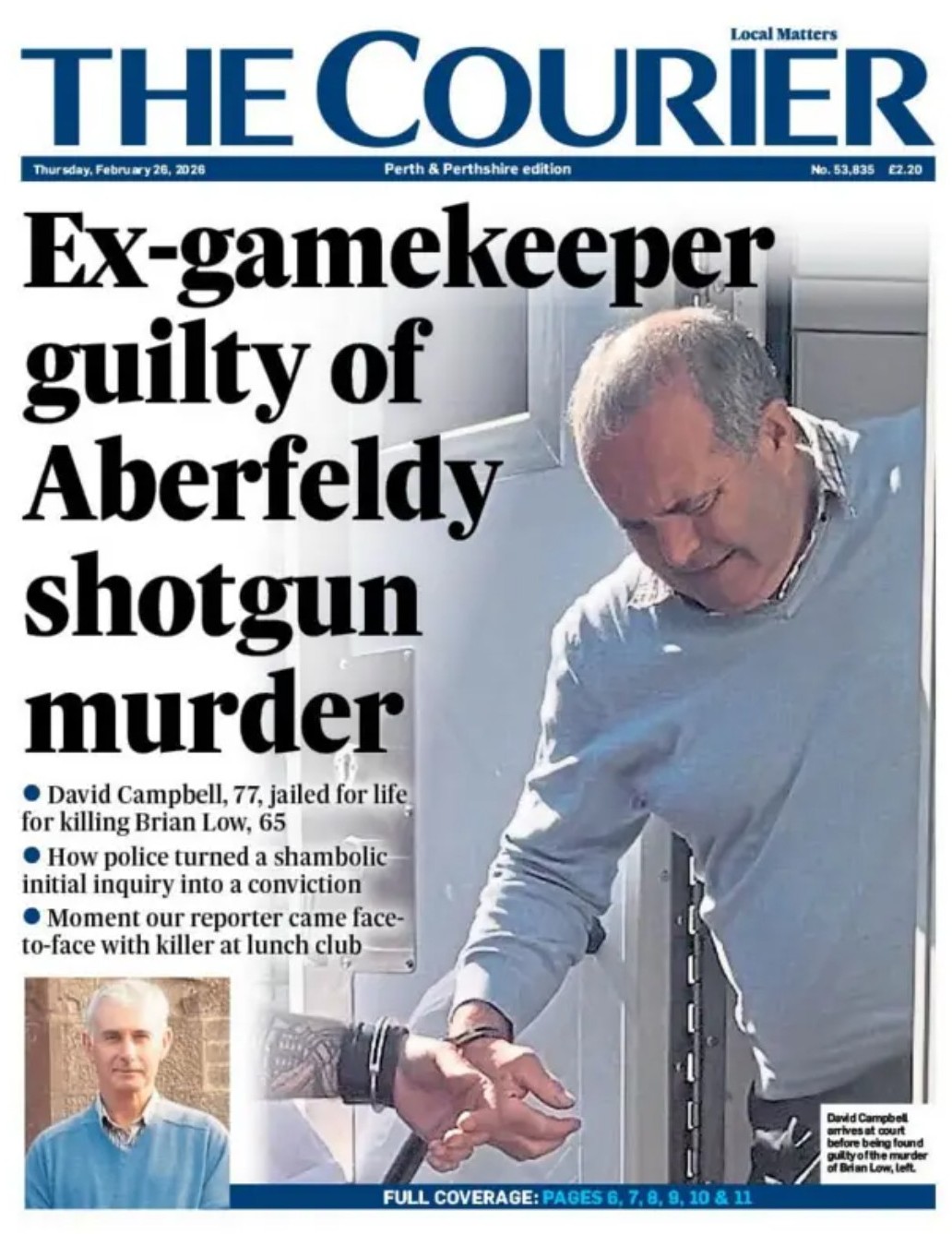
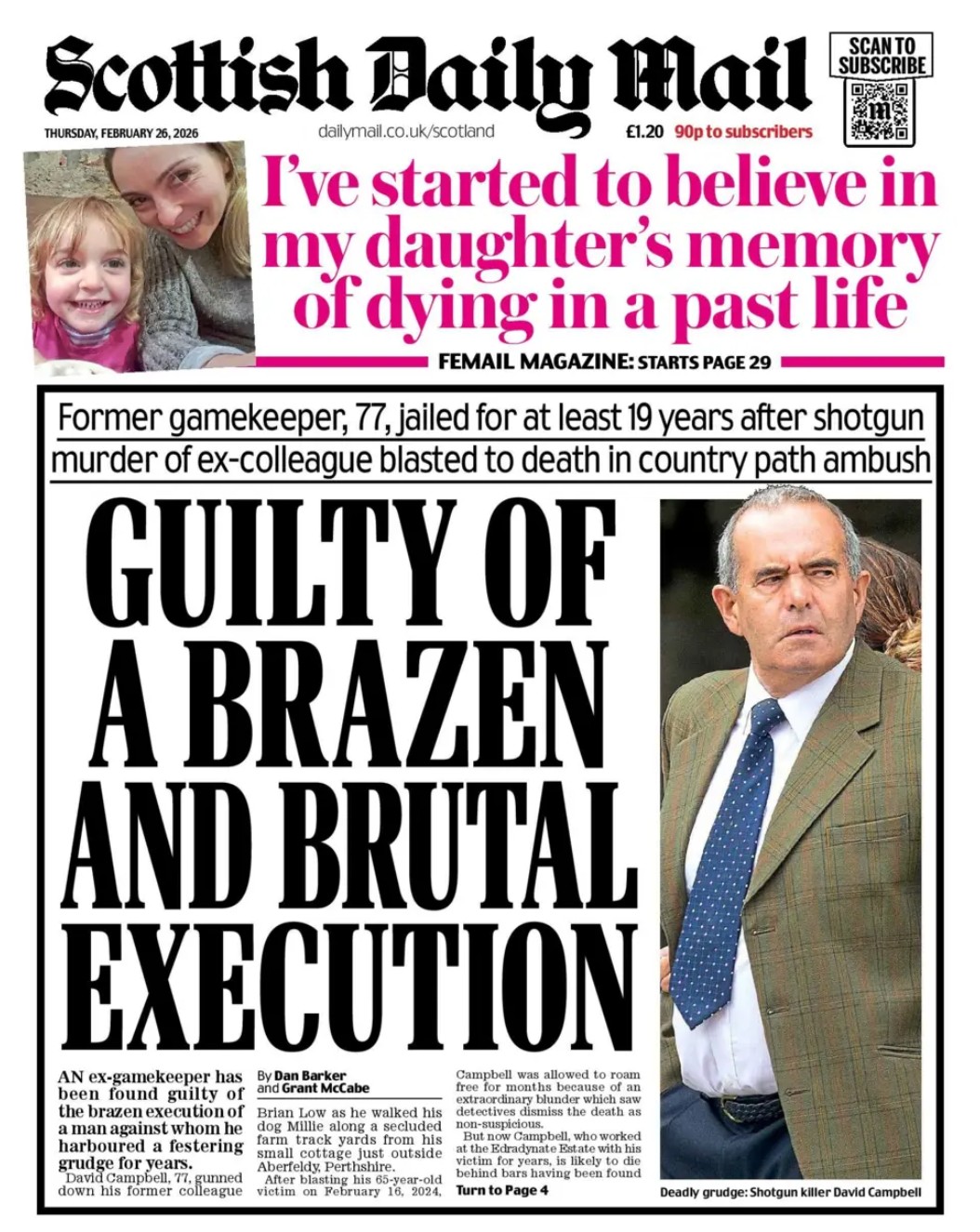
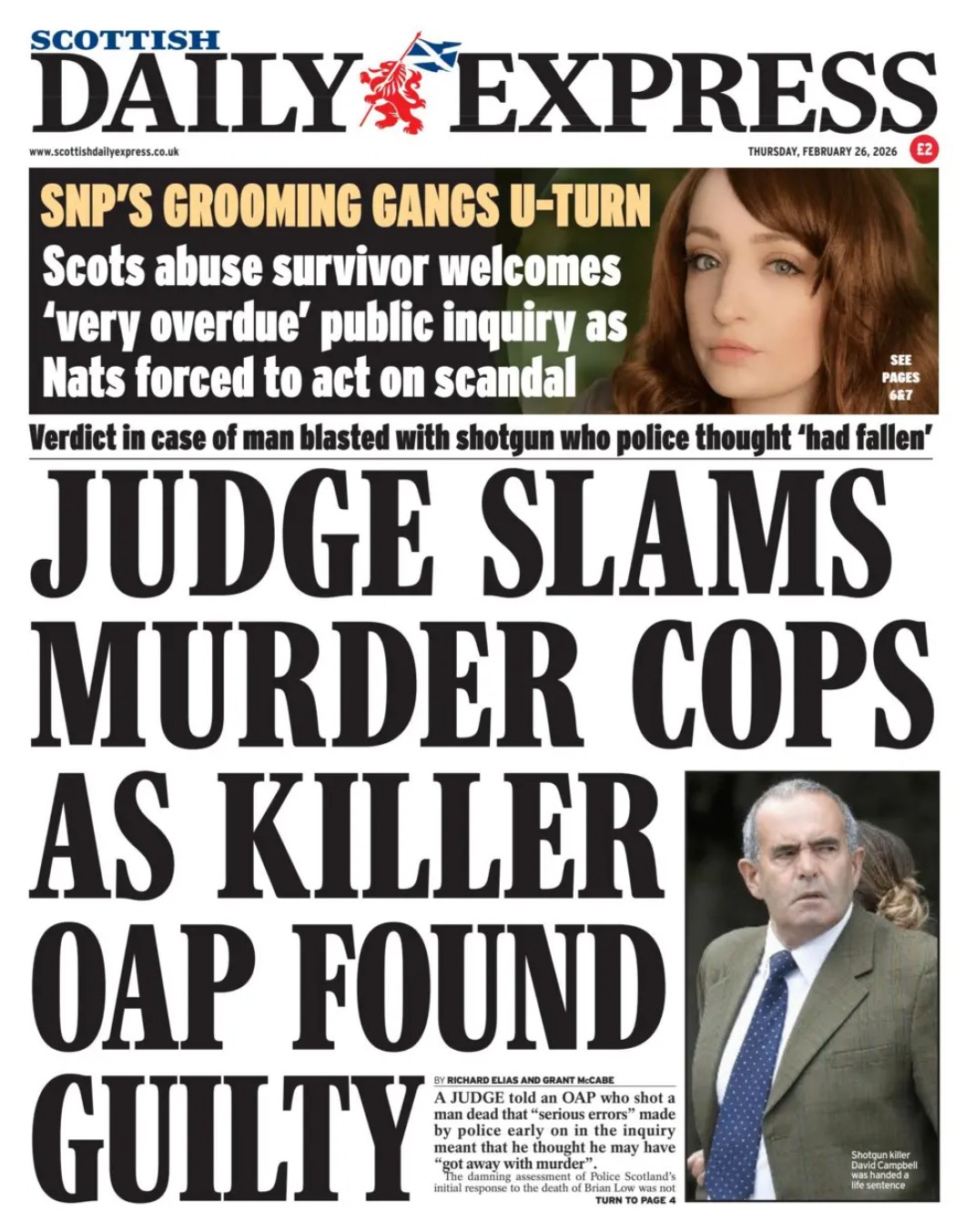
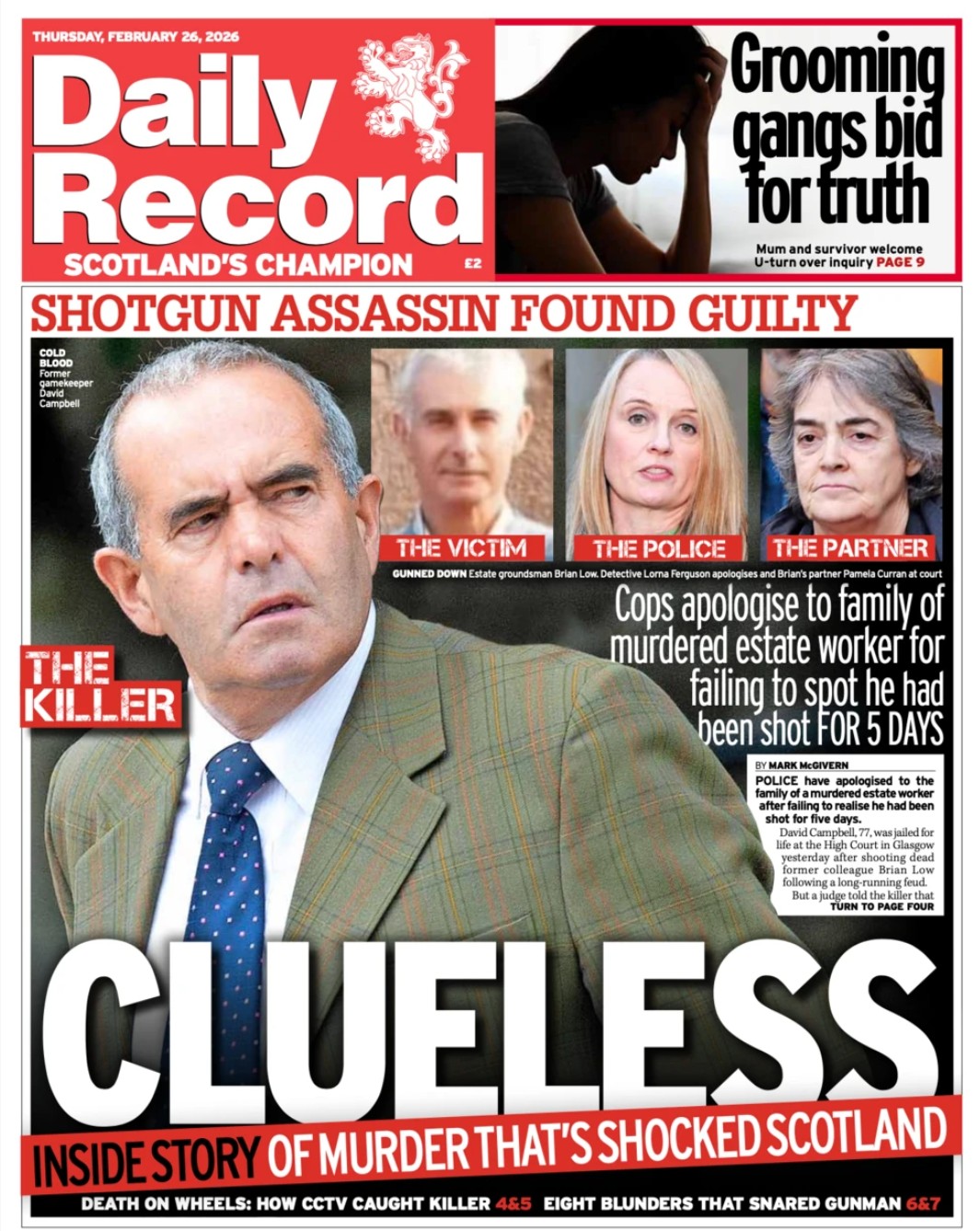
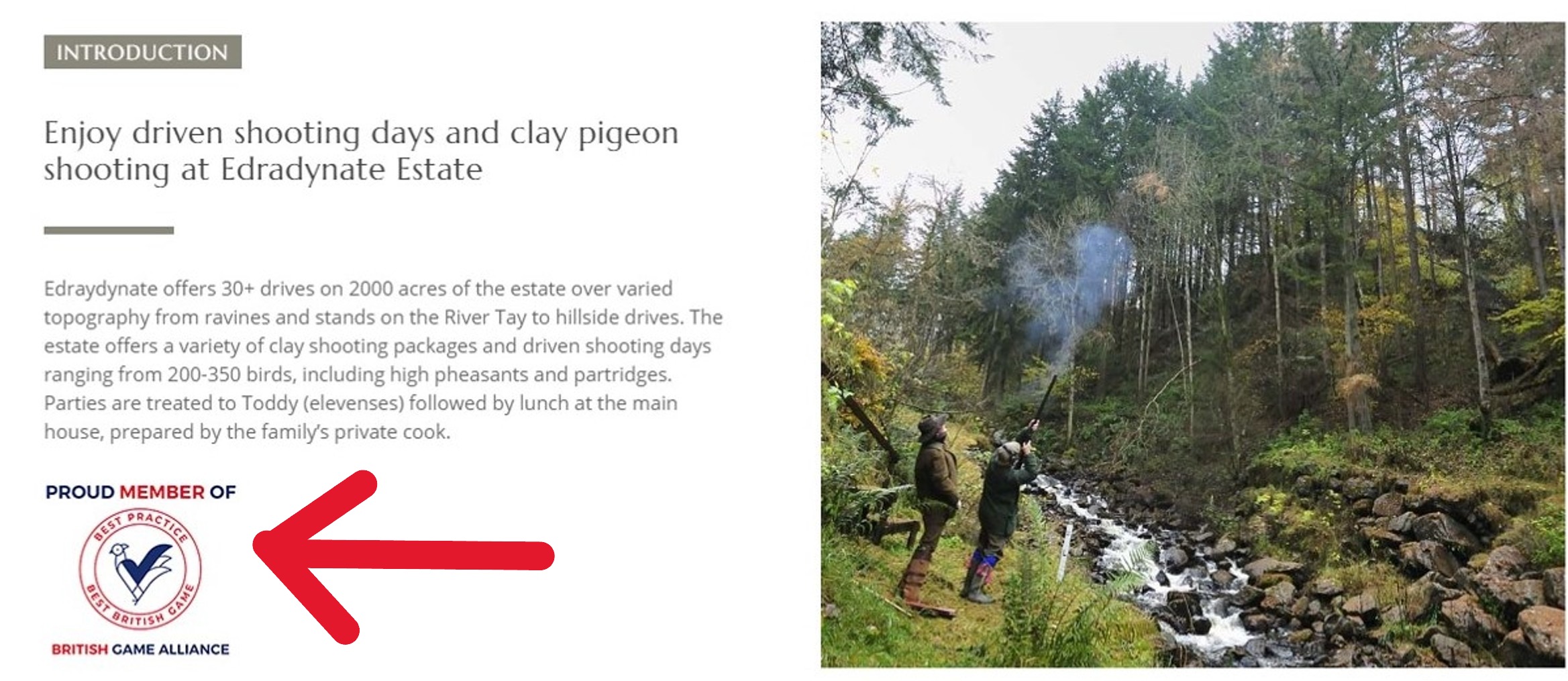
Murder trial due to begin: former Head Gamekeeper David Campbell of Edradynate Estate accused of killing ex-colleague with shotgun

A long-awaited murder trial is expected to get underway this coming week at the High Court in Glasgow.

David Campbell, 76, the former Head Gamekeeper at Edradynate Estate near Aberfeldy, Perthshire is accused of murdering a former colleague, groundsman Brian Low, whilst Mr Low was walking his dog on Leafy Lane, near the Pitilie Track close to Aberfeldy in February 2024 (see here for background).

It is alleged that Campbell did this after disabling CCTV cameras at Tigh Na Caorann, Crieff Road, Aberfeldy, in an “attempt to conceal” his whereabouts.

Both the accused and alleged victim were formerly employed on Edradynate Estate, Perthshire. Photo by Ruth Tingay

At a pre-trial hearing in November 2025, the court heard that Campbell faces a separate charge of attempting to defeat the ends of justice following Mr Low’s alleged murder. It is alleged between 16 February and 24 May 2024 he disposed of an Walther RM8 Rotex airgun – for which he allegedly did not have a certificate – at an unknown location.

He is further said to have got rid of the shotgun and a gun bag, also at a spot unknown to prosecutors.

Campbell is also accused of going to Crighton’s Cycles, Blairgowrie, and having two replacement tyres fitted on an electric bicycle, which prosecutors believe was used by him in the commission of the murder.

It is also alleged that Campbell disposed of a box, cartridge bag and bicycle tyres at Aberfeldy Recycling Centre.

Campbell further faces five breach of the peace allegations dating back to the mid-90s.

It is alleged some time in July 1995, he threatened a man called Alan Stewart and placed him in a state of fear and alarm.

Prosecutors further allege that on a date between 1 March and 31 May 1997, Campbell conducted himself in a disorderly manner at the Edradynate Estate, Aberfeldy and threatened to shoot worker Gregor Forrest.

Campbell has also been accused of threatening to shoot another man, Richard Wright, also at Edradynate Estate between 1 June and 31 August 1999.

It is further alleged that between 1 June and 30 September 2011, Campbell threatened to shoot a fourth man, Maksymillan Konchanski, at The Square, Aberfeldy.

And he is also accused of threatening to shoot a woman’s dog at Ardlach House, Aberfeldy, sometime between 1 June and 30 September 2012.

Campbell has previously pleaded not guilty to all charges and his defence advocate, Tony Lenehan KC, has lodged a special defence of alibi in connection with the murder charge.

Campbell has been held on remand since May 2024.

The trial is expected to last for three weeks in front of Lord Scott and had been listed for 2nd February 2026. However, court documents show it is currently listed as a ‘dedicated floating trial’, which means that rather than having to begin on a specific date, the case can start within a ‘floating period’ (usually a week) of that date. This flexibility is to facilitate the availability of a judge and court room to ensure a continuous schedule.

NB: As this case is live, comments have been turned off until criminal proceedings have concluded.

MEDIA COVERAGE OF TRIAL

Day 1 (Weds 4 Feb 2026)

BBC News here

Sky News here

Day 2 (Thurs 5 Feb 2026)

BBC News here

Sky News here

Day 3 (Fri 6 Feb 2026)

BBC News here

Day 4 (Mon 9 Feb 2026)

BBC News here