Will avian flu restrictions result in even more mass dumping of shot gamebirds?

Yesterday the Chief Veterinary Officers from England, Scotland and Wales declared an Avian Influenza Prevention Zone (AIPZ) across Great Britain to mitigate the risk of the disease spreading amongst poultry and captive birds.

As of midday on 17th October, it is now a legal requirement for all bird keepers in Great Britain to follow strict biosecurity measures to help protect their flocks from the threat of avian flu – details can be found in this press release from DEFRA.

The new rules require bird keepers with more than 500 birds to restrict access for non-essential people on their sites, workers will need to change clothing and footwear before entering bird enclosures and site vehicles will need to be cleaned and disinfected regularly to limit the risk of the disease spreading. Backyard owners with smaller numbers of poultry including chickens, ducks and geese must also take steps to limit the risk of the disease spreading to their animals.

Of course, these rules do not apply to gamekeepers in charge of millions of pheasants and red-legged partridges that have been reared and released for shooting. DEFRA ignored the RSPB’s request in August to call for a temporary halt on gamebird releases (here) and DEFRA has not imposed a restriction on gamebird shooting following yesterday’s declaration.

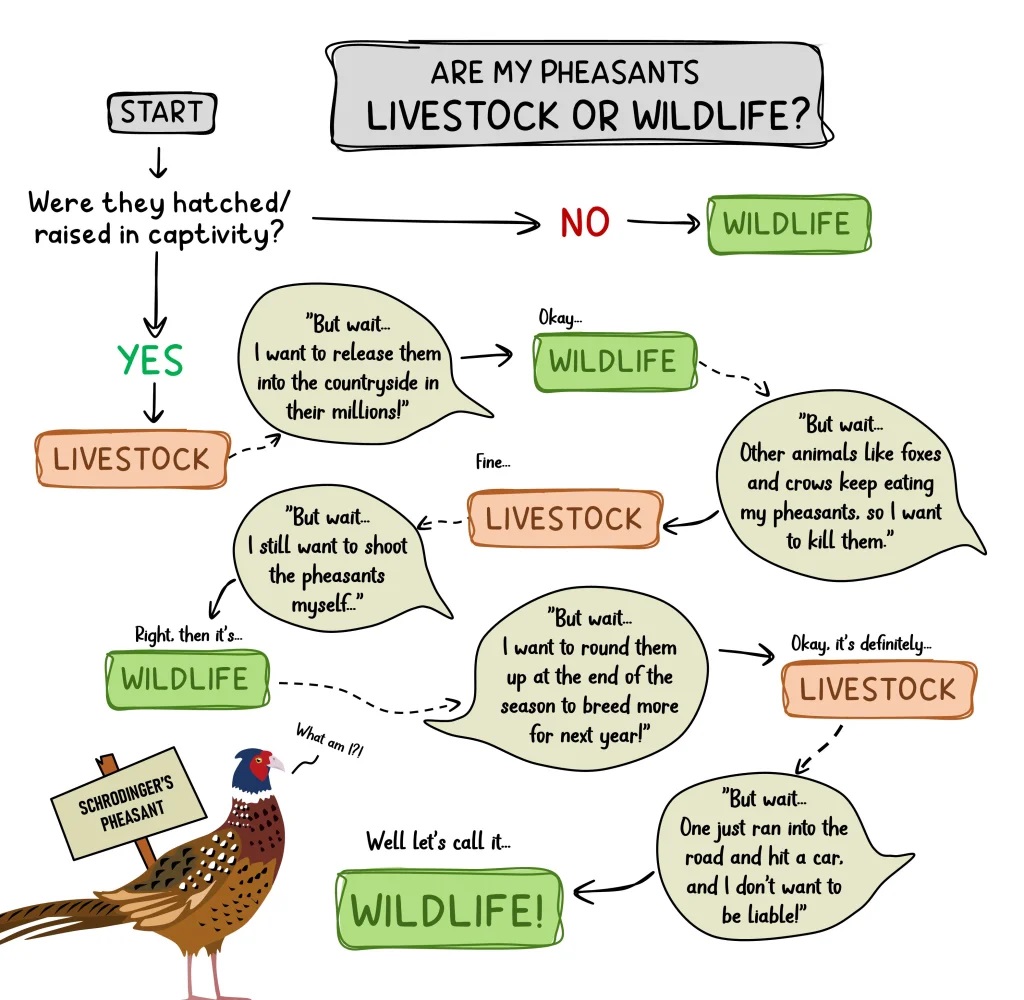
For those of you who followed Wild Justice’s recent legal challenge, you’ll know that the status of these birds as either ‘livestock’ or ‘wildlife’ is ridiculously interchangeable to suit the game shooters and once the birds (‘livestock’) have been released from their pens into the countryside, they suddenly become ‘wildlife’, until the end of the shooting season when the gamekeepers want to capture them again for breeding purposes and so the birds magically become ‘livestock’ again (see here and here).
I’ve read a few articles by commentators about yesterday’s announcement from DEFRA, asking why the new Avian Flu regulations don’t apply to the release of gamebirds. I think this question is irrelevant because the vast majority of gamebirds reared for shooting were released in July and August, in readiness for the opening of the shooting season on 1st September (red-legged partridge) and 1st October (pheasants). Having said that though, there have been reports in the past that some shoots release further stock during the shooting season to ‘replenish’ or replace the stock that has already been shot.

A more pertinent question, in my opinion, is how the declaration of Great Britain becoming an Avian Flu Prevention Zone will impact on the markets for shot gamebirds.

I can’t imagine many game dealers wanting to buy shot gamebirds from shoots where it is impossible to provide unequivocal evidence that the gamebirds weren’t infected with Avian Flu, no matter how many biosecurity measures a shoot operator may have in place. Indeed, for those game dealers who also export meat, they’re likely to lose their licence if they accept gamebirds on their premises that were shot in Prevention Zones.

There’s then the small matter of the Code of Good Shooting Practice, which states:

Shoot managers must ensure they have appropriate arrangements in place for the sale or consumption of the anticipated bag in advance of all shoot days‘.

The Code of Good Shooting Practice is in effect, just advice. It has no legal standing and is unenforceable. It’s about as authoritative as the Green Cross Code. However, the game shooting industry often points to it as evidence that the industry is capable of self-regulation, even though there are endless examples of shoots and shooters breaching the code, not least the ongoing illegal killing of birds of prey on game shoots (see here), the ongoing non-compliance of using lead shot over wetlands (e.g. see here) and the regular dumping of shot gamebirds, e.g. in Cheshire, Scottish borders (here), Norfolk (here), Perthshire (here), Berkshire (here), North York Moors National Park (here) and some more in North York Moors National Park (here) and even more in North Yorkshire (here), Co. Derry (here), West Yorkshire (here), and again in West Yorkshire (here), N Wales (here), mid-Wales (here), Leicestershire (here), Lincolnshire (here), Somerset (here), Derbyshire’s Peak District National Park (here), Suffolk (here), Leicestershire again (here), Somerset again (here), Liverpool (here), even more in North Wales (here) even more in Wales, again (here), in Wiltshire (here) in Angus (here) and in Somerset again (here).

To be fair, there will be some sensible shoots who withdraw shoot days this year now the risk of Avian Flu has heightened, even though that will result in financial losses.

But you can bet your house that there will be plenty of others, the unscrupulous, selfish and greedy, who continue to host shoots to kill thousands of birds, without having made prior arrangement for the sale of those birds because it’s suddenly become very difficult to find anyone who’ll want them, and who will simply dump them in the countryside, a potential ticking time bomb of disease for any raptors and other scavengers who descend for an easy meal.

Public support for Chris Packham overwhelms Countryside Alliance’s latest vindictive attack

You may recall, back in August 2022, the Countryside Alliance launched its latest vindictive attack on Chris Packham and set up yet another petition calling for him to be gagged or sacked by the BBC; the latest move in a long-running and obsessive hate campaign against Chris by this bloodsport’s lobby group.

The latest attack was in response to Chris using his personal Twitter account to express his personal views (yes, shocker!) applauding the hunt saboteurs whose peaceful protest had stopped a grouse shoot in the Peak District attended by Ian Botham. The Countryside Alliance claimed Chris’s tweet breached the BBC’s guidelines on impartiality.

Bizarrely, the Countryside Alliance’s message of hate was promoted by two articles penned by The Telegraph‘s Environment Correspondent, who you might have thought had more pressing issues to focus on, like the climate and biodiversity crisis.

In September, the BBC responded to the Countryside Alliance’s complaint with this wonderfully chiding statement from a spokesperson:

As we have said before, impartiality at the BBC is sacrosanct and we have established strong and clear guidelines for social media use.

And as a piece of context, Chris is not exclusive to the BBC, isn’t a factual journalist and isn’t speaking as a BBC presenter.”

Last Friday, no doubt emboldened by the news that a tweet by Gary Lineker had breached the BBC’s impartiality guidelines, the Countryside Alliance published an article on its website bragging that ‘over 6,400 people‘ had supported its petition against Chris and vowed ‘to continue to lobby the BBC‘.

What the Countryside Alliance article didn’t mention was the counter-petition set up in support of Chris. As of today, it has been signed by over 11,000 people who say that ‘Chris Packham shouldn’t be silenced by hunters‘.

Lovely.

That petition is still live so if you want to show your support for Chris, you can sign it here.

Environment Minister speaks at SNP fringe event hosted by REVIVE, the coalition for grouse moor reform

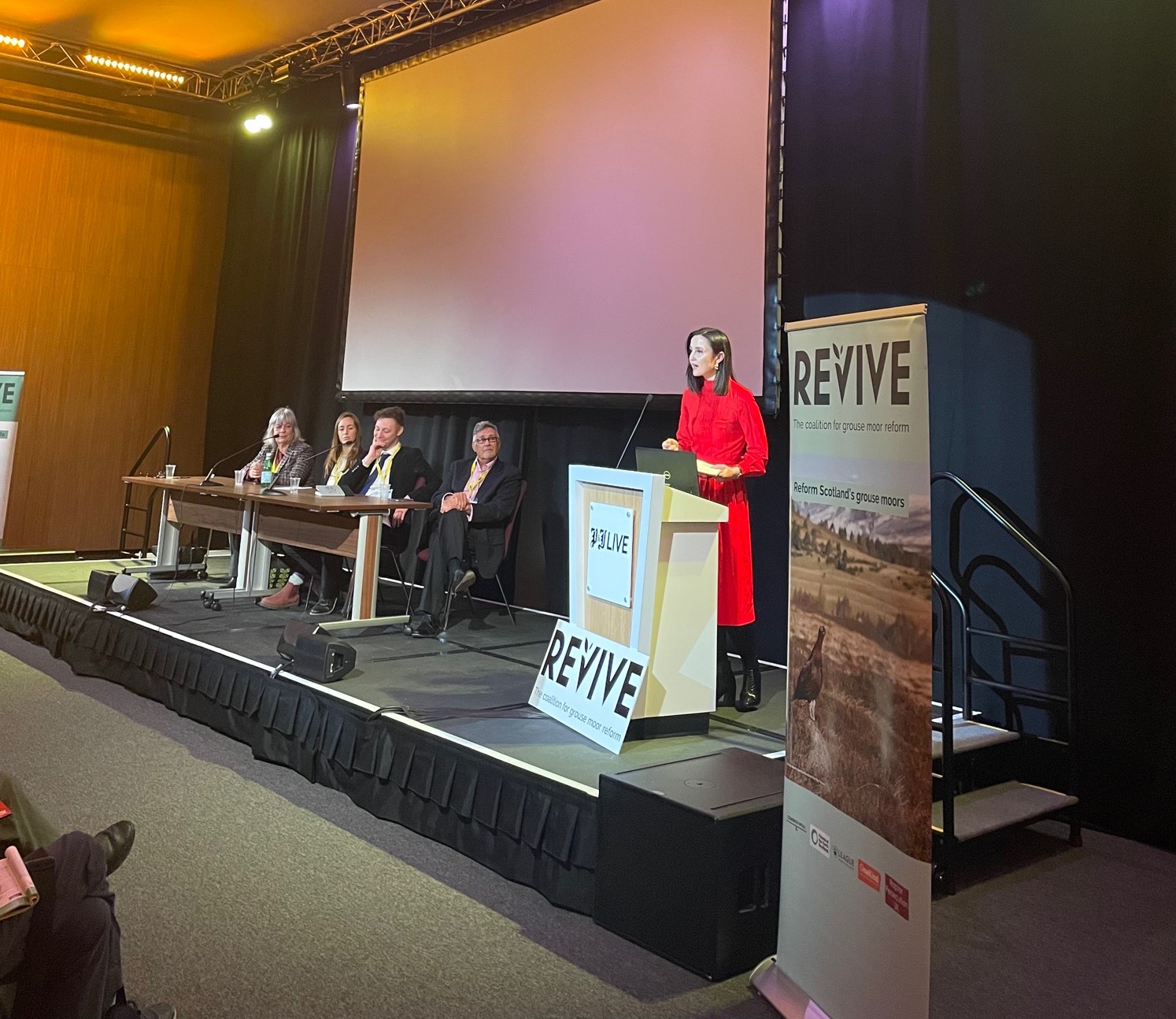
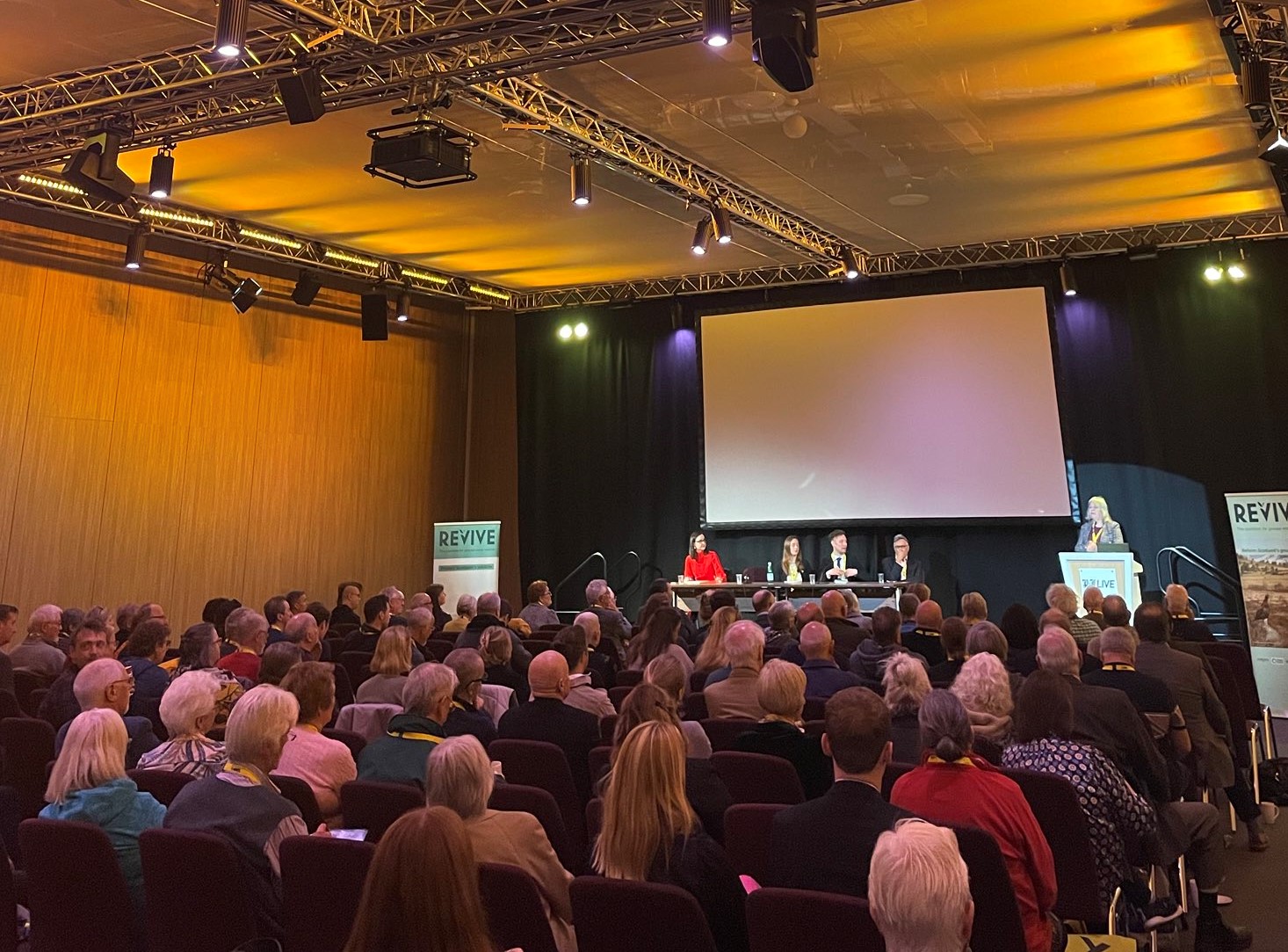
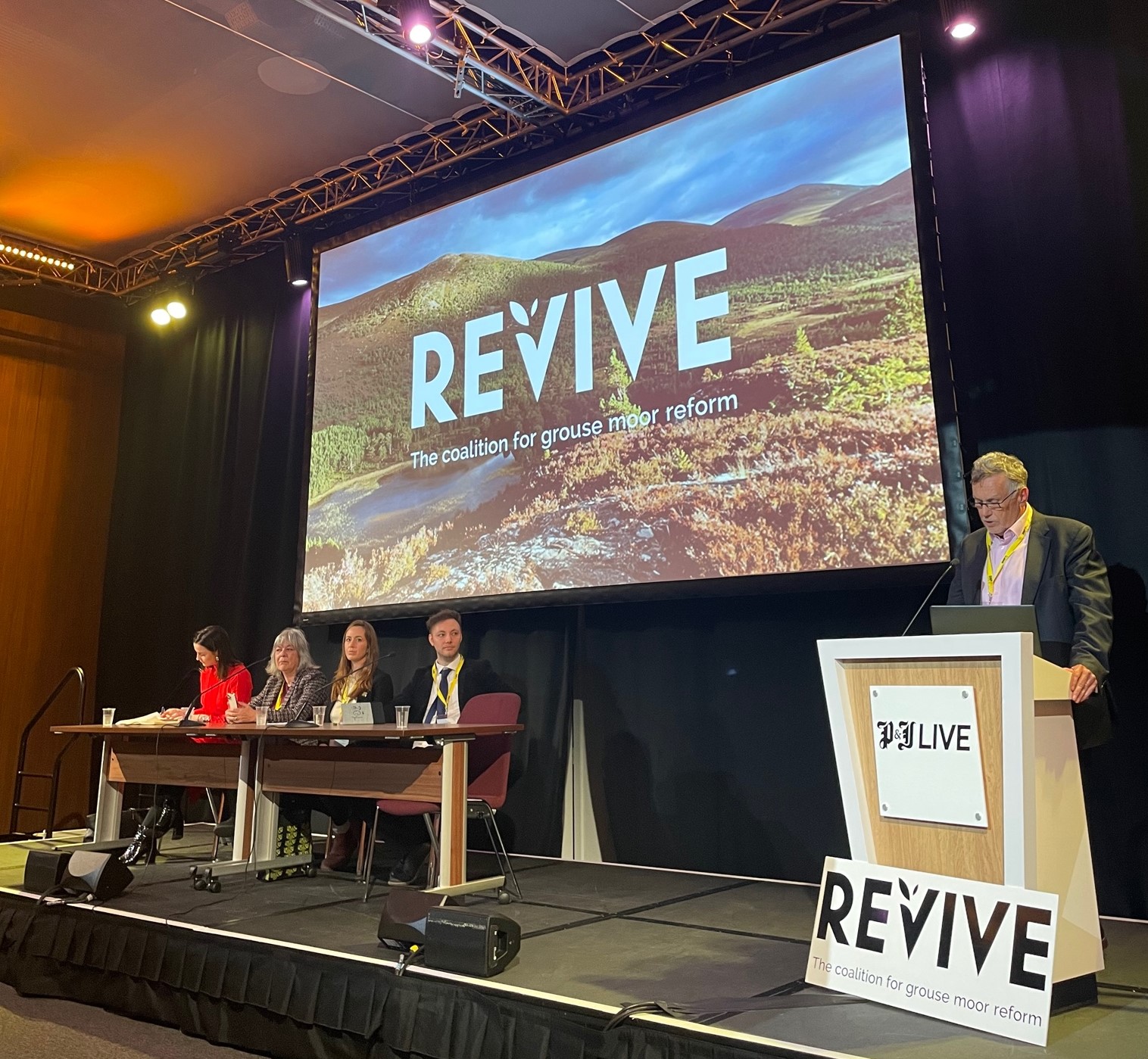
REVIVE, the coalition for grouse moor reform hosted another successful fringe event at the SNP’s Annual National Conference over the weekend, where the discussion centred on land reform and grouse moors.

Panellists included Scottish Environment Minister Màiri McAllan, Max Wiszniewski (Campaign Manager at REVIVE), Amanda Burgauer (Executive Director of Common Weal), Robbie Marsland (Director of the League Against Cruel Sports Scotland) and Mhairi Stewart (Policy Strategy Lead at the John Muir Trust).

A summary of the event will hopefully be published by REVIVE in due course but suffice to say, as before (here & here), there was considerable interest and strong support from SNP delegates.

REVIVE’s ingenious ‘Play Your Cards Right‘ game was once more available for delegates to interact with, helping them to engage memorably with the coalition’s concerns about the various damaging aspects of driven grouse moor management.

MSP David Torrance (Kirkcaldy), here with Max Wiszniewski from REVIVE, was one of many to have a go:

The Scottish Government’s long-anticipated move to draw up an effective and enforceable licensing scheme for grouse shooting (see here) is set to begin shortly with the publishing of a public consultation document prior to the drafting of legislation which will be subject to debate and amendments as the draft bill progresses through Parliament during this session, as set out recently in the 2022-2023 Programme for Government (see here).

UPDATE 21st October 2022: REVIVE coalition for grouse moor reform well received by SNP and Scottish Greens conferences (here)

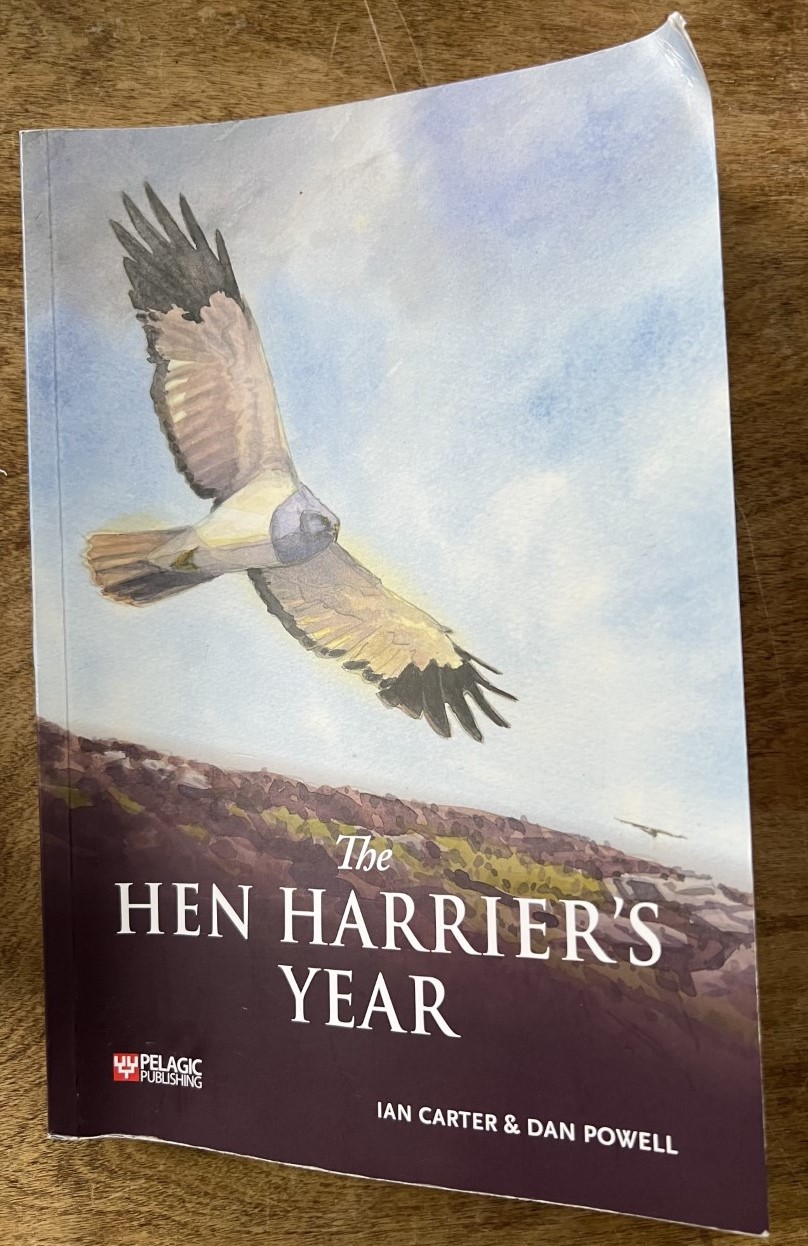
Book review: The Hen Harrier’s Year by Ian Carter & Dan Powell

For anyone who wants to learn more about the life history and ecology of the hen harrier, but has been put off by dry, academic scripts, this is the book for you.

Ian Carter has done a wonderful job of assimilating the scientific knowledge about the hen harrier and presenting it in such an engaging format that you’re left deciding whether to turn the page or grab your coat to go in search of this precious species.

The book’s title is an accurate reflection of the content, explaining what the hen harrier is likely to be doing during each month of the year. The text is beautifully and copiously illustrated by Dan Powell’s watercolours, with additional field notes from Dan.

No book about the hen harrier would be complete without a commentary on the illegal persecution it suffers at the hands of the grouse-shooting industry and Ian provides a good overview of this with a whole chapter entitled ‘Conflict on the Grouse Moor’, cleverly sandwiched between the months of June and July when young hen harriers should be fledging and dispersing had their parents not been targeted by the gamekeepers.

As an aside, prior to this book the main text available for those seeking to learn about the hen harrier was Donald Watson’s classic Poyser monograph, published in 1977, where he, too, wrote about the illegal persecution wrought on this species. It’s very telling that 45 years later, the carnage continues and at such a scale that Ian’s figures on it are already out of date:

Since 2018, more than 50 birds have been killed or have disappeared in suspicious circumstances (based on reliable data from their tags)” (p.99).

Presumably Ian wrote this text in 2021. One year later and the current number of hen harriers known to have been killed or to have disappeared in suspicious circumstances is 72 (see here).

I’ve followed Ian on Twitter for several years and have admired his clarity of thought and reasoning. This book mirrors that style and he writes with the understated, gentle authority of someone who’s not only read widely, but has also spent time in the field. His description of the ‘appealing ritual’ of attending a communal winter roost in search of harriers in December (p.145-147) will resonate with those who have congregated on the bone-chilling edges of saltwater mashes and fens in the hope of catching a glimpse of the elusive grey ghost.

The Hen Harrier’s Year by Ian Carter and Dan Powell is now available from Pelagic Publishing (here) for £26.

Multi-agency raid in Shropshire after suspected persecution of birds of prey

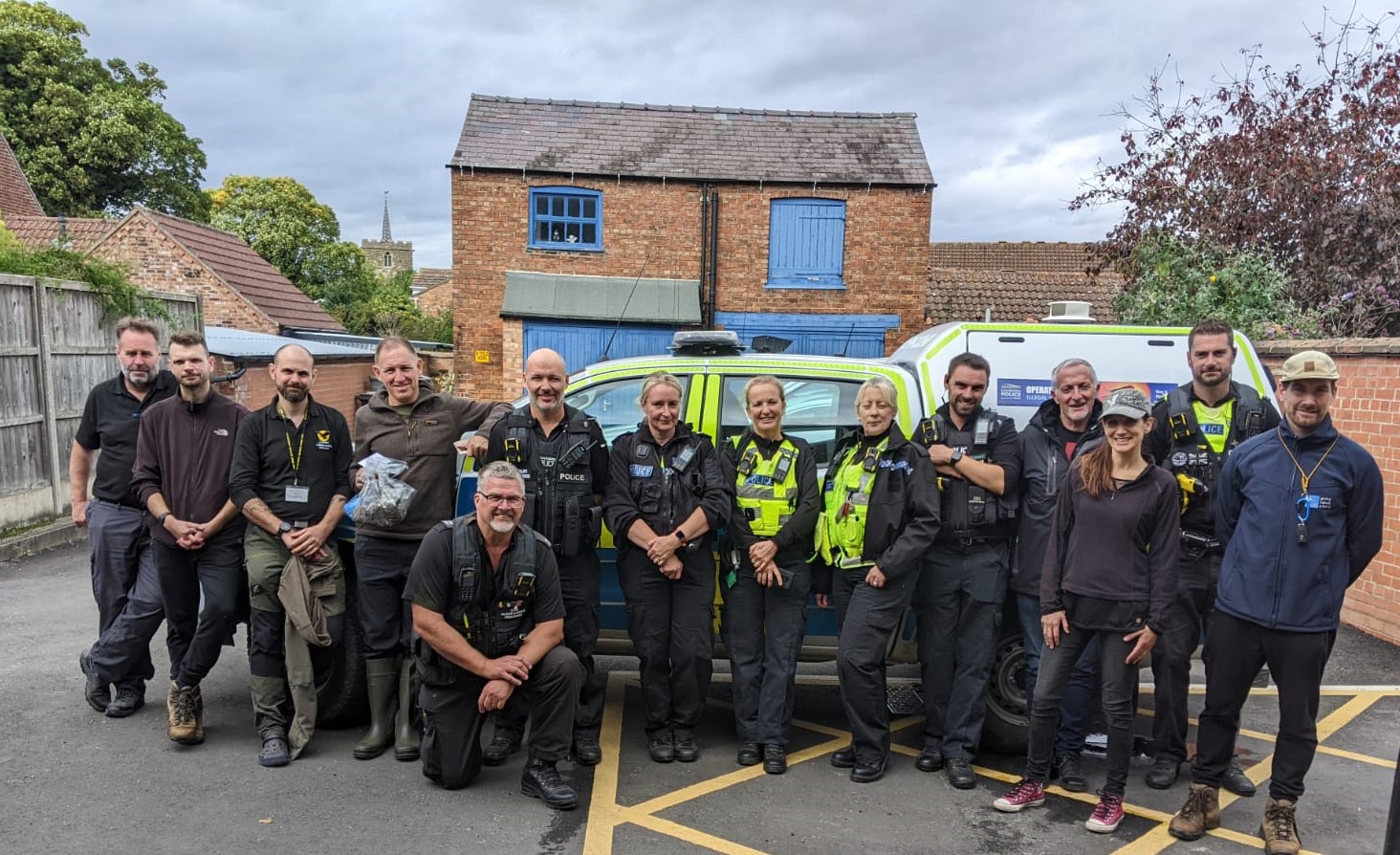
Hot on the heels of a multi-agency raid in Lincolnshire earlier this week in relation to the suspected poisoning of three birds of prey (here), news has emerged that ANOTHER multi-agency raid took place on Friday 7th October, this time in Shropshire.

The team included police officers from the Shropshire Rural Crime & Wildlife Team, Natural England and the National Wildlife Crime Unit.

Several items are reported to have been seized and will be sent for forensic examination. No further details have been publicised.

Well done to West Mercia Police for getting this news out on the same day as the raid, and well done to all the multi-agency partners for another excellent response to reports of suspected raptor persecution.

This latest multi-agency raid is the latest in a surge of similar investigations in response to raptor persecution crimes over the last couple of years, including a raid in Wiltshire on 23rd September 2020 (here), a raid in Suffolk on 18th January 2021 (here), a raid in January 2021 in Nottinghamshire (here), on 15th March 2021 a raid in Lincolnshire (see here), on 18th March 2021 a raid in Dorset (here), on 26th March 2021 a raid in Devon (see here), on 21st April 2021 a raid in Teesdale (here), on 2nd August 2021 another raid in Shropshire (here), on 12th August 2021 a raid in Herefordshire (here), on 14th September 2021 a raid in Norfolk (here), a raid in Wales in October 2021 (here) a raid in Humberside on 10th December 2021 (here), a raid in North Wales on 8th February 2022 (here) another raid in Suffolk on 22nd April 2022 (here), another raid in Norfolk on 29th April 2022 (here), and another raid in Lincolnshire on 4th October 2022 (here).

The majority of these cases are ongoing, or have progressed to impending court hearings, but a few have concluded, resulting in the conviction of criminal gamekeepers. These include:

*The Nottinghamshire case (from January 2021) where gamekeeper John Orrey was sentenced in January 2022 for battering to death two buzzards he’d caught inside a trap (here);

*The Suffolk case (also from January 2021) where gamekeeper Shane Leech was convicted of firearms and pesticides offences in November 2021 after the discovery of a poisoned buzzard found close to pheasant-rearing pens in Lakenheath (here);

*The Wales case (from October 2021) where gamekeeper David Matthews was convicted in June 2022 for pesticide offences following the discovery of a poisoned red kite and a shot red kite at a pheasant release pen on the McAlpine Estate in Llanarmon Dyffryn Ceiriog, North Wales (see here);

*The Wiltshire case (from September 2020) where gamekeeper Archie Watson was convicted in June 2022 after the discovery of at least 15 dead buzzards and red kites were found dumped in a well on a pheasant shoot on Galteemore Farm in Beckhampton (here);

*The Norfolk case (from September 2021) where gamekeeper Matthew Stroud was convicted in October 2022 for the poisoning of at least five buzzards and a goshawk, amongst other offences, on a pheasant shoot at Weeting, near Thetford (here).

Multi-agency raid in Lincolnshire after suspected poisoning of three birds of prey

Press release from Lincolnshire Police (6th October 2022):

Bird of prey poisoned, Horncastle

Our Rural Crime Action Team (RCAT) are investigating the suspected poisoning of three birds of prey in the Belchford area of Horncastle. 

On 4 October, the team conducted multi agency searches in the area along with officers from the National Wildlife Crime Unit (NWCU), the RSPB and Natural England. During the searches we recovered various items which we believe are linked to the offences under investigation. The offences include the suspected poisoning of three birds, two Buzzards and one Red Kite. 

Inspector Jason Baxter, from Lincolnshire Special Operations Unit, said: “Lincolnshire police will not tolerate the persecution of our wildlife and any offences reported to us will be thoroughly and expeditiously investigated and offenders will be dealt with robustly.”

Investigations are ongoing and we have identified one male suspect who will be interviewed in due course.

Investigating officer, Detective Constable Aaron Flint said: “A number of Birds of Prey appear to have been poisoned in the Horncastle area.

We would appeal for anyone with any information to contact us.”

If any members of the public have information that could assist with the investigation please call 101, email force.control@lincs.police.uk or through crime stoppers. Please remember to quote incident number 22000367672.

ENDS

Well done Lincolnshire Police, Natural England, RSPB and the National Wildlife Crime Unit for yet another excellent example of partnership-working between specialist agencies, and especially for issuing a statement/appeal for information just two days after the raid. I hope some of the other regional police forces are taking note.

This latest multi-agency raid is the latest in a surge of similar investigations in response to raptor persecution crimes over the last couple of years, including a raid in Wiltshire on 23rd September 2020 (here), a raid in Suffolk on 18th January 2021 (here), a raid in January 2021 in Nottinghamshire (here), on 15th March 2021 another raid in Lincolnshire (see here), on 18th March 2021 a raid in Dorset (here), on 26th March 2021 a raid in Devon (see here), on 21st April 2021 a raid in Teesdale (here), on 2nd August 2021 a raid in Shropshire (here), on 12th August 2021 a raid in Herefordshire (here), on 14th September 2021 a raid in Norfolk (here), a raid in Wales in October 2021 (here) a raid in Humberside on 10th December 2021 (here), a raid in North Wales on 8th February 2022 (here), another raid in Suffolk on 22nd April 2022 (here), and another raid in Norfolk on 29th April 2022 (here).

The majority of these cases are ongoing, or have progressed to impending court hearings, but a few have concluded, resulting in the conviction of criminal gamekeepers. These include:

*The Nottinghamshire case (from January 2021) where gamekeeper John Orrey was sentenced in January 2022 for battering to death two buzzards he’d caught inside a trap (here);

*The Suffolk case (also from January 2021) where gamekeeper Shane Leech was convicted of firearms and pesticides offences in November 2021 after the discovery of a poisoned buzzard found close to pheasant-rearing pens in Lakenheath (here);

*The Wales case (from October 2021) where gamekeeper David Matthews was convicted in June 2022 for pesticide offences following the discovery of a poisoned red kite and a shot red kite at a pheasant release pen on the McAlpine Estate in Llanarmon Dyffryn Ceiriog, North Wales (see here);

*The Wiltshire case (from September 2020) where gamekeeper Archie Watson was convicted in June 2022 after the discovery of at least 15 dead buzzards and red kites were found dumped in a well on a pheasant shoot on Galteemore Farm in Beckhampton (here);

*The Norfolk case (from September 2021) where gamekeeper Matthew Stroud was convicted in October 2022 for the poisoning of at least five buzzards and a goshawk, amongst other offences, on a pheasant shoot at Weeting, near Thetford (here).

Conviction of gamekeeper Matthew Stroud: statement from Norfolk Constabulary

Following yesterday’s news that 46-year-old gamekeeper Matthew Stroud had been convicted, amongst other things, of shooting and poisoning at least five buzzards and a goshawk on a pheasant shoot in Norfolk (see here), Norfolk Constabulary has issued a press statement which provides a bit more detail about the case.

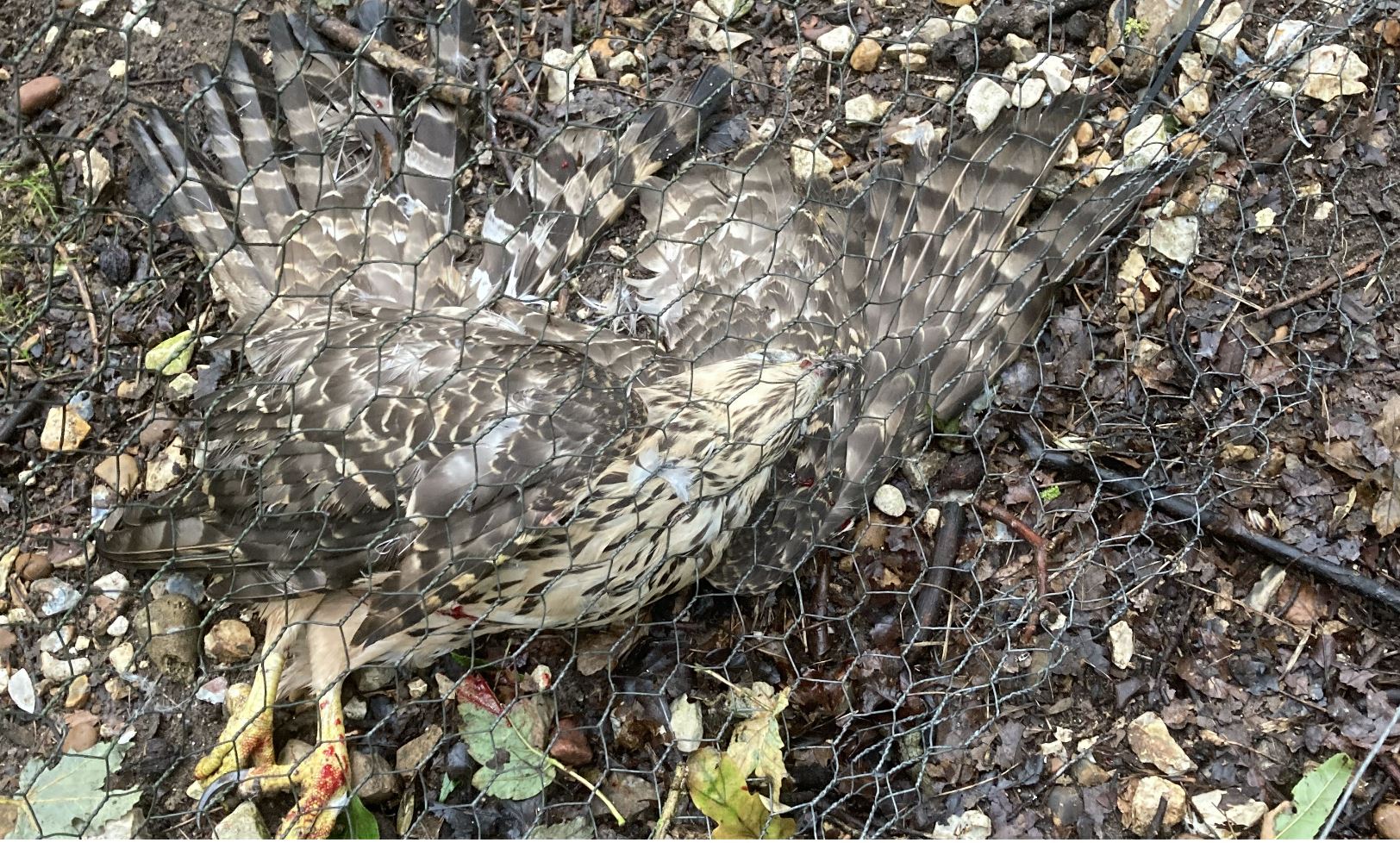
[One the buzzards that gamekeeper Matthew Stroud shot dead]

Press release from Norfolk Constabulary:

Gamekeeper admits killing birds of prey

A Weeting gamekeeper appeared in court today (Wednesday 5 October 2022) and admitted shooting and poisoning several birds of prey.

  • Three counts of using poisoned bait on or before 19 August 2021 and 14 September 2021.
  • Six counts of killing a Common Buzzard (a non-Schedule 1 wild bird) at Weeting between 10 August and 14 September 2021.
  • One count of intentionally killing a Northern Goshawk (a Schedule 1 wild bird) at Weeting on or about 10 August 2021.
  • One count of possessing a regulated substance – Strychnine Hydrochloride – without a licence on 14 September 2021.
  • One count of possessing 4 shotguns to kill a Schedule 1 wild bird on 14 September 2021.
  • One count of releasing 3,400 Common Pheasants into the wild between 1 June and 14 September 2021 contrary to the Wildlife and Countryside Act 1981.
  • One count of incorrectly storing a biocidal product – Rentokil Phostoxin – on 14 September 2021 contrary to the Health and Safety at Work Act 1974.

He received a 12-month Community Order and was ordered to do 200 hours of unpaid work, fined £692 and ordered to pay costs of £145, compensation of £288.72 and a victim surcharge of £95. The court also ordered the forfeiture and destruction of all Stroud’s firearms, mobile phones and any chemicals.

The court heard how the investigation started when RSPB officers found a young pheasant dead in Belvedere Wood, Weeting, on 19 August 2021. Tests later confirmed the pheasant had been poisoned with Strychnine Hydrochloride.

Further intelligence led Norfolk Police to execute a warrant at Stroud’s home, Belvedere Wood and Oisier Carr Wood on 14 September 2021 where the following discoveries were made:

  • Three dead buzzards were found at two release pens in Oisier Carr Wood. Tests later confirmed they had been shot.
  • Two pheasant carcasses with extremely high levels of Strychnine Hydrochloride and a poisoned Common Buzzard were found in Belvedere Wood – a Site of Special Scientific Interest because of its internationally important population of Stone Curlews
  • Two bottles of Strychnine Chloride were found in the glovebox of Stroud’s all-terrain vehicle, and a bottle of Phostoxin discovered by officers in a lean-too style shed attached to his house.

In addition, Stroud’s mobile phone contained photos of a dead Goshawk and five dead Common Buzzards. He later confessed to officers that all the photos were of birds he had killed.

PC Chris Shelley, Norfolk Constabulary’s Rural Crime Officer, said: “This investigation is one of the biggest cases of its kind that we have dealt with in Norfolk.

Stroud actions were dangerous and inhumane – he shot and poisoned birds of prey as he saw fit, and at will, because it suited him to do so. He also used a highly dangerous poison – one that has been banned in the UK for the last 15 years – indiscriminately, which could have had a disastrous effect on other local wildlife and showed a scant disregard for the safety of others.

We’re committed to working with all partners to tackle rural crime and have worked closely with colleagues from the RSPB, the National Wildlife Crime Unit and Natural England throughout this investigation. It is because of this close collaboration with them that we have been able to bring this case to court.

Tom Grose, RSPB Investigations Officer, said: “Laying poison baits out in the open is not only illegal but extremely dangerous and irresponsible. Baits like those being used present a deadly risk to any animal or person that might come across it.

It is particularly troubling that this was happening on an SPA, a designated area where wildlife and nature should have the highest legal protection.

We would like to thank Norfolk Police for leading such a thorough investigation, and to Natural England, the National Wildlife Crime Unit and Crown Prosecution Service for their support.”

Ashley Petchey of the Crown Prosecution Service said: “This was a case where Mr Stroud has, whilst in his position as a gamekeeper, killed wild birds by shooting and poisoning. He has also released non-native species into a SSSI.  

The scale of the offences in this case demonstrates the lengths people will go to in order to persecute raptors.   

The Crown take all cases of raptor persecution seriously and where the full code test is met, bring offenders to justice.”

ENDS

UPDATE 4th November 2022: RSPB Investigations Officer reflects on conviction of Norfolk raptor-killing gamekeeper Matthew Stroud (here)

Norfolk gamekeeper convicted after shooting & poisoning multiple birds of prey

Press release from the RSPB today (5th October 2022):

Gamekeeper escapes jail after killing birds of prey

*Six buzzards and a goshawk were found illegally killed on a gamebird shoot near Thetford, along with lethal poison baits.

*Gamekeeper Matthew Stroud pleads guilty to multiple offences

*The RSPB is increasingly concerned about raptor persecution linked to pheasant and partridge shoots, and the impact of large-scale gamebirds releases.

Today (5 October 2022) at Norwich Magistrates’ court, gamekeeper Matthew Stroud received a 200 hour community order and was fined £692 for offences connected with raptor persecution. Stroud was ordered to pay £145 costs, £288.72 compensation and a £95 victim surcharge.

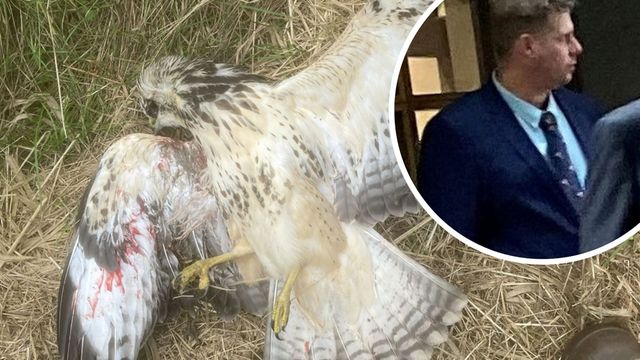
[Convicted criminal gamekeeper Matthew Stroud and one of his victims, a shot buzzard. Photos via RSPB and Eastern Daily Press]

Offences included shooting five buzzards and one goshawk, the poisoning of another buzzard, the laying of poison baits and illegal possession of poisons including strychnine.

Stroud also became the first person convicted for the unauthorised release of gamebirds on a Special Protection Area (SPA) – an internationally important site for conservation under the Habitats Regulations.

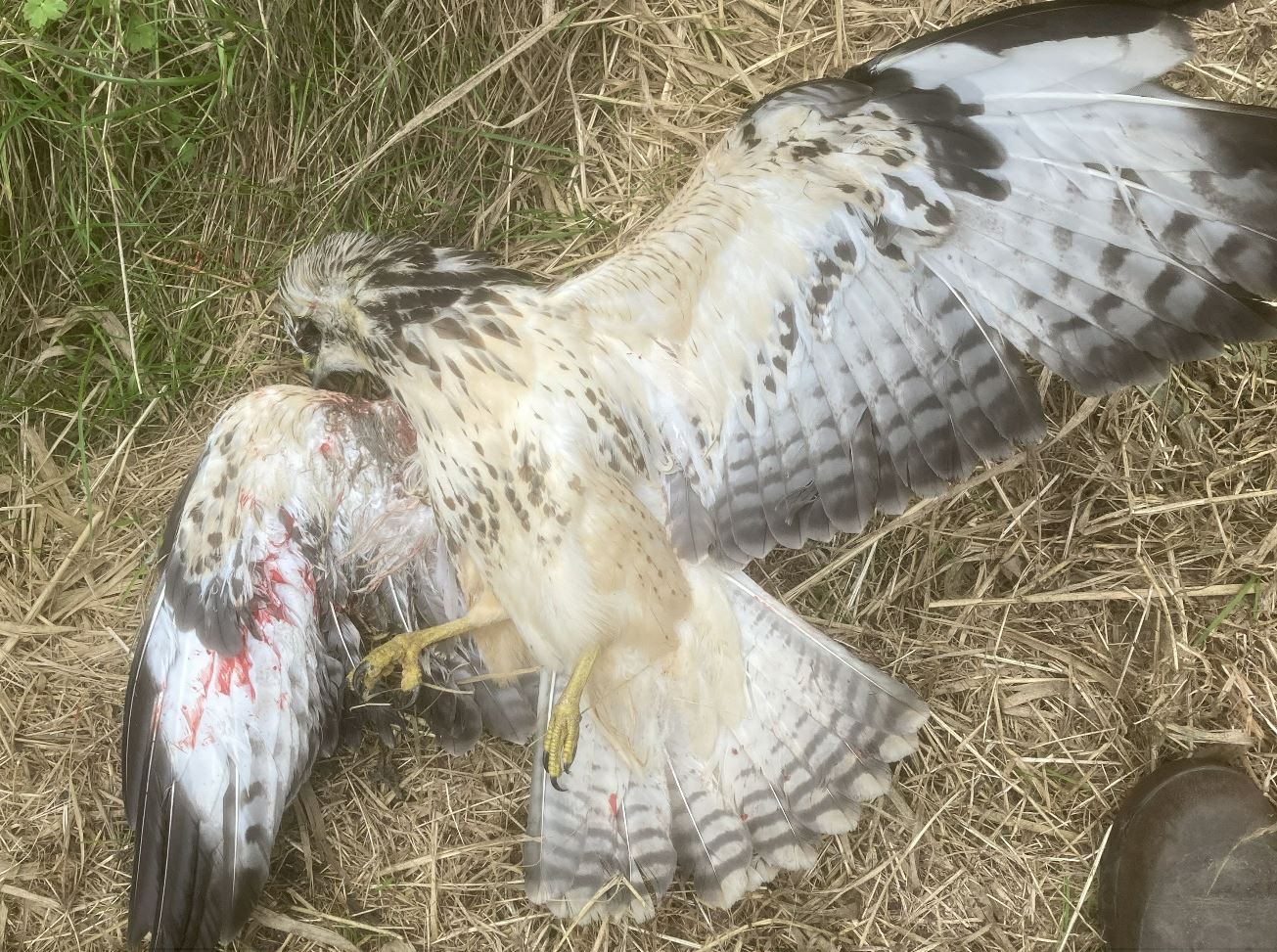
[Another of Stroud’s victims – he shot this goshawk. Photo via RSPB]

[Two containers of the banned poison strychnine found in the glovebox of Stroud’s all-terrain vehicle]

Sentencing Stroud, Magistrates said that he was lucky to escape jail today.

The court heard from the defence that Stroud was under pressure to produce game birds for the shoot after two poor years, that he had taken no pleasure in killing the buzzards and that he should have been informed that the law had changed around pheasant releases.

This is one of many incidents of raptor persecution identified on lowland pheasant and partridge shoots, which the RSPB says is an area of increasing concern. There is also evidence that large-scale releases of pheasant and partridge for shooting is having a detrimental impact on native wildlife.

The RSPB Investigations team conducted lengthy enquiries on an area of land managed by Stroud for pheasant shooting at Fengate Farm in Weeting, within the Breckland SPA. Following a number of visits, on 19 August 2021 they discovered a pheasant carcass – later found to contain the banned toxic chemical strychnine. The use of a poison bait such as a pheasant, laced with pesticides, is one of the most common methods of illegally killing birds of prey.

A subsequent search with Norfolk Police and partners uncovered further poison baits plus shot and poisoned raptors. Stroud’s phone also contained the photo of a goshawk and several buzzards which he admitted to shooting. They also found the deadly banned poison strychnine and phostoxin, a dangerous fumigant which was stored improperly.

In 2021 it became illegal to release gamebirds on or adjacent to an SPA without a licence, which Stroud had not sought, making him the first person to be prosecuted and convicted for this offence.

In 2020, Wild Justice issued proceedings in the High Court challenging the annual release of millions of non-native pheasants and red-legged partridges into the countryside and their potential impact on sites designated for nature conservation. DEFRA conceded the case and introduced General Licence 43 in an attempt to ensure that the impacts of those birds on those sites would be regulated.

Mark Thomas Head of RSPB Investigations UK, said:

It is difficult not to be disappointed with the outcome today considering the significance of the offences and combined efforts of the agencies involved. Laying poison baits out in the open is not only illegal but extremely dangerous and irresponsible. Baits like those being used at Fengate Farm present a deadly risk to any animal or person that might come across it. It is particularly troubling that this was happening on an SPA, a designated area where wildlife and nature should have the highest legal protection.

The RSPB’s most recent Birdcrime report in 2020 made clear that raptor persecution is not just an issue confined to grouse shooting estates: it is increasingly correlated with pheasant and partridge shoots.”

Mark added: “We would like to thank Norfolk Police for leading such a thorough investigation, and to Natural England, the National Wildlife Crime Unit and Crown Prosecution Service for their support”.

Guilty pleas were entered to the following charges:

· Six charges in relation to killing of six different buzzards (five by shooting and one poisoned) during August and September 2021

· One charge in relation to killing a goshawk listed under schedule 1 of the Wildlife and Countryside act 1981 in August 2021

· Three charges in relation to laying poison baits in August and September 2021

· One charges in relation to the possession of the banned pesticide, strychnine in September 2021

· A charge in relation to a firearm being an item capable of committing an offence in September 2021

· A charge in relation to the usage of the chemical phostoxin in September 2021

· One charge in relation to releasing pheasants illegally during 2022

ENDS

UPDATE 6th October 2022: Conviction of gamekeeper Matthew Stroud – statement from Norfolk Constabulary (here)

UPDATE 4th November 2022: RSPB Investigations Officer reflects on conviction of Norfolk raptor-killing gamekeeper, Matthew Stroud (here)

Leadhills Estate ‘information day’ – an update

Many thanks to several blog readers who attended Leadhills Estate’s ‘Information Day‘ yesterday and sent reports.

[Grouse moor on Leadhills Estate. Photo by Ruth Tingay]

A number of people have told me that the rumours about the sale of the estate and/or the estate’s shooting rights were ‘categorically denied’ by Lord Andrew Hopetoun himself.

Hmm. Personally, I have zero confidence in anything this former Director of Scottish Land & Estates says after his previous statements about the relationship between the Hopetoun Estate in Edinburgh and the Hopetoun (Leadhills) Estate in South Lanarkshire (see here, here and here for previous blogs on this).

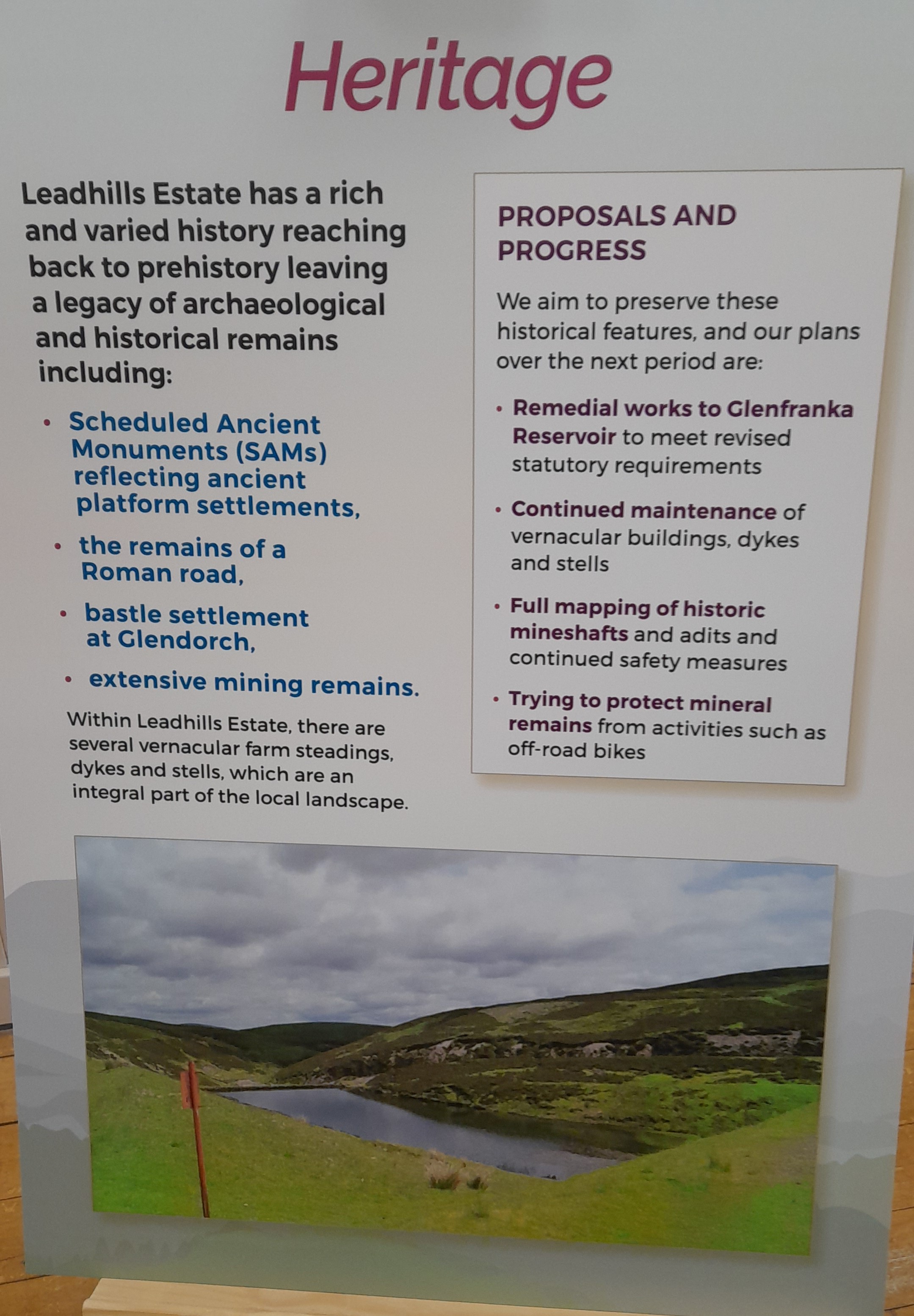
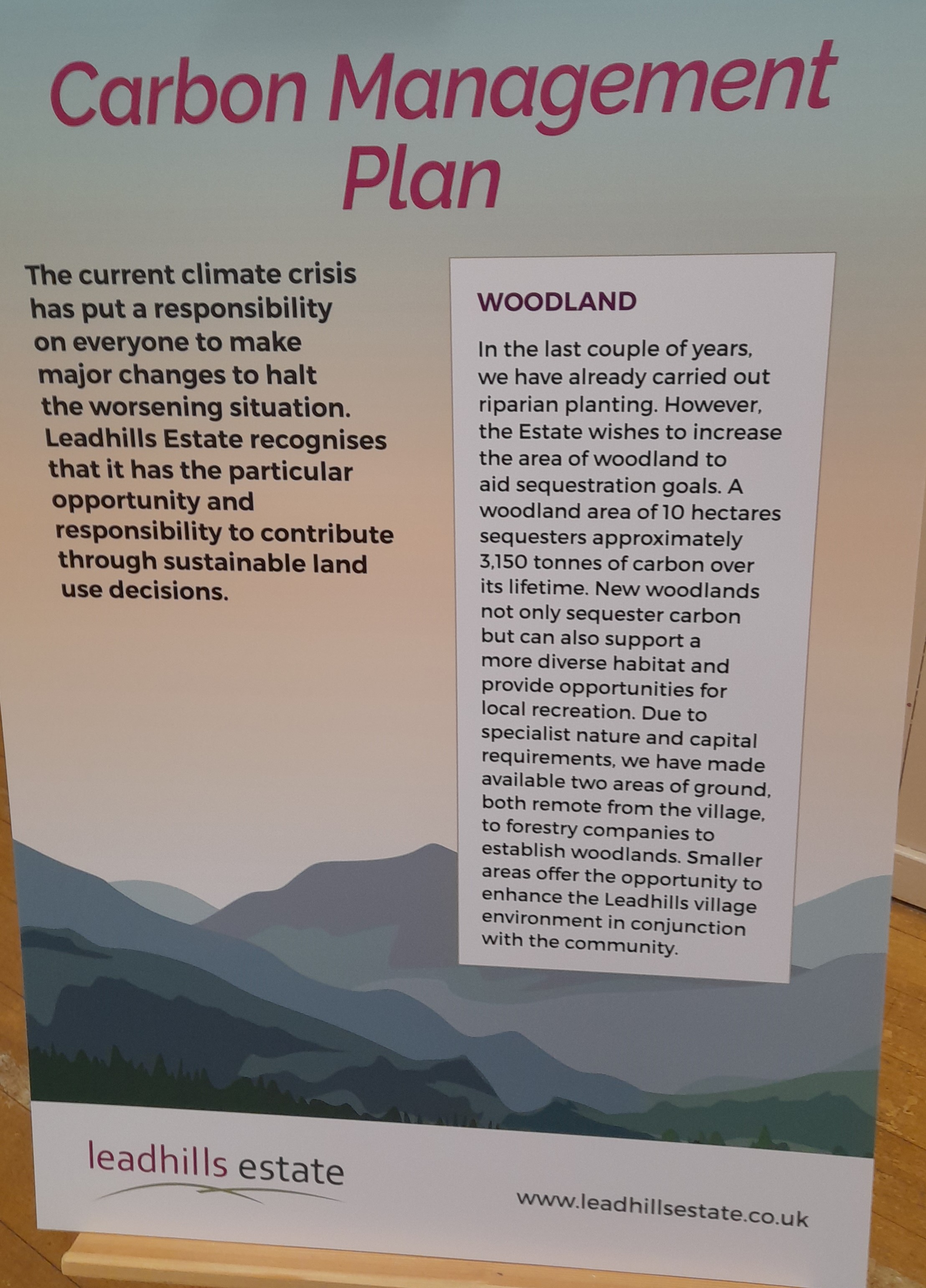
And given some of the statements published on information boards at yesterday’s meeting (see below), it’d hard to keep a straight face when you know that Leadhills Estate is currently serving not one, but TWO General Licence restrictions after the police found ‘clear evidence’ of wildlife crime (see here & here), just the latest in an astonishingly long list (at least 70 reports of alleged raptor persecution there since the early 2000’s).

Obviously, people can draw their own conclusions about what might be going on. Equally, I can draw my own and I can state with absolute certainty that Leadhills Estate will remain high on my watch list.

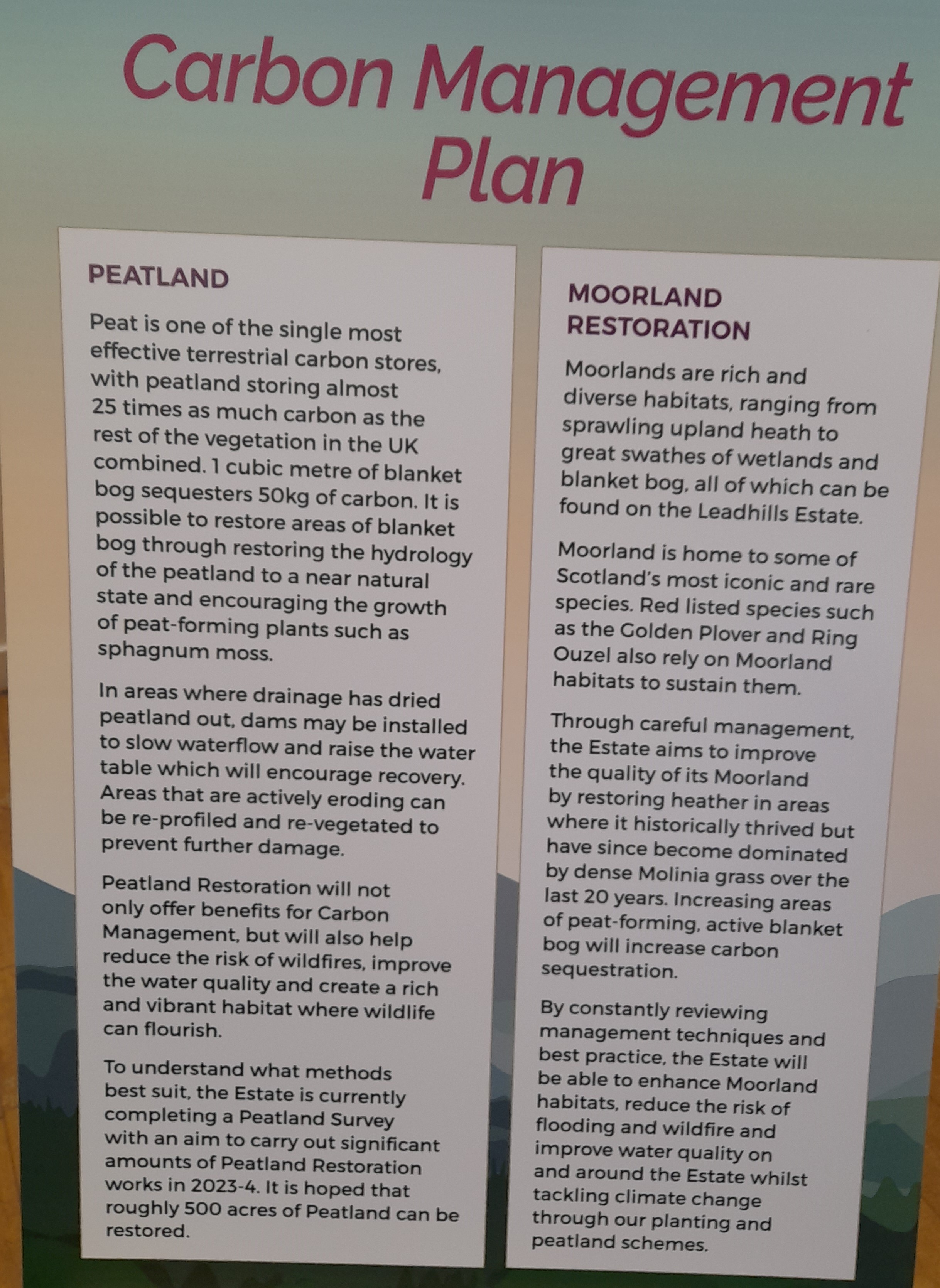
Here are the display boards from yesterday’s meeting:

Here is the map showing the areas of the estate that have been made available to forestry companies:

Something afoot at Leadhills Estate?

Rumours have been circulating for several weeks that ‘something’ is going on at Leadhills Estate in South Lanarkshire.

This estate, currently serving TWO General Licence restrictions after police found ‘clear evidence’ of wildlife crime (see here and here), has featured on this blog for years.

The rumours suggest that either the estate has been sold or the shooting rights have been sold, very recently. So far I haven’t seen any evidence to substantiate the claims but the rumours are persistent and are coming from multiple sources.

Leadhills Estate is hosting an ‘information day’ today at Leadhills Village Hall between 3pm-8pm, where the estate will ‘showcase ongoing plans‘. If any local blog readers happen to attend I’d be very interested to hear about it.

UPDATE 5th October 2022: Leadhills Estate ‘information day’ – an update (here)