Poisoned eagle found dead on Scottish grouse moor: Chris Packham urges First Minister to act

Further to last week’s news that a young white-tailed eagle has been found dead on a grouse moor in the Cairngorms National Park, having been poisoned with a banned toxin (see here and here), and the Scottish Government’s woefully inadequate response (see here), Chris Packham has sent a video message to First Minister Nicola Sturgeon calling for action.

He sent the video, via Twitter, this evening. Click below to watch.

Thank you to all of you who have written to the First Minister (Nicola Sturgeon) and Environment Cabinet Secretary (Roseanna Cunningham) about this repulsive crime, which is far from being a one-off. It is clear that their inboxes have been deluged. Good, they need to be.

If you haven’t written yet, please consider doing so.

Here are the email addresses of the relevant ministers:

To email Nicola Sturgeon, please use this address: firstminister@gov.scot

To email Roseanna Cunningham, please use this address: CabSecECCLR@gov.scot

Thank you.

[The poisoned sea eagle, found dead on a grouse moor in the Cairngorms National Park. Photo by Police Scotland]


Unconfirmed reports of mountain hare culls on several Scottish grouse moors

The season for killing mountain hares in Scotland opened on Saturday (1st August) despite a recent Parliamentary vote to provide more protection for this species.

In this particular case, greater protection (i.e. those who want to kill mountain hares will need to apply for a licence) will not be available until the Scottish Government has undertaken a consultation to consider the terms and conditions of any such licencing scheme.

Meanwhile, while everyone waits for the Scottish Government to conduct that consultation, the shooting season has opened and the Government has ignored campaigners’ pleas to offer interim protection to those mountain hares.

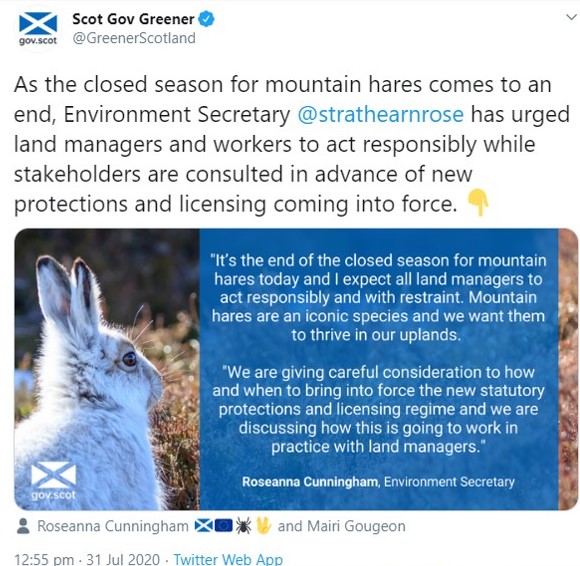
Instead, the Environment Cabinet Secretary has, with a straight face, called on the grouse-shooting industry to practice ‘voluntary restraint’ (see here).

So it came as no surprise to see a number of (as yet unconfirmed) reports on Twitter yesterday that mountain hare culling had begun, apparently on a grouse moor in the Monadhliaths and a grouse moor in the Angus Glens.

Under the current legislation, these estates are entitled to kill as many mountain hares as they like, without needing permission or a licence, and there is no obligation for them to record or report the number of hares killed.

Nor is there any obligation to report what they do with those shot hares. Some will end up on sale for human consumption (complete with embedded toxic poisonous lead shot, yum yum), others will simply be discarded, and some will be used to bait traps and stink pits to lure other wildlife to a gruesome death.

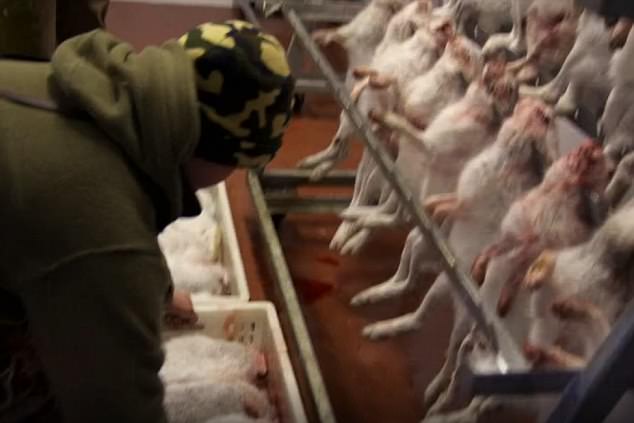
[Shot mountain hares strung up in a chilling larder, screen-grabbed from a controversial feature on Countryfile (2018) showing mountain hares being shot on a Scottish grouse moor]

UPDATE August 2020: Neither of these unconfirmed reports have been substantiated and there is no evidence that mountain hares were being culled in the Monadhliaths or the Angus Glens at the beginning of August 2020.

Another satellite-tagged red kite ‘vanishes’ in North Pennines AONB

RSPB press release (4 August 2020)

Another red kite vanishes in suspicious circumstances in problem area

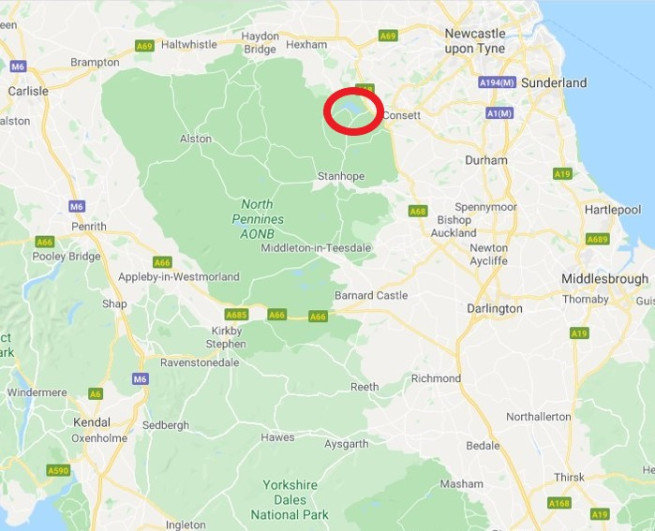
Two red kites and one hen harrier – one of England’s rarest breeding birds – have vanished suddenly and unexpectedly in the same area of the North Pennines AONB since last October.

The birds, all of which are protected by law, were wearing satellite tags to help experts understand more about their lives after leaving the nest.

The most recent of these, a young red kite named ‘BB’, vanished in the Derwent Gorge in June 2020, triggering a police appeal for information.

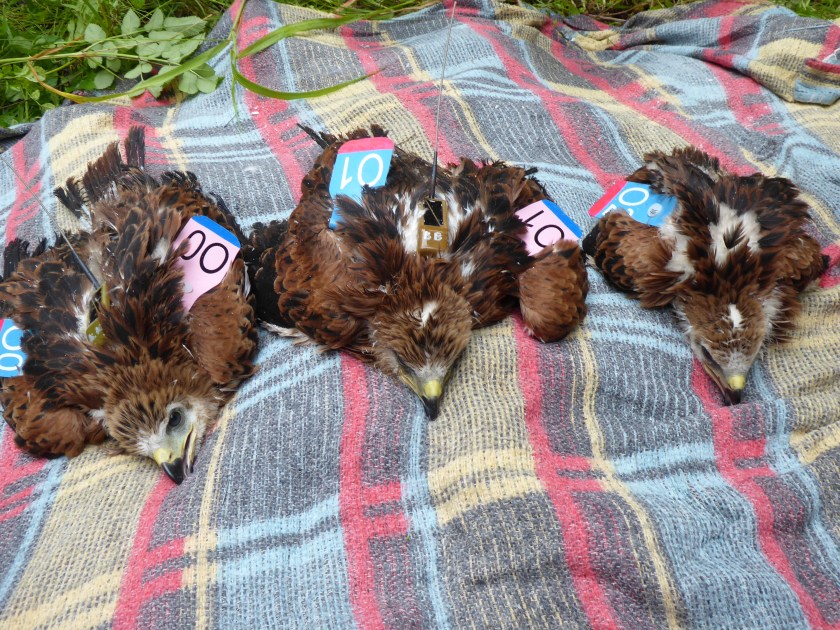
BB was fitted with a satellite tag near Gateshead in June 2019 by Friends of Red Kites (FoRK) with NERF support. It has been monitored since by the RSPB.

[Red kite ‘BB’ in the centre. Photo via RSPB]

BB’s tag had been functioning reliably and as expected when it suddenly stopped on 7 June 2020. Police have been conducting enquiries including a search of the area of the bird’s last fix, between Muggleswick and Castleside, where the bird had been present for the previous month, but found no trace of the bird or the tag. BB has not been heard from since.

Two further birds have suffered similar fates. In April 2020, another red kite, KK, which hatched last summer also near Gateshead, suddenly stopped transmitting on a grouse moor near Derwent Reservoir. And in October 2019, a rare hen harrier named Ada vanished after similarly sending her last transmission from a grouse moor, east of Allendale in Northumberland, also within the AONB.

All of these birds were tagged in the summer of 2019 and were under a year old when they disappeared. It is believed the birds may have been illegally killed.

Howard Jones, RSPB Investigations Officer, said: “There is a distinct pattern emerging of satellite-tagged birds of prey vanishing without a trace on or near land managed for driven grouse shooting in this area.

“BB, KK and Ada’s disappearances are categorised as a ‘sudden stop’. These are reliable tags which continue transmitting even after a bird has died. To cut out suddenly like this strongly suggests human interference.”

Birds of prey are legally protected under the Wildlife and Countryside Act (1981) which makes it an offence to deliberately kill or injure one. Those found to have done so could be given an unlimited fine and/or a prison sentence.

The persecution of raptors including red kites is a national police wildlife crime priority. Red kites, which are mainly scavengers, went extinct in England in the early 1900s largely down to persecution and egg collecting. Reintroduction programmes in recent decades have been a huge success in the UK, yet red kites remain listed as globally-threatened by the IUCN/BirdLife International.

Harold Dobson, spokesman for the Friends of the Red Kites, said: “It is with a combination of sadness, frustration and anger that we have learned of yet another red kite disappearing under suspicious circumstances. Red kites were re-introduced in the Lower Derwent Valley between 2004-2006. They continue to fare well in the valley itself but evidence such as this strongly suggests they are being prevented from naturally expanding their range, at least in part, due to human persecution. Since 2010, seven red kites have been found poisoned or shot near the Derwent Gorge and surrounding Durham moorland. We fear that this may be the tip of the iceberg and that many more persecuted kites are never found.”

Inspector Ed Turner, from Durham Constabulary said: “It is sad that, within a matter of months, I am appealing to the public for information again regarding another red kite that has disappeared without explanation in the same area of the North Pennines. The fate of this bird is not yet clear. Until we can rule out the possibility that a crime has been committed, we will continue to take this matter very seriously.”

Chris Woodley-Stewart, Director of the North Pennines AONB Partnership, said: “I’m immensely disappointed that we’re back here again having to ask for information on missing birds of prey in this part of the AONB. We never jump to conclusions about single satellite-tagged birds going off-line – there could be several reasons for that and we always want to get to the bottom of why it’s happened, where possible – but there’s a pattern here, and this part of the North Pennines has been a problem location for ten years or so now with shot, poisoned and missing birds. Please come forward if you can help locate this bird or know what happened to it.”

ENDS


Wild Justice wins permission for judicial review of Welsh General Licences

Some brilliant news!

Wild Justice has been granted permission for a judicial review of the Welsh General Licences.

This case has been on the go for some time, interrupted like everything else by Covid19, but is now back on track. For further details about what the legal challenge is all about please read the Wild Justice blog here.

The Honorable Mr Justice Griffiths, who granted permission for Wild Justice to proceed, didn’t agree with BASC that this case would “close down the countryside“, nor that it was “shameful” or “bully-boy tactics” to simply exercise a right to utilise an open, democratic process to challenge the lawfulness of a decision made by a public body, nor that it was a “vexatious legal attack” (see here).

Quite the contrary actually, as the Honorable Judge has agreed that Wild Justice’s legal challenge has sufficient significance and importance to warrant an expedited hearing. Excellent!

Unfortunately BASC won’t be able to participate in the legal proceedings. The Honourable Mr Justice Griffiths refused BASC’s application to join as an interested party, saying it was ‘neither necessary nor desirable‘.

Never mind. Perhaps BASC can include its exclusion as a ‘Key achievement in 2020’ just as it did when it lost its own application for judicial review back in 2018 (see here).

Still, plenty of time now for BASC to consider how to spend its much bragged-about ‘seven figure fighting fund’ which apparently was going to allow BASC to, er, ‘lead from the front’.

For those who’d like to be amongst the first to hear about this and Wild Justice’s other legal challenges and activities, you can sign up for the free Wild Justice newsletter HERE, which is emailed directly to your inbox.

Buzzard & kestrel confirmed illegally poisoned in Derbyshire

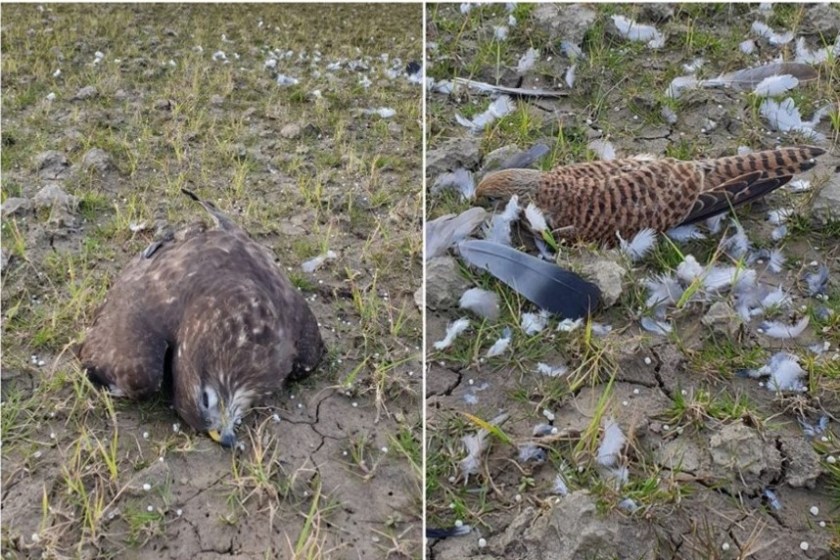
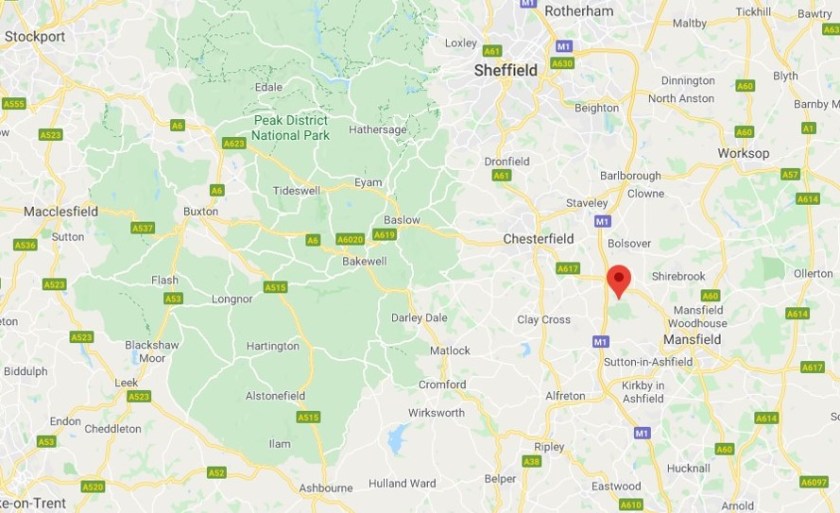
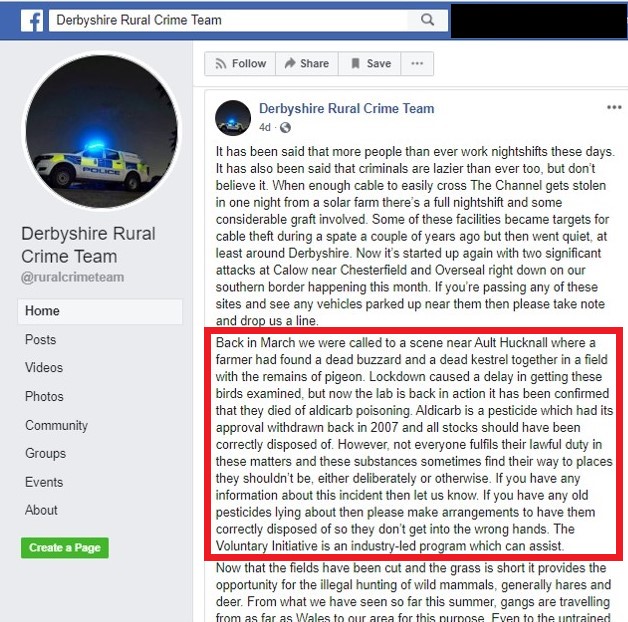
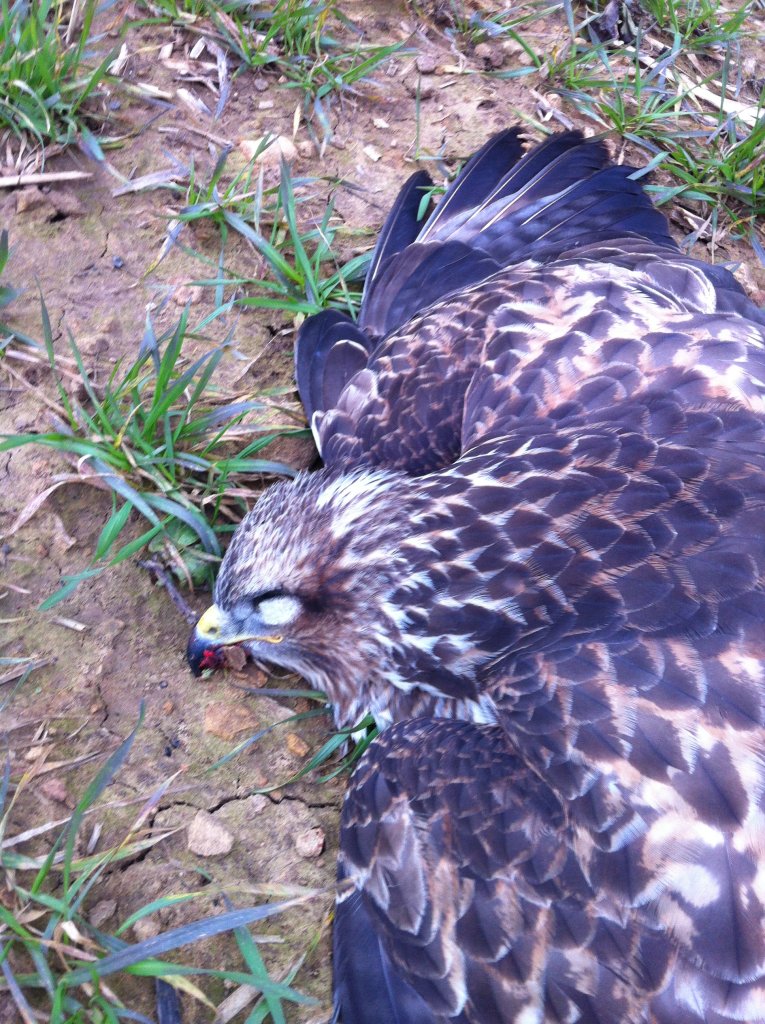
In March 2020, just after the start of lockdown, Derbyshire Constabulary reported the suspected poisoning of a kestrel and a buzzard, both found dead next to the remains of a pigeon at Ault Hucknall near Chesterfield (see here).

[Photo via Derbyshire Constabulary]

Samples were sent for toxicology analysis and last week the police received the findings. Both birds had been illegally poisoned with the banned pesticide Aldicarb.

This news was published on the Rural Crime Team’s Facebook page (see below). We haven’t been able to find any further news reports, for e.g. on the Derbyshire Constabulary website or in the local press.

These latest illegal poisonings are not the first in this area. A total of six buzzards were also illegally poisoned in neighbouring Glapwell between 2015-2016 (2 x buzzards, March 2015; 1 x buzzard & pheasant bait, February 2016; 3 x buzzards & pheasant bait, March 2016). Alphachloralose was the poison used in those cases.

[Some of the poisoned buzzards and a pheasant bait found at Glapwell in 2016, photos via RSPB]

There is a record of those poisonings in the RSPB’s 2016 BirdCrime report (here) and a short video, here:

It is quite clear that somebody in this area has access to banned poisons and is not afraid to set out poisonous baits that could kill anyone unfortunate to come in to contact with them, let alone wildlife and domestic animals and pets.

Let’s hope we see a continued publicity drive from Derbyshire Constabulary – these crimes warrant maximum awareness and exposure.

UPDATE 15th March 2022: Multi-agency searches in raptor poisoning hotspot in Derbyshire (here)

Another huge penalty for raptor poisoning offence in Spain

There have been a number of raptor poisoning cases in the news recently, including the illegal killing of a white-tailed eagle found on a grouse moor inside the Cairngorms National Park in Scotland (here), the mass poisoning of 23 buzzards in a field in Co Cork, Ireland (here), the poisoning of four peregrines on Guernsey in the Channel Islands (here), the poisoning of a family’s pet dog, believed to have consumed a poisoned bait intended for birds of prey in Nidderdale, North Yorkshire (here), the poisoning of a buzzard found dead on a grouse moor in the North York Moors National Park (here), the poisoning of a buzzard in Nidderdale, North Yorkshire (here) and the suspected poisoning of numerous raptors in Derbyshire including three peregrines, two buzzards and one kestrel, all pending toxicology results (here). More on some of those suspected cases shortly.

The connecting feature of all these incidents is that, in all probability, the poisoners will evade justice.

[Illegally poisoned sea eagle. Photo by Police Scotland]

It’s incredibly rare to secure a conviction for poisoning birds of prey in the UK, mainly due to the difficulty of securing sufficient evidence to link the crime to the actual individual who laid the bait. For example if the poisoned bait had been laid out on a large game shooting estate there could be numerous suspects (e.g. gamekeepers), who will all give ‘no comment’ interviews to the police, thus making it virtually impossible for the police to determine which one of them should be charged.

And even in a case where three golden eagles were found illegally poisoned on the same grouse moor, and an enormous stash of banned Carbofuran poison was found in the gamekeeper’s locked shed, reportedly to which only he had the key, he still wasn’t charged with killing those eagles, only for possession of the banned poison (see here).

There have been a few successful prosecutions for raptor poisoning over the years, but the subsequent penalties have been so utterly feeble they simply haven’t acted as a suitable deterrent for others (e.g. see here, here and here).

Meanwhile, over in Spain where tackling the illegal killing of birds of prey is taken seriously with, for example, the deployment of specialist poison detection dogs, resulting in massive fines, custodial sentences and extended hunting disqualifications for those convicted of laying poisoned baits (e.g. see here, here, here, here), another poisoner has just been sentenced this week.

According to these articles (here and here), an unnamed farmer has just been convicted of poisoning two red kites in Cabeza de Buey (Badajoz) in 2018 and has been ordered to pay a 20,000 EURO fine (the estimated value of the two red kites). He also received a two-year hunting disqualification.

Compare that response with what we’ve seen in Scotland this last week – an illegally poisoned white-tailed eagle, killed with a banned pesticide, found dead inside a National Park in an area where at least seven eagles have now been either illegally killed or have disappeared in suspicious circumstances.

There was a wholly inadequate response from a junior Environment Minister (here) followed by total silence from the Environment Cabinet Secretary and the First Minister, despite unprecedented public uproar urging action (see here and here).

Interesting, isn’t it?

Publicity campaign to find buzzard poisoner

In May 2020 news emerged that 23 buzzards had been killed in a single incident in Co Cork after ingesting the banned pesticide Carbofuran (see here).

[The corpses of several buzzards found poisoned by Carbofuran in Co Cork in another incident, this time in 2018. See here for details. Photo by NPWS]

As if that news wasn’t shocking enough, it also emerged that the mass poisoning had been discovered in December 2019 and was ‘investigated’ by the National Parks and Wildlife Service but it was only publicised five months later once BirdWatch Ireland and the Irish Raptor Study Group had found out about it.

This poisoning incident and the apparent silence of the investigating authorities led to questions in the Irish Parliament (see here) and calls for the establishment of a special police unit to focus on tackling wildlife crime (here).

Meanwhile, an animal welfare charity ‘The Amica Projects’ has put up a reward of 5,000 Euros for information leading to a prosecution and has placed a full page advert in the Southern Star newspaper appealing for whistle blowers to get in touch:

4th peregrine confirmed poisoned on Guernsey & another raptor submitted for toxicology analysis

A couple of weeks ago Police on the island of Guernsey appealed for information (see here) after at least three peregrines had been found poisoned with ‘an unusual cocktail of banned pesticides’ in the previous 14 months and a fourth peregrine, found dead in June 2020, had been submitted for toxicology analysis which was delayed by Covid19.

Those toxicology results have now confirmed that the fourth peregrine was also poisoned by what have been described as ‘professional-use pesticides’ (see here). Another dead bird of prey (not identified in the local press), has been submitted for toxicology analysis after being found dead in July ‘under unusual circumstances’.

The names of the banned pesticides have not been revealed.

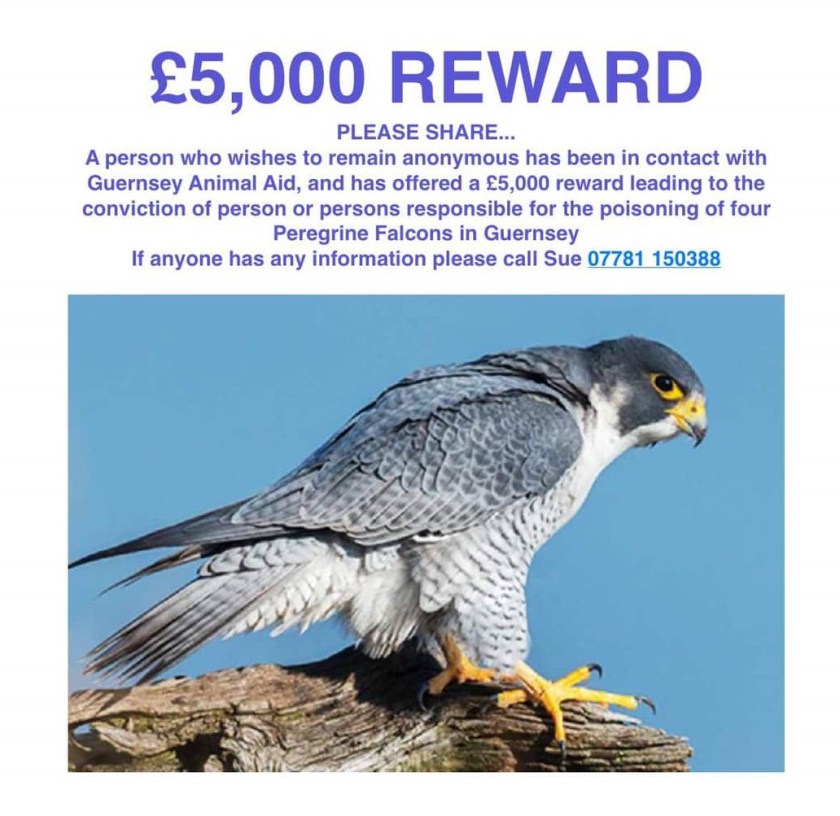
An anonymous donor has contacted Guernsey Animal Aid to put up a £5,000 reward for anyone who can provide information that leads to a conviction (see here).

Sue Vidamour from the charity said:

It’s a disgusting thing to do, to kill a beautiful animal like that for your own gain or for whatever reason is just outrageous. 

Maybe somebody out there knows who it is but is reluctant to say but humans being humans it may just tip the balance and they’ll give a name.” 

UPDATE 9th August 2020: £10,500 reward for info on four poisoned peregrines (here)

Dog poisoning confirmed in Nidderdale raptor persecution hotspot

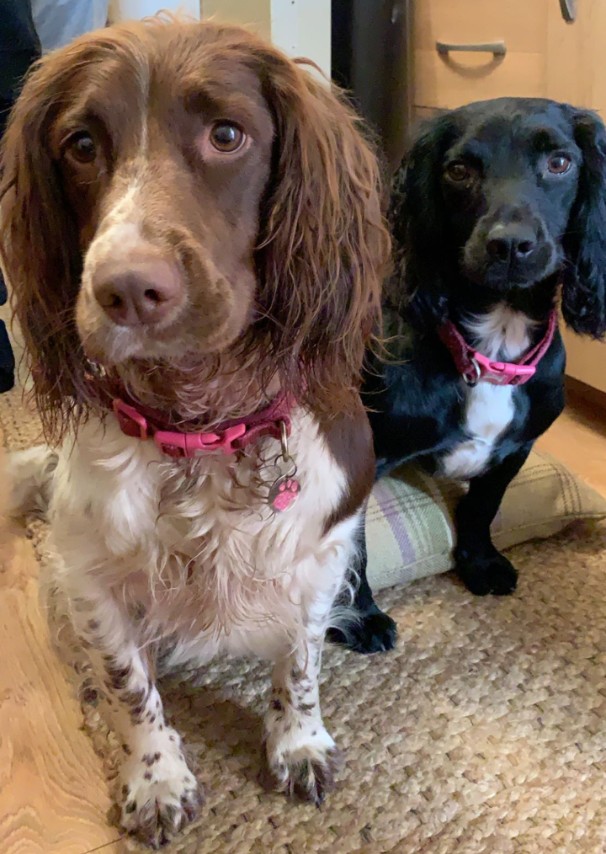
In April during lockdown, two pet dogs became ill during a walk in Pateley Bridge in Nidderdale. One of them (Molly) subsequently died and the vet suspected poisoning.

[Molly (left) and Poppy, photo via North Yorkshire Police]
Samples were submitted for toxicology, although analysis was delayed due to Covid19. Meanwhile, North Yorkshire Police issued a warning notice (here) for local residents to take extra care, especially as illegal poisoned baits had been used in the area many times before, killing birds of prey, especially red kites (here).

Just a couple of weeks ago North Yorkshire Police, along with poisons experts from Natural England and persecution experts from RSPB, conducted high profile raids at several Nidderdale addresses as they continue to investigate ongoing poisoning crimes (see here).

The toxicology results confirmed that Molly had died after ingesting what has widely become known as the ‘Nidderdale Cocktail’ – a lethal combination of four pesticides (Bendiocarb, Chloralose, Isophenphos and Carbofuran) that has been identified in a number of raptor persecution poisoning crimes.

It’s interesting to note that this particular ‘cocktail’ isn’t restricted to use in Nidderdale; it has also been used on several estates elsewhere in England and Scotland. Wouldn’t it be fascinating to see whether there was a common link between these various estates, you know, something like a shared agent or perhaps a gamekeeper who’s worked on all the estates?

On Wednesday, North Yorkshire Police issued the following press release seeking more information about the poisoning of Molly:

Police appeal for information after dog dies from suspected pesticide abuse

Properties searched as investigation into poisoning continues

North Yorkshire Police is appealing for information as part of an ongoing investigation into the poisoning of two pet dogs, believed to be as a result of pesticide abuse.

On 23 April 2020, two spaniel dogs fell seriously ill immediately after a walk, with their owner, in the countryside near Pateley Bridge. The dogs were rushed to the vets and whilst one of the two recovered, the second was so severely ill that she did not survive.

The incident was reported to the police and local area searches conducted, as a well as a warning put out to other dog owners. Samples taken from the dog which died were submitted to the Wildlife Incident Investigation Scheme (WIIS) administered by Natural England and the results showed the presence of four pesticides. The dog had a significant quantity of Bendiocarb in its system, along with smaller quantities of Chloralose, Isofenphos and Carbofuran. The tests concluded that exposure to these pesticides most likely caused this dog’s death and the severe symptoms suffered by the second dog.

The same combination of four poisons have been found to cause the deaths of two red kites and a buzzard in Nidderdale since 2016, with other cases of poisoned birds of prey in the area also involving one or more of the chemicals involved.

North Yorkshire Police Inspector, Matt Hagen, explains:

The fact we have seen this same combination of chemicals, the ‘Nidderdale cocktail’ as it is sometimes known, also cause the death of birds of prey in this same location would indicate that the poisons have been deliberately left in a place where they could be found by wildlife and unfortunately in this case, domestic pets.

Pesticide abuse of any kind will not be tolerated and we are doing everything we can to try and find those responsible.”

Following receipt of the test results and acting on local intelligence North Yorkshire Police conducted searches at a number of properties in the area with assistance from Natural England and the RSPB.  Unfortunately none of these searches resulted in any further evidence as to how these poisons reached the two dogs or who may have been responsible for this suspected pesticide abuse so officers are now appealing for information from the public.

Mark Thomas, Head of Investigations at the RSPB, said:

Nidderdale is surrounded by grouse moors and sadly we know from experience, and from the government’s own data, that there is a strong correlation between raptor persecution and driven grouse shooting. Carbofuran is one of the most commonly-abused substances in the poisoning of birds of prey. It is a highly toxic, banned substance, putting wildlife, pets and people at risk. This is not the first time harmful substances have been found left out in the open and sadly it unlikely to be the last. This reckless and irresponsible behaviour, which had led to the death of a beloved family pet, cannot be allowed to continue.”

Whilst Chloralose is licenced for use in England in a low concentration as a rodenticide, Bendiocarb, Isofenphos and Carbofuran are all banned from use in the UK. None of these chemicals should ever be used in an environment where domestic animals and/or wildlife should come into contact with them.

Anyone misusing or abusing pesticides may be committing a variety of offences. If you come across an object, often an animal carcass, which you believe may be contaminated with a pesticide or other poisons, do not touch it. Take as many photos and details as you can and report this to the police as soon as possible.

Dog owners worried by this incident should take care to keep their dogs on a lead or within sight and under control at all times when taking them for a walk. Dogs should only be walked on public rights of way or other land where the owner has permission to be.

Anyone with any information which could help the police in this investigation should call 101, quoting reference: 12200068444 or if you wish to remain anonymous call Crimestoppers on 0800 555 111.

ENDS

The RSPB also published a blog about this case, which includes comments from Molly’s owners (see here).

There’s also good coverage in the Yorkshire Post (here).

Scottish Government fails to protect mountain hares as shooting season opens

Today marks the start of the open season for killing mountain hares in Scotland.

You may have thought that the Scottish Parliament recently voted to protect this species, bringing an end to the scenes of horrific mass slaughter on Scottish grouse moors and only allowing future killing to take place under licence in certain circumstances.

[Shot mountain hares strung up in a chilling larder, screen-grabbed from a controversial feature on Countryfile (2018) showing mountain hares being shot on a Scottish grouse moor]

Well, there was a vote, under the proposed Animals and Wildlife (Penalties, Protections and Powers) (Scotland) Bill, and Parliament did agree to provide full protection for the mountain hare (see here) but the Scottish Government is first insisting on undertaking a consultation before enacting the new legislation. This blog (here) by RSPB Scotland’s James Silvey and Duncan Orr-Ewing provides an excellent summary of the situation.

Since that vote, campaign groups have been urging the Scottish Government to bring in emergency interim measures to protect mountain hares whilst the consultation takes place (e.g. see here, here) but all to no avail.

You’re not going to believe what the Scottish Government published yesterday. Or perhaps you will. At the end of the week when it’s been deluged with letters of public outrage over the illegal poisoning of a sea eagle that was found dead on a grouse moor in the Cairngorms National Park (see here), the Scottish Government’s Environment team posted this on twitter:

Are they for real? A call for voluntary restraint? Are they having a laugh?

This is an industry whose failure to self-regulate is legendary. Some of its members continue to systematically kill birds of prey, despite it being illegal to do so for 66 years, they slaughter mountain hares by the thousands (an estimated 26,000 hares shot every year), and they even continued to set grouse moors alight during Covid19, despite calls to stop from their own industry leaders, which led to the Scottish Parliament enacting an emergency temporary ban (see here).

This is an industry out of control and with little to no regard for legislation. Why the bloody hell does the Scottish Government think the industry will comply with a plea for voluntary restraint now? Why would it, when it gets away with criminality time and time again? And asking now, when the corpse of that poisoned eagle is uppermost in everyone’s minds?

It’s back to that famous quote again:

The definition of insanity is doing the same thing over and over again and expecting different results‘.

It’s become pretty clear that the grouse shooting industry aren’t the only ones out of control. The Scottish Government has been unable, no, make that unwilling, to take control of wildlife protection despite having the legislative power and a huge public mandate to do so.

UPDATE 5 August 2020: Unconfirmed reports of mountain hare culls on several Scottish grouse moors (here)

[Cartoon by Mr Carbo]