Wildlife crime: Scottish Government publishes its review on increased investigatory powers for the Scottish SPCA

The Scottish Government has finally published its commissioned review on increasing the Scottish SPCA’s investigatory powers to enable the organisation to help tackle wildlife crime, and particularly raptor persecution.

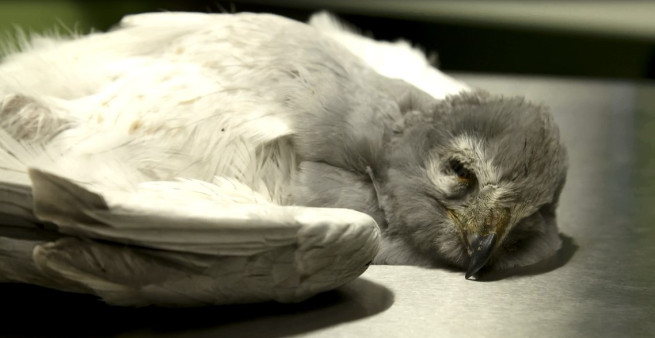
Buzzard killed after eating poisoned rabbit bait. Photo: NIRSG

As a quick recap for new blog readers, the SSPCA’s current powers (under animal welfare legislation) limits their investigations to cases that involve a live animal in distress (including some wildlife crimes). The proposed new powers would allow them to also investigate wildlife crimes under the Wildlife & Countryside Act legislation, e.g. where the victim is already dead, and also incidents where a victim may not be present (e.g. if an illegally-set pole trap or a poisoned bait was discovered). See here for further detail.

The review taskforce, launched in July 2022 and chaired by Susan Davies FRSB, was established after 11 long years of political can-kicking on this issue by the SNP, only because the Scottish Greens insisted on its inclusion in the historic Bute House Agreement, the power-sharing policy document published by the two parties in 2021.

The 13-page published review, which was submitted to the Scottish Government in October last year, can be read/downloaded here:

I haven’t read the review in detail yet but the main recommendation is that the Scottish SPCA NOT be given increased powers due to the lack of support for this provision from Police Scotland, the Crown Office and the National Wildlife Crime Unit (NWCU).

I’ll comment on that when the Scottish Government has published its own response to the review, which it previously said (here) would be published at the same time as the review was published, but I haven’t seen the Government’s response yet.

I think it’s prudent to wait to see the Government’s response before making any comment, although I’ve previously been critical of the apparent bias in favour of game-shooting industry organisations being invited to contribute to the review (all of whom are opposed to increased powers for the SSPCA), whereas opportunities for conservation organisations were apparently limited (see here and here).

Increased powers for the SSPCA is due to be debated at Stage 2 of the Wildlife & Muirburn (Scotland) Bill in the autumn, so this is far from over.

This issue has now been running for the last 12 years – here is the timeline of this sorry saga:

February 2011: Increased powers for the SSPCA was first suggested by MSP Peter Peacock as an amendment during the Wildlife & Natural Environment (Scotland) Bill debates. The then Environment Minister Roseanna Cunningham rejected it as an amendment but suggested a public consultation was in order.

September 2011: Seven months later Elaine Murray MSP (Scottish Labour) lodged a parliamentary motion that further powers for the SSPCA should be considered.

November 2011: Elaine Murray MSP (Scottish Labour) formalised the question in a P&Q session and the next Environment Minister, Stewart Stevenson MSP, then promised that the consultation would happen ‘in the first half of 2012’.

September 2012: Nine months later and nothing had happened so I asked Paul Wheelhouse MSP, as the new Environment Minister, when the consultation would take place. The response, in October 2012, was:

The consultation has been delayed by resource pressures but will be brought forward in the near future”.

July 2013: Ten months later and still no sign so I asked the Environment Minister (still Paul Wheelhouse) again. In August 2013, this was the response:

We regret that resource pressures did further delay the public consultation on the extension of SSPCA powers. However, I can confirm that the consultation document will be published later this year”.

September 2013: At a meeting of the PAW Executive Group, Minister Wheelhouse said this:

The consultation on new powers for the SSPCA will be published in October 2013“.

January 2014: In response to one of this blog’s readers who wrote to the Minister (still Paul Wheelhouse) to ask why the consultation had not yet been published:

We very much regret that resource pressures have caused further delays to the consultation to gain views on the extension of SSPCA powers. It will be published in the near future“.

31 March 2014: Public consultation launched.

1 September 2014: Consultation closed.

26 October 2014: I published my analysis of the consultation responses here.

22 January 2015: Analysis of consultation responses published by Scottish Government. 233 responses (although 7,256 responses if online petition included – see here).

I was told a decision would come from the new Environment Minister, Dr Aileen McLeod MSP, “in due course”.

1 September 2015: One year after the consultation closed and still nothing.

25 February 2016: In response to a question posed by the Rural Affairs, Climate Change & Environment Committee, Environment Minister Dr Aileen McLeod said: “I have some further matters to clarify with the SSPCA, however I do hope to be able to report on the Scottish Government’s position on this issue shortly“.

May 2016: Dr Aileen McLeod fails to get re-elected and loses her position as Environment Minister. Roseanna Cunningham is promoted to a newly-created position of Cabinet Secretary for the Environment.

12 May 2016: Mark Ruskell MSP (Scottish Greens) submits the following Parliamentary question:

Question S5W-00030 – To ask the Scottish Government when it will announce its decision regarding extending the powers of the Scottish SPCA to tackle wildlife crime.

26 May 2016: Cabinet Secretary Roseanna Cunningham responds with this:

A decision on whether to extend the investigatory powers of the Scottish SPCA will be announced in due course.

1 September 2016: Two years after the consultation closed and still nothing.

9 January 2017: Mark Ruskell MSP (Scottish Greens) submits the following Parliamentary question:

Question S5W-05982 – To ask the Scottish Government by what date it will publish its response to the consultation on the extension of wildlife crime investigative powers for inspectors in the Scottish SPCA.

17 January 2017: Cabinet Secretary Roseanna Cunningham responds:

A decision on whether to extend the investigatory powers of the Scottish Society for the Prevention of Cruelty to Animals will be announced in the first half of 2017.

31 May 2017: Cabinet Secretary Roseanna Cunningham rejects an extension of powers for the SSPCA ‘based on legal advice’ and instead announces, as an alternative, a pilot scheme of Special Constables for the Cairngorms National Park (here). It later emerged in 2018 that this pilot scheme was also an alternative to the Government’s 2016 manifesto pledge to establish a Wildlife Crime Investigation Unit as part of Police Scotland – a pledge on which it had now reneged (see here).

November 2019: The pilot scheme of Special Constables in the Cairngorms National Park was an absolute failure as a grand total of zero wildlife crimes were recorded by the Special Constables but plenty were reported by others (see here).

June 2020: Mark Ruskell (Scottish Greens) proposed further powers for the SSPCA at Stage 2 of the Animals and Wildlife Bill. The latest Environment Minister, Mairi Gougeon persuaded him to withdraw the proposed amendment on the basis that she’d consider establishing a taskforce to convene ‘this summer’ to consider increased powers (see here).

December 2020: Mark Ruskell (Scottish Greens) submits two Parliamentary questions asking about the status of the taskforce and who is serving on it (see here).

January 2021: New Environment Minister Ben Macpherson says the taskforce has not yet been appointed but that it is “expected to be established later this year“ (see here).

September 2021: In the 2021 to 2022 Programme for Government it was announced that the ‘independent taskforce [Ed: still to be appointed] will report before the end of 2022’ (see here).

May 3 2022: In an interview with Max Wiszniewski of the REVIVE coalition for grouse moor reform, new Environment Minister Mairi McAllan said: “It’s imminent and I wish I could tell you today but we are just finalising the last few points for the membership but I’m hoping to be able to make an announcement about that in the next few weeks“ (see here).

1 July 2022: Scottish Government announces Susan Davies has been appointed to lead the taskforce review and will ‘publish a report later this year’ (see here).

27 December 2022: A Scottish Government spokesperson tells Scotsman journalist the taskforce has completed its review and its findings will be published ‘within weeks’ (see here).

31 January 2023: An FoI response from the Scottish Government to this blog’s author reveals the Taskforce’s review was submitted to the Scottish Government on 22nd October 2022 and will be published ‘prior to summer 2023’.

1 February 2023: Wildlife crime: key conservation organisations ‘excluded’ from Scottish Government’s review on increasing SSPCA powers (here).

7 February 2023: Scottish Government tells journalist from The Scotsman that it will provide a response at the same time the Taskforce review on SSPCA powers is published (here).

7 March 2023: More detail provided on why key conservation organisations were excluded from Scottish Government’s review on increasing SSPCA powers (here).

21 June 2023: Scottish Government publishes its commissioned review on SSPCA powers.

UPDATE 27th June 2023: New investigatory powers for SSPCA proposed by Scottish Government (here)

Gamekeeper acquitted after Police Scotland officers lied to estate owner during investigation

There was an interesting case heard at Banff Sheriff Court yesterday where Scottish gamekeeper Terry Lindsay, 40, was facing a charge relating to the use of a trap that was alleged to have been illegally-set on Fyvie Estate in Aberdeenshire.

The trap at the centre of the trial was a clam trap (also known as a Larsen Mate trap) that had been baited with a pheasant carcass and placed next to a pheasant release pen on 26th August 2020. The use of these traps, baited with meat, is lawful (although highly contentious – see this blog from 10 years ago!) as long as certain General Licence conditions are met.

Here’s a photo of the trap. For readers unfamiliar with how they work, the spilt perch above the bait is designed to collapse when a bird lands on it, which causes the two metal sides of the trap to close (like a clam), capturing the bird inside the trap where it will remain until the trap operator comes along to either release the bird (if it’s a non-target species, such as a raptor) or club it to death if it’s a legitimate target species (e.g. crow).

Set trap on Fyvie Estate, 26th August 2020. Photo: RSPB

A write-up of the case was published yesterday in the Press & Journal (behind a paywall) but unfortunately the article includes a number of inaccuracies. For the purpose of clarification, I’ve reproduced the P&J article (below), followed by my understanding of the case.

Here’s the article published by the P&J yesterday:

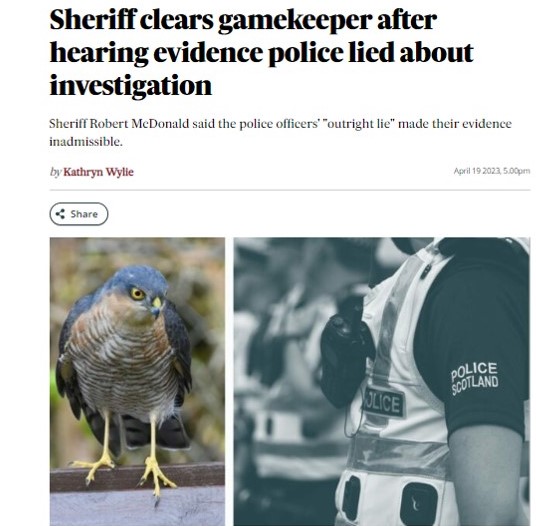
A gamekeeper has been cleared of illegally trapping a protected bird after it emerged police officers lied during the course of the investigation.

The case against Terry Lindsay collapsed when Sheriff Robert McDonald heard evidence that officers misled two people about why they were on the Fyvie Estate.

Police had received a tip-off that a sparrowhawk was “beside” a trap but lied to estate staff about why they were there – instead saying it was to look for a missing person.

Sheriff McDonald said that “outright lie” made the police officers’ evidence inadmissible and acquitted Mr Lindsay, 40, less than an hour after the trial started at Banff Sheriff Court.

“It seems to me that the critical point is the lying,” Sheriff McDonald said.

“I think the evidence of the search is inadmissible. It’s fatal that police have told an outright lie to two members of the public who, as I pointed out, had some authority as to who comes onto the land.

“That compounds it. I find the evidence inadmissible.”

A Police Scotland spokesman said: “We are aware of the outcome in court and the full circumstances leading to yesterday’s trial are being reviewed.”

The verdict was met with “disappointment” by the RSPB, the bird welfare charity which initially came across the trap and reported its whereabouts to police.

Pc Alison Davis told the trial she and her sergeant, Gary Johnston, spent about an hour scouring the estate on August 26 2020 after an RSPB informant made them aware there was a “trap with a bird beside it”.

She told procurator fiscal Gerard Droogan they were approached by a gamekeeper and the laird, Sir George Forbes-Leith, and told both that they were searching for a missing person.

“There was no truth in that as far as I am aware,” Pc Davis said, before adding: “He [Sgt Johnston] said to me afterwards that he was concerned that any evidence would be lost, or words to that effect.”

Mr Lindsay’s defence agent Paul Anderson asked Pc Davis why neither conversation was included in her statement.

She replied: “I didn’t consider them to be witnesses. I didn’t think of that as relevant to the inquiry. That’s why it’s not in my statement. It was certainly not intentionally left out.”

Mr Anderson asked: “Two lies were told in the space of one hour to two separate members of the public?”

“Yes,” replied the officer.

During her evidence, Pc Davis also explained how they eventually found the trap with a sparrowhawk inside around 20 metres from a pheasant breeding operation on the estate.

The bird was alive, she took photos of it and they released it, before placing the trap in the back of the van, she said.

Mr Anderson said this decision to lie, alongside a decision to search the land “without reasonable cause to suspect someone was committing an offence”, made any police evidence “unreliable and uncredible”.

“There were lies told to two members of the public within one hour about why police were on the land,” he told Sheriff McDonald.

“It’s inexcusable. The evidence is so tainted it cannot be considered by the court.”

He added the lies became “fatal to the search” and invited the sheriff to offer an acquittal.

Sheriff McDonald agreed and Mr Lindsay, of North Haddo, Fyvie, was acquitted of the charge under the Wildlife and Countryside Scotland Act 1981.

Speaking after the case, the RSPB said more needed to be done to regulate the use of traps.

Ian Thomson, RSPB Scotland’s head of investigations, told The Press and Journal: “While we are disappointed that this case was dismissed after the court considered witness evidence from the police, we remain concerned that traps authorised by the General Licences issued annually by NatureScot continue to be poorly regulated, with no compliance monitoring, and are widely misused and abused.

“We hope that provisions introduced by the Wildlife Management and Muirburn Bill, currently being considered by the Scottish Parliament, bring better training, accountability and tighter regulation of such devices that are in widespread use on gamebird shooting estates in particular.”

A Fyvie Estate spokesman said: “As per other legally set Larsen traps, a sparrowhawk was caught and upon Mr Lindsay checking the trap, he found the police in attendance. The sparrowhawk was released unharmed by police officers.

“All traps are licensed and tagged, and a meat bait return form is completed as per Nature Scot guidelines showing the release of non-target species caught. The beauty of this type of trap is that they are checked several times a day and birds can be released unharmed.”

ENDS

My understanding is that the main inaccuracy in this article is that the RSPB did not report a sparrowhawk being “beside” a trap to Police Scotland. Rather, the RSPB reported what appeared to be an illegally-set trap. It was suspected to be illegally-set because the trap didn’t appear to have a trap registration number attached to it (this is one of the conditions of the General Licence) so quite rightly, the RSPB reported it to Police Scotland for investigation.

By the time Police Scotland attended the scene, a raptor had been caught in the trap. It’s been reported that this was a sparrowhawk but the photographs suggest it was a goshawk. The species ID isn’t a significant issue though – it’s not unlawful to trap a raptor inside a clam trap, whatever species it is; it only becomes unlawful if the raptor isn’t released, unharmed, as soon as it’s discovered by the trap operator during the daily trap check. In this case, the police officers released the unharmed hawk, so no problem there.

Those are the two main inaccuracies in the article, as far as I’m aware.

What happened in court, according to the article, I’ll have to take at face value.

It seems the fact that the two Police Scotland officers lied to the estate owner and to the gamekeeper about their reason for being on the estate is not disputed. Unfortunately, the article doesn’t examine why the police officers lied about it. If they had reasonable suspicion that a crime may have been committed, they had full authority to enter the estate and conduct an initial land search, without a warrant. There was no reason for them to lie about the purpose of their visit – they had the authority to be there, under Section 19 of the Wildlife & Countryside Act 1981, which states:

If a constable suspects with reasonable cause that any person is committing, or has committed, an offence under this Part, he may, for the purpose of exercising the powers conferred by subsection (1), enter any land other than a dwelling or lockfast premises‘.

So why lie about their reason for visiting the estate? Why did they pretend they were looking for a missing person?

The only explanation I can think of (and this is pure speculation because I haven’t spoken to the two officers about it), is that they weren’t specialist Wildlife Crime Officers and so didn’t understand the extent of their powers to access the land and search for evidence.

If that is the case, it still doesn’t justify them lying to the landowner and the gamekeeper, but it perhaps provides an explanation of sorts.

Whatever their reasoning was, however, their actions are an embarrassment to Police Scotland and I hope that the ‘review of the full circumstances’, as stated in the P&J article, leads to lessons being learned.

For clarity, and for the benefit of anyone who might comment on this case, please note that gamekeeper Mr Lindsay was acquitted and any evidence about the alleged illegally-set trap was not put before the court because the Police Officers’ evidence was deemed inadmissible.

Millden is yet another grouse-shooting estate to be sanctioned after police find evidence of raptor persecution

Further to this morning’s news that Millden Estate in the Angus Glens has been slapped with a three-year General Licence restriction after evidence was found of raptor persecution crimes (see here), it’s worth examining the background to this case.

Millden is one of a number of grouse-shooting estates situated in the Angus Glens that has featured many, many times on this blog (see here for all Millden posts).

Location of Millden Estate in the Angus Glens. Estate boundaries sourced from Andy Wightman’s Who Owns Scotland website

Millden Estate first came to my attention in July 2009 when a young satellite-tagged golden eagle called Alma was found dead on the moor – she’d ingested the deadly poison Carbofuran (here). It wasn’t clear where she’d been poisoned and the estate denied responsibility.

Then in 2012 there was the case of another satellite-tagged golden eagle, believed to have been caught in a spring trap on Millden Estate before moving, mysteriously, several km north during the night-time only to be found dead in a layby with two broken legs a few days later (here and here). The estate denied responsibility and the Scottish Gamekeepers Association conducted an ‘analysis’ (cough) and deduced it was all just a terrible accident (here).

There have been other incidents – former Tayside Police Wildlife Crime Officer Alan Stewart describes ‘a horrendous catalogue of criminality’ recorded on Millden Estate during his time (see here). However, despite this history, nobody has ever been prosecuted for raptor persecution crimes on Millden Estate.

Today’s announcement from NatureScot that a General Licence restriction has been imposed on Millden Estate is the first sanction I’m aware of at this location. It has been imposed after three shot buzzards were found in bags outside two gamekeeper’s cottages during an SSPCA-led investigation into badger-baiting and other animal-fighting offences in 2019.

That investigation led to the successful conviction in May 2022 of depraved Millden Estate gamekeeper Rhys Davies for his involvement in some sickening animal cruelty crimes (see here). Despite his conviction, Millden Estate denied all knowledge of this employee’s criminal activities (here).

There hasn’t been a prosecution for the shooting (or possession) of those three shot buzzards, nor for the six other shot raptors found in a bag just a short distance from the Millden Estate boundary (here), and nor will there be, according to a statement provided to me by the Crown Office (here).

With this long history of un-attributable wildlife crime on and close to Millden Estate, the imposition of a General Licence restriction is welcome news, although in real terms it’s nothing more than a minor inconvenience to the estate. It doesn’t stop their legal killing of so-called pest species (e.g. crows) because all they have to do is apply for an Individual licence, which NatureScot will have to grant (although it can revoke an Individual licence if more evidence of crime emerges – as happened on Raeshaw Estate in 2017 – see here), and nor does it stop the legal killing of red grouse, pheasants or red-legged partridge by paying guests.

This photograph appeared on social media in 2017 titled ‘Team Millden’ and shows a bunch of blokes dressed in Millden tweed grinning inside the estate’s larder after a day’s grouse shooting.

I’ve written about the monumental ineffectiveness of General Licence restrictions many times (e.g. see hereherehereherehere) and my view hasn’t changed. The only weight that a General Licence restriction carries is a reputational hit for the estate on which it is imposed, which was the Environment Minister’s aim when GL restrictions were first mooted (here).

This is useful from a campaigner’s perspective because it allows us to demonstrate that raptor persecution continues on Scottish grouse moors, despite the absurd denials of senior industry representatives (e.g. see here).

But it doesn’t stop the estate’s business activities. You might think that others in the industry, or even elected politicians, would shun a restricted estate but that simply doesn’t happen (e.g. see here and here).

And nor is it an effective deterrent – Leadhills Estate, a grouse moor in South Lanarkshire, was slapped with a second General Licence restriction after ‘clear evidence’ of wildlife crime was uncovered whilst the estate was still serving its first restriction notice (see here)!

Given the current number of grouse-shooting estates serving General Licence restrictions after ‘clear evidence’ of wildlife crime was provided by Police Scotland: Leadhills Estate (here), Lochan Estate (here), Leadhills Estate [again] (here), Invercauld Estate (here), Moy Estate (here) and now Millden Estate (here), it’s clear that the Scottish Government’s proposed grouse-shoot licensing scheme can’t come soon enough.

There are strong rumours that the Wildlife Management (Grouse) Bill will be presented to the Scottish Parliament before Easter and many of us are eagerly awaiting its publication to see the details of what is proposed and, importantly, how it will be enforced.

One thing’s for sure, it will need to be a lot more robust than the General Licence restriction and any sanctions, which should hopefully include terminating an estate’s ability to continue gamebird shooting during a determined-sanction period, will need to be deployed a lot quicker than the time it takes for a General Licence restriction to be imposed (it’s taken four years for the GL restriction to be placed on Millden Estate).

UPDATE 10th March 2023: Millden Estate says it will appeal General Licence restriction imposed after evidence of raptor persecution (here)

Barn owl found dead in a crow cage trap on an Angus Glens grouse moor

Over the weekend I was advised that a barn owl had reportedly been found dead inside a crow cage trap situated on a grouse moor in the notorious raptor persecution hotspot, the Angus Glens.

The discovery was apparently made during the first week of January 2023.

I understand the trap was tagged with the operator’s registration number (now a legal requirement in Scotland) and that the trap had not been disabled (i.e. the door hadn’t been removed/padlocked open) and so as far as the law is concerned, the trap was considered to be in-use, which means the trap operator has a legal obligation to check the trap at least once every 24 hours and release any non-target species. The General Licence conditions also state, ‘A check must be sufficient to determine whether there are any live or dead birds or other animals in the trap‘.

I asked Police Scotland to confirm the details of this case, whether a police search had been undertaken, if so, when, and what the current status is of the investigation?

After some hesitation, this afternoon a police spokesperson provided the following statement:

The incident has been reported to police and enquiries are ongoing“.

There’s more to this case than meets the eye. Watch this space…

UPDATE 19th January 2023: This blog article was picked up by The Courier, here

Scottish gamekeeper in court charged with taking a wild bird in an illegally-set trap

A court case relating to a Scottish gamekeeper continued at Banff Sheriff Court yesterday.

Terry Lindsay is charged with the alleged taking of a wild bird (raptor) in an illegally-set trap in August 2020.

The case was adjourned until a later date.

As this is a live prosecution, comments won’t be accepted on this blog until the case concludes. Thanks for your understanding.

UPDATE 20th April 2023: Gamekeeper acquitted after Police Scotland officers lied to estate owner during investigation (here)

73 hen harriers confirmed ‘missing’ or illegally killed in UK since 2018, most of them on or close to grouse moors

For anyone who still wants to pretend that the grouse shooting industry isn’t responsible for the systematic extermination of hen harriers on grouse moors across the UK, here’s the latest catalogue of crime that suggests otherwise.

[This male hen harrier died in 2019 after his leg was almost severed in an illegally set trap that had been placed next to his nest on a Scottish grouse moor (see here). Photo by Ruth Tingay]

This is the blog I now publish after every reported killing or suspicious disappearance.

They disappear in the same way political dissidents in authoritarian dictatorships have disappeared” (Stephen Barlow, 22 January 2021).

Today the list has been updated to include the most recently reported victim, a young satellite-tagged hen harrier called ‘Sia’ that ‘disappeared’ on 10th October 2022 and is the subject of a police investigation (see here).

I’ve been compiling this list only since 2018 because that is the year that the grouse shooting industry ‘leaders’ would have us believe that the criminal persecution of hen harriers had stopped and that these birds were being welcomed back on to the UK’s grouse moors (see here).

This assertion was made shortly before the publication of a devastating new scientific paper that demonstrated that 72% of satellite-tagged hen harriers were confirmed or considered likely to have been illegally killed, and this was ten times more likely to occur over areas of land managed for grouse shooting relative to other land uses (see here).

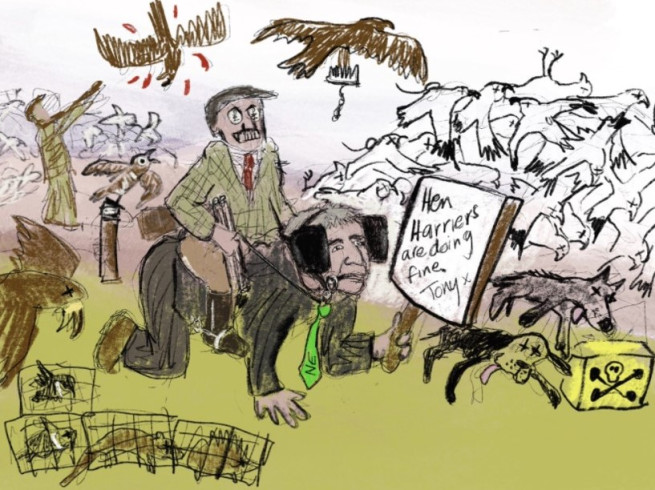
2018 was also the year that Natural England issued a licence to begin a hen harrier brood meddling trial on grouse moors in northern England. For new blog readers, hen harrier brood meddling is a conservation sham sanctioned by DEFRA as part of its ludicrous ‘Hen Harrier Action Plan‘ and carried out by Natural England (NE), in cahoots with the very industry responsible for the species’ catastrophic decline in England. For more background see here.

Brood meddling has been described as a sort of ‘gentleman’s agreement’ by commentator Stephen Welch:

I don’t get it, I thought the idea of that scheme was some kind of trade off – a gentleman’s agreement that the birds would be left in peace if they were moved from grouse moors at a certain density. It seems that one party is not keeping their side of the bargain“.

With at least 73 hen harriers gone since 2018, I think it’s fair to say that the grouse shooting industry is simply taking the piss. Meanwhile, Natural England pretends that ‘partnership working’ is the way to go and DEFRA Ministers remain silent.

‘Partnership working’ according to Natural England appears to include authorising the removal of hen harrier chicks from a grouse moor already under investigation by the police for suspected raptor persecution (here) and accepting a £75k bung from representatives of the grouse shooting industry that prevents Natural England from criticising them or the sham brood meddling trial (see here). This is in addition to a £10k bung that Natural England accepted, under the same terms, in 2021 (here).

[Cartoon by Gerard Hobley]

So here’s the latest gruesome list. Note that the majority of these birds (but not all) were fitted with satellite tags. How many more [untagged] harriers have been killed?

February 2018: Hen harrier Saorsa ‘disappeared’ in the Angus Glens in Scotland (here). The Scottish Gamekeepers Association later published wholly inaccurate information claiming the bird had been re-sighted. The RSPB dismissed this as “completely false” (here).

5 February 2018: Hen harrier Marc ‘disappeared’ on a grouse moor in Durham (here).

9 February 2018: Hen harrier Aalin ‘disappeared’ on a grouse moor in Wales (here).

March 2018: Hen harrier Blue ‘disappeared’ in the Lake District National Park (here).

March 2018: Hen harrier Finn ‘disappeared’ near Moffat in Scotland (here).

18 April 2018: Hen harrier Lia ‘disappeared’ in Wales and her corpse was retrieved in a field in May 2018. Cause of death was unconfirmed but police treating death as suspicious (here).

8 August 2018: Hen harrier Hilma ‘disappeared’ on a grouse moor in Northumberland (here).

16 August 2018: Hen harrier Athena ‘disappeared’ on a grouse moor in Scotland (here).

26 August 2018: Hen Harrier Octavia ‘disappeared’ on a grouse moor in the Peak District National Park (here).

29 August 2018: Hen harrier Margot ‘disappeared’ on a grouse moor in Scotland (here).

29 August 2018: Hen Harrier Heulwen ‘disappeared’ on a grouse moor in Wales (here).

3 September 2018: Hen harrier Stelmaria ‘disappeared’ on a grouse moor in Scotland (here).

24 September 2018: Hen harrier Heather ‘disappeared’ on a grouse moor in Scotland (here).

2 October 2018: Hen harrier Mabel ‘disappeared’ on a grouse moor on the edge of the Yorkshire Dales National Park (here).

3 October 2018: Hen Harrier Thor ‘disappeared’ next to a grouse moor in Bowland, Lanacashire (here).

23 October 2018: Hen harrier Tom ‘disappeared’ in South Wales (here).

26 October 2018: Hen harrier Arthur ‘disappeared’ on a grouse moor in the North York Moors National Park (here).

1 November 2018: Hen harrier Barney ‘disappeared’ on Bodmin Moor (here).

10 November 2018: Hen harrier Rannoch ‘disappeared’ on a grouse moor in Scotland (here). Her corpse was found nearby in May 2019 – she’d been killed in an illegally-set spring trap (here).

14 November 2018: Hen harrier River ‘disappeared’ on a grouse moor in the Nidderdale AONB (here). Her corpse was found nearby in April 2019 – she’d been illegally shot (here).

16 January 2019: Hen harrier Vulcan ‘disappeared’ in Wiltshire close to Natural England’s proposed reintroduction site (here).

7 February 2019: Hen harrier Skylar ‘disappeared’ next to a grouse moor in South Lanarkshire (here).

22 April 2019: Hen harrier Marci ‘disappeared’ on a grouse moor in the Cairngorms National Park (here).

26 April 2019: Hen harrier Rain ‘disappeared’ on a grouse moor in Nairnshire (here).

11 May 2019: An untagged male hen harrier was caught in an illegally-set trap next to his nest on a grouse moor in South Lanarkshire. He didn’t survive (here).

7 June 2019: An untagged hen harrier was found dead on a grouse moor in Scotland. A post mortem stated the bird had died as a result of ‘penetrating trauma’ injuries and that this bird had previously been shot (here).

5 September 2019: Wildland Hen Harrier 1 ‘disappeared’ on a grouse moor nr Dalnaspidal on the edge of the Cairngorms National Park (here).

11 September 2019: Hen harrier Romario ‘disappeared’ on a grouse moor in the Cairngorms National Park (here).

14 September 2019: Hen harrier (Brood meddled in 2019, #183704) ‘disappeared’ in the North Pennines (here).

23 September 2019: Hen harrier (Brood meddled in 2019, #55149) ‘disappeared’ in North Pennines (here).

24 September 2019: Wildland Hen Harrier 2 ‘disappeared’ on a grouse moor at Invercauld in the Cairngorms National Park (here).

24 September 2019: Hen harrier Bronwyn ‘disappeared’ near a grouse moor in North Wales (here).

10 October 2019: Hen harrier Ada ‘disappeared’ on a grouse moor in the North Pennines AONB (here).

12 October 2019: Hen harrier Thistle ‘disappeared’ on a grouse moor in Sutherland (here).

18 October 2019: Member of the public reports the witnessed shooting of an untagged male hen harrier on White Syke Hill in North Yorkshire (here).

November 2019: Hen harrier Mary found illegally poisoned on a pheasant shoot in Ireland (here).

14 December 2019: Hen harrier Oscar ‘disappeared’ in Eskdalemuir, south Scotland (here).

January 2020: Members of the public report the witnessed shooting of a male hen harrier on Threshfield Moor in the Yorkshire Dales National Park (here).

23 March 2020: Hen harrier Rosie ‘disappeared’ at an undisclosed roost site in Northumberland (here).

1 April 2020: Hen harrier (Brood meddled in 2019, #183703) ‘disappeared’ in unnamed location, tag intermittent (here).

5 April 2020: Hen harrier Hoolie ‘disappeared’ on a grouse moor in the Cairngorms National Park (here)

8 April 2020: Hen harrier Marlin ‘disappeared’ on a grouse moor in the Cairngorms National Park (here).

19 May 2020: Hen harrier Fingal ‘disappeared’ on a grouse moor in the Lowther Hills, Scotland (here).

21 May 2020: Hen harrier (Brood meddled in 2019, #183701) ‘disappeared’ on a grouse moor in Cumbria shortly after returning from wintering in France (here).

27 May 2020: Hen harrier Silver ‘disappeared’ on a grouse moor on Leadhills Estate, Scotland (here).

2020: day/month unknown: Unnamed male hen harrier breeding on RSPB Geltsdale Reserve, Cumbria ‘disappeared’ while away hunting (here).

9 July 2020: Unnamed female hen harrier (#201118) ‘disappeared’ from an undisclosed site in Northumberland (here).

25 July 2020: Hen harrier Harriet ‘disappeared’ on a grouse moor in the Yorkshire Dales National Park (here).

14 August 2020: Hen harrier Solo ‘disappeared’ in confidential nest area in Lancashire (here).

7 September 2020: Hen harrier Dryad ‘disappeared’ on a grouse moor in the Yorkshire Dales National Park (here).

16 September 2020: Hen harrier Fortune ‘disappeared’ from an undisclosed roost site in Northumberland (here).

19 September 2020: Hen harrier Harold ‘disappeared’ on a grouse moor in the Yorkshire Dales National Park (here).

20 September 2020: Hen harrier (Brood meddled in 2020, #55152) ‘disappeared’ next to a grouse moor in North Yorkshire (here).

24 February 2021: Hen harrier Tarras ‘disappeared’ next to a grouse moor in Northumberland (here)

12th April 2021: Hen harrier Yarrow ‘disappeared’ near Stockton, County Durham (here).

18 May 2021: Adult male hen harrier ‘disappeared’ from its breeding attempt on RSPB Geltsdale Reserve, Cumbria whilst away hunting (here).

18 May 2021: Another adult male hen harrier ‘disappeared’ from its breeding attempt on RSPB Geltsdale Reserve, Cumbria whilst away hunting (here).

24 July 2021: Hen harrier Asta ‘disappeared’ at a ‘confidential site’ in the North Pennines (here). We learned 18 months later that her wings had been ripped off so her tag could be fitted to a crow in an attempt to cover up her death (here).

14th August 2021: Hen harrier Josephine ‘disappeared’ at a ‘confidential site’ in Northumberland (here).

17 September 2021: Hen harrier Reiver ‘disappeared’ in a grouse moor dominated region of Northumberland (here)

24 September 2021: Hen harrier (Brood meddled in 2021, R2-F-1-21) ‘disappeared’ in Northumberland (here).

15 November 2021: Hen harrier (brood meddled in 2020, #R2-F1-20) ‘disappeared’ at the edge of a grouse moor on Arkengarthdale Estate in the Yorkshire Dales National Park (here).

19 November 2021: Hen harrier Val ‘disappeared’ in the Lake District National Park in Cumbria (here).

19 November 2021: Hen harrier Percy ‘disappeared’ in Lothian, Scotland (here).

12 December 2021: Hen harrier Jasmine ‘disappeared’ on a grouse moor (High Rigg Moor on the Middlesmoor Estate) in the Nidderdale AONB in North Yorkshire (here).

9 January 2022: Hen harrier Ethel ‘disappeared’ in Northumberland (here).

26 January 2022: Hen harrier Amelia ‘disappeared’ in Bowland (here).

10 February 2022: An unnamed satellite-tagged hen harrier ‘disappeared’ in a grouse moor dominated area of the Peak District National Park (here).

12 April 2022: Hen harrier ‘Free’ (Tag ID 201121) ‘disappeared’ at a ‘confidential site’ in Cumbria (here).

May 2022: A male breeding hen harrier ‘disappeared’ from a National Trust-owned grouse moor in the Peak District National Park (here).

May 2022: Another breeding male hen harrier ‘disappeared’ from a National Trust-owned grouse moor in the Peak District National Park (here).

14 May 2022: Hen harrier ‘Harvey’ (Tag ID 213844) ‘disappeared’ from a ‘confidential site’ in the North Pennines (here).

10 October 2022: Hen harrier ‘Sia’ ‘disappeared’ near Hamsterley Forest in the North Pennines (here).

To be continued……..

Not one of these 73 incidents has resulted in an arrest, let alone a prosecution. I had thought that when we reached 30 dead/missing hen harriers then the authorities might pretend to be interested and at least say a few words about this national scandal. We’ve now reached SEVENTY THREE hen harriers, and still Govt ministers remain silent. They appear not to give a monkey’s. And yes, there are other things going on in the world, as always. That is not reason enough to ignore this blatant, brazen and systematic destruction of a supposedly protected species, being undertaken to satisfy the greed and bloodlust of a minority of society.

Please consider sending a copy of this list of dead/missing hen harriers to your elected representative. Ask them for their opinion, tell them your opinion, and demand action (politely please). We know where these crimes are happening and we know why they’re happening. The Government’s own data, published three years ago, have provided very clear evidence (see here). MPs need to know how many of us care about this issue and how we will not be fobbed off by disingenuous platitudes from DEFRA Ministers (e.g. see hereherehere and here for repeated recent examples of this).

Not sure who is your MP? Click here to find out.

Don’t be put off by thinking, ‘Well my MP is a grouse shooter, he/she won’t bother responding so why should I bother?’. Do not give these politicians an easy option out. As your elected representative they have a duty to listen to, and respond to, constituents’ concerns, whether they agree with them or not.

If you use social media, please share this post.

If you fancy scribbling a few sentences to your local newspaper or even a national one, please do.

Please talk to friends, family and colleagues about these 73 birds. They will be horrified about what’s being allowed to go on.

We MUST increase public awareness. It’s up to all of us.

Grouse moor management in Scotland: Government launches public consultation

Today, the Scottish Government has launched a public consultation as the start of its commitment to introduce a licensing scheme for grouse moor management, following the publication of the Werritty Review in 2019, which was commissioned in 2017 after unequivocal evidence was published of the on-going illegal killing of golden eagles on some Scottish grouse moors.

That illegal killing continues, as evidenced by this young golden eagle recently found poisoned on a grouse moor in the Cairngorms National Park laying next to a dead mountain hare that had been used as the poisoned bait (photo by RSPB Scotland).

As is so often the case, nobody has been charged or prosecuted for this hideous wildlife crime, which is a fundamental reason why the Govt is introducing a licencing scheme, presumably as a means of sanctioning an estate (by withdrawing its licence) when evidence of wildlife crime is discovered. Without knowing the exact details of how the licensing scheme will operate, it’s impossible at this stage to predict its effectiveness. There are many sceptics, and I’m one of them, but I’m also certain that the status quo is untenable and so I view licensing as a step in the right direction, but definitely not the end of the road.

The Government’s licensing consultation preamble reads as follows:

‘A Stronger & More Resilient Scotland: The Programme for Government 2022-23 which was published on the 8 September 2022 committed to introducing the following Bill:

Wildlife Management (Grouse)

The Bill will implement the recommendations of the Werritty Review and introduce licensing for grouse moor management to ensure that the management of driven grouse moors and related activities is undertaken in an environmentally sustainable manner. The Bill will also include provisions to ban glue traps.

In November 2020, the Scottish Government published its response to the recommendations made by the Grouse Moor Management Group (“Werritty review”).  That report was commissioned by the Scottish Government in response to a report from NatureScot (formerly Scottish Natural Heritage), published in May 2017, which found that around a third of satellite-tagged golden eagles in Scotland disappeared in suspicious circumstances, on or around grouse moors.

The Werritty review made over 40 recommendations regarding grouse moor management. The recommendations, which were accepted by the Scottish Government, seek to address raptor persecution and ensure that the management of grouse moors is undertaken in an environmentally sustainable manner.

As well as proposals relating to grouse moor management, this consultation also considers glue traps. A report from the Scottish Animal Welfare Commission, published on 23 March 2021 stated that

‘……the animal welfare issues connected with the use of glue traps would justify an immediate outright ban on their sale and use. This is our preferred recommendation‘.

This consultation is therefore seeking your views on the Scottish Government’s proposals on:

*Grouse moor licensing

*Muirburn

*Trapping (wildlife traps, glue traps, snares)

You can complete all the sections in the consultation or only those sections which are of interest/relevance to you’.

ENDS

The Government’s proposals for its grouse moor licensing scheme are laid out here:

I haven’t yet looked at the consultation paper so I can’t offer any comments or suggested responses yet but I will do very soon. The consultation will close on 14th December 2022.

The link to the consultation questionnaire can be found HERE.

UPDATE 26th October 2022: REVIVE coalition cautiously welcomes Scot Gov’s consultation on grouse moor licensing (here)

UPDATE 27th October 2022: Grouse shooting lobby quietly seething over proposed licensing scheme (here)

UPDATE 10th December 2022: Last chance to have your say on Scottish Government’s consultation on grouse moor reform (here)

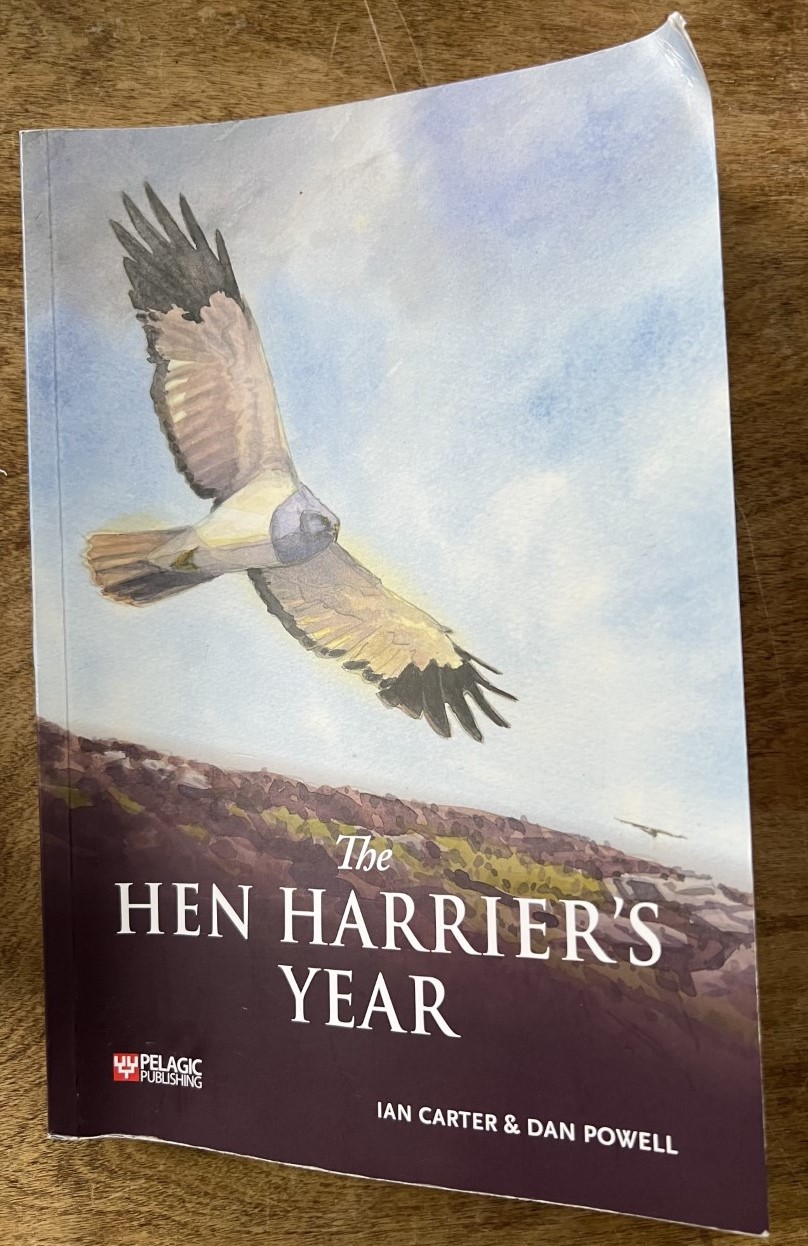
Book review: The Hen Harrier’s Year by Ian Carter & Dan Powell

For anyone who wants to learn more about the life history and ecology of the hen harrier, but has been put off by dry, academic scripts, this is the book for you.

Ian Carter has done a wonderful job of assimilating the scientific knowledge about the hen harrier and presenting it in such an engaging format that you’re left deciding whether to turn the page or grab your coat to go in search of this precious species.

The book’s title is an accurate reflection of the content, explaining what the hen harrier is likely to be doing during each month of the year. The text is beautifully and copiously illustrated by Dan Powell’s watercolours, with additional field notes from Dan.

No book about the hen harrier would be complete without a commentary on the illegal persecution it suffers at the hands of the grouse-shooting industry and Ian provides a good overview of this with a whole chapter entitled ‘Conflict on the Grouse Moor’, cleverly sandwiched between the months of June and July when young hen harriers should be fledging and dispersing had their parents not been targeted by the gamekeepers.

As an aside, prior to this book the main text available for those seeking to learn about the hen harrier was Donald Watson’s classic Poyser monograph, published in 1977, where he, too, wrote about the illegal persecution wrought on this species. It’s very telling that 45 years later, the carnage continues and at such a scale that Ian’s figures on it are already out of date:

Since 2018, more than 50 birds have been killed or have disappeared in suspicious circumstances (based on reliable data from their tags)” (p.99).

Presumably Ian wrote this text in 2021. One year later and the current number of hen harriers known to have been killed or to have disappeared in suspicious circumstances is 72 (see here).

I’ve followed Ian on Twitter for several years and have admired his clarity of thought and reasoning. This book mirrors that style and he writes with the understated, gentle authority of someone who’s not only read widely, but has also spent time in the field. His description of the ‘appealing ritual’ of attending a communal winter roost in search of harriers in December (p.145-147) will resonate with those who have congregated on the bone-chilling edges of saltwater mashes and fens in the hope of catching a glimpse of the elusive grey ghost.

The Hen Harrier’s Year by Ian Carter and Dan Powell is now available from Pelagic Publishing (here) for £26.

Scottish Land & Estates still refusing to acknowledge extent of raptor persecution on grouse moors

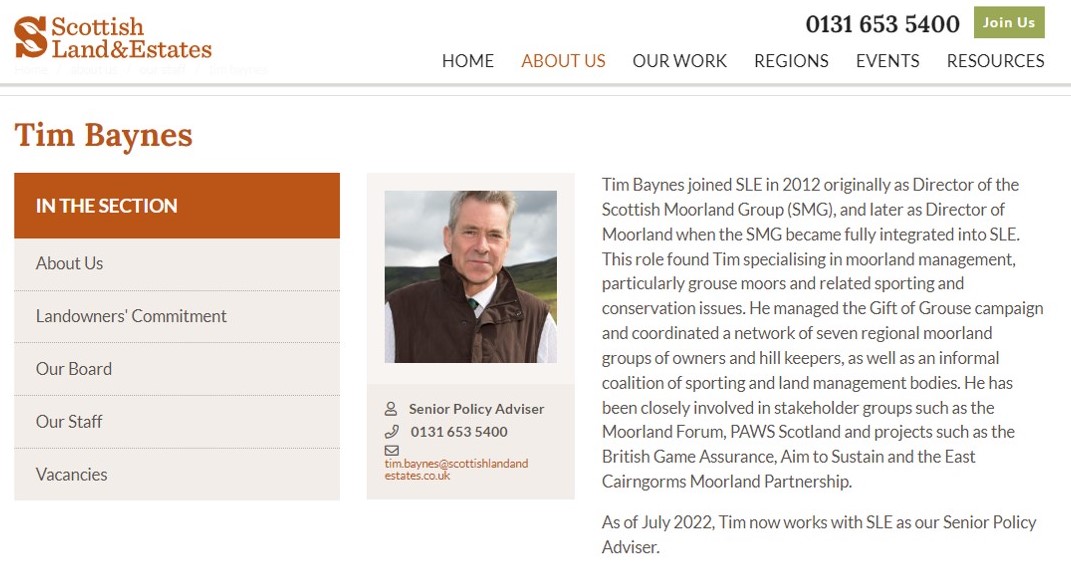
In the last blog post where I wrote about the nine shot birds of prey found wrapped in bags on Millden Estate and just over the estate boundary, I included a quote from Tim Baynes of Scottish Land & Estates, who had written the following in a comment piece for The Field, published in August 2022:

Raptor persecution has been the stick with which grouse moors were beaten for two decades, but the past five years have seen a sea change. In Scotland, recorded crimes have effectively ceased on grouse moors, and raptors of all species have been increasing“.

I said I’d publish his outrageous comment piece in full, so here it is:

I really shouldn’t be surprised that The Field published this nonsense – that particular shooting industry rag has a track record of publishing patently inaccurate comment pieces (e.g. see here).

And I’m definitely not surprised that the author of this latest gibberish is Tim Baynes – his lengthy track record speaks for itself (for a small selection of the masses of examples see here, here, here, here, here, here, here, here).

Needless to say, his latest claim that raptor persecution on Scottish grouse moors has “effectively ceased” is demonstrably untrue. You’ve only got to read my last blog post to understand this. If that doesn’t convince you, have a look at the General Licence restrictions currently imposed on grouse moor estates after Police Scotland found ‘clear evidence of raptor persecution’ – Leadhills Estate (here), Lochan Estate (here), Leadhills Estate [again] (here), Invercauld Estate (here), and Moy Estate (here).

And if you still need convincing, have a read of the Scottish Government’s Environment Minister’s statement in 2020 when she announced that there could be no further delay to the introduction of a grouse moor licensing scheme because:

“…despite our many attempts to address this issue, every year birds of prey continue to be killed or disappear in suspicious circumstances on or around grouse moors“.

Perhaps Tim Baynes’ perpetual denial of the bleedin’ obvious explains why he is no longer employed as ‘Director of Moorland’ at Scottish Land & Estates:

72 hen harriers confirmed ‘missing’ or illegally killed since 2018, most of them on or close to UK grouse moors

For anyone who still wants to pretend that the grouse shooting industry isn’t responsible for the systematic extermination of hen harriers on grouse moors across the UK, here’s the latest catalogue of crime that suggests otherwise.

[This male hen harrier died in 2019 after his leg was almost severed in an illegally set trap that had been placed next to his nest on a Scottish grouse moor (see here). Photo by Ruth Tingay]

This is the blog I now publish after every reported killing or suspicious disappearance.

They disappear in the same way political dissidents in authoritarian dictatorships have disappeared” (Stephen Barlow, 22 January 2021).

Today the list has been updated to include the two most recently reported victims, two young satellite-tagged hen harriers that ‘disappeared’ earlier this year, one in Cumbria on 12th April 2022 and one in the North Pennines in May 2022 and are both the subject of a police investigation (see here).

I’ve been compiling this list only since 2018 because that is the year that the grouse shooting industry ‘leaders’ would have us believe that the criminal persecution of hen harriers had stopped and that these birds were being welcomed back on to the UK’s grouse moors (see here).

This assertion was made shortly before the publication of a devastating new scientific paper that demonstrated that 72% of satellite-tagged hen harriers were confirmed or considered likely to have been illegally killed, and this was ten times more likely to occur over areas of land managed for grouse shooting relative to other land uses (see here).

2018 was also the year that Natural England issued a licence to begin a hen harrier brood meddling trial on grouse moors in northern England. For new blog readers, hen harrier brood meddling is a conservation sham sanctioned by DEFRA as part of its ludicrous ‘Hen Harrier Action Plan‘ and carried out by Natural England (NE), in cahoots with the very industry responsible for the species’ catastrophic decline in England. For more background see here.

Brood meddling has been described as a sort of ‘gentleman’s agreement’ by commentator Stephen Welch:

I don’t get it, I thought the idea of that scheme was some kind of trade off – a gentleman’s agreement that the birds would be left in peace if they were moved from grouse moors at a certain density. It seems that one party is not keeping their side of the bargain“.

With at least 72 hen harriers gone since 2018, I think it’s fair to say that the grouse shooting industry is simply taking the piss. Meanwhile, Natural England pretends that ‘partnership working’ is the way to go and DEFRA Ministers remain silent.

‘Partnership working’ according to Natural England appears to include authorising the removal of hen harrier chicks from a grouse moor already under investigation by the police for suspected raptor persecution (here) and accepting a £75k bung from representatives of the grouse shooting industry that prevents Natural England from criticising them or the sham brood meddling trial (see here). This is in addition to a £10k bung that Natural England accepted, under the same terms, in 2021 (here).

[Cartoon by Gill Lewis]

So here’s the latest gruesome list. Note that the majority of these birds (but not all) were fitted with satellite tags. How many more [untagged] harriers have been killed?

February 2018: Hen harrier Saorsa ‘disappeared’ in the Angus Glens in Scotland (here). The Scottish Gamekeepers Association later published wholly inaccurate information claiming the bird had been re-sighted. The RSPB dismissed this as “completely false” (here).

5 February 2018: Hen harrier Marc ‘disappeared’ on a grouse moor in Durham (here)

9 February 2018: Hen harrier Aalin ‘disappeared’ on a grouse moor in Wales (here)

March 2018: Hen harrier Blue ‘disappeared’ in the Lake District National Park (here)

March 2018: Hen harrier Finn ‘disappeared’ near Moffat in Scotland (here)

18 April 2018: Hen harrier Lia ‘disappeared’ in Wales and her corpse was retrieved in a field in May 2018. Cause of death was unconfirmed but police treating death as suspicious (here)

8 August 2018: Hen harrier Hilma ‘disappeared’ on a grouse moor in Northumberland (here).

16 August 2018: Hen harrier Athena ‘disappeared’ on a grouse moor in Scotland (here)

26 August 2018: Hen Harrier Octavia ‘disappeared’ on a grouse moor in the Peak District National Park (here)

29 August 2018: Hen harrier Margot ‘disappeared’ on a grouse moor in Scotland (here)

29 August 2018: Hen Harrier Heulwen ‘disappeared’ on a grouse moor in Wales (here)

3 September 2018: Hen harrier Stelmaria ‘disappeared’ on a grouse moor in Scotland (here)

24 September 2018: Hen harrier Heather ‘disappeared’ on a grouse moor in Scotland (here)

2 October 2018: Hen harrier Mabel ‘disappeared’ on a grouse moor on the edge of the Yorkshire Dales National Park (here)

3 October 2018: Hen Harrier Thor ‘disappeared’ next to a grouse moor in Bowland, Lanacashire (here)

23 October 2018: Hen harrier Tom ‘disappeared’ in South Wales (here)

26 October 2018: Hen harrier Arthur ‘disappeared’ on a grouse moor in the North York Moors National Park (here)

1 November 2018: Hen harrier Barney ‘disappeared’ on Bodmin Moor (here)

10 November 2018: Hen harrier Rannoch ‘disappeared’ on a grouse moor in Scotland (here). Her corpse was found nearby in May 2019 – she’d been killed in an illegally-set spring trap (here).

14 November 2018: Hen harrier River ‘disappeared’ on a grouse moor in the Nidderdale AONB (here). Her corpse was found nearby in April 2019 – she’d been illegally shot (here).

16 January 2019: Hen harrier Vulcan ‘disappeared’ in Wiltshire close to Natural England’s proposed reintroduction site (here)

7 February 2019: Hen harrier Skylar ‘disappeared’ next to a grouse moor in South Lanarkshire (here)

22 April 2019: Hen harrier Marci ‘disappeared’ on a grouse moor in the Cairngorms National Park (here)

26 April 2019: Hen harrier Rain ‘disappeared’ on a grouse moor in Nairnshire (here)

11 May 2019: An untagged male hen harrier was caught in an illegally-set trap next to his nest on a grouse moor in South Lanarkshire. He didn’t survive (here)

7 June 2019: An untagged hen harrier was found dead on a grouse moor in Scotland. A post mortem stated the bird had died as a result of ‘penetrating trauma’ injuries and that this bird had previously been shot (here)

5 September 2019: Wildland Hen Harrier 1 ‘disappeared’ on a grouse moor nr Dalnaspidal on the edge of the Cairngorms National Park (here)

11 September 2019: Hen harrier Romario ‘disappeared’ on a grouse moor in the Cairngorms National Park (here)

14 September 2019: Hen harrier (Brood meddled in 2019, #183704) ‘disappeared’ in the North Pennines (here)

23 September 2019: Hen harrier (Brood meddled in 2019, #55149) ‘disappeared’ in North Pennines (here)

24 September 2019: Wildland Hen Harrier 2 ‘disappeared’ on a grouse moor at Invercauld in the Cairngorms National Park (here)

24 September 2019: Hen harrier Bronwyn ‘disappeared’ near a grouse moor in North Wales (here)

10 October 2019: Hen harrier Ada ‘disappeared’ on a grouse moor in the North Pennines AONB (here)

12 October 2019: Hen harrier Thistle ‘disappeared’ on a grouse moor in Sutherland (here)

18 October 2019: Member of the public reports the witnessed shooting of an untagged male hen harrier on White Syke Hill in North Yorkshire (here)

November 2019: Hen harrier Mary found illegally poisoned on a pheasant shoot in Ireland (here)

14 December 2019: Hen harrier Oscar ‘disappeared’ in Eskdalemuir, south Scotland (here)

January 2020: Members of the public report the witnessed shooting of a male hen harrier on Threshfield Moor in the Yorkshire Dales National Park (here)

23 March 2020: Hen harrier Rosie ‘disappeared’ at an undisclosed roost site in Northumberland (here)

1 April 2020: Hen harrier (Brood meddled in 2019, #183703) ‘disappeared’ in unnamed location, tag intermittent (here)

5 April 2020: Hen harrier Hoolie ‘disappeared’ on a grouse moor in the Cairngorms National Park (here)

8 April 2020: Hen harrier Marlin ‘disappeared’ on a grouse moor in the Cairngorms National Park (here)

19 May 2020: Hen harrier Fingal ‘disappeared’ on a grouse moor in the Lowther Hills, Scotland (here)

21 May 2020: Hen harrier (Brood meddled in 2019, #183701) ‘disappeared’ on a grouse moor in Cumbria shortly after returning from wintering in France (here)

27 May 2020: Hen harrier Silver ‘disappeared’ on a grouse moor on Leadhills Estate, Scotland (here)

2020: day/month unknown: Unnamed male hen harrier breeding on RSPB Geltsdale Reserve, Cumbria ‘disappeared’ while away hunting (here)

9 July 2020: Unnamed female hen harrier (#201118) ‘disappeared’ from an undisclosed site in Northumberland (here).

25 July 2020: Hen harrier Harriet ‘disappeared’ on a grouse moor in the Yorkshire Dales National Park (here)

14 August 2020: Hen harrier Solo ‘disappeared’ in confidential nest area in Lancashire (here)

7 September 2020: Hen harrier Dryad ‘disappeared’ on a grouse moor in the Yorkshire Dales National Park (here)

16 September 2020: Hen harrier Fortune ‘disappeared’ from an undisclosed roost site in Northumberland (here)

19 September 2020: Hen harrier Harold ‘disappeared’ on a grouse moor in the Yorkshire Dales National Park (here)

20 September 2020: Hen harrier (Brood meddled in 2020, #55152) ‘disappeared’ next to a grouse moor in North Yorkshire (here)

24 February 2021: Hen harrier Tarras ‘disappeared’ next to a grouse moor in Northumberland (here)

12th April 2021: Hen harrier Yarrow ‘disappeared’ near Stockton, County Durham (here)

18 May 2021: Adult male hen harrier ‘disappeared’ from its breeding attempt on RSPB Geltsdale Reserve, Cumbria whilst away hunting (here)

18 May 2021: Another adult male hen harrier ‘disappeared’ from its breeding attempt on RSPB Geltsdale Reserve, Cumbria whilst away hunting (here)

24 July 2021: Hen harrier Asta ‘disappeared’ at a ‘confidential site’ in the North Pennines (here). We learned 18 months later that her wings had been ripped off so her tag could be fitted to a crow in an attempt to cover up her death (here).

14th August 2021: Hen harrier Josephine ‘disappeared’ at a ‘confidential site’ in Northumberland (here)

17 September 2021: Hen harrier Reiver ‘disappeared’ in a grouse moor dominated region of Northumberland (here)

24 September 2021: Hen harrier (Brood meddled in 2021, R2-F-1-21) ‘disappeared’ in Northumberland (here)

15 November 2021: Hen harrier (brood meddled in 2020, #R2-F1-20) ‘disappeared’ at the edge of a grouse moor on Arkengarthdale Estate in the Yorkshire Dales National Park (here)

19 November 2021: Hen harrier Val ‘disappeared’ in the Lake District National Park in Cumbria (here)

19 November 2021: Hen harrier Percy ‘disappeared’ in Lothian, Scotland (here)

12 December 2021: Hen harrier Jasmine ‘disappeared’ on a grouse moor (High Rigg Moor on the Middlesmoor Estate) in the Nidderdale AONB in North Yorkshire (here)

9 January 2022: Hen harrier Ethel ‘disappeared’ in Northumberland (here)

26 January 2022: Hen harrier Amelia ‘disappeared’ in Bowland (here)

10 February 2022: An unnamed satellite-tagged hen harrier ‘disappeared’ in a grouse moor dominated area of the Peak District National Park (here)

12 April 2022: Hen harrier ‘Free’ (Tag ID 201121) ‘disappeared’ at a ‘confidential site’ in Cumbria (here).

May 2022: A male breeding hen harrier ‘disappeared’ from a National Trust-owned grouse moor in the Peak District National Park (here).

May 2022: Another breeding male hen harrier ‘disappeared’ from a National Trust-owned grouse moor in the Peak District National Park (here)

14 May 2022: Hen harrier ‘Harvey’ (Tag ID 213844) ‘disappeared’ from a ‘confidential site’ in the North Pennines (here).

To be continued……..

Not one of these 72 incidents has resulted in an arrest, let alone a prosecution. I had thought that when we reached 30 dead/missing hen harriers then the authorities might pretend to be interested and at least say a few words about this national scandal. We’ve now reached SEVENTY TWO hen harriers, and still Govt ministers remain silent. They appear not to give a monkey’s. And yes, there are other things going on in the world, as always. That is not reason enough to ignore this blatant, brazen and systematic destruction of a supposedly protected species, being undertaken to satisfy the greed and bloodlust of a minority of society.

Please consider sending a copy of this list of dead/missing hen harriers to your elected representative. Ask them for their opinion, tell them your opinion, and demand action (politely please). We know where these crimes are happening and we know why they’re happening. The Government’s own data, published three years ago, have provided very clear evidence (see here). MPs need to know how many of us care about this issue and how we will not be fobbed off by disingenuous platitudes from DEFRA Ministers (e.g. see hereherehere and here for repeated recent examples of this).

Not sure who is your MP? Click here to find out.

Don’t be put off by thinking, ‘Well my MP is a grouse shooter, he/she won’t bother responding so why should I bother?’. Do not give these politicians an easy option out. As your elected representative they have a duty to listen to, and respond to, constituents’ concerns, whether they agree with them or not.

If you use social media, please share this post.

If you fancy scribbling a few sentences to your local newspaper or even a national one, please do.

Please talk to friends, family and colleagues about these 72 birds. They will be horrified about what’s being allowed to go on.

We MUST increase public awareness. It’s up to all of us.