Press release from Northants Police (14 November 2025)
BIRD OF PREY KILLED IN TOWCESTER
Police officers from the Rural Crime Team are appealing for witnesses after a bird of prey was found dead in Towcester.
The Force were contacted by the RSPB following a report from a member of the public that a Sparrowhawk had been found dead in Redcar Road.
Following enquiries, it is believed the protected bird had been shot by a type of rifle sometime between 8am on Thursday, November 6 and 11.30am on Friday, November 7.
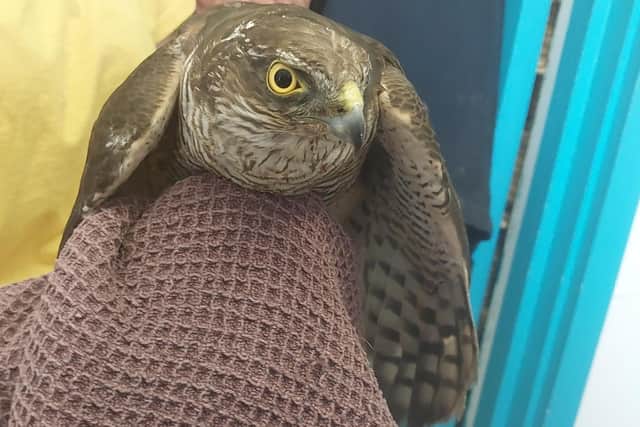
Sparrowhawk (photo by Ronnie Gilbert)
PC Emerson Knights of the Rural Crime Team said: “Sparrowhawks are protected under the Wildlife and Countryside Act 1981, and it is an offence to intentionally or recklessly kill or injure them.
“We believe this Sparrowhawk was fatally injured after being shot with either a high-powered air rifle or small calibre rifle and would like to hear from anyone who may be able to identify the person responsible for the bird’s death.”
Witnesses or anyone with information are asked to call Northamptonshire Police on 101 or alternatively contact Crimestoppers on 0800 555 111.
Police Scotland Wildlife Crime Liaison Officer Constable Ann Ashman said:
“From enquiries carried out so far, we know this sparrowhawk has been poisoned with insecticide carbosulfan, resulting in a harrowing death.
“Sparrowhawks are protected under the Wildlife and Countryside Act 1981, and it is an offence to intentionally or recklessly kill or injure them.
“The use of carbosulfan is illegal, with the substance having been banned in the UK since 2008. This substance can cause death in humans, so its illegal use is extremely reckless.
“We are carrying out an investigation in relation to this incident and will be working with a range of partner organisations. The public has an important role to help up combat wildlife crime. If you see anything suspicious, please report it to us via 101, or anonymously to Crimestoppers on 0800 555 111.”
Anyone with information is asked to contact Police Scotland on 101, quoting incident number 1179 of 2 October, 2025.
Press release from Police Scotland and RSPB (23 April 2025)
POLICE & RSPB SCOTLAND APPEAL FOR INFORMATION AFTER PROTECTED SPARROWHAWK FATALLY SHOT
The bird was found dead in Inverness and was later confirmed to have been shot with a shotgun.
Anyone with information which could help identify a suspect is encouraged to contact Police Scotland and the RSPB.
POLICE Scotland and RSPB Scotland are appealing for information after a male Sparrowhawk was found shot in the Cradlehall area of Inverness.
On 6 March 2025 a member of the public reported to the RSPB Scotland that they had noticed a bird of prey dead on the ground. The next day, in agreement with Police Scotland, an RSPB Scotland Investigations Officer then collected the bird’s body and sent it for testing to establish the cause of death.
A post-mortem by a vet revealed a pellet lodged within the bird’s chest, and concluded that the bird had been shot with a shotgun. It added that the bird could have died some distance from where it was shot, before later dying from an infection and starvation as a result of the shooting.
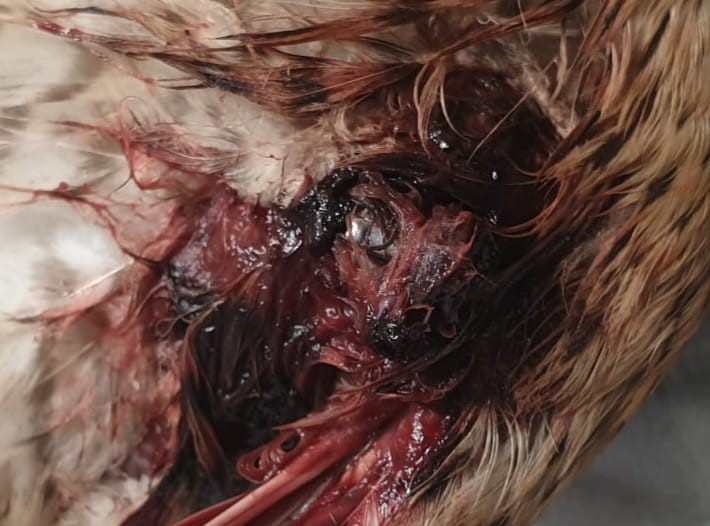
The shot Sparrowhawk. Photo RSPB Scotland
All wild birds are legally protected under the Wildlife and Countryside Act 1981. Anyone found to have killed or injured a bird of prey faces an unlimited fine or even jail.
Police Scotland are appealing to anyone with information in connection with this incident to come forward.
Ian Thomson, RSPB Scotland’s Head of Investigations, said:
“Sparrowhawks are one of the birds of prey you or I are most likely to encounter, as they live alongside us in parks and gardens. They hunt small birds by stealth and can be identified by their brilliantly piercing yellow eyes. The presence of Sparrowhawks and other birds of prey is a good indicator of a healthy and balanced ecosystem. This bird was shot with a shotgun, resulting in a drawn-out and painful death. Few people have access to such weapons, with even fewer motivated to shoot at protected birds of prey. We ask that if anyone has information about this incident, to please get in touch with Police Scotland or ourselves.”
Thomas Plant, Bea Ayling and Shona Rüesch of the Inverness Urban Sparrowhawk Project have been studying the Sparrowhawk population in Inverness since 2020. They commented: “We are absolutely devastated to hear that someone has shot one of these beautiful and majestic birds: one we may have been monitoring this year here in Inverness. As part of our voluntary monitoring we have been checking nest sites and colour-ringing Sparrowhawks (with support and funding from the Highland Raptor Study Group (HRSG)). We hope that this will help to improve understanding of the local Sparrowhawk population, their movements, lifespans and the threats that they face.”
If you have any information relating to this incident, call Police Scotland on 101 quoting reference number CR/0132125/25.
The last shot sparrowhawk in this area that made the headlines was the one shot and killed by a gamekeeper on Moy Estate, a grouse moor to the south of Inverness. The RSPB filmed him using a plastic decoy owl, presumably to draw raptors in close as they come to mob it, whilst he hid behind a nearby bush with his shotgun. The gamekeeper was subsequently convicted in 2023 for killing a sparrowhawk (here).
Here is a quote I’ve just given to a journalist who asked for my opinion about the latest shooting of a sparrowhawk in the region and about whether the Government’s strategy on tackling raptor persecution is effective:
“It’s unusual to find a dead bird of prey in an urban area with shotgun injuries – typically urban raptors are killed with air rifles. Although the post mortem report on this particular bird suggests it had probably succumbed to an infection and subsequent starvation, indicating it may have been shot some distance from where it actually died.
“Shamefully, the illegal killing of raptors is still prevalent in Scotland, particularly in rural areas being used for gamebird shooting because birds of prey are still perceived as a ‘threat’ to gamebird stocks, even though raptors have been legally protected since 1954. These crimes are so frequent and widespread that the Scottish Government finally decided to introduce new legislation last year (the Wildlife Management & Muirburn (Scotland) Act 2024) in an attempt to bring an end to raptor persecution on driven grouse moors. The idea is that grouse moor owners now have to operate under a licence and if there’s evidence of ongoing raptor persecution that licence can be revoked, preventing any more shooting of Red Grouse on the moor for a specified period.
“Having the new legislation in place is certainly progress, but legislation is only effective if it is properly monitored and enforced. Unfortunately the new legislation was subsequently watered-down by nature conservation agency NatureScot in December last year, following threats of a legal challenge from the representatives of the grouse shooting industry. The legislation as it currently stands is not worth the paper it’s written on because NatureScot has introduced a massive loophole that means it is virtually impossible to connect the killing of raptors with grouse moor management and this is a situation that will be readily exploited by those who wish to continue killing birds of prey. Indeed, since the legislation was enacted numerous birds of prey have been shot and killed on grouse moors in Scotland (e.g. an Osprey, a Peregrine, a Red Kite) and there haven’t been any consequences for those responsible.
“The Scottish Government has acknowledged that there are ‘issues’ with the current legislation and work is underway by campaigners to address this unsatisfactory situation“.
Some good news for birds of prey! DEFRA has endorsed Natural England’s recommendations for a presumption AGAINST the issuing of licences for taking birds of prey from the wild for falconry and aviculture.
A licensing policy review was undertaken by Natural England following the furore in 2020 when NE issued licenses for the removal of young peregrines from the wild for a purported captive-breeding programme.
That news had generated heated arguments both for and against the licences, as reported on Mark Avery’s blog (e.g. see here, here and here). In 2022 NE said that although licences had been issued in 2020, ‘the licenses expired earlier this year with no chicks having been taken‘. It’s not clear why the licences weren’t used.
Young peregrines on a nest ledge. Photo by Ruth Tingay (taken under licence)
In 2022, licences to take birds of prey from the wild were temporarily suspended whilst NE began a fairly comprehensive licensing policy review which included a public consultation with wide stakeholder engagement from the falconry and non-falconry communities. Natural England has published links to various reports resulting from the consultation process, here.
The species most frequently mentioned by those wanting to take birds from the wild for falconry purposes were peregrine (58%), sparrowhawk (58%), merlin (22%) and goshawk (10%). One individual falconer respondent mentioned buzzard and golden eagle. However, many falconer and non-falconer respondents considered the latter two species to be unsuitable for inclusion in a future wild take licensing regime. In the case of golden eagles, it was stated that this was due to their rarity in England. Many falconers also considered merlin to be unsuitable for inclusion due to their rarity.
The consultation process included detailed evidence from the National Wildlife Crime Unit (NWCU) about the increase in the legal and illegal trade in peregrines, both for the domestic and international market, and how licensed ‘wild take’ may add to the problem.
Many of you will be familiar with Operation Tantallon, the recent successful multi-agency investigation leading to the subsequent prosecution and conviction of two peregrine launderers in south Scotland who were selling wild Scottish peregrines to wealthy falconers in the Middle East (see here).
The scale of their offending was considerable and I heard at a wildlife crime conference earlier this week that many more cases are currently under investigation as a result of Operation Tantallon.
In October 2023 Natural England’s ‘wild-take’ licensing review came to an end and drew the following conclusions:
Wild take is not integral to the present-day practice of falconry or aviculture in England. Few modern falconry texts define falconry as involving the use of ‘wild’ birds of prey and there are limited historical references to the cultural importance of wild take or of wild-taken birds to British falconers. No clear consensus exists within the falconry community or in the available falconry literature regarding the cultural importance of wild take as a core aspect of falconry practice.
Despite rapid growth in the popularity of falconry in recent decades, the available evidence suggests that there are sufficient birds of the relevant species readily available – via captive populations – to meet current demand. There is no evidence of significant inbreeding risks in these captive populations and captive-bred birds are generally considered to perform to a similar standard as wild birds when used for falconry purposes.
Most non-falconers are opposed to licenced wild take on ethical grounds and have concerns regarding the potential impacts of falconry and wild take on the conservation and welfare of the species affected. Both falconers and non-falconers are supportive of additional measures to ensure that individuals keeping birds of prey have suitable experience in caring for such birds.
Few respondents to the public call for evidence expressed a desire to gain commercially from wild take. However, risks identified relating to the illegal trade in birds of prey nevertheless suggest a need for strict controls on commercial use of such birds alongside improved traceability and other measures to be taken forwards by the responsible agencies. Difficulties in tracing individual birds under current arrangements mean there is a credible risk that the offspring of a wild bird taken under licence could be illegally laundered via commercial breeding operations into the domestic and international trade.
On the basis of the above conclusions, Natural England put forward the following recommendations to DEFRA in late 2023 and advised that a clear policy statement should be published for England setting out the following:
That licences permitting the wild take of native birds of prey for falconry or avicultural purposes should not be issued other than in exceptional circumstances;
That the commercial use of native birds of prey taken from the wild under a licence issued for falconry or avicultural purposes – and any offspring of such birds –should not be permitted other than in exceptional circumstances; and,
That the power to grant licences remains on statute, with the adopted policy (as above) subject to future evidence-based review as required.
These are the recommendations that DEFRA has now endorsed and has implemented the policy of a presumption AGAINST issuing licences to take wild birds of prey for falconry and aviculture.
Natural England has stated that, ‘Whilst the power to grant licences will remain on statute, Defra ministers support the view that licences should not be issued, other than in exceptional circumstances. No evidence was provided during the review process that would support the issuing of licences for any specific exceptional circumstances at the present time‘.
There’s a useful Natural England blog on the subject, here.
For those interested in Natural England’s policy review, it can be read/downloaded here:
Derbyshire Police are appealing for information after a sparrowhawk died from gunshot injuries.
The injured sparrowhawk was found by a member of the public on 24 July 2024 in the Walton area of Chesterfield and was taken to the Pet Samaritans Animal Sanctuary in Old Whittington.
A Derbyshire Police spokesperson said:
“The injured Sparrow Hawk was found by a member of public in the Walton area on July 24. On closer inspection, it has become apparent that the bird has been shot by what we believe to be an air rifle.
Sadly, despite the best efforts from the staff at Pet Samaritans, the Sparrow Hawk has since died from its injuries.
Sparrow Hawks are protected under the Wildlife and Countryside Act 1981 which means that it is illegal to intentionally kill, harm or physically move them. Anyone found guilty of killing a Sparrow Hawk could face an unlimited fine and up to six months imprisonment“.
If you have any information about this incident please contact Derbyshire Police’s Rural Crime Team via 101 or email: drct@derbyshire.police.uk and quote reference number 24*454772.
Press statement from North Yorkshire Police (25th March 2024):
APPEAL AFTER SPARROWHAWK SHOT AT NOSTERFIELD NATURE RESERVE
We’re appealing for information following the shooting of a Sparrowhawk at Nosterfield Nature Reserve.
The Sparrowhawk is thought to have been shot dead with a pellet gun on either Wednesday 20 or Thursday 21 March. Sparrowhawks are classified in the UK as Amber under the Birds of Conservation Concern 5.
If you saw anyone in the area of the nature reserve with an air rifle or similar weapon please email colin.irvine@northyorkshire.police.uk or call North Yorkshire Police on 101, select option 2 and ask for PC Colin Irvine.
If you wish to remain anonymous you can contact Crimestoppers on 0800 555 111 or online at crimestoppers-uk.org
Please quote NYP reference 12240050719 when passing on information.
Essex Police are reporting the discovery of a sparrowhawk that was found shot in the Elder Street area of Uttlesford on Wednesday 13th March 2024.
The injured Sparrowhawk was taken to the South Essex Wildlife Hospital for treatment but it didn’t survive its injuries.
If anyone has any information about this crime please contact Essex Police on Tel 101, quoting incident ref 42/41024/24.
The county of Essex is becoming a real hotspot for bird of prey persecution.
Other raptor persecution crimes in recent years include the poisoning of two red kites reported in February 2024 (here), the suspected shooting of a peregrine in January 2024 (here), the shooting of a buzzard in December 2023 (here), the shooting of another buzzard in January 2023 (here), the shooting of a red kite in September 2022 (here), the shooting of another red kite in November 2021 (here), another red kite found dead in suspicious circumstances in November 2021 (here), the shooting of another three buzzards in 2020, one in Dec (here), one in September (here) and one in June (here), and the suspected shooting of a Hobby in August 2020 (here).
Peter Smith of Clifton Close, Barnsley, South Yorkshire was observed shooting a Sparrowhawk with an air rifle at Hope Street Allotments, Mapplewell in February 2023.
The witness confronted Smith, who claimed he had missed the bird, but the Sparrowhawk was found dead with an air gun pellet and it’s neck had been broken. The RSPCA conducted an investigation resulting in Smith’s prosecution.
Smith denied the offence but was found guilty after a trial at Barnsley Magistrates Court in December 2023. He reappeared for sentencing on 24 January and was fined £480. He was also ordered to pay £1,500 court costs and a £192 victim surcharge, so in total he owes £2,172.
Due to his circumstances the court is allowing him to pay £5 per week (which will take nine years to pay in full). Smith’s defence solicitor told the court:
“He rented his allotment for six years and used the site to keep, breed and train his pigeons, which he has had a history of doing so for more than 30 years. As a result of the allegation, he has lost his tenancy and had to get rid of his birds. He’s put a lot of time and effort into his hobby and visited them twice-daily but he has now been ostracised from that circle. He still maintains his innocence.”
I’m not sure why his defence agent thought it was relevant to tell the court that Smith had kept pigeons for more than 30 years. So what? The Sparrowhawk had been a protected species in the UK for 62 years by the time Smith shot this one so it’s not as though he’d had to get to grips with new legislation about its protected status.
The court was also told (although I don’t know by whom) that, ‘Barnsley’s [Sparrowhawk] population has reduced by 25 per cent in a decade due to persecution‘. Really? That sounds highly unlikely – what’s the source of that claim? I’d like to see the data.
It’s good that the court is provided details of the conservation status of a raptor species when it’s been the victim of illegal persecution but exaggerating figures or making wildly unsubstantiated claims really doesn’t help.
This case was covered by the Barnsley Chroniclehere.
A sparrowhawk has been found shot and killed in a public woodland in Darlington, prompting a police appeal for information.
Members of the Friends of Geneva Wood first spotted dead pigeons a few weeks ago and further incidents have seen several more pigeons shot and now a sparrowhawk.
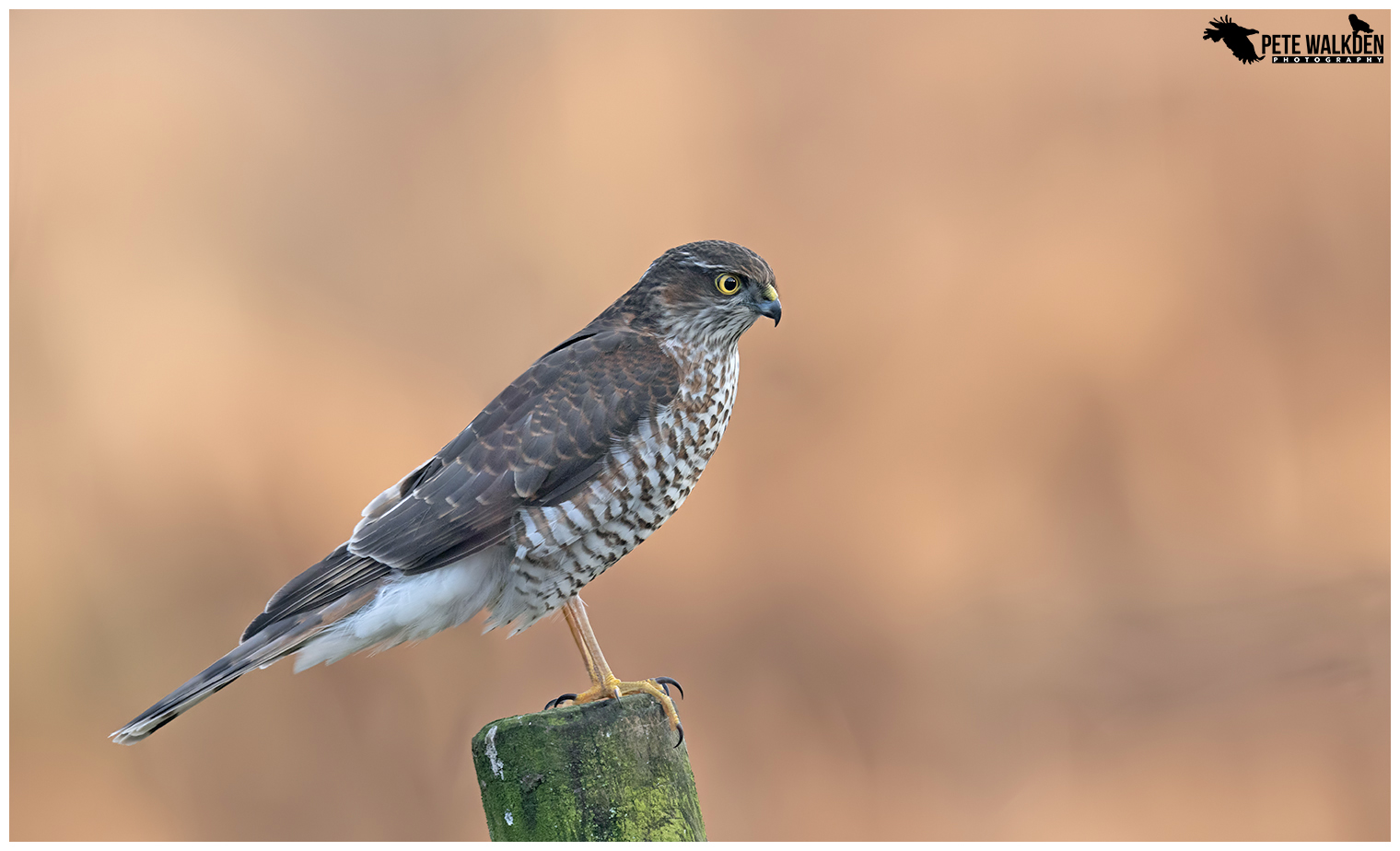
Sparrowhawk. Photo: Ben Hall, RSPB Images.
Durham Police and civic enforcement officers from Darlington Borough Council’s community safety team have issued a joint appeal urging anyone who uses the wood to be alert and to get in touch if they have any information that can identify those responsible.
Sergeant James Woodcock, of Darlington Neighbourhood Policing team, said: “There is legislation in place that protects various wild bird species. We will be working with the council and other relevant agencies, including the Royal Society for the Protection of Birds (RSPB), the Animal and Plant Health Agency (APHA) and local wildlife conservation organisations to ensure legal action is taken where necessary.
We would ask anyone in the Geneva Wood area to be alert and to report any incidents to us or the council’s civic enforcement officers.”
Councillor Amanda Riley added: “Our civic enforcement officers are working closely with local police and will be carrying out extra patrols in the area, but we will also need the support of local residents if we’re to identify those responsible.
Shooting and killing wild birds in a public woodland such as this is not only illegal, but also poses a danger to others who may be in the area and anti-social behaviour of this kind will not be tolerated.”
Anyone with information is asked to contact Durham Police on 101 or the community safety team on 01325 406999.
Further to last week’s news that Scottish gamekeeper Rory Parker pleaded guilty to committing raptor persecution crime on a grouse moor on Moy Estate in September 2021 (see here), I’ve been looking to see how the game-shooting industry has responded to this conviction.
You’ll recall that this is the game-shooting industry whose organisations routinely state they have a ‘zero tolerance’ policy towards raptor persecution, in which case you’d think they’d be quick to condemn this latest crime and call on their members and the wider shooting public to distance themselves from Moy Estate, and especially as the estate is already serving a three-year General Licence restriction imposed in 2022 after Police Scotland found further evidence of wildlife crime (see here), namely a poisoned red kite and ‘incidents in relation to trapping offences’.
Four days on from Parker’s conviction, I haven’t found any statements of condemnation on the websites of the Scottish Gamekeepers Association, BASC, or the Countryside Alliance.
Their collective silence says a lot, I think. In my opinion it’s related to an ongoing, industry-wide damage limitation exercise as the Wildlife Management & Muirburn (Scotland) Bill begins its passage through the Scottish Parliament. Drawing attention to criminal activity on grouse moors at a time when MSPs are considering the extent of proposed regulation in the form of a grouse-shooting licence is not in their interests, although I’d argue that if they were as resolute about stamping out raptor persecution crimes as they claim to be, they should have been at the forefront of leading the condemnation.
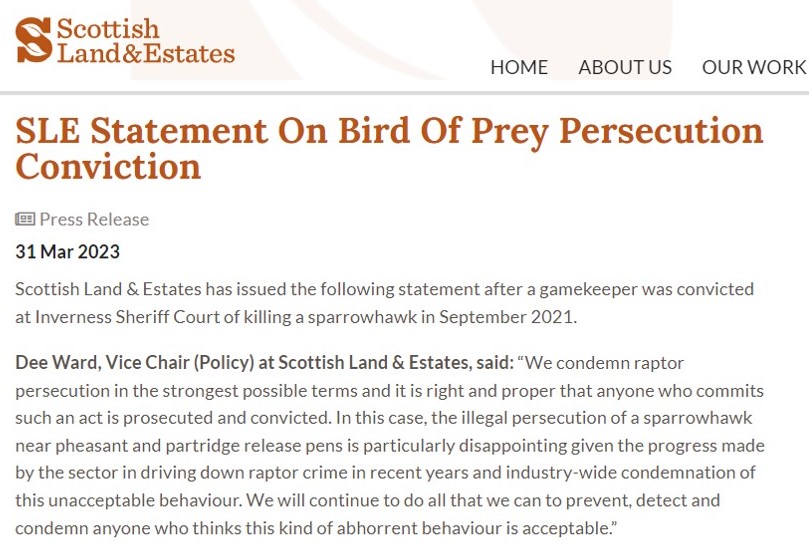
The only game-shooting organisation that has responded to the news of Parker’s conviction is landowners’ lobby group, Scottish Land & Estates (SLE).
I’ve already written about a media quote attributed to grouse moor owner Dee Ward, who’s also Vice Chair (Policy) at SLE, who seemed keen to distance Parker’s crime from grouse moor management (see here), and this was repeated in a statement that SLE published on its website on the day of Parker’s conviction.
Credit to SLE for not shying away from the news, but its manipulation of the narrative is all too obvious:
I’m not sure what the ‘progress’ is to which Dee refers. I haven’t seen any evidence of ‘the sector driving down raptor crime in recent years‘. What I have seen is an increasing number of shooting estates having General Licence restrictions imposed after Police Scotland has confirmed evidence of continued raptor persecution crimes (there are currently six GL restrictions in place – Leadhills Estate (here), Lochan Estate (here), Leadhills Estate [again] (here), Invercauld Estate (here), Moy Estate (here) and Millden Estate (here)).
The Scottish Government doesn’t appear to have seen the evidence, either, given the Environment Minister’s statement in 2020 when she announced that there could be no further delay to the introduction of a grouse moor licensing scheme because:
“…despite our many attempts to address this issue, every year birds of prey continue to be killed or disappear in suspicious circumstances on or around grouse moors“.
Time will tell if SLE sticks with Dee’s claim that, “We will continue to do all that we can to prevent, detect and condemn anyone who thinks this kind of abhorrent behaviour is acceptable“.
Will that include boycotting the Highland Game Fair, held each year on the Moy Estate? This is an event that SLE, and the other shooting organisations, routinely attend, with apparently total disregard for sanctions imposed on the estate for wildlife crime (see here).
It’s actions, not mere words, that will determine whether the industry’s ‘zero tolerance’ policy is seen as credible, and as far as I’m concerned, the industry’s actions haven’t come close.





 Raptor Persecution UK