Press release from League Against Cruel Sports (24th January 2023):
The Scottish Parliament has today (Tuesday) voted to pass the new Hunting with Dogs (Scotland) Bill. The vote was passed by 90 for and 30 against, with no abstentions.
The new legislation was introduced last year, two decades after a failed attempt by the Scottish Parliament to ban hunting with the Protection of Wild Mammals (Scotland) Act, back in 2002.
The new Bill will bring into force a number of measures which significantly curtail mounted hunting activity, including reducing the number of dogs which can be used to hunt a wild mammal to just two, instead of a full pack, and reducing the number of dogs which can be used below ground to just one.
The Bill also includes a pre-emptive ban on trail hunting. Trail hunting is a sport which was created after hunting was banned in England and Wales following the passing of the Hunting Act in 2004. Its inclusion in the Bill means trail hunting can not be established north of the border.
Video footage from the League Against Cruel Sports shows a hunter throwing a fox to a baying pack of hounds (Credit: here)
The League Against Cruel Sports Scotland, has welcomed the new legislation. Director Robbie Marsland said:
“As of today, Scotland has the most robust law anywhere in the UK to prevent the cruelty of chasing and killing wild mammals for sport – and this is something to celebrate. Despite a persistent campaign from those resolute to keep hunting alive in the Scottish countryside, the Scottish Government has been determined to end the sport of hunting, a sentiment which has today been supported by the Parliament.
“The passing of the Hunting with Dogs (Scotland) Bill now provides an opportunity to right the wrongs of the last two decades and close the loopholes which allowed hunters to continue with hunting as though the law didn’t exist.
“The inclusion of a ban on trail hunting is a significant victory for Scotland, meaning hunts will not be able to use this so-called sport as a smokescreen for traditional hunting.”
The new Bill also includes a licensing system which will allow for a full pack of hounds to be used in certain circumstances. The detail of the scheme has yet to be developed but animal welfare campaigners have concerns this has the potential to be exploited.
Robbie Marsland added:
“After twenty years of flawed legislation it is critical that this Bill is not simply a way of creating new loopholes for hunters to exploit, and the League is yet to be convinced the licensing scheme won’t do this.
“Despite the best of intentions to ban hunting, the determination and deep rooted defiance among those who wish to chase and kill foxes should not be underestimated. The League will work closely with Nature Scot and other stakeholders to ensure the licensing system is robust, effective and fit for purpose.”
The Hunting with Dogs Bill is expected to receive royal assent in the next few weeks and come into force in the autumn.
ENDS
This is a significant win for campaigners in Scotland, including REVIVE coalition members the League Against Cruel Sports and OneKind, and will increase pressure on the Westminster Government to follow suit.
The proposed licensing scheme, which will allow the use of more than two dogs in “certain limited circumstances” has undoubtedly been brought in to help fend off any legal challenges but the details and effectiveness of the licences remain to be seen.
For example, will the licensing authority NatureScot think that footpacks running amok in public forests, killing foxes to protect gamebirds on grouse moors (e.g. see here) is an appropriate and licensable activity? We’ll see.
There’s plenty of media coverage of this story today:
The taskforce established by the Scottish Government earlier this year to consider whether the Scottish SPCA should be granted additional powers to help investigate raptor persecution and other wildlife crime has completed its review, which ‘will be published within weeks’, according to an article in yesterday’s Scotsman.
As a quick recap, the SSPCA’s current powers (under animal welfare legislation) limits their investigations to cases that involve a live animal in distress (including some wildlife crimes). The proposed new powers would allow them to also investigate wildlife crimes under the Wildlife & Countryside Act legislation, e.g. where the victim is already dead, and also incidents where a victim may not be present (e.g. if an illegally-set pole trap or a poisoned bait was discovered). See here for further detail.
The taskforce, chaired by Susan Davies FRSB, includes members from the Scottish Government (civil servants), Police Scotland and the Crown Office. Importantly, it doesn’t include anybody from the shooting/landowner brigade, thus thwarting any attempts to disrupt, delay, or water-down the taskforce’s recommendations, in the way the Werritty Review was bastardised three years ago.
This taskforce was established after 11 long years of political can-kicking only because the Scottish Greens insisted on its inclusion in the historic Bute House Agreement, the power-sharing policy document published by the two parties in 2021:
‘The independent taskforce to consider whether the Scottish Society for the Prevention of Cruelty to Animals (Scottish SPCA) should be given extra powers to investigate wildlife crime will be asked to report back in a timeframe that will allow any changes to the Scottish SPCA powers to be delivered by legislation implementing changes to grouse and other wildlife management in the course of this parliamentary session‘.
The taskforce’s findings will feed into the current draft legislation on grouse moor licensing (the Wildlife Management (Grouse) Bill) that is expected to progress to Stage 1 of parliamentary scrutiny in the new year now that the Government’s consultation on it has just closed. Indeed, the consultation document contained the following statement:
‘The taskforce’s report is expected to be published later this year. Depending on the recommendations of the review we may include provisions relating to the powers of Scottish SPCA in the Wildlife Management (Grouse) Bill, in which case a separate consultation with interested parties will be undertaken‘.
I look forward to reading the taskforce’s report ‘within weeks’ and trust that the Scottish Government won’t delay its publication, or its response to it, in the same way it has previously dragged its feet (for 11 years!) on this important issue. I think it’s probably crucial that because the commitment was made in the Bute House Agreement, any further delays by the SNP won’t be tolerated or accepted by the Scottish Greens.
Journalist Alistair Grant ‘s article in The Scotsman yesterday includes quotes from me and also from Scottish Greens MSP Mark Ruskell, who has been instrumental in keeping this issue to the fore of the political agenda.
The article is reproduced as follows:
The Scottish Government said a taskforce set up to consider the issue has completed its work and its findings will be published within weeks.
Campaigners have previously highlighted the “extraordinary” timeline of delays over the proposals, with the idea first mooted more than a decade ago.
There are ongoing concerns over the illegal killing of birds of prey in Scotland. Expanding the Scottish SPCA’s current powers would allow it to investigate cases involving animal deaths and illegal traps.
Conservationist Dr Ruth Tingay, author of the Raptor Persecution UK blog, said she had been tracking the debate for 11 years, “watching a succession of eight environment ministers kick it into the long grass“.
She said: “I hope the recommendation of the taskforce brings this excruciatingly embarrassing saga to an end and that the Scottish SPCA is given increased powers to enable its officers to work in partnership with the police and other agencies to finally get a grip on the illegal killing of birds of prey.
“These disgraceful wildlife crimes continue because the perpetrators know fine well the chance of being caught and prosecuted is minuscule. There is no deterrent.
“The involvement of experienced officers and investigators from the SSPCA will, I’m certain, have a significant impact on bringing those responsible to justice“.
Green MSP Mark Ruskell said the move would be a “crucial step forward“. He proposed new powers for the Scottish SPCA as part of legislation in 2020, but the Scottish Government instead committed to setting up an independently-chaired taskforce to consider the issue. This was then delayed.
Last year, the Government said the group would report before the end of 2022. The taskforce formed part of the co-operation agreement between the SNP and the Greens.
Mr Ruskell said: “The present system is not working, and the only ones benefiting from it are the criminals.
“The reality is that wildlife crime has been rife for years, but overstretched police have been unable to take the action that is needed. This has only allowed it to continue unabated.
“Every other option that has been tried to improve the detection of wildlife crime has failed. At a time when policing budgets are under increasing strain this is the only practical way forward.
“For far too long, Scotland has had to endure persecution of birds of prey and other iconic species.
“We have been calling for the SSPCA to have additional powers for a long time and pushed for it in Bute House [co-operation] agreement negotiations. After years of delays, I hope that we can finally make it a reality“.
Scottish SPCA Chief Superintendent Mike Flynn said: “We are pleased that the consideration to award powers to the Scottish SPCA under the Wildlife and Countryside Act 1981 have come to a conclusion. We have committed to help the Scottish Government combat wildlife crime following a suggestion made in 2010 by Peter Peacock MSP. We look forward to reading the findings of the plans over the coming weeks.”
A Scottish Government spokesman said: “We take animal welfare very seriously and in recent years have introduced a variety of measures to combat wildlife crime.
“We committed to set up a taskforce that was to consider whether the Scottish Society for the Prevention of Cruelty to Animals should be given extra legislative powers to investigate wildlife crime. The taskforce has completed its work and its report will be published in due course.”
ENDS
For those new to this subject, here’s the political timeline that has led to the current position:
February 2011: Increased powers for the SSPCA was first suggested by MSP Peter Peacock as an amendment during the Wildlife & Natural Environment (Scotland) Bill debates. The then Environment Minister Roseanna Cunningham rejected it as an amendment but suggested a public consultation was in order.
September 2011: Seven months later Elaine Murray MSP (Scottish Labour) lodged a parliamentary motion that further powers for the SSPCA should be considered.
November 2011: Elaine Murray MSP (Scottish Labour) formalised the question in a P&Q session and the next Environment Minister, Stewart Stevenson MSP, then promised that the consultation would happen ‘in the first half of 2012’.
September 2012: Nine months later and nothing had happened so I asked Paul Wheelhouse MSP, as the new Environment Minister, when the consultation would take place. The response, in October 2012, was:
“The consultation has been delayed by resource pressures but will be brought forward in the near future”.
July 2013: Ten months later and still no sign so I asked the Environment Minister (still Paul Wheelhouse) again. In August 2013, this was the response:
“We regret that resource pressures did further delay the public consultation on the extension of SSPCA powers. However, I can confirm that the consultation document will be published later this year”.
September 2013: At a meeting of the PAW Executive Group, Minister Wheelhouse said this:
“The consultation on new powers for the SSPCA will be published in October 2013“.
January 2014: In response to one of this blog’s readers who wrote to the Minister (still Paul Wheelhouse) to ask why the consultation had not yet been published:
“We very much regret that resource pressures have caused further delays to the consultation to gain views on the extension of SSPCA powers. It will be published in the near future“.
31 March 2014: Public consultation launched.
1 September 2014: Consultation closed.
26 October 2014: I published my analysis of the consultation responses here.
22 January 2015: Analysis of consultation responses published by Scottish Government. 233 responses (although 7,256 responses if online petition included – see here).
I was told a decision would come from the new Environment Minister, Dr Aileen McLeod MSP, “in due course”.
1 September 2015: One year after the consultation closed and still nothing.
25 February 2016: In response to a question posed by the Rural Affairs, Climate Change & Environment Committee, Environment Minister Dr Aileen McLeod said: “I have some further matters to clarify with the SSPCA, however I do hope to be able to report on the Scottish Government’s position on this issue shortly“.
May 2016: Dr Aileen McLeod fails to get re-elected and loses her position as Environment Minister. Roseanna Cunningham is promoted to a newly-created position of Cabinet Secretary for the Environment.
12 May 2016: Mark Ruskell MSP (Scottish Greens) submits the following Parliamentary question:
Question S5W-00030 – To ask the Scottish Government when it will announce its decision regarding extending the powers of the Scottish SPCA to tackle wildlife crime.
26 May 2016: Cabinet Secretary Roseanna Cunningham responds with this:
A decision on whether to extend the investigatory powers of the Scottish SPCA will be announced in due course.
1 September 2016: Two years after the consultation closed and still nothing.
9 January 2017: Mark Ruskell MSP (Scottish Greens) submits the following Parliamentary question:
Question S5W-05982 – To ask the Scottish Government by what date it will publish its response to the consultation on the extension of wildlife crime investigative powers for inspectors in the Scottish SPCA.
17 January 2017: Cabinet Secretary Roseanna Cunningham responds:
A decision on whether to extend the investigatory powers of the Scottish Society for the Prevention of Cruelty to Animals will be announced in the first half of 2017.
31 May 2017: Cabinet Secretary Roseanna Cunningham rejects an extension of powers for the SSPCA ‘based on legal advice’ and instead announces, as an alternative, a pilot scheme of Special Constables for the Cairngorms National Park (here). It later emerged in 2018 that this pilot scheme was also an alternative to the Government’s 2016 manifesto pledge to establish a Wildlife Crime Investigation Unit as part of Police Scotland – a pledge on which it had now reneged (see here).
November 2019: The pilot scheme of Special Constables in the Cairngorms National Park was an absolute failure as a grand total of zero wildlife crimes were recorded by the Special Constables but plenty were reported by others (see here).
June 2020: Mark Ruskell (Scottish Greens) proposed further powers for the SSPCA at Stage 2 of the Animals and Wildlife Bill. The latest Environment Minister, Mairi Gougeon persuaded him to withdraw the proposed amendment on the basis that she’d consider establishing a taskforce to convene ‘this summer’ to consider increased powers (see here).
December 2020: Mark Ruskell (Scottish Greens) submits two Parliamentary questions asking about the status of the taskforce and who is serving on it (see here).
January 2021: New Environment Minister Ben Macpherson says the taskforce has not yet been appointed but that it is “expected to be established later this year“ (see here).
September 2021: In the 2021 to 2022 Programme for Government it was announced that the ‘independent taskforce [Ed: still to be appointed] will report before the end of 2022’ (see here).
May 3 2022: In an interview with Max Wiszniewski of the REVIVE coalition for grouse moor reform, new Environment Minister Mairi McAllan said: “It’s imminent and I wish I could tell you today but we are just finalising the last few points for the membership but I’m hoping to be able to make an announcement about that in the next few weeks“ (see here).
1 July 2022: Scottish Government announces Susan Davies has been appointed to lead the taskforce review and will ‘publish a report later this year’ (see here).
December 2022: A Scottish Government spokesperson tells Scotsman journalist the taskforce has completed its review and its findings will be published ‘within weeks’.
UPDATE 1st February 2023: Wildlife Crime: key conservation organisations ‘excluded’ from Scottish Government’s review on increasing SSPCA powers (here)
In October this year, the Scottish Government finally launched a consultation seeking the public’s views on its plans for grouse moor reform. The consultation closes on Wednesday 14th December 2022, so this is your final chance to provide your views on what is being proposed.
Proposals under the Wildlife Management (Grouse) Bill include plans to introduce a licensing scheme for grouse shoots, muirburn licensing and increased regulation on the use of traps used to kill so-called ‘pest’ species on grouse moors.
To say that driven grouse moor reform is long overdue is somewhat of an understatement. This ‘sport’ has been virtually unregulated since it began approx 150 years ago and much of what happened in the Edwardian and Victorian age still goes on today (albeit more intensively and commercially in many areas) including the illegal killing of birds of prey, which is the principle reason the Scottish Government has finally decided to act.
The campaign to get to this stage has been long and brutal and has come at a high personal cost to many of the individuals involved. It has been a hard-fought battle and this is why it’s so important that people now take part in the consultation process. The grouse-shooting lobby is urging its members to contribute – I’ve been sent a copy of how they are intending to respond, which includes ludicrous claims about there being ‘insufficient evidence’ of high levels of raptor persecution on grouse moors (I know!!). I’ll share their response in a separate blog but it highlights why we need to show a strong response in support of the Government’s licensing proposals.
That’s not to say the licensing proposals are perfect – they’re not – but this is our opportunity to make sure that they can be as watertight as possible.
I’m aware that some campaigners on ‘our side’ are very unhappy that licensing is coming in; they would prefer to see an outright ban on driven grouse shooting. That’s a view I understand but right now, a ban is not on the table. It’s either a licensing scheme or the status quo. Those are the two options. If licensing proves to be ineffective, then the campaign for a total ban will be strengthened. Maintaining the status quo is unthinkable, so let’s be pragmatic and work to secure the best standard of licensing that we can get.
The consultation is easy to respond to and anyone can participate – you don’t need to be a member of an organisation, your view as an informed member of the public is just as valid.
REVIVE, the coalition for grouse moor reform, has provided an easy supporter’s guide to help you complete the consultation – see here.
Most of it is a tick-box exercise, but there are also sections where space is provided for you to add your own comments. REVIVE has listed some suggested topics that you may wish to include, but has deliberately not provided statements for cut and paste. It’s important that you use your own words to have greater impact – if everyone submitted identical responses, the Government is likely to lump them all together and count them as a single response instead of the views of many individuals.
I’ll be submitting my own personal response this weekend. As mentioned above, I’m generally in support of the principle of licensing but I do have concerns about effective enforcement. Without that, a licensing scheme will be utterly pointless. I will be urging the Scottish Government to introduce a licensing fee that is sufficient to fund rigorous and effective compliance monitoring and enforcement, and to implement that fee now rather than later, as has been proposed.
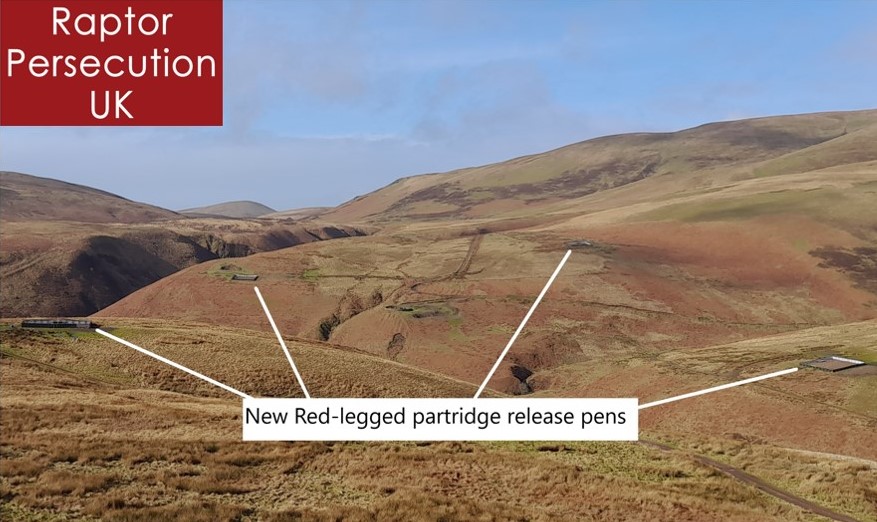
I’m also deeply concerned that the proposed licensing scheme excludes the shooting of red-legged partridges and pheasants on land managed for grouse shooting, and instead focuses just on the shooting of red grouse. There is an increasing body of evidence that demonstrates red-legged partridges (RLPs), and to a lesser extent, pheasants, are being released on grouse moors for shooting, either as a proxy for red grouse (in low stock years) or as an additional target species to boost income. When the grouse shooting licence scheme is introduced, it would be very simple for shoot managers to switch from shooting red grouse to shooting RPLs, thus side-stepping the licence (which is currently red grouse specific) and continuing with the very activities that this licencing scheme seeks to end (illegal raptor persecution). It’s a gaping loophole that needs to be closed off before it is exploited.
[This photograph was taken on Buccleuch Estate earlier this year]
For those who haven’t yet read the Government’s proposals, you can do so here:
If you want to use REVIVE’s guide for responding to the consultation, please click here.
Remember, the consultation closes on Wednesday 14th December 2022.
Thank you for your help and support.
UPDATE 12th December 2022: Don’t laugh, but here is the grouse-shooters’ consultation response to licensing (here)
UPDATE 13th December 2022: ‘Golden opportunity to tackle bird of prey killings & stop peatland burning in Scotland’ – RSPB blog on grouse moor licensing (here)
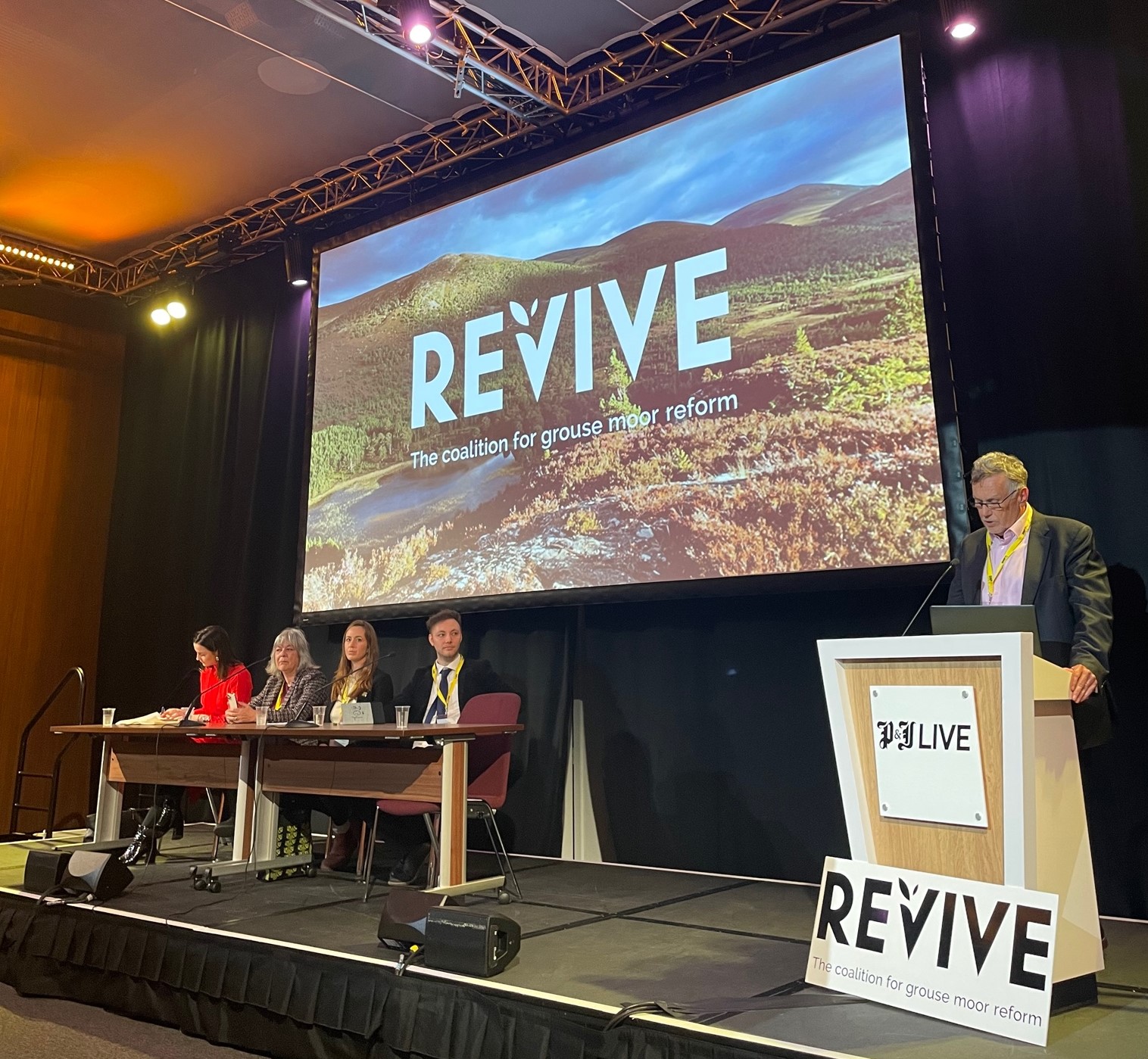
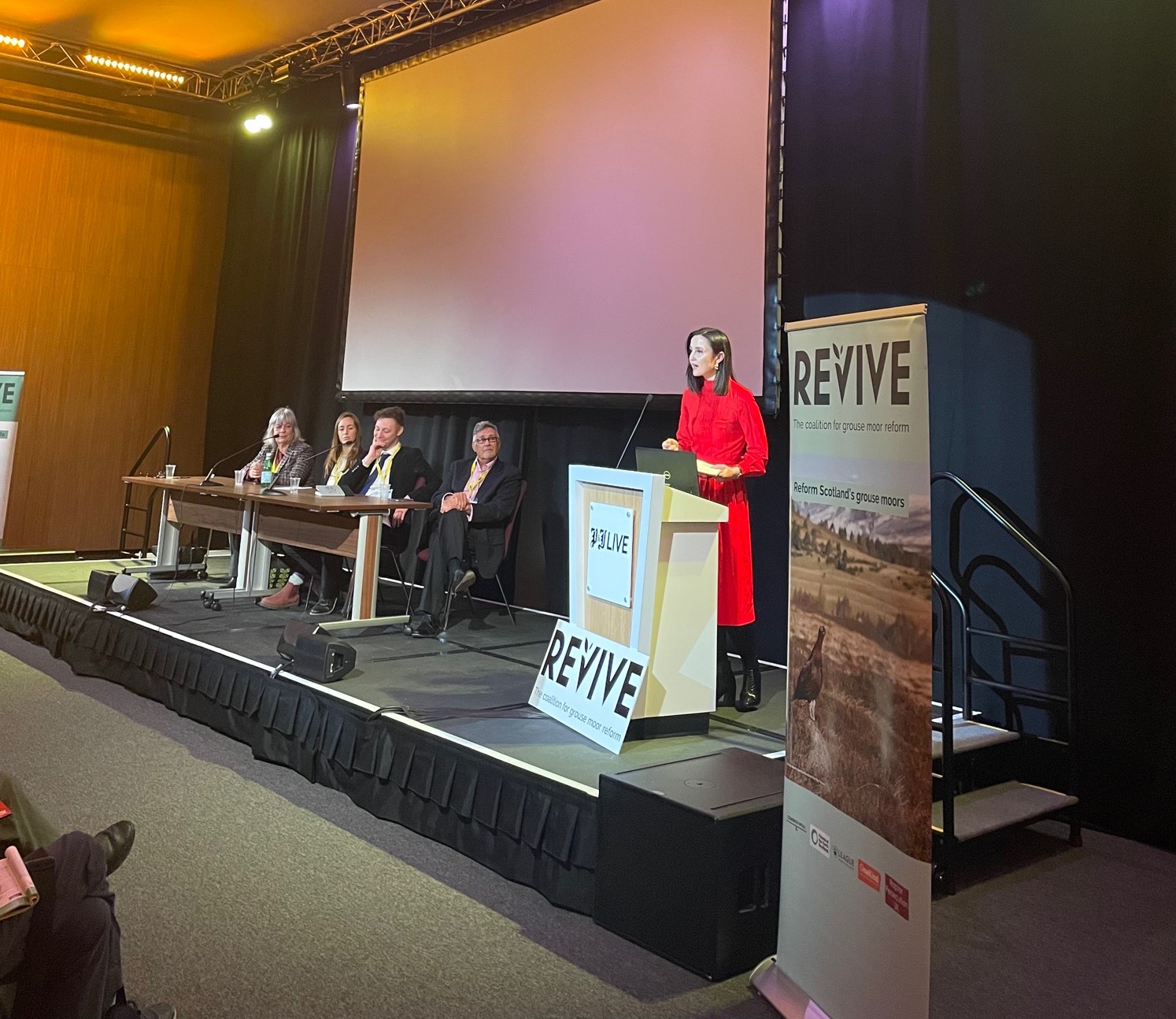
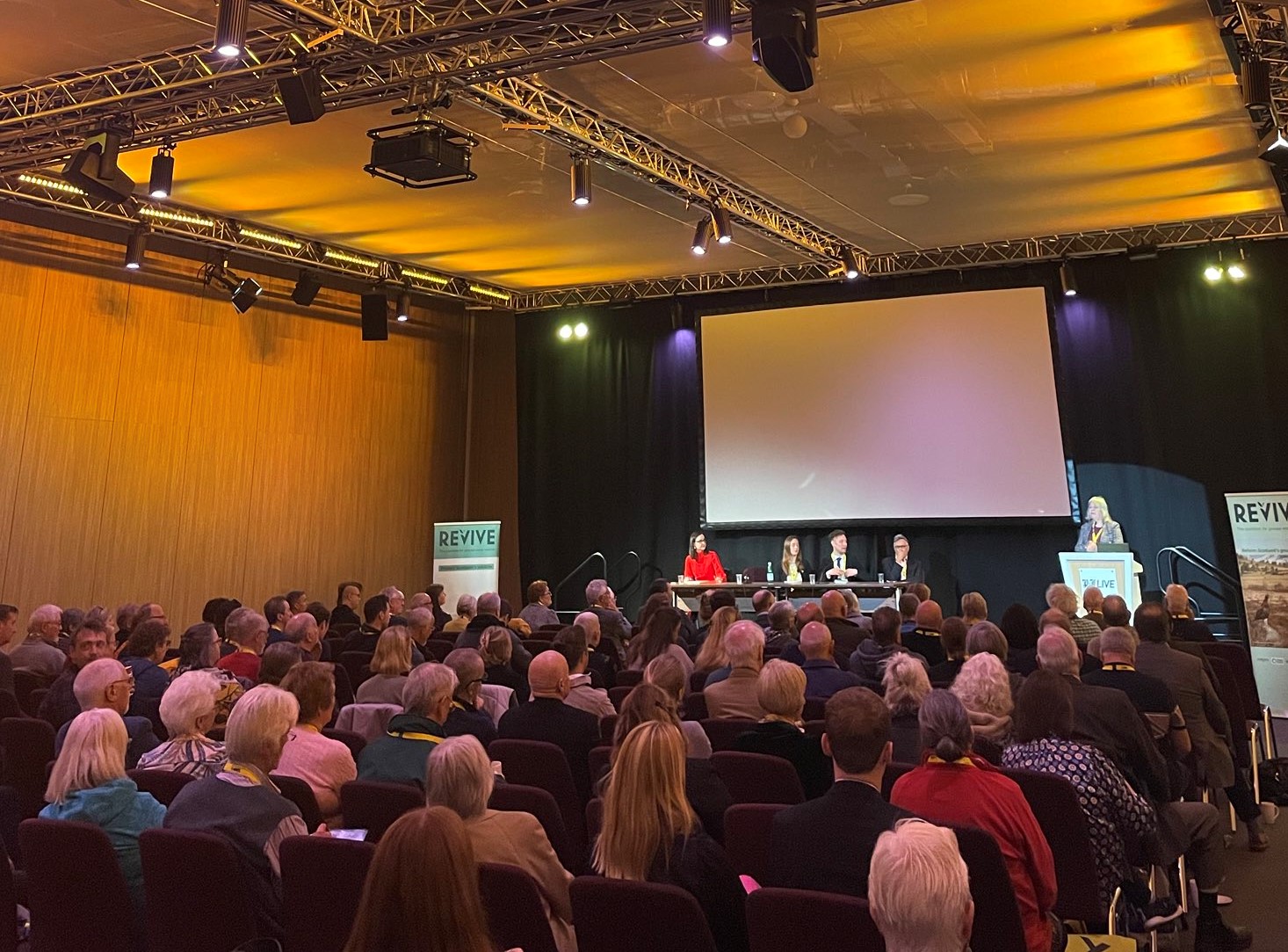
REVIVE, the coalition for grouse moor reform hosted another successful fringe event at the SNP’s Annual National Conference over the weekend, where the discussion centred on land reform and grouse moors.
Panellists included Scottish Environment Minister Màiri McAllan, Max Wiszniewski (Campaign Manager at REVIVE), Amanda Burgauer (Executive Director of Common Weal), Robbie Marsland (Director of the League Against Cruel Sports Scotland) and Mhairi Stewart (Policy Strategy Lead at the John Muir Trust).
A summary of the event will hopefully be published by REVIVE in due course but suffice to say, as before (here & here), there was considerable interest and strong support from SNP delegates.
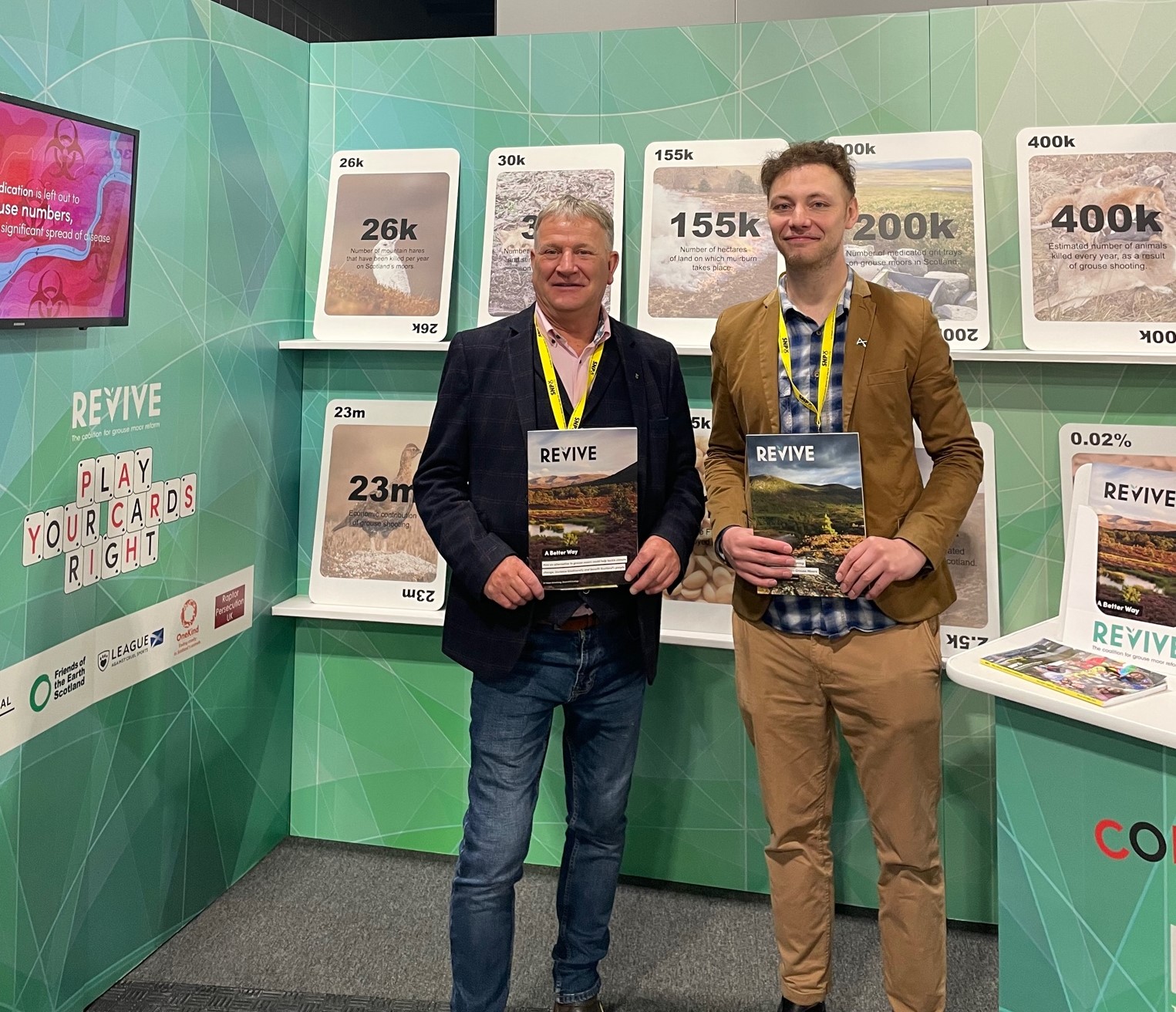
REVIVE’s ingenious ‘Play Your Cards Right‘ game was once more available for delegates to interact with, helping them to engage memorably with the coalition’s concerns about the various damaging aspects of driven grouse moor management.
MSP David Torrance (Kirkcaldy), here with Max Wiszniewski from REVIVE, was one of many to have a go:
The Scottish Government’s long-anticipated move to draw up an effective and enforceable licensing scheme for grouse shooting (see here) is set to begin shortly with the publishing of a public consultation document prior to the drafting of legislation which will be subject to debate and amendments as the draft bill progresses through Parliament during this session, as set out recently in the 2022-2023 Programme for Government (see here).
UPDATE 21st October 2022: REVIVE coalition for grouse moor reform well received by SNP and Scottish Greens conferences (here)
UPDATE 12th September 2022:This event has been postponed due to recent events. It has been rescheduled for 29th October 2022 (here).
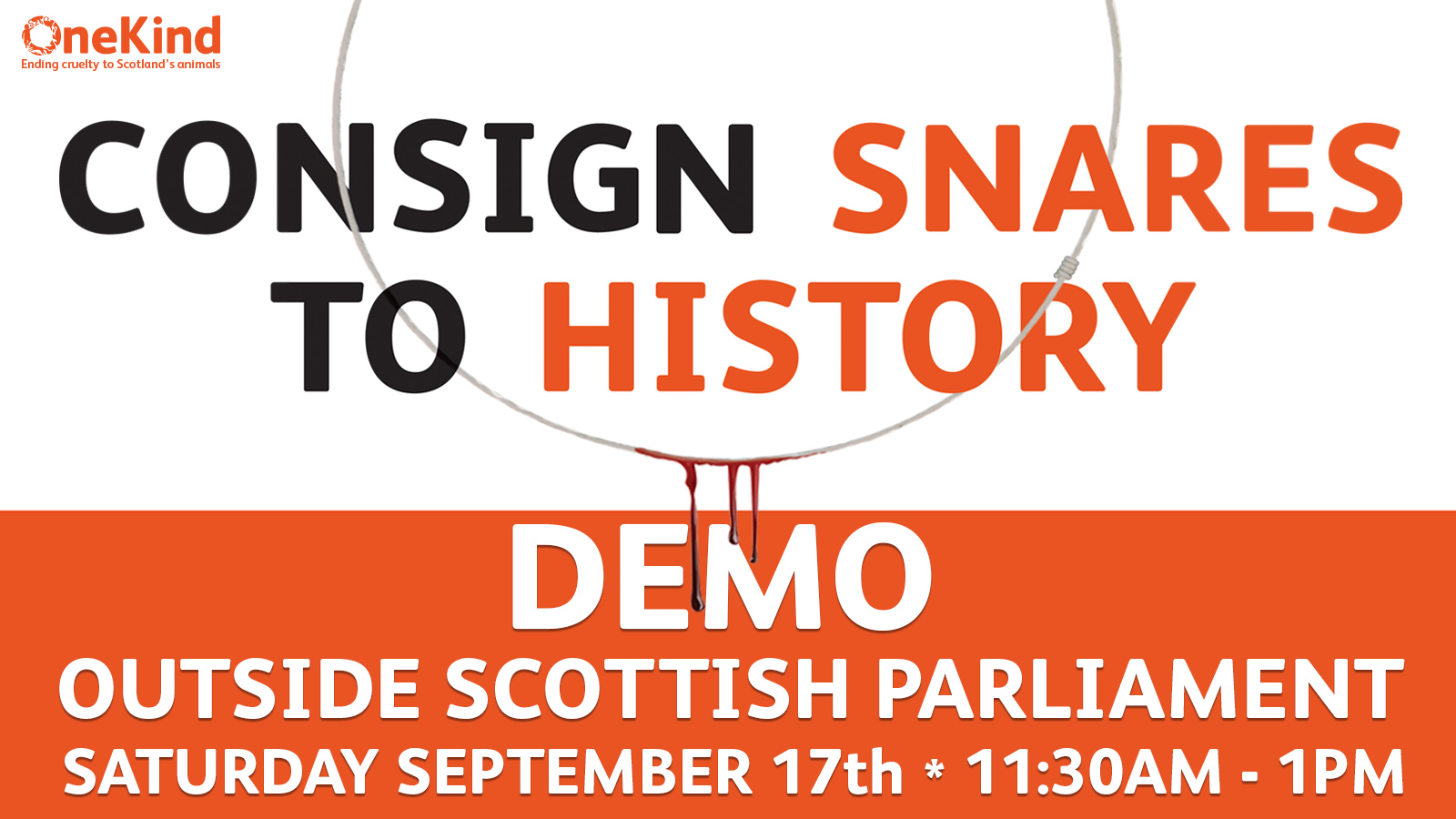
REVIVE Coalition partner OneKind, the animal welfare charity, is hosting a demonstration outside the Scottish Parliament on Saturday 17th September, from 11.30am to 1pm, calling for a complete ban on the manufacture, sale and use of snares in Scotland.
Thousands of snares are deployed on game-shooting estates every year, which maim and kill animals in order to protect stocks of red grouse, pheasants and partridge for ‘sport’ shooting. It’s currently legal to snare some species (e.g. foxes), despite the inhumane method, but as snares are indiscriminate up to 80% of species caught are non-target species, according to DEFRA figures, and these species include badgers, otters, deer and pet cats and dogs. This shocking report from the REVIVE coalition for grouse moor reform provides more detail.
The demonstration on 17th September is timed to coincide with the Scottish Government’s current review of snaring legislation and OneKind’s CEO Bob Elliot has written an excellent account of why a ban is needed and how this demo could help achieve that aim (see here).
For more information about the demo and to register your attendance, please see here.
If you’re unable to attend, please consider sending a letter to Environment Minister Mairi McAllan using this e-letter template from OneKind, urging the Government to introduce a full ban on the manufacture, sale and use of snares in Scotland.
Scotland’s First Minister Nicola Sturgeon has announced that, finally, a draft bill on grouse moor licensing will be introduced in this parliamentary year.
This proposed legislation is a direct result of the continued illegal killing of birds of prey on many driven grouse moors, that’s been going on for decades.
The grouse-shooting industry hasn’t just refused to kick out the criminals in its midst; it has repeatedly denied that the crimes ever take place, despite the weight of evidence that shows otherwise, and it has actively shielded those responsible. Raptor persecution doesn’t happen on grouse moors by accident, or by bad luck, but as a consequence of the industry’s failure to self-regulate (and the Government’s failure to take effective action).
This legislation was inevitable in response to the grouse-shooting industry’s arrogance and intransigence (a nod to Mark Avery for coining that term).
[A poisoned golden eagle on a grouse moor in the Cairngorms National Park. Photo by RSPB Scotland]
The announcement about the introduction of the draft bill was made in the Scottish Government’s 2022-2023 Programme For Government, published this afternoon, outlining the policies and actions that are expected to take place over the coming year as well as the expected legislative programme.
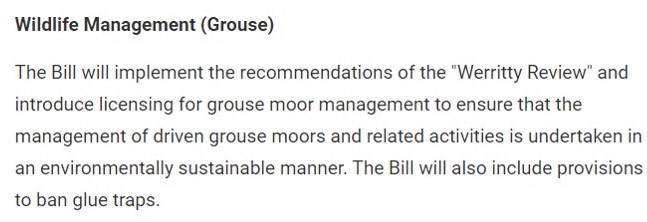
The draft bill on grouse moor management is one of 18 bills the Government proposes to introduce by the end of June 2023. The statement on it is concise and short on detail but is nonetheless significant for those of us who have campaigned on the subject for years:
It’s been almost three years since the Werritty Review on grouse moor management was published (see here) and almost two years since the Scottish Government published its response (here), committing to developing a licensing scheme ‘immediately’, so the news that a draft bill is to be introduced in the now foreseeable future is a huge milestone in this long battle.
The fight is nowhere near over, of course. There will be various stages the bill has to navigate, which will take months, and the dark forces of the grouse-shooting industry will be hard at work chiselling away at any proposed measures of constraint (whatever they may be). But equally, conservationists will be fighting hard to ensure this proposed legislation has teeth, and importantly, strong enforcement support, which I’m told is also what the Scottish Government has in mind. Let’s see.
At this stage I’m not aware of any of the proposed detail of the draft bill so it’s impossible to comment on how effective / ineffective it might be, but the next ten months will be interesting and there’ll be opportunities for everyone to engage and influence the direction of travel.
To everyone who has worked so hard on this campaign, whether that be in recent weeks or over a period of months, years, or several decades, it hasn’t been in vain.
Hallelujah! After almost three years of wasting valuable parliamentary time, the Scottish Parliament has finally closed the petition lodged by the Scottish Gamekeepers Association (SGA) calling for the ‘independent monitoring of satellite tags fitted to raptors’.
I’ve blogged about this petition several times before (here, here), as has Ian Thomson, Head of Investigations at RSPB Scotland – well worth a read here.
The petition has been closed because the cross-party committee scrutinising it recognised that adequate and proportionate monitoring is already in place. Contrary to the SGA’s ignorant and misinformed propaganda, there is already plenty of cooperative partnership-working between satellite taggers, the tagging licensing authorities, landowners and the police. We collaborate and share our data in order to improve conservation benefits for these iconic species across Scotland. What we don’t do is share data with those who would use the information to disturb and/or kill eagles or other tagged raptors.
Had the SGA not walked off from the PAW Scotland Raptor Group in 2017 when the damning results of the Gov-commissioned Satellite Tag Review Report was published, they’d have known that this petition was an utterly pointless waste of everyone’s precious time.
The SGA lodged this petition in September 2019 and it was seen by many as just the latest in a long line of efforts to undermine and discredit the use of raptor satellite tags, simply because the tagging of raptors like golden eagles, hen harriers, white-tailed eagles and red kites has exposed the previously hidden extent of illegal raptor persecution on many grouse moors and has finally led the Scottish Government to committing to the introduction of a licensing scheme for grouse shooting in Scotland.
[The satellite tag fitted to this golden eagle led researchers to a grouse moor in the Angus Glens where the bird was found to have been illegally poisoned. Photo by RSPB Scotland]
Raptor persecution crimes attract huge media attention because it’s hard to believe that people are still killing golden eagles and other raptors in Scotland in the 21st century.
As a result of this ongoing publicity, the game-shooting industry has spent considerable time and effort trying to undermine the satellite-tagging of raptors, either by launching disgusting personal & abusive attacks against named individuals involved in the tagging projects, or by blaming tagged raptor disappearances on imaginary windfarms, or by blaming tagged raptor disappearances on faulty sat tags fitted to turtles in India, or by blaming tagged raptor disappearances on bird activist‘ trying to ‘smear gamekeepers’, or by claiming that those involved with raptor tagging projects have perverted the course of justice by fabricating evidence, or by claiming that raptor satellite-tagging should be banned because it’s ‘cruel’ and the tag data serve no purpose other than to try and entrap gamekeepers.
There have also been two laughable attempts to discredit the authoritative golden eagle satellite tag review (here and here), thankfully dismissed by the Scottish Government. The industry knows how incriminating these satellite tag data are and so has been trying to do everything in its power to corrode public and political confidence in (a) the tag data and (b) the justification for fitting sat tags to raptors, hence this latest petition from the SGA. Unfortunately for the SGA, its petition wasn’t enough to derail the Government’s response to the Werritty Review in 2020, as many of us suspected was the intention.
[A young golden eagle fitted with a satellite tag in Scotland prior to fledging. Photo by Dan Kirkwood]
Those of us involved in raptor satellite tagging in Scotland submitted evidence to the various committees that have scrutinised this petition (e.g. Scotland’s Golden Eagle Satellite Tagging Group, who described the SGA’s petition as ‘fact-free nonsense’ (here); RSPB Scotland (here), and me (here), although strangely, in the three years the petition has been active, none of us have been asked about our evidence or invited to attend any of the hearings.
The latest committee to review this petition was the Net Zero, Energy & Transport Committee, who considered the petition at its meeting on Tuesday (28 June 2022).
The Committee had received a submission from NatureScot identifying that new data-sharing protocols [between taggers and NatureScot] are now in place that perhaps were not in place when the petition was originally submitted. [Ed: This is not the case at all; data-sharing has been open with NatureScot for years, just not formalised in writing because none of us deemed it necessary, so all NatureScot has done is confirm what was already happening!].
NatureScot also told the Committee it believes that the data provides important oversight and that tagging is being done ‘competently, professionally and in an open way’.
The Committee had also received correspondence from Police Scotland who said it was also happy with the protocols in place.
On this basis, the petition was closed. It was also noted that in future, stakeholders will be invited to attend the committee to provide expert input. That is welcomed.
I did note, though, that hilariously, the SGA had submitted a last-minute note to the Committee on the evening before the meeting, crying about how its attempt to get involved with the satellite tagging of a golden eagle last year had apparently been ‘blocked’. Funny, I didn’t think the SGA supported satellite tagging?!
It’s a beautiful irony actually, as it illustrates perfectly just how regulated the field of satellite-tagging is in the UK, contra to the SGA’s absurd claims in this petition. All satellite-tagging project proposals have to provide rigorous scientific justification for fitting these tags, which is then scrutinised by a special panel of experts at the British Trust for Ornithology (BTO, the licensing body). If the proposal doesn’t meet these rigorous standards, the licence will be refused.
You can read the Committee’s decision to close the petition here:
And if you want a really good laugh, I’d encourage you to read the Golden Eagle Satellite Tagging Group’s expert evisceration of the SGA’s petition here.
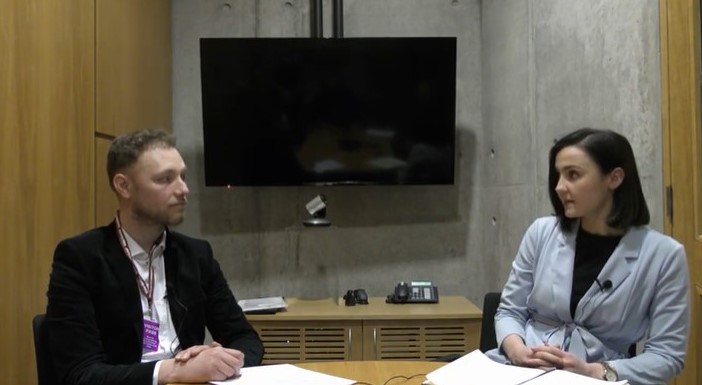
Max opened the interview by asking the Minister about the well-evidenced link between driven grouse shooting and raptor persecution, and how she thought the Government’s forthcoming licencing scheme might work to bring that to an end.
The Minister’s response:
“I come at this with a view that the vast majority of people living and working in our uplands and enjoying them do so with great respect for the land and for the wildlife that calls that home. However, there are a minority who would continue to persecute raptors, which is illegal, and abhorrent, and that despite what have been concerted efforts by the Government over a number of years to find ways to clamp down on that, so be that increased penalties brought forward in our Animals Bill last term, poisons amnesties, vicarious liability, it persists. And therefore we’re in a situation where self-regulation isn’t going to work anymore.
So I want to bring in, in response to Werritty and as part of the legislation we’ll bring in this term, time-line wise, I want a robust licensing scheme which will, in the face of any evidence of raptor persecution, be able to be removed, including permanently“.
The Minister’s opening sentence is at complete odds with everything else she talked about during this interview, so I don’t give it much credence. It’s part of a narrative clearly designed to appease some elements of the landowning/grouse-shooting set, lip-service if you like, but Governments don’t spend time & money introducing new legislation based on the criminal behaviour of a minority, so I don’t really mind the lip-service as long as it doesn’t interfere with the progression of the new legislation.
The rest of her commentary was well-informed and reassuringly considered, I thought. The interview ranged from the timings for the introduction of the new licensing system, to muirburn, medicated grit, animal welfare, snaring, and giving increased powers to the Scottish SPCA to enable them to take on more investigations into raptor persecution.
This last topic has been the subject of long-term dithering by the Scottish Government for a period of over 11 years. For example, and for the benefit of new blog readers, here’s a timeline:
February 2011: Increased powers for the SSPCA was first suggested by former MSP Peter Peacock as an amendment during the Wildlife & Natural Environment (Scotland) Bill debates. The then Environment Minister Roseanna Cunningham rejected it as an amendment but suggested a public consultation was in order.
September 2011: Seven months later Elaine Murray MSP (Scottish Labour) lodged a parliamentary motion that further powers for the SSPCA should be considered.
November 2011: Elaine Murray MSP (Scottish Labour) formalised the question in a P&Q session and the next Environment Minister, Stewart Stevenson MSP, then promised that the consultation would happen ‘in the first half of 2012’.
September 2012: Nine months later and nothing had happened so I asked Paul Wheelhouse MSP, as the new Environment Minister, when the consultation would take place. The response, in October 2012, was:
“The consultation has been delayed by resource pressures but will be brought forward in the near future”.
July 2013: Ten months later and still no sign so I asked the Environment Minister (still Paul Wheelhouse) again. In August 2013, this was the response:
“We regret that resource pressures did further delay the public consultation on the extension of SSPCA powers. However, I can confirm that the consultation document will be published later this year”.
September 2013: At a meeting of the PAW Executive Group, Minister Wheelhouse said this:
“The consultation on new powers for the SSPCA will be published in October 2013“.
January 2014: In response to one of this blog’s readers who wrote to the Minister (still Paul Wheelhouse) to ask why the consultation had not yet been published:
“We very much regret that resource pressures have caused further delays to the consultation to gain views on the extension of SSPCA powers. It will be published in the near future“.
31 March 2014: Public consultation launched.
1 September 2014: Consultation closed.
26 October 2014: I published my analysis of the consultation responses here.
22 January 2015: Analysis of consultation responses published by Scottish Government. 233 responses (although 7,256 responses if online petition included – see here).
I was told a decision would come from the new Environment Minister, Dr Aileen McLeod MSP, “in due course”.
1 September 2015: One year after the consultation closed and still nothing.
25 February 2016: In response to a question posed by the Rural Affairs, Climate Change & Environment Committee, Environment Minister Dr Aileen McLeod said: “I have some further matters to clarify with the SSPCA, however I do hope to be able to report on the Scottish Government’s position on this issue shortly“.
May 2016: Dr Aileen McLeod fails to get re-elected and loses her position as Environment Minister. Roseanna Cunningham is promoted to a newly-created position of Cabinet Secretary for the Environment.
12 May 2016: Mark Ruskell MSP (Scottish Greens) submits the following Parliamentary question:
Question S5W-00030 – To ask the Scottish Government when it will announce its decision regarding extending the powers of the Scottish SPCA to tackle wildlife crime.
26 May 2016: Cabinet Secretary Roseanna Cunningham responds with this:
A decision on whether to extend the investigatory powers of the Scottish SPCA will be announced in due course.
1 September 2016: Two years after the consultation closed and still nothing.
9 January 2017: Mark Ruskell MSP (Scottish Greens) submits the following Parliamentary question:
Question S5W-05982 – To ask the Scottish Government by what date it will publish its response to the consultation on the extension of wildlife crime investigative powers for inspectors in the Scottish SPCA.
17 January 2017: Cabinet Secretary Roseanna Cunningham responds:
A decision on whether to extend the investigatory powers of the Scottish Society for the Prevention of Cruelty to Animals will be announced in the first half of 2017.
31 May 2017: Cabinet Secretary Roseanna Cunningham rejects an extension of powers for the SSPCA ‘based on legal advice’ and instead announces, as an alternative, a pilot scheme of Special Constables for the Cairngorms National Park (here). It later emerged in 2018 that this pilot scheme was also an alternative to the Government’s 2016 manifesto pledge to establish a Wildlife Crime Investigation Unit as part of Police Scotland – a pledge on which it had now reneged (see here).
November 2019: The pilot scheme of Special Constables in the Cairngorms National Park was an absolute failure as a grand total of zero wildlife crimes were recorded by the Special Constables but plenty were reported by others (see here).
June 2020: Mark Ruskell (Scottish Greens) proposed further powers for the SSPCA at Stage 2 of the Animals and Wildlife Bill. The latest Environment Minister, Mairi Gougeon persuaded him to withdraw the proposed amendment on the basis that she’d consider establishing a taskforce to convene ‘this summer’ to consider increased powers (see here).
December 2020: Mark Ruskell (Scottish Greens) submits two Parliamentary questions asking about the status of the taskforce and who is serving on it (see here).
January 2021: New Environment Minister Ben Macpherson says the taskforce has not yet been appointed but that it is “expected to be established later this year“ (see here).
September 2021: In the 2021 to 2022 Programme for Government it was announced that the ‘independent taskforce [Ed: still to be appointed] will report before the end of 2022’ (see here).
Max asked the Minister if she could provide an update on the situation and she said this:
“It’s imminent and I wish I could tell you today but we are just finalising the last few points for the membership but I’m hoping to be able to make an announcement about that in the next few weeks“.
Given that this interview was filmed on 3rd May 2022 and it’s now almost mid-June and still no announcement, this feels a lot like déjà vu so there seems little point in raising expectations. I hope an announcement is imminent and that Mairi McAllan’s name is not added to the long list of previous Environment Ministers and Cabinet Secretaries who have failed to deliver on their promises on this specific issue (I think she is the 8th successive Minister to be dealing with it!).
Well done to Max from REVIVE for a well-constructed interview and many thanks to Andrea Goddard who was responsible for organising this interview as one of the events for Hen Harrier Action’s Skydancer Day.
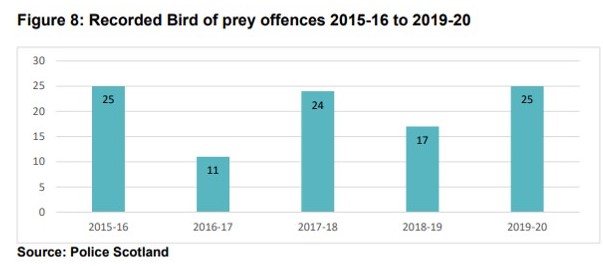
The Scottish Government has published its latest annual wildlife crime report, covering the period April 2019-March 2020, which reveals an increase of 13% in recorded wildlife crime incidents.
Raptor persecution offences increased during this period, with shooting and poisoning being the joint highest recorded crime type. Obviously, these figures only represent offences that have been discovered; there will be many more that went undiscovered, as acknowledged by the report’s foreword written by Environment Minister Mairi McAllen.
Here are a few excerpts from the Minister:
‘After a drop in recorded wildlife crime incidents of over 60% between the 2014-15 report and 2018-19, it is frustrating to see an increase of 13% in recorded wildlife crime incidents in 2019-20. Wildlife crime is not only abhorrent, it is also completely at odds with our work to address the biodiversity crisis, which is supported by so many people and organisations across Scotland.
While it is reassuring that incidents of wildlife crime have not returned to previous higher levels, we remain aware that recorded wildlife crime does not provide the full picture. This is an area where the victims are unable to speak for themselves and we know that many wildlife crimes are not witnessed and not reported. This has been especially true in the area of raptor persecution where tagged birds have disappeared in unexplained circumstances and where expected numbers of some species are not present in certain areas.
The Scottish Government has always been clear that wildlife crime is unacceptable, and we have brought forward a number of measures to tackle the issue over the years. These measures have included a poisons amnesty, vicarious liability, restrictions on general licences and most recently, significant increases in penalties for wildlife crimes. I am sure many of you reading this share my frustration that despite these measures there are some who continue to take a selfish, cruel and callous approach to our wildlife.
It is disappointing to see a rise in raptor persecution offences from the previous year. We have committed to taking forward the recommendations made by the Grouse Moor Management Group as a matter of urgency, to tackle this type of offence. We will bring forward legislation during this parliamentary term with the aim of putting in place a meaningful, effective and workable sanctions through a licensing system to deter and punish those who deliberately commit crimes in our uplands, without placing unworkable and disproportionate burdens on the majority who work within the law‘.
Yada, yada, yada. The Scottish Government’s idea of what constitutes ‘a matter of urgency’ is very different to mine. The Werritty report on grouse moor management, on which the Government made it’s decision to implement a licencing scheme for grouse shooting in Scotland, was submitted in November 2019. Here we are in April 2022 and nothing has happened except repeated statements from Ministers, now over a period of years, about it being a ‘matter of urgency’.
It’s obvious that raptor persecution isn’t going to stop without further statutory intervention, and depending on what that looks like and how it’s implemented and enforced, it probably still won’t stop without a ban on certain types of gamebird shooting. The longer the Scottish Government procrastinates, the longer these crimes will persist.
Pick a date and get on with it.
You can read/download the Scottish Government’s 2020 annual report on wildlife crime here:
Today is the 26th November 2021. It’s been exactly one year since the then Environment Minister Mairi Gougeon announced the Scottish Government’s long-awaited response to the Werritty Review on grouse moor management and a decision to implement a licensing scheme for grouse shooting.
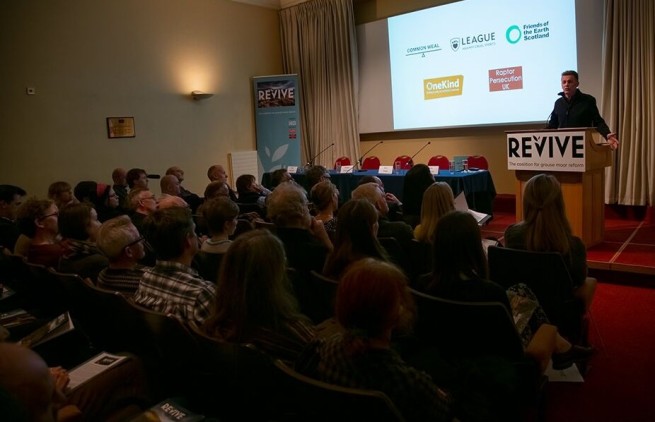
How we got to that position was the subject of a talk I presented at the REVIVE national conference a couple of weeks ago, hosted by Chris Packham at Perth Concert Hall.
[Chris Packham opening the REVIVE coalition for grouse moor reform conference. Photo by Ruth Tingay]
There had been an intention for a recording of the entire event to be made available but we learned subsequently that unfortunately the venue’s audio system had failed. REVIVE’s campaign manager, Max Wiszniewski has since published a conference overview (here) but I thought I’d take the opportunity to share the main points from my talk, to try and put Mairi Gougeon’s announcement in to some sort of context, and it seems fitting to do that today.
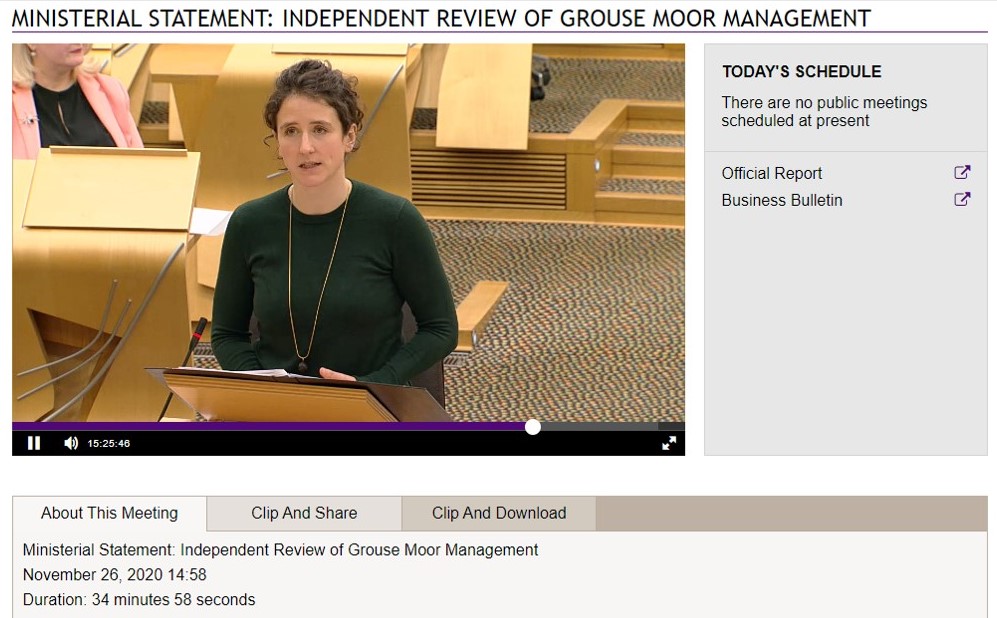
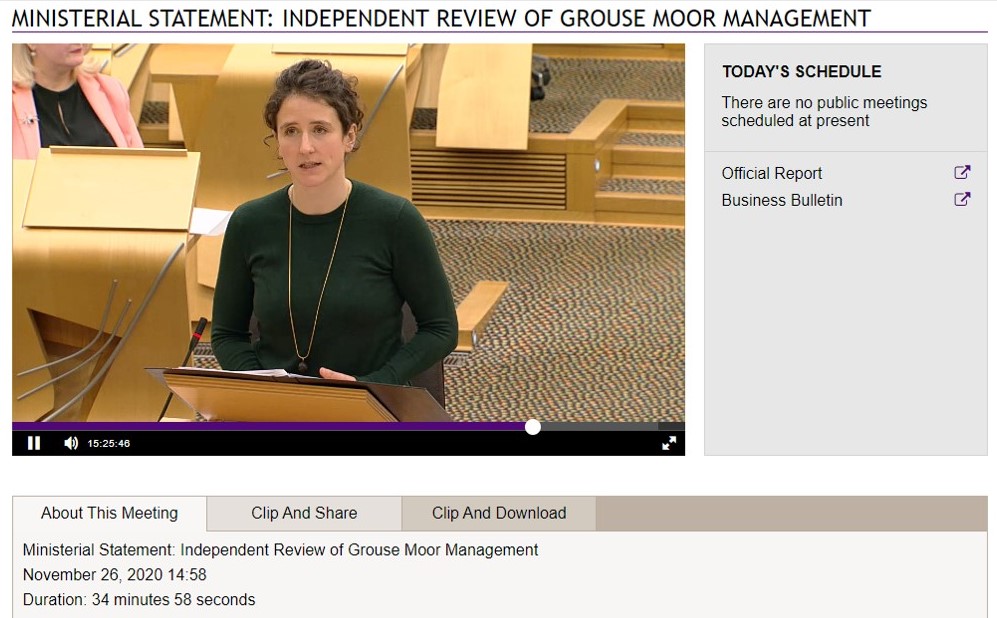
My opening slide was a screengrab of Minister Gougeon making that historic statement on 26th November 2020:
“The key recommendation put forward in the Werritty report – is that a ‘licensing scheme be introduced for the shooting of grouse’. This is a recommendation that I accept.
However, while I the understand why the review group also recommended that such a scheme should be introduced if, after five years, ‘there is no marked improvement in the ecological sustainability of grouse moor management’, I believe that the Government needs to act sooner than this and begin developing a licensing scheme now”.
There’s no question that this was a significant statement and although some campaigners were disappointingly dismissive (including several commentators on this blog), I think that when you understand the history of exactly what it took to get there, over many, many years of hard campaigning at substantial personal cost to many, you’ll hopefully appreciate why so many of us celebrated it as a huge victory. It’s not the end point, not by any means, but it is hugely symbolic of the direction of travel.
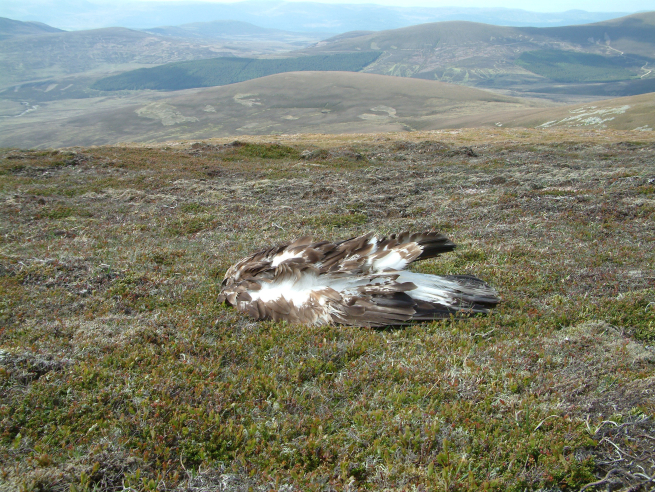
My next slide is a photo that I use in pretty much every talk I give on raptor persecution in the UK:
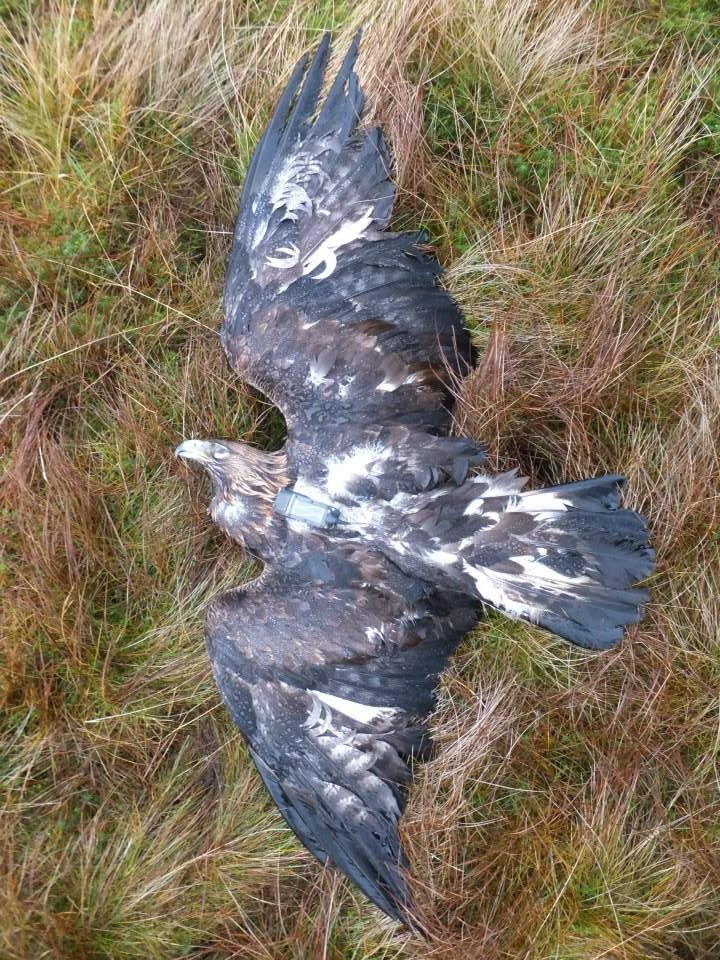
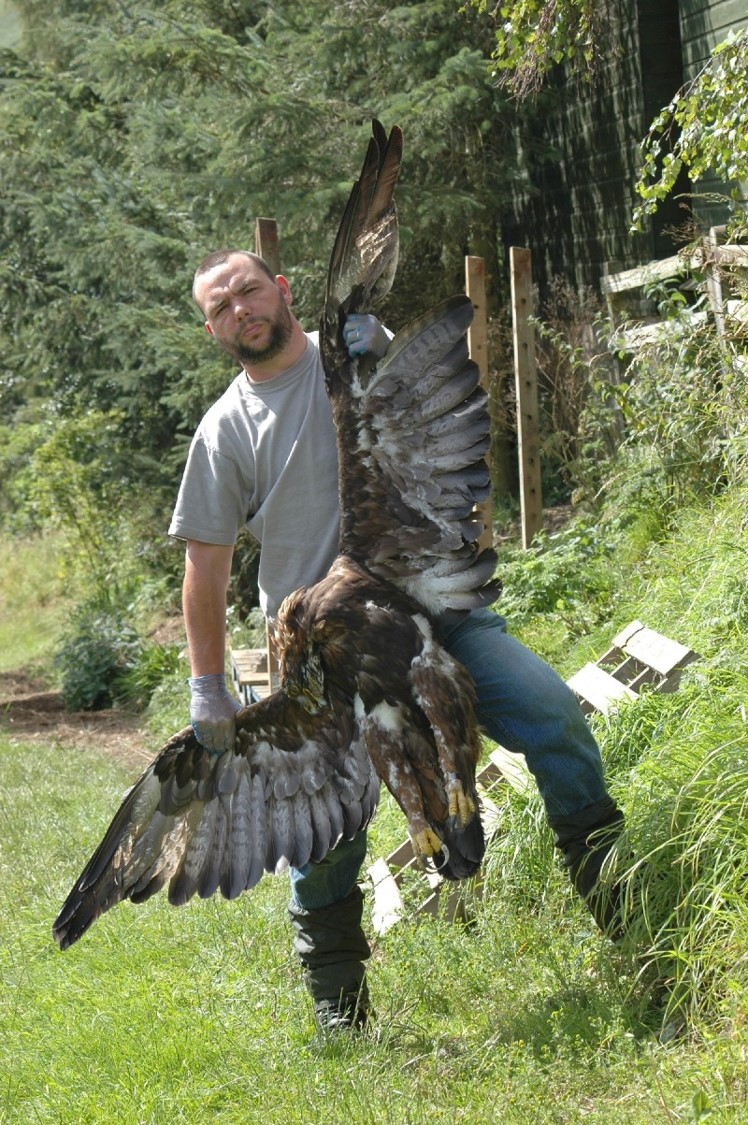
This is a photograph of a young golden eagle, found illegally poisoned on a grouse moor in the Cairngorms National Park in 2006. It was photographed by former RSPB Investigator Dave Dick (now retired) who had been sent out to retrieve it for post mortem. He had picked up many other illegally killed birds of prey on grouse moors over the years, but this image epitomises everything in its pitiful, poignant, senselessness.
I asked the audience to hold this image in their head as the talk progressed to cover some of the key moments in this long campaign against criminal activity and for effective law enforcement against those criminals.
I started with the basics – the 1954 Protection of Birds Act which brought legal protection for all raptor species in the UK, with the exception of the sparrowhawk which finally received full protection in 1961. So for most UK birds of prey, they’ve supposedly been protected for 67 years! This isn’t a new law that society needs time to adjust to and for which we should forgive any lack of adherence. This legislation was enacted a lifetime ago and was probably in place before every current working gamekeeper was even born. Ignorance of the law is no defence and that statement applies here, in spades.
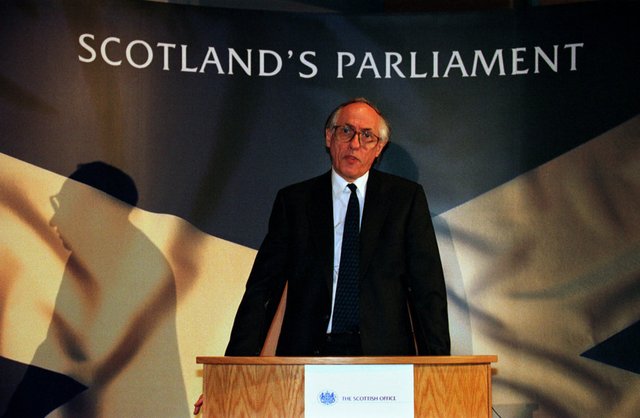
In 1998, 44 years after raptors were declared ‘protected species’ in law, the then Secretary of State, Donald Dewar described the level of raptor persecution in Scotland as “a national disgrace“. He promised that following devolution the following year, the Scottish Government would take “all possible steps to eradicate it”.
RSPB Scotland started publishing annual reports in 1994, meticulously documenting raptor persecution. Their 20th report, published in 2004, documented that 779 birds of prey had been confirmed illegally killed between 1994 and 2004. This figure was considered the tip of the iceberg as wildlife crime, including raptor persecution, is widely recognised as being under-recorded for a number of reasons.
During the late 1990s-mid-2000s, and actually continuing to this day, researchers published a suite of scientific papers documenting the impact of illegal raptor persecution. This wasn’t just the odd ‘rogue incident’ here and there; raptor persecution was so extensive and systematic it was having population-level impacts on a number of species, notably the golden eagle, hen harrier, peregrine and red kite. The peer-reviewed evidence was conclusive – much of the killing was linked to game-shooting, and particularly to driven grouse moor management.
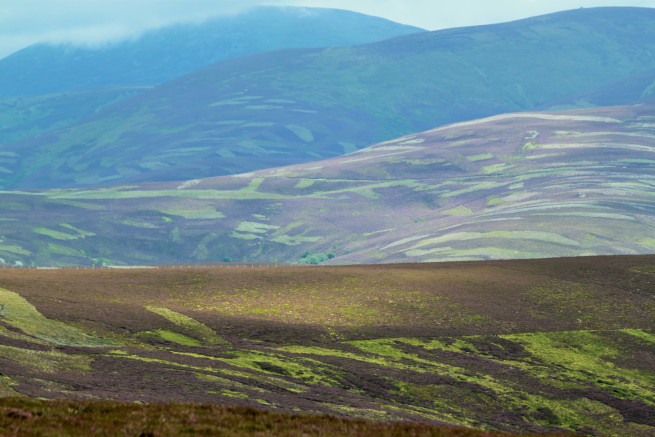
[An expanse of driven grouse moors inside the Cairngorms National Park. Photo by Ruth Tingay]
In 2000, the UK Raptor Working Group (established in 1995 and comprising a variety of statutory agencies, conservation NGOs and game-shooting bodies) published a report with a series of recommendations to address the recovery of bird of prey populations and their perceived impact on gamebirds, moorland management and pigeon racing.
In 2002, Scottish Natural Heritage (SNH) advised the Scottish Executive to accept most of the recommendations of the 2000 report and this led to many developments, with a particular focus on partnership working. Most of these so-called partnerships have since proven to be utterly ineffective (e.g. Partnership for Action Against Wildlife Crime Raptor Group, Heads Up for Hen Harriers) mostly due to them being heavily weighted towards game-shooting interests who seem intent on preventing progress by means of constant denial and obfuscation.
In 2004, raptor satellite-tagging began as a novel method of studying the biology and ecology of several species, notably the golden eagle. The significance of this will become apparent later.
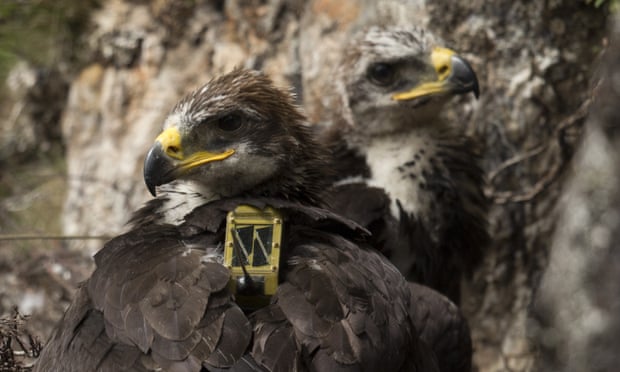
[Two young golden eagles fitted with satellite tags prior to fledging. Photo by Dan Kitwood]
In 2005 the Possession of Pesticides (Scotland) Order was enacted, making it an offence for anyone to possess any of the eight highly toxic poisons used most frequently for killing birds of prey. This piece of legislation has proven useful in that it has allowed law enforcement agencies to prosecute for the lesser offence of ‘possession’ in cases where it has been virtually impossible to provide sufficient evidence to prosecute for actually poisoning a bird of prey.
In 2007 an adult golden eagle was found poisoned at her nest site in the Borders. She was part of the only breeding pair in the region. Nobody was prosecuted and the ensuing public outrage resulted in the then Environment Minister Mike Russell ordering a Thematic Review into the prevention, investigation and prosecution of wildlife crime, which led to a series of recommendations to improve enforcement activities.
[Police officer Mark Rafferty holding the poisoned corpse of the Borders golden eagle. Photo by Dave Dick]
In 2010, this blog was launched primarily to raise public awareness about the scale of illegal raptor persecution in Scotland. It was later widened to cover the whole of the UK. It’s had over 7.5 million views to date.
In 2011, the Scottish Government launched a poisons disposal scheme, offering a sort of ‘amnesty’ and the safe destruction of any banned poisons that might have been left over from when it was legal for people to have these toxins in their possession (i.e. pre-2005).
Also in 2011, Peter Peacock MSP put forward an amendment for the Wildlife & Natural Environment (Scotland) Bill to introduce additional powers for the Scottish SPCA to enable them to investigate a wider suite of wildlife crime, including raptor persecution. Then Environment Minister Roseanna Cunningham rejected the amendment but committed to launch a public consultation on this subject.
Later in 2011 the Wildlife & Natural Environment (Scotland) Act was enacted and in 2012 this led to the Scottish Government having to publish its first annual wildlife crime report. The legislation also brought in vicarious liability, providing an opportunity for prosecutions against landowners and sporting agents whose employees had committed certain offences linked to raptor persecution. After almost ten years there have only been two successful prosecutions. That’s not because there haven’t been more opportunities for prosecution – there have been plenty – it’s because for the most part the Crown Office has refused to take the cases. When pushed for an explanation we’ve simply been told ‘it’s not in the public interest to proceed’. One case was not progressed because the landowner / hierarchy of supervision could not be established because the identity of the person was hidden in an offshore trust.
In 2013 the then Environment Minister Paul Wheelhouse ordered a review of the penalties available for wildlife crime and appointed Professor Poustie to lead the review.
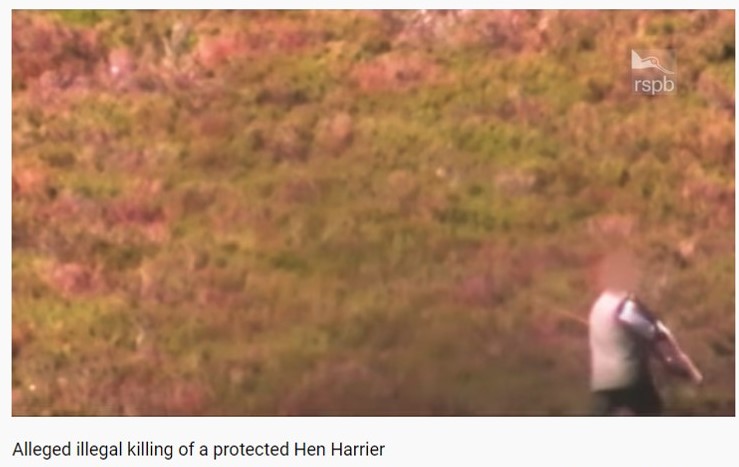
Also in 2013, after RSPB video evidence was published showing a gamekeeper allegedly shooting a hen harrier on its nest on a grouse moor in Morayshire, which led to a prosecution that was later dropped because the Crown Office ruled the evidence ‘inadmissible’, huge public uproar led to Environment Minister Paul Wheelhouse having discussions with the Lord Advocate about maximising opportunities for prosecution and the Lord Advocate subsequently instructed the Crown Office to utilise all investigative tools for enforcement against wildlife crime. This had zero impact – several other high profile cases involving RSPB video evidence have also since been dropped due to this apparent inadmissibility.
[A screen grab from an RSPB video showing the alleged shooting of a hen harrier on a grouse moor]
In 2014 Environment Minister Paul Wheelhouse introduced General Licence restrictions for shooting estates where police evidence confirmed that raptor persecution had taken place but where there was insufficient evidence to bring a prosecution against a named individual. This was supposed to be a ‘reputational driver’ to deter crimes but has proven to be utterly ineffective with just a handful of restrictions applied over the last seven years and most ‘sanctioned’ estates simply given an individual licence to allow them to continue the activities which were supposed to have been restricted under the General Licence. It’s just bonkers.
Also in 2014, Paul Wheelhouse ordered a review of gamebird management systems in other European countries to see whether these different management approaches could help address ongoing raptor persecution in Scotland.
Also in 2014, the Scottish Government finally launched a public consultation on increased powers for the SSPCA, three years after first agreeing to set this up.
In 2014, Mark Avery and Chris Packham launched the concept of Hen Harrier Day to draw attention to the plight of the hen harrier, timed to coincide with the start of the grouse shooting season on 12th August. Hen Harrier Day has now become an annual event and volunteers Andrea Hudspeth and Andrea Goddard have organised these high profile events in Scotland.
In 2015, with raptor poisoning crimes still occurring, not content that the poisoners had already been given an opportunity to hand in their illegal stashes back in 2011, the Scottish Government launched its second poisons amnesty scheme, ten years after it became an offence to possess these dangerous toxins. How many chances do these gamekeepers get?
Also in 2015, SNH launched its ridiculous Heads up for Hen Harriers project – joining forces with shooting estates to fix nest cameras at hen harrier nests to determine the cause of breeding failures on grouse moors (yes, really!). It was doomed to failure because obviously the gamekeepers on estates where the cameras had been installed would not destroy the harriers/nests (at least not while the birds were within camera range) and the study’s ‘findings’ would then be skewed towards natural predator events and poor weather conditions which the grouse shooting industry would then point to as being the main cause of hen harrier breeding failure on grouse moors. It was nothing more than a greenwashing project.
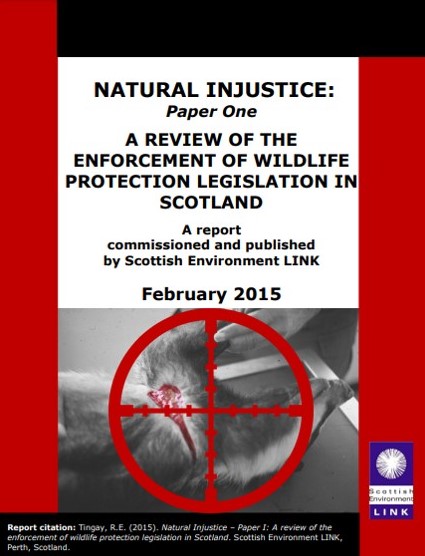
Also in 2015, Scottish Environment LINK published a damning report demonstrating that wildlife crime enforcement measures were still weak, inconsistent & ineffective, seven years after the HM Inspector of Constabulary published its Thematic Review into the prevention, investigation and prosecution of wildlife crime and its subsequent recommendations to improve enforcement measures. Even today, apart from the RSPB’s meticulous records, it’s virtually impossible to get accurate raptor persecution statistics due to incoherent recording across agencies and Police Scotland’s strange decisions to sometimes withhold information, long after investigations have closed.
Also in 2015, Professor Poustie’s review of wildlife crime penalties was published, making a series of recommendations to substantially increase penalties for certain types of wildlife crime, including raptor persecution.
A year later in 2016, then Environment Minister Dr Aileen McLeod accepted the Poustie Review recommendations to substantially increase penalties for wildlife crime. These were not finally enacted until four years later in the Animals and Wildlife (Penalties, Protections and Powers) (Scotland) Act 2020, increasing the maximum penalty for the most serious animal welfare and wildlife crimes to five years imprisonment and unlimited fines. We have yet to see these utilised by the courts.
Also in 2016 the Scottish Government made a manifesto pledge to establish a Wildlife Crime Investigation Unit as part of Police Scotland. This has not happened and appears to have been quietly dropped.
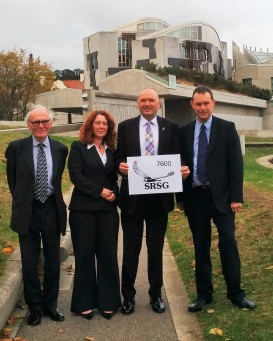
Also in 2016, the Scottish Raptor Study Group (SRSG) launched a petition to the Scottish Parliament calling for the introduction of a state-regulated licensing system for gamebird shooting. These volunteers who later spoke so passionately and convincingly in front of a televised Parliamentary committee in 2017 were subjected to a barrage of offensive online abuse from a number of gamekeepers and their hangers-on and this hate campaign continues to this day.
[SRSG members Patrick Stirling-Aird, Andrea Hudspeth, Logan Steele and Duncan Orr-Ewing outside the Scottish Parliament building. Photo by SRSG]
2016 also saw what in my opinion was the most significant and important event in the road leading to the introduction of grouse moor licensing. The RSPB published a press release about the suspicious disappearance of eight satellite-tagged golden eagles on grouse moors in the Monadhliaths between 2011-2016. Public outrage about this news, combined with the fact that nobody had ever being successfully prosecuted for killing a golden eagle, led to then Environment Cabinet Secretary Roseanna Cunningham calling for a review of golden eagle satellite tag data to establish whether there was a pattern to the disappearance of tagged eagles and whether there was a link with driven grouse shooting. Of course we all knew there was, but it was significant that the Cabinet Secretary had officially requested the analysis. Predictably, this Government-sponsored review coincided with a concerted smear campaign by the grouse shooting industry to undermine the functionality and reliability of satellite tags and the integrity of the highly qualified and licensed researchers who were fitting the tags to eagles. This continues to this day.
In 2017 the review of gamebird management in other European countries was published, showing that gamebird shooting in the UK was the most unregulated and unaccountable system of all those reviewed. This didn’t result in any direct action from the Scottish Government other than an instruction for the Werritty panel to consider the report’s findings as part of its Grouse Moor Management Review.
Also in 2017 Cabinet Secretary Roseanna Cunningham responded to the public consultation on increased SSPCA powers (3 yrs after the consultation closed!) & rejected it ‘based on legal advice’ which was never explained. As an alternative, she announced a Police Special Constables pilot scheme in the Cairngorms National Park to help detect raptor persecution crimes and bring the offenders before the courts.
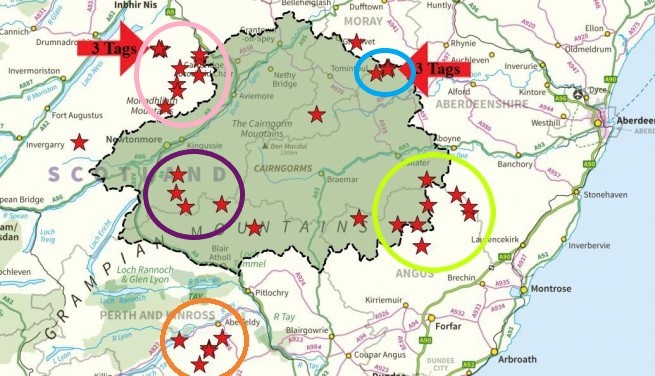
The most significant event in 2017 was the publication of the Golden Eagle Satellite Tag Review. This comprehensive and forensic review was devastating, showing that almost one third of satellite-tagged golden eagles (131 of them) had been illegally killed or had ‘disappeared’ in suspicious circumstances between 2004-2016, and there were irrefutable geographic clusters centred on some driven grouse moors:
On the basis of this report, Cabinet Secretary Roseanna Cunningham ordered yet another independent review, this time to assess the environmental impact of grouse moor management and to provide recommendations and options for regulation, including the potential for a licensing scheme. Professor Werritty was appointed to lead the review.
In 2018 REVIVE was launched – a consortium of environmental, social justice and animal welfare groups seeking grouse moor reform in Scotland. The well-attended launch took place in Edinburgh and Chris Packham was the keynote speaker. Inevitably this led to yet another smear campaign by certain elements of the grouse shooting industry which continues to this day.
[Photo by REVIVE]
In 2019 the Police Special Constables pilot scheme in the Cairngorms National Park came to an end in complete failure. They didn’t report a single wildlife crime during this two-year scheme but illegal raptor persecution continued, as evidenced by the RSPB’S annual reports.
In December 2019 the Werritty Report was finally published two and a half years after it was commissioned. It highlighted many of the problems associated with driven grouse moor management but crucially it recommended a further five-year wait before the introduction of a licensing scheme to allow the grouse shooting industry yet more opportunity to oust the criminals within rather than have regulation foisted on it by legislation. This recommendation was clearly a result of having a number of representatives from the grouse shooting industry serving on the so-called independent panel. Meanwhile, the raptor killing continued.
In 2020 MSP Mark Ruskell (Scottish Greens) proposed increased powers for the SSPCA as an amendment in the Animals & Wildlife Bill. The then Environment Minister Mairi Gougeon rejected the amendment but promised to establish a task force later in summer to consider increased powers. Deja vu, anyone?
In November 2020 the Animals and Wildlife (Penalties, Protections and Powers) (Scotland) Act was enacted, increasing the maximum penalty for the most serious animal welfare and wildlife crimes to five years imprisonment and unlimited fines (after the recommendations of the Poustie review published in 2015). This raises the status of some offences to ‘serious’ and thus for the first time allows the Police to seek permission to utilise covert video surveillance in areas where raptor persecution is suspected. I know there is enthusiasm for this from a number of police officers and I look forward to seeing some results.
In December 2020, a year after receiving the Werrity Review, Environment Minister Mairi Gougeon announced the Scottish Government’s intention to introduce a licensing scheme for grouse moors without waiting for a further five years as the review had recommended.
[NB: I understand that Ian Thomson, Head of Investigations at RSPB Scotland will publish a blog later today (26th November 2021) detailing what has happened in the year following this announcement. I will publish the blog here when it’s available]. Update – Ian’s blog available here
In January 2021 the new Environment Minister Ben MacPherson responded to a Parliamentary Question from Mark Ruskell MSP and admits that the promised taskforce to consider increased powers for the SSPCA had not yet formed but was ‘expected later this year’. This is ten years on from when increased powers for the SSPCA was first mooted in the Scottish Parliament.
In September 2021 the Scottish Government published its five-year Programme for Government and it included commitments to deliver the recommendations of the Werritty review, and to establish a taskforce to review increased powers for the SSPCA, to report by the end of 2022. Yet another Environment Minister (the 9th one?) is in post – Mairi McAllan.
In October 2021 the ridiculous Heads Up for Hen Harriers ‘partnership’ project was closed, with SNH declaring it a ‘success’. It wasn’t, at all. I’ll be blogging about this separately in the next few days.
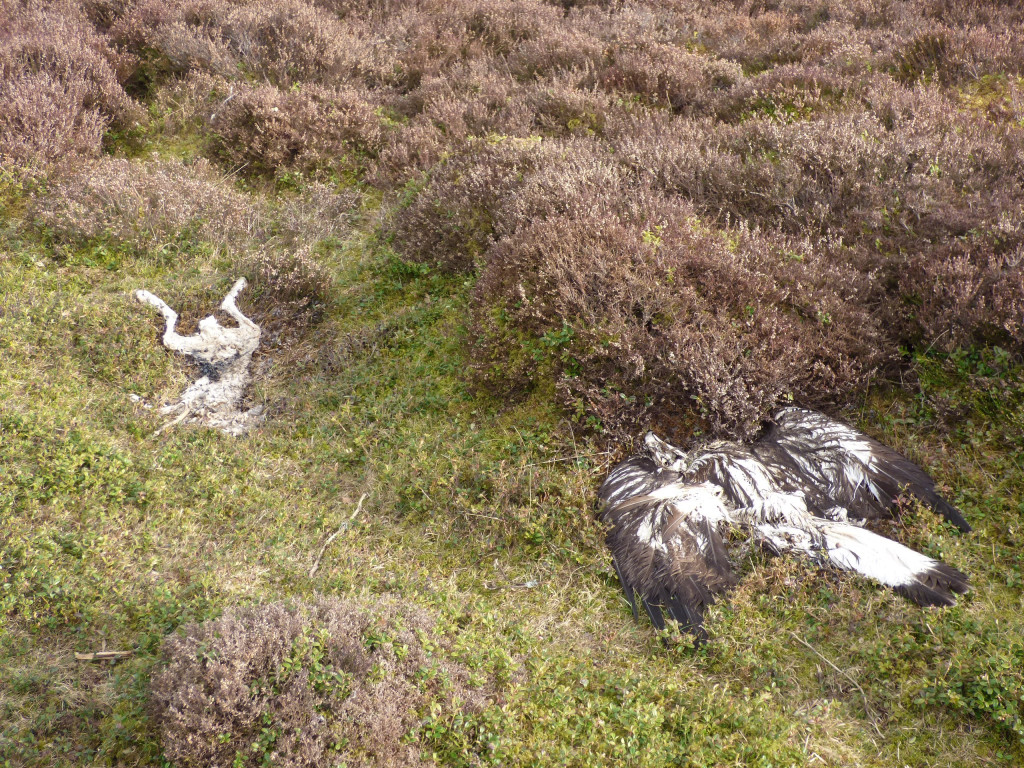
Meanwhile, in May 2021 a young golden eagle was found deliberately poisoned, lying dead next to a poisoned bait, on an Invercauld Estate grouse moor inside the Cairngorms National Park. Sixty-seven years after raptors gained legal protection and 23 years after Donald Dewar declared raptor persecution in Scotland ‘a national disgrace’, golden eagles and other raptors are still being illegally killed on some driven grouse moors.
[The poisoned golden eagle, next to the poisoned hare bait, on a grouse moor on Invercauld Estate in the Cairngorms National Park in May 2021. Photo by RSPB Scotland]
So despite all this campaigning and political movement, nothing has changed on the ground. Golden eagles (and other raptor species) are still being killed on grouse moors, even inside the Cairngorms National Park, and still not one person has been successfully prosecuted.
It’s shameful that we, ordinary members of the public, have to campaign just to have the law upheld, but its even more shameful that despite decades of compelling evidence, the Scottish Government has still not taken effective action against the criminals within the driven grouse shooting industry.
Even so, we should absolutely celebrate how far we have come, and it’s been hard work and at great personal cost to many, but don’t underestimate just how much more work there is to come.







 Raptor Persecution UK